In short
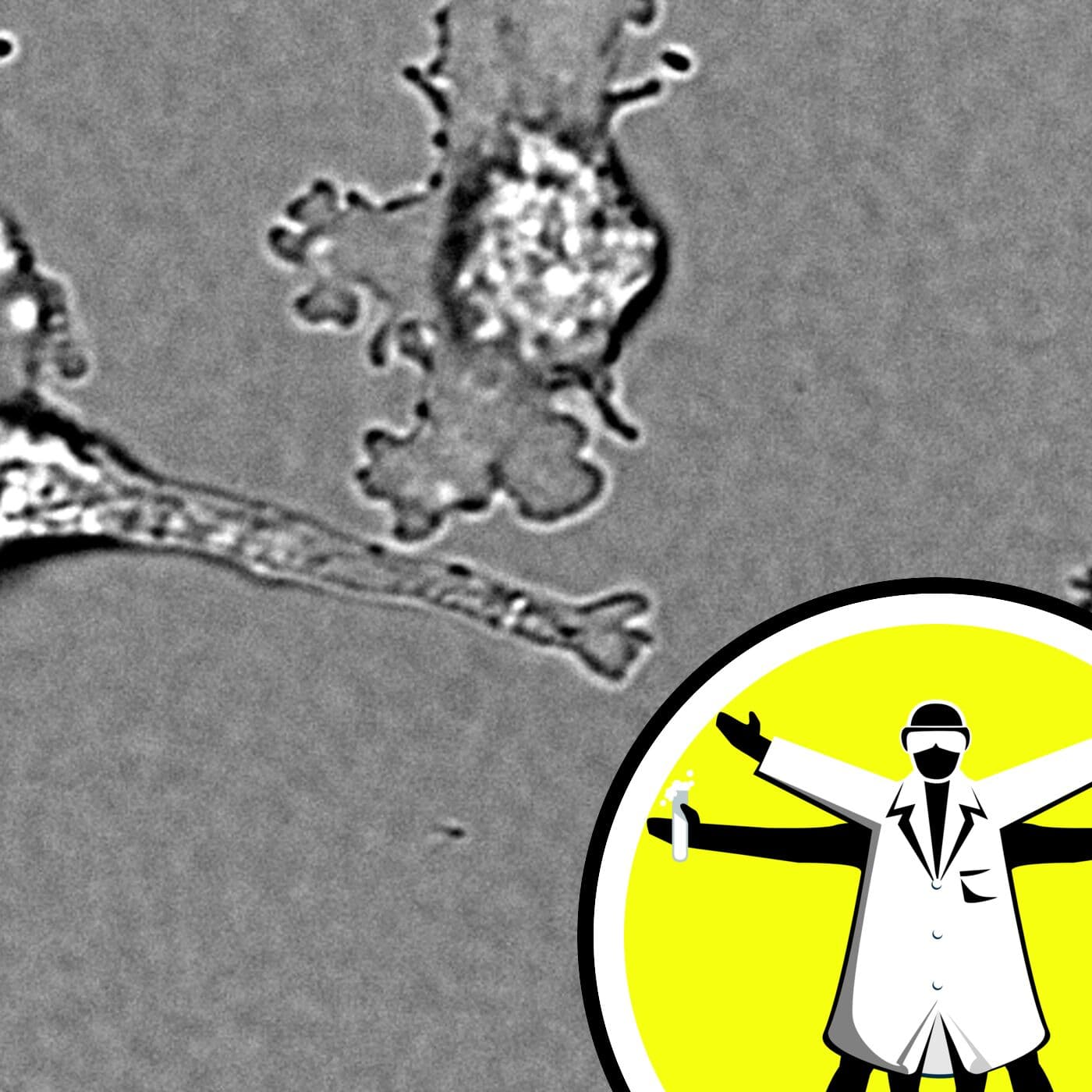
The episode covers three main science stories: a gene-therapy breakthrough that slows Huntington’s disease progression by about 75%, the UN High Seas Treaty moving toward international law to protect biodiversity in international waters, and related science updates (paracetamol/autism controversy in pregnancy; TRAPPIST-1e atmosphere; plus a “Question of the Week” on gravitational waves redshift/energy).
Guests and backgrounds
Ed Wild, consultant neurologist at UCLH and part of the Huntington’s gene-therapy team; Callum Roberts, Professor of Marine Conservation at University of Exeter; Ian Douglas, drug safety researcher at London School of Hygiene and Tropical Medicine; Ryan MacDonald, University of St Andrews exoplanet scientist; Ben Alenak, Cambridge theoretical physics professor.
Key claims/examples
Huntington’s uses AAV gene therapy injected via MRI-guided neurosurgery into the striatum; about 10% had delayed inflammatory swelling treated with steroids; patients reportedly stayed walking and avoided expected decline. High Seas Treaty: protects 61% of ocean surface; only ~1.45% of international waters currently protected; threats include industrial fishing and deep-sea mining. Paracetamol: Swedish sibling studies show no autism risk difference; warns political messaging may cause unintended harm (avoiding safer paracetamol, using unsafe ibuprofen). TRAPPIST-1e: Webb transmission spectroscopy suggests a nitrogen-rich atmosphere; thick H2/CO2 ruled out.
Written by AI. May contain mistakes. Listen to the episode to check what was said.
Chapters
Tap a time to open that second in VOBreakthrough in Huntington's Disease Treatment
0:00 to 0:23
Discussion of a new gene therapy that slows Huntington's disease progression by 75%.
“Your team just added its 67th AI tool and also your 67th security blind spot.”
Breakthrough in Huntington's Disease Treatment
0:47 to 2:25
Discussion of a new gene therapy that slows Huntington's disease progression by 75%.
“Hello and welcome to The Naked Scientist podcast, the programme that brings you the biggest breakthroughs and talks to the major movers and shakers from the worlds of science, technology and medicine.”
Understanding Huntington's Disease
2:25 to 4:27
Exploration of the genetic causes and symptoms of Huntington's disease.
“What we have is a gene therapy which for the first time slows the progression of Huntington's disease by 75%, which is a result that wildly exceeds our most optimistic hopes.”
The Gene Therapy Process Explained
4:27 to 6:28
Detailed explanation of how the gene therapy works and its administration.
“And when it's in there, what does it do?”
Evaluating Treatment Efficacy
6:28 to 8:45
Discussion about tracking the effectiveness and safety of the new treatment.
“So it's not a large number, but the size of the effect is so huge that it ends up being of kind of undeniable statistical and human significance.”
Patient Experiences and Outcomes
8:45 to 10:00
Insights into patient reactions and significant improvements after treatment.
“inflammation resolved, there haven't been any later side effects or anything major emerging.”
The High Seas Treaty Overview
10:00 to 14:00
Discussion about the High Seas Treaty and its implications for marine conservation.
“A landmark deal to protect the world's oceans is about to take effect.”
Understanding the High Seas Treaty
14:00 to 18:04
Learn about the implications and importance of the High Seas Treaty for marine life.
“and agree to abide by the provisions of the treaty.”
Paracetamol and Pregnancy Safety Debate
18:35 to 25:34
Investigate the claims linking paracetamol use during pregnancy to autism.
“This is the Naked Scientist podcast with me, Chris Smith, still to come the Earth-sized planet not that far away that might have conditions suitable for life.”
Exploring TRAPPIST-1e and Its Atmosphere
25:34 to 28:05
Discover the potential for life on the Earth-sized exoplanet TRAPPIST-1e and how its atmosphere is studied.
“Into space now, and groundbreaking new research suggests that TRAPPIST-1e, which is an Earth-sized planet about 40 light-years away, might have an atmosphere, a crucial ingredient for habitability.”
Show all 12 chapters
Exploring TRAPPIST-1 and Exoplanet Conditions
28:05 to 33:02
Learn about the TRAPPIST-1 star system and the potential for life on its planets.
“Does it matter what colour the star is because stars come in different shapes and sizes, colours and heats so is there an optimum for doing this and does that constrain what you can and can't look at with this technique?”
Question of the Week: Gravitational Waves
33:02 to 37:35
Dive into the science of gravitational waves and audience questions.
“Well, sticking with space science now, it's time for Question of the Week.”
Transcript
Automatic transcript. May contain errors.0:00Your team just added its 67th AI tool and also your 67th security blind spot. The good news? The Vanta agent works like a GRC engineer in the background, finding every app your team uses, scoring the risk, and drafting fixes for you. Vanta is the platform used by over 16 ,000 fast-moving companies like Ramp, Cursor, and Harvey, who are shaping the future with AI and staying ahead of AI risk. Get started at Vanta.com.
0:32All engine running. That's the genius. Get this. Welcome. Welcome. This is the show where we bring you science. What that essentially means is discovery is advances, research, technology. Unbelievable. Without further ado, this is The Naked Scientist. Hello and welcome to The Naked Scientist podcast, the programme that brings you the biggest breakthroughs and talks to the major movers and shakers from the worlds of science, technology and medicine. I'm Chris Smith. And coming up, scientists successfully treat Huntington's disease for the first time. They've slowed the rate at which it progresses by at least 75 % and we'll hear how they've done it.
1:09Also the High Seas Treaty has taken a step closer to protecting the world's oceans and the earth-sized planet not that far away that might have conditions suitable for life.
1:28The inherited brain disorder Huntington's disease has now been successful fully treated for the first time, scientists said this week. The illness destroys brain cells in a part of the brain that's called the striatum, which we use to plan ahead and make decisions and make movements. The condition strikes in early middle age and it leads to progressively severe disability. Hitherto, doctors had only a handful of drugs that they could use to control the symptoms to some extent, but the benefits were extremely limited. Now that has changed, thanks to a gene therapy breakthrough that's enabled doctors to dial down the activity of the defective gene that causes the condition, slowing the rate of progression to such an extent as Ed Wild, consultant neurologist at the National Hospital for Neurology and Neurosurgery at UCLH, and one of the team behind the breakthrough puts it, it effectively means an affected person could achieve a normal life expectancy now.
2:25What we have is a gene therapy which for the first time slows the progression of Huntington's disease by 75%, which is a result that wildly exceeds our most optimistic hopes. What actually is Huntington's disease? How does it affect a person and how do they get it? So it's a genetic brain disease caused by a single mutation in a gene that's a recipe for a protein called Huntingtin that is produced in every cell in the body, but it's particularly harmful when it's found in neurons. The presence of this mutation causes this protein to build up gradually over the years. Eventually, the neuron can't cope with the harm that the protein does, and so it malfunctions and dies.
3:10What that translates into clinically is a really, frankly, horrible brain disease that typically comes on when a person is in their 30s or 40s. Patients slowly lose their ability to control the movements of their body. They lose the ability to walk. They develop involuntary movements. There's a form of dementia. It's not the same as the sort of forgetfulness of Alzheimer's disease. It's more of a sort of higher level functions like multitasking, loss of ability to recognize emotions in other people. But that becomes very, very severe. And eventually patients end up bed bound and unable to communicate.
3:47And there's more terrible news for people from HD families, which is that a person with the mutation, each of their children has a 50 % risk that they will inherit it. And as of two days ago, it was an untreatable condition with no treatments to slow it down. And what's been your approach to get on top of the problem? For roughly the past 10 years, we've been focusing on a group of treatments collectively aiming to reduce production of the abnormal protein. So it kind of makes sense to say, well, why don't we try and switch off production of the protein? We've been testing a gene therapy and the impressive results that we've finally been able to share have been in the context of this new experimental gene therapy.
4:35So talk us through how that works then. What's the approach? How do you get the gene therapy in? Where does it go? And when it's in there, what does it do? The gene therapy is a harmless virus called AAV, basically had all of its content scooped out and replaced by a designer strand of DNA. It couldn't be given as a pill or as an injection into the vein. It has to be injected directly into the substance of the brain in a lengthy neurosurgical procedure. So we're talking 12 to 18 hours of brain surgery, a few small holes drilled in the skull, and then tiny plastic tubes called catheters are passed down under guidance from an MRI scanner so that the drug can then be injected directly into the striatum, which is this bit that's particularly vulnerable.
5:24Once the virus is injected, that's it. The person recovers from surgery and then no further intervention is required in most cases. But what's happening inside the brain is that the virus has injected its cargo of DNA into the neurons and it stays there. It's an extra gene essentially that stays there for the rest of the person's life and that's why it's a gene therapy. That extra little bit of DNA tells the cell basically not to make the Huntington protein. So it's basically tagging the Huntington message molecule with a flag that says delete this we don't want to make this protein and what we are sharing now with great joy is the result of three years of treatment in a group of patients who have undergone that procedure how many people have you tried this on and over what period of time have you followed them up you say three years but is that three years of follow-up or over three years you've been doing this and now you're beginning to follow them up so yeah we're looking at three years of treatment from around about 30 people, of whom 12 received the gene therapy at the high dose.
6:34So it's not a large number, but the size of the effect is so huge that it ends up being of kind of undeniable statistical and human significance. How do you know it's actually working though? Because if it's stopping a process, how do you know what would have happened to a person had you not intervened? It's a very important question. And what we would normally do to answer that question would be to enroll a placebo arm and people will be randomized to active treatment or treatment with a dummy pill or injection. You can't do that with a gene therapy. It would be unethical. So what we've had to do is compare the people treated in this trial with a group of around 900 people that were taken from a much larger study that's just an observational study.
7:19In other words, it's a study that's following how Huntington's disease progresses without involving any treatment. that gives us a very accurate impression of how much we would expect these people to progress and then we're able to compare where they actually are at three years versus where we would expect them to be. Were there any negative effects? I mean you are putting into the brain a foreign virus albeit a disabled one the immune system might have something to say about it did everyone do fine or were there any people who had problems or do you foresee any potential threats or risks or things we need to think about before you roll this out more broadly?
7:56Your question about inflammation is a really pertinent one. In a minority of patients, roughly 10%, there was a slightly unexpected delayed inflammatory reaction. So about two to three weeks after the virus was injected, a small number of patients ended up experiencing initially mild headaches, in some cases some confusion. And when we looked at those brains on the scan, there was an unexpectedly large amount of swelling. So that's probably just a bit of natural variation in the strength with which people's immune systems act when they encounter a foreign substance like a virus. The good news with that is that the most that was needed to bring that under control was symptomatic treatments and some short-term treatment with anti-inflammatory steroid drugs.
8:44And it was really gratifying that after that early inflammation resolved, there haven't been any later side effects or anything major emerging. Did the patients and their families notice that things have stopped deteriorating and how do they react? They really do and it's been striking for me as well. I've been looking after HD patients for 20 years. I'm fully prepared now whenever I see one of my patients they'll be worse off than they were the previous time. The disease will inevitably have progressed and that's simply with my patients in this trial, they basically haven't really changed in the three years since they were treated.
9:24They were walking at the start of the trial and they're still walking now. One of my patients had had to take medical retirement before the trial and he's been able to go back to work. He's honestly my only HD patient who's ever been able to go back to work. So the numbers are impressive, but behind the numbers are these sort of personal stories of people for whom the experience of having Huntington's disease has been quite significantly different from what it would be expected to be. Some absolutely wonderful news and I'm sure very welcome news for Huntington's disease families. That was Ed Wilde at UCLH in London.
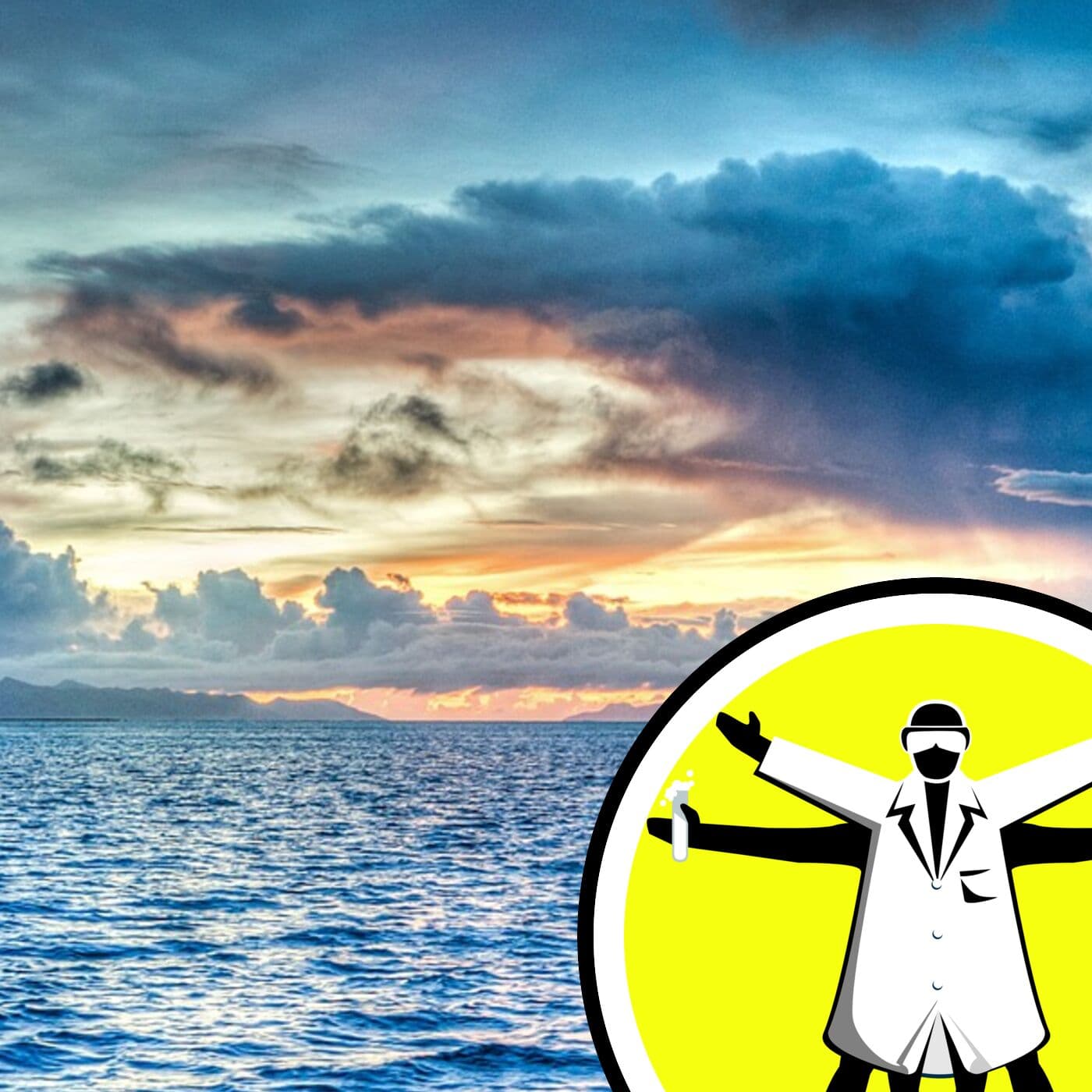
10:02A landmark deal to protect the world's oceans is about to take effect. The UN's high siege treaty which has now been ratified by dozens of nation states will formally become international law in January. Its ambition is to reverse the damage to marine life and to safeguard vast areas of oceans that lie beyond any national borders and are currently very much a maritime wild west where pretty much anything goes. Protecting this vast expanse safeguards migration routes and it preserves important poorly documented ecosystems like the seafloor. Here's Callum Roberts who's Professor of Marine conservation in the Centre for Ecology and Conservation at the University of Exeter.
10:43International waters represent such a large chunk of planet Earth. They occupy 61 % of the surface of the ocean and 43 % of the surface of the Earth. And until now, they've been roughly half planet sized whole in our conservation policy. There's been no legal instrument available that we could all agree to abide by to protect wildlife on the high seas. And that's been a real problem because there's a lot of industrial activity taking place on the high seas, like industrial fishing, which is causing immense impacts to wildlife. I was just going to say, what are the major threats? Is it just fishing?
11:24Because that's the obvious one. Are there other things that conservationists are worried about? Well, there are direct and indirect threats. And of course, climate change is the indirect threat which looms over us all and it looms over international waters just the same as land. So that's putting pressure on wildlife there. Of course there's another looming potential presence in industrial terms in international waters and that is mining, deep sea mining. This is immensely controversial, it would be enormously impactful, the impacts would be impossible to reverse on any kind of human timescale.
12:02So now a significant number of countries have said they're going to abide by the rules. But what about the ones that say they won't then? Does that mean that countries that haven't signed up are still just going to go and do whatever they like? Well, countries can, in theory, do what they like if they're not signatories to an international treaty. You don't have to abide by the terms of that treaty if you haven't signed up to it. But on the other hand, it would be deeply divisive for the world community if some countries decided that they were going to go in and exploit waters that other countries had decided should be protected.
12:38We can see, looking back at Japanese whaling in Antarctica, that there was a huge amount of international opposition to that. And eventually the Japanese decided that it was creating too much diplomatic strife and they stopped whaling in Antarctica. I think we would see the same kind of thing, that countries that haven't signed up to the provisions would hopefully at least abide by them in terms of, let's say, a protected area was established. they wouldn't go in and exploit that protected area. Has China signed it? China has signed but not yet ratified. Well what's the difference between ratifying it and signing it?
13:16Well signing it is an indication of intent and in some cases let's say a small island state the signing and the ratification are almost the same thing. A head of state will have the power to essentially do both. In other countries, though, principally democracies, the parliament has to agree in a formal process that the country is going to abide by the provisions of the treaty, and that process is called ratification. China is obviously one of the huge international maritime powers. Its fleets of fishing vessels, for example, are among the most pervasive and also destructive of marine life in international waters.
13:58So it's very important that China really does ratify this and agree to abide by the provisions of the treaty. Are they showing signs of doing that yet, though? I am not entirely sure about that. Of course, America hasn't ratified the treaty. It has signed as well under the previous administration. I think the Trump administration is fairly hostile to the high seas treaty at the moment. And Trump himself has signed an executive order trying to persuade companies to go forth under the United States flag and start deep sea mining. So I'm not overly hopeful that under the present administration, they will be very supportive of the High Seas Treaty.
14:38But on the other hand, they're not signatories. They haven't ratified the United Nations Convention on the Law of the Sea, which came into force in 1994. yet they have abided by the provisions of that treaty more or less in whole as a kind of traditional law. So let's take the rose-tinted view that everyone does abide by it then. What does this translate into now? Now we're over this threshold what does this actually mean in practical terms? Well this is a huge opportunity to establish protections for wildlife on the high seas, and that includes ocean-going tunas that cross entire oceans during their migrations.
15:21It includes whale sharks, manta rays, seabirds, that whole panoply of marine life, which is undertaking large-scale movements in the international waters. Those animals are essentially coming into the crosshairs of industrial fisheries in many parts of their ranges and they're being depleted. Many are becoming endangered. The High Seas Treaty gives us the tools to create internationally recognized marine protected areas to safeguard their populations. And this is really important because the world has committed to establish 30 % of land and sea as protected areas. In the ocean at the moment, the headline figure is that we've passed about 9 % of the ocean protected.
16:09But if you look at how that's subdivided, 22 % of national waters of countries are protected, whereas only 1.45 % of the international waters is protected. So there's almost no formal marine protection given to the high seas. And that's something which we must rectify with extreme urgency. So if you've got migratory species, for example, they might be well protected in one jurisdiction and they might go to another extremely well protected jurisdiction but making the journey between the two through the high seas they would fall prey potentially without this sort of treaty is that the point you're making that is the point i'm making and they will still fall prey in some parts of the high seas unless we were to close it all which is a recommendation that myself and other scientists have made recently.
17:00But assuming that in part we can protect the area of international waters, then there are hotspots of biodiversity and richness. There are concentrations of marine life feeding on other marine life. If we protect these, the highways and the crossing points, then we can afford disproportionately large amount of protection to species for a relatively small area that's actually lying within those marine protected areas. Well, it sounds like mostly good news, doesn't it? Let's hope that the US and China do come aboard too in due course. Cullen Roberts there at the Centre for Ecology and Conservation in Exeter.
17:41Your team just added its 67th AI tool and also your 67th security blind spot. The good news? The Vanta agent works like a GRC engineer in the background, finding every app your team uses, scoring the risk and drafting fixes for you. Vanta is the platform used by over 16 ,000 fast-moving companies like Ramp, Cursor and Harvey, who are shaping the future with AI and staying ahead of AI risk. Get started at Vanta.com.
18:10The Naked Scientist podcast is produced in association with Spitfire, cost-effective voice, internet and IP engineering services for UK businesses. Find out how Spitfire can empower your company at spitfire.co.uk.
18:28Music in the programme is sponsored by Epidemic Sound, perfect music for audio and video productions. This is the Naked Scientist podcast with me, Chris Smith, still to come the Earth-sized planet not that far away that might have conditions suitable for life. But first, paracetamol is a safe and effective medicine that's been easing headaches, soothing fevers and taking the edge off pain for more than half a century. But this most trusted of household products has now been dragged into a political debate in the United States following a claim by the Trump administration that the agent causes autism.
19:05I asked Ian Douglas, who works on drug safety at the London School of Hygiene and Tropical Medicine, to tell us what's going on, starting with why guidance the other two has been that paracetamol is the safest anti-inflammatory drug to take if you're pregnant. Over the years there have been several studies in different countries, in different populations, where people have tried to look at whether paracetamol exposure in pregnancy is linked with autism. And these kinds of studies are incredibly difficult to do because the women who receive paracetamol in pregnancy are fundamentally different from women who don't receive paracetamol during pregnancy.
19:44So for example they may have long-term medical conditions that mean that they are more likely to need pain relief or they might have a fever or an infection during pregnancy which leads them to need to take paracetamol and we know for sure that things like infection during pregnancy or fevers they themselves can be associated with a cause of an increased risk of autism in the children of those women. So we know that those women are fundamentally different and that they will definitely have a higher risk of children with autism than women who don't take paracetamol. But it's not because of paracetamol itself.
20:23So when people do these studies, they have to do the best they can to adjust away those differences between women who do take paracetamol and women who don't. and that can be incredibly difficult to do it's it's the bread and butter of the work that i do so i know it's very hard to do but one of the studies in fact the most recent large study that was done on this was done using swedish data last year they did something really clever where they actually looked at siblings so brothers and sisters whose mothers had taken paracetamol during one of the pregnancies but not during the other and there was no difference in the risk of autism between the pregnancy where paracetamol had been taken and the pregnancy where it hadn't.
21:10Paracetamol is an over-the-counter drug though and therefore a lot of these studies are going to rely on self-reporting by the patients. So how reliable and how robust are data like this so that when we draw conclusions like there's no link we know we can rely on it that's a great question and you're absolutely right so these kinds of medications that are available over the counter are notoriously difficult to study and so people will do things like they'll do structured questionnaires they will interview people and do the best they can but even then we know that the data won't be perfect and again this swedish study that was done last year they went to great length to look at if they were to get the exposure status wrong so if they were to just not really know how much paracetamol people were using how badly would they need to have got that wrong in order for them to have made an unsafe conclusion and it looked like the degree to which they would have had to get it wrong would have almost been implausible.
22:11Therefore the reassuring message emerging from that study that you've just outlined is that it's business as usual if you're a pregnant woman and you need some kind of painkiller, you should stick to business as usual. Paracetamol is, as far as we know, safe in pregnancy. But where did Donald Trump come by the information that led to the dramatic announcement he made earlier this week then? Honestly, I don't know why. It's a really great question and I wish somebody would answer it. I mean, I did a bit of poking around myself. I found one study that came out relatively recently. It was in the journal Environmental Health, but it wasn't actually doing what the Swedish people did that you just described.
22:53It was basically taking every study under the sun that had ever been done, massing the whole lot together in what's called a meta-analysis to get data from about 100 ,000 people and considering that as one giant study. And they did find, they claim, a small increase. But that isn't doing it in the discrete, well-controlled way that the Swedes did. So do you think that's where the error may lie? you're right so the systematic review was done earlier this year and they concluded that they looked like there may be a small increased risk but they even they i think were quite clear that they they couldn't be certain that it was a causal risk so again to me it seemed like yes you've amassed some some of the information put it together but it wasn't concluding there's a causal increased risk and the other interesting thing for me is even if you look on the US FDA their drug regulators statement about this even they are saying we haven't shown a causal association so to my mind these messages they don't warrant the more political message which came out early this week and I so I don't see where that link is coming from.
24:08What really concerns me is that, and I think many people share this concern, is that about 20 years ago, we saw the same sort of thing happening with the MMR vaccine. And even though there was no evidence and people have gone to enormous lengths to reassure people, it's still in the front of any concerned parent's mind when they're asked, are we going to be vaccinating your child with the MMR? And it's done enormous damage to the image. And do you think that there's a real danger here that a woman who's pregnant may find herself thinking, well, I'd better not take anything because there might be no smoke without fire and it leaves pregnant women in a worse situation and potentially in a worse pregnancy situation because any inflammation or pain or ill health in the mother in pregnancy has got to be worse for the developing baby.
24:55Unfortunately I'm absolutely sure that you're right about that and as well as untreated illness during pregnancy the other thing that concerns me is that because the spotlight is now unfortunately on paracetamol it's quite possible people might look around their homes and think well i've got some ibuprofen for example lying around maybe i'll take that instead which we know for sure is not safe during pregnancy so that it's the the law of unintended consequences that also concerns me around what will people do instead so bottom line sticking with paracetamol is the agreed current best practice that was ian douglas at the london school of hygiene and tropical medicine Into space now, and groundbreaking new research suggests that TRAPPIST-1e, which is an Earth-sized planet about 40 light-years away, might have an atmosphere, a crucial ingredient for habitability.
25:47Using the James Webb Space Telescope, scientists have ruled out thick hydrogen or CO2 atmospheres, leaving open the possibility of a thinner, nitrogen-rich blanket, much like the one surrounding our own planet Earth. More observations are planned to unravel the mystery of this tantalising exoplanet. But what have we learned so far, and how? Well, here's Ryan MacDonald at the University of St Andrews. So what we are seeing when we look at TRAPPIST-1e is potential signs of air, what we call an atmosphere, on this planet. So we're seeing bumps and wiggles in our data that are best explained by a nitrogen-rich atmosphere.
26:29similar potentially to our own Earth, which is 78 % nitrogen. We're being cautious at this particular stage. We need more data in order to confirm what we think we're seeing. But what's incredibly exciting here is that this could be the first exoplanet in the habitable zone, a rocky world that could have air. And that has huge implications for the search for life. What's the habitable zone? The habitable zone is the distance from a star where it's not too hot or not too cold to have liquid water on the surface. So Goldilocks would feel very at home there? Yes, Goldilocks would be very at home in the habitable zone.
27:12How did you actually image that atmosphere though? How do you know there is air there? We stare at a star and we wait for the planet to pass in front of that star. We call this a transit. And when this happens, a small amount of light from the star filters through the air on the planet, if indeed it has air. And what we're trying to do is look at how different gases that are present on the planet absorb different colours of light differently. For the same reason that plants are green and not red or some other colour, molecules, gases do the same thing. so we use this technique which we call transmission spectroscopy to map out which particular gases can explain these tiny little dips where light from the star is missing.
28:05Does it matter what colour the star is because stars come in different shapes and sizes, colours and heats so is there an optimum for doing this and does that constrain what you can and can't look at with this technique? Absolutely. So the star Trappist-1, we call it a red dwarf star. It is about 10 times smaller than the sun. And as you might guess from the name, that means it's quite red instead of a yellowish star like our own sun. We've chosen to focus on red dwarf stars specifically because they're smaller. It means that more of the light from the star is blocked by an Earth-sized rocky planet, which makes it easier for us to make these measurements and search for an atmosphere.
Read the full transcript
28:47it's not all easy though red dwarf stars are kind of horrible they have eruptions on their surfaces that we call stellar flares so it's still very much an outstanding question whether or not life could actually exist on a planet around this kind of very violent star that's quite different from the sun given that this is very much remote from the earth and you can tell us perhaps how far it in a second. How do you know how big the planet is? So the star system here, TRAPPIST-1, is about 40 light years away from Earth, so about 10 times further away than the nearest star to us, but still, you know, a ridiculously long way away.
29:27And so we can measure the size of a planet by seeing what fraction of the star's light is lost when the planet passes in front of it. A large planet will block more light than a smaller planet. And that's how we know that a planet like this is about the size of the Earth and not like Neptune or Jupiter. We know that life got started on the Earth very, very promptly, didn't it? We know the Earth's about four and a half billion years old, and we've got signatures that might point to life from as early as 4.1 billion years. So therefore, it doesn't necessarily have to be an old system to have life.
30:04Does it look like a mature system, the Strappist system? Yeah, the TRAPPIST-1 system is not a young system. It's been around for billions of years. So there's plenty of opportunity potentially for conditions to evolve in the world and potentially for life to emerge if there's anything along the timeline that we see here on Earth. the problem though is that the planets will have experienced different conditions over time and it very well may have been that when the star was young and was even more violent than today it could have stripped away all the gases around the planet and that's why we're trying to establish is it a bare rock or is it a planet with an earth-like or venus-like atmosphere and so this is really the frontier of exoplanet science at the moment.
30:52Which rocky worlds have atmospheres, which have air? Given that you can see an atmosphere, can you infer anything about the density of that atmosphere? Because we know that the conditions on the Earth are ideal to give us the conditions that favour life here. So can we read anything into the fact you can even see an atmosphere around that planet? If we see an atmosphere on a rocky planet many light years away with the Webb telescope, it immediately tells us that this atmosphere has to be thicker than a planet like Mars, for which we just wouldn't be able to see an atmosphere, it's not dense enough.
31:28So whether or not the atmosphere is a hospitable pressure, like we have on Earth, or a much thicker atmosphere like Venus, that requires additional and more sensitive observations. Can you get at that with the technique you've got, the tools at your disposal? Now you're beginning to be able to make measurements like this, because this is a first, isn't it? It's the first time you've really been able to nail a problem like this. Can you interrogate this further to begin to point to what the conditions might be like on that planet? One of the key things that we're trying to do to understand the surface conditions is by measuring which chemicals, which gases are present in the atmosphere, because the Earth would be completely uninhabitable without the greenhouse effect from carbon dioxide warming up our world.
32:17So we want to see if we can detect gases like carbon dioxide and measure how much of the atmosphere is CO2. We can then use that to calculate what the surface temperature would be and hence if liquid water could exist, which is crucial for the potential habitability of worlds like TRAPPIST-1e. I'm put in mind of interviewing the singer John Anderson a few years ago about his recollections of the Apollo moon landings, which interrupted a concert he was supposed to be giving. And he recalled to me, thinking at the time, what a wonderful time it is to be alive as the astronauts stepped out onto the lunar surface.
32:53And it really is amazing to see this new frontier of exoplanet science now unfolding in front of us, isn't it? That was Ryan MacDonald. He's at the University of St Andrews talking about their observations on the far-off world TRAPPIST-1e. Well, sticking with space science now, it's time for Question of the Week. and we've had quite a few of you get in touch with us about our recent programme on gravitational waves. Over to James Titko. Thanks Chris. Gravitational waves are the ripples in space-time predicted by Albert Einstein emanating from the interactions of massive bodies like black holes or neutron stars.
33:29Scientists have been able to detect gravitational waves from billions of light-years away using laser inferometers here on Earth. As mentioned, our show on this topic sparked a lot of questions from our audience. And the first one we're going to tackle is this. Hello Naked Scientist, Paul here from Toronto. Related to your show on gravitational waves, how is the energy conserved so well that we can detect gravitational waves here on Earth from interactions of massive bodies on the other side of the universe? Thanks Paul. Brilliant question. Would the energy of gravitational waves start to diminish so that we could not detect them by the time they reached us.
34:10I put it to Ben Alenak, professor of theoretical physics at the University of Cambridge. The energy released by, for example, the collision of two black holes is absolutely enormous. For example, in the first measured gravitational wave, where two quite massive black holes coalesced into one, it's inferred from the data that about three times the mass of the sun was converted into energy and released into gravitational waves. So that's enormous. So that's why you can measure it with a very sensitive measuring device such a large distance away. That combined with the fact that the experiments are so sensitive and can measure change in distances of the space or change the stretching of the space to one part in 10 to the 17.
35:05So you're right, Paul, the energy of gravitational waves, like all forms of radiation, dissipates over large distances. We just need sensitive enough instruments. This was evident in the first detection of gravitational waves, where the merger of two black holes 1.4 billion light-years away caused the LIGO laser to shift by a distance smaller than the width of a proton. Thanks for that. For our next question. Hi, this is John Bondy from Vermont in the United States. My question is, do gravitational waves also experience a redshift just as light waves do? Can we measure the shift as we do with light with emission and absorption lines?
35:46Thank you. Another lovely question from John. Redshift refers to the increase in wavelength of electromagnetic radiation, like light, travelling to Earth from the most distant objects in the universe as it expands. As you say, we can use spectral features like absorption lines on a colour spectrum from red to blue to measure how much the wavelength has changed. But does the same apply to gravitational waves? Back over to Ben Alenak for the answer. Gravitational waves do experience redshift just as electromagnetic radiation such as light does. You can't use emission or absorption lines, though.
36:28Electromagnetic radiation has that because it's produced in atoms, which, because of quantum mechanics, gives you discrete choices for the wavelengths, depending on which atom it is and so on. You don't have this in the gravitational setup. What you do instead is you try and work out which galaxy the gravitational wave came from. And if you can find that, you can find out what the redshift of that galaxy is, and the redshift of the gravitational wave will be the same, because it will be equivalent from the point of view of the expansion of the space-time. So, John, the wavelength of gravitational waves increases as they travel across an expanding universe, just like light waves do.
37:11Unlike light, however, they don't have emission or absorption lines that we can use to measure the redshift directly. We may be able to infer it, though, by comparing it with electromagnetic signals from the same event. Thanks for those brilliant questions. If you'd like to keep the discussion going, why not join in on the thread on this topic over on nakedscientists.com slash forum. Next time on Question of the Week, we're answering this one from Bavesh, voiced up by a member of our team. How do guided missiles reach their targets? and do be sure to keep your questions coming in it's chris at thenakedscientist.com no question is a stupid question they're all an opportunity for discussion and debate so do please send them in that's it for this week do join us though on tuesday when we're going to be looking at the role of chemistry in painting the naked scientist is supported by rolls-royce and by all of you who chip in to help support our production efforts you can do that if you wish to and if you do enjoy the programs do please consider doing so over at our donation page that's at nakedscientist.com forward slash donate i'm chris smith thanks for listening and from us here at the naked scientist team till next time goodbye
39:07Vanta.com Thank you.