
In short
How to sustain life in space, focusing on (1) manufacturing and living off the land, (2) space-based solar power, (3) building habitable space stations, (4) growing fresh food in orbit, and (5) studying reproduction in microgravity/radiation.
Guests and backgrounds
- David Whitehouse: space writer and broadcaster.
- Martin Soltal: CEO of Space Solar, developing electricity in orbit beamed to Earth.
- Onika Rollock: with the Aurelia Institute; worked with NASA on next-gen space habitats.
- Jennifer Bromley: plant sciences researcher at Churchill College, Cambridge; entrepreneur growing plants in space.
- Egbert Edelbrook: founder of Spaceborne United; developing a “sperm centrifuge” minilab for embryo studies.
Key claims + notable examples
- Microgravity enables crystal/alloy/drug research, but scaling and cost are major barriers.
- Space Solar: kilometer-scale satellites in geosynchronous orbit (~36,000 km) beam power via ~5.8 GHz; aims for pilot in 5 years, ~100 MW by 2035, ~15 GW by mid-2040s.
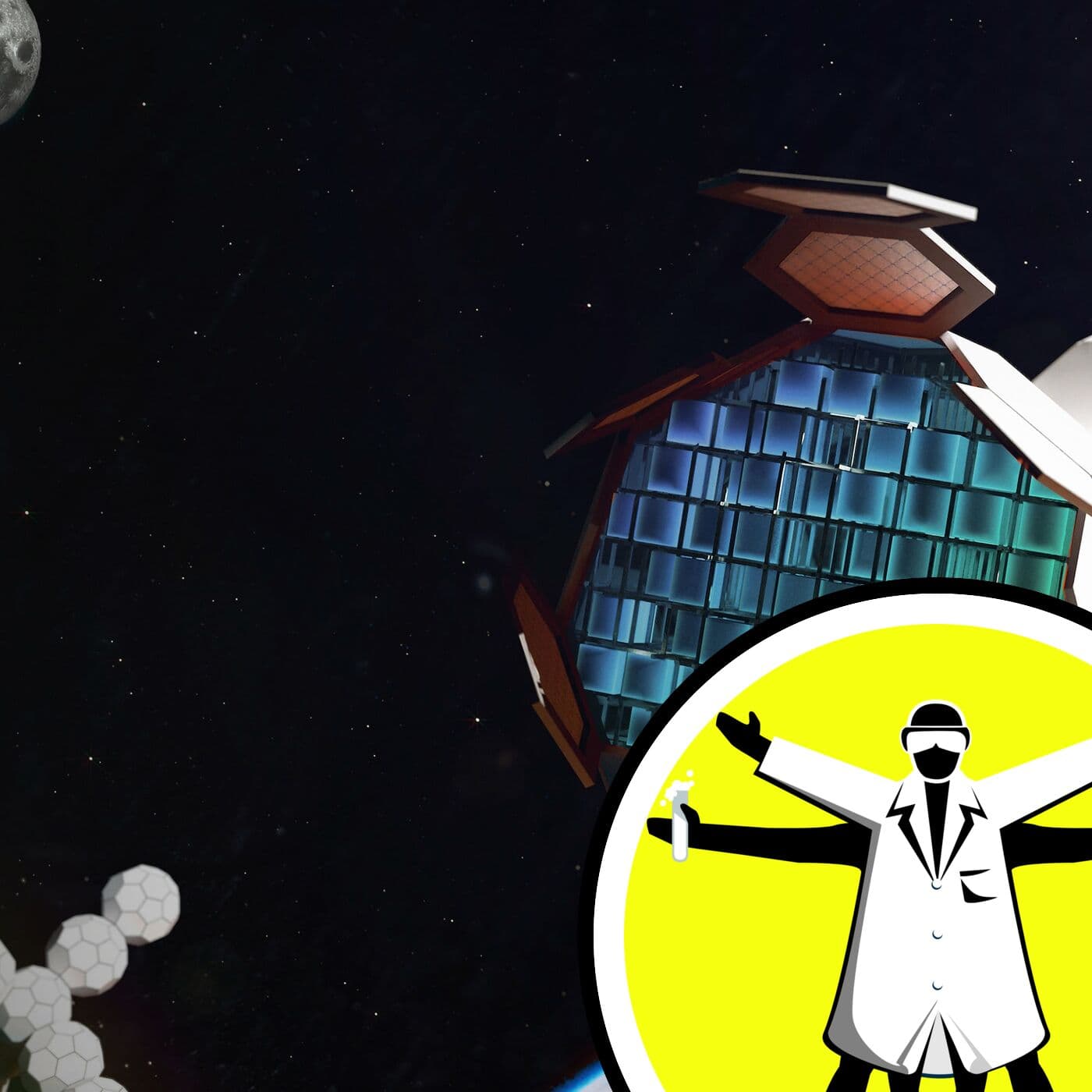
- Aurelia Institute: self-assembling “flat-pack” tiles forming a buckyball (truncated icosahedron) habitat; low Earth orbit; target 10–15 year lifetime; magnets/Velcro/handholds.
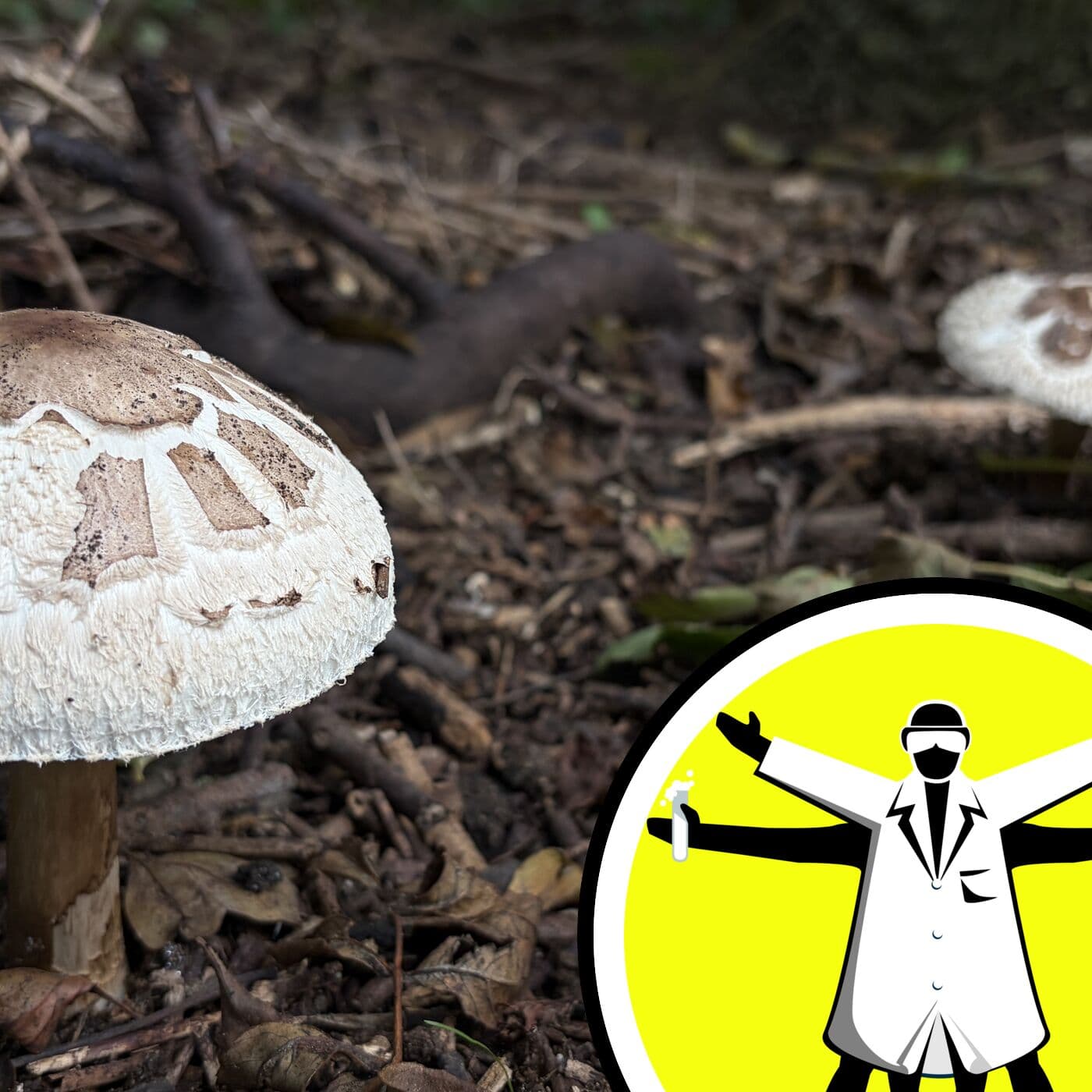
- Bromley: hydroponic sealed pods; fans for convection; artificial full-spectrum lighting; claims better flavor/texture than freeze-dried.
- Spaceborne United: rotating disc to simulate Earth-like or Moon/Mars gravity; first tech demo on a SpaceX rocket; plans mammalian then human embryos; “first baby in space” projected 25–30 years.
Written by AI. May contain mistakes. Listen to the episode to check what was said.
Chapters
Tap a time to open that second in VOThe Final Frontier of Manufacturing
0:00 to 0:30
Exploring the potential of manufacturing in space and its advancements.
“Do you keep hearing podcast ads, like this one for example, but always wonder how you actually get involved with them for your own brand or organization?”
The Final Frontier of Manufacturing
0:54 to 1:55
Exploring the potential of manufacturing in space and its advancements.
“and talk to the major movers and shakers from the worlds of science, technology and medicine.”
Unique Properties of Space
1:55 to 3:23
Understanding the unique properties of space that can benefit manufacturing processes.
“and the work that it's going to involve, here's space writer and broadcaster David Whitehouse.”
Challenges in Space Manufacturing
3:23 to 5:39
Discussing the challenges of manufacturing and transporting materials in space.
“It depends upon which area you're talking about.”
The Future of Solar Power in Space
5:39 to 7:31
Envisioning a future with space-based solar power and its implications on Earth.
“because it's too expensive at the moment to get it into space and to bring it back.”
Building Habitats in Space
7:31 to 13:05
Exploring the plans for constructing living spaces in orbit for future astronauts.
“But in space, many of those shortcomings vanish.”
Innovative Space Habitats
13:05 to 14:00
Understanding the design and functionality of next-generation space habitats.
“That was Space Solar's Martin Salto there.”
Designing Autonomous Space Structures
14:00 to 18:24
Explore how autonomous structures are designed to sustain life in space.
“So they self-assemble using the onboard computers and magnets.”
Growing Food in Space
19:28 to 28:00
Understand the challenges and methods of cultivating plants in microgravity.
“You're listening to the Naked Scientist podcast with me, Chris Smith, and today's topic is made in orbit.”
The Challenges of Embryo Development in Space
28:00 to 29:59
Learn about the challenges and methods for embryo development in space, including gravity and radiation concerns.
“to simulate different extremes of gravity and look at how this affects fertilisation and early embryonic development.”
Show all 12 chapters
Ethical Considerations in Space Reproductive Research
30:00 to 33:14
Discover the ethical hoops and societal concerns involved in conducting reproductive research in space.
“is the higher radiation levels that are above the atmosphere.”
The Future of Childbirth in Space
33:15 to 34:25
Explore the long-term goals for childbirth in space and projected timelines for achieving these milestones.
“Obviously we've dwelled so far on the very earliest stages of conception.”
Transcript
Automatic transcript. May contain errors.0:00Do you keep hearing podcast ads, like this one for example, but always wonder how you actually get involved with them for your own brand or organization? Well, it's easier than you think. We're Acast, and we give you the platform to do it all yourself. Browse thousands of popular podcasts, choose the shows that match your perfect audience, set your budget, and launch. And if you want a hand, our podcast specialists are there to help you launch with confidence. This is podcast advertising without barriers. Get started at acast.com slash advertise.
0:38All engine running. Absolute genius. Get this. Welcome. Welcome. This is the show where we bring you science. What that essentially means is... Discovery. Advances. Questions. Research. Technology. Unbelievable. Without further ado, this is The Naked Scientist. Hello, welcome to The Naked Scientist, the show where we bring you the biggest breakthroughs and talk to the major movers and shakers from the worlds of science, technology and medicine. and I'm Chris Smith, and today, why space is the final frontier when it comes to making things in orbit. And that is what we're going to explore this week, manufacturing's next big leap.
1:23Ever since Yuri Gagarin's trailblazing flight in 1961, humanity has been steadily extending its reach beyond the Earth, and for almost a quarter of a century now, astronauts have lived and worked continuously aboard the International Space Station. China's Tiangong Station now orbits alongside it and new stations are already in development. Private industry is envisaging space hotels, farms, forges and even renewable energy sources all up there in orbit. To whet our appetites for the future that awaits us and the work that it's going to involve, here's space writer and broadcaster David Whitehouse.
2:01Space is a unique environment. We cannot recreate space here down on the ground. I mean, principally microgravity. Now, you can do experiments with so-called drop towers, where you drop canisters from a large height. And for a few seconds, they experience weightlessness. And that's interesting, but it's not very effective if you want to examine what weightlessness does on drugs, on materials, on the human body, on structures. So you really need to get up into space to see what this environment is like and what you can do there. Of course, an almost perfect vacuum up there in space, so that has its uses as well with experiments put on the outside of satellites.
2:45You have, of course, sunlight, which if you're in the right orbit, you have perpetual energy. You have resources on the moon. You have resources on asteroids, which potentially if you have the means of getting up there and getting the stuff back down or even just manufacturing and using the stuff in orbit is far more effective and much more interesting than the huge labour you need to dig things up on the ground and take them up into space to work on them. If we want to explore space we've got to learn how to live off the land if you live off the space. So what steps have we taken towards those goals so far?
3:26It depends upon which area you're talking about. There has been, since the 1950s, a great debate about getting energy from space. Most studies want to make electricity from sunlight and then get it back down to the earth. And the two big problems with that is, first of all, you need a huge acreage. You need a huge area to gather this sunlight. And that involves a lot of space construction and of course you've got to get the energy back down and most studies involve microwave beaming down to a receiving station and that has to be done very carefully because where do you put the receiving station and what are the health implications of not getting the beam quite on the right place or accidentally irradiating a city so great idea but we're really in the early stages of working out the practicalities for that the principle one being how do you get so much stuff up into space?
4:18What about making things in space? People are talking about exploiting microgravity because crystals grow in a certain way on Earth because of the influence of gravity. So can we get exciting exotic crystals in space that you couldn't get down on the ground? Theoretically you could. I mean there have been loads of experiments on the International Space Station and on the space shuttle to grow crystals, to grow alloys. So John Brown, the tractor company, very famous in the United States, had an enormous project to mix alloys in space to see if they could be made stronger, cheaper, lighter. And they got some information.
4:56And that was instructive because what they found out doesn't mean they were going to manufacture in space. It improved their manufacturing down here on the ground. So that was useful information. So there are lots of case studies of purifying drugs, of growing crystals, of alloys, of mixing, of combustion in space, which has got very useful information to help ground-based processes. None of them so far have been exciting enough to scale up in the sense that that process, that mixing, that ally, that development in space, if we could do that 100, 1 ,000 times in quantity and then bring it back to Earth, we can make a lot of money.
5:38Nobody's been able to make that leap because it's too expensive at the moment to get it into space and to bring it back. We're waiting for people to make proper, cheaper roads into space. Is the alternative then to say, well, why bring it back? Why not envisage a future in space and we build an industry around the future of us in space? That's a very good question. And that probably is the direction we are going to go. So one of the most impressive things over the last few years has been Elon Musk's SpaceX launch in Starlink satellites for internet communications all over the world. And believe it or not, two-thirds of all the operational satellites in space are Starlink internet satellites.
6:23He's launched thousands and thousands of these, and they work in an exquisite, coordinated way. So you could imagine that the first solar farms would be mass-produced satellites like the Starlink satellites, and they would be, if you like, scattered out into space on board a Falcon rocket, and then they would automatically assemble themselves in the same way that drones fly in formation on the Earth. They would assemble themselves into larger structures and then do experiments with beaming their energy back down to the Earth. And that would be fascinating because AI could control the configuration.
7:01If a panel got damaged, it could fly away and a new one could fly in and it could change its shape and its orientation. And that is a very exciting conceptual idea using something we've already done. We've already put thousands of satellites of a similar design into space. Well, that could be applied to space energy in the next 10 years. Indeed it could. And that is what our next guest has in mind. That was writer and space scientist David Whitehouse. Now back here on Earth, we're trying to wean ourselves off fossil fuels and embrace green energy sources. And one popular choice is solar power.
7:38But this takes up lots of space, often fertile farmland gets sacrificed, and the day-night cycle and the fact that the planet turns on a tilt so day lengths are limited in winter means that ground-based solar isn't always optimal. But in space, many of those shortcomings vanish. Martin Soltal is the CEO of Space Solar, and their vision is to make electricity in orbit and then beam it back to us here on Earth. Energy demand is going to quadruple over the next 25 years with demographics, writing living standards, and in particular technology. I mean, AI data centers is already consuming twice the whole energy demand of Japan, and it's growing exponentially.
8:24And this provides gigawatt scale, 24-7, all-weather energy. And it can really democratise energy for all nations. So it's a hugely exciting new technology that we absolutely need if we're going to transition to clean energy by the mid-century and also meet this huge energy demand. In practical terms, what does it involve? These are large satellites, very large, talking kilometre scale. Lightweight solar panels, they harvest the solar energy, typically in a geostationary or geosynchronous orbit, which is about 36 ,000 kilometres above the Earth. And you turn the electricity into high-frequency radio waves, and then you beam it down to Earth.
9:13And it forms this narrow beam, quite low intensity, safe, and the right frequency would pick a frequency of 5.8 gigahertz. And that goes through the atmosphere and weather with next to no loss. They are large, so they need to be assembled in orbit. So they're made of hundreds of thousands of identical modules. And this modularity gives great resilience, low unit production costs, because you've got the sort of volume of iPhones, really. And then it gives you a clear way to scale up. Is it just one craft this would comprise then, or would it be almost like a fleet of these enormous solar collecting systems in space and they're all interconnected?
9:56Think of each one as a large power station, just like a gas-fired power station or a nuclear power station. Each of these satellites produces about 600 megawatts to a gigawatt. So city-scale power. So yes, there would be a fleet of them. So you could potentially see 20 to 50 % of our future energy demand coming from space-based solar power. And that'll be hundreds of these satellites. You say they're going to sit at about 36 ,000 kilometres. as that's the geostationary orbit where they go round at the same rate that the planet's turning so they're always in roughly the same position over the earth's surface that presumably is because you want to beam the power down to a collecting point on earth does that mean though that some of the time they're going to see darkness so they're not going to work or will they be in such a position they'll always see the sun so it is 24 7 on because the earth's axis is tilted a satellite in a geostationary orbit actually is in the sun all the time even when the sort of point below it on earth is in at night time the satellite is still in the sun and you you're going to beam the power down to a collecting point on earth you say it's safe so how big is the beam that's coming down is it like a death ray james bond style that's coming in from space or is this a fairly sort of dispersed that you'll need a massive collector to pick the radio waves back up and then convert them back into electricity on the earth's surface?
11:20It's the latter. So even at the peak of the beam, which in the centre, it's about 230 watts per square metre. It's about a quarter of the intensity of sunlight. That's well below the certification limits for civil and military aircraft. It's benign for flora and fauna. What's the reason for doing this in space other than the distribution? Do you get more bang for your buck because there's much more solar power there you haven't got the effect of the atmosphere that's exactly right so if you put a solar panel in space you get 13 times the amount of energy that that same panel on earth would because there's no night or weather or atmosphere and you've got 40 percent more solar intensity than you have even in the desert at midday on earth and you mentioned economics at the end of the day that is where the buck stops so how much is this going to cost how long is this going to take to build and therefore ultimately how practical is it our economics for the mature systems are 30 a megawatt hour it's about 25 pounds a megawatt hour which is incredibly cheap if you think that the current price of wind in the latest auctions well over 100 pounds a megawatt hour we've got a very deliverable plan to have a pilot plant in orbit within five years.
12:39By 2035, we'll have our first system in geosynchronous orbit beaming about 100 megawatts and then scaling up very quickly to the gigawatt scale systems. And so by the sort of mid-2040s, we'll have 15 gigawatts of power. That's about 30 % of the UK's total demand. Now that really is a case of watch this space, isn't it? Extraordinary, the pace at which this is going on. That was Space Solar's Martin Salto there. Now once an energy source has been secured, and it sounds like we're making steady progress towards that goal, humans need somewhere to live and work. Currently, astronauts have to inhabit space stations, much like the ISS, but with more people destined to be heading aloft in the future, we're going to need to make more homes in orbit too.
13:27But space is cold and unforgiving, and it's trying to kill you. And current space station's architectures are principally a triumph of safety and survivability over comfort. But it doesn't have to be this way. Serious plans are now afoot for living and working spaces in orbit. Onika Rollock is with the Aurelia Institute and she's worked with NASA Home on the next generation of space habitats. What we work on, we like to call it more like IKEA furniture if it was able to self-assemble. So our structures are launched in a flat pack, tiles that are able to stack kind of like in a PEZ dispenser or like the IKEA furniture.
14:05And then in space, they're autonomous. So they self-assemble using the onboard computers and magnets. No human assembly required. And what are they made of? Right now, the tiles are made of basically a plastic and electronics and the magnets. But in the future, they'll be made of space-grade aluminum alloys. And what will actually be in the structure that you're envisaging? Once you put all this together and it self-assembles, if I walk around it, can you take me on a virtual tour? Can we walk around together? Yeah, so the space would be divided up depending on who you're hosting. We'd like to imagine it's some combination of those career astronauts, people who are trained to be up there to help prepare and do science, as well as potentially tourists, pure scientists who might not be quite as accustomed to the harsh living conditions as astronauts.
14:54And so there'd be crew quarters, one for each crew member. And as you maneuver, there's going to be handholds because in zero gravity, you obviously can't walk down the hallway. You're going to have to maneuver yourself using your hands and your feet. And through our experience on the International Space Station, it really underscored the importance of common areas, having places for the crew to convene and share a meal, gather around, even if it's a metaphorical table or kind of a symbolic table. Hopefully a magnetic table so you can stop your food floating off. Otherwise, people will say the food's out of this world, but not for the reason that you had in mind.
15:31Velcro is big. That's why we use Velcro. Is that the solution? It's Velcro? Yeah, a lot of the time. And what would the shape of it be? Are we thinking sort of 2001 A Space Odyssey, something like a giant spinning wheel in space to give some semblance of gravity because you're basically throwing people out to the walls? Or are we going to accept the fact that people are going to float around and that's how it's going to be? We're looking at what's called a truncated icosahedron, but it's also called a buckyball and it's effectively a football or soccer ball. The idea there is to maximise the amount of space you have on the inside while minimising the amount of structure you have to bring with you.
16:06So it's a pretty close approximation to a sphere. And does that mean then that you've got a structure that supports the outside and then you partition the inside. So you could actually reconfigure that relatively easily as long as it's sort of air and vacuum tight on the outside. You can do a lot of things with once you've got that enclosed ball. Yeah precisely we call that the secondary structure inside that's not as strong as the outside structure but it still divides the space and allows astronauts to mount things and maneuver within. What sort of altitude is it going to be at? The ISS is about 400 kilometers up.
16:37It is so low it needs periodically reboosting because it's slowing down and would fall to Earth if we let it go down any lower. What altitude have you got in mind for this? A similar altitude. That's where most commercial space stations have envisioned themselves is in that low Earth orbit. That's just an ease of access consideration. And what's the lifetime? How long do you think this will have to recoup on all the costs? We like to say 10 to 15 years, but clearly we've seen even from the space station that it's outlived that initial estimate that it originally had. So we'd love for our structure to be reconfigurable, reusable.
17:11That's a huge draw to using these tiles that self-assemble rather than these kind of prefabbed specific modules. But we'd like to say 10 years. And the cost? We don't know yet. That's going to be something that we figure out with a lot of the testing. You know, with launch costs going down, certainly cheaper than the International Space Station, but you never really know. And I think space, you can't really make that guess in good faith this far out. So the answer is going be a lot it's gonna be a lot yeah it's expensive and when because that's the other question isn't it is is this pie in the sky you know nuclear fusion 10 years away and always will be or have you got a particular it will fly by this date in mind so the full station we don't have a have like a date for that yet we do have our full assembly of a very small version of this bucky ball flying to station inside the station next year in the spring and then after that we would be doing a test outside of the space station with that actual space grade metal aluminum structure that I mentioned.
18:09So within the next few years, that demonstration would be flying. But will they serve signature IKEA-like meatballs on their IKEA flat pack space station? We will have to wait and see. On a carolock there at the Aurelia Institute. Here's a tip for you. There's a podcast out there with fans waiting to be your next customer. They tune in every week, they trust the host, and that host wants to talk about brands like yours in their own words to their audience. The problem is, you just haven't been introduced yet. We're Acast, where that introduction happens. As the world's largest podcast marketplace, we let you browse shows, see who's listening, and book host-read sponsorships or run your own ads all from one platform.
18:54Transparent pricing, real-time data, complete control. Start advertising on podcasts by visiting acast.com slash advertise.
19:28Perfect music for audio and video productions. You're listening to the Naked Scientist podcast with me, Chris Smith, and today's topic is made in orbit. We are examining the science and technologies that we're moving off planet, including healthcare and even making babies, as we're going to hear about shortly. But first, food and drink are crucial to sustaining human life, whether you are on Earth or out in space. Hitherto, though, astronaut foods have been functional, but based on their testimony, definitely would not win any Michelin stars. Everything gets dehydrated and it's definitely unappetising.
20:04This is, of course, done to keep down the weight and to extend shelf life. But what if we could make fresh food in space? Well, the ISS is already making efforts to grow vegetables in orbit. Lots of jokes about rocket being a favourite there. But this is an industry that is ripe to take off. Jennifer Bromley is a researcher in plant sciences at Churchill College Cambridge and she's an entrepreneur looking to break into this fertile market. She studies the impact of space on the way that plants grow and whether it is indeed possible to produce fresh produce in orbit. Getting food into space, getting anything into space, costs approximately 20 ,000 US dollars per kilo when you consider that the average astronaut will eat approximately 1.2 kilos worth of packaged freeze-dried food per day.
20:55Typical estimates is about 34 to 35 ,000 US dollars a day to feed them. You can get a thousand lettuce seeds up into space is about a gram. And so a thousand lettuces can be grown for one gram worth of upmass costs. The water is generally already up there because the astronauts are using water on a daily basis. The ISS and other commercial space stations, which are currently in progress being built, they have very high water recycling efficiencies. And so once the water is up there, it's generally staying up there. You can rely on the system to be self-sustaining once you've got the relevant equipment in place.
21:37How do plants take to being in space though? Surprisingly well. Plants do respond to gravity. They would normally grow up away from gravity for their shoots and their roots will grow towards gravity. And obviously with microgravity, that stimulus is near enough lacking. However, gravity is not the only stimulus that plants respond to. Light is a very important one in their lives, as are nutrients and water. And so you can use nutrients and water as a draw that the roots will grow towards. But you can also use light as something that the shoots will grow towards, as you would do in a typical sort of commercial greenhouse, which would have supplemental lighting.
22:19That's exactly the sort of system that you're looking at on board any space station where plants are being grown. What do you grow them in? We use a small closed pod that the roots are grown in and that the nutrient solution, so the water and the nutrients combined, are delivered to. We use very simplistic pump systems. In fact, in our recent project, we have been using zero gravity parabolic flights to test the pumps. Our tests show that they work absolutely as expected and just as they do on Earth. so it's a very simple hydroponic system but using essentially a sealed unit that it's delivered to that the seed is then placed within the shoot can then burst through and out and the root stays enclosed within this pod you don't want something that's too hygroscopic as in can suck all the water in and then not release it you want something that's going to hold the water but release it to the roots when the roots are in contact with it how do plants breathe in space though because they have little holes in their leaves don't they called the stomata through which the carbon dioxide goes in the oxygen comes out and vice versa but if there's no up and down then that's much harder to get movement of things so do plants cope okay with that?
23:40So in space one of the big challenges is convection so the air movement around the leaf there is no sort of natural movement of air unless you mechanically stimulate it to happen and so we have to install fans around the plants which then creates turbulence around the leaf and just in the same way that wind would cause turbulence around the leaf on earth or leaves would have small little hairs around them to create boundary layers what that means is then you have breaking up of the static air around the leaf which allows for the exchange between the inside of the leaf and the outside of the leaf and how about timing because one of the amazing thing about plants is they have body clocks just like we do you can jet lag a plant so how do they cope with that because on the international space station for example the astronauts there say it's a challenge for them seeing the sun rise and fall every hour and a half do plants have to be kept effectively isolated from that then use artificial light or are they okay with lots and lots of sunrises and sunsets so lots and lots of sunrises and sunsets is going to cause the plant some problems but because they're through very small windows on the ISS that's not enough light for the plant to be able to grow effectively and so we provide artificial lights in so just above all of the plant growing space there is a light panel and that light panel has all the visible spectrum and some of the invisible spectrum which is still important to plant growth so we go from UV through to far red and all of those can be photomorphogenic so they dictate how the plant grows and the balance of those different light wavelengths will cause the plant to grow in different habits so you can get them to grow more compact you can get them to grow so that they are darker in colour and those darker colours actually correspond to things like antioxidants so you can get the plant to accumulate more biochemistry that's actually beneficial to the astronauts eating them as well.
25:37And what's the productivity like? Is it comparable with the same thing in a greenhouse in ideal conditions on the ground? It's not going to be as productive as a greenhouse on Earth. We're not able to provide the plants with the same amount of space that they would be used to in a greenhouse. And the conditions are more challenging in the controlled environment that is space compared to a controlled environment that is a greenhouse. The CO2 is very high on the space station compared to that on Earth. but we also have very strict limitations on the amount of power that we're able to output to the cabin and power in terms of heat is how i think how we best need to think about this and so we need to consider how much heat that the lights are producing but also how much heat that the plants themselves are producing through respiration and so we have to almost curtail the plant growth in some ways to make sure that we're ensuring that the environment is still safe for human habitation as well.
26:34And the taste, notwithstanding the fact you might not get the same productivity levels, do they taste as good? They can taste better, quite frankly. If you're providing more blue lights, you can create a much deeper shade of red, a much darker leaf that gives it a much stronger flavour than you might normally associate with a non-supplemental light-grown plant or just a normal greenhouse-grown plant on Earth. For astronauts, to be honest, one of their key areas that they do lack from the foods that are brought up so the freeze-dried foods that they have to rehydrate is texture and so by being able to provide that crunch that's the sort of thing that they're really going to be benefiting from as well so it's not just the flavor the texture is incredibly important too fascinating that isn't it jim bromley there from churchill College in Cambridge.
27:27Now from making calories in orbit to making babies or at least studying what happens to the elements of the reproductive process in the conditions of space. Now this matters because if people are destined to spend longer periods of time in space some women might be pregnant when they travel. Others will want to know what the impact of spaceflight might be on their future fertility and on extended missions it might well be that we really do need to reproduce in space. Thankfully, Egbert Edelbrook, founder of Spaceborne United, is on the case with a device to simulate different extremes of gravity and look at how this affects fertilisation and early embryonic development.
28:06Their ultimate goal is the world's first baby in space, if that's the right turn of phrase. What we need to do is mitigate the two main challenges in space for living organisms, especially embryos, the lack of gravity, that is not healthy for a developing embryo. So we have this rotating disc inside and inside this disc there are initially mammalian gametes to prove that it's all safe. And by rotating this disc, these developing embryos will experience earth-like gravity. It's almost like a sperm centrifuge, sort of spinning this thing around so they're flung outwards a bit so it's as though they are being pulled towards a ground except they're being pulled to the outside edge of the disc so that's how you you get them to get their feet on the ground as it were yeah exactly another benefit is we can adjust this rotation speed so that the embryos experience a lower gravity not microgravity but the gravity that is on mars or on the moon and that way we can also study if embryo development can safely also happen in the Martian environment.
29:17And does that make a difference? Do these different amounts of gravity affect the way that sperms and eggs interact? Have you got enough data yet? No, that is part of our homework. In April this year, we had our first technology demonstration in space. Our mini lab went onto a SpaceX rocket and was launched from Cape Canaveral. So the next step will be to have mammalian early embryos inside. And gradually, we will transition towards using human gametes and create human embryos in space. And after that, we will start to lower the gravity level to also study things like the Martian gravity environment.
29:57So that's a few missions ahead. The other issue besides gravity or the lack of gravity we need to mitigate is the higher radiation levels that are above the atmosphere. On the surface of Earth, you are protected by a thick layer of the atmosphere and the magnetosphere, the Earth magnetic field. But if you're above the atmosphere, you have much less radiation protection. So you have to select a specific altitude and a specific inclination for the orbit that our mini lab is going around the Earth, where the radiation challenges are minimum, basically. Are you putting this on little satellites then or is this going on to space stations where you're doing these experiments?
30:43A little shoebox size minilab is designed to operate inside independent small satellites a meter in diameter or even a little bit less and they will orbit the earth and also bring back the embryos in their minilab back to the surface of earth so that's not standard for a satellite Usually it can stay in orbit, but in our case we also want the embryos back after a week. So these satellites can also do this re-entry maneuvers. Is the idea to sort of almost freeze time, so you let the conception happen and then stop it? Indeed, we pause the development stage of the embryo, similar to how they do it on Earth.
31:27on earth in IVF clinics, they cryogenically freeze embryos at what they call the blastocyst stage, that's after six days of development. And we will do the same in space also after this six days of embryo development, safely send them back to earth and in IVF clinics, they can then be safely taught and examined. And what sorts of questions are you going to be asking of the embryos? So there's all these biomarkers, all the standard IVF examinations to determine if an embryo is healthy, if there's no DNA damage, if the morphology is still intact, things like this. The embryos will undergo exactly the same type of examination to determine if they're completely healthy.
Read the full transcript
32:12What sorts of ethical hoops have you had to jump through for this? So you cannot just send any live material into space without getting the approval from ethical committees. So to get this approval, we have to very clearly explain what the scientific benefits are of studying these live samples in space. And that is from the formal perspective. Of course, there's the societal perspective that can be completely different. is similar to IVF when it was invented 46 years ago on Earth that was met with all these resistances in society that took 10 years before it was accepted as offering opportunities for couples that cannot become pregnant in a natural way.
32:59And now we are extending this technology into space, introducing new challenges and new hazards that we mitigate. We are faced with legitimate concerns from different perspectives and fortunately there are these checks and balances. Obviously we've dwelled so far on the very earliest stages of conception. Pregnancy takes 40 weeks so is the ultimate goal to take the project further and see what happens if you try and actually grow a baby in space? Yes absolutely. We choose the name Space Born United. That's a clear hint towards the very end of the nine-month cycle. childbirth in space. So indeed, we do the work that we are currently doing in this wider context.
33:45And I think 80 to 90 % of our time and resources go into the first stages because it's a step-by-step process. But we are also working towards drafting a multi-decade research roadmap that will eventually enable all of those stages, the whole nine-month cycle in space. When do you think then we're going to see the first baby born in space? I think that can happen in 25 to 30 years. Of course, that's depending on a few factors. How will it be funded? If there's more funding, you can accelerate things. The global ethical discussion about this going and progressing to have safe, feasible childbirth in space.
34:29Well, you heard it here first. 25 years to wait for the first space baby. That was Spaceborne United's Egbert Adelbrook. But did this week's programme surprise you as much as it did surprise me? I had very little idea before I sat down to speak with our guests this week quite how far and how fast much of this technology is progressing. Well, next week we've got our feet firmly back on the ground, you'll perhaps be pleased to know, and that's all thanks to gravity. And that's the topic of next week's analysis. As we recognise a decade since the discovery of the gravitational wave, we're wondering what have we learned in the meantime meanwhile a huge thank you to everyone who helps us with our running costs if you'd like to do the same then do please pop over to nakedscientist.com forward slash donate and support the program you can also follow us on linkedin instagram and x and of course we very much value nice reports and updates and feedback on whatever podcasting platform you are consuming the program so do drop us a review there please The Naked Scientist is supported by Rolls-Royce I'm Chris Smith and from everyone here at the team, thanks for listening and until next time, goodbye
36:08Acast, and we give you the platform to do it all yourself. Browse thousands of popular podcasts, choose the shows that match your perfect audience, set your budget, and launch. And if you want a hand, our podcast specialists are there to help you launch with confidence. This is podcast advertising without barriers. Get started at acast.com slash advertise.