In short
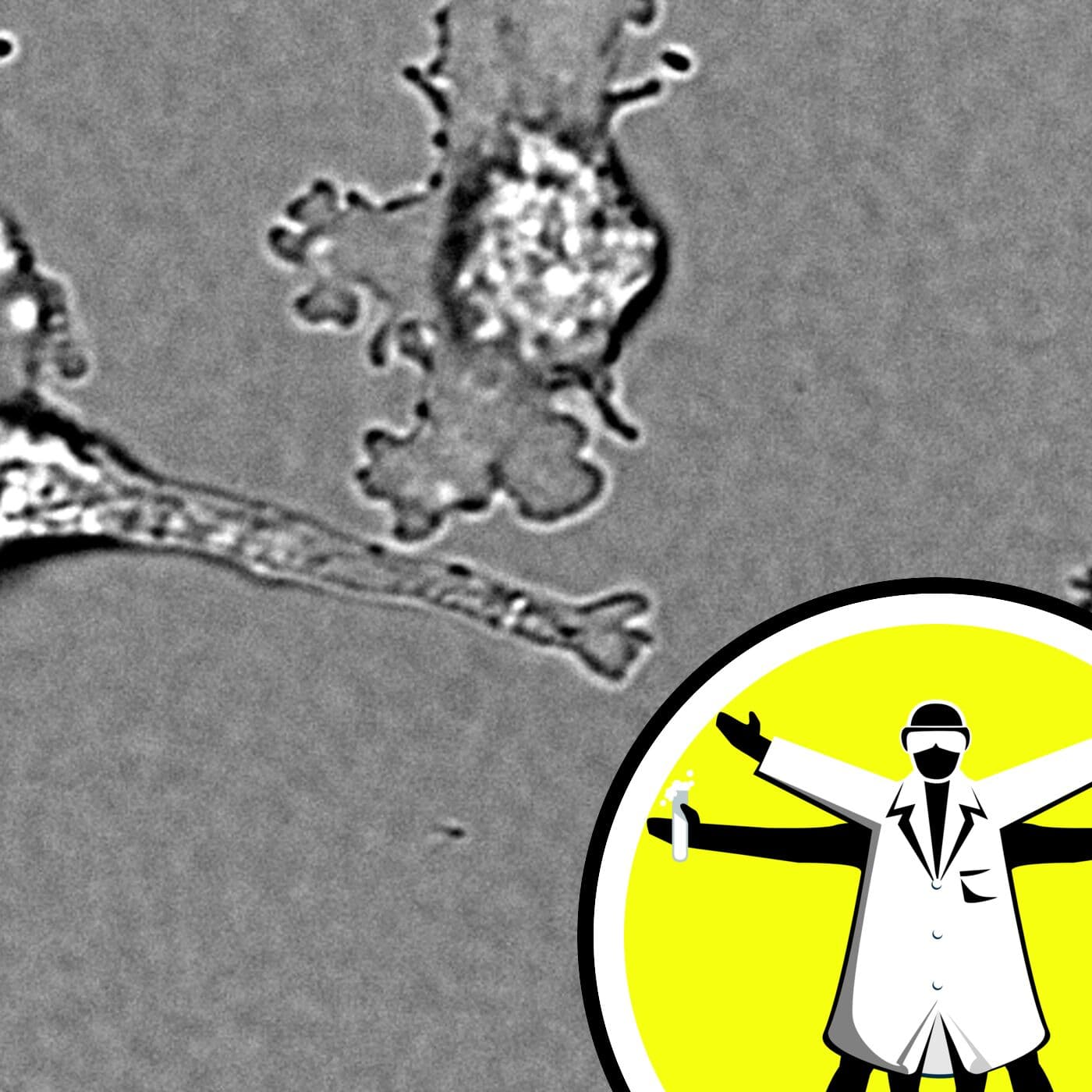
The episode covers three science stories: a malaria drug strategy, UK hepatitis C elimination progress, and new protective gear for space radiation, plus a brief tooth-sensitivity innovation. Malaria: researchers in Australia (Justin Body, Walter and Eliza Hall Institute) developed an anti-malarial that blocks the parasite’s transition from liver to blood, while allowing liver-stage growth/replication until late stage, priming CD8 T cells and antibodies.
Key claims
in mice, a single sporozoite encounter with the drug produced near-lifelong protection; subsequent mosquito bites act like “vaccine boosters.” Evidence is preclinical across multiple mouse strains. Hepatitis C: consultant hepatologist Will Gelson (Addenbrooke’s Hospital) explains England’s testing/treatment program; ~0.5% globally infected, ~95% cure with first-line tablets; deaths down ~one-third. Space radiation: Oren Milstein (StemRad) describes AstroRad vests tested on Artemis I and ISS; hydrogen-rich polymer shielding reduces dose up to ~60% during violent solar flares. Tooth sensitivity: Niall Kent (Ozen) discusses aerogel “frozen smoke” toothpaste that releases calcium/phosphate to seal dentine tubules within minutes; 88-person trial reported 89% reduced sensitivity after first use.
Written by AI. May contain mistakes. Listen to the episode to check what was said.
Chapters
Tap a time to open that second in VONew Malaria Drug Breakthrough
0:58 to 2:24
Exploring a new malaria drug that prevents disease and boosts immunity.
“technology and medicine with me chris smith coming up a new drug that blocks malaria in a whole new way and turns future mosquito bites into vaccine boosters.”
Mechanism of Action and Immune Response
2:24 to 6:25
Discussing how the malaria drug works and its impact on immunity.
“We currently have control measures for malaria.”
Evidence and Future Implications
6:25 to 9:01
Review of evidence supporting the malaria drug's efficacy and future studies.
“That helps them to maintain immunity, but also extend broad immunity.”
Progress on Eliminating Hepatitis C
9:01 to 13:20
Insights on hepatitis C treatment advancements and current UK efforts.
“Just in body there at the Walter and Eliza Hall Institute in Melbourne, Australia.”
Finding and Treating Hepatitis C Cases
13:20 to 14:01
Strategies for identifying and treating hepatitis C infections in populations.
“but hopefully by the 2030 target, we will have hit the majority, if not all of the metrics that the World Health Organization have given.”
Impact of Hepatitis C Treatment Advances
14:01 to 15:32
Learn about the significant advancements in hepatitis C treatments and their implications for healthcare practices.
“In prisons, there are high intensity testing and treatment initiatives.”
Impact of Hepatitis C Treatment Advances
15:40 to 15:56
Learn about the significant advancements in hepatitis C treatments and their implications for healthcare practices.
“And as Will points out, if you are in the UK, you can obtain a home test kit to test your hep C status.”
Naked Scientist Podcast Announcements
16:26 to 16:58
Get updates about the Naked Scientist podcast and learn about its Q&A show.
“The Naked Scientist podcast is produced in association with Spitfire.”
Astronaut Radiation Protection Innovations
16:58 to 17:38
Explore new vest technology designed to protect astronauts from space radiation.
“then you can do that by heading over to nakedscientist.com forward slash ask or look up Ask the Naked Scientist wherever you get your podcast.”
Radiation Doses in Space Missions
17:38 to 19:59
Understand the radiation exposure risks astronauts face during deep space missions.
“Oren Milstein is the CEO and co-founder of StemRad, which is the company behind it.”
Show all 16 chapters
Innovative Shielding Solutions for Astronauts
19:59 to 21:23
Learn about the innovative materials used in the new radiation protection vest for astronauts.
“to significantly higher likelihood of getting cancer down the road.”
Optimizing the Radiation Vest Design
21:23 to 23:39
Discover how the design of the radiation vest has evolved to balance weight and protection.
“Because one of the things astronauts are going to say is, I need to move around, contort my body into all kinds of spaces and space is a premium in space.”
Effectiveness of the Radiation Vest
23:39 to 24:47
Find out how effective the new vest is at blocking radiation during solar events.
“Because I know you said you're using chemistry, hydrogen, etc.”
Addressing Tooth Sensitivity with New Technology
24:47 to 26:05
Learn about a groundbreaking approach to treating tooth sensitivity using aerogel.
“And if you want to see for yourself what Oren's new vest looked like, he has sent us a picture that accompanies the transcript of his interview.”
Mechanism of Action for Aerograft
26:05 to 28:00
Examine how aerograft works to alleviate tooth sensitivity by blocking nerve triggers.
“I'm an oral and maxillofacial surgeon who works in London and the co-founder of an oral care brand called Ozen.”
Innovative Tooth Sensitivity Solution
28:00 to 33:12
Learn about a new product that offers quick relief for sensitive teeth using aerogel technology.
“releases the phosphate and precipitates hydroxyapatite which is the mineral that bones and teeth are made of onto the tooth surface which blocks the tubules and acts like a sort of varnish to prevent their sensitivity.”
Transcript
Automatic transcript. May contain errors.0:00Hi, this is Becca Moore from For The Girls and this podcast is sponsored by Aerie where you can find the right bra on 59 sizes, soft fabrics and good fits. If your bra strap is digging into your shoulder right now, it's the wrong bra. We get so used to being in pain as girls that we forget it doesn't have to be this way. Your clothes should not hurt. I got to the point where I stopped wearing bras altogether. And now my life has changed, you guys. The only bras I have in my dresser right now are Aerie, and I'm not kidding. Aerie's on a mission to make you feel good, and that starts with your bra.
0:27Your bra should hold you in, not back. Visit Aerie.com to find the right bra for you.
0:35Ball engine running. absolute genius get this welcome welcome this is the show where we bring you science what that potentially means is discovery advances research technology unbelievable without further ado this is the naked scientists hello welcome to the naked scientists podcast the program that brings you the biggest breakthroughs and talks to the major movers and shakers in the worlds of science technology and medicine with me chris smith coming up a new drug that blocks malaria in a whole new way and turns future mosquito bites into vaccine boosters. Also, England is close to eliminating hepatitis C.
1:14How's it been done and can the rest of the world follow suit? And a designer vest to protect astronauts from space radiation gets tested on the Artemis missions.
1:31scientists in australia have developed a new anti-malarial drug that targets the stage at which the plasmodium parasite moves out of liver cells where it grows initially and into the bloodstream now crucially blocking that process not only prevents the disease becoming symptomatic and stops it spreading to other people, it also turns out that holding up the parasite like this leads to a very powerful immune response against it, which can block subsequent infections, potentially indefinitely. It also means that any other mosquito bites that occur in the meantime act almost like vaccine boosters bolstering the existing immune response and reinforcing the protection.
2:13It is a whole new way to halt malaria and to make people immune at the same time, and it's the brainchild of Melbourne's Water and Eliza Hall Institute researcher, Justin Body. We currently have control measures for malaria. There's three lines of defence, really. Insecticide-treated bed nets, anti-malarial drugs and vaccines. The problem is that mosquitoes have developed resistance to insecticides and that the two approved vaccines that we have, which were indeed major breakthroughs, are imperfect because they don't provide long-term, broad protective immunity. So we need additional vaccines.
2:51And parasites are constantly developing resistance to the antimalarials that we've developed. And we have some amazing antimalarial drugs. So we really have quite a problem on our hands that as we continue to fight malaria, it continues to fight back. And what are you doing to try and take that fight to the parasite? We started by embarking upon a drug development program where we're trying to develop drugs that are active not just against the parasite when it infects red blood cells, but when it's moving through its life cycle between mosquitoes, the human liver and the human blood, and then back to mosquitoes again.
3:24And so when you're developing new antimalarial drugs, what you'd really like to do is have activity at multiple stages of the parasite's life cycle, because it provides you a number of different options. You might have heard of the saying, prevention is better than cure. And so what we've embarked upon here is the idea that we can actually use antimalarial drugs, not only to sort of treat malaria, but also to prevent malaria before it can take hold. And in doing so, we've unveiled that this drug can elicit a long-lasting immune response in preclinical models that we didn't really expect. Can you explain a bit more then, Justin, how this actually works in terms of how a drug that can block a parasite can also bolster an immune response like this?
4:06Sure. It all comes down to the way that malaria is spread. So mosquitoes bite people and they inject these little parasite forms that are called sporazites. And sporazites are very small. They can come out of the proboscis of a mosquito and they go into the skin and then go into the liver. And they'll actually invade liver cells and grow inside them. And those people have no idea that they're infected. It's effectively silent. There's no symptoms. There's no awareness that the person is infected. So this lasts for a week to 10 days. and then the parasite comes out of the liver and infects red blood cells.
4:41And that then initiates malaria, the disease, and all of the pathophysiology associated with malaria. So what this drug does is it actually prevents the malaria parasite from transitioning out of the liver and into the blood. So quite remarkably, it actually, the drug permits these sporozoites to invade the liver, and it permits these liver stage parasites to grow and replicate in quite large numbers exponentially. but it kills them right at the end of their liver stage, just before they can infect red blood cells. And it happens to be the late liver stage is a bit of an immunological sweet spot for priming both CD8 T cells, but also antibody responses that together can provide multiple lines of defence.
5:24And presumably then, if a mosquito comes along and re-challenges a person with malaria again while they're on this agent, then they're going to get a big immune response to that liver stage which is permitted to proceed but then it never translates into clinical disease because the parasite's blocked again at that stage so they get all the benefits of the immune priming none of the disbenefit of the disease you've hit the nail on the head chris that's that's why we're so excited about it and i think what this unveils is the possibility that unlike current vaccines which are really important where you need sufficiently high input numbers of sporozites to elicit a strong protective immune response.
6:06This particular drugging approach allows a small sporozite input approach to a still prime immune education. And as you've rightly identified, then each subsequent bite by the mosquito is going to seed the same opportunity for immune education, but it's in a boosting environment. And so we know that our immune systems really like to be boosted. That helps them to maintain immunity, but also extend broad immunity. So malaria can be a problem because there's different variants of it, much like COVID. And so if there's areas where there's more than one variant that would be existing in a population, this approach could also provide protection against these different variants through this boosting approach each time a mosquito bites.
6:52Tell us about the evidence you've got that this is going to work, though, because it sounds like a wonderful approach. It sounds like an amazing theory if it works. But what's the evidence that this really can deliver? Yeah, it's a really important question. And so I think we need to obviously be reserved in this, but very carefully present the evidence that we have. So the evidence is twofold. Our study is in preclinical models using different strains of mice. And so there's malaria that infects mice. And mice can be quite predictive. Sometimes they're not predictive, but mice can be predictive for malaria vaccination.
7:26And in our mouse models, what we've observed is that just a single encounter of sporozoites that are given to the animal in the presence of this new drug that we're developing with our pharmaceutical partners, that that is enough to not just protect them from disease, but to protect those animals for the rest of their life. And so we're having near lifelong immunity from a small encounter. And we tested this across a range of different mouse strains that have in themselves different immune arms. So in some mice, you get strong antibody responses, but not such strong T cell responses. And in other mouse strains, the converse is true.
8:01And so what we're able to show is that we do get both strong and long lasting antibody responses, but also long what we call tissue resident memory T cells that are primed and boosted. and they'll hang around, particularly in the liver, waiting to recognise infected liver cells through a variety of different parasite antigens. Does this require the individual to remain on the drug, though? So is this drug only effective while you keep taking it, like every other anti-malaria we've got at the moment? So that is where we would love to investigate this further in humans. So with mice, in the future, the drug was no longer present.
8:40The drug has a half-life of about two and a half hours in mice. And when we challenge those mice even two years later with mosquito bites, they were still completely protected against getting malaria. So there's this long-term protection that this particular mechanism is priming. And so what we'd like to understand is whether or not that's true in humans, because if so, that would be potentially quite game-changing for how you might use a drug to prevent malaria in vulnerable communities. Brilliant, isn't it? Just in body there at the Walter and Eliza Hall Institute in Melbourne, Australia. That research just out in the journal Science.
9:14NHS England has said the UK is leading the world in efforts to eliminate hepatitis C. This blood-borne virus infection, which was only discovered in recent decades, affects hundreds of millions of people around the world, and it's a major risk factor for liver cirrhosis and liver cancer. But the development over the last decade of a suite of new drugs that specifically target the virus has turned what was a chronic disease with a poor prognosis into something we can routinely cure and potentially even eradicate globally, because us humans are the only host. UK deaths from the infection are already down by a third, with England one of just a handful of nations to have already surpassed the World Health Organisation benchmark towards eliminating the agent from our shores.
10:02Will Gelson is a consultant hepatologist at Addenbrookes Hospital in Cambridge, and he kindly joined us from his holiday in Normandy where he's hopefully not punishing his own liver too severely with Calvados that Normandy is known for to bring us up to speed. Hepatitis C is a blood-borne virus which infects the liver and can cause cirrhosis and liver failure as well as liver cancer in some of those who are infected with it. What fraction of the population both in the UK but also globally are thought to have this? the fraction is around 0.5 % globally so it's a relatively common disease it varies geographically quite significantly though so 0.5 I'm just trying to work that out so that must mean there's a couple of hundred million people around the world who are affected and this causes cirrhosis is that all it does or does it have other implications well in about 20 % of people infected with the virus it will cause cirrhosis and cirrhosis is a risk factor for liver failure and liver cancer.
11:06And so obviously it's great news that we now have ways to treat it. The treatments that we've got do they work for everybody? Almost everybody so there's a first round of treatment which involves eight to twelve weeks of a tablet that is taken once a day or three tablets that's taken once a that will completely cure the virus in 95 % of those who take the medication. For those who don't clear the virus, so that 5%, 1 in 20, there's a second round of treatment that itself is over 90 % effective. So there's a very, very tiny proportion of patients in whom we cannot clear the virus and cure them.
11:46But of course, that's a very small proportion. Does this mean then that we're really within reach of being able to eradicate this? With that level of intervention, that quality of intervention, we could potentially kick hep C into touch? we could potentially as you know very few infectious diseases are actually eradicated and we're we're trying to head towards elimination at the moment so eliminating it as a public health threat but certainly with medications as efficacious as those we should be able to achieve huge improvements in the treatment of hepatitis c for populations at large because i gather the uk something of a flagship example here we're ahead of the curve in the initiative of trying to get rid of it from our population that's right so nhs england have set up a very effective program of treatment they established good value for money for the treatments and a program of testing and treating those with the virus.
12:52The World Health Organization have a target of 2030 and we've certainly had a significant impact on that already in England. So we've treated over 80 % of the known cases, which is one of the targets. We're already at 36 % reduction in deaths with a target of 65%. So I don't know quite when we'll hit it, but hopefully by the 2030 target, we will have hit the majority, if not all of the metrics that the World Health Organization have given. How are we finding cases? I mean, as in when you're a hepatologist, you will see people and manage the treatment, but they've got to be found in the first place and referred to you.
13:37So what sorts of initiatives are out there to go and find people in the population? Because this is very much a silent infection, isn't it? People often don't know they've got this, which means it's much harder to then track them down in the first place and help them. That's correct. So there are lots of strategies. One of them recently has been accident and emergency testing. So in high prevalence areas, ED testing is going on. There are initiatives in some general practices. In prisons, there are high intensity testing and treatment initiatives. in drug and alcohol services, similar programs.
14:12And each area of the country has been given a pot of cash to test and treat in a way that is most beneficial for their population. And lastly, if we do nail this one, what sort of a difference to your practice is this going to make? As in, at the moment, how much of a headache for a hepatologist is hepatitis C? And therefore, how much is getting rid of it going to save the health service? This has had a huge impact on my practice already. When I started as a consultant hepatologist, we had a good proportion of liver transplants that were undertaken for liver failure secondary to hepatitis C. And they were very difficult to manage after transplantation because the virus invariably came back and the treatments that we had would actually cause rejection of liver transplants.
15:01And now not only can we treat people after liver transplantation, but they generally don't get to liver transplant in the first place. The other area that has made a massive difference already is liver cancer so it's now relatively rare unfortunately not completely stamped out but relatively rare to get a cancer from hepatitis C so it's made a massive difference in our practice already so it's a moving feast really Chris but certainly it's just changed hugely over the course of the last 10-15 years. A phenomenal success isn't it? Hepatologist Will Gelson there from Adams Hospital in Cambridge on the successful fight to help eliminate hep C.
15:40And as Will points out, if you are in the UK, you can obtain a home test kit to test your hep C status. Details are at hepcetest.nhs.uk if you want to check it out. Hi, this is Becca Moore from For The Girls and this podcast is sponsored by Aerie, where you can find the right bra in 59 sizes, soft fabrics and good fits. If your bra strap is digging into your shoulder right now, it's the wrong bra. We get so used to being in pain as girls that we forget it doesn't have to be this way. Your clothes should not hurt. I got to the point where I stopped wearing bras altogether. And now my life has changed, you guys.
16:15The only bras I have in my dresser right now are Aerie, and I'm not kidding. Aerie's on a mission to make you feel good, and that starts with your bra. Your bra should hold you in, not back. Visit Aerie.com to find the right bra for you. The Naked Scientist podcast is produced in association with Spitfire. Cost-effective voice, internet and IP engineering services for UK businesses. Find out how Spitfire can empower your company at spitfire.co.uk
16:47This is the Naked Scientist podcast with me, Chris Smith. Now we're halfway through today's programme, so I wanted to mention our other Q &A show, which is called Ask the Naked Scientist. And if you want to hear it, find out more, or even contribute to it, then you can do that by heading over to nakedscientist.com forward slash ask or look up Ask the Naked Scientist wherever you get your podcast. No question is a stupid question and it's always great fun. Still to come, how a new toothpaste uses frozen smoke to relieve the pain caused by sensitive teeth. But first, researchers have created a special vest to protect astronauts from space radiation.
17:25Tests using the uncrewed Artemis I mission showed that the AstroRad vest can significantly reduce the radiation astronauts receive during a major solar particle event or a solar storm. Oren Milstein is the CEO and co-founder of StemRad, which is the company behind it. He and his colleagues have used two torso models that mimic human tissue in the Orion spacecraft and they found that their garment would have lowered radiation exposure to levels seen in two past solar particle events. It's also flown on the International Space Station with real humans trying it. I've been speaking to him. Radiation, be it on Earth or in space, is daunting, a problem that needs overcoming, especially radiation that is very penetrating.
18:11So, you know, those thin lead aprons that we're all familiar with from the doctors, you know, they don't do much when it comes to penetrating radiation, such as gamma radiation or space radiation. So STEMRAD has tackled this problem by use of very sophisticated wearable radiation protection. What sorts of doses do astronauts get at the moment? Yes, so astronauts venturing into deep space will receive doses much higher than those that are in low Earth orbit on the International Space Station or in the past on the space shuttle, where they received doses that are probably about 40 times what you would receive here on earth on a daily basis and that's not pleasant but going into deep space that could catapult to about 500 times more than what you'd be receiving here on earth so think about it that within the span of a week or two you can potentially receive a dose that's higher than what you receive here on earth for your whole lifetime we tend to talk in terms of radiation exposure in terms of what we regard as a safe exposure short-term and lifetime exposure so if we take say a journey to mars that will be about nine months at shortest what do we anticipate the dose would be in terms of lifetimes worth of radiation exposures that an astronaut going to mars would get for example then going to mars in terms of lifetimes it would be in the thousands fold of what you'd receive here on Earth.
19:49So it would take you a thousand years here on Earth to get what you would get on the path to Mars and back. So yeah, it's significantly higher. And that translates to significantly higher likelihood of getting cancer down the road. And that's what we're trying to tackle here by mitigating that amount by as much as we reasonably can. And what's your approach? What is the technology? How does it work? Yeah, so shielding the whole spacecraft is not feasible, just be too heavy. And weight is really the bottleneck in getting to these destinations. So rather than trying to shield the whole spacecraft, we resorted to shielding the actual human body.
20:33That's a lot more mass efficient. So you're able to achieve pronounced radiation attenuation by use of a physical mass, and specifically in space, a mass that is hydrogen rich, such as polymers, polyethylene, etc. So we take those materials and we adhere them to the body in proximity to the most susceptible organs in the body, such as the bone marrow and the gastrointestinal tract. And in the case of women, the breasts are very sensitive. So we place them in proximity to those very sensitive organs, while the thickness of the shielding really reflects the underlying susceptibility of each tissue being protected.
21:20So effectively, you end up looking a bit like a superhero. You wear a suit that has extra defenses in your most vulnerable bits, and it's using chemistry to soak up any incoming radiation, because you're putting something in the way of the incoming radiation and that just happens to be these polymers. Is this light and practical though? Because one of the things astronauts are going to say is, I need to move around, contort my body into all kinds of spaces and space is a premium in space. So is it a practical solution? Yes. So to really observe how practical the solution is, we first of all sent it to the International Space Station, the ISS, and it spent a couple of years there being worn by five different crew members to get exactly that feedback as to how practical the solution is.
22:10So that was a preliminary prototype and the purpose of that was to get that feedback and indeed we got a lot of feedback based on which we were able to improve the ergonomics of the product. So as far as comfort and ergonomics, the product today is at the point where it could be worn for days on end and even slept in. And that's very important because solar or particle events can last up to one week. So it's not something you need only for a few minutes, but rather for several days sometimes. So that was one side of the equation that we successfully solved. The other side is really the mass limitations at launch.
22:49So mass is, as I mentioned earlier in this conversation, is very challenging to move from here to lunar orbit and especially to Mars, where you're going to see a very harsh limit on what could be sent to the point where people are even rationed water and food in going to these remote destinations. So to answer that, we came up with the solution that we thought was the most mass efficient, and that's the asteroid, at 26 kilograms. But since then, and given the success of this study that's being published today in Science Advances, we were able to further reduce the mass towards 16 kilograms, knowing where we're overprotecting and where we're underprotecting based on this mission that we just did on Artemis I.
23:38we're able to reduce the mass to the point of about 16 kilograms without compromising the protection too much. What's it actually made of though? Because I know you said you're using chemistry, hydrogen, etc. to get in the path of the radiation, the cosmic radiation, but some of these things are very penetrating. Some of them have got enormous energies. So how are you able to soak them up? And to what extent can you soak up the radiation? How much does the dose drop by? The vest can block up to 60 % of the radiation coming from a very violent solar flare, such as the one that took place in 1972 between Apollo 16 and 17.
24:19So that's very, very important. And then, you know, as far as the material that we're using, so we're really using hydrogen-rich polymers. In the case of Artemis I, we used HDP, simply high-density polyethylene. It sounds very simple, but it's actually one of the best materials in the world when it comes to blocking particulate radiation, such as the protons coming from the sun in the case of a solar flare. Oren Milstein, who's the CEO at STEMRAD. And if you want to see for yourself what Oren's new vest looked like, he has sent us a picture that accompanies the transcript of his interview. You can have a look at nakedscientist.com.
24:58Just click on the podcast link. You'll see this show listed there and the interviews that are in it, including this one. Tooth sensitivity affects around half of UK adults, causing sharp pain that can put people off cold drinks, ice cream or even brushing properly. Most sensitive toothpaste can only mask the symptoms either by numbing the nerves in our teeth or slowly blocking the microscopic tubules that get exposed in worn down teeth and that takes days of repeated use. Now an NHS surgeon has taken a different approach, borrowing a material from aerospace and bone graft science. Aerogel is an ultralight porous solid used occasionally by NASA and nicknamed frozen smoke.
25:41NASA use it to capture micrometeors in space. Upon contact with saliva, the new material releases sequestered calcium and phosphorus ions to seal up the tubules within the teeth within just minutes to rebuild a protective mineral layer on the tooth and reduce the sensitivity. It's the first newly patented approach to tooth sensitivity in almost three decades. So my name is Niall Kent. I'm an oral and maxillofacial surgeon who works in London and the co-founder of an oral care brand called Ozen. This deals with the problem of sensitive teeth, doesn't it? So what is that and who's got it? Sensitive teeth affects approximately 50 % of the population and it's the short sharp pain which is often and commonly caused by cold triggers so cold drinks but it can also be caused by hot things tea coffee and also very sweet things and if you look at the tooth what's actually going on to produce that unpleasant effect yeah so your tooth has got a number of layers it's got a blood vessel and nerve inside and this is what's removed when you have a root canal treatment and then you've got dentine and then you've got enamel so it's like three layers.
26:53When the dentine becomes exposed, these little tubules that run inside the dentine become exposed and the cold triggers or the hot triggers or the sweet triggers cause a sensitization of the nerve inside the tooth, which gives a sensation of pain. The dentine becomes exposed when either the enamel is worn away or you get recession of the gum. And what is it because what's in the tubules gets cold or hot and that transmits that to the interior nerve in the tooth. Yeah so you've got fluid that exists inside these tubules and it's expansion or contraction of this fluid which then causes the sort of sensation of pain within the nerve of the tooth.
27:31So cold things cause contraction and hot things cause expansion. And how have you sought to tackle the problem? What I've done is developed a novel material called aerograft which is a bioactive aerogel and it's a material which acts to block these tubules and prevent these triggers from interfering with the fluid and the nerve. How does it work? So it works by releasing calcium and phosphate which are bound within a sort of aerogel structure which once it's put into your mouth and mixed with the water in your saliva it releases the calcium releases the phosphate and precipitates hydroxyapatite which is the mineral that bones and teeth are made of onto the tooth surface which blocks the tubules and acts like a sort of varnish to prevent their sensitivity.
Read the full transcript
28:15There's a lot of calcium and phosphate already in toothpaste. If you look at the back of the tube, you know this as a Maxvax person. It's loaded with the stuff. So why don't I just go and get a tube of existing toothpaste and smear that around my gums and get the same effect? So the issue with the calcium phosphate that's in toothpaste at the moment is the fact that it's crystalline. What that means is it's got a very ordered structure, but it's also not very soluble. The difference between that and the aerograft is that the calcium phosphate is amorphous. What that means is it's highly soluble and can be released into saliva to precipitate or to crystallise and form that mineral.
28:56So what's in the existing tooth base is not going to be released, it's not going to form a layer on the tooth surface, whereas the aerograft will do that. And where does the aerogel aspect come in? Why do you need that at all so that acts as a kind of carrier for the calcium and phosphate it's a bit like a kind of fishnet so it's like a chain of silicon atoms which then have the calcium and phosphate bonded to that and they keep the calcium phosphate amorphous so it's not crystalline so it's highly soluble and they also act as a sort of building block once it's inside your mouth and that mineral forms as well as on the tooth surface but also in the particle so when the particle goes inside the tube the tubule you get the precipitation of the mineral on the tubule and on the tooth surface presumably that takes a little while for that effect to be achieved and therefore for the relief to come so how quickly upon beginning to use this would i if i had sensitive teeth begin to see a benefit so if you look at in so we've looked at in the lab and it takes less than 30 minutes to do that reaction okay whereas the existing materials take around 22 hours so we've dramatically decreased the time it takes in the lab to do that how that translates to people actually using it so we've recently done a clinical trial involving 88 participants where 89 percent of them had a reduction sensitivity on the first time of using the product.
30:27And is that what it is? It's just used as a toothpaste. So instead of using your normal brand, you would use your product and get the effect? Or do you need to use this as an adjunct to existing tooth cleaning regimes? The best way to use it is to not rinse your mouth out after using it and just spit out any excess and leave it on the tooth surface. But we've also invented an oral gel product, which is kind of like a concentrated product, which is used for times other than brushing where you typically get sensitivity. So you can use it around teeth whitening or you can also use it, you know, you're going out outside, you're going to the beach, you can have a cocktail and you can put it on before that to prevent sensitivity before those kind of like peak periods.
31:12How does a maxillofacial surgeon end up playing around with this stuff? How did you stumble upon how to do this? One day I was meeting my brother for coffee, who's an artist at the Royal Academy of Art. And he'd gone to a lecture on aerogels. And what he wanted me to do was to make him a sculpture out of aerogel, because they're quite kind of interesting materials to look at. I sort of agreed to do this for him. And when I started looking at the chemistry of aerogels, I realized that they would be an excellent kind of medium for holding these calcium and phosphate ions. Originally developed it for a bone graph because, well, various reasons.
31:53One, the low density hypothesis was that that low density would mean that the material would resorb and remodel very fast. And then once I started looking in the lab at how quickly this reaction was happening, I sort of realised this would be an excellent material for solving sensitivity. And it's completely safe. There are no health problems. It's biocompatible. You can put this in the body, no problem. Yeah. I mean, the only thing that it's made of is silicon, calcium and phosphate, which all exist inside the body. We've registered the ingredient as a as an INCU ingredient so it's gone through quite rigorous testing and assessment and then we've also as I said performed an 88 person clinical trial which has shown no irritation.
32:35That really is an example of science meets art this isn't it what does your brother say having given you the idea? Yeah he's he's the word you're looking for a shareholder is it? Yeah yeah yeah he still wants to make the sculpture i kind of quickly um dropped in the sculpture um no he's sort of very proud because you know it's also all of these things they they're not just like one person doing it they're kind of lots of people in their contribution and he has quite a big contribution to this nile kent who's an oral maxillofacial consultant and also co-founder of ozen a new aerogel based way to treat sensitive teeth well that's it for today i did promise you last week though that i was going to report back on my taste test of savers artificially made butter which we talked about in a previous program on foods of the future do check that out it was a great listen last week even if i say so myself the sample did eventually arrive and i tried it on a bit of baguette it looked and tasted just like a pale butter in fact i wouldn't have known it wasn't butter if i hadn't been told so synthetic butter it might be tasty it definitely was too join us on Tuesday we're going to be examining wounds and wound healing and why people with diabetes are at so much risk and that program brought to you in partnership with UK Research and Innovation we'll be exploring the cost of wounds to healthcare providers and how science might have some new solutions in the works do please meanwhile pen us a review on whatever podcasting platform that you use to get the show those rankings really help our visibility and that really matters so thanks in advance for that and if you appreciate what we do for you each week do please consider making a donation to support the show you can do that at nakedscientist.com forward slash donate and thank you very much from the bottom of our hearts to everyone who does chip in each week to keep the show on the road i'm chris smith and from all of us here at the naked scientist thanks for listening and until next time goodbye
34:53Hi, this is Becca Moore from For The Girls, and this podcast is sponsored by Aerie, where you can find the right bra in 59 sizes, soft fabrics, and good fits. If your bra strap is digging into your shoulder right now, it's the wrong bra. We get so used to being in pain as girls that we forget it doesn't have to be this way. Your clothes should not hurt. I got to the point where I stopped wearing bras altogether. And now my life has changed, you guys. The only bras I have in my dresser right now are Aerie, and I'm not kidding. Aerie's on a mission to make you feel good, and that starts with your bra.
35:20Your bra should hold you in, not back. Visit Aerie.com to find the right bra for you.