In short
The Naked Scientists Podcast: Episode Summary
Episode Title
Motor Neurone Disease: What Does the Science Say?
Overview In this episode, Chris Smith and guests delve into motor neurone disease (MND), a progressive neurodegenerative disorder that affects voluntary muscle movement. They explore the clinical features, diagnosis, treatment options, and personal experiences of individuals living with MND.
Key Topics Discussed
Introduction to MND
- MND is a debilitating illness affecting approximately 1 in 300 people, typically manifesting in late 50s or 60s but can occur earlier.
- Notable figures such as Stephen Hawking and sports personalities have publicly shared their experiences with MND.
- Over 90% of MND cases arise sporadically, with less than 10% having a familial link.
Neuropathology Insights
- Guest: Jenna Gregory, Neuropathologist at University of Aberdeen
- Suggests that MND may be linked to the accumulation of protein clumps (e.g., TDP43), which can develop in various organs years before affecting the nervous system.
- MND symptoms can include difficulties in swallowing and coordination, with other bodily symptoms manifesting earlier than motor symptoms.
- Each person with MND experiences a unique set of symptoms.
Living with MND
- Guest: Sarah Ezekiel, MND Patient
- Shares her journey of adapting to life with MND for over 25 years, including challenges of reliance on caregivers and communication barriers.
- Utilizes eye gaze technology to communicate and create art, showcasing her resilience and creativity despite the disease.
- Advocates for awareness and research funding to ultimately find a cure for MND.
Diagnosis and Prognosis
- Guest: Brian Dickey, Chief Scientist at the Motor Neurone Disease Association
- Diagnosis often involves exclusion and can take a year from symptom onset due to the body's compensatory mechanisms.
- Symptoms typically start in one area of the body (e.g., lower limbs, upper limbs, bulbar muscles).
- Discusses the heterogeneity in disease progression, with some patients like Stephen Hawking living for decades, while others may experience rapid decline.
Treatments and Research Advances
- Current treatments are limited; however, there are drugs like Rilazole that can prolong survival slightly.
- Recent genetic advancements have led to the development of a treatment targeting specific genetic mutations (e.g., SOD1) affecting a small percentage of patients.
- Guest: Kevin Talbot, Nuffield Department of Clinical Neuroscience at University of Oxford
- Discusses the shift from observational studies to understanding genetic and biochemical pathways that may lead to effective treatments.
- Emphasizes the potential for preventative interventions based on genetic insights.
Future of MND Research
- Ongoing research aims to explore the biological factors driving MND and develop targeted therapies.
- The importance of understanding aging and how it relates to the onset of MND.
- Public health measures may be as crucial as drug therapies in reducing the incidence of MND and similar conditions.
Conclusion The episode provides a comprehensive overview of motor neurone disease, featuring personal stories, scientific insights, and current research efforts. The discussions highlight the complexities of the disease, the varied experiences of individuals living with MND, and the ongoing quest for effective treatments and perhaps a cure.
Key Takeaways
- MND is a complex condition with diverse symptoms and progression rates.
- Early diagnosis is critical for effective management.
- Advances in genetics and personalized medicine show promise for future treatments.
- Raising awareness and funding for research is essential in the fight against MND.
For further episodes and updates, listeners are encouraged to follow The Naked Scientists on social media and consider supporting their efforts through donations.
Written by AI. May contain mistakes. Listen to the episode to check what was said.
Chapters
Tap a time to open that second in VOUnderstanding Motor Neurone Disease
0:45 to 1:46
Exploring the basics of motor neurone disease, its prevalence, and notable cases.
“away a person's ability to walk, speak and eventually breathe.”
Symptoms and Early Warning Signs
1:46 to 4:36
Discussion of the symptoms of MND and their varying manifestations among individuals.
“Jenna Gregory is a neuropathologist at the University of Aberdeen.”
Linking Symptoms and Mechanisms
4:36 to 8:04
Examination of the connections between various symptoms and potential disease mechanisms.
“Do we have any insights yet into what connects these different manifestations of the disease?”
Sarah's Journey with MND
8:04 to 13:10
A personal account of living with MND from Sarah Ezekiel, highlighting challenges and adaptations.
“So are there some drugs and other molecules in the environment that are acting as a trigger in some vulnerable people?”
Diagnosing Motor Neurone Disease
13:25 to 14:05
Insights into the diagnosis process of MND including initial symptoms and challenges.
“Music in the programme is sponsored by Epidemic Sound.”
Understanding Motor Neuron Disease Symptoms
14:05 to 16:48
Learn about the initial symptoms and diagnostic process of motor neuron disease.
“It's often muscle weakness, so it can be difficulty picking up something or maybe a bit of foot drop.”
Genetic Links and Diagnostic Testing
16:48 to 17:57
Explore how genetic testing plays a role in diagnosing motor neuron disease.
“because early diagnosis will mean early treatment and the likelihood that treatment will be more effective.”
Variability in Disease Progression
17:57 to 19:42
Discuss the variability in disease progression among motor neuron disease patients.
“My answer was that maybe there was something in his genetic makeup that wasn't causing the disease, but actually was maybe pushing back against the disease, not enough to stop it from happening, but slowing it down.”
Current Treatments for Motor Neuron Disease
19:42 to 20:49
Understand the limited treatment options currently available for motor neuron disease.
“Yes, the treatments for motor neuron disease are limited.”
Research and Future Directions
20:49 to 23:20
Explore the promising research directions in understanding and treating motor neuron disease.
“neuron disease but if you pick up a medical textbook it will normally say that survival is between two to five years from symptom onset.”
Show all 12 chapters
The Role of Aging and Health in Disease Manifestation
23:20 to 28:06
Learn how aging and general health factors may influence the onset of motor neuron disease.
“And have we got some drugs now which we're rationally designing, informed by those sorts of studies you've been saying, the genetic insights, the metabolic insights into some of the cases of motor neuron disease?”
The Interplay of General Health and Motor Neurone Disease
28:06 to 28:30
Explore how general health factors may influence the risk of motor neurone disease.
“certainly relevant for dementia, for example.”
Transcript
Automatic transcript. May contain errors.0:16Hello, welcome to the Naked Scientist podcast. This is the show that brings you the biggest breakthroughs and also talks to the major movers and shakers in the worlds of science, technology and medicine. I'm Chris Smith and this week we are putting motor neurone disease, MND, under the microscope.
0:40Motor Neurone Disease is a progressive, debilitating illness that gradually takes away a person's ability to walk, speak and eventually breathe. About one in every 300 of us will develop the condition which usually strikes in our late 50s or 60s, although some forms of the disease can kick in much earlier. Stephen Hawking lived with motor neurone disease that began in his 20s for decades. And in October 2025, the former England Rugby Union captain Lewis Moody revealed that he'd been diagnosed, joining other athletes like Rob Burrow, Stephen Darby and Marcus Stewart in speaking publicly about their run-ins with the condition.
1:19The disease does run in families, although this accounts for less than 10 % of cases. The vast majority of people, over 90 % develop the disease out of the blue. And that means it may well have many different underlying mechanisms with different prognoses and different treatments. So in today's programme, we're going to explore what is behind this disease, how it happens, who's at risk, and what we might be able to do to turn the tables. Jenna Gregory is a neuropathologist at the University of Aberdeen. She's pursuing intriguing links suggesting that motor neuron disease might hinge on the accumulation of protein clumps that can even build up in other organs entirely, including the gut and the skin, years before it visibly affects the nervous system.
2:05When we make a movement, we actually rely on a part of our brain that controls that movement, and we call it the motor cortex, that's the bit of the brain that controls it, and it's made up of tiny little units that we call cells that control that movement, and they control it by connecting up through the back to the muscles in all over our body. And what happens in motor neuron disease is that these tiny units start to die off. That means that movement becomes slower and more difficult to carry out. What would a person who's ultimately going to be diagnosed with motor neuron disease tend to notice first and where?
2:43Problems with movement, so perhaps coordinating a swallow when you're eating, so you're having trouble swallowing or perhaps even controlling your leg or your hand so your foot might drop down when you're walking so you might notice these things but what we're starting to recognize as well is that other symptoms not symptoms particularly in the brain but in other parts of the body might come before this so things that might affect the gut and how the gut moves those symptoms could even start before people experience the other symptoms so it is a whole body disease, not just affecting the motor cortex and these motor neurons in the brain.
3:20And I think that one thing that I find particularly striking about people who are affected by this disease is how different it is from person to person. Nobody has the same set of symptoms. Everybody has a completely different experience of this disease. When one talks to neurologists and pathologists about various neurodegenerative diseases, they often say that by the time the disease is clinically manifest, there's a lot of damage. But the body's really good at compensating for a long time. So it sort of covers up the fact and makes up for the fact that it's losing function. So how long do you think someone potentially is having motor neurone disease before they actually notice and come to see a doctor?
4:05This process is occurring for decades prior to people having these symptoms. And like you say, our bodies are so good at compensating and might have lost 70 % of these units that control motor function by the time symptoms occur. And so really, we've got to be thinking about what people who eventually get motor neurone disease, what do they look like 10, 20 years before they get symptoms? And work from our group has shown that these non-brain symptoms are actually more prominent in those early stages. you may well be aware of people like Lewis Moody who've been diagnosed with motor neurone disease who's been a wonderful advocate for ulcerative colitis and gut symptoms during his career these gut symptoms can occur 10-20 years before motor symptoms occur and so being more cognizant and thinking about the disease and how different it is for everybody and how everyone experiences it differently but thinking a lot about these non-brain symptoms and how these could occur before you've lost all of those units in the brain because it's so important for us to intervene as early as possible to make sure that we can treat people and get effective therapies through.
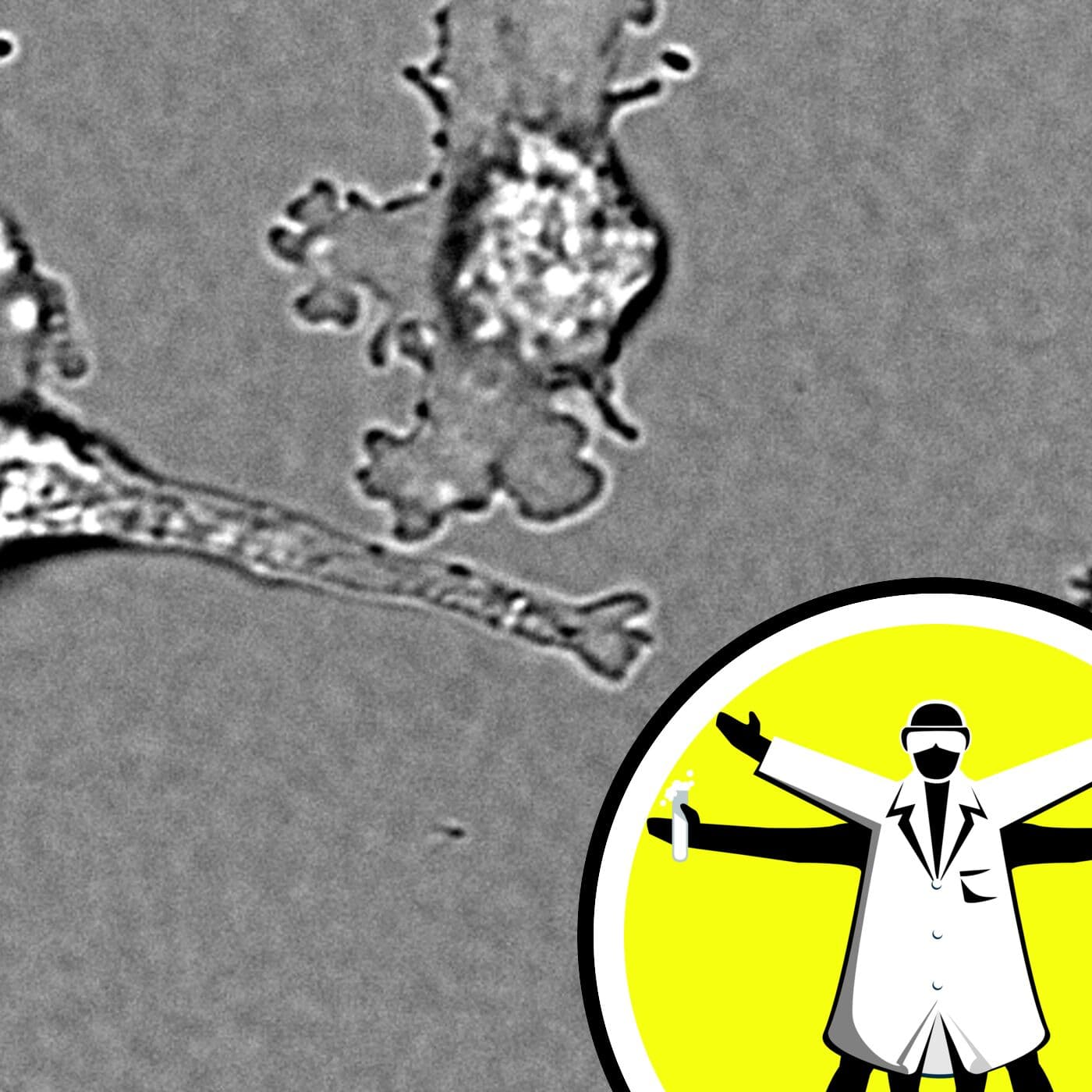
5:16Do we have any insights yet into what connects these different manifestations of the disease? Because obviously the thing that people notice is the loss of the motor nerves and that produces the weakness and ultimately paralysis. But if we've got these other manifestations, like intestinal symptoms happening, what's the mechanism behind that? And can that give us clues as to the underlying disease process as a whole? I certainly believe so. Something that we see in the brain of not just motor neurone disease, but even other dementias like Alzheimer's disease, are proteins that clump up inside these cells in the brain and in the back, causing the death of those units and the accumulating motor problems.
5:58One of the proteins that clumps is called TDP43. That TDP43 is not just forming those clumps in the brain and in the back, it's also forming them in the gut, it's also forming them in the skin. This is something that sort of links all of these symptoms and can give us a clue to how we can find people as early as possible to intervene. The people that have become notable recently who've been diagnosed with it, a lot of these are very prominent in the sports world. now is it that we hear about them because this disease robs us of people who are highly trained athletes or is there something in what they were doing at high level professional sport that brings forward a diagnosis of motor neurone disease is there a link there whilst there aren't any clear answers right now because there is so much research ongoing in this i think the first hypothesis that you present here that we just see people were more likely to think this then we're seeing people in the public that have it.
6:59Yes, I think that could be the case. Is it something that people are doing? It could also be, you know, there's a lot of research into whether head injuries are causative of these diseases. And, you know, whilst there isn't strong evidence to suggest that head injuries are not good for you, are they? Do you know, they're not good for your brain health and whether this is contributing to this accumulation of damage over time. But, you know, as we've discussed, even in our conversation just now, actually you know this isn't just a disease that affects the brain so head injuries aren't the only thing that could be causing this it's affecting other areas of the body as well and our team published a paper last year demonstrating that there's an over-the-counter drug that people frequently take for fungal nail infections that can cause this tdp43 these protein clumps to form and so you know perhaps this is a population that may be more likely to take those sorts of medications.
7:51So I think it's multifactorial. I think that there's a lot of ongoing research into this with few clear answers right now, but I think there probably are multiple things that are going on here. It's fascinating that, isn't it? So are there some drugs and other molecules in the environment that are acting as a trigger in some vulnerable people? Jenna Gregory there, she's at the University of Aberdeen. Living with MND involves adapting to constant changes and coping with uncertainty. In some people the condition runs a very fast course but in others it can progress much more slowly. Sarah Ezekiel is in the latter camp.
8:31She's been living with the disease for over a quarter of a century. Rachel Ralph went to meet her at home in northwest London. Before my diagnosis I was happily married with a three-year-old daughter. I've always been creative. I loved cooking, gardening, knitting and sewing, making things, making a home. I was a good mum and a good homemaker and I was really proud of that. Sarah is a mother of two. It was early in 2000 when she realised that something was amiss. Whilst I was pregnant with my son, I started noticing strange symptoms. My left arm felt weak and my speech would slur, mostly at night.
9:05On the day I was diagnosed, I think I was mostly in shock and because I was pregnant, I convinced myself I'd be fine once I'd given birth. So there was a lot of denial too. The symptoms progressed rapidly after her son was born, and as her condition worsened, her marriage deteriorated, leaving Sarah raising two young children alone. She moved from using a walking stick to get around, to a frame, and then to a wheelchair. Sarah is now fully dependent on carers for everything, and whilst it took time for her to see any light in her situation, Sarah now stays positive despite the challenges M &D brings.
9:41I think my biggest challenge is having to rely on other people for almost everything. I divorced my husband four years after my diagnosis and now I need carers around the clock. Every single day with MND brings its own challenges but I try to stay occupied and keep busy. That really helps me cope. Many people with MND lose the ability to speak and for me that's been the hardest part. We all take speech for granted, I know I did. Imagine not being able to pick up the phone and sort something out. It becomes especially difficult when I have a new carer. They don't know my routine and I can't tell them what to do.
10:15Thankfully, AI and assistive technology has helped. Sarah uses eye gaze software to communicate. Infrared cameras mounted on Sarah's computer screen track the movement of her pupils, which allows the software to calculate exactly where Sarah is looking and translate these eye movements into screen navigation and the use of commands. Sarah's computer previously only had pre-set robotic voices that she could use to talk, but the company Smartbox has helped Sarah to get her original voice back by using AI to reconstruct her voice from an old video recording. It was an emotional experience for both Sarah and her children to hear her speaking with her own voice again.
10:56Having my voice back is pretty amazing. It means so much to my children, especially because they couldn't really remember my voice at all. I would probably sound older now, but that's a lot better than sounding like a robot. Even my cat listens to me these days, which definitely didn't happen before. Sarah spends much of her time creating artwork with her EyeGaze software. Since 2012, she's hosted exhibitions in several countries and has more recently ventured into creating AI art. Sarah's house is now filled with the beautiful artwork she has created over the years. I've been creative since I was very young so when I lost the use of my hands I honestly thought I'd never create again.
11:35In 2012 I started painting using eye gaze technology and art software. It's tiring and painstaking work but being able to create again felt incredible. These days I use mid-journey which is artificial intelligence. I don't see it as anything strange just another tool for creativity and to be honest I'm far too lazy now to spend weeks or months on a single painting. Sarah has also written and directed a musical about living with motor neuron disease, helping to raise awareness of the condition to help others and raise funds to support research into MND. Ms Mandy's Adventures in Wonderland came about after I met the drag queen Cheddar Gorgeous a few years ago.
12:16Through Cheddar I was introduced to other queens and together we decided to create a biographical show about my life with MND. I'd already written my memoir so the scenes grew out of that. That project led to something much bigger. The anthropology department at the University of Manchester received a five-year grant from the Wellcome Trust to explore the inner worlds of people living with MND. I'm the participant lead on the project, which is my first paid job in 26 years. It's wonderful to help other people with MND create, and I genuinely love what I do. I've always believed that raising awareness of MND is what will ultimately lead to a cure.
12:51When I was diagnosed 26 years ago, there was very little awareness at all. Thankfully, that's changed, and I truly believe we're getting closer. I really hope that an effective treatment or even a cure is just around the corner. Thanks very much to Sarah Ezekiel, who was speaking to Rachel Ralph about her experience of living with motor neuron disease this last quarter of a century. The Naked Scientist podcast is produced in association with Spitfire. Cost-effective voice, internet and IP engineering services for UK businesses. Find out how Spitfire can empower your company at spitfire.co.uk. Music in the programme is sponsored by Epidemic Sound.
13:35Perfect music for audio and video productions. This is the Naked Scientist podcast with me, Chris Smith, and today we are taking a closer look at MND, motor neurone disease, and how science is trying to tackle it. In a moment, we'll hear about where scientists see the future of treating the condition. But first, we're going to find out a bit more about how MND is diagnosed and managed at the moment, beginning with what are usually the first symptoms that take a patient off to see the doctor. Brian Dickey is chief scientist at the Motor Neurone Disease Association. It's often muscle weakness, so it can be difficulty picking up something or maybe a bit of foot drop.
14:18Often there are what are called fasciculations, which is a twitching of the muscles, and that will usually send them to the GP. The process of diagnosis usually starts when the person is sent to the neurologist, and then it's effectively diagnosed by exclusion because there's no explicit diagnostic test for motor neuron disease. it can take a year on average from symptom onset to diagnosis. Does it happen everywhere all at once or does it start in one part of the body and then slowly progress? How does it tend to manifest? The disease often starts in one particular part of the body but that can be very random as well.
15:03So about a third of cases start in the lower limbs, a third in the upper limbs and a third in what are called the bulbar muscles involved in speech and swallowing. Are any muscle groups always affected or always spared or is it unwritten territory here? One of the interesting things that researchers are looking at is why some motor neurons are relatively resistant in this disease. There are two particular populations. One is the ocular motor neurons, so these are the ones that govern eye movements. and also the motor neurons that govern sphincter function. And certainly these appear to be resistant until relatively late stages of the disease.
15:49What is actually going on that means that the person says, well, I've got foot drop or my fingers are weak, I can't undo a jar. What's actually causing that? When a person first notices the symptoms of the disease, the disease could actually have been there for several years. And the reason for this is because the central nervous system is very good at compensating for any loss. And so if one motor neuron dies, the neighboring motor neuron actually ups its game. It can sprout and form a new connection with a muscle cell and it can ensure that things keep going. And so maybe some of the fine tuning is lost, but actual muscle weakness doesn't tend to appear until a significant proportion of the motor neurons have been lost.
16:37Add to that this diagnostic delay of up to a year, and what it means is by the time the diagnosis is made, the disease is already quite well progressed. So one of the things we really need to do better is to get early diagnosis, because early diagnosis will mean early treatment and the likelihood that treatment will be more effective. Are there any tests? I know you said it is a difficult and an exclusion diagnosis, but are there any tests that definitively can say this person has a motor neurone problem? The tests explicitly to look at motor neurons tend to be electrophysiological tests. So measuring the number of muscle cells that a motor neuron will connect with, the speed at which the motor neurons are conducting the signals from the brain to the muscles.
17:31They aren't explicit for motor neuron disease, but they give a good indicator as to whether the motor neurons are being specifically affected. What about the fact that a proportion of cases of motor neuron disease, a small proportion admittedly, but they are linked to genetics, so can we do any DNA tests that would point the finger at what the diagnosis is for some people at least? In about 10 % of cases there is a high genetic risk factor and often the disease will run in families so genetic testing is part of the diagnostic process what the genetics do is they can aid that diagnostic process and hopefully speed it up and when you talk about progression this is interesting isn't it because it seems to be a really mixed bag some people develop this disease and seem to progress incredibly quickly others develop this disease and seem to progress incredibly slowly i mean i worked in cambridge i used to bump into stephen hawking from time to time he had the disease for decades other people patients i've seen in the hospital have succumbed very very quickly why is that stephen hawking once asked me the question, why had he lived with this disease for five decades?
18:51My answer was that maybe there was something in his genetic makeup that wasn't causing the disease, but actually was maybe pushing back against the disease, not enough to stop it from happening, but slowing it down. That has become an area of great interest by the research community and also by drug companies of course, because if there are good genes that can slow down the speed of progression of this disease and we can understand what these genes are doing, then perhaps you can develop a treatment that could actually be more effective. And talking of treatments, there are some, aren't there?
19:34I know there are not many, but there are some. There's one new one, Tafersen, which is actually a genetic treatment in and of itself, isn't it? Yes, the treatments for motor neuron disease are limited. There is one drug, Rilazole, that has been around for over a quarter of a century, and it can extend survival perhaps by a few months. treatment is largely palliative. More recently there has been an advance in treating one rare genetic cause of the disease caused by a mutation in a gene called SOD1 and this treatment specifically targets the gene that's causing the toxic effect that's killing the motor neurons.
20:19So it's relevant to about 2-3 % of all cases of MND in the United Kingdom, but it can significantly alter the disease trajectory and I do know of one or two cases in the UK where it seems to have stabilised the disease. and if people are not lucky enough in inverted commas to have that genetic form of the disease that might be amenable to this kind of treatment what is the natural history of motor neuron disease what can a person expect there's a lot of variation in the rate of progression of motor neuron disease but if you pick up a medical textbook it will normally say that survival is between two to five years from symptom onset.
21:07Of course, some people can progress much more rapidly than that. And then, of course, we do have people, Professor Stephen Hawking, being the best example where the disease actually is so slow that it occurs over many decades. We still don't understand this heterogeneity, but it could be key to understanding and hopefully in future treating MND. Brian Dickey at the Motor Neurone Disease Association. So what's next? Institutes and charities like UK MND Research Institute and the MND Association fund a number of research projects that have the aim of understanding the disease further with the hope of developing preventative interventions and drugs to combat the debilitating condition.
21:54With an eye on the future, Kevin Talbot is the head of the Nuffield Department of Clinical Neuroscience at the University of Oxford. So I think in the last couple of decades, our understanding of the fundamental causes and mechanisms of the disease has been transformed largely through genetics, because we've been able to identify a range of genes, which if they are altered, so an error is in the gene, that can either increase the risk of motion-nearing disease or even be the principal cause. and while this may only affect a minority of people what it does is it gives you a window into the biological factors that are driving the disease and causing it so if you know that a particular gene if you if you have an error in endogenetic mutation that that can increase the risk of motionary disease it immediately tells you what does that gene do you say well it is involved in a particular pathway in the cell.
22:53So therefore, that pathway becomes an immediate area of interest for discovering drugs. And that is something that has completely transformed our understanding of the disease because we've moved away just from looking down a microscope and saying something's wrong. There's a cell that's dying or there's a cell that's accumulating some kind of abnormal protein, which is an observation. We're moving from that into some mechanisms to do with biochemistry and pathways that actually make cells work and therefore go wrong when they stop working. And have we got some drugs now which we're rationally designing, informed by those sorts of studies you've been saying, the genetic insights, the metabolic insights into some of the cases of motor neuron disease?
23:35If you understand the pathways that are vulnerable, you can target those pathways directly. So we are definitely doing that. We haven't yet, I think, taken that all the way to something that clearly works, but I think we will get there. So that's using that biochemical information you get from understanding how genes work into actually targeting a particular pathway. But perhaps the most optimistic discovery in the whole of emotional urine disease research in the last 20 years has been that you can take a small piece of DNA called an antisense oligonucleotide, you can give that to people who are carrying a particular mutation, and that you can actually slow the disease down.
24:14And that is the very first time, I think, that we have really, really convincingly demonstrated that motor neurone disease, once it starts, can be slowed down, certainly. Maybe even if we get the timing right and the targeting right, maybe it could even be halted. And importantly, if you can give it to people who are carrying a genetic error, if you can give it to them years before they may actually develop the disease, you may even be able to prevent it. So for me, that is the single biggest advance in the whole of the area. Does that have any benefit in addition, though, for people who don't have the defined genetic mutation that is linked to motor neurone disease?
24:53Because 90 % of the cases plus are not genetic, are they? They don't appear to have a strong genetic linkage. You can't start giving expensive and potentially dangerous gene-based therapies to anybody with motion neuron disease unless there's a rationale for it. So the answer is it's not really been tested. But I also think it's not very likely that targeting a gene that goes wrong in a small group of people, in the case of this particular gene called SOD1, it's between one and a half to two percent of all the cases. And actually those people, if you look down the microscope, have a different form of disease pathologically.
25:30so it's likely to be biologically different so I personally don't think there's any evidence that giving that treatment to those patients will make a difference. Some of my colleagues however are more optimistic and they want to try that so it may well be tried at some point. What the genetics tells us though is that although in clinic we call this motor neurone disease which is an entirely reasonable thing to do because neurologists can all agree that we're seeing somebody in front of us with a disease we call motor neurone disease and that makes sense helps us manage the patient underneath that those words that we use clinically is a whole lot of complicated biology which may be quite different in different patients in other words we're dealing with an umbrella term an umbrella condition that manifests as weakness and the things that people have when they have motor neurone disease but the mechanism that gets there is going to be quite different in a number of different cases so we may have to in essence study many different diseases and elaborate many different treatments or preventative measures to stop it.
26:32You know even the word disease is a little bit of a slippery word you know it's meaningful to call it a disease in the context of a neurology clinic if you say a disease is something which has a unified cause pathology and treatment it will turn out to be multiple diseases. To what extent then is it a symptom of the fact that that we've stopped a lot of the other things that would have robbed people of their lives at a younger age so people are living longer and they're living long enough to manifest diseases like this and in other words we've kind of made it happen we've disclosed it arguing that if we could find a way to kick that can further down the road we could stop people getting it at all so they they die of something else before they even get this exactly and i think that's getting to the heart of the problem, which is it's important to understand people's genetic risk profile.
27:20But those genetic risk profiles only make sense in the context of aging because we are conceived and born with a genetic error and yet can live for five or six decades without a problem. So that tells you that simply having the genetic error is not enough. It's about how your nervous system ages. And there's so much more we need to understand about the aging nervous system. And many of the things that might go wrong in the aging nervous system are likely to be targeted just as much by public health measures than by drugs. So it may be that, you know, vascular health, for example, in your blood vessels, the same things that lead to strokes and heart disease may well actually be relevant for diseases like emotional urine disease is certainly relevant for dementia, for example.
28:08Very underexplored to what extent general health is really relevant. Diet and exposure to infection, levels of physical activity, etc. These are all areas that are still being explored. So it's likely that, you know, these things which can be applied at populations will alter the chance of getting emotional urine disease and related conditions. Kevin Talbot, he's at the University of Oxford. So it's like all these things, isn't it? we just have to work out how to age as healthily as we possibly can. That's the end of our analysis for this week. Do please join us on Friday when we'll be rounding up the best science stories from the week.
28:47And if you'd like regular updates in the meantime, do please follow us on LinkedIn and also on Instagram. And also do please leave us a review on Spotify, Apple or wherever you get your podcasts. Thanks also to all of you who are supporting us with donations that are keeping the programme going. This is a truly massive help and we couldn't continue without you. If you would like to help us out, please go to nakedscientist.com forward slash donate. We really appreciate it. I'm Chris Smith. Thanks for listening and from all of us here at the team. Until next time, goodbye.