
In short
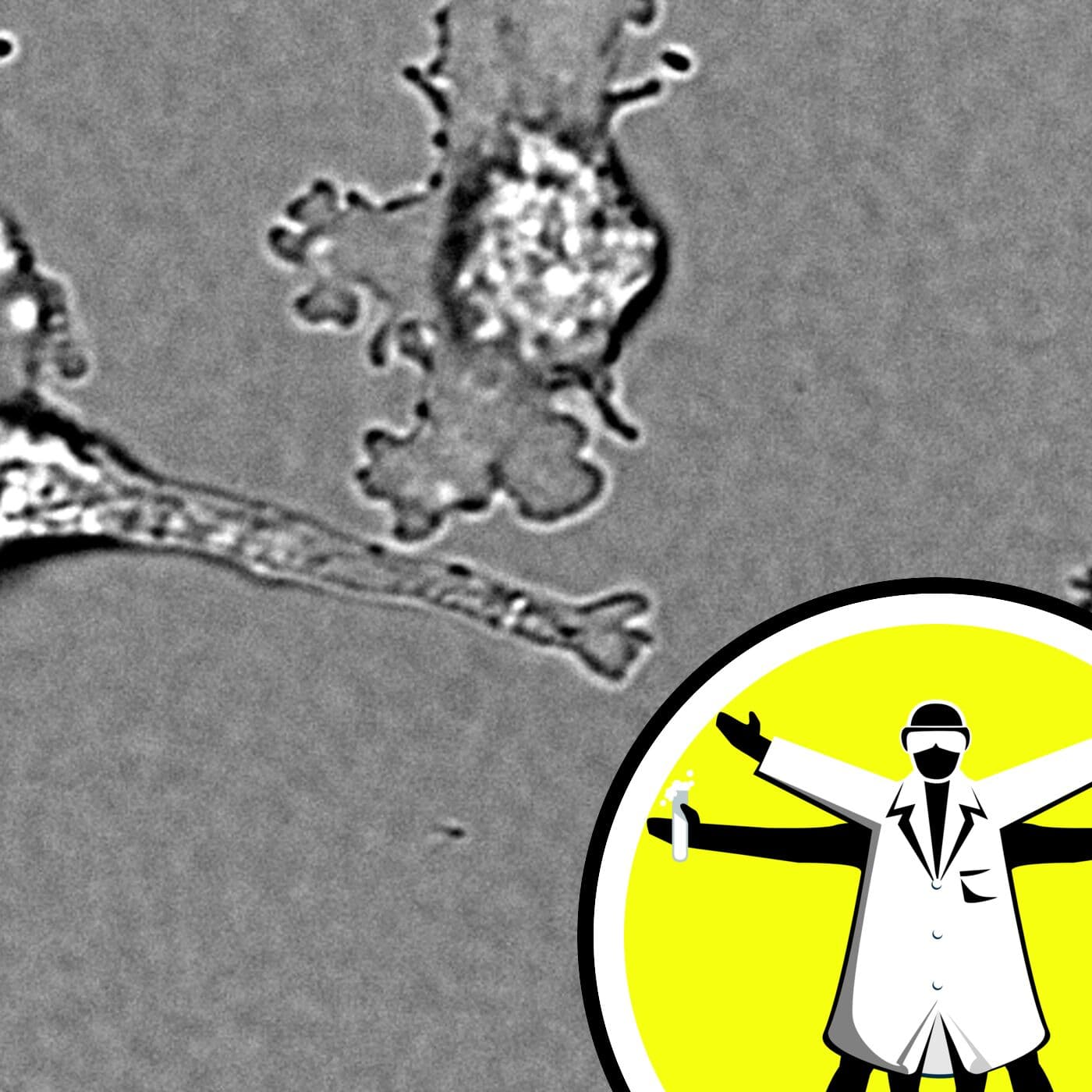
The episode covers three science stories: (1) Ovarian cancer: NHS availability of mervituximab, a targeted “biological missile” antibody-drug conjugate.
Guest
Dr Raoul Miller (UCLH), who ran UCLH clinical trials.
Key claims
targets high folate receptor expression on advanced platinum-resistant ovarian cancer; improves survival by 30% versus standard chemotherapy; reduces side effects like hair loss/sickness; uses a “bystander effect” where drug spills to nearby marker-negative cells; ongoing trials test earlier use after diagnosis/surgery.
Notable examples
platinum-resistant disease; tumour shrinkage on scans; eye irritation/blurred vision as a different side effect. (2) Black holes: Ignace Jojbalis (University of Cambridge) on a ~50 million-solar-mass black hole seen when the universe was ~700 million years old; suggests direct collapse or primordial black holes. (3) Invasive moss: George Greif (John Innes Centre; museum work at National Museum of Wales) on a killer fungus (Bryoscyphus) infecting invasive heath-star moss, forming “fairy rings of death.” (4) Rocket failure: David Whitehouse on Blue Origin New Glenn explosion delaying NASA lunar plans.
Written by AI. May contain mistakes. Listen to the episode to check what was said.
Chapters
Tap a time to open that second in VOInnovative Ovarian Cancer Treatment
0:45 to 6:58
Discussion on a new ovarian cancer drug, mervituximab, and its benefits.
“I've been speaking with Dr Raoul Miller, who ran the clinical trials at UCLH, about how ovarian cancer has traditionally been treated and what this new biological missile involves.”
Origins of Black Holes
6:58 to 14:00
Exploring new findings about black holes and their formation in the early universe.
“and that meant that galaxies inevitably already existed by the time that was happening.”
Moss Dieback Fungus Discovery
14:21 to 21:30
Exploration of the invasive heath star moss and its killer fungus.
“Find out how Spitfire can empower your company at spitfire.co.uk.”
Blue Origin Rocket Explosion Impact
21:30 to 28:00
Discussion about the Blue Origin rocket explosion and its effects on lunar missions.
“Blue Origin officials have been assessing the damage caused after its New Glenn rocket dramatically exploded in Florida with a force verging on that produced by a nuclear weapon.”
Transcript
Automatic transcript. May contain errors.0:17Hello, welcome to the Naked Scientist podcast, the programme that brings you the biggest breakthroughs and talks to the major movers and shakers in the worlds of science, technology and medicine with me, Chris Smith. Coming up, a magic bullet for ovarian cancer, how a killer fungus is taking nature's fight to an invasive species and the aftermath of Blue Origin's New Glenn rocket fireball failure.
0:47an ovarian cancer drug which has been dubbed a biological missile has just been made available on the uk's national health service it's called mervituximab and it delivers chemotherapy directly to cancerous tissue rather than the whole body it's hoped that it will reduce side effects associated with some cancer drugs and will also help to prolong the lives of some people who have the disease by helping to treat disease that has become resistant to traditional treatment. I've been speaking with Dr Raoul Miller, who ran the clinical trials at UCLH, about how ovarian cancer has traditionally been treated and what this new biological missile involves.
1:27We usually treat with a drug called carboplatin, which actually works very well, but with time the cancer becomes resistant to the carboplatin and other types of chemotherapy. So we call this platinum-resistant ovarian cancer. And it's really been a really challenging group of cancers to treat. And how have you gone about trying to tackle that? What we've done is we've looked at ovary cancers and we've looked at, do they have any markers or proteins that are unique to the cancer cells that you don't see anywhere else? And what we found is in ovarian cancer, particularly advanced ovarian cancer that was resistant to the treatment, a significant proportion of the cancers had a high expression of a folate receptor so this is something that's expressed on the outside of the cancer cells but we don't find that anywhere else and that made that an attractive target or something to look for for a treatment.
2:17It's basically the cancer cells are waving a flag that you can see chemically but how can you exploit that then to make the treatment more targeted? So there's a class of drugs called antibodies And these are molecules that attach to the flag that you described. So they stick themselves to the cancer cell. And if the marker or the flag is on the cancer cell and not anywhere else, then you're delivering that drug straight to the cancer cells. So what they've done is this technology whereby you combine an antibody with a chemotherapy molecule. So what you're doing is you're getting this molecule which homes to the cancer cell.
2:53It sticks onto the cancer cell and then attached to it on the tail is this really potent chemotherapy molecule and it delivers that into the cancer cell. So then you get the chemotherapy within the cancer cell. It damages the cell, causes the cancer cells to die, but it doesn't go anywhere else in the circulation. How that compares to normal chemotherapy is when we give people chemotherapy, normally it goes everywhere and then you get the side effects, the hair loss, the sickness. But this targeted chemotherapy just goes into the cancer. you get lots of cancer cell death and much less side effects.
3:24And does it bear fruit in that way? So when you actually subject this to rigorous clinical trial, do you see that being manifest and also solving the problem you set out to solve, which is when these become resistant to traditional chemotherapies, this begins to make the cancer respond again? Yes. So the first question, do we see that? So in lab studies and pre-studies before we got to human clinical trials, we saw that that's where the drugs went the drugs were delivered into the cancer cells and then in practice when we give these drugs to patients we see a good result so compared to standard chemotherapy in many more patients the cancer shrunk so they had the tumour shrunk on the scan so people feel better because they have less cancer there and importantly it translated into improved survival we increased survival by 30 percent which is the first time we've ever seen an improvement like that in this group of very hard to treat cancers.
4:19It certainly sounds encouraging. The thing with cancers is that they are a moving target, as you alluded to, but also they're a mixed bag. Some cells do have these magic markers that you can see, some naturally won't. So are we really just kicking the can down the road a bit with this? Because all you'll do is select out cancer cells that don't have that flag you're using, and we're back to square one. That's a very interesting question. So for this particular drug they needed quite high levels of expression and so we wanted at least 75 percent of the of the cancer cells to have a reasonable level of this flag so that's the first thing to see so most of the cancer cells will have this marker but actually with these drugs we see quite a neat thing called the bystander which is known as the bystander effect when you get the chemotherapy in the cells that have the marker it causes the cells to die that chemotherapy spills out into the adjacent cells which maybe don't have the marker and causes them to die too.
5:19It's not a cure, we're not curing people with this but we're able to control the cancer for a longer period of time than with conventional chemotherapy. Given the benefits you've seen, is there a case then for not waiting until a person fails on all the existing treatments before you do this? Is there a case for doing this from the get-go and hitting it really hard with something extremely targeted like this, does that buy you anything? We're already on that Chris so there's trials ongoing with this drug and other drugs with other targets which are perhaps present in more people with ovarian cancer right from the offset after diagnosis and after surgery.
5:54Hopefully over the next couple of years we'll see some results from these big studies to see whether actually if we use these drugs earlier on in the disease course do we have a better outcome or a bigger improvement. And how do the patients fare on them? Do they find them better and more tolerable? Yeah, they do in general. So when you look at like the studies and what they say about quality of life, they do see it's better. But on a day-to-day basis, I think the most important factor is that the patients do tolerate these treatments. Well, they're not without their side effects. And some of those side effects can be slightly different from what we see with chemotherapy.
6:29For example, sometimes you can get some irritation in the eye and some blurred vision and have to use eye drops. But in general, these treatments are better managed. Patients get on with them better than they do with the chemotherapy that we use. And particularly in this group, in this setting, the standard treatment that we use was weekly chemotherapy. And this treatment is three weekly. So that's a huge gain in terms of time back for patients and time away from the hospital, which is really important. Brilliant news. Rowan Miller there at UCLH. For decades, astronomers believed that black holes grew from a collapsed massive star, and that meant that galaxies inevitably already existed by the time that was happening.
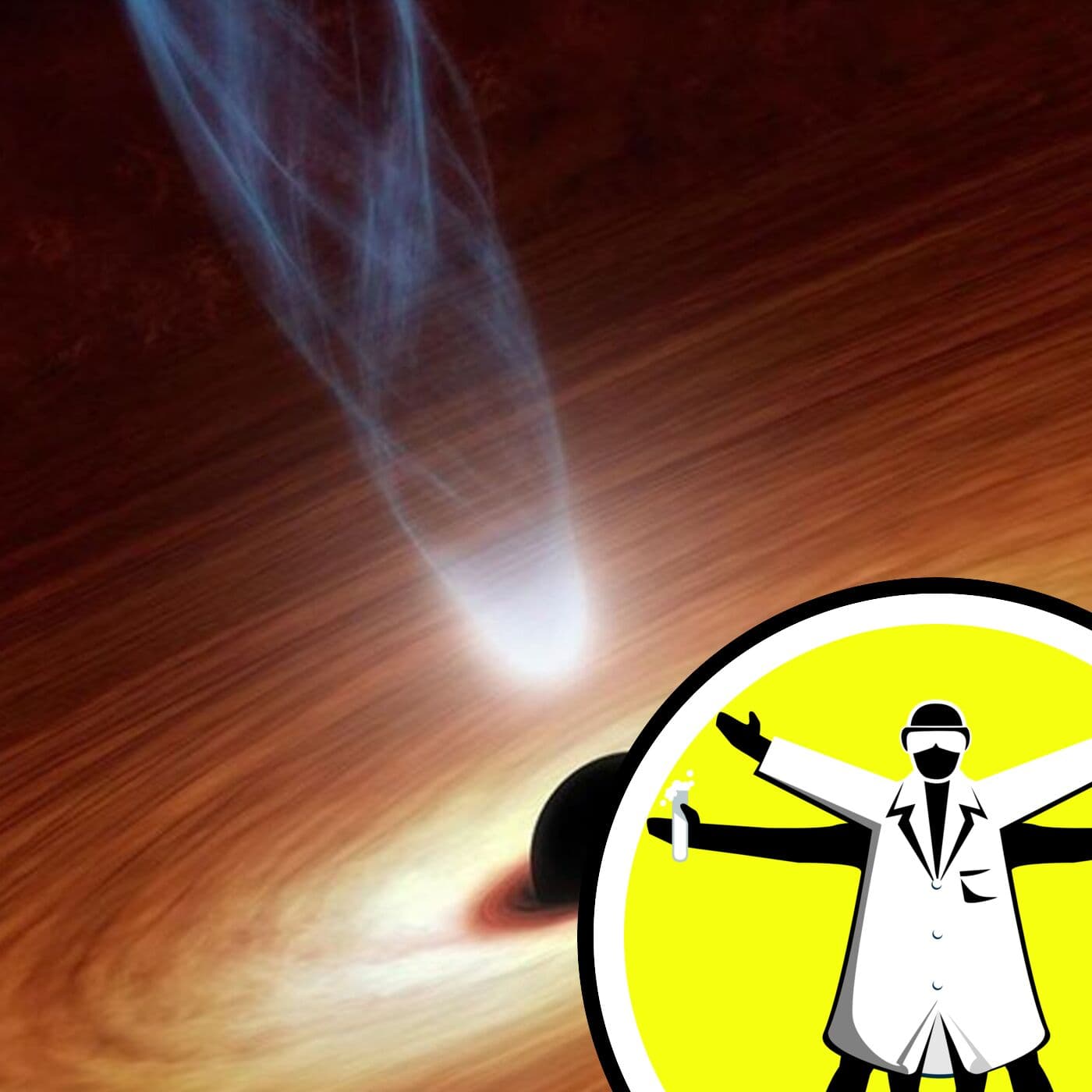
7:09But recent findings from the University of Cambridge suggest that this might not actually be the case. Astronomers have been able to measure the mass of a black hole appearing as a distant little red dot dating from when the universe was just 700 million years old. this black hole is entirely on its own an absolutely enormous far too big to have come from a collapsing star so it suggests that some black holes formed first and then gathered a galaxy and a cadre of stars around themselves here's ignas yorj balis so the backdrop to this and all current studies of black holes in the early universe was that we still really don't know where the supermassive black holes that are at the centers of galaxies.
7:57For example, the Milky Way has a black hole that weighs as much as 6 million suns or 4 million suns thereabouts. And we still don't know where these black holes came from. So one of the main goals of the James Webb Space Telescope was to actually observe black holes that existed when the universe was very young a fraction of its current age and then try to figure out where the current supermassive black holes came from. How far back in time are you looking with this study? So about 12 billion 800 million years back. So we're looking at the universe when it was just 700 million years old. How do you know you're that far back in time?
8:37So this requires a concept called redshift. So essentially, what was noticed back in the 20th century was the distant galaxies appear to recede from us, and that recession velocity is proportional to its distance. So that was the first hint that the universe is expanding. And then basically, if you can measure the redshift that's caused by that recession velocity, then you can figure out how far away something is. And since light is traveling at a finite speed, for example, it takes light eight minutes to reach Earth from the sun. Well, it takes well over 10 billion years to reach us from very distant sources.
9:15And since we know how old the universe is now, we can know how old the universe was when the light was first emitted. And what are you imaging from that far back? So for this particular study, we were focusing on a very interesting black hole that was already spotted in the early universe. and the interesting thing about it that people who first spotted it notice is that it does not seem to have much of a galaxy around it. So normally you would expect to see, well, that far back, you would still see a fuzzy blob, but in this case the object appears to be a perfect point source. And how do you know it's a black hole at all?
9:52Right, so the main clue was in the spectrum of the object. So we were looking at the colours of light coming from that object and we saw that the colours effectively that correspond to the emission of hydrogen show signs of the hydrogen gas moving at very high speeds which is generally only seen when the gas is interacting with a nearby black hole and swirling around in its powerful gravitational field. Does the speed at which all that gas is moving, you can use that to work out therefore how big the entity is? Yes, essentially that's the meat of the study is we use the speed at which the hydrogen gas is moving in that system to directly work out the mass of the black hole.
10:37And what is its mass, do you think? 50 million suns. And is that big in the black hole continuum? Would that be a big black hole? It's about 10 times bigger than the Milky Way's black hole, but there are larger black holes seen in the early universe. now that's much bigger than any star as far as we know could be isn't it if you had something 50 million times bigger than the sun and our current idea about the origins of black holes is big stars they get to the end of their life they explode and then implode into a black hole so does this mean there's another way that black holes can form without a star blowing itself up yes this has been suspected when those other large black holes were seen at similarly early times So what separates this black hole from the others is that it does not seem to have much of a galaxy around it.
11:30When we look at the velocities of hydrogen gas, they look like the velocities of the planets in the solar system. Where gas further away moves slower. So that suggests that all the mass is concentrated in the black hole. Whereas if you look at a normal galaxy, most of the mass is not in the black hole. So where did it come from then? what do you think, or theoretically, hypothetically, how could an entity like this form? So there are two ways that we discuss that seem to sort of survive this measurement. So one is that under certain conditions, if you have a gas cloud, you can have the cloud collapse directly into a black hole that would then have less to grow to reach a very large size, and you could still have not many stars around it.
12:14So that's called a direct collapse black hole model. The other one that is even more exotic is that under some, well, some currently very theoretical physics models that talk about what happened when the universe was just born, predict that you will have black holes that have formed all the way back then. So potentially, those what's called primordial black holes could have made the subject as well. Is that because during its younger phases, the universe would have been greater densities of gas, So the likelihood of them being able to fall in together to produce a sufficiently big mass that could then lead to a black hole was greater in likelihood than it would be, say, today.
12:54Yes, that operates also for the direct collapse black hole ideas. For the primordial black holes, people say that, well, when the universe was born, the gas was not evenly distributed in it, because if it was, then no galaxies would have ever formed. so there were clumps that were denser and then under some models of how those clumps were generated when the universe was born some of them would have been too dense to form anything else but the black hole does this suggest then that one possibility is that the early universe gets a whole bunch of big black holes and they act as a sort of nidus around which galaxies then form is that how we think you end up with a situation as we see today with galaxies like the Milky Way with massive black holes sitting in their centres?
13:40That is one possible mechanism and it likely does operate. It's not just based on this measurement. As I've mentioned, there is currently quite a few other teams that, well, they haven't done the same observations that we have, but other channels also point to this being the case. It just completely blows my mind to think that we are seeing all the way billions of years back to a universe that was just 700 million years old. It's absolutely incredible. Ignace Jojbalis there, that discovery just out in nature. The Naked Scientist podcast is produced in association with Spitfire, cost-effective voice, internet and IP engineering services for UK businesses.
14:21Find out how Spitfire can empower your company at spitfire.co.uk. Music in the programme is sponsored by Epidemic Sound. Perfect music for audio and video productions. This is the Naked Scientist podcast with me, Chris Smith. In a minute, the rocket that exploded on the launch pad with the destructive power verging on that of a nuclear weapon. What has that done to NASA's lunar ambitions? Before that, though, to the ground under our feet. During World War II, the UK was invaded not by marauding German forces, but by a new moss species called the Heathstar moss. Since that time, it has inexorably encroached across the environment, turfing out native plant species as it grows.
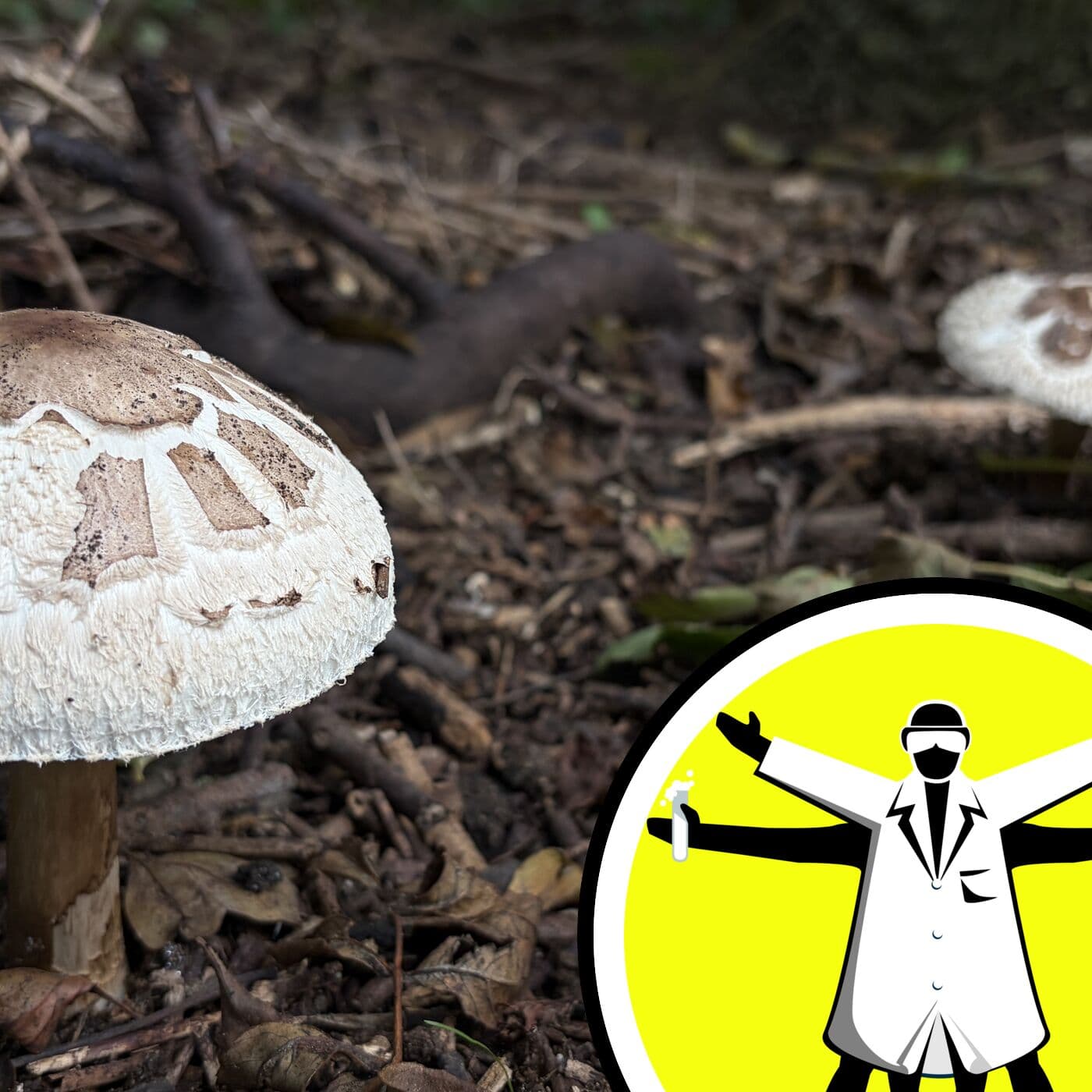
15:07You can find it everywhere from bare soil and rotting tree stumps to covering cracks in tarmac and even on thatched roofs. But four years ago, while he was on the Isle of Wight, George Greif, who is now based at the John Innes Centre in Norfolk, noticed patches of dead moss on a cliffside and he took some samples away. His post-mortem revealed that the cause of death was a killer fungus that appears to have adapted from life on a native moss species to take on the invader, as Rachel Ralph has been hearing. So we found a moss dieback fungus. So this is a fungus that basically kills an invasive species of moss.
15:46This moss is called the heath star moss or tank moss. It's an invasive species that arrived in the UK in like around about 1941, they think, on military equipment. It's kind of really spread insanely since then, occupying a lot of different habitats across the country. It's a generalist species, so it's able to grow in a lot of different places, but it's particularly bad on Beathland and Sandun ecosystems. When did you first observe this fungus infecting the moss? So it's quite a long story. I think I'd been seeing it and collecting it since about 2017, but it was quite a tricky fungus to identify.
16:26So I kept kind of seeing it and throwing it away. But about four-ish years ago now, I started finding a lot of it and noticing a lot more of it and kind of looking for it specifically and realised it really is kind of basically in every heathland at least that I was looking in and started to study it in detail then. And when you examine the infected moss, what do you actually see? Does the moss change colour or is there any patterning at all? Yeah, so this actually forms, well this term seems to be liked in the news article, fairy rings of death. So this is like brown patches of kind of holes in the moss, which otherwise forms these very lush, dark green, thick mats on the ground, doesn't allow anything else to grow.
17:11But the fungus is basically forming these holes in it, which is like these rings that grow outwards, they're brown, the moss is dying, there's like a white fluff on the tops of the leaves of the moss in the frontiers of the infection as it spreads outwards. So it's quite striking, actually. And you can see it in well-developed fungal populations, at least quite easily with the naked eye. How do you actually know it was the fungus killing the moss? What kinds of methods did you use to determine that? Yeah, so initially, we kind of just, you know, take a sample, take it home, look at it under the microscope, under a compound microscope and see what's going on, and then kind of identified it was a fungus.
17:49But as I mentioned before, it's quite a tricky fungus to identify and it doesn't have many features that allow it to be identified just by its appearance. So actually the thing that really helped a lot with this was DNA sequencing. So I was able to take some of the fungus, put it in a tube, sequence it, and that revealed that it's actually part of this in this genus called Bryoscyphus, which is a group of moss killing fungi. So that kind of helped. And then, yeah, eventually started connecting with other people who'd found the fungus in France and the Netherlands. And we really put it all together and sequenced everything, found it was all the same and put a description together.
18:31Do you know exactly how the fungus is killing the moss? Yeah, so that's a good question. The fungus seems to be growing inside the moss cells. So it kills it from the inside. It also grows on the surface of the cells. So it seems to produce structures on the outside as well. So it's really kind of attacking it in both ways, probably with chemicals and physically with its mycelium as well. So of course this fungus is infecting the invasive heath-style moss species, but do we need to be worried that the fungus can also infect other plant species that aren't causing a problem to the environment? Yeah, so the fungus doesn't grow on, you'll be relieved to hear, it doesn't infect humans, doesn't infect animals, It doesn't infect other plants as far as we know, except for one other moss, which is a native moss species related to the Heath Star moss.
19:23However, it doesn't cause as severe symptoms in the native species that we've observed so far. So that's why we think maybe the fungus is native and was growing on that moss, just happily living its life. And then when the invasive species came, it hopped onto the invasive species. That's one idea. it could also be the other way around which would be a little less thrilling. Yeah that would be quite concerning. Do we also need to be concerned that maybe some of these mosses have a mutation that protects them against the fungus and then they spread their spores then suddenly we have both an invasive and a resistant moss species growing?
19:59Yeah I guess it is a concern but you've got to realise like the the moss is reproducing sort of the whole time and creating it has quite a lot of genetic diversity that it is constantly adapting and in theory could become resistant to the fungus. But on the other hand, the fungus is doing it as well. So I think what would probably happen is one of these kind of co-evolutionary kind of arms races where if the moss changes, the fungus will change and vice versa, and they'll keep following each other. So I think the more likely thing we'd have to worry about is if the fungus is able to spill over and infect more vulnerable native mosses that are related to the Heath Star moss, but not the same one.
20:41And is that what you're planning to look at in the future? Yeah, so I've recently moved from working in the kind of museum sector where we're kind of using museum specimens like a kind of time machine to look in the past to see whether the fungus was on mosses before the star moss or the tank moss arrived in the 1940s. We have these specimens and we can look. It's quite difficult and time consuming. We've given that a try. What I'm doing now is kind of working in the lab and trying to see how many different species of moss related to the heath star moss are susceptible to the fungus, try and work out its mechanisms of infection and learn a bit more about it.
21:22We can sequence genomes. There's quite a lot of exciting and kind of cutting edge science we can do on it. It's an interesting story that, isn't it? George Greif, and he carried out that research at the National Museum of Wales in Cardiff. Blue Origin officials have been assessing the damage caused after its New Glenn rocket dramatically exploded in Florida with a force verging on that produced by a nuclear weapon. The fireball occurred as Jeff Bezos' company was carrying out tests in the run-up to using the rocket to launch a batch of satellites for Amazon. space scientist and author David Whitehouse has been telling me about it and the impact that it will inevitably have on NASA's lunar aspirations we're not quite sure what happened I mean we know there was an explosion after the main engines were firing in a test so they'd already ignited the main engines but what happened subsequently to cause this enormous fireball we're not quite sure but the thing which struck me is that the energy in this fireball was equivalent to about one-tenth of a Hiroshima nuclear detonation it was an enormous explosion and it shows you how much energy you have to use to get something into space because that explosion released the energy in a few seconds and it's completely wrecked the launch pad yeah I was going to say focus is your mind when you think about that amount of energy being unleashed all in a fairly small space so yes there was fallout for the launch pad then oh the launch pad has been completely wrecked launch pads aren't just pads of concrete they are highly complex pieces of infrastructure they have lots of tubing lots of pipes going in bringing in fuel different types of fuel bringing in water, taking water away, the electrical components, damage beyond repair.
23:22The blast radius of damage extended more than a mile. So this is a major problem with getting this launch pad back together again. And the only comparison we've got is what happened to SpaceX 10 years ago when a Falcon rocket exploded. And that was a different type of explosion in the sense that it occurred at the top of the rocket and not at the bottom. But it took them a year to get the pad back straight. Some people have said there is a golden lining in this, in the sense that the pad which was destroyed was a fairly old-fashioned pad, and it was modified to deal with New Glenn. Now they've got a chance to really upgrade the pad, so that in the future, once they get over this, they could perhaps have easier, swifter launch rates.
24:07But no doubt at all, it is a major disaster for Jeff Bezos and for the American space effort to get back to the moon. Was there anything on that rocket? Because you said it was a test firing. Were they just lighting the engines or was this a rocket that was going to go somewhere and going to do something? It was going to go somewhere the following week. It was a test. It was a test of the engines. Nobody expected a problem, obviously. Fortunately, the satellites, the communication satellites that were to have been launched the following week were not installed. So that would have been an additional disaster if they had been destroyed.
24:43Now, those satellites have to find another route into space, but at least they weren't completely obliterated, which is what would have happened. Didn't the Russians have a problem with one of theirs for a similar sort of situation? We spoke about it earlier in the year. The Russian launchpads are simpler, and they seem to have a reasonably straightforward time, although it took them many, many months to get the thing back together again. But what Jeff Peters got is a very complicated task because his new Glenn rocket is central to getting America back to the moon. And the delay in that of at least a year gives timetable problems, but also Bezos' political problems.
25:22Because what he said was when he wanted to get the pad back working later this year, when I think people believe it's going to be middle of next year, is that he doesn't want talk of the satellites and the lunar craft that new Glenn was to have launched. He doesn't want anybody to say, well, let's give them to SpaceX. modify them and launch them on SpaceX. He doesn't want people to go down that avenue. What role does this play in NASA's moon ambitions? A central role. I think people realised a few years ago when they were giving so much to SpaceX for the lunar return that they did so because they said Elon Musk delivers.
26:01But then I think they realised that it might not be as straightforward as that. So they split it between SpaceX and Blue Origin. And what the New Glenn was going to launch was the Blue Moon Lander, which is the central template for landing cargo on the moon. And that was to have its first flight later this year, when it was to put down a prototype Blue Moon Lander at the South Pole. Now, this Blue Moon Lander is an important bit of kit. it's much smaller than the Starship, which SpaceX wants to land on the moon. It's much more like an upgraded, much larger Apollo lander. And it's a start of a series of blue moon landers of various degrees of increasing complexity, leading up to something that could carry people to the moon.
26:56So it's vital to start the blue moon lander production line and landing on the moon, in order to get equipment to the moon that people have already paid for, in order to develop the technology to put people on the moon in the next few years. And the timetable for that was pretty tight because NASA wants to upgrade its cadence to get to the moon, starting very intensively towards the end of this year. And of course, now the Blue Moon lander cannot go for at least another year. That, in the short term, has a major effect. It had in a couple of years a contract to launch two rovers to the moon. And Blue Origin has said, well, actually, in a couple of years, we'll be back and running, and that should be all right.
27:37It's the next 18 months that is the problem in terms of the fact that New Glenn is delayed, the Blue Moon lander is delayed. SpaceX is having problems with its Starship because that's not coming on as quickly as people thought. so this is this is a a major setback just at the time when nasa wanted to say okay we're going faster now we're sending more stuff to the moon we really have to build up to the landing david whitehouse there well that's it for today tune in on tuesday though where as the world reaches football fever pitch we're going to be taking a closer look at the fifa world cup it is reportedly the world's most watched and most popular sporting event but is the competition more of a science than an art that is what we will find out i'm chris smith thank you for listening if you'd like to get in touch with me in the meantime it's chris at the naked scientist.com until then though thank you for your company and goodbye