In short
The episode asks what science will enable for “foods of the future” as population grows and agriculture struggles. It highlights three main approaches: (1) Revo Foods (Austrian) uses 3D structuring/food printing to replicate salmon, whitefish, and chicken fillets using fungi-based microprotein grown in bioreactors plus oils (e.g., algae oil) and flavors.
Key claims
consumers often can’t tell it’s plant-based; it targets similar protein and omega-3 content, lower calories, and avoids fish downsides like antibiotics and mercury; it prints multiple fillets at once (16 nozzles; six tons/month with six machines). (2) Savor (co-founder/CEO Kathleen Alexander) makes fats and oils from CO2 and methane via organic synthesis: syngas (CO/H2) assembled into fatty acids (C4–C22). Claims: smaller land footprint; used by Michelin-star chefs/bakeries; scalable to hundreds of millions of tons. (3) John Innes Centre gene-edited tomatoes produce provitamin D3/D3 for winter vitamin D; about four tomatoes for the daily dose.
Guests
Petra Merzen (John Innes Centre Plant Sciences PhD student), David Petuzzi (Revo Foods CEO), Kathleen Alexander (Savor co-founder/CEO), Jonathan Clarke (John Innes Centre), Christian Popper (Formo), Aria Elfenbein (Wildtype). Also covered: precision-fermented, animal-free casein cheese (Formo) and stem-cell grown salmon (Wildtype), with blinded preference results (no statistically significant difference vs a top smoked salmon brand).
Written by AI. May contain mistakes. Listen to the episode to check what was said.
Chapters
Tap a time to open that second in VOExploring Future Food Technologies
0:51 to 2:18
Discussion about the science behind future food sources and alternatives.
“Hello, welcome to The Naked Scientist podcast, the show that brings you the biggest breakthroughs and talks to the major movers and shakers in the worlds of science, technology and medicine.”
3D Printing in Food Production
2:18 to 2:56
David Patuzzi explains the role of 3D printing in creating food alternatives.
“to create replicas of high-ticket foodstuffs like salmon fillets.”
Nutritional Aspects of 3D Printed Foods
2:56 to 6:22
Discussion on the nutritional value and health benefits of 3D printed foods.
“Basically, food production was always 2D food printing.”
Market Viability and Consumer Acceptance
6:22 to 8:10
Exploration of the market challenges and consumer perceptions of new food products.
“sheet of fish though because one of the constraints with technologies like this is it can be very time consuming to mass produce things at the sorts of scales that a market would demand.”
Innovations in Fats and Oils Production
8:10 to 11:19
Kathleen Alexander discusses Savor's alternative method for creating fats and oils.
“Because at the end of the day, that is the thing that decides the market.”
The Organic Synthesis Method Explained
11:19 to 14:00
In-depth explanation of Savor's organic synthesis process for fats and oils.
“What is the biosynthetic process that means that those carbon sources that you mentioned can turn into long chains, because fats are long strings of molecules, carbon, carbon, carbon, surrounded by hydrogen.”
Advancements in Food Production
14:00 to 17:29
Explore the innovative processes transforming food production today.
“All of those different processes actually already happen at world scale today, just in kind of across a couple of different industries.”
Biofortification and Health Benefits of Tomatoes
18:29 to 27:13
Learn about genetically edited tomatoes providing vitamin D and their potential impact.
“On the way, making meat and salmon from stem cells.”
Innovations in Dairy Production
27:13 to 28:02
Discover how precision fermentation is revolutionizing dairy alternatives.
“Now, could the future of dairy come from a brewery rather than a barn?”
Innovations in Protein Production
28:02 to 33:54
Explore how biotechnology is transforming the production of protein, especially casein, to meet rising demands.
“We address a specific problem, which is fundamentally that the food system as we know it is massively constrained against the backdrop of a growing population and a skyrocketing protein demand.”
Show all 11 chapters
The Future of Seafood: Cultivating Salmon
33:55 to 41:01
Learn about Wildtype's innovative approach to growing salmon meat from stem cells without fish farming.
“Now finally today, salmon consumption worldwide is three times higher than it was in 1980, and the demand continues to increase dramatically.”
Transcript
Automatic transcript. May contain errors.0:00Hi, this is Becca Moore from For The Girls and this podcast is sponsored by Aerie where you can find the right bra on 59 sizes, soft fabrics and good fits If your bra strap is digging into your shoulder right now, it's the wrong bra. We get so used to being in pain as girls that we forget it doesn't have to be this way. Your clothes should not hurt. I got to the point where I stopped wearing bras altogether. And now my life has changed, you guys. The only bras I have in my dresser right now are Aerie, and I'm not kidding. Aerie's on a mission to make you feel good, and that starts with your bra.
0:27Your bra should hold you in, not back. Visit Aerie.com to find the right bra for you.
0:36Ball engine running. Absolute genius. Get this. Welcome. Welcome. This is the show where we bring you science. What that essentially means is... Discovery is the... Advances. Investitions. Research. Technology. Unbelievable. Without further ado, this is The Naked Scientist. Hello, welcome to The Naked Scientist podcast, the show that brings you the biggest breakthroughs and talks to the major movers and shakers in the worlds of science, technology and medicine. I'm Chris Smith. And today, as the world population surges towards 9 billion and existing agriculture struggles to cope, we're asking, what does science have in store for the foods of the future?
1:12On the menu, salmon grown from stem cells that diners say they can't tell isn't real, and spreads and oils made from methane. Yes, you butter believe it.
1:34Over the past few months, John Innes Centre Plant Sciences PhD student Petra Merzen has been working with us as part of a professional internship programme. Soon, she'll be heading off back to the lab bench, but before leaving, she wanted to make a programme about the foods of the future, how the food industry is using science to engineer alternatives to the dishes and ingredients that we currently consume, but with a much lower environmental footprint, a superior nutritional profile and without compromising on the flavour and texture. People have got to want to eat this stuff, after all, otherwise there won't be a market for it.
2:11Revo Foods is an Austrian food tech company pioneering the use of 3D printing technology and protein produced by cultured fungi as a raw material to create replicas of high-ticket foodstuffs like salmon fillets. David Patuzzi is the CEO. Revver Foods is using a 3D structuring technology, which sounds very complicated. But what you're trying to do is to replicate authentic blam-based hole cuts, such as salmon and whitefish fillets and also chicken fillets. 3D structuring has the benefits that we can integrate protein and fat material, which means that we can create more authentic products. When you say 3D technology, I mean, is this basically 3D printing for food?
3:01Exactly. Basically, food production was always 2D food printing. What we added now is a third dimension, which means the production machinery can go in different directions in three dimensions, which adds the benefits that you can create different forms and structures to the product. What are the materials involved though? Because if you think about a 3D printer printing something out of plastic, you have reels of material that you melt to put into the thing you're building. What are the equivalent of those reels that you do for food? Our main protein material that we use is microprotein. It's a fungi-based protein which grows in a bioreactor, so a big tank, where sugar and other nutrients are added to the fungi.
3:50and this material then grows in the tank over time. Normally it doubles every five hours in the bioreactor, so in the tank, which means this is a very sustainable way to produce protein. And this biomass we take as our protein source, we add oils such as algae oil for the omega-3 fatty acids and flavors to the product. This we put into a tank and then through the 3D production process, the biomass so the material the protein is put into structure and form do you have multiple nozzles then that do different things or apply the the layers separately so that you can create something or like an authentic bit of salmon it would fool me into thinking that is a slice of salmon exactly so there are like two benefits of having a multi-nozzle system and this is actually also where one of our patterns lay.
4:45So the first benefit is that if we use two nozzles for one filet, we can use one nozzle for the protein material and the other nozzle for the fat fibers and then integrate those layers and materials with each other. And through this, you can create this layering effect. And this also will remind you when you taste it more of the actual things of the salmon filet in terms of what it tastes like would i be fooled if you plonked one of these down in front of me and also the real deal would i be able to tell them apart if we ask consumers and also obviously on social media we get a lot of different feedback sometimes we hear the feedback okay if i wouldn't have known that it's plant-based i wouldn't even have differentiated it from the real thing so that's probably the best feedback you can get and this is also what we aim for with the product.
5:38Nutritional value? How does it stack up? Because you're obviously, you're making something look like salmon and taste like salmon, but actually it's fungus. So is it as good for me or even better for me than the real deal? We aim for having the same protein content, same omega-3 fatty acid content and being lower in calories because we have more unsaturated fat than saturated fat, which means in the end it will be better for your body, also considering then if you eat fish from the sea that most of the time you have antibiotics in the product and this is obviously something that we have not in there so it's also we have the benefits of the real thing but we do not have the disadvantages of the real thing like also like mercury which is not in obviously not in our product how long does it take you to print a sheet of fish though because one of the constraints with technologies like this is it can be very time consuming to mass produce things at the sorts of scales that a market would demand.
6:37If you have several nozzles, and we currently have 16 nozzles per machinery, we can produce eight fillets at a time. And then we want to add more and more printers and production machineries to our facility. Currently, we have six, which means we can create an output of six tons per month. And this is already quite significant and can lead to an industrial scale. At the moment, you're copying what really exists in nature. But does this open the door to a whole new food regime where we can basically have the sky as the limit? You think, well, we can make any food you want now. We can print anything.
7:16We can make any flavors, any combinations of different oils, fats, proteins. And effectively, you can make a whole new generation of foods that just don't exist at the moment. Yeah, exactly. I mean, this is the big benefit of 3D printing that you can basically combine materials, create textures, structures and forms that have never been there before. However, the limitation currently is the consumer. So if you go into the store and then you see a completely new product that you've never seen before and you cannot relate anything to, you might be hesitant to buy this product. So this is why we, for the start, are focusing to replicate products which are easier for the consumer to use.
7:59However, for the future, if you go into personalization of food, there will be many opportunities coming up and will be also very interesting to use this technology for. What about price? Because at the end of the day, that is the thing that decides the market. And if it costs too much, people are just not going to buy it. So right now we already price parity with premium products. We are currently at a price point of 35 euros per kilo, which means we're in the mid to premium segment. And this is also something that we want to keep for in the future as we with a highly nutritious, high quality product can also differentiate from the rest.
8:39We're only one interview in and this show is already making me hungry. David Petuzzi there at Revo Foods. about a fifth of the calories that we consume every day in a healthy diet should come from fats and oils and butter are a major part of that but common sources of these cows and palm oil plantations command a high environmental cost through impacts like methane emissions and deforestation and this is where kathleen alexander the co-founder and ceo of the company saver comes in. Her company is bypassing conventional agriculture to build fats and oils, which are just chains of carbon atoms after all, directly from CO2, water and methane.
9:22The results are sufficiently good that Michelin-starred chefs and acclaimed bakeries are now using the products. Savor is transforming how fats and oils are made for food. So if you think about kind of the planetary footprint of the food system. We currently use about half the habitable land on our planet for making all of the food that we eat. And about a third of that can be attributed to fats and oils. And Savor was born really out of the question of, is there a smaller footprint, much less impactful way that we can make this core macronutrient for humans? How do you do it? Because obviously they do it by, as you say, devoting enormous amounts of land area to growing stuff that will yield oils, whether that is rapeseed, canola, or sunflowers, or date palms.
10:09There are a range of ways of getting those oils. So what are you doing that's different? Exactly. So today, the way that fats and oils get made is that we first clear large areas of land and plant seeds in them. And then we have energy that comes down from the sun in the form of photons. And that energy drives a synthesis process in plants by which plants can take CO2 from the air, they can take hydrogen from water, and they can assemble them into all the molecules that we eat, and especially fats and oils. What SAVER does actually is kind of similar in terms of the inputs and the outputs. We can also take molecules like CO2, or we can actually even take other sources of carbon like methane, and we assemble them into those same molecules into fats and oils.
10:56But instead of using photons from the sun as the driving force, we can actually use heat energy to put those molecules together. And if we're doing that, we actually don't need to do it in the bodies of plants. So we don't need to clear that kind of vast area of land. And we can with kind of much higher efficacy, make really delicious fats and oils, but on just a much smaller footprint. How do you actually make them though? What is the biosynthetic process that means that those carbon sources that you mentioned can turn into long chains, because fats are long strings of molecules, carbon, carbon, carbon, surrounded by hydrogen.
11:32How do you do what the plant does? You asked what kind of biosynthetic process we use, and we actually don't use a biosynthetic process. Ours is an organic synthesis method. And so the process starts by, again, sourcing the building blocks for fats and oils. So you mentioned we need carbon, we need hydrogen, We actually also need a little bit of oxygen in the case of fatty acids that our body is able to metabolize for energy. So that can be CO2 and water. That can be methane. Really, any source of carbon that you can find is a viable starting material for a process like ours. Because the first step is to actually kind of activate that starting source of carbon into a gaseous state called syngas.
12:16That syn gas is made up of CO or carbon monoxide and hydrogen, H2. And so we have the activated molecules that then we can assemble together using just a straightforward organic synthesis. How long can you make your carbon chains? Because the ones we've got in the body, they're more than 10 carbon atoms strand together, aren't they? Maybe up to 16 carbon atoms or so long. So how long can you go? The fats that we kind of typically think about, so whether from like a milk fat to a palm oil to the kind of canola oil that you mentioned at the beginning, those take in carbon chain lengths ranging from about C4 to about C22 or so.
12:57We specifically have tuned our synthesis to make fatty acids that are in that kind of core range for our macronutrient diet, which is the C4 to C22. Is it scalable? If you look at the volume of these fats that are being consumed by industry and also by us as just consumers, it's absolutely huge, isn't it, around the world? So to make a dent in that, you've got to be able to do it at massive scale. If the mission behind what we're building here is really about planetary impact, it is kind of irrelevant if we can't get to planetary scales. And so the scale of the fats and oils industry today is on the order of hundreds of millions of tons.
13:37And we specifically chose this platform. Again, I pointed out the fact that it's an organic synthesis platform, and that was very intentional. We looked at kind of all of the options of how we could make this macronutrient. And we actually very specifically chose this one because of its scalability. The different unit operations. So I talked about, you know, getting first activating kind of carbon in the form of gas and then assembling that into long chains, converting those long chains to fatty acids. All of those different processes actually already happen at world scale today, just in kind of across a couple of different industries.
14:16So by putting together those different building blocks, we actually already know what the economics and viability of this process look like at scale. And so it was being able to do that kind of analysis on paper years ago before we ever started this company that really motivated us that this was kind of a world changing opportunity that we could turn around and bring to the world, bring to industry with actually like very rapid deployment. Are people actually eating the product? They are. That's one of the things that we're very proud of. It took a couple of years to get to market. We had to go through regulatory approval because this is a novel ingredient.
14:56So we have our fats and oils at a couple of different restaurants in the US. We work with some local bakeries and chocolatiers. How does it stack up nutritionally, though? Because a few decades ago, there was a lot of fanfare around hydrogenated vegetable oils. And basically, it turned out that all the glitters isn't gold. And there are unforeseen health impacts or other consequences. So is there any evidence of a health disbenefit from doing this? The entire goal of our company has been to make delicious fats and oils that are at least as healthy as the fats and oils that we eat today. Now, we have been a little bit reticent to go out and make a kind of very strong health claims about the positive benefits, health benefits of the fats and oils that we're making.
15:46However, there has been a lot of scientific development in fats and oils, kind of nutritional studies. And one of the things that we see is that the use of both medium chain fatty acids, short chain fatty acids and odd chain fatty acids are actually linked to positive health outcomes in the case of the first two. So for short chain fatty acids, we're looking at things like gut health, things like brain health as having kind of very positive associations with the present of those in the gut. In the case of medium chain fatty acids, we're like, that's an area where, you know, metabolic health and overall cardiovascular performance has been linked to improvements.
16:25And then odd chain fatty acids have some links to both metabolic performance as well as cardiac outcomes. And so the reason I bring up those three classes is because they are in some cases more rare in animal fats and in plant fats, but we actually make them in higher abundance. And so we, from the very early stages of this company, have actually thought that there may be some nutritional benefits to the fatty acids that we make. We are not going out and making claims ourselves about those, but that's where the literature is pointing. And we are currently in conversations with the folks doing those studies to see if we can help provide them more material to work with, since it's actually harder for them to source these in some cases.
17:02It sounds good, doesn't it? Kathleen Alexander there at SAVA. and now being very fond of a nice bitter buttered toast for breakfast i was very eager myself to try some of kathleen's products and she has kindly sent me some from across the pond but unfortunately at the time of recording the courier hasn't arrived yet so i will have to leave you hungry to hear what this tastes like i will report back with my verdict next time hi this is becca moore from for the girls and this podcast is sponsored by airy where you can find the right bra in 59 sizes, soft fabrics, and good fits. If your bra strap is digging into your shoulder right now, it's the wrong bra.
17:40We get so used to being in pain as girls that we forget it doesn't have to be this way. Your clothes should not hurt. I got to the point where I stopped wearing bras altogether, and now my life has changed, you guys. The only bras I have in my dresser right now are Aerie, and I'm not kidding. Aerie's on a mission to make you feel good, and that starts with your bra. Your bra should hold you in, not back. Visit aerie.com to find the right bra for you.
18:03The Naked Scientist podcast is produced in association with Spitfire, cost-effective voice, internet and IP engineering services for UK businesses. Find out how Spitfire can empower your company at spitfire.co.uk
18:22This is the Naked Scientist podcast with me, Chris Smith, and this week we are delving into the foods of the future. What will we be eating in the years ahead? On the way, making meat and salmon from stem cells. But first, vitamin D deficiency is a major public health concern. As many as a billion people worldwide are affected. We get about 80 % of our vitamin D from sun exposure on our skin. But there's an old saying that if your shadow is taller than you are, you're not making any vitamin D. In other words, in places where the level of sun exposure is more limited, especially at certain times of the year, and the UK is a classic example, most people end up vitamin D deficient, at least for a while.
19:05This has been linked to bone problems, low mood, increased susceptibility to infection, and even to autoimmune diseases like multiple sclerosis. So researchers at the John Innes Centre in Norfolk have developed gene-edited tomatoes that naturally produce a precursor of vitamin D that can be absorbed when we eat them. The Vital D study now underway is testing whether the consumption of these new tomatoes can do what the tech says on the tin and supplement vitamin D levels in the UK population during the winter. Petra Merzen got in touch with the John Innes Centre's Jonathan Clarke to hear how it works.
19:40Here we have tomatoes that are able to produce vitamin D. Are they any different from any other tomatoes I'd see? Would I be able to differentiate the two just by looking at them? Interesting question. And the answer is possibly yes. What we're doing at the moment is we're actually putting in another gene that makes the tomato stripy. So when you see this tomato, it's going to have yellow stripes on it. And that means that you will know that you're eating a tomato that is different. But in all other terms, and in terms of its composition, with the exception of the vitamin D, it's absolutely identical to a tomato that you would buy on the shelf.
20:19So is the taste any different or have you tasted it? First of all, do you think it's any different? So we have tasted it. When we initially created it, we put it into a tomato which was easy to manipulate. It wasn't a tomato which was the most tasty tomato. So what we've been doing now is to move it into a background where we can improve the taste. And my colleagues are actually using special methods to make sure that we get the taste profile just right. Why tomatoes? Why have you chosen to edit tomatoes and not any other vegetable fruit? There are two reasons. The first is to do with genetics.
20:58You can only achieve the production of vitamin D in certain species. So these are sovinaceae species. So we could have put it into potato, but actually it's much better in tomato. The second reason to choose tomato is because it is so widely consumed. So as a fruit, it's one of the most widely consumed across the globe. It's eaten by most cultures. And so when we're trying to make this vitamin D biofortified tomato available, it's about can we reach as many people as possible? What you want to do is to increase this vitamin D content and then use the tomato as a supplement for vitamin D. how did you achieve that?
21:44How could you make a tomato produce vitamin D? Two things I want to touch on. First is about you mentioned supplement. I don't think I look at this tomato as a supplement. This is food, healthier, nutritionally dense food. That's what we're at. A supplement is a pill. When you eat a food, you are much better able to absorb the enrichment that you put in this case vitamin d it's also means you don't have to take a tablet it means that you can get it into everybody just as part of their normal daily diet how did we do it this comes back to the reason which i said we were limited so we couldn't do this in all plants tomato make some compounds which are similar to um to vitamin d what we had to do was we had to disrupt a pathway leading to the production of vitamin D.
22:41So we make a single gene deletion. So we basically take a gene out and that gene has a step in terms of converting the compound from one form into another. And what happens by doing that is we shifted it and then it went through and it actually makes what's called provitamin D3. Provitamin D3 is what our bodies make. when we are exposed to sunlight our bodies are able to convert pro-vitamin D3 into D3 which then has the benefit so what we are making is the same product as is made in humans and guess what tomatoes when they're exposed to sunlight convert pro-vitamin D to D3 so we can put the sun put the tomato into sunlight or expose it to UV and it will convert the pro-vitamin D3 to D3.
23:30Instead of us getting a tan to produce vitamin D, then you have the tomatoes getting a tan and producing the vitamin D and then we eat it. Yes, in essence, that's correct. You need to remember that it's only when we expose quite a bit of our body to sunlight that we make this conversion. So just by going out fully clothed with a hat on, you're probably not going to get very much conversion. we often wear clothes to protect ourselves from sunburn or for cultural reasons. So it's not always easy, even when the weather is really good, to get that conversion. How much vitamin D are those tomatoes able to supplement us?
24:13Well, roughly speaking, you're probably going to have to eat four of those, which is about a portion to give you the recommended daily dose of vitamin D. together with the quadrum institute and the university of surrey you've started a trial to try and see the effects of this tomato right can you let us know about it how is it going well it's going really well so far so we've done the first trial and we are going to embark on doing a second trial fairly shortly what the trial is trying to do is it's trying to ask a question which is can your body actually absorb the vitamin D that is in the tomatoes so this basically allows us to get the evidence it also makes sure that there's nothing to worry about so we can actually see how much is taken up so we can make sure that when this tomato comes to market and you buy this tomato you're not going to overdose yourself on vitamin D because the tomatoes won't make enough for that to be possible.
25:15Yeah, this is an amazing idea. Everyone hates taking supplements and they forget them and they never know what they should take. And having these vitamins or these important nutrients in vegetables makes it way easier for us to then have a fully balanced diet and get all these micronutrients. And since this is a very captivating idea, can you see biofortification of fruits and vegetables becoming more and more common in our future to get, for example, other things that we don't get as often as vitamin b12 or iron for example absolutely one of the reasons that we we started this was to exactly achieve that that you have just described one of the things that's happened over time when we have bred varieties of fruits and vegetables is that we've not followed the nutritional value we've tended to think about what makes them something that you want to eat.
26:16So the obvious one is to make them sweet. Sweetness is great, make them want to eat it. But you didn't think about, well, what was the nutritional value? And when we have food that is nutritionally poor, you eat food, but you don't get as much value from it. And then you have to take supplements and other things. So wouldn't it be great if that was just built into your plant? Plants can make these things naturally. we just forgot to select for them. So what we're trying to do is to accelerate that process to make the future sets of vegetables and fruits that you eat more nutritionally dense. My colleague, Cathy Martin, who is the scientist behind this innovation, talks about food as healthcare and medicine as sick care.
27:04And that's what we're doing. We're trying to make food healthcare. Jonathan Clarke at the John Innes Centre, he was speaking with Petra Merzen. Now, could the future of dairy come from a brewery rather than a barn? Science has now found a way to produce dairy cheese, but without milking any cows. Instead, through a process called precision fermentation, microorganisms like yeasts and certain bacteria are engineered to make the same proteins, in this case caseins, which are normally found in cow's milk. These proteins are then combined with sugars, water and vitamins in the right proportions to more closely resemble milk and then used to create animal-free cheese.
Read the full transcript
27:46I am Christian Popper. I lead foremost global public affairs engagement as well as regulatory and our commercial activities in the Asia-Pacific and Middle East region, making food biotechnology real. We address a specific problem, which is fundamentally that the food system as we know it is massively constrained against the backdrop of a growing population and a skyrocketing protein demand. And the conventional agriculture production chain has reached its limits a long time ago, so that as mankind, we need to find new ways of developing, making, and scaling high-value compounds such as proteins.
28:34We have been looking into how can we replicate these high-value compounds in the same purity, the same quality, same functionality, so that large food and beverage manufacturers can use the proteins we develop and apply them to the consumer products that they want to commercialise. And what food are you chiefly going for in the first instance here? Humans need protein. So we look specifically into the casein protein, which is one of the proteins in milk and dairy. Casein is essentially the backbone of cheese making. It is considered the holy grail and the key ingredient to make delicious, creamy, meltable, stretchy cheeses without relying on the cow.
29:29So when we start developing a protein, we first look at various microorganisms, bacteria, yeast, and we look into that microorganism as a production host of the protein. And we then provide this organism with a blueprint. And that blueprint gives the organism the information it needs in order to produce the target compound, our casein, in a complex fermentation process so that it produces at a high density in that fermentation process the protein that we are going for. How do you make sure that the protein that you get is and the composition is the same as comes out of the cow because the cow's other cells are going to do various things to the protein beyond just making or following a genetic instruction.
30:32We know this goes on in all our tissues so a yeast isn't necessarily going to know how to do that until you tell it so how do you make sure that the casein that comes out from this is what would be as good as what comes out from a cow so we genetically modify the yeast the bacteria the microorganism by inserting the dna the genetic information of the cow so that it knows what it needs to do and that is producing different compounds that it would normally produce. So like the cow provides that information to its microorganism, to its body, we provide the exact same information to the microorganism.
31:19Once you've separated the casein off, does it then behave in the same way as if this were milk for real? Do you just basically use a normal cheese making process or is it more specialist in order to do this? Yes, so once you have completed the downstream purification, then that mixture is filtered. You need to isolate the casein, completely purify it from the host microorganism and the liquid broth. And then you are in a position where you have the animal-free casein made through biotechnology. And then depending on the application you are going for, You would, for example, create a recombinant casein-based milk by adding a plant-based fat, by adding water.
32:08But also, when you talk about cheese making, the enzyme rennet. So most cheeses are already using precision fermentation rennet, which is the name for the technology we are talking about today. and in dairy alternatives replicating animal-free casein proteins is what guarantees stretch and melt in an authentic way to make those indulgent creamy melty cheeses. Nutritionally have you got a head-to-head comparison if you look at your product and you look at what would have been made traditionally are they equivalent or are there any advantages of your product over apart from the environmental ones in health nutrition terms compared to traditionally made cheeses for example so the amazing thing when we talk about nutritional profiles of precision fermented milk is that as the innovators in the space we can engineer the product and the application to precisely match or even exceed the nutrition and nutritional profile of traditional cow's milk.
33:19It is cholesterol-free, and of course, it is hormone and antibiotics-free. And one thing maybe to add is that the protein content is, of course, very important. So that is on pair with traditional whole cow's milk, but three to four times more protein content than in plant-based milks. And then also the protein qualities is on pair with traditional whole milk. And then of course we have much less sugar and zero lactose. I don't like repeating myself, but I am getting more and more peckish the longer this program goes on. Christian Popper at Formo there. Now finally today, salmon consumption worldwide is three times higher than it was in 1980, and the demand continues to increase dramatically.
34:05Much of this is currently being met by fish farming, but this has significant knock-on impacts on the environment. With intensive pisciculture, pathogens and parasite numbers surge, fish faecal and nitrogenous waste causes algal blooms, and the fish themselves tend to be less healthy because they don't move about as much. So what's the alternative? Well, Wildtype, a food tech company based in the US, uses stem cells to grow salmon meat from scratch in specialized culture conditions to, as Aria Elfenbein explains, produce something with the taste, texture and nutritional characteristics of conventional salmon that consumers can't tell apart from the real thing.
34:49Wildtype is a startup in San Francisco that is growing cuts of seafood outside of the animal. That might seem like a bit of a strange idea, but if you think about the very smallest unit of what becomes the food that we eat, typically it's cells. And so rather than growing cells into, for example, an entire fish, we actually just grow the cells into a piece of sashimi or a tuna steak. And so that is the basic of the technology. In other words, why do we need to go to the oceans to harvest fish? There are so many consequences of that, and especially ones that we're seeing more and more of today.
35:38Why do we need to go through that entire process when actually we can just grow the food that we need? How does it work? How do you get that group of cells to turn into something resembling a nice cut of tuna? We had to go to the fish for the first cells. That was in 2018. And we have not needed to return to the animal since then. And so from that fish, we were able to extract a few cells. And we knew enough about basic nutrients that cells need to grow. And over time, we're able to find these self-renewing group of cells. So cells that would continue to grow naturally on their own. and eventually cultivate those into larger and larger collections of those cells that we could reliably continue to grow.
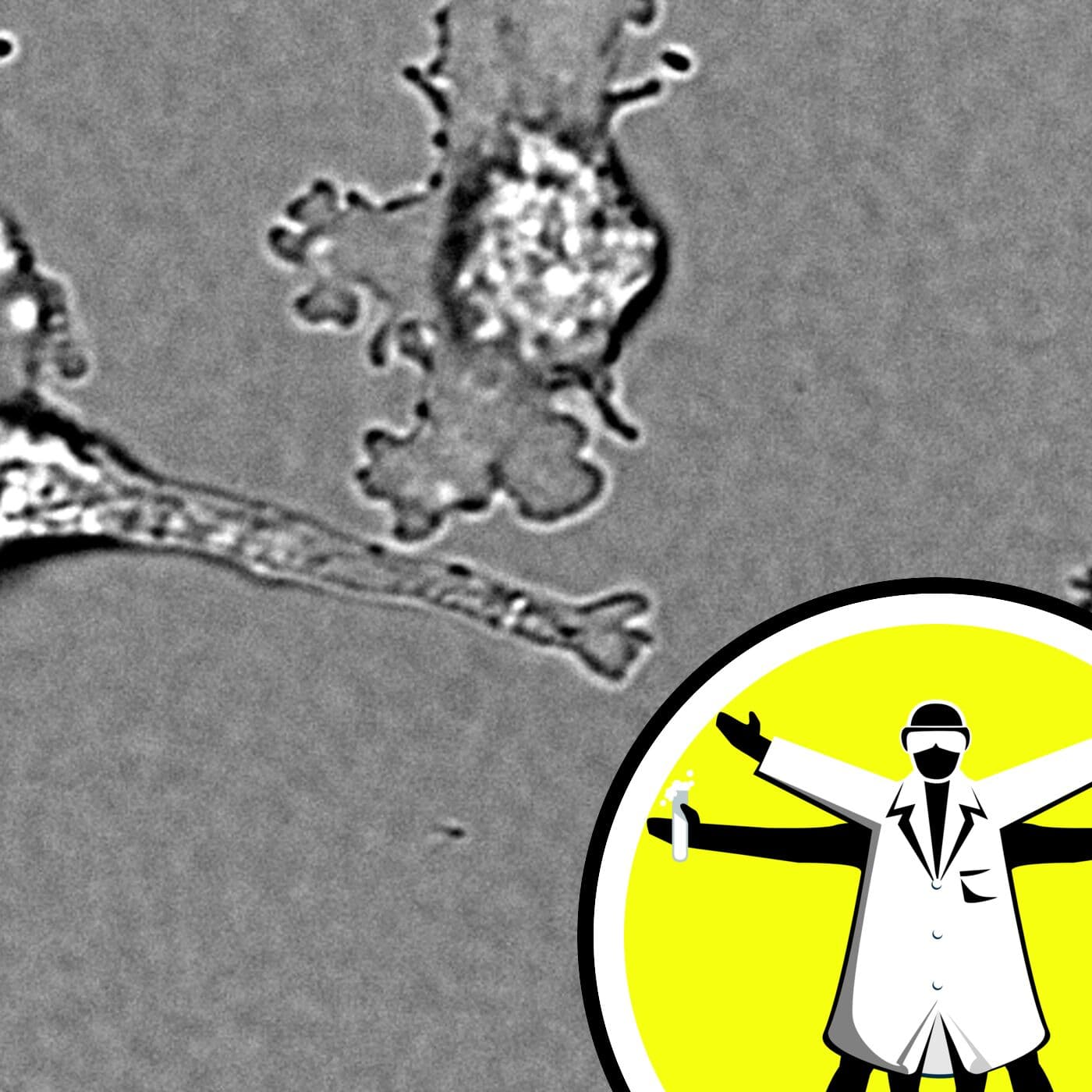
36:30Now the thing about a muscle is it's a tissue. It's not just a monoculture of one type of cell. There are going to be other cells in there, some muscle cells, supporting cells, there will be some blood vessels. So there's a range of different things that give that tissue its structure, its integrity, and its features that then ultimately contribute to the taste and so on. So do you get all the mixtures of cells that you would see in the real deal? The cells that we work with the most are ones that have partially chosen a career path. And by that, I mean, there are cells that maybe haven't become, completely become muscle or fat or some of the connective tissue, but actually have the ability to behave like all of those.
37:12And those are the types of cells that we use. And what we found is that depending on the environment that we grow them in, they will behave very differently. So if we have pretty stiff, sturdy environment and put these cells to grow on that background, they'll behave a little bit more like what bone cells would behave like. When we put them in a very soft environment that has a lot of fat around, they actually behave more like fat cells. And so that's kind of the basis for how we can achieve some of the complexity that we're able to see in the seafoods that we create. And so do you grow different tissues in different environments and bring them together to make something resembling fish?
37:53Or do you change the environment as the process evolves? Cells in a big steel tank don't know how to just come together and become sushi. We actually need to create the structure for them to know where the white bands should be, how to sort of line up in the right way. And that structure, which we call a scaffold, is made of plant-based materials, typically sugars and proteins and things that you would imagine would be helpful to create these structures for cells to organise. How long does it take? Is this a viable process? Because if it takes three weeks to grow one bit of sushi, it's just not going to cut it, is it?
38:33but if you can turn it around really quick at the sorts of scale and volume that the market would demand? Actually, three weeks is great when you consider that in fish farms, and at least in the United States, about 80 % of our salmon is farmed. That's largely true in most of the world. In those fish farms, typically fish will be kept for about two years to grow before they are harvested to become seafood. In our case, it's typically something like four to six weeks. So actually, it's far more efficient in terms of time and resources than growing fish in conventional ways. If you talk to the purists, they'll say that wild caught fish is so much tastier because the animals have swum around, they've exercised, they've eaten a wild type diet.
39:18Can you exercise your bits of meat? In our case, we found that the nutrients we feed the cells is actually a far more important aspect of whether something will taste like wild salmon or not. And so we really sort of start by trying to understand what is under all of that complexity, like what molecules make one type of salmon taste different from another, and try to recreate that same set of nutrients for those cells so that we can achieve the right flavour profile. What is the taste like? If you offered this to somebody, could they tell it apart from something I caught with a hook out in the ocean?
40:01For the first time, we were able to do a blinded study. A blinded study of over 100 participants, people who regularly eat salmon, and we compared our smoked salmon to one of the most famous smoked salmon brands, I'd say, in the United States. But this was the first time that there was no statistically significant difference in preference between the two. And actually for us, the greatest compliment that we can receive for something like this is, you know, somebody will try a piece of salmon and just say like, yeah, that tastes like salmon. What's the timeline to market? We are on the menu. We're on the menu at a bunch of restaurants in the US.
40:49We also have started a program where people can purchase it from our website. so it is all really happening isn't it aria elfenbein there from wild type that's where we have to leave it for this week i hope that has been sufficient food for thought and whetted your appetite for the foods of the future thanks again to petra mersin for putting it all together we'll be back with the latest science news from the week on friday when we'll be unpacking an infectious disease called cyclosporiasis that causes explosive cases of diarrhea where's that all coming from and why space satellites are the new frontier in modern day conflict.
41:26Do also check out our weekly question and answer show where no question is a stupid question. You can get that wherever you get your podcasts or at nakedscientist.com forward slash ask. And finally, if you appreciate what we do for you here at The Naked Scientist, do please consider making a donation to keep the show on the road. You can do that safely, securely and effectively and very simply over at nakedscientist.com forward slash donate. From all of us here at The Naked Scientist, thanks for listening. I'm Chris Smith and until next time, goodbye.
42:15Hi, this is Becca Moore from For The Girls, and this podcast is sponsored by Aerie, where you can find the right bra in 59 sizes, soft fabrics, and good fits. If your bra strap is digging into your shoulder right now, it's the wrong bra. We get so used to being in pain as girls that we forget it doesn't have to be this way. Your clothes should not hurt. I got to the point where I stopped wearing bras altogether. And now my life has changed, you guys. The only bras I have in my dresser right now are Aerie, and I'm not kidding. Aerie's on a mission to make you feel good, and that starts with your bra.
42:42Your bra should hold you in, not back. Visit Aerie.com to find the right bra for you.