In short
The Naked Scientists Podcast: Episode Summary
Episode Title
Titans of Science: Jane Carlton
Overview This episode features Jane Carlton, a leading expert in the field of malaria. As the first to sequence the genome of the malaria parasite *Plasmodium vivax*, and having contributed to sequencing *Plasmodium falciparum*, she shares her insights on malaria, her scientific journey, and the implications of her work.
---
Key Highlights
Introduction
- Host: Chris Smith introduces the focus of the episode on malaria and the contributions of Jane Carlton.
- Background: Jane Carlton was born in Edinburgh, Scotland, and has a robust academic background in genetics.
Jane Carlton's Journey
- Early Interest in Genetics:
- Inspired by her brother's genetics textbook at a young age (around 8-10 years old).
- Education:
- Studied genetics at the University of Edinburgh, completing a PhD focused on malaria genetics.
- Career Progression:
- Worked at the University of Florida, NIH, and NYU.
- Recently appointed Director of the Malaria Research Institute at Johns Hopkins University.
Understanding Malaria
- Definition and Characteristics of Parasites:
- Parasites live in or on a host, often to the detriment of the host’s health.
- Types of Malaria Parasites:
- Six main species affecting humans, with *Plasmodium falciparum* being the most deadly.
- Notably, *Plasmodium vivax* has a dormant liver stage that can reactivate years after initial infection.
The Life Cycle of Malaria
- Transmission:
- Transmitted by female *Anopheles* mosquitoes via blood meals.
- Infection Process:
- Parasites migrate to the liver, reproduce, and then enter the bloodstream, causing symptoms such as fever and muscle aches.
- Complexity of the Life Cycle:
- Involves multiple stages and evasion of the immune system, making it a complex pathogen to study.
Impact of Malaria
- Historical Significance:
- Notable figures have suffered from malaria, indicating its long-standing impact on human health.
- Symptoms and Illness:
- Symptoms develop 2-3 weeks post-infection, resembling flu-like conditions.
- Can lead to severe complications such as organ failure.
Treatment and Challenges
- Current Treatments:
- Artemisinin-based combination therapies and quinine are effective but face challenges due to resistance.
- Genetic Research:
- Genomic studies provide insights into drug resistance and potential new drug targets.
Vaccination Efforts
- Current Vaccine Landscape:
- Two WHO-approved vaccines, RTSS (Mosquirix) and R21, are in early stages of rollout.
- Challenges in Vaccine Development:
- The parasite's ability to vary its surface proteins complicates vaccine efficacy.
Future Directions and Research
- Research Focus:
- Initiatives to control mosquito populations, develop new vaccines, and understand malaria transmission dynamics, especially in refugee camps.
- Long-term Goals:
- Aiming for malaria elimination in endemic countries, with a focus on both human and vector control strategies.
Conclusion
- Optimism for the Future:
- While eradication is a complex challenge, there is hope for malaria elimination with advancements in research and vaccination programs.
---
Key Takeaways
- Importance of Genetics in Understanding Malaria: Jane Carlton emphasizes the role of genetics in unraveling the complexities of malaria parasites.
- Collaborative Efforts in Research: Success in malaria research is highlighted as a team effort, showcasing the importance of collaborative scientific endeavors.
- Public Health Implications: The episode underscores the urgent need for effective treatments and vaccines to combat malaria, particularly in high-risk regions.
Closing
- The episode concludes with a commitment to continue providing insights on malaria through future segments, including a new feature called the "Malaria Minute."
Follow-Up: Listeners are encouraged to stay engaged with the Naked Scientists through their various platforms for updates and future episodes.
---
*For further information and to support the Naked Scientists, please visit their website.*
Written by AI. May contain mistakes. Listen to the episode to check what was said.
Chapters
Tap a time to open that second in VOMeet Jane Carlton
0:45 to 2:05
Exploring Jane Carlton's impressive career and achievements in malaria research.
“Jane Carlton was born on the 7th of January 1967 in Scotland's capital, Edinburgh.”
Understanding Parasites
2:05 to 3:25
Defining what parasites are and their impact on hosts, particularly malaria.
“They live in or on a host and usually to the detriment of that host.”
The Journey to Genetics
3:25 to 5:05
Jane shares her early interest in genetics and how it led her to study malaria.
“But how old were you when you picked up that genetics book then?”
The Genomic Breakthrough
5:05 to 6:45
Discussing the significance of sequencing the malaria genome and Jane's contributions.
“In those days, the Human Genome Project was still, what, five or six years away from reporting its initial draft.”
Types of Malaria Parasites
6:45 to 8:45
Overview of different species of malaria parasites and their impact on human health.
“And I think many British people seem to have an attraction to Florida because of the wonderful weather.”
Malaria's Evolutionary Background
8:45 to 10:25
Exploring the ancient history of malaria and its notable impacts on humanity.
“And he described the symptoms of malaria and the fact that people tended to come down with it.”
Life Cycle of Malaria
10:25 to 12:15
Detailed explanation of the complex life cycle of malaria parasites.
“And then in the blood stage as well, the parasite can form these sexual stages, like gametes, male and female gametes.”
Symptoms and Illness from Malaria
12:15 to 14:01
Understanding how malaria causes illness and its symptoms, including the importance of timely diagnosis.
“And then actually in the mosquito itself, there are certain stages called the sporozoid.”
Understanding Malaria Immunity
14:01 to 15:21
Learn about immunity to malaria and how it varies with geography and exposure.
“But also cerebral malaria is when the parasite travels to the brain and causes blockages in the brain and brain swelling too and that's really what can cause the death.”
Treating Malaria: Drugs and Resistance
15:21 to 16:56
Explore the challenges in treating malaria and the issue of drug resistance.
“Smith and I'm in conversation with Jane Carlton who's director of the Malaria Research Institute at Johns Hopkins University.”
Show all 17 chapters
Decoding Malaria Parasite Genomes
16:56 to 18:48
Discover the significance of genomic research on malaria parasites and its implications for treatment.
“and then I was part of the initiative to sequence the genome of Plasmodium falciparum But I have to say it was a real team effort.”
Challenges in Developing Malaria Vaccines
18:48 to 20:56
Understand the difficulties in creating effective vaccines against malaria.
“We have two new World Health Organization approved vaccines now, RTSS or Muscarix, as it's called, and then R21.”
Innovative Approaches to Malaria Control
20:56 to 22:24
Learn about new strategies for controlling malaria, including mosquito treatment.
“anti-malarial drug that we've used against it.”
Leadership in Malaria Research
22:24 to 24:24
Hear about the role of a director in a malaria research institute and future goals.
“In addition, being able to develop better baits that can attract mosquitoes away from people or better mosquito sprays that will repel mosquitoes more can be developed.”
The Future of Malaria Elimination
24:24 to 28:03
Discuss the potential for malaria elimination and the factors influencing it.
“is is not just obviously to run an institute but to have a world vision especially with a center as prominent as the one you're running.”
The Impact of Environmental Catastrophes on Malaria
28:03 to 28:38
Learn about how environmental changes can influence malaria resurgence.
“environmental catastrophes, such as the flooding that we saw in Pakistan a couple of years ago.”
Introducing the Malaria Minute Segment
28:38 to 29:17
Discover the upcoming Malaria Minute segment and its focus on global malaria efforts.
Transcript
Automatic transcript. May contain errors.0:11Chris Smith:Hello,
0:17Chris Smith:welcome to the Naked Scientist podcast. This is the program that brings you the biggest breakthroughs and also talks to the major movers and shakers in the worlds of science, technology and medicine. I'm Chris Smith. Today we're putting one of the world's most pernicious parasites under the microscope, malaria, and titan of science Jane Carlton is going to be our guide.
0:45Chris Smith:Jane Carlton was born on the 7th of January 1967 in Scotland's capital, Edinburgh. She attended St George's School for Girls and then completed a degree and a PhD in genetics at the University of Edinburgh, graduating in 1995 before moving to the US to take up a research position at the University of Florida where she used her skills in molecular biology to produce the world's first full genome sequences of the malaria parasite. Since then she's worked at NIH in Maryland and at New York University. Jane was recently elected as a fellow of the American Academy of Microbiology and she was also awarded the American Society of Parasitologists Stoll Stoncard Memorial Award in 2010, made a fellow of the American Association for the Advancement of Science in 2012 and named honorary fellow by the London School of Hygiene and Tropical Medicine in 2024.
1:40Chris Smith:She's now director of the Malaria Research Institute at Johns Hopkins University in Baltimore, Maryland, a post she took up in 2023. That is quite some CV, Jane. It's wonderful to speak to you today. The focus of your career has mostly been malaria, which is one of the world's highest impacting parasitic infections. So why don't we begin there? What actually are parasites? What's the definition?
2:05Jane Carlton:Parasites are fascinating organisms. They live in or on a host and usually to the detriment of that host. That can be through making the host unwell or perhaps reducing the ability of the host to reproduce or even changing the behaviour of the host. And the parasite that I work on in particular, the malaria parasite, is a protozoan, a single-celled organism. What took you down that path though?
2:32Chris Smith:Tell us a bit about the young Jane Carlton that got interested in parasites in the first place. How did that happen?
2:38Jane Carlton:It wasn't initially parasites that I was interested in actually, but genetics. And that's because my brother went to university and he came back with this new book all about genetics. And I really liked the front cover, which shows some chromosomes. And I thought, well, how cool is that, that the biology of an organism can be determined by these things called genes, and then how they're inherited can really affect their biology. so it was really through genetics and through my brother that I got first interested and then when I went to the University of Edinburgh there was quite a well-known and well-thought-of group that worked on the genetics of malaria parasites and that's really when I got into into the world of parasitology.
3:26Chris Smith:But how old were you when you picked up that genetics book then?
3:29Jane Carlton:Actually I was I think I was about 10 years or maybe eight years old I can't remember I still have it actually.
3:36Chris Smith:You're stole it?
3:38Jane Carlton:I did. I've actually stolen a few things from my brother over the years, as he knows.
3:44Chris Smith:But you must be pretty unusual. There are not many eight to 10 year olds reading genetics books. I mean, that singles you out as a bit special.
3:52Jane Carlton:Oh, well, I don't know. I mean, there's an interesting interpretation of the word special, isn't there? But no, I think my brother was the special one, bringing the book home. And that he actually taught me an awful lot about the world that we live in. So no, I put it down to him, not me really.
4:10Chris Smith:But obviously that must have inspired you because presumably you then followed a science track through primary school, secondary school, that would enable you to apply to Edinburgh University to do, because you did genetics there, didn't you? So how did you end up in that degree course? Was it just because of that book and then pursuing science at school?
4:29Jane Carlton:Well, it was always an interest in the natural world around me, actually. So I was always a very much an outdoorsy girl. And I loved riding and going off by myself and investigating things. And so then it was really wanting to know more about the biology and the kind of ecology of many of the organisms that I came across and the plants in the real world and then knowing how those developed and the role of genes and genetics that's how I really got interested and and decided to take that degree at the University of Edinburgh.
5:09Chris Smith:And it was that degree that then turned you on to malaria because you were applying that genetics interest to the malaria parasite because at this time this must have been what the mid-90s and although we take it for granted these days I'll just sequence that and we read the genetic code of everything we come across, don't we? In those days, the Human Genome Project was still, what, five or six years away from reporting its initial draft. So this was very early on in the game.
5:35Jane Carlton:Yes, it was. I was very fortunate at the University of Edinburgh and in the Department of Genetics that there was a very large group, very well-known group of malaria researchers that used genetics to study the malaria parasite. And so that's really how I got involved and did my PhD doing genetic crosses between different parasite strains that had different susceptibilities to anti-malarial drugs. And I had to generate the first genetic map of a particular malaria parasite species because the genome had not been sequenced. And that was very painstaking. And it wasn't that greater map. And that's really when I started to hear about news, especially in the United States, of an initiative to sequence the human genome.
6:29Jane Carlton:And I knew that there was a group at the University of Florida that was planning to sequence the malaria parasite genome. And so I jumped at the chance to try and join them.
6:40Chris Smith:And that's what took you to the States?
6:42Jane Carlton:Yes, that's right. It took me to University of Florida. And I think many British people seem to have an attraction to Florida because of the wonderful weather. I went there both for the weather, but also because of this great group who were tagging the genes of certain species of malaria parasites.
7:03Chris Smith:There's more than one type of malaria, isn't there, that hits humans?
7:07Jane Carlton:Yes, there are about six different species of human malaria parasite. The most prevalent, Plasmodium falciparum, which infects primarily children under the age of five in sub-Saharan African countries, is the most deadly as well and causes about 280 million cases each year and about 600 ,000 deaths. But there are other species as well. Plasmodium vivax, for example, is found in South America, but also Southeast Asia. And the really fascinating thing about that parasite species is it has a dormant liver stage. And so people can be walking around feeling perfectly healthy with this dormant stage, and that can then pop out years, months after an initial infection and cause the disease.
7:58Jane Carlton:So yes, there are actually about 200 different species of malaria parasite. Which other animals get it then? Lots of mammals, so non-human primates and monkeys. Also reptiles, lizard malaria is a huge issue too. And then also birds. So certain species of malaria parasite have been decimating those beautiful populations of colourful birds that you find in Hawaii.
8:27Chris Smith:Given that it's in so many different species and even reptiles then, does that mean that in evolutionary terms this is a really ancient bug?
8:37Jane Carlton:It is. It's an ancient parasite. It was first described or known to have been described by Hippocrates, for example, who was the, you know, they call him the father of modern medicine. And he described the symptoms of malaria and the fact that people tended to come down with it. if they were close to marshes. So it's been known for a long time. There have been some very notable deaths due to malaria. So Alexander the Great died of malaria. George Washington had many episodes. Lord Byron. More recently, George Clooney actually had malaria too, I think, when he was traveling in Ethiopia. And it was great because he then used his illness to highlight the severity of the disease.
9:25Chris Smith:What's the actual process of malaria? I mean most people know it's connected to mosquitoes and it's something to do with blood but talk us through the actual process of how malaria does what it does.
9:36Jane Carlton:Well it's a really intricate life cycle. So malaria parasites are transmitted by female mosquitoes of a certain species called anopheles and that's because it's female mosquitoes that take blood meals. They need blood in order to produce eggs. So malaria parasites get transmitted from the bite of a female mosquito in the saliva into the skin and then those parasites migrate to the liver and in the liver they undergo cycles of reproduction and then they burst out of liver cells into the blood and it's actually those stages in the blood that really cause the symptoms and the diseases, fever and the muscle aches, the headaches, the chills that really lead on then to more serious conditions as well.
10:29Jane Carlton:And then in the blood stage as well, the parasite can form these sexual stages, like gametes, male and female gametes. And so when an uninfected female mosquito takes a bite, those stages will then move back up into the uninfected mosquito and they multiply and then the parasite moves to the salivary glands and so the whole life cycle is is complete so incredibly complicated if you can think about it because all of those different stages we have to study we want to know what genes are turned on and off and that can be quite challenging because you can't necessarily grow the parasite for all of the different species.
11:13Jane Carlton:It's a very complex life cycle.
11:15Chris Smith:It certainly is and to think that that one parasite can get into all those different cell types that insect cells, liver cells, blood cells grow in there and also evade the immune system at all these different stages both in the insect and in the person it really is quite extraordinary isn't it? Can you actually see it though? When we look down a microscope can you see malaria? inside these cells?
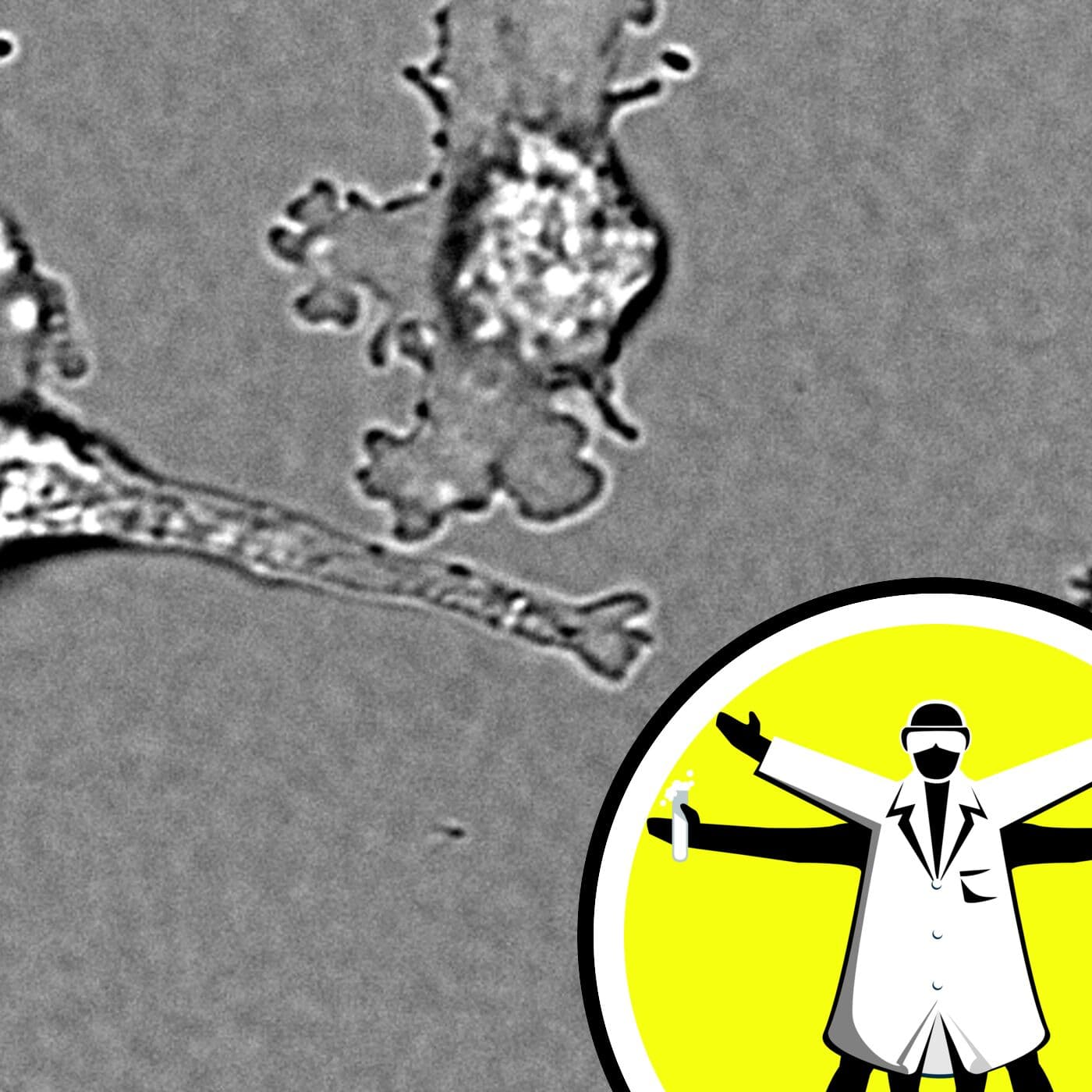
11:40Jane Carlton:Yes, you can. You do need a microscope, but you can see it in the red blood cells, for example. It's actually quite beautiful. I know I shouldn't say that for a parasite. So the ring stage of a malaria parasite looks just like a diamond ring, if you can imagine, with the big diamond and then the sort of platinum band as well. So you can see that quite visibly in red blood cells. And then you can see it in other stages too. So there's sort of a sausage crescent shaped stage, which is one of the sexual stages before it's taken up by the mosquito. And then actually in the mosquito itself, there are certain stages called the sporozoid.
12:22Jane Carlton:They're very interesting too, because they're very motile. So they sort of glide along a bit like a snake.
12:29Chris Smith:So how does it actually make people ill? When a person's got this thing, Obviously, they've got something growing in their cells, which can't be good. But how does it actually translate into illness, all of this?
12:40Jane Carlton:Well, it actually doesn't translate into illness for several weeks. And that's, you know, for all of your listeners, if this is the one take home message, if any of them go on holiday somewhere and then come back, if they're sick, two to three weeks afterwards, perhaps when they've forgotten about their holidays, to remember that they went to a malarious country because when they go to their doctor to tell the doctor, I've been to a malarious country, and that will immediately trigger in the doctor an alarm that potentially this person could have malaria. And the reason for that is that the malaria parasite takes a good two weeks or so to develop in the liver and then in the blood before a person starts feeling sick.
13:27Jane Carlton:And then that sickness tends to be a bit like flu-like symptoms but it's very important that people you know seek the doctor's advice and get treatment because it can spiral out of control pretty quickly and then about one percent of cases it can go on to convulsions and major organ failure and then that can lead to coma and to death.
13:51Chris Smith:Is that because it's killing cells or is it irritating the body in other ways?
13:56Jane Carlton:It's a combination of all of those actually. So in fact the immune response against malaria parasites can form a very big inflammatory response which sometimes is not helpful. But also cerebral malaria is when the parasite travels to the brain and causes blockages in the brain and brain swelling too and that's really what can cause the death.
14:21Chris Smith:I'll come on in just a second to how we treat someone in that position, how the drugs work. But you mentioned that with Plasmodium vivax, that can stay in the body for long periods of time. But once a person gets better, does that mean the parasite is gone? And are they immune after that? So in a bit like if I caught measles, I would be immune for life for measles. Do I then have immunity against malaria? No need to worry in future.
14:46Jane Carlton:Yeah, very good question. So for So children living in African countries, once they get malaria several times, they will be immune. But as soon as they move away, their immunity can drop. So people who are not in endemic countries won't have natural immunity to malaria. They won't have that built up unless they're going back to those countries many times. so immunity is not very well understood at all.
15:20Chris Smith:This is the Naked Scientist podcast with me Chris Smith and I'm in conversation with Jane Carlton who's director of the Malaria Research Institute at Johns Hopkins University. Coming on then to how people actually manage it, what do the drugs do?
Read the full transcript
15:36Jane Carlton:Yes, malaria is a treatable disease. I say this so many times. The problem is getting the treatment to people in time. We do have a range of drugs, artemisinin-based combination therapies or ACTs, quinine is another one too. Unfortunately, the malaria parasite has become resistant to almost all drugs that have been developed. And so we do have to use the drugs in combination, because the probability of getting a parasite that is resistant to two drugs is much less. but timing really is key it's it's getting the treatment it's getting the drugs you know to those children to those travelers in time.
16:21Chris Smith:Presumably the genetics work that you were doing when you first made your foray to Florida and generated those genomes that is going to inform how we understand how something works because that gives us the genetic insight into the mechanisms of the parasite's operation and that must open doors to looking for new drugs and so on.
16:43Jane Carlton:Yes, yes indeed. Well I do want to say up front, I mean I led the projects to decode the genomes of a couple of species of malaria parasite, in particular Plasmodium vivax and a rodent model and then I was part of the initiative to sequence the genome of Plasmodium falciparum But I have to say it was a real team effort. You know, I stood on the shoulders of giants. I know that sounds a cliche, but the whole group of us coming together to pool our expertise to get all of this done. And when we did, the result was fantastic and I think has really blown open the field of malaria research. And the reasons for that is that we can really start to classify and identify all of those genes which are involved in important processes in the malaria parasite.
17:35Jane Carlton:So we can identify groups of genes which have expanded, perhaps, because they interact with the human immune system. We can identify genes which potentially have mutations in them that cause drug resistance. We can generate genetic markers now to be able to do population studies. We can see how certain strains are moving through populations. And then, of course, we can do this whole sort of looking for chinks in the armor of the parasite. So finding genes that codes for a protein, perhaps in a particular metabolic pathway that doesn't exist in the human host. And right there, immediately, you have a possible drug target because you have a protein that's produced by the parasite and not produced by the host.
18:28Jane Carlton:And so you can potentially generate an antimalarial drug against that particular protein and vaccines as well.
18:36Chris Smith:I was going to ask you about vaccines. Where are we with that?
18:39Jane Carlton:Yes, we are really at the beginning, actually. It's been incredibly difficult to generate a good vaccine for malaria. We have two new World Health Organization approved vaccines now, RTSS or Muscarix, as it's called, and then R21. And they're only just beginning to get into the arms of children in, I think, 25 countries. The one that I'm most involved with is through our project in Zambia. And the Zambian government only just a couple of months ago started the first inoculations in children there. They're using the R21 vaccine that requires four shots. So it does take some time, this whole course of immunisation.
19:27Jane Carlton:And then at that stage, with so many countries now vaccinating, we'll really be able to get a grip on how good these vaccines are. About three or four years ago when RTSS first came out, there were initial studies in three countries. The effectiveness actually was not that great. It was only about 30 or 35%. There was a reduction in the number of deaths and the number of hospitalisations too, and the number of children, you know, getting malaria, as I said, but not as great as we would have hoped. Now with this larger number of countries, we can really get to grips to see how well the vaccination is going to be.
20:08Do we know why it's such a headache to make a vaccine that's working?
20:13Jane Carlton:We do, yes. Unfortunately, it's because the malaria parasite has a couple of really crafty mechanisms to evade the human immune response. One of them is called antigenic variation. and this is where the proteins on the surface of the parasite change so quickly that they can evade any immune response, any antibodies that the host has generated against them. And then there's antigenic diversity. So many of the antigens, the proteins found on the surface, are very variable and so the parasite is able to evolve very quickly against whatever we throw at it actually. and that's why it has become resistant as I mentioned to almost every single anti-malarial drug that we've used against it.
21:03Chris Smith:Do you think this is a surmountable problem?
21:06Jane Carlton:Ah that's a very good question. I'm not entirely sure it is actually. I think instead of just believing in one magic bullet there's a combination of all of these that's required. so we've really been talking about controlling the parasite in humans but also of course we need to talk about controlling the mosquito populations.
21:29Chris Smith:Indeed because I was intrigued when I interviewed a young woman who just finished some research recently and it made me think because her approach was we don't just want to treat people because mosquitoes are infected too so rather than trying to kill the mosquitoes which we know that's a pain and difficult why don't we try and treat them for their malaria. So she was inventing chemicals that the mosquitoes pick up when they try to bite us from bed nets.
21:54Jane Carlton:Absolutely, yes. And I think I know who you're talking about actually. That research is key. I think that's very important. There are other approaches as well, such as engineering mosquitoes that malaria parasites can't infect. So you're not killing the mosquito populations, but you're preventing the malaria parasite from being able to develop in the mosquito. Also killing the malaria parasite in the mosquito, perhaps through producing a toxin. In addition, being able to develop better baits that can attract mosquitoes away from people or better mosquito sprays that will repel mosquitoes more can be developed.
22:40Chris Smith:You're now directing the Malaria Research Institute at Johns Hopkins. So how did that come about and how do you balance the managerial slash director side of that role with the fact you're a hardcore scientist at the same time?
22:58Jane Carlton:Actually I had the tremendous opportunity and was asked to apply for the directorship of the Malaria Institute just about three years ago and I had known about the Malaria Institute for many years. It was first formed through a very generous gift from Michael Bloomberg in 2001. Many of my colleagues and friends ended up at the Institute. And so I really jumped at the chance when I was asked to apply and joined the faculty three years ago now. So I'm still quite a newbie, I have to say, and loving it. You know, we're a group of scientists in a state-of-the-art facility that we have in Baltimore, in Maryland, Johns Hopkins, undertaking quite high impact research on all facets of malaria, the mosquito, the parasite, the human host.
23:52Jane Carlton:Ultimately, the goal is to innovate new strategies that prevent and cure malaria. So it's a dream come true for me. It really is. So I don't find it too troublesome, I have to say, in terms of the managerial and the leadership side. a lot of the time it runs by itself and I think that's when you have a great collegial group of faculty who all work together towards a common goal and that that makes it so much easier shh they'll give you more to do well bring it on but more seriously I mean the role of a director
24:28Chris Smith:is is not just obviously to run an institute but to have a world vision especially with a center as prominent as the one you're running. So where are you pointing your guns at? What are your targets? What's in your crosshairs for the next five years? Where do you think the opportunities are? And what are you going after?
24:47Jane Carlton:Five years, I have to say, is quite a short period of time. But I have drawn up a vision and a kind of strategic plan for the Institute. And we have 16 or so big projects that we're starting to roll out, which are very exciting. A lot of those involve our field sites. So we work in several African countries, Zambia being one of them, but also Uganda, Kenya, Tanzania, and more recently, my own work has taken me to Ethiopia. We're looking to see what improvements can you make to places that people live in that would reduce them getting bitten at night. We are closely monitoring and rolling out a study to look at the implementation of one of the vaccines in Zambia, to follow a cohort of children as they get the immunizations, and to be able to determine how well they're responding to the vaccine and what the immune system, how it's responding as well.
25:51Jane Carlton:And the understanding that the vaccines are not perfect, were rolling out more studies on generating new vaccines, in particular using mRNA technology and also trying to develop or identify new targets for vaccines as well. My own research in Ethiopia, we're trying to look at refugee camps and to see how the parasite spreads through those, in particular anti-malaria resistance is a big issue for one group of drugs. in Ethiopia. And we're also hoping to look at the invasive Anopheles stevenzai mosquito in parts of Ethiopia as well, which is really upending the epidemiology of malaria in the country.
26:38Chris Smith:Am I being over-optimistic by saying it would be wonderful if in the future we got to a stage where no one has malaria? Is it possible to get rid of this thing forever, or is that not feasible?
26:54Jane Carlton:Well I think that's the million dollar question isn't it? I'm hopeful, I'm always hopeful that we'll be able to eliminate malaria if not eradicated in many of those endemic countries.
27:09Chris Smith:And just for clarity how do those two terms differ? What's the difference? What's the distinction between them?
27:15Jane Carlton:So eradication is completely getting rid of that particular disease globally. And a good example is smallpox. Elimination, on the other hand, is when certain countries have managed to rid the disease, but their neighbouring countries, for example, may still have that disease. I think elimination is really very much in reach. And we know that 48 countries have been certified as malaria-free by the World Health Organization, and I can only see that number increasing. In fact, the world malaria map has shrunk significantly over the past 50 years. The issue, of course, is in countries where there is internal strife, perhaps internal wars or environmental catastrophes, such as the flooding that we saw in Pakistan a couple of years ago.
28:09Jane Carlton:In those sorts of situations, malaria can easily rebound. And a course of concern as well has been the reduction in certain US funding initiatives too, in particular the President's Malaria Initiative. So we're a little unsure in the next few years what we're going to be seeing, but I am very hopeful through the rollout of these new vaccines and vaccination programmes that progress towards global elimination will be possible.
28:38Chris Smith:that book that you stole off your brother has has changed the world a bit hasn't it
28:45Jane Carlton:well i think genetics is just a fascinating subject and area so it certainly changed my life
28:52Chris Smith:the formidable jane carlton with the past present and future of malaria and we'll be returning regularly to talk about malaria on the program in the future because we are teaming up with jane and her colleagues at the Johns Hopkins Malaria Research Institute to bring you the Malaria Minute, in which we'll be offering insights from around the world into the important work that's going on to combat the disease and its impacts. So stay tuned for that in the weeks ahead. Meanwhile, do join us as usual on Friday when we'll be back with our usual roundup of the top science stories from across the world.
29:26Chris Smith:Do please follow us on LinkedIn and Instagram for up-to-the-minute information and what we're up to, and we very much welcome your reviews and comments on Apple spotify or wherever you get your podcasts my email address on the other hand if you'd like to write to me is chris at thenakedscientist.com lastly huge thanks to all of you who are continuing to support us here at the naked scientists on a regular basis if you would like to make a contribution to keep the show on the road we would appreciate that very much it's an enormous help please head over to nakedscientist.com forward slash donate i'm chris smith thank you for listening and until next time goodbye