In short
Episode topic: Neuroscience of Alzheimer’s and dementia—how amyloid plaques and tau tangles drive synapse loss and cognitive decline, plus implications for treatments (antibodies, vaccines), and prevention ideas (immune activation, sleep, inflammation, exercise).
Guests
Tara Spires-Jones, world-leading neuroscientist; Professor of Neurodegeneration and Director of the Centre for Discovery Brain Sciences at the University of Edinburgh; co-lead (UK Dementia Research Institute) Synapses, Circuits, Cognition and Physiology Division. Background: biochemistry and French (double honours) at UT Austin; neuroscience postgraduate at Oxford; researcher at Massachusetts General Hospital/Harvard Medical School; focuses on neurodegeneration mechanisms in Alzheimer’s and ageing. Host: Chris Smith (interviewer).
Key claims
Dementia is a symptom umbrella; Alzheimer’s is the most common cause. Amyloid beta plaques form for decades before symptoms; tau pathology spreads later and tracks better with cognitive decline. Synapses die around plaques and can be rescued in animal models by amyloid removal. Earlier intervention is crucial: lakanemab/denanemab remove amyloid and slow progression (~35–40%) but mainly help early-stage disease; debate is cost/risks (rare brain bleeding/swelling/death). Vaccines are being explored; shingles vaccine data suggest up to ~20% dementia risk reduction. Immune cells (microglia/astrocytes) and sleep disruption may influence risk; inflammation is complex, not purely harmful.
Notable examples
Two-photon imaging of living mouse brains showing synapse degeneration around plaques and rescue after amyloid clearance; familial Alzheimer’s mutations placing amyloid upstream; tau starting in medial temporal lobe (transentorhinal cortex) and spreading via neural circuits; early Aβ active immunization trial failures due to misdiagnosis and advanced stage; Wales shingles-vaccine study design using near-birthday cohorts.
Written by AI. May contain mistakes. Listen to the episode to check what was said.
Chapters
Tap a time to open that second in VOIntroducing Tara Spires-Jones
0:45 to 2:15
Exploration of Tara's background and accomplishments in neuroscience.
“She attended Leander High School before completing a double honours in biochemistry and French at the University of Texas at Austin.”
Early Scientific Influences
2:15 to 3:16
Tara discusses her childhood interests and the path to neuroscience.
“So neuroscience, what took you down that path?”
Transition to Alzheimer's Research
3:16 to 4:35
Tara shares her shift from neurodevelopment to focusing on Alzheimer's.
“So I started off studying neurodevelopment and how the brain uses information from the senses, like sensory information to develop during sort of just after birth.”
Techniques in Alzheimer's Research
4:35 to 5:32
Discussion of two-photon imaging and its significance in studying synapses.
“What was the technique and what were you actually looking at?”
Understanding Alzheimer's Disease
5:32 to 7:26
Tara explains the characteristics and symptoms of Alzheimer's disease.
“What actually is Alzheimer's disease and how does that fit into the umbrella term dementia?”
Historical Context of Alzheimer’s Research
7:26 to 9:12
The history behind the naming of Alzheimer's disease and key figures involved.
“Now, when you say this has been studied for over 125 years, would that have been Alzheimer?”
Pathological Mechanisms in Alzheimer's
9:12 to 11:10
Discussion on amyloid plaques and tau tangles in the brain.
“So at the time, in the early 1900s, there's just been this technological boom in microscopy, right?”
Link Between Amyloid and Tau
11:10 to 14:01
Tara details the relationship between amyloid beta and tau proteins.
“There's still some debate about whether amyloid is the driving factor, but most of us in the field agree that amyloid is upstream in the process.”
Amyloid and Tau Pathology in Alzheimer's Disease
14:01 to 19:13
Explore the mechanisms of tau and amyloid pathology in Alzheimer's and their effects on the brain.
“then causes some kind of cascade into the cell and that then causes the things that are inside the cell, the tau proteins, to tangle up?”
Public Engagement and Cognitive Reserve
19:17 to 20:04
Understand how lifestyle and education influence brain resilience against Alzheimer's.
“I'm Rachel Ralph, and today you're listening to our new Titans of Science series with Chris Smith in conversation with Tara Spires-Jones.”
Show all 16 chapters
Immunotherapy and Alzheimer's Treatments
20:04 to 23:16
Discuss the potential of immunotherapy in treating Alzheimer's and the implications of timing.
“And we don't, again, as with a lot of things in neuroscience, we don't fully know the answer to that.”
Vaccines and Alzheimer's Disease
23:16 to 27:05
Examine the role of vaccines in Alzheimer's treatment and how they may reduce risk.
“looking at brains from people who were vaccinated with A-beta.”
Inflammation's Role in Alzheimer's
27:05 to 28:00
Analyze the complex relationship between inflammation and the risk of Alzheimer's disease.
“Is it just that there's a higher level of inflammation and inflammation is the bad guy?”
Gene Variants and Alzheimer's Risk
28:00 to 29:50
Explore how gene variants influence Alzheimer's disease risk through immune cells.
“So I told you about the genes that cause familial Alzheimer's, but there are a whole host of gene variants.”
The Role of Sleep in Brain Health
29:50 to 31:26
Discuss the complex relationship between sleep patterns and Alzheimer's risk.
“So when you think about epidemiology, you have to take it with a pinch of salt because that's telling you an association, not necessarily a causative link.”
Coping Strategies for Brain Health
31:26 to 32:43
Learn about the importance of exercise, reading, and mindfulness for brain health.
“Because, of course, we spend our time working very hard.”
Transcript
Automatic transcript. May contain errors.0:16Hello and welcome to The Naked Scientist, the show that brings you the biggest breakthroughs and talks to the major movers and shakers in the worlds of science, technology and medicine. I'm Rachel Ralph, and today, Titans of Science returns with Chris Smith and world-leading neuroscientist Tara Spires-Jones.
0:42Tara Spires-Jones was born on the 8th of April 1976 in Yuvalde, Texas. She attended Leander High School before completing a double honours in biochemistry and French at the University of Texas at Austin. In 1999 she flew across the pond to undertake postgraduate studies in neuroscience at the University of Oxford before heading back to the US to Massachusetts General Hospital and the Harvard Medical School as a researcher. Tara has lived in the Scottish capital since 2013 and she's now Professor of Neurodegeneration and the Director of the Centre for Discovery Brain Sciences at the University of Edinburgh.
1:21Last year she was appointed co-lead of the Synapses, Circuits, Cognition and Physiology Division at the UK Dementia Research Institute Tara's research focuses on the mechanisms of neurodegeneration in Alzheimer's disease as well as other brain disorders and ageing Her work specifically investigates why nerve cells and the junctions between them which are called synapses become dysfunctional and die in these diseases in the hope of developing effective treatments Tara was also elected Fellow of the UK National Academy of Medical Sciences in 2024 and is a Fellow of the Royal Society of Edinburgh since 2026 and served as President of the British Neuroscience Association from 2023 to 2025.
2:07She's just been awarded the Stuart Pickering Brown Prize for Lifetime Achievement in Dementia Research and I'm delighted to say she's with us now. Hello, Tara. Hello, Chris. So neuroscience, what took you down that path? Yeah, it's a good question. So I grew up in the 1980s in the middle of nowhere, Texas, and spent my childhood outside. I don't know if you were also a child of the 80s, but there wasn't internet. And I was fascinated by the natural world and sort of always wanted to be a scientist. And when I was at university as an undergraduate, I was studying biochemistry, so fascinated by how the inside of cells work.
2:43When I got towards the end of my undergraduate degree, though, I started thinking about what problems, what sort of questions would I like to ask as a scientist? And what really attracted me was neuroscience because it's kind of our last frontier in biology. We don't really understand how the brain works, how we make all these beautiful things like memory and thoughts and emotion. And so I just kind of steered myself down that direction and found an amazing mentor and came over to Oxford for grad school. And how did you end up in the Alzheimer's space? I started off as a neuroscientist on the other end of the life course, actually.
3:17So I started off studying neurodevelopment and how the brain uses information from the senses, like sensory information to develop during sort of just after birth. But during my PhD, I ended up changing direction, partly because the question I was asking just didn't work. I was sent as a PhD student to find something that turned out not to exist with a really fancy microscope. So when I got to that point, that's one of the things I'm sure you hear a lot from your guests is that science doesn't work the way you expect, right? So when I got to that point, I had an idea of looking at the plasticity or the ability to change of synaptic connections, not in development, like I started out, but in degeneration.
4:00And I went into a model of Huntington's disease, and was one of the first people to discover changes in synapses in this mouse model of Huntington's. And after studying Huntington's as a grad student, I went to interview in Boston at Mass General and met an amazing scientist named Brad Hyman, who turned out to be my mentor. And he attracted me to Boston essentially with a microscope that was amazing. And he said, look, synapses we think are really important in Alzheimer's. People aren't really studying them enough. You're an expert on synapses. I have a really cool technique and a microscope you could use to study them.
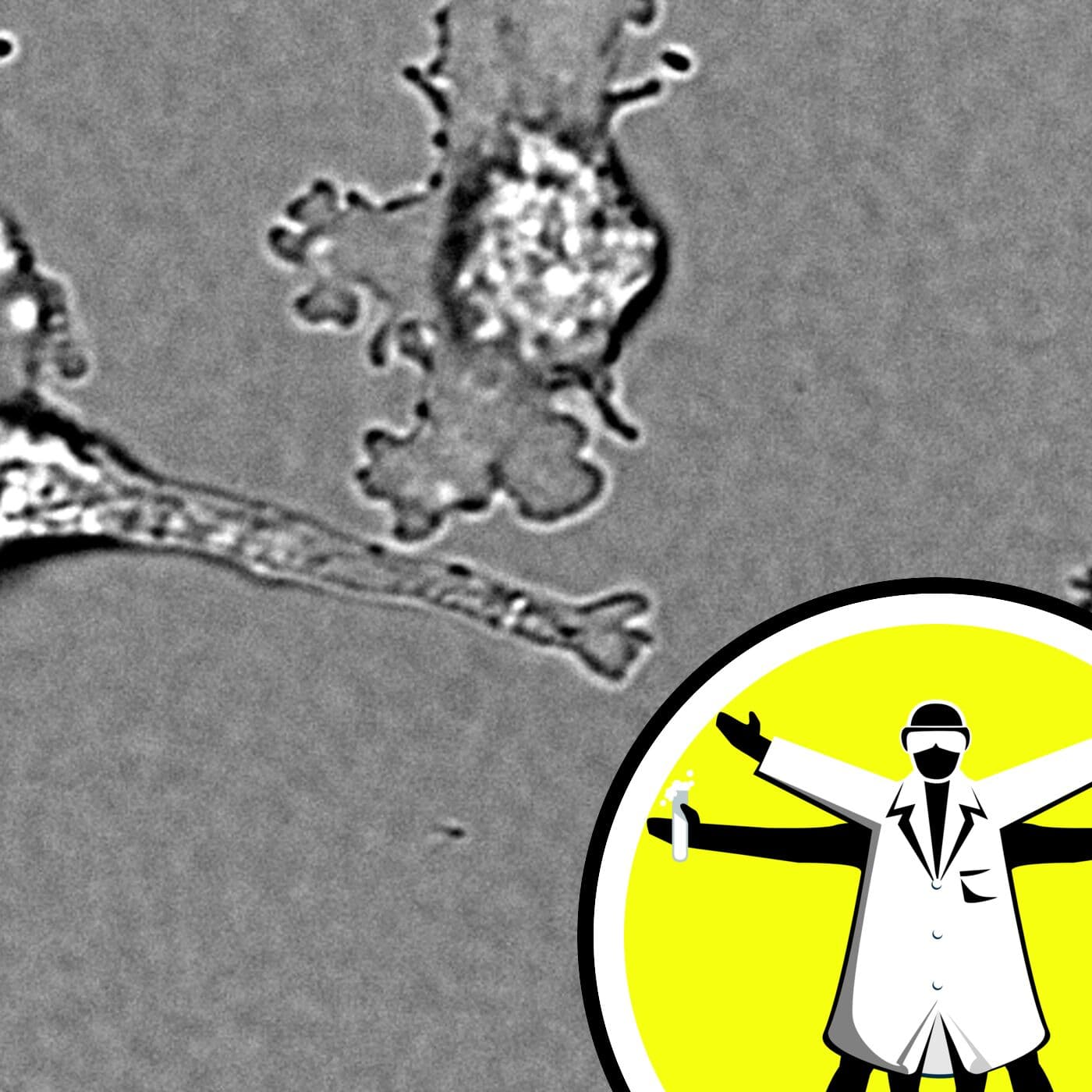
4:33And that's where I started. And that was 2004, so over 20 years ago now. What was the technique and what were you actually looking at? Yeah, so the technique is called two-photon imaging. What's cool about that is when you pulse a laser and you get two single light particles, photons, to hit something at the same time, you can penetrate pretty deep into brain tissue. So we were able to look through a window into a mouse's brain and follow over time how synapses die around plaques. And plaques are one of the pathologies in Alzheimer's disease. So we were able to see synapse degeneration in the living brain over time.
5:08and importantly we were able to rescue that degeneration with treatments that removed the amyloid from the plaques and that was one of the really early experiments down the road to some of the first disease modifying treatments. I'm not taking credit for those, it was not my idea to remove plaques in the first place but I did play a small part in the development of the very first drugs that can slow the progression of Alzheimer's disease. Let's back up a little tiny bit then and consider the disease as a whole. What actually is Alzheimer's disease and how does that fit into the umbrella term dementia?
5:43Yeah, so Alzheimer's disease is the most common cause of dementia, which is the set of symptoms or the clinical syndrome. Unfortunately, I would imagine all of your listeners are very familiar with what dementia is. It's this idea that you lose cognitive function over time. And in diseases like Alzheimer's, that usually starts with problems with memory, but it progresses to problems with planning and thinking, the ability to look after yourself and live independently. So dementia is the umbrella term for the symptoms, but those symptoms can be caused by lots of different diseases. Alzheimer's is the most common, but there are also diseases like frontotemporal dementia, dementia with Lewy bodies, Parkinson's disease, dementia, etc.
6:23Whole host of underlying brain pathologies that can cause those symptoms of loss of cognitive function. And in Alzheimer's specifically, what happens? So that's what I've been studying for the last 20 years and what people have been studying as a whole in the field for over 125 years. But we know that over the course of Alzheimer's disease, you have the buildup of two different pathological proteins in the brain. One of them is called amyloid beta, and it clumps into what we call plaques. And they are big clumps outside of the cells in the brain. and the other pathology is called neurofibrillary tangles and those tangles are made of pathological tau protein and tau clumps up inside the neurons of the brain cells in the brain and this happens over the course of decades so the plaques build up for at least 20 years before symptom onset the tangles and where they spread in the brain actually tracks better with at the loss of cognitive function and so the the downstream of these two pathologies is the neurons die so your brain literally dies over the course of decades.
7:24And that's why you lose your cognitive function. Now, when you say this has been studied for over 125 years, would that have been Alzheimer? Because Alois Alzheimer was a doctor, wasn't he? Was he the person that gives his name to this because he studied it? Yes, he's the most famous. But I'd like to point out that it was a really interesting story why we named it Alzheimer's disease. So the person who first described the plaque pathology was named Oscar Fisher, and he described the plaques. They were actually called Fisher plaques for quite a while. He described those plaques in the very early 1900s.
7:58Alzheimer described tangles and plaques, both in the brain of a person who had Alzheimer's type dementia, or what we now call Alzheimer's dementia. And then after Alzheimer, there was a black neuropsychiatrist called Solomon Carter Fuller, who really progressed the field, translated Alzheimer's work from German into English. And the reason it's called Alzheimer's disease is because Alzheimer's mentor, who was named Emil Krappelin, he was a really famous psychiatrist in Germany. And he was directly competing with a really famous psychiatrist in Prague called PIK, whose PIK disease is named after.
8:33And when Krappelin, who was Alzheimer's boss, essentially, saw his case study, he described this one person's brain. And then Krappelin wrote that is a case study into his huge textbook of psychiatry that was the biggest in the world at the time. And in that textbook, he named it Alzheimer's disease, I think is part of a competition with Pick because Pick was Oscar Fisher's mentor. And one of the reasons I think Fisher disease is not what we call it is because Fisher was actually killed by the Nazis in the 1940s. They were looking down a microscope and seeing very similar things to what you see today when you look down a microscope, but they wouldn't have had the molecular insights that we have today.
9:11Yeah, exactly. So at the time, in the early 1900s, there's just been this technological boom in microscopy, right? So now we had compound microscopy and another technological advance in how you can fix tissue so that it can be stained and advances in staining the tissue so you could visualize things. Fisher and Alzheimer were able to look down the microscope and see these pathologies, plaques and tangles that we still see today. Like you say, they didn't know what they were made of. and that took until the 1980s when the sort of molecular revolution came about to understand what proteins are involved.
9:43But yes, they were looking down a microscope just like I do today, although mine are more expensive and fancier. But there are two things going on then. There are things that go wrong inside cells and things that build up outside cells. Are they one and the same? Does one cause the other? Do they occur in parallel? Do we actually know how the two are related? There's still some debate about that. So the predominant hypothesis in the Alzheimer's field about how the disease works is called the amyloid cascade hypothesis. And this was put forward by one of the scientists, Sir John Hardy, who's a professor at UCL.
10:20And what he did is he discovered that mutations in families that have familial Alzheimer's disease, they cause increases in the amyloid protein that clumps in plaques. And downstream of that, and it must be downstream of that because there's a single mutation in the single gene that encodes amyloid beta called the amyloid precursor protein. And those people who have mutations, these familial Alzheimer's mutations go on to develop tangles and then cell death and Alzheimer's disease. So that's proof that at least in the familial form, which is very rare, it's about 1 % of people with Alzheimer's have a genetically inherited dominant form.
10:54But in that rare condition, it is very clear that amyloid is upstream and that somehow, and we still don't fully understand how, causes the downstream tau pathology, neurodegeneration, and the big brain inflammation that we see, the sort of gliosis that we see in the brain. In sporadic Alzheimer's, which is the vast majority of cases, there's people who don't have a gene that directly causes the disease, but might have genes that increase their risk and lifestyle factors that increase their risk. There's still some debate about whether amyloid is the driving factor, but most of us in the field agree that amyloid is upstream in the process.
11:27but there are still a lot of mysteries about how that leads downstream to the tau pathology and the neurodegeneration that actually are associated with symptoms. Don't people who have Down syndrome develop Alzheimer's changes much sooner because the gene for beta amyloid is on the chromosome they have an extra copy of chromosome 21? Exactly so when you have an extra copy of chromosome 21 One, you have an extra copy of the amyloid precursor protein, and that's sufficient to drive more production of this amyloid and Alzheimer's disease in people with Down syndrome. And it's a similar mechanism to some of the mutations.
12:04Even if you don't have three copies, the mutations all either increase the production or increase the stickiness or the propensity to aggregate of the amyloid beta into those plaques. Why should, though, just making a bit more of something that your brain clearly needs, because all of us have this gene. we've all got it turned on in our brains anyway, this beta amyloid gene, why should extra amounts of it then turn into a disease process? And what does the gene even do? For the first question, why does this cause a disease, we really don't fully understand. What the gene does normally is pretty well understood, although not fully.
12:41So amyloid precursor protein, which is the parent protein of the amyloid beta, is involved in neurodevelopment, it's involved in repair if you get some damage to your neuron this app goes out and tries to fix it so that's important but this cleavage product this a beta when it gets released from the neurons because it gets cut in the membrane and then it gets spit out of the cell and when it's released normally it should be cleared from the brain like we your brain has just like any cell has turnover of its proteins you make stuff it's used and then it's either degraded or cleared and in people with Alzheimer's we think and it's not fully understood we think that there's some deficit in clearing the amyloid from the brain that causes it to clump up and we know that small clumps of amyloid not the massive plaques but small oligomers so a few copies of this A beta stuck together are very toxic to synapses my favorite part of the brain so when amyloid beta is one of the things we discovered years ago now is amyloid beta sticks to synapses and that we think is directly causing the synapse death.
13:43And when the synapse dies, your cells can't talk to each other properly anymore and you start to have that cognitive decline. How does that link though to these tangles building up inside the cells? Is it the injurious effect of the toxic forms of amyloid poisoning your synapses in the way you say that then causes some kind of cascade into the cell and that then causes the things that are inside the cell, the tau proteins, to tangle up? This is where the mystery comes in. We still don't fully understand this. There are lots of good experiments that hint at various mechanisms linking A-beta to tau.
14:20One that I think is particularly interesting is we think that amyloid plaque pathology and A-beta are probably gating the spread of tau pathology out of a small part of the brain. Most of us, as we age, have a tiny bit of tangles or tau pathology just tucked right in the medial temporal lobe in a very small part of the brain called the transenterinal cortex and parts of the brainstem and if you keep it there in that part of your brain it doesn't affect your function but if the tau gets out if somebody opens the gate and the tau starts to spread through the brain then you start to have symptoms and it's when the amyloid pathology gets down towards that part of the brain that you start to see the tau spreading and in model systems when you combine little bits of tau in one little part of the brain with amyloid plaques it accelerates the tau spread so that's one of the things it's doing but there are lots of things that we don't fully understand about how amyloid links to tau one of the things that's probably happening is amyloid causes a huge amount of inflammation around the plaques those changes in the immune cells in the brain we think are causing damage to the neurons and they're probably linked somehow to the tau pathology but we don't really fully understand and can it spread through the brain or do you produce these inflammatory proteins all over the brain and they build up all over the brain and therefore if you look anywhere in the brain you will find these plaques of Alzheimer's disease.
15:42Both plaques and tangles do spread through the brain. Plaques begin out in the neocortex, the part sort of on the top of your brain, the beautiful curvy sort of gyrations that we all think of when we think of a brain. The amyloid starts out in what we call the default mode network so that's parts of the brain that are active when you're just sort of doing nothing, where you're just sitting and thinking. And then it sort of spreads down through the rest of the brain. The tau, like I mentioned, starts in a very tiny part of the medial temporal lobe and then spreads through neural circuits. So it goes, jumps out of one cell, we think.
16:14And we've got some evidence to show this in animals. And we've got some really circumstantial, but I think convincing evidence that this is happening in human brain as well. So tau starts in one cell. It travels down the axon to the synapse. So the axon is sort of the wire that sends the signal. it jumps out of the pre-synapse and it jumps into the next cell and that synapse is along beside that so into the post-synapse of the next cell in a whole different brain region because your neurons one of the remarkable things about the brain is your neurons have these hugely long processes the axons from your motor cortex can go all the way down to the bottom of your spinal cord can be a meter long so the cell body is up in your brain and the synapse is down in your spinal cord and within the brain this happens on a smaller scale so from from that transenterinal cortex there are axons that go into the hippocampus which is a really key brain area for memory and that's one of the reasons that memory is one of the first symptoms in many people with Alzheimer's it's because that circuit from the enterinal cortex to the hippocampus is hard hit by tau pathology very early on.
17:14Is this also why people and you've alluded to it here people will presumably have this disease for a long period of time before they're symptomatic with the disease. And is that because they're basically accruing damage that's building up in the cells, but it hasn't yet spread and begun to claim other territories in the brain that will then affect brain function significantly until you get to a threshold point? Yeah, partly because your brain is absolutely amazing. We've got this ability of the brain to, we call it plasticity in neuroscience, the brain to just make up for damage or resilience, we also call it.
17:50So you're building up plaques in the brain for at least 20 years before you have a diagnosis of Alzheimer's disease, but your brain can just put up with a bit of plaques. When you then have the tau pathology that spreads through the brain and starts to kill the cells, once enough cells have died, your brain cannot make up for it anymore by making new synapses and sort of making the rest of the network make up for it. And very interestingly, that amount of that set point of the time when you will have symptoms really varies based on your lifestyle and your background. So people with really high levels of education have built these big, robust brain networks, and they can put up with a lot of pathology in their brains before they have symptoms.
18:29And that's something we call cognitive reserve. And that's why I spend a lot of time doing public engagement events, because I want to tell people that it's not to blame people who have dementias, but there are things that we can do as individuals to boost our own brain resilience. It won't work forever, but we can make our brain networks really robust and reduce our chances of developing dementia or delay the onset because we've given our brain the best chance to put up with any pathology that's building up. The Naked Scientist podcast is produced in association with Spitfire, cost effective voice, internet and IP engineering services for UK businesses.
19:06Find out how Spitfire can empower your company at Spitfire.co.uk.
19:13Music in the programme is sponsored by Epidemic Sound, perfect music for audio and video productions. This is the Naked Scientist podcast. I'm Rachel Ralph, and today you're listening to our new Titans of Science series with Chris Smith in conversation with Tara Spires-Jones. We've heard all about the history of Alzheimer's and the biology of the disease itself, but now we talk about treatments from drugs and vaccines to how getting some more sleep could help prevent disease development. I thought you were going to say for a minute you do all these engagement events in order to build your own robust network and resilience.
19:46So you're doing that anyway, aren't you, I suppose? But if we think about how we therefore want to treat Alzheimer's disease, given that insight and that apparent trajectory, what implications are there then for the point at which we're going to have to intervene if we want to try to put the spanner in this biochemical works and stop this process? Where's the threshold point? So it's a great question. And we don't, again, as with a lot of things in neuroscience, we don't fully know the answer to that. But so far, all the data are pointing to earlier is better. So I mentioned removing amyloid from the brain, experiments that I was doing in the late 1990s and early 2000s in animals.
20:23And now we have these antibodies, this treatment, it's called immunotherapy. There are two drugs, lakanamab and denanamab, that you can inject into people. And they really remarkably remove amyloid from the brain. and they slow disease progression in Alzheimer's disease, but they don't seem to do much if you already have moderate Alzheimer's. They really only seem to work in the few trials that have been done that worked if you treat people in the very early stages. That kind of makes sense, right? If it's the amyloid is kicking things off, if you've already got too much tau pathology, it may be too late.
20:53So earlier seems to be better as far as all the data so far. Those drugs though got something of a dragging over the coals recently, didn't they? Because people began, I think it was off the back of a Cochrane review, people began to question whether or not they actually are capable of delivering. Yeah, that was so interesting. And I did have some chat with people about this because that Cochrane review did something that is not really a good practice. So what they did in that review was they combined all the data from every trial that's ever been done to remove amyloid from the brain with these antibodies.
21:28The problem with that is some of those trials were done many years ago, and they were done on people who didn't all have Alzheimer's disease because we didn't have biomarkers yet. These antibodies all target different types of amyloid beta. So they weren't comparing, they were sort of comparing apples and oranges and they were comparing antibodies that didn't perhaps get into the brain or didn't clear well enough. Instead, what I would put forward is the gold standard for whether a treatment works is phase three clinical trials, right? And these two drugs did succeed in their primary endpoints of their phase three clinical trials.
22:00So they unequivocally work to slow disease progression. Where there is really legitimate debate is whether that slowing is worth the risks and the costs, because these drugs, they remove amyloid really remarkably from the brain. Your brain scan goes from your brain is full of amyloid to negative, to empty. But they're only slowing the disease progression by about 35 or 40 percent, so you're still getting worse, just more slowly. And the drugs have side effects, so they're rare, but they It can cause brain bleeding, brain swelling, and rarely even death. And they cost tens of thousands of pounds a year per person.
22:34So these are approved for use by the MHRA in the UK, which means you can get these drugs prescribed, but the NHS won't pay for them because of this cost-benefit issue. So there is a legitimate debate around whether these drugs are good enough to merit their costs and their risks. But I think there's not really a legitimate debate about whether these two drugs work because they have passed phase three and been approved in many countries around the world. If they're a therapeutic antibody and our bodies are capable of making antibodies, can we not just make vaccines against Alzheimer's disease and make our own antibodies, turn ourselves into a pharmaceutical company and save ourselves a lot of money in the process?
23:14Absolutely. And in fact, in my spare time, I'm on a microscope on Friday afternoons these days, looking at brains from people who were vaccinated with A-beta. So this has been tried and there are ongoing trials. The first, in fact, the very first immunotherapy for Alzheimer's was an A-beta active immunization, which means they injected some A-beta protein with an adjuvant to make your immune system angry. And that was the theory was that you would make your own antibodies and clear the plaques. That trial failed for several reasons. One of them is this was over 20 years ago, and we couldn't tell who had Alzheimer's disease versus other types of dementia.
23:50So it turned out that a bunch of the people with dementia in the trial didn't have Alzheimer's. They had another kind of dementia that doesn't have plaques. So removing the plaques wouldn't help them. The second thing was they were doing it in people who had more advanced disease stage. So it could have been too late. And the third thing about antibodies, actually in the people who were vaccinated who did have plaques, there was evidence of plaque clearance. And even 14 years later, we're still seeing in my microscope today that there were benefits of that. For example, there was less synapse loss right around the plaques.
24:22But the other issue with A-beta vaccination is as we age, our immune system sort of declines a little bit. So vaccines aren't usually as effective in elderly people. And A-beta is, as you pointed out earlier, is a protein that our brain needs and uses. So if you vaccinate against something that your body has normally, there's a risk, it's small, but there is a slight risk that you'll cause an autoimmune reaction. We really don't want our immune system to attack our neurons, right? So that's why I think the field moved towards the passive immunotherapies where you just give the antibodies. But those are very expensive.
24:57Vaccines are cheap and they're easy and they're sort of a one or two off. So it would be great and there's still people working on it. Speaking of vaccines, though, one vaccine that has turned out a really interesting result recently was the study of the shingles vaccine given to older people, where over a seven-year period, the study in Wales suggested an up to 20 % reduction in the risk of getting dementia in the seven-year follow-up in the study. So what do you make of that? Yeah, that's fascinating. I really enjoyed that paper and that study because it was really powerful, the use of the data.
Read the full transcript
25:32They introduced this vaccine for people on or after a certain birthday. So the scientists were able to compare lots and lots of people who were born just less than a week apart, but many of them had this vaccine and many of them didn't. When I first heard about this link between viruses and Alzheimer's disease, I was frankly quite skeptical because the early data suggested that when you get viruses like herpes zoster virus or HSV1, when you have Alzheimer's disease, you're more likely to have that virus in your brain. But when I was looking at that data as a scientist at the time, I thought, well, in Alzheimer's disease, your blood brain barrier is disrupted.
26:07And most of us as we age have these viruses in our body. So it's ever likely that they will leak into our brain if we have Alzheimer's. But this kind of data, this vaccine study that you mentioned, are really proving that it's not just a coincidence that something about those infections is probably making your immune system help prevent Alzheimer's disease. And we don't exactly know how, but there's some really interesting data, it's still early days, but some really interesting data to suggest that viruses like herpes and like shingles, they can actually infect neurons and they can go to sleep.
26:41They can go dormant in neurons over years. And then if you have subsequent infections, those viruses can wake up like a weird zombie virus and that can cause production of these pathological proteins and maybe make your brain more susceptible to Alzheimer's. Or there's something about the immune system. We know the immune cells help clear the pathology. So maybe having these infections makes them less able to do that. We don't fully understand yet, but I think the data are really interesting and convincing these days that there is a link. Is it just that there's a higher level of inflammation and inflammation is the bad guy?
27:12Because if you look at people who have repetitive knocks on the head, like professional sportsmen and women, they're at higher risk of Alzheimer's disease, possibly because they cause damage and that causes inflammation. Even people with gum disease, because of high levels of inflammation, have a higher rate of Alzheimer's disease. And then the flip side of that is if you look at people who take anti-inflammatories like aspirin or even eat lots of curry because there's turmeric in it, which is allegedly antioxidant, these anti-inflammatory effects seem to reduce your risk. Is it just all about inflammation?
27:42And if we lead as virtuous and low inflammatory life as we can, we probably are going to just reduce our risk? Sort of. So inflammation is not always the bad guy. those immune cells, we need them to be activated to clear the pathological proteins. There is some really interesting data. So I told you about the genes that cause familial Alzheimer's, but there are a whole host of gene variants. So they're not disease causing, but they're just variants that are normal in our population that can either increase or decrease your risk of developing Alzheimer's. There are at least 75 of these. And the vast, vast majority of those are not expressed in the neurons, the cells that degenerate in the disease, but they're expressed than the immune cells in the brain.
28:24So there's something about those immune cells that is definitely driving the propensity to develop disease. We fully don't understand this whole picture yet, but it seems like if you have changes in your immune cells that make them less likely to clear these pathological proteins from the brain, that can make you susceptible. But it's a really complicated picture. Your microglia and astrocytes, those are the two main immune cells in the brain, especially the microglia, they are really different depending on their state. So they can go from a homeostatic cell, which means they're doing a lot of wonderful things for the brain.
28:58The microglia are going around removing viruses, checking that everything's okay. The astrocytes are providing nutrients to the neurons. But if they get signals that make them inflammatory, then they turn into cells that will eat things. So the microglia will, for example, eat the virus or the bacteria, and that's what we want them to do. But to do that, they have this whole host of changes in these cells. And it's a very complicated spectrum. And some of those changes are preventative, and some of them are harmful to the brain. And in different parts of your brain, at different disease stages, and even in the same part of the brain, but around a plaque versus far from a plaque, these cells are wildly different.
29:32So we don't fully understand how the immune system is involved yet. And things like the teeth, sort of the gum disease, that's not fully clear that that's causative, right? It's also entirely possible that people with dementias in the very early stages are less likely to be able to brush their teeth properly, right? So when you think about epidemiology, you have to take it with a pinch of salt because that's telling you an association, not necessarily a causative link. So we've got a lot to learn. Sleep, because the other thing that people point to is that when we go to sleep, something changes in our blood-brain barrier integrity and the so-called glymphatic system opens up and the brain flushes out all the rubbish we've accumulated when we were awake.
30:14and therefore if you deprive yourself of sleep, you reduce that happening. Is that true? And should Margaret Thatcher, on her four hours a night claimed sleep, have got Alzheimer's sooner than she perhaps did? Yeah, so again, there's actually a lot of debate about the glymobatic system and there's still a lot of mystery around why we sleep at all, but also around how it's involved in pathology. There's some strong evidence that during sleep you do clear more of these pathological proteins from your brain. And there is strong associative evidence of that sort of epidemiology suggesting that disrupted sleep patterns are associated with higher risk of dementia.
30:53But again, dementia pathology for Alzheimer's, at least, is building up decades before the disease starts. So it's entirely possible that the circuits involved in sleep are messed up by the pathology early. And so not the other way around. You see what I mean? It could be both, or it could be that the sleep disruption is causing dementia or Alzheimer's, or it could be that early Alzheimer's is causing sleep disruption. That's not entirely clear. I think it's probably going to be a mixture. But it's clear from all over the field, from all other sorts of parts of biology that sleep is good for you or getting a healthy amount of sleep is good for you.
31:24So I would encourage people to do so if they can. That, I hope, applies to you too. Yes, yes, I do my best. Anything you can do to facilitate that? Because, of course, we spend our time working very hard. you raise your brain temperature cooking away thoughts but you've got to switch off sometime so what does a neuroscientist do to turn off well my my passion when i'm not working is is books and in fact even my passion when i am working is books i've written a book about the neuroscience of defeating dementia fighting for our minds but when i'm at home and i'm trying to wind down i read sci-fi a ridiculous amount of sci-fi my my favorite in the last few years has been martha Wells' Murderbot Diary series.
32:09And I do yoga and meditate because it is, as you say, it's hard to turn your brain off. And I really do have a hard time sleeping adequately. Well, I thought you were going to say you exercise because doesn't that also boost the production of new nerve cells? It's one of the few things that does increase the birth of new neurons in the brain. And maybe that could help to offset Alzheimer's as well. Oh, yeah, absolutely. I go to the gym three or four times a week. I lift weights, not because I love it, because it's good for you. But yoga is exercise as well. And absolutely, exercise increases a protein called BDNF, which is what I actually did my PhD on in Huntington's disease.
32:42And that protein BDNF, or brain-derived neurotrophic factor, directly causes new neurons to be born in a small part of the brain, and it causes new synapses to form. So that's what we were studying when I was a grad student. Tara, it's been a huge pleasure. Thanks for sharing your insights with us. Thanks, Chris. Chris Smith and Tara Spires-Jones. we'll have the latest science news stories from the week on friday and our regular updates on linkedin x and instagram if you enjoyed the show and would like to support what we do you can do so at thenakedscientist.com slash donate i'm rachel ralph and from everyone here on the team thanks for listening and until next time goodbye
33:32Thank you.