In short
The episode covers three science-and-society stories: (1) the UK’s planned ban on social media for under-16s (starting 2027), following Australia. Guest Sander van der Linden, a Cambridge professor of social psychology, says there is causal evidence that logging off can improve teens’ mental health and reduce exposure to harms (e.g., scams, fraud, extreme violence, misinformation, cyberbullying, sexualized images). However, he argues a wholesale age cutoff is “relatively arbitrary” and enforcement at 16 is unclear if 13 isn’t enforced; he favors regulating platform features/content (no autoplay/infinite scroll/stranger messaging; PG-rated feeds). He notes Australia’s approach is widely circumvented (up to two-thirds). (2) Antibodies can act inside cells: MRC Laboratory of Molecular Biology researchers Leo James and Tyler Rinesmith describe TRIM21-triggered autophagy that labels antibody-coated microbes for intracellular “recycling,” suggesting future antiviral drug design. (3) Cotton origins: Jonathan Wendell (Iowa State) uses genome sequencing to trace modern cotton’s wild gene pool to northwestern Yucatán, Mexico, with domestication selecting for longer/stronger fibers. The episode also discusses Elon Musk becoming the first “trillionaire,” focusing on how wealth is largely paper value in SpaceX shares, spendability, and tax/policy implications.
Written by AI. May contain mistakes. Listen to the episode to check what was said.
Chapters
Tap a time to open that second in VOUK's Social Media Ban for Under-16s
0:50 to 1:31
Exploration of the UK's upcoming social media restrictions for minors.
“Hello, welcome to the Naked Scientist podcast.”
Concerns and Evidence on Online Harms
1:31 to 4:35
Discussion on the potential negative impacts of social media on youth mental health.
“The UK is following Australia in banning under-16s from accessing social media.”
Balancing Benefits and Harms of Social Media
4:35 to 8:59
Analyzing the mixed evidence of social media's effects on youth, including both positives and negatives.
“and this is where the other side comes in, social media, unlike other harmful products that people tend to reference, like smoking or drinking and so on, social media also has benefits to young people.”
New Discoveries in Antibody Function
9:05 to 14:03
Insights into how antibodies can work inside cells to fight infections.
“they can attach themselves to potentially harmful microbes and immobilise them.”
Understanding Antibody Function in Cells
14:03 to 16:53
Learn how antibodies flag viruses for elimination by the immune system.
“what it wants to get rid of and then once it's labelled it it starts to build a special membrane around the material it wants to recycle.”
Introduction to Cotton's History
17:37 to 17:54
Explore the origins and evolution of cotton as a crop.
“cost-effective voice, internet and IP engineering services for UK businesses.”
Introduction to Cotton's History
17:58 to 18:13
Explore the origins and evolution of cotton as a crop.
“perfect music for audio and video productions.”
The Genetic Evolution of Cotton
18:13 to 22:20
Learn about the genetic history and domestication of cotton plants.
“Before that though, over 25 million tonnes of cotton are harvested every year, accounting for about 25 % of the textile industry.”
Elon Musk: The First Trillionaire
22:20 to 28:00
Discuss the implications and context of Elon Musk's wealth as a trillionaire.
“range in the Caribbean islands, the southern part of Florida, the Yucatan Peninsula of Mexico.”
The Implications of Wealth Concentration
28:00 to 32:40
Explore the complexities of wealth concentration and its societal impacts.
“And that's one of those sort of bone of contention, if you like.”
Transcript
Automatic transcript. May contain errors.0:28A BetterHelp ad. online therapy.
0:35All engine running. Absolute genius. Get this. Welcome. Welcome. This is the show where we bring you science. What that essentially means is discovery is advances questions research technology unbelievable. Without further ado, this is the Naked Scientist. Hello, welcome to the Naked Scientist podcast. This is the program that brings you the biggest breakthroughs and talks to the major movers and shakers in the worlds of science, technology and medicine. with me, Chris Smith. Coming up, the UK follows Australia with a social media ban for the under-16s. But does this work? Also, scientists trace the history of cotton, where did it come from in the first place, and the Trillionaire Club.
1:16Elon Musk sits by himself as the sole member at the moment, but how do you actually spend that much money?
1:31The UK is following Australia in banning under-16s from accessing social media. The restrictions, which will come into force at the start of 2027, apply to platforms like Snapchat, TikTok, YouTube and Instagram, on top of limitations on live streaming and some AI chatbot functions for users who are under 18. UK Prime Minister Keir Starmer says the move will help to give kids their childhood back and improve online safety. But the proposed policy has sparked a debate about whether it will improve the mental health and well-being of young people at all. Sander van der Linden is a professor of social psychology in society at the University of Cambridge.
2:12It's important to sort of separate digital technology in general from social media because they are a bit different. But kids are increasingly interacting with digital technology. They're on social media. They're getting their news primarily from social media. Yeah, I think most of the time we're talking about the sort of group from 13 to 17 is what most of the concern is about, I suppose. Because, you know, when you're 18, you're technically an adult and the ban that's being proposed is for under 16. So that's kind of the age range that we're talking about. And an increasing share of those kids are spending the majority of their time online.
2:43And what's the concern that proposing bans is trying to address? I think the concern is that there's online harms on social platforms like Instagram and TikTok, which are particularly popular with that age group, that children are exposed to inappropriate content. That could be wellness scams. It could be fraud. It could be extreme violence. It could be mis - and disinformation. It could be cyberbullying. It could be sexualized images. so there's a lot of content on those platforms that is not appropriate for children and those are broadly referred to as online harms and the question is whether exposure to that type of content is negatively impacting their mental and physical health because well that's why i wanted to ask you is is there an evidence base or are we kind of groping into the dark saying well kids are doing this and they're doing it in increasing amounts and therefore it's likely to have harms so we'll ban it or have they actually got objective evidence that this has happened and now this is an outcome for years there was only correlational data so they would do these big studies asking teens about their mental health and then about their social media habits and they would find small negative correlations that you know the more time you spend on social media the lower you score on indicators of psychological well-being but then people said that doesn't prove causation doesn't prove that the social media companies are the cause of this negative relationship.
4:10So then experiments were done as best as you can to try to randomize assignments to social media or detoxing studies, trying to get people to log off for a certain period. And they do find causal evidence that when people, particularly kids, log off, that it can lead to improvements in their mental health and also in their thinking about media and other people, and there's less exposure to negative content. So there's an evidence base there. However, and this is where the other side comes in, social media, unlike other harmful products that people tend to reference, like smoking or drinking and so on, social media also has benefits to young people.
4:47And those effects have also been demonstrated that sometimes they feel less lonely, they feel more connected, they feel better about themselves, and they feel that they can get access to support groups, neurodivergent groups, for example, or LGBTQ plus communities. And so social media also allows for self-expression to join social movements engage with geopolitical issues so there are studies that show that youth also benefit from social media and then when you do the big meta-analyses and systematic reviews what you find is that there are negative impacts and then there's positive impacts and then the net effect is a bit muddled and that's what what's getting everyone worked up is that you know people sort of say well there's negative effects that we need to counteract and then there's people say yeah but there's also positive effects so how can we eliminate the harms while preserving the benefits.
5:35And I think the prime minister has decided that the harms outweigh the benefits. They've chosen age 16 as a cutoff. In recent years, some people have been surprised by data showing that in fact, the human brain develops well into our 20s. So people are still going to be affected by anything they do until they're in their mid-20s. So is 16 the right age? I think 16 is relatively arbitrary. The developing brain, what you see is that young adolescents are more risk-seeking, they have less self-control, and they're more influenced by what their peers are doing. So there is a risk profile of increased susceptibility that's pretty well established at social media companies because of the way the algorithms are maximizing engagement and attention are explicitly exploiting.
6:25So there is a potential combination there that I think does warrant cause for concern. But then the question becomes, what is the right age? The problem is that the current age that is already there, which is 13, is not being effectively enforced. And so moving it up to 16 just raises the question, if you can't enforce it really at 13, how are you going to enforce it at 16? and you're quite right that the brain develops well into our 20s and so what is the right age? One country that's tried to go down this path is Australia. They've taken an age-related approach but interviews with youngsters there suggest that as many as two-thirds are circumventing the restriction.
7:08So it's therefore only hitting or affecting a third and they might not be the most vulnerable ones. So do you think then that the best approach is to hit the content? That means going after the companies that make the platform because those can then police the content better i think so and for once most of the scientists are actually in agreement that you know the scientific evidence doesn't necessarily support a wholesale ban proposal but it is politically popular because parents are concerned it's an easy solution that doesn't require complex regulation and focusing on content and so on so i think it's a bit of a knee-jerk reaction and the age question is a moral intuition that we want to protect very young children, which makes sense, but the age is totally arbitrary in terms of how it's decided.
7:58As you've said, in Australia, they're getting around the bend because teens will do what they do best, which is, you know, ignore rules when they're being imposed. So the prime minister made a statement on, I think it was Good Morning Britain, about how he knows that they're going to try to get around it. And that's fine. He just wants to introduce some friction to make it more difficult. He knows teenagers are drinking beer, but the fact that it's illegal just makes it harder, and that's all that they want to do. And I think there's, you know, I can see the sentiment in that approach, but I think most researchers would argue that bringing the focus back on technology companies and their content rather than kids is actually the better angle, because what we want is safe and clean feeds for kids, which requires strict regulation on the types of content and functionality that are appropriate for kids.
8:44So no autoplay, no infinite scroll, no stranger messaging, PG-rated feeds, no sexualized content, stuff like that. That can be regulated, that can be enforced, and then kids can still use digital technology and not be exposed to any of the harm. It's a thorny topic, isn't it? Be interesting to see how that plays out. Sander van der Linden there. Antibodies are sticky molecules that circulate in the blood and also seep into body fluids where they can attach themselves to potentially harmful microbes and immobilise them. Traditionally, we've thought of this happening either by them flagging up the pathogen to other elements of the immune system for destruction, or by blocking key parts of the bug that it relies on to grow, spread and cause disease.
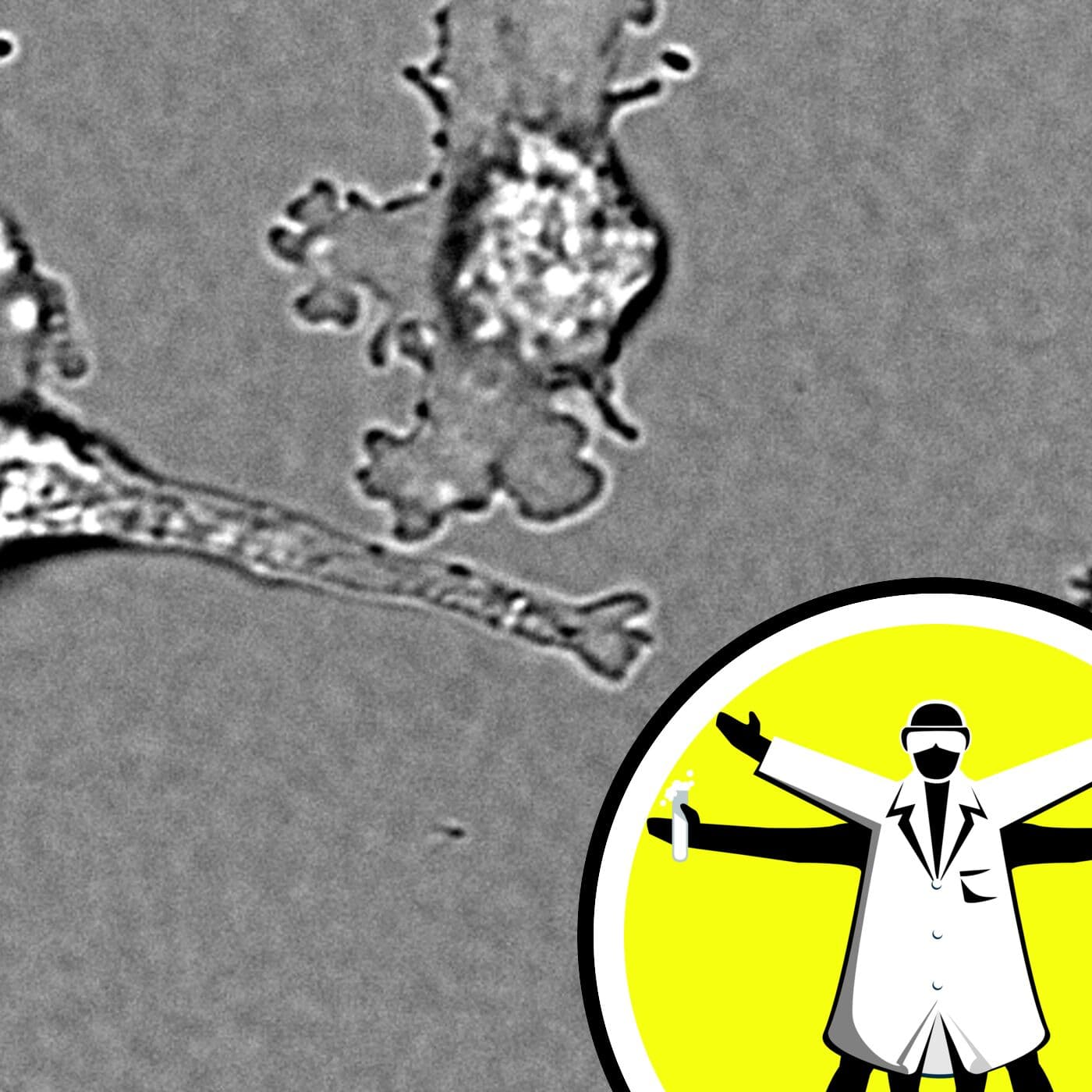
9:26But now scientists at the MRC Laboratory of Molecular Biology in Cambridge have uncovered an additional way that antibodies can work. Inside our cells. Leo James and Tyler Rinesmith have discovered that when a microbe decorated with antibodies invades a cell, the antibody triggers an intracellular alarm system that directs the cell to build a barrier around the invader and then dump it into the cellular equivalent of the recycle bin. This generic mechanism could, they think, offer us new ways to make antiviral and antibacterial drugs and maybe even find a cure for the common cold. Leo first. What we knew was that antibodies will stick to the surface of something like a virus, but the virus can still enter a cell even though those antibodies are there.
10:16And the antibodies essentially hitch a ride, so they enter the cell alongside the virus. So the question becomes, when you have a situation like that with a microbe, which has been able to invade a cell and it takes an antibody with it, does that antibody do anything once it's inside the cell? Exactly. Can that antibody then do something to stop the microbe from copying itself from replicating? Did we used to think that once that situation was arrived at, really the antibody's not doing anything because by then the bug is inside a cell? Or had we always suspected that maybe it was functional, but we just didn't know how?
10:53So it was previously thought that the way the antibodies would work would be by interfering with the entry of the microbe into the cell. But once the microbe was inside, the antibody was then useless. It couldn't do anything further. So Tyler, how did you actually try and probe this then to find out if antibodies hitching a ride, like Leo says, inside cells do anything when they get there? One of our kind of favorite techniques in the lab is to turn off genes inside a cell and then ask how that affects a particular process that we're interested in. So in this case, how antibodies around a virus may or may not interfere with the ability for that virus to replicate inside the cell.
11:40And then what we did was we took this pool, this population of cells that had genes individually turned off in each of them, and we infected them with an adenovirus, which we had coded with antibodies. And then we asked whether these viruses coded in antibodies were prevented from infecting the cells. Your hypothesis then is if we've deleted or turned off a gene which is doing something linked to that process, we should see a difference. Yeah, that's exactly right. So if you lose a gene that's important for preventing infection, the cell that has lost that gene will become infected. and through that we can learn which genes are important for that process.
12:25So this is a sort of resistance mechanism normally. If the antibody stuck onto that adenovirus is doing something in the cell, it ought to, if the cell is responding appropriately, help the cell to defend itself. Disable that process and you'll just get a runaway mind train. Yeah, that's exactly right. Is that what you saw, Leo? yes so for a normal healthy cell when it's infected with that virus in the presence of an antibody those antibodies do a good job of stopping the virus from replicating but in Tyler's screen what he saw was that there were a number of cells with knocked out genes that had lost disability and become fully infected and so we could ask you know what are the genes that are required to allow this normal process to work.
13:12And obviously from a gene you can ask well what does that gene do and that points you towards whatever machinery the cell is is using that gene for. So one of the clever things that Tyler did with his data was not just to look at the kind of individual genes that were being knocked out but then to look to see whether there was anything that those genes had in common and so what he was able to see was that actually those genes that were most important i.e. that when they were removed the cells were becoming infected. What he found was that a lot of them belonged to a single process in the cell, something that we call autophagy and it's one of the systems the cell uses in order to get rid of unwanted material.
13:55So it's like a garbage disposal slash recycling system. Exactly, so what happens in autophagy is that the cell first needs to label what it wants to get rid of and then once it's labelled it it starts to build a special membrane around the material it wants to recycle. It then takes that compartment I guess that kind of garbage can with the garbage inside and then it moves that garbage can into a sort of giant recycling machine where everything inside it can be chopped up into pieces and then recycled and reused by the cell. How does the antibody being there make a difference to that? So the antibody is the key part of the process because normally if a virus infects a cell the cell is blissfully unaware that it's there so the virus can then happily go on and replicate and kill the cell.
14:44The antibody plays the key role because it acts as a flag so by labeling the virus the cell knows the virus is there because it can see the antibody and so the cell produces a very special protein called trim 21 and it's this protein trim 21 which sees the antibody and as soon as it sees the antibody it can alert this kind of whole system of machinery that this is this is garbage that the cell wants to get rid of. Now we know this is there a way of either tooling it up to make it more effective to get rid of intransigent, hard-to-manage infection or dial it down in order to stop situations where the immune system might be overactive and that is contributing to disease.
15:29Yes, this is exactly what we're thinking about next. So now we understand about how this natural system of immunity works. Can we learn from it to actually design antiviral molecules and therapeutics that we could use to treat disease? What we know now is that there's a system here where antibodies are providing the labelling and then TRIM21 and autophagy is providing the machinery. Sometimes viruses and bacteria can evade those antibodies and so they enter the cell without the label. If we had a way of designing and making drugs which could provide that labelling function that the antibodies have, then we could make them visible again to the immune system and allow TRIM21 and autophagy to then block them.
16:11And so this is something that we're very excited about as a potential future antiviral therapeutic. Maybe even a cure for the common cold, if you can make that work, because that's the big problem, isn't it? And if you can make this work for the rhinoviruses that plague us every winter, we might sniff a bit less. That would be fantastic and is a fabulous goal, but we're a very, very, very long way from being able to cure anything. But do we think we could come up with molecules that could be effective? yeah potentially if we can use this natural system leo james and tyler rinesmith with that absolutely fascinating finding that antibodies also work inside our cells they just published that discovery in molecular cell and let's hope they crack that cure for the common cold soon while every other channel is fighting for your customers attention podcasts are where they've already given it no one accidentally listens to a podcast for 45 minutes they choose to be here They trust the voice in their ears, and when that voice talks about your brand, it doesn't sound like advertising.
17:15It sounds like a recommendation from a friend. Acast gives you that trust at scale. Digital precision, post-read authenticity, and performance data that proves it worked. Don't fight for attention. Buy it with Acast. Learn more by visiting acast.com slash advertise.
17:36The Naked Scientist podcast is produced in association with Spitfire, cost-effective voice, internet and IP engineering services for UK businesses. Find out how Spitfire can empower your company at spitfire.co.uk. Music in the programme is sponsored by Epidemic Sound, perfect music for audio and video productions. This is the Naked Scientist podcast with me, Chris Smith. Still to come, Elon Musk joins a club of one, the Trillionaire Club. But what could you do with a trillion quid? Before that though, over 25 million tonnes of cotton are harvested every year, accounting for about 25 % of the textile industry.
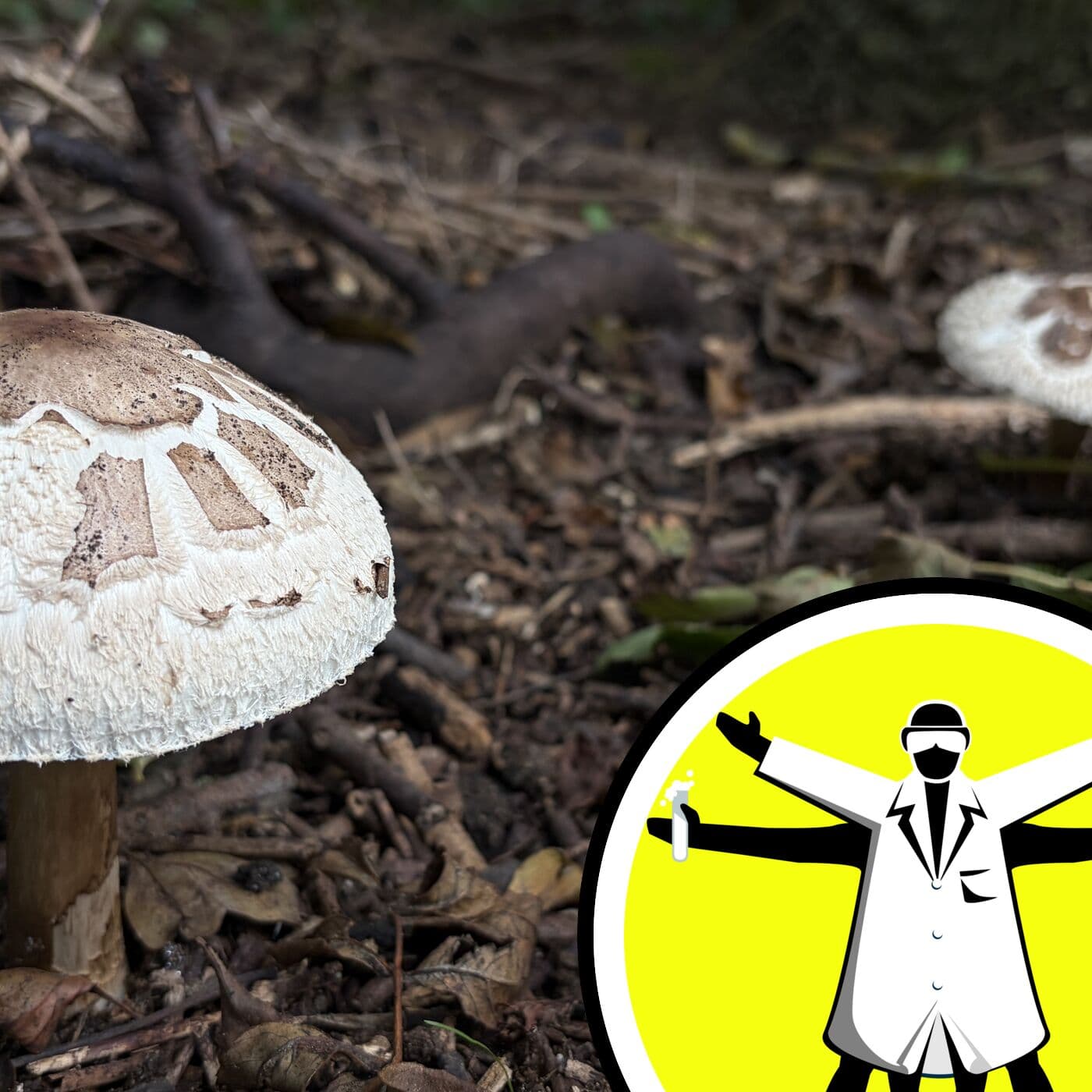
18:21But where did this crop plant come from in the first place? Because it doesn't exist in the form we're familiar with anywhere in nature. The answer is that our ancestors somewhere over in Mexico unwittingly bred it for us over 5 ,000 years ago. By picking and cultivating ancestral plants that had progressively more of the traits they wanted, early farmers in the Yucatan Peninsula slowly evolved the strains that we rely on today. Jonathan Wendell at Iowa State University used the power of genetics to solve the ancient mystery. Well, so you go and you look at cotton row crops, and there's these beautiful fields of stunning white cotton pretty much growing on the outside of the plant because it's when the fruit opens, it reveals all these cotton fibers.
19:07But it's not a wild plant in the United States or anywhere else where cotton is grown. This is a product of human selection, just like that ear of maize. So I wanted to know, where is it in nature? What's it look like in nature? and by extension, what happened when we turned it into a modern crop. Well, can we start with the when first and then work forward from there? So when did we actually first get cotton as you and I would recognise it? To the best of our knowledge, about 5 ,500 years ago. And did they recognise what they were playing with? Were they using it for textiles or did it have some other use and has subsequently been press-ganged into the textile industry?
19:51The wild forms that humans would have first encountered are not useful for textiles. In fact, those white cells, the cotton fibers that you see in the modern row crops, they don't exist in nature. What exists in nature are plants with much, much shorter, maybe only one centimeter long, dingy, dark, brownish fibers that you can't spin into threads and yarns. They were probably collecting them and using them for local household needs, such as handle wicks, pillow stuffings, wound dressings, things like that. Actual textiles didn't come along till much, much later. How have you therefore sought to try and understand how we've arrived at the plant we do have today and how it got from that starting point to that?
20:42First, you have to know what that starting point was. And that's what took us to the present study, because we didn't really know what wild cotton was. It's presumably pretty rare in nature. Nobody knew in the literature. So for the last 40 years, 50 years, various collectors, including myself, have been collecting all the relatives in the wild that we could find and sort of figure out who's most closely related to the crop plant. And once we can identify who's most closely related, we have a good model of the actual ancestor. And that's looking at genetic relatedness. What proportion of my genetic letters are similar in me to this other one that looks like me?
21:27Right. So what we ended up doing is we ended up collecting hundreds of plants and over the years sequenced thousands of genomes, the whole genome. And each genome is the size of the human genome almost. So in each of those genomes, you can compare them to one another, and you can find which of them are most closely related to those of the row crop that dominates world cotton commerce. In doing that, you're basically lining up all the DNA sequences. At each individual site, there's four possible states. We call them ATG &C. And you find all the similarities, and you find all the differences. and you can use bioinformatics and computational biology to figure out who's most closely related to whom.
22:13And where does this point to an origin then? How does that then lead you to where it came from and how it came to be? We collected these plants from throughout the potential wild range in the Caribbean islands, the southern part of Florida, the Yucatan Peninsula of Mexico. it's basically these plants are in the Caribbean basin on the drier sides of all the islands and on the drier sides of the mainland parts of the Caribbean basin. So we collected plants from throughout that range and we sequenced the genomes of all these plants. Then we also went into cotton crop fields from all over the world and we sequenced those genomes too.
22:54So then when we compared that pool of wild plants to that pool of cultivated plants, it clearly pinpointed the origin of the wild cotton gene pool in the northwestern part of the Yucatan Peninsula of Mexico. Because we know how fast things evolve and we know how fast things change from one genetic form to another, you can get some idea of the genetic clock that's ticking here. You can look at how things must have converged to arrive at that place. What does the time clock say? Does it line up with the archaeology? The time clock for these wild perennials turns out to be from a standpoint of population genetics, very few generations between the wild forms and the modern forms.
23:40I mentioned maybe 5 ,000 years in the archaeological record thereabouts. So we don't get very precise estimates from a molecular clock standpoint. We kind of have to depend on the combination of genetic differences and archaeology together. But let's just say those pieces of evidence are congruent. They tell the same story. It came along pretty quick then, didn't it? Have we any idea how or what forces would have driven the plant to evolve the way that it did? Was that purely people just picking ones that had a bigger yield because that was what they wanted and that concentrated the genes that have led to the plants looking the way they do today?
24:20The answer to that involves two things. We can look at the selection forces and we can look at what those targets were, even though the people who are doing the selection didn't know anything about genomes thousands of years ago or DNA, no idea. They could practice selection. They wanted better plants. They wanted more cotton. So yes, they would pick the best representatives. And this is a form of natural selection. We call this selection under domestication. So it's directional selection, too. People are picking things that are bigger, better, more flowers per plant, more consistent blooming, easier to harvest, longer fibers, stronger fibers, ultimately wider fibers.
25:01Each of these becomes a selection target. Each has a different underlying genetic basis, and they're all happening simultaneously. So it turns out that thousands of genes were targeted by humans without knowing it. Jonathan Wendell and that study just came out in the Proceedings of the National Academy of Sciences USA. With his net worth receiving a rocket-powered boost from the recent flotation on the stock market of his SpaceX venture, Elon Musk has become the world's first trillionaire. In fact, he's already hundreds of billions of dollars better off than when he recently became the sole member of the club because of a significant surge in SpaceX's share price in the aftermath of the public offering.
25:44but just how rich does this make him and is it actually possible to even spend that much we put in a call to the economist and author vicky price vicky how many noughts are there after a trillion because this is going to be a new word on some people 12 i'm afraid so loads and loads and loads of zeros afterwards and you need to just make sure that it is just 12 and not more because then of course it just makes the whole calculation a little bit more confusing because it all moves in threes normally. So if you try and calculate a billion, that's a thousand million. Then when you calculate what a trillion is, that's another thousand billion.
26:23That's basically where you end up. It's an unthinkable amount of money, isn't it? If you were to put that in context, how does that compare economically with, say, a country? Well, I'm speaking to you actually from Greece. So a trillion is something like three times, if not more, the size of Greece in terms of GDP. And of course, for anyone who watched England versus Croatia and was so pleased about England winning, of course, Croatia is even smaller than Greece. And it's something like four times a trillion of the country's GDP, of Croatia's GDP. So it is huge. And is the UK, our national debt, something like three trillion, isn't it?
27:02So Elon Musk could basically pay off a third of our mortgage. Well, he can do all sorts of wonderful things. He can pay all these things that we want, defence or welfare and so on, and not worry about it at all. The only thing, of course, to bear in mind is that he doesn't actually necessarily have this money to hand. I mean, he's rich because a lot of the shares that he owns in his company are valued at a certain amount. And therefore, it's his wealth that's there. It's not that he gets that money every day, you know, if you calculate what it would mean per month. that he can then use for other things.
27:33But of course, he can use that value of his company to borrow more money and then use that as income on which he pays no interest, if that is what he does. And then use that indeed to pay back our national debt. That would be nice. Yes, indeed, because you can leverage assets to raise money against them. And you've effectively realised some real hard cash. But because you've made no sale to get that capital gain, I suppose there's no tax in that, is there? Absolutely, there is no tax. And quite a lot of suggestions that are made to tackle the fact that we've had such a big increase in the number of billionaires, before you get to the trillionaires, since we've only got one for the moment, has been this concern that the tax that they're paying is not sufficient to represent, if you like, the incomes that they can get as a result of that wealth.
28:24And that's one of those sort of bone of contention, if you like. Like, are those billionaires contributing sufficiently to the economy? And does it just lead to huge inequality? Because this is something really the tax system isn't set up to handle, is it? This whole, we're into this regime now where people basically realise money by borrowing it against something tangible that's grown in value for various reasons. And in this case, a company has grown in value. Elon Musk owns that and borrows against it. There are many people in this situation where they've got money that falls outside the framework of what we know how to tax.
Read the full transcript
28:59It does. But of course, whoever lends to them has to take into account that the value of the shares may indeed fall quite significantly. So Elon Musk may not remain a trillionaire for very long. But on the other hand, he might become a whatever, a multi-trillionaire at some point if things go well. So the real issue about being wealthy in terms of stocks and shares that you own or a percentage of a company, which is in fact what's going on right now with all these tech bosses, is that it could all collapse. So what sorts of conversations are economists and policymakers having around how we plan around that?
29:39Because I presume Elon Musk might be the first, but he's certainly not going to be the last trillionaire. I just go back to what happened with the oil sector all those years ago when, of course, there was concentration of oil production in the US in one company and the US government actually split them up into seven in order to get more competition going. And that's the sort of thing which some people are saying we should do here as well. So stop the possibility of some of those sectors becoming oligopolous or even monopolist and really sort of reduce quite significantly the power of one particular company and even one particular individual, if that is possible.
30:24But you can't split Elon Musk seven ways. Perish the thought. Well, he seemed to split himself seven ways. I mean, so SpaceX has all sorts of other interest in it rather than just space, as it says, mostly on the tin. And of course, he's very involved or was involved in politics and other stuff. So there is a concern that at a certain wealth level, you can also influence quite significantly what happens politically, domestically and internationally. And you can move things in your favor because of that power. And that's the concern. So you can split the companies up. You could, I suppose. But also, I think it's interesting to remember that going back to the valuations we were talking about before and whether this trillions will still be trillions in a little while, that some of the firms that have made their part owners so wealthy haven't really been making any money yet.
31:22and that's what I think all of us whose pensions depend on proper investment and doing the right thing, if you like, for these people who are getting old and will need some guarantee that they will be able to survive reasonably well in the future may be for a shock at some point. What could you actually do with a trillion quid, though? Can you even spend that? I mean, if I started, how long would it take me to spend it? What would have to be my spend profile in order to get through that in a human lifetime? Is it even possible? It's been calculated because people rather like that question and like to find answers to that.
32:00You could spend one million a day if you wanted, just like that. I mean, you know, buy a few football clubs for anyone who's interested in that after a few days. Well, you may need to have a billion perhaps to do that. But, you know, it mounts up. But if you spend one million a day, it takes you 2 ,740 years to spend your trillion. Well, the way that the finances of many of us are going at the moment, that actually sounds like quite a nice problem to have. Economist and author Vicky Price there. And you can read our take on Musk joining the Trillionaire Club or even founding the Trillionaire Club over at nakedscientist.com forward slash news.
32:39Give it a read. That's it for today. tune in on Tuesday though when we're going to take a closer look at our ancient ancestors with some fascinating stories about how they buried their dead, evolved to defeat disease, created interesting cave art and even made medicines and took drugs. If you'd like to get in touch in the meantime it's chris at thenakedscientist.com forward slash email and if you can support the program because you appreciate what we do for you each week you can do that over at nakedscientist.com forward slash donate. We'd be extremely grateful. I'm Chris Smith. Thank you for listening.
33:13And from all of us here at the Naked Scientist team, until next time, goodbye.
33:32Do you keep hearing podcast ads like this one, for example, but always wonder how you actually get involved with them for your own brand or organization? Well, it's easier than you think. We're Acast, and we give you the platform to do it all yourself. Browse thousands of popular podcasts, choose the shows that match your perfect audience, set your budget, and launch. And if you want a hand, our podcast specialists are there to help you launch with confidence. This is podcast advertising without barriers. Get started at acast.com slash advertise.