In short
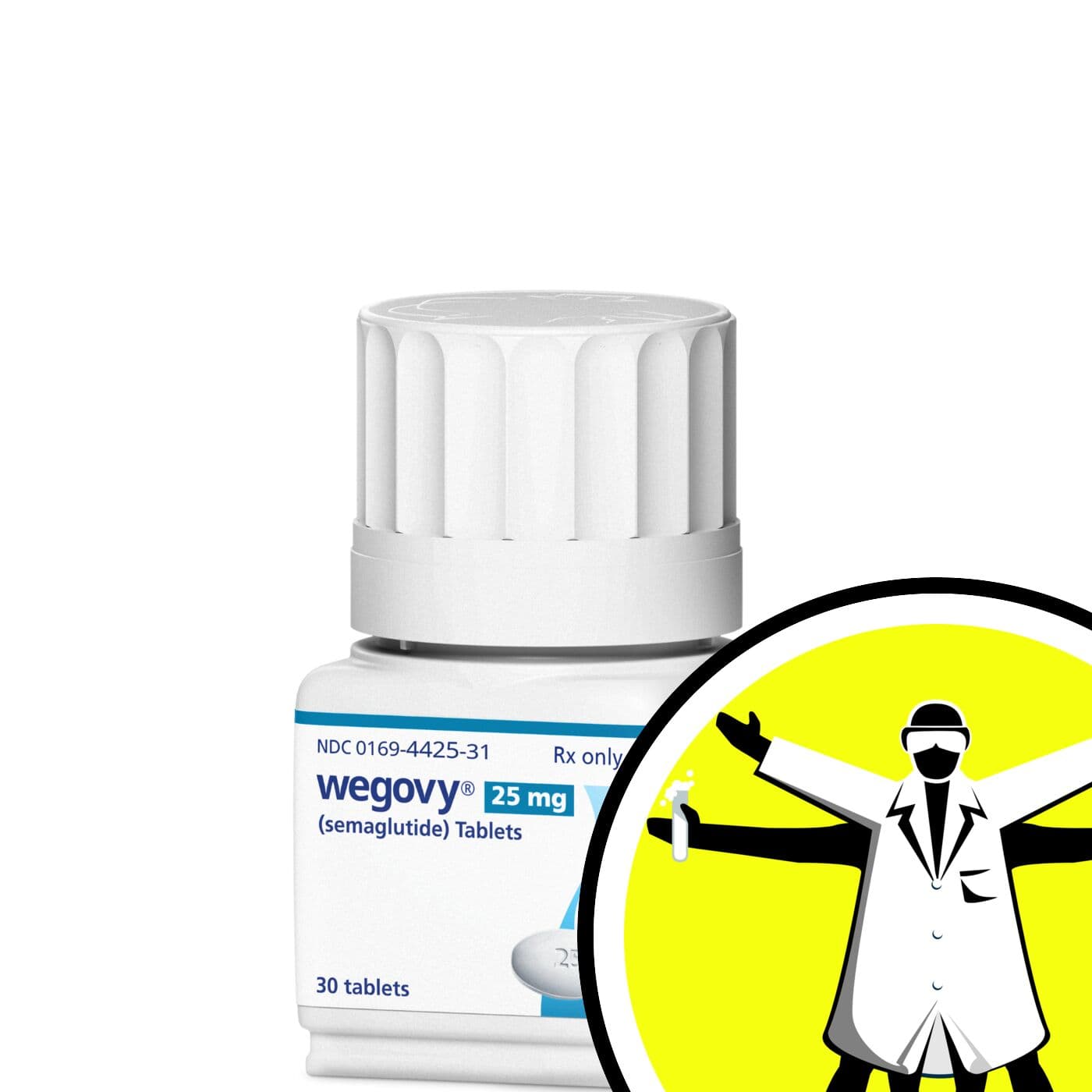
UK availability of Wegovy (semaglutide) weight-loss pills vs injections; criteria and debate over treating obesity vs “cosmetic” use. Also: Dolly the sheep’s 30-year legacy via a posthumous interview with Sir Ian Wilmut (cloning). Plus: space/astronomy updates—NASA commercial lunar rovers, and safety/how to watch the August 12, 2026 solar eclipse.
Guests and backgrounds
Giles Yeo, obesity expert at the University of Cambridge; author of Why Calories Don’t Count. Matthew Flavin, Georgia Tech wearable bioelectronics researcher (sensory substitution for foot numbness). Sir Ian Wilmut, Roslin Institute leader who cloned Dolly (interview with Kat Arney). Megan Argo, University of Lancashire astrophysicist and science communicator.
Key claims/examples
Wegovy pill is oral semaglutide (GLP-1 analog) that increases fullness and reduces intake; trials show ~15% average weight loss over 2 years. UK private access: BMI 27+; NHS injection: BMI 35+ plus comorbidities; most users buy privately. Flavin’s device uses pressure-sensing insoles and forearm vibration/heat to replace lost foot sensation; tested in healthy adults and sensory-impaired participants; forearm works well. Wilmut: Dolly used nuclear transfer from a cultured mammary cell; serum-starved donor cells and metaphase II oocytes helped reprogram gene expression; Dolly lived six years, had six lambs, and was euthanized due to virally induced cancer. Eclipse: never look directly; use certified eclipse glasses; UK sees ~90% coverage.
Written by AI. May contain mistakes. Listen to the episode to check what was said.
Chapters
Tap a time to open that second in VOWegovy Weight Loss Pills Overview
0:45 to 2:26
Discussion on the availability and efficacy of Wegovy weight loss pills.
“Plus, the astronomer Megan Argo takes us on a tour of the cosmos for a story selection that is out of this world.”
How Wegovy Works
2:26 to 6:10
Explanation of semaglutide and its effects on appetite and weight loss.
“that is what Wegovi is and why it works as a weight loss drug.”
Obesity Treatment Perspectives
6:10 to 6:43
Debate on the role of drugs in treating obesity and the importance of lifestyle changes.
“The issue is, if you're using it as a cosmetic tool, which a lot of people, too many people are using it for, well, then that's a slightly different scenario.”
NHS Incentives for Physical Activity
6:43 to 7:30
Discussion about NHS initiatives to motivate physical activity in combating obesity.
“So do you think this is a good idea to help combat obesity, especially for those who are looking to take the WeGoV pill for cosmetic purposes rather than for medical purposes?”
Wearable Device for Sensory Feedback
7:30 to 8:34
Introduction to a device that helps individuals with sensory impairments in their feet.
“So this is sort of like game theory, right?”
Development of Sensory Substitution Systems
8:34 to 12:20
Details on how the device replicates foot sensations and its potential benefits.
“Chris Smith has been speaking with the man behind the study.”
Challenges and Future Applications
12:20 to 14:00
Discussion on the adaptability of the device for various conditions and its potential use.
“And we're not rewiring over the course of that short experiment, but people definitely can learn to take that.”
Patient Insights on Diabetic Neuropathy
14:00 to 15:18
Explore the challenges faced by diabetic neuropathy patients and potential solutions.
“Yeah, I mean, that would really be the aspirational goal because one of the challenges is that a lot of these patients, they have a really wide range of conditions.”
The Creation of Dolly the Sheep
15:42 to 17:13
Learn about the groundbreaking process and experiments leading to Dolly's creation.
“Still to come, a round-up of the week's best space and astronomy stories.”
Dolly's Life and Impact
17:13 to 21:44
Discover Dolly's life, her offspring, and the implications of her existence.
“So that clearly showed that those differentiated cells still had all of the information necessary to control development.”
Show all 14 chapters
Scientific Legacy of Dolly and Reprogramming Cells
21:44 to 22:45
Discuss the scientific advancements inspired by Dolly, especially in cell reprogramming.
“that it restricts the animal's ability to breathe and it's then only kind to end their life.”
NASA's Lunar Rover Contracts
22:45 to 24:11
Overview of NASA's plans for lunar exploration and the new rover contracts.
“The late great Sir Ian Wilmott in conversation with Kat Arney.”
Preparing for the Upcoming Solar Eclipse
24:11 to 28:00
Learn what a solar eclipse is and safety tips for viewing it.
“So they've awarded contracts to three companies who've already successfully landed on the moon.”
Viewing the Solar Eclipse: Tips and Timing
28:00 to 29:54
Learn how to safely view the solar eclipse and the best times for viewing in the UK.
“When the moon starts to cover the sun, and you'll start to see the shape of that eclipse happening as well.”
Transcript
Automatic transcript. May contain errors.0:16Megan Argo:Hello and welcome to the Naked Scientist podcast, the show that brings you the biggest breakthroughs and talks to the major movers and shakers in the worlds of science, technology and medicine with me, Rachel Ralph. Coming up, Wegovy weight loss pills are now available in pharmacies and online in the UK, but will they help tackle obesity? Also ahead, Dolly the Sheep was born 30 years ago. We hear a posthumous interview with the late Sir Ian Wilmot who cloned her. Plus, the astronomer Megan Argo takes us on a tour of the cosmos for a story selection that is out of this world.
1:01Megan Argo:Our once-a-day Wigovi weight loss pill has gone on sale at high street and online pharmacies across the UK. It is not yet available on the National Health Service, but the medication can still be prescribed privately. The Wigovi pill, which is made by the Danish pharmaceutical giant Novo Nordisk, has been incredibly popular since it launched in the US at the start of the year. But are these pills really the best way to tackle obesity? Giles Yeo is an obesity expert at the University of Cambridge who studies the brain's control of food intake and body weight, and he's also the author of Why Calories Don't Count.
1:38The Naked Scientists:So Wigovi is the brand name for a chemical compound called semaglutide. And semaglutide is a modified form of a native gut hormone called GLP-1. And GLP-1 does two things. It signals to the pancreas to enhance insulin secretion for every gram of sugar that you might eat. And so semaglutide was originally designed as a type 2 diabetes drug under the brand name of a Zempic. But the other thing which gut hormones do is most of them make you feel full, including GLP-1. And so Wigovi is a long-acting form of GLP-1. And because it stays in the blood for longer, it signals to the brain that you are fuller than you should be.
2:22The Naked Scientists:So it makes you feel full. So you eat less, you eat less, you lose weight. So broadly speaking, that is what Wegovi is and why it works as a weight loss drug.
2:29Megan Argo:And is this similar to the weight loss jabs that we've heard quite a bit more about in the news?
2:35The Naked Scientists:So Wegovi is a weight loss jab. The Wegovi pill, however, is an oral version of Wegovi. And so So the Wegovi pill is simply exactly the same thing. So semaglutide that's been packaged and protected. Because the problem, obviously, is when you're injecting something into yourself, it's refrigerated, it's a modified hormone, and it goes directly into the blood. Whereas when you eat something, like in a pill form, it has to get past the stomach. But it survives the stomach, and therefore then it gets released when it gets into the small intestine. but in terms of the biology of the system the Wegovy pill is exactly the same.
3:13Megan Argo:Interesting so what are the requirements for someone to actually be able to take one of these tablets?
3:20The Naked Scientists:Now if you're looking to get it privately then most of the private pharmacies that you that these drugs are now available from and I only know the requirement for the injections and I can't see why it would be different for the pill, is that you've got to be a BMI of 27 and above. Within the NHS, for a Wegovia injection, then you need to be a BMI of 35 and above, plus have three or four comorbidities, so associated illnesses with obesity. So BMI 35, together with high blood pressure, or maybe risk of type 2 diabetes, or maybe high cholesterol levels, that kind of thing. So the differential between what you need to sort of go and pay for it yourself versus what you need to try and get it on the NHS, there's a pretty stark difference.
4:06Megan Argo:It's the same as with some other medications. If you go through the NHS, it's actually cheaper than buying it by yourself from the pharmacy as well.
4:14The Naked Scientists:Aside for paracetamol and ibuprofen, this is probably one of the only drugs that I know of, certainly in the UK where we have an NHS, where people are buying it en masse. because 95 % of the people taking these Wegovi jabs, Munjaro jabs, these weight loss medications are doing them privately. And we have never seen this for any other drugs. So I don't think anyone can tell you what other drugs cost privately aside for paracetamol and ibuprofen. This is probably the first example on a mass scale where people are having to buy it privately because it's so difficult to get it on the NHS.
4:49Megan Argo:So how effective is Wegovi? Because I've heard it's been incredibly popular in the United States, but not so much in the UK before. So yeah, how effective is it?
4:59The Naked Scientists:In terms of the trials, whether or not we're talking about the one's weekly injections or the one's daily pills, people are losing on average 15 % of their body weight over two years, either the pill or the injection, they're equally effective.
5:12Megan Argo:But do you think this is the best way to tackle obesity? Or should it just be used as a supplement per se, and it's still down to lifestyle changes, for example?
5:23The Naked Scientists:Drugs don't prevent disease. So what drugs tend to do is they tend to treat the symptoms of a disease. In this particular situation, you treat the symptoms of obesity. You treat obesity in and of itself. I think prevention still requires, when it comes to obesity, legislation, education, public health, messaging, all of these things still need to exist to improve the food environment and hence prevent obesity to begin with. What these drugs are designed to do are to almost give people with obesity that have found it very difficult to lose weight using behavioral approaches some specter of hope.
6:01The Naked Scientists:Now, the only problem here is that if you're using this as a drug with a capital D to treat a disease like obesity, then the cost-benefit analysis makes sense. The issue is, if you're using it as a cosmetic tool, which a lot of people, too many people are using it for, well, then that's a slightly different scenario. So I think that if you meet the criteria for getting these drugs because you have obesity and type 2 diabetes, then yes, you should take it if it suits you. But if you're only using it as a cosmetic tool, then I think this is something that we need to talk about more in society.
6:40Megan Argo:I've heard the NHS is set to offer awards for people who are getting active. So do you think this is a good idea to help combat obesity, especially for those who are looking to take the WeGoV pill for cosmetic purposes rather than for medical purposes?
6:57The Naked Scientists:I mean, I think it's an interesting approach. Certainly the private sector have been trying this. The insurance company Vitality, other insurance companies are available, but the health insurance company Vitality offer something like this for, you know, they'll give you some kind of tracker, some kind of Garmin, Apple Watch thing. And if you achieve specific metrics for a given week, in terms of steps or physical activity, they then keep your premiums low, all right? Whereas if you don't meet these specific criteria, you don't exercise enough, you're not active enough, whatever, then your premiums go up.
7:35The Naked Scientists:So this is sort of like game theory, right? You're not lowering it if you actually exercise more you are increase it if you don't exercise enough so in other words at baseline level if you achieve your physical activity levels you pay the lowest price
7:48Megan Argo:i could certainly see it working for some people giles yo author of why calories don't count and a professor at the university of cambridge loss of sensation in the feet caused by conditions like stroke diabetes or spinal cord injury can impact the mobility and balance of patients which in turn increases the risk of falls and accidents. To tackle this issue, researchers have developed a wearable device that replicates the sensation in the bottom of the feet, but elsewhere in the body. It uses pressure-sensing insoles, which are capable of streaming sensory information in real time. It can pick up temperature, vibration and even pressure.
8:27Megan Argo:The device has been tested on 12 healthy adults and 8 participants with lower limb sensory impairments, and the system performed remarkably well. Chris Smith has been speaking with the man behind the study.
8:39The Naked Scientists:My name is Matthew Flavin, and I run a research group at Georgia Tech, which makes wearable bioelectronics. And one of the things we're especially good at is making really small-scale devices that can poke, twist, and vibrate.
8:53Megan Argo:That makes my mind boggle. Tell us, first of all, then, the problem that you set out to address with this piece of research. What was it? What were you trying to grapple with?
9:04The Naked Scientists:Yeah. So the problem that we were trying to address here is people who are losing sensation in their feet. And this is a condition that happens a lot more often than you would think. So we were specifically looking to see if we can help people that have conditions like stroke, spinal cord injury. People also with diabetic neuropathy have this condition. Even as we get older, we have this condition. And of course, people across the globe are getting older. And what happens to people when they lose sensation in their feet is they have a much harder time moving around. And even if people tend to associate that problem more with their ability to move their legs, their ability to feel their legs is also really important.
9:41The Naked Scientists:Because if you can't even feel when your foot's touching the ground, obviously that can make it hard to walk around. The result is the same. So people are at more risk of falling and they can't go outside and do the things they would normally want to do. And so generally their quality of life is not as high as they would want to be.
9:57Megan Argo:What's your solution?
9:59The Naked Scientists:So the solution is we create these devices that's designed to help with the sensory symptoms. So we've met a lot of people through this study, people who have these conditions, stroke and spinal cord injury. And one of the things that we find is that people are not able to do some of the things that they were able to do before. And so we're trying to help again with those sensory symptoms. They might be able to move their legs but not be able to feel their legs. And so we create what's called a sensory substitution system. We're monitoring the missing sensory information and then we're delivering that to another part of the body where they can still feel.
10:38The Naked Scientists:And so we can deliver vibration, we can deliver heat that tells them where their foot's touching the ground.
10:43Megan Argo:Is this almost like an insole for a shoe? So it's a foot-shaped sensor. So you could basically tell were their foot on the floor, this is what they would be feeling, or this is what would normally be going into the nervous system. And then you recapitulate that pattern of sensation somewhere they can feel.
11:01The Naked Scientists:Yeah, I mean, that's basically the idea. And one of the things that's confusing here is that there's two sets of devices. And we have some sensors, which are monitoring the missing information. And those devices go exactly where you'd expect. We have people who are missing the ability to feel pressure in their feet, those sensors go in the shoe. And then we have another set of devices and which we call these actuators. That means they do something. They vibrate, they heat up, go in the shoe that goes on part of the body where the patient still has sensation. And we found that the forearm works really well.
11:34The Naked Scientists:And so if someone puts pressure on their toe, they get some vibration at the end of their forearm closer to their wrist. And when they put pressure on their heel, they get vibration on the other side of their forearm closer to their elbow.
11:46Megan Argo:So they effectively can explore the environment with their foot and feel it through their arm. Do they find that that's quite intuitive? Quite quickly, they learn to pair one with the other and then it does affect the way that they move and navigate through the environment, for example.
12:01The Naked Scientists:Yeah. And I wouldn't say that it's necessarily subconscious, that it's just, you know, they can do it without learning anything. So it does take a little bit of training. You are getting feedback on a different part of your body, it's not the same thing as getting that normal sensation. But in practice, you know, the human body is really good at rewiring. And we're not rewiring over the course of that short experiment, but people definitely can learn to take that. And over a short period of time, they can adapt to that and they can use that if you have stroke, for example, to put more balance in the middle while you're walking and to increase your balance, for example.
12:40Megan Argo:Yeah, I was going to say, have you got actually outcome data where you can show that a person clearly does perform better when they've got this extra information flowing in that they can rely on?
12:51The Naked Scientists:Yeah. So in a study like this, we set this up with stepping stones, basically. And the first stepping stones is just to show that the devices do what they're supposed to. They can deliver vibration, they can deliver heat. Then we show that people can feel that heat and they can feel that vibration. And then the next stepping stone, which we found was interesting, is we play this game where we essentially apply patterns of vibration on the patient's arm. And then we tell them, match that vibration to where they're putting pressure on their foot. And we ask them to put pressure on their feet. And their patients are very good at this.
13:30The Naked Scientists:And specifically, we tested this with people who are neurotypical, people who don't have any condition. And we also test this with people who have stroke and people who have spinal cord injury, and they're all good at playing this game.
13:41Megan Argo:Would this be something that's relatively easy to create for the average patient? So if you've got someone with diabetic neuropathy and they do struggle to feel where their feet are, and that affects their balance, could you have almost an off the peg system then where they could slip something in their shoes and strap some wristbands on and they'd be good to go?
14:02The Naked Scientists:Yeah, I mean, that would really be the aspirational goal because one of the challenges is that a lot of these patients, they have a really wide range of conditions. Even if you look at someone who has a spinal cord injury in a particular location and take another patient who has the same injury, you might have a different split of having motor symptoms, being able to move your muscles versus sensory symptoms, be able to feel your muscles. when your foot's touching the ground. And it can be really helpful if we do have a really adaptable solution.
14:34Megan Argo:If you ask a diabetic, they'll tell you one of their biggest fears is that they walk around with a stone in their shoe and they don't realize it's there until it's done considerable damage. And then they've got a horrible infected ulcer that takes a long time to heal up. Would something like this help them not to end up in that situation?
14:52The Naked Scientists:Yeah, no, that's a great insight. And actually, diabetic neuropathy patients are a great example of someone who we haven't tested, but in future research could be a great group that could benefit from this.
15:04Megan Argo:Matt Flavin at Georgia Institute of Technology in conversation with Chris Smith. That study was recently published in the journal PNAS.
Read the full transcript
15:13The Naked Scientists:The Naked Scientist podcast is produced in association with Spitfire,
15:18Megan Argo:Cost-effective voice, internet and IP engineering services for UK businesses. Find out how Spitfire can empower your company at spitfire.co.uk.
15:32Megan Argo:Music in the programme is sponsored by Epidemic Sound. Perfect music for audio and video productions. This is the Naked Scientist podcast with me, Rachel Ralph. Still to come, a round-up of the week's best space and astronomy stories. But first, 30 years ago to this week, Dolly the sheep, the first cloned mammal ever to be created from an adult cell, was born. The work was done at Edinburgh's Roslyn Institute, where Ian Wilmot led a team whose insights were crucial to making the experiments come to fruition. Their work was inspired by science carried out on tadpoles almost a century prior. However, the objective, when the work began in the 1980s and early 90s, wasn't simply to clone animals.
16:15Megan Argo:It was about genetically manipulating them for therapeutic purposes. Sir Ian has since passed away, but Kat Arney spoke with him on The Naked Scientist in an interview marking a decade on from Dolly. The very earliest experiment was trying to answer a biological question as to whether essentially all of the cells retain the same DNA during the course of development. because there was a suggestion, a hypothesis, that development was brought about, differentiation was brought about by the loss of sequences which were not important for a particular tissue type. And a series of very simple experiments were done to address that question.
16:53Megan Argo:And the answer was there was no evidence of DNA being lost. So this is the idea that somehow cells are shedding genes as they're making decisions to become brain or muscle. Yeah, exactly. What was the key experiment that showed that couldn't be the case? The nuclear transfer experiments which were done by Briggs and King and subsequently by John Gurdon demonstrated that you could take differentiated cells from tadpoles and produce adult frogs from them. So that clearly showed that those differentiated cells still had all of the information necessary to control development. But they never managed to go from an adult cell to another adult.
17:29Megan Argo:That's a really intriguing point. I think you can only suggest that there must be something different in the way in which gene expression is regulated. And that whereas we have methods which overcome these now for early stages of development, we haven't yet got that for adult frogs. So that was frogs. And you thought, OK, let's try this in sheep. Why sheep? What was the background to that? We got started because I heard that Willardson had cloned from blastocysts in cattle. What I was looking for was a way of having cells which you could culture for a while to allow you to make precise genetic change and then use as nuclear donors.
18:09Megan Argo:And it seemed if he was growing cells from blastocysts and then cloning from them that maybe we were reaching that point. So that's taking cells from a very, very early embryo, putting them into an egg and making another animal. So the idea was, can we do this from cells in a Petri dish? Yeah, exactly. Then what about Dolly? Tell me about her biological history. Well, the classic thing for developmental biologists to do when they're studying these sorts of mechanisms is to look at the very early stages, fetal tissue and then adult tissue. So we always had it in mind that we would progress along that sequence of development.
18:45Megan Argo:As you say, we'd worked with early stages, we worked with fetal cells. and then because we'd been successful with both those early stages, we started with adult tissue. So then to create Dolly, just if you can really briefly explain the process, how does it work? What is cloning? How does it work with an adult cell? You need two cells. You need an egg from which you remove the genetic information, the chromosomes, and you need a nuclear donor which will provide the nucleus that controls development. So in the case of Dolly, this was a mammary cell which was in culture, which was used and proved to be able to control development.
19:19Megan Argo:What did make the difference that seemed to make it work? Right. What we did as preliminary work was look at the best way to coordinate the cell cycle of the two different cells. And we came forward with a scheme of using donor cells which had been serum-starved in order to make them quiescent. So this has kind of just put them to sleep, basically. Yep, exactly. And oocytes, which were at metaphase 2. because we knew that they had a great potential to stimulate a transferred nucleus to enter into the cell cycle in such a way that it might well also be able to reprogram this expression of genes in the nucleus at the same time.
19:58Megan Argo:So you've got the donor cell that's quiet, it's all asleep, it's not doing anything and you've got an egg cell that's really ready to go for it. That's the key. That's exactly it. And when Dolly was born, how did you feel? That must have been incredible. Oh, yeah. I mean, I think we were almost shocked because it was such a novel thing and we knew how important it was going to be, both immediately from the point of view of the media and from a career point of view, from the point of view of building a reputation for the group. This may seem like a bit of a silly question, but what was she like?
20:32Megan Argo:The best way to describe this, I live down in the borders, in among sheep farmers, and if they have a lamb which is not being mothered, either because its mother's died or she's got too many lambs, they take it into the house and it becomes accustomed to people. And that's exactly what happened to Dolly. There were so many people visiting her wanting to see her, to get her to be in photographs and this sort of thing, that she became accustomed to people. They in actual fact came forward to people, whereas no, as it were, ordinary farm sheep would do that. It would automatically turn and run. And what happened to the rest of her life?
21:07Megan Argo:I understand she ended up having her own lambs. They weren't cloned, were they? No, no. She had six lambs by normal reproduction. And I'm pleased to say we're all healthy. So she became a mum. And then what happened to her? How long did she live for? Six years. That's quite short for a sheep. But we euthanised her because, sadly, there is a virally induced cancer which occurs in sheep, particularly in Scotland as it happens. And the infection got into the flock. And unfortunately, there is no treatment for it. so after she'd had it for a number of months we decided it was kinder to euthanise her because what happens is the tumour gets so large that it restricts the animal's ability to breathe and it's then only kind to end their life.
21:53Megan Argo:Absolutely, and where is she now? Now she's, I think, one of the most frequently visited exhibits in any British museum. She's in the National Museum of Scotland. You are the father of Dolly, I suppose, scientifically speaking at least. What do you feel has been her key scientific legacy and your key scientific legacy? She made biologists think differently because we showed that cells can be changed. Many members of your society will know that Shinya Yamanaka was awarded the Nobel Prize because of the work that he did to take advantage of this new knowledge to develop ways of changing cells, of reprogramming cells.
22:30Megan Argo:He says himself that he was stimulated to start the project because of the birth of Dolly and his work then led to the development of methods to reduce IPS cells. So I may be the father of Dolly, but I think I'm the grandfather of IPS cells. The late great Sir Ian Wilmott in conversation with Kat Arney. And now we're going to look to the heavens for a roundup of space and astronomy stories, including the solar eclipse. But first, NASA has recently unveiled commercial contracts for four rovers similar to those currently on Mars, which they hope to send to the Moon. I've been speaking with Megan Argo, a reader in astrophysics at the University of Lancashire and an award-winning science communicator.
23:11Megan Argo:Well, this is an extension of their plans for the lunar moon base. Moon base is an ongoing programme to try and get humans back to the moon and have them there not just for a week or so at a time, but for months to potentially longer durations. And before you get to that point, you need to have infrastructure in place so that the humans are safe when they land and they've got the equipment that they need. and you know what you're doing on the lunar surface. And where they want to put the base is near the lunar south pole. And this is a region that humans have never visited before. So getting good understanding of the terrain, getting a good understanding of the conditions and how to generate enough power and how to work safely in that environment is really, really important.
23:51Megan Argo:So a lot of what they're doing at the moment is working towards getting everything in place for those human missions. So yeah, this is the latest announcement of the contracts as part of the commercial lunar payload services, part of the Artemis program or the CLIPS set of contracts. So most of these rovers are evolutions of successful missions that have happened already. So they've awarded contracts to three companies who've already successfully landed on the moon. So Astrobotic have two new contracts, Intuitive Machines have one, and Firefly Aerospace has another. So altogether, I think those contracts are worth about$600 million.
24:25Megan Argo:That's interesting. So when are they actually planning to send these rovers to the moon? They're all hoping to be sort of taken up there in the next sort of 18 months, two years. There's a lot of contracts in progress at the moment and a lot of missions are scheduled for the next two years. So there's also talks of NASA sending an engineering version of a Mars rover. Can you tell us a little bit about that? Yeah, so this is a good way of using technology that's been used for something else, repurposing it to go to the moon. So this is the engineering design model essentially for the Perseverance rover that's been rolling around on Mars for a few years now.
25:02Megan Argo:It's based at the Mars yard at JPL in California. So what they use it for is testing commands that they send up to the rover on Mars before they send them to the rover on Mars to make sure that it does what they expect and make sure it can cope with the terrain they're going to try and send it to. They don't need it so much anymore because Perseverance has been on Mars for quite a few years. it landed in 2020. So they've got a lot of experience using this vehicle now. So it's not so much used. So one of the suggestions that they have is to repurpose it, add a radioisotope thermoelectric generator to it for power, because the lunar South Pole, there's not a lot of sunlight.
25:36Megan Argo:So you can't rely on solar panels, certainly not through the lunar night. So repurposing it, adding one of these radioactive isotope generators, and sending it to the South Pole, basically as a cheap way of getting another rover to the lunar surface. We're looking at blue moon or SpaceX to launch this and neither of those rockets are ready yet. But it's an interesting way of reusing old technology. And in a climate where NASA are suffering significant budget cuts, it's a really good way to repurpose old tech. We're expecting a solar eclipse in August 2026. So that's next month from now. So what actually happens in a solar eclipse?
26:10Megan Argo:This is where we see the sun in the sky and the moon moves directly between us and the sun, effectively blocking out the light from the sun. And it doesn't block out the light from the sun for very often and you have to be in just the right place on the earth surface for that alignment to be perfect so on august the 12th um you will see a total eclipse if you are in a very small part of northern russia the arctic eastern greenland western iceland and a significant part of northern spain so if you're in any of those locations or you're planning a holiday in any one of those locations on the 12th of august definitely something to watch out for if you're not in any one of those locations you will still be able to see a partial eclipse so that's where the moon will cover part of the sun's surface and that will be visible from much of north america and western europe and here in the uk where i am um you'll be able to see somewhere around 90 coverage so it won't be total but it will be darker than usual during during the eclipse and it will be worth watching if you if you get a chance and if the skies are clear obviously So what can a listener at home do to see the solar eclipse?
27:14Megan Argo:Can they see it with the naked eye or do they need a household telescope for example? Yeah I would definitely not recommend looking at it with the naked eye. Never ever look at the sun with the naked eye. Never look at it through any kind of optical aid like binoculars or a telescope because that's the easiest way to permanently damage your eyes. So be very very careful. The safest way to watch it is to get hold of some official eclipse glasses. Beware of people selling cheap fakes on the internet. They are really dangerous. So do make sure you get something that is officially certified as safe.
27:43Megan Argo:If you don't want to risk eclipse glasses, then you can find some trees and look at the shadows under the trees. If you can see bits of sunlight there, you'll actually see the shape of the sun change during the eclipse. Another thing you can do is if you've got a colander in your kitchen, a colander is a good way, hold it about head height above the ground and look at the shapes on the ground. You should see a load of circles. When the moon starts to cover the sun, and you'll start to see the shape of that eclipse happening as well. So that's another really good way to do it. Or you can make a pinhole viewer with some cardboard.
28:09Megan Argo:Again, there's lots of tutorial videos on the internet about that. If you know what you're doing, you can project it using a telescope or find some local astronomical society that are hosting events. I know there are several events happening around the UK. I think somewhere there's a list of them. I think the Royal Astronomical Society will have a load of resources, so do go and have a look at those if you want to go and watch it somewhere with people who know what they're doing. And if you don't have access to that, If you don't want to go outside, if you want to stay indoors or if it's cloudy here, then you can always watch a live stream because there'll be various places in the path of totality where the total eclipse will be visible.
28:41Megan Argo:But we'll be having live streams broadcast as well. The timings are quite important for this one as well. So eclipses, they don't last very long. So if you are in the UK, the eclipse will start somewhere between about eight minutes past six and about 20 past six. Exact timings depend on exactly where you are in the UK. So in London, it starts at 17 minutes past six. That's what we call first contact, where the moon first touches the sun's disk. The sun will be low in the sky because this is in the evening. So you will need to get a good horizon if you're going to watch it. Maximum eclipse where the moon covers most of the sun's disk.
29:18Megan Argo:So again, that's going to be about 90 odd percent in the UK, depending exactly where you are. The further west you are, the more coverage you'll see. The further east you are, the smaller amount of the sun's disk will be covered. but maximum eclipse will be around seven o 'clock ten past seven quarter past seven again depending on exactly where you are and then the eclipse will end at about eight o 'clock and the sun will be very low on the horizon by then so yeah you will need a good horizon if you want to watch the whole thing but yes somewhere between six o 'clock in the evening and eight o 'clock in the evening and british summertime will be the when to watch better get my alarm set then definitely that was Megan Argo at the University of Lancashire.
29:56Megan Argo:Well that's it for today. Tune in on Tuesday though where our Titans of Science series continues. This time the plant biologist Enrico Cohen will be speaking with Chris Smith. We'll also have our usual updates on LinkedIn, X and Instagram and if you would like to support our work you can do so at thenakedscientist.com slash donate. I'm Rachel Ralph and from the rest of the team here at The Naked Scientist thanks for listening and until next time goodbye. Thank you.