In short
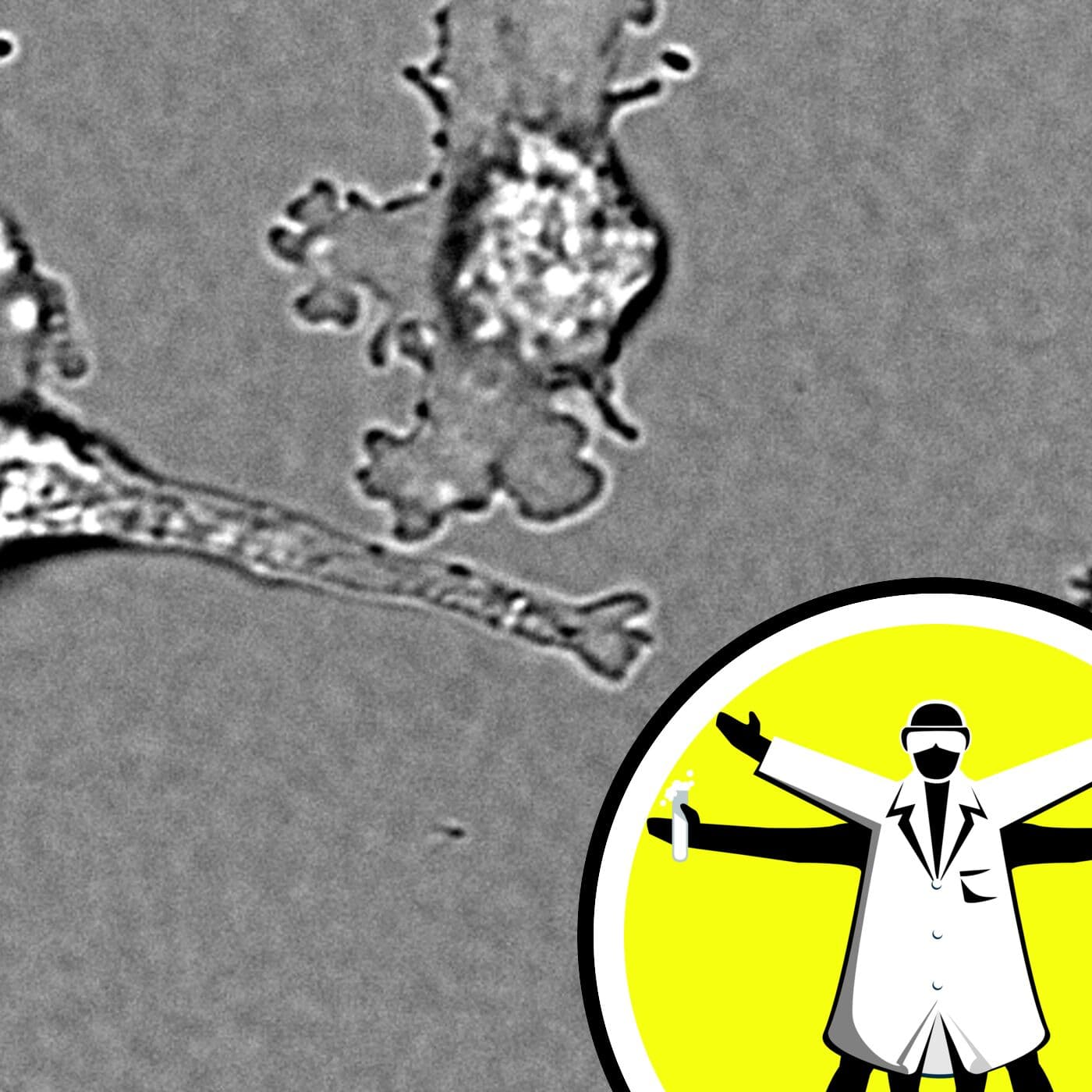
Antimicrobial resistance (AMR) and how Niger’s hospital outbreak of highly drug-resistant E. coli reflects a global threat, worsened by poor sanitation, malnutrition, overcrowded care, and funding cuts; includes what to do and why war zones like Gaza may face similar risks.
Guests (backgrounds)
- Kirsty Sands, University of Oxford (INEOS Oxford Institute for antimicrobial research): studies AMR in hospitalized, severely malnourished children.
- Brad Spiller, University of Cardiff, head of medical microbiology: explains AMR drivers and prevention/stewardship strategies.
- Jeremy Knox, Wellcome Trust: infectious disease policy; discusses Fleming Fund funding withdrawal impacts.
- Colin Brown, UK Health Security Agency: infectious diseases clinician and AMR expert; prioritizes drug development, diagnostics, infection control, and modeling.
Key claims
- Niger: 3/4 of under-5 hospitalized children became colonized with highly drug-resistant bacteria; 2/3 of those negative on admission acquired resistant E. coli by discharge, suggesting in-hospital spread via plasmid-borne resistance genes.
- Global: AMR spreads across borders via travel/food/environment; war, malnutrition, and sanitation breakdown can accelerate it.
- Policy: Ending Fleming Fund funding threatens surveillance and lab capacity in low/middle-income countries.
- Solutions: targeted treatment, stewardship, prevention (hygiene, water, vaccination), local tracking, “One Health,” and stronger infection prevention control.
Notable examples
- Hospital surface screening in Niger (6,000+ surfaces) showed diverse drug-resistant bacteria.
- E. coli plasmids carrying resistance genes; children shedding resistant strains into the community.
- Fleming Fund (UK, £250m since 2015) being withdrawn; “Netflix model” antibiotic incentives mentioned.
Written by AI. May contain mistakes. Listen to the episode to check what was said.
Chapters
Tap a time to open that second in VOThe Rise of AMR in Niger
1:42 to 2:30
Discussion on the growing issue of antimicrobial resistance in Niger.
“I'm Chris Smith, and this week, why we need to pay closer attention to antimicrobial resistance, or AMR, in some of the world's poorest places.”
Kirsty Sands on Niger's Health Crisis
2:30 to 4:50
Insights from Kirsty Sands about the health conditions in Niger affecting children.
“about what she's found happening in Niger, a country that's currently in the world's top 10 % of places plagued by antibiotic resistance.”
Understanding Antimicrobial Resistance
4:50 to 5:50
Brad Spiller explains the mechanisms and implications of antimicrobial resistance.
“And we'll hear a bit more about Kirsty Sands' work on Niger a bit later on in the programme.”
Factors Driving AMR
5:50 to 10:30
Delving into the causes and contributing factors of antimicrobial resistance.
“When I was first a doctor, for example, the card that the microbiologist in my hospital gave me for what drug to use for what infection, why?”
Strategies to Combat AMR
10:30 to 14:00
Discussion on potential strategies to mitigate the risks of antimicrobial resistance.
“Keep people who are known to carry the same resistant germs together and away from others or in single rooms.”
Understanding Antibiotic Resistance Spread in Niger
14:00 to 17:44
Exploration of how children in hospitals in Niger are acquiring drug-resistant bacteria.
“which are mobile, often circular structures that the bacteria can pick up and pass on in many different situations.”
Impact of Funding Cuts on AMR Initiatives
18:51 to 19:14
Discussion on the ramifications of the UK's withdrawal of funding for AMR programs.
“The Naked Scientist podcast is produced in association with Spitfire, cost-effective voice, internet, and IP engineering services for UK businesses.”
Impact of Funding Cuts on AMR Initiatives
19:18 to 24:44
Discussion on the ramifications of the UK's withdrawal of funding for AMR programs.
“This is the Naked Scientist podcast with me, Chris Smith, and this week we are putting antimicrobial resistance under the microscope.”
Strategies to Combat Antimicrobial Resistance
24:45 to 28:00
Insights on prioritizing new drugs and improving infection control in hospitals.
“Tracking and tackling antibiotic resistance requires a joined up global effort there's no dispute about that and new scientific innovations that can help us stay one step ahead are also crucial.”
Understanding AMR Challenges in Niger
28:00 to 29:53
Explore the multifaceted challenges of antimicrobial resistance in Niger and the factors complicating control efforts.
“People have large amounts of bacteria that have been exposed to very broad spectrum antibiotics that are sort of blunderbusses that treat all manner of both infections and normal bacteria.”
Show all 13 chapters
Global Perspectives on Antimicrobial Resistance
29:53 to 31:36
Learn about the interconnectedness of antimicrobial resistance and the global efforts to combat it.
“I think everyone is broadly on the same page for what we want to do.”
The Urgent Need for Action Against AMR
31:36 to 32:33
A compelling warning about the global implications of antimicrobial resistance if left unaddressed.
“Colin Brown at the UK Health Security Agency.”
Looking Ahead: The Future of AMR Research
32:33 to 33:05
Discuss the importance of developing new drugs and the challenges faced in AMR research.
“if steps aren't taken to improve conditions in deprived and war-torn states.”
Transcript
Automatic transcript. May contain errors.0:00Most people don't realize how much of their personal information is being bought and sold every day. Data brokers are making billions, pulling details about you from public records and the internet, then packaging and selling it, usually without your consent. That's how your information lands in the hands of scammers, spammers, even stalkers. It's why you get endless robocalls and why ads seem to follow you everywhere. That's where Aura comes in. Aura actively removes your data from broker sites and keeps it off. They also instantly alert you if your information shows up in a breach or on the dark web.
0:37But Aura goes beyond data protection. With one app, you get a VPN, antivirus, password manager, spam call protection, dark web monitoring, and even up to$5 million in identity theft insurance. All backed by 24-7 US-based fraud support. Other companies might sell just credit monitoring or even just a VPN. Aura gives you all of it together at the same price competitors charge for just one service. Start your free trial today at aura.com slash safety. Protect yourself now at aura.com slash safety.
1:28Without further ado, this is The Naked Scientist. Hello, welcome to The Naked Scientist podcast. This is the show that brings you the biggest breakthroughs and talks to the major movers and shakers in the worlds of science, technology and medicine. I'm Chris Smith, and this week, why we need to pay closer attention to antimicrobial resistance, or AMR, in some of the world's poorest places.
2:01Researchers are tracking a worrying rise in antimicrobial resistance in Niger. A new study has shown that poor sanitation, malnutrition and an overburdened healthcare system there is fuelling the spread of a highly resistant form of E. coli in the West African state and it's hitting young children the hardest. Experts are also concerned that current war-torn regions like Gaza may also be ideal breeding grounds for antimicrobial resistance to flourish. So first, let's hear from Kirsty Sands, who's at the University of Oxford, about what she's found happening in Niger, a country that's currently in the world's top 10 % of places plagued by antibiotic resistance.
2:43So currently in Niger, there are large numbers of children that are severely malnourished. In hospital facilities in Niger, resources are extremely limited. So many children are admitted into quite confined spaces. If these children are exposed to bacteria that may be present in the clinical environment or can be transferred between patients and visitors, there is a greater risk that these children may pick up these bacteria. We previously screened over 6 ,000 hospital surfaces and in doing so we found a huge diversity of drug-resistant bacteria colonising different surfaces throughout the ward.
3:22why given that's thousands of miles away do we need to be paying attention of course the burden is highest in environments where there are such limited resources however when you look at the global scale we do see the same bacteria these same high risk clones being found maybe in smaller numbers but as we know people are traveling across the globe we see bacteria spreading through borders, through people, food and the environment. And that's why surveillance projects like ours matter. They give us this ability to detect emerging threats and try to understand what the current bacterial landscape is like.
4:08And is there evidence that when these resistant forms pop up in new geographies, like London, for example, they actually cause a problem? Yes, absolutely. We often consider hospitals as a hotspot, and these are places that can kind of fuel the growth and spread of bacteria. And of course, if you are a patient in a hospital in London and you become colonised with a multi-drug resistant bacteria, you may then go on to become infected with the same bacteria. Because it's drug resistant, the antibiotics that may be given are likely to be ineffective, may increase length of hospital stay and just complicate recovery.
4:50And we'll hear a bit more about Kirsty Sands' work on Niger a bit later on in the programme. Before that though, what do we need to know about the threat that's posed by this rising tide of antibiotic resistance and indeed why is it getting more acute now? Well Brad Spiller is head of medical microbiology at the University of Cardiff. I like to think about bacteria as a supervillain. In the theatres it was the Avengers where you had Thanos and Thanos is the giant purple bacteria and he's running around collecting the infinity stones and the infinity stones are the equivalent of the resistance genes right so as he gets each individual stone he gets a new power and he becomes less and less killable.
5:31What the O 'Neill report that came out that was commissioned by the UK government said that by the year 2050, more people are going to die from antibiotic or antimicrobial resistant bacteria than die from cancer and diabetes combined. And I mean, that's a scary number. That's like 10 million people a year. How does this arise? Why? When I was first a doctor, for example, the card that the microbiologist in my hospital gave me for what drug to use for what infection, why? When I looked took that the other day. None of those drugs work anymore. When we look at those sorts of infections, I couldn't use those drugs today.
6:06Why have we ended up in that position and how? When penicillin was discovered in 1928 by Alexander Fleming, there were already a few bacteria in the wild that carry natural resistance. The resistance has always been there. It's just sort of at low levels. What antimicrobial resistance is, is actually that selection process. So when we use an antibiotic, it kills the sensitive bacteria and it selects the tough ones. So those survivors multiply and pass that resistance on. And that resistance can be a DNA mutation. Often it's actually on a small extra DNA loop called a plasmid that the bacteria can share between them.
6:42An antibiotic overuse and misuse plus heavy antibiotic use and things like agriculture accelerate that selection. The real danger is when you get a single strain that collects resistances to multiple drug classes. So penicillin is the oldest one. And the reason that we have probably more penicillin resistance for anything else is because we've been using it longer. Tetracyclines came along in the 60s. And there are some, group B streptococcus, for instance, greater than 95 % of them are resistant because in the 60s, they use tetracycline for everything. And to some degree, that's part of the problem we have now.
7:16People will try to use antibiotics to cure a cold. It has no effect whatsoever on a virus. And all you're doing is basically giving that selection process and getting rid of the bacteria that we could have an effect on. In other words, if you go out into the environment, your chances of running into a microbe that now has resistance against the antibiotic shoots up because we've used a lot of that antibiotic. So that if you're going to get that bacterium, you're going to get one that's resistant just because there's so many of them around now because we've killed all the ones that were sensitive.
7:48Yes, it's that pressure, the overuse and misuse. The other thing is taking the antibiotics through the whole course. You might start to feel better if you stop taking the antibiotics, but that's exactly the sort of thing that sort of drives mutation. If you take the pressure off, then all of a sudden they want to survive. They're going to start making mutations, and some of those mutations will make them resistant to the antibiotic, and they'll also start trading these little bits of DNA that carry resistance genes. And those resistance genes have always been there. they're just not highly prevalent.
8:19So it's just a case of stopping them from sharing and concentrating those resistance genes into the bacteria that we have left that cause pathological infections. What can we do about the problem? Number one, I would say, is targeted treatment. You diagnose the bug and its susceptibilities before or soon after you start therapy. Number two is stewardship. Use the right antibiotic at the right dose for the right duration. Number three is prevention. There are things outside of antibiotics that we can do, and that's things like vaccination, hygiene, safe food, safe water, surveillance. Number four, track what's happening locally, because if you have an idea of what is already highly resistant or which antibiotics don't work in a local situation, you can change and perhaps treat them more appropriately.
9:06And then number five, I'd say something we call one health. And that is outside of just human patients. You probably don't realize that non-essential antibiotic use in agriculture and treating animals and stuff is equally driving bacterial resistance because the bacteria are in the soil, it's in the water, it's in the environment. It's not just going from one person to another. So some of this pressure isn't just what we're doing. It's also what's happening around us. Some places in these developing countries, you end up with issues where they got poor sanitation so a lot of times the bacteria will go through our digestive systems and end up in the sewers but you've also got knockoff pharmaceutical companies that aren't getting rid of their intermediates appropriately so that's feeding into the same sewage and all of this is happening at an ambient temperature of 37 35 degrees which is almost the perfect storm for these bacteria to mutate to evolve to exchange these pieces of DNA.
10:04That's where you end up with high concentrations of antibiotic resistance. And it's why we see this in particular parts in the world. But like COVID, we know that it isn't going to stay there. All of these resistant bacteria are going to move across borders. And the rate at which they move will largely depend on what we do here to try and make the antibiotics we have work better longer. Presumably, there are also some practices, despite the fact that the risk exists in the environment these microbes are out there we can put in place to minimize the risk definitely crowded wards help the germs spread so we have to develop safe habits and make those habits the easy habits so for instance things like putting hand gel at the end of every bed and near the door use it on the way in use it on the way out move patients as little as possible because obviously it can spread from one patient to another.
10:57Keep people who are known to carry the same resistant germs together and away from others or in single rooms. That's not always possible in some of these low resource settings. And dedicate the kit, the thermometers, the blood pressure cuffs, etc. to those patients. But always things like clean water, working toilets. And I suppose for the antibiotics we have, ideally you want to use quick cheap tests to check if they're really needed. And then probably after 48 hours, review that and make sure that if they don't need antibiotics you don't continue to use them or if it's the wrong antibiotic you change immediately to something that's more effective and that way you can sort of stop the process of concentrating these resistant bacteria and getting them to gain multiple resistances.
11:42Brad Spiller from Cardiff University. Well now back to Kirsty Sands whom we heard from earlier in the program. She's at the INEOS Oxford Institute for antimicrobial research and she's been looking at severely malnourished young children who have been hospitalized in niger where she's found that three in four of them ended up being colonized with highly drug resistant bacteria a situation that arose through significant spread between them in hospital we collected samples from around just under 1400 children all of them were below the age of five. We collected rectal swabs as a kind of a less invasive tool for us to screen the gut microbiome.
12:22So we're really interested in trying to understand what bacteria were colonising within the gut and inferring whether or not this could be a risk for ongoing infection and ongoing transfer to other children and into the environment. We began by culturing them to have a look at what was growing from these samples. To complement our work, we also used some genetic approaches and some whole genome sequencing to really understand the genomic traits of different bacteria. And was this just done once when the kids first came in or did you look multiple times? Multiple times. So this was a study that progressed over time.
13:03We collected the first swabs when the patients were admitted and then we collected samples throughout their hospital stay for those children that were quite unwell. And then for everybody, we also collected a swab at patient discharge. This gave us the ability to look at those different environments, so whether the bacteria were present at the beginning, or whether they picked up particular drug-resistant bacteria during their stay. When you give people antibiotics, you can drive development of resistance to those antibiotics, but also they could be picking up resistant bacteria from other kids who are in the environment.
13:40So I suppose there are two sources through which resistance could flow here. Yeah, absolutely. There are. And I think one of the most important aspects is to be able to understand whether the resistance is within the bacteria itself in terms of the core gene or whether it's being carried on what we call plasmids, which are mobile, often circular structures that the bacteria can pick up and pass on in many different situations. And in our study, that's what we found. The bacteria had these plasmids with antibiotic resistance genes. So does that argue then that because these kids are being put on antibiotics, there is a risk that they're going to acquire resistance from the environment they're in?
14:28And did you find that was what was happening, that there was a spread of resistant forms around these children as they were hospitalised? We did, in large numbers, unfortunately. Some children were colonised with these drug-resistant bacteria at the beginning. However, over two-thirds of the patients that were negative for a particular drug-resistant E. coli on admission became colonised by the time we collected the sample at patient discharge. So this suggests that within that environment and within that time frame, they are picking up this bacteria from somewhere. Yeah, it's quite a concerning finding in the fact that in a short space of time, extremely vulnerable patients who, of course, are admitted to a treatment facility for a very good reason, are leaving the treatment facility carrying a drug-resistant E.
15:27coli that may well go on to pose a threat to the wider community. So what should we do about it? Do we know that they do actually pose a threat and they're going to carry on hanging on to those resistant forms. Is there evidence of onward harm? There is evidence of onward harm more widely. I think we have to think that these bacteria, you know, because they can persist in different environments, they can be found, different samples, different sources, there's always this possibility of an ongoing concern. I think following this project, it will be really important to know whether the same bacteria that we found colonising the children was found within the treatment facility because this would really drive the need for access to more suitable and sustainable infection prevention and control strategies.
16:19It would be essential to know how long these children remained colonised for and how long that potential threat exists in the community. Right now of course we've got serious problems in the Middle East and it almost looks like we're going to have history repeating itself based on what you found in Niger in Gaza. Yes absolutely we are seeing all the same problems there's a huge shortage of food which will increase the levels and numbers of malnourishment in children in particular large amount of overcrowding it's you know a very very tough situation, which would then mean that there are limited resources and access to clean and safe drinking water, hygiene and sanitation will be very, very difficult to maintain.
17:13What this really means is that we will see an increase in drug-resistant bacteria, and we will see an increase in the spread of these bacteria across people, across the environment, and this may well be a broader threat to other countries. And that is why, when it comes to infectious diseases at least, a problem in one country is invariably a problem for every country. Kirsty Sands there from the University of Oxford, that paper just out in Nature Communications. Most people don't realise how much of their personal information is being bought and sold every day. Data brokers are making billions pulling details about you from public records and the internet, then packaging and selling it, usually without your consent.
17:59That's how your information lands in the hands of scammers, spammers, even stalkers. It's why you get endless robocalls and why ads seem to follow you everywhere. That's where Aura comes in. Aura actively removes your data from broker sites and keeps it off. They also instantly alert you if your information shows up in a breach or on the dark web. But Aura goes beyond data protection. With one app, you get a VPN, antivirus, password manager, spam call protection, dark web monitoring, and even up to$5 million in identity theft insurance, all backed by 24-7 US-based fraud support. Other companies might sell just credit monitoring or just a VPN.
18:40Aura gives you all of it together at the same price competitors charge for just one service. Start your free trial today at aura.com slash safety. Protect yourself now at aura.com slash safety. The Naked Scientist podcast is produced in association with Spitfire, cost-effective voice, internet, and IP engineering services for UK businesses. Find out how Spitfire can empower your company at spitfire.co.uk.
19:14Music in the programme is sponsored by Epidemic Sound. Perfect music for audio and video productions. This is the Naked Scientist podcast with me, Chris Smith, and this week we are putting antimicrobial resistance under the microscope. In a minute, we'll hear what science might be able to do to help us get on top of the problem. But first, in 2015, the UK government set up the Fleming Fund, committing£250 million to fight antimicrobial resistance across Asia and Africa. It was an enlightened move because, as we keep saying, what goes around comes around and so we do really need to keep an ear to the ground, microbiologically speaking.
19:53But in July, the shock announcement came that funding would be withdrawn and the initiative would be closing down. This move echoes a worrying trend also set by the US in cutting foreign aid spending. Jeremy Knox is Head of Policy for Infectious Diseases at the research charity, the Wellcome Trust. Turning off the funding, removing the funding that had been available through the Fleming Fund is undoubtedly going to have a very significant impact in terms of their ability to actually do the type of monitoring, the type of disease surveillance they've been doing. In terms of how we quantify that impact, that's very hard to say.
20:28But clearly, if the laboratory capacity that's been built, if the capabilities that have been developed using Fleming Fund money is lost, then that really is going to impact on those health systems, those national governments, in terms of being able to understand the problem in their country, to make sure they're treating patients effectively, to make sure they're mounting an effective national response to AMR. The other element is the global element, and I guess there's two sides of it. I think firstly, the Fleming Fund had been supporting a great deal of work, including some that Wellcome had co-funded.
21:00When the fund was set up back in 2015, we didn't have a single estimate or a credible estimate of what the overall global burden of AMR looked like. The Fleming Fund has helped fund research, which has given us a much better understanding now of what that global picture looks like, what the country level estimates look like, and then what the trajectory is of the patterns of drug resistance. And then in terms of the kind of wider global picture as we lose that understanding and we lose the capabilities to deal with drug resistant infections in poorer countries in Africa and Southeast Asia. Like so many infectious disease problems, a problem anywhere can very quickly become a problem everywhere.
21:39Drug resistant bacteria, like any infection, don't respect borders. So it was a very sound investment. It was a real win-win to be supporting efforts to improve surveillance, to improve the response to AMR in low middle income countries because that improves the global health security and make sure that we don't have problems of AMR developing and spreading around the world before we can effectively control them. The Wellcome Trust is a pretty powerful entity and you have the ear of some pretty powerful other entities. Is this a void that you can step into to try to offset some of those difficulties that you've just outlined?
22:15AMR is not unique at the moment in terms of facing real funding challenges. Of course we've seen in the last six months or so what's been going on with the US making significant funding cuts to its investments in all sorts of different areas and that having a very profound impact. Of course, we as a major global funder of AMR, but other issues as well, we will try and address issues that arise because of this where we can, but we don't have the capacity to close the gap that's left by the US government or by the likes of the UK government. Who actually killed off the Fleming Fund though because there's one journalist I mean one of our major radio networks a journalist phoned me up and asked me for my opinion on it and she said this seems to have flown under the radar people don't seem to have realized this is going on and she wanted to make a particular thing of it on one of our flagship news radio programs so who is responsible for pulling the plug and and is this an irreversible decision do you think we not can point out to them the error that this is intrinsic to this decision and try and get it reversed?
23:20So it's hard to say exactly where the decision was taken, but I think clearly it's in the context of the UK government having to make, unfortunately, cuts to its overseas development spends. And we're seeing a lot of reductions across the piece in global health that we're very concerned about. So for instance, we're seeing significant cuts in the amount of R &D spending that comes from ODA from official development assistance, to use its technical term. In terms of a question of whether the Fleming Fund's decision is reversible, that's hard to say. But what we have heard from ministers is they are committing to working very hard to make sure that there isn't simply a loss of the capabilities or the networks and the learning that have been built by the Fleming Fund over 10 years of excellent work.
24:04So they have said that they will think about how they can try and mainstream it within things that FCDO, the Foreign Commonwealth and Development office do or asking countries to build work on AMR into what they do on pandemic preparedness. So I think we've heard the right noises in terms of making sure that we don't have a total loss of what the fund has been doing. But I think we will need to kind of keep a very close eye on that and make sure that actually there is a follow through and that this is still seen and championed as a priority. And as I said, that AMR becomes more of a mainstream issue alongside other country level health imperatives and that the UK continues to support that and champion that.
24:44Jeremy Knox at the Wellcome Trust there. Tracking and tackling antibiotic resistance requires a joined up global effort there's no dispute about that and new scientific innovations that can help us stay one step ahead are also crucial. Colin Brown's an infectious diseases clinician with the UK Health Security Agency he's also a leading expert on AMR so what does he think we need to be prioritizing? So there's multiple areas that science can help. Number one is new drugs. So as the drugs we have cease becoming effective, we need new drugs to replace them that are effective. And we in the UK have a scheme to try and incentivize drug companies often referred to as the Netflix model, whereby we pay a subscription fee, as it were, for companies.
25:34And regardless of whether we watch something once or watch it a million times or whether we use the drug once or use it a million times we give them the same uh price point and that is because antibiotics are very unfortunate investment potential because once we have a new antibiotic we don't want to use it we want to restrict it and keep it for only the cases where it's absolutely necessary and that is not a very attractive prospect if you're trying to develop a drug whereas you could be investing money, for example, in a new anti-cancer drug or a new heart drug or a new weight loss drug that you might be able to give to lots and lots and lots of different people as much as possible.
26:13We also really need to understand best where resistance is both developing and where is it being transmitted. We know that as people get exposed to antibiotics, they will develop resistance, but that happens also in the environment. It happens in animals that we eat or interact with and trying to ascertain where do you get the best bang for buck in prevention efforts? Is it about screening people so that you pick up drug resistance early in healthcare settings and you prevent it transmitting from one patient to another patient to another patient? Is it about better drug awareness and people only taking antibiotics if they definitely need them as prescribed and perhaps investing more in diagnostic tools that really help us to find where the best use of antibiotics is only in those people that really need them.
27:07So there's a variety of different things that we need to do. Some artificial intelligence will definitely help us with a lot of modelling and looking at where of all the different interventions we could do we will get that best bang for buck and some of it is about what's coming down the line and how do we invest in new antimicrobials so we have new antibiotics when we need them. This is arguably a big problem in hospitals because once you get people in hospital because of the close contact, just as was happening as we were hearing earlier in the programme in Asia, when the kids come into hospital close contact means they're more likely to acquire these things.
27:42So are we also looking at the behaviours of hospitals, how we manage patients, how we manage staff in hospitals to try to minimise the opportunities for these sorts of bugs to spread amongst patients and staff? Most definitely. And infection prevention and control efforts in hospital are key to preventing that spread. People have large amounts of bacteria that have been exposed to very broad spectrum antibiotics that are sort of blunderbusses that treat all manner of both infections and normal bacteria. And there's lots of patients who are very unwell, who don't have control of their bowel movements they you know there's lots of potential routes whereby there's the both the resistant antibiotics and the means of them spreading around and in places like niger are all the more difficult because they also don't have the water and sanitation and hygiene practices that that we maybe take a bit more for granted in the uk so one big aspect is helping hospitals with their infection prevention control and some of that modeling work and identifying what is it about practice that is likely to interrupt spread is it screening people and isolating them if they carry resistant bacteria is it hand hygiene which we know throughout the world we could improve on is it around patients meeting each other in in kind of different areas of the wards and interacting and spreading bacteria that way is it cleaning of the toilets and the showers and the kind of washrooms for example we're trying to look at can we do with waterless toilets and waterless sinks to try and prevent splash of bacteria that may transmit person to person so that at every stage of that there is a range of different science advances this is arguably a global problem and global problems need global solutions is everybody everywhere on the same page with this?
Read the full transcript
29:41Or do we have a fragmented landscape, no joined up thinking, and therefore, because the weakest link in the chain is always the place it's going to break. As soon as one bit breaks down, we've got a problem and it's a problem everywhere. I think everyone is broadly on the same page for what we want to do. There clearly is a difference in resources. The UK has provided significant assistance to many countries and continues to do so through things like GAMRF, which is a global antimicrobial resistance innovation fund. We work closely with some countries as part of the UK Health Security Agency, particularly in Nigeria and Ethiopia and Zambia, to a range of development work, which does include antimicrobial resistance.
30:26And we do the same also in the Caribbean with some of our UK overseas territories. There are lots of countries that want to be doing really good work here, but they have multiple challenges facing their health systems of which amr is only one and there are some basics that are difficult to access for example clean water they also have less in the the way of access to novel drug agents to be able to help where there are resistant bacteria to treat so there are a wide number of problems that that parts of the world face so in in that way it is a a global effort a lot of the work that we are doing as an organization has direct relevance to any setting so where best you invest your money how do you best prevent transmission of resistance once it develops and development of resistance either in people or in animals or the environment all of that has got real global applicability once we identify some of the key learning so in that way The work that we are doing really is trying to help the globe.
31:35But we do need to recognise that this is an interconnected problem and that if a part of the world that we see regular travel from or regular health care from has got a problem, then all too soon we will have a problem. And that fits in with some of the screening recommendations that we recommend nationally, whereby if we know people are coming from areas where there is more antimicrobial resistance, we do recommend that particularly if they've been exposed to healthcare environments there, they get screened. Colin Brown at the UK Health Security Agency. The modern world is a perfect storm, it seems, for antimicrobial resistance.
32:13Areas at high risk of promoting the natural selection of superbugs, often due to limited medical resources and poor sanitation, are increasingly well-connected to all nations across the globe. So cuts in foreign aid initiatives are boosting the risk considerably. A worldwide AMR nightmare has the potential to materialise from these circumstances if steps aren't taken to improve conditions in deprived and war-torn states. New drugs are also crucial, but they need to be economically. as well as medically viable. We watch with interest and trepidation. Next time, also small but not infectious, they're often used as the non-SI unit of size.
32:54They are the human hair, and that's what's going under our microscope. What is a human hair? Why do some of us lose it? And what can we do to reverse the problem? Stay tuned. The Naked Scientist is supported by Rolls-Royce. I'm Chris Smith, and from everyone here at the team, thanks for listening, and until next time, goodbye.