In short
This episode of The Naked Scientist covers three science stories: (1) wildfires worldwide, (2) using wastewater DNA to estimate community diets, and (3) algae-based “AlgaeBot” micro-robots for targeted bladder cancer drug delivery. Guest 1: Craig Clements, director of San Jose State University’s Wildfire Interdisciplinary Research Centre.
Key claims
9 out of 10 wildfires are human-caused (e.g., road-side sparks from flat tires, trailer chains, campfires, and power-line arcing in wind); drought + hot/windy weather drives fire intensity; wildfire smoke harms health mainly via PM2.5; fuel buildup from 100 years of fire suppression increases severity. Examples: Canadian smoke worsening Midwestern US air quality; California rebuilding without better fire-resistant modifications. Guest 2: Michelle Kirtley, Edible Atlas Lab at Duke University.
Key claims
wastewater DNA can objectively snapshot what communities eat, addressing inaccuracies and sampling gaps in self-reported nutrition studies; DNA can’t reliably distinguish similar foods (e.g., corn forms; grapes vs red wine), but community-level diet differences can be detected. Example: using Durham wastewater signals to validate against individual stool samples; measuring diet changes before/after a promised grocery store. Guest 3 (later segment): Qi Zhou, University of Edinburgh.
Key claims
hollowed algae cells loaded with doxorubicin, coated with magnetic nanoparticles and a dopamine protective layer, can be steered by external magnetic fields in the bladder and “spun up” to release drug at tumor sites. Examples: reported ~10x enhanced tumor penetration vs free drug in mice/rats; published in Nature Nanotechnology.
Written by AI. May contain mistakes. Listen to the episode to check what was said.
Chapters
Tap a time to open that second in VOUnderstanding Wildfires: Causes and Consequences
1:26 to 7:20
Explore the increasing frequency and impact of wildfires globally and the factors driving them.
“In recent years wildfires have broken out frequently around the world and this has peaked again in just the last few weeks.”
Health Risks from Wildfire Smoke
7:20 to 8:00
Discuss the health implications of wildfire smoke, particularly particulate matter.
“destroyed by very large wildfires, you know, just recently.”
Innovative Nutritional Tracking via Wastewater
8:02 to 14:00
Investigate the use of wastewater to gain insights into community dietary habits.
“We're doing the same thing right now, actually, to keep tabs on other infections like polio.”
Validating Community Diet Signals
14:00 to 15:54
Learn how wastewater analysis can reflect community dietary habits.
“So even though it's a big soup and we can't disentangle what you or your neighbour ate, we can still see community level differences because communities themselves have their own character and flavour.”
Discovery of the First Exomoon
17:07 to 17:48
Explore a groundbreaking discovery of an exomoon orbiting a distant planet.
“Still to come, the AlgaeBot, a modified microorganism that can be steered to deliver drugs just where it's needed to treat a tumour.”
Significance of Exomoons
17:48 to 21:50
Understand the implications of discovering exomoons for planetary formation theories.
“and this one's very strange in having such a big planet a long way from the host star on a very elongated orbit.”
Innovative Drug Delivery with Algae Microbots
21:50 to 24:26
Learn about a novel approach to targeted cancer treatment using algae-based microbots.
“And now in one observation, we can look from 1.4 all the way up to 1.8 microns.”
Mechanism of Algae Microbots
24:26 to 28:00
Discover how algae cells are transformed into controlled drug delivery systems.
“In chocavatory chemotherapy, specifically for bladder cancer therapy, it's known to be a challenge for the drug to penetrate the tumour tissue timely.”
Designing Algal Microbots for Drug Delivery
28:00 to 30:02
Learn how algal microbots can be designed to deliver drugs effectively.
“Yeah, it essentially becomes a bi-hybrid.”
Testing Efficacy in Real Situations
30:02 to 31:20
Discover the experimental validation of algal microbots in vivo.
“But get them where you want them to go, you can then spin them up like a vortex and they fling off the drug molecules into the target tissue.”
Transcript
Automatic transcript. May contain errors.0:00Hello, I'm Monica Reinagle, host of the Nutrition Diva podcast. Summer is here and with it the hot and sticky weather. A morning working in the garden or maybe on the golf course can leave you more depleted than you realize. And plain water isn't always the most efficient way to restore the balance. That's where Liquid IV comes in. Its science-backed formula is clinically proven to hydrate faster than water alone. Whether you're exercising, playing outside, or simply surviving a summer heat wave, it's an easy way to stay hydrated. Shop now at liquidiv.com. Liquid IV, hydration that goes wherever life takes you.
0:49Hello,
0:55welcome to the Naked Scientist podcast, the programme that brings you the biggest breakthroughs and talks to the major movers and shakers in the worlds of science, technology and medicine with me Chris Smith and in this episode the rising threat from wildfires using DNA and wastewater to work out what people have been eating and algae-based robots that can deliver cancer drugs just where they're needed.
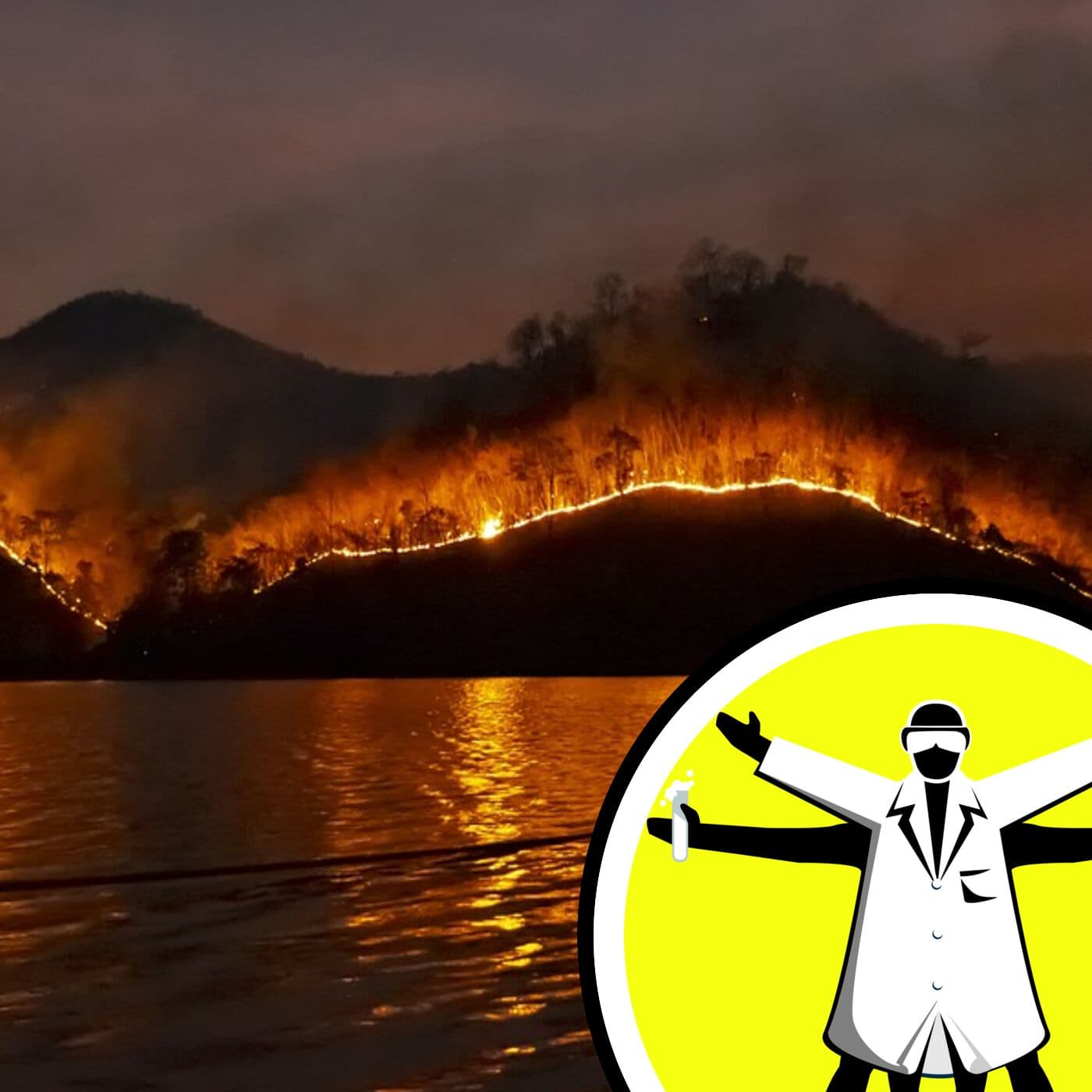
1:26In recent years wildfires have broken out frequently around the world and this has peaked again in just the last few weeks. The results are devastating for people, economies and the environment. Canada, Ireland, Scotland and Italy are just some of the countries affected at the moment. Year after year as wildfires increase in frequency, severity and duration scientists are trying to understand what is driving these fires and to develop new ways to predict and manage the risks. Craig Clements is the director of the San Jose State University's Wildfire Interdisciplinary Research Centre? Wildfires are driven by day-to-day weather patterns.
2:06So typically very hot days, very windy days. And when those weather patterns are aligned with drought conditions where it hasn't rained in a long time, that sets up a recipe for wildfires to get bigger, hotter and more intense. Obviously, they've got to get going in the first place. So how do most of them start, do we think? Yeah, well, most wildfires, nine out of 10 wildfires are human caused. And so that's generally accidental. Things like a lot of fires that start off the sides of roads where there's dry grass. And so it could be a flat tire where the rim hits the road, causes sparks to get into the roadside grasses.
2:49Could be trailer chains. Also campfires. and then there's also and particularly in the United States we have a lot of issues with our utilities so our power companies if it's really windy we can get those power lines to arc and cause fires beneath them. Is there any particular factor though that means that once one gets going it's going to be particularly bad? I'm thinking historically there were certain peoples in certain geographies that used to routinely burn and they've been dissuaded from doing that and so people argue that certain areas now build up a lot of fuel, which doesn't get burned.
3:24So when it does go, it goes in a really big way. Are there factors like that that underpin a lot of this? Yeah. So speaking from the United States, there's been 100 years of fire suppression because fires were bad. And so that fuel buildup that you mentioned is a big issue. And it's not just in the US, it's across the world, where what we call prescribed fire, where agriculture fires were common, that has decreased. So then we have that fuel buildup. And so in areas where those fuels have built up, you know, the shrubs, the grasses and such, that can be a problem if it's hot, dry and windy and there's ignition in those areas.
4:01The thing that really focused my mind when I started looking into this was I looked up the number of how much carbon dioxide comes out of these fires as a proportion of all the carbon we worry about that we make in a year. And it's a fifth yeah plants are carbon-based so as you you as you go through the combustion process that's converting to smoke co2 and co and so carbon is getting emitted by fires what about the non-carbon things that get produced you get nitric oxides as well and that kind of thing there must be a health cost associated with this yeah a biggest issue is the particulate matter and PM 2.5, which is 2.5 microns smaller, those are very small particles that are in smoke, and they can get lodged deeper in the lungs, and so they can cause a lot of respiratory issues.
4:55And so one of the big issues, particularly right now in the eastern parts of the U.S. and the Midwest, is because of those Canadian fires, lots of smoke. And so some of the air quality, and the worst air quality in the world right now is in some of those cities in the midwestern US which has never happened and so that's because of all these small particles from fires. What do we do about this then? Do we have to reinstate some kind of burning strategy to mean that the amount of fuel available isn't there for ignition? Do we have to live with the fact and to what extent is this a cost now because there are just more of us around this has always happened but there are so many of us living where it's happening we're all getting impacted yeah so that's a big policy question that's going on here particularly in california where we're trying to implement more prescribed fire to lessen the impacts of fires because you're removing the fuel you can do that you can do prescribed fire so you can do man-made fire you put fire on the ground it's not only beneficial to reduce the fire risk it's also beneficial for the ecosystems that need to be have those fuels and plants reduced and another way is mechanical thinning so you can go in with you know you can remove the fuels mechanically with tools and and such and so the best process is to use both mechanical and miscribe fire but you have to maintain that it's not just you can do it once and forget about it it's every few years you're going to have to go in there and do some sort of fuel reduction and my point about population i'm raising that because a friend of mine recently said well if you look at how many people have been killed by earthquakes and volcanoes around the world it makes it look like earthquakes and volcanoes are becoming more common but actually they're no more common than they always were there's just more of us living where these things are happening so we're getting impacted more of the time yeah and and in many parts around the world people are moving in closer to areas that are susceptible to wildfire and so So we are seeing more impacts on human society because of wildfire where they weren't impacted before.
7:02And so that has to do with maybe we need to plan our communities and our cities better. So maybe we don't let people move up into the mountains and create a group of villages that could be at risk in the future. So there's a lot of things that we have to do. What we're finding here in California, people are rebuilding in the same places that were destroyed by very large wildfires, you know, just recently. And those buildings and houses are not being modified to better protect, you know, the community. So it's a thing that you kind of have to do that. You have to make changes in how buildings are made, what materials are used, where they're placed.
7:44It's that and then also managing the forests around those communities. So it's a combination. And it's also society's awareness, just being aware of the fire danger or fire risk when you move to an area or are considering where you're going to live. Craig Clements there. During the COVID-19 pandemic, health officials in many places tracked the activity of the virus by analysing sewage, the rationale being that infected individuals shed the genetic material of the agent in what goes down the toilet. We're doing the same thing right now, actually, to keep tabs on other infections like polio. But could we go a step further and use the same samples to also ask another important health question?
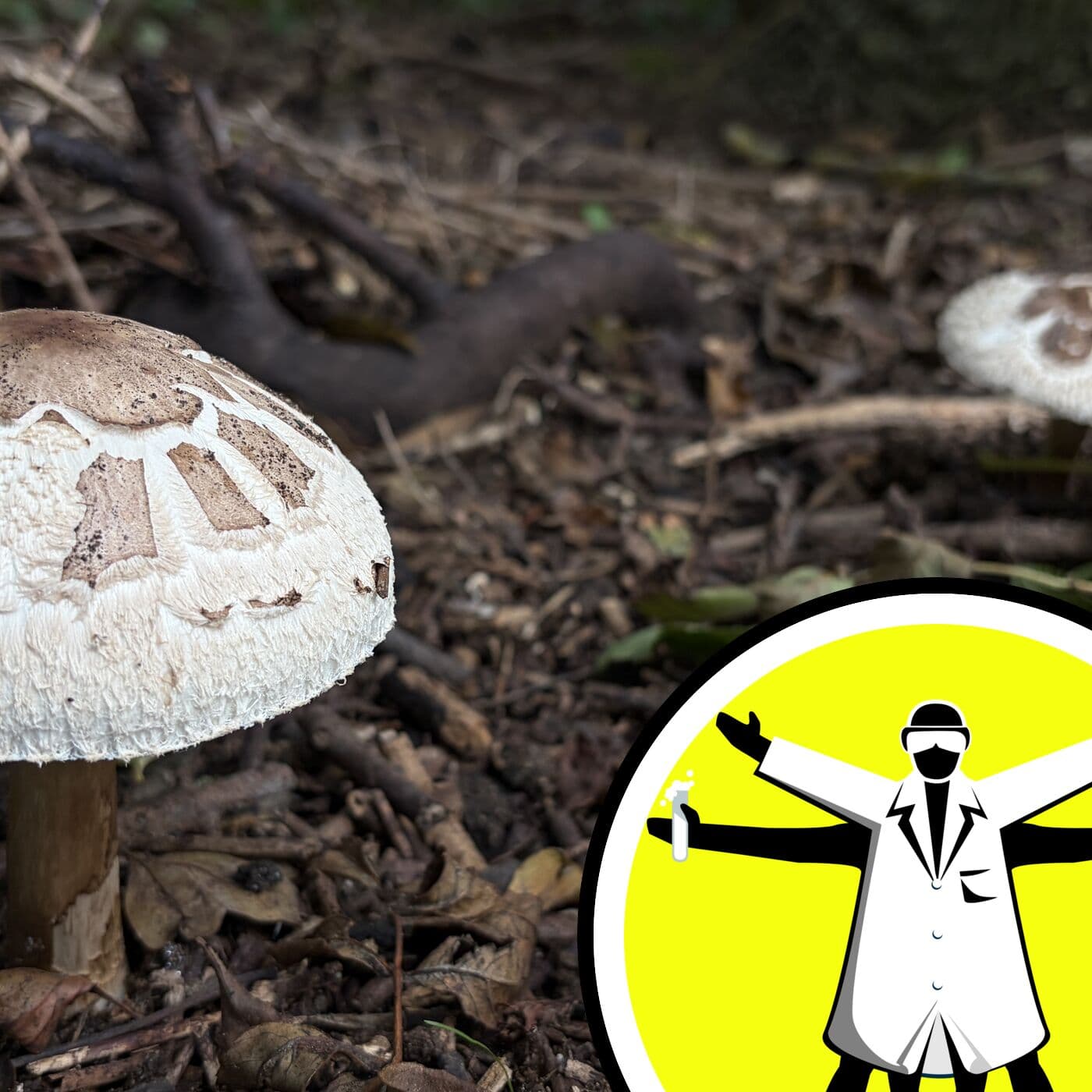
8:29What are people eating? Because, as it turns out, enough of the DNA from the meat, fruits and vegetables that we're consuming ends up in wastewater to provide a snapshot of the dietary habits of a community, which could be used to guide and test both food and nutrition policies. Michelle Kirtley is with the Edible Atlas Lab at Duke University and she hopes the approach will help to close a gap in the way that we currently collect this sort of nutritional information. The problem is that the way nutrition work is done, the way that we figure out what people are eating has been really done the same way for decades and it has a lot of inaccuracies.
9:12mostly we find it out by asking people what they eat. And if I asked you, like, what did you eat yesterday, you would probably remember some things, but not others. And the people I'm asking tend to be in nutrition research, the people who have the time to sign up for clinical research, not the people who are most at the margins who are burdened with their time. There are lots of populations that are missed with traditional nutrition research. So we were trying to design a system that could measure what people eat objectively. How? How have you gone about that? So everything you eat is alive, or at least most of the things.
9:50It once was alive, mostly made of plants and animals. And it turns out that a lot of that DNA survives digestion and shows up in your stool, in your waist. So what we're able to do is get the DNA out of your stool and read the sequences and separate out the different kinds of things that you've eaten in your stool. Is this physically people sending you stool samples or can you go downstream for want of a better phrase and could you measure a household by looking at the sewer pipe? Well and that's exactly what we did. So for years we had done this work with individual stool samples and the problem with that is it's not any more comprehensive than what I told you earlier and so we thought well what if we could do this comprehensively and capture a whole neighborhood or a whole city by looking at the waste that ends up in wastewater in the sewage.
10:46And you can get an accurate impression just from the DNA reads there, can you? It is a little bit like being at the 100 ,000 foot level because it's an aggregate of what everybody has eaten in that community. So it's a little bit like looking at a satellite photo of a particular area. So we can be accurate, but not always telling what an individual meal was eaten at a particular house, because we're taking a whole community snapshot at one time. Is it quantitative in the sense that if I ate one grape and then you had a sample, you'd say, well, Chris eats grapes. So Chris has had one of his five a day.
11:26In fact, I skimped on the five a day, I had one grape, but you'd say I'd eaten grapes. If you gave us your individual stool sample, we might be able to see it if you ate one grape, because the technique is quite sensitive. At the level of a whole community's wastewater, that's something that we're still trying to work out exactly how specific it is. We know that it can be quite sensitive. How specific it is, is something that we're still working on. Would it confuse my grapes with a bottle of red wine, because arguably one is going to be better for your health than the other. So I would put grape DNA down the loo, whether I'd consume grapes or red wine, wouldn't I?
12:05You would. And in fact, you might even put it down the sink and not have eaten it at all, because maybe it all goes into the same wastewater. So that is in fact correct. So corn is one of the best examples of this. We have corn on the comb, we have corn in tortillas, We have corn starch. All of them have DNA leftover, and we can't, at the level of DNA, tell the difference between them. What we can do, though, is look at what kinds of plants and animals tend to ride along together. And that's something that we're trying to do to work out whether something, let's say corn, is it most likely to have been corn starched in a processed food?
12:44Or is it more likely to have been corn that was eating in, let's say, a more healthy way? And we're trying to look at the combinations of foods that people eat to kind of get at that question. I can see why this would work if you have a very homogeneous society where people tend to all eat the same sorts of diets. But if you've got a very mixed up community of certain people are going to eat certain things, other people are going to eat other things. When you put the whole lot together, you might get what looks to your assay like a really good balanced diet because it's all the food groups represented.
13:17But were we to zoom in from your 100 ,000 foot view in on individual households, you might find some of them are existing on burgers and chips only. And actually all the vegetable signals are coming from the house next door where they're all vegan. Well, that's exactly right. But the interesting thing about people is they tend to live in places where there are other people who are a lot like them. So some of what we saw in our study is that areas that are more urban, even though it's exactly as you say, there are people eating healthy, presumably right next door to people who maybe have to consume food in a more convenient or fast way.
13:55We can actually see the difference between a whole rural community and an urban one or one that was in the mountains and one that was in the coast. So even though it's a big soup and we can't disentangle what you or your neighbour ate, we can still see community level differences because communities themselves have their own character and flavour. How did you validate this so you know that when you get these signals, they actually do map onto what people really are eating? That's a great question. And we have done this in part by in Durham, which is where our university is, we were able to compare the signals that we saw in the sewer water with the signals from individual stool samples that we had on hand from other clinical studies that we had done.
14:40And we were able to see that the same basic profile of plants and animals were in both sets of samples. Does it look practical though? Can you see if you go to government and policymakers Because with the data you now have, do you think they would be receptive to this? And do you think this would be a valuable tool in dealing with nutritional inequalities across countries? We have been exploring that at a variety of scales. More recently, going at the neighbourhood level to try to see if we can get at the question of food access. Whether you have access to a grocery store or maybe too much access to fast food restaurants or convenience stores.
15:17Change a whole community's diet profile. and whether we can use that data to help shape food access policy. There's a community organizer in a neighborhood in Durham that was promised a grocery store as part of a public housing project that was done, and the grocery store never materialized. So they are trying to raise money for a grocery store to come to their neighborhood so that the neighborhood can have healthy food. And they approached us to see if we could measure the food in the wastewater before and after the grocery store was put in so that they could potentially show policymakers, hey, look, the grocery store made a difference.
15:53Michelle Kirtley from the Edible Atlas Lab at Duke University. That article just came out in PNAS. Hannah, I just Venmo'd you for dinner. Obsessed. I'm spending it right now in the lip gloss that's been sitting in my cart. What do you mean spending it right now? You can instantly spend your balance with the Venmo debit card or when you pay with Venmo at checkout. Stop. Say more. More exactly. The more you do with Venmo, the more you get. Like earning up to 5 % cash back with Venmo Stash. Get the Venmo debit card or checkout online. Venmo Stash bundle terms and exclusions apply. Max$100 per month.
16:31See terms at venmo.me slash stashterms. Venmo checkout not available at all merchants. The Venmo MasterCard is issued by the Bancorp Bank N.A.
16:44The Naked Scientist podcast is produced in association with Spitfire, cost-effective voice, internet and IP engineering services for UK businesses. Find out how Spitfire can empower your company at spitfire.co.uk.
17:03This is the Naked Scientist podcast with me, Chris Smith. Still to come, the AlgaeBot, a modified microorganism that can be steered to deliver drugs just where it's needed to treat a tumour. But first, for some out-of-this-world news. Because a groundbreaking study published in Nature this week describes the discovery of the first exomoon. This is a moon orbiting a planet that's orbiting a star that is outside our own solar system. The team behind the discovery did it by seeing the light from the star and its massive orbiting planet, wobbling in a way that can only be explained if there is a moon the size of Jupiter, yes, a very big moon, orbiting the even more gargantuan planet.
17:47The discovery sheds light on how star systems and their clutches of planets might form in the first place, and this one's very strange in having such a big planet a long way from the host star on a very elongated orbit. Kevin Hoy is at Diego Portales University in Chile. What we found is the first confirmed exosatellite detection, which in this case is you have a central star, which is about half the mass of the Sun. Orbiting that star is a brown dwarf, which has about 35 times the mass of Jupiter. And then orbiting that brown dwarf is a planetary mass object about the size of Jupiter. So this is the first time we've had that clear three-tier hierarchy, where you have star, not a star, and then something orbiting that not a star.
18:32Effectively a moon? Yeah, kind of. It depends on who you ask. There are a lot of astronomers who don't like the idea of a Jupiter mass moon, that just looking at the moons in the solar system, they're all these small rocky objects. And so calling something so big a moon is definitely a controversial, complicated question to address. Okay, so it's a very big moon, but this sounds like a system on steroids anyway. It's a big set of entities that you're seeing. I suppose size does matter here because that makes it that bit easier to see. Yeah, exactly. It's especially the fact that the system is so young.
19:04Braundwarfs, as they age, they just get dimmer and dimmer as compared to stars that can even get brighter as they age. But Braundwarfs are continuously getting dimmer, so to be able to see Braundwarfs, they have to be really close and really young, and both are true for this system. Where is this system? How far away is it? And when you say it's very young, how old is young in this setting? The system is about 22 parsecs away. It's about 71 light years. And age-wise, it's about 150 million years old, which by astronomical terms is very young. Yeah, I mean, that's in its infancy, isn't it? That's compared to, say, our galaxy, the Milky Way, which is we measure the age in 10 plus billion years.
19:45That's literally just formed. Yep, yeah, exactly. How did you spot it? So we detect it with what's called the radial velocity method, which relies on the fact that as an object orbits a host it's not that the host is sitting still and the object is going around in a circle it's that both objects will orbit their common center of mass and so we can detect that wobble as the larger object moves back and forth so by detecting that signal going back and forth over time that periodic signal that keeps recurring the same shape that is the telltale sign of a satellite orbiting the object you're looking at it's the It's a bit like when the police car comes towards you and then goes away, you're doing that before light and you can see the brown dwarf glowing a bit and the light wobbling in the same way as the sound would wobble.
20:31Exactly. What's the significance of this though, Kevin? Okay, it's the first time anyone's seen, I know you don't like the term, but a moon, an exomoon orbiting another body. But what's the significance of this? Why is this important? So exomoons and exosatellites in general are important because they include a lot of information about the formation processes and the kind of dynamical history of their systems. Because, you know, for example, we at least know that nothing could have happened in the history of the system that should have ejected the satellite from orbit around the Brondorf. and it also gives us some clues because we think the formation mechanism for the system was likely very different from the solar system where all the planets and the moons were likely built kind of from the ground up by collisions within the disk forming particles that just grow bigger and bigger until they reach whatever size we see now.
21:22In this case we're likely looking at a different formation scenario that was more top down where you have like a whole disk that maybe collapsed into different chunks and those chunks one formed into the brown dwarf and one formed into the satellite or a kind of independent formation that brown dwarf and satellite form separately and then were captured by the star later and so detecting satellites like this that are especially massive can help give us clues about what's going on during those different formation processes that we can't know that much about because they didn't occur in the solar system what was it that enabled you to actually find this in the first place though because we've been looking for these sorts of things i'm finding exoplanets now for a quarter of a century now you're on to exo satellites or exo moons admittedly they're smaller but why now why did this happen now what was holding us back before so a very nice thing that enabled this was the upgrading of the cryros instrument it's now called cryros plus and the big thing they added was an increase to the wavelength coverage so basically before we could only look between uh i don't know for sure, but for example, between 1.5 to 1.6 microns.
22:27And now in one observation, we can look from 1.4 all the way up to 1.8 microns. And so that gives us a lot more features in the spectra that we can use for measuring that Doppler shift. And so that enables us to have much more precise measurements of the radio velocity. So we can define smaller and smaller objects. The big thing that helped us here was the Brondorf being so far away from the host star that we can look directly at the Brandorf without any light from the host star getting into the spectrograph and kind of contaminating the data. Why is it so far away from the host star? Because normally those hot Jupiters rotate and migrate inwards, don't they, towards the star and then they do end up in the situation you're describing.
23:06Is that more evidence that this is a capture event, that this hasn't formed there, it's been grabbed? Yeah, so it's definitely evidence that there was some kind of more a regular formation history because it would be very weird for the system to just form in this setup. It is more likely that either if it was formed as part of a disk with the star, there were dynamical interactions that caused the Braundorf to scatter outwards rather than inwards, or the more captured event. Because that's the other part is that the Braundorf is on a highly eccentric orbit. The eccentricity is like 0.8, which means at its closest, the Braundorf is only about 10 AU from the host star, but then it will fly out and go way further away, up to almost 200 AU, and then come back in on that very much more elongated orbit, but then the more circular orbits in the solar system.
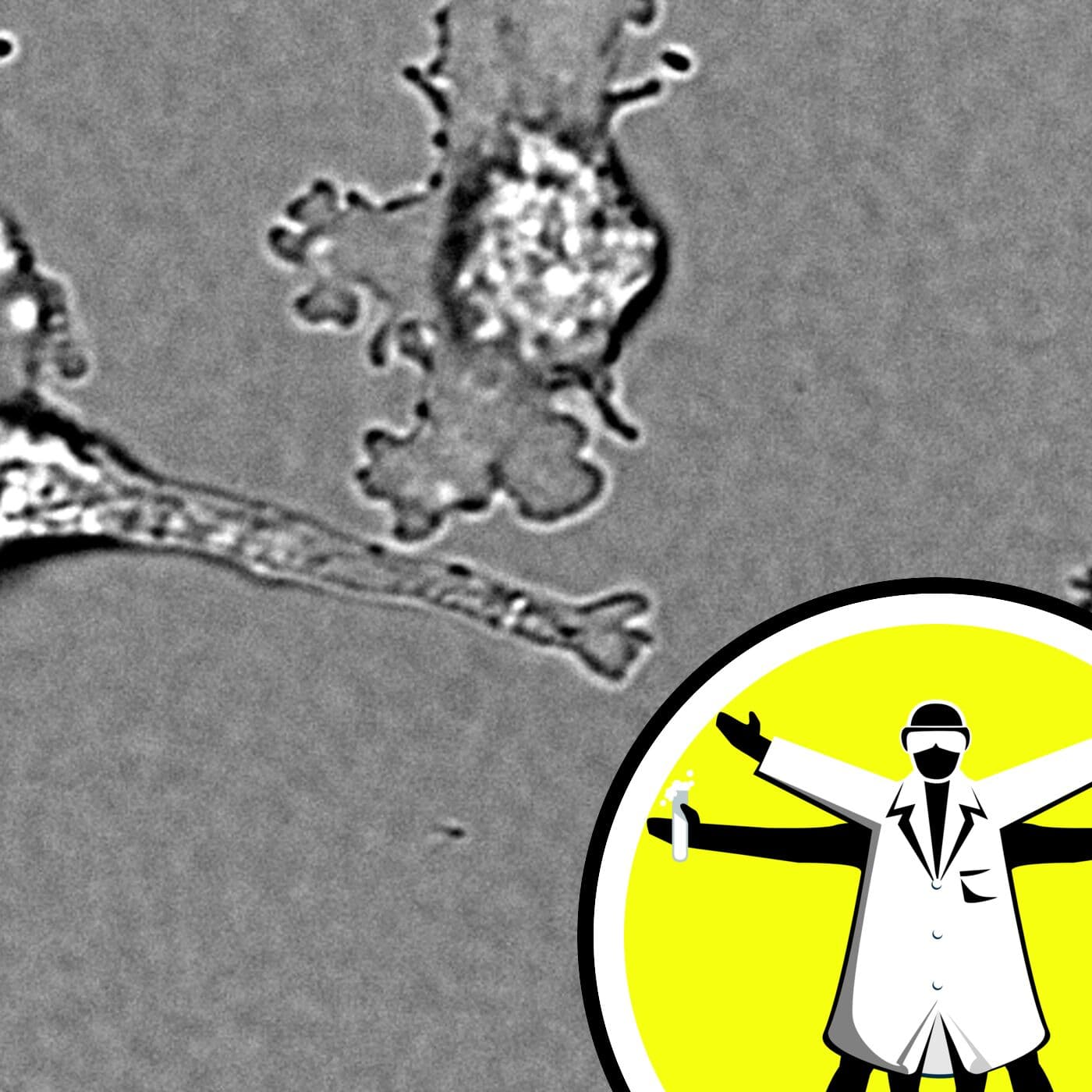
23:56So that's also evidence of complicated dynamical history. Amazing stuff, and the paper documenting that discovery is in this week's Nature. now finally one of the biggest challenges in treating conditions like bladder cancer is delivering drugs efficiently so they target the tumor selectively while reducing the impact on adjacent healthy tissue this is key to minimizing side effects and what's needed is a magic bullet that can be guided directly just to where it's needed but rather than start from scratch a team at the university of edinburgh have borrowed from biology they found a way to to package drugs like the chemotherapy agent doxorubicin inside hollowed out algae cells which end up resembling microscopic medicine bottles that they can then decorate with a special layer of magnetic material and cap off with a dopamine coating.
24:52Squirted into the inside of the bladder they can use external magnetic fields to drive fleets of these so-called algae bots to sites of disease on the bladder wall and then change the magnetic field to spin them up like a whirlwind and discharge the drug just where it's needed. It's the brainchild of Qi Zhou. In chocavatory chemotherapy, specifically for bladder cancer therapy, it's known to be a challenge for the drug to penetrate the tumour tissue timely. And also during the treatment, patients may need to go to the toilet and, you know, the voiding cycle kind of limits the dosage of the drug used.
25:27And also it limits the overall efficacy of this kind of like chemotherapy. So we wanted to enhance this kind of targeted therapy for the chemotherapeutic drugs to penetrate into the tumour. So the approach, the route of delivery is you put the drug into the bladder where urine would be and rely on it getting into say cancerous cells that are on the lining of the bladder. That's the approach in? Yes exactly. In general the doctors they just in a perfuse this drug solution into the bladder but that likes this kind of targeted therapy. So you basically get drug goes everywhere in the bladder and it can't distinguish healthy tissue, leave alone, cancer, deposit your drug there.
26:08The present therapies we have are no good at doing that. Exactly. So if you increase the dosage, you are harming the healthy cells as well. So that's known to be a dilemma, right? So for this research, we want to increase that targeting function. So we want to increase the local concentration of drug at the tumour site while minimising the side effects to the healthy tissue. And how are you trying to do it? So first we need to make sure these drug molecules that are controllable. To do that we have this kind of drug carriers which is the algae microbots we discovered like to be quite amenable to load and release drugs.
26:45Essentially it's kind of like diatom species of green algae. It's a marine algae. We try to you know deposit kind of magnetic layer onto them so these carriers can be controlled remotely by magnetic spheres and also the drugs that are loaded and seared in this kind of micro-robotic carriers so we can control them magnetically towards the tumour side. So let me get this straight. You take algae that would normally bob around in water and you do things to them to exploit their structure but basically add function. So you can basically make an algal cell into a Trojan horse. It can carry a cargo and you can control where it carries that cargo to.
27:27Yeah, that's a great metaphor. I would say this is essentially the algal microbiome is the chosen horse. We just load all these drug modicors within, but we manage to see them off. So they're securely packaged in this micro robot until they reach the tumour site and we find a way to trigger the release of these drug modicors locally and in high concentration. And presumably you're using the algal cell because it's a good shape, it's a good structure. but by the time you've finished converting it into a robot, it's no longer a living cell. It's just a piece of material that you can control. Yeah, it essentially becomes a bi-hybrid.
Read the full transcript
28:06It's like a cyborg, like a robot. It's amazing that you can do that. So you end up with an algal cell stuffed with some kind of drug payload. But tell me about the controlling mechanism. What do you put onto the algal cell that enables you to then control it? For instance, to control where it goes. Yeah, like I said, this is originally an agar cell. We essentially want to take advantage of this shape and hierarchical structure. But of course, we need to have different layers. First, in the core is the payload, the drug payload. We have the chemotherapeutic drug. And the second one is essentially the biological matrix of the agar cell.
28:44Then outside that, we need to have a magnetic layer, of course. For that, we use the magnet nanoparticles. Then eventually the fourth layer, the outmost layer, is kind of like a polydopamine. We use the dopamine to have a protective layer so the drug cannot be released into the ambient environment until we want them. That's how the multifunctional algae bot would work in this kind of therapy. You presumably steer it to where you want it to go with a changing magnetic field, so you can sort of push it like a boat being driven along on a current. How do you make it unload, though? How do you make sure the drug stays inside until you've got it where you want it, and then you say, right, now you need to deploy your payload?
29:24So essentially, this is related to the shape and the structure of the algae robot we fabricated again. This algae species looks like a pure tablet. So by changing the way how we control them, they can do different motion. They can roll like a wheel of the car, they can tumble, they can spin. So based on different kinds of motion modes, we realize they either preserve the drug molecules inside or they release the drug quickly. So it's a bit like putting them in the centrifuge in the sense that when you drive them along gently with a certain magnetic field configuration, they'll just flow along and the drug remains intact.
30:02But get them where you want them to go, you can then spin them up like a vortex and they fling off the drug molecules into the target tissue. Yeah, basically that. Imagine that if you have the wheels from the car, if it's just rolling along the surface, so it's quite gentle, the drug modicles will be mostly securely packaged. But if you all of a sudden turn them into a tornado, if they spin locally, like a vortex, so the drug can be released essentially like the typhoon or tornado center, they're going to be released in a drastic, dramatic manner. It's amazing that you can do that. I'm in awe that you can do it, but does it work?
30:38I mean, that's the crucial question. have you actually tried this in a real in vivo situation to see if you can guide them to where, say, a tumour is and then make them deploy like that? Yeah, of course, of course. Like we had a systematic, you know, set of experiments to test that in vitro and in vivo. So that's what we tested in mice and in rats. Then we compare this kind of a therapy against a conventional therapy with free drug solution rather than this kind of like a targeted therapy and we realize this penetration depth is largely enhanced we have roughly 10 times as strong drug penetration into the tumor tissue are you impressed well you can probably tell that i am that was chijo he just published that work in nature nanotechnology well that's it for today tune in on tuesday though when titans of science returns with sarah wickstrom who will be explaining how cells can carry a genetic memory of what they have touched in the past and why this might have huge implications for cancer and even organ transplants meanwhile if you enjoy this program do please dip into some of the other strands that we publish our weekly ask the naked scientist show gets to the bottom of some of the questions you've always wanted to ask that's at naked scientist.com forward slash ask if you want more details or look up ask the naked scientist wherever you get your podcasts it comes out every friday now if you like what we do here at the naked scientists and you'd like to show us your support you can do that over at naked scientist dot com forward slash donate and we would be extremely grateful for your help i'm chris smith from all of us here at the naked scientist team thank you for listening to this week's program and until next time goodbye
32:36Hello, I'm Monica Reinagle, host of the Nutrition Diva podcast. Summer is here and with it, the hot and sticky weather. A morning working in the garden or maybe on the golf course can leave you more depleted than you realize. And plain water isn't always the most efficient way to restore the balance. That's where Liquid IV comes in. Its science-backed formula is clinically proven to hydrate faster than water alone. Whether you're exercising, playing outside, or simply surviving a summer heat wave, it's an easy way to stay hydrated. Shop now at liquidiv.com. Liquid IV, hydration that goes wherever life takes you.