Ask ChatGPT


 The NPR Politics Podcast
29 Oct 2026 · 18m · 11 chapters
The episode focuses on how the U.S. Senate race could be decided by a few states, starting with Michigan’s tight, open-seat contest.
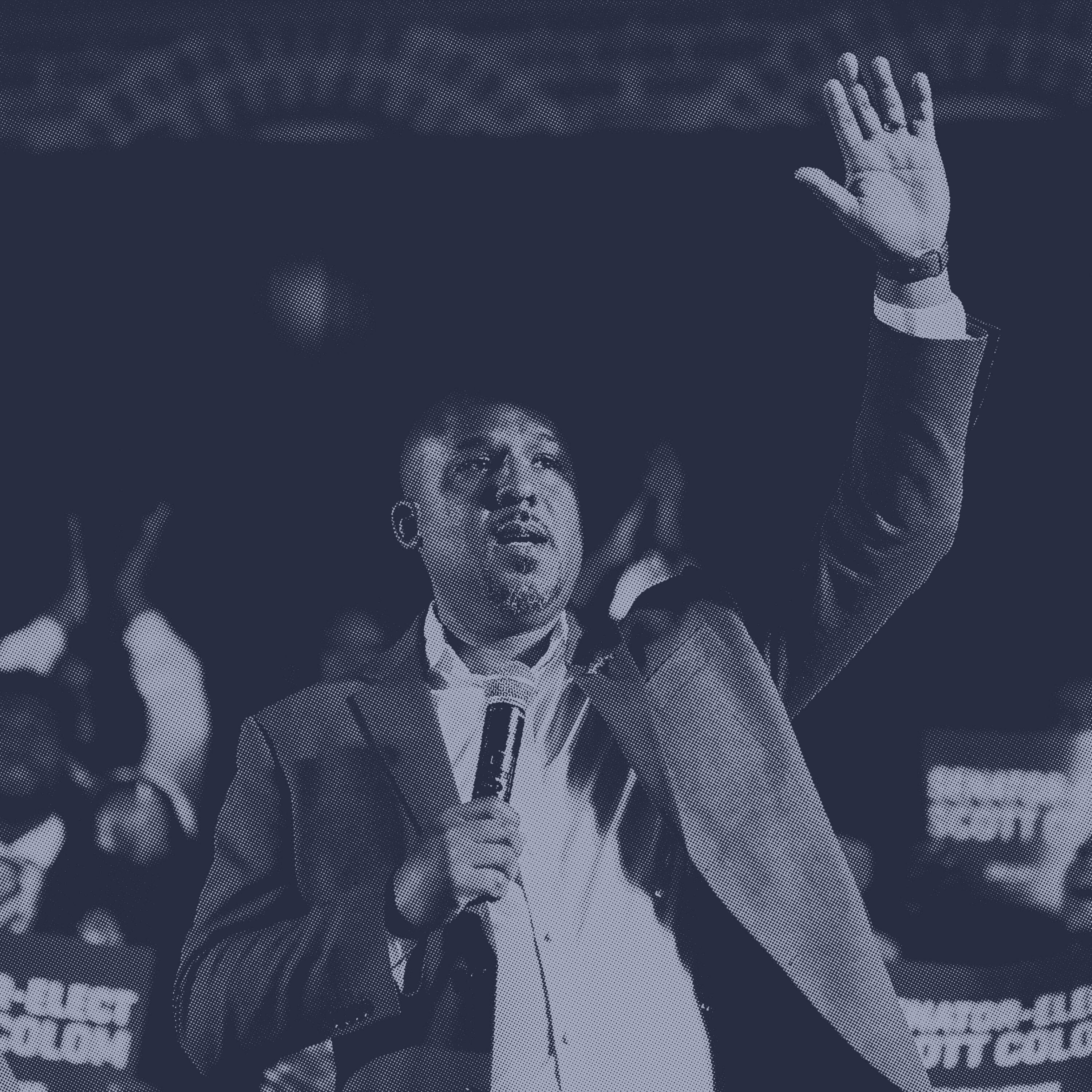
Tamara Keith (NPR politics host; covers politics), Sam Greenglass (NPR; covers Congress; reporting from Michigan), and Mara Liason (NPR senior national political correspondent). Michigan: Democrats defending a seat held since the late 1970s; nominee Abdul El-Sayed, an epidemiologist with an anti-establishment, far-left profile.
Republican Mike Rogers (former congressman) tries to energize MAGA while distancing slightly from Trump, using attacks alleging El-Sayed ties to Muslim Brotherhood/Hamas/Hezbollah (El-Sayed denies) and focusing on gas/grocery costs and “threat” rhetoric. El-Sayed’s closing argument emphasizes Medicare for All, anti-corruption, and Supreme Court stakes if Trump gets more appointments. Examples: Rogers’ rural Jackson County rally; El-Sayed’s outreach to Black/Jewish voters after a contentious primary; Obama rallying Black voters. Alaska segment: unconfirmed NYT reporting that Democrats recruited a second “Dan Sullivan” to siphon votes; Peltola campaign denies; Alaska officials investigate; DOJ suit seeks to delay certification if Sullivan loses.
Written by AI. May contain mistakes.
The significance of the Michigan Senate race and its implications.
“It's going to be decided by just a handful of states.”
Exploring why Michigan is a crucial state in the Senate race.
“You've been reporting from there throughout this election off and on.”
Details on Mike Rogers' campaign strategies and messages.
“Candidates are making their closing arguments.”
Discussion on the allegations made against Abdul El-Sayed.
“And by the way, my whole family wore the uniform of the United States of America so we could pray any way that we wanted.”
Analyzing Mike Rogers' relationship with Trump and its impact.
“Not the reason you can't afford your gas.”
How Mike Rogers balances his campaign with Trump's endorsement.
“But there's another layer of this, which is Michigan has a border with Canada and the tariffs really mean something to voters there.”
Exploring the impact of negative partisanship in the election.
“I don't look for things, but if something comes up, I am not afraid to talk about it.”
Understanding Abdul El-Sayed's final appeal to voters.
“And a note here before we go on, we are recording this mere hours before you hear it.”
Analyzing the difficulties El-Sayed faces in uniting the Democratic base.
“And this race is possibly in some ways scrambling what the typical coalition in a Michigan election looks like.”
Exploring voter hesitations and their implications for El-Sayed.
“So, Sam, when you're out talking to voters who are hesitant or opposed to El Sayed, what are they saying?”
Discussion on the upcoming Michigan Senate race and key voter demographics.
“One other thing to note is that former President Barack Obama went to Michigan with the express purpose of rallying black voters for Abdul El-Sayed.”

Get the gist, explore an idea or ask about something said.
 Claude
On The NPR Politics Podcast, what are the key points of this episode?
Searching your listeningAutomatic transcript. May contain errors.
0:00Support for NPR and the following message come from Washington Wise. Decisions made in Washington can affect your portfolio every day. Washington Wise from Charles Schwab is an original podcast that unpacks the stories making news in Washington. Listen at Schwab.com slash Washington Wise.
0:18Tamara Keith: The race for control of the U.S. Senate is tight. It's going to be decided by just a handful of states. One of them is Alaska, where this week the double Dan Sullivan drama blew up in a big way. But we're going to start with Michigan, where Democrats are trying to hang on to a seat they have held for decades.
0:41Tamara Keith: It's the NPR Politics Podcast. I'm Tamara Keith. I cover politics. I'm Sam Greenglass. I cover Congress. And I'm Mara Liason, senior national political correspondent. And Sam, you are in Michigan. You've been reporting from there throughout this election off and on. So why is Michigan and its Senate race so important? Yeah, Michigan is a perennial swing state, and it's also one of two states that President Trump won in 2024 that Democrats are now defending a seat in the Senate. Making this more complicated is that the candidate Democrats nominated here, Abdul El-Sayed, an epidemiologist, is on the far left of the political spectrum.
1:25He's bringing an anti-establishment message. And it is a real test of how that might play outside of a city or a coastal place. And so despite the fact that Democrats have held the Senate seat since the late 1970s and Michigan has not elected a Republican to the U.S. Senate since the year I was born in 1994. This is very much a toss up race. And it's an open seat, which makes it even harder to hang on to for the Democrats. Yeah.
1:57Tamara Keith: Or for anyone. Yeah. So, Sam, we are in the final days now. Candidates are making their closing arguments. Let's start with Republican Mike Rogers. What is he saying? Yeah. So Mike Rogers is a former congressman from Michigan. I went to see him a couple days ago at a rally on a farm in Jackson, Michigan, a fairly rural county. And actually, I got lost, Tam, Mara, on the way there and had to stop on this dirt road and ask this woman tending to her chickens how to get to where I was going. She didn't know what the address was, but she asked me if I knew the name of the farm I was going to. And as soon as I said that, she was like, oh, yes, go back up the road this way, cross the light, turn to the right.
2:38Tamara Keith: So did your GPS stop working because it was like so rural out there? It took me down a dirt road where there was no house. And after I got to this rally, I heard Rogers talking a lot about eight years of Democratic rule under Michigan's governor, Gretchen Whitmer, much less on the current Trump administration and the current Congress. But, you know, a lot of Roger Stump's speech was spent trying to paint Abdul El-Sayed as a threat to Michigan and the country, you know, without evidence accusing him of ties to the Muslim Brotherhood, to Hamas, to Hezbollah, all things that El-Sayed has denied. Just take a listen to this.
3:18Tamara Keith: And by the way, my whole family wore the uniform of the United States of America so we could pray any way that we wanted. It's not how he prays. It's how he thinks. Yeah. And, you know, this is echoing language that we've heard even a lot more directly less coded coming from President Trump on the stump, both here and in other places. I mean, President Trump has literally called him a jihadist. So not not subtle. How is El-Sayed responding to all of this? Yeah. So I mentioned he's disputed these allegations and he's calling the claims a distraction. They don't want to talk about the price of gas.
3:58They don't want to talk about the price of groceries. They don't want to talk about seeing a doctor. They want to talk about me and my name and my faith. But me and my name and my faith are not the reason you can't see a doctor. Not the reason you can't afford your gas. Not the reason that you can't afford your groceries.
4:14Tamara Keith: It is their policies that are doing that. You know, El-Sayed says this thing that he's been a man named Abdul in Michigan his whole life. And despite some of this rhetoric, he has found Michiganders to be open-hearted and inclusive people. And Mara, I'm interested in how Mike Rogers is handling this campaign and the relationship with Trump. President Trump obviously handpicked him, endorsed him, wanted him to run, has held multiple rallies for him in the state this year. But Rogers has tried to create at least a little separation. How does that impact his standing with voters? Yeah, well, this is very interesting.
4:53He's not the only Republican who found himself in this bind. But Rogers was at one point a very harsh critic of President Trump. He broke with him after January 6th. He was a real kind of national security, middle of the road Republican. But in order to win in Michigan, he needs the Republican base, the MAGA base to be energized. And that's a job for Donald Trump. So he has hewed pretty closely to the president. As you said, the president has endorsed him. I think it makes his job hard because Michigan, like many other states, has turned against Trump and his approval ratings there are very bad.
5:28But there's another layer of this, which is Michigan has a border with Canada and the tariffs really mean something to voters there. They understand how the tariffs are increasing prices. And you've seen Rogers make ads where he's saying, you know, we have to stop this trade war with Canada. He's also talked about stopping the war with Iran. So he's doing what a lot of Republicans are trying to do, somehow keep the president on their side to energize the base, but break with the president so they can appeal to all these other independent voters.
5:56Tamara Keith: Sam, how is he threading that needle? Yeah, it's difficult. And I actually asked Rogers about this directly after his rally earlier this week. And he said there are spaces, as Mara mentioned, like with the tariffs on Canada, the war in Iran, that he has provided a little bit of daylight, even though I hear from even GOP strategists here in Michigan that it might be a little too late. Here's how Rogers describes his approach to this. You want somebody that can go back and work with the president of the United States. If it's good for Michigan, I'm for it. If it's bad for Michigan, I'm going to be against it.
6:31I don't look for things, but if something comes up, I am not afraid to talk about it. Now, whether that works in a political environment where folks are really upset with a lot of the moves of the Trump administration in the second term, that's something we're going to find out after Election Day.
6:47Tamara Keith: Yeah, I mean, I do think that this is one reason why Rogers and Trump and J.D. Vance and others are working so hard to disqualify, I'll say it, because they need him to be someone that Michigan voters just can't bring themselves to vote for. And negative partisanship, we know, is one of the most powerful motivators for voters. Voters go into the polling booth and they cast their vote to stop someone from becoming elected rather than because they're super enthusiastic about the person they're voting for. All right. It is time for a break. More in a moment. Stay tuned for the following announcements and messages from our sponsors.
7:24This message comes from Prolon. Want to look and feel your best this fall? Prolon's five-day fasting mimicking diet is a clinically developed nutrition program with the goal of promoting fat loss while protecting lean body mass. Developed at USC's Longevity Institute, it aims to assist the body in entering a fasting-like state that helps reset metabolism, target visceral fat, and support healthy metabolic markers. Get 15 % off plus a bonus gift when you subscribe at prolonlife.com slash NPR. This message comes from Mint Mobile. Unwrap huge savings this season. All plans, even unlimited, are$15 for new customers.
8:01Go to mintmobile.com slash switch. Upfront payment of$45 for three month,$90 for six month, or$180 for 12 month plan required,$15 per month equivalent. Taxes and fees extra, initial plan term only. Greater than 50 gigabytes may slow when network is busy. Capable device required. Availability, speed, and coverage varies. This message comes from Edison Electric Institute. As a new season starts, America's electric companies are working behind the scenes to deliver reliable energy for the moments that matter most. America's electric companies, powering the energy of every day.
8:39Tamara Keith: Welcome back. And a note here before we go on, we are recording this mere hours before you hear it. Because the news is changing so fast. We try to get new episodes out as quickly as possible. And the best way to make sure you hear those episodes right when they're available is to follow the show wherever you listen. On Apple, that means look for the big plus sign on the show page. On Spotify and the NPR app, there's a big old follow button you can smash. Do that and make sure you are always up to date with the latest show. Sam, back to Michigan. What is Abdul El-Sayed's closing argument? Well, it's been pretty consistent from what I heard from him during the primary and in the early weeks after that in August, you know, pledging to support Medicare for all, to curb costs, to curb corruption, to focus on getting corporate and special interest money out of politics.
9:36But you know, something new that I did here this week is this focus on Trump potentially getting more appointments to the U.S. Supreme Court. And I took this as a message to Democrats and independents who might be hesitant to vote for El Sayed, but generally want to have some additional check on Trump and the Republican Congress. Here's what he said. Donald Trump's already had three appointments to the Supreme Court. If we don't win, don't be surprised if he gets another two, making it five. Can you imagine if the majority of the Supreme Court was nominated by Donald Trump? That's what we're talking about.
10:12This is for all the marbles. Yeah, so he's trying to remind people of these bigger picture stakes that are happening, not only in Michigan, but in terms of control of the United States Senate. That's an interesting argument because we know from polling that only the most kind of base Democrats really motivated think about the Supreme Court. For other people, price of gas, price of health care, housing, those are the top issues.
10:36Tamara Keith: Michigan, it's narrow, but it is a Democratic majority state. So, you know, like El Saeed needs to get Democrats to turn out and vote for him if he's going to win. And as we've talked about on this pod before, there was an extremely contentious primary that was also quite late. And I'm wondering how he's doing at sewing the Democratic base back together again after that really tough primary. I was here for that primary. It was really intense. And I think some of those wounds have yet to heal, especially among certain parts of the Democratic coalition. And this race is possibly in some ways scrambling what the typical coalition in a Michigan election looks like.
11:25El-Sayed seems to be having a bit more challenge, bringing some Black voters, some Jewish voters, back into the Democratic fold who supported his opponent in the primary, Congresswoman Haley Stevens. El-Sayed makes the case, though, that he is able to galvanize young voters, infrequent voters, even some voters who previously supported Trump. And so on balance, he should still be able to pull out a win in Michigan. Whether that's enough, it is unclear at this point. That argument is what people generally say when they haven't sewed up the base of their party. Oh, I'm going to bring in all these new people.
12:05I have never seen a race where less than a week before Election Day, you've got the nominee's former primary opponent criticizing him on television. One of the problems that he's had is that two extremely important parts of the Democratic coalition, African-American voters and Jewish voters, are still not behind him in the numbers that he needs, at least in a traditional race. And we know that he is running way behind other statewide Democratic candidates. And I should say he is making outreach in some of these communities. It's not clear if it will be enough to sew up the coalition and win in this narrowly divided state.
12:46So, Sam, when you're out talking to voters who are hesitant or opposed to El Sayed, what are they saying?
12:54Tamara Keith: What does that look like? Yeah, so I think there's a couple of different buckets here. There are some folks, like many Jewish voters that I've talked to, who have concerns about stuff El-Sayed has actually said or positions he's taken, like comments he made after a truck attack on a Temple preschool in Metro Detroit, his choice to campaign with controversial left-wing streamer Hassan Piker. Those are people who are rooting their hesitation in positions or things that he's said. And this is one reason polls suggest El-Sayed is in a tight race in Michigan, despite the Democratic candidate for governor, Jocelyn Benson, seeming to run far ahead of her Republican opponent, GOP Congressman John James.
13:41Then there's another category of voters who might be more motivated by the anti-Muslim rhetoric that we've heard from folks like Mike Rogers. I'd wager, though, that a lot of those voters maybe weren't going to vote for a Democrat anyways. So does this matter with independent or swing voters? We're going to find out.
14:00Tamara Keith: One other thing to note is that former President Barack Obama went to Michigan with the express purpose of rallying black voters for Abdul El-Sayed. And, you know, I think after this election, I think it could be difficult to parse out exactly what caused a win or a loss here. because, you know, is it voters who had concerns about Al-Sayed the person or the candidate? Is it his positions on certain topics? Is it where he is on the political spectrum, this more progressive kind of candidate? It might be hard to sort exactly what happened and why. Yes, but that will not stop self-interested people from making the argument that they want to make that it definitely proves their point.
14:38Tamara Keith: Looking forward to that analysis after the fact. As we watch Returns from Michigan come in on Tuesday night, what signs will you be watching for to see which way the wind is blowing or like which of these narratives actually proved out? Two counties that I'm always watching is Wayne County, home to Detroit. A lot of black voters, reports relatively late in the night. That will be one place I'm watching. Oakland County, where I'm from originally, that is home to a lot of the maybe Democratic leaning, some independent voters. some Jewish voters who might be swing voters in this particular election.
15:16And then I'll be curious what the margins are looking like in some rural counties outside of metro Detroit, where Al-Sayed is saying that he's going to be able to cut into Republican margins.
15:26Tamara Keith: Also will be very interesting to see how young voters come in. Like, is Ann Arbor just off the charts? It will be. Fair. Mara, before we go, I want to mention Alaska. The New York Times is reporting that Mary Peltola's campaign and Democrats broadly work to recruit a second Dan Sullivan to run for Senate to try to siphon votes away from the incumbent Senator Dan Sullivan. And NPR has not confirmed this reporting, but The Times has text messages and other evidence that they present in the story. The Peltola campaign denies involvement. And it is worth noting that earlier this year, the Alaska Supreme Court held that the second Dan Sullivan is able to be on the ballot.
16:14And it's also completely unclear whether even if they were involved, if that violates any law or not. Yes.
16:21Tamara Keith: And this reporting has made the White House very angry. There have been many all caps truth posts. Mara, tell us about that. Right. Well, today, the latest thing is that the Republican governor of Alaska has ordered an investigation into the Democratic candidate, Daniel J. Sullivan, after the – as you said, after these – the stories in The New York Times that showed that the Peltola campaign was involved in getting him on the ballot. A day before that, Donald Trump had called for a criminal prosecution of Mary Peltola and her campaign. Even before that, Trump had made it clear he would not accept the results of the Alaska Senate race.
16:58His Justice Department filed a suit demanding that if the incumbent, Dan S. Sullivan, lost by a certain margin, the result should not be certified until an investigation that could show that people knew which Sullivan they were voting for. I don't know how that could possibly happen. But this is called ballot stacking. It is not unusual. It's actually pretty common in politics. Both parties have used it in Alaska before. But this shows you the kind of chaos we might be facing after Election Day. And also don't forget that Alaska takes a very long time to report. We're probably not going to know who wins that race the morning after.
17:39It might be weeks.
17:40Tamara Keith: It very well could be, I think, like two weeks before the ranked choice voting, if it goes to that, comes in. Right. And we should note that already more than 10 percent of Alaska voters have cast their ballots. I mean, do you have any sense of how this could affect the race? A lot of things that have happened in Alaska that on the surface looked like they would hurt Mary Peltola have actually helped her. Like when it turns out she used some foul language in her campaign headquarters, that didn't seem to bother Alaskans. She's run a very, very good campaign. She's run a real Alaskan campaign. We've talked on this pod before about how her slogan is fish, family and freedom.
18:21But it's unclear how this is going to affect the race, especially because the Alaska Supreme Court looked at this and said, yes, you can have both these people on the ballot. And don't forget, Alaska could be the Senate race that determines control of the Senate.
18:36Tamara Keith: Yeah, because almost all of these races could be the race that determines control of the Senate. And this is the one race where Donald Trump has said the quiet part out loud. He has said by having his Department of Justice file the suit that he is not going to accept the results of this race unless the Republican candidate wins. That is a really serious line to cross. Democracy only works when both parties accept the results of elections, even if they lose. Let's leave it there for today. Come back tomorrow as we take a crack at answering some of your questions about our political landscape. I'm Tamara Keith.
19:09Tamara Keith: I cover politics. I'm Sam Greenglass. I cover Congress. And I'm Mara Liason, senior national political correspondent. And thank you for listening to the NPR Politics Podcast.
19:25Stay tuned for the following announcements and messages from our sponsors. This message comes from Bombas. Making shoes as cozy as slippers and slippers as comfy as clouds. Smooth suede, plush Sherpa, cloud-like cushioning. Visit B-O-M-B-A-S dot com slash N-P-R for 20 % off your first purchase. Support for NPR and the following message come from Washington Wise. Decisions made in Washington can affect your portfolio every day. Washington Wise from Charles Schwab is an original podcast that unpacks the stories making news in Washington. Listen at Schwab dot com slash Washington Wise.