 Ask ChatGPT



Missouri’s 2025 congressional redistricting maps, the backlash referendum against them, and the court battles that determine which map voters use in November; plus a brief update on Trump’s effort to restrict voting by mail.
Jason Rosenbaum, politics correspondent for St. Louis Public Radio; Tamara Keith (NPR Politics Podcast host, covers politics); Miles Parks (covers voting).
Missouri lawmakers drew a map with one safe Democratic district in St. Louis and seven fairly safe Republican districts by splitting Kansas City. President Trump’s pressure helped drive the change. A voter referendum succeeded (triple signatures in ~3 months), but Secretary of State Denny Hoskins rejected it at the last moment. Missouri Supreme Court ruled the referendum was allowed; the 2025 map never took effect, so the 2022 maps are the current status quo.
Rep. Emanuel Cleaver’s Kansas City district (first Black mayor of Kansas City; in Congress since 2005) flipped from “solid Republican” to “solid Democrat” after court rulings; Ann Wagner’s redrawn district moved from Trump+8 to Trump+11, making it a key swing target. Proposition A: vote yes to use 2025 maps for 2028; vote no to keep 2022 maps. Voting-by-mail update: a Trump USPS authority order remains blocked pending Supreme Court action.
Written by AI. May contain mistakes.
Overview of Missouri's congressional district changes following Trump's request.
“Well, in one state, the saga isn't over.”
Discussion on how Missouri's district lines were redrawn and its implications.
“The state we are talking about is Missouri.”
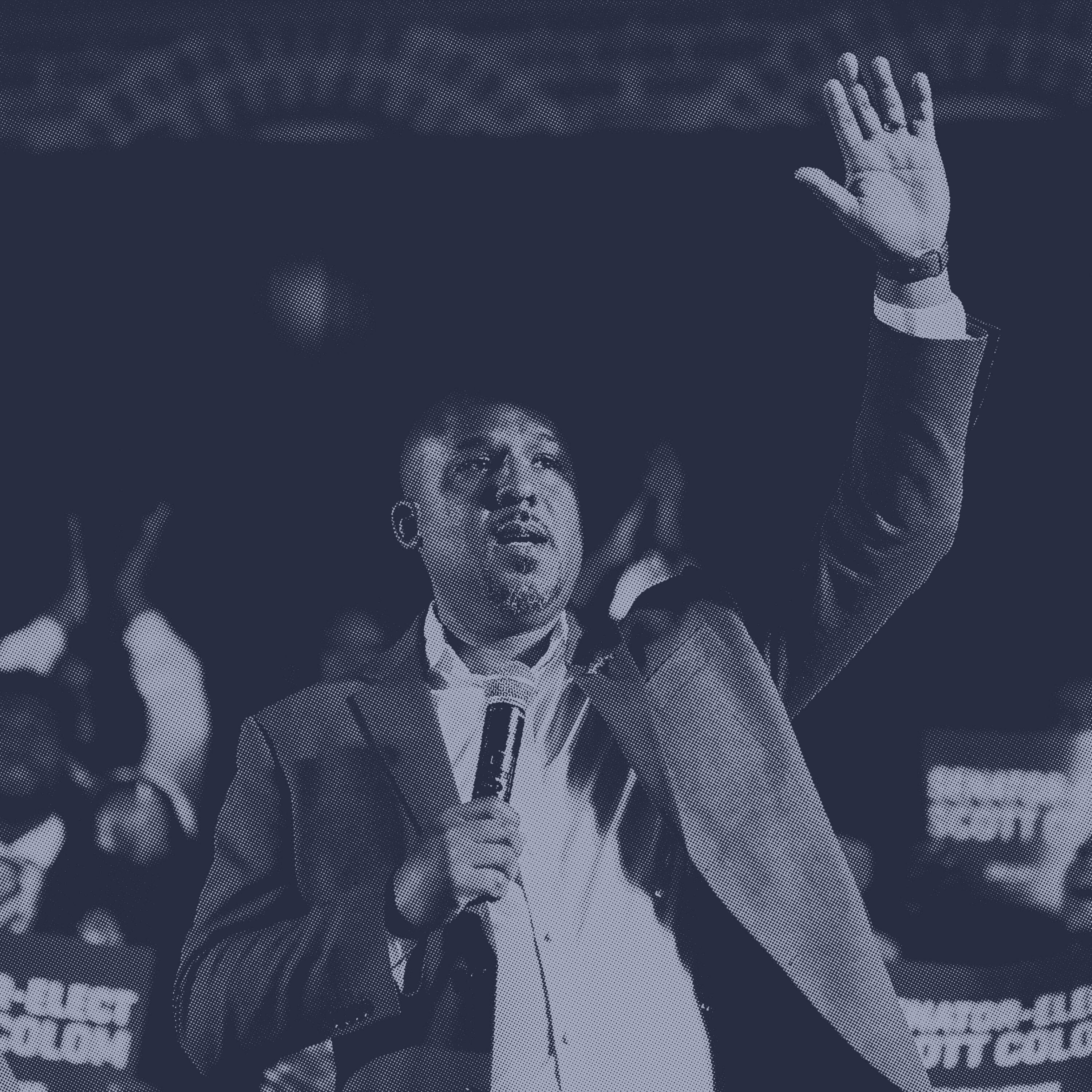
Insights into Emanuel Cleaver's political significance and the impact of redistricting.
“Cleaver is a historic figure in Missouri politics.”
How Missouri residents successfully gathered signatures to challenge the new map.
“And they succeeded at getting enough signatures, right?”
Examination of court cases related to the redistricting and referendum process.
“There's a lot of – well, that wasn't the end of the story.”
Analyzing the confusion caused by the changing districts during elections.
“all the headlines because, yeah, that one whiplashed from under the 2025 redraw.”
Further exploration of the legal issues surrounding the redistricting process.
“Discount cannot be combined with insurance.”
Explore the implications and confusion surrounding Missouri's ballot measure and redistricting process.
“In terms of it didn't have to be this way, the secretary of state in Missouri waited until the last possible moment, you know, to try to prevent, I think, this ballot measure from affecting the maps.”
Learn about the latest developments regarding President Trump's efforts on voting by mail and judicial responses.
“There is more voting related news, and this is why we needed a timestamp on this podcast.”

Get the gist, explore an idea or ask about something said.
 Claude
On The NPR Politics Podcast, what are the key points of this episode?
Searching your listeningAutomatic transcript. May contain errors.
0:00Tamara Keith: If you've ever found yourself doom scrolling and thinking, wait, who decided this was a story? You're not alone. I'm Brooke Gladstone, co-host of WNYC's On the Media. Each week we ask those kinds of questions and more, because once you see how the system operates, you'll never consume media the same way again. Listen to On the Media wherever you get your podcasts. Remember the flurry of activity when President Trump asked Republican-run states to redraw congressional district lines to favor his party? Well, in one state, the saga isn't over.
0:37Tamara Keith: It's the NPR Politics Podcast. I'm Tamara Keith. I cover politics. I'm Miles Parks. I cover voting. And we are recording this at 1.07 p.m. Eastern Time on Monday, September 14th. And St. Louis Public Radio's politics correspondent Jason Rosenbaum is also with us. Hey, Jason. Thank you so much for having me. And we are so glad to have you here. The state we are talking about is Missouri. And there have been a lot of developments in the past week or so that may or may not have interfered with your sleep. But I want to go back to the beginning. President Trump said he wanted more safe Republican congressional districts.
1:18Tamara Keith: Missouri lawmakers got together to redraw the district lines. What did those new maps look like? So what happened after President Trump pressured Texas to draw about five more Republican-leaning seats is Missouri jumped into the fray. And Missouri, before 2025, had six Republican-leaning congressional districts and two safely Democratic ones. What they ended up drawing in 2025 was a map with only one safe district in St. Louis and seven fairly safe Republican districts. And they did that by dividing Kansas City into three separate congressional districts. And they had tried to do this in 2022 right after the census.
2:07But Republicans actually decided not to go along with breaking up Kansas City because they felt it could backfire in a bad Republican year by putting so much Democratic-leaning territory into largely rural areas. But Donald Trump said jump, and the Republicans decided to jump really high in this instance. This one district that they were basically drawing out was trying to eliminate a district that's been held for a while by Representative Emanuel Cleaver, who is a longtime black Democrat there. What can you tell us about him, Jason? Cleaver is a historic figure in Missouri politics. He was the first black mayor of Kansas City.
2:49He has served in Congress since 2005. And he has actually a pretty good reputation of forging meaningful relationships with Republicans. When I talked with him last week, he called former Republican Senator Kit Bond his brother because they worked so closely when he was mayor and when they were both in Congress. And so he doesn't really have a reputation among Republicans of being a bomb thrower. In fact, his reputation is of being very collaborative, even with people he disagrees with. But his district at the time was essentially crackable. Even though he is an African-American lawmaker, his district is not a majority minority district.
3:35And so Republicans were able to break it up in 2025. And I think that he saw this as a huge betrayal of not only the voters, but to the tangible goodwill that he tried to put forward to a party that he disagrees with all the time.
3:53Tamara Keith: And that could have been the end of the story, but it wasn't because Missouri residents gathered signatures for a voter referendum that would throw out this new map. And they succeeded at getting enough signatures, right? They did. In fact, there were a number of Republican insiders back in 2025 who seriously doubted that enough signatures would be gathered because the time frame to gather the signatures was so short compared to other initiative petitions in Missouri. But not only did they get the baseline amount of signatures, they got triple the amount of signatures in roughly three months. And they couldn't just get signatures in Kansas City and St.
4:38Louis, which were heavily Democratic. They had to get it in six out of eight congressional districts, including places that are Republican leaning or heavily Republican. So I think that really showed that there was a lot of voter angst and backlash over this. And the fact that there was a way to tangibly push back against it through the referendum process actually kind of was exciting to a lot of voters who felt that this gerrymandering push was an affront to their sensibilities.
5:11Tamara Keith: And, of course, then that also wasn't the end of the story. There's a lot of – well, that wasn't the end of the story. And I feel like this has like nine layers, I feel like. So let's peel back the next layer. Then the courts got involved. Yes. So there have been like 12 court cases involved with this referendum. I'm just going to try to get to the most important ones. Missouri Secretary of State Denny Hoskins, a Republican who oversees the state's elections, had said for months that he did not believe that a referendum on a federal redistricting map was allowed. He said that in December. He said that, I believe, in May.
5:52But he waited until the day of the Missouri primary, August 4th, to officially reject the referendum. And what that meant in practice is by then the 2025 maps were going to be in place for the primary. And even though his decision was going to be challenged, it meant that voters ended up voting in districts based off that 2025 map. It has huge implications for the general election. So the primary ended up happening. And then on September 3rd, the Missouri Supreme Court ruled a couple of things, that Hoskins was wrong and that you can absolutely do a referendum on a federal redistricting map. And because of the way the Missouri Constitution was written, the map that was used in the primary never went into effect as of December 2025, which meant that more than a million Missourians voted in districts that they should not have voted on because they voted on a map that never went into effect.
7:01And so now we're in this position where, so I guess I'm trying to get it. What is the status quo at this point? That the general election is going to be held on the previous maps as if the 2025 redraw never happened? Yes. Based off that Supreme Court decision and based off subsequent federal court decisions, right now the status quo as we're talking is that the 2022 maps, which by the way, include a district for Cleaver, which is safely democratic. that is going to be the map that's in place right now. And there is still some court activity. But as of now, that is where we are status quo.
7:40Tamara Keith: And Miles, it has been fascinating watching, you know, like the election forecasters, like Cook Political Report, some of the others, where they rate the district. Is this a safe Republican seat? Is this a safe Democratic seat? And the whiplash of this seat going back and forth and back and forth with these various judicial rulings. I mean, it has been wild. I mean, the Cleaver district is going to get all the headlines because, yeah, that one whiplashed from under the 2025 redraw. It was considered solidly Republican by the Cook Political Report. Now it's considered solidly Democrat to the point where Kamala Harris won that district by 20 points in 2024.
8:18But the thing that people aren't talking about is the second district, the district that's held by Ann Wagner, that is a district that was redrawn in the 2025 redraw to be safer for Republicans to move it from a Trump plus eight district to a Trump plus 11 district. And so now that is really in play when you think about those forecasters you were talking about. Consider any district that was under Trump plus 10 in the current political environment based on what polling looks like for a potential blue wave to be in play this election cycle.
8:51Tamara Keith: Wow. And just to pull out further, in terms of the overall national map where President Trump was trying to get an advantage for Republicans, it got up to an advantage of about potentially 10 seats that were more Republican safe seats than there were in the last election. And that's still true. Like the Republicans. Well, that's what I was going to say. I think what you can say is that Republicans had more of an impact on these maps than in their direction than Democrats did. Does that mean that they will win every single district that they redrew to be advantageous to themselves? No, that is not what we are saying at all.
9:36And so Republicans kind of won the redistricting war with a net of somewhere in that nine or 10 seat range. But that does not mean they will win all those districts. In fact, Cook now estimates that they could only end up winning or netting four seats potentially or even fewer than that. It could be more than that. But it definitely is not a guarantee that Republicans are going to come out of this with some dozen seats from the redistricting battle. All right.
10:00Tamara Keith: Well, we're going to take a quick break and we will have more in a moment. Stay tuned for the following announcements and messages from our sponsors. This message comes from Mint Mobile. Unwrap huge savings this season. All plans, even unlimited, are$15 for new customers. Go to mintmobile.com slash switch. Upfront payment of$45 for three-month,$90 for six-month, or$180 for 12-month plan required,$15 per month equivalent. Taxes and fees extra, initial plan term only. Greater than 50 gigabytes may slow when network is busy. Capable device required. Availability, speed, and coverage varies. See mintmobile.com.
10:39This message comes from Viking. committed to exploring the world and comfort. Journey through the heart of Europe on an elegant Viking longship with thoughtful service, destination-focused dining, and cultural enrichment on board and on shore. And every Viking voyage is all-inclusive with no children and no casinos. Discover more at Viking.com. This message comes from BetterHelp. Your brain has limited storage. So why is it still holding on to that embarrassing moment from years ago? BetterHelp is an online therapy platform that gives you space to talk about what's taking up too much of yours.
11:16BetterHelp is now in network with more than 125 health plans, with many co-pays as low as$15 for eligible members. And if you don't have eligible insurance, you can still get 20 % off your first month. Visit BetterHelp.com slash NPR. Cost and coverage may vary. Discount cannot be combined with insurance.
11:37Tamara Keith: Welcome back. And Jason, I want to go back to this thing you said about how people voted in primaries in different districts than now, in theory, they would have been asked to vote in in the general election. How does this work? I've been trying to wrap my head around that all weekend. And how it's going to work is the people that were nominated in the districts with the new map are going to be the nominees with the old map. And this is kind of where the legal saga may not 100 percent be over. However, the Missouri Supreme Court's decision was appealed to the U.S. Supreme Court. The U.S. Supreme Court declined to get involved and overrule the Missouri Supreme Court.
12:28But literally 20 or 30 minutes later, a district judge in St. Louis named Stephen Clark actually put out an order that said that Secretary of State Hoskins, the Republican who oversees the elections, could not use any map besides the 2025 map because he felt that having a election in November that with a completely different map from the primary violated the Equal Protection Clause of the Constitution. Ultimately, that got stayed by the U.S. Supreme Court two days later, which is why we have the 2022 map in place right now. I mean, this is the logical conclusion of what people have been saying for two years now, which is that voters are going to lose from this redistricting war, right?
13:16Is that at some point there is going to be a voter who is disenfranchised by this in some way, shape or form? Because, I mean, A, this is incredibly also just very, very confusing. That's the first thing. B, it's also really hard on election officials. If you think about the fact that ballots are supposed to go out to overseas voters this week, Tam. And so election officials, we had Brianna Lennon, who's a county clerk in Missouri on Morning Edition last week. And she basically told Michelle Martin, I don't care which map you use. Just tell me what map I'm supposed to use, basically. And so, you know, you've got the potential for errors.
13:52That's something I've been hearing the last year. When you have these maps changing and the election officials are supposed to be deciphering that, giving people the right ballots, the odds are that somebody somewhere is going to get a mistake there. It kind of like scrambles your brain a little bit to think that it didn't have to be this way, you know.
14:08Tamara Keith: In terms of it didn't have to be this way, the secretary of state in Missouri waited until the last possible moment, you know, to try to prevent, I think, this ballot measure from affecting the maps. Yes. Which has then set off this whole cascade. He could have rejected this in December of 2025 or May of 2026. This legal process would have gone forward and the Missouri Supreme Court would have come up with clearly the same outcome, which is that you can do a federal redistricting referendum. And we would not be in this situation where people voted in primaries that are not going to align with the map in the general election.
14:54So some Republicans are blaming the Missouri Supreme Court for, quote unquote, chaos. But objectively, this was a choice by Republican Secretary of State Denny Hoskins as a way to prevent Cleaver from being reelected. That's what this is. And this gamesmanship has had a real impact on real voters. I thought Cleaver has been really interesting on this as well. I was seeing a quote from him this weekend where he said, people can get worn down with the bags and bags of chaos they're asked to carry every day. And I don't know, that was just like that was a really interesting image, this idea that all of this information, this confusion is literally like weighing down on people.
15:35I thought that was just caught my eye.
15:37Tamara Keith: Oh, I thought that was a quote about my life. That's just like raising kids in modern America. Yeah, I thought you were just describing my weekend. Let's talk, though, about this ballot measure, because one thing we know all voters in Missouri are going to see in November is this referendum. What does it say? How does it work? What will happen there? We've talked a little bit about voter confusion and Proposition A, which is what the measure is called, does have kind of a confusing set of options. If you vote yes on Proposition A, that means you want to have the 2025 maps go into effect for the 2028 election cycle.
16:22If you vote no, it means that you want to basically chuck the 2025 maps into legislative oblivion. Basically, it never happened. And the 2022 maps are in effect going forward. The opponents of redistricting are going to have to do a couple of things. First, they're going to have to educate voters on which way to go. And they're also going to have to convince a still pretty Republican state that creating a more Republican redistricting map is not a good idea. Even though Missouri is kind of an odd state that does things like legalize abortion, legalize marijuana, put Medicaid expansion in its constitution, this is why the referendum quote-unquote failing has never been a slam dunk in my prognostications.
17:14prostications, because if the messaging is we want to make the congressional map more Republican so we can elect more Republicans in a state that voted for Donald Trump anywhere from 15 percentage points in 2020 to around 19 in 2016 and 2024, like voters may want a more gerrymandered map. We just don't know until it happens. And we don't know how the potentially bad national environment for Republicans could affect that outcome. I mean, I feel like you're getting to something that I've been saying for years, Jason, which is that ballot referendums are low key, the most interesting results every election cycle because they don't always break clearly down political lines.
17:54They cross that all the time. You just mentioned all the different ways that Missouri in recent years has gone against sort of political wisdom. And we always talk also about the fact that, you know, what people really don't like is politicians making rules that advantage themselves. And so you have that going. You also have the potential, all the things, the political headwinds moving in Democrats' directions. You also have the fact that there was all this organizing power to get the signatures at all, which I think is an advantage when you think about campaigning on an issue that they've already kind of connected with this wide swath of Missouri voters.
18:23So I totally hear you. This is a state that heavily favors Donald Trump, but also ballot referendum questions are weird, man. Yeah, I mean, I think that this being a Republican dominant state where Republicans control the legislature and everything else means that a referendum, a ballot measure, is the only way for the public to say, hey, like, actually on this
18:45Tamara Keith: policy, I don't want that conservative position. There is more voting related news, and this is why we needed a timestamp on this podcast. Miles, before we close, there has been some news on President Trump's effort to curtail voting by mail. What is the latest on that? This was the executive order that Trump signed a few months ago that would give the Postal Service essentially new authority to police who can vote by mail. But a federal judge, a Trump-appointed federal judge, the previous block was by an Obama-appointed judge in Boston. This is a Trump-appointed judge who came down on the same side of this thing that said this is very likely illegal and that Congress does not seem to give the USPS this authority to make these rules.
19:32And so at this point, the next chapter of this saga is that election officials across the country, I just got off the phone with one right before this podcast, say that they're essentially refreshing the Supreme Court's website at this point because the Supreme Court is supposed to weigh in on the previous block done by the Boston judge and say whether it's been appealed up there and to say whether this injunction will stand or whether this rule can go into effect. I would say, broadly speaking, the election law community expects this order to stay blocked. I can't seem to find a lot of lawyers who think that the Trump administration will win this appeal.
20:05That's kind of the next chapter of this saga. But at this point, status quo, people should be able to vote by mail if they're expecting to at this point. But that's what we're watching.
20:13Tamara Keith: And we should note that the U.S. Postal Service is a financial supporter of NPR. We're going to leave the pod there for today. Jason Rosenbaum from St. Louis Public Radio, thanks so much for joining us. Thank you so much for having me. And come back tomorrow. We will have the latest from our ongoing series of focus groups. I'm Tamara Keith. I cover politics. I'm Miles Parks. I cover voting. And thank you for listening to the NPR Politics Podcast.
20:46Stay tuned for the following announcements and messages from our sponsors. This message comes from Schwab. At Schwab, you can get everything from self-directed investing to full-service wealth management, all in one place. No matter your investing goal, life stage, amount to invest, or know-how, you can invest your way with Schwab. This message comes from Rosetta Stone, offering an alternative approach to language learning. Without relying on traditional memorization, the platform guides users to intuitively think in a second language. More information at rosettastone.com.