Ask ChatGPT

 The NPR Politics Podcast
26 Oct 2026 · 20m · 8 chapters
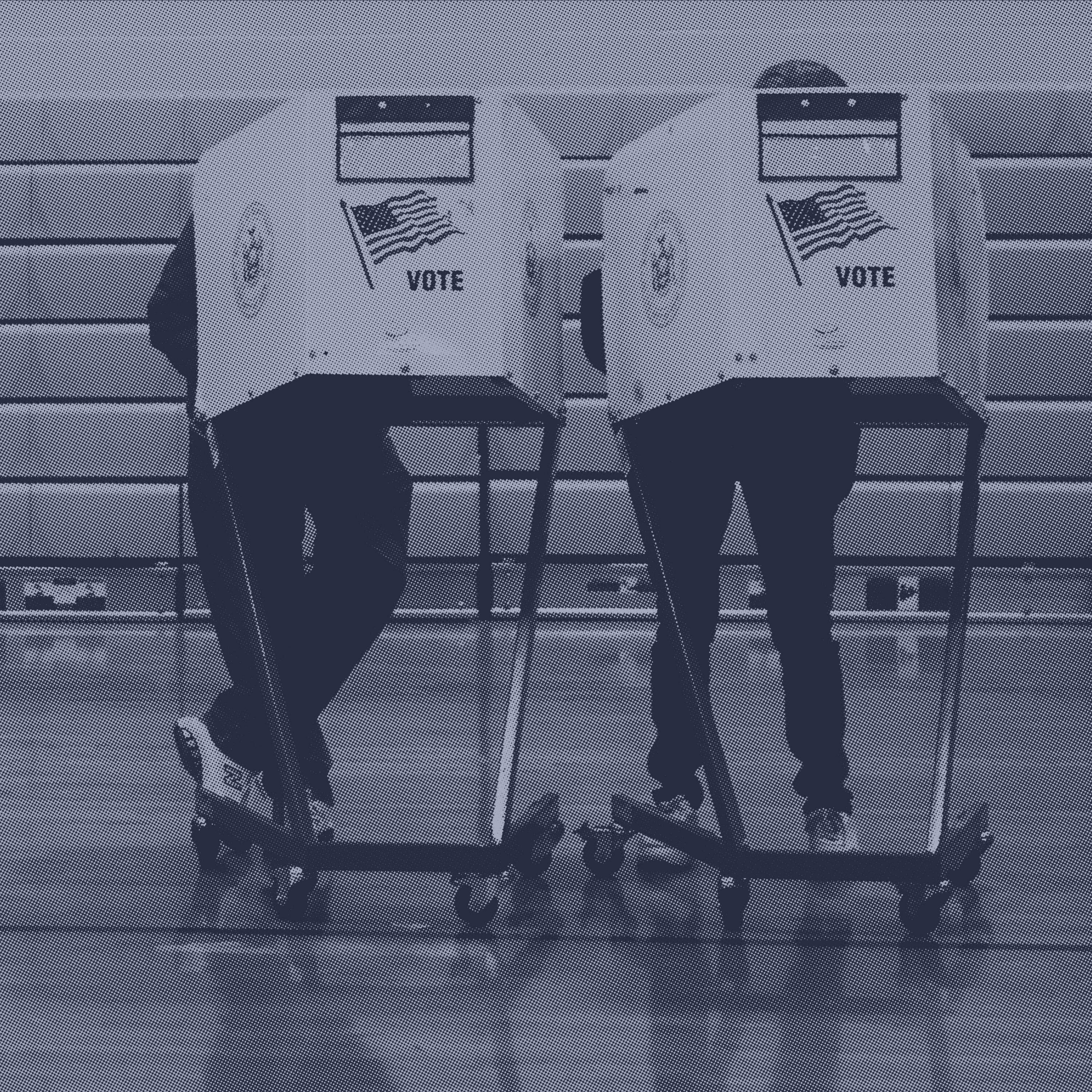
The DOJ’s unprecedented legal push into election administration, focusing on alleged non-citizen voting and voter confusion, and how it may affect election integrity.
Tamara Keith (NPR politics host; covers politics), Miles Parks (covers voting), Ryan Lucas (covers the Justice Department).
DOJ says it’s preventing voter fraud that cancels U.S. citizens’ votes. Critics argue the cases are unusually proactive, timing is suspect, evidence is thin, and many charged voters are lawful permanent residents (green card holders). Election lawyers call the Alaska suit “meritless/abusive/nearly frivolous.”
California: DOJ delivered a thumb drive listing ~20,000 names to LA County with a 48-hour demand; DOJ sued to segregate ballots pending citizenship verification. Alaska: DOJ sued over two Dan Sullivans, seeking delay/non-certification if confusion caused a narrow loss. DOJ also announced 113+ non-citizen voting charges; Lucas reviewed 64 cases—56 lawful permanent residents. Examples include Vicki Bratt (UK citizen, registered via NY DMV) and Pamela Line (green card since 1982, believed she was a citizen).
Written by AI. May contain mistakes.
Exploring the recent lawsuits by the DOJ concerning non-citizen voting.
“And Miles, let's talk broadly about what the Department of Justice has been doing here.”
Analyzing the implications of the DOJ's stance on non-citizen voting.
“We've seen the Justice Department try to tout its efforts to clamp down on non-citizen voting across the country.”
Discussion on the DOJ's lawsuit in Alaska regarding voter confusion.
“the majority of the people who are charged are facing only a misdemeanor charge, a misdemeanor charge of voting by an alien.”
Discussion about the DOJ's prosecutions for non-citizen voting and the credibility of the accusations.
“And the accusations from the president, from DHS Secretary Mark Wayne Mullen, do not seem to have been in good faith this summer.”
Analysis of ongoing lawsuits related to voting and their potential outcomes.
“I think are the bigger questions as opposed to should these people be allowed to vote or not if they truly are non-citizens?”
Exploration of the changing role of the DOJ in elections under the current administration.
“what does this say about what the DOJ is willing to do in the election space, right?”
Hosts discuss the implications of DOJ's election monitoring and officials' reactions.
“And, Miles, you also broke news that the Department of Justice has begun notifying counties where it wants to send election observers.”
Hosts speculate on the upcoming election and its potential challenges.
“Though, there was one case in Wyoming where the Republican governor there said that the DOJ monitors were aggressive, said that they seemed to have a disregard for state law regarding elections.”

Get the gist, explore an idea or ask about something said.
 Claude
On The NPR Politics Podcast, what are the key points of this episode?
Searching your listeningAutomatic transcript. May contain errors.
0:00This message comes from Midi Health. Most women never get real answers about their hormonal health. Midi is changing that with virtual care covered by most major insurances. Understand your hormones. Visit JoinMidi.com to book your first visit today.
0:15Tamara Keith: We have focused a lot on this podcast on the political battlefields in the midterms, which states and districts are likely to decide control of Congress. But there's another battlefield we're watching, too, the legal one. And in recent days, the U.S. Justice Department has taken some big steps that may just be a preview of where things are headed.
0:39Tamara Keith: It's the NPR Politics Podcast. I'm Tamara Keith. I cover politics. I'm Miles Parks. I cover voting. And I'm Ryan Lucas. I cover the Justice Department. And Miles, let's talk broadly about what the Department of Justice has been doing here. There have been recent lawsuits related to how people vote, something about the Dan Sullivan in Alaska. Just walk us through what you've been seeing. Absolutely, yeah. So there's really two big lawsuits that have taken up a lot of the oxygen in the elections world the last two weeks. The first one was actually in California. I think it was 10 or 11 days ago now.
1:10What started with the Department of Justice delivering a thumb drive with a sticky note with a thumb drive's password on it to Los Angeles County election officials there and saying there's 20 ,000 names on this list. You have 48 hours to investigate them or you risk legal action. Local officials declined to investigate that. Initially, they declined to even insert the thumb drive into their computers because they were worried it was a security risk.
1:36Tamara Keith: I mean, the first rule of IT is never take a thumb drive. Exactly. And it almost feels like one of those punk shows from 15 years ago, which showed to a local election official and just see if they put the thumb drive in. Anyway, it was a legit list, turns out, because they did end up getting the list via email. That being said, the local officials have not investigated these 20 ,000 names, did not do it in the 48-hour deadline that the Justice Department wanted. And to be clear, the Justice Department said about these names, these are people who are likely non-citizens, according to their data analysis.
2:07They did not provide a detailed methodology of how they came up with those conclusions, but they told Los Angeles County that you need to investigate these. Because they did not do that, they sued and they said, State of California, Los Angeles County, we want you to segregate the ballots associated with these 20 ,000 people. Do not count them until we have verified citizenship. So that process is playing out in the courts. California says, if we did what you asked, it would probably break federal and state laws. So that is working its way through the court system. We've seen the Justice Department try to tout its efforts to clamp down on non-citizen voting across the country.
2:44They've charged more than 113 people so far across the country, alleged non-citizens with voting offenses. This has been something that they've been holding press conferences about. They've been sending out press releases. Sometimes they send out announcements about the same cases that they've already announced. That's how much they want to talk about this. Last week in California, when the number two official at the Justice Department was announcing the cases against 28 non-citizen voters in California, directly tied that effort to the case in California, talking about why it's important for the Justice Department to do this.
3:21And the acting number two, Trent McCotter, said at that press conference, quote, it's about preventing voter fraud that cancels out the votes of U.S. citizens. Enforcing federal law increases the integrity of elections. That's how the Justice Department is presenting this push. Of course, there were, what, 140 million votes cast in 2024? 113 cases is not going to sway the election one way or the other. But what McCotter noted is that there have been some very tight House races or Senate races where you can have a smaller number ultimately be determinative of the winner. That's the Justice Department perspective here.
4:01That is how they are presenting this publicly. But what I did is I looked at the court documents for 64 of the cases that the Justice Department has brought so far related to non-citizen voting. Of those 64, 56, at least 56 people are lawful permanent residents. In other words, people who went through the legal process to be here, only four are here illegally of the 64 that I looked at. So really a very small number. the majority of the people who are charged are facing only a misdemeanor charge, a misdemeanor charge of voting by an alien. And what's very important to note about this, this charge is a federal judge in Florida this month found that statute to be unconstitutional.
4:44Oh, so there are questions as to whether the main charge that the Justice Department is bringing in these non-citizen voting cases will even stand. I mean, the thing that I'm struck by is the legal permanent resident part of this. These are green card holders. And to me, this cuts against the narrative that President Trump has been trying to push for years, which is this idea that there's this swath of non-citizens who are swarming America and trying to influence our elections, when in reality, all evidence and research has been showing this for years, that when non-citizens do vote illegally, it's generally by accident.
5:19And you think about somebody like a green card holder who is here legally, has filled out all the paperwork, and is this close, I'm doing my fingers like a little small sign this close to becoming a U.S. citizen. The idea that that person would risk all of that to cast one ballot to election officials, to election experts, has always just seemed pretty unlikely. The more likely scenario, and which seems to be some of these cases, is people who either registered because there was a language barrier and they didn't realize it was illegal, didn't understand the parameters of what legal permanent resident it meant.
5:53Maybe there was a mistake at the DMV. There's all these different ways that this could happen potentially, but it seems very unlikely that this idea that it's actually just people coming here to America to influence elections. And I'll say, looking through the court documents in these 64 cases, in some instances, there are kind of detailed affidavits in which you get a sense as to what happened, how this person ended up registering to vote or allegedly voting. In one case in New York, the woman's name is Vicki Bratt. She's actually from the UK. She's a UK citizen, so language was not an issue here.
6:28She, according to court documents, voted early in person in 2024, had registered through the New York DMV. and she told investigators that she didn't know that non-citizens weren't allowed to vote. You have somebody, Pamela Line, who has been a lawful permanent resident since 1982. That's a long time. It's a very long time. She told investigators that she thought that she was a U.S. citizen because her mother is a naturalized U.S. citizen and had told her that she got her citizenship when her mother became a citizen. She would have if she had been a year younger when that happened. So she has been operating, according to what she told investigators, for decades on the understanding that she was a U.S.
7:13citizen. And she only found out when she went to reapply for a Social Security card that she was not one. So you have these sorts of mistakes that you can see in the court documents. It's confusion about certain aspects of someone's paperwork that you end up getting these sorts of mistakes. You don't see a lot of instances from what I have seen in these court documents of some sort of nefarious conspiracy of people trying to, knowing that they can't vote and going in and voting because they want to sway the election and steal Americans' votes. The second thing we're watching is the Department of Justice last week sued Alaska over an issue of voter confusion or alleged voter confusion.
7:50Alaska has two Dan Sullivans on the ballot this year. One of the Dan Sullivans is the incumbent Republican senator. There, the other Dan Sullivan is running as well. And the Department of Justice sued to basically say if the Republican incumbent Dan Sullivan loses by a small enough margin, Alaska needs to not certify that election or needs to delay certifying that election until they investigate whether it was because of voter confusion.
8:16Tamara Keith: What is the government saying its goal is with these suits? It's to protect the integrity of the elections, basically, is what the DOJ says. Now, I think if you talk to any election expert in the country, they would have a different view of that because, frankly, the DOJ has never intervened in elections in modern history in the way that this DOJ is seeking to. And we've seen this for the last two years of the Trump administration, right, of this administration wants to have a bigger hand in how elections are administered, even though the Constitution very clearly says that states run elections.
8:45And so the DOJ is just saying it's, you know, in these filings, it's interesting to me, the DOJ often says things along the lines of, we're just asking for sort of basic things to protect American elections, right? But the state officials, local officials, and election lawyers everywhere are saying, you know, these are unprecedented things that the DOJ is asking states to do. I also think that it's worth noting here that the person who is in charge of the current administration, President Trump, is someone who has pushed the idea of voter fraud in one form or another for years and years. He's talked a lot about what he likes to term election integrity.
9:22We saw this in 2020. We saw what happened after the 2020 election, how he took his election loss. But the idea that you have an administration led by President Trump, who feels very personally that he is in charge of the Justice Department as well, and Justice Department leadership has said publicly that they agree with that, that this DOJ has taken, as you noted, a very unusually proactive role in this from a political perspective is not surprising to me. Yeah, I mean, but to be clear, the states have handled both of these issues in different ways, right? I mean, we should say also, I didn't mention it when I was mentioning the California lawsuit, non-citizen voting has never been found to be a major issue in elections.
10:06And the other efforts led by this federal government to try to root out non-citizen voting have already been found to entangle U.S. citizens. So the idea that they want these California election officials to act on their demands without providing evidence and just a few weeks before Election Day obviously raises a lot of questions. But in the Alaska example specifically, it's interesting because the DOJ is worried about voter confusion, but this has already been litigated at the state level. You know, it went all the way up to the Alaska Supreme Court, this question of whether the second Dan Sullivan could be on the ballot.
10:38And the Alaska Supreme Court said, yes, he can. And that Alaska election officials can do other things to make it clear to voters. To be clear on this ballot, it does say incumbent Dan Sullivan. It says the Republican, whereas the other Dan Sullivan doesn't have that Republican label. And then there's the ranked choice voting of it all, where even if somebody is that confused, if you just ranked the two Dan Sullivans ahead of Mary Peltola, then your vote would end up with the right Dan Sullivan anyway.
11:04Tamara Keith: Well, and the Senator Dan Sullivan is now encouraging people, you know, rank whoever you want. Just don't rank Mary Peltola, the Democrat, because this is how ranked choice voting would work if he wants to win. And you could argue that there's been so much media coverage now, I mean, even all year of the Dan Sullivan issue, that it's also just it seems increasingly unlikely that this many voters would be this confused. But then even if there are the right person to sue, election lawyers say, is candidate Dan Sullivan, that this is not a Department of Justice issue generally. The other thing I think we need to note here is that President Trump himself says he directed this lawsuit, says he told the Department of Justice to do this, and he talks about it at rallies.
11:50Tamara Keith: Like, this is very clearly a direction from the president to the Justice Department to intervene in this matter. This is not traditionally how the Justice Department has operated. Normally, there is a degree of independence between the Justice Department and Justice Department leadership and the White House. And that is quite simply not how this president views his relationship with the Justice Department. And we have also heard from first Attorney General Pam Bondi and now Attorney General Todd Blanche that they also view their relationship with the White House the same way that the president does.
12:24Tamara Keith: All right, we are going to take a quick break and we will be right back.
12:54for eligible members. And if you don't have eligible insurance, you can still get 20 % off your first month. Visit betterhelp.com slash NPR. Cost and coverage may vary. Discount cannot be combined with insurance. This message comes from Rosetta Stone, offering an alternative approach to language learning. Moving past rote memorization, the app guides users to intuitively think in a second language using images and contextual audio, mimicking how people acquire speech as children. The platform also includes advanced speech recognition technology that compares a learner's pronunciation directly with native speakers to refine accent precision.
13:31Learn more about their new Rosetta Stone Sapphire app at rosettastone.com. This message comes from Mint Mobile. Unwrap huge savings this season. All plans, even unlimited, are$15 for new customers. Go to mintmobile.com slash switch. Upfront payment of$45 for three month,$90 for six month or$180 for 12 month plan required,$15 per month equivalent. Taxes and fees extra, initial plan term only. Greater than 50 gigabytes may slow when network is busy. Capable device required. Availability, speed and coverage varies. See MintMobile.com.
14:08Tamara Keith: And we're back. And as you guys were talking about the approximately 100 prosecutions that the Justice Department has announced for non-citizen voting, it struck me that that number is not even in the same universe as the number of claimed non-citizen voters that the president talked about in his address to the nation earlier this year or that the Homeland Security secretary has been talking about or or even the number of voters on that thumb drive. Right. So what's going on here? I mean, I think you're getting a broader point that a lot of voting officials, Republican and Democrat, see is one of the issues when they're talking to this Trump DOJ or the Department of Homeland Security, which is that numbers keep changing.
14:51And the accusations from the president, from DHS Secretary Mark Wayne Mullen, do not seem to have been in good faith this summer. You know, you have the president going on national TV saying there's hundreds of thousands of non-citizens unequivocally in just four states. And then that number keeps changing and now gets to the point where they deliver a thumb drive with 20 ,000 names on it, which is also a far departure from the hundreds of thousands that were promised just a few months ago. And so I think election officials look at this and just say, like, we don't know if we can trust you. At the same point in time, just to play devil's advocate here, if I'm Joe Voter or Susie Voter out there and I hear that there are 20 ,000 people who shouldn't be on the voter rolls or 20 ,000 people who are voting who shouldn't be voting.
15:32I think a lot of people would look at that as a cause for concern, which is part of what the administration is pointing to here. And I think that's why these arguments do register with some people, particularly among the president's supporters, is this being a problem, an issue. The problem is not that no one's arguing that non-citizens should be allowed to vote in American elections or generally speaking. Most people are not arguing that. The question is, is this 20 ,000 number legit? And is it the right time two weeks before an election to be trying to decide that you're going to be like cleaning up your voter rolls based on data that you're not sure is accurate?
16:09I think are the bigger questions as opposed to should these people be allowed to vote or not if they truly are non-citizens? And that's a that's a reasonable question. It just doesn't. There's a lot of sort of like who should be bringing this issue up and the timing of it that seems to be the problem here.
16:23Tamara Keith: So there are legal cases here. Where do they go from here? How serious are these lawsuits, for instance? These two lawsuits, California and Alaska, do not seem destined to be successful. I just want to read you. I put together a real quick list of things election law experts have said about the Alaska case or how they've described it. absolute bullocks, completely meritless, one of the dumbest lawsuits by the federal government I've ever seen, worst complaint I've ever seen, one of the weakest election lawsuits I've ever seen, and somebody else called it abusive and nearly frivolous. So that gives you a sense of the way that the election law community across the political spectrum is talking about this.
17:04These two lawsuits are very unlikely to succeed. I think the bigger question is, what does this say about what the DOJ is willing to do in the election space, right? Because Because these lawsuits would have been previously unthinkable to even be filed. And so I think a lot of voting officials are looking at this and election lawyers are looking at this and saying, what are the next few weeks look like? When I look at this, and this is, again, this is providing a kind of composing contrast of the 2026 Trump second term Justice Department with the late first term Trump Justice Department. And if you think back to after the 2020 election, Attorney General William Barr said, OK, Mr.
17:46President, you want us to look for voter fraud? We'll go look. They took a look, came back and they said there was nothing here that was going to affect the election.
17:55Tamara Keith: The president did not like that answer. The president did not like that answer. What we have seen this time and what we have heard in terms of how the attorney general and the senior leadership of the Justice Department views their relationship with the president, we talked about it earlier. They have a different perspective on what their role is and who they answer to and to what degree they are independent, which I think is why there are certainly people in the election space and other parts of the justice system who have concerns about what this Justice Department is willing to do to further the president's political agenda around elections.
18:34Tamara Keith: And, Miles, you also broke news that the Department of Justice has begun notifying counties where it wants to send election observers. And that's something that happens every election cycle. But I wonder if having observers coming from this Department of Justice will cause it to be received differently than in other years. Oh, absolutely. We saw that the moment. So I was the first to report that counties were receiving these notifications from the DOJ last week. And what I was hearing from counties and states is that they were pretty freaked out. And they were not thrilled to be on this DOJ list, that they were going to have folks there for a number of reasons.
19:11One is that their voters are freaked out right now by the very idea of the Trump DOJ being around their voting locations. But two, I talked to one Democratic clerk in Colorado who noted that the Republican clerk in the neighboring county, and they both share voters in this toss-up congressional district in Colorado, did not receive a monitoring notification. It's only the Democratic county that received a monitoring notification. So he told me he was worried it was politically motivated. The Trump DOJ disputed that and said there were reasons for that, language access reasons for that, they wanted to presumably protect language access in his county, whereas the county neighboring did not have the same concerns.
19:47But you kind of get this sense that this thing that was previously not a huge issue, the DOJ coming and wanting to just monitor elections, is now something that is kind of raising alarms for all these election officials because of everything we've been talking about. And I think that that speaks to the broader sort of political tension that is running through this country right now. Because the Justice Department routinely, over election after election, has sent monitors to spots across the country. There are other poll watchers at places. It's not unusual, but the fear that you're talking about comes from the very particular moment that we're in right now politically as a country.
20:29I have spoken with people about election monitors who feel that they don't see any cause for concern here. They think that, yes, it is a larger contingent of monitors being sent out across the country from the Justice Department than previously, but it is something that you have career DOJ staff who are going to do this. You will have other watchers there. And so they are not concerned by it necessarily. But that doesn't change the fact that voters, maybe, and election officials in some places, maybe. And we should note that DOJ monitored primaries this election year. And generally, that was pretty uneventful.
21:05Though, there was one case in Wyoming where the Republican governor there said that the DOJ monitors were aggressive, said that they seemed to have a disregard for state law regarding elections. And so generally, I would say when you look at a thousand election monitors from DOJ going out to elections this year, that probably will not present issues in most of those places. But I think it's a question of like, could there be isolated incidents like the one we've already seen in Wyoming? That's kind of an open question.
21:34Tamara Keith: Yeah. Well, I guess this is one of those things where you're just going to have to stay tuned to see how close this election really is. It's, you know, let's wait a week. We'll talk again in a week and see where we're at, honestly. I mean, we're going to talk again many, many times. We're going to leave it there for today. I'm Tamara Keith. I cover politics. I'm Miles Parks. I cover voting. I'm Ryan Lucas. I cover the Justice Department. And thank you for listening to the NPR Politics Podcast.
22:06Stay tuned for the following announcements and messages from our sponsors. This message comes from Schwab. At Schwab, you can get everything from self-directed investing to full-service wealth management, all in one place. No matter your investing goal, life stage, amount to invest, or know-how, you can invest your way with Schwab. This message comes from Rosetta Stone. Rosetta Stone is designed to make language learning intuitive. It mimics how people naturally acquire speech as children, helping users read, write, and think in a second language. More at RosettaStone.com.