Ask ChatGPT

 The NPR Politics Podcast
20 Oct 2026 · 20m · 13 chapters
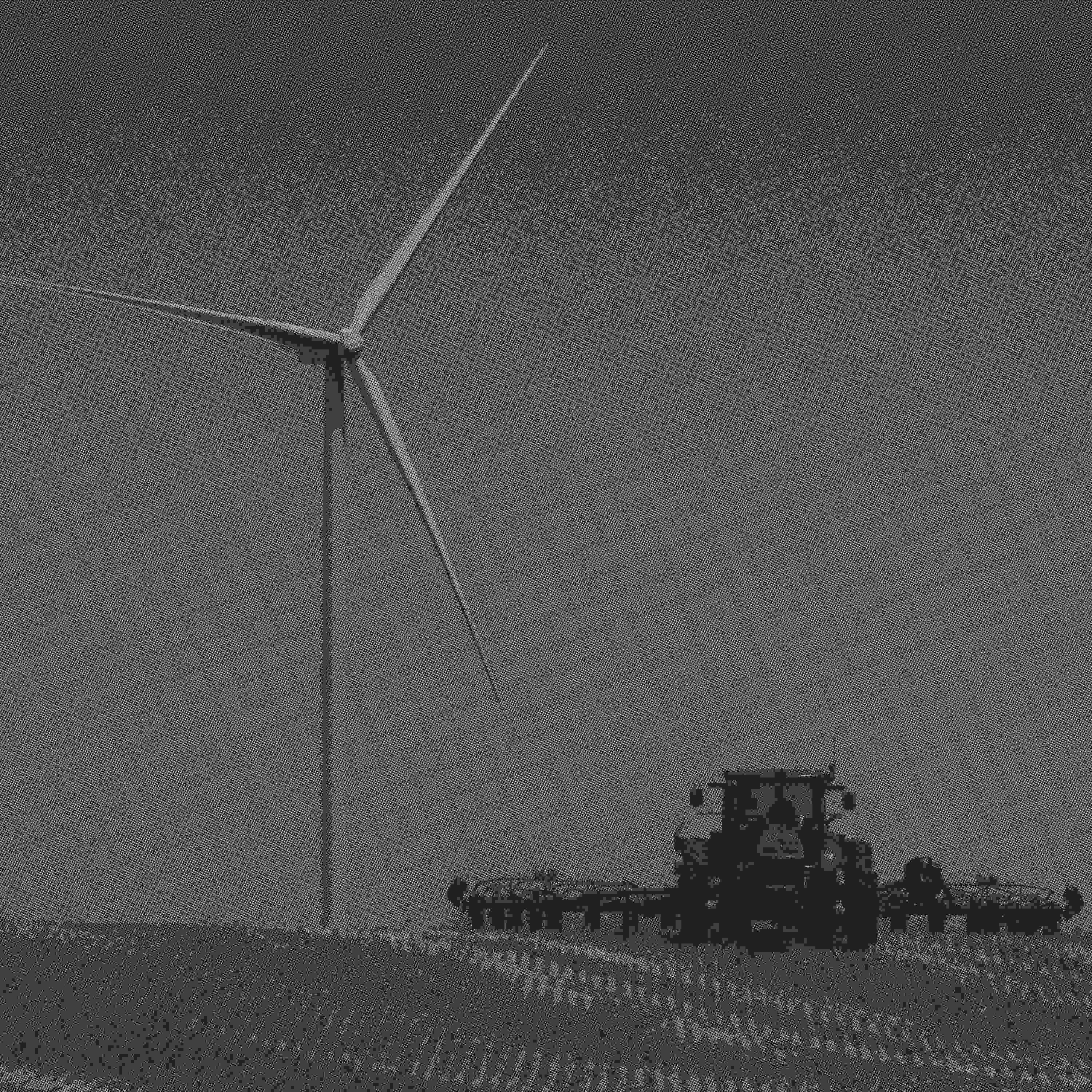
Kansas’ unexpectedly competitive 2026 Senate race—why Democrat Adam Hamilton is closing on incumbent Republican Roger Marshall—and how affordability, health care, and national Trump backlash are shaping the campaign.
Miles Parks (hosts; covers voting), Stephen Fowler (hosts; covers politics), Domenico Montanaro (senior political editor/correspondent).
High-quality polls and heavy party spending suggest a true toss-up. Marshall is vulnerable due to medical-debt lawsuits (including a pregnant woman’s case), viral 2020 “cookie debt” reporting, and a lean campaign operation (under $1M raised vs. Hamilton’s $10M). Kansas’ long Democratic Senate drought (since 1932) is being challenged by local “Kansas Democrat” messaging, affordability focus, and Trump-driven turnout dynamics.
Kansas State Fair debate where Marshall was booed; Dodge City beef/tariff impacts; Marshall’s ICE messaging shift after a confusing roundup.
Written by AI. May contain mistakes.
Discussion about the surprising competitiveness of the Kansas Senate race.
“And I'm Domenico Montanaro, senior political editor and correspondent.”
Examination of polls indicating a competitive race and party spending.
“Yeah, this is interesting because in 2022, there was a Senate race there and Republican Senator Jerry Moran won by 23 percentage points.”
Contextual analysis of Kansas's political history and dynamics.
“And being on the campaign trail, I took the Vanessa Carlton method and drove about a thousand miles over the course of three days last week.”
Exploring why incumbent Roger Marshall may be vulnerable this election.
“Can you just give us some context on Kansas's political dynamics?”
Details of a recent debate highlighting Marshall's vulnerabilities.
“So then, Stephen, I'm curious about what it is about the incumbent there, Roger Marshall, that makes him vulnerable.”
Analysis of campaign finance disparities between Marshall and Hamilton.
“And the campaign very publicly had to post a credit card statement saying that they paid a six year old cookie debt.”
Discussion on the competitive nature of the governor's race alongside the Senate race.
“then that's not really the case in this environment.”
Examination of Republican campaign messaging and how they frame current issues.
“And so it's created an interesting dynamic where you have a Democratic governor and a Republican senator.”
Discussion on the main issues affecting voters in the Kansas Senate race.
“So, Stephen, I want to focus in back on the Senate race here where Democrat Adam Hamilton is facing incumbent Republican Roger Marshall.”
Exploration of how agricultural policies affect local economies and beef production.
“You mentioned earlier in the pod about beef being a big deal in Kansas.”
Learn about the competitive landscape of the Kansas Senate race and Adam Hamilton's unique campaign strategy.
“okay, gas is 10 cents cheaper today, so I can actually save some money.”
Explore how Trump and authenticity shape the electoral strategies of candidates in red states.
“I assume, Stephen, you're not in Kansas anymore.”
Understand Roger Marshall's approach to navigating Trump's shadow and voter sentiments on immigration.
“So you're having this really interesting theological political debate that's playing out from so many of these Democratic candidates who also have deep religious backgrounds.”

Get the gist, explore an idea or ask about something said.
 Claude
On The NPR Politics Podcast, what are the key points of this episode?
Searching your listeningAutomatic transcript. May contain errors.
0:00Support for this podcast and the following message come from Allianz Travel Insurance. Your flight? Booked. Your lungs? Suddenly battling bronchitis. Travel insurance helps protect your travel budget so you can book again once you feel better. Learn more at AllianzTravelInsurance.com. I'm about to say something previously unthinkable, at least in the last two years, but honestly, maybe in the last six months. Kansas has a competitive Senate race. Today on the pod, it's another red state where a politician is unexpectedly playing defense.
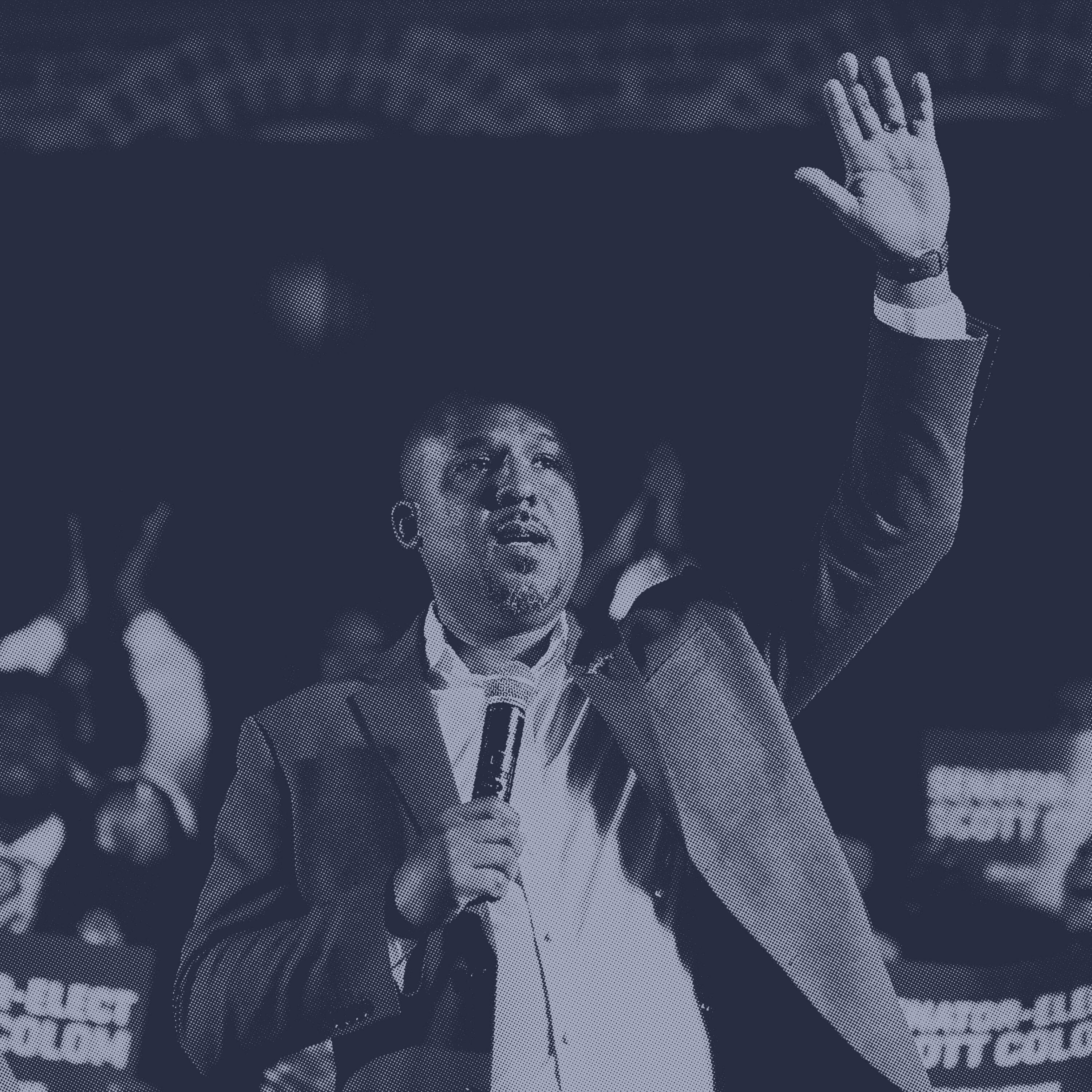
0:37It's the NPR Politics Podcast. I'm Miles Parks. I cover voting. I'm Stephen Fowler. I cover politics. And I'm Domenico Montanaro, senior political editor and correspondent. So, Stephen, you were just reporting in Kansas on this really interesting Senate race. Let's just start with the candidates. Who's facing off in this race? You have incumbent Republican Senator Roger Marshall facing off against Adam Hamilton, who is a Methodist pastor of the largest United Methodist denomination in the country. And it is a race that has heated up in the last few weeks, even. I mean, I wouldn't have even said three weeks ago that Kansas was a race worth watching.
1:15But here we are. Yeah, this is interesting because in 2022, there was a Senate race there and Republican Senator Jerry Moran won by 23 percentage points. So forgive me for being even a little skeptical that this race is competitive. I mean, how do we know that? There have been a number of polls that have shown Adam Hamilton either just behind or just ahead of Marshall. High quality polls, people who poll the state regularly. You also have to look at how the parties have been spending money. Both the Democrats and the Republicans have redirected millions and millions and millions of dollars to the Kansas Senate race because they have data and they have intuition and they are hearing things on the ground that says this is a very competitive race.
2:02If you look big picture, the places where we have these sort of September, October head-scratcher surprises are states that have a lot of Republicans, that have Republican control of government for a long period of time, and they're places that are disproportionately impacted by a lot of Trump administration policies that have become relatively unpopular. And being on the campaign trail, I took the Vanessa Carlton method and drove about a thousand miles over the course of three days last week. I didn't know where you were going to go with that when you mentioned Vanessa Carlton, but okay. You got to keep people on your toes, which is how it is when you go across a campaign trail.
2:40I ended up speaking with Adam Hamilton after his campaign stop that he did in Lawrence, Kansas for a get out the vote event, and then spent some time on the Kansas Republican Party's bus tour across the state. And talking to both candidates and seeing both candidates in action, they would also agree this is a competitive race. Domenico, I do want to zoom in on the race's specifics in just a moment. But I also just want to zoom out and talk about Kansas because this is not a state we have talked very much about on the pod in recent years because this was not thought to be a competitive Senate race until very recently.
3:14Can you just give us some context on Kansas's political dynamics? You know, there's a phrase called Plains Democrat, you know, but it's never referred to Kansas because it's been 94 years since Kansas elected a Democratic senator. In fact, Kansas has the longest continuous streak of single party control of both Senate seats than any state in the country. So it's been since 1932, a man named George McGill, who won a special election in 1930, then won the seat in 32 and then lost re-election in 38. And that's been it for Democrats. And the Democratic Party was a very different party in 1932 and 38 than it is today.
3:56Got it. So then, Stephen, I'm curious about what it is about the incumbent there, Roger Marshall, that makes him vulnerable. I mean, you mentioned a couple of the sort of bigger picture political themes that we've talked about on the podcast in terms of Republican vulnerabilities, but are there specifics about Marshall that are making this a race? The race got on my radar a few weeks ago when there was a debate at the Kansas State Fair between Hamilton and Marshall. And it was a public debate. The crowds were able to show up and show their support for either candidate. And Marshall was pretty thoroughly booed by the crowd.
4:31And from there, there was sort of this rollout from the Hamilton campaign of a bunch of ads that attacked Roger Marshall for things like medical debt practices, where there was a woman who said she was sued by Marshall over medical debt and had police show up to her door when she was pregnant. Yeah, we should say Marshall's a former OBGYN before he got into politics. Right. Marshall's an OBGYN, and he had medical debt lawsuits where he was trying to recover medical payments from people, and the Hamilton campaign has put out ads highlighting some of those lawsuits and what they say is a predatory practice.
5:11There were also social media viral reports that came out of Marshall's first campaign in 2020 for Senate not paying a vendor for cookies that went viral. And the campaign very publicly had to post a credit card statement saying that they paid a six year old cookie debt. And so it's a snowball effect compounded by the fact that Roger Marshall doesn't really have any campaign staff. If you look at his campaign finance filings, there's not, you know, payroll or other things for a robust campaign staff and field operation. Last week's campaign finance results showed that he raised less than a million dollars in the quarter, while Adam Hamilton raised$10 million.
5:52And he's one of several incumbent House and Senate members that have just been kind of caught flatfooted because they live in very conservative areas and have very conservative voters that are usually the ones that elect them to office. then that's not really the case in this environment. So it's sort of the wrong place, wrong time to be an incumbent Republican not used to fighting tooth and nail for votes. And just to give some context on just how conservative Kansas is, in 2020 and 2024, Trump won the state by 16 points, so pretty wide margin. Marshall, though, interestingly, in 2020, when he first won the Senate seat, only won it by 11.
6:34So he underperformed Trump. So maybe there was something to the fact that he was potentially vulnerable. And given this environment and a candidate that Democrats like, then you wind up in this kind of situation, especially when we've seen every campaign cycle. There's always like somebody who's an entrenched incumbent who thinks that they're fine and they don't really staff up and they don't really raise that much money. And this cycle looks like it's Roger Marshall. Well, it's also interesting because there's two big statewide races on the ballot in Kansas this year. There's the Senate race, which has heated up recently.
7:11But the governor's race was always thought to be competitive because whereas Kansas has not, as Domenico mentioned, elected Democratic senators since before my grandparents were born, they have elected Democratic governors in recent years, right, Stephen, and that is another race that is looking to be competitive this year? Yeah, for the past several governors, it's flip-flopped between a Republican and a Democrat, a Republican and a Democrat. For the last eight years, Laura Kelly has been the Democratic governor of Kansas. So unlike some of these other states where there's longtime Republican control and the thought of electing a statewide Democrat is a little bit of a stretch, there is very recent muscle memory for electing a Democrat in Kansas.
7:52And so it's created an interesting dynamic where you have a Democratic governor and a Republican senator. And the way the polls sit right now, you could see Kansas elect a Democratic senator and a Republican governor. And so it's created some interesting dynamics on the campaign trail that I haven't seen in some of these other states where you have the Republicans talking about things like affordability and prices and things like beef, which is big in Kansas. But doing so by saying that current Democratic policies are the problems and Republicans are the ones who can fix it, here is Ty Masterson, who is the Republican governor nominee, speaking in Dodge City.
8:35If you want safe communities, lower energy prices, i.e. then lower grocery prices, it's not really a choice. You need to vote Republican. Because it is the opposite. it. You vote Democrat, you will never see low energy prices. They hate oil and gas. The problem we have right now is not the Strait of Hormuz. It's a refining bottleneck due to Democrat policies. Slight fact check there. I mean, when you talk to economists, the Iran war is the main reason for why gas prices have gone up. And Republicans have started to use this talking point about refinement slowdowns. But it's the Iran war that has caused gas prices to go up.
9:14But it is kind of nice to be able to have someone to point the finger at. I feel like in Kansas, whereas if it was completely Republican controlled, you wouldn't have anybody necessarily to point the finger at. I feel like I saw this recently in watching a debate in Maine with Susan Collins, who was able to point for Troy Jackson, who is her opponent, who has been in state government in Maine, which has been held by Democrats. And that's definitely been a strategy by Republicans who are running in blue states often or states that have a Democratic governor in this case to say that, you know, the issues that you're seeing is because of Democratic governance.
9:45All right. We have to take a quick break, but more in just a moment. Stay tuned for the following announcements and messages from our sponsors. On the latest episode of Sources and Methods, a blue tsunami, earthquake, avalanche, Democrats swept the midterms. What does this mean for President Trump's ambitions overseas? And why is Iran paying such close attention to the changeup on Capitol Hill? Listen this week to Sources and Methods, the national security podcast from NPR. Hey, it's Mike Danforth, executive producer of Wait, Wait, Don't Tell Me. Here's a great way to get the perks of being an NPR producer without doing any of the work.
10:24Join NPR+. With NPR +, you get extended interviews, inside looks at your favorite shows, and more. All while supporting NPR and never having to pull an all-nighter. Or if you work on one of the news shows, an all-morninger. Sign up at plus.npr.org. The number one issue in America right now is the economy. Whether it's the high price of gas, a potential AI bubble, or the unsteady job market. At NPR's The Indicator, we've got you covered. Understand the economy in 10 minutes or less each day. Listen to The Indicator from Planet Money on the NPR app or wherever you listen to podcasts.
11:06And we're back. So, Stephen, I want to focus in back on the Senate race here where Democrat Adam Hamilton is facing incumbent Republican Roger Marshall. What campaign themes seem to be coming up or driving voters when you're talking to them as you as you traverse the state? Affordability, cost of living, health care, the same things that you're seeing and hearing everywhere else. I was struck when I was driving across the state by the few billboards that there were. Many of them were signs for Adam Hamilton from an outside group saying Adam Hamilton will lower costs. Adam Hamilton will protect health care.
11:42And the way that Hamilton talked about it, Hamilton supporters talked about it, it was less about, you know, a democratic view of what health care should be or affordability should be or things like that. And really more focused on a little bit more of the human cost and human aspect of it. Same on the Republican side when talking about the need for a Republican governor and cost of living and affordability in Kansas in particular. The legislature supermajority for Republicans passed a lot of bills that the Democratic governor vetoed, and then they overrode those vetoes. And so there was a lot of talk about, you know, basically just making sure that everybody's on the same page working together to fix things for voters.
12:32even if there's a disagreement about which party is responsible for it. You mentioned earlier in the pod about beef being a big deal in Kansas. Can you explain that a little bit and why that? I've seen this pop up in other races across the country as well, that this seems to be a big political issue this year. But frankly, I'm a little confused on why. Can you explain it? Well, one of the stops on the bus tour that I went into was in Dodge City, Kansas. And as you drive into Dodge City, you can roll your window down and you can smell the product of beef and all of the cows there. People said you can smell like money because of how profitable the industry is.
13:11Domenico's frowning because now he's imagining the smells that you just, he just got a big old whiff. Yeah, it's a big old whiff. And what's going on there is there's tariffs. And a lot of the trade wars that President Trump has enacted with different allies or different trading partners and specifically some decisions he made to try to do some imports of beef. It's hurt domestic farmers and domestic productions. With agriculture in particular, a lot of decisions that were made months and months ago kind of set into motion a longer-term economic shock for beef producers, for farmers and other things like that because the input costs that go into producing beef for consumption or producing soybeans or corn or things like that.
14:01You can't just flip a switch and be like, okay, gas is 10 cents cheaper today, so I can actually save some money. There's a lot of baked-in costs and a lot of baked-in pain from these economic policies that will take a lot to unwind. I want to talk about the Democrat in this race, Adam Hamilton, who, as you mentioned, Stephen, does seem to be running a really competitive race unexpectedly. I've seen some buzz about him as kind of an interesting choice for Democrats in this very red state. Why is that? He is a Democrat. He is not a Democrat that would come anywhere close to winning a primary in Brooklyn or anywhere in California or Oregon or anything like that.
14:40Specifically, I asked him after his campaign event, like, how do you separate yourself or do you separate yourself from the national unpopular Democratic Party brand? And this is what he told me. We've been trying to make clear in our commercials that a Kansas Democrat is a bit different than a New York Democrat or a Los Angeles Democrat. And not just a little, a lot different. But yes, I think people know they've elected Laura Kelly before that, Kathleen Sebelius. They knew that Democrats can be great leaders. And I think they will also see that with me. And as I travel across the state, it's been really fun.
15:10I'm meeting with Republican leaders in the party who are telling me they're voting for me. So he's really emphasizing that, you know, to win as a Democrat in a state where there are not a lot of Democrats, you have to reach everybody. And so a campaign of decency is part of his pitch. And he ends pretty much every campaign stop with a nod to the Wizard of Oz talking about how there has to be a senator with a brain and who acts with courage and who has heart. And so, you know, it's a trend, not just in Kansas, of these Democratic candidates doing well in red areas, running for the state they try to represent, and maybe against and away from the unpopular parts of the Democratic Party brand without hitting people over the head with the fact that they're a Democrat.
15:58I assume, Stephen, you're not in Kansas anymore. I am not in Kansas anymore. But if there's one word that has defined this election, it's Trump, right? If there's a second word that might define this election, if people like Hamilton can win, if people like Mary Peltola win in Alaska, it's authenticity. And a lot of people are looking for those authentic candidates to say, I feel your pain. And, you know, you may not like my party and my party might not work in this state, generally speaking, but you know me. Right. And that's how Democrats have tried to walk this line of competing in red states by having the kinds of candidates in those places that align with those places values.
16:44And that's something we used to see a lot more often when national politics wasn't the thing that everybody was talking about and what dominated at kitchen table conversations and town halls. And maybe you're seeing a little bit more in this election of those local issues being a big deal. And frankly, the national wins, you know, in a state like Kansas, when beef policy from the White House has made it more difficult for a lot of Kansas ranchers. It's interesting. Just the fact that he's a pastor, I feel like, is an interesting candidate decision. It reminds me of James Tallarico in Texas as well.
17:20And I wonder about whether this is an intentional decision on the part of Democrats. It's pretty hard to paint somebody who's been working in the Christian faith professionally before they got into politics as a sort of radical leftist or somebody who doesn't match their values if he's been working in this space. Well, and what's interesting about Hamilton is he speaks a lot more like a pastor than James Tallarico does, a seminarian who made his – became viral by kind of taking down in his view kind of right-wing views of religion and how that should be part of public policy. He went at it from a more liberal perspective of what the Bible teaches, right?
17:59And Adam Hamilton certainly is that kind of pastor. His church, the Church of the Resurrection, is the largest United Methodist church in the country. He's very proud of that fact. He talks about it often. And he recently pushed back hard against J.D. Vance, the vice president who was in Kansas, and essentially accused him of not preaching real Christianity. And he's pushed back on that, saying that he feels that people like J.D. Vance and Donald Trump are not implementing, you know, the teachings of the gospel of Jesus Christ. So you're having this really interesting theological political debate that's playing out from so many of these Democratic candidates who also have deep religious backgrounds.
18:46You mentioned, Domenico, earlier that President Trump is the thing that hangs over this race in Kansas. I mean, hangs over the entire midterms, really. And he's going to be in Kansas campaigning tonight. I feel like another sign, Stephen, that this race potentially could be competitive this fall. But I'm wondering at a time when the president's approval ratings are as low as they are, is it helpful to Roger Marshall to have President Trump in Kansas right now? Abstractly, yes, because in a midterm election cycle, you need to turn out as many of your voters as possible, especially if you are of the party in power where people are kind of fading on how they feel about you and how you're governing.
19:30On the other hand, I mean, as Domenico mentioned, you know, Trump is a key word in this midterm. It has motivated Democrats and independents who support Democrats to vote out people who have a lot of ties to Trump. So it's a bit of a double-edged sword. I mean, the calculus with many of these visits in many of these places is that it is worth having the rally, the attention, the get-out-the-vote effort, the activation. it is worth having Republican voters show up to the polls rather than worry about another Trump rally, activating people who already don't like Trump and don't like his policies and don't like candidates that he supports to somehow vote against him even harder.
20:11You know, it's interesting. Someone like Marshall is also kind of separating himself a little bit from Trump in the way he talks about ICE, for example, For example, Immigration and Customs Enforcement, because we've seen the polling on ICE and just people really highly disapprove of the tactics that have been used in deportations. And so what Marshall has decided to do is he went he went and put an ex post and said that there needs to be more local coordination, more coordination with local police, because that's how you keep people safe. This came after about 100 people were rounded up by ICE and there was confusion.
20:45So that's a sign right there of how much Marshall is on the defensive in this race right now. All right. Well, we can leave it there for today. A lot to watch in the coming weeks. I'm Miles Parks. I cover voting. I'm Stephen Fowler. I cover politics. And I'm Domenico Montanaro, senior political editor and correspondent. Thank you for listening to the NPR Politics Podcast.
21:11Stay tuned for the following announcements and messages from our sponsors. This message comes from Mint Mobile. This holiday season, unwrap a new wireless plan from Mint Mobile. Keep your current phone and your number and go to mintmobile.com slash switch. On the latest Planet Money podcast, protesters in France are asking their government for more money for schools and for pensions. Yeah, why not? There is a bunch of money in the world. Don't say there's no money. There is so much money. She's right. There is money, but maybe not for France. Why does the market seem to be turning on France? And what can the rest of us learn from this?
21:47Listen to Planet Money on the NPR app or wherever you get your podcasts.