 Ask ChatGPT


The legacy of 9/11—how the attacks reshaped U.S. foreign policy, war-making, intelligence and domestic security, and public trust over the next 25 years.
Miles Parks (host; covers voting). Greg Myrie (host; covers national security). Ryan Lucas (host; covers the Justice Department).
9/11 shifted U.S. strategy from wars against countries to a “global war on terror” targeting terrorists and those who “harbor” them. The broad 2001 AUMF enabled force worldwide without new war declarations. Post-9/11 security measures increased safety but also expanded surveillance and contributed to distrust due to failures and abuses (e.g., WMD claims, Guantanamo, CIA torture). Terror tactics evolved from centralized al-Qaeda planning to decentralized, fast “flash-to-bang” attacks inspired via social media.
Bush’s Sept. 10, 2001 education visit interrupted by reports of planes hitting the World Trade Center; AUMF passed Sept. 14 and signed Sept. 18; early Afghanistan campaign driving out the Taliban by late November; stopped “shoe bomb” plot (Richard Reid); Patriot Act and later Snowden revelations; drone targeting; later terrorist franchises (AQAP, al-Shabaab, Boko Haram, ISIS).
Written by AI. May contain mistakes.
Discussion of the terrorist attacks of 9/11 and President Bush’s response.
“There's too many of our kids in America who can't read today.”
Exploration of how 9/11 transformed U.S. foreign policy towards terrorism.
“Basically, the first thing I thought of this morning was just kind of remembering where I was 25 years ago, also remembering all the people who lost their lives, people whose lives were forever changed by that day.”
Discussion on the Authorization for Use of Military Force and its implications.
“We knew there would be lots to follow, but it was an unchartered course.”
Journalist's experiences covering the early days of the war in Afghanistan.
“found that al-Qaeda was responsible for the 9-11 attacks.”
Discussion of the difficulties facing U.S. efforts to rebuild Afghanistan post-9/11.
“They had just fled Kabul and other places.”
Examination of how military action has changed since 9/11, including the use of drones.
“Al-Qaeda and hunt the Taliban and kill the terrorists.”
Learn how drone warfare has transformed since 9/11 and its implications.
“The United States first used armed drones after 9-11.”
Explore the surge in military enlistment and its long-term effects post 9/11.
“This week on NPR's Newsmakers, Democrat Abzal El-Sayed says his party should treat the president as the, quote, unserious fool that he is.”
Understand the changes in intelligence agencies and the rise of surveillance post 9/11.
“How did the attacks change everything going on in this country?”
Discuss the changes in national security and terrorism tactics since 9/11.
“decisions that were made in the aftermath.”
Analyze the implications of U.S. military actions and the ongoing conflicts.
“I mean, I think the through line for me over the past 25 years, and it's not an everyday thing, but kind of a through line would be two things, fear and anger.”
Preview future topics and episodes to engage listeners.
“This week on Here and Now Anytime, the spy scandal rocking NVIDIA exposed how lax the government has been in forcing its ban on AI chip exports to China.”

Get the gist, explore an idea or ask about something said.
 Claude
On The NPR Politics Podcast, what are the key points of this episode?
Searching your listeningAutomatic transcript. May contain errors.
0:00What's the 411 and 312? Stay clued in to what's going on in Chicago with the rundown. We breeze through the day's headlines and spend a little more time on One Big Story, all in 10 Minutes tops, available every weekday afternoon, wherever you get your podcasts. Part of the NPR Network. It's Monday, September 10th, 2001. President George W. Bush is in Jacksonville, Florida.
0:23Greg Myre: There's too many of our kids in America who can't read today. Maybe not in this school, but around the nation, there's just too many. And now it's time to wage war on illiteracy for the young and to whip this problem early. He's there promoting early childhood education, one of his key campaign issues when he ran for president in 2000. Afterward, he goes to Sarasota, Florida, on the state's Gulf Coast. The next morning, he's at Booker Elementary School for another education roundtable. He's in a class with students as they're going through a reading lesson. say. That morning, there are reports of some kind of plane crash in New York City, but details are pretty scarce.
1:07Then, White House Chief of Staff Andrew Card comes over and whispers something in the president's ear. Camera shutters capture the moment. I look forward to give you breaking news from New York City, where planes, two planes, have hit both towers of the World Trade Center in lower Manhattan, the upper floors of the World Trade Center, 110 stories high, each tower. Bush leaves the classroom, goes to the school library, and gives a brief statement. Today, we've had a national tragedy. Two airplanes have crashed into the World Trade Center in an apparent terrorist attack on our country. Two other hijacked planes would crash that day.
1:52One into the Pentagon just outside Washington, D.C., and one in a field in Shanksville, Pennsylvania. Nearly 3 ,000 people were killed. Bush talked to the nation that night with more reflections from the day, but he also made a promise.
2:05Greg Myre: The search is underway for those who are behind these evil acts. I've directed the full resources of our intelligence and law enforcement communities to find those responsible and to bring them to justice. We will make no distinction between the terrorists who committed these acts and those who harbor them. What exactly that meant, though, was an open question. This broad notion of fighting terrorists, fighting those who harbor them, and fighting really anyone who threatens the United States, has defined much of the American foreign and domestic policy since.
2:44It's the NPR Politics Podcast. I'm Miles Parks. I cover voting. I'm Greg Myrie. I cover national security. And I'm Ryan Lucas. I cover the Justice Department. And today, I'm sure I am not alone. Basically, the first thing I thought of this morning was just kind of remembering where I was 25 years ago, also remembering all the people who lost their lives, people whose lives were forever changed by that day. But it's also just today, guys, that still reverberates almost every day, all of us covering politics in this country. Starting with the sea change, Greg, of going from fighting a traditional war against one country or against a couple of countries towards this more nebulous thing, fighting terrorists, people associated with terrorists.
3:28Is that a fair characterization?
3:30Greg Myre: Oh, absolutely, Miles. I mean, there had never been an attack like this, and it presaged a war that the U.S. had never fought before. I mean, some people compare it a little bit to the shock of the Pearl Harbor attacks in 1941 that brought the U.S. into World War II. But you knew who was responsible, and we just heard President Bush say, we're going to find out who did this. They didn't know for sure. They suspected al-Qaeda but didn't know. And you're fighting a group, not a country. It's led by Osama bin Laden, who's from Saudi Arabia, but his group was primarily based in Afghanistan. They didn't have a fixed army.
4:11Greg Myre: They were being hosted by the Taliban. So it was just completely different from anything we had seen before. And we knew it was monumental. We knew there would be lots to follow, but it was an unchartered course. And I'll also say that the way that this came to be known as the global war on terror, it almost would have been simpler if we had made clear that it was against terrorists, specific terrorists from a specific terrorist group, as opposed to this nebulous term that it came to be used as this war on terror. Because terror can be all sorts of things in all sorts of places. It can be everywhere at once.
4:47And we saw how what began as an effort to root out al-Qaeda and hunt down Osama bin Laden really did metastasize into conflicts that went on for two decades plus. Well, and so we saw, I mean, obviously, the intelligence community immediately mobilized to try to figure out where this came from and what happened. We can talk about that. But there was a pretty swift foreign policy response. Soon after 9-11, Congress passed the AUMF, which is the Authorization for Use of Military Force, passed almost unanimously. Greg, can you tell us a little bit about what that law did? Yeah.
5:24Greg Myre: So in its most basic form, it gave the president the right to use necessary and appropriate force against anyone deemed to have planned, authorized, committed, or aided the 9-11 attacks. It was approved by Congress on September 14th. There's three days after the attacks. Bush signed it on September 18th. And then off the U.S. went. But some CIA forces were in Afghanistan within about two weeks or so after September 11th. The U.S. began a bombing campaign about a month later in early October. And so we knew the focus would be al-Qaeda and the Taliban in Afghanistan. But it clearly was very broad and offered the possibility of going far beyond that.
6:14Greg Myre: And indeed, that would prove to be the case. The U.S. found that al-Qaeda was responsible for the 9-11 attacks. They were in Afghanistan. Afghanistan at the time was controlled by the Taliban. They were kind of there under their protection, al-Qaeda was. And after the U.S. found that al-Qaeda was indeed responsible for the 9-11 attacks, that's why the United States went into Afghanistan was to initially to get al-Qaeda and bin Laden. Can you tell me a little bit more about, I know you were in the Middle East in the beginning of the war. Tell me a little bit about how this actually played out on the ground.
6:50Greg Myre: Yeah, I was in Jerusalem on 9-11. And then within days, I was sent to Pakistan and was near the border. We couldn't get into Afghanistan. And then the U.S. began its bombing campaign and drove the Taliban from power around the end of November. So inside of two and a half months, let's say, the Taliban were out of power. Al-Qaeda was fleeing. The U.S. and its allies had taken over. And as soon as the Taliban fled Kabul, we were able to get in. I drove in. Very harrowing drive. Very rutted roads from the Pakistan border to Kabul. Along the way, we were with several journalists in the eastern city of Jalalabad.
7:32Greg Myre: And they wanted to get out and meet some colleagues. We talked with them. They decided to stay. We decided to drive on to Kabul. It was very harrowing. We saw one journalist being walked off the side of the road by gunmen, Taliban gunmen, who were just apparently in the car ahead of us. We made it to Kabul safely. The next day, the journalist we had been with drove to Kabul. They got pulled out of their car, and five of them were executed on the side of the road. Oh, my God. So it was still a very chaotic time, and we knew the Taliban were out there and still armed. They had just fled Kabul and other places.
8:06Greg Myre: They hadn't surrendered. And again, this just spoke to the nature of this war. You weren't dealing with, I mean, the Taliban were running Afghanistan, but you weren't dealing with a government that you were going to sit down with and have a surrender or a peace ceremony or an end of war ceremony. And you knew it was chaotic. And Afghanistan at that time, just it felt frozen in several centuries in the past. It had nothing, you know, just phones, transportation, schools, hospitals. Everything just was lacking or in total disrepair. And you were just wondering, how do you build a new country out of these ruins?
8:49Greg Myre: And again, we would learn in a very painful way how difficult that was just to build that country, especially while fighting was still carrying on. Did you get a sense early in the war that this was not going to be a short interaction? I mean, obviously, it went on for years and years and years. But was that apparent as somebody who was covering it was seeing on the ground what was going on? Not entirely, Miles. It was, you know, you really don't know. You knew the Taliban and al-Qaeda were committed fighters. They were probably not going to surrender. But how much firepower could they generate?
9:23Greg Myre: You didn't know what they could do. And the U.S. had all of these new and powerful weapons, drones and all kinds of surveillance. the power of its air force to track down the Taliban. So you thought maybe, maybe it could be suppressed to the level where Afghanistan can largely be peaceful and stable. That certainly seemed a realistic possibility, knowing that the Taliban might continue to fight. And you didn't know, would al-Qaeda be able to regroup? Had they been able to flee? Were they dispersed enough that they could carry out attacks. I just think there were a lot of unknowns. So yeah, one possibility was Afghanistan would calm down and stabilize.
10:06Greg Myre: Another was that we would see conflict not only there, but spread elsewhere. I'll also say that initially there was a lot of reluctance on the part of the United States and the Bush administration to undertake the sort of nation building that was needed to stabilize a place like Afghanistan. The Secretary of Defense at the time, Donald Rumsfeld, didn't want to get engaged in that business. And so there was a plan for step one of routing the Taliban and getting al-Qaeda. But what came after that, there was just a lack of planning and a lack of interest in trying to sort that out, which I think we've been dealing with the aftermath of that decision ever since.
10:44Greg Myre: I mean, one of the things that was very clear is, you know, U.S. forces wanted to hunt down Osama bin Laden. That's what they felt they were there for. They didn't want to help build an Afghan an army and train troops and teach them how to march. Now, eventually they were ordered to do that. And of course they did that, but their heart was not in that. It was certainly to go hunt Al-Qaeda and hunt the Taliban and kill the terrorists. You mentioned the broad nature of the AUMF and how that gave the U.S. government sort of a wide range of options when it came to military action. Have we seen that play out outside of that immediate post 9-11 period now looking at the last two decades?
11:26There's Yemen, there's Somalia, there is Nigeria, there is... Libya. Libya. Philippines. Under all these different presidents basically have kind of found different ways to use this legislation in different places that were not related to the specific place and the specific time. And part of this speaks to how the international Islamic terrorism changed over the past two decades. Initially, you had, you know, main Al Qaeda, which was based in Afghanistan. And then you had these franchises emerge in different parts of the world. You had Al Qaeda in the Arabian Peninsula, which was the franchise in Yemen.
12:07You had Al Shabaab, which is in Somalia. Somalia. You have folks in Nigeria, in North Africa, in the Philippines. You have these various groups that emerged that were tied to Al-Qaeda, not to mention the Islamic State. Certainly don't want to forget them. And so what we saw administration after administration do is stretch this AUMF, this Authorization for the Use of Military Force, passed just days after 9-11 to use military force against these other groups around the world.
12:43Greg Myre: And it really becomes a complicated issue. I mean, it was invoked by Bush, Obama, Trump, and Biden, again, for all of these various military operations. And to do it in a traditional way of getting Congress to declare war, of working with allies abroad to get the American public on site, that's a very difficult process. I mean, war is not meant to be an easy process. It's meant to be difficult for those reasons. But if you're the president of the United States and you feel that there is an extremist group that is either Al-Qaeda or maybe linked to Al-Qaeda, you often feel these presidents have all felt the need to act quickly.
13:24Greg Myre: And they say, ah, I'm going to invoke the AUMF to carry out this force. And a lot of these operations were not full-scale wars. They were airstrikes here, there, capturing particular individuals. So, yes, it was absolutely a departure from going through a big formal process. But often, because of this new nature of the warfare, you weren't waging a new war in another country. You were going after a specific target or even a specific individual. And one of the things that made this possible is the massive change in warfare technology that we've seen over the past 25 years, and that's drones. The United States first used armed drones after 9-11.
14:08They have now evolved. I mean, part of what made the ability to target certain folks in Yemen or in Somalia or in Syria was the fact that you could use a drone. You wouldn't be putting U.S. troops in harm's way necessarily. And you could take that military action without all the risks that traditionally would have accompanied such action. And so we've seen the rise of how drones have been used over the past 20 years. And then we've seen the shift in drone warfare in the past five, six years or so in Ukraine, in the Ukraine-Russia war, and then, of course, now in the U.S. and Israeli conflict with Iran.
14:52Greg Myre: And just a final note on that, President Trump has carried out nine military operations so far in his second term and has not gotten a congressional declaration for any of them. The bombing of Iran last year, the current war, Venezuela, the attacks on the suspected drug boats. There's four of them, but there's many more as well. So you can see how easily it is now for a U.S. president to carry out military action and not feel the need to get any kind of authorization. How did the U.S. military broadly change, Greg, as a result of 9-11? Because I do remember I was in school when the attacks happened.
15:29I remember all around me in my community, friends, parents of friends, people were rushing to enlist or to find something that they could do. Did that have an impact on the U.S. military or what legacy has this all had on the U.S. military?
15:42Greg Myre: Yeah, Miles, 9-11 just led to this surge in patriotism and a lot of young people joining the military. And it's really important, I think, to understand the contrast of the quarter century before 9-11 and this quarter century since 9-11. You know, the Vietnam War ended in 1975. And so from 1975 to 2001, 26-year period, the U.S. really only fought one very brief war, and that was in Iraq and Kuwait in 1991, the first Gulf War to drive Iraqi forces out of Kuwait. It went very well as a military campaign. The Iraqis were driven out. And so you had this 26-year period where you didn't have a lot of war here.
16:25Greg Myre: Now we've seen 25 years of almost nonstop U.S. military involvement in overseas wars. There was the surge initially, but then a lot of people went through multiple deployments, both in Iraq and Afghanistan. Many, many casualties, around 7 ,000 Americans killed, tens of thousands wounded, lots of PTSD cases. cases. And as this dragged on, you began to see a disenchantment among the American public, certainly at the length of these wars, but also a lot of people in the military saying, well, you know, what are we doing now? We've been there for 10, 15, 20 years, and we don't really see the end in sight.
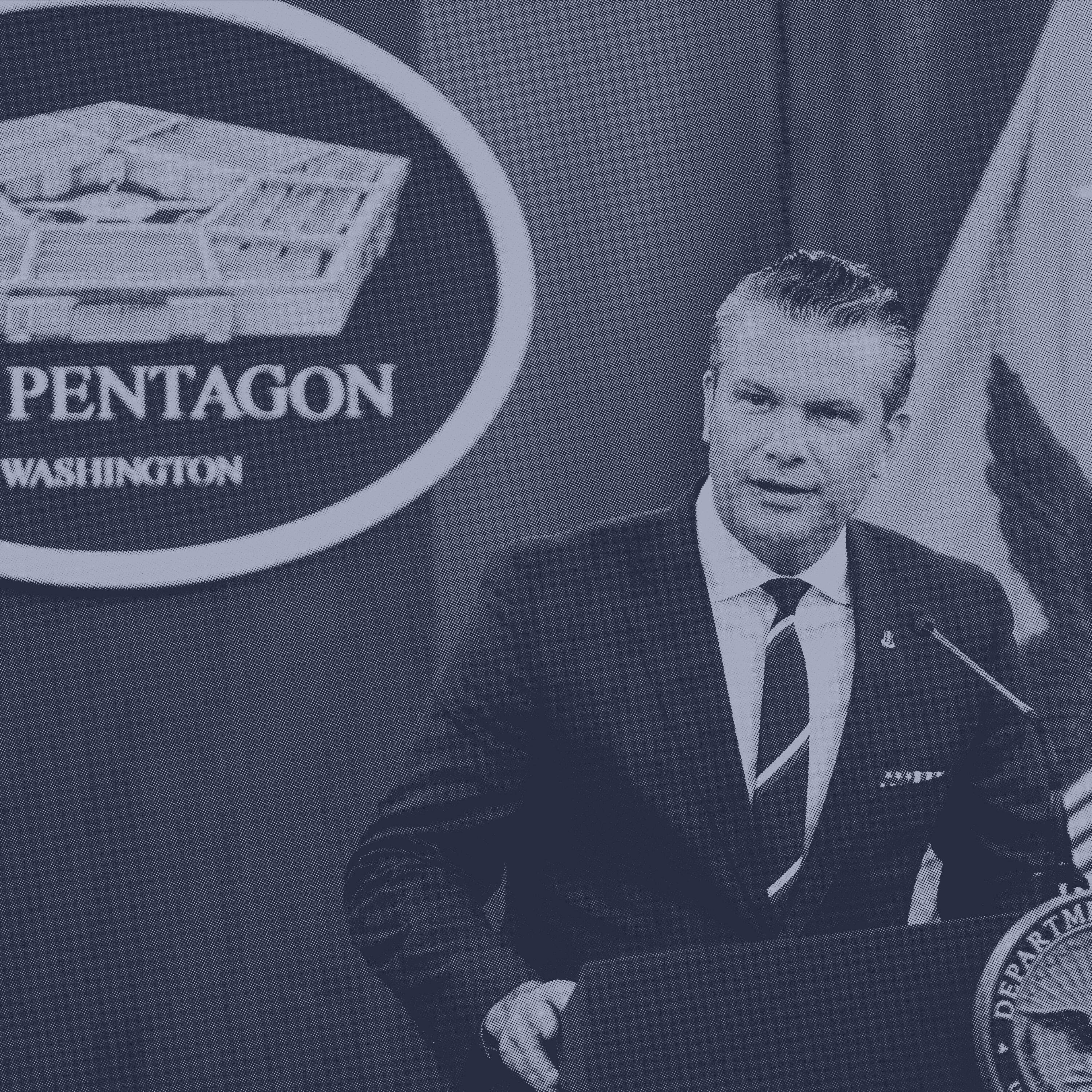
17:12Greg Myre: And what you did come up with is a generation in many ways represented by someone like Pete Hegseth, who were very critical of the way those wars were run. They want to sweep out the old guard in the military. And Hegseth is criticized on many, many fronts, but there are many at his age group, say in their 40s, who fought and served and came away pretty disenchanted with the way the military was being run. Some of that disenchantment, I think, stems from the justification for, in particular, the Iraq War and the drive for weapons of mass destruction that Saddam's regime, the American public was told by the Bush administration, possessed.
18:01And then later, it was abundantly clear that he did not have WMD. And so that the whole justification and push for that war in particular, which turned incredibly bloody, I think took a lot of wind out of the sails of the American public. and also morale in the military as well. All right, let's take a quick break. More in just a moment. Stay tuned for the following announcements and messages from our sponsors. This week on NPR's Newsmakers, Democrat Abzal El-Sayed says his party should treat the president as the, quote,
18:36Greg Myre: unserious fool that he is. Can the incoming senator and his colleagues also work with the president? I dare Donald Trump to veto. I dare him.
19:16And we're back. So now I want to talk domestically, Ryan, about all the changes post 9-11 that happened within the country's intelligence agencies and the Justice Department. How did the attacks change everything going on in this country? Well, for people who are under the age of 25, probably don't realize that there was a time when there was no Department of Homeland Security. Yeah, good point. At the time of 9-11, there was no DHS. It was created after 9-11. It was November of 2002 that it was created by Congress, brought together more than 20 different departments and agencies into this one behemoth of a department.
19:56Parts of what had been Treasury, Coast Guard, transportation, all were brought under this umbrella. The idea, as the Bush administration put it forward, was to make the country safer, having this one department whose mission was to protect the United States, the homeland. There was also a major transformation of the FBI. And this is a huge thing. Right after 9-11, FBI Director Robert Mueller, who had just come into the job, he shifted 2 ,000 FBI agents onto counterterrorism work. there was a massive push, an immediate push to transform the FBI from a crime fighting organization, something that would collect evidence slowly over time, develop a case into what was an intelligence driven organization, one that put an emphasis on combating terrorism.
20:49And the key here was preventing the next attack. They weren't going to wait until something happened and then try to find those responsible. They were working to prevent an attack from happening and from more Americans being killed.
21:01Greg Myre: A very similar transformation took place in the intelligence community. The CIA had always been focused heavily on the Soviet Union. And then when it collapsed in 1991, it was sort of fishing around for its next mission. And then 9-11 happens. And all of a sudden, this is something it's not prepared for. It was not built or structured to hunt down terrorist networks. The CIA immediately needed to go out and recruit and train much larger groups of employees who could speak Arabic, who understood the Middle East. Technology played a huge role. Some of it was developed by the CIA and the NSA and other intelligence organizations to help track individuals, terrorists that you're trying to find somewhere and creating networks and finding the linkages between different groups.
21:57Greg Myre: So the CIA, the NSA also underwent big transformations, and it became hugely problematic in terms of the CIA also never held prisoners before and interrogated them. The NSA found itself entangled in the records of Americans. So all of these other issues came into play as well with organizations that had always been outward looking at the rest of the world, but were now facing something that posed a domestic threat as well. And it's important to remind people who were not around at the time or were too young to remember the pervasive sense of fear in the immediate aftermath of 9-11. And particularly if you talk to people who were in senior government positions at the time, concern of more attacks on the horizon, of a second wave of attacks.
22:49In just December of 2001, there was a plot stopped on an airplane, Richard Reid, trying to detonate a shoe bomb on a plane flying from Paris to Miami. There were concerns about potential attacks on subway systems, on train systems. People had to think about everything that was a soft target and how to try to protect that because there was concern that al-Qaeda was plotting to conduct more attacks. And we did see more attacks. There were attacks on the London Underground. There were attacks on trains in Madrid. But those attacks were overseas. And what people in the intelligence community and the FBI will say is that the steps that they took to try to protect the United States and the homeland were largely effective.
23:41Definitely. And I think that's why, I mean, I think Americans broadly at that time were willing to give up some level of privacy for this sense of security. But I guess I wonder when that started to shift in terms of when people started to question the sort of surveillance state apparatus that the United States kind of moved into, when did that start to become problematic? A couple of things here. One is there were laws that were passed by Congress in the weeks and months after 9-11, a big one being the Patriot Act, which gave authorities new tools to the FBI and the IC, kind of broadly speaking, including surveillance powers.
24:22Some of that stuff was known. What was not known were some of the secret programs that the Bush administration initiated of warrantless surveillance that were highly, highly classified. a very, very small number of people in the government knew about. Some of them only became public in some of what the administration was doing at that time in terms of bulk collection of telephone information until they were revealed by the intelligence contractor, Edward Snowden, in 2013. And that's when we really saw the public become aware of what the government had been doing for the previous decade in terms of surveillance.
25:04And there was pushback. But what's interesting is if you look back at what officials who were involved in those discussions at the time, conversations that they had among themselves, they say that they knew when some of this stuff became public, that the American public was not going to be happy about it and that there was going to be blowback. But it was also this desire, as we talked about just a second ago, of there's concern about a second wave. There's concern about more attacks. And officials were willing to take extraordinary measures, things that might trample on people's liberty in order to try to prevent those next attacks.
25:46Now, whether they struck the right balance is something that we're still debating. But, you know, that's where that debate comes from. I just wonder, I guess when I'm thinking about everything we've talked about today so far, one of the themes that keeps coming up is sort of honesty from the government. When we talk about the weapons of mass destruction, we talk about what you're talking about with the Patriot Act and the surveillance of Americans, Guantanamo Bay, and things that have come out since about all the different ways that the CIA has treated prisoners. I guess I wonder how much a lot of this stuff has fed into a broader distrust of the American government in the last 25 years.
26:30I think a lot. I think a lot. I mean, if you go back and look at the mistakes that were made in not connecting the dots that the government had before 9-11 of a potential attack, so you have that failure. You have Guantanamo Bay being set up. You have the torture of prisoners by the Central Intelligence Agency. You have the lies about weapons of mass destruction in Iraq, which put the U.S. into a bloody horrific conflict there that killed thousands of American troops, as Greg said, wounded tens of thousands of more, let alone the tens upon tens of thousands of Iraqi civilians who died in that conflict.
27:15You have the surveillance powers that were being used to collect American citizens' information. I think all of that has certainly fed into the growing distrust for government. But I think you can also look at the media and the fact that perhaps the media was not as skeptical as it should have been of the claims that the Bush administration was making in 2003 about Saddam's weapons of mass destruction program. And I think that that helped feed into distrust of the media. So a lot of these kind of big issues that we're dealing with on a societal level now, not that the seed was 9-11, but certainly there was a lot of that that we can trace back to 9-11 and decisions that were made in the aftermath.
28:05Are we safer as a country now than we were 25 years ago?
28:10Greg Myre: I would say yes. Based on the evidence, we have not had a major attack, anything comparable to 9-11 since then. Now, you could argue that's because of security measures that have been taken. You could argue we've been lucky or that 9-11 was an outlier or was just something that was not going to happen again. But I would say we have. For a couple of reasons, all of these measures we have taken have made it much, much harder to carry out a major attack. I mean, you just look at Al-Qaeda carried out those attacks on 9-11. You can't do any of those things. So we've put an apparatus in place. Many of the things I'm sure we all get annoyed with, but we haven't had that level of attack.
28:56Greg Myre: The technology makes it much, much harder to stay invisible now. The U.S. national security community and the intelligence agencies in particular could detect, I think, a lot more quickly than they could 25 years ago. And I think that the U.S. in any country is still vulnerable to individual attacks, even big individual attacks. It would be very, very difficult, I think, to have a sustained ongoing campaign just because the U.S. and its partners have great visibility all over the world. They could respond very quickly. So I think the individual attack is still very much a possibility. A big group forming and carrying out a sustained attack would be very hard to do or at least to go unnoticed.
29:48Part of this, I think, speaks to the change that we've seen in international terrorism over the past 25 years. If you look at 9-11, it was an attack where you had headquarters, so to speak, in Afghanistan. They sent out cells across the world that they kept in contact with that were part of a highly directed attack that was coordinated and had specific targets. What we've seen, because the U.S. got so good at intercepting communications between the headquarters, let's say, of a terrorist organization and people out in the field, that that model didn't work anymore. And so the shift that we saw by 2015 or so, even a little bit earlier, was a terrorist group like the Islamic State using social media to try to encourage people to conduct attacks where they were with what they had at hand, whether it be a gun, a knife, a car.
30:45We have seen attacks like that in Europe, certainly. We've also seen attacks like that in the United States, in New Orleans being a recent one down on Bourbon Street. And the US has gotten better at dealing with those sorts of things as well, but those are really hard to stop because there's not a large group of people who have knowledge of it. And And what the FBI calls from flash to bang, someone deciding that they want to conduct attack to actually conducting that attack can be almost nothing. Those are hard to stop. And those are the sorts of like one-off attacks that Greg was talking about that we have seen.
31:25But that's part of the shift in how terrorist groups kind of approach this issue.
31:31Greg Myre: Al-Qaeda and the Islamic State are still out there. They haven't gone away. They number certainly in the thousands. They're broken up into smaller groups. I think North Africa, West Africa is where they're most active and are having the ability, in some cases, to destabilize governments there. But their activity is more local than active in the West. That's one of the distinctions I would make. Although Al-Qaeda's ambitions are still to go after Western targets, but they haven't been able to do that in many years at this point. I mean, now 25 years on, guys, how would you characterize post 9-11 America?
32:13I mean, I think the through line for me over the past 25 years, and it's not an everyday thing, but kind of a through line would be two things, fear and anger. And I think that we can see that in separate ways, the kind of ripple effects and echoes of 9-11. You see it domestically in the militarization of police. The sort of equipment that police are using on American streets comes from the war on terror. You have changes in public architecture out of concerns of things being bombed. You have the changes in how we fly. You have concerns about what the government is vacuuming up in its warrantless surveillance programs.
33:05You have the distrust of the government that we talked about because of the Iraq war and the lies that the Bush administration told the public beforehand. Distrust in the press because of the press's failure to call out the administration on those to catch those. And from, you know, I spent nearly 15 years overseas, including right after 9-11. The knock on America standing in the world is a real thing. People bring it up in conversations. And that stems back to weapons of mass destruction in Iraq. It stems back to the torture of CIA prisoners in secret CIA prisons. You have drone strikes that, you know, we talked about how some in the national security community view those as very effective, but there are also a lot of civilians that were killed in those.
33:59And in Yemen, in Pakistan, in Libya, you've got people who are directly affected by that. And so you have the blowback to that. We haven't talked a whole lot about Guantanamo Bay. That remains an issue. Many people would say a stain on America's record. And so these things were done, perhaps some of them out of good faith. They were driven to a large extent, I think, by fear of another attack, by anger over the fact that the United States was attacked. And I think that to an extent, the politics that we have today is arguably an outgrowth of that. Also, the Muslim community, right? Right. I mean, fears at the time, right after 9-11, I think that was palpable in terms of the way Americans were turning on each other.
34:52And people felt very scared in that community. And I think that, to some extent, exists today when you see there's strands of the Republican Party that are arguing that Muslims should be deported from the country. And you, of course, also had the FBI in the wake of 9-11 certainly turning its vast powers to a large extent on the Muslim community in the search of more potential hijackers, terrorists, or plots. And so it was a community that certainly felt that it was unfairly targeted.
35:19Greg Myre: For me, it's the three wars that the U.S. has been involved in the past quarter century and almost nonstop. If you had told me after 9-11, the U.S. would be fighting three major wars over the next quarter century in three neighboring countries, Afghanistan, Iraq, and Iran, and that after that 25-year period, the Taliban would still be in power in Afghanistan, and that all three of those wars had failed to achieve the confident predictions that U.S. presidents had made at the beginning of them, I would not have believed you. And the U.S. has been stuck in this loop essentially for the past quarter century of unleashing its formidable military power, making great military gains in the early weeks of these wars, and then thinking this will quickly and cleanly lead to a political settlement that the U.S.
36:16Greg Myre: wants. And it hasn't in any of these cases. And so we're seeing again with the war in Iran, some real similarities to these earlier wars where on day one, the Iranian leadership is knocked out. And yet six months on, we don't know where this is going, how it's going to end. And again, hard to believe this would last for another 20 years, but we certainly didn't think those other wars would be as long and as messy and as complicated. And yet here we are again after 25 years and still unable to figure out if we want to use this power and how we want these conflicts to end. All right. Well, that seems like a good place to leave it.
36:56Our executive producer is Mathoni Maturi. Our producer is Bria Suggs. Casey Murrell edits the podcast. Special thanks to Dana Farrington. I'm Miles Parks. I cover voting. I'm Greg Myrie. I cover national security. I'm Ryan Lucas. I cover the Justice Department. And thank you for listening to the NPR Politics Podcast.
37:17Stay tuned for the following announcements and messages from our sponsors. This message comes from DonorsChoose. Right now, there's a student that needs something. Maybe it's books, art supplies, or a science kit that will unlock their learning potential. And you can be the reason they get it. With DonorsChoose, you'll fund real classroom projects from real teachers, so your gift goes exactly where it's needed most. Because when students start with what they need, they're ready to build confidence, discover new ideas, and succeed all year long. Give what students need right when they need it at DonorsChoose.org.
37:53slash local. This week on Here and Now Anytime, the spy scandal rocking NVIDIA exposed how lax the government has been in forcing its ban on AI chip exports to China. Also, meet the scientists studying kids who claim to have memories of past lives.
38:08Greg Myre: You know, a toddler talking about a traumatic death is surprising to a lot of parents. Here and Now Anytime, listen on the NPR app or anywhere you listen to podcasts.