Ask ChatGPT


 The NPR Politics Podcast
25 Sep 2026 · 46m · 18 chapters
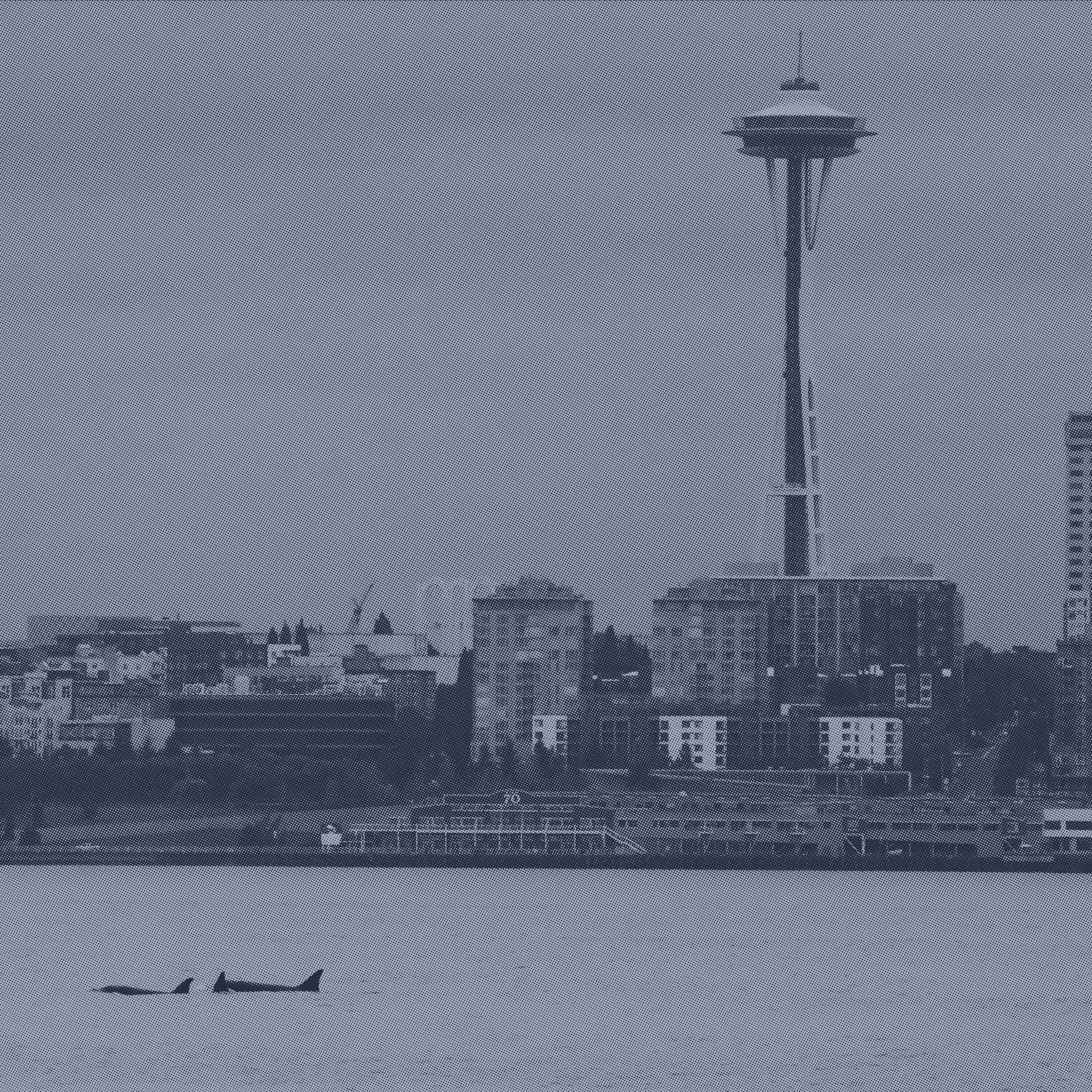
A live NPR Politics Podcast from Seattle focused on what’s driving voter decisions in the upcoming midterms—especially affordability (gas, diesel, heating fuel), AI and data centers, and immigration enforcement—plus a rapid race preview and light “Can’t Let It Go” segments.
Tamara Keith (NPR politics host), Miles Parks (voting), Mara Liason (senior national political correspondent). No external guests are interviewed; the “guests” are the three hosts.
Voters care about prices, not inflation rates; Republicans split between calling affordability a “hoax” and claiming prices are falling. Swing-voter focus groups link higher fuel/heating costs to Iran war, tariffs, and policy choices. AI/data centers are becoming a bipartisan anger symbol tied to electricity bills, job fears, and “American dream” pessimism. Trump’s messaging often conflicts with majority public opinion; Democrats face a weak brand but may benefit from turnout/enthusiasm. Immigration enforcement has shifted public opinion against Trump, pressuring GOP candidates.
Diesel over $6/gallon; Teresa near Pittsburgh facing ~$900/month heating costs; Michigan Senate race (Mike Rogers grocery-store video); Virginia AI data-center deal; NBC poll: 64% less likely to support a candidate who wants a nearby data center; Florida’s Maria Elvira Salazar citing 50% of detainees had no criminal records; Kansas ICE coordination criticism by Sen. Roger Marshall.
Written by AI. May contain mistakes.
The hosts discuss the key issues affecting voter decisions this election season.
“Hey there, it's the NPR Politics Podcast live.”
Mara explains the contradictory messages from Republicans regarding affordability.
“So let's start with the thing that voters tell us is the top issue this election season, affordability.”
The discussion shifts to the effects of rising gas and diesel prices on voter sentiment.
“Really the last two years is I felt like coming out of the 2024 election, the big takeaway from how President Biden talked about the economy and about affordability was you can't just tell voters everything's okay.”
Tamara shares insights from swing voters about their experiences with rising costs.
“I'm in sort of a constant conversation with them.”
Hosts discuss how voters connect high prices to political policies and their voting intentions.
“I just think that moves that can move people in political directions stronger or quicker in ways that these sort of more academic arguments.”
The conversation examines how Republicans are responding to the issue of rising prices as elections approach.
“The Republican candidate for Senate there, Mike Rogers, this week is out with a video filmed in a grocery store talking about how prices are too high.”
Discussion moves to the impact of AI on the economy and public opinion regarding its effects.
“But what we're seeing is a real convergence on all these economic populist issues, whether it's tariffs, the war in Iran, higher prices.”
The hosts explore how data centers symbolize broader economic fears among voters.
“I was going to mention this poll, this Politico poll that came out that found that two-thirds of people now say that there's at least a moderate chance AI will destroy humanity.”
Discussion on Trump's stance against public opinion regarding AI and data centers.
“And these giant windowless structures that make a lot of noise are just the representation of that physically.”
Analysis of how immigration policies are shaping voter sentiment and election dynamics.
“It still is, but it's dropped a tremendous amount.”
Discussion on voter demographics and midterm election trends, focusing on independents and Trump's base.
“And those are the people who vote in special elections, who vote in midterms.”
Analysis of competitive races in the Senate and House, including insights into candidates and strategies.
“Okay, so we don't have a lot of time left, but I would like to do sort of a rapid round on races that we are watching.”
Discussion about the declaration of Dolly Parton Day in California and its bipartisan support.
“All right, let's leave the issues of the midterms aside for now and move on to our favorite part of the show.”
Discussion on the bipartisan love for Dolly Parton and her impact.
“and Santa Cruz just in terms of like everything.”
Overview of Fat Bear Week and its significance in Alaska.
“It's like the date puns, like May the 4th, Star Wars Day, may the 4th be with you.”
Hosts share their experiences and joy related to watching bears.
“And I just feel, I just, you've got to go on this website, fatbearweek.org.”
Exploration of discovering new music and feeling out of touch.
“So what I cannot let go of is, so this week, I'm a big music fan.”
Discussion on the evolution of music and the idea of monoculture.
“No, it is true that at some point you just, you only know what your child is listening to.”

Get the gist, explore an idea or ask about something said.
 Claude
On The NPR Politics Podcast, what are the key points of this episode?
Searching your listeningAutomatic transcript. May contain errors.
0:00Support for this podcast and the following message come from Allianz Travel Insurance. Ready to turn last year's travel dreams into this year's jet-setting reality? An all-trips annual plan is ready when you are, all year long. Learn more at AllianzTravelInsurance.com. Good evening, Seattle!
0:25We are very grateful to be here in beautiful Seattle, and we want to welcome you to the NPR Politics Podcast Live. This podcast was recorded at 7.15 p.m. Pacific Daylight Time on Thursday, September 24, 2026. Things may have changed by the time you hear it, but we will all still be having a great time here in beautiful Seattle. Okay, here's the show.
1:05Tamara Keith: Hey there, it's the NPR Politics Podcast live.
1:14Tamara Keith: I'm Tamara Keith. I cover politics. I'm Miles Parks. I cover voting. I'm Mara Liason, senior national political correspondent.
1:27Tamara Keith: And we are thrilled to be here in Seattle for this live edition of the NPR Politics Podcast in partnership with Cascade PBS.
1:42And for today's edition of the show, we're going to be talking about issues, the things that, as people are going to vote over the next couple months, are going to be driving what makes their decisions.
1:52Tamara Keith: So let's start with the thing that voters tell us is the top issue this election season, affordability. The president says affordability is something that Democrats made up, a hoax. but he also talks a lot about bringing prices down. And Republican ads make it clear that they know this is a very real problem. So Mara, let's start with what is the Republican message on affordability? I think the Republican messaging has two tracks and they're kind of contradictory. One is, as you said, the president who sometimes makes fun of the whole idea says affordability is a Democratic hoax. Or sometimes he says that he's solved the problem of affordability, that prices are coming down, the economy is booming, we're the hottest economy in the world.
2:41The problem is that he's right on some metrics, stock market good, sometimes GDP good. You can't eat GDP. And the thing that matters most to voters are prices, not the rate of inflation, but prices. and the Republican message is not addressing those concerns. This is what I don't fully understand about the way President Trump has messaged on this. Really the last two years is I felt like coming out of the 2024 election, the big takeaway from how President Biden talked about the economy and about affordability was you can't just tell voters everything's okay. At some point you have to kind of meet them where they are.
3:20And that's why I think I always go back to at the beginning of the Iran war when President Trump, what did he say? I'm not thinking about Americans' financial situations at all. or something along those lines. That was shocking to hear.
3:31Tamara Keith: But essentially what he was saying is, when I'm thinking about the war, I'm not worried about how much things cost. But Americans are thinking about the war and they are thinking about how much things cost and they are very unhappy. And that is particularly salient when it comes to oil prices, gas prices, diesel prices, because people drive by gas stations typically multiple times a day. And sometimes they even have to stop and fill up their vehicles. I do feel like gas prices are one of those things that as a political reporter, I've been very hesitant. I feel like it's my impulse to think of it as like hacky political journalism to like focus on gas prices because it's so obvious.
4:11No, I mean, sorry. But I do feel like in the last couple months, especially on diesel, because I don't know if you guys can see, I do not experience diesel in my everyday life on a regular basis. I don't know if that's a shocker for our live audience here, but diesel is over$6 a gallon. People who work in agriculture feel that. People who work, I have a neighbor who runs a moving company who was just talking to me when we were at the playground the other day about how he's getting killed on diesel prices. And so I think when you look at these competitive districts, places like Alaska in the middle of the country that are moving, seem to be moving towards Democrats in some of these Senate races, I do wonder how much of that has to do with diesel prices specifically.
4:50Tamara Keith: Yeah, and just to build on that, I have this project called Swing Shift, where I'm following about a dozen swing voters and swing states people, most of whom voted for President Trump in the last election, all of whom have voted for him at some point in the last decade. And they text me voice memos. I'm in sort of a constant conversation with them. It's like a very long-term focus group. And I got a text from one of the swing shift voters named Teresa who lives outside of Pittsburgh. It gets very cold there. And she said that, like, last year she remembered fuel oil costing about$3.99 a gallon.
5:31Tamara Keith: This year it is$6 a gallon. And she said that everyone she knows is talking about how they're going to be cold. She said some people on Facebook are using this to push for voting for Democrats in November. But I want to just read a little bit of what she wrote to me. She says, I don't know that price. I don't know how we will make it. On a cold day, you use five gallons a day. So the math comes out to$900 a month for heat. That's a lot. That is someone making a choice between heat and something else that's essential. I feel like this came up also with health care, right, with the decision to not extend the subsidies last year related to Obamacare.
6:17I feel like that's another thing where there are people where this is not an academic or a political argument, but they are literally having to make decisions. And I don't know. I just think that moves that can move people in political directions stronger or quicker in ways that these sort of more academic arguments. Well, that's what we're watching for. In other words, we know people are struggling economically. The question is, will they turn out for Democrats because of that? And we do a swing voter focus group every month with voters who voted for Joe Biden in 2020 and Donald Trump in 2024.
6:50And we're watching to see, number one, if they connect the higher prices they're paying to policies by the Trump administration. And they are. The war in Iran, they get that. That causes gas prices to go up, causes fertilizer prices to go up in rural states. Also tariffs. Yeah, and tariffs. They connect the tariffs with higher prices, especially in a battleground state like Michigan, where we just were last month. But the big question is, will that motivate them to vote for Democrats? Because the Democratic brand is pretty bad. But we are seeing movement towards Democratic candidates, certainly for the House across the country, and it's based on prices.
7:30Tamara Keith: And you mentioned Michigan. The Republican candidate for Senate there, Mike Rogers, this week is out with a video filmed in a grocery store talking about how prices are too high. Now, this is a video that could have been made two years ago by Republicans who were running and blaming Democrats. And sometimes they still do blame Democrats. But in this video filmed in a grocery store, he says, well, the Iran war needs to end. And if the war ends, then prices will come down. Well, that's what Trump has been saying all along. As soon as the war ends. It's a big if. If the war ends. When the war ends.
8:15Tamara Keith: It's there's not a lot of clarity there. But what we have seen is some Republicans take some votes to make it clear that they at least want to be on record saying they want the war to end. Well, and it's a very short amount of time that a lot of these Republicans have to be able to make that pivot towards the general election. Right. Because voting voting has already begun in many states. And so I think a lot of Republicans were very scared of saying something like the Iran war needs to end during primary season. And so now they're trying to make that pivot while people are literally getting mail ballots in the mail, like right now.
8:50Tamara Keith: Also, I think during primary season, a lot of them believed the war was going to end. I mean, President Trump said it's going to end in six weeks. A lot of people, including voters, believed that. Then there were these sort of fits and starts of ceasefires and talks. And, you know, every other day he was saying they want to talk really badly. They want a deal. This is going to end. And I think that a lot of people sort of put their politics on hold, waiting to see if it would end. But now the president is saying he doesn't expect it to end before the midterms. But now the antipathy to the war has become bipartisan.
9:26More Republicans are supportive of it. But what we're seeing is a real convergence on all these economic populist issues, whether it's tariffs, the war in Iran, higher prices. There's really a convergence between left and right on this. And I think that's something to watch. When you have Steve Bannon and Bernie Sanders together leading a rally against AI, you know something's happening. Well, that's what I was going to pivot to, actually, as another thing that feels like very quickly it has become a theme of this midterms is AI, is data centers. It feels to me linked in some way to the affordability argument.
10:04Oh, absolutely. I mean, can you explain that? Some of the antipathy to data centers is because they cause people's electricity bills to go up. That's not the case in every state. Virginia actually drove a very hard bargain with the AI companies and made sure that they paid a lot of money to local communities there, but most states didn't. So there's the data centers, which are loud and noisy and dirty, and they cause your electricity bills to go up. Then there's just the AI, the job-killing aspect of AI. Yes, some of the data centers provide some jobs in certain communities, but people overall, bipartisan majorities, think AI is not going to be good for them or their kids.
10:44And the other thing that we see in polling, in our focus groups, is when people are asked about the American dream, which is pretty simple. You work hard, play by the rules, you can do as well or better than your parents, and your kids can do as well or better than you. People don't believe that's going to happen anymore. That's a big thing because that was kind of the foundation of American optimism. But people, oh, and in terms of the doomsday part of AI, I don't think that voters have completely wrapped their minds around this because it's a very hard thing to wrap your minds around the end of humanity.
11:17But people are worried about that. I was going to mention this poll, this Politico poll that came out that found that two-thirds of people now say that there's at least a moderate chance AI will destroy humanity. Great. Cool. But I do think, actually, to me, the AI story that is not being talked about enough is how much it is a money in politics story. Because all of these companies have so much money, and it is the dark cloud looming over a lot of these candidates. there's been reporting that when you have a poll like that that says most of Americans are worried something's going to end humanity, there's reporting that shows that Democratic strategists are telling battleground Democrats not to talk about AI because they're worried that AI money is going to come in and that the AI money is just going to drop$30 million in their battleground rights.
12:06And they are. And so you can understand why some of these Democrats are like, well, people hate it, but like, maybe I can wait and I can kind of wait this one out and not get the kind of eye of Sauron on me.
12:16Tamara Keith: But that's a way of putting it. Yeah, I mean, I think that these AI data centers have become, you know, the avatars of angst about the broader AI issue, about, you know, these CEOs are on tape saying, yeah, we think our product's going to take away 50 % of jobs, or yes, our product is getting out of our control. Somebody should do something about it. And so there's a lot to have angst about. And what is fascinating, as you said, is that a year ago, when we were laying out the themes that we thought would be the key themes in this election, we knew affordability was going to be a key theme. We did not know that data centers and AI were going to be such a big part of this campaign.
13:09Tamara Keith: even, I don't know, a few months ago, I was interviewing a progressive candidate in Michigan, a congressional candidate, and, you know, interviewing him about the race and issues. And then I think it was at the end, I think I was like, is there anything else I should have asked you about? And he was like, well, yeah, the data center issue, everybody's talking to me about it. And that was sort of a light bulb moment for me. And then the more you look for it, the more you see it. And it is, as Mara said, one of these issues where, you know, you can have MAGA hat wearing Republicans and, you know, crunchy liberals united.
13:53Tamara Keith: And some of it is nimbyism. Some of it is not in my backyard, but it's more than that. It is this insecurity about what the future holds. And these giant windowless structures that make a lot of noise are just the representation of that physically. You know, the other thing we're watching in these midterms is that Donald Trump has put himself at odds with majority public opinion on so many issues. And the experiment that the Republicans are running is, can he do that and still heave his party over the finish line in a very difficult race? He has said that people who are not for data centers want to be poor and backwards.
14:32He has completely ruled out regulating AI. He doesn't want to destroy the goose that lays the golden eggs. And what we've heard is that he is so concerned that since AI is propping up the stock market, propping up the economy really, he doesn't want to do anything that would hurt that and have the economy go into a spiral. He said very clearly, I don't want to be Herbert Hoover. So it's not just AI, it's flock cameras, it's tariffs, it's the war in Iran, it's a whole bunch of things where he has put himself at odds with majority public opinion, as if he only cares about his base. And one thing that we know about Donald Trump, he has a cable news business model of politics, which means you don't have to expand your listenership, you just have to have them watching you 24 hours a day and never change the channel.
15:25And that's what he's doing. He's managed in the past to rev up his base, get them excited, energized. But this time he's making it very hard for himself.
15:35Tamara Keith: Well, I think he's making it very hard for Republicans who are talking to voters and hearing that they are concerned about AI, for instance. And then the president goes out and says, oh, the only problem with AI is it needs to be rebranded. It needs to be super intelligent instead of artificial intelligence. You know, he is just in his own reality or his own world or whatever you want to call it. The president is sort of sheltered from the realities that Republican politicians are facing. and Republican politicians are facing a brutal environment, a brutal political environment that the president is arguably actively making worse, if not just not helping.
16:27I think there might also be a sense of underestimating, specifically on the AI and data center part of this, how galvanizing it is or how, I think there's a lot of issues that every election cycle, there's something that's sort of in vogue. And we always talk about how those things don't, Those things end up being like fifth or sixth on the rankings of why people actually make their decisions. But this actually seems to be one of the things people are deciding upon. There was an NBC News poll recently that tested 15 different political characteristics to see whether they would make voters more or less likely to vote for a candidate in November.
16:59And the pollsters found 64 % of registered voters said they would be less likely to support a candidate if they wanted to build a data center near them. And that was the highest of any of the 15 characteristics. So it does seem to be uniquely, I guess, important to people as they're making a decision.
17:16Tamara Keith: Certainly in local and state races where they have, at this point, a much more power over whether anything gets built. Yeah. Okay, let's take a quick break. More in just a moment. Stay tuned for the following announcements and messages from our sponsors. This message comes from Satva. Have a big day coming up. Remember, tomorrow starts tonight with the restorative sleep you need to perform at your best, the kind every Sattva mattress is designed for. So whether it's a new job, a marathon, or an important presentation, Sattva helps you be the best version of you. And now save 15 % off purchases of$100 or more at sattva.com slash NPR.
17:55That's S-double-A-T-V-A dot com slash NPR. This message comes from BetterHelp. Your brain has limited storage, so why is it still holding on to that embarrassing moment from years ago? BetterHelp is an online therapy platform that gives you space to talk about what's taking up too much of yours. BetterHelp is now in-network with more than 125 health plans, with many co-pays as low as$15 for eligible members. And if you don't have eligible insurance, you can still get 20 % off your first month. Visit BetterHelp.com slash NPR. Cost and coverage may vary. Discount cannot be combined with insurance.
18:35This message comes from Rosetta Stone. Rosetta Stone is designed to make language learning intuitive. It mimics how people naturally acquire speech as children, helping users read, write, and think in a second language. More at rosettastone.com.
18:51Tamara Keith: And we're back.
18:58Tamara Keith: so we've been talking about the issues and ideas that could factor into this fall's midterms and another issue one i'm curious what you're thinking about is immigration obviously a huge issue in the 2024 election how is it playing in these 2026 midterms well immigration used to be the Trump administration's best issue, polling-wise. It still is, but it's dropped a tremendous amount. And Donald Trump did really well among Hispanics in 2024. I think exit polls showed that he won about 46 percent of them, compared to about 28 percent in 2020. But those numbers have dropped. And you even have Latino members of Congress criticizing not the overall initial explanation of what the policy was, which was to deport undocumented immigrants with criminal records.
19:55People are fine with that. What they didn't like is when their grandma's CNA was deported, or the people who work in the meatpacking plant, or do the landscaping for their communities. So majorities of Americans, according to polls, think that Trump's immigration policies have gone too far. We have a candidate, a Republican incumbent Congresswoman Maria Elvira Salazar in the 27th District of Florida, which Trump won by 14 points, by the way, ran an ad speaking directly to Trump. She says 50 % of the 50 ,000 people that were detained had no criminal records. And she said the same Hispanics who helped you get to the White House in 2024 feel betrayed today.
20:40And that's a pretty big break for a Republican. Now, Donald Trump has a firmer grip on his party than any modern president. And here's someone who feels that in order to get reelected, she had to break with him on this extremely important issue.
20:55Tamara Keith: And it's not just her. It's also in Kansas. There have been some ICE raids recently, some stepped-up enforcement that is causing local concern. And so you had Senator Roger Marshall, he is on the ballot this year in Kansas and may even have a race on his hands. He posted on X saying, when ICE operates in Kansas, it needs to coordinate with our local law enforcement. Our sheriffs and police know these communities better than anyone, and working together keeps officers and residents safe. Now, that sounds like pretty mild, but he's essentially criticizing the way ICE is operating in his state. And that's a big deal in a red state.
21:46It is. And I think one of the numbers that I've been watching, in addition to just the top line, as Mara mentioned, the fact that people's views about President Trump's handling of immigration were double-digit positive when he first came back into office. and now they are double-digit negative, which is being driven, don't get me wrong, by non-white voters who, as Mara said, have shifted by 20, 30 points in some cases. But a plurality of white voters now disagree with President Trump's handling of immigration. And that, to me, is why you end up with senators in Kansas saying things like that.
22:21That's how you end up with competitive districts in Texas that are very worried about that their gerrymandering may have not gone according to plan potentially. And so I think once you see that shift among white voters too, that's where you start moving into a whole different ballpark.
22:38Tamara Keith: Well, and immigration is an interesting issue because while a large share of people are voicing this concern that the immigration enforcement has gone too far, there are elements of the president's base that think he hasn't gone far enough. They're like, where are the mass deportations you promised? I want more. I want to see more. Why aren't you doing more? And as a result, I mean, the president, as Mara has pointed out, is very sensitive to his base, more sensitive to his base than the broader electorate. And so, you know, like if you were a political strategist, for instance, you might say, hey, cool it with the immigration enforcement on the eve of the midterms because, hey, you might end up with another ICE-involved shooting, which has happened recently, or you might end up with some images you don't want, or, you know, you might make people upset.
23:36Tamara Keith: But because President Trump is more focused on his base and because, you know, he has a time limited period in office to accomplish what he came to do. And this is something he came to do and especially some of his aides came to accomplish. You have him barreling forward with no regard for the political climate at the moment or what it might mean politically for certain Republicans. I mean, I think this gets to a broader point, which is at this point in the midterm cycle in 2022. And Tam, you have banged this drum a lot this year. President Joe Biden was saying to every vulnerable Democrat running in the midterms, you can run away from me if you want.
24:23And what was he saying exactly? Like, I can't remember the exact quote, but he was basically like, if you want to bash me, you're totally fine to bash me.
24:29Tamara Keith: I believe the quote was, I'll campaign for you or against you, whichever one helps more. So you compare that to President Trump, who is literally saying at this midterm Republican National Convention, pretend I'm on the ballot, pretend I'm on the ballot. Have you been surprised, Mara, that that has been the message considering all the numbers, every possible number saying that might not be a smart campaign strategy? Well, it's unusual, but Trump is a different kind of president. I mean, you know, historically, midterm elections are referendums on the incumbent president and his party, if it happens to hold a majority in Congress, which the Republicans do.
25:08And Donald Trump believes that if he was on the ballot, Republicans would do better. And that's why he's telling his supporters to pretend that he's on the ballot. The problem is that he is at historically low approval ratings, under 40 percent. and he's a motivator for his base, but also for Democrats. And one of the most powerful forces in politics today is something called negative partisanship. People go into the voting booth and they cast their vote, not because they love the guy they're voting for, but to stop that other guy, because the whole world will collapse if the other team wins because we're so polarized and hyper-partisan.
25:46My favorite New Yorker cartoon is the two dogs go into a bar and one says to the other, it's not enough that we succeed, cats must also fail. And that's pretty much, you know, where we're at. But the big question is, can Democrats capitalize on this? Donald Trump is historically unpopular, but the Democratic brand is historically unpopular, and that's what they've got to fix. But there are two opposing forces in this election, and one of them is all the organic things that are helping Democrats turn out. Democrats are turning out. Enthusiasm. Democrats are enthusiastic. The incumbent party is very unpopular.
26:30The voters are sour on the economy. All those things are helpful to Democrats historically, but we know that historical rules only work till they stop working. And on the other side, the opposing forces, all of the structural things that are advantages for Republicans, like the massive amount of financial advantage they have. Usually one party has more money than the other, but we have never seen this kind of disparity, where right now Republicans are going to spend$100 million in Texas, the red state of Texas, or Ohio, and that's really unusual. They also have the structural advantage of gerrymandering.
27:06They've created eight to ten safer seats for Republicans for the House, and then the third one, of course, is that they're running against a party, the Democrats that have a terribly unpopular brand.
27:18Tamara Keith: The latest NPR PBS News Marist poll gives Democrats a generic ballot advantage of 12 points, which is quite high. That might be an outlier. There are other polls that show the generic advantage a little bit less. About 10-11 used to be what was the sign of a Democratic wave. But I think all those structural things that are favoring Republicans are going to blunt that wave. I'm not saying the Democrats aren't favored to take the House. They are. But I think there's not going to be a tsunami. I will say one structural thing, because I agree with the premise, Mara, of course, but the one structural thing that hasn't been talked about that much that is going in Democrats' favor is the fact that in the last few cycles, they have moved to become more the party that is higher educated, higher income.
28:04And those are the people who vote in special elections, who vote in midterms. And when you ask in the NPR PBS News Marist poll about like generic things that imply somebody's paying attention, people who voted for Kamala Harris versus people who voted for Donald Trump were more likely to say that they were paying attention to the midterms, that they were likely to vote, that every single thing that implies a likely voter, I just don't know that we've taken that as much into consideration how many low propensity voters might just not turn out in midterm. And that's fair because Donald Trump's base is filled with low propensity voters.
28:39Tamara Keith: And Democratic enthusiasm, very high this election year. What our poll also found is that among independents, there is a very strong majority propensity to vote against Donald Trump at this point, which is not good for him. He, you know, Republicans, obviously President Trump isn't actually on the ballot, but it, you know, midterms referendum on the president. You don't want independence to be that strongly against you. You can't win widely with independence that strongly against you. One interesting development on this idea of President Trump putting himself on the ballot to try to energize his base and get his base voters going is in the last couple of days, an ad has been running on Fox News and Newsmax, and it is a 30-second ad with a montage supercut, just hundreds of images of President Trump, sort of glorifying President Trump.
29:45Tamara Keith: Words flash on the screen talking about accomplishments of the administration. epic choir in the background singing like some epic love me love me love me the choir's just singing love me love me and then at the end of the ad as with all political-ish ads it says this ad was paid for by the u.s government and in fact this ad was paid for by the u.s government we don't know exactly which department it's coming from and they haven't spent based on ad impact tracking data. They haven't spent that much money on it yet. It might be that they just put this out into the ether to get us to talk about it, which, ding, ding, you've succeeded, because we are talking about it.
30:31Tamara Keith: A Democratic senator from New Hampshire, Maggie Hassan, today sent a strongly worded letter to the White House demanding to know where the money came from, who produced the ad, and why they think that it complies with prohibitions on using government resources for propaganda. That investigation is unlikely to go very far simply because the Democrats are in the minority and the White House is probably not going to respond. The White House, in response to my questions about it, said this is a public service announcement. It's not a call to action, they said. They said it's educational. They just want people to love America.
31:13The interesting thing that I found about this ad is it talks about communism a lot. Yes. It doesn't mention, I don't think it mentions - It does say socialism. Maybe once or twice. It does say Marxism. But what we do know from polling is socialism as a pejorative, as an epithet, just doesn't pack the punch it used to. People are kind of open to socialism. I think they mean a stronger social safety net. So communism is a word that Donald Trump has been using against Democrats because socialism just isn't good enough, harsh enough. To me, this kind of ties a little bit with the media ban this past week also in terms of, I mean, ties also with his obsession with the 2020 election for six years.
31:50There's all these things that in isolation, I'm not positive voters really care that much about them individually, but I, we've like Mara and our colleague, Ashley Lopez do these focus groups every month. And one of the things that struck me having listened to a lot of these is that voters feel like the president is distracted from the affordability message. And so I think that to me is more of a takeaway than the individual things is just this feeling of like, why is this ad happening instead of X, Y, Z, you know?
32:19Tamara Keith: Right. Like, why are you focused on a ballroom, on an ad that features you, on all of these things? Why are you focused on the, you know, a helipad at the White House when, you know, you could be focused on bringing down prices or ending the war or any of these other things that are higher priorities for the voting public? Okay, so we don't have a lot of time left, but I would like to do sort of a rapid round on races that we are watching. Mara, would you like to go first? Sure. I'll give you one Senate and a couple House races. I'm watching the Michigan Senate race. It's an experiment to see if a very progressive candidate, Abdul Al-Sayed, can win in a battleground state, in a swing state.
33:06This is not like a House district in New York City where you have Democratic Socialists of America candidates winning the primary. They're going to win the general because it's a deep blue district. But Al-Sayed right now is polling a little bit ahead of Mike Rogers, his Republican opponent, but not by nearly as much as the other Democrats in Michigan who are running statewide. So he is underperforming. And what I'm watching is to see if the antipathy to Trump, just the economy, tariffs in Michigan really mean a lot. They obviously share a border with Canada. Whether that can make up for the fact that he is probably way farther left than the center of the electorate in Michigan.
33:51So that's the Senate race I'm watching. The other thing I'm looking for, and I suggest that you guys watch it too, because you'll know early in the evening on election night. Very early here. New York State. Afternoon. Yeah, New York State, it reports pretty quickly. And there are a couple districts in New York State that went pretty big for Trump. And I'm seeing if any of them flip. One of them, Claudia Tenney's race in Syracuse, it went for Trump by 23 points. Elise Stefanik's race went for Trump also by 21 points. If those races flip, and you'll know this early in the evening, that means Democrats are going to have a good night.
34:28Tamara Keith: And I'll pipe in with a couple of regional picks just to go out west. Washington's third congressional district, the Democrat Marie Glusenkamp-Perez, is in a tricky reelect against John Braun. They are both small business owners. They both speak about tariffs. Braun told our colleague Sage Miller that tariffs is an issue that he'd like to address with President Trump if he gets to Washington. This seat is rated as a toss-up. It is one of about 21 toss-up races, according to the Cook Political Report, in the whole country. Out of 435, there are 21 toss-ups. That tells you just sort of how small this map is.
35:21Tamara Keith: And, you know, this is a seat that had been Republican. She flipped it blue in 2022. Gluzenkamp-Perez has clashed with Democrats somewhat regularly because she is far more moderate than. Well, you have to. I mean, Donald Trump has carried this district in 16, 20 and 24. So you really have no choice if you want to win election, but to clash with Democrats, I feel like. Right. And I think that, you know, we talk about how the Democratic Party has a lot of challenges. If the party wants to be long-term sustainable, they have to win in red districts or currently red districts and red states. Okay, one other race I'm watching, which is like sort of on the other side of the coin, is the race for governor in Oregon.
36:12Tamara Keith: The Democratic governor, Tina Kotek, is up for re-election. It is a rematch against State Senator Christine Drazen. It was actually a fairly tight race four years ago. I remember coming out with traveling with President Biden as part of the press pool. There weren't a lot of places that President Biden could campaign in 2022. And on this campaign swing, we went to L.A., city of Los Angeles. And then he campaigned with now Governor Kotek. They went for ice cream. He does that everywhere. But they did go for ice cream to like a Baskin Robbins. It wasn't even like a local place. But whatever, I think he just wanted ice cream.
37:00Tamara Keith: But, you know, this is a race that is quite competitive in a state that has not elected a Republican as governor since the early 1980s. And the reason it's competitive, among other things, is this broader theme that we've seen in, you know, a lot of Democratic primaries all over the country, something that we've seen in a lot of places. this anti-incumbent sentiment that people are ready to blow the system up. They are not happy with the way things are going. And so you have this, in a year where Republicans are facing a lot of headwinds, you have a Democratic governor in a blue state facing some headwinds because of affordability and homelessness and some of these other issues that were issues four years ago.
37:55Tamara Keith: What do you got, Miles? I will stick with governors out west, and I'll take Arizona governor races also really interesting, specifically on the voting issue and the 2020 election, because you have two main characters from the 2020 election running against each other. You have Katie Hobbs, who's the current governor of Arizona, who was secretary of state there in 2020, running against Congressman Andy Biggs, who was kind of chief election denier in Arizona, really worked hard behind the scenes to push President Trump's efforts to interfere with the certification. Even he voted not to certify on January 6th.
38:28He has been asked many times in the last few months about how he feels about the 2020 election now and refuses to answer. I think people I talked to in the elections community, after the 2024 election and President Trump winning the popular vote, there was a feeling that like maybe people don't care that much about lying about election results. But for jobs like governor, jobs like secretary of state, there is some evidence over the last few years that if your job is specifically related to certifying election and governors have a direct role in certifying elections, then maybe people might feel slightly differently about those sort of actions.
39:03So I will be watching that.
39:04Tamara Keith: And Hobbs, though, faces some of this anti-incumbent sentiment. Right. And to be fair, in Arizona, Republicans out-registered Democrats there, too. So So in some ways, I think Andy Biggs is already being shown based on the polling to be underperforming somewhat to what you would expect a Republican to do there, though there's a lot of complicated political dynamics. All right, we're going to take one more break and then it's time for Can't Let It Go. Stay tuned for the following announcements and messages from our sponsors. This message comes from Rosetta Stone, offering an alternative approach to language learning.
39:36The app guides users to intuitively think in a second language using images and contextual audio, mimicking how people acquire speech as children. The platform also includes advanced speech recognition technology that compares a learner's pronunciation directly with native speakers to refine accent precision. Learn more about their immersion method and the new Rosetta Stone Sapphire app at rosettastone.com. This message comes from Rinse. A well-designed life doesn't run on default settings. You chose the walkable neighborhood. Your coffee order became oddly specific. You spent three weeks choosing your mattress.
40:13But your laundry routine? That one somehow escaped the redesign. Should that really be the one update you skipped? Consider this the patch. Rinse picks up your laundry and dry cleaning, cleans it expertly, and delivers it back. Sign up today at rinse.com. Rinse. It's time to be great. This message comes from Google Workspace with Gemini. One subscription that does it all. personalized AI and premium business versions of Gmail, Google Docs, Drive, and more. Try it free for 14 days at goo.gle slash workspace with Gemini.
40:49Tamara Keith: And we're back.
40:55Tamara Keith: All right, let's leave the issues of the midterms aside for now and move on to our favorite part of the show. That's right. It is time for Can't Let It Go. the part of the show where we talk about the things we just cannot stop thinking about, politics or otherwise. Tam, why don't you start us off? I will go first with, I think this is a heartwarming one, uplifting. Dozens of municipalities and the state of California have declared September 25th Dolly Parton Day. You know.
41:34Tamara Keith: 925 her famous song 925 you know it's good it's good it works it really works and I don't know who thought of it but it's great um and in California the law was passed um it was bipartisan it was authored by a democratic state senator from Santa Cruz and a republican state senator from Bakersfield and sort of ideologically you don't get much farther apart than Bakersfield and Santa Cruz just in terms of like everything. And I want to read a little bit of Gavin Newsom, the governor's signing statement because he hit all the right notes and he wrote, we could all afford to live a little more like Dolly.
42:19Tamara Keith: He says, be kind, be humble and have some fun. Be a diamond in a rhinestone world. With this bill, we are not just establishing a day to celebrate Dolly Parton. We are creating an annual reminder to us every year to live the way she did joyfully, graciously, and with a whole lot of heart. And I... You can't beat that. I love it. I do feel like I noticed the bipartisan collection of everyone loving Dolly Parton. And I have to admit my cynical political brain was like, oh God, does that mean the backlash is coming at some point? I just assumed at some point there was going to be some pivot and I've been so glad that there hasn't been.
42:58Tamara Keith: Yeah, we've got to keep it good. It's like the date puns, like May the 4th, Star Wars Day, may the 4th be with you. Nine to five. Yeah, and now nine to five. Mara, you're next. Oh, I'm next. Okay. I picked this one because this is probably the closest the live pod will ever get to Alaska. My can't let it go this week is Fat Bear Week.
43:30And I'm sure as all of you Pacific Northwest people know, Fat Bear Week is a contest where people get to vote for who, which bear they think is the fattest. These bears are residents of Catmine National Park and Preserve. And last year's winner was named Chunk. And his weight was estimated at 1 ,200 pounds. But it's just an estimate because these bears are not actually weighed. And I just feel, I just, you've got to go on this website, fatbearweek.org. And there, these bears are just great looking. And I love the tagline of the website, which says, fat bears are successful bears.
44:18Tamara Keith: Well, yeah, because they get all the salmon and they get to have food that they've packed on for the entire winter. That's really nice. In our newsroom, right where the newscast unit is, there are all of these TVs and most of them are on news channels, but one of them is just a constant stream of fat bears grabbing fish. It's like the fat bear stream or something. And it's amazing. And it brings me great joy to walk by and see the bears doing their bear thing. I feel like, I don't know what it says about the mental health of the newscast professionals, that they need that 24 hours a day streamed on TV.
44:56But we're thinking of you.
44:59Tamara Keith: It's soothing. It is. Miles, what can't you let go of? So what I cannot let go of is, so this week, I'm a big music fan. Everyone's a big music fan. I listen to a lot of music. This week, Ella Langley's song, Choose in Texas, broke the record for most weeks atop the Billboard Top 100. Really? Which is my can't let it go because I had never heard this song before. And I was on my couch two days ago, and I was reading a music blog, and I was like, this can't be right. And then I pulled it up on Spotify, and I played it, and I was like, I played it with my wife sitting there, and I was like, have you heard this song?
45:38And she was like, no. And I was like, I haven't heard this song. And I've been saying since our toddler was born that culture ends at the door. It's like a phrase that I say because I don't know what's going on anymore. And this was the most, like the moment where I was like, oh, my God. It has finally happened. I have no idea what's going on around me at any point. And then I heard, listen to the song. And then I went to the train station. And I immediately heard it, like in a restaurant, you know, where I was like, oh, this must have been all around me all along. and I just didn't realize it.
46:10So there's that. One more part of this, actually, while I'm on the topic, actually, is I was getting disappointed about the fact that I'm uncultured, but then I made myself feel better by the fact that it will not hold the record for much longer, because for the last few years, every year at Christmastime, Mariah Carey's All I Want for Christmas Is You retakes it by having another week or two on the top 100. So it's only a couple more months that I have to feel like an uncultured swine.
46:36Tamara Keith: Aww. No, it is true that at some point you just, you only know what your child is listening to. And like, yes, I know all the songs by the toilet bowl cleaners, but I don't know anything new or interesting. I just thought it was like when my child was like 15, not when my, like, I didn't know it happened so quickly. Well, their taste does change over time. Thankfully, you don't have to listen to the toilet bowl cleaners forever. Sorry to the toilet bowl cleaners, whoever you are. But I think it also says something broader about our culture, which is that at this time where everything comes to us via algorithm, you are fed music that you like based on music that you have shown an interest in.
47:24Tamara Keith: And there's no way you would have been fed this country hit. I don't know, actually. That was actually one of the more disconcerting parts of it, is that alt country is kind of one of my genres. and so the fact that it still didn't reach me was, something about it was even more upsetting. But I agree with the premise, just unfortunately, nah, not on this time. But I also have this theory that there's never going to be another huge rock band. Monoculture is dead, basically. Yes, yeah, monoculture is dead. That's my theory. I guess it's not a new and invented theory, but I'm sticking with it. Well, that's it for our very special live politics podcast taping here in Seattle.
48:12Our executive producer is Mathoni Maturi. Casey Murrell edits the podcast. And our producer is Bria Suggs.
48:19Tamara Keith: Special thanks to Dana Farrington, Kendra Gaskin, and the entire team at Cascade PBS and the Cornish Playhouse for having us. And remember, you can listen to us wherever you want by following the NPR Politics Podcast wherever you get your podcasts. I'm Tamara Keith. I cover politics. I'm Miles Parks. I cover voting. And I'm Mara Liason, senior national political correspondent. And thank you for listening to the NPR Politics Podcast. Thank you.
49:17It's time to be great. More at rinse.com. This message comes from Google Workspace with Gemini. Ever notice how every new AI tool asks you to explain your business to it all over again? Google Workspace with Gemini skips that. You get Google's AI built right into the premium versions of Gmail, Google Docs, Sheets, and more. No new tools. No extra logins. Just one subscription that gives you personalized AI right inside your actual workflow. Try Google Workspace with Gemini at goo.gle slash workspace with Gemini.