 Ask ChatGPT
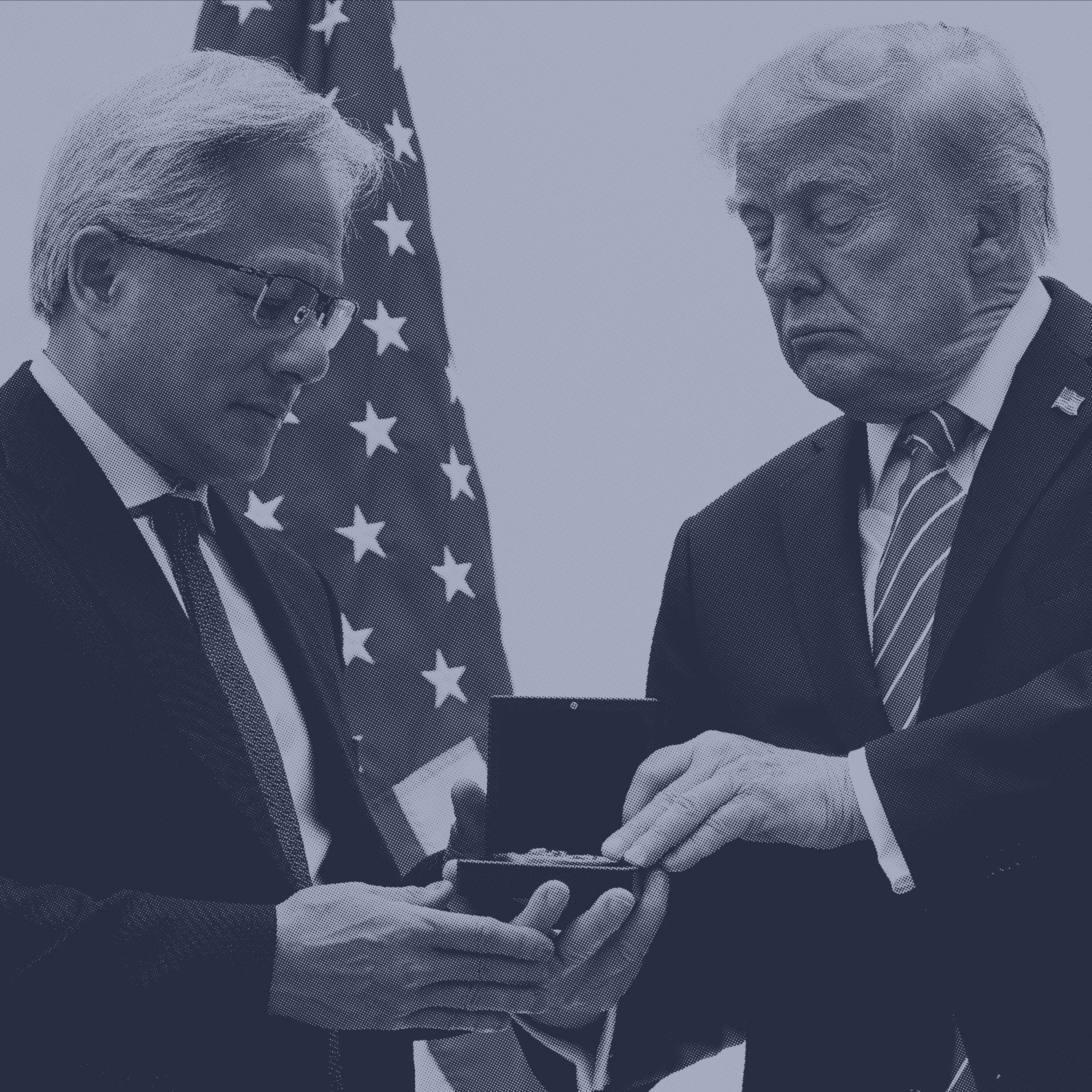


The episode examines the “imperial presidency” and argues that President Trump’s second-term approach expands unilateral executive power, weakening checks from courts and Congress, and reshaping norms through actions that are hard to reverse.
Tamara Keith (NPR politics correspondent; covers politics), Franco Ordonez (NPR White House correspondent; covers the White House), Eric McDaniel (NPR Congress correspondent; covers Congress).
Trump’s administration uses broad national-security rationales and other tactics to bypass Congress; Congress has largely abdicated oversight for decades, partly due to political incentives and fear of high costs for opposition; Supreme Court-confirmed presidential immunity and expansive pardon power increase leverage.
DOJ searching a congresswoman’s home; banning media from the White House; knocking down trees to redo a Washington, D.C. golf course; investigations of Harvard and Yale; deals with Russia contradicting sanctions; bragging about Google renaming the Gulf of Mexico.
Written by AI. May contain mistakes.
Discussion on President Trump's unilateral actions and their implications.
“I am Franco Ordonez, and I cover the White House.”
Analysis of Trump's boasting about his power and its political implications.
“message to keep Republicans in charge of Congress.”
Examination of Congress's response to Trump's actions and oversight role.
“I mean, he's not only, you know, doing it to get through whatever congressional gridlock, he's going after political opponents.”
Discussion on presidential immunity and how it affects Trump's power.
“And so, like, Congress is supposed to be the oversight, the check on the power of the executive.”
Exploration of the limits of executive orders and the challenges of lawmaking.
“Eric, in terms of Congress and, you know, the Republican Congress has been, as we've discussed, pretty unwilling or uninterested in reigning in the president.”
Insights into how presidents build legacies through executive actions.
“Things like executive orders or, you know, an enforcement decision, that can all easily be undone by the next president.”
Discusses how presidents use executive power and the implications for future administrations.
“And they need to show that they're taking action.”

Get the gist, explore an idea or ask about something said.
 Claude
On The NPR Politics Podcast, what are the key points of this episode?
Searching your listeningAutomatic transcript. May contain errors.
0:00Support for this podcast and the following message come from Allianz Travel Insurance. Ready to turn last year's travel dreams into this year's jet-setting reality? An all-trips annual plan is ready when you are all year long.
0:13Tamara Keith: Learn more at AllianzTravelInsurance.com. The imperial presidency. It's a term that dates back at least to the Nixon administration. The idea that the president and the executive branch are preeminent. But President Trump and the people around him view his executive authority even more expansively. So what does this mean for politics now and for the future?
0:41Tamara Keith: It's the NPR Politics Podcast. I'm Tamara Keith. I cover politics. I am Franco Ordonez, and I cover the White House. And I'm Eric McDaniel. I cover Congress. Franco, let's start with what President Trump and his administration have been doing unilaterally this term. Can we just run through some of the examples to refresh our memories? However, we could spend an hour on it. So let's just do the high points. He's done so many things. He's done so many things. I'll start with some of the more recent ones, such as his Justice Department, searching a congresswoman's home. He's using some really squishy national security reasoning to, you know, ban media from the White House.
1:23He's also knocking down trees in Washington, D.C. against a judge's wishes in order to kind of redo a golf course. His administration is also launching investigations of major universities like Harvard and Yale for allegedly depressing American wages. And he's really making deals with Russia that, you know, fly in the face of congressionally passed sanctions. That's just some of them.
1:46Tamara Keith: You know, he has now actually been talking about this on the campaign trail as part of his closing message to keep Republicans in charge of Congress. I'm not quite sure why this is a pitch for keeping Republicans in control in Congress, but he's talking about it. Well, I mean, he's boasting about his own strength and his own power and his power to get things done. And that's why voters should continue to support him. And if they support him, they'll support Republicans. I mean, I was really struck by how blatantly he was boasting of this over the weekend in Kentucky, for example. And see, I don't think I could have done this in my first term.
2:27This is a much more powerful term. I can do stuff that's unbelievable. You know, a lot of people think the stuff that he's doing is unbelievable. And, you know, he went on to brag about how Google quickly changed the name of the Gulf of Mexico to the Gulf of America. He said in the last term that Google wouldn't take his call. Now they kiss my ass, you know. I mean, I think Trump's made very, very clear that in this second term, he's going to do things the way he wants. And he's not going to allow anyone to stop him or say no, whether that's people within his administration and whether it's departments, agencies, nor whether it's Congress.
3:12I mean, because, you know, Trump's not, you know, the only president to have grown frustration with Congress. But, you know, George W. Bush, obviously, he had some controversial signing statements where he would kind of reinterpret laws. Obama, you know, he famously said he had the pen and the phone and he was going to use it.
3:33Tamara Keith: That was a time of weakness for his presidency, I will say. Well, Trump is definitely, you know, he's definitely doing those things and he's taking it so much farther, as you point out. I mean, he's not only, you know, doing it to get through whatever congressional gridlock, he's going after political opponents. He's going after cultural opponents. He's going after universities. He's going after lawyers. He's going after anyone, critics say, opposes Trump's views or policy. And just to do our daily Schoolhouse Rock segment, right, there are supposed to be three co-equal branches of government.
4:06We haven't seen substantial, although we have seen some oversight from the judicial branch where there's been some pushback against what the president is doing, for example, on mail and ballot regulations around the midterm elections. Or tariffs. Yeah. And then you have Congress. And in the first term, there were still some vestiges of the Republican Party that weren't made in Trump's image, right? People who had sincere beliefs about limited executive power, folks like Adam Kinzinger or Justin Amash, Republicans who went and pushed on the president, Liz Cheney among them, Mitt Romney, Jeff Flake in the Senate.
4:40Tamara Keith: All former members of Congress. All former members of Congress, I will say. And now the real pushback you saw was from folks who knew they were already on the way out the door in the Republican Party. We've called it the YOLO caucus. The Wall Street Journal calls it the Wounded Bear Caucus, which I also quite like. These are folks like Texas Republican John Cornyn, North Carolina Republican Tom Tillis, to some extent, Louisiana Republican Bill Cassidy. But largely, Congress has abdicated its ability to do oversight work. President Trump has incurred no share of controversies, But there haven't been real congressional investigations, maybe with the sole exception of the Jeffrey Epstein files, which took a lot of bipartisan work and ultimately cost Republican Thomas Massey in the House of Kentucky his job.
5:34And so, like, Congress is supposed to be the oversight, the check on the power of the executive. And we just no longer see that. Full stop.
5:44Tamara Keith: You know, another factor here is that the president has immunity, presidential immunity for acts while in the job. It was affirmed by the Supreme Court while President Trump was out of office, giving vastly more leeway to a president. And the president has a very expansive pardon power. All presidents have this power. President Biden used it in inventive and expansive ways. And I can't imagine President Trump wouldn't follow that lead and take it even further. Yeah, I mean, I think there's no question about that. Certainly, the way he's been able to, you know, make appointments, kind of put his influence in these spheres of power, whether it's the Supreme Court, the Justice Department.
6:35You know, I was just thinking about what Eric was saying about in the first term, how Republicans in Congress push back. You also, I think this speaks to your point, Tam, is you had members of the administration who were pushing back on Trump, who were part of kind of like the more traditional Republican hierarchy. You had John Kelly at DHS. You had Jim Mattis at the Defense Department. You had even Pompeo was, you know, at State Secretary of State. Now he was, you know, a little bit more on the Trump side, but he definitely he definitely came from kind of a more historical view. So all those people have kind of moved on.
7:14And now Trump is just is just surrounded by loyalists who really are doing his bidding, especially at places like the Justice Department, especially at places like the FBI.
7:24Tamara Keith: Eric, in terms of Congress and, you know, the Republican Congress has been, as we've discussed, pretty unwilling or uninterested in reigning in the president. I think they see their role as doing what he wants them to do as, you know, a governing trifecta. I think in the past, Congress has at times been like, but wait, we want to use our power. We should exert ourselves. Is that are they saying, no, we don't we don't want to legislate? We'd just as soon have the president do this through executive action? I mean, I think some of our listeners could go through this response because it's the same one that Congress reporters always make on this podcast, which is like they had very narrow majorities both in the House and the Senate, particularly in the House.
8:12So their capacity to all get on the same page and pass legislation was limited. The second thing I would say is in the configuration of the imperial presidency, when you have someone who takes such a broad view and has a great willingness to act, it's oftentimes the easier way to do it. Right. You don't have to build consensus if Trump is just going to do it on his own. And the cost of opposing him is so high. Right. I spoke to Matthew Green. He's a political science professor at Catholic University. And one of the things he talks about is like you don't want to abandon your team to make an ideological point about limits on executive power when he's already doing the policies you want him to be doing.
8:53Do you want to quit a group that has influence because you're concerned about some principle of presidential power or do you want to take advantage of having a Republican president? And the latter is a very is very tempting. So there's just not a lot of reason to stick your neck out if your goal is to stay in Washington a long time. I mean, that was what Lindsey Graham did, the late senator from South Carolina. He ran against Trump for president in 2016. He warned so many times against Trump as president. But once Trump was in power, Graham just got closer and got more closer so that he could have influence.
9:33And then he became one of the most influential senators, while those who continue to oppose Trump are no longer there or are leaving.
9:43Tamara Keith: All right, we're going to take a quick break and we'll have more in a moment.
10:13personalized AI right inside your actual workflow. Try Google Workspace with Gemini at go.gle slash workspace with Gemini. NPR Plus is a great way to support independent journalism. But did you know it also saves you time? Over a year of fresh air, NPR Plus listeners can save more than 17 hours with sponsor-free episodes. As a thank you for your support, get more NPR in less time, plus bonus content and dozens of other sponsor-free shows. Sign up today at plus.npr.org. A beautifully designed Squarespace website is the difference between thinking about photography school and selling your portraits online.
10:55It's the difference between giving away those cookies you just made for free and running your cookie empire. A beautifully designed Squarespace website is the difference between having a movie-reviewing hobby and a movie-reviewing career. Here. Squarespace. Because no matter what you're into, a website makes it real.
11:13Tamara Keith: Use offer code DIFFERENCE for 50 % off select plans. Terms and conditions apply. Welcome back. And one question I've been having as we've had this conversation is, you know, executive authority is fast, it is efficient, and it is powerful, but it isn't durable necessarily. Things like executive orders or, you know, an enforcement decision, that can all easily be undone by the next president. In fact, President Biden came into office and immediately signed a bunch of orders reversing President Trump's orders. And then when President Trump came into office, he signed a bunch of orders reversing the Biden orders.
11:53Tamara Keith: So why not actually try to get some of this stuff into law so you can have a more lasting effect so that the next president doesn't come along and just like bring out the white erase marker and erase it all. I guess I'd say two things to that, which is like how reversible are things like knocking down the East Wing or. Oh, that's not reversible at all. And so like there are some things that President Trump has done, including securing a decision at the Supreme Court that gives presidents immunity for official actions that are just locked in. And he did that because he just kept doing executive orders, executive action and just doing stuff out in the world that meant like the norms are changed, right?
12:31The reality is changed going forward. And, you know, there is some stuff like every Republican president puts in place a ban on using foreign aid money for abortion care overseas. Right. That happens. Every Republican administration, every Democrat, including Catholic Joe Biden, has undone it. Right. And so there are some things that will just swing back and forth. But like it is harder to pass laws. And we have seen that over and over again in this Congress. Congress has only gotten worse at it over time. You've seen everything from the appropriations process to just straight up administration domestic policy move through arcane processes like reconciliation that require a little less need to deliberate than other kinds of bills.
13:12And like we are not seeing Congress get healthier or better at those things. And so executive action is the option, right? I think presidents, I think Washington lawmakers would love it if they could actually get things done that would be, you know, written in black and white and become laws. But I think they're just practical that they know that's not going to happen. And presidents are politicians and they need to get support and they need to do something to justify the work they're doing. And I think they know that, you know, this is not going to work in a Congress that can barely pass anything.
13:47So they're taking steps that they can. You know, the will is now the need that presidents have is to make things happen now to keep the support that they have, whether it's midterms or reelection. For Trump, obviously, it's about the midterms. And they need to show that they're taking action. And this is the way that they're taking action. And just to build on Eric's point, Trump has made very clear that he knows that so much of the stuff that he is doing is going to be rewritten or taken out. And that is why he has said himself that he's constructing all these legacy things, doing the work on the reflecting pool, trying to build the arch, especially the triumphal arch, but also the ballroom and all these other construction projects that can't be torn down.
14:34And the historical way that presidents thought about executive power, I think, is taking action when they knew something needed to happen, but there was no path through it on Congress. I think about Deferred Action for Childhood Arrivals or DACA during the Obama administration, where Congress worked at length in a bipartisan way to try and secure a deal on immigration reform, something that hasn't happened in a comprehensive way in this country through Congress, arguably since the 1990s or earlier, depending on how big we're talking about. And so when in the United States there were lots of children coming over the border who didn't have any legal status in this country but did not elect to make that decision themselves, Obama took executive action to create a program through which those children could engage in systems and go to college and work legally in the United States that Congress never managed to strike a deal on and still hasn't.
15:28Tamara Keith: And remarkably, still hasn't. And yet that program has persisted. Certainly the Trump administration has tried to make changes to it. But that program continues on. Yeah. Which is a rare thing. Is there any pause from Republicans, particularly in Congress, who look at what President Trump has done and say, oh, boy, what if Democrats take control again? What if Democrats end up with a trifecta in 2029? I think what you're setting the stage for is a conversation that we'll have many times about what the future of the Republican Party after Trump looks like, right? Because everyone is willing to make this deal with the presidency because Trump is in so many ways a singular and charismatic figure whose support comes from his personality and his presence that I think will be hard to transfer to someone else, say, a Vice President Vance or a Secretary of State Marco Rubio or whoever.
16:27And so now Republicans will think, well, what is it that we stand for on an ideological basis? And can we advance those causes without a singular figure like the president or in a future Democratic administration? And I think, you know, folks like Freedom Caucus members and other kind of small government conservatives inside the Republican Party will willingly swing back to believing in the principle of small government to try and enact those things when it doesn't come at a political or policy cost to them. And so I imagine that question that you're asking, they'll have to contend with whether it's a Democratic administration after 2028 or not.
17:08Tamara Keith: You know, power tends to expand. It doesn't really contract. Do you have any sense of what all of this will mean for the next president? Will the next president do all this again? I mean, I think I mean, who knows what exactly will happen? But look, the trend has shown that every president has done more. I mean, we talked about the signing statements that that Bush should. We did talk about the the pen and the phone from Obama. And now Trump is taking it to another level. I mean, is there going to be another Trump that's going to wield this power in the way that Trump has? I'm not sure. But certainly, I think, you know, Congress has been abdicating this power for practically 25 years.
17:53It doesn't look like they are making any changes anytime soon. And I think you can expect with the trend of executive power that's happening that that presidents are going to continue to try to wield more power. I mean, these are these are people, individuals that are going to seek more power, not less power. I just I just find it hard to believe that a person elected to the highest office in the country, the most powerful perch to be on is going to be like, oh, oh, no, please. I don't I don't need that. You do it. I know you're not going to be able to be able to solve this, but I know in principle you should.
18:32Presidents have policy preferences. And if Congress can't do anything to enact them, presidents will take action on their own because that's why they're in the job. Right. Right. And I have I feel like Congress has to be at an inflection point. Right. Like they do not carry an oversight role anymore. Democrats will try and embrace that if they do win back either the House or the Senate. But they won't be able to pass substantial legislation because we're still in divided government. And in the Senate, they'll almost certainly need Republican support to advance any legislation if they do end up taking the majority there.
19:04So and Trump is still in the White House. So legislation would require his signature. So what we'll see is oversight, but no policy and and probably oversight with no cooperation.
19:15Tamara Keith: Right. Like because of executive power. I will I will say, though, over the last few years, I mean, they're they just we haven't had filibuster majorities either, though. I mean, I will be curious if, you know, if there are some filibuster majorities, whether Congress will take action. And I think that will be an interesting thing to watch. But so many of these things, like as far as can you put the toothpaste back in the tube and can Congress reclaim some of its authorities? I think there is some appetite to do that, right? The Iran war is unpopular. Congress has the ability to regulate military conflicts and declare war, even though the Trump administration hasn't asked them to do that.
19:53Susan Collins, Republican of Maine and the chief appropriator in the Senate, was livid when the administration unilaterally ignored Congress's power of the purse. I mean, there are so many things that strike at the fundamental heart of what lawmakers are there to do that I'd have to think that if anybody wants to take those jobs, they're going to want to be able to exercise their powers, too. So, I mean, maybe we do come to a point where they get so feckless that they have to do something.
20:19Tamara Keith: All right. Let's leave it there for now. And before we go, a reminder that new episodes of our show come out every weekday afternoon, usually between 4 and 5 p.m. Eastern. And the best way to make sure you get those as soon as they're available is to follow the podcast. On Apple, that means look for the big plus sign on our show page. And on Spotify and the NPR app, there's a big follow button that you can smash. Make sure you have the latest developments for your evening commute, walking the dog, doing the dishes, whatever you do, wherever you do it, when you listen. Especially so you can join us tomorrow for our weekly roundup.
20:57Tamara Keith: I'm Tamara Keith. I cover politics. I'm Frank Ordonez. I cover the White House. And I'm Eric McDaniel. I cover Congress. And thank you for listening to the NPR Politics Podcast.
21:13Stay tuned for the following announcements and messages from our sponsors. This message comes from Google Workspace with Gemini. Ever notice how every new AI tool asks you to explain your business to it all over again? Google Workspace with Gemini skips that. You get Google's AI built right into the premium versions of Gmail, Google Docs, Sheets, and more. no new tools, no extra logins, just one subscription that gives you personalized AI right inside your actual workflow. Try Google Workspace with Gemini at goo.gle slash workspace with Gemini. This message comes from IXL. IXL provides personalized learning and powerful insights that help teachers boost achievement and understand student progress in real time.
21:59Learn more at IXL.com slash NPR.