Ask ChatGPT

 The NPR Politics Podcast
10 Sep 2026 · 16m · 8 chapters

NPR Politics Podcast episode on the young conservative movement after the 2025 killing of Turning Point USA founder Charlie Kirk; also discusses Trump’s $5,000 “dividend” campaign promise at a Republican midterm convention and what it means for voter credibility and youth politics.
Hosts Miles Parks (covers voting), Elena Moore (covers politics), and Mara Liason (senior national political correspondent). Moore cites conversations with young people and a Democratic pollster, John De La Volpe, who runs Gen Z focus groups.
Young conservatives are less enthusiastic and more divided; they’re distrustful and feel they lack political agency. Trump’s affordability messaging matters, but broken promises reduce credibility. Kirk’s legacy includes free-speech advocacy, though some supporters criticize “free speech for me, not for thee.”
Memorial at Utah Valley University where Kirk held a “Prove Me Wrong” event before he was shot; Reuters polling showing 18–29 men’s Trump support down 11 points since February; debate over whether Trump can legally issue $1.3T in checks without Congress; Kirk-linked “lose by less” strategy to chip away at under-30 Democrats.
Written by AI. May contain mistakes.
Discussion on the anniversary of Charlie Kirk's tragic death and its implications.
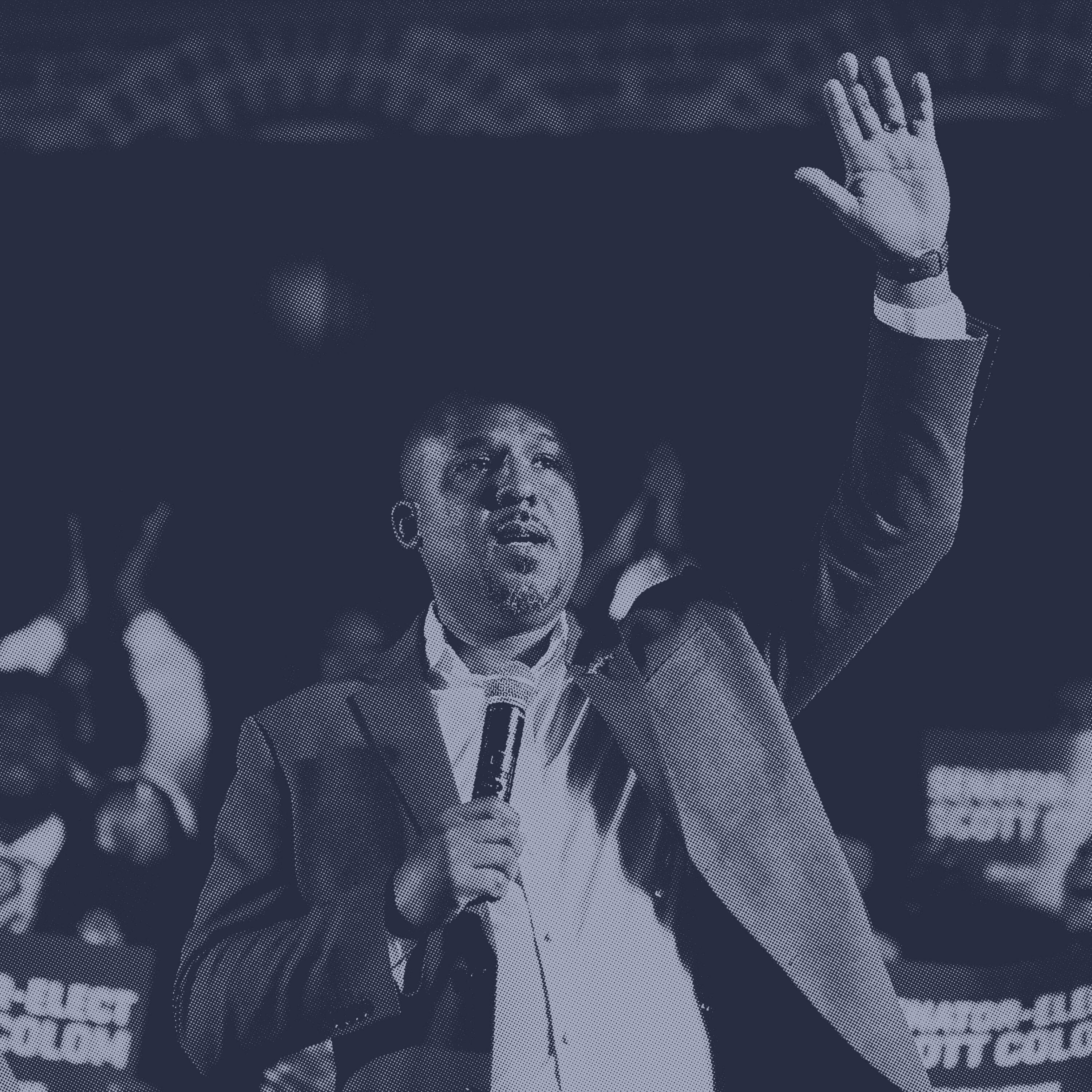
“One year ago today, conservative activist Charlie Kirk was gunned down in Utah.”
Analysis of Trump's proposal to issue $5,000 checks to every adult and its legality.
“And I'm Mara Liason, senior national political correspondent.”
Exploration of young conservative voters' reactions to Trump's promises and political strategies.
“You mean, can he promise to give everybody$5 ,000?”
Discussion on how young conservatives feel about Trump and the Republican Party two years post-election.
“They don't want to address it directly because he said it's a myth, but they know that this is what voters care about.”
Analysis of Charlie Kirk's influence on the conservative movement and the concept of free speech.
“A lot of young people are not as excited and resoundingly proud and happy with the state of their politics, their political leadership, as they were when Trump came into office.”
Examination of young voters' expectations and disappointments in leadership.
“It feels like an issue that is it fair to say that that is another part of Charlie Kirk's legacy, just this sort of free speech and moving the Republican Party into winning on that issue?”
Explore how young conservatives feel let down by Trump and the GOP.
“voters who took a chance on former President Joe Biden in 2020, who got a huge portion of the youth vote.”
Discuss the challenges facing the GOP after Charlie Kirk and Trump.
“But when you make a man the movement, what is the movement without the man?”

Get the gist, explore an idea or ask about something said.
 Claude
On The NPR Politics Podcast, what are the key points of this episode?
Searching your listeningAutomatic transcript. May contain errors.
0:00Oh, Kevin, it feels good to be back. It sure does, Casey. And what a time. The world is talking about AI and what's going on in Silicon Valley. And we are here with a new show to tell you all about it. That's right, Kevin. On our new show, Machine Gods, twice a week, we'll be bringing you the biggest news in tech and bring you unmatched access to the real titans of this industry. You can find Machine Gods from NPR on the NPR app or wherever you get your podcasts. One year ago today, conservative activist Charlie Kirk was gunned down in Utah. Today, we're going to check in with conservative youth movement, how they're coping and where they go from here.
0:37It's the NPR Politics Podcast. I'm Miles Parks. I cover voting. I'm Elena Moore. I cover politics. And I'm Mara Liason, senior national political correspondent. And before we do dive into our main topic here, Mara, during this first ever Republican midterm convention last night, President Trump made a pretty notable new pitch. Seems like a novel way to get voters. If the Republicans win the House of Representatives and the United States Senate, both of them, because of our economic, tremendous economic success, like in history, we've never had anything like what's happening. But because of our tremendous strength and success economically, I will issue a dividend to every adult citizen in the United States of America for$5 ,000.
1:31I feel like the first question that comes to my mind when I saw this this morning was like the same one that comes up a lot with Trump is like, can he do this, Mara? Sure. You mean, can he promise to give everybody$5 ,000? I mean, is it literally legal? I don't know. Mara, make it make sense. It's legal to make a campaign promise. That's all he's doing. He's saying, If my party wins both houses of Congress, I will issue$5 ,000 checks to everyone. Now,$5 ,000 checks to every adult in America would be$1.3 trillion. That's a lot of money. Whether he could actually do this without congressional approval is a whole other question.
2:06But this is very similar to someone saying, if I am elected, I will issue everyone a COVID check or a tax cut. It's no different from any campaign promise. And what's interesting about it is that Donald Trump's approval rating has dropped dramatically because he hasn't fulfilled his campaign promises. And now he's making another one. We'll see how credible it is to voters. That's what I was going to ask is, like, does this move the political needle, do you think, Elena? I mean, is any thoughts on whether this is going to matter this year? I mean, the first thing I thought about is, yeah, exactly what Mara said.
2:38this is a big campaign promise, but Trump is not on the ballot again, which is also something to keep in mind. You know, this midterm election, obviously, he's not on the ballot, but, you know, symbolically, he is, you know, the midterms are often a referendum of the sitting president. So you can argue he kind of is on the ballot. But after this midterms, he really isn't. And so I'm kind of curious, I mean, what the White House even sees as the repercussions here on really making sure this pans out. Well, one of the things this does tell us is that as many times as Trump disparages affordability as an issue, they understand that it is the top issue for voters.
3:15And this promise of$5 ,000 checks to everyone is a way that they can show they recognize that affordability is an issue. They don't want to address it directly because he said it's a myth, but they know that this is what voters care about. It's also once again, just like a very tangible promise, which we know that that really resonates with voters on both sides of the aisle. I mean, the amount of voters who would tell me on the campaign trail for former President Biden, oh, he's going to forgive my student loans or, you know, Trump voters who said no tax on tips. Like these are very tangible promises and that can go a long way for someone.
3:46But I guess I mean, President Trump has promised people money a lot of different times in his second term, right? I mean, he promised people some sort of checks after the doge cuts. I remember He promised tariff refunds at one point. I guess I'm just wondering, and people haven't seen money from either of those two other instances. When the average voter hears about a promise like that, do you think they engage with it like, oh, like this is actually going to happen? Or is it kind of a thing that they shrug off? Well, I can guarantee that there are pollsters in the field right now asking people that question.
4:17I mean, do you think you're actually going to get$5 ,000 if they take both houses of Congress? What do you think? I mean, we're now at the end of a very, very long line of broken campaign promises from Donald Trump. I don't know if anybody's ever counted them up and compared them to the broken campaign promises of other presidents, but he has quite a record of doing this. Right. So this was probably the most notable moment of this midterm convention going on in Texas. It's continuing tonight where they are going to have a moment to commemorate Charlie Kirk. And Elena, other commemorations are going on in Utah, where you are right now.
4:52Yeah, right. So there's a memorial tonight. It'll actually be on the campus of Utah Valley University, which is the same campus where Charlie Kirk was doing his Prove Me Wrong event last year on September 10th, 2025, when he was shot and killed. I mean, how are young people feeling now about the Trump presidency, Elena? Because I do remember all of those stories after the 2024 election about the way that Trump was able to win this coalition that has been previously, I think of when I think of political wisdom, young voters have been traditionally liberal voters. And Trump was able to make gains, a lot of that because of Charlie Kirk.
5:30How are those people feeling now two years in? Yeah. And we should say, you know, Kirk is credited with helping. He was definitely a massive cultural player in this. But we can never, you know, fully attribute Trump's electoral gains with Charlie. Yeah, of course. I think he'll be linked to that. But, you know, former Vice President Kamala Harris still won the under 30 vote. But Charlie Kirk said this to me when I spoke with him the day after the election day two years ago. He said the goal was to lose by less. And that's exactly what they did. Trump chipped off a key portion of the Democrats' needed coalition of under 30 voters.
6:08So that's all to say your question on, you know, how are young people feeling about Trump and the Republican Party now? It's complicated. A lot of young people are not as excited and resoundingly proud and happy with the state of their politics, their political leadership, as they were when Trump came into office. There are massive issue divides among young conservatives on some of the same divisive issues that are playing out in the larger Republican Party. Things like whether the U.S. should have gone to war with Iran, the U.S.'s relationship with Israel, rising prices. You know, some people still bring up how the administration has handled the Epstein files.
6:46These are issues that have been, you know, somewhat of a big wake up call for a lot of young conservatives who felt very seen by Trump's 2024 campaign. And, you know, folks have told me they feel like Trump has gone back on some of his promises. One of the great political accomplishments that Donald Trump had was to bring young men into the Republican column. But what we know from polling is that young men have begun to sour on Trump just like other parts of the Republican coalition. Haven't broken with him entirely, but they're less enthusiastic. A Reuters poll taken in August showed that men 18 to 29, their support for Trump was down 11 points from February a year ago.
7:26Well, and I keep thinking you always, I feel like, hammer down to this point that these younger voters don't identify with political parties the same way that older voters do. And I guess I just wonder if that makes them just generally a more fickle group, that they are more willing to sort of, I don't know, take a critical eye to their party leaders or to the policies of the current moment. Yeah, yeah. I mean, here I go back on my soapbox. Get up there. Here I go. I'm climbing up. This is a generation that has only known political turmoil and economic uncertainty. This is a generation, speaking of the 9-11 anniversary tomorrow, that is basically their entire political life has been shaped by 9-11.
8:07Most of them have only known a politics that is Trump. They are extremely distrustful of institutions. They are extremely, you know, apathetic. I talked to one Democratic pollster who's been studying young people for decades. His name is John De La Volpe. And, you know, he does regular focus groups with Gen Z. He observes focus groups. He says Charlie Kirk's name still comes up all the time. And to him, it feeds into this growing feeling that so many young people are feeling, which is that they have no, you know, political agency. And, you know, I found that so striking because to add to my soapbox, it is another example of this feeling that of a generation, regardless of partisan affiliation, that just has example after example of feeling like the country that they they live in, the system they've been born into does not work for their benefit.
8:55OK, let's leave it there for now. More in just a moment. Stay tuned for the following announcements and messages from our sponsors. This message comes from Viking, committed to exploring the world in comfort. Journey through the heart of Europe on an elegant Viking longship with thoughtful service, destination-focused dining, and cultural enrichment on board and on shore. And every Viking voyage is all-inclusive with no children and no casinos. Discover more at Viking.com. I'm Kevin Roos. And I'm Casey Newton. And together, we've been tech journalists for decades. Now, we're your hosts of Machine Gods, a new podcast from NPR that makes sense of what AI means for your work, your life, and all of our futures.
9:38Twice a week, we'll be exploring the biggest moves in tech and give you unmatched access to the real titans of industry. Listen to Machine Gods from NPR on the NPR app or wherever you get your podcasts. NPR Plus is a great way to support independent journalism. But did you know it also saves you time? Over a year of fresh air, NPR Plus listeners can save more than 17 hours with sponsor-free episodes. As a thank you for your support, get more NPR in less time, plus bonus content and dozens of other sponsor-free shows. Sign up today at plus.npr.org. And we're back. So, Elena, sticking with Charlie Kirk and his enduring legacy in our politics, I've been thinking today about free speech and how much that was a main issue for Kirk as he was doing for years and years and years, these viral moments where he was just debating people over and over again on college campuses.
10:35It feels like an issue that is it fair to say that that is another part of Charlie Kirk's legacy, just this sort of free speech and moving the Republican Party into winning on that issue? Yeah, I mean, I think it's a good point to bring up. I think so. I mean, Charlie Kirk, like a key part of his like initial entrance into politics was like this core value set he had on like defending free speech, free markets, limited government. Those were like his things. That key part there, free speech, was crucial because he was talking about like wanting to be a conservative proudly in liberal spaces and not be penalized for it.
11:10You know, that was kind of the central impetus for starting Turning Point. And of course, supporters will look at how he died as a clear violation of free speech. And, you know, people can disagree with Charlie Kirk's views. He said a lot of really disparaging comments towards immigrants, trans people, black people, women. He spread conspiracy theories. There was a lot of controversy, but he was still exercising free speech. And I talked to some young people yesterday who were there, like watching someone get murdered for beliefs that they have is a really chilling, scary thing. Free speech was one of the things that formed the key critique of the left on the part of Charlie Kirk, on the part of other conservatives, that there was kind of language police and it was cancel culture and you weren't allowed to say what you thought.
12:04But after Charlie Kirk's death, there was a kind of free speech for me, but not for thee, because there were people who got fired from their jobs for criticizing what Charlie Kirk said when he was alive. Yeah. I mean, this young voting bloc that Charlie Kirk did so effectively kind of galvanize, as we mentioned, has been traditionally a difficult voting bloc for Republicans to energize. Where does that go from here? I guess, do you both think that Republicans will be able to be successful in 2026, 2028 at being able to keep these voters coming out for Republicans? I think to a certain extent they will do that with young white men.
12:44I think that that's a pretty fertile ground for them to plow. I think it'll depend on things that are much bigger than these cultural issues like the economy. It turns out that young voters are kind of like all voters, and they care about whether they can afford a house and maybe take a vacation. If they're married with young kids, they want to think about being able to pay for their college. So, yeah, I think they can. The interesting thing is who will pick up the Kirk mantle? Is there another person like J.D. Vance, another young Republican who can excite them in the way that Kirk did? I don't know if that's possible, but I do think that the White House has mystified a lot of Republicans with deciding to compete with Kirk's commemorations.
13:31rather than just let Kirk have his own day and then have the convention on another night. I also just think there's a really interesting parallel here, Miles, to your question, which is this is a generation of voters that is really craving leaders that excite them, but they've also had a lot of leaders that they take a chance on and that disappoint them. And it reminds me a lot of, you know, when we were covering the 2024 election, so many Democrats and just in general voters who took a chance on former President Joe Biden in 2020, who got a huge portion of the youth vote. It was a key coalition that put him over the margins in some of these crucial swing states.
14:18They felt very let down by Joe Biden, whether it was because of how the United States approached Israel's war in Gaza or the affordability crisis. And I see some of the similar kind of sentiments forming on the right here with Trump, where young people were excited to vote for Trump and felt that he was seeing their plight. And now they once again, do not feel that. And something unique, I think about this generation, or unique at the scale rather, is this is a generation of voters, regardless of party, that is not afraid to criticize their own side. You know, if we're talking about the post-Trump world, the big question is, can there be somebody else on the Republican side who will have a cult of personality like he did?
15:01Joe Biden never had a cult of personality. I mean, that vote in 2020 was an anti-Trump vote among young people. But Trump and Charlie Kirk, those are figures that really did excite conservative young people. And the question is, who can pick up that mantle? I don't see J.D. Vance having a cult of personality. That's what I was going to say. Wasn't it supposed to be J.D. Vance? I feel like that was a year or two ago. It was supposed to be, but we haven't seen it yet. Yeah, well, I mean, in my conversations with young organizers involved with Turning Point or who used to be around the country, I end a lot of my interviews asking, like, who in the party or the larger movement excites you?
15:37And I mean, it's anecdotal, but I didn't hear Vance come up that often. I mean, he did somewhat. But I don't think, at least right now, there is uniting around him. I don't think that's happening. And it kind of gets back to this question, which we're talking about both with, you know, the aftermath of Charlie Kirk's passing for Turning Point or just what does the Republican Party look like without Trump as the leader? But when you make a man the movement, what is the movement without the man? And I think that like that's the question facing. It's the question that has been facing the Democratic Party for much longer.
16:11And it is now very much so and has been for a bit facing the larger Republican Party as well. We can leave it there for today. Before we go, a quick plug for a virtual event that we're doing for our NPR Plus supporters next week. It's on the midterms and the races that could decide the control of Congress. We're also going to do a live Q &A and give you a chance to ask us some questions. I'll be there. Mara will be there. My co-host Tamara Keith will be there. It's next Thursday at 2 p.m. Eastern, 11 a.m. Pacific over Zoom. For our Plus supporters, check out our bonus episode from August 30th for details on how to register.
16:47And if you have not joined NPR Plus yet, now is your chance. You can do it at plus.npr.org. Again, that's plus.npr.org. I'm Miles Parks. I cover voting. I'm Elena Moore. I cover politics. And I'm Mara Liason, senior national political correspondent. And thank you for listening to the NPR Politics Podcast.
17:13Stay tuned for the following announcements and messages from our sponsors. This week on Here and Now Anytime, the spy scandal rocking NVIDIA exposed how lax the government has been enforcing its ban on AI chip exports to China. Also, meet the scientists studying kids who claim to have memories of past lives. You know, a toddler talking about a traumatic death is surprising to a lot of parents. Here and Now Anytime. Listen on the NPR app or anywhere you listen to podcasts. Scientists know that creativity is good for our brains, but what if it could actually slow down aging? On a new episode of Your Turn with Alice Naubery, we explore the surprising health benefits of engaging with the arts.
17:56Listen to Your Turn on the NPR app or wherever you get your podcasts.