Ask ChatGPT

 The NPR Politics Podcast
12 Oct 2026 · 32m · 13 chapters
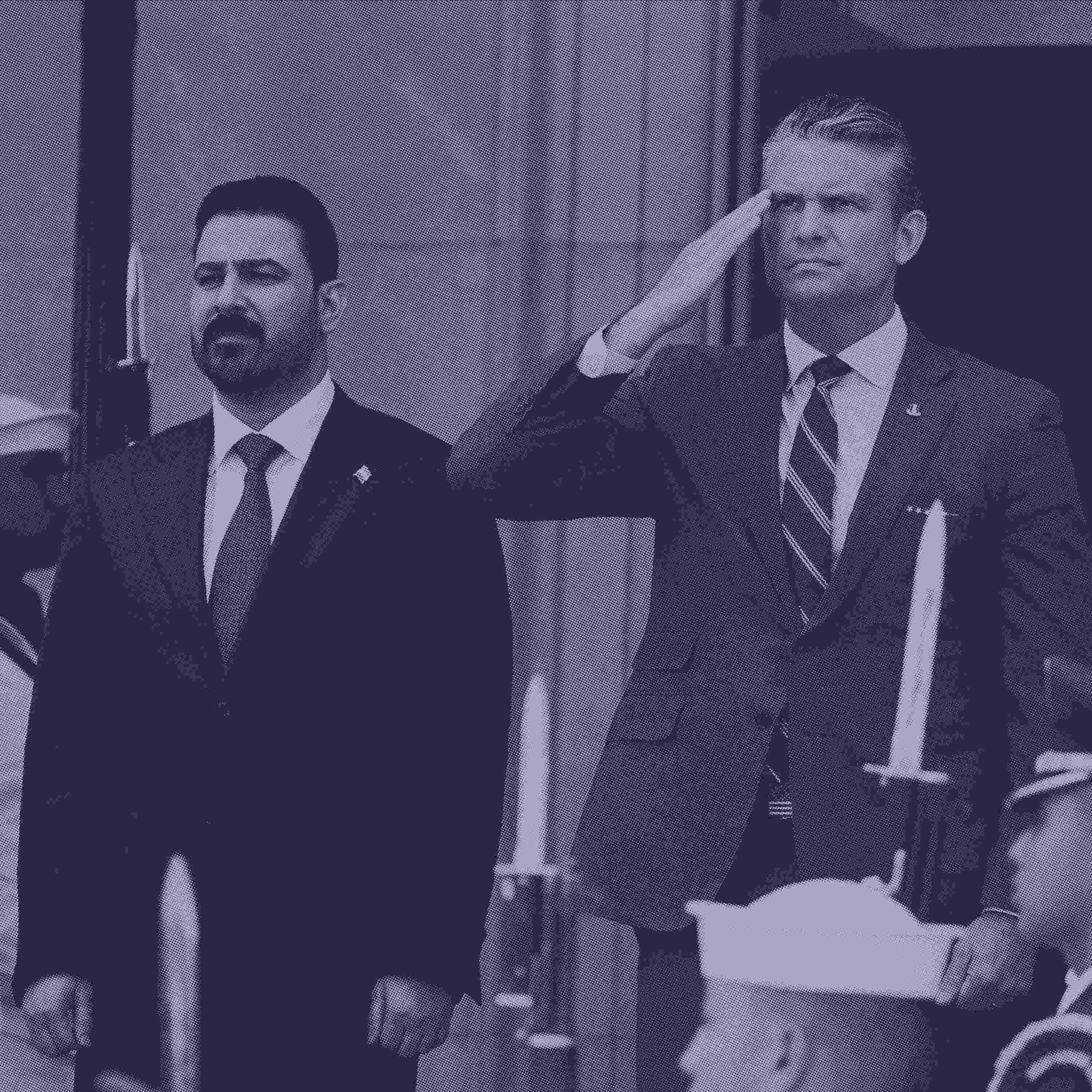
NPR’s Sources & Methods reflects on the U.S. fully withdrawing from Iraq for the second time (after 2011), what it means for Iran-backed militias and Iraq’s stability, and how the broader U.S. Middle East footprint is reshaping amid the Iran conflict.
Mary Louise Kelly (host). Jane Araf, NPR international correspondent in Baghdad. Tom Bowman, NPR Pentagon correspondent at large (studio in Washington).
The withdrawal was “anticlimactic” vs 2011 and leaves unresolved risks from remaining ISIS remnants and Iran-backed militias. Militias may stop attacks but likely won’t disarm without political/heavy-weapon concessions. U.S. influence persists via diplomacy and economic leverage (Iraq oil revenue routed through the U.S./Federal Reserve). Iran-backed groups and damage to U.S. bases (e.g., Bahrain) may drive further U.S. drawdowns and regional realignments.
ISIS defeated in 2019 but sleeper cells remain; U.S. anti-ISIS operations shifted toward Jordan; militias celebrated the pullout; Iraqis in Kurdistan worry; Turkey discussed as a potential security partner; Pete Hegseth’s “State of the Force” includes a four-star drone command and Project Agincourt.
Written by AI. May contain mistakes.
Discussion on the significance of the U.S. military's withdrawal from Iraq and the lack of ceremony compared to previous instances.
“I think we have to not ignore that irony that the U.S.”
Tom discusses the U.S. military's role in fighting ISIS in Iraq and Syria after the initial withdrawal.
“Yes, and it's dark and we're hearing what I think are fireworks because people are celebrating.”
Jane shares insights on the reactions of Iraqi militias to the U.S. withdrawal, including celebrations and disarmament negotiations.
“So just to spell out the timeline, 2003, obviously, the U.S.”
Jane discusses the mixed feelings among ordinary Iraqis regarding the withdrawal of U.S. troops and the hope for stability.
“and this was new in a statement on Thursday today, they said that they will stop attacks, which is a pretty big deal.”
Discussion on the remaining U.S. influence in Iraq, despite the military withdrawal, through political and economic channels.
“So there are a lot of families out and about at the zoo, all sorts of places.”
Reflection on the outcomes of the U.S. invasion and the legacy of the American project in Iraq.
“Just one last question to wrap up this portion of the conversation, and it's this.”
The hosts hint at the next discussion about the changing shape of U.S. involvement in the Middle East.
“When we come back, the changing shape of U.S.”
Discussion on the impact of U.S. military withdrawal from Iraq on the Middle East dynamics.
“operations in Iraq have come to a close again.”
Examination of Turkey's positioning to fill the void left by U.S. withdrawal in the Middle East.
“Turkey is very well positioned to fill part of the void.”
Analysis of Pentagon Chief Pete Hegseth's recent address on military readiness and policies.
“plus a bonus gift when you subscribe at prolonlife.com slash NPR.”
Discussion on the low morale among sailors and the challenges of reporting from the Pentagon.
“As far as morale, well, you know, we've been talking to a lot of sailors, their families, you know, who spend a lot of time on the Lincoln.”
Exploration of a young boy's interaction with his spy grandfather and insights into spy culture.
“I'm going to cheer us all up by saying it is time for OSINT, open source intelligence, public, nevertheless revealing bits of information.”
Reflections on the U.S. withdrawal from Iraq and the positive changes in places like Fallujah.
“14-year-old Beau also wanted to alert me that his grandpa writes spy thrillers and has got a new one coming out this month called The Berlin Truce.”

Get the gist, explore an idea or ask about something said.
 Claude
On The NPR Politics Podcast, what are the key points of this episode?
Searching your listeningAutomatic transcript. May contain errors.
0:00This message comes from Mint Mobile. This holiday season, unwrap a new wireless plan from Mint Mobile. Keep your current phone and your number and go to mintmobile.com slash switch. Hey there, it's Miles. Today we wanted to bring you some reporting from our friends at Sources and Methods, NPR's podcast about national security. At the beginning of this month, U.S. forces fully left Iraq for the second time since the 2003 invasion. Host Mary Louise Kelly talks with NPR's Jane Araf in Baghdad and Pentagon correspondent Tom Bowman to reflect on this moment. Here it is. I think we have to not ignore that irony that the U.S.
0:40came in here to topple a dictator, and it ended up opening the door for Iran. The U.S. military is pulling out of Iraq again For the second time since the 2003 invasion, the last American troops have left what is left of the U.S. footprint in the Middle East. This is Sources and Methods from NPR. I'm Mary Louise Kelly. Each week on this podcast, we walk, sometimes run, through the week's biggest national security stories. We do that with the NPR reporters out and about in the world covering them. This week, that is international correspondent Jane Araf, who is in Baghdad. Hey, Jane. Hey there.
1:22And NPR Pentagon correspondent at large, Tom Bowman, here with me in the studio in, to be specific, Studio 42 in Washington. Hi there. Pentagon reporter in exile. It's great to be here. There you go. Let's timestamp this. It is just past noon Eastern time. Makes it a little after seven in the evening for you, Jane. Yes, and it's dark and we're hearing what I think are fireworks because people are celebrating. What we hope are fireworks, considering you are in Iraq. Speaking of being in Iraq, one of the reasons you are there and in Baghdad is what we expected would be a whole lot of pomp and circumstance, some fanfare this week to mark the withdrawal of U.S.
2:07troops. How did it all go down? Yeah, kind of a lot less fanfare than we expected. I mean, in 2011, when the troops last pulled out, there actually was a ceremony. And those of us who had covered the troops embedded on the front lines were able to go and see them casing the colors, lowering the flag, getting on planes and leaving. And it was kind of, you know, it was a kind of closure for them for Iraq. because it acknowledged that something big had happened, right? This time, not so much. We were told there would be a ceremony that would be televised live. It wasn't televised live. In fact, you know, the soldiers had already pretty much left.
2:47There were about 1 ,500 of them recently, and that went down to a few hundred, and then that went down to nothing as they left before the deadline. So it was, I have to say, kind of anticlimactic. So few, I'm comparing that to the height of the war when there were something like 170 ,000 troops there. So just to spell out the timeline, 2003, obviously, the U.S. went in, started fighting this war in Iraq. Those troops all eventually left by 2011. 2014, they went back to fight ISIS. And so that's what is pulling out now. Tom, say a little bit more about what they have been doing. Because Iraq has so faded from the front pages, from the headlines, from top of mind here in the U.S.
3:31Right. Well, ISIS was defeated in 2019. The Islamic State came to an end. And then the remaining ISIS folks just kind of scattered in Iraq and also in Syria. I made several trips to both Iraq and Syria during the last number of years in Erbil where the U.S. had a large presence. and they would send troops and aircraft and Green Berets and Delta Force into Syria to work with the Kurds to go after the remnants of ISIS. But there are still sleeper cells in both Iraq and also in Syria. That was where I was going to go. If the fight against ISIS was won in 2019, what were U.S. soldiers still doing there in 2016?
4:12It was going after remaining cells and remnants and trying to make sure they don't come back. Correct. And they're still there. And now it's going to be up to the Kurds or maybe the Turks. There are thousands of Turkish forces up there, and the U.S. has moved its anti-ISIS fight to Jordan. But people I talk with say, well, you can't really fight ISIS from afar. You really have to be on the ground. So that's going to be a challenge, people I talk with say. You know, how do you move quickly if you have intelligence to go after some of their sites? Can you do it with drones? Can you do it working with the Turks or with the Kurds?
4:44That's going to be a challenge moving forward. And just quickly before we get back to what's happening in Baghdad this week, when you say the U.S. has moved the anti-ISIS fight to Jordan so that they can fight what's going on in Syria, what does that actually look like? This is a U.S. base that will host troops? There are a number of U.S. forces in Jordan. I went to a Green Beret facility there. It's in this like, you know, cavernous area. But also, as Jane knows, there are a couple of bases really close to the Syrian border that can be used for, let's say, if the U.S. wants to go forward a little closer to the Syrian border, they can use those small bases.
5:24Yeah. So, Jean, back to you and how this week's development is playing in Iraq. I know there are a range of views on the U.S. finally, finally, maybe finally, finally pulling out of Iraq. Start with people who were celebrating this. You managed to crash a celebration by a few militias who are very happy to see the back of U.S. troops. Those are some of the key militias, the most powerful ones, the ones that have taken credit as part of what they call the Islamic resistance for attacking the U.S. embassy, for attacking other U.S. positions. And so they held celebrations.
6:05There were fighters and just plain ordinary young men who were chanting, we drove out the occupiers with our weapons. And so here's what's happening in Iraq going forward. Okay, the U.S. has left, but there's still lots of weapons here. And what the government is trying to do, and the Iraqi prime minister has promised President Trump he will do, is to disarm those militias. So those militias, the key ones, some of the most powerful ones, are not going to disarm. And they've made that clear. But what they are going to do, and this was new in a statement on Thursday today, they said that they will stop attacks, which is a pretty big deal.
6:50However, that's not giving up arms. We spoke to former foreign minister, Hoshar Zabari, and he pointed out that unless they give up their heavy weapons, and we're talking about some major weapons, it doesn't really mean much. But also they have to get something for it. They have to be given political positions or something else for giving up all those weapons. And what looks, does that look likely at all that they will be given some kind of political role in Iraq going forward? There are some talks going on. And as we've seen, you know, in the history of the US in Iraq, the US makes accommodations.
7:21It has all the way since 2003. It has to. So it does look like they're not going to be giving up weapons. They're Iran-backed militias, we have to make that clear. And they're not going to be giving up weapons if they don't get something in return. The threat of being bombed so far, and actually being bombed both by the US has not been enough. So there will have to be some sort of give and take, it looks like. What about ordinary Iraqis that you're talking to, Jane, people not in militias, not carrying around big weapons, but just what is the take among people on the street? What's the conversation about the U.S.
8:00is finally out of Iraq? Yeah, you know, like so much in Iraq, it really depends on what your situation is, what happened to your family, whether you were one of the families of more than 200 ,000 civilians who were killed during the U.S. invasion, occupation, and the civil war that followed. So in general, I think there is a sense of relief. No one wants to feel like there are foreign forces on their land. But certainly in the Kurdistan region of Iraq, there's a lot of worry. And when I've talked to ordinary families here, you know, it's been a while since they've seen U.S. soldiers in the streets, years in fact.
8:40So mostly they just want to live their lives. They want to have peaceful lives. And they get a two-day holiday today. So there are a lot of families out and about at the zoo, all sorts of places. And that is kind of an example that Iraq actually has stabilized to a certain extent. When I say the U.S. is finally out of Iraq, obviously a diplomatic presence remains. There's a U.S. embassy. I mean, does the U.S. have influence going forward in terms of who's running Iraq, how decisions get made? Aside from the military footprint, what does the U.S. role look like or not? They absolutely do. You know, they have other levers of power, as you know, both diplomatic and political.
9:24President Trump, in kind of that winding statement that he made about the withdrawal of U.S. forces, referred to the Iraqi prime minister having won a landslide election. Well, he didn't win a landslide election because there was no election. You don't get elected prime minister. It's a political deal and then you're appointed. But he came to power because President Trump backed him. And that has been a key feature in politics. And that's something that U.S. will presumably continue to exert pressure on in that field. But also we can't forget that all of Iraq's billions of dollars in oil revenue actually runs through the U.S.
10:00It goes through the Federal Reserve Bank in New York. And it means that any time the U.S. wants to, it can turn off the taps on the dollar supply to Iraq. Interesting. So economic levers there, too. Just one last question to wrap up this portion of the conversation, and it's this. You know, Tom, you and I covered the wars in Iraq and Afghanistan in the years after 9-11. When the U.S. pulled out of Afghanistan, finally, it seemed as though so much of what the U.S. had built there, had tried to achieve there, came undone within a matter of days. The government collapsed. The military collapsed. Afghans who helped Americans like you trying to report from there were targeted by the Taliban.
10:48Girls yanked out of schools. Women told, no, you can't go work outside the home anymore. There's just so much undone. I mean, this is to either of you, but maybe take a swing out at first, Jane. What is left of the whole American project in Iraq? Gosh, that's a great question. If by American project, you mean that idea that they came in here to instill democracy? I mean, talking about Iraq is always, always, always difficult because there are assumptions, there were sweeping assumptions made that led to the war and everything that happened after. And the goal of the American project, quote unquote, kept shifting in the many years that it unfolded.
11:31So there's that. I think you also have to look, what's the legacy of the war in Iraq, right? Number one, why did the U.S. go there in the first place? They thought he had weapons of mass destruction, Saddam Hussein, particularly as a nuclear program. Well, he didn't. They got rid of it many years earlier, but he was bluffing because he wanted to keep Iran, his enemy, on their back feet. So the Americans cherry-picked or used faulty intelligence because they thought he had nuclear weapons. And they thought it would be easy. Remember, Deputy Defense Secretary Paul Wolfowitz said we'll be greeted with candy and flowers.
12:07Well, that did not happen. There was an insurgency. And I want to read something about the nuclear program, too, what U.S. thought was a nuclear program. What are you reading from here? This is Steve Call. You know him quite well. He wrote this terrific book called The Achilles Trap, and I highly recommend it to everybody. There was a nuclear scientist, Saddam's nuclear scientist, defected. And CIA interviewed him, put him through a polygraph. And one of the CIA operatives, after they realized this guy was telling the truth, that there was no nuclear program, he says, quote, we made a terrible mistake.
12:43Jane, I'll give you last word. Jump in. I was just going to say I think we have to sort of not ignore that irony that the U.S. came in here to topple a dictator. And it ended up opening the door for Iran. and we're seeing that influence in all sorts of ways. And it has now started a war against Iran. The other thing is, I was here in the 90s when UN weapons inspectors were here looking for those weapons of mass destruction that the US thought were here and others at the time thought were here. And they were very clear that they weren't finding it. The US wouldn't listen to them. And the US obviously still is not listening to the United Nations.
13:22But I think part of this whole legacy is kind of a history of going it alone or going it alone or persuading others, strong-arming others to join you. And now we're seeing the consequences. Let's take a break. When we come back, the changing shape of U.S. involvement in the wider Middle East. That's ahead on Sources and Methods from NPR.
13:49This message comes from CookUnity, the first chef-led meal delivery service where every meal is handcrafted in local micro-kitchens, not mass-produced in large facilities, with hundreds of dishes to choose from and over 10 different dietary preferences like high -protein, low-sodium, GLP-1, and more. Taste what happens when real, award-winning chefs make fresh, small-batch meals just for you. Go to cookunity.com slash politics or enter code politics before checkout to get 50 % off your first order. This message comes from Prolon. Want to look and feel your best this fall? Prolon's five-day fasting mimicking diet is a clinically developed nutrition program with the goal of promoting fat loss while protecting lean body mass.
14:34Developed at USC's Longevity Institute, it aims to assist the body in entering a fasting-like state that helps reset metabolism, target visceral fat, and support healthy metabolic markers. Get 15 % off plus a bonus gift when you subscribe at prolonlife.com slash NPR. This message comes from Quo. You're on a job, in a meeting, slammed, and a customer calls. If nobody picks up, they go to your competitor. That's why over 90 ,000 companies choose Quo, the business phone system built for busy teams. Smart call routing sends calls to the right person. Shared numbers let your team cover for each other, and an AI agent picks up when nobody can, capturing every lead so nothing falls through the cracks.
15:17Always say hello with Quo. Try it free at Quo.com slash NPR. So U.S. operations in Iraq have come to a close again. Meanwhile, the war next door in Iran shows no sign of coming to a close anytime soon. That war has seen other countries in the region targeted, countries that host U.S. bases. And all of this is reshaping America's military footprint in the Middle East. Tom, start right there with Iran and what kind of opening this leaves for Iran's proxy militias. We will recall that back in the early days of this U.S. and Israel-led war on Iran, one of the original goals was we want to weaken, eliminate Iran's proxy forces across the Middle East.
16:07No, they're strengthened, no question. We've talked about Iraq in particular where they're, you know, Iranian-backed militias. Now, what are they going to do going forward? Could they take potshots at the American embassy, let's say? What about threatening, you know, U.S. citizens there? Iran wants the U.S. to get out of the Middle East. So that could be a particular problem, especially in Iraq. But I think the wider Middle East, we've seen serious damage to U.S. bases in the region, particularly Bahrain, where the Fifth Fleet is headquartered. They've taken all the dependents out of there and most of the service members.
16:41So what's the way forward? It could be just sort of a skeleton crew there, which is there now. But are they going to maintain something in Bahrain? and also other parts of the Middle East, Kuwait, will they maintain troops there? The Pentagon, because of the damage done to some of these bases, they say we may not rebuild some of these bases. And also some of these countries, Jane probably knows this better, do we really want the U.S. in our country? We've been attacked by Iran. Some of them may start making deals with Iran if they see the U.S. start leaving the Middle East. Jane, pick up that thread.
17:15Tom's talking about what the calculation may look like from the Pentagon. Afghanistan's perspective. What about from some of these countries, Saudi Arabia, Kuwait, Jordan, that host U.S. troops? How are they rethinking whether that's a great idea going forward? I think they're definitely rethinking. If you look at the damage that was done to not just their oil facilities, their ability to generate oil revenue, but actually the image, the impression that they could weather pretty much anything. I mean, the image of Dubai now is not what the image of Dubai was just a few months ago. And I think, you know, one of the things that we're looking at here is that juxtaposition of what Iran has always called the axis of resistance, which includes Iran-backed groups here in Iraq, and the Yemeni Houthis who have made huge gains against Saudi Arabia.
18:06There's been a shakeup in all sorts of ways. You know, Saudi has said there have been attacks here from militias. The militias deny it. They say, okay, maybe it's splinter groups from here, but it has set back perhaps years relations between Iraq and Saudi Arabia. So there's a lot in play right now. It's so fascinating. I mean, Iran for a while has articulated the goal of wanting the US to get out of the Middle East. And it looks like we're going to see out 2026 with that being closer to a reality than it was at the beginning of 2026. All right, here's my next question. if the U.S. presence in the Middle East is shrinking, who's looking to step in and fill that void?
18:50Turkey. From this perspective, from this location that I'm in now, Turkey is very well positioned to fill part of the void. On one hand, it has agreed with the Iraqi government that it will shut down some of its bases. On the other hand, Iraq now is discussing with Turkey air defense systems. In times when there have been disputes between the U.S. and Iraq, some Iraqi officials have said, you know, we have other friends, we can look to other countries. And I think we're going to be seeing a bit more of that, but keeping in mind that the U.S. can actually keep a country like Iraq on a fairly tight leash in terms of who it trades with.
19:31I want to stay with Turkey for a second, because one of our colleagues, Hadil al-Shalchi, who is now based for us in Istanbul, lucky for us because we're all benefiting from her reporting. She had a story about how the leaders of Turkey, Saudi Arabia, and Pakistan sat side by side. She painted this picture of them. They were all at wooden desks in Mecca, and they signed, as she described it, a historic pact, the Mecca Joint Defense agreement, which combines Saudi Arabia's oil money, Pakistan's nuclear capabilities, Turkey's expanding ambitions and defense industry, and features something that looks kind of like NATO Article 5, that an attack on one of them would be an attack on all of them, and that they will promise to share intelligence and capabilities.
20:21The Turkish leader, Recep Tayyip Erdogan, was speaking recently at a youth conference and talked about the significance of these countries coming together.
20:37So I'll paraphrase there, but he's talking about these three countries coming together. Would God willing send a signal to the Islamic world? That's how they're thinking about things, Tom. I think that's really significant that Turkey clearly is a much rising power here, much like Iran is. It's almost a parallel with what's going on in NATO, that the NATO countries are looking at each other and say, you know what? Can we rely on the U.S. anymore? Maybe we're on our own now, but we have to work with each other. Maybe you're seeing the same thing over in the Middle East now. But in that alliance, that brand new alliance has been tested fairly recently and found a bit wanting in terms of what Saudi Arabia believes.
21:16They were being attacked by Yemen. And they apparently went to Pakistan and said, OK, time to pay up. You promised to defend us. And nobody jumped to their defense. So it seems like there's a very high bar there, as there is for NATO as well, right, in terms of activating a defense pact like that. Can I just ask the basic question? You know, when we say the U.S. keeps pulling, keeps getting pulled back into the Middle East, why? Like, just spell out what is the U.S. interest in staying involved in keeping a big footprint in the Middle East these days? Oil and Israel, right? I mean, Israel is at the center of almost every conflict we're covering.
22:04I've come from South Lebanon, where that conflict is continuing to not just simmer, but boil over. In all of these countries, some of whom have made peace with Israel, there are immense fears of Israeli expansionism. And one of the dynamics here is that the U.S. is seen as unfailingly defending Israel and it's causing instability, according to a lot of regional leaders. That might be changing. Let's take another quick break. When we come back, Pete Hegseth outlines the next phase of his effort to reshape the Pentagon. It involves testosterone testing. We're going to hear Tom Bowman's take. Keep listening to Sources and Methods from NPR.
22:53Stay tuned for the following announcements and messages from our sponsors.
23:21plus a bonus gift when you subscribe at prolonlife.com slash NPR.
23:51so nothing falls through the cracks. Always say hello with Quo. Try it free at Quo.com slash NPR. This message comes from Mint Mobile. Unwrap huge savings this season. All plans, even unlimited, are$15 for new customers. Go to MintMobile.com slash switch. Upfront payment of$45 for three-month,$90 for six-month, or$180 for 12-month plan required,$15 per month equivalent, taxes and fees extra, initial plan term only. Greater than 50 gigabytes may slow when network is busy. Capable device required. Availability, speed, and coverage varies. See mintmobile.com. We're back, and we're going to stick with the U.S.
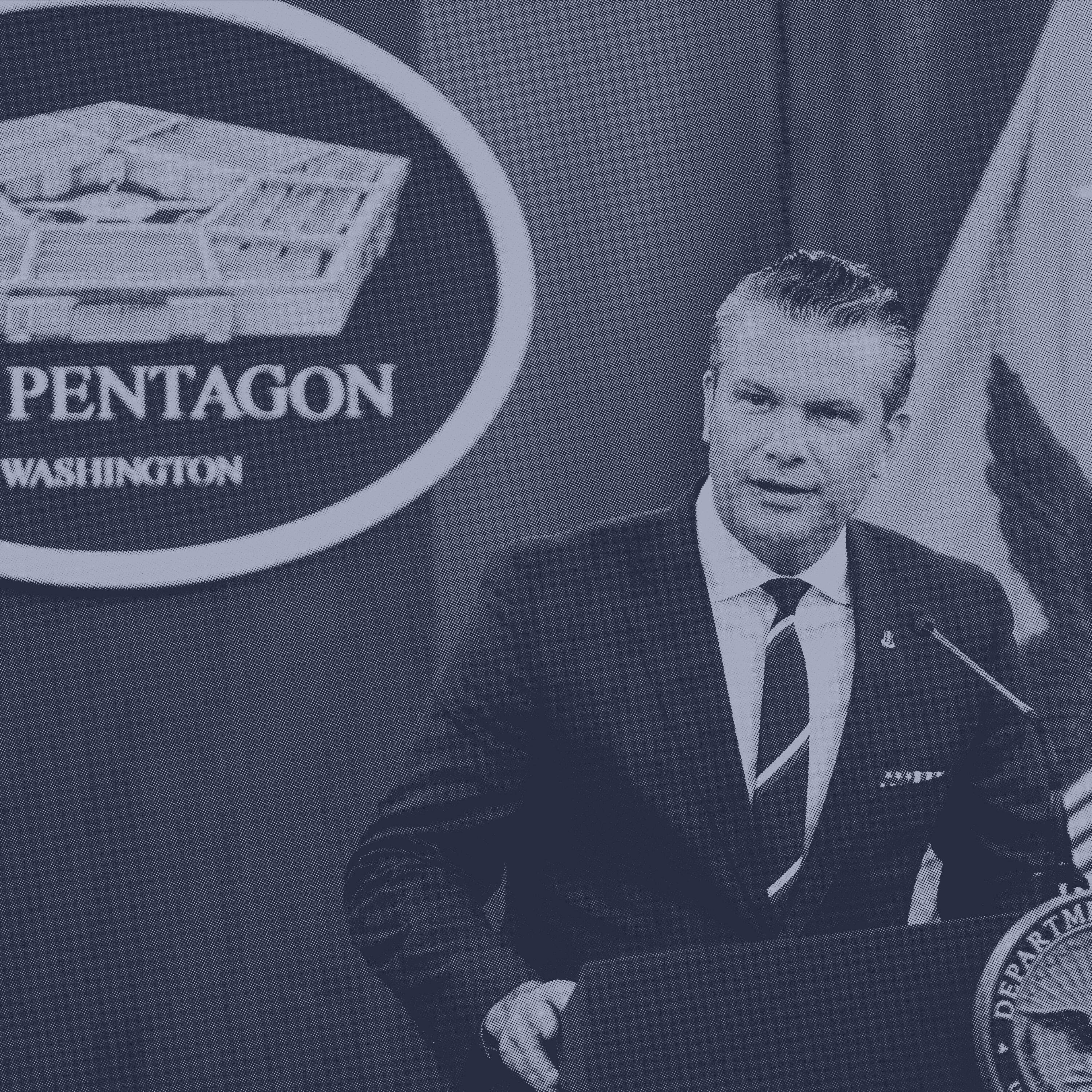
24:32military, but turn our attention to Quantico, Quantico, Virginia, where yesterday, Wednesday, Pentagon Chief Pete Hegseth delivered what he called a State of the Force address. Tom, according to Pete Hegseth, what is the State of the Force? He says it's much better now. Well, the warrior ethos is back. Gone is DEI. Gone is woke. Gone is lawyers, you know, tying the hands of commanders. What I found kind of curious listening to him was, okay, you've been in like roughly a year and a half. You completely turned the whole Pentagon around. If anything, the Pentagon is in disarray. Pete Hegg says he's gotten rid of a lot of senior generals and admirals.
25:15There's really a sense of fear in the Pentagon. Even the retired community, Mary Louise, some people I want to talk with, retired, say, I don't want to go on the record. They're worried about taking your call. Correct. And some are still working for the federal government. Some are in industry. And some are afraid that Pete Hegseth is going to go after them. I spoke with a retired four-star officer who got Canadian citizenship. Ha. Which was— Hold on. A retired four-star American officer. Correct. Who got Canadian citizenship. And he could because one of the parents was from Canada. But he said he was worried about an investigation into him.
25:55He was worried about an IRS investigation. He was worried about being called back on active duty. And I'm just sitting there sipping my coffee. I didn't say anything, but I was absolutely stunned. But go back to his speech, the speech yesterday. Are there specifics where he says it's all fixed, it's so much better? What's the evidence that he stands up to support that? There was really no evidence, but there was a substantive part of his speech. They're going to create a four-star drone command, which makes a lot of sense, and something called Project Agincourt, which will develop more drones.
26:31The name comes, of course, from the 15th century battle between Britain and France, where the longbow was used to quite great effect. Cutting-edge technology in the 15th century. So you could say the drone is the longbow of this century. So that makes a lot of sense. And also he came up with another project, which will be run by Elon Musk and also former House Speaker Newt Gingrich looking at the future of warfare. So that did make a lot of sense. That's a fascinating pairing, Elon Musk and Newt Gingrich. I would love to be in that room. Yeah, there you go. He also touched on something that Pete Hegseth loves to touch on, which is attacking the press.
27:13A free press is, of course, important. But partisan activism that intentionally smears the troops and the historic mission that they're undertaking is fundamentally anti-American. It's sick. It's a national betrayal. It's treason, actually. Treason. Do we know what he's talking about? Well, he said, you know, the press is actually talking about U.S. bases in the region, you know, giving the enemy some comfort, a sense of what's going on. He doesn't like some of the reporting about morale of U.S. troops who have been deployed a long time. But with the bases, which is interesting, he said, you know, they're not really telling even the Hill Congress much about the damage to these bases.
27:57And it took a senior naval officer to say, we're not going to go back to Bahrain anytime soon because the place is destroyed. And you're right. As far as morale, well, you know, we've been talking to a lot of sailors, their families, you know, who spend a lot of time on the Lincoln. Morale is low in particular places like the ships that have been gone so long. And there have been suicides and attempted suicides. Our colleague Steve Walsh, down in Norfolk, has done some terrific reporting on that. So we're not smearing them. They are coming forward and telling their stories. Their families are coming forward and telling our stories.
28:30So we're not smearing anybody. You're reporting what you're hearing from people serving on the front lines trying to serve this country. Just a quick update on your status because we are reporting on the situation at the White House with the White House pool, which is changing day by day, sometimes hour to hour. You still can't report from inside the Pentagon. In a couple of weeks, it'll be one year since we've all been out of the Pentagon. And it's important to note with what Secretary Hegs has said about the press, he hasn't had a briefing since May 5th. So if you think there's a problem with us, why don't you come out and we can have a back and forth and you can tell us what you think is going on.
29:10All right. I'm going to cheer us all up by saying it is time for OSINT, open source intelligence, public, nevertheless revealing bits of information. And I'm going to kick us off this week with this. The other day, a message popped up in my inbox from a 14-year-old boy in England named Bo. He wanted to say hi. And he was asking if I knew about Grandpa Spy, which it emerges is an account on Instagram, TikTok, in which Bo, again, age 14, asks his 86-year-old grandpa questions, questions, which is a ritual that becomes a lot more interesting once you figure out that Beau's grandpa is David Bickford, a senior figure in British intelligence.
29:57He was the top lawyer for MI5 and MI6. And their posts are Beau asking D, as he calls him, I guess D for David, asking his granddad things like, how do spies pass messages to their handlers? What makes a person betray their country? How do you know if you're being followed? Here's the latest. So, Dee, which spy movie is the most realistic? James Bond or Mission Impossible? James Bond. James Bond or The Bourne Identity? Oh, The Bourne Identity. Completely agree for whatever that's worth. And they go through, they consider a few more movies, and then they get to the canon of the great John le Carre.
30:37Tinker Tailor or Slow Horses? Ooh, Slow Horses is incredibly good. But I would go for Tinker Tailor. Tinker Taylor or the spy who came in from the cold oh definitely the spy who came in from the cold that is the nearest of all to what really goes on but if you go to the very first cut in that film Richard Burton walks right up to the white line that divides east from west and east from West Berlin Then no spy would ever have done that because he would have immediately been spotted. They go on from there, but they never managed to surpass the spy who came in from the cold. I agree. I love slow horses.
31:24It is really, really well done. And there's a new season out. And speaking of new things and speaking of Berlin, 14-year-old Beau also wanted to alert me that his grandpa writes spy thrillers and has got a new one coming out this month called The Berlin Truce. So congratulations. Oh, good for him. Yeah. Go bow and go grandpa. Tom, what do you have for Rosen? Well, we've been talking about Secretary Hegseth. He has mounted a review of women in combat, ground combat and infantry, artillery and armor, 10 years after they were allowed into these areas. He's sending investigators out to a number of bases around the country.
32:01And they've already gone to Fort Benning to look at ranger school because there were charges that, oh, women have it easier than men. There's not one standard for both. What they found out was, no, there is only one standard for men and women that has not changed. And 190 women have passed ranger school, which is a very arduous training. With the exact same, I guess, literal bar if you're doing pull-ups, the exact same standards as the men. All right, go women. Jane, what do you have? Yeah, I guess I've been thinking a lot about, you know, the pullout of the U.S. troops and how one comes to grips.
32:43And by one, I mean Iraqis and Americans who served here with everything that went on before, you know, all the incredible loss, all of the, frankly, really terrible memories, along with good ones as well. And I was speaking to someone who is an extraordinary young entrepreneur, Ali Al-Muqzumi, when he founded this tourism company called Bil Weekend, which just means on the weekend. And I was asking him what sort of American tourists he gets, because he does get Americans and all sorts of tourists. And he started telling me about what his clients call healing troops. And he described a couple of the guys that they had taken, U.S.
33:27military veterans who came back to Taji, to Fallujah, to see what was left of it. And it was very surprising and I was crying. He said, like, here I lost a lot of friends. But at the same time, he was happy to see Fallujah 100 % change. Fallujah, it was a battle zone, but now it's beautiful streets, beautiful buildings, the river just flowing up with the green and music. So I guess when we talk about the legacy that the U.S. left behind, well, there's very much the mistakes that were made, the incredible destruction, the damage, but it's also, I suppose, the ability, in some sense, to create a new future.
34:13It's like the Vietnam vets going back. Yeah, or the World War II vets who for many years have made it back to see the battlefields they fought on and revisit. As you said, Jane, both the good and the bad. Thanks for sharing that. That was NPR international correspondent Jane Araf in Baghdad. Thank you, my friend. Good night. Thank you. And NPR Pentagon correspondent Tom Bowman here with me in Washington. Thank you, Tom. Always a pleasure. That was a recent edition of the NPR podcast Sources and Methods. It's available everywhere you get your podcasts. I'm Miles Parks. Come back tomorrow and join us for another episode of the NPR Politics Podcast.
34:53Thanks for listening.
35:02Stay tuned for the following announcements and messages from our sponsors. This message comes from Bombas. Putting on clean, comfortable clothing every day is a powerful thing. That's why every Bombas purchase sparks the donation of essential clothing to someone experiencing homelessness, not just around the holidays, but all year long. Since 2013, your purchases have powered over 200 million donations and counting. This year, consider giving a gift that gives back. Visit B-O-M-B-A-S dot com slash N-P-R and use code N-P-R for 20 % off your first purchase. This message comes from Mint Mobile. Unwrap huge savings this season.
35:43All plans, even unlimited, are$15 for new customers. Go to MintMobile.com slash switch. Upfront payment of$45 for three-month,$90 for six-month, or$180 for 12-month plan required, $15 per month equivalent. Taxes and fees extra. Initial plan term only. Greater than 50 gigabytes may slow when network is busy. Capable device required. Availability, speed, and coverage varies. See MintMobile.com.