Ask ChatGPT


 The NPR Politics Podcast
4 Nov 2026 · 17m · 5 chapters
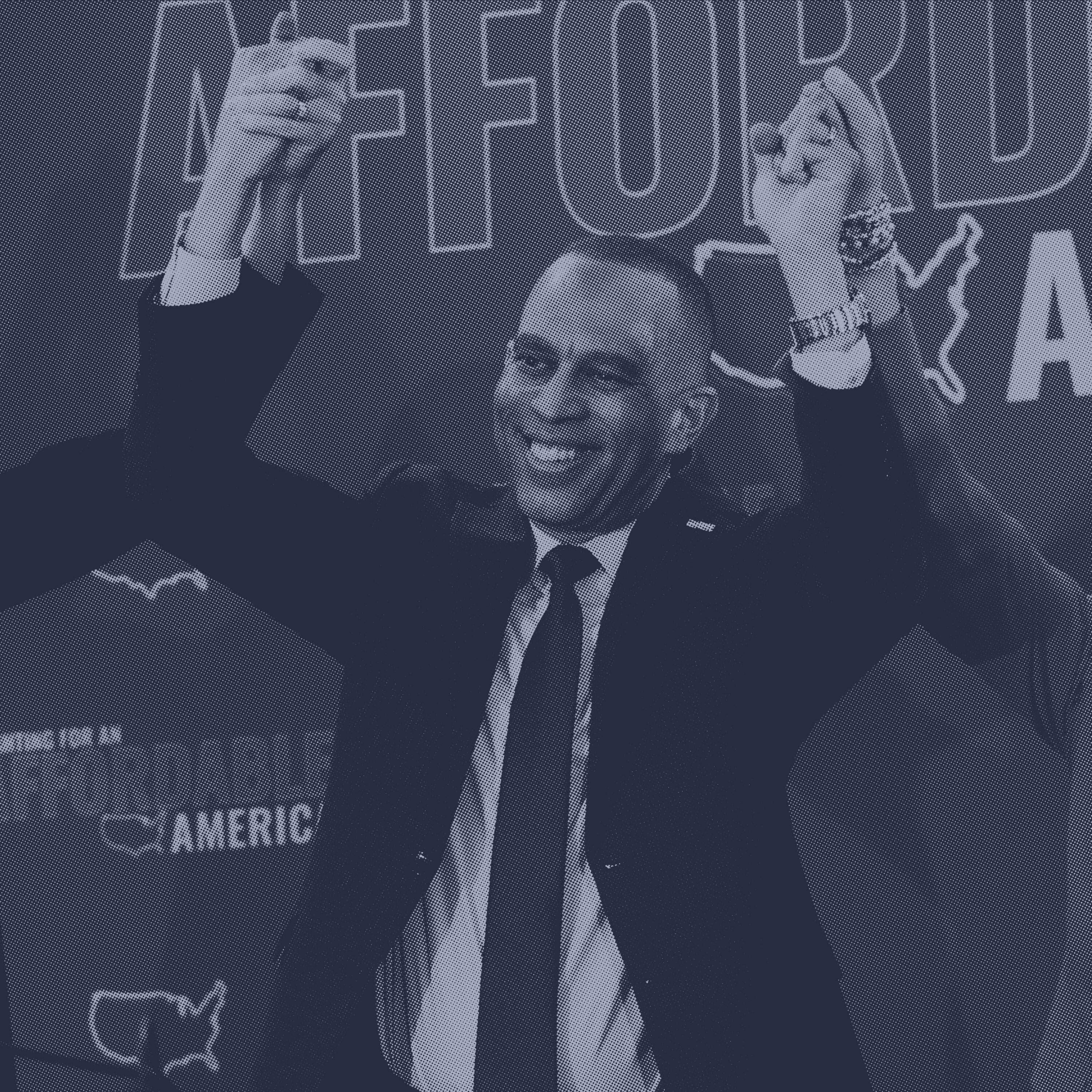
Democrats’ major election gains and what they’ll do with new House and Senate majorities, including governing strategy, messaging, and state-level power.
Tamara Keith (NPR politics correspondent who covers politics); Domenico Montanaro (NPR senior political editor and correspondent); Mara Liason (NPR senior national political correspondent).
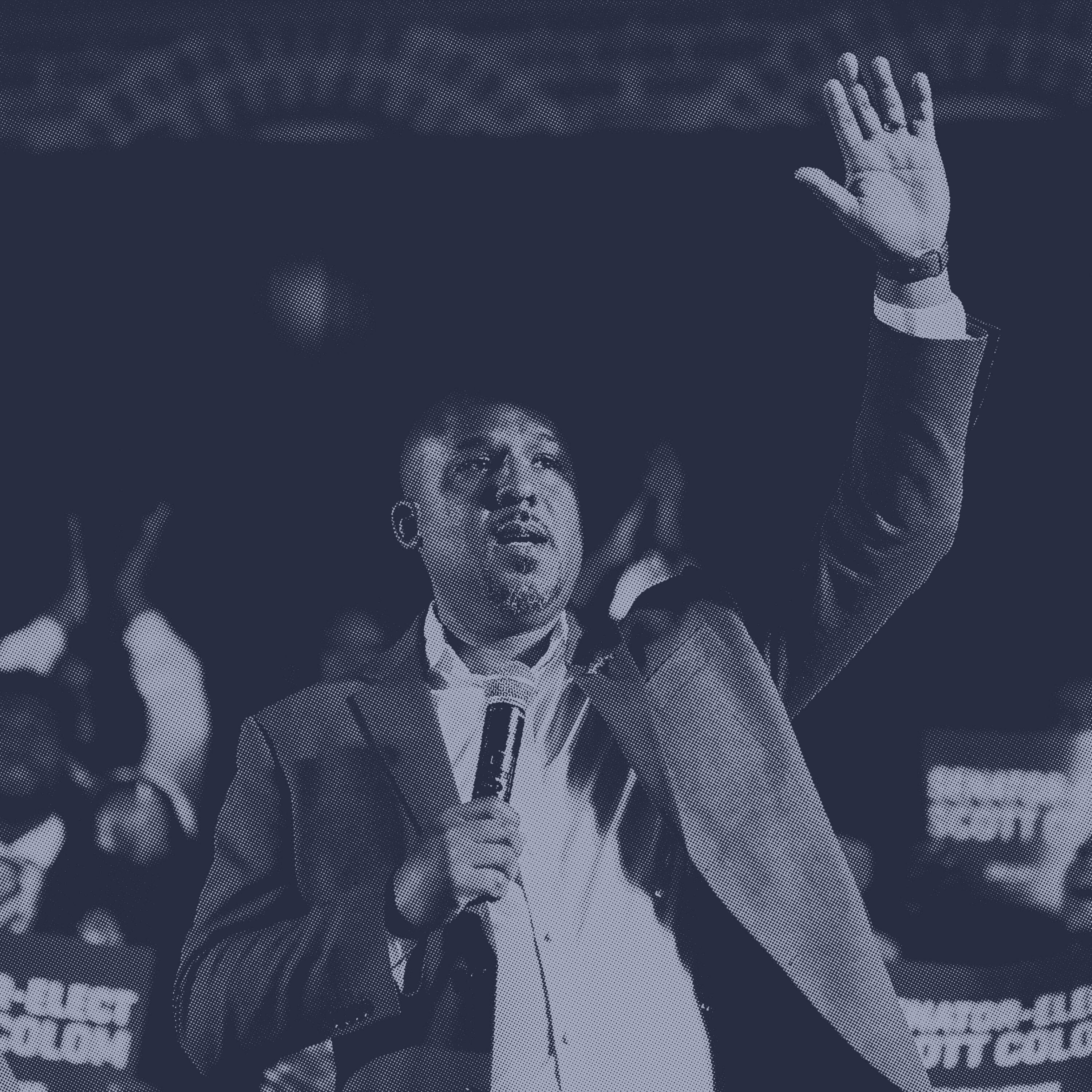
Democrats flipped at least seven Senate seats and gained a substantial working House majority (with many House races still undecided). The wins reflect both strong Democratic recruitment and Donald Trump’s political missteps, including GOP redistricting “gerrymandered” districts becoming less safe and Trump challenging Republican incumbents in primaries (e.g., Texas, North Carolina). Democrats must avoid overpromising, focus on investigations rather than impeachment, and balance centrist and left-wing influence (DSA candidates rose but centrists still dominate).
Kansas (Democratic Senate win since 1932), Alaska and Mississippi Senate races still pending; Texas statewide wins including railroad commissioner and agriculture commissioner; Hispanic voter swing back toward Democrats; potential 2028 Hispanic presence on presidential tickets.
Written by AI. May contain mistakes.
Hosts share their reactions and insights about the election results.
“I'm Domenico Montanaro, senior political editor and correspondent.”
Discussion on how Trump's actions and policies impacted election outcomes.
“And they have to – I have done so many stories over my checkered career about Democrats just won big.”
Hosts analyze what strategies Democrats may employ with their new majority.
“He was able to make inroads with young voters.”
Discussion on the importance of state-level victories for Democrats.
“And what a time the world is talking about AI and what's going on in Silicon Valley.”
Learn how Democratic trifectas at the state level present opportunities for governance and electoral strategy.
“On Apple, that means looking for the big plus sign on our show page.”

Get the gist, explore an idea or ask about something said.
 Claude
On The NPR Politics Podcast, what are the key points of this episode?
Searching your listeningAutomatic transcript. May contain errors.
0:00Support for NPR and the following message come from Washington Wise. Decisions made in Washington can affect your portfolio every day. Washington Wise from Charles Schwab is an original podcast that unpacks the stories making news in Washington. Listen at Schwab dot com slash Washington Wise.
0:18Tamara Keith: Democrats had an unbelievably huge election night. There are still dozens of House seats left to call, But Democrats are going to have a substantial working majority. And they've flipped at least seven seats in the U.S. Senate. They also won big in-state races throughout the country. So what's next?
0:42Tamara Keith: It's the NPR Politics Podcast. I'm Tamara Keith. I cover politics. I'm Domenico Montanaro, senior political editor and correspondent. And I'm Mara Liason, senior national political correspondent. And we are recording this podcast at 1129 a.m. on Wednesday, November 4th. And I just want to start with both of you and your initial reactions to what happened last night. Wow. Yeah. Holy moly. I mean, I was watching, you know, results come in. I was trying to get a handle on the House. I still don't have a handle on the House because the types of seats that people were talking about all mostly went down to Democrats.
1:21And then there's still more that they were that that are still being sort of picked up. So right now, I mean, it's 25 pickups for Democrats, but there are a lot of races that are still undecided. And that number is going to grow. My takeaway was the Senate. That was really shocking. I think there was a consensus among people in both parties that the House was probably gone, certainly not by the magnitude that we're seeing. But so far, the Democrats have flipped seven seats. There are two more that have yet to be called, Alaska and Mississippi, which is also insane. And the interesting thing is those seven seats are mostly red states.
1:57They're states that Donald Trump won by double digits in 2024. And the reason this was so extraordinary, I mean, Kansas hasn't elected a Democratic senator since 1932. But this was an existential task for Democrats, because if they weren't able to compete in these rural red places, they were facing an extinction level event. We know that Ron DeSantis called them drubbing his party got an extinction level event. But that's because in 2030, we're going to have a census and we're going to have reapportionment. And a lot of electoral votes are going to come away from the blue wall states in the northern Midwest and go south.
2:33And those states, those big southern states, Texas, Georgia, all the places that Democrats did pretty well last night are going to loom larger in a presidential election. So Democrats did something that they absolutely had to do. But like we saw in politics, not everything is permanent. In fact, most things are not. And I don't know that Democrats want to look at what happened last night and say, oh, now we're going to be winning places like Texas and Kansas and Iowa and Mississippi forever. No, no. But it's an opportunity. Yeah. And they don't want to blow it. And they have to – I have done so many stories over my checkered career about Democrats just won big.
3:15Will they learn the right lessons? and a lot of times they haven't. But this time they seem to, I think, understand that this is an opportunity, not a mandate.
3:23Tamara Keith: So I had this spreadsheet where I was tracking all of the districts that were redrawn in the mid-decade redistricting to make things more Republican. And I filled in the box for blue if it went for Democrats. And I have a blue spreadsheet. These were supposed to be, like, these are districts that are Trump plus 10, Trump plus 11. Like these are districts that are very Republican districts. And these were the gerrymandered. Yes. How many turned into dummy manders? How many gerrymandered districts were there overall? So there were 15 Republican gerrymandered districts. We're still waiting for results in a handful of them.
4:03Tamara Keith: Maybe maybe one or two will go Republican. One or two. Yeah. They did this at the behest of President Trump to try to get them more Republican seats. They went through a lot of work and time and effort and money to try to figure out how to get themselves more seats. And we warned that if you're going to take a seat where Republicans won 60, 61 percent and you're going to make that a 56, 57 percent seat where, you know, you're making it a little less safe, a tsunami could take all of those out. And it looks like it did. And this isn't the only thing that Republicans did at Trump's behest. This entire election was about Donald Trump.
4:47Not only did he tell people, pretend I'm on the ballot. And, of course, Democrats heard that loud and clear and acted upon it. But also he made decisions to wade into the primaries in Texas and run a candidate against the Republican incumbent. Same thing in North Carolina. He threatened a primary against Tom Tillis there, the incumbent Republican senator. So Tom Tillis decided not to run. He put himself at odds with majority public opinion on issue after issue, whether it was the war in Iran, data centers, tariffs, flock cameras, you name it. Donald Trump was not on the side of public opinion.
5:24And the things he talked about weren't even what voters wanted him to pay attention to. Instead of the cost of living and the high price of gas or fertilizer, he was out there talking about how he was beautifying Washington, D.C. Right. Ballrooms and statues and all of that. And don't forget about South Carolina. I mean, this is a state that Trump won by 18 points and Democrats won that fairly early on in the night watching Darlene Graham, the sister of Lindsey Graham, wind up losing that race, the Republican, after Trump wanted her to run. So you're talking about Trump again, lots of strength in these Republican primaries with that titanium sort of slice of the pie that he still has.
6:03But it's a small slice of the pie, as we've been saying all along. And the reason he won in 2024 for a second term was because he won over independents. He won over Latinos. He was able to make inroads with young voters. All three of those groups swung very heavily back to Democrats. The policies that Donald Trump pursued were almost designed to hurt his own voters worse. In other words, young men, young non-college men, people in red states who are in agriculture. They have to buy fertilizer. They have to buy diesel. So they were designed to hurt his own voters, and his own voters were pretty angry about them.
6:40Tamara Keith: And he had made some inroads, as you say, Domenico, with Hispanic voters. This is now a key swing demographic in this country. And, you know, I think we've known it for a while, but the swing was so huge towards Republicans. I mean, obviously, Trump didn't win Latino voters, but there was a huge swing there. And now this time, Hispanic voters swung like 25, 30 points back towards Democrats. Yeah, neither party has really figured out how to keep Latinos on side. And this is the largest growing demographic group in the country. They're very heavily in states across the South, for example. And, you know, Democrats have been criticized because they were using immigration as an issue to try to get to Latinos and it had worked for a little while.
7:29But it was seen as a threshold issue. A lot of Democratic strategists in Latino areas told me, and they said that they felt that Democrats weren't focusing strongly enough on the economy. Donald Trump promised to bring down prices in 2024. That was the top issue, not immigration with Latinos who are in this country legally. And Donald Trump was able to win them over. This time around, when Donald Trump came into office, I was shocked within the first couple of weeks that he was in office. He said that he didn't think prices are what got him elected and that it was really immigration from a hardline stance.
8:07And he wound up instituting hardline deportation policies that in addition to the prices going up in the country because of tariffs, because of the war in Iran. I mean, it was a recipe for disaster with Latinos. Let me make a prediction. I know it's very hard to make predictions, especially about the future. I would predict there will be a Hispanic person on one or both presidential tickets in 2028.
8:32Tamara Keith: All right, Mara, we will check back on that. I want to talk about governing, though, because Democrats are going to have the majority in the Senate. They are going to have the majority in the House. coming into this election. There was a lot of talk about what Democrats would make of, how they would deal with this rising left flank of the party. And DSA aligned candidates, Democratic Socialists of America, they did quite well last night. And there are going to be more of them in the House than ever before. And yet they didn't make the majority. The majority is so big that they can do whatever they want and the majority could do something else.
9:11Well, that's what's the beauty of a big majority. In other words, yes, we got more DSA candidates elected to the House, but there are many, many more centrist Democrats. And because they're a smaller percentage of the Democratic caucus, they're not going to have as much clout to wield and they're not going to make Hakeem Jeffries' job as speaker as miserable as the Freedom Caucus did for Mike Johnson. Yeah, I mean when you've got a majority that's three seats, it's a lot different than having a majority that might be three seats. Yeah, every member can hold you up. Yeah, absolutely. And, you know, I think there's a big question about what do Democrats do now, now that they have the power?
9:47You know, what is it that they're going to do? And there's this always this risk in politics. And we saw Joe Biden do this. And I kind of head desked every time Joe Biden would over promise. And you knew he would under deliver in saying, we're going to do this. We're going to do this. We're going to do this. And you say, well, how's that going to get through Congress? Right. How are you going to actually be able to negotiate with a side that doesn't want to negotiate with you to get anything big done? And I think that that's somewhere that Democrats have to be very, very careful about saying, we're going to bring prices down.
10:19We're going to make your lives a lot easier. That's going to be really, really tough to do without a negotiating partner in Republicans. But I don't think they're going to say that. I think they're going to say this is what we would do if we had three branches of government, if we had the ability to sign bills. They don't have a veto-proof majority in the Senate. And I think they're going to have a lot of investigations. Each investigation will be tied to some kind of legislation on corruption or prices or affordability. And they'll say, you know, this is if you elect us in 2028, this is our agenda.
10:50But they have to make it pretty clear that they're not running the government. They're going to have both houses of Congress, but not by a veto proof or even a filibuster proof majority. Well, then they're going to have to squeeze the Chuck Schumer toothpaste back in the tube because last night he said help is on the way. Well, you know, already you're overpromising in that case. You know, the messaging is the more important piece of what Democrats are going to do over the next two years, especially heading into the 2028 presidential election. If they want to lay the foundation for a Democratic president to have a Democratic Congress, they're going to have to be very careful about what actions they take.
11:28There's going to be investigations. They can stop Trump's agenda. Trump immediately becomes a lame duck. But how far do they go with those investigations? No impeachment. Do they go for a third impeachment, right? Do you think they're going to do that? What I hear is they are not interested in that. They've tried it twice. They're not going to remove him from office. They want to be more busy uncovering the corruption of the Trump family rather than trying to impeach him again. There is an itch to want to go to impeach in some corners. But I think the pragmatists on the Democratic side, close to leadership, do not want to go that far because they know the political risk.
12:03Tamara Keith: All right. We're going to take a quick break and we will have much more in a moment. Stay tuned for the following announcements and messages from our sponsors. Support for NPR's 2026 midterm election coverage and the following message come from Made in Cookware. President and co-founder Jake Halick shares why he was inspired by his family's fourth-generation kitchen supply business. Growing up in a commercial kitchen at home really opened my eyes to bringing what was cool in restaurants into your home. And when you think about what we do today, we are asking these chefs for product ideas. We are designing products together with them that we then realize a home cook can use as well.
12:41Learn more about Made in Cookware at M-A-D-E-I-N cookware.com. This message comes from BetterHelp. Your brain has limited storage. So why is it still holding on to that embarrassing moment from years ago? BetterHelp is an online therapy platform that gives you space to talk about what's taking up too much of yours. BetterHelp is now in network with more than 125 health plans, with many co-pays as low as$15 for eligible members. And if you don't have eligible insurance, you can still get 20 % off your first month. Visit betterhelp.com slash NPR. Cost and coverage may vary. Discount cannot be combined with insurance.
13:21Oh, Kevin, it feels good to be back. It sure does, Casey. And what a time the world is talking about AI and what's going on in Silicon Valley. And we are here with a new show to tell you all about it. That's right, Kevin. On our new show, Machine Gods, twice a week, we'll be bringing you the biggest news in tech and bring you unmatched access to the real titans of this industry. You can find Machine Gods from NPR on the NPR app or wherever you get your podcasts.
13:46Tamara Keith: Welcome back. And as you might expect, news over the next several weeks is going to move fast. We record these episodes and get them to you as quickly as we can. And the best way to make sure you hear those episodes right when they're available is to follow the show wherever you listen. On Apple, that means looking for the big plus sign on our show page. on Spotify and the NPR app, there's a big follow button you can hit. Do that and make sure you are always up to date with the latest show. I want to talk a bit about the races at the state level. Democrats won trifectas, that is the governor's mansion along with both houses of the legislature in Pennsylvania, Wisconsin, possibly Texas.
14:30Tamara Keith: I have an even longer list somewhere on my phone. You know, a lot happens at the state level. What are you looking for there? Because of the inertia in Washington, the movement, the ambition, the vigor, the vitality often is coming from the states in creating laws that affect regular people's lives. And you can do that when you've got a trifecta, right? That's different than not having one in Washington and having split power where people decided they wanted to put a check on Donald Trump. That didn't necessarily mean they wanted to see, you know, an entire legislative agenda put forward by Democrats.
15:07But in these states, Democrats are going to have the opportunity now to show that they can govern. And that is a huge, you know, a huge opportunity for Democrats to be able to show that they don't need to be shut out in a lot of these places, many of which are either purple or red states where they can say, hey, you gave Republicans a chance for a while. Now let's show what we can do. Frankly, it reminds me of when Joe Biden was elected president and he had the opportunity to show that he could govern competently. And the Afghanistan chaotic withdrawal really undercut that and pulled the rug out from him for whether or not he could continue to show that he could run a competent government.
15:50Democrats across the country now in a lot of these states have the opportunity to do that. The other reason that governors are so important and trifectas are important is because the states that you just mentioned, places like Ohio and Georgia, Texas, those are big states. They have a lot of electoral college votes. They're really, really important in presidential elections. And governors are really important in presidential elections because they have political infrastructure, political organizations of their own. And for Democrats to have state power in these important electoral college states is really an advantage.
16:24Not to mention New York and California and Pennsylvania. Those are also big states. Even if the blue wall loses some electoral votes and they go south, Democrats are in a pretty good position to control them.
16:33Tamara Keith: Can we just pause on Texas? Because we've talked about the governor's race. We have talked about the Senate race. But the wins for Democrats are up and down the ballot. And this is like blue Texas is something people have been talking about for 25 years and it never came. And then it happened. Purple Texas, I would say, is here. Well, yes. Democrats won in statewide races that I don't think a lot of people even knew existed. I mean, you're talking about things like railroad commissioner. We knew there was agriculture commissioner, but they won, you know, Senate, governor, lieutenant governor, attorney general, railroad commissioner.
17:13I mean, this is a huge, huge victory up and down the ballot. But Democrats had not won a statewide race, statewide race, railroad commissioner, ag commissioner, any of it since 1994. That is wild. And then last night they won all of them. And, you know, we want to give Democrats credit. They recruited really good candidates in places like Kansas and Iowa and Texas. But let's also say the Democrats owe a big, big vote of thanks to Donald J. Trump. Well, no question about it. It's a combination, right? But you can't win in a Kansas. You can't win in an Iowa. You can't win without a good candidate.
17:51But he created an environment that was just toxic for his party. But what they do, right, I think is going to be a real test and could wind up being whatever the platform is for a 2028 candidate. And how do they decide to run? What are the things that they find to be popular with people in red and rural areas that's also palatable to the progressive left? And I have to say, though, this moderate versus left thing isn't necessarily the reality here. You know, really, this all comes down to economics, how people are feeling. And I think what you saw here is once again a populist backlash. And Donald Trump said that he was going to stand up for the forgotten man and woman.
18:32They feel like he didn't do that. Now you had Democrats and including many progressives with very serious policies saying these are the specific things we want to do, that if we have a majority, we can get done and make people's lives better.
18:46Tamara Keith: Okay, let's leave it there for today. There's going to be so much to talk about in the coming days. We will be back tomorrow with more. I'm Tamara Keith. I cover politics. I'm Domenico Montanaro, senior political editor and correspondent. And I'm Mara Liason, senior national political correspondent. And thank you for listening to the NPR Politics Podcast.
19:11Stay tuned for the following announcements and messages from our sponsors.
19:34Tamara Keith: Find out more and support the shows you love at plus.npr.org. On the latest episode of Sources and Methods, a blue tsunami, earthquake, avalanche, Democrats swept the midterms. What does this mean for President Trump's ambitions overseas? And why is Iran paying such close attention to the changeup on Capitol Hill? Listen this week to Sources and Methods, the national security podcast from NPR.