Ask ChatGPT

 The NPR Politics Podcast
6 Oct 2026 · 21m · 8 chapters
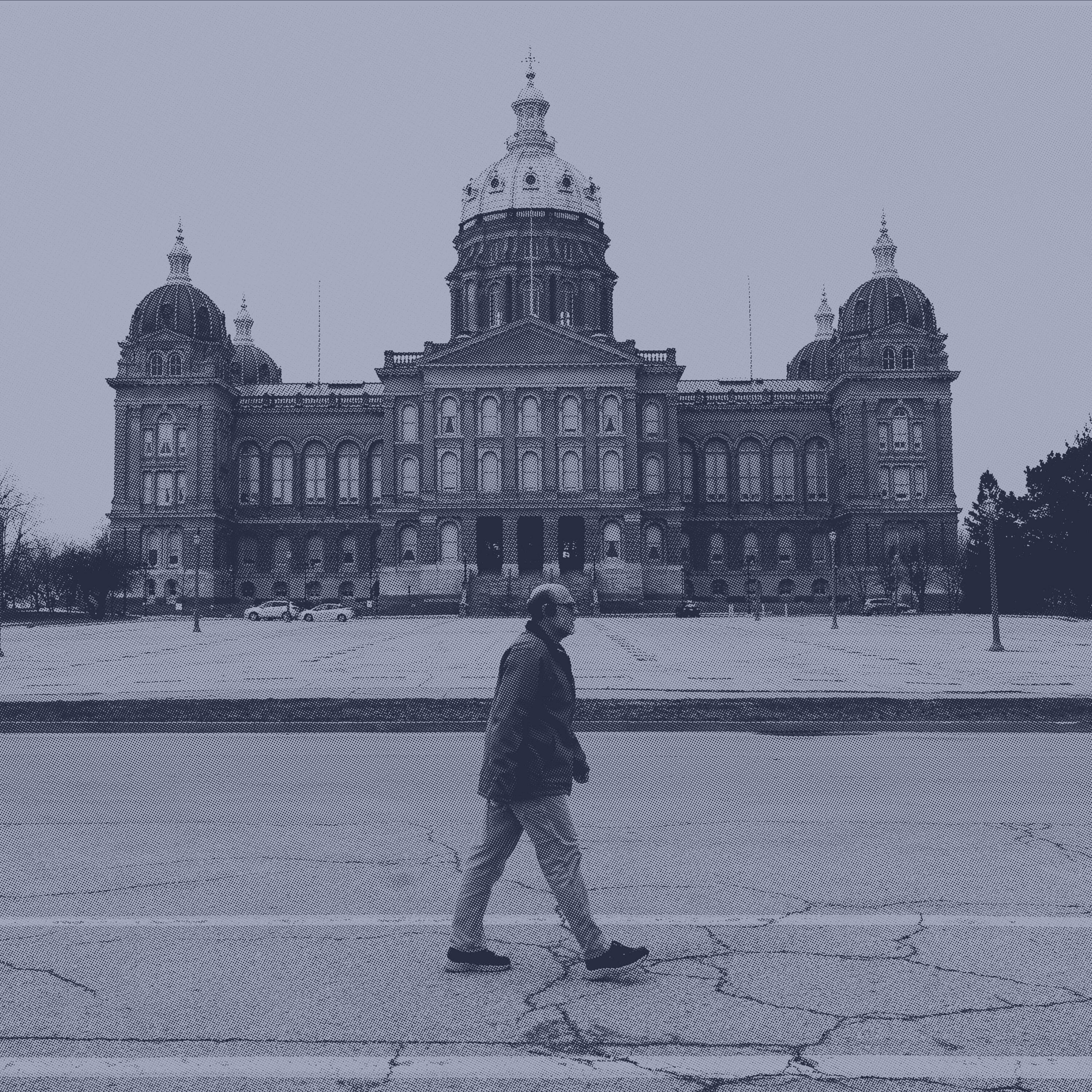
Midwest politics in 2026—why Democrats and Republicans both see opportunity, focusing on tight Senate races and how issues like immigration, fraud allegations, tariffs, and affordability are shaping turnout.
Clay Masters (Minnesota Public Radio; longtime Midwest reporter, based in St. Paul); Miles Parks (NPR Politics Podcast host, covers voting); Domenico Montanaro (NPR senior political editor/correspondent).
Minnesota’s Senate race is unexpectedly close despite its long Republican statewide/presidential history; immigration and fraud allegations are central. Nebraska’s GOP incumbent Pete Ricketts faces independent Dan Osborne, partly to avoid a “Democrat” label. Iowa’s competitiveness is driven by tariffs hurting agriculture, frustration with the war in Iran, and affordability pressures; lower midterm turnout can help Democrats.
Minnesota: Peggy Flanagan vs Michelle Tafoya; Operation Metro Surge; fraud/improper payments “hundreds of millions.” Nebraska: leaked Osborne audio disparaging rural Nebraskans (Red Cloud); Trump stumping in Grand Island. Iowa: Joni Ernst seat; Ashley Hinson vs Josh Turek; Rob Sand vs Zach Lane; Farm Bureau withholding endorsement. Wisconsin: David Crowley vs Tom Tiffany.
Written by AI. May contain mistakes.
Discussion about the competitive Senate race in Minnesota and its implications.
“I'm Domenico Montanaro, senior political editor and correspondent.”
Analysis of historical voting patterns and current race competitiveness in Minnesota.
“Yeah, I mean, this entire idea of this race being close does feel a little bit contradictory to the broader national narrative, which is that the conditions politically seem pretty darn good for Democrats right now.”
Exploring the Senate race in Nebraska, including independent candidate dynamics.
“So, yeah, it's about as close as you get when you kind of scratch the surface on this seemingly blue state.”
Discussion on the implications of leaked audio and candidate strategies in Nebraska.
“Well, let's move on to another state, not exactly a neighbor to Minnesota, but close, Nebraska.”
Review of the upcoming Senate and governor races in Iowa and key candidates.
“But that seems to be what's going on, right?”
Explore the dynamics of the Iowa gubernatorial race and its implications.
“He was first elected in 2018 and then reelected in 2022 in Iowa, where there was no blue wave.”
Discuss how national policies are impacting voter sentiment in the Midwest.
“Yeah, what's happening in Iowa is really indicative of what's happening in the Midwest writ large, where Democrats appear to be doing better even than in the Sunbelt.”
Learn about the importance of polling accuracy and voter behavior trends.
“We've got four weeks left until Election Day 2026.”

Get the gist, explore an idea or ask about something said.
 Claude
On The NPR Politics Podcast, what are the key points of this episode?
Searching your listeningAutomatic transcript. May contain errors.
0:00This message comes from the Carter Center, waging peace, fighting disease, and building hope since 1982. In far-away, up-close, global stories from the Carter Center, you'll hear from people on the front lines in their own words. Follow the podcast wherever you listen. Today on the pod, we head to the Midwest, where Republicans are facing competitive races in places they thought they didn't have to worry about just a couple months ago. On the other side of the coin, though, polls show a tight Senate race in a state Democrats haven't lost in decades. Let's get into it.
0:36It's the NPR Politics Podcast. I'm Miles Parks. I cover voting. I'm Domenico Montanaro, senior political editor and correspondent. And longtime friend of the pod, Clay Masters from Minnesota Public Radio is here with us from St. Paul. Hi, Clay. Always a pleasure. Always a pleasure to have you, especially at a time when the Midwest is hot politically right now. I'm really excited to get into this. Clay, let's just start with your home state of Minnesota, which is showing, according to polls, a pretty tight race for the open Senate seat there. I'm wondering if I'm correct to be a little bit surprised by that, considering, you know, the national environment being so favorable for Democrats right now.
1:13Yeah, I mean, the U.S. Senate race, you have the lieutenant governor, the Democrat, Peggy Flanagan, running against Michelle Tafoya, an NFL sidelines reporter with some rather large name ID. But she's a political newcomer in the sense that she's, you know, never even run for office. Lieutenant Governor Peggy Flanagan trounced her primary opponent back in August. That was Congresswoman Angie Craig, really hitting her on the issue of an immigration vote she made in the U.S. House before what the Trump administration implemented, what they called Operation Metro Surge. Of course, we all remember that at the beginning of the year with the increase in immigration and border patrol officers in the Twin Cities and beyond.
1:52And so you're really seeing this race shape up that in a state like you were mentioning, Minnesota hasn't voted for a Republican in a statewide race since Tim Pawlenty won his gubernatorial reelection in 2006. And it hasn't voted for a Republican candidate for president since 1972. So, yeah, it is surprising that we're even talking about this as being competitive. Yeah, I mean, this entire idea of this race being close does feel a little bit contradictory to the broader national narrative, which is that the conditions politically seem pretty darn good for Democrats right now. Domenico, what do you make of those two things or how do you square that circle?
2:30Yeah, those headwinds are why at the end of the day, you know, strategists you talk to expect that this race will wind up being in Democrats' hands. But if you just look at the raw numbers of how Minnesota leans, even though everything Clay says is true, obviously, about the track record, the margins haven't been that big in presidential elections. I mean, Hillary Clinton only won the state by a point and a half in 2016. Joe Biden won it by seven in 2020. Kamala Harris only won it by four points in 2024. So the idea that there would be races that are within five to 10 points seems like it actually goes pretty closely with the track record of the state.
3:13Plus, you start with an open race. You know, people don't have the same name ID when you're talking about new candidates versus an incumbent. And to illustrate Domenico's point there, I mean, you can look at the makeup of the Minnesota state capitol and the legislature here in St. Paul, where there is about as thin of a margin as you can get with 100 Republicans and 101 Democrats. All those seats are on the ballot this year. So, yeah, it's about as close as you get when you kind of scratch the surface on this seemingly blue state. I mean, my assumption, Clay, would be that any race held in 2026 in Minnesota would be defined by immigration, considering, you know, the two American citizens who were killed by immigration enforcement agents earlier in the year.
3:55And the protests, we saw how much of a story that was in January. Has that ended up being the case? I mean, it really was on the Democratic primary, like I mentioned. But what you're really seeing right now is that if you remember also at the beginning of the year, there was a lot of headlines about alleged fraud in the state of Minnesota. Michelle Tafoya is painting Flanagan as an extreme candidate and then regularly bringing up this fraud issue in the state. NPR News has found that estimates and charges related to recent fraud and improper payment scandals here span hundreds of millions of dollars across multiple state and federal programs.
4:35The governor here in the state, Tim Walls, has said he could have done more to prevent it. And so Tafoya has done a lot to try to tie Peggy Flanagan to that, although Peggy Flanagan regularly talks about how she was not the one who was as responsible for it as other people in the administration. Right. But this is a strategy actually by Republican candidates across the country, not just in Minnesota. We're seeing it in New York. We're seeing it in California where you have candidates who are trying to blame the statewide governance for various problems because those are Democratic-run states as compared to those national headwinds that a lot of Republicans, all the Republicans are running against.
5:19All right. Well, let's move on to another state, not exactly a neighbor to Minnesota, but close, Nebraska. This is one of those Senate races where the Republican incumbent, Pete Ricketts, is not facing a Democratic challenger. He's facing an independent candidate. Can you tell us a little bit more about this race, Clay? My home state of Nebraska, very reliable Republican state federally. It's also a state that brought up former U.S. Senators Bob Kerry and Ben Nelson. But it's been a very ruby red Republican state for a very long time. And it is an interesting race in the sense that you have this Republican incumbent, Senator Pete Ricketts, the former governor of Nebraska, and running against Dan Osborne, an independent candidate who ran against Republican senator also of Nebraska, Deb Fischer, in 2024 and lost by just seven points, which, you know, doesn't sound really amazing in a lot of different states.
6:13But an independent candidate getting that close to an incumbent senator made headlines. He's a union leader. He worked at Kellogg's as an industrial mechanic in Omaha. And the really interesting thing about the early part of this race was there were no Democrats that announced they were running in the primary until someone dubbed a Ricketts plant got in. It's a Western Nebraska Trump aligned preacher. And then a Democrat quickly got in ahead of the filing deadline, won the primary and then suspended her campaign, clearing away for Osborne to run as an independent. And you're seeing Pete Ricketts regularly calling Dan Osborne a Democrat.
6:53And so he often there was a debate where he kept calling him Democrat Dan. So it's interesting that it's almost like, you know, observers see this as trying to run a candidate as a more independent and not putting a Democrat up against Pete Ricketts. I mean, Domenico, it just gets to this idea of like we've talked about a lot this year that the Democratic Party is sort of a toxic brand in some parts of the country. And this seems like a pretty simple way to find a way to maybe try to distance yourself from it as a candidate. Yeah, and we've talked about other places where there are candidates who are running as independents in lieu of a Democrat running in those places or tried to get Democrats off the ballot so that they could clear the way for them.
7:37Thinking about places like Montana and Idaho in addition to Nebraska. But just to level set on this race, this is one that's still likely to be in Republicans' hands. Dan Osborne really took Republicans by surprise, particularly Deb Fischer, the incumbent senator. Washington Republicans were pulling their hair out trying to make her pay closer attention to her race when she ran last time and Osborne got within seven points. This time around, they knew exactly what they were getting Republicans. They were prepared for an Osborne race. They had more opposition research. and people weren't as confused by his last name, which shares the last name of a famous football coach.
8:22Yeah, the Nebraska Cornhuskers, Tom Osborne, no relation, although that was back when the Huskers were winning football championships. Well, and then also, this race has also been complicated by the fact that Osborne is trying to make this argument as an independent. But Clay, there was leaked audio of him talking a couple weeks ago. This was first obtained and reported by the Omaha World Herald. Can you tell us a little bit about what he said in this leaked recording? Yeah, the leaked recording had Dan Osborne saying some disparaging remarks about rural Nebraskans. He used a small town in southwest Nebraska, Red Cloud, to talk about these people who their lives suck, that they see themselves on a winning team.
9:06And that's the only reason that they keep voting for Donald Trump. that audio came out. He was on CNN trying to, I don't know if he was walking back it, but just saying like, hey, look, I use colorful language. And of course, I don't think that their lives suck. I think that they just, you know, are hurting and need some change. And he's had to kind of walk this line of saying why he said the things that he said. He even went to Red Cloud and had a small town hall to basically apologize and hear from the town. But it is interesting to see Donald Trump, the president, of course, come to a very Republican part of Nebraska in Grand Island on Monday alongside both Pete Ricketts and the incumbent governor who's up for reelection as well, stumping and trying to drum up support.
9:57It's never good when politicians tend to try and analyze an entire group of people and stereotype reasons for why they act the way they act or vote the way they do. I'm thinking of former President Obama saying that people cling to their guns and religion, right? I mean that was used over and over and over in the campaign. It didn't work then. Obama still won. But it can be very damaging if you don't control the fallout of something like that. I do think it's notable that President Trump is going to Nebraska and he's going to some red states because, you know, that's where the White House sees him having the most effect.
10:38You know, he's really proven toxic with independents and Latinos who've been swing voters. Their theory of the case is that they need to get conservatives out to help boost these candidates. And that's where he's going to make the biggest difference. All right. Let's take a quick break. More on a couple other Midwestern races that we're watching. Stay tuned for the following announcements and messages from our sponsors. This message comes from Prolon. Want to look and feel your best this fall? Prolon's five-day fasting mimicking diet is a clinically developed nutrition program with the goal of promoting fat loss while protecting lean body mass.
11:14Developed at USC's Longevity Institute, it aims to assist the body in entering a fasting-like state that helps reset metabolism, target visceral fat, and support healthy metabolic markers. Get 15 % off plus a bonus gift when you subscribe at prolonlife.com slash NPR. This message comes from Edison Electric Institute. As a new season starts, America's electric companies are working behind the scenes to deliver reliable energy for the moments that matter most. America's electric companies, powering the energy of every day. Support for NPR and the following message come from Washington Wise. Decisions made in Washington can affect your portfolio every day.
11:53Washington Wise from Charles Schwab is an original podcast that unpacks the stories making news and how they may affect your finances and portfolio. Host Mike Townsend and his guests explore policy initiatives for retirement savings, taxes, trade, and more. Download the latest episode and follow at schwab.com slash Washington Wise or wherever you listen. And we're back. So, Clay, I want to turn to Iowa now. And this is another one of those states that two years ago, when Donald Trump was winning this state by double digits, it would have felt impossible that Democrats would have had their eye on both the governors and the open Senate seat there.
12:31But that seems to be what's going on, right? That's right. So U.S. Senator Joni Ernst, first elected in 2014, is not running for reelection. Back in 14, she was replacing retiring Senator Tom Harkin, a Democrat who represented Iowa for three decades. And it was unique that for so long he was serving alongside Republican Chuck Grassley back when Iowa was considered a more purple state. And that's when I came to the state to cover it for 12 years when I started there back in 2012. It has become a much more red state in the last 14 years. Right now, the race to replace Joni Ernst is between Ashley Henson, a U.S.
13:11representative who defeated a one-term Democratic incumbent. She formerly served in the Iowa House of Representatives. On the Democratic side, you have state representative Josh Turek, who serves in a Trump-heavy House district in western Iowa and is a Paralympic gold medalist for Team USA in wheelchair basketball. So it's a very interesting race. And you've actually seen Ashley Hinson really make a pivot to try to sound a little more against Donald Trump. The war in Iran, gas prices. she's distancing herself a little bit more, also running an ad saying that she works bipartisanly, which she did get the Trump endorsement ahead of her primary.
13:50And what about the governor's race? I know that there's a Democrat there that Democrats nationwide seem very excited about. Yeah, this is a really fascinating race. State Auditor Rob Sand, he's the only Democrat in statewide office. He was first elected in 2018 and then reelected in 2022 in Iowa, where there was no blue wave. Republicans outperformed other states in that midterm election. He's running against Zach Lane, a former political operative who was endorsed by the Maha PAC, which is a PAC that's aligned with the views of Health Secretary Robert F. Kennedy, Jr. Lane previously worked as the state director and fundraiser for Americans for Prosperity, the conservative political advocacy group.
14:33And so Rob Sand is running as a moderate. And it's, I've had the chance to see him on the campaign trail some this summer. He always starts his town halls by having everybody sing the first verse of America, the beautiful. He also has this point where he asks all the Republicans in the audience to raise their hand, all the Democrats to raise their hand and all the independents to raise their hand and then applauds them and then has this long discussion with the audience about how the political system is broken. that there's these two major political parties that hold all the control over democracy in the United States.
15:13And he never brings up Donald Trump, at least not the times that I've seen him on the stump, unless somebody brings him up in the audience. And he's been a very present state auditor, regularly butting heads with the governor, Kim Reynolds, who also is obviously not running for re-election, the Republican there. And so you're really seeing this interesting race here where you have this Democrat who's well known in the state running against a Republican candidate, Zach Lane, who was the upset to Congressman Randy Feenstra, who did get the Trump endorsement. And he's also saying things that are making the Farm Bureau in Iowa uncomfortable, which has a lot of political power in the state of Iowa.
15:58The Iowa Farm Bureau has not endorsed a gubernatorial candidate in this race, while it's endorsed Republicans for the other big races in the state. Yeah, what's happening in Iowa is really indicative of what's happening in the Midwest writ large, where Democrats appear to be doing better even than in the Sunbelt. And a lot of that is because of the national mood. I mean, the fact is tariffs have taken a real toll on agriculture in a lot of these states, Iowa in particular. and you're seeing a lot of backlash to those national policies where people are really feeling it. And what's more, you know, the governor's race with Rob Sand, he's just considered somebody who's a really good candidate who's running one of the best races in the country.
16:44So you combine those two things and that's how you make up, you know, an average where Trump won by double digits in that kind of state. I mean, Clay, you've been covering the Midwest for years through numerous political cycles. I'm curious what you make of just this political environment that seems to show Democrats being more competitive than they have in recent years. What is it about what's going on right now that makes people more open to voting for a Democrat than they have in recent cycles? Yeah, I think on issues, the tariffs are wearing on people, on farmers. I think that there's some complacency with President Donald Trump that, you know, the newness has worn off over the years.
17:25This is a president who ran on no forever wars and the war in Iran is unpopular and many people are frustrated by that. And then you just go back to the affordability issue. I think that people are struggling at the gas pump when they're buying groceries. And so the affordability issue, I think, is, you know, ringing across all of the Midwest and across the U.S. as a whole. I mean, Domenico, I still feel like anytime I hear about Democrats winning in Iowa, Democrats winning in Kansas, Democrats winning in any of these states that are supposedly competitive, it would require some registered Republicans to vote for Democrats, which in my head, in this age of hyperpolarization, am I crazy to be a little skeptical that 10, 20 percent of Republicans will switch parties in this current moment?
18:14Or do you think right now because the political environment, people are actually more open to that? You know, you're not wrong to be skeptical that, you know, in this hyper partisan era that Democrats would have to win over a lot of voters in red states who voted for Trump. But the one thing I would say is that your premise assumes that you're having 2024 or presidential level turnout. And we know that in midterms, there's 30 % fewer people go out to the polls on average. So that makes it where the party that has the most intensity, and that's usually the opposition party, can win. I mean if you think about it, none of these states aside from like a place like Wyoming or West Virginia were decided by 30 points, right?
19:00So if you had a significant lower turnout and the same number of Democrats and independents who have shifted considerably including a lot who lean to the right, those are the pathways for Democrats to then go and do well and flip the house, which is likely at this point. And the Senate, which, you know, would have been seen as an outside possibility several months ago, really a long shot, and now looks within reach. We've got four weeks left until Election Day 2026. What else are you guys watching in those coming four weeks? I do need to mention neighboring Wisconsin, where there is a competitive governor's race there.
19:40David Crowley, a Milwaukee County executive, narrowly won that tight Democratic primary, backed by the party establishment and the current governor, Tony Evers, there running against Tom Tiffany, a U.S. representative representing northern Wisconsin. He easily secured the Republican nomination, heavily endorsed by Donald Trump. So that's going to be an interesting race to watch the results on. I have more of a kind of warning for people, which is the great biennial American polling freakout, where it seems within three weeks of an election, people maybe have voted early. They don't know what to do.
20:18They're biting their fingernails for their side, and they, for some reason, decide that they're going to read every single poll that comes out and pay attention to every single top line horse race number. This is my warning. Every two years, polling is not meant for that level of specification. specificity. And we're going to have a lot of close races that are within polling margins of error. And people need to keep that in mind. There's also a lot of not very good polls, if I can be delicate about it, that are coming out in a lot of these state races. So, you know, what we do just to pull the curtain back a little bit on how we do this with analysis, you know, we'll see these kinds of numbers coming out.
20:57And if we're sort of scratching our head about what kind of poll this is, we might go and call the campaigns or we call strategists that we know who are in the know with these races and say, do you believe this? What are you guys hearing internally? To sort of check us to see, you know, is this really real or not? My advice to regular people is to just kind of ignore the specifics in polls and just understand that right now, given the history, given the polling, the needle is pointing in Democrats' direction, But nothing's a done deal. People still have to go and vote. All right. So if people are on a poll and they've never heard of the company that did the poll, they should go take a walk.
21:35The moment they realize that they are in that situation, they should get up from the computer, go take a walk. That's the Domenico advice. I wouldn't even go to the computer in the first place. I would take the walk. All right. Well, Clay Masters from Minnesota Public Radio, thanks for joining us as always. You're welcome. Thank you. I'm Miles Parks. I cover voting. And I'm Domenico Montanaro, senior political editor and correspondent. And thank you for listening to the NPR Politics Podcast.
22:26the following message come from Washington Wise. Decisions made in Washington can affect your portfolio every day. Washington Wise from Charles Schwab is an original podcast that unpacks the stories making news and how they may affect your finances and portfolio. Host Mike Townsend and his guests explore policy initiatives for retirement savings, taxes, trade, and more. Download the latest episode and follow at schwab.com slash Washington Wise or wherever you listen.