 Ask ChatGPT



Alaska’s competitive 2026 elections and how ranked-choice voting shapes outcomes, including the U.S. Senate race, governor’s race, ballot measure on voting rules, and a House race.
Liz Ruskin (Anchorage-based Alaska Public Media reporter; covers Alaska politics and voting).
Mary Peltola’s campaign frames Dan Sullivan as a wealthy “fat cat” and a Trump-aligned incumbent; affordability is driving voter concerns. A New York Times report alleged harsh treatment and derogatory language by Peltola’s campaign/office; Sullivan uses it at debates. Alaska’s ranked-choice voting (open nonpartisan primary; instant-runoff) is designed to prevent spoilers and push candidates toward the center; “another Dan Sullivan” (a retired teacher) should not change outcomes but could confuse voters. Governor’s race: Democrat JKT leads while Republicans split; Trump endorsed Bernadette Wilson and criticized ranked-choice voting.
plane-crash-related absenteeism for Peltola; ballot measure 2 would repeal ranked-choice/open primary and dark-money disclosure; Alaska certification is 15 days (ranked-choice tabulation delays drama).
Written by AI. May contain mistakes.
Overview of Mary Peltola's campaign against Dan Sullivan in Alaska.
“And I'm Mara Liason, senior national political correspondent.”
Discussion of key issues in the Alaska Senate race, including Trump's impact.
“Well, like elsewhere, this is very much a referendum on President Trump.”
Exploration of Peltola's alleged staff mistreatment and its implications.
“I'm wondering how she responded to that, but also whether it's playing a role or not in the race.”
Explanation of ranked-choice voting in Alaska and its implications.
“Has Dan Sullivan brought this up as an attack angle on Peltola since that reporting came out?”
Discussion of the second Dan Sullivan running and its impact on the election.
“They felt that person would be more representative and it would also force all the candidates to appeal to voters in the center, not just on the extremes of either party.”
Overview of the competitive governor's race and the implications for Democrats.
“We're recording this just a couple hours before you hear it.”
Discussion on the potential repeal of ranked choice voting and its implications.
“And the other thing that's important for Democrats is they're engaged in a big long-term project, which is figuring out how to win in red rural places.”
Explore the unique challenges and timeline of counting votes in Alaska.
“He's really emphasizing his fisherman roots, and that plays very well in Alaska.”
Learn how to submit questions about upcoming political landscapes to the podcast.
“And before we go, we are taking your questions about the political landscape for upcoming episodes on the pod.”

Get the gist, explore an idea or ask about something said.
 Claude
On The NPR Politics Podcast, what are the key points of this episode?
Searching your listeningAutomatic transcript. May contain errors.
0:00Support for this podcast and the following message come from Allianz Travel Insurance. Ready to turn last year's travel dreams into this year's jet-setting reality? An all-trips annual plan is ready when you are all year long. Learn more at AllianzTravelInsurance.com. Fish, family, freedom. That is the campaign slogan for Mary Peltola, the Democrat trying to unseat a Republican senator in Alaska and along the way chart a new path for Democrats to win in red states. It is certainly catchy, but will it work?
0:36It's the NPR Politics Podcast. I'm Miles Parks. I cover voting. And I'm Mara Liason, senior national political correspondent. And Alaska Public Media's Liz Ruskin is here from Anchorage. Hi, Liz. Hello. Hello. Happy to have you on the podcast again. And let's just start with the U.S. Senate seat. We mentioned Peltolla at the top there. She is trying to unseat the current senator from Alaska, Dan Sullivan, who's a Republican. Can you tell us about both these candidates? Sure. Mary Peltola, she was the first indigenous Alaskan elected to Congress. She served a little over one term and was ousted in the 2024 election.
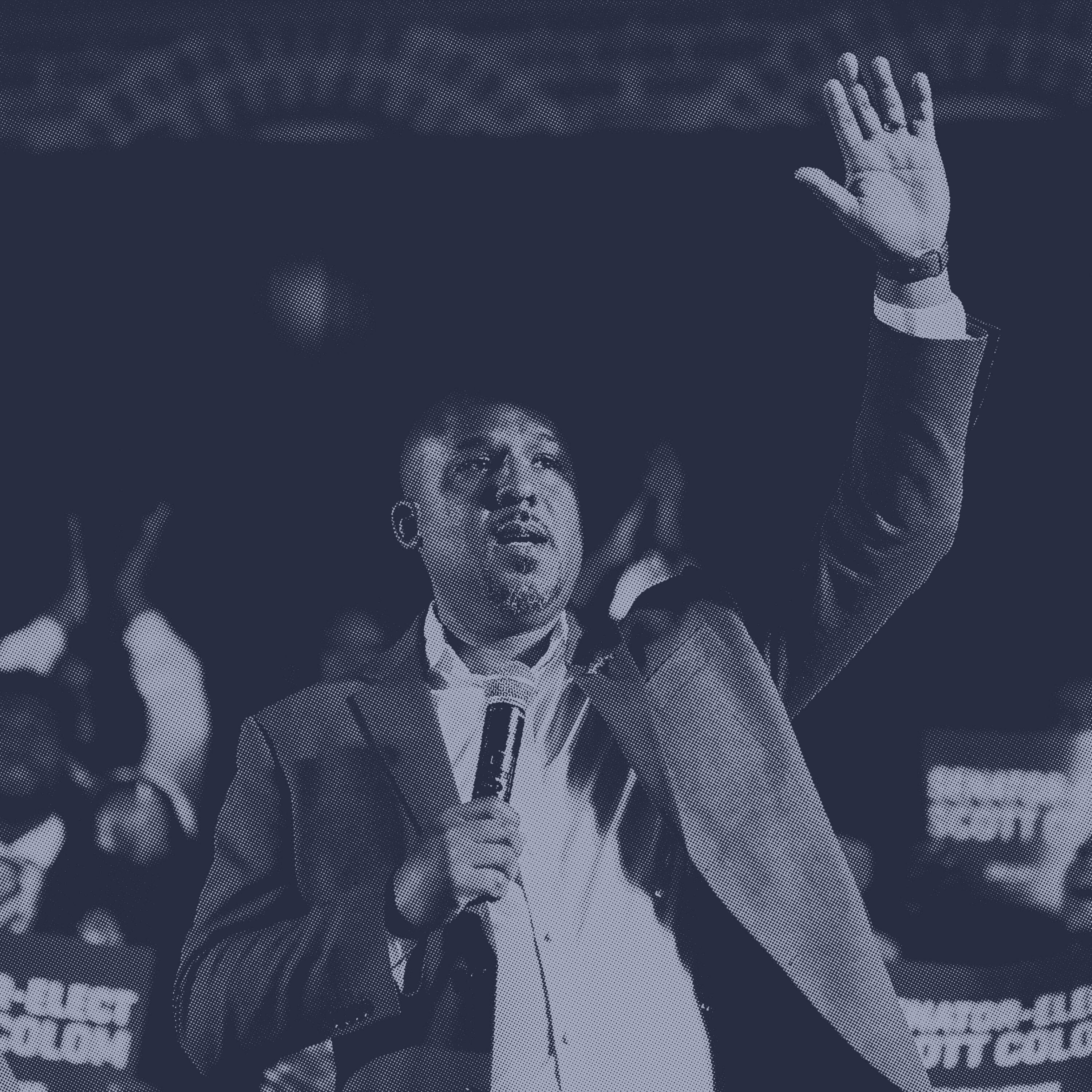
1:16The incumbent, as you said, Republican Dan Sullivan, he's a former Alaska attorney general. He's very much in line with President Trump, rarely votes against him and rarely criticizes him. Got it. And I think we should note, Peltola lost that race in 2024, but she outperformed Vice President Harris pretty significantly. Democrats were pretty excited when she jumped into this race. Tell us a little bit about how the campaign's been shaping up. What issues are driving it? Well, like elsewhere, this is very much a referendum on President Trump. His popularity in the state has dropped a lot since the last election.
1:59Affordability is an especially big deal here because many of our communities are off the road system and fuel and groceries are just scary expensive. Peltola is trying to portray Sullivan as a fat cat. that his stock portfolio has done very well while he's been in office, but she has portrayed him as a very wealthy guy, which he is. He has spent a lot of time discussing her absenteeism while she was in office. She missed a lot of votes in part because her husband died in a plane crash and also her mother died the same year, so she was back in Alaska a lot, but she had missed a lot of votes before those events.
2:48Liz, there was reporting in the New York Times that alluded to a pretty tough work environment for Peltola's campaign and in her congressional office. I'm wondering how she responded to that, but also whether it's playing a role or not in the race. I do not think it's playing a role. I do think that it disappointed a lot of Peltola's supporters. What she was accused of doing was using derogatory language, mistreating staff, being very hard on staff. And some of her derogatory, insulting language was committed to texts. So that was backed up. The other allegations were based on unnamed former staffers.
3:34I think it disappointed Alaskans, but I'm not sure that it changes anyone's vote. Yeah, it's interesting. I feel like the sort of offensive language, Mara, seems like a thing that I just wonder in the age of President Trump, whether that is as disqualifying as it was a few years ago. Yeah, I wonder about that. Donald Trump has made it safe to use certain offensive language. But then you ask the question of, are women judged by a different standard when they talk tough? Is Alaska a different kind of state where maybe a tough-talking female is not something that people mind? Unclear. Has Dan Sullivan brought this up as an attack angle on Peltola since that reporting came out?
4:19Oh, very much so. It came up at a debate we had the other day. He had a harder time explaining why he was so critical of Peltola's language when he let a lot of Trump's derogatory language go unanswered. Are you surprised at all, Liz, that this race is such a toss-up at this point? I mean, think back to 2024 when you were reporting on Peltola's race then, and you've reported on Alaska politics for a long time. How surprised are you at the current dynamic? Yeah, I guess I am surprised. A couple years ago, I don't think this would have been expected at all. Republicans almost always win statewide in Alaska.
5:04It did not seem like this was even a possibility. So I think one of the interesting things as I'm looking ahead to this race over the next couple weeks is the unique way that Alaska votes. I am a voting reporter, Liz, as you know. Can you talk to us, explain a little bit about the differences in how Alaska votes and how that could play in specifically with a race like this? Yeah. What is ranked choice voting? Yeah. OK, so the Alaska system is that we did away with the partisan primaries. In the general election, Alaskans will see four candidates for each position, and they can choose their favorite and then rank one, two, three, and four.
5:44And it's an instant runoff type situation. So they take the person who finished last, fourth place, and they look at their ballots and say, okay, this person is out of the race. Do any of these ballots have a second choice marked? And then they put those ballots in the pile of the other candidates. And they keep doing that until someone gets 50 percent of the vote. The reason why Alaska wanted to make sure that whoever won the election got 50 percent of the vote, they didn't want somebody going to Washington with 28 percent of the vote that they got in a very crowded field. They felt that person would be more representative and it would also force all the candidates to appeal to voters in the center, not just on the extremes of either party.
6:30Right. That was the idea. And the biggest change really has been the open nonpartisan primary. Well, I mean, following up on that is among these four candidates, I hesitate to bring this up, but it is notable to me. Among the four candidates is another Dan Sullivan, not the incumbent sitting senator, Republican Dan Sullivan, but a second Dan Sullivan who has made it to the final four here. Is there any sense on how that is going to impact things? Like, are there real worries that that could impact Republican Dan Sullivan's ability to win this race? Well, in theory, it should not because our voting system is designed to eliminate spoilers.
7:11So if people were confused and voted for the wrong Dan Sullivan who wanted to run as a Republican, then they could just rank the other Republicans on the ballot. But was this a dirty trick by Democrats? I mean, how did the Dan Sullivan, who I understand is a he's a grade school teacher. He's a retired teacher, and he says he was just sick of, you know, there being a Dan Sullivan in office who he felt didn't represent him well. So I don't think they've established that he did it as a dirty trick, that he did it with an intention of confusing voters. I think the whole controversy has sort of died out because the division of elections refused to let the challenger, Dan Sullivan, identify as a Republican on the ballot.
8:06And Senator Sullivan also is now labeled as an incumbent. So people should understand what's really happening, who the real Senator Dan Sullivan is. Right. That was the idea. was the idea. I don't know if the word in this election, whether the word incumbent next to your name is helpful or not. Good point. Yeah. I feel like there's always... Could be the kiss of death. Every election cycle, there are like 15 things like this that are not like headline news, but things that I personally am just going to be obsessively refreshing on election night. And seeing the vote tallies for the second Dan Sullivan is definitely going to be one of them.
8:44All right. We have to take a quick break, but more on Alaska's governor's race, which is also competitive in just a moment. Stay tuned for the following announcements and messages from our sponsors. This message is from Synchrony Bank, who wants to remind you to stay flexible. Not the 10 ,000 steps before breakfast, yoga bending, circus performing, wish I hadn't done that kind of flexible. It's about staying financially flexible, like with their high-yield savings account. You'll earn a great rate without monthly fees or minimums that can slow your progress. Go to synchrony.com slash NPR. Member FDIC.
9:20On the latest episode of Sources and Methods, a blue tsunami, earthquake, avalanche, Democrats swept the midterms. What does this mean for President Trump's ambitions overseas? And why is Iran paying such close attention to the changeup on Capitol Hill? Listen this week to Sources and Methods, the national security podcast from NPR. Hey, it's Mike Danforth, executive producer of Wait, Wait, Don't Tell Me. Here's a great way to get the perks of being an NPR producer without doing any of the work. Join NPR+. With NPR +, you get extended interviews, inside looks at your favorite shows, and more. All while supporting NPR and never having to pull an all-nighter.
10:01Or if you work on one of the news shows, an all-morninger. Sign up at plus.npr.org. And we're back. And a note before we go on. We're recording this just a couple hours before you hear it. Because the news is always changing fast. we try to get episodes out to you as soon as possible. But the best way to make sure you hear those episodes right when they're available is to follow this podcast wherever you listen. On Apple, that means looking for the big plus sign on your show page. On Spotify and on the NPR app, there's a big follow button that you can smash. Do that and make sure you're always up to date with the NPR Politics Podcast.
10:36All right, Liz, I want to switch gears and talk about the governor's race in Alaska, which also looks to be competitive this year. Tell us about that race. Right. We have three Republicans and one Democrat. The Democrat, Jonathan Christ Tompkins, known as JKT, he's well in the lead. And the Republicans are splitting the vote amongst themselves. Some of the candidates are saying, Republicans, you must rank all three of us. Doesn't matter who, just rank, rank, rank. The Republican who is in the lead is not saying that. And also President Trump endorsed that Republican. Her name is Bernadette Wilson.
11:18And President Trump also denigrated ranked choice voting and did not encourage people to rank their ballots. So it looks like they will not heal that split. And the Democrat, JKT, has a good chance to win. You know, let's just step back and talk about how important governors' races are. They're not getting much attention this cycle, mostly because there's no one branch of government. There's a lot going on, Mara. We're doing our best. Yeah, but there's also not – you know, one branch of government hangs in the balance here. But what's interesting about the governors and why they're so important is in 2028, they're all going to play a really important role to certify the result of the presidential election in their state or not to certify.
12:06And Democrats are coming back from a real drought where they had many fewer governors and they're trying to get more of them. And the other thing that's important for Democrats is they're engaged in a big long-term project, which is figuring out how to win in red rural places. They cannot ever hope to be a majority again without figuring out how to do that just because of the way our system is set up and the way voters are distributed around the country. So here's another red state where they're trying to and possibly will win the governor's race. And that's really important for the future of the party.
12:40I mean, it is interesting, Liz, when you lay out the dynamics of that race, which seemed to be at least somewhat impacted by the ranked choice voting system. We already talked about the multiple Dan Sullivans on the ballot in the U.S. Senate race. It's worth noting here that Alaskans have another decision on their hands on whether to keep the ranked choice voting system at all on the ballot this fall. What is that looking like? And tell us about that. Yeah. OK, so that is a hot dispute. It's called ballot measure two and repealing it would get rid of the open primary and ranked choice voting. And it would repeal a disclosure requirement that was aimed at shining a light on dark money contributions.
13:24Republicans, conservatives hate ranked choice voting so much that I wonder if this will encourage turnout, that they will be excited to go to the polls to vote that down, even if they're not so excited about the other races. So I wonder if it'll drive turnout among conservatives. Alaskan voters have already voted on whether to repeal this once before, and that failed, right, Liz? Yeah, really narrowly failed. Got it. Liz, can I ask you a question about Alaska's one house seat, the race for that seat? It seems like fish is a theme there, too, because there's an actual fisherman running against the incumbent, Nick Begich, and he even showed up for the debate wearing a cap that's popular with fishermen and a fleece vest.
14:15Yes, Bill Hill is a lifelong fisherman. He's also a native Alaskan. He had a career as an educator. He's really emphasizing his fisherman roots, and that plays very well in Alaska. How does that race look? Bill Hill, the independent challenger, has been lagging quite a bit in all the polls. Lately, there have been a couple polls that it's possible that that race is tightening, but it's hard to know. It's worth noting here before we end the podcast that Alaska takes a while to count votes, right, Liz? I mean, it's one of those states where if these races are close, we might not know the results for days or potentially weeks.
15:02Yeah. And there's some confusion about that, that people blame that delay on rank choice voting. And it's not exactly true because Alaska has always certified election results 15 days after election day. We allow 10 days for mailed ballots to arrive and 15 days if they arrive from overseas. That has always existed, but we never noticed before unless the election was super close. And now with ranked choice, they don't tabulate those rankings until just before certification. So it does leave the drama until late in the game. I have to say, though, we do get results faster than the states that have runoff elections.
15:48Oh, that's something. That's something. I mean, Mara, I feel like can you just see a scenario where the Senate is hanging on one seat, control of the Senate is hanging on Alaska, and we're waiting days and days and days to know who won that race? I don't know. I feel like when I talk to voting officials, that time after voting. That's a nightmare for them. Then again, if it's a blowout and we already know who's going to get the majority in the Senate and House, that's really unfair to Alaska voters who are still standing there waiting in line for a turn to cast their vote. They already know the conclusion before they get to put in their ballot.
16:25I don't think it's going to happen that way. Ranked choice voting, it rarely produces a come from behind victory. So I expect that whoever wins this race, it's going to be pretty obvious by the, you know, that it's a possibility that the rankings will put the second place finisher ahead of the first place finisher, but it rarely happens. The other thing, I also am waiting to see if that happens. You know, we're four hours behind the East Coast in terms of time zones. So, yes, it is likely that much of the Senate and the House, those races might already be called while our polls are still open.
17:20And I think that could affect the people who vote after work. You know, it could kind of take some of the enthusiasm away from going to the polls if they found that the person they were going to vote for would be in the minority. OK, Liz Ruskin from Alaska Public Media. Thank you so much. Thank you. And before we go, we are taking your questions about the political landscape for upcoming episodes on the pod. What big picture things do you still want to know about this year's midterms? You're not good at predicting the future, so ideally not who is going to win this race, but we can help you make sense of what's going on more broadly.
17:59Record a voice memo with your name and where you're calling from and send it to nprpolitics at npr.org. Okay, that's nprpolitics at npr.org. We may use your question in an upcoming show. I'm Miles Parks. I cover voting. And I'm Mara Liason, senior national political correspondent. And thank you for listening to the NPR Politics Podcast.
18:23Stay tuned for the following announcements and messages from our sponsors. This message is from Synchrony Bank, who wants to remind you to stay flexible. Not the 10 ,000 steps before breakfast, yoga bending, circus performing, wish I hadn't done that kind of flexible. It's about staying financially flexible, like with their high-yield savings account. You'll earn a great rate without monthly fees or minimums that can slow your progress. Go to synchrony.com slash NPR. Member FDIC. Hi, it's Terry Gross, host of Fresh Air. I interviewed John Tutoro, and he was great talking about learning to be a pickpocket for his new movie and how growing up in a volatile home helped him as an actor.
19:03My brother said to me once, I've given you a lot of material. And I said, you know, you're really right. You're right. I said, but at a high cost. Find it on the NPR app or wherever you listen to fresh air.