Ask ChatGPT

 The NPR Politics Podcast
28 Oct 2026 · 15m · 9 chapters

Why Democrats are backing independent Senate candidates in red states, and whether that strategy can win rural voters; includes Montana and Nebraska plus a Montana House race as a “rural playbook.”
Tamara Keith (NPR Politics Podcast; covers politics), Barbara Sprunt (covers Congress), Sam Greenglass (covers Congress). They report from Montana and Nebraska.
Democrats say the Democratic brand is “toxic” in places like Montana since the Biden era (pandemic, inflation), so some voters won’t vote Democratic even if they dislike Republicans. In Nebraska, Democrats backed independent Dan Osborne to beat GOP Sen. Pete Ricketts; in Montana, Democrats face an independent (Seth Bodnar) who’s polling better than the Democratic nominee, splitting the party. Both independents argue independents can matter in a narrow Senate majority.
Bodnar is former president of the University of Montana; Osborne is a steam fitter; Montana’s former Sen. John Tester lost in 2024. Montana House candidate Sam Forstag is a former smokejumper running economic populism; voter Nick Babcock (a Trump voter) says he’s switching after a Forstag town hall.
Written by AI. May contain mistakes.
Exploring strategies for Democrats to win in traditionally Republican areas.
“If Democrats want to win control of Congress in the midterms, they need to win races in places they haven't won for a while.”
An overview of Montana's shift from purple to solid Republican.
“You know, today people think of this as a solidly Republican state, but it wasn't that long ago that it was more purple.”
Discussion on the unique dynamics of the Senate race in Montana with independent candidates.
“And in this case, actually, the spoiler label has been ascribed to the Democrat running.”
Understanding the Democratic Party's support for an independent candidate in Nebraska.
“So, Barbara, you did travel to Nebraska, where there is also an independent candidate running for Senate.”
Insights from voters on their perceptions of independent candidates and party brands.
“I imagine one reason that you are seeing independence in these states that are redder states is that the Democratic Party brand is not in a good place.”
Contextualizing the current political climate with historical insights from Senator Tester.
“I wanted to drill into this a little bit more, though.”
Examining the House race in Montana and its implications for Democrats.
“And Sam, you went to Montana to look at a House race that could offer yet another playbook for Democrats trying to compete again in rural places away from the coast.”
Discussing the Democratic Party's struggle to connect with rural voters.
“Did you get a sense of whether this is effective?”
Learn about the challenges and strategies for Democrats in rural areas.
“And I think broadly, Democrats would say that their policies have not abandoned these voters, that they would help these voters, but that the message and the messenger has not been great.”

Get the gist, explore an idea or ask about something said.
 Claude
On The NPR Politics Podcast, what are the key points of this episode?
Searching your listeningAutomatic transcript. May contain errors.
0:00This message comes from Schwab. At Schwab, you can get everything from self-directed investing to full-service wealth management all in one place. No matter your investing goal, life stage, amount to invest, or know-how, you can invest your way with Schwab.
0:16Tamara Keith: If Democrats want to win control of Congress in the midterms, they need to win races in places they haven't won for a while. What will it take for Democrats to find success in Republican-held areas? Today on the pod, we go to Montana and Nebraska, where Dems are trying two different approaches and ask whether either will work.
0:39Tamara Keith: It's the NPR Politics Podcast. I'm Tamara Keith. I cover politics. I'm Barbara Sprunt. I cover Congress. I'm Sam Greenglass. I cover Congress. And Sam, let's start in Montana. You spent a week reporting there. Really tough assignment. I know. Hardship. At a beautiful time of the year. You know, today people think of this as a solidly Republican state, but it wasn't that long ago that it was more purple. Yeah. I mean, Montana has fairly recently elected candidates, Democratic candidates for governor. And it was until 2025 that Montana had a Democrat serving in the U.S. Senate. There's a real history of ticket splitting in this state.
1:18But in recent years, especially since the Biden era, it has become a lot harder to describe Montana as a purple state. You know, Montana is also home to a really interesting Senate race at the moment. You know, we typically think of when we think of spoiler candidates, we think of like an independent running who is siphoning votes away from one of the two main party candidates. And in this case, actually, the spoiler label has been ascribed to the Democrat running. It is a race in which the three candidates that seem to be receiving the most support are Republican, Democrat and Independent. And the Independent is polling much better than the Democrat.
1:58And so the sort of typical political gravity here is kind of flipped in which the independent, Seth Bodnar, who used to be the president of the University of Montana, he is outpolling the Democrat there. And it's brought a lot of division within the Democratic Party in the state because you've got really prominent former Democratic leaders of the state who are getting behind the independent. You've got others who are still supporting the nominee of the party. So it's a very sort of raucous time in the state as it comes to the Senate race, too.
2:34Tamara Keith: So, Barbara, you did travel to Nebraska, where there is also an independent candidate running for Senate. That one, though, with the support of the Democratic Party. So what's going on there? Yeah. I mean, another red state that had a Democratic senator a bit longer ago than Montana. I think it was 2013, the last time there was a Democrat in the Senate from there. But in some ways, the dynamic really is kind of the opposite of what the race looks like in Montana, because, you know, from early on, the Democratic Party in the state decided that Dan Osborne was their guy. They wanted to support him.
3:07They thought he had the best chance of beating incumbent Senator Pete Ricketts. And that took a lot of twists and turns because they had to put someone in the primary who then had to be honest with voters from the beginning. Like, I want you to vote for me in the primary and then I will drop out of the primary to clear the path for the independent.
3:26Tamara Keith: I imagine one reason that you are seeing independence in these states that are redder states is that the Democratic Party brand is not in a good place. So what did you hear about that? Yeah, so Tam, I talked to so many voters at an Apple festival, a Scarecrow festival, a homecoming game for the University of Montana. And something I heard again and again, even from Republican-leaning voters who maybe were feeling some frustrations about Trump's second term, is that despite that, they were not feeling compelled to vote for a Democratic candidate or to give Democrats control of Congress because the brand has become so toxic in places like Montana, especially since the Biden era when we had the pandemic and the beginnings of inflation.
4:18And that is not just bouncing back really quickly. I wanted to drill into this a little bit more, though. So I went to see Senator John Tester, former Senator John Tester, who was a Democrat elected to the Senate from Montana, but lost in 2024 in this era that we're talking about. And so I went out to his farm in this place called Big Sandy. And he reminded me that it wasn't always this way. Where you're standing right now in 1960 was pretty damn blue because these were the children of homesteaders in the Great Depression.
4:53Tamara Keith: They understand the role government played. Look, before my grandfather died, he said it wasn't for FDR. We wouldn't be on this place. Tester is saying that Democrats now have an opening because of frustrations over the war in Iran, because of tariffs, because of prices of diesel. And there might be some opportunity to remind voters of that legacy in this new era. Barbara, when it comes down to it, though, these are independent candidates. But are they independent candidates or are they just like Democrats pretending to be independent candidates? Well, I mean, you have hit on the thing that Pete Ricketts in Nebraska is kind of branding his whole campaign against Dan Osborne by saying he's a secret Democrat.
5:35Obviously, this is much harder for Osborne to refute because he's gotten support from the Democratic Party in the state. And I asked him, like, is this harder in some ways? Like, in some ways, it's a two-way race, which is great. You don't have the spoiler thing that is the dynamic that we see in Montana. But is it harder because there isn't an actual Democrat running to refute this idea that you are the Democrat running? And he said, yeah, like it does make it a lot harder. So when I talked to voters there, you know, they run the gamut. But I certainly encountered people who were very suspicious of the idea that any independent is a true independent.
6:09Tamara Keith: But don't you have to caucus with a party to be assigned to committees, which is like a key part of being a member of Congress? Non-caucusing members typically don't get standing committee assignments, although both candidates, Bodner and Osborne, have said that they believe that they will be placed on committees. But beyond that, Bodner, Osborne and the other two independents running in Idaho and South Dakota are very bullish about the fact that gone are the days of these like massive majorities in the Senate. What we'll probably see is a narrow majority. And so when you've got a narrow majority, every individual vote really matters.
6:52Their theory of the case is that they will wield significant power and both parties needing to do outreach to them in order to get their votes.
7:00Tamara Keith: I will just note that when Angus King, independent of Maine, ran, he also insisted there was no way he was going to caucus with the party. And he caucuses with the Democrats. All right, we're going to take a quick break and we will have more in a moment. Stay tuned for the following announcements and messages from our sponsors. This message comes from Prolon. Want to look and feel your best this fall? Prolon's five-day fasting mimicking diet is a clinically developed nutrition program with the goal of promoting fat loss while protecting lean body mass. Developed at USC's Longevity Institute, it aims to assist the body in entering a fasting-like state that helps reset metabolism, target visceral fat, and support healthy metabolic markers.
7:43Get 15 % off plus a bonus gift when you subscribe at prolonlife.com slash NPR. This message comes from Mint Mobile. This holiday season, unwrap a new wireless plan from Mint Mobile. Keep your current phone and your number and go to mintmobile.com slash switch. This message comes from Edison Electric Institute. Behind Friday night lights, coffee shop Saturday mornings, and every big and small moment in between, America's electric companies are hard at work, strengthening reliability, serving responsibly, and innovating for tomorrow to keep communities safe, secure, and connected, and provide their customers with the energy of every day.
8:24America's electric companies, powering the energy of every day.
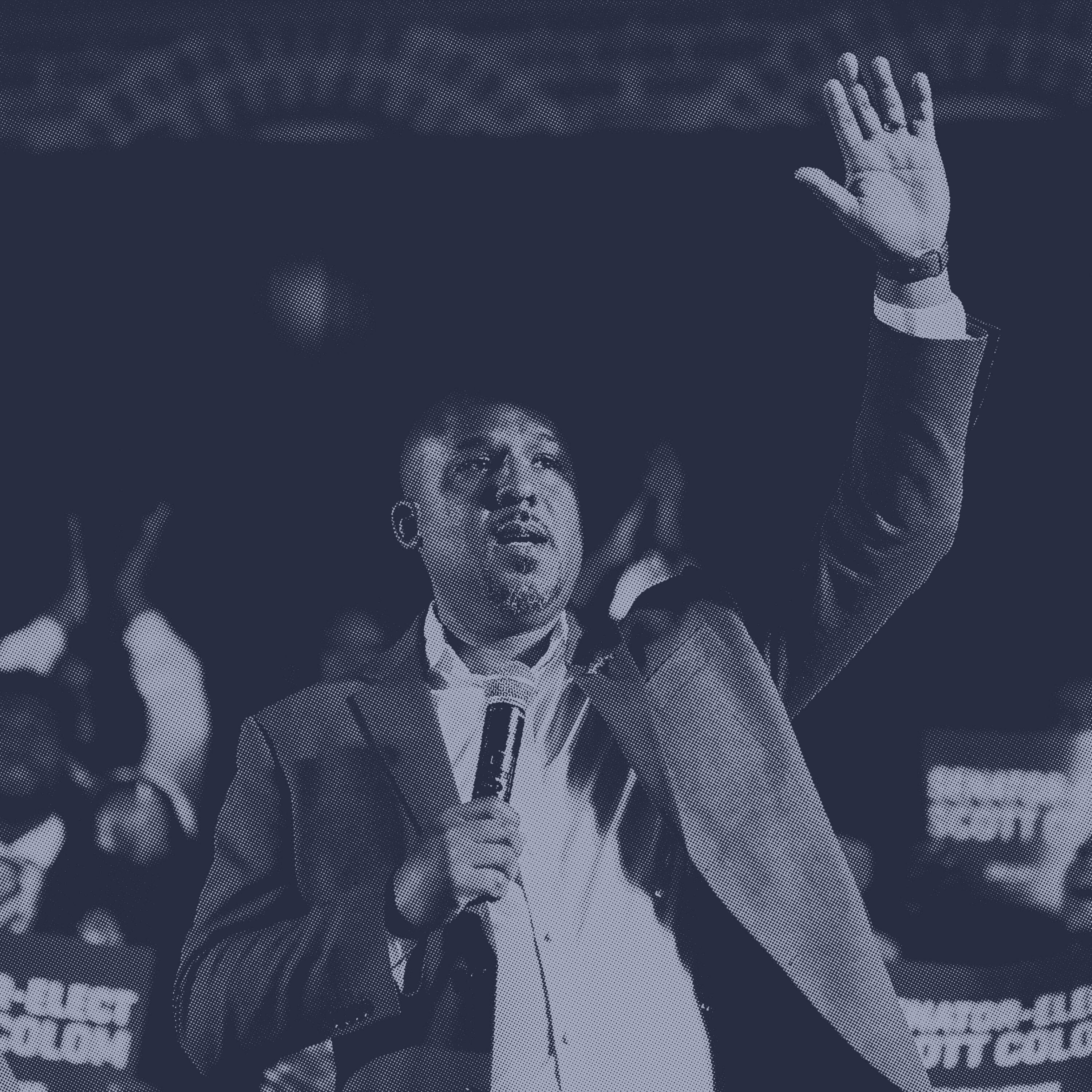
8:29Tamara Keith: Welcome back. And Sam, you went to Montana to look at a House race that could offer yet another playbook for Democrats trying to compete again in rural places away from the coast. What does that race look like? So, Tam, this is a giant congressional district, I should say, first. It runs some like 400 miles from Yellowstone National Park all the way up to Glacier National Park. And the Democrat running here is a former smoke jumper. These are elite teams of wildland firefighters for the U.S. Forest Service who basically jump out of airplanes to fight fires in these really remote forests. And what's different about this candidate, Sam Forstag, is A, he's 32 years old.
9:12B, he's running on that working class background. and see he's running as an economic populist. I asked him what that meant to him. And one of the things he told me is that it's been really frustrating to hear Democrats seem to just stumble on this concept of affordability as like an election strategy in the last year or so, when for him and many of the people he knows in Montana, the cost of living is something that they have been talking about all the time for years now. We don't change this by giving a new term to it. We change this by changing who's actually in those damn rooms, because we've got a lot of people who've been sitting in those offices for 10, 20, 30 years and nothing has changed.
9:50I'm going to answer to people like the kid I was growing up whose belly is full because
9:54Tamara Keith: of food stamps. It does not feel like that's who Congress is answering to right now. And I should say the dog that you heard in that tape, unclear how he's voting.
10:04And so what you're hearing from Forstag there is saying that both parties have not gotten this right. And he's calling for new people to sweep into Congress and change things. Yeah.
10:16Tamara Keith: And I will just note that President Trump came to Montana to campaign, which is a sign that even if this is a little bit of a long shot, it's not such a long shot that the president didn't feel like he needed to show up and campaign. I mean, and like not to bring it back to Nebraska, but President Trump also came to Grand Island, Nebraska to do a rally there. And I think it just it's another sign of bringing the president to places that you wouldn't normally think he would have to campaign in. But also Dan Osborne, I've met him, Sam Forstag. They, you know, not to borrow a term from the president, but they both come from central casting.
10:53Tamara Keith: You know, a smoke jumper. You don't get much more iconic than that in Montana. You know, like Dan Osborne is a steam fitter. He campaigns in casual clothes. And I am not talking polos. He's wearing work shirts much of the time. Yeah. And I mean, I think this is a large part of why the Democratic Party in Nebraska was so excited to get behind Osborne, because they just felt like there wasn't someone that they could run who they felt would connect with working people more and have a better shot at defeating the Republican running. And so that is part of the calculus that you see. So, Sam, as you say, you have talked to so many voters.
11:37Tamara Keith: Did you get a sense of whether this is effective? Is this just, you know, the bad environment that Republicans are facing, oil prices being high, tariffs, all the things? Or is there something about these candidates? Yeah, so I think at the end of the day, a lot of this race will come down to who shows up. But there are a lot of independent voters in Montana. And so peeling off some folks who maybe have voted for Republicans in the past and are now open to considering Democrats will certainly be a part of the equation. And I did meet some of those people. One of them was Nick Babcock. He's a mail carrier.
12:18He voted for Trump three times. And he told me he was overall pretty happy with Trump's first term. But then I asked him, how about now? The second term is the exact opposite. We have seen a complete betrayal of every campaign promise that was made. It just feels almost like a slap in the face. My hero was Charlie Kirk, and he would listen to absolutely anybody. And absolutely, I'm willing to change my mind. So Babcock told me he showed up to a Forstag town hall, and he felt like Forstag is someone who also knows what it's like to punch a clock just like him, and feels like he might actually take on the establishment and do some of these things that Babcock wants to see from Congress and he hasn't seen yet.
12:59And so he says he's voting for Forstag. How many of those people are actually out there and how much role they will play in shaping this toss-up race by election day, that we'll have to wait and see.
13:10Tamara Keith: I mean, like, populism is universal. I mean, so much of what we're hearing in so many of the races that I've covered this cycle, and I'm sure you have as well, is it's almost less about left versus right versus moderate in some ways and about anti-establishment versus status quo. Throw these guys out. And I think that is going to be maybe the prime dynamic shaping a lot of these toss up races this year. Yeah. Somebody I was talking to recently described it as like top, you know, top versus bottom. Like it's not left right. It's like the elites and everybody else. Yes. So I do want to zoom out because Democrats have been criticized for abandoning rural places or just not being able to talk to those voters at all.
13:55Tamara Keith: How do they respond to that? Yeah, this is something I talk to Democrats a lot about. And I think broadly, Democrats would say that their policies have not abandoned these voters, that they would help these voters, but that the message and the messenger has not been great. And I think there's an acknowledgment that the criticism of the Democratic brand, particularly in the places that Sam and I just went to, but certainly elsewhere in the country, is well taken. And I talked to Jane Clubb about this. She's the chair of the Nebraska Democratic Party and DNC vice chair. Our party should look and sound like America, not just the coast, and certainly not people only from ivory tower kind of schools.
14:38Tamara Keith: So it's right that people have pushed back on our brand. It is a problem. We are working on it. What stood out to me is she said that this is a long term strategy. It has to be for Democrats, right, to to reinvigorate their brand, to pick the right messengers to go into communities in different states. But I also think that, you know, she said sometimes what that will look like is a Democratic party in a state getting behind an independent as they did with Osborne in Nebraska. And sometimes it will be fielding their own candidate in the primary. And that's just something that the states will have to decide, you know, really on a case by case basis going forward.
15:17You know, something else Klebb told us that really stuck out to me is that she finds it so frustrating when she hears Democrats say, you know, the only way to have a durable Senate majority is to like kill the filibuster or restructure the whole Senate, that it's unfair that rural places like Nebraska get two senators while California also gets only two. She says the more sensible answer is that Democrats have to compete in more places. You know, she reminded us that not long ago, as we've been talking about places like South Dakota, Iowa, and yes, Montana, Nebraska, they had Democratic senators.
15:50And it is possible to return to that kind of environment once again if Democrats invest the resources to do it rather than just competing every year in the same couple of swing states.
16:01Tamara Keith: Well, I think part of it is that the Democratic base has changed in the last decade or two, that Democrats have gotten far more of the college-educated white voters that used to be Republicans. And those people now have a louder voice in the Democratic Party and in the Democratic base. And that language of the ivory tower, as she called it, is just not the same as the language or the lives that people are living in different parts of the country or in more rural areas. All right, well, let's leave it there for today. I'm Tamara Keith. I cover politics. I'm Barbara Sprint. I cover Congress. I'm Sam Greenglass.
16:39I cover Congress.
16:39Tamara Keith: And thank you for listening to the NPR Politics Podcast.
17:01current phone and your number and go to mintmobile.com slash switch. This message comes from Edison Electric Institute. Behind Friday night lights, coffee shop Saturday mornings, and every big and small moment in between, America's electric companies are hard at work, strengthening reliability, serving responsibly, and innovating for tomorrow to keep communities safe, secure, and connected, and provide their customers with the energy of every day. America's electric companies, powering the energy of every day.