
In short
The Obi One Podcast: Episode Summary
Episode Title
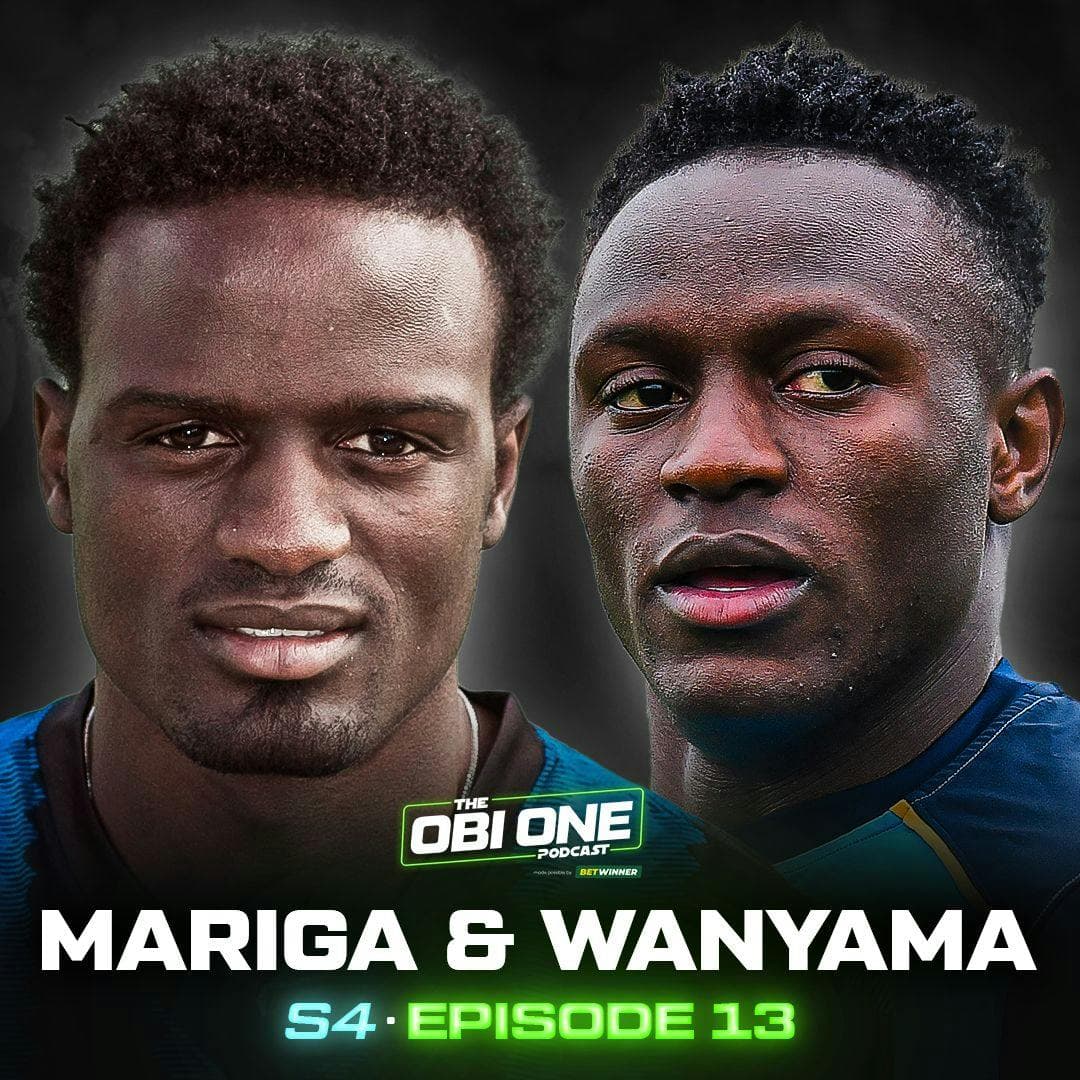
Mariga & Wanyama Exclusive: Pochettino’s Special Talent, Fatherly José & Eto’o Africa’s GOAT
Hosts
John Obi Mikel, Chris McHardy
Guests
MacDonald Mariga, Victor Wanyama
Location
Nairobi, Kenya
---
Episode Overview In this episode of *The Obi One Podcast*, John Obi Mikel and Chris McHardy engage with Kenyan football legends MacDonald Mariga and Victor Wanyama. The discussion centers around their experiences, insights into football management, and perspectives on the state of African football.
---
Key Themes and Discussions
- Mariga's Experience with José Mourinho
- Mourinho as a Mentor: Mariga describes Mourinho as a father figure who supports players while imposing a strong discipline to achieve a winning mentality.
- Personal Anecdotes: He shares experiences of Mourinho’s management style, including how he reacts to losses and his approach to motivating players.
- Mariga's Career Highlights
- Champions League Triumph: Mariga reflects on becoming the first Kenyan to win the UEFA Champions League with Inter Milan in 2010.
- Career Transition: He recounts a missed opportunity to join Manchester City due to bureaucratic issues within the club, leading him to Inter Milan.
- Wanyama's Career Path
- Journey through Clubs: Wanyama discusses his transition from Celtic to the Premier League with Southampton and Tottenham under Mauricio Pochettino.
- Pochettino's Impact: He describes Pochettino's training methods and his capability to motivate players, contrasting Pochettino's "nice guy" approach with the tough love style of his assistant.
- Debate on the Greatest African Player
- Samuel Eto'o vs. Didier Drogba: The guests debate the title of Africa's greatest footballer, with Mariga advocating for Eto'o based on his contributions and performance during their time together.
- The State of African Football
- Local Talent Development: Wanyama and Mariga discuss initiatives for nurturing young talent in Kenya, emphasizing the need for investment in youth academies and facilities.
- Future of Kenyan Football: The upcoming hosting of AFCON in Kenya raises expectations for the national team, with both guests expressing hope for strong performances.
---
Important Insights
- Management in Football: Effective management blends discipline with support, a theme echoed through discussions about Mourinho and Pochettino.
- Youth Development: Both guests stress the importance of investing in youth academies to produce future stars and elevate Kenyan football on the international stage.
- Cultural Impact: The influence of football on community pride and identity in Kenya is highlighted, showcasing the sport's role beyond just entertainment.
---
Conclusion The episode captures a rich tapestry of stories and insights from two of Kenya's football icons, Mariga and Wanyama, while also offering a candid look at the realities of African football management. The discussion concludes with an optimistic vision for the future of football in Kenya, especially as the country prepares to host a major continental tournament.
---
Key Takeaways
- José Mourinho's coaching style integrates strict discipline with personal care for players.
- Mariga's pivotal career moments highlight both opportunity and challenges faced by African players abroad.
- The importance of grassroots development in football to ensure sustainable growth and success for Kenyan players on the global stage.
---
Make sure to tune in to *The Obi One Podcast* for more engaging conversations with football legends and insights into the beautiful game!
Written by AI. May contain mistakes. Listen to the episode to check what was said.
Chapters
Tap a time to open that second in VOWelcoming McDonald Mariga
3:30 to 6:20
John O'Brien introduces McDonald Mariga and discusses his achievements.
“I tell you what, John, I think he might be a bit taller than you.”
Jose Mourinho's Influence as a Coach
6:20 to 9:10
Explore the coaching style of Jose Mourinho and his impact on players.
“we don't see him for two days, you know?”
Transition from Premier League Dreams to Inter Milan
9:10 to 11:50
McDonald Mariga shares his journey from a failed Premier League transfer to winning the Champions League.
“So when the news came, Mancini was the coach and I was just you know demoralised and I went back to Italy and everyone knew that the seven, I think it's the seven big clubs they're the ones to decide.”
The Great African Players: Eto'o and Drogba
11:50 to 14:02
Discuss the legendary status of Samuel Eto'o and Didier Drogba in African football.
“It will be played here in Kenya, Tanzania and Uganda.”
Kenya's Infrastructure Readiness for AFCON
14:02 to 15:08
Learn about Kenya's capability to host significant football events and necessary preparations.
“we have stadiums, we have now everything.”
Team Preparation for AFCON
15:11 to 16:36
Discover the strategies for blending local and international players for the national team.
“Yeah, the team, we want to do some early preparations for local players.”
Expectations for the Upcoming AFCON
16:40 to 17:44
Understand the aspirations for Kenya's performance in the next AFCON tournament.
“But if you are experienced and where you are performing, then yeah, then we give you a call up.”
Benny McCarthy: Coaching Insights
17:55 to 18:46
Insight into Benny McCarthy's coaching style and his impact on the team.
“We know how fantastic he is as a player.”
The Value of African Football
18:48 to 19:50
Explore the perception of African football and its significance on the global stage.
“about the disrespect that African football gets.”
Potential of African Teams in World Cup
19:53 to 21:12
Discuss the prospects of African teams succeeding in upcoming World Cups.
“What are you expecting from African teams?”
Show all 33 chapters
Leadership and Management in Kenyan Football
21:16 to 22:36
Learn about the importance of leadership in enhancing Kenyan football standards.
“It's a shame that we're not there, you know, because I think we play the best football.”
Investing in Youth Academies
22:39 to 25:15
Examine the current state of youth development in Kenyan football and the need for improvement.
“Yeah, management, if it's bad, then the team cannot grow.”
Challenges of Pay-to-Play Models
25:19 to 26:10
Understand the drawbacks of the pay-to-play system in youth football development.
“We have to start nurturing these talents when they are still young.”
Support for Local Clubs and Players
26:14 to 27:37
Discuss the importance of community support for local football clubs and players.
“kids then i have four five coaches how can five six coaches you know coach a thousand kids so Take the kids, they enjoy, they play, go out.”
Evaluating Moises Caicedo's Impact
27:50 to 29:22
An analysis of Moises Caicedo's performance and evolution as a player.
“He played in your position, McDonald, Moises Kasedo.”
The Great Midfield Trio: Iniesta, Xavi, and Busquets
29:22 to 30:11
An exploration of the legendary Barcelona midfield trio and their unique skills.
“That Barcelona trio of Iniesta, Xavi, Busquets, for me, I don't think you're ever going to see the midfield trio that play the way they did.”
Reflections on Playing with Legendary Teammates
30:11 to 30:58
A look back at memorable teammates, including Eto'o and Zanetti.
“And Busquets never loses the ball, you know, he's not strong, he's not physical, but he's just so good.”
Developing Youth Football in Kenya
30:58 to 33:36
Insights into Kenya's youth football programs and nurturing young talent.
“this is an opportunity for you guys to ask a question.”
Choosing Chelsea Over Manchester United
33:36 to 36:15
Mariga discusses his decision-making process for choosing Chelsea in 2006.
“so that's the option now we have because we don't have you know agents coming to kenya at this moment.”
Integrating Young Talents into National Teams
36:15 to 40:04
Strategies for integrating young players into the national team and their development.
“Talking about under 17, you know, playing in a national team.”
Challenges and Support for Women's Football
40:04 to 42:00
Discussion on the growth and support required for women's football in Kenya.
“Right, final question, make it a good one.”
The Growth of Women's Football
42:00 to 43:19
Discussion on the rapid growth and importance of women's football.
“I know how women's football is massively, rapidly growing.”
Chelsea's Managerial Challenges
43:20 to 44:39
Insight into Chelsea's current management issues and the need for experienced players.
“But with these current owners, I don't know the objective, where they're going, because they keep sacking managers.”
Victor Wanyama Introduction
44:40 to 45:56
Introduction of Victor Wanyama and his thoughts on the current Spurs team.
“Oh, don't talk to me about a goalkeeper.”
Pochettino's Coaching Style
45:57 to 48:41
Victor shares insights into Mauricio Pochettino's coaching style and its impact.
“We will come home and support the team from home.”
Spurs' Near Misses
48:42 to 50:01
Discussion on the challenges Spurs faced in winning trophies under Pochettino.
“And then Pochettino will come and say, don't worry, next time.”
Celtic, Southampton, and Spurs
50:02 to 51:15
Victor reflects on his career and experiences across different clubs.
“then the pressure gets in the team and it becomes difficult.”
Daniel Levy's Leadership
51:16 to 52:35
Discussion on Daniel Levy's management style and its impact on Spurs.
“Do you believe that the criticism that he got was fair?”
Dele Alli's Potential
52:36 to 53:43
Victor discusses Dele Alli's talent and the challenges he faces currently.
“But also, you know, the football, also the people you're around with, and also if they're not giving you the peace of mind and you're not in a good state of mind, it's difficult to perform.”
Kenyan National Team Expectations
53:44 to 55:40
Insights on the expectations for the Kenyan national team hosting AFCON.
“Morgan Rodgers that plays for Aston Villa right now.”
Greatest African Player Debate
55:41 to 56:00
Victor shares his thoughts on who is the greatest African player of all time.
“To be honest, we have a lot of African dreads.”
Developing African Football Talent
56:00 to 59:21
Learn about the importance of developing youth academies in African football.
“I would say from what I've seen, Eto has done a lot.”
Friendly Sibling Rivalry
59:21 to 59:39
Discover the light-hearted rivalry between Victor Wanyama and his brother.
“And last one Victor, who's better, you or your brother?”
Transcript
Automatic transcript. May contain errors.0:00Get in the game with the college branded Venmo debit card. Wreck your team with every tap and earn up to 5 % cash back with Venmo Stash, a new rewards program from Venmo. No monthly fee, no minimum balance, just school pride and spending power. Get in the game and sign up for the Venmo debit card at Venmo.com slash college card. The Venmo MasterCard is issued by the Bancorp Bank N.A. Select schools available. Venmo Stash terms and exclusions apply at Venmo.me slash stash terms. Max$100 cash back per month. 5 a.m. I'm up with a crisp Celsius energy drink. Running 12 miles today. Grab a green juice, quick change, and head to work.
0:37Meetings, workshops. One more Celsius, no slowing down. Working late, but obviously still meeting the girls for a little dancing. Celsius. Live, fit, go. Grab a cold, refreshing Celsius at your local retailer, or locate now at Celsius.com.
0:59Ladies and gentlemen, one more time Make some noise for John O 'Brien John
1:07Yes We're here, we're in Kenya They love you in Kenya It feels like home to me now It does, huh? It feels like home Hopefully no Nigerians are in I hope that no Nigerians are in Hearing that But listen, you've been given an incredible welcome. Nairobi, what a city, what a place.
1:26John Obi Mikel:Beautiful city. I love coming here. I think it's my third or fourth time now coming to this city. And every time I come here, the people are so amazing. They're so welcoming. The positive energy that I get from them, it's just something that you can't buy. And it's just so nice. From the airport to the hotel, and every time they see you, they always ask you, are you okay? Do you need something? it's just amazing so I love coming here weather is amazing as well so yeah and the food is fantastic as well the food is I tell you what as well proper Chelsea fans yes they know what they're talking about in this country come on to Chelsea yes right John you won the Champions League yes in 2012 I hate to steal your thunder John but there's a man in the room who did it two years earlier than you did it.
2:21I'm sorry, John. Yes, yes, yes. Talk to me about this man. Similar. You both play in the same position. Yeah. Both Champions League winners. And of course, you both played under Jose Mourinho.
2:31John Obi Mikel:Yes, fantastic player. I didn't get to play against him so many times because I don't know if we did. I probably played against his younger, Victor, a lot of times. But fantastic. Victor is a fantastic player. And I'm sure Maringas as well is. And played under Jose Mourinho, one of the best managers. I'm sure he will tell us a lot about Jose Mourinho and what Jose Mourinho means to players. I think every player who played on Jose Mourinho just have, you know, so many amazing things to say about him. And it's so amazing to see that, you know, Mourinho got to win the Champions League, play for Kenya as well.
3:06John Obi Mikel:So it's fantastic and it's good to see that. But as well, Victor played for Tottenham as well, had an amazing career. We don't mention Spurs. We don't mention Spurs. John don't do it so Chelsea fans in tonight we do not mention Toto but it's good to see that they both have an amazing career as well and so yeah and welcome to the OBM podcast you know so it's good to have them here are we ready to welcome them on? we are ready we are ready right ladies and gentlemen we've got one legend with us let's welcome another now he won the Champions League with Inter Milan in 2010 becoming the first Kenyan to do so 40 caps for his country he's now the Deputy President of the Kenyan Football Federation.
3:48He's a legend. It's the one and only McDonald Mariga. I tell you what, John, I think he might be a bit taller than you. What? I think he's a bit bigger than you. I don't know. Maybe. I think he is. McDonald, thank you so much. Thank you for welcoming us to Kenya. It's fantastic to see you. And, well, listen, there's so many talking points, But we touched on it in the introduction. You two have played under Jose Mourinho. What is Jose like? What's your best story about Jose? I think it's like further to the players. People get him wrong outside when he talks to the players. But the team is very, very friendly.
4:39He supports the playing unit a lot. So it's like a father. He wants to support everyone. And on tactics, when he tells you to do something, he wants you to do the way he wants. So it's very harsh on the duties he's given to players. But again, he's a very, very loving guy.
4:59John Obi Mikel:You've called him a father as well, George. Oh, yeah. I mean, Mourinho, he just said it there. I think if you played under Mourinho and you don't do what he asked you to do, you will definitely hear about that. But it just comes, I think that's the winning mentality that he gives to the players, isn't it? Like, you know, if you don't have the winning mentality as a player and then you go to play under Jose Mourinho, he will definitely install that into you. He will definitely let you know that it's all about winning. Yeah. You know what I mean? Yeah. And even he's a great motivator. You know, he knows how to motivate players.
5:36He knows how to, you know, to make players play for him. so he'll get 120 % from each player he's playing for him. And McDonald, did he ever get angry with you? He got angry with John a number of times. Did he ever get angry with you? Yeah, a couple of times because, you know, if you're a player and you don't get enough playing time, then that's where you'll start fighting with the coach. And yeah, sometimes he has to manage players because if you don't play, you're not happy. So he has, and he's a good coach, he has to manage every player and we were lucky because at Inter, everyone was getting playing time.
6:14That time, yeah.
6:15John Obi Mikel:Yeah, I remember. Did he do that to you guys? I remember when he was at Chelsea and when we lose a game, we don't see him for two days, you know? For two days, we don't see Jose Mourinho. He disappeared. So what he does, he comes to training, but then he doesn't come down to the pitch. He stays upstairs in his office. In his office, yeah. Does he do that to you guys? Yeah, the same, the same. Yeah, it's the same. Until you go back and you win again, then he comes back as your friend. Yeah, then he comes back and talks to the team and he's happy. But when you lose, then you don't talk to anyone.
6:46He goes to the office and he don't want to talk to anyone in the playing unit. He just wants to stay alone and do his things. McDonald, you joined Inter in the January of 2010. Inter Milan would win the treble in May, becoming the first Kenyan to win the Champions League. how good we all know how good the Chelsea team that this man played for was how good was that Inter Milan team the Inter Milan was on top because they they won the league before winning the the second year before winning the champion the treble and you know I remember when I was when I joined Inter first I was supposed to sign for Man City Man City wow and I signed with Man City but again there was the panel that sits to know who they can sign because there's this top 70 in the world, you have to be top 70 in the world, yeah the country, national team, but we were like 130, 135 so I didn't qualify, so there's these seven members of the teams, they have to sit and decide if you will play for English Premier League or not, so they decided I decided I want to play but four said no.
8:07I am not qualified to play. So you had signed a contract? I already signed a contract already? Yes, I already signed. And these four people decided you cannot play in the Premier League? Yeah, no. So I went back to Italy. I was playing for Parma then. So I went back to Italy and they took Patrick Vieira. So Patrick Vieira from Inter went to City and then I went to Inter Milan.
8:34John Obi Mikel:That's incredible. So four people decided you are not going to play in the Premier League. Yes. How did you feel after that? I mean, you must have signed for Manchester City. Yes. And you've told your parents that, you know, your family that you'll be coming to play in the Premier League. The best league in the world. I mean, no disrespect to Italian League. The Premier League is the best league in the world. How did you explain to your family about that? You know, first of all, it was a big news here in Kenya because everyone knew I was there. in Kenya because you know a lot of Kenyans follow English Premier League and I was very happy because I wanted to really play in English Premier League.
9:12So when the news came, Mancini was the coach and I was just you know demoralised and I went back to Italy and everyone knew that the seven, I think it's the seven big clubs they're the ones to decide. So everyone knew the deal didn't go through so I went back.
9:58John Obi Mikel:has ever played in the Premier League or the Italian League. In your opinion, people always compare Samuel Eto 'o, Didier Drogba and all these guys. For me, I thought it should be in that conversation. Who is your best? You played alongside Samuel Eto 'o. How good is he? For me, because I played with Eto 'o, I can say Eto 'o is the greatest because I know how he was, the capability, what he did when we were on the run for Champions League. I don't think the Chelsea fans are happy that you said Samuel Eto 'o though. It's D.D.F. drop bar for me. I remember, I think it was quarter's finals we played against Chelsea.
10:34And it's Eto 'o who scored the goal at Stamford Bridge. Yes, it was. Yeah, yeah, yeah. So, with Chelsea, I think Eto 'o is the great, great African player. What made him so special, McDonald? What made Samuel the player that he ultimately was? In training, in the games, what made him special? I think in the trainings and, you know, the trainings, you know, nowadays technology, you know, for example, I'm playing against Obi. They'll show me a video how Obi is, you know, how he's tackling or how he's moving forward with the ball. So I have idea, maybe 60 % idea how to mark Obi. So I think with the technology in Italy, they love that a lot.
11:15They love tactics. They love. So that's even with tactics makes things easier. He was so good, Samuel.
11:23John Obi Mikel:So now, I mean, you've retired now. You're back in Kenya. You know, you enjoy life here in Kenya. It's your home. I know a lot of Kenyans, they absolutely love football. And tell us, what do you do now? I mean, now I'm the vice president of Football Kenya Federation. And yeah, we are trying to, you know, to nurture our own way so we can get other big players out there. So yeah, that's what we are doing. and we are preparing for AFCON next year. It will be played here in Kenya, Tanzania and Uganda. Betwinner, home of two winners. Can I ask, I want to ask both of you actually, because John and I, McDonald, we've not caught up, we've not spoken since the last AFCON.
12:07Senegal winning, crazy, crazy finish to the game. We had Senegal players off the pitch, Brahim Diaz missing the Penenka. what did you make of that? It's not a good look. It was not a good look for that final. Yeah, I was there and I was in that final and it was not a good picture for Africa football. You know, when you tell players to come off the pitch, you know, this era we have VAR, we have everything. So if the referee has to challenge a tackle or a penalty, you just go to VAR and say, no, it's not a penalty or it's a penalty. So I think with the VAR, things are easy to decide. And if it's a penalty, it's a penalty.
12:51We have to move on. We have to play on. If we lose, yeah, next time. I think so for Senegal to walk out of the pitches, it was not a good, good...
13:01John Obi Mikel:Yeah, yeah. I mean, I also didn't... I mean, I was working with an organization. I was covering the game. And I also said, for me, I don't... I understand their frustration, but I don't like the part where they walked out on the pitch. I don't think you do that. That should never be done. I understand their frustration, you know, them scoring the goal that I think it was a goal. And then the referee going on the other end and then awarding a penalty against Senegal. So I understand their frustration, but you should not walk off the pitch. Talking about the AFCON, you're going to host the AFCON in the next two years.
13:36John Obi Mikel:You saw what Morocco did in terms of the facilities, the infrastructure. What are your plans in terms of hosting? the African Cup of Nations. No, I think we can't compare ourselves with Morocco. They did a very fantastic tournament. And now we have to do it in a different way. Because we are three countries and we have now facilities, we have stadiums, we have now everything. Hospitality is good. I think you've been around. Yes, yes. And I think we are ready to do it in our own way. and there's even one journalist who said that Kenya we don't have roads in East Africa. So I think even, you know, we have to prove to the world that here is the best we can, we can even host, you know, a World Cup because we have everything.
14:32You have everything to hold the next African Global Nation.
14:35John Obi Mikel:You have the roads, you have the stadiums, you have the training facilities, the hotels, everything is in perfect condition. Yes. Because I know what these players are like. When they come and they don't see those facilities, they will complain. So you are the vice president. No pressure on you, though. No, no pressure. Because, you know, we hosted the Chan, you know, and everyone here, president of CAF, they were all here and they saw and they know that we are capable of hosting the AFCON. And what about the, sorry, John, what about the team? Yeah, I was going to say that. Is the team ready? Because stadiums, yes.
15:16Infrastructure, yes. Roads, yes. What about the team? Yeah, the team, we want to do some early preparations for local players. And we have players abroad, so we have to blend professional and local players. So we put them together. And we have many players that have reached out that have never played for Kenya national team. and we have to go and look for them and we talk to them. And yeah, we, you know, because hosting Afcon, we have to, you know, not just to participate, we have to make a mark on this tournament. You know, we have to show people that Kenya can go far. So we have to do a good team and make them good preparation early enough.
16:02John Obi Mikel:So the aim is to have a mixture of experience and youth. Because we've seen a lot of the African teams in the last half-con, some of them decided to go all youth, all youth, young players, like Cameroon, they decided to go young, young. And we've seen Senegal, they left some of the core, key players, in Koulibaly, in Gay, in all this, Sadio Mane, you need a bit of this experience to be able to guide the young. So, is that your plan of how you want to mix experience and youth? Yeah, of course, we have to mix experience and youth, and of course if you are experienced and you are not, you can't play on a certain level, then we can't take you.
16:47But if you are experienced and where you are performing, then yeah, then we give you a call up. It doesn't matter your age or, you know, if you are playing good, we have to call you for the national tour.
17:00John Obi Mikel:And just for all the fans sitting here, come two years later, What are you telling the fans? What are the expectations in the next half-con for Kenya? What are the expectations? You want to go all the way? You want to win it? Or you just want to participate? What is the expectation for the fans? No, to participate? No, no, we can't participate. We want to make everyone know that even in Kenya, we have great players. And yeah, for Chan, we did good. And yeah, we were out for quarterfinals and we were out. But for this halfcon, we have to make the same mark to show people how Kenya can play. Not only, you know, people know us for running and, you know, but now rugby, rugby too.
17:50But now we have to show people that Kenya, we are good in football. Yeah. Just a quick
17:56John Obi Mikel:one about your manager. a fantastic player, Benny McCarthy. Benny McCarthy. Great, great guy. I've got to meet him a couple of times. Fantastic human being. What is he like as a manager? We know how fantastic he is as a player. But as a manager, obviously you've chosen him as your manager. Tell us, what is he like as a manager? For me, what I can say about Benny is a great motivator. It's the same as a mix of, I can say, Mourinho. and you know now that Mourinho and modern coaching. So he's a good motivator because I've been with the team when he talks to the team when he motivates players. He's a very very good coach.
18:38I think for years we never got a coach like him and now I think with him we'll go far. We'll do good in Afcon. We've spoken a lot, MacDonald, on the podcast about the disrespect that African football gets. it gets a lot of it. Let's be honest, there's a lot of people that talk down to African football that say the African Cup of Nations is not as important as some of the other competitions. Where in your opinion is African football at? Does it get the credit that it deserves? And are we going to see a day sometime soon where an African nation might just go on and win the FIFA World Cup? Yeah, I think Africa Cup of Nations you know, the world doesn't rank it as a big, big thing but you can see now when we are playing or participating in AFCON you can see European teams crying, oh we don't have players every player goes to play in AFCON so I think this is a great, great tournament in the world and yeah, they have to support this tournament because it's a great thing it's a great, great, great tournament
19:52John Obi Mikel:Talking about African teams, obviously we have the World Cup coming soon in the summer. What are you expecting from African teams? Do you expect to see an African team like African country like last time, Morocco, go to the semi-finals? Do you expect to see us get into the semi-finals or even go one better in terms of maybe going to the finals or winning it? Yeah. If you see every World Cup we've been improving as African teams. You saw Ghana, I think eight, ten years ago they qualified to I think quarters and now one African country is to semi and I think even now for finals it's not a big deal.
20:37We can even win the tournament because we've seen the quality in AFCON, we've seen how players, our teams are, you know, playing, they're playing style, modern style, you know, and yeah. And it's not like old age when just teams come play, you know. Yeah. Now we have support. We have the same qualities that European clubs have. We have it here in Africa. So I think this World Cup, Africa teams will go far.
21:12John Obi Mikel:It's a shame that one of the best African team, Nigeria, we're not there. It's a shame. It's a shame that we're not there, you know, because I think we play the best football. We have the best players, Victor Simen, the rest of them. It's a shame that we are not in the World Cup. And that is my frustration with the Nigerian national team. that second time in a role that we're not in the African World Cup tournament. And that's why when I talk, I not criticize, I have my opinion about the management of people who manage our national team because I think we can do better. Do you think with your leadership, you will see Kenyan football excel and get even better to the highest level?
21:59Yeah, and I think, Obi, for the management, I think we have to get someone who has played in that level so that it will be easier to tell the people what to do, to tell the management how things are done. But if you get someone who hasn't played football, then he doesn't know how to treat the players, how to take the team to the next level. That's number one. And number two, sometimes African football, We just, you know, we just, we don't want to, we don't want to support it fully. So just, for example, Nigeria, I think it's the way you've said management. Yeah, management, if it's bad, then the team cannot grow.
22:44The team cannot, you know, compete to the next level. So I think if we get some people who have played football, even managing these, you know, federations, I think it will be a plus for us. How do we get, and I look at both of your careers, John went to Norway, you went to Sweden, because your brother ended up in Scotland, so he understands my accent tonight. How do we get more Kenyans, how do we get more African footballers into European football, McDonald? Yeah, before it was easy for us to go to Sweden. It was me, I started in Sweden. I think even Obie started in Norway. Yeah, it's the Scandinavian country.
Read the full transcript
23:24So I think that's it was our biggest platform for us. now I think a couple of years ago Kenyans we don't move to Sweden so even we're professional we had a lot of professional out there before and now we have the numbers are reduced so I think we have to do something and maybe as a federation we have to do partnerships you know this partnership for example we've been at we've been with the president Hussein in Marseille and we've talked to Marseille they want to host our national team. They want to give us facilities for our national teams to train there. So those partnerships, I think with those partnerships, then things will grow very fast.
24:08Do you think African...
24:13John Obi Mikel:We've seen how the Europeans, again, I don't like to compare, but how they invest in youth, in the academies, in the kids growing up, providing the best facilities, the best pitch for them to grow up and play. Do you think we're doing enough investing in the youth, in African youth academies to be able to nurture and bring out those fantastic young talents that we have? For me, I think we're not doing enough. Some countries in Africa, they're doing well, you know, West Africans, you know, North Africans. I've been in Morocco Academy. You can see the structure. I can say in Kenya, we have a couple of academies, but we are not in that the big level.
25:00So I think with the youth we have to do more. I think in Kenya, speaking about Kenya in Kenya we are not doing very very well compared to other countries. I think it's time now to wake up and start supporting the youth. I'm even the chairman of the youth committee. We have to start nurturing these talents when they are still young. You have to invest in them. We have to invest a lot in them. And we have academy, even my brother, me and my brother, we are finishing our academy in Busia. So we have to get a lot of, you know, youth coming to play in these academies. And I think the sad thing in Africa is pay to play.
25:44You know, now it's pay to play. You go to, you put your son in academy, you have to pay. If you don't pay, then they don't train. And now it's like business. And if it's business, there's no nurturing of players. you have to nurture these players if they pay you have to make them feel that you know even the parents feel that yeah my my kid day by day is growing is you know it's improving but this uh thing is this uh pay to play doesn't work because you pay i have maybe one academy it has a thousand kids then i have four five coaches how can five six coaches you know coach a thousand kids so Take the kids, they enjoy, they play, go out.
26:26You don't show them how to be a professional, how to eat, how to tackle a game. Then it's a big challenge and it's very sad this moment. I want to open up to the floor. We've got questions from our fans in tonight, McDonald. We're going to do that in a couple of minutes. We're building up to Chelsea, West Ham. I'm going to put you on the spot here, McDonald. Who is your English team? Who do you support? And be honest. Man City.
26:59The team that you almost played for. Yeah. You know, before I went abroad. I thought you were going to say Tottenham. Your brother played for Tottenham. Yeah. He's going to be upset. I used to support Arsenal. Okay. Because of Patrick Vieira. Because I liked the way he was manning the midfield. Yeah. When he moved to Inter. Then I. You changed. I changed, yeah. Then my move, then I started supporting Man City because of my move. Then, yeah, then I didn't go to Man City. Then I just say, I'll just support them. A few words about our crowd sponsors.
27:37John Obi Mikel:Betwinner is your reliable partner in the world of sports betting. Enjoy placing bets on any sports event with great odds and maximum convenience. Visit betwinner.com now. One man, he loves this guy. I love this guy. He played in your position, McDonald, Moises Kasedo. For me, there is no other player in world football that does what he does. I think he's top. How much are you a fan of Moises? For me, yeah, he's a great player. He's, you know, he's doing great. And yeah, for me, I've not followed him a lot. I've seen a couple of games, but yeah, he's a good player. He's a very, I mean, you love him, John.
28:18No, no, no,
28:18John Obi Mikel:I don't think he's better than both of us, though. tell you what you two in the middle of the park you two looking no no Moist listen Moist is a fantastic player I mean what he does for the club is just brilliant absolute brilliant you know not just breaking up plays and doing the dirty work I think something he's done this season as well is you know he's taking it to the next level I think you can see he's trying to be a sort of a a rotary kind of player now he wants to score goals he wants to create chances not just being the dirty guy who does the dirty Back in the day when we played, you know, they just want us to sit there and just be the guy who break up play.
28:56John Obi Mikel:Now they give them a bit more freedom to go forward and score goals as well. So it's a bit different now in that position. And I think Moise is doing it amazingly well, of course. But if you look at it, yeah, I can always say for me, Rodri is the best in that position. Obviously, he's been injured now for a very long time. He's coming back. He needs time to get back to, you know, get up to speed. but McDonald John's talked a lot about Steven Gerrard as being the best that he came up against he had everything who's the best Gerrard who's the best midfielder that you played against against against I'd say Iniesta I'd say Iniesta very fantastic you know it's just the vision the touch you know the passes you know short passes long passes no it's very very fantastic player.
29:47John Obi Mikel:You can never get close to him. Oh, yeah. That Barcelona trio of Iniesta, Xavi, Busquets, for me, I don't think you're ever going to see the midfield trio that play the way they did. They will dominate you. They will pass you to death. You know, they pass you around until you start having a... Like, they are that good. So for me, they're fantastic. I don't think you will ever have that trio. You know, Iniesta, the way he glides with the ball. Xavi with his vision. Yeah. And Busquets never loses the ball, you know, he's not strong, he's not physical, but he's just so good. And they, you know, they're fantastic.
30:22John Obi Mikel:So for me, Dostoevsky, they were just absolutely, absolutely brilliant. And your best teammate, who is the teammate, McDonald, that you just said, wow, he is the best? The best. The best teammate, I think I'll say Eto 'o, Snyder, Milito. Milito, I was going to say. Yeah, yeah. There was even Stankovic, Thiago Mota, you know, they're great, great players, you know, and the captain. Yeah, so we had them. Javier Zanetti. Fantastic team. Zanetti, you know, yeah. Samuel Cordoba. It was a great team. It was a very, very good team. Fantastic team. It was an incredible team. Right. It was Atari, yeah?
31:06Too good. Right, I want to open up. Let's get a microphone out to you guys. this is an opportunity for you guys to ask a question. So, have we got questions out there for Mikel and for McDonald? What steps are you guys taking towards nurturing the under-18s talent in the country and then maybe sending them to better leagues and better teams abroad? Good question, Milton. And, you know, as a federation, we have a program that is called TDS. TDS is the only youth program whereby we do tournaments from under 13, under 15 and under 17. So we finished it a month ago. We've closed it. It's a tournament that every year it has a span of six, seven months.
32:01It's like a tournament. So that's why even we nurture, you know, We do, you know, for the national team, under 15 national team and under 17. That's why we bring scouts so that we can feed the under 17 and under 15 national team. So we have that program and it's everywhere in Kenya, in every constituency, in every county, sorry. In every county, they play and we select the best kids and we take them to the national team. So to Milton's point, I know we touched on it earlier, McDonald, it's about how do we then take those youngsters and how do we get them into European academies, back to maybe Scandinavia, into Belgium?
32:50That's the big... Yeah, you know, now we, you know, I can't compare ourselves with, you know, West African countries whereby they have agents there. You know, agents are right there every time they see a new kid in the wood. They just pick him. Now, for us, we have to be seen in our under-15 national teams and under-17s. Even me, myself, I was scouted in our under-17 national team. So I think now we are trying to do partnership whereby, for example, we did in with marseille whereby we'll be taking our kids our under 13 and under 15 and under 17 to do the tournaments there in marseille in italy in sweden in uh norway when we get our best kids going to participate in these uh tournaments then there'll be agents there to scout them so that's the option now we have because we don't have you know agents coming to kenya at this moment.
33:47So the message, become an agent Milton. There's money to be made if you become an agent. Right, next question. So my question, my first question is back in 2006, 2005, the time you signed for Chelsea. Do you think you could have made the better decision which is signing for Manchester United, which is the biggest team in the world? Do you have just one question or you have two questions? Okay, my other question is for Marika. Okay. Shout out to you and everything you're doing for the football in Kenya. Chan was an amazing... We saw what you guys can do for Kenyan football. So we are hoping that you'll continue doing the amazing work.
34:28And a friend of mine here has told me to ask you to when you're picking teams, you see the way they were talking about Senegal, picking younger players and stuff like that. If you can pick even 17-year-old, there's so many talented kids out there. Yeah. Thank you for that. But I also want to know if you could have signed for Manchester United.
34:47John Obi Mikel:right come on John well listen it's 2006 it's a long time I I was in a very very good position I was in the best position any 17 year old could be when you have one of the two biggest clubs in the Premier League in England fighting over you and want to sign you so for me I knew I was in a win-win situation which wherever I go it was a win-win for me but I just decided to go to Chelsea obviously because I looked at Manchester United, I thought, okay, they've won everything. They've won the Premier League, the Champions League. They've done it all. And as a young player from Africa, from Nigeria, I wanted to go somewhere where I can create a bit of my own history.
35:30John Obi Mikel:To be the first to win this, to win that. And I saw a young up-and-coming manager, you know, arrogant manager who came in the Premier League and said, he's the special one. And he started winning the Premier League. So I thought, let me go there. And of course, with the best owner that's ever been in the Premier League, Roman Abramovich, I thought this is the best place for me to go and improve and get better as a young player. So I made the decision to go to Chelsea. And of course, we created the history. We created the first club in London to win the Premier League. And of course, the rest was history.
36:01John Obi Mikel:I was lucky enough to win about 11 to 12 trophies with the club. And so it was a fantastic decision. No regrets. But of course, Manchester United is still a huge, huge club. Very good answer. Very good answer. Talking about under 17, you know, playing in a national team. We had a couple of friendly matches a month ago and I can tell you that we had six under 20 players in that team. We didn't call the professional players, we called only local players and they played in the friendly match. So the coach is trying even to see different, you know, categories of players. so that you can see more and more players that can represent us in the 2027 AFCON.
36:51John Obi Mikel:It's very important to have a mixture. Yeah, yeah, yeah. Okay, two more questions from the fans. Two more questions. Here we go, question. Hello, I'm Colin Salacia, the current coach for Chelsea Kenya Viga branch. I understand in Kenya we have branches. So I'm the coach for Viga branch. And I have now a question for Mariga. One, I know as we are preparing for AFKON, I understand Kenya, we have so many players who are either born outside the country, either in Europe or in the U.S. or in the Asian continent. What are you doing as a federation? Because I understand, like you can see, for example, someone like Aaron Wan-Bissaka, who decided to choose to go back to indigenous country in Congo to play for them during the previous AFKON.
37:40what are you doing as a federation to help us because i understand we have so many kenyans who are like we know we had origi who was playing for liverpool the other day he's a kenyan as you came to the office of course we had so much expectations for you what is your federation doing about bringing such players to come and help us as you know we understand this thing also need experience apart from just having our local best players and then another thing another question is about what is your plan as a federation about under 12, under 13, under 15, all the way to the senior team? Because I understand you're only now depending on school games during the second year for you to get to the under 15, mostly under 16.
38:22As a federation, what's the plan? At least you have a league for those junior players. Thank you. Good questions. First of all, we don't depend on, you know, school games. I said earlier we have TDS tournaments, whereby we have under 15s, under 13s, and under 17. So we have another set of tournaments apart from school games. So we have that TDS tournament sponsored by FIFA. So we do it annually. And what I can say about the players playing abroad. We've recruited them. We've seen them. And I think we have a list of 15 players. Good players that they are doing well in their club. They have never played for Kenya.
39:04Really? Foreign players? Good players. In England, in France, in second division, you know. And, you know, even playing in third division in even Scandinavian countries, it's not a very bad, you know, it's not a very bad level. Yeah. You can come and you can do good things, good things for our country, for the national team. So we have like 15, 16 players. We are going with Coach Benny in mid-February. We'll be going to France, England, and we're going to the Scandinavian countries to just tell them how you feel, how players feel when the coach comes and talk to them one-on-one. So that's what we want.
39:46We talk to them one-on-one and we invite them here. We have a tournament in March. It will be I think a five-nation tournament. We'll be playing in Rwanda. So we want those players to be here so that they can participate in that tournament. Okay, good questions. Right, final question, make it a good one.
40:36Right now in Kenya, many teams in women league are falling out because of financial support. What are you employing in your mechanism just to make sure that you retain these teams in their league and give them support enough for them also to sign like Chelsea women? Thank you. I'll start this one because then I hope you finish with Chelsea. Yeah, you know, Women League is not well supported. Now it's better because we had some sponsors coming in and trying to support women's football. And I can tell you that in Kenyan women's football we are doing great. Two years ago we had under 17 participating in World Cup, under 17 national women's team.
41:21and now we have Wafcon. It will be playing in March. Wafcon, when we have a Kenyan team, we have qualified for Wafcon. And I think we have to support them fully because they are doing good. They are representing our country well. So I think what we need to do is just to get more sponsors out there and they support the league. Because sponsorship for women is different from sponsorship for men. for men's league. So we have to talk to sponsors and we make the league for women great again.
41:59John Obi Mikel:Just following up on what you said, I know how women's football is massively, rapidly growing. It's getting better year in, year out. It's getting better. You see the clubs in Europe, Chelsea, they buy in place. Now we have a player, a female player for the first time, just signed a contract for$2 million. For me, that's huge. It just tells you you how much the league is growing. I've got two daughters. I've got two kids, two daughters. One of them absolutely loves playing football. The other one doesn't. She's so good in football. I think it's important to always grow the female football. In Nigeria, I think we're doing, we're not obviously in Nigeria.
42:38John Obi Mikel:We have a very good team, female football, but I just think again, they're not getting the support, the sponsorship that they need. Again, it comes down to the management that we have if we have the right management people they can go to brands knock on the door and say listen can you sponsor our female football because it's growing you need somebody that's played the game that can go and these brands will listen to them and i'm sure that's what you're doing when you go and you knock on the door and you talk to those brands they will listen to you because you played the game and you know the game so i hope you continue to do the good things that you're doing i can see from your the way you you're speaking that you want to see kenyan football get back to where it should be so massive congratulations to that and i hope you continue to do well and for my uh obviously chelsea where can i start with the chelsea coaches we've always been the clubs that suck managers
43:35John Obi Mikel:if you are not winning we suck you that's what we do and that's why we've been successful roman Abramovich, if you're winning, if you're winning, fine. If you're not winning, we sack you. But with these current owners, I don't know the objective, where they're going, because they keep sacking managers. We're not winning anything. They keep sacking managers. They're buying young players. The team needs a little bit of experience. That's what we need. And I think every Chelsea fan here can agree with that. We have way too many young players. We just need a couple of experienced players that I think we can be better.
44:10John Obi Mikel:We will start competing to win the league. So, I hope we give Liam Rossini some time because I think he will do well. I was a big fan of Enzo Moresca. I liked him. I didn't like the fact that they sacked him because I think I can see where he was going with the team. So, I was disappointed when they sacked him. But we need to support Liam. I think he's a good young manager. He's a black manager. We need to give him the opportunity to do well. So, I hope he stays in the team for a very long time and we can see what he, at least one or two seasons, and see what he can build with this Chelsea team.
44:43And are you sticking, John? They need a goalkeeper, a defender. Oh, don't talk to me about a goalkeeper. And another striker. Yes, exactly. Goalkeeper, defender, striker.
44:55John Obi Mikel:We need a top, top goalkeeper. Every Chelsea fan here knows, listen, Sanchez, he's done well this season, but Margot will tell you, if you want to win titles, right? I say it all the time, strikers will win you games. The goalkeepers and the defence will win you titles. Yes. Please give it up for a special guest. Magana, do you have any last message you want to send to them? Do you have any last message you want to send to the Kenyan fans? Yeah. I can just add the Chelsea. You can speak in Kenyan. If you want to, it's OK, Chelsea fans, I can.
45:37Speaking Swahili is what he understands. I have to ask Chelsea, Arsenal, Manu, all of them from Kenya. We will come back to support the team from Kenya. That's right. That's right. So...
45:57We will come home and support the team from home. But we will come back to Chelsea. to try support to see what you're saying to me. Kavisa. McDonald, thank you so much.
46:09John Obi Mikel:Thank you. Bet winner, your bets, your wins. Without further ado, let's welcome a man who played for Celtic, Southampton, Tottenham, in a spell in Montreal as well. 64 caps for Kenya. It's the one and only Victor Wanyama. Victor Wanyama. How are you, my friend? I'm good, I'm good. What do you make of the current Spurs team? I think at the moment things are not going well. A lot of new players, also new manager in, trying to find his way of playing. And it's a bit difficult. You know, the games they are a lot now, the Champions League, the League, the Cup. So I think it will take time. This season it will be very difficult, but I guess we can still finish strong.
47:02John Obi Mikel:You think so? You believe that this new team, this new Spurs team, can be able to find their way? Like, you know, when you played in Spurs, you know, the team you had under Mauricio Pochettino, right? You know, that spirit that you have, you know, you guys were so good going forward. The type of football that the Spurs fans want to see. Tell us Victor, what's Mauricio Pochettino like? You had him at Southampton, he signed you at Tottenham, he's been Chelsea manager as well. What makes Poch a very special manager? I think Poch is special. Poch is special, you know, the way he talks to players, the way he handles the players and also his trainings.
47:46Everything is special. His trainings, they crazy. We were training like some people they were vomiting on the on the on the pitch. No way. It was tough. It was tough. It was really tough. The session they were really hard.
47:59John Obi Mikel:Do you have any do you have any special uh story that you would tell us about Pochettino? Has he been tough on you one day? Like is there any dressing room story you would tell us about Pochettino? No for me it was it was it was good with me but it was good with everyone so Pochettino was like he's a good guy you know, always giving the players, you know, a hand on their shoulder and, you know, tapping them. But his assistant was the hard one, you know. So when things go bad, the assistant was really bad and people used to be scared of the assistant more than the manager. So Pochettino was the nice guy and he sent his assistant to give you guys the hair dryer.
48:41The assistant was coming and he was firing everyone, you know, he was getting angry at giving everyone the hair dryer. And then Pochettino will come and say, don't worry, next time. And that's what makes him also special. It makes you, after they beat you up, it makes you feel again important and ready to go again.
49:01John Obi Mikel:But do you think maybe that's the reason why you guys couldn't get over the line? Because he was a nice guy. Everybody say that Pochettino is a good guy, he's a good manager. But we just think he's a bit too nice. sometimes you need your manager to give you guys a little bit of the hair dryer treatment like Mourinho does. That makes you guys, brings the best out of you and wants you to win. The winning mentality comes in. We just feel like Poch is a little bit too nice. Do you think maybe that's why you guys didn't get to win any trophy with him? I think that wasn't an issue. I think we had a good team but just to get over the line sometimes you know the games that we were losing was they were not the games to lose, you know.
49:49I don't know how to put it, but, you know, we were doing well at home, but the games like in Sunderland going away, dropping points in these games, it was difficult to, you know, to recover from these games. So when you drop points and then your rivals are winning, then the pressure gets in the team and it becomes difficult. But all in all, like I can say, you know, So we tried, we gave everything, but it just didn't turn out to our day. Can I ask Victor, obviously, Scottish, I remember you at Celtic. Where were you at your happiest? Celtic, Southampton, Tottenham, Canada with Montreal. Where were you at your most?
50:38I guess, where did you feel that you produced your best football? I would say in all three clubs, because all four clubs made me feel special. Celtic as well is a special club. Celtic is a special club, you know. I have to say that, you know, the fans are incredible. And there I felt like I was at home and they gave me everything. And they made me also who I am today. So Celtic was special.
51:07John Obi Mikel:If I just going to go back to Spurs again, I want to talk about one man. the man that run the football club for so many years daniel levy now he left the football club what was your dealings with daniel levy how did you see him how he ran the football club because a lot of people were saying daniel levy was so stingy he was not paying a lot of players a lot salary and he was not buying the top top players he doesn't want to spend money to take spurs to the next level. Do you believe that's true? Do you believe that the criticism that he got was fair? I would say I don't think the criticism that he received was fair because you know at our time we were always up there you know performing well and trying to compete for everything but also the players have to want to come you know and that can be the issue you know the The price nowadays is crazy as well.
52:06So, Levy being the guy he is, you know, the business guy. He doesn't like to spend money. He's not going to buy, he's not going to pay 100 million for one player. But credit to him also. The players that he was bringing in, they were really good. And they, you know, with the price tag that they came in with, they were really performing. I want to ask, of course, John had Frank Lampard at Chelsea. Spurs at Dele Alli he burnt right for a very short period of time how good though was Dele Alli tell us a story Victor just about how good he was Dele Alli was special Dele Alli was special talent and he was the guy sometimes to go to you know from nothing the game can have just nothing and he will he'll just come up with something and he wins you the game.
53:03But also, you know, the football, also the people you're around with, and also if they're not giving you the peace of mind and you're not in a good state of mind, it's difficult to perform. And I really feel for him. I still believe Dele Alli could do the job still at this time. He just needs to get somebody who can, you know, give him a hug and look after him and get him back to his best again.
53:31John Obi Mikel:Yeah. You know, when I hear the stories about Dele Alli, it's a sort of a sad story because we know how good he was. And he is and he can be. Obviously, he's going through so much. You know who Dele Alli reminds me of? Morgan Rodgers that plays for Aston Villa right now. Same kind of play. Morgan Rodgers, when you see him play, it reminds me of Dele Alli. the way they glide when they run past players is just absolutely fantastic to watch both of them. So for me, Morgan Rogers is that guy that reminds me of Dele Alli. Just let's go back to now. Let's go to the national team of Kenya. You guys will host, obviously, your brother is the vice president now of the Kenyan Federation national team.
54:20John Obi Mikel:And we've just had him now. He's told us about his vision and where he wants to take the Kenyan national football team to. Do you see you will be hosting the Nations Cup in two years? What is the expectation that you have for the Kenyan national team for the next AFCON? We did host the Chan here. and the chan nobody expected the team to the local players to perform the way they did and you know that means also with the fans at home here you know anything can happen because I believe the boys did really well and if you just add a little bit of quality from the local best players and make them you know train well they can do something in front of our fans.
55:15I think they can beat anyone. Just good preparation and the spirit they showed during the chan. If they showed the same spirit and also, you know, get the support they got during the chan, I think we could be a problem. Victor, John asked this question of your brother. I want to ask you this question. Who, in your opinion, is the best African player of all time? For me, it's tough. We have a lot of African dreads. To be honest, we have a lot of African dreads. The likes of Eto 'o, Drogba, Yahya. Everybody says Eto 'o and Drogba. Mo Salah is also in that conversation. Yes, more Salah, Sadio Mane.
56:09I would say from what I've seen, Eto has done a lot. So I'll always go with Eto. But even though I know the respect for other players they deserve is big. Because they have done well for Africa.
56:27John Obi Mikel:So going back to that, because I always want to know how we can grow African football, how we can develop our own, our young players, our youth, to make sure that they get to the level that they can get to in terms of playing in the Premier League, in the Italian League, playing in Europe. What, in your opinion, do you think can be done, in your own opinion, can be done to see our youth, our academy, get better and produce the next Victor Wanyama, the next Jonube Mikkel, the next Didier Drogba, Samuel Eto 'o? What more can we do? I think it's just investing in infrastructure, giving the youth the chance, focusing on our grassroots football and making sure we have well-established leagues for the youngsters.
57:20Trying to produce more academies, support the academies. And like that, I think we could make a lot of really good players that can go far and, you know, represent the country in European big stage.
57:36John Obi Mikel:Talk about academy. I think you and your brother, you guys have, is there something you guys are doing with academy here in Kenya? Do you want to tell the Kenyan people what you guys, you and your brother are doing? Yeah, we have been building an academy in the outskirts of Nairobi and the place called Busia. And it's been really tough because the standard we want to put is like, I would say, the one-class academy. So it took us a lot of time. Now we are on the pitches and we are trying to do everything right. So very soon it will be up and running. Oh, wow. That's amazing. You're trying to give back to the community, which is so nice because you are from this country.
58:23John Obi Mikel:You've played in Europe. You're well established. And now you're coming back home to give back to your people. Exactly. You know, we didn't get the opportunity that we are trying to give right now. So it's always important to give back like this, you know, give the young players, you know, the same training that the European young players are getting. And like that, when they grow up to be good, good players and get the opportunity to go abroad, like they won't be surprised. They'll be up to speed when it comes to them getting the chance to go on the pitch and play. Is Victor Wayama still active?
59:07I'm just thinking now, maybe soon I'll stop because I had an injury and it really bothered me. So maybe soon I'll be coming to stop. And last one Victor, who's better, you or your brother? I'll say my brother is better because only one thing. He brought the Champions League home and I didn't. So I'll give it to him. You're giving me that. Where's your gentleman? Victor Wanyama. Victor, thank you so much. Thank you. Thank you. Thank you for having me. Thank you. Thank you so much.
59:52Spring break isn't what it used to be. It's better. This spring, stay three nights and get a$50 Best Western gift card. Life's a trip. Make the most of it at Best Western. Visit bestwestern.com for complete terms and conditions.
From the publisher
John Obi Mikel and Chris McHardy are in Nairobi in this episode of the podcast to catch up with Kenyan trailblazers: brothers MacDonald Mariga and Victor Wanyama.
First up, Mariga lifts the lid on working with José Mourinho, becoming the first player from Kenya to lift the UEFA Championd League and why a potential move to Manchester City was scuppered. He also gives his take on the current state of the Kenyan game and African football as a whole.
Wanyama follows as he reflects on a career that took him to England via Celtic to play for Southampton and Tottenham under the leadership of Mauricio Pochettino. He also weighs in on the debate as to who is the greatest player in African football history.
Learn more about your ad choices. Visit megaphone.fm/adchoices

