Ask ChatGPT


 The PR Week
11 Nov 2026 · 23m · 14 chapters
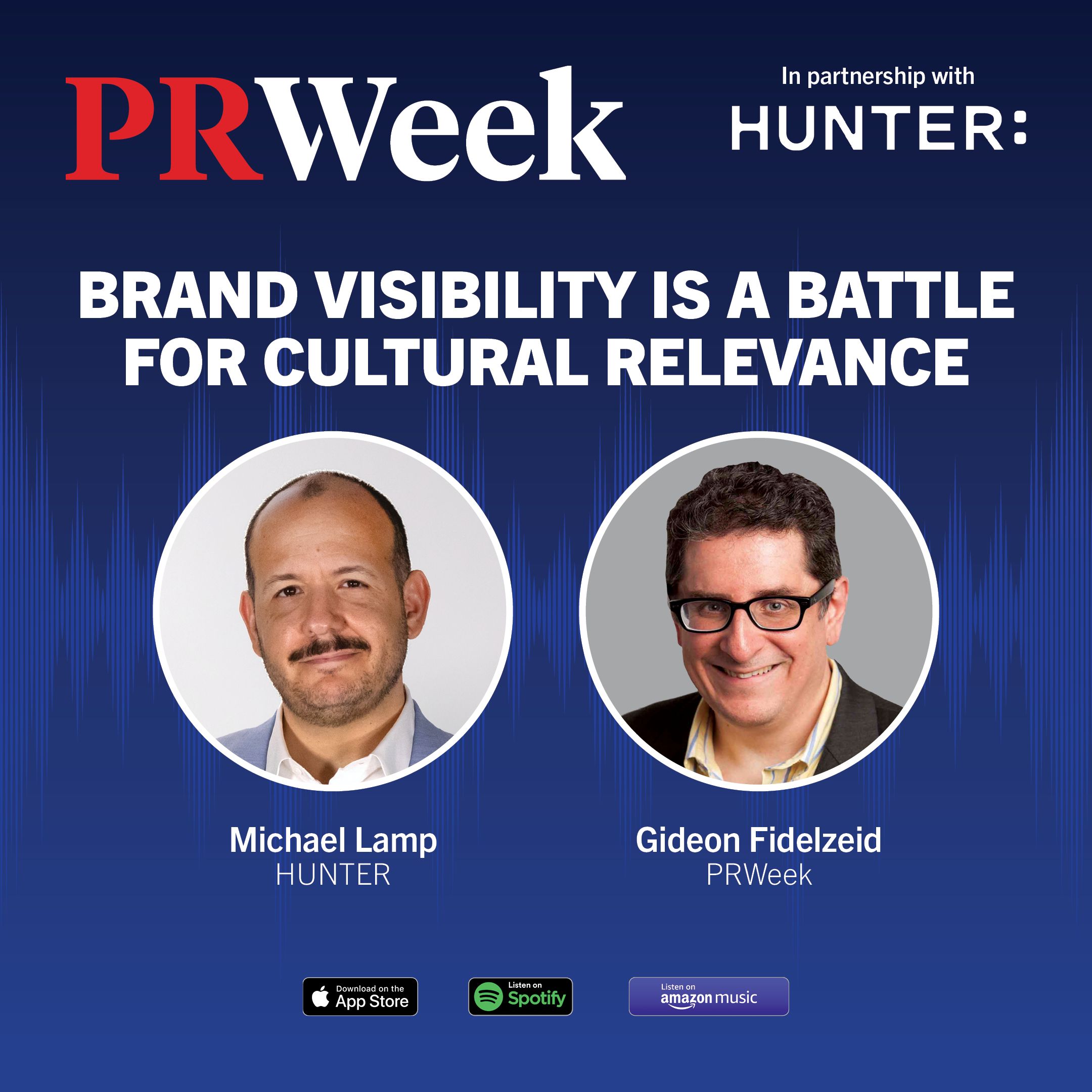
How “earned AI answers” and GEO/AI search change PR and brand visibility, shifting discoverability from clicks to citations and relevance; includes Hunter’s “High Five” framework and how agencies should adapt (human judgment, structured data, media hooks, new products).
Michael Lamp is Chief Digital and Transformation Officer at Hunter (PR/communications agency). Gideon Fiddles is VP of Haymarket Studios and PR Week.
Earned media builds authority and validation needed for LLM answers; discoverability in an “agentic” world means penetrating AI responses with citations. AI can’t reliably generate original strategy; it tends to produce “AI slop” that’s already been asked. PR’s value grows because it manages the intermediary “machine” that feeds AI.
A press release amplified via The Wire and picked up by ChatGPT; “hook” reporters/editors likely to be turned into AI answers; hackathons (“vibe coding”) to build agentic solutions.
Written by AI. May contain mistakes.
Exploring the ongoing relevance of writing despite AI advancements.
“So you still think the art of writing is important?”
Discussing the increasing importance of earned media and authority.
“So, you know, Michael, why is earned media becoming increasingly valuable in an AI-driven world?”
Strategies for brands to maintain visibility in a post-click world.
“And I think, you know, potentially a hot take, but owned media has always just been the perception of owned, right?”
Analyzing how PR roles change with AI and the importance of human judgment.
“Those are those are signals that we can read every day, but they drive ultimately relevance and reputation.”
A detailed look at Hunter's framework for client success in the AI era.
“Last year, everybody said the press release is back.”
The importance of human judgment amidst increasing automation.
“To make our conversations on earn match that or vice versa.”
Discussing how younger professionals must adapt to AI's influence.
“And it's another sort of blanket we're wearing, like a comfortable blanket we're putting on right now to in some ways give ourselves that piece.”
Exploring the intersection of creativity and AI in communications.
“They used, it used to be, and when I say used to be, we're talking only a couple of years ago.”
Learn how AI tools enhance communication in PR and creative processes.
“edit to the stop sign video that we've seen a million times on YouTube won't work.”
Explore misconceptions about AI's impact on entry-level PR jobs and training.
“I feel like, so I kind of want to take it back to our previous conversation because the thing I hear all the time, entry level jobs will just evolve differently.”
Understand the limitations of AI in generating original strategies and thoughts.
“So you still think the art of writing is important?”
Discuss how client expectations from agencies are changing with AI.
“So how is AI fundamentally changing what clients actually value and expect from agencies and how should agencies evolve their business models in response?”
Consider whether AI could ever develop taste and judgment in PR contexts.
“Do we do, because, you know, it's funny and people laugh at me when I say this, but I always, okay, you're familiar with the movie iRobot, right?”
Highlight the positive impact of AI on the future opportunities for young people in PR.
“No, but you know, I really, really appreciate the conversations.”

Get the gist, explore an idea or ask about something said.
 Claude
On The PR Week, what are the key points of this episode?
Searching your listeningAutomatic transcript. May contain errors.
0:02So you still think the art of writing is important? I 100 % do. And everyone likes to say that if you can prompt, you can write. But the problem is if you can prompt, all you can do is get a reasoned response that other people have contributed to. You can't get an original thought. AI takes thousands and thousands of data and gives you summaries. That's great. We can't do that that quickly. But to say, write me a strategy for X, Y, or Z soda brand, you are not going to ever get that. You're going to get the best of the strategic version of AI slop. that's been asked enough that the probability of that answer being liked by me, they're going to give me that.
0:35And the problem is the more we give in to that urge that strategic answers can be found on AI, the more we're filling this well of the slop.
0:49Hello, everyone. This is Gideon Fiddles, I'd VP of Haymarket Studios and PR Week. It is my absolute pleasure to be here for today's podcast. We're calling it From Search Results to Earned AI Answers, Brand Visibility is a Battle for Cultural Relevance. I'm really excited about this topic, but I'm probably even more excited about the gentleman who's joining me today. It's Michael Lamp, who's the Chief Digital and Transformation Officer at Hunter. Michael, thank you so much for joining us today. It's my pleasure, Gideon. Thanks for having me. Now, I know a lot of people call you Lamp. They do. I might slip that in every once in a while, but I'm probably going to stick with Michael because I have too much respect for you just to call you Lamp.
1:22We're in an extremely professional environment right now. So Michael is completely fine. Yes, you have to earn your way into LAMP. Okay, well, by the time we're through with this, you will have definitely earned it. The sign-off will be, bye LAMP. I'm really excited about this because, look, we talk about AI all the time, but this is a very, very unique angle. So I think I know our audience out there is going to be really interested in it. So let's just get right to it. So, you know, Michael, why is earned media becoming increasingly valuable in an AI-driven world? And how is GEO changing the role of PR?
1:51Yeah, the million dollar question, right? I think the one that I've been getting asked the most probably of any question over the last 12 or 18 months. And there are a couple ways to answer it. There's what's become a bit of an obvious answer, although still the correct one, which is authority, right? Earn media equals authority. And we have a formula at Hunter that we that we use when we try and think about what it means for a brand to deliver the best answer. And you sort of need the foundation of truth that the brand offers. You need the authority that our media gives. gives. And what that really means for an LLM, a large language model is this is a real problem and we have a history of reporting on it.
2:27So trying to provide a solution from our authoritative state. And then you need validation. That's sort of the third of the three pieces of the formula. And that comes from more social first entities. Right. So I think that's the that's the short form answer is, well, earned media has always been a way to create authority where you don't own it yet. Right. You need to earn it. But what it really means and why this phrase GEO has become such an acronym of the last couple of years is because it really just means we've further seeded ownership of our own story as brands than ever before. I mean, that's, it's always been the case.
3:00And I think, you know, potentially a hot take, but owned media has always just been the perception of owned, right? It's sort of like, if you think of it as like, I own a house, well, yeah, until someone steps onto your front yard and then they sort of are telling you how they feel. And that's what owned media, especially in social has always felt to me. But for GEO and for earned, it's really about, okay, well, what are the answers that people are going to get at the place they're asking the questions? But moreover, where is that being fielded from? And many, many times it's from earned media.
3:29As consumers increasingly turn to AI for answers and recommendations, how must brands rethink their approach to visibility, influence, and reputation? And what does it mean to be discoverable when there may be no click? Yeah. So that last bit that you talked about, I'll sort of pick up on last because the idea of zero click, right, or living in a post-click world, I think is something that we are experiencing right now, very much so. Now, what that really means is just that when people ask questions of places like Google, they are in a different headspace than they were just a couple of years ago, right?
4:02A couple of years ago, you'd search on Google and there was no diamond that spun at the top that triggered Gemini or AI mode. And so you'd be expecting to then go into this dive of blue links and spending time right now. We expect whether it's Chachi Petit Claude, you know, your sort of Pepsi Coke, your choice, right? You're getting an answer, right? And so discoverability for a brand in the so-called agentic era is our ability to penetrate those answers full stop, right? Like that is the sort of performance KPI. But the broader way I'd answer your question is to unpack some of those actual words you used into different categories, right?
4:37Everyone talks about outputs versus outcomes, communication, signals of success versus how we drive impact at the business level. And the way we're trying to train our colleagues and ultimately clients in this kind of new world order is that in GEO or AI search, whatever, EIEO, whatever you want to call it, visibility and citation are performance outputs. How often do you show up? Where does the answer come from? What's the sentiment? Right. Those are those are signals that we can read every day, but they drive ultimately relevance and reputation. To me, the sort of and if you really want to even even take relevance out for a second, a brand's ability to be discoverable, to have citations that point from different places of the Internet about your brand, that drives reputation.
5:23And as PR folks, we've always been, as the textbooks told us, the people managing relationships with publics. Right. So now we have this this gatekeeping intermediary machine that manages them as well. So we have to manage the machine. You know, one of the things that's already got me really excited is just in your first two answers. Just it just underscores how PR is such a key player in the in the age of AI. Yeah. Now, obviously, there's a lot of fear about AI. It's going to take my job, all these kinds of things. But I think PR, look, this is my opinion for what it's worth. I think PR is in a pretty good position to thrive in this era.
5:55Yeah, I think we're actually in a better position than we've been in a few years, to be honest with you. Last year, everybody said the press release is back. And that was a nice phrase. And I think it gave a lot of people some warm feelings. But it's a lot bigger than that. It's obviously a tactical return to what it means to earn attention and to earn it in many, many places that then work together to solve this other challenge. Now, you already got into client work just a little bit, but I know that Hunter has this proprietary framework that is really helping its clients. I want to give you the opportunity to talk about it a little bit, how it works, and what are some of the early results that you've seen from it?
6:29Yeah, so what you're speaking about is what we call High Five, which is the Hunter framework we developed last year to essentially, in a nutshell, future-proof our client's business in this agentic era. And what it means in a quick succession is sort of five steps, right, to identify the problems, fix them, and then sort of ride the wave of success and sustain it. So we're, you know, we're hunting for white space, right? We're hunting for the delta, if you will, between your branded answer and a category's sort of generic answer and how you need to tell that story differently. So then we highlight it.
7:01Step two, we basically tell a story for both humans to see it, but also for machines to find it, right? That's structured data to the nth degree. then the third step is hooking because for us it's still about people right we're not it's not just a buzzword it's not just sort of to make people feel good h-i-t-l human in the loop but we're looking to find the reporters the editors who when they cover a story it's more likely to get turned into an answer on chat gpt because there's just higher value in that right now for better or worse right so we want to hook the media that's already sort of best friends with these llms and then the last two steps halo and hold are really about recognizing halo pieces if something's starting to catch fire on social media, a sort of turn of phrase that's answering a lot of prompts, then maybe that should become something that we add to our pitch, right?
7:45To make our conversations on earn match that or vice versa. Hey, a press release that went live on The Wire got pickup and got a lot of amplification on ChatGPT in particular. And it was this quote from a spokesperson. Let's shoot that person when they're on site next to camera and it's a YouTube video. So doing a little more of what works well and just kind of letting that amplification effect take shape is then how you get to holding on to the first position because in AI search, winning today is only until, right? And so you have to understand what got you to number one and then kind of re-employ the tactics.
8:18Human in the loop, I completely appreciate the statement. It just, it always scares me because I think humans should be more than just in the loop. They should be controlling a lot of this as much as they can. So. And it's another sort of blanket we're wearing, like a comfortable blanket we're putting on right now to in some ways give ourselves that piece. But you're 100 % right. It can't just be like a box to check. It has to be a deeply ingrained sensibility into process. I agree. Now that does segue into our next topic, however. Now, as AI automates more traditional communications tasks, which human skills will become even more valuable and how should agencies prepare their talents for this shift?
8:57So I'll, I'll sort of paraphrase something. When I became, when I took this job, um, or this got this part of my job, I guess this summer when I became the transformation officer at Hunter, I addressed our staff and said, I don't expect anyone to go out and become developers overnight, right? Like that's not, that's not my goal, but I do want you to start to think and communicate like engineers because we have to be able to problem solve differently. And so to me, the answer to that question is, what will, what way I never do? Well, what it was never built to do, which is be an arbiter of good taste, of good judgment.
9:32So as I talked to the staff on that afternoon, I looked at them, tried to find as many eyes as I could to look at and say, you are the person who can, who can actually practice good judgment. You have the art of good taste. think about what would happen if we allowed the automation of what is so much nuance in our business. You'd have the most racist ads live within minutes, right? You'd have the most inappropriate retargeting going live to people based on just the way that they fill out an Excel sheet versus who they are as a person. And so I try to, we try to really build that up in our staff at Hunter to recognize that storytelling isn't just lip service.
10:07It's actually human made for human eyes. But beyond that, when I get back to that engineering piece, it's not to freak people out. If anything, I think it's my job in this, in this role to give people spaces to fail out loud. Right. And so we've started at Hunter, so unusual for a communication shop, but we do every two, three months we do hackathons now. And it's more about vibe coding, let's be honest, but vibe coding in secure ways. But we bring a problem. We actually have clients come in now and sort of give us a task statement. What have you been struggling with this, this month? And then we have everybody get into groups and create an agentic solution for it.
10:39And whether or not that becomes the tool that's going to change everyone's lives next month is sort of secondary. The point is they get a space to do this stuff, to make mistakes, but ultimately to learn more about prompting, about solving, and to say, hey, that was a great AI solution, or wow, that will never be something I can solve with AI. I really appreciate the judgment that you just mentioned, because I was having a conversation earlier with a few industry leaders, and we're talking about the youth, and a lot of the jobs that younger, younger professionals were always doing, AI can do now.
11:09So it's really, really changing a lot of how younger people come into the industry and what they do. And what they were telling me before is what's really exciting for them though, is that their judgment is going to be relied on even more than it ever was before. They used, it used to be, and when I say used to be, we're talking only a couple of years ago. It was just, you know, pretty much manual tasks. I mean, honestly, and then after a year or two, yeah, then you can start getting into the exciting stuff. But now the judgment's going to be a lot more necessary. And one of them, a very prominent CCO, is telling me some of the best tools that we've built with AI that we use company-wide are younger people have built.
11:44One million percent. It's such a misconception that the AI sort of maturity level is the natural growth from junior to senior. If anything, I'm finding as we move into more hyper-personalized education of AI, the opposite is typically true. It's my senior colleagues that I have to help understand the way that their jobs are made easier and sort of get them over some of the insecurities. It's a, I think, and as I've been speaking to colleges the last like couple semesters, I've found the same thing too. There is this mix of anxiety as you, as they, how could they not be anxious? But they do feel like they're on the, as I'll be on the precipice of their career.
12:17They can come with a sort of starter pack that gives them a bit of a competitive advantage. And I think that's a great thing they need to be leaning into. As long as it's good for the environment though. That's really important for them. Well, we have to, I mean, 100%, it's a part of their values. and frankly, it should be a part of all of our values. And that's something that we take seriously too. And everybody that's in this space, which by the way is all of us, whether we want to be or not, you know what I mean? We're using these tools. You know, we think about a little bit like the carbon footprint, like if you do something in this, how are you doing something to make a difference?
12:45And I think we all have to, we're all beholden to that. Now, beyond efficiency and productivity, where do you see AI creating genuinely new creative possibilities for communications agencies? Where should humans remain firmly in control? I guess we're going back to the humans again. Yeah, yeah. Yeah, so the creative piece of that word, I think, is the important one there, because that's where people start to get a little nervous. In general, when in any conversation I'm a part of that has generative AI at the center, when we talk about analytics and we talk about synthesization of information, people are typically very activated about like, OK, yes, let's use AI.
13:18The minute you bring creative into the conversation, people tense up a little bit. I think for good reason. I mean, obviously, we talked a little bit about the being an arbiter of good taste. But I will say to answer your question, when I was back, I was talking to you earlier about I went to West Virginia University and I was speaking back at a campus a couple of weeks ago. And I met a muralist who also graduated from WVU. And I asked him this question almost verbatim as an inherently creative person. And I liked his answer because he actually gave me a client service answer, which as an agency person I can appreciate.
13:49He was like, think how much more quickly I can expose them to their ideas that actually aren't great, that they can see. because think about it, when you're a muralist and you've got large canvases that are expensive to draft on, to be able to show someone on a small screen, know that, you know, that 15th edit to the stop sign video that we've seen a million times on YouTube won't work. And this is why. So jokes aside, though, I do find it a very, very easier way to get to spec creative quickly, right? To put to your point, a non-creative person can speak a creative language better than they ever could before.
14:20I think that's kind of an underappreciated piece. And when you got these tools like the Adobe Fireflies of the world that allow people at the point of prompt to do a little more, going back to my engineer piece, think about the rank and file PR practitioner whose job it is to engage with not only the media, but internally, strategists, creatives, all these different people. And if AI can help you communicate with them better just to speak their language and kind of bring that's value, that's huge value add. And ultimately, as then we get into conversations with procurement and things, those are the ways we want to draw their attention to how we work smarter and ultimately more efficiently for their budgets.
14:56OK, now you're obviously an amazing thought lead when it comes to this stuff, but this question will really prove it. What's one widely held assumption about AI and the future of PR that you believe the industry is getting wrong? That is a good one. I feel like, so I kind of want to take it back to our previous conversation because the thing I hear all the time, entry level jobs will just evolve differently. And that's, and that's, and that's the answer. And first of all, that's like, that to me is the most broad non-answer ever, but also what does that mean? And what they're really getting at is, well, it's going to allow us to unlock the value of a junior person more quickly.
15:30And we spoke about that a little bit, I think, and I was speaking fondly about how a recent grad comes to an entry level job with, I think, a resume that competes with folks that are more senior because of the technology. But what I'm getting at that I don't buy in terms of this will just evolve. They'll work at a different level more quickly is because what's that what that's leaving off is the incredible collaborative training that happens in our business when you're entry level. Right. That really can't be programmed into a computer. And so while I think it's easy to say now when a junior level person starts an agency, they're actually mid-level.
16:05And isn't that a value add? And isn't that? I completely disagree with that because I think we're expecting way too much to be independent study. And so my answer to that is going back to the hyper-personalized education and the training that we try to create at Hunter. it's around yes technology where it makes sense but really trying to over index with the more junior staff with more classic you know almost I don't want to say classroom expertise but a trainer comes in and teaches you the art of writing versus the science of structured data because they're going to get that as part of this sort of AI transformation we're all in I'm far more focused actually on investing in the analog training to complement what they're getting already.
16:45So you still think the art of writing is important? I 100 % do and Everyone likes to say that if you can prompt, you can write. But the problem is if you can prompt, all you can do is get a reasoned response that other people have contributed to. You can't get an original thought. That's why getting back to that point about what does AI do well versus what do we do well? Well, AI takes thousands and thousands of data and gives you summaries. That's great. We can't do that that quickly. Objectively, we can't. But to say, write me a strategy for X, Y, or Z soda brand, you are not going to ever get that.
17:15You're going to get the best of the strategic version of AI slop that's been asked enough that the probability of that answer being liked by me, they're going to give me that. Right. And the problem is the more we give in to that urge that strategy answers, strategic answers can be found on AI, the more we're filling this well of the slop. Right. And feeding ourselves that. And the problem is, if 10 people do that, they're going to get the same answer. They're 100 percent. And then people wonder why we're you know, we always we always joke about Hollywood has no original ideas. Well, pretty soon neither do we.
17:44If we just keep asking ChatGPT to write the same strategy three times in the same week, and then we wonder why we're not coming up with cooler thoughts anymore. Well, everywhere you go, there you are. So obviously being in an agency, I have to ask you this question. So how is AI fundamentally changing what clients actually value and expect from agencies and how should agencies evolve their business models in response? So the first part of your question, I don't think that what agencies, what clients look for in agencies is any different. I think it manifests differently and it manifests in ways where we're really laser focused on these efficiency metrics because of AI allegedly helping us do things faster, smarter, the smarter part is questionable.
18:28But I think at the end of the day, and when you get an RFP or any classic client to agency, you know, embarking of a relationship, they're looking for a strategic business partner, right? They're still looking for that. What we come to the table with to do that job might look different. But at the end of the day, they want to feel like if they wake up on a Saturday morning at 10 a.m. or in the middle of a crisis, the person that picks up the phone the other line can do the job and not just prompt the job, right? So I think that the trust piece is the same. Now to get to the latter part of your question, which is what can agencies do to evolve?
19:04It's not just as simple as more of the same, because while I think that trust and strategic partnership, sort of meaningful relationships over transactional ones, all that still matters. I think the reality is that brands shop differently than they used to. right we have to get comfortable with the ideas agency people that while we all want to be the agency of record for why brand sometimes that doesn't come as quickly as it used to or at all sometimes an agency of record relationship is we did four projects with that really cool brand this year so we worked with them throughout the year so for me and in my role as transformation officer it's actually looking at the way we sell our business and transforming that too and not just services and retainer hours but products right you have a problem we can solve that with a product dies solution and you can sign up for something for a few months of service and not feel like you're betting away your budget for the whole year right away.
19:54This is a bonus round question. Do we do, because, you know, it's funny and people laugh at me when I say this, but I always, okay, you're familiar with the movie iRobot, right? Yes, absolutely. Somehow I think that movie really got it right in a lot of ways. Way ahead of its time. It really was. And, you know, I mean, you know, I'm sure Chris Rock probably isn't a big fan of it, but that's besides the point. But do we really feel that at some point AI isn't going to be able to develop taste and judgment? I mean, I mean, I guess, I mean, listen, I can't say that with any real confidence level, right?
20:27And that's why my answer to your question earlier was right now they can't, not in any discernible way. But I mean, that's one, not to turn this into like doomsday conversation, but that's the great fear that everyone really has, which is when you take sort of so-called super intelligence from a software, put it into hardware that's humanoid, then what have you built for, for, for humanity? Right. Um, now that doesn't, you could, you could, you could flex good judgment without a sentient body or whatever, whatever that might be. So I'm not comfortable and confident to say that it's never going to happen.
20:59But the question that I would have is if someone said, we've, we've built it, we've built the, the arbiter of good eye taste or something, right? I think the test would be all these unknown factors, like give it a bunch of crisis situations that the most seasoned practitioner isn't really prepared for. And how are they responding to that? And I just hesitate to believe it'll ever really get there. Okay, that's fair. That might have been the fairest question, but I appreciate your response to that. No, but it's a good question. It's a legitimate one, right? Sure. So, you know, Michael, on a lamp.
21:28Oh, see, we got the lamp in there. We must be at the end if you call me. No, no, no, no, no. No, but you know, I really, really appreciate the conversations. It's great to spend this time with you. What was really cool also, we got a little bit about the youth of the industry and how this is changing things for them and how it's actually going to be giving them some more opportunities. So all of you young folks out there, don't fret. There's still a major place for you in this industry, even with AI, perhaps even a better one than before. Yeah, this is good news for you. Exactly. You know what?
21:52I think it's good. I think it's good news for anybody. I know I asked the question, but you know what? AI is not going to develop taste that quickly. So I think we're okay. There's your pull quote from Gideon. And AI cannot create good taste, at least as of whatever today's date is. I want to thank Michael Lamb for taking this time. I obviously want to thank Hunter for supporting this podcast. And I have to thank the most important people, the audience. Thank you for tuning into this, of course. And now, until next time, this is Gideon Fields. I wish you a great rest of your day. Thanks, everyone.
22:56Michael Lamp: MMM Transformed form.com.
GEO is changing the role of PR as consumers increasingly turn to AI for answers and recommendations. The way brands think about visibility, influence and reputation needs to evolve in kind. During this conversation with PRWeek, Michael Lamp, chief digital and transformation officer at Hunter, offers equal parts education and inspiration that will help all brands meet the moment, including the introduction of his agency’s Hi5 framework that is helping clients navigate AI-powered search and discovery. Also mixed in throughout this podcast are comments about human skills that AI will never replace, the creative possibilities that AI will actually unlock and the manner in which AI is redefining clients’ expectations of agencies.
On November 12th, join hundreds of top marketers in New York City for AI Deciphered, presented by Campaign, MM+M, and PRWeek. Get your ticket here
Theme music provided by TRIPLE SCOOP MUSIC
Jaymes - First One
Follow us: @PRWeekUS
Hosted by Simplecast, an AdsWizz company. See pcm.adswizz.com for information about our collection and use of personal data for advertising.