 Ask ChatGPT


Recorded live at the 2026 PR Week Conference in Chicago, this episode is a conference special focused on AI and communications: using “responsible AI” to represent organizations authentically, counter fear with hope, and measure PR impact through trust, reputation, and business outcomes. Key claims include that PR must be integrated across functions, tied to reputation drivers (example: Ford correlated reputation to vehicle sales via Morning Consult), and that trust/reputation are strategic business levers (McDonald’s “trust as a bank”; Carnival’s C-suite framing).
Senator McCain’s funeral speech by President Obama as a model of hope and humanizing opponents; Patagonia’s AI/data-center concerns and “work twice as hard”; John Deere’s “chief tractor kid” Jackson (hired at age nine).
Valerie Jarrett (Obama Foundation CEO, keynote clip); JJ Huggins (Patagonia Senior Manager, Media & PR); Lindsay Kurtz (McDonald’s Director of Brand Communications); Kristen Campos (Carnival Cruise Line Chief Communications Officer); Samantha Critchell (Elf Beauty lead communications and impact); Megan Anhalt (John Deere global social media lead); Richard Edelman (Edelman CEO, Chicago Principles/trust discussion).
Written by AI. May contain mistakes.
Valerie Jarrett discusses the power of listening and storytelling in communication.
“Recorded live in Chicago at the PR Week Conference, this is the PR Week.”
Jarrett reflects on historical political moments and the importance of civility and connection.
“And that's what I think we try to find, what he tries to find through his method of communication.”
The discussion shifts to how hope can counteract fear and foster positivity.
“Patagonia, we're making a lot of gear for people doing outdoor sports, really specific outdoor sports, skiing, snowboarding, could be ice climbing, surfing, fly fishing, trail running.”
JJ Huggins shares insights on the balance between automation and authenticity in PR.
“especially the media analytics portion of our job.”
Learn about the simplicity of running and community efforts to increase voter turnout.
“and all you need are some sneakers, maybe a pair of shorts, comfortable clothing, but really you just need some decent shoes to go running.”
Explore the unique PR challenges and strategies of a well-established brand like McDonald's.
“So to continue our afternoon of content, we have a fantastic panel titled The PR Kitchen.”
Discuss how McDonald's collaborates with franchisees for effective PR.
“So it could be your neighbor owning restaurants.”
Hear insights on the experiences and challenges faced by PR professionals today.
“What is your favorite thing about working at McDonald's, especially because we're here in Chicago?”
Understand the strategic role of PR in business reputation and impact.
“I am the Chief Communications Officer for Carnival Cruise Line.”
Discuss the evolution of communications and the importance of teamwork in achieving brand goals.
“The first of the two is called The Communicator Reimagined.”
Explore the significance of collective metrics and trust in branding.
“which is something set by our CEO that instantly brings people together.”
Learn how John Deere balances its rich heritage with modern innovation.
“And we actually have the opportunity to pivot in real time.”
Discuss the importance of risk-taking in branding and audience connection.
“Next year, we are hitting our 190th birthday.”
Understand the benefits of collaborating with authentic creators like Jackson.
“And speaking of creators that tie into your brand, I really want to talk about Jackson on here.”
Learn how brands can benefit from engaging with a variety of creators.
“His knowledge and his passion for what he does and what farming means to him is what makes him really unique.”

Get the gist, explore an idea or ask about something said.
 Claude
On The PR Week, what are the key points of this episode?
Searching your listeningAutomatic transcript. May contain errors.
0:06Richard Edelman: It is great to be back in Chicago and I want to welcome you to the 2026 PR Week Conference.
0:12Valerie Jarrett: Here is this opportunity for us to lead. And I really see that this responsible AI piece is a place for us to have a voice, to look at how we represent our organizations in this level of AI that people are afraid of right now. There's a lot of fear out there.
0:34Jess Ruderman: My team is integrated into every cross-functional team across the business. If we are doing menu innovation and launching a new product, there is a comms reputations person specifically involved. Supply chain, government relations.
0:49Valerie Jarrett: We actually went through a process when I first joined Ford to do a research project with Morning Consult. And we were able to correlate our reputation directly back to vehicle sales. And so for us, that's essentially, you know, we've been able to tell like these are the five drivers of our reputation specifically. And as long as we're hitting on those five drivers, we're making sure all of our content and our storytelling and our campaigns are tied back to that. It's really easy for us to then say, you know, we're impacting vehicle sales at the end of the day.
1:20Richard Edelman: I think too many companies rely solely on ability. It's not about that. Since the 2008 financial crisis, it's much more about are you dependable? do you have integrity and do you have a North Star?
1:35Valerie Jarrett: Recorded live in Chicago at the PR Week Conference, this is the PR Week. Today, you'll hear directly from our panelists, both on stage and in conversations with them off stage. We're getting into AI, authenticity, and the creator economy with leaders from Patagonia, John Deere, McDonald's, and more. I'm Jess Ruderman, along with PR Week colleagues, Jeremy Sodergren and Julia Walker. We begin with a clip of our keynote speaker, Valerie Jarrett, CEO of the Obama Foundation.
2:01Richard Edelman: To kick off today's content, let me introduce our keynote session, a session I'm very excited about. It is called The Power of Hope with Valerie Jarrett. She's the CEO of the Obama Foundation.
2:12Julia Walker: We often talked about the importance of listening and telling your story. And part of communication is knowing your audience. And so you've got to meet them where they are. And you have to learn to tell a story in a way where they can see themself in your story. And he's really good at that. And the first time we met, he made me tell him my story. And I didn't particularly want to tell him my story. I was just trying to hire his fiance, for goodness sake. And, but through that.
2:39Richard Edelman: But you didn't have the authority to do, right? Which I didn't. Right, right, right. Okay.
2:42Julia Walker: She did actually come and work for me, by the way, just so that dinner did go really, really well because we did open up. So I did learn about the importance of listening and knowing your audience and knowing that through that woven throughout the speech, and this is the case with every speech he's ever given, even the most painful eulogies, there was that spirit of hope and that spirit of confidence in people that they're basically good. And when you give a speech where that is in your DNA, it comes out. And even in times that are challenging, people search for the light. They really do. Even in darkness, They want to see the light.
3:23Julia Walker: And he gets that better than anyone I know.
3:25Richard Edelman: I distinctly remember all the speeches that President Obama made. I remember when he when you spoke at Senator McCain's funeral and how much I remember that that was that was extremely powerful.
3:34Julia Walker: It's a good example of what I think is missing in our discourse right now. And it's not just political discourse, but Senator McCain, before he died, called President Obama and asked him to speak at his funeral. They were political opponents. I mean, can you even think about that happening now? it's hard to even imagine. And of course, President Obama was deeply honored to do it. And I think did it quite beautifully. When you come to our museum, as I hope you all do, you will see a video. Not today, though.
4:01Richard Edelman: Not today. No, you're busy today. You're very busy
4:03Julia Walker: today. But you will see the video clip of when a woman came up to Senator McCain during a campaign rally and said, you know, President Obama is a Muslim and he's a terrible person. And Senator McCain said, no, ma 'am, no, ma 'am, with respect. But he said he put his hand up. He said, He's not. He loves his family. He's a good person. Don't say that about him. And that's what I think we try to find, what he tries to find through his method of communication. And so it's a way where even your arch opponent in a political race knows you care about him as a human being.
4:39Richard Edelman: Now, you have, not that you needed to, but you've proven to be quite an awesome communicator yourself. So my final question for you is this. What communications lessons did you teach President Obama?
4:50Julia Walker: Well, if I tell you that, I'd have to kill you. One of the real privileges of working for the President of the United States, and believe me, every time I say that, still, it's just staggering to me that this person who grew up on the south side of Chicago could have had this extraordinary relationship and opportunity that began again with opening up over a dinner. but one of the long-winded way of saying I'm not going to answer your question because you owe that person your counsel and your advice and you owe them your silence. Does that make sense? Good.
5:25Richard Edelman: Okay, you know what? I'll tell you what. I'm going to go with one more question. Probably the shortest one we have here, but it's a good one. How can hope be used to overcome fear?
5:35Julia Walker: Because hope is contagious. And I think you get back to human nature. It's pretty easy to scare people. right i live up my nephew lives with me and he's like six five 280 pounds and he watched a scary movie the other day and he said i'm so glad you're back in chicago because i didn't want to stay here alone i'm like what am i gonna do to help you you scaredy cat how are you so easy to scare well it's really easy to scare people hope and positive positivity comes through authenticity and through trust. And so I think part of how we do it is that we are all agents of change. We are all agents. We all have the ability to conduct ourselves in a way that brings out hope.
6:17Julia Walker: And President Bush had, H.W. Bush has an initiative, Points of Hope. And it's true. I mean, if we have, if everyone who comes to our campus, if all of you here go back to your communities and you just are a little bit more hopeful and positive and search for the good in people because it is there. Most people are really good and really decent. And if you communicate through your businesses and through your personal lives with this expectation of goodness, it will come back.
6:54Richard Edelman: The next panel is titled Automation vs. Authenticity, where PR draws the line.
7:00Jeremy Sodergren: JJ Huggins, Senior Manager of Media and PR at Patagonia.
7:05Valerie Jarrett: JJ, we just came off stage from our session. We were talking about automation versus authenticity and how PR is really transitioning its usage of AI. You gave a little bit of insight into how Patagonia is using AI on your team. But I thought it was really interesting how you pointed out just us gathering here and having more time to do things in person at a conference. What's your experience been like at the conference today and just kind of chatting with other communicators and learning how they're using AI?
7:29Jeremy Sodergren: Yeah, thank you, Jess. Thank you for the conversation on stage and off stage here. I think it's great to come to a conference like this and meet other PR professionals, industry professionals. Just talking with you right now about what PR week is up to and the diversification you all are doing with different events, podcasts, different mediums of reaching people. It's great for people like me to get out of my little bubble out in Ventura, California and come to a big city market like Chicago, meet people from around the country, in some cases around the world, and hear what's going on in different industries.
8:08Jeremy Sodergren: And then take some of that back with me back to my office and incorporate that into my working life.
8:14Valerie Jarrett: I know you started your career in news. You also mentioned on stage that you used to work in retail at Patagonia as a fellow TJ Maxx employee working in retail. I can totally empathize with that. I'm curious what insights you learned as a retailer now working in corporate, what you've brought with you and how that's informed your role.
8:30Jeremy Sodergren: I started off in journalism where, just like you're doing here, you're interviewing people, you're asking questions, you're listening intensely to what people are saying, and then you need to synthesize that and turn that into an interesting story for the masses. That was one way I learned communication styles. And I went into working at a career change, went into working retail where, like you probably experienced at TJ Maxx, you're helping a customer solve a problem. They come into your story because they need...
9:01Valerie Jarrett: It's a nice way of looking at it.
9:02Jeremy Sodergren: Patagonia, we're making a lot of gear for people doing outdoor sports, really specific outdoor sports, skiing, snowboarding, could be ice climbing, surfing, fly fishing, trail running. They have very specific needs. So first off, you need to have a commanding knowledge of those sports and of what the person is going to need to do those sports. That's empathy right there, which is one of the best qualities for any profession, especially sales, being able to empathize with the customer. And then those communication skills. When I was wearing retail, I got really good at that one-on-one communication.
9:36Jeremy Sodergren: I felt really smooth. It felt like being a journalist where I was interviewing people all the time. And then I had this knowledge in the back of my head of, okay, I just asked them all these questions. They told me what they're doing. I know what they're looking for now. And now I've got the product catalog in the back of my head so I can turn around and say, okay, these are the options we have for you. And this is the one I would try this one first. And if you don't like that, try this one next and kind of walk them through that whole process. When I was working retail, I got promoted to assistant store manager.
10:09Jeremy Sodergren: And within 30 minutes of the rest of the team getting notified that I was the ASM of the sort, all of the teammates who were my friends all of a sudden were looking at me differently and asking me questions as if I had all this knowledge, all this new knowledge. and I was just like, whoa, whoa, whoa, hold on. I'm still the same JJ. Like I don't know the answers to these questions and I realized right away, I need to change my communication style and be able to talk to a bunch of people all at once and command a room and be someone that when he's up on stage, people actually want to listen to that person.
10:45Jeremy Sodergren: So that was a whole new set of communication skills I had to work on and that's what I carried forward into the PR shop at Patagonia.
10:53Valerie Jarrett: We were talking about on stage how Patagonia kind of has an added layer of work that you guys have to do because of your trusted brand. We talked about things like data centers and topics that maybe traditional retail brands aren't thinking about as much as you guys have to think about with your consumers who are concerned about these kinds of issues. What has it been like for your team? It's ever changing with AI and just kind of generally with the environment. But to tackle those issues, do you feel like you have an added layer of the work that you guys do that maybe other retailers don't or comms pros working in retail don't necessarily have to go through?
11:29Jeremy Sodergren: For sure. When I started at Patagonia, I thought this is the easiest job I've ever had. And I still think that it's the easiest job I've ever had. And at the same time, the reason why it's the easiest job I've ever had, because I love it so much. I love working at a company that creates products to get people to go do the sports. A lot of those sports I love personally. So there's that connection. When you do outdoor sports, you spend a lot of time in nature. When you spend a lot of time in nature, you develop a love for nature. As human beings, we want to protect what we love. And that's baked into the DNA of the company.
12:04Jeremy Sodergren: We don't have to ask for permission to execute on our environmental values. That is expected of us. Because of that, and we have a book that's circulating internally at Patagonia right now, and it's a bunch of vignettes of quotes and stories from people leaders within the company. And the purpose of the book is to teach other people leaders the secret sauce of managing. What is the management style within this company, Patagonia? And I was reading that on the plane to Chicago last night, and I read a sentence from one of my coworkers and he said, we have to work twice as hard. And I sat and I thought about that and I was thinking, that's right.
12:45Jeremy Sodergren: So two things are true for me. It's the easiest job I've ever had and I still have to work twice as hard here as I've worked anywhere else. And when you layer in AI and data centers, that's just more work we have to do. Sure, AI is going to streamline a bit of the work that we do, especially the media analytics portion of our job. And we've had that streamlined for about a decade now, and AI can keep improving that. And yet we have to do twice as much work because we're concerned about data centers. We're concerned about the cost to human beings, the cost to the natural world that has occurred by data centers and AI and our addiction to power and fossil fuels.
13:26Jeremy Sodergren: And so it makes some things easier, but I love it. It's the easiest job I've ever had, but I'm still working twice as hard as I ever was.
13:35Valerie Jarrett: Is there a favorite sport that you've been introduced to since working at Patagonia that maybe you weren't aware of before? Since I know they can get kind of intense.
13:41Jeremy Sodergren: Sure. All of these sports that I've liked, those are all sports that I did before I came to work at Patagonia. That's one of the things that drew me to Patagonia. The one I've been introduced to or I'm trying to introduce myself to is trail running. I used to envy runners because it's such a simple sport. and all you need are some sneakers, maybe a pair of shorts, comfortable clothing, but really you just need some decent shoes to go running. You can do it anywhere. You could do it in the middle of Chicago, New York City. You could do it up in the Rocky Mountains along the beach. It's such a simple sport.
14:20Jeremy Sodergren: I always envy people who enjoyed that and I never did. I never liked it until the last three or four years. I've been getting more into fitness to kind of support other sports that I do. And running's been intriguing me and I've been enjoying that a bit. So that's the one I've been introduced to over the last few years and hope to get a little more into.
14:40Valerie Jarrett: Anything you can tease coming up for Patagonia generally?
14:45Jeremy Sodergren: We have, man, there's so many. I mean, the midterms right now, we are trying to get as many people in our community out to vote as possible. Historically, voter turnout plummets for the midterms. It plummets even further for local elections. We're running a campaign right now to get our community who tend to be pretty good voters to get them to motivate at least three members of their inner circle. So friends or family, get those people to make a plan to go vote. Figure out if you're going to vote by mail, vote in person, you're going to vote early, or you're going to vote on election day. And then you need to take the time to look at your ballot and figure out who you want to vote for.
15:28Jeremy Sodergren: And there might be different ballot measures or propositions. It takes a bit of time to do that research. So we're encouraging our community to inspire their communities to put in that time and make that plan to vote. So that's running through Election Day. And then we'll see what happens after that.
15:45Valerie Jarrett: Something to look forward to next month. Thank you, JJ, for your time. I really appreciate it.
15:49Richard Edelman: So to continue our afternoon of content, we have a fantastic panel titled The PR Kitchen. What's off the menu?
15:55Jess Ruderman: Hi, this is Lindsay Kurtz. I'm the Director of Brand Communications for McDonald's.
15:59Valerie Jarrett: You just came off stage having a really fun conversation that we don't normally get to hear about in PR. That's a little bit more kitchen perspective, how you're working at McDonald's and things that are off the menu in terms of how you are approaching PR. I thought it was really interesting. I mean, it's the theme of today. I spoke with Richard this morning. Trust. Trust is everywhere, which is obviously very pertinent to PR. But I really liked the analogy you used about trust as a bank. But it's so interesting when you are a staple like McDonald's because you've been around for so long. People have an expectation when they walk in the door.
16:27Valerie Jarrett: Does that make your job with meeting that trust any harder, do you think?
16:31Jess Ruderman: I think so, for sure. I mean, we have people with years of perceptions of McDonald's. And so if you good and bad. So if you want to shift that, it takes a lot of effort and kind of high frequency communication over time to change their minds. Now, that's on that's on maybe some negative perceptions. On the positive side, we also have brand fans for life who remember their first Happy Meal, remember playing in the play place. And like they are loyal to us forever. So I think in some ways it makes it harder when we're trying to change the narrative. And in some ways it's great because, you know, they're loyal and have a lot of love for the brand.
17:14Valerie Jarrett: You were talking about on the panel about like, obviously, when we think of a McDonald's, we think of a really big brand and managing the global scale of working on something like that. But not only are you just a big company, you work with so many different franchisees. So you were saying you have different local field PR teams that you're working with on a regular basis. Can you just chat a little bit about that process and how you guys navigate on a daily basis, on a weekly basis? Just speaking with those people around concerns that customers have when they enter a McDonald's.
17:39Jess Ruderman: Yeah, so I'll start with the first part about franchisees. I think what surprises people is only I think it's like 90 percent of McDonald's restaurants are owned and operated by a franchisee. So it could be your neighbor owning restaurants. And I think that puts it in perspective for people. We are not big brand McDonald's. When you visit your community McDonald's, like that is a restaurant owner, a small business owner in many cases. So I just wanted to clarify that. On the field PR front, yes. So we have a field PR team with dedicated people designated to a region. So if there was a need for PR assistance in a restaurant in New York, in Oklahoma, in Idaho, there's a designated person to help them navigate that right as a restaurant owner that is not their job they don't know how to address media they might not know um how to do an interview in most cases they do um but in other cases where they need support we have a field PR team dedicated
18:34Valerie Jarrett: to support them what is it like for you to come to this kind of event and obviously hear from different people on different subjects but just be able to chat with fellow communicators about the issues they're facing whether it be AI whether it be in the restaurant business but kind of get that insight at something like the PR Week conference?
18:49Jess Ruderman: Every time I come to a PR Week conference, my mind is like blown. I write down pages of notes that I'm going to take back to McDonald's and kind of change the way we're thinking, do more blue sky brainstorms. So I learn a lot. And what I find interesting is we're all facing the same challenges across industries, like increased scrutiny, maybe, whether it's on ingredients or, you know, on a CPG brand. It's just I appreciate kind of the shared challenges, but also the solution oriented mindset and like the sharing of ways that we can all kind of tackle these these issues together.
19:28Valerie Jarrett: Gideon opened your session with kind of a PSA misnomer that you do not get McDonald's for free just by virtue of working at McDonald's. But I imagine, as we just kind of talked about, that you do eat a lot of McDonald's. What is your go to order?
19:40Jess Ruderman: Oh, well, I've had the same order since I was five. It is a cheeseburger with ketchup only because, you know, five-year-olds don't eat pickles and mustard. I'm cheese only, so I feel you. Got to get the perfectly salted fries. And I love a Coke. There's nothing like a McDonald's Coke.
19:54Valerie Jarrett: What is your favorite thing about working at McDonald's, especially because we're here in Chicago? This is what we think of when we think of Chicago. This is your home.
20:01Jess Ruderman: This is a real cheesy answer. The people are the best people I've ever worked with in any company. They are kind, but they are brilliant. and I enjoy being with them personally and professionally. Thank you so much, Lindsay. I appreciate your time. Thank you.
20:22Julia Walker: You're already listening to the podcast, but are you getting the full picture? To really stay ahead, whether you're crafting a winning pitch or navigating a crisis, you need more than audio highlights. That's where a PR Week subscription comes in. Subscribers get the critical data that defines our industry. The agency business report, our exclusive AI survey, and comprehensive salary data. Stop guessing. Know for sure. Click the link in the description to subscribe today.
20:53Richard Edelman: Our next panel is titled Beyond the Buzz, Proving PR Impact.
20:59Julia Walker: I am Kristen Campos. I am the Chief Communications Officer for Carnival Cruise Line.
21:04Richard Edelman: So Kristen, we're at the PR Week conference here today. I'm not sure how much you were able to catch today, but what do you think, I guess, should PR professionals be taking away from the conversations taking place today?
21:17Julia Walker: Well, it's probably no surprise, but I think people should be taking away that our function plays a very strategic role in the business now more so than ever. And that that is going to just continue to grow. So reputation and trust are, you know, one of, if not the biggest factor in success in business.
21:39Richard Edelman: We just had a panel about proving PR impact. What do you think is the most important thing to bring to your C-suite when trying to prove the impact of public relations as a function?
21:52Julia Walker: Yeah, sure. So I think that most business executives today have a solid understanding of what trust and reputation delivers for a business. I think sometimes, though, reputation is not necessarily always owned by communications. It could be owned through another area of the business that perhaps needs improvements or need to drive a strategic change. I think when the business is ready to make those changes, amplifying that story is the role that we play in communications. And that's a pretty easy sell when you go in and you talk to your executives about it. I think being strategic about that is super important and understanding who are the audiences you're trying to reach and where should that change resonate and what's the strategy to get there.
22:46Yeah.
22:47Richard Edelman: Carnival has a very deep history, long running history. How do you approach communicating to your core base? You mentioned in the panel kind of the more boomer audience. How do you reach that next generation, that younger group of people? What strategies is Carnival employing to reach them?
23:07Julia Walker: First and foremost, Carnival attracts families, multi-generational families, and families are there to create fun, lasting, core memories, even for children. And that resonates. I mean, I can remember when I was 16 years old going on a family cruise, and I can still visualize certain points of time in that cruise. because it played such a pivotal role in my relationship with my family. So I think that structure of the business, the way we operate, helps us to continue to attract new generations. The challenge that we have to continue to lean into is the relevance, right? So making sure that we are continuing to deliver an experience that speaks to the next generation and that also speaks to multi-generational families who also, while vacationing together, want their own alone time as well and delivering that experience to them as well.
24:10Julia Walker: So staying relevant and continuing to deliver on what a family would expect from a carnival vacation.
24:18Richard Edelman: Thank you very much, Kristen. We've got two great panels to end the day. The first of the two is called The Communicator Reimagined.
24:27Jess Ruderman: I'm Samantha Critchell. I lead communications and impact at Elf Beauty.
24:32Richard Edelman: So we're at the PR Week conference today. How are you feeling about it? And what are some of the biggest talking points you've heard discussed today at the conference?
24:41Jess Ruderman: Trust is the number one theme. I think everyone has incorporated it into their answers in some way. And with that comes bravery. It comes transparency. It comes a willingness to be humble and know that you have to learn a little more. I think that the AI of it all has also been a part of everything. And I think those two conversations go together. We are increasingly talking about humanity and AI instead of humanity or AI.
25:15Richard Edelman: You kind of touched on it a little bit there, but why do you think it's important for communications and PR professionals to come together in a space like this and meet and talk about these things?
25:25Jess Ruderman: Because we need to talk. and we're a company that appeals to the every. We are not a targeted audience. You know, we are trying to blanket the country and the world and reach every eye, lip and face. That actually means a willingness to hear different stories, different perspectives and actually get to know the community because it's my job to actually bring that back to our leadership, and my CEO and say, hey, did you know people are talking about X, Y, or Z? It's not a part of my world. It's not a part of your world, but it's part of their world.
26:02Richard Edelman: You opened your panel with the fact that kind of the fundamentals of the communications profession have kind of stayed the same, but the landscape surrounding it has changed and shifted. Can you speak a little bit more about that and what ways things have changed and what ways things have kind of stayed the same over the years?
26:21Jess Ruderman: I started my career a long time ago, probably close to 30 years ago as a journalist. And from the moment I started my job at the AP, it was about make sure you are bringing something valuable, truthful, and do it with integrity. That is my job today. so whether I'm doing it in print on social finding sub stackers who want to partner with us the the medium has changed and we we have talked a lot about the changing environment but I think when you strip it down to individuals or even smaller community levels that hasn't changed it's actually how we talk about it less so than how people really act you have
27:14Richard Edelman: You had said that Elf operates as one team, one dream. How do you really bring that across the entire company, be it the comms function, all the functions across the company, along with agency partners? What does that really look like, one team, one dream?
27:31Jess Ruderman: There are two tracks. One is every single person who works at the company is an owner. You get equity, whether you're a 22-year-old starting as an assistant or you are a vice president. So making the one number that helps us, you know, we talk a lot about EBITDA and we all know what it is. And that's what we're striving for because we know that that will actually help wealth creation in the company, which is something set by our CEO that instantly brings people together. But the storytelling about the brand, whether it's internally or to investors, is about the impact we have. And that takes everybody.
28:17Jess Ruderman: It is not my metric is better than your metric. It is not that one agency does something better than another. It has to be the collective. I'm at a place that really does take a long view. And that is a really great place to be because it is about the overall impact. Not today. What happened to today's sales? What happened to today's stock price? How many impressions did you get? It is, did that land? Did we make a difference? Do people know the things we want them to know about us?
28:47Richard Edelman: And lastly, we talked, you mentioned earlier, trust is a big, big topic of the conference today. What for you, other than trust reputation, is the biggest takeaway from this conference?
29:04Jess Ruderman: I think there is an opportunity to be closer to the community. We call it Zero Distance at Elf. A lot of brands here today and agencies have another name for it, but it is actually being more directly responsive to what's happening, what people are talking about. That is the advantage probably of AI and the other digital tools we have. We don't have to wait weeks or months to find out what people thought of something. We know instantly. And we actually have the opportunity to pivot in real time.
29:42Richard Edelman: Our penultimate session is brand impact in the$44 billion creator economy.
29:50Jess Ruderman: Megan Anhalt. I'm the global social media lead for John Deere. Megan and I just came from an amazing panel where we heard all about Megan's work with John Deere and their socials and creator work. How do you manage socials for such a legacy brand and keeping those original values while also using so many new mediums and channels? Yeah, so John Deere is an American brand with a lot of legacy. Next year, we are hitting our 190th birthday. So we're in a really sweet spot of celebrating our heritage and our customers and brand fans who have collected John Deere hats from generations and generations who are running antique or restored John Deere tractors, but then also finding ways to celebrate all of the innovation that our manufacturing, engineering, technology teams have brought to light up with our newest precision agriculture and precision construction equipment.
30:49Jess Ruderman: So it's really the balance on social of how do we carry out those technology and innovation themes and the solutions that each of those bring to our customers, but then also not losing sight of the really rich heritage that John Deere has here in the U.S. and continuing to celebrate, again, those customers and brand fans who have, I would say, further lean into our heritage or antique equipment. Awesome. And what do you think some of your biggest takeaways from the panel and the conference today were? One of the biggest takeaways I think is really just the brands like us who are continuing to take bold risk while still being finding the right fit for their brand values, their audiences, and truly just continuing to put their social or media or PR audiences first.
31:41Jess Ruderman: Just like all the other brands here, our dear audience on our social channels and digital platforms really give us a lot of insights and almost Easter eggs into what content or opportunities we should be exploring and what would hit and whatnot. But again, leaning into creators that line up to your brand values or what you want to exemplify for your brand and your digital platforms. Awesome. And speaking of creators that tie into your brand, I really want to talk about Jackson on here. He was nine years old when you hired him as your chief tractor officer and you've been working with him for two years now.
32:21Jess Ruderman: So what have been some of your favorite parts of working with Jackson? Yeah. So Jackson is our chief tractor kid. We first came across Jackson from his first posts on social media and my team, the PR team, and then our agencies really approached him when we thought we had a unique opportunity to really lean into Jackson's authentic self and his brand. If you're not familiar with Jackson, he was nine years old when we first met him and named him with that fun title. But what has been really fun is he's one of the most authentic creators we've ever worked with. He doesn't just love John Deere tractors.
33:02Jess Ruderman: He is a true brand and agricultural enthusiast. His knowledge and his passion for what he does and what farming means to him is what makes him really unique. And his personality, sarcasm, and just pure passion for everything he does is a really fun partnership that has been really great to work on. Awesome. Is there anything that we didn't talk about that you think is super important for our podcast listeners to know about your work or your day today? I think, you know, there's a lot of brands who have shared very popular, well-known creators, and then also very niche creators. And And I think there's just like how dear we try and work with creators from all follower accounts, all different platforms.
33:47Jess Ruderman: I think there's it's really nice and neat to see brands who continue to find their niche and take risks on different platforms, whether that's YouTube or TikTok to really bring their brand stories and storytelling to life. Awesome. Well, thank you so much for joining us. Thanks, Julia.
34:08Valerie Jarrett: that's all from this year's PR week conference we leave you with a final thought from Richard Edelman's panel the Chicago principles in trust we trust look for the full panel in an upcoming podcast episode and for a full recap of the PR week conference head to prweek.com we'll see you
34:22Richard Edelman: next time on the PR week we love being the underdog this is the thing about Edelman's we like to fight we grew up in Chicago and that's what we do Chicago Bears style
34:36Valerie Jarrett: I mean, a lot of people have had really strong opinions, particularly with the Omnicom IPG of it all, of whether it is better to be independent, if it's better to be smaller, if it's better to be bigger, if it's better to have PE backing. Where do you stand? I mean, obviously, you remain independent, but what are your thoughts on that and do you see that changing?
34:53Richard Edelman: So there are probably some independents in the room, a few, any good. I know they work. It's your moment. it's your moment because you're not having to consolidate you're not having to figure out all sorts of personalities and styles and which offices are going to close and which efficiencies you're going to make and all this and i think you're also freer to make your opinion known you're not part of a interagency um iat or whatever those are um you just say what you think which is good and keep doing it because independence gives you the ability to think for yourself and you're not a support element, you're a lead element.
35:39Richard Edelman: And I mean, for us, it's allowed us to invest in the trust barometer, invest in building digital. We decided in 2013, we wanted to be a communications firm. It's taken us more than a decade to be recognized as being able to do our own creative and strategy and research. And now, you know, we win Cannes Lions. That's just one way. But we win against Ogilvy. We win against McCann. You would never have thought this possible, but it is possible. 25 % of Edelman personnel now are non-PRs. They're in areas that support the PR folks. This is a good thing because we're stealing advertising money. That's the goal.
36:23Richard Edelman: Yes. They have a lot of it.
36:26Valerie Jarrett: You've said that you'll be at Edelman forever, but you won't be CEO forever. All three of your daughters work in PR under DGA Holdings, and you've expressed that you hope that one of them will take over the family business when the time is right. As you look for the next leader to emerge, what key qualities are you testing to ensure they, or potentially someone externally, are ready to lead an agency of this scale?
36:49Richard Edelman: So, look, I took over Edelman when it was 85 million and, you know, I don't know, a thousand people. And now it's 5 ,000 people and bigger. And so my successor has to have resilience because not every day is great. As all you business owners know, sometimes you lose clients, sometimes you have people quit or, you know, so you have to have resilience too. You have to be completely global-minded. You can't just be American. It's not enough anymore. Certainly not for us. You have to be able to counsel Middle Eastern clients coming here or vice versa. Three, I think the person has to be equally good on the brand side and the corporate side.
37:30Richard Edelman: And four, care about the family heritage. You know, I have pictures of my father in my office and he's on my shoulder every day like, come on, boy, let's go. And it's true and it's okay. And I hope that it's that way with my daughters in a good way, not guilt, not the Jewish guilt thing. They're not the Jewish guests. No, but play the game forward. You make some mistakes, so what? Get up. I mean, I made a mistake my second year as CEO. I hired a CFO who brought in a new financial system, and it didn't work. And we couldn't send bills for clients. And my father called me, and he goes, what's going on?
38:12Richard Edelman: I said, well, not great. And we can't send out bills. He goes, get rid of that CFO. So he brought the old CFO back for a while, and he called me in after we stabilized. He said, don't do that again. He said, right, I won't. So the next time we had to upgrade the system, I made sure that it was tested in Canada first. I love Canadians. But we tested it in a smaller market, and it didn't work so well. And so I said to the CFO, you see, I learned.
38:46Richard Edelman: And we just did an implementation that was perfect. So I credit my CFO for having learned too. So no problems.
38:53Valerie Jarrett: Your father is considered one of the founding fathers of PR. What would you say is the biggest lesson that he's taught you or that you've taken into your own leadership?
39:02Richard Edelman: I think my father was a dreamer, as many founders are. And he believed Edelman could do anything. And I think that's an important skill that you have to believe in yourself. If you get knocked down 10 times, you get up the 11th and learn from it. And I think he also believed in telling the truth to the client and telling the truth to the media. He was very upset with some of our competitors taking on certain clients in the 90s. And he got into public feud with one of them. I won't go into details, but you can go check the history. But he felt very strongly about the ethics of the PR industry. And I've really tried to carry that forward.
39:45Richard Edelman: And also that Edelman should do some part of community service. And I'm proud that we've worked on the rebuilding of lower Manhattan or that we've helped on the presidential center for the Obama folks. Because that's, I think, very important for your own staff, but it's also for the culture of the company to feel as if, you know, not everything's for the money.
40:05Valerie Jarrett: Edelman approaches a big milestone next year. It'll be 75 years. You talked about the importance of your own personal legacy with Edelman. But what legacy do you hope the agency leaves on the global communications industry? And also, what is the biggest challenge do you think the next generation of PR leaders have to solve?
40:23Richard Edelman: I think that the 75th of Edelman is a big marker, not just for ourselves, but for all of you, because it shows that a brand that was founded by a guy with an idea with four people in the merchandise mart in Chicago could grow into a big global company. and that PR could be a lead discipline, not a support discipline. And he always felt that PR was more important than advertising. And so I really hope that the 75th also, in a way, marks Edelman as, I don't know, the distinctive one in the industry that has stayed independent, has stayed private, has stayed family owned, and will continue for the third generation to do that, devoted to client service, devoted to creative ideas, and devoted to action.
41:18Richard Edelman: And if that's my legacy, that would be a pretty good one.
42:02you go.
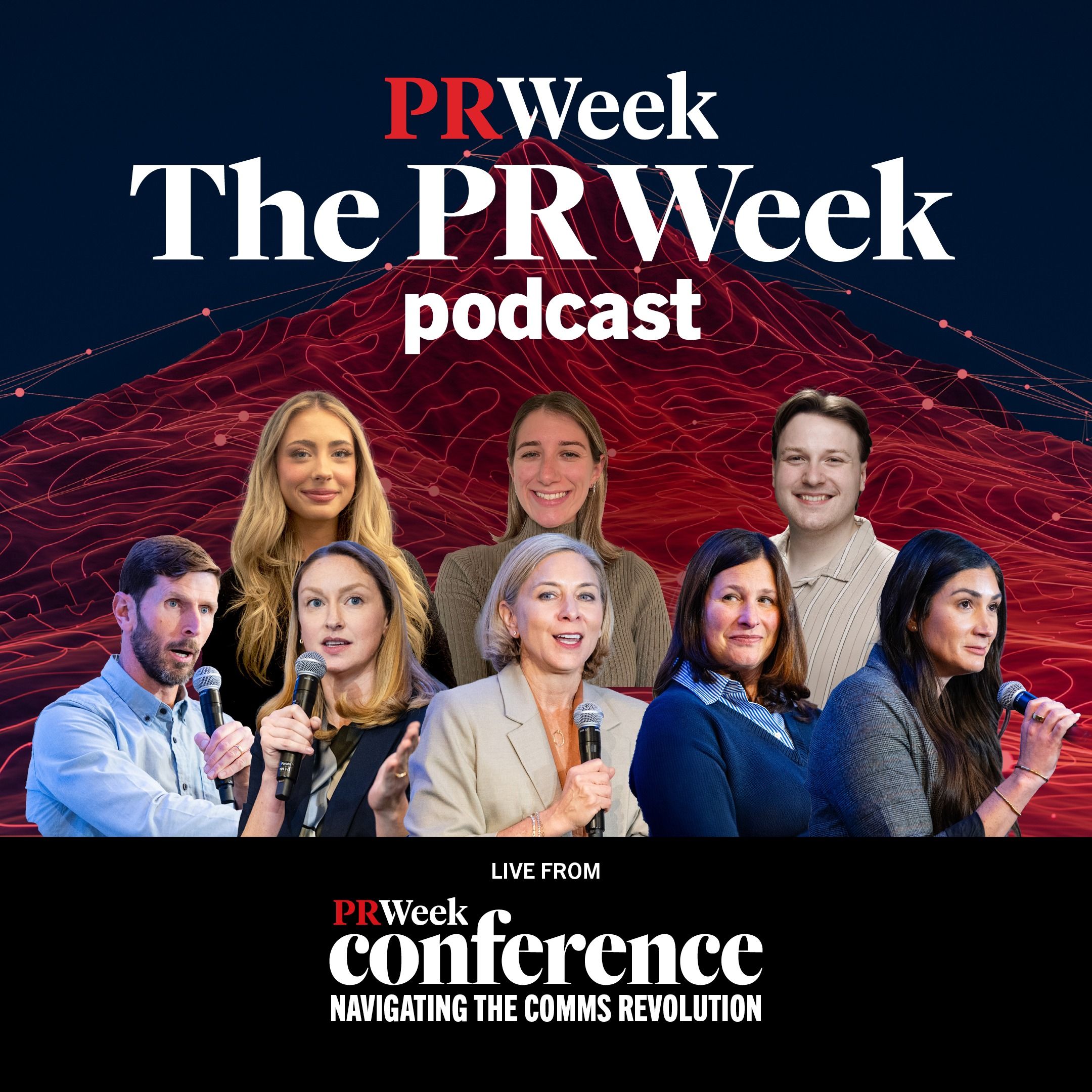
This week’s episode of The PR Week comes to you from the PRWeek Conference in Chicago, focused on navigating the comms revolution.
PRWeek associate news editor Jess Ruderman and reporters Jeremy Sodergren and Julia Walker catch up with leaders from Patagonia, McDonald’s, E.l.f. Beauty and John Deere to discuss AI, authenticity, trust, the creator economy and other top issues.
The episode also features on-stage highlights from the day’s top sessions, including Obama Foundation CEO Valerie Jarrett’s keynote on hope and snippets from Edelman CEO Richard Edelman’s conversation on legacy and the importance of trust.
Theme music provided by TRIPLE SCOOP MUSIC
Jaymes - First One
Follow us: @PRWeekUS
Hosted by Simplecast, an AdsWizz company. See pcm.adswizz.com for information about our collection and use of personal data for advertising.