 Ask ChatGPT
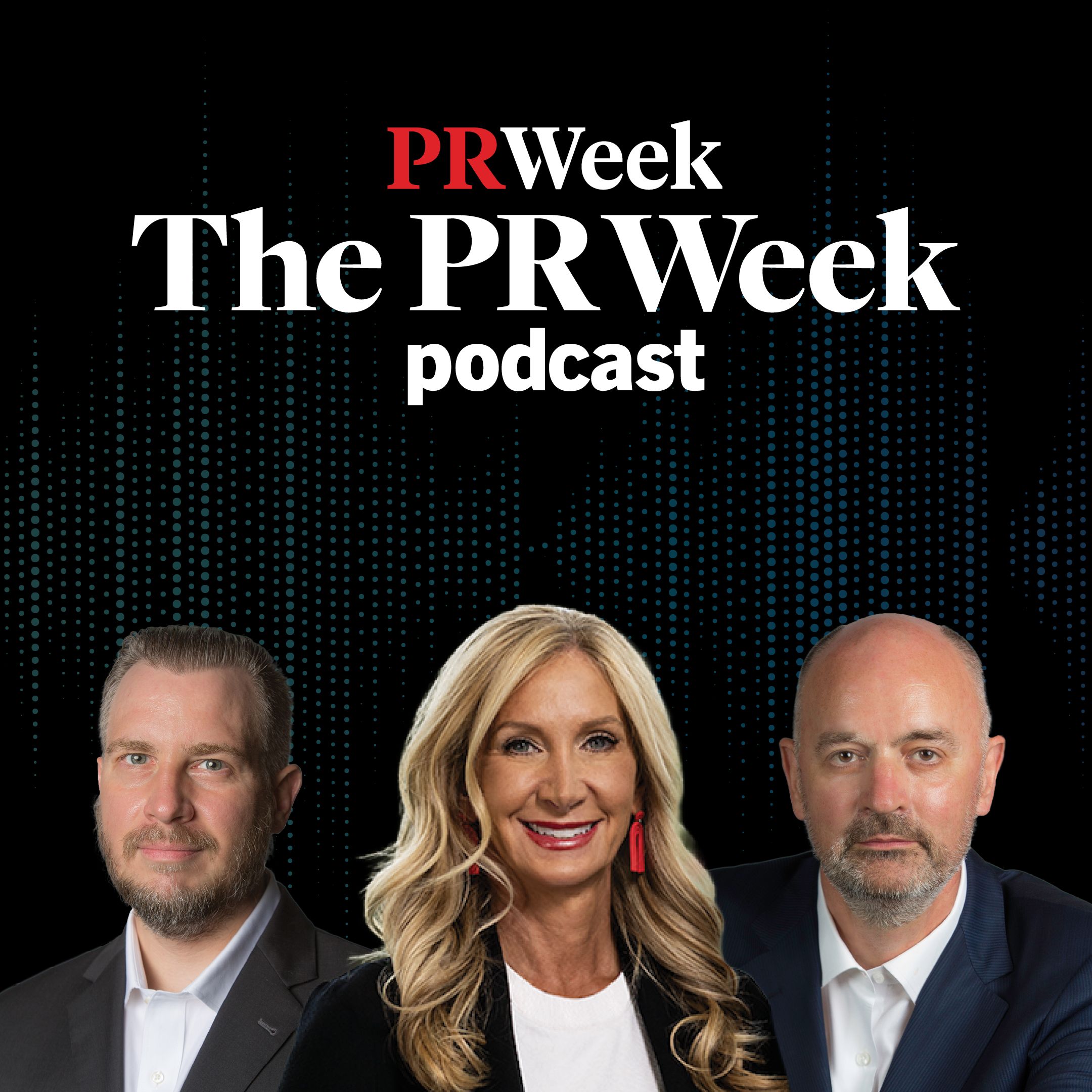


PR Week weekly roundup plus a deep-dive interview with Verizon’s corporate affairs leader on building a corporate affairs function, aligning comms with marketing and government/regulatory stakeholders, and using media/creator campaigns; second half covers midterm-election communications narratives and PR industry news (agency and exec moves, acquisitions, conferences, surveys).
Franz Paasche, EVP Corporate Affairs at Verizon (joined Nov 10, ~1 year prior). Background: worked with CEO Dan Schulman at PayPal (helped build corporate affairs integrating government relations/public policy, communications, and responsible business/social innovation) and earlier at eBay. Also previously led communications at Columbia University during campus unrest and subsequent federal pressure. Co-hosts: Steve Barrett (Editorial Director) and Frank (Executive Editor).
comms/corporate affairs should be a trusted CEO advisor, ideally reporting directly to the CEO; Verizon built a corporate affairs model combining communications, GR/regulatory policy, and responsible business for “surround sound” stakeholder activation; marketing impact comes from digital “second wave” coverage after provocative ads and partnerships (e.g., FIFA).
Verizon ads featuring Mike Myers/Boston Powers cast; Connor Swindells from “Heated Rivalry”; “Simplicity” with Stephen Kalin; FIFA connectivity/stadium activation; ZipRecruiter ad timing during election coverage; Revemark acquisition; Jill Hazelbacker moving from Uber to OpenAI.
Written by AI. May contain mistakes.
Discussion about the recent New York City Marathon and personal experiences.
“I can't take any credit for one thing affecting the other, that's for sure.”
Introduction of guest Franz Paasche, EVP of Corporate Affairs at Verizon.
“And really delighted to welcome Franz Pasch, who is over at Verizon these days, Franz.”
Franz shares his transition from PayPal to Verizon and working with Dan Schulman.
“the reputation of the new company and how we would also manage our stakeholder engagement all around the world because PayPal was regulated everywhere and was in many, many, many countries.”
Franz discusses establishing a corporate affairs function at Verizon and its significance.
“So we launched that about a year ago, and it's been, I think, a very successful model for us in what really has been a year that we think of as a turnaround and an ongoing transformation process.”
Exploration of Verizon's marketing strategies, including influencer collaborations.
“But it feels like that's a story that needs telling around the whole country and explaining what AI can do.”
Learn how unique advertising campaigns can capture public attention.
“Then we introduced an ad with the star of heated rivalry, Connor Story, which was picked up everywhere, which, you know, was, had, had a lot of appeal.”
Discover strategies for leveraging partnerships in marketing campaigns.
“When you have an ad or a digital initiative that catches fire and that the whole world is watching, then there's a story about the story about the story.”
Understand how brand partnerships can adapt to changing narratives.
“the intense need for cellular connection and for that stadium with a million people trying to download.”
Explore lessons learned from managing communications at Columbia University.
“sponsors of a lot of different sporting events or other things.”
Examine how young people's voices shape communication strategies in institutions.
“You have, you know, 17 different graduate schools, two colleges.”
Gain insights into the narratives and outcomes of the recent midterm elections.
“And we're sort of recording this the day after.”
Discussion on demographic shifts and election outcomes affecting political strategies.
“I think that issue also bit them as well.”
Franz Paasche discusses the role of communications in navigating political changes.
“And I had to laugh when it cut to an ad break on the channel I was watching, and it was for ZipRecruiter, and they'd just been talking about the horrible performance by candidates.”
Insights on the importance of continual work for Democrats after electoral victories.
“I mean, as I said to my team today, this is going to be challenging to adapt and change.”
Overview of recent acquisitions and leadership changes in the PR industry.
“Frank, let's whip through the other stories.”
Explore the evolving media landscape and the role of innovative companies.
“We have a good partnership with Semaphore.”
Learn about key upcoming events and initiatives from PR Week.
“Yeah, no, it's Andrew Edge-Cliff Johnson's over at Semaphore as well.”
A summary of the discussed topics and appreciation for contributions.
“should only take you five to seven minutes.”

Get the gist, explore an idea or ask about something said.
 Claude
On The PR Week, what are the key points of this episode?
Searching your listeningAutomatic transcript. May contain errors.
0:09Hello and welcome to the PR Week, PR Week's regular weekly roundup of everything that matters in the worlds of PR and communications. My name's Steve Barrett. I'm the Editorial Director of PR Week. I'm going to guide you gently through another show. and what a day to be recording, Frank, my co-host, executive editor of PR Week. The Blue Nami, as we record this.
0:37Franz Paasche: A lot of different terms for it. It swept over the country last night, didn't it? Yeah. And this is on the back of you recording your record time in the New York City Marathon. I can't take any credit for one thing affecting the other, that's for sure. But I would say, and I can't say this about my time, unfortunately, But it was really surprising how early everything was called last night. I was very surprised to see things that I thought might go well after midnight being called before 1130. And I think that the Ossoff results, being so decisive early, really tipped things and really showed what was to come.
1:15Yeah, and we'll get into that. But let's just wrap up the marathon. Oh, yeah. Because you did your best time ever. I did, yeah. And I don't think you were expecting that necessarily, were you? Maybe you were just being modest. I was actually, and I was looking to do about five to ten minutes ahead of that, but you're not going to complain if you end up with the PR anyway. So, yeah, so thank you. It's good. It was always great. I didn't manage to give you a bottle of water this year, but yeah, so well done. Great crowds in New York. If you're ever looking to run a marathon, it is actually bigger than it ever was before.
1:53The entry process is really difficult, and you have to plan a few years in advance, but the crowds are good from the beginning of the month to the end. Having Halloween on a Saturday night, having the marathon on the Sunday, and for me personally, the Breeders' Cup, which is coming back to New York next year, so all three of those actually be in New York on the same weekend. Yeah, it's going to be even more crazy. And it really, if you go back a few months, I mean, the city's kind of on a roll between the Knicks winning and some other things, you know, and a good summer. And so, yeah, I think this wrapped it up pretty well.
2:30Okay, on to our guest. And really delighted to welcome Franz Pasch, who is over at Verizon these days, Franz. Welcome to the show. And it's been a while, actually. I can't believe we haven't had you on the show before. So welcome. Yeah, I was a little surprised, but I'm happy to be here now. So you took on the EVP corporate affairs role, and you've kind of followed Dan Schulman, the CEO, who you used to work for at PayPal. That's right. And before that, I guess it was eBay, right? That's right. So tell us about that. How did you end up at Verizon? And tell us about your relationship with Dan, because it's interesting how senior communications folks do often follow a CEO around and vice versa.
3:13So, yeah, it's always interesting to hear how that actually comes about. Sure. Well, maybe I'll, first off, thanks for having me. It's great to be here in the studio. So maybe I'll go back to the PayPal days. So I joined Dan at PayPal when you were still inside of eBay and had the opportunity to work with him to think about and then think about plan and then take PayPal public and then build sort of a new public company with a very different reach and ambition. And it was a fascinating process. And Dan gave me the opportunity to build what he and I thought would be the best way to build the reputation of a new global company.
4:00And that was to create a corporate affairs function. I think it was one of the earliest, but we ventured forward with it. And we brought together government relations and public policy and communications and responsible business, or in those days we called it social innovation, but that part of the world. So it was really a triad of functions that enabled us to have the full spectrum of stakeholder engagement under one roof, which enabled us to really have a coherent plan for how we would build the reputation of the new company and how we would also manage our stakeholder engagement all around the world because PayPal was regulated everywhere and was in many, many, many countries.
4:44Yeah, and that's, to be honest, you were pioneers there looking back because that is now the model that many enterprises are following, aren't they? And it's true to say that that corporate affairs bit and the senior council and all those elements you just described, that's where the real value is added for PR pros and where the value is perceived by the C-suite and the CEO. So it was a pioneering move. What's your take on this? We've been talking about the different topics relating to this. One is, should the senior communicator report directly to the CEO? What should the structure be? Is comms, whilst it's much more respected and much more valued, it doesn't seem to be getting more budget.
5:32So there's this whole more with less trend going on. How are you seeing it as someone who's been through a few war zones as a senior communicator? So the most important thing is that whoever's leading corporate affairs or comms is a trusted advisor to the CEO and has the ability to communicate directly to the CEO and to really have that mind meld that it takes to really understand the CEO's objectives, the CEO's language and message and aspirations. Sometimes I think when a direct reporting line to the CO is, I think, the strongest way to accomplish that. But I do see in some companies where the heads of comms or the heads of corporate affairs, they may report to a president or in some cases to the COO or in some cases to the general counsel.
6:27Different companies find the way, but it only works when you have that direct trust relationship. So I report to Dan directly. I joined Verizon about, it's almost exactly one year ago. I think my first day was November 10th. Yeah, the time, it's almost like we planned this stuff. Yeah, really. It's pure fluke, actually. Yeah. Congratulations on the first anniversary. Dan became CEO. He had been on the board of Verizon. He became CEO pretty abruptly over the course of a short period of time. And he and I started talking and I realized this would be a really fascinating and fantastic challenge to come in.
7:09And at this stage of my career, having done all the different things I've done in the course of my life, whether it was lawyering or crisis management or politics, this is an opportunity to really take all that to bear and do something really interesting and different with Dan at Verizon. And he's a very compelling leader. And when he said, you want to join, you want to join me? I was like, sign me up. And we figured, right, this is for me. I sort of had that one more rodeo feeling. Like if I'm going to do one more big role, this was the role that I wanted to do. And again, part of our discussion was let's build a corporate affairs function.
7:50It's not something that Verizon had. So we needed to build it. And we brought communications together with government relations and public policy. And in this case for Verizon, regulatory policy, as well as the responsible business function and the full reputation risk management approach. So we launched that about a year ago, and it's been, I think, a very successful model for us in what really has been a year that we think of as a turnaround and an ongoing transformation process. And tell us a bit about how much can you tell us about the size of the team? Well, this is a big consumer side to Verizon as well and how that fits in and maybe how you interact with the marketing side of the organization, because that's always interesting to know, too.
8:38Yeah. Well, you know, I'm always a little careful about discussing the size of the team or the service, you know, but, you know, we have. Come on, you're amongst friends. Yeah, all of my friends. So I'm going to answer the third part and then work my way back. This is for me the first time that I've had a complete and total partnership with marketing. I'm very lucky to be working with Leslie Berland, who is a rock star CMO. She's had a storied career, but coming into Verizon and having CMOs really creative and interested in comms, She completely understands what strategic comms can do to bolster marketing.
9:23And I'd like to think I've been a good partner for her in how we maximize what we do. So, for example, we are a sponsor of FIFA. There's a marketing aspect to that. There's a comms aspect to that. There's a GR aspect to that because we're in stadiums all over the country. And so we've been able to really work really closely together. I'm also fortunate that Verizon had a deeply expert GR and public policy team and comms team in place. So while I've brought in some new people, I've really been able to work closely with the team that was there. So you were able to build organically as well as you know.
10:04Yeah, I could build organically. That's right. And it's been, you know, when you're in a year of transformation, you quickly see who's ready for change, choose ready to do things differently. I was surprised how fast people embraced this corporate affairs model. I think for the GR team, it brought them comms resources that they'd always wanted because as it, I don't know if you've had others on, but one of the tension points always is that things are happening in the GR world. And if you don't have deep support from comms, you can't So you don't always have the impact you want to have when you're doing things that matter for the audience of politicians and regulators and policymakers.
10:48On the comms front, I think it has made our comms team much more attuned to some of the critical issues we face in Washington with regulators and also in states. We're in every city and every town, and we have a big local presence. So the comms team now is fully integrated with our local GR teams and our national GR teams. And we have a deep bench in responsible business led by Donna Epps, who has been leading the charge on some of our big initiatives. And we're able, by blending the comms team and responsible business and the GR team, when we go in and introduce a program in a community, we're affecting the political leaders, media, the community leaders, nonprofit world.
11:33so we can do what I call sort of surround sound stakeholder activation in a way that it's very hard when you're sort of vying for resources and time and focus. I'm able now with this team and people that I think really responding to it, we're able to say we're going to focus on, let's say, the launch of our AI Skills for America program, and we're going to invite the governor, we're going to invite the mayor, we're going to have the media engaged, We're going to have nonprofit partners. We're going to invite advocacy teams. And our team has that network and has that expertise. And it's been very powerful for us the way this has worked.
12:14That's interesting because we'll talk about the elections and government relations and midterms in the second half of the show. But it feels like that's a story that needs telling around the whole country and explaining what AI can do. and maybe it's seen in rather too much of a negative light at the moment for good reasons as well, you know, and people are worried about it. The data center issue seemed a big one last night. So, yeah, interesting stuff. Now, talking about marketing, Verizon, massive marketing spender, and you used to see them on TV all the time. I think you might have flipped that a little bit.
12:53Obviously, you still do a lot of advertising, But how's that evolving as well? And are you using creators, influencers a lot more rather than just doing pure TV buys and plays? And how does the comms and corporate affairs function support that? You know, it's been quite an interesting transformation over the course of this year. I think Leslie and her team have been innovating with different kinds of media engagement. We've been working with influencers and introducing new ads or commercials, but very often it's the digital imprint that matters the most. If you have a viral video ad, you can get millions and millions of views.
13:46the digital platform. So we've introduced some pretty provocative ads. We did a commercial last year with Mike Myers and the entire sort of senior cast of Boston Powers that had a huge impact. Then we introduced an ad with the star of heated rivalry, Connor Story, which was picked up everywhere, which, you know, was, had, had a lot of appeal. And then we did an ad called Simplicity for our new program that started Stephen Kalin, who is the breakout star of, you know, of off campus. And these were stars who had never done, never done a commercial. So part of this was also, it was completely fresh and different.
14:33We also did, we've also done some flashback ads with the cast of Ugly Betty in Spanish, the original Spanish cast. So, you know, we support that through the media coverage of these ads. There's an entire second wave. When you have an ad or a digital initiative that catches fire and that the whole world is watching, then there's a story about the story about the story. So the next thing you're in the Hollywood Reporter, you're in the media report. And so the story is about the engagement as well as the content and the program. We also are doing a lot with our own platforms. We have an app and a lot of our customers come to the app and we have a program called Verizon Shine where we surprise people with different awards or different opportunities.
15:21Pardon me? I see what you did there. Yeah, exactly. We have loyalty programs and we can tie it all together with also an event that has a lot of coverage. So for example, for FIFA, there was a Fast Company article about how Verizon was managing the intense need for cellular connection and for that stadium with a million people trying to download. And so we focused on how we were providing that connectivity, but we also had lots of opportunities for our customers to come as fans. We had tickets that we gave away. We had interviews. We had influencers who were part of the program. So then so we were able to really fully partner to maximize what happens.
16:11When you're doing a partnership like that and the organization itself becomes a story, FIFA, obviously, with Gianni and Fentino and, you know, some of the things going on there. how do you is that just it depends what the story is obviously but how does that impact your partnership and how do you have to respond to that or tweak what you're doing look i mean we we try to be really good partners we also try to stay true to the brand and to our values and so you navigate each situation um we're also you know we are sponsors of the super bowl we're sponsors of a lot of different sporting events or other things.
16:53And in each case, you work hard to be a good partner, but you also work hard to be sure you are yourself. And that's important to the brand. So I think Verizon has a strong brand awareness. And I think people, you know, part of our aspiration is to be really the most trusted brand. That's something Dan has been very clear about. And so to build that trust, you've got to be also true to the brand and to your values. It's interesting. We saw McDonald's coming, you know, ending their partnership with the world cup, um, after decades. Um, how do you, and some people might say, well, you don't actually need to be an official partner these days.
17:34You can kind of do guerrilla tactics on the back of it and attach yourself to it. But I guess it depends what type of brand you are. And that maybe wouldn't work for Verizon. I don't know what's your take on that. Also, what's your presence in different stadiums? You have relationships with stadiums, relationships with those who are in the stadiums. I think it depends on the depth and ambition of the partnership, really. So there will be a Verizon Super Bowl ad in 27? That's a Leslie question. I'm not going to do any reveals here or make any news. I'm not going to make any news about marketing, but if you ask me in a few months, maybe I'll get permission.
18:13Yeah. Now, so obviously you were at PayPal and ended up back with Dan at Verizon, but you did have a short spell at Columbia University, which was a tough time to be head of comms there. So, I mean, what are your reflections on that time as in 24, 25? And what did it teach you about the communications function? You know, what was the biggest challenge there? It was an enormous challenge, and I think when I reflect back, I had a lot of chutzpah in thinking that I could make a big difference. I had left PayPal with Dan. I was taking some time off, and I wanted to do something in the nonprofit, academic, public service world.
19:01And I had an opportunity to go work for Manu Shafiq, who was the president of Columbia. And this was in the summer after there were after things really had been difficult, student demonstrations and police presence on campus. So I came in to thinking that, you know, this is a good time for us to really heal the community and to really try to put things on a path and also build a corporate affairs function, which didn't exist at Columbia. And I thought the model would be helpful to be able to help the university navigate what was going to be a healing year. I ended up working for three presidents during the course of the year, the less than a year that I was there.
19:46And in each case, people genuinely were trying to heal the community and to navigate what was enormous pressure from Congress initially, internal constituencies from the administration. And after the Trump administration was elected, you know, Columbia came under a ton of pressure and had to navigate that and make its way towards a settlement. What it taught me about comms is that, and it might explain why I'm back at the private sector, I was not aware coming in, but I learned really quickly. Universities have a vast myriad of stakeholders. And so understanding all the stakeholders, you know, Columbia University is one of the most complex organizations I've ever worked at.
20:30And believe me, I am a true patriot of the university. My great grandfather got his rabbinic degree and his Ph.D. at the turn of the 20th century, 1900. And I went to Columbia. I met my wife at Columbia Law School. My in-laws went to Columbia. I've had my brother-in-law and my sister got her degree at the Jewish Theological Seminary. So I went thinking I also could be helpful to an institution that I cared about. And I think we made a lot of progress during that year that I was there. But the stakeholder management is just really complicated. You have, you know, 17 different graduate schools, two colleges.
21:15is within those, within each of those, there are deans and then there are factions, faculty factions, student factions. And so part of it was to pull everyone together and try to really come and try to really define some common goals and objectives. And we worked hard on that. But there was a lot of pressure on the institution externally. And I know that we built a team there to work on comms. We integrated government relations in with communications, which which was helpful, I think, during that year. And, you know, I care a lot about Columbia and I hope only want the best for Columbia. What did you learn about young people and marketing to your communicating with young people by that time at Columbia?
22:00Because you're very close to to, you know, the younger generation. Yeah. You know, that was a pretty exciting and interesting part of the role in that, you know, the student newspaper was a big player. And these are these are students who are really learning and and take themselves very seriously as journalists, but are also really learning how to be journalists. And so working to be sure that we can sort of manage the media relations internally and externally is really interesting because you've got to be, you want to be hugely respectful inside the campus, but also what's written in the student newspapers and would inform what the rest of the world covers.
22:45So that was it. That was, again, both a pleasure and a challenge. The other thing is that the students on this campus were very active on social media and politicians and others outside the community would pick up on that and would escalate what might have been campus discourse became national discourse. And that, I think, was something that Columbia almost uniquely had to learn because it was really the first university that was focused on all the different issues that the administration was raising and members of Congress were raising. And so the internal discourse was reported everywhere. And most institutions, including this one, I'm sure, that internal discourse is not always what you want the whole world to then engage in as well.
23:39So I think that was also for communications leader. That was also something we had to think about and we had to navigate. Yeah, and you can't have... It's very unusual. You can't have one set of comms for the investors, one for the clients, the customers, and one for the employees anymore. You've got to be. So, yeah. Brands could chat for ages, but we've got a lot of newsy topics to get through, and we'll get your input on those. Healthcare marketing is changing fast.
24:07Franz Paasche: So why are we still doing conferences the same old way? Enter M &M Transform, a declaration against the status quo. On March 30th, MMM Transform takes over Philadelphia's National Constitution Center for a bigger, bolder healthcare marketing festival packed with bold ideas, interactive experiences, live demos, and candid conversations. And here's the best part. In-house pharma marketers can attend for free. MMM Transform, March 30th in Philly. Register now at MMMTransform.com. Frank, the midterms were extraordinary, really historical. And we're sort of recording this the day after. But what were the things that caught your eye and the PR news team's eye, you know, in terms of communications, maybe, and advertising and some of the narratives?
24:53Well, I would say in terms of the narratives, if you look at the president's press conference today, in which he immediately, you know, didn't lead off talking about the midterms themselves, as most presidents do the day after. but started talking about the size of the ballroom he was building on the White House grounds and all these things. I mean, that tells you why the Republicans lost so badly in an election that was largely about the price of things, for lack of a better term. And he wasn't talking about voter fraud either, was he? Right. But Trump largely won a few years ago on promises to bring down inflation, to make things more affordable.
25:32I know he doesn't like the term affordability, but that is largely what he campaigned on a couple of years ago. The public obviously doesn't think they have done enough of that. The war with Iran has not helped. And to have the messaging be about, you know, things like ballrooms and things like that the day after the election, I think, shows you in large part why the Republicans lost so badly. I think keeping an eye on it last night, I think if you look at how quickly the race, the Senate race in Georgia was declared for for John Ossoff, it it really indicated how the rest of the night was going to go and went up until a few cycles ago as a very solid red state.
26:14if you look at the success that the Democrats had in the Senate race in Michigan, which was called before 11.30 p.m., and I think a lot of people thought would have been tighter. Especially after the Democrat came out against the candidate. Yeah, I did wonder how much of an impact that felt a bit more like a spite mission than anything else in some ways. But some of these races in traditionally easy Republican states, when you saw how quickly and decisively they were turning towards Democrats, I think it was indicative of what kind of a night it was going to be. I would not have predicted it was going to be this big of a night for the Democrats, but it was.
26:56so in terms of the messaging in terms of the narrative people were clearly eager to punish the white house and the administration for what they see as um number one the price of things that trump promised he was going to bring down he didn't bring down number two they clearly across the board including a lot of traditional republicans do not like tariffs and see this as only making the problem worse. Number three, a lot of people who were very eager supporters of the president don't like the war against Iran. And you take all of those things combined and it just creates a perfect storm that works against administration.
27:38You mentioned data centers before too. I think that's an issue that, I think that's one of those issues that immediately turns votes against the incumbent party, whichever one it is, because I think that the incumbents largely have misplayed their hand on data centers and a lot of companies have as well. And Trump had been so in favor of data centers, even against the wishes of many, many of his supporters. I think that issue also bit them as well. Yeah. Very hyper local issue that that It becomes a national issue. Yeah, and then there's the whole ICE issue, isn't there, which Trump won the presidency partly on the back of a Latino male vote, young males especially.
28:26That completely collapsed. That demographic has completely swung back, and it will be interesting to see over time if it stays where it is right now or it continues to be or it turns into more of a swing demographic. We shall see. There was a lot of talk before the election with President Trump going around and he worked it, didn't he? He went around the country and he was saying, pretend I'm on the ballot. That was not the smart move. There are two ways of looking at that. One, you could say, well, everybody did and they voted accordingly. or the way he's spinning it is I wasn't on the ballot and that's why we didn't get the vote out.
29:11What was your take on that from last night? I think people did pretend he was on the ballot and they voted against his policies, and I think it's kind of that simple. I wouldn't underplay how much the tariffs made an impact here and tariffs as a policy made an impact here because that is something that a lot of people who voted very enthusiastically for him ended up being against when they saw, and many of them rural voters, I think if you look at the patterns here, tariffs were clearly a driving issue. Yeah, especially in the north and the relationship with Canada. Corruption also came up a lot.
29:52Totally. I don't think people really appreciated someone like Elon Musk coming in when spending$200 million and trying to buy an election. I think people were like, yeah, that's not actually the politics we want. So it was interesting. And then people are struggling to pay for their health care. They've seen health care, Medicare. These are all true things. And then so when we talk about a list of items like this, you see why there's such a tsunami, if you will, because they're all of these things are working against the incumbent party. Gas prices, which is obviously a function. What I think is really fascinating about it, I think that, and this is very early to be reading the tea leaves about this, we're just spitballing here.
30:34But if you were to look a week ago at the 2028 Republican nomination for president, you would think of it as kind of like three people. And you would think of it as J.D. Vance and then maybe Marco Rubio if he were to decide to run. And the third being the unknown somebody else. and now the favor you would think has swung wildly in favor of somebody who's not in the administration currently because there's going to be a lot of questioning whether Vance would be able to succeed given this midterm result. Yeah, we just need to look on Cal sheet, aren't we? That's the way it works these days. Yeah, right.
31:14I won't endorse that. But I think it's going to be really, really interesting because you have a lame duck president. there's going to be two new candidates in each party. It will be a really interesting 2028. Yeah, the Democrats kind of benefited from not having a leader, really, to focus down on it. And you see a lot of these cross-issue, cross-party topics that are popular or unpopular among, I mean, both parties are talking about, at our conference in Chicago, you know, Jonathan Rosen said, both parties are doing some form of populism economically. economically they're just calling it different things and they're approaching it from different ways some of the some of these topics are cross-party issues affordability whatever you want to call it is a cross-party issue right now the data center issue is a cross-party issue
32:04Franz Paasche: um and and i think that if you look at the iran war and you look at tariffs both of these have elements of large percentages of both parties being against them too so the the a lot of the traditional policy stances that were in place for like 40 years have been shaken up in the past five or ten it'll be fascinating to watch a couple of things just to finish this segment um before we go to franz that caught my eye a logger wearing a red socks baseball cap yeah wins main against susan collins who's been in power for decades that was stunning to me um it was the first Native American female to be elected in New Mexico, which was interesting.
32:53And I had to laugh when it cut to an ad break on the channel I was watching, and it was for ZipRecruiter, and they'd just been talking about the horrible performance by candidates. And the ad said, want better candidates? Try ZipRecruiter for free. Yeah, that's not bad. The timing was fantastic.
33:12Franz Paasche: Yeah, I saw that one. It was an interesting night. Franz, I suppose for you, you were interested as a citizen, but you're working, aren't you? And tell us what it's like for a head of comms at one of the biggest companies in the country to be watching that. And what are you doing? You're working the phones. Yeah, and part of it is working the phones. Part of it is also, you know, we, of course, like I'm sure many corporate affairs teams have done, we had managed to do some scenario planning and what might happen and what would be in charge here, what would change the committees, what would the implications be of the different outcomes.
33:51I think nobody expected a sort of surge through the evening. So that was one of those things where you sort of have to, as a team, assess, like, you know, how good were we in our predictive capabilities and what were our scenarios. But we had done a lot of the work in advance. So part of it was then making sure that we could advise the senior leadership of what we thought would change, what wouldn't, what would be the implications. And we had been engaged in that. So part of the part of the was just political, you know, really just nerding out of politics. And I think it was fascinating to see the predictive qualities of the models and how early they were able to call elections.
34:37They were calling some of them very different. But I think their modeling where they were so confident in the modeling data scientists could do. But it was also, you know, one of those moments where you feel like in this business, this is the interesting work, right? Things are changing fast. We're going to have to adapt and change. When you have a divided government, that's a different task, you know, or a comms leader or corporate affairs leader. And, you know, you have to navigate both parties in different ways. And so waking up the next morning and the whole thing has sort of shifted and you start looking ahead to 2028 and you have to think about how to navigate this.
35:17I mean, as I said to my team today, this is going to be challenging to adapt and change. But this is why we do the work we do. And this is where we can have a lot of impact in helping to guide the company's strategy. So for me, this was, you know, exciting and challenging. Just look at your government relations folks in Texas or Kansas. You know, it's a totally different environment that maybe they didn't expect. So, yeah, it's fascinating stuff like that. I loved seeing Dasha Burns, the Politico reporter. They were spitballing on the show, and she says, why don't I just call him? So she did, live on air, called the president on his cell phone.
36:00An aide picked it up and said, who is it? She told her. And she got straight through to President Trump and was able to do a live on air interview for five minutes. And it was hilarious. And he just sort of I was just I'm Frank will tell you, I'm always boring the news team by telling them to pick up the phone and, you know, to get the story. And that was the prime example of someone doing that and actually getting the result. I'd have loved to have seen Caitlin Collins do that. Yeah. I wonder if she if he'd have taken the call. What do you think, Frank? he probably would have done yeah maybe say what you will about President Trump he takes you've seen him yeah call into he engages the media doesn't he a lot of different shows yeah on TV yeah he's amazingly focused on all yeah yeah well look interesting and it's a new world a new political world and we'll see how and the Democrats have got to make sure they don't screw it up not to put too fine a point on it and get complacent just because you win a vote doesn't mean that everything's sorted.
37:06That's when the real work begins. Frank, let's whip through the other stories. There's an interesting acquisition story with Revemark being acquired, which sort of speaks to a wider trend with private equity getting involved in PR. It does. Revemark was founded in 2018. It's one of those corporate specialists that you hear a lot about nowadays. They focus on litigation, crises, brand. They have 17 employees in New York and a roster of clients across the public and private sector. They have been bought by PPHC, Public Policy Holding Company, and they are going to be a part of Trailrunner International Group, but they're going to keep the brand and continue to function as their own unit.
37:54So that's an interesting acquisition right there. Is that a real number that was attached to that deal? I don't have it in front of me. 80 million was one I saw on One Story, which seems a lot for a 17-person shop. It's not, obviously, that's not an 80 million down. It's a potential, but yeah, interesting deal. And some interesting people moves as well. Jill Hazelbacker is moving from Uber to OpenAI. This is super interesting, right? Because I think a lot of people assume that the next person to take the comms role at OpenAI would be from this AI world. given how just complicated and specific the technology is.
38:35And it seems like every day is a different sort of crisis in that world too. But she's coming from Uber. She's going to be the next chief corporate affairs officer. There's been a 10-month space in the top communications role at OpenAI. And I think it shows too when you look at the way that their reputation has taken a hit. Really, I think, falling behind anthropic in a lot of ways when people think about who's a leader in that space. So she is starting in that role in early December. And previously, she was the president, chief corporate affairs officer at Uber. Fancy working for a CEO like Sam Altman, Franz?
39:14I'm going to take the fifth on that. I don't need to take the fifth. You know, that's going to be an incredibly exciting ride for a senior corporate affairs leader. Yeah, for sure. She replaces Hannah Wong, by the way. And Hannah is an independent advisor right now. And another big change at Edelman, the U.S. CEO, Kirstie Graham. Yeah, two of them. So Kirstie Graham, the U.S. CEO, she is out. Matt Harrington, who, by the way, is a PR Week Hall of Famer for the year 2026. Two weeks. One of the true greats in our industry. He's going to be replacing her on an interim basis. And meanwhile, Melissa McReith is going to be the first North America corporate affairs head at Edelman.
40:02She comes from Tineo. Okay, interesting. Yeah, Matt's a great, great professional, and we're looking forward to celebrating him. Agency-wise, Verizon, can you give us a bit of an insight into who you use and whether that's going to change or what you're looking for from an agency these days? And does it matter if they're a holding company or an independent or do you you're big enough to have a mix, I guess, of all sorts? No, we have a mix. And I think that what I've been looking for is the ability to sort of change as quickly as we're changing. because our company is changing fast with respect to how we use AI, how we think about the structure of our functions, how we engage with our stakeholders, how we use data, how we are refocusing from having spent a lot of time really speaking mostly about our network to now we're really focused on our customers.
41:04And that's been something Dan sort of, you know, came in strong on and said, you know, if we're going to win, we have to be customer obsessed. Everything is now focused on the customer. And so our agencies are have to be fully aligned with how we're how we're changing. Good. Well, swerved on that one. I mean, it's part of it's part of what we do. I know. Hotwire has a new U.S. CEO, Frank, and Semaphore has brought on a global comms leader. Yes, I'll push through both of these rather quickly. Karen Barr is the new U.S. CEO of Hotwire Global. So she is replacing Laura McDonald, who had a slightly different role as president of Hotwire Americas.
41:48And she, McDonald, recently joined FinPartners as their managing partner and global tech lead. yes and Semaphore has hired Megan Coppola as their global corporate communications head really I think another interesting media outlet trying to do something different out there one we follow closely she replaces Mira Patney who actually left Semaphore last year to found a consultancy called Emissary last thing France Semaphore interesting media company and there are a lot of different media outlets now even owner operators you know that are very influential uh presumably you have to have a much wider swathe of people that you're selling into which is great in a way you know actually the media is thriving in a funny way even though maybe the the big established traditional media players might be struggling a bit with their business model yeah well look i'm very impressed with what semaphore is building I think Justin Smith and Ben Smith are really innovative and great leaders.
42:55We have a good partnership with Semaphore. We'll be out at their CEO Summit, Silicon Valley in the world, and we'll also be at the Global World Economy Summit. And I think they are emblematic of a media company that's also really engaging a leadership community. and finding different ways to spark dialogue and conversation. I think what they're doing is really creative and high impact. We also, of course, respect and work with the other media companies, whether it's Axios or Politico or Fortune or PR Week. Indeed. Here I am. Thank you. Yeah, no, it's Andrew Edge-Cliff Johnson's over at Semaphore as well.
43:45He does the CEO network, so interesting stuff. A few, not internal announcements, Frank, but these are important to us. We've launched a bunch of things. Talk us through it and why readers should engage. First and foremost, you should take our reader survey. If you have opinions about PR Week or want to see us do something different, the same, whatever the case is, get on it. That's something we love to hear from everybody. I'm really excited about that. I want to see the feedback. Our PR Week Crisis Conference will be back in Washington in April, April 15th at the Ronald Reagan Building and International Trade Center.
44:26Same place as last year, if you were there last year. The PR Week Sports Conference is going to be set for New York City April 27th. The headliner is Janet Evans, who is the chief athlete officer for LA28. she's also a four-time olympic swimming gold medalist so once again we have a top athletic star leading that up and by the way that is for brands and agencies who are not necessarily involved in sports but want to get to be involved more often in sports so just keep that in mind um and of course we have the pr week hall of fame coming up yeah there's uh really looking forward Great Q &As we published this week for all our Hall of Famers, and we'll be celebrating them in a couple of weeks.
45:13And not to forget, we are launching the Talent and Compensation Index, which is what was formerly known as the Salary Survey. So that's launching on Thursday of this week, and we want as many people to take that as possible. We've made it a more dynamic survey. We've put some data together for the launch over the last six years. fascinating insights. It's actually the 20th anniversary of us collecting this data. So when it comes out next April, there will be a 20-year look back and report into the trends that have shaped talent and workplace. So it's really in-depth and you can't get that information anywhere else.
45:54So firstly, please take that survey as well. Both of those surveys, by the way, should only take you five to seven minutes. We've deliberately cut down the number of questions. We We know how valuable your time is and how you get bombarded with surveys and feedback requests. So do take just a little time. Just read the breakfast briefing and you'll have all the links in there. And I hope you and your team will respond to those, Franz. But it's been great to have you on the show. And thanks for coming in. And good luck with the transformation at Verizon. Thanks very much. I look forward to seeing you at the Hall of Fame.
46:31Yeah, looking forward to that. It's going to be a real fun night. Thanks for having me, Steve. All right. Thanks, Frank. And we'll see you next time on the PR Week.
46:55Franz Paasche: Healthcare marketing is changing fast. So why are we still doing conferences the same old way? Enter MMNM Transform. A declaration against the status quo. On March 30th, MMM Transform takes over Philadelphia's National Constitution Center for a bigger, bolder healthcare marketing festival packed with bold ideas, interactive experiences, live demos, and candid conversations. And here's the best part. In-house pharma marketers can attend for free. MMM Transform, March 30th in Philly. Register now at MMMTransform.com.
The guest on this week's edition of The PR Week is Franz Paasche, EVP of corporate affairs at Verizon. He talks about navigating complex organizations, whether that be at Verizon or previously at PayPal or Columbia University.
Plus, the biggest PR and communications news of the week, including Public Policy Holding Company acquiring Reevemark, Jill Hazelbaker moving from Uber to OpenAI and U.S. CEO Kirsty Graham leaving Edelman.
Finally, PRWeek has several items for your calendar, including the launch of the Reader Survey, the Talent and Compensation Index (replacing the Salary Survey), the Crisis Comms Conference 2027 and the unveiling of the 2026 Hall of Famer profiles.
On November 12th, join hundreds of top marketers in New York City for AI Deciphered, presented by Campaign, MM+M, and PRWeek. Get your ticket here
Theme music provided by TRIPLE SCOOP MUSIC
Jaymes - First One
Follow us: @PRWeekUS
Hosted by Simplecast, an AdsWizz company. See pcm.adswizz.com for information about our collection and use of personal data for advertising.