 Ask ChatGPT


PR Week weekly roundup plus a studio interview on building a lifestyle brand for adults over 50, followed by news on corporate comms restructuring, U.S. press briefings, celebrity retail backlash, ongoing Cornell fallout, agency-industry shifts, and data-center community trust.
Andrew Bowins, 30-year comms veteran; founder/CEO of Restless Urban (lifestyle media brand for adults over 50). Background includes senior comms roles at MasterCard, Samsung, Dell, and KPMG. Also featured: Diana Bradley, PR Week news editor (recent trip to South Korea with Genesis). Lisa Gill, production team member (temporary co-host). News discussion includes Stephen Kehoe and KT Zacharias (not guests).
Adults 50–65 are a “trillion-dollar longevity economy” audience with capital and active mindsets; Restless Urban has reached 7 million people in 18 months and skews 72% women ages 50–62. Social strategy should focus on “footprinting” for AI/agentic discovery, not just engagement. Agencies must adapt to blur lines between paid, social advocacy, public affairs, and AI operations.
Genesis film “Flesh Impact” (Maggie Gyllenhaal; Dakota Johnson) and Genesis factory tour; Pepsi retiring Stephen Kehoe and moving comms under legal; White House press secretary KT Zacharias’ first briefing criticized for reading notes; Kelly Clarkson’s Brooklyn store spat (“Art of Play”) escalating via Yelp/calls; Cornell sexual abuse case fallout (Sally Yates tapped; fraternity events banned); Publicis Q3 nearly 5% organic growth; data-center strategy requiring community investment and trust-building.
Written by AI. May contain mistakes.
Exploring evolving social media and AI usage among older demographics.
“He'll explain how that demographic social media and AI usage is evolving and why working with agencies and corporations continues to inform his current role.”
Discussion on recent PR news including PepsiCo's changes and more.
“The new White House press secretary, KT Zacharias, first press briefing is under the microscope.”
Diana shares experiences from a luxury brand event in South Korea.
“So the whole trip was courtesy of Genesis, which is a luxury automotive company.”
Diana discusses the making and themes of Genesis' brand film.
“The next day we went to this factory in Olsan, which is the world's largest single automobile plant.”
Insights on cultural tours and marketing strategies for brands targeting older demographics.
“Was the whole experience, did you see influencers?”
Closing remarks on the effectiveness of PR events and earned media content.
“And they worked with Golan Ketchum on this as well.”
Andrew shares the vision and mission behind his lifestyle brand for adults over 50.
“Thank you for inviting me to sit in the chair that Frank usually occupies.”
Discussion on the economic potential and marketing strategies for engaging older consumers.
“When you say 7 million, is that people who've signed up for a newsletter or who have engaged?”
Discussing the trillion-dollar longevity economy and its impact on age perceptions.
“The economics are the trillion dollar longevity economy.”
Exploring the need for authentic representation of middle-aged individuals in marketing.
“But people in their 50s and 60s now are, you know, this old cliche about, you know, 50 is the new 40.”
Analyzing how older demographics engage with social media platforms.
“It's not about redefining age, but it's recognizing this age group has a different mindset and different economic realities and opportunities that brands could capitalize on.”
Reflecting on the changes in public relations due to advancements in AI and digital footprints.
“Well, social media, Steve, like 60, what was it, 68 or 70 % of our audience comes through Facebook.”
Discussing career experiences and the evolving landscape of PR and corporate communications.
“And we can't say, I'm not going to do AI and cross your arms because you'll get enough behind.”
Sharing lessons learned from managing communication during crisis situations at Samsung.
“touch on, I talked about MasterCard, but at Samsung, I was there for three back-to-back recalls.”
Examining the shift towards independent agencies and the need for agile teams in PR.
“You must have worked with Ketchum over the years very closely.”
Exploring the business model and future strategies for Restless Urban.
“Well, you see this, you used the word slop.”
Exploration of the brand identity of Restless Urban and its personal significance.
“Right now, I've earned enough money through consulting, using the data to keep the lights on.”
Analysis of trends in PR, particularly regarding corporate communications and structures.
“Let's move on to the news stories of this week.”
Discussion of Kelly Clarkson's recent experience at a store and its PR implications.
“Another leg in the trend we've been seeing.”
Discussion on customer experiences and the repercussions of celebrity actions on small businesses.
“So they should have been looking down at customers who look like me, I suppose.”
Analysis of Cornell's handling of a sexual abuse case and the resulting protests.
“Was the old adage open the door and invite the protester in.”
Exploration of institutional responses to crises and the importance of community trust.
“His statement last night that they issued, probably quite a bit too late.”
Insights into Publicis's earnings growth and market positioning.
“But on the other hand, young people are going to have fun and they're going to have parties and what have you.”
Discussion on the evolving role of PR agencies and the impact of technology.
“And, you know, it's a great school and a very close-knit school as well, just the nature of, you know, where it is geographically and the community there.”
Examination of the challenges PR professionals face regarding data center development.
“It'll be interesting how some of these smaller boutiques can adapt with the technology to maybe compete.”
Discussion on the importance of health and living life fully.
“So, yeah, everyone, look after your health and don't write yourself off at 50.”

Get the gist, explore an idea or ask about something said.
 Claude
On The PR Week, what are the key points of this episode?
Searching your listeningAutomatic transcript. May contain errors.
0:00This week on the podcast, 30-year comms veteran Andrew Bowins, now the founder and CEO of Restless Urban, joins us in the studio to chat about building a lifestyle brand for adults over 50. He'll explain how that demographic social media and AI usage is evolving and why working with agencies and corporations continues to inform his current role. And in the news, we discuss Stephen Kehoe retiring from PepsiCo and public relations and what Pepsi is doing to restructure its comms function. The new White House press secretary, KT Zacharias, first press briefing is under the microscope. Kelly Clarkson spat with an artisanal shop in Brooklyn.
0:47We give you the full skinny and the continued fallout from the Cornell sexual abuse case. But first, I'm speaking with PR Week news editor Diana Bradley about her recent travels to South Korea, where luxury car brand Genesis invited press for a screening of their new short film. All this and more coming up on the PR Week, but first, let's send it to my conversation with Diana about her fantastic trip. I'm here with Diana Bradley, PR Week's news editor, who's just got back from South Korea. Diana, what took you over there? And tell us all about the trip. Sounds exciting. Yes, it was absolutely amazing.
1:31So the whole trip was courtesy of Genesis, which is a luxury automotive company. They're headquartered in South Korea. And the anchor of The whole trip was they wanted to show 10 members of U.S. press their brand film called Flesh Impact that was shown at the U.S. International Film Festival. It was written and directed by Maggie Gyllenhaal. The whole premise behind it is so Marilyn Monroe, just if she was still alive, she would have turned 100 this year. So the premise behind the film was what would it be like if she was still alive? And it stars Dakota Johnson, who plays Marilyn Monroe. They originally were going to use AI, but the CMO of Genesis said that she and Maggie both decided against that in the end.
2:20And we should say that Genesis is part of... Hyundai. Hyundai. Yes, we were told it is not Hyundai like Sunday, it is Hyundai. Okay, that's good to know. Yes. That is constantly mispronounced in the US and quite possibly in their advertising. But anyway, that's a whole other matter. Tell me what the trip involved then. It sounds exciting. Bit of brand film action, some press conferences, a lot of excitement in a totally different market. It was incredible. First, they had us fly into Busan. We went to the film festival. It was about three days worth of a very packed agenda. So there was the film festival.
3:02We did press conferences with Maggie. There was an executive roundtable with the PR manager for Genesis and the CMO and a few other members of their team. The next day we went to this factory in Olsan, which is the world's largest single automobile plant. So they gave us a tour of the factory there and there was a little bit of like a museum element to it. So they were telling us kind of about the history of the cars, of Hyundai cars, but then also like a little bit about Genesis. Genesis has only been around since 2015. And that's more of a luxury brand. Yes, it's a luxury brand. And their newest car that comes out next year, which they that's what they're kind of really promoting here is called the GV90.
3:50And it has a coach door configuration and swiveling seats that rotate 180 degrees. um so a very different kind of car kind of reminds me of like the uh the taxis in london with like the seats that face each other in the back well if you're the driver and it roads 880 that'd be a bit of a problem wouldn't it unless it's a self-driving car yeah um that would have been a good question for them um but yeah so they were that's kind of what was promoted in the in the brand film very like if you blinked you would have missed it it was one of those brand films where like you barely even would know a brand was associated with it.
4:29So we went on the factory tour. And then we also saw this place called Genesis Lounge, which is an exclusive members only retreat on the fifth floor of the Shilla Seoul, which is very, very fancy. And then the PR manager, Jared Pilate, also took us on a cultural walking tour of Seoul. And we took a class on how to craft a Noriege charm. So it was jam packed. I was so impressed with how the PR manager, like how much knowledge he had about Korean history and Korean culture. He's from Canada. So it was, it was, you know, I feel like, I feel like they really found a gem in him because he's very obsessed with Korea and he just knows everything about it and was able to kind of be a tour guide.
5:20Was the whole experience, did you see influencers? Was there element, there were elements of marketing, experiential, and the different types of marketing, communications, activities, as well as media? do so there were no influence so he said that he almost sees like journalists as influencers in a way but there were no influencers there in their own right like everybody that was on this of course yeah um but there was you know everybody on this particular trip this was a press u.s press um it was kind of unexpected publications were there um there was nylon somebody from nylon good Housekeeping Gallery, Forbes Collider.
6:06A lot of us when we first got there, we were talking and we were like a little surprised that some of us had been invited because, you know, some of us don't really cover automotive news regularly. So and that was kind of part of their plan. He said that he wanted to get publications that were a little bit different and that maybe like women were the target audience because he said a lot of car advertising seems to be read mostly by men so they want to expand their audience to women and um yeah but he there was yeah there was no rules like we weren't told any guidelines for covering any of this we were just told like you know enjoy it and write what you want and um well hey it's south korea not north korea right yeah Yeah, that's true.
6:57Just finally, I mean, it's kind of a bit old school in a way. Going on trips like that is how the media used to be, and they're few and far between these days. So how do they measure the effectiveness of something like that? Because obviously it must have cost quite a lot of money to put together. So, yeah, it was a huge price tag. He did not confirm how much this all cost, but I can tell you that the flights alone were$11 ,000. Well, I mean, at least for me. So, and, you know, that's just from JFK to Seoul. But, yeah, there was people flying in from L.A. and others from New York as well. So we were put in, like, four seasons.
7:47and, you know, very, everything was top notch. And then we were also brought to, you know, all these places where we could eat like authentic food. It was, it was an amazing trip. I feel like I've been on a retreat and it was great getting to know the other reporters too. But yeah, he said that basically, cause I asked him like, how do you justify the price tag for something like this? And he said that if he has the opportunity to work with journalists and content creators and tell their stories and they feel compelled to create a rich piece of earned media content because they learn something incredible about the Genesis brand, that's valuable and builds trust with the consumer.
8:30So, yeah, that's that's basically their goal here. They feel like this is very worth it. And they worked with Golan Ketchum on this as well. yeah um so that sounds great and um you know those relationships will endure as well right it's not just a one-off so um interesting piece of earned media uh you've got a lot of content on prweek.com that people can go and find out more about uh the different parts of it so great thanks for the report diana and glad you enjoyed the trip thank you
9:13Hello and welcome to the PR Week, PR Week's regular weekly roundup of everything that matters in the worlds of PR and communications. My name is Steve Barrett. I'm the editorial director of PR Week. I'm going to guide you gently through another show with a new co-host. Listeners, you're in for a treat. Frank Washcook's away in Chicago for the big PR Week conference. We've got Lisa Gill. Hello. Joining us from the production team. Lisa, how are you? I'm very well. Thank you for inviting me to sit in the chair that Frank usually occupies. I'm glad to be here. Yeah, well, it's long overdue. And we're looking forward to getting your insights.
9:56And yeah, it's going to be fun. It will. And we have a brilliant guest in the studio with us. It's Andrew Bowens, who's the founder and CEO of Restless Urban. Andrew, I guess most people will remember you from 30 years in communications, heading up comms at places like MasterCard and Samsung, Dell, KPMG. Some amazing times. Yes, and we'll get into that. But first of all, tell us Restless Urban. That sounds like fun. Tell us what that's all about and what you're trying to do. Well, you know, at Restless Urban, after I was winding down my corporate career, you know, I really wanted to create something for myself.
10:35I took some time off to reflect. And there was this constant conversation coming up amongst my peers, amongst colleagues around, you know, life after 50. I don't want to slow down. I don't want to retire. I feel like I have more to offer, but I'm not sure, you know, if the workforce is there for it. If my life the way I've been in the last 20, 30 years. So first I started and I joke. By the way, I can totally, you know, align with that feeling. You know what it is, old habits die hard, though, because, you know, first of all, sitting still for the first time in 30 years was it just drove me crazy.
11:18And then Restless Urban really started like therapy. I joke is the most expensive therapy I've had starting to build a brand. But what it is in a nutshell is it's a lifestyle media brand dedicated to adults over 50. And the idea is that we don't preach, we don't tell, curiously explore the idea of aging. And we feel that the notion of aging or midlife crisis is a little bit outdated. And whether you're a professional living in New York City, whether you're in a small town, as you go into your 50s, you start to think differently about life. You start to have these shared experiences of aging parents, re-evaluating what the priorities are, recognizing that work itself isn't the definition of success.
12:04And I thought, you know what, let's turn this into a brand. Let's bring a community together and start having those conversations. So far, so good. 7 million people in the last 18 months. That tells me we're starting to resonate. And now, you know, in classic PR terms, I have to start listening to the audience. I have to be authentic and resist that urge to preach and, you know, kind of make it fun. Andrew Bowens is Restless Urban number one. So I share my story. I have to bring others into it. When you say 7 million, is that people who've signed up for a newsletter or who have engaged? I looked at the data just before.
12:42So we've had 7 million people. We've reached through the site. We have about 30 ,000 uniques a month. And they come back to the site 20 to 25 times. It was interesting, though, is the biggest audience or the biggest part of the audience is women, 50 to 62. so about 72 % of our audience is that and of course it comes from largely the urban centres but we're seeing people from all over the world come in. Yeah, that's interesting and that actually tallies quite well with the PR the makeup of the PR industry which is about 70 % female as well but some of the numbers behind this are incredible just give us a few of those to explain the size of the economy and the economic opportunity I know that people say, well, by that time, everyone's set in their ways and they they've made their choices about brands and what have you.
13:34But that's that's not that's a bit of a cliche as well, isn't it? So give us the numbers and your thoughts on, you know, why brands should be paying attention to this audience. You know, let's talk about glass half full because the opportunity is for brands to recognize people 50 plus this generation, you know, going to be the highest amount of transfer of wealth into retirement. The economics are the trillion dollar longevity economy. You look at people from a health perspective. My dad passed away at 62. I'm 60 years old. If I look back, he was an older man in my eyes. At 60, I feel young and vibrant.
14:16And I think that's reflective of this generation, 50 to 65 now is healthy. They want to be active. They're not slowing down. They're ramping up and they have access to capital and wealth where they're looking for brands now to engage with them. And I found this when we were just developing the website and thinking about the marketing of it. There's no representation. You can find happy middle aged people, you know, sipping coffee, sitting at the home or that, but it's not representative. So the opportunity for businesses now, I believe, is connecting authentically with this group, being part of the conversation, not preaching at them and representing this demographic or this age group in a way that's reflective of how they feel.
15:03yeah i think when you when you i think when we were you know covid everyone was at home and you're watching the tv during the day in a way you probably didn't and you see the ads and the farmer ads especially in the way older people are portrayed and um or when other other advertising they they want to put an older person in and there's a very cliched way they do it isn't it some gray hair or what have you. But people in their 50s and 60s now are, you know, this old cliche about, you know, 50 is the new 40. But it really is, isn't it? I mean, you're able to be much more active. You're much more still interested in fashion.
15:43And, you know, you're getting tattoos. You're getting, you know. I've just got my tattoo started. My goal is by the time I turned 60 in May. Yeah. And I've wanted this tattoo for my whole life, but afraid because everybody else would judge. And now it's like, I'm doing it. So, yeah. Yeah. You know, it's interesting, though, that shared experience is that, again, people 50 to 65. The big joke is I got my AARP card and my God, I'm insulted by a great company. They do good things. But, you know, it's a little outdated. And even when I got my renewal lately, I was like, oh, am I? Is that my brand now?
16:21But it's not. So I think it's not about reinvention. It's not about redefining age, but it's recognizing this age group has a different mindset and different economic realities and opportunities that brands could capitalize on. Well, to be fair, I think we did a story about AARP getting onto TikTok and, you know, it was really successful, actually. Massive audience. Yeah. And they got a lot of engagement there, you know. So don't assume that the whole audience on TikTok is, you know, teenagers and people in their early 20s. Well, social media, Steve, like 60, what was it, 68 or 70 % of our audience comes through Facebook.
17:01So here's an interesting thing, you know, this whole world of social media. So our prior Facebook, LinkedIn, Instagram are the three orders of acquisition of people. So they, our age group are what I call, they go to the library, they research, they look, they don't engage. But some of the massive numbers, it was something like 1.2 million at the first part of this year, went directly from our Facebook post to the site and interacted. They might like or share, but it's a funnel to it. So this audience is on it and it's understanding how to engage them and not expect them to be in a full conversation.
17:39But no, they're listening and watching. Yeah, I think it's funny how channels kind of come in and out of fashion. People were like, well, Facebook's dead, right? Insta's where it's at. And it does seem like Facebook's back. You listen to people like Gary Vaynerchuk, who's pretty much got his finger on the pulse of channels, you know. Love him or hate him, you know. People have their views on Gary, but he's very smart. And he's very big on Facebook at the moment. Just personally, I buy stuff from Facebook. More and more now. All the time. It's all automatic. You can do it in seconds. It's almost getting like Asia with, you know, the sites over there where they have that extra step to retail, social commerce, which we didn't necessarily have in the U.S.
18:27and the West. And that is definitely coming in. So I think on social to the interesting lesson for me, one of the things I've enjoyed the most about being an entrepreneur versus on the corporate side, the political pressures off. Right. So whether it's, you know, I have a mandate from my peers, my CMO, the CEO. Now I started learning again, going out to my network. And one of the things that's interesting to me about social now, particularly in this age of AI, is this notion of what I call footprinting. The last 18 months, it hasn't been about for me how much engagement, how do I monetize? It's like, how do you set a digital footprint in that allows for agentic discovery and AI to kind of become familiar with the brand?
19:13And then how does SEO work against the code and content, if you will? All of that is a fascinating space for our industry. I started my career with the birth of the Internet and we saw all of the transitions. If I was 20 years old now, the PR role, third-party advocacy, storytelling, creativity is all there. But what an amazing time. And if you stop to learn the code, the content, understand how the algorithms are working and what I call, again, footprinting, this is a magnificent time. The scary part is that people who might be mid-career now or towards the end, it's a big pivot. And there's some realities in AI, good or bad, that are just beyond creative, generative content.
19:58It does a lot now, and it's doing it well. And we can't say, I'm not going to do AI and cross your arms because you'll get enough behind. No, let's talk about your corporate career because I think you've had some reflections on that as well, right? 25, 30 years working for some amazing brands. How do you reflect on that? And, you know, we'll talk about a story, another story of a senior PR person retiring from the industry. And we've been talking about maybe there's a generational shift happening. Maybe that happens all the time. And the role of the CCO or the corporate affairs lead in the structure, the reporting lines are changing.
20:41What are your reflections on and maybe how you left the industry? you know because you've had time to think about that i have you know it's interesting if you look at it personally it was the greatest journey ever working with amazing talent you know for me the mecca was working with the folks at mastercard chris montero you know james isaac's in that team under the leadership of ajay banga where communications had a seat at the table was and expected to earn its seat at the table um i think that's the opportunity for communicators Now, if you look at my career, I put it into phases. You know, I had 10 years of agency in Canada before I was recruited to go to Dell.
21:26And during that phase of what I was calling the hunting and gathering years, it was media relations. It was creative storytelling, creating relationships, finding those connections to insert your client into the press. that to me was my PhD for comps because you learn to pitch if you will the spin help executives be relevant in conversation versus preaching off of a soapbox then we had the advent of like data and insights and I think maybe we went a little too far on that but where there's this period of you know social media listening to the data targeting people but that became this foundation for where we sort of are today, which is third-party advocacy, storytelling, being relevant in the conversation and adapting the conversation to the audience to, again, earn your seat at the table.
22:20That's the phase. The interesting things for me that I'll just touch on, I talked about MasterCard, but at Samsung, I was there for three back-to-back recalls. And if you know, you might remember the Samsung Note 7. Fantastic learning time, though, because and we're going to talk a little bit about some of the issues happening today. When something's happening that is deemed a crisis or an issue, right? The communication person has to be the gray haired sane person in the room, present the scenarios, the likely outcomes, not get that personal emotion connected. And if I reflect on myself in my early days, I was totally an A-type charger.
23:04I didn't really want to listen. I wanted to fix and I charged into things. And as I sort of went through my career and reflect now, that number one lesson that the Samsung CEO told me was that never be so intent that your answer is right. Have your answer, but know the scenarios. be able to provide data and perspectives so that executives understand the risks and the opportunity. And if asked, then provide your scenario, but understand the business and what's driving it first. Did you ever have an occasion where you had to speak truth to power and say, look, this is not the right way to go. I strongly recommend we don't do this because we've all seen every week we see brands still making errors where you think, how did that happen?
23:48How did that go through? Can you think of an occasion? I can think of a bunch of opportunities, I would say, sort of generally, is that in those moments when truth to power needs to come is when you always have a legal point of view, right? There's a lawyer, there's counsel who's protected. They don't want to say anything. Then there's the marketers who want to get out in front of it. I remember, I'll give an example, I guess during the recall at Samsung, right? There was, we had lost control of the narrative at the first phase of it. And there was a lot of sort of denial. Let's explain it technically.
24:28This is minimal. It's one in a million. But the truth is, the truth, the power is communications at that point, understanding the risk needs to get in front of it and say, we have a problem. This is what's occurring. this is what we're doing now to address it and here's what we're going to do going forward to make sure it never happens again and unfortunately like you'll see when we talk about Cornell sometimes that insight isn't appreciated until a couple of cycles yeah and the narrative and opportunities lost yeah interesting stuff and going back to MasterCard we just saw them change their agency after 30 years we catch them and they've moved on to work with We Communications I mean, as an outsider now, what were your reflections on that?
25:11You must have worked with Ketchum over the years very closely. I did, very closely. And Wee Communications, a great firm. Yeah, they're great, really great. But it's going from a holding company firm to an independent, which is another theme that we've been talking about. We saw Wendy's get rid of Ketchum and go for Rudolf Finn. You know, and we'll see how these work out, right? And sometimes they don't always stay the same. You know, maybe they'll flip back to a holding company firm. What were your thoughts on Mastercard? I wasn't surprised. We is a tremendous firm, great history, especially the roots in technology.
25:45They really have a finger on it. Was I surprised? Not really, because quite honestly, I think 20, 30 years is too long. Things have changed. The old model, you guys know better than me, the old large model of agency, I'm not sure is as effective anymore. and having nimble teams that understand sort of blur the lines between paid media, social advocacy, public affairs. You need a quick, nimble team, not a bloated organization. And I'm not saying Ketchum was, but you need something different. So I think it was smart by MasterCard after that. Yeah, as a client, I think you don't want people sitting there in meetings or on calls and not contributing because, you know, you're paying for them.
26:31and you want the senior counsel, don't you? That's right. From the people. And I'll give you an example. Recently, I'll give a developer example versus my agencies, but this world of AI and where things are going, right? Some of the things that you paid for, whether it's associates research, some background in that, a lot of that now with a smart internal team can sort of get the footprint and foundation and what you need is a nimble team that has experience that says, not only how do we prompt and use AI, but how do we use all of this new ecosystem, including AI, to help us? And you don't need a team of 20 people.
27:10You need three or four really smart people. You need specialty expertise in content creation, understanding how that code and content works. And you need people that understand the business and communicators who can help direct the company towards the audiences they need. Yeah. And luckily, you still need editors. You need editors more than ever. You're here. Yes. Well, you see this, you used the word slop. I like to say, let's have a war on content pollution is that I think AI is tremendous. I think moving beyond generative content to what it really does and work in operations is the future. Replacing writing, no.
27:49We used to say, I think you remember Mark Wiener back in, God, miss that guy, great mentor. But we used to say the data is only smart as the question you can ask it. And if you don't have that experience, and I think that's the opportunity for PR people now, midterm to more senior is leveraging the experience and having the intuition to ask questions, but knowing how to use these new tools, that's where the future is. And going back to your question is that that breaks the structure of an agency, doesn't it? A little bit, but then they've got to adapt and add value. And you're seeing them all.
28:26These big holding companies are trying. Well, yeah. I mean, Dominic Commons has got a$2 or$3 billion tech stack behind it. Now it's acquired IPG, and that'll take a while for that to fall into place. But it will be very powerful, and Publicis is probably further along the line, etc. We'll talk about that again later. Good numbers, right? Just to finish off this segment, what's the plans for Restless Urban then? You've got that audience. How do you make money out of it? Is it an advertising business? Are you trying to build partnerships, retail partnerships? I think the future of, you know, today, as I mentioned, as we were in the run up to this, we've launched the Next Jet iteration of the website.
29:06We have enough data now where I'll give you four areas. Advertising and promotion really is a keep the lights on. That's not a profitable business, I don't think, at this point. I think licensing deals, talking to a lot of other publications and platforms now on licensing content and bringing audiences together. Certainly inspired by what PR Week does, we're going to move into events, smaller boutique events. We're going to bring the digital community into key cities and have, you know, gatherings where people in their 50s can connect, share their stories. I think one of the first opportunities is helping support people, networking for new jobs.
29:48A lot of people displaced now, Steve, and helping that connection. Then we're working on a book deal now, and we have some apparel projects in the work. What I'm doing mostly right now, though, is enjoying, again, the footprinting and the experimentation of an allocation of money that gets me through this phase. At some point, I got to start really making money. Right now, I've earned enough money through consulting, using the data to keep the lights on. But we think the next phase in check out RestlessUrban.com, we're going to start to engage that audience and continue to listen to them to monetize.
30:25Yeah, well, good luck with it. And it's a great brand name. Thank you. Just as much as anything else. It really pops, you know? It's the therapy. Like someone told me the other day, I'm working on a book deal now. the first novel is the easiest to write because it's kind of autobiographical well Restless Urban in the first phase was really my therapy so it was my journey into it and you know the fun of the brand and I think why it's connecting to just leave it at this is that we like to say if National Geographic gave the animals the cameras and they went and filmed the 50 to 65 year old in their natural habitat what would they see and what they would see today is a very different kind of image and lifestyle than what the traditional aging population narrative is.
31:14Definitely. Definitely. And hey, we're both part of that. So yeah, hopefully we're represented. Let's move on to the news stories of this week. You're already listening to the podcast, but are you getting the full picture? To really stay ahead, whether you're crafting a winning pitch or navigating a crisis, you need more than audio highlights. That's where a PR Week subscription comes in. Subscribers get the critical data that defines our industry, the agency business report, our exclusive AI survey, and comprehensive salary data. Stop guessing. No for sure. Click the link in the description to subscribe today.
31:53Lisa, really interesting story. Another leg in the trend we've been seeing. Stephen Kehoe is leaving Pepsi and comms is being moved under legal to our prior discussion. But Stephen is retiring from PR. It's not one of these. Yeah, it's a double from the job. Yes, it's sort of a double announcement. So talk us through it. Yes, Stephen Kehoe is retiring from public relations altogether and and leaving Pepsi after 3.5 years in this latest stint. He had a corporate communications job. He's been at Pepsi before. He worked in Europe, in Brussels. He's also worked in Asia when he was at Edelman for a few years back.
32:34So, yeah, it's big that they are not replacing his role. I think he's probably lucky enough to be able to take a bad option, you know. And he's reassessing his life as well. Be a good person to speak to, Andrew, for the rest of the sermon. When I read that news, it was interesting because there is a bit of a trend. And I joked to you before, I'm glad, I'm not glad because I think Tom's needs to report directly to the C-suite. But it depends on the company. But a push towards legal versus we've seen HR and other things. This notion of public affairs, communications, all kind of coming together, the legal risk and environment.
33:15There's probably a rationale someone at Pepsi would give you for that, but not replacing the head of communications. I hope that's not a trend. Well, to be fair, they have Chris Manzini there, who is the CCO and is our PR week, in-house PR pro of the year. So they're in good hands there. Chris will report into David Favell, who's general counsel. But Favell is taking on a wider remit, overseeing a bunch of other things. And he will bring a different perspective to it. But all these things depend on the individuals as well, don't they? I think a lot of people might say, well, they should report to the CEO.
34:00More and more these days, it feels like the CEO wants to have fewer reports or has to have fewer reports. As long as you've got a relationship with the CEO and the CEO trusts and understands the function, I think that's fine. You don't have to report in, although I do know CCOs who will not take a job unless they report into the CEO. So it's case by case, but look, we're seeing trends here and we're definitely, and it's certainly got a lot of interest on the, on, you know, when the story was published with those different angles. I still don't love the notion that comms and marketing in many orgs are blended now.
34:40I'm old school with that is that, you know, advertising marketing is a critical function, but communications is to me so much different. And when you hear organizations layer it in, I worry that they're diminishing the value in the organization. But yeah, and look on that topic, you see it more in B2B. So look at Jonathan Adeshek at IBM or, you know, Jennifer Temple at HPE. And maybe it works there, but I get it. You know, let's be honest. CMOs tend to run a mile when a crisis hits, right? Whereas you would run toward the fire as a CCO. Well said, Steve. You have to have that gene inside you where you want to run toward the fire.
35:22And you don't like it, but you feel comfortable in that situation. And look, there's a lot more to communication and the corporate reputation part. Those are pieces that are very sophisticated. A lot of it's about avoiding things happening, having a crisis that never comes out. And these things are not in the marketing playbook. It's the multiple fronts. It's like if you go back to note seven, the big lesson for me was that, you know, a perfect narrative to the consumer might not work for the business partners, may trigger an inquiry from state representatives or federal. Like you have to understand all of those pieces.
36:07And that's the role of the communicator to be at the table. Yeah, definitely. So your point earlier about legal being more about shutting stuff down rather than, you know. And sometimes you've got to be bold. But anyway, we wish Stephen well in his retirement. We wish Chris Manzini well in his, you know, taking on wider responsibilities. There's a 200-strong team there. You know, Pepsi's an amazing brand. And we wish David well in adding comms to his remit. And we'll see what other trends we see in this respect because there's a lot of – I think the page survey that we talked about the other week, show that everyone's looking at their structure, right?
36:52Because business is transforming. Having an AI is a big driver of that. We've got a new White House press secretary, Lisa. You're going to tell us how to pronounce her name and also review her opening performance. Yes, she debuted. Katie Zachariah is her name. And she was announced just late last week by President Trump himself as the new press secretary. She had her first press briefing yesterday morning, Tuesday morning. I think it got some rough reviews. She was a little hesitant. It was a very short press briefing, about 14 minutes and eight minutes of that was her basically reading her notes verbatim and saying a lot of things that was praising Donald Trump and his rallies that are coming up.
37:44She's done a lot of time that. But also, she did take three questions from reporters from Breitbart News, who's, I guess, now occupying a seat in the press room, as well as the Daily Mail and Fox News. So I don't think she was really anticipating any Harbaugh questions on her first day there. She's going to grow into the job. Yeah, I mean, look, it's a tough gig, that. And people love to slag off Caroline Levitt and PR Week, by extension for putting her on the power list last year. But Caroline Levitt did a damn good job for her boss and for what she was tasked with doing. And she actually kept control of the press pack.
38:28Now, you might not like the way she did it and some of the techniques used. I get it. But in terms of being an effective and powerful communicator, she was good. So she's actually a tough act to follow. And she's treading that well-worn path to Fox. I think we need to give her the new person a day or two. At least a day. Yeah. And she's also stepping in after, what, two months of their not being ace. Listen, not everyone can ace their first podcast like you are doing, Lisa, you know, because it's not easy. So what did you think, Andrew? You know, at first I watched it sort of like comic relief.
39:05And then as I sort of listened to the pundits speak and stuff, this notion of let's give her a little bit of grace. But I think given her boss, given the domestic and geopolitical situation, she's going to have to ramp up pretty fast because I don't think there's going to be a lot of grace for long. But let's see. And again, as far as a job goes, that's a thankless, tough job for the most seasoned people. It is. It is. But I guess we should wish her well, too. And it was an interesting choice. I don't think people necessarily saw that one coming. There were some higher profile names certainly mentioned, weren't there?
39:47But yeah, interesting to see how she she she shouldn't look at social media because it's been relentless. Yeah, indeed. Well, she's coming from within the Trump organization. She was an communications advisor for Trump Media and Technology Group, which runs the Truth Social platform. And look, let's be honest, the chief communicator in that organization is the president himself, isn't it? She did say she would amplify more of Trump's messages. There's some communication to be done as we head to the midterms and with various other global and geopolitical things going on. All right. Tell us why we're interested in Kelly Clarkson, Lisa, and this whole thing around an incident in a store.
40:34So many people are interested in Kelly Clarkson, who visited a just a little artisanal art store in Brooklyn over the weekend called Art of Play in Brooklyn Heights. And basically started a little bit of a storm, a spat, shall we say, with the store because she kind of accused the store of being snooty and not letting her purchase something. Did she say pretty woman? She said, yeah, it was treated like the Julia Roberts character in Pretty Woman, where she was sort of looked down on and denied herself. She was trying to buy a 15, apparently an animatronic bird that the store claims was not for sale and said she was treated poorly.
41:19She claims it had a price tag on it, which would suggest it was for sale. I believe there were three or four exchanges over social media about what it was not for sale. It's actually a permanent part of the store. basically both parties are doubling down on their side of the story and uh people are fascinated people are taking sides come on what's the saying uh no pr is bad pr because the way they responded was fantastic and kelly kept going in steve yeah i mean it seems to have gone completely out of control had you heard of art of play before then i hadn't no um and i haven't got 15 grand to spend on an animatronic animal.
42:01So they should have been looking down at customers who look like me, I suppose. But I think there's some serious issues there that you can go in stores sometimes and feel like you're being looked down upon. I remember going in the Cartier store to get my watch fixed and I felt like a second class citizen. I'm not going to lie. They're obviously used to having people there who are spending like 100, 200 grand on their watch. So I get that feeling And I'm not saying that's what happened. But on the other hand, there's also the sort of don't you know who I am syndrome as well at play, maybe. Well, outside of that, so about 45 million people viewed Kelly Clarkson's post, initial post.
42:44And then as a result of that, her fans, of which there are many, started posting negative reviews on Yelp and started calling the store, making threats. It just escalated to a point that seems almost ridiculous over this, what, five minute encounter in a Brooklyn store. And let's look, let's not forget that it's. Is it a good look for someone like Kelly Clarkson, who has such a large platform to degrade a store, a small business, you know, over one counter? I think it feels like maybe we could take the heat. A PR pro might come in and advise, let's take the heat down and get a nice photo with people shaking hands.
43:23Was the old adage open the door and invite the protester in. Yeah, you know, and maybe we can move on. But anyway, it certainly kept the. People are eating the popcorn and looking at the streets. Gave us something to talk about in our news meetings, didn't it, Lisa? So, yeah. And a more serious issue that we've also been talking about is the continued fallout from the Cornell sexual abuse case. What's what's happening there? Yeah. So, yeah, it keeps it keeps going. The seven men of Chi Phi fraternity who have been accused of rape. It's escalated the Cornell's president, Michael Kotlikoff. So he's actually come out.
44:08He's produced a video that he released to the student community, basically apologizing for the, you know, the lack of response or the level of response. And they've escalated to the point where they took on Sally Yates. You know, she's the former deputy U.S. attorney general to investigate Cornell's response to this. It's pretty serious. and the mood at Cornell is also pretty bleak and students are protesting relentlessly. It's a crisis that is not abating in any way. Yeah, they did handle it badly, I think it's fair to say, first time around, didn't they? And look, the whole culture of fraternities is something that it shines a light on that because I'm pretty sure this is not an incident that hasn't happened at other universities And we've had some of those stories coming out, too.
45:04I think they've also banned fraternity parties. Yeah, Michael Kotlikoff has announced this week that all fraternity social events and all events in general have been abolished for the year, for the school year. His statement last night that they issued, probably quite a bit too late. There's good foundation in it. But the reaction now and then the story snowballed into, you know, today I'm reading about the students initial punishment was they had to write an essay and reflect. So that was some of them. Yeah. So details of the exact disciplinary responses that each of the seven men initially received have been coming out and two were expelled.
45:52one and granted Michael Kotlikoff was the interim president when this all happened he has since become full president so he was there when when this was all happening but the the investigation took months and one of the the alleged men one of the men had actually graduated so it just the passage of time is never helpful for all this the task force that he implemented I guess was done as a, as sort of a belated response to this, but needless to say, people feel that the punishment, the disciplinary response was not criminal. It was more just, you know, an academic slap on the wrist for some of these men who are back on campus, some of them.
46:37Yeah. I think it shines a light on the whole culture of frat houses, hazing and young men, you know, we've seen the rise of Tate brothers and that sort of vibe. and it's kind of encouraged by certain elements of the crypto world. And it comes with consequences, doesn't it? And nobody should be, one, nobody should go to a party or go anywhere and be assaulted or sexually abused, male or female. And you shouldn't feel like you can't go to something because that's going to happen, right? Now, people are saying, oh, well, that was a frat house. They should have known what it was like. That's not good enough, really.
47:24But on the other hand, young people are going to have fun and they're going to have parties and what have you. So, I mean, there's many layers. And as a PR challenge, Andrew, it's tricky, isn't it, to strike the right tone? Can you imagine being in that room when the initial reaction has to be in support of the victim? You have to make sure that you're not tone deaf and start deflecting. I'm sure there was a lot of people with good intention back at the time, but what a mess. Yeah, and you don't want innocent people to be caught up in it either. But that's why you need a proper investigation by proper authority.
48:02So I'm sure there'll be, we did a crisis case study on this one, and I'm sure this one will be looked at. And look, the universities generally have had plenty of crises to navigate, haven't they, over the past few years? Sadly so. That's just another one. And, you know, it's a great school and a very close-knit school as well, just the nature of, you know, where it is geographically and the community there. But, yeah, some horrible details as well within that whole narrative. Let's talk about it's coming into Q3 earnings season. And Publicis is the holding company that seems to be killing it. More, frankly, in the media space and data, and they seem to be winning business, including Pepsi, which we mentioned earlier.
48:51They won that global media account without a pitch, which is extraordinary, really, if you think back. But what were the top line numbers, Lisa? Yeah, so Publicis reported nearly 5 % organic growth for Q3, which is quite impressive. um the north america and the u.s is a fairly large chunk of that as well i believe the pepsico account was um yeah pretty instrumental for those billings to start impacting um yeah but the ceo arthur sardoon says the growth was basically due to connected media and intelligent creativity seems to be grading creating more market share for them yeah they definitely seem to be the holding company that's prospering if you look at them at the moment which doesn't mean they always will and Artur himself at Campaign House which is our sister title in Cannes last year said that he said listen we were getting beaten up by WPP two or three years ago and now we're on top so he wasn't complacent about that and things can come and go but what's your reading of that whole holding company situation Andrew as someone who's worked with them all over the years and it does seem like Publicis is on top, but the others are going through.
50:02It's not just this is a fundamental transformation, isn't it? What they're doing at Omnicom and WPP. I loved our agency partners through, you know, through my career. I often wonder now the line is so blurred between what is marketing, what is data analytics, insight, what is communications, et cetera. So, you know, Publicis, I think, is figuring out a model with the tech stack and the right data and analytics to bring them in. Could be in vogue now. It'll be interesting how some of these smaller boutiques can adapt with the technology to maybe compete. It does make me question, though, what is the traditional role of a PR agency now?
50:48And is that on its way out or is it adapting and being folded in? or what does it look like? I think ultimately the type of communications crisis that we just talked about will always keep them at the table, but I think it's a tough time to be a PR agency person there. Yeah, and corporate reputation, all that stuff, and government relations, employee engagement, you know, those are all specialists, incredibly important areas that the PR pros excel. If you look at the numbers too, who's breaking it, what is the value of that now in the business? Yeah. So anyway, we'll look forward to seeing how Omnicom and WPP do.
51:26Let's quickly run through this data center comm strategies. Talking of difficult challenges for a PR pro, we did a piece on that, didn't we? Yeah, we did an analysis on this. It's a really, it's a lightning rod topic that data centers are part of the business ecosystem to alert globally because of all this. It's a big growing part. It's a huge growing part. It's very controversial now just because there's a NIMBY aspect to it all. Nobody wants it in their area just because of the, I guess, the environmental consequences of having a data center in your backyard. But that said, there is very rapid development, explosive growth, mainly due to the growth of AI.
52:11But yeah, these data centers that are being developed really need to tread very carefully because it's not just a matter of, you know, developing land and launching a new center. It's about cultivating community trust. It's about holding sort of town halls just to just to listen to the community's needs, their fears, their aspirations, their economic consequences. I think they've got to go beyond that. I don't know what you think, Andrew, but they've got to put some money into these communities and give them something in return. Give them jobs, sustainable jobs, not short term jobs. And just adopt a plain Harold Burson style strategy.
53:00If you want to go back to, you know, doing right by the communities that you're operating within. What were your thoughts on that? I agree 100 percent doing well by the community. The narrative is so bifurcated, if you want. It's like stock market growth, AI, everyone loves AI, but down in the community. And, you know, my whole career was technology is, are they painting a picture of value for the community? Are they connecting the dots, making those communities feel like it's worth it and changing the narrative? And right now it's just, uh, uh, you don't understand, stick with this. It'll be fine.
53:38And you know, that, that stirs up the grassroots. It does. And when the water starts coming out of the tap. This goes back to why you need communications in the traditional sense. It really does. And I think, unlike other large manufacturing plants, for example, which would generate a lot of jobs because you need people to operate these things, data centers operate differently. You don't need to employ as many people. And they can be run by robots. So, yeah, no, it's a good point. And actually, I'm not sure how winnable this one is. I think the views are so entrenched in communities and amongst young people about AI.
54:16They might be right. You know, when we see the researchers saying there's a 10 % chance this is going to end the world in a decade. Okay, a bit extreme. But it did lead to Elon and the other big tech gurus saying, well, maybe we do need to slow down. Elon's going to put them in space. Send them to Mars. So, yeah, it's a communications challenge, shall we say. And they're partnering with large agencies to help get the messaging right. And they should. We talk about that connection to public affairs when you see in the midterms and stuff. This is a political issue. Right. So the communications, the political cost to it, I don't think this story is done by a long shot.
55:00Not at all. Yeah. All right. Well, yes, as I mentioned earlier, the big PRWe conference is taking place in Chicago on Thursday. And Frank and the team are up there and it's going to be a killer day. So hopefully you're there. And by the time you read this, listen to this, I think the conference will be in full swing. But good luck to everyone up there. You can get the write-ups and the audio from some of those sessions over the next week to 10 days. Lisa, thank you so much for your co-hosting. Excellent job. I'm really glad to have joined us. And Andrew, it was a real pleasure to have you on the show.
55:39Thank you for letting me come in. I love the idea of Restless Urban. We communicated during the summer when I was having a rough time, and it certainly struck a chord with me. I'm glad to see you back in the game. Well, thank you, and it's good to be back. But those things that you're talking about really did resonate. and with Jim Weiss and his bouncing ball concept. So, yeah, everyone, look after your health and don't write yourself off at 50. And there's only one life. Go and do it. Find the smile in the day. Go and do it. It's not a rehearsal. That's right. And I think that's a good place to stop.
56:18We'll see you next time on The PR Week.
56:57We'll see you next time. and global CCO of Rethink. Listen, follow, rate, and review wherever you get your podcasts. And for the latest news in our industry, visit campaignlive.com.
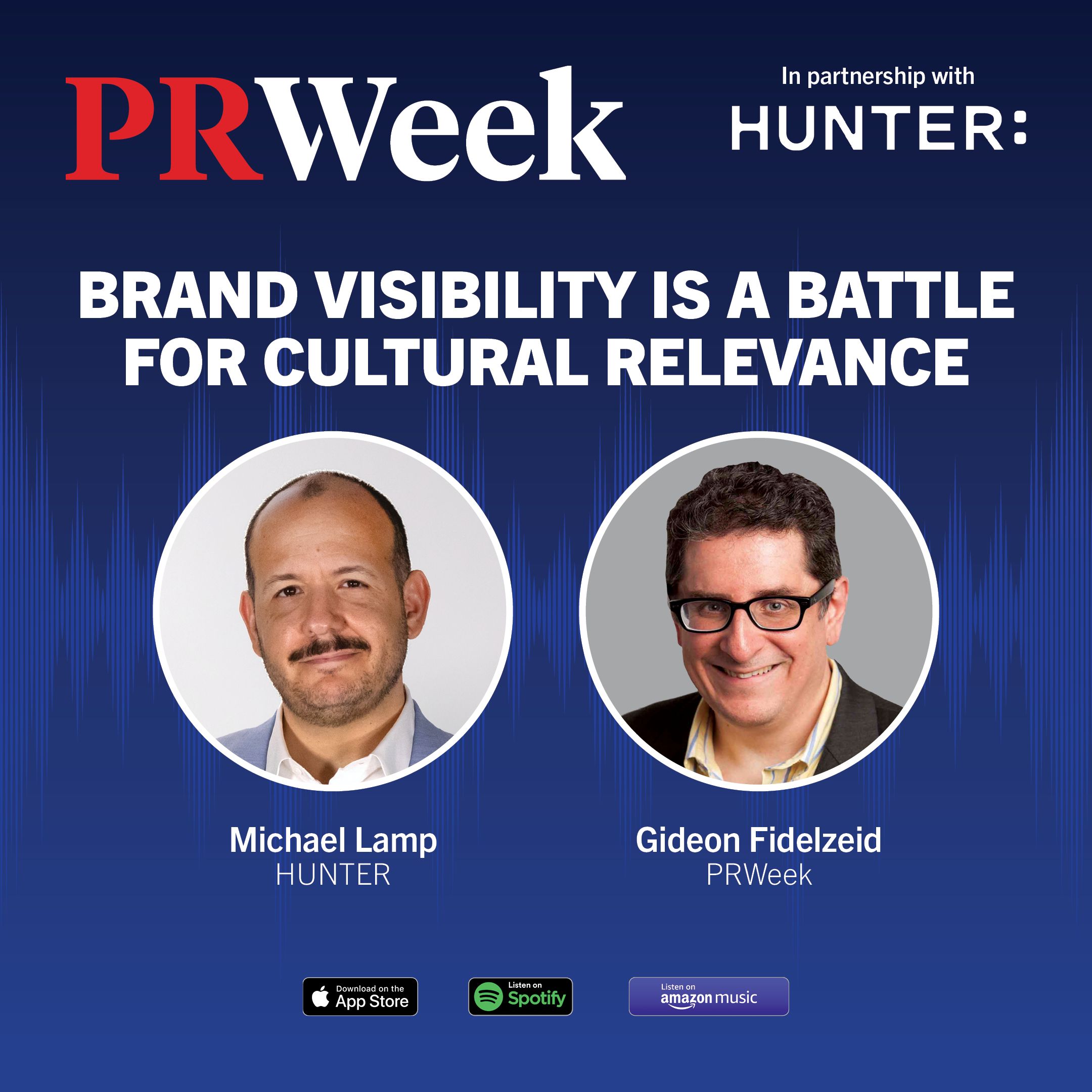
On this week's episode of The PR Week, Andrew Bowins of RestlessUrban joins us in the studio to chat about building a lifestyle brand for adults over 50 and how that demographic’s social media and AI usage is evolving. He also discusses why working with agencies and corporations continues to inform his current role.
In the biggest marketing and communications news of the week, Stephen Kehoe retiring from PepsiCo and public relations, new White House press secretary Katie Zacharia’s first press briefing, Kelly Clarkson’s spat with an artisanal shop in Brooklyn, and the continued fallout from the Cornell sexual abuse case.
And at the episode's outset, Steve Barrett speaks with PRWeek news editor Diana Bradley about her recent travels to South Korea, where luxury car brand Genesis invited press for a screening of their new short film.
Theme music provided by TRIPLE SCOOP MUSIC
Jaymes - First One
Follow us: @PRWeekUS
Hosted by Simplecast, an AdsWizz company. See pcm.adswizz.com for information about our collection and use of personal data for advertising.