 Ask ChatGPT
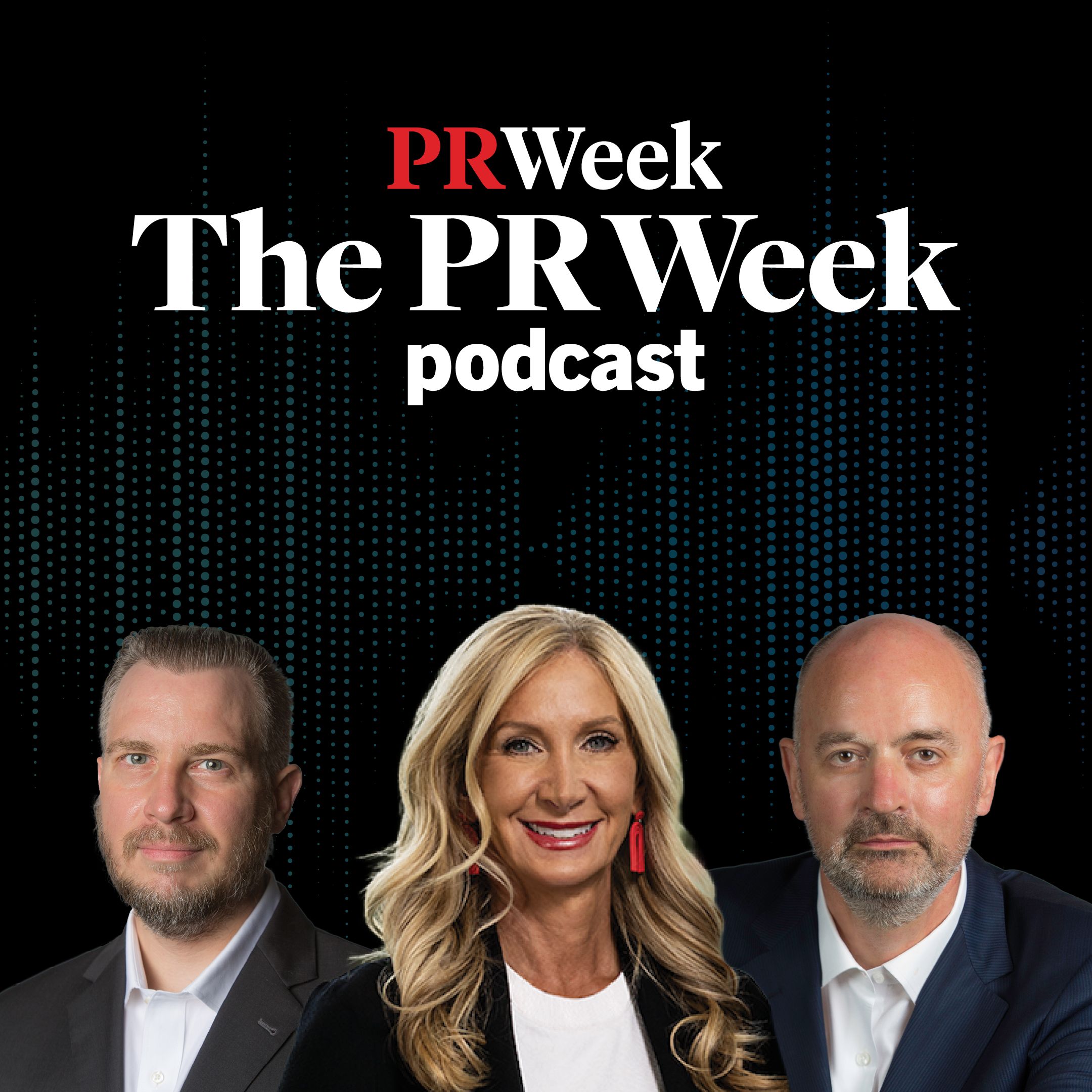


PR Week’s weekly PR/communications roundup plus a deep dive with Hotwire CEO Grant Toups on agency strategy, AI in comms, Cannes takeaways, and creator/influencer trends; followed by PR Week news (40 Under 40, Burson acquisition, and leadership moves at Twitch and American Airlines).
Grant Toups, global CEO of Hotwire (joined January; Hotwire operates across 12 countries and includes PR agency Hotwire plus marketing services agency ROI DNA). Julia Walker, PR Week co-host covering marketing/communications news and influencer beat.
Hotwire is positioned for a “golden age” of midsize agencies by combining global scale with agility and in-house technology (Hotwire AI Labs). AI should enable creative and business outcomes, not just efficiency. Influencers are becoming more businesslike, and influencer-brand relationships may be shifting toward more direct engagement.
Cannes case-study trends (AI’s role evolving; influencer work focused on building influence; measurement moving from “big numbers” like impressions to smaller, business-outcome metrics). Meta partnering with Kylie Jenner for AI glasses; Xfinity’s “Best in Class” series challenging six college creators for a $100,000 brand deal using AI-powered mobile products. News: PR Week 40 Under 40 (20th annual); Burson acquiring AI company Limbic (Decipher platform for GEO/influencer strategy across 60 markets); Twitch appointing Christine Kasis as CMO; American Airlines CCO Ron Defoe stepping down Q1 2027.
Written by AI. May contain mistakes.
Frank Washkuch and Julia Walker welcome listeners and introduce Grant Toups.
“I'm your host for this week, and I am joined by a terrific guest co-host is Julia Walker.”
Grant discusses his initial months as CEO and goals for the agency.
“look, you've been at Hotwire for about seven to eight months now.”
Grant explains the importance of adapting to the rapidly changing PR landscape.
“And so charting that course for the future, really leaning into getting out there on behalf of the agency in a more robust, more coordinated way around the world.”
Discussion on Hotwire's in-house technology capabilities and AI integration.
“So eighth day in Davos, what does day one look like for a new CEO?”
Grant reflects on the challenges traditional agencies face in adapting to change.
“And so there are certain things you wish you could do ahead of day one, but, you know, you can't.”
Grant shares insights and inspirations from the Cannes festival experience.
“about the big picture plans you have for Hotwire going forward?”
He discusses how AI's role in marketing campaigns has shifted over the years.
“We have innovation folks all around the world.”
Grant highlights trends in influencer marketing based on Cannes observations.
“challenger, looks different, exists different, delivers differently into the marketplace.”
Discussion on the significance of meaningful metrics in campaign success.
“Every company now needs to tell that AI story to their employees, to their customers, to their investors.”
Understanding the contrast between small and big metrics in PR measurement.
“And I think that is a really interesting kind of conceptual transition that may or may not be a trend, but jumped out at me as interesting.”
Discussion on the evolving role of PR agencies and their significance at Cannes.
“And so I think increasingly, as we have access to better data, as we have access to better technology that allows us to analyze bigger data sets.”
Exploring the evolving role of influencers in campaigns and PR strategies.
“It feels like it's getting more significant kind of year over year.”
The changing dynamics of brand and influencer relationships in marketing.
“Julia covers influencers and creators for us here at PR Week.”
Examining contrasting approaches by brands in selecting creators for campaigns.
“All of those sorts of things through to the negotiation and the contracting and the actual execution and engagement of those campaigns.”
Insights on how AI is utilized in daily operations and its benefits for teams.
“thoughts on a few different things related to AI.”
Learn how AI tools are being used to enhance creativity and productivity in PR.
“then provide those teams with outputs that they can then use to be creative, to be strategic, to think about and provide counsel and better guidance to clients.”
Discover how daily news briefings and financial management tools aid decision-making.
“What would you say is the one chat or the one prompt you use the most every day or throughout?”
Explore strategies for managing high email volumes effectively using AI.
“How about a personal assistant prompt or chat?”
Learn about the significance of PR Week's annual 40 Under 40 list and its impact.
“So, Julia, I'm going to ask you now for a little bit of a debriefing since Grant brought up this idea of a news debriefing on the biggest PR and communications news of the week.”
Gain insights into Burson's acquisition and leadership changes at major companies.
“Yes absolutely check that group out as well.”
Stay updated on upcoming PR Week events and important deadlines.
“out the news section of this week's podcast with two people moves.”

Get the gist, explore an idea or ask about something said.
 Claude
On The PR Week, what are the key points of this episode?
Searching your listeningAutomatic transcript. May contain errors.
0:01Introducing this week's episode is PR Week's outgoing summer intern, Karina Cole. On this week's episode, Grant Toups, global CEO of Hotwire. He talks about whether it's a golden age for small and medium agencies, what inspired him at Cannes this year from influencers to case studies, and how he and his team at Hotwire use AI. Plus, it's PR Week's Julia Walker with the biggest marketing and communication news of the week, such as PR Week's 40 Under 40, Burson's latest acquisition, and a communications leadership change at American Airlines.
0:42Hello, everybody, and welcome to the latest edition of the PR Week. That's PR Week's weekly podcast for everything going on in the worlds of PR and communications. My name is Frank Washkuch. I'm your host for this week, and I am joined by a terrific guest co-host is Julia Walker. And Julia, I believe it's your first PR Week podcast with me. Yes, I'm so excited. So it'll be a whole new experience. Yes. All right. So you'll be talking a little bit later about the biggest PR and communications news of the week. And we'll also check in a little bit about your influencer beat and how things are going there.
1:14But we have a terrific guest for you on this week's episode as well. That's Grant Toops. He's the global CEO of Hotwire. Grant, thanks for joining us all the way from San Francisco. Thank you so much for having me. It's a joy. Yeah. So tell us a little bit, look, you've been at Hotwire for about seven to eight months now. You're still a bit new to the role. Tell us and our listeners a little bit about what you've been up to since you started. Yeah, for sure. Yeah. So I joined in January and, you know, I think doing the thing most new CEOs do first and foremost was really digging into the business.
1:47You know, we have a lot of clients. We operate across 12 countries, a broad set of service offerings. And within the Hotwire portfolio, we have both the public relations communications agency, Hotwire, which most of your readers are probably familiar with. And we have ROI DNA, which is our marketing services agency. And so, you know, there's a relatively complex business there. So I spent a fair bit of time making an effort to really get to know it and then beginning to chart a pathway forward for what is an agency with a 25-year history of sort of telling the most complex, most innovative technology stories into a new world, a new future that is rapidly marked by, I think, a new reality, which is that every company is increasingly having to behave like a tech company.
2:36And so charting that course for the future, really leaning into getting out there on behalf of the agency in a more robust, more coordinated way around the world. I think on my eighth day, we went to Davos and launched a bunch of research about the agentic future of communications and organizations and have been running ever since. So eighth day in Davos, what does day one look like for a new CEO? What were the first things you got down to business on? You know, it's interesting. And maybe this is because I was recently a CTO, No, but I think the first thing I did was technology orientation, which, you know, is probably pretty standard, par for the course.
3:17But my first really series of actions was I met with each of our country MDs and CEOs. I think at the end of the day, right, it's first and foremost getting to know our people and the clients that we're working with. So first order of business was kind of getting really, really close to the leadership in the business. You know, the second thing is I probably spent the afternoon, my first afternoon meeting with our biggest clients around the world. Of course, there's always a bit of that respecting the organization you're leaving and the organization you're joining. And so there are certain things you wish you could do ahead of day one, but, you know, you can't.
3:53So that was really one of the first sets of things. And then, you know, it's going deeper, right? I have a voracious, I think, appetite for detail. uh maybe it's a history of working in in data uh but i wanted to go really deep on on client work and so then it rapidly became what are we really doing how are we going to market what does our pitch craft look like and sort of all of the the big core questions you would imagine that anybody joining a new agency would want to look at kind of first and foremost but for me it started with understanding the business understanding our people and understanding our clients pretty deeply.
4:30Yeah. So as you start mapping all of that out, what can you tell us about the big picture plans you have for Hotwire going forward? Yeah, it's a really, it's really, I think, fascinating time to be an organization like Hotwire. Because first and foremost, you know, we exist with the history that is the agency, right? So we have been, I think, a core part of the apparatus telling innovation stories for quarter century. We also are one of the few PR agencies that has a robust capability building our own technology. So Hotwire has an AI labs function. We have developers. We have innovation folks all around the world.
5:12And we build our own tech. So oftentimes, when you go to a PR agency and they bring you, say, a generative engine optimization solution, they're white labeling tech from someone else. We build our own. We have our own devs in-house. We manage those sorts of things. So we have a portfolio of technology that I think is in part a differentiator for us. And then sort of the third piece or the third ingredient that will take me to answering your question is, I really believe that we're in the sort of, let's say, second or third stage of what will be a very long period of golden age for the midsize agency, sort of the place where the challenger, looks different, exists different, delivers differently into the marketplace.
5:57And for us, that means being big enough to deliver on a meaningful, meaty global remit, to have a balance sheet that we can deploy to do things like build tech, but small enough to be agile and respond to really rapidly changing needs that clients have. And so we are really focused over the course of, let's say, my first seven months and then the next year, probably we'll call it 18 months of really redefining what we think the challenger PR agency needs to be in this new world order where technology is making every company, AI is making every company a technology company. Every company now needs to tell that AI story to their employees, to their customers, to their investors.
6:43You name a stakeholder group. And unfortunately for a lot of them, it's difficult to find agencies that know how to navigate that space, right? Most agencies aren't competing with the likes of Google and Apple to break through on tech stories. And so for us, that differentiation in the marketplace is really core to what we are building as we kind of expand Hotwire's market presence, if you will. Gotcha. We'll come back to that in a second. I think it's really interesting when you think about the tech PR sector, in a lot of ways, you think about some agencies that either don't exist anymore or exist under very different names or structures than they used to five or 10 years ago.
7:24There has been a lot of change in this space, whether it's been driven by AI or other business issues. Hotwire also comes out of that space. So what do you see as an advantage having both, you know, say a mix of legacy plus what you're talking about, building your own products, having a dev team in-house, all of that? Yeah, I mean, I think, and I imagine there's a lot we to talk about on the disruption in the agency sector, right, which a lot of consolidation, there's sort of, there's a lot going on there that I think has actually opened up a fairly profound series of opportunities for agencies that are capable of doing some of what I was just alluding to, right?
8:04Going in, being agile, delivering both AI consultancy and sort of strategy and execution work within the comm space. You know, one of the things that I sort of do on the side, side gig, if you will, is I've been involved with PAGE for a long time, and I convene one of the PAGE Future Leaders Experience sessions on the technological future of communications. And I think one of the challenges that a lot of agencies and many of the ones that you sort of referenced there or referred to have really had is the business has always resisted change for a variety of kind of foundational reasons, the time and materials utilization model, the way that we typically think about outputs as a measure of success instead of business outcomes as a measure of success.
8:54There are a number of these kind of fundamental things that for a lot of those really large agencies or the ones with perhaps the longer tenures, I'm talking about those that are pushing 100 years old, those are really fundamentally difficult things to change in a way that is even profoundly more significant than it is for us. And it's difficult for, I think, every agency. But for us, part of what I think is the secret sauce here and that differentiates us is, in some respects, we are willing to adapt much more rapidly. We behave a little bit more like a technology company in the way that we do our work.
9:35We are willing to experiment more. We are willing to take chances, to take risks, to build our own tech, knowing that it may not work. And I think that ethos that's borrowed, that's learned from technology clients over the course of that quarter century and then lives in the work that we do now has really differentiated us. In some respects, the last six months for me or seven months for me has in part been about realizing that we've got this incredibly compelling story to tell that we haven't really been actively telling. And it's as much about getting out there and talking about it as it is changing it, if that makes sense.
10:15Yeah, that does make sense. I want to come back to the tech in a little bit, but we do have to touch base about Can. Yeah. We were chatting there for a bit. What would you say were your biggest learnings from the festival this year? What specifically inspired you? I think we were talking about case studies for a bit while we were there. But anything that really, you know, was stuck in your head in a good way for the flight home. Yeah, it's interesting, right? Like whenever I have a conversation about Cannes, I think that the first thing that I always want to talk about is the basement of the Palais.
10:47I think that experience where you can walk through and actually look at the work is something that a lot of folks overlook. And so for anybody who might be going for the first time. So let me just stop you there for a second, too. for our listeners that haven't been there. In the Palais, in the basement, it's where all the case studies are lined up and it's very visually friendly. Yeah, so essentially what you can imagine is a bunch of 11 by 17, four color printed broadsheets hung up on walls by category. So there's a public relations category, there's social and influencer category, there's creative data categories.
11:21And of course, there are many others across earned media and paid and all kinds of other things. And each one of those case studies is essentially an agency or a company's submission for an award. And they articulate the case. So what the business challenge they were trying to solve was, what they did, what the outcomes were, and sort of the measures of success. And it is maybe the most inspiring 5 ,000 square feet of space I think I ever have the pleasure of visiting. It's also air conditioned. that it is. And it's extraordinarily hot at this time of year. But I think that moment, right, that when you walk around, there are so many kind of little nuggets that will stick out in your mind.
12:10And so, of course, there was some incredible case study work, right? Look, my old friends at Burson, I think, won a lot on some of their work, really, really well deserved. It was an extraordinary set of campaigns. But there was really remarkable work from a lot of agencies and a lot of companies. But when I dial it back to what I really took away, I think there were kind of three things that really struck me. One was about the way that AI had evolved in the role it played in the cases this year versus last year versus the year before. So I think this year, it really became about the ways that AI enabled what the work that was trying to happen.
12:50Whereas last year, it was really all about AI. sort of AI was the centerpiece of the case. And I think that evolution tracks what we are certainly seeing clients ask for, what we're seeing briefs demand from a competitive perspective. So that evolution of AI is one thing. I think what I'm hopeful about seeing next year is even more examples of the places where AI made a creative activation or creative concept possible, as opposed to a lot of the non-can conversations we're having about AI, which are focused on efficiency and sort of productivity gains, which is not a bad thing, but which is scratching the surface of what is possible, I think, when we think about AI.
13:33So that's kind of bucket one. I think bucket two, interestingly, is a little bit about Julia's beat, which we'll talk about a little bit later, but the evolution of how influencers and influence showed up in the case studies, right? There were a lot of examples of cases that focused on almost finding people who met a brand or matched a brand's ethos or an intention of a campaign, and then helping them build influence as opposed to paying for pre-existing influence. And I think that is a really interesting kind of conceptual transition that may or may not be a trend, but jumped out at me as interesting.
14:13And then I think the third was really about measurement. And there was this really stark difference between what I'm going to call like the big numbers and the little numbers. There were some case studies that were clearly written about the business impact they were trying to drive. And they were unafraid of this sort of number being small. If what you're talking about is some critical business issue that you're trying to address or an opportunity, then it kind of doesn't matter if the number is small. And for me, seeing more of those is really compelling. In contrast, there are also a lot that were like five and a half billion impressions.
14:52And I still don't know what that means. I don't know if that's good or not. I don't know if that drives the needle on business impact or not. And so I think increasingly, as we have access to better data, as we have access to better technology that allows us to analyze bigger data sets. I think we really have to push to be more like those small number measurement approaches. What are the business outcomes we're trying to drive? And did we actually drive them? And seeing more of that in CAN was really exciting for me. Yeah, yeah. And I think talking to people before the winners were announced, I think something they all wanted to see was exactly what you're talking about.
15:30How is technology and creativity used to drive actual business results? Um, so yeah, I think you hit the nail on the head there. Um, what were the other things that you brought back from Cannes? What else really inspired you, uh, this summer? Yeah. I mean, I think there, I also had the great opportunity after Cannes to visit some of our other operations. So I, I spent some time in our Italian business and in our Spanish business. And I think, you know, there's some really interesting, really exciting stuff happening in Southern Europe from an innovation perspective. I think there's a lot of really cool sort of, I'm going to call it like scale up stage companies operating out of Southern Europe right now that are doing some really, really interesting stuff.
16:13And I think that will represent not only opportunities for agencies like us, but, you know, that we're going to start to see more of an evolution of the European Commission's take on some of this stuff in the EU and a bigger role of some of the Southern European countries in that, which is really exciting because I think the more voices and the more inputs you have around some of these questions, the more dynamic the environment is going to be and the more space there will be for companies of all types to kind of tell these stories more proactively. But specifically, I think to look at CAN, look, I love to see PR agencies winning in our category.
16:49That's historically, you know, been a challenge. A lot of times you see, yeah, a lot of times you see ad agencies doing it. That's always great. I had the pleasure of doing a number of events with clients on site. And I think increasingly seeing chief communicators and members of the communication staff really actively represented, participating, speaking, not just there to staff a CEO or a CMO, but there as an expert in the profession in their own right, was really, really compelling and different. It feels like it's getting more significant kind of year over year. And, you know, I think maybe the not so wonderful thing is there is, it seems, a bigger presence increasingly being held by, let's say, some of the non-creative companies.
17:40And I think there's always a certain fear that exists as you get more, I don't know, commoditized kind of organizations that are just there to do deals that you will get fewer, you'll get less content that's about creative or creativity or innovation or kind of how we evolve the professions of marketing and communications. And, you know, I think everybody who is a practitioner is paying attention to that. Time will tell, right, if that becomes a trend that continues or if it kind of continues or if it balances itself out, I guess. Yeah. So to mix a few different topics here, influencers were absolutely everywhere I can this year.
18:21Julia covers influencers and creators for us here at PR Week. What do you see as the bigger trends in that space, Grant, where I'm sure you are working with just a broad range of different types of folks that your clients want to see integrated into campaigns now or even maybe the centerpiece of campaigns? Yeah, I think it's really interesting. I think increasingly we're seeing influencers further evolve their approach, right? I think increasingly they're operating as much more sophisticated businesses in and of their own rights, which is really quite exciting. You know, these are people with a compelling product to sell.
19:02And in some respects, I really appreciate and respect as that gets more mature and sophisticated. I think that ends up being good for our clients in general. I think the second thing is, you know, when we when we look at, I guess, part of what I would say, and I don't know that this is a trend yet as much as it is something I'm watching and kind of be curious what Julia thinks, but is I think we're going to start to see a divergence between the kind of content, between the ways that we can engage with influencers as an agency or as brands, wherein there are sort of almost multiple tiers of engagement opportunities based on whether that content is created organically or using AI.
19:40And I think that is going to be really interesting, the sort of idea that there's like a custom premium version of a creator engagement that includes no AI content generation where everything is sort of custom and generated by the influencer or the creator. I think the other thing which is interesting is there has historically been and this is maybe my maybe this is, you know, coming from the lenses and the angles that I'm coming from. And so I'm open to the challenge. But historically, there's always felt like there's been kind of a layer between the influencer themselves and the brand. And I felt like it can this year.
20:17You didn't see so much of that. You saw a lot of influencers in sort of the same physical spaces and places engaging directly with CMOs and brand representatives in a way that I don't recall seeing really in other places. Maybe at South by a little bit last year, I wasn't there, but looking at some of the reporting, maybe it existed there. But that felt different. It felt like there was more of a direct relationship being formed, which I think is potentially an interesting observation for agencies like ours who, you know, oftentimes are helping our clients vet those influencers, right? Do they meet the ethos and the standards and the ethics?
20:59And we're looking back at historical content. And is there a risk profile here? All of those sorts of things through to the negotiation and the contracting and the actual execution and engagement of those campaigns. And so I think, you know, that potentially isn't I don't know if it's a validated observation yet, but it's an observation I'm paying attention to and thinking about because it potentially suggests an evolution of that relationship that we need to be paying attention to. Grant, I think you saw me wave to Julia there. So, Julia, I want to get your thoughts on what Grant just said, too.
21:30Yeah, there's a few things that I do agree with you that we should keep an eye on in terms of creator economy trends. First of all, what stood out to me, what you said earlier in the interview about brands choosing a creator and then building them up If the creator makes sense with the brand rather than picking someone who has millions of followers randomly and working with them We saw that demonstrated in the past two weeks with two different cases A few weeks ago, Meta partnered with Kylie Jenner to promote its AI glasses after a lot of controversy of privacy concerns with those glasses that film in public places, not always getting consent from people.
22:12and their reasoning for partnering with Kylie Jenner was working with a woman, you know, a woman in a big position of power with a big female audience to promote the safety of the glasses and have more female silhouettes or feminine silhouettes of them. And the response to that wasn't very good for Meta because it felt sort of random to her followers as she's never really promoted a product like that before. And there was another use case. In contrast, Xfinity this week launched a social series based on a reality television show. And it's called Best in Class. And it challenges six college content creators to compete over the course of seven episodes to win a$100 ,000 brand deal with Xfinity.
23:03And the competitions are all about using Xfinity's AI-powered mobile products. and I spoke with Xfinity about that and I asked why did you choose to you know challenge these six creators to compete to work with you rather than just tapping one for this campaign and they had a very good explanation about it the VP of brand marketing Dustin Hayes explained that they were on the hunt to find the next up-and-coming content creators and that they were looking to help provide them with a chance to build real platform and a brand deal and give them a career defining moment. And it's a little early to see what the public response is yet since that launched this week.
23:46But I do think those two takes are very interesting to tech brands working with creators in different ways, sort of testing out what the response is. I can kind of predict that Xfinity's route might get a better response, sort of like what you were saying and, you know, be part of an up and coming trend. We'll come back to you on this. Grant, I wanted to get your thoughts on a few different things related to AI. I mean, you're obviously, I think you're a bit of an AI buff as well for in terms of how you use it and how your firm uses it as well. But how are you taking advantage of the technology using a day to day and your workflow personally as a CEO?
24:29But how are you also look, we hear from people all the time. The CEO has to be driving this or the rank and file is not going to get it. And so how are you using it in your workflow day to day? And how are you encouraging your teams to build this into everything they do all the time? Yeah, I mean, I couldn't agree more. I think at the end of the day, right, part of what we're talking about here is fundamentally transforming the core of the craft, which is the steps we take to do the work we do. And that doesn't happen, you know, like the if you build it, they will come field of dreams like that's not how this works.
25:09And so for us and for me personally, I would say I use it extensively. We are an anthropic cloud shop across all of Hotwire and ROI DNA. So we are currently going through a global deployment of that. I think – don't quote me on this, but I think the last couple of months I've either been the heaviest or the second heaviest user inside the company. So like as a general rule, I think I'm modeling that behavior in part because what are the things that a CEO has to do on any given day? I mean for me, most days I'm ingesting an extraordinary amount of information rather rapidly, attempting to do research on the back of that information and then make decisions.
25:52That's kind of my job most days. And so AI plays an extraordinarily helpful role for me in that. And then I use it for a lot of administrative tasks and so on. But I actually spend quite a lot of time in my AI usage as part of our internal AI steering committee building skills. So when we think about how we're using AI as an agency, as I mentioned, we're a clawed shop. And we are currently in the process of building a number of skills based on inputs from all of our employees around the world that are designed to be sort of best in class capabilities. So this is things like how we do desk research, how we do prospecting, how we think about lead generation and content creation, pitch responses, like all kinds of things, but that are all built to be trained on the sort of combination of all of the knowledge of the agency separating out independent client information.
26:52So essentially we have like agency brains, if you will, and then we have client brains that are being built out, that are walled gardens that exist where a client's information is all protected and sort of separated from teams that don't – from folks who don't work on their teams and from other client information. And within that, I actually spend quite a lot of time building those skills. Now that in part, Frank, is because as you mentioned, I am a bit of a buff or a nerd about this stuff. I wasn't going to call you a nerd. I mean, you wouldn't be the first today, so no offense taken. But I think for us, part of what we are doing is really focusing on ways that we can use AI to make it easier for our people to be better at what they do and to enjoy what they do more.
27:41So that means automating those things that are important, but perhaps low value, repetitive rote times of tasks, and then enabling people to spend more time thinking. So we use it quite extensively for data analysis, for large data set analysis. So instead of having to have a bunch of people on an account team, say, gathering information, scoring information, trying to do analysis that might not be inside of their core skill set, we use AI to help do all of that analysis and then provide those teams with outputs that they can then use to be creative, to be strategic, to think about and provide counsel and better guidance to clients.
28:24And so for us, we're really focused on not trying to send it out to everybody and let a thousand flowers broom. We are instead focused on saying, how can we make everybody who works for us's lives better, easier, more productive, and more creative? And also up the level of the deliverables that we're generating for clients at any given point in time. We have a bunch of controls in place, all the IT, all the security, all that stuff you would expect. We talk with clients actively about how we use these tools on their behalf. And there's no such thing as a final deliverable that ever goes from an AI to a client full stop.
29:00These are ingredient efforts, but we are not, you know, we are very, very careful and very thoughtful about the role they play in the generation of sort of IP that we create for clients. And that role is quite tightly controlled. Yeah. What would you say is the one chat or the one prompt you use the most every day or throughout? You know what it is? It's almost definitely – okay, I'm going to give you two. The first is we operate in 12 countries. I try to do a news debriefing every morning for all 12 countries for all of our clients. And so I have a prompt that I use that is about that, that gathers all the news from all the places I want it to come from, translates those that are not in English, and then prioritizes it for me.
29:45So that is one that's kind of an every morning helps me get up to speed. The second is we have connected all of our financial information in the agency. So this is kind of the sort of the brain of our finances, timesheets, all the client information about finances, all of our. And it is a sort of brain that myself and our chief operating officer and our country CEOs have access to for their businesses. And that, for me, allows me to get really deep on any problem or any opportunity or anything I want to understand really, really quickly by myself. And so that is the other place. It's not a single prompt so much as it is a brain.
30:28But I go there dozens of times a day and have sort of conversations that just help me understand what's really going on without having to bring together, you know, five people in a meeting on short notice, which can be challenging around the world. How about a personal assistant prompt or chat? Well, I have an extraordinary. Actual assistant. who helps me manage a lot of that stuff. But yeah, I do. I do. It's interesting. Fair point. I use it a lot to help me manage my inbox, which you might imagine, there are several thousand emails that come in every day and that can be quite a challenge. And I take that very seriously.
31:15I really try quite hard to respond to anything I get from an employee, certainly a client certainly i sit on the the board of the university of southern california center for pr so i i often get outreach from students and from researchers and so i i do try quite hard to respond to everything that i get in reasonably short order and ai really does help me do that helps me prioritize um my inbox in a way that makes something that would probably be impossible, possible, you know, within 36 or 48 hours of a response timeline. Fair enough. And fair play to the humans out there. And I can testify that your emails to me come back really quick.
31:58So the AI is working there. There you go. Look at that. So, Julia, I'm going to ask you now for a little bit of a debriefing since Grant brought up this idea of a news debriefing on the biggest PR and communications news of the week. So tell us a little bit about PR week's 40 under 40 list for 2026. I just want to go to bat for it saying it's a great list. And by the way, we put a lot of thought into who gets on the list. And unfortunately, you know, the people that don't, I can tell you it is just, it is such a tough list to make. I mean, we could honestly do an 80 under 40 and have a lot of really tremendously worthy individuals and great executives with great, great, great resumes on there.
32:41So it is a really tough list to narrow down. It takes several meetings and a lot of chatter back and forth. So if you made the list, congratulations. You truly are one of the best 40 young executives in the industry because you ran the gauntlet through several editors who were very skeptical of every single one. So Julia, tell us a little bit about that. Yeah, this, I might be biased, but this to me is the biggest PR news of the week. PR Week revealed its 20th annual 40 under 40 list on Tuesday. We spotlighted 40 future standout PR and comms leaders shaping the industry. And in the release, Frank said, if you want to meet the top PR executives of upcoming decades, our 40 under 40 list is for sure the place to look.
33:29By the way, that is evidence-based because we pulled up recently, it's our 20th 40 under 40 ever. And we pulled up the 2007 list and it is full of people who became CEOs, who became managing directors for countries, you name it, it's on there. So legitimately, you're going to see these people in a lot of top positions in a few years. and we're going to be releasing full profiles of each of them including PR pros from the San Francisco 49ers and CNN Worldwide in September and we'll be celebrating this year's class with a gala event on October 21st in New York City's Edison Ballroom and for the third year PR week teamed up with the Museum of Public Relations to honor the winners of Next Gen Awards at the 40 Under 40 event so make sure to get your tickets soon.
34:20Yes absolutely check that group out as well. So, Julia, tell us a little bit about Burson's latest acquisition. Yeah, news this week started strong with Burson's acquisition of AI company Limbic. This is the latest move for Burson's tech restructuring with the firm reorganizing its tech agency Axecom's global operations to fall under Burson management earlier this year. Limbic's behind Burson's predictive intelligence platform Decipher, which powers the firm's GEO and influencer strategy work and provides predictive insight across 60 markets. Limbic co-founders Zach Switzky and Josh Levin will join Burson as global head of innovation, AI platforms and products and global head of innovation clients and growth respectively.
35:07Okay and let's just close out the news section of this week's podcast with two people moves. There's a new marketing and communications leader at Twitch. And there is a change in the chief communications officer role at American Airlines. Yes, we have new people moves from both of them. For American Airlines, after an 11-year tenure with the company and five years serving as chief comms officer, Ron Defoe is stepping down at the start of Q1 2027. And for Twitch, they announced a leadership appointment on Monday, appointing Christine Kasis as CMO to lead both of its marketing and comms teams. Christine's appointment comes after an eight-month vacancy of both its comms and marketing leadership roles.
35:55So it's big news for Twitch. All right, Julia, thank you very much for that. A few public service announcements as we close out this week's episode. The PR Week U.S. Awards 2027 are open for entries, and that deadline will be here before you know it on September 26th. The PR Week Conference is October 15th in Chicago. PR Week's 40 Under 40 events is October 21st in New York City. And the AI Deciphered event with our sister Haymarket Magazine titles is November 12th in New York City. You can get tickets for all three on PRWeek.com. And don't forget, we'll have a big announcement coming soon about the PR Week Hall of Fame.
36:32That event will be November 19th in New York City, so look for more information coming soon there. And that's all we have time for on this week's episode of the PR Week. We will see you again next week.
37:07On March 30th, MMM Transform takes over Philadelphia's National Constitution Center for a bigger, bolder healthcare marketing festival packed with bold ideas, interactive experiences, live demos, and candid conversations. And here's the best part. In-house pharma marketers can attend for free. MMM Transform, March 30th in Philly. Register now at MMMTransform.com.
The latest guest on The PR Week is Grant Toups, global CEO of Hotwire.
Toups talks about his first days and weeks on the job after stepping into Hotwire’s top role more than six months ago, as well as how his agency uses AI and works with influencers and creators. He also chats about his inspirations from the Cannes Lions International Festival of Creativity.
Plus, PRWeek’s Julia Walker discusses the biggest PR and communications news of the week, including PRWeek’s 2026 40 Under 40 list, Burson’s acquisition of AI company Limbik, a change at the top of American Airlines’ communications team and much more.
Theme music provided by TRIPLE SCOOP MUSIC
Jaymes - First One
Follow us: @PRWeekUS
Hosted by Simplecast, an AdsWizz company. See pcm.adswizz.com for information about our collection and use of personal data for advertising.