 Ask ChatGPT
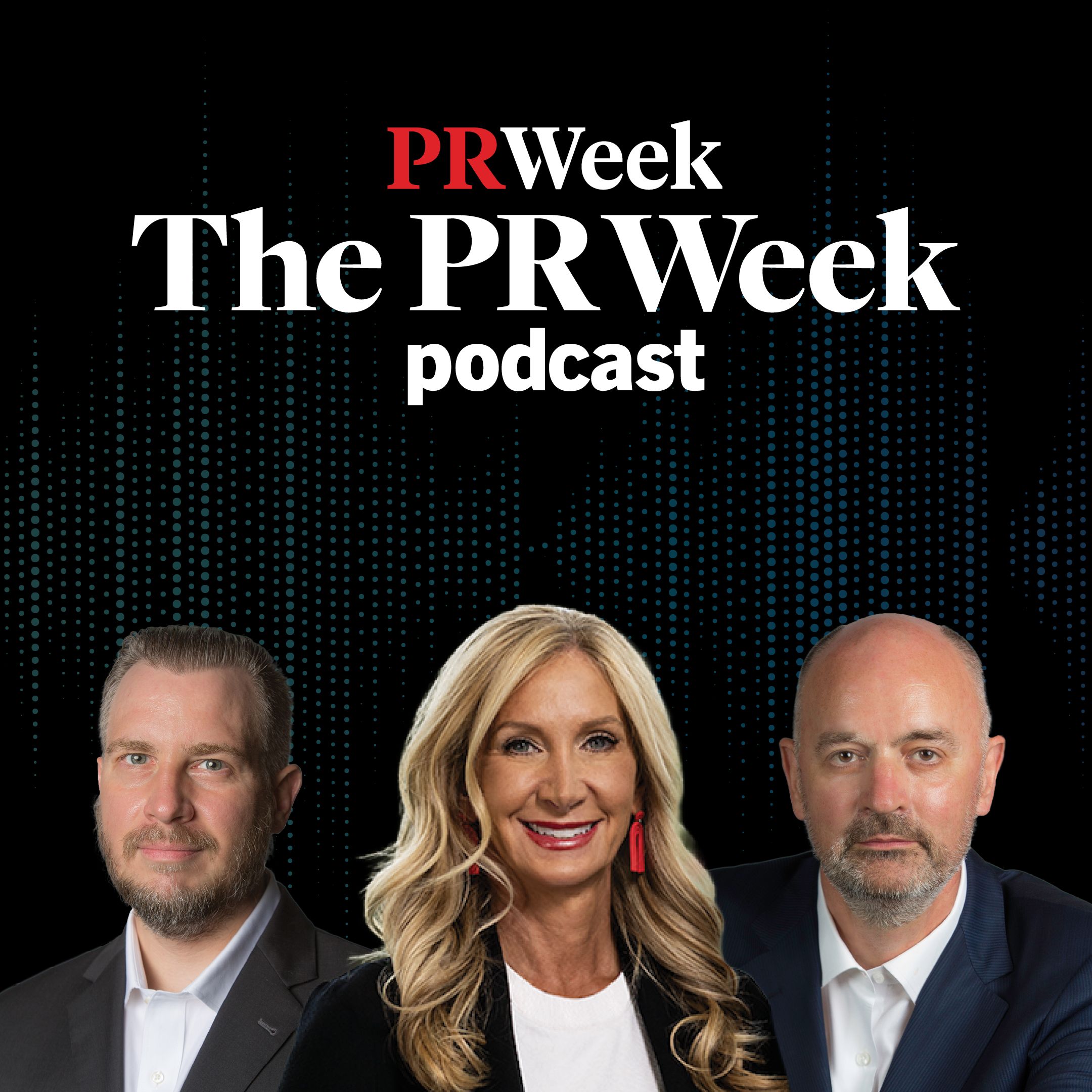


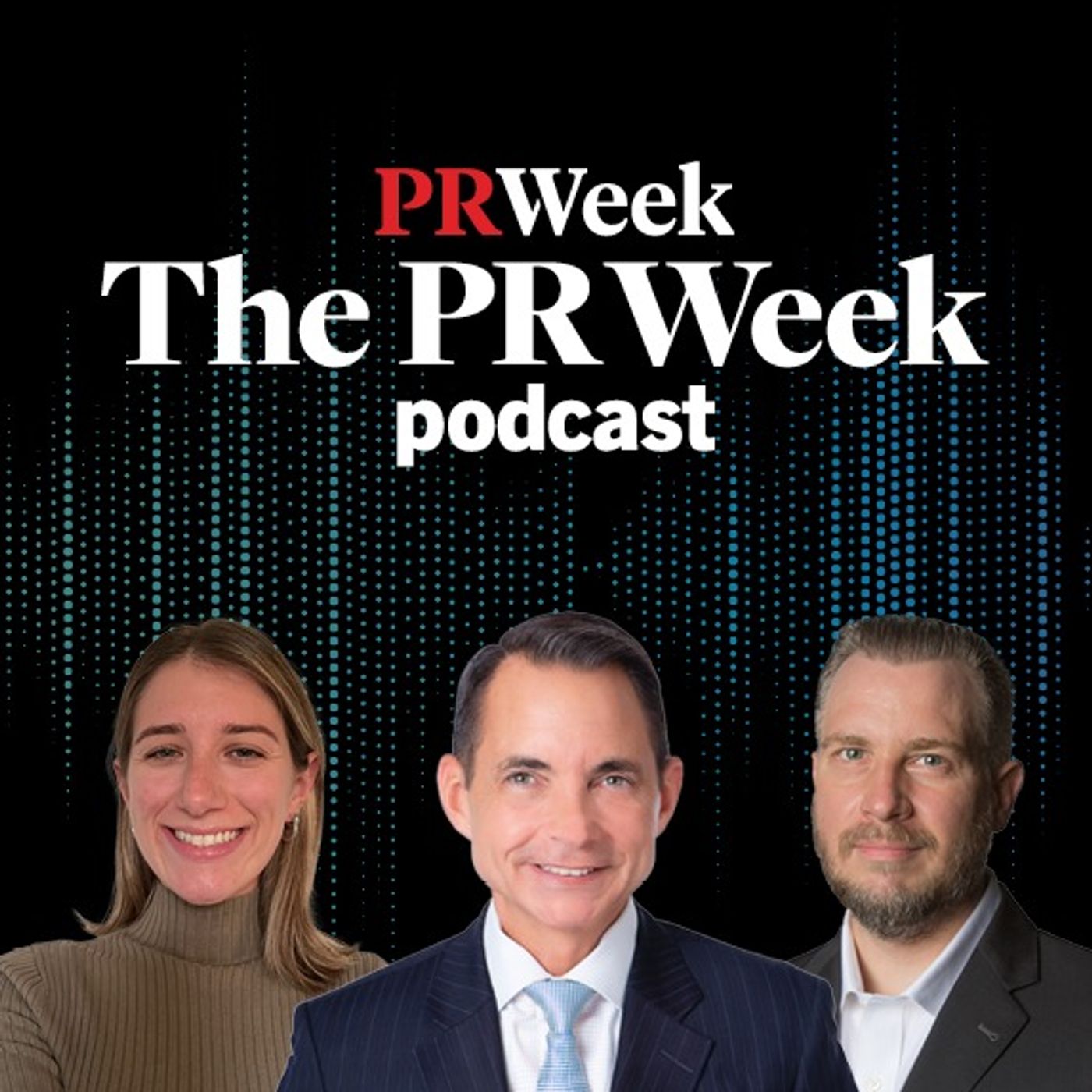
PR Week podcast episode featuring New York Life Chief Communications Officer Paul Gennaro on scaling AI in corporate communications, plus PR industry news (Hall of Fame, agency/brand moves, and The Athletic’s football advent calendar).
Paul Gennaro is Senior Vice President and Chief Communications Officer at New York Life. He previously held top communications roles across B2B/B2C organizations (including Voya Financial and AECOM). He served in the U.S. Navy as a public affairs officer, including submarine-based Pearl Harbor communications.
New York Life’s AI rollout is “behind the firewall” with training and peer-to-peer demos; 80% of his 70-person comms team reports increased engagement, and more than half save an hour+ daily. He built a “virtual chief of staff” and tested a Copilot crisis GPT that drafts messaging and alerts designated staff.
Copilot/ChatGPT/Claude/Canva tools; multi-agent workflow plans; DisabilityIn board work (employment inclusion for people with disabilities; remote work and accessibility/AI as enablers).
Paul Gennaro (main guest). Co-hosts: Frank Washkuch and Jess Ruderman. News references include PR Week Hall of Fame inductees and Burson’s Molly Rowena; Vaseline’s Destini Legron; The Athletic’s Advantage calendar partners (MSQ Sports and Entertainment).
Written by AI. May contain mistakes.
Introducing Paul Gennaro, discussing his background and current role.
“Hello, everyone, and welcome to the latest edition of the PR Week.”
Paul discusses New York Life's recent successes and focus on innovation.
“So he is very kindly taking the time to call in from there.”
Exploring how the communications organization has evolved under Paul.
“So you mentioned it's been a really successful couple of years for New York life.”
Paul shares insights on implementing AI tools within the team.
“We scored the highest in the company for all the AI questions, for all the forward looking strategy questions.”
Discussing the importance of training and adapting to new AI tools.
“And that's really gotten people excited because learning from colleagues.”
How AI is influencing the hiring process for communications roles.
“Within our AI survey, we started to ask, what type of training would you like?”
Paul discusses his work with Disability In and its mission.
“So I think it's really important to have that as we've talked about it with our folks.”
Learn about the importance of disability inclusion in both customer service and employment.
“we want to focus on disability inclusion in terms of how we serve our customers and clients, and then also from an employee standpoint.”
Explore how remote work has changed employment opportunities for individuals with disabilities.
“Because I remember there being a lot of talk a couple of years ago of, look, remote work is everywhere now.”
Discover Paul Gennaro's career path from the Navy to the private sector.
“I just want to go a little bit back into your career history.”
A roundup of the biggest marketing communications news of the week.
“It is a great list of people who are not just trailblazers, but I think people that you have seen change the industry over the past decade or two and help evolve it into what it is today.”

Get the gist, explore an idea or ask about something said.
 Claude
On The PR Week, what are the key points of this episode?
Searching your listeningAutomatic transcript. May contain errors.
0:00On this week's podcast, we speak with New York Life Senior Vice President and Chief Communications Officer Paul Gennaro to talk about scaling AI tools, how modern corporate comms is rapidly evolving inside one of the country's largest financial institutions, and how his early military career in the Navy prepared him for executive PR leadership. And in the news, the 14th annual class of inductees into the PRB Hall of Fame is officially unveiled. Senior people moves continue as Burson hires a new chief people officer for the Americas. Vaseline taps a popular online creator as its new head of social and engagement, while The Athletic drops an advent calendar built specifically for football fans.
0:38All this and more coming up.
0:49Hello, everyone, and welcome to the latest edition of the PR Week. That's PR Week's weekly podcast for everything going on in the worlds of PR and communications. My name is Frank Washkuch. I'm your host for this week, and I'm joined by a great co-host, Jess Ruderman. Jess, how are you today? I'm doing good. A little chilly in the office, but sweaty outside. Well, it's a little chilly in the office, but it is not chilly where our guest is this week, and we can see it. unfortunately our audio only listeners can't see it, but we can see the beach in the background as we're talking to Paul Gennaro, Senior Vice President and Chief Communications Officer at New York Life, who is at, correct me if I'm wrong, Cape May, Paul.
1:28Yes, sir. I'm in Cape May with my family. All right. So he is very kindly taking the time to call in from there. Jess, you're from New Jersey. Cape May, rated as a beach town. Rated as a beach town. I actually, ironically, from being from the Jersey Shore. I'm more up a little bit central Jersey. So I think Belmar area, a little bit closer to Seaside. Kate may have only been to a few times and mostly in the off season, but it is very gorgeous and it is a very nice beach town. Well, Paul, you have us craving the beach just by seeing you on camera here. So to start out, tell us a little bit about like you've had a varied career.
2:01You've served in top communications roles at a lot of organizations that are very familiar to both B2B and B2C audiences. Tell us a little bit about what you are up to currently at New York Life. What are the things you're working on and your team is working on? Sure. Delighted to have that discussion. So it's a really awesome time to be in New York Life. If you think about it in terms of it's a company that's been around 181 years, and the last three years have been the most successful three-year run in the history of the company. Whatever you measure it, the company is doing extraordinarily well from a revenue growth standpoint.
2:38We're number 62 on the Fortune 500 with$73 billion in revenue. From an earnings standpoint, from the dividends that we pay out because we're a mutual company to our policy owners, the highest dividends paid out over a three-year period as well. We're doing a lot of cool things to enable us to better serve our policy owners with a big focus on innovation. And that really ties into AI, which I know is one of the things that you want to discuss and really leveraging it in a way for our people to coexist with AI, to leverage it, to better serve, whether it's our colleagues within the firm or our policy owners.
3:13So you mentioned it's been a really successful couple of years for New York life. How would you say that the comms organization has changed or that you've changed it since you've joined up? Yeah, so I joined about three years ago, it was September of 23, and joined the organization. Again, it's an incredible organization. Talked to each of the business and functional leaders, which I've done at past places where I've joined, right, to understand the landscape. What are the business challenges? What are the goals that they're looking to achieve from a communication standpoint? What's working? What's not?
3:44And then are there opportunities to improve the operating model, which we did, and then start to advance the strategies? And again, it's been an exciting period because at the same time we're doing that, we're also implementing and advancing AI. We were also advancing McKinsey's continuous improvement methodology. So think in terms of if you're going to implement AI, it's probably good if your processes are fixed first. So we were able to do that at the same time we're rolling out AI. And that's been really incredible. We do quarterly AI surveys. So if you look at our employees, the 70 members of the team, 80 percent of the team says they're more engaged as a result of AI and the things we've been working on.
4:23We do an annual employee engagement survey. We scored the highest in the company for all the AI questions, for all the forward looking strategy questions. So from a team standpoint, there's a lot of really cool things going on. Yeah, you mentioned you have a 70 member team. Let's talk a little bit more about AI and how are you using it. Everybody is talking about how they're implementing it into workflows right now. What are some lessons learned that you can give us from your own experience about maybe things your organization did right or maybe some things you had to take a second crack at it to get it right?
4:56Sure. So we were really fortunate. We connected with a woman named Samantha Stark, who I think you all know. So Sam Stark runs Fusion Communications, and she's been in corporate communications and public relations her entire career, then became an AI expert. So she sits at that intersection. We started working with SAM Q4 of 24, and we did kind of a proof of concept for that quarter, and really we're just blown away by what the possibilities were. So then we've been working with SAM ever since. We initially had AI tools we used outside of the firewall, well, not inputting any competitive information, customer data, competitive intelligence, anything private, but just general things that we were working on.
5:37We were able to get Copilot behind the firewall, followed by ChatGPT, followed by Claude, and then now we have Canva as well. So it's been really great seeing the team adoption, some of the really cool GPTs and Claude projects that our team members have created that enable us to really improve a lot of the things that we normally do. If you ask members of our team, how many hours a day are you able to save? More than half the team is saving an hour or more a day as a result of AI. If you look at the week, it's more than, say, 10 hours per week. Again, more than half of the team able to take on one or more projects a month, again, as a result of AI.
6:17So the team's really embraced it. And what you've seen is, as we've made the tools available and then an ongoing stream of training, you've seen emerge kind of these champions of AI, these power users. And that's really gotten people excited because learning from colleagues. The virtual chief of staff that I built, I can talk about that. That's been really cool. We developed a crisis, and this was actually through Copilot, a crisis GPT, where we were able to take a Copilot agent, where we were able to take our news clip service connected to this Copilot agent. And if anything comes up that might be a crisis, fortunately, we haven't had any of those, but we tested it.
6:58It will not only alert three designated individuals on our team, but because we've got our crisis communications toolkit uploaded, it alerts you. It gives you all the draft messaging, whether it's talking points, FAQ, internal memo, all those tools. So that's been really cool. We've launched five AI Blue Sky initiatives, happy to talk more about. But we've really done some cool things that have engaged the team. And now what we're working on is building out a multi-agent workflow where you might have an orchestrator agent at the top level, then four or five domain level agents, and then below that, the specialist.
7:34So it's a really, really exciting time. Yeah. And how do you – you mentioned the importance of training before, and I would second that just from my own personal experience. But how do you make sure that people who are new to your organization are getting up to speed as quickly as possible? Because, look, you're describing a range of agents that you're working with. That's a lot of technology. And a lot of people in comms are famously word people and not necessarily tech people. And so how do you make sure that the people on your team are where you need them to be on this all the time? And I'll throw another wrench in there, too, especially when the models are changing as quickly and updating as quickly as they are right now.
8:18I mean, it's very, very difficult to keep up with, even if you're following this stuff every day. Yeah, no, that's a great point. So we did a survey. Within our AI survey, we started to ask, what type of training would you like? And the number one request was peer-to-peer training. So if I'm working with you, Frank, and you created a really cool GPT for executive communications or for media relations, can you do a demo for the rest of the team so we can pick up on that? So we heard that loud and clear. We also heard, to your point, is the models are advancing, and Claude might come out with something really cool this week and chat GPT the next week.
8:55Again, we have Sam Stark come in on a monthly basis covering different topics. Sometimes it is, this is the latest update from Claude. Here's how you can leverage it. For example, Cowork is a great example. So you've been leveraging Claude. Now we've got Claude Cowork beyond the firewall. Let's talk about how you can utilize that as well. So that's been really cool. It's a lot of ongoing training. I think one of the things that we've talked about is we're in an era where, you know, five, 10 years ago, we talked about everybody's got to be focused on continuous learning. I think that was a concept before.
9:29Now it's very real, right? Because there is a new model coming out now and you need to learn it. And then two weeks from now, there's going to be something else new. Or we're going to turn on the connector from Claude to Canva. And how do you utilize that? Copilot continues to evolve. So we really are in an era of continuous learning. And we say continuous, it probably is like on a weekly basis. Yeah. Yeah. Yeah, it's both an exhilarating time to be in any kind of information and content industry, but also, look, it can be intimidating, too. There is a lot of new information coming at you. How has this changed?
10:04You just mentioned the work, and we know Sam well, and we've interviewed her for a few articles on AI. But, you know, how do you – how does AI change the type of person that you're hiring for a communications role? Maybe there are new titles. Maybe there are new job descriptions. How has that changed the game in terms of the kind of people you're bringing on? So it's interesting. When I talk to folks coming right out of school about their key messages when they're talking about getting that first job, it's you need to demonstrate to the employer you have an appetite for learning. You want to collaborate and you've got a strong work ethic.
10:42So none of those things have changed. I think when you think about AI, you really, even if you're, you know, 20, 30 years into your career, you need to have an appetite for learning. You need to want to be a collaborator and work with other folks. And you need to have a strong work ethic because you're going to need to continue to learn these things and try them and all of that. So I think it's really important to have that as we've talked about it with our folks. You get back to how do we, you know, someone new joins the team and we tell them if you're going to do an organization announcement as part of the New York Life corporate communication team or you're going to do a press release.
11:16This is the way we do it from a tool standpoint, from a process standpoint, from a prompt standpoint. Here are the documents you upload. I mean, here's how you quality check that and work with other members of the team. So I don't know that it's dramatically changed as far as what you're looking for in an individual. That makes sense. So you've worked for a lot of really interesting companies. You've worked in heavy industry. You've worked at Voya Financial. Now you're at New York Life. How does the playbook change and your areas of focus change when you're shifting from one sector to another or one job to another?
11:49Yeah, I think for me, it's coming in. And the most important thing is trying to learn the business. So learn the business, build relationships, earn trust. So I mentioned earlier, right? If I join an organization, the first thing I'm going to want to do is talk to each of the business and functional leaders. Most importantly, tell me about your business strategy. What are your goals and objectives for the next 12 to 18 months? What are the barriers that stand in the way of that or the challenges? I want to try to understand that. And then from a communication standpoint, what are we doing well?
12:18What's the team doing well? What can we do better? And if you do that with 20, 30, 40 folks, it was 46 at New York Life. Now you've got all this data and you're able to put together. This is the approach, the strategy, and this is how we're going to prioritize it. And now you go back to those 46 leaders and say, this is what I heard. Does this sound right? And that's where you start to build the relationships. You start to earn the trust. And then you really do need to learn the business. I use the example a few times. When I went from AECOM, an infrastructure firm, to Voya Financial, an insurance firm, I was still tasked with writing the earnings scripts.
12:52And probably the first earnings call, it was like listening to a television show in Mandarin, right? When it got to the next quarter, it was listening to a television show in Spanish. I'm not fluent in Spanish, but I took it in high school. I understood it a little bit more. And by the third quarter now, I'm starting to pick up on it. I think you really do need, at least for me, lean in, learn the business. It helps me do the job. It also helps me earn trust with the business and functional leaders and build those relationships. Oh, and I'd recommend that for any young person where it's just learn to read an earnings report and understand the nuances of it because it's just, it's so incredibly helpful, I think, to almost any job you're going to go into.
13:34It's just incredibly important. Want to see if you can tell us a little bit about the work you've done for, and correct me if I'm not saying this name wrong, if I'm saying this name wrong, Disability In? Yes, Disability In. Yeah, and you're a vice chair there. And so how do you work with this organization? And tell me a little bit about what it's focused on as well. For sure. So disability N is disability colon N with a capital I N. And when I was at Voya Financial, one of the things that we looked at, and this was our chairman and CEO, Rod Martin, said, we want to focus on disability inclusion in terms of how we serve our customers and clients, and then also from an employee standpoint.
14:12So if you look at the statistics, according to the CDC, one in four Americans will have a disability at some point in their lifetime. One in five Americans will find themselves in a caregiver role. So if you understand that, and at that point, a retirement-focused company, if I'm going to help you plan for your retirement, and we're not factoring in the possibility that you or your family may at some point have a disability situation, we're probably not doing our job as fulsomely as we could, right? So there was a heavy focus on that. Through that, I got connected to this incredible organization called Disability In.
14:42And what its focus is on is on driving greater employment of people with disabilities and special needs. So if you look at the disability employment situation, I tell people, if you look at the unemployment rate right now in the U.S., I think the unemployment rate is about 4 percent for people generally. People with disabilities, it's going to double. It's about 8 or 9 percent. And you would say, well, that's a bad thing, right? It's twice as challenging. No, that's actually misleading. Go to the labor participation rate. So labor participation rate right now, let's say it's 68, 70 percent of eligible people are participating in the labor market.
15:18For people with disabilities, it's only about 20, 22 percent. So you've got almost a 50 percent gap. And what that tells me is a society, we've kind of conditioned employers that they don't necessarily need to make all their jobs accessible. and for people with disabilities and special needs, maybe there isn't that opportunity out there. So Accenture did some great research. If you took that labor participation rate and you just made it moved at one percentage point from 21 % to 22, you drive$25 billion in GDP for the economy for every 1%. More than that, what you're doing is you're giving the individual with disability a chance to have a job, to have an identity, to earn.
15:58You're changing their lives. And if it's caregiver situation, you're doing that even more so. So it's something that we got exposed to in 2016. 2017, they asked me to join the board. So I was a board member. I was vice chair. Right now, I'm actually treasurer. Annual conference we do every year. This year, it was in Dallas. So you've got 2 ,500 people there live. You've got another 1 ,000 to 2 ,000 participating virtually. So if you talk about things you could do as an organization, for this, you're changing lives when you give individuals with disabilities a chance to pursue employment. They do a great mentor program, so I'm a mentor for college students that have disabilities.
16:37These are incredibly, much smarter than me individuals, right, that have overcome so much, and now they're going to look for a job, and that can be challenging. So I think it's something from a society standpoint. It's an opportunity for us to change, to drive change, and it'll benefit all of us. How have things changed since before the pandemic when it comes to employment of individuals with disabilities? Because I remember there being a lot of talk a couple of years ago of, look, remote work is everywhere now. That is going to make things a lot more inclusive across the board. Maybe it's not so simple.
17:13Where do you land on that? I think it's gotten better. I think one of the things coming out of COVID was organizations were able to see that they could employ people and have them work remotely. So, for example, the last year that I had my disability in mentee, I actually worked for the Department of Homeland Security. So he was living in South Florida, but he was working for DHS because he was able to do that remotely. And for him, as it is with many folks with disabilities, the commute is a major challenge or a major barrier. So if you can remove that, that's a great thing. The other thing that's been really cool is that technology advances.
17:50Things are becoming more accessible for people with disabilities and special needs. And that's also true with AI. So I think things are getting better. There's still a long way to go. Fair enough. I just want to go a little bit back into your career history. So you started out as a PAO, a public affairs officer in the Navy. I think a lot of people out there don't really understand what that role does. So maybe you can bring them up to speed a little bit and tell us a bit about how it prepared you for the private sector, for the roles you have now and some things you learned. Absolutely. Yep. So, I mean, the journey all started back there on the beach.
18:29So my first job was working for the city of Wildwood. This is K-May, but Wildwood's just over there. Picking up garbage on the beach, that was my first job in high school. Just to set the scene, that's a very long beach. That's a very wide, long beach in Wildwood. Just to give you perspective, it's like one of the longest from the boardwalk to the water. So that's very admirable of you. Jeff's dropping truth bombs there. I think the Wildwood... it's the Wildwood Beach is like four city blocks of sand to get to the ocean. It's crazy. Yeah. So it's a lot of a lot of garbage to pick up when you're a 15 year old.
19:07But so that was my first job. Raised only child, single mom. There was no college fund or anything like that. So I worked as a construction laborer in the summer and the fall after high school, took a semester of community college and then enlisted in the Navy as an enlisted journal. Most of the time as an enlisted to journalists doing print and broadcast and a little bit of public affairs work as well. You know, I would liken it to having an internal communications job for the most part, right? You're communicating to a workforce. The three years I spent at submarine-based Pearl Harbor, you're communicating to the workforce there.
19:41You're also doing external from a public affairs standpoint. You're also doing crisis. So you get all of the aspects of the public relations or corporate communications discipline in that environment. Probably the one thing you get is you get it at an accelerated pace, and you're probably get responsibilities at a younger age, just the nature of the military. So that's how things started out. Yeah, no doubt about it. People at a young age definitely get a lot of responsibility and come into the private sector with it when they are done. Paul, it's been great chatting with you today. We wish you a very happy rest of your vacation.
20:16And thank you again for joining us. Healthcare marketing is changing fast. So why are we still doing conferences the same old way. I'm bored. Enter MMM Transform, a declaration against the status quo. On March 30th, MMM Transform takes over Philadelphia's National Constitution Center for a bigger, bolder healthcare marketing festival packed with bold ideas, interactive experiences, live demos, and candid conversations. And here's the best part. In-house pharma marketers can attend for free. MMM Transform, March 30th in Philly. Register now at MMMTransform.com. We're going to go over to Jess now for the biggest marketing communications news of the week.
20:53But first, PR Week's Hall of Fame 2026 list has been published this week. We're really proud of it. It is a great list of people who are not just trailblazers, but I think people that you have seen change the industry over the past decade or two and help evolve it into what it is today. So Jess, tell us a little bit about that group. Yes. Like you said, it's our 14th class of Hall of Fame honorees. We have six new inductees this year. Of those inductees is vice chair of Stagwell and executive chairman of Allison Worldwide, Ray Day, executive vice chair of Edelman, Matthew Harrington, chairman of the newly merged Golan Ketchum, Ellen Ryan-Marcus, president of the PR Council, Kim Sample, CEO Charlene Wheelis, LLC and creator of the Decision Effect, Charlene Wheelis, and EVP and chief marketing and communications officer for General Motors, Lynn Ha-Wu.
21:44Yeah. And Charlene, of course, the longtime top communications executive at Bechtel. It's a terrific list. We are very proud of it. We hope to see many of you on November 19th in New York as we toast this group of individuals. Again, our 14th list. And it's a terrific one every single year. Okay, Jess, tell us a little bit more about the new chief people officer at Burson. Yeah, so Burson has hired Molly Rowena as chief people officer for the Americas. She's joining Burson after 18 years of the Webershamma Collective. She most recently served as their global chief people officer. So she oversaw the firm's global people strategy, supporting more than 3 ,500 colleagues across nearly 60 markets.
22:23She's replacing Colleen Farrell over there. She most recently served in that title and she left the agency a little bit earlier this month. So she didn't announce where she's going yet. She just said that she's teasing what's next soon. Interesting. A lot of news all of a sudden out of Burson and acquisition there last week. Vaseline has a new head of content creation. This is a fascinating move. And I think this once again shows the importance of influencers and content creators for a lot of different types of companies. Yeah, it's one of the more recent examples of brands tapping online creators to bring them in-house to become marketers, comms leaders, things of that nature.
22:59So PR Week senior reporter Julia Walker, she chatted with the new head of social and engagement for Vaseline US, which is Destini Legron. So she chatted about her position and her approach to the role coming from the mindset of a creator. So offline, she runs a food and travel account called Butter on a Roll, which is a fun name. I love that. Yeah. Butter on a Roll. Butter on a Roll. So check her out. She's got a good following online. So she was just chatting about, you know, bringing that mindset to brand side and being able to support Vaseline US in that role. And yeah. Okay. And tell us a little bit about what The Athletic, which, of course, is the sports media outlet owned by The New York Times, has launched a sort of advent calendar for football fans as the NFL season comes ever closer.
23:44Yeah, they're emulating the Christmas in July, but in August, September, I guess a little bit different. So yeah, they've partnered with the sports sponsorship agency, MSQ Sports and Entertainment to create the Advantage calendar. So it's a play on a holiday advent calendar, like you said, to engage with devoted football fans before the first Sunday of NFL season. Is there chocolate? No. So it is going to be giving insights and analyses generated via QR code on the individual boxes. And they will also provide 12 days of game day ready merchandise. So it's supposed to be fun and colorful. Well, you can keep the merch, though.
24:18Chocolate goes by way too quickly. Yeah, fair enough. All right. Thank you, Jess. So a few dates for your calendar. The PR Week U.S. Awards 2027. They're open for entries. The standard deadline is September 26th. So get your entries in as soon as possible. That date will be here before you know it. And the PR Week Conference is October 15th in Chicago. 40 Under 40 is October 21st in New York City. AI Deciphered, put on with our colleagues across Haymarket Media is November 12th in New York City. And the PR Week Hall of Fame, which we just mentioned before with a great class for 2026, is November 19th in New York City.
24:55So thank you, Paul. Thank you, Jess, for joining us. And we will see you again next week on the PR Week.
25:31We'll be right back. ideas, interactive experiences, live demos, and candid conversations. And here's the best part, in-house pharma marketers can attend for free. MMM Transform, March 30th in Philly. Register now at mmmtransform.com.
From public affairs officer in the U.S. Navy to leading communications at New York Life and previously Voya Financial, Paul Gennaro has had a career spanning major organizations. He talks about that and how New York Life is implementing AI on the latest edition of The PR Week.
Also on the agenda this week: PRWeek’s 2026 Hall of Fame class. And PRWeek’s Jess Ruderman talks about the biggest marketing and communications news of the week, including new appointments at Vaseline and Burson and The Athletic’s “Advantage calendar for football fans.”
Theme music provided by TRIPLE SCOOP MUSIC
Jaymes - First One
Follow us: @PRWeekUS
Hosted by Simplecast, an AdsWizz company. See pcm.adswizz.com for information about our collection and use of personal data for advertising.