 Ask ChatGPT
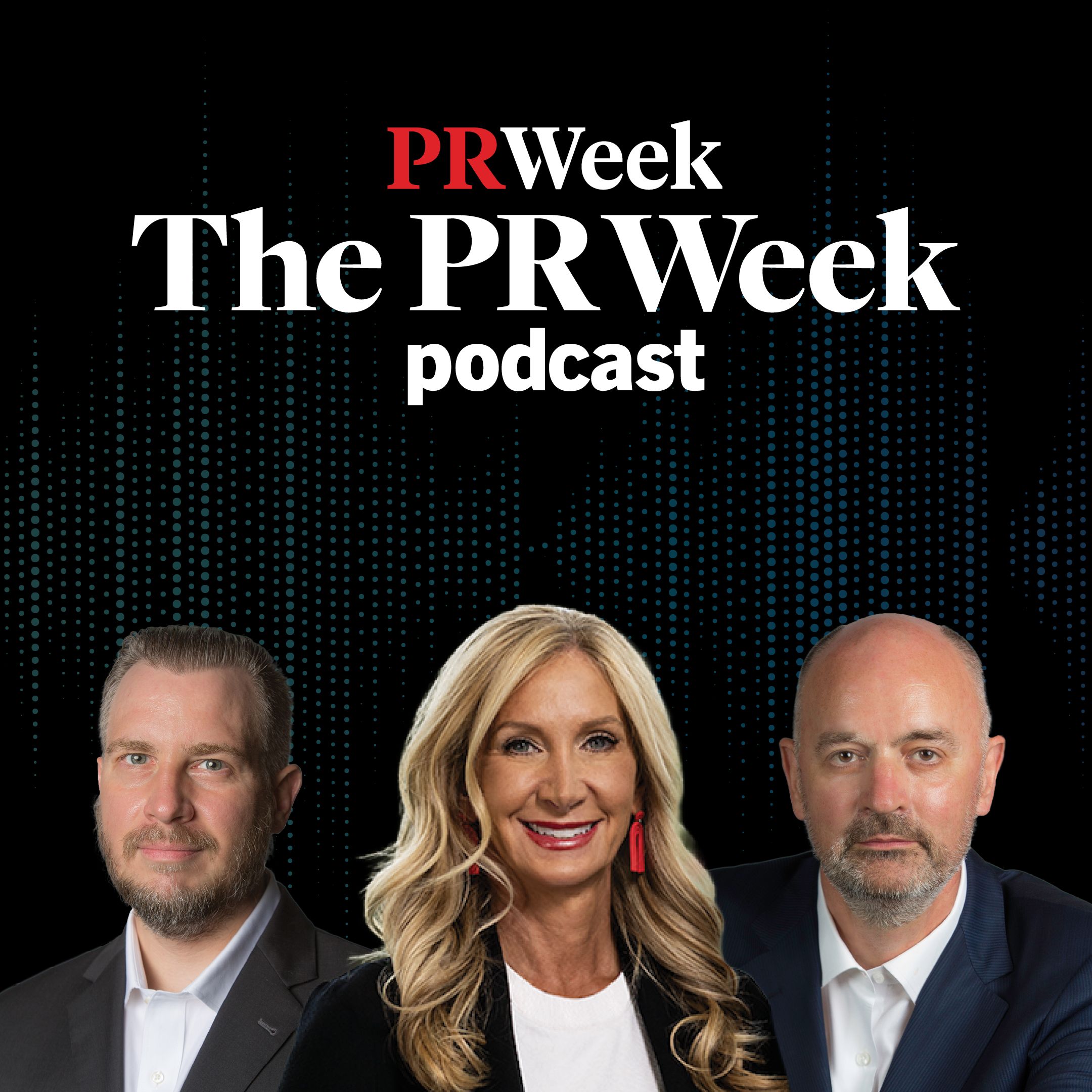


PR Week weekly episode featuring Lenovo’s Charlotte West on global corporate communications, tariffs, AI in comms, and earnings-call storytelling; plus news round-up on brand crises, leadership changes, U.S. Open marketing, and tributes to Dolly Parton.
Charlotte West is Vice President and Head of Corporate Communications at Lenovo. She leads global corporate comms across 180 markets; Lenovo has global HQs in Beijing and Morrisville, North Carolina.
Corporate comms must build and protect reputation, earn “license to operate” locally, and drive growth. Reputation is measured against competitors, not just linear earned-media metrics. Tariffs create ambiguity that comms must translate into customer-ready talking points. AI is a double-edged sword: use it for analytics, content, and media prep, but prioritize governance and protection. Earnings calls are a repeatable moment to amplify CEO/CFO messaging using employees.
Lenovo’s FIFA World Cup “partnership” (including stabilized “ref cam” tech and newsroom preemptive storytelling); AI LLM perception tracking and custom GPTs; earnings-cycle persona stress testing with ChatGPT/Copilot; Callaway/Good Good Golf ad backlash; Neutrogena response to resurfaced Hayden Panettiere postpartum-depression partnership dispute; Walmart CCO Allison Park departure; Wendy’s new CMO/customer growth role (Tariq Hassan); U.S. Open brand sponsorship expansion; Dolly Parton tributes and Imagination Library-related campaigns.
Written by AI. May contain mistakes.
Charlotte West discusses her role and the complexities of corporate communications.
“That's PR Week's weekly podcast for everything going on in the worlds of PR and communications.”
Charlotte explains how Lenovo balances global narratives with local relevance.
“It's a big, complex global technology brand.”
Discussion on measuring the impact of corporate communications on business growth.
“How do you show that your team is making a difference in terms of driving sales?”
Charlotte shares challenges posed by tariffs and their implications for Lenovo.
“So I think we're increasingly looking at it in terms of, like, if we weren't here doing what we were doing, what would the impact be?”
Charlotte discusses the dynamics and structure of her global communications team.
“So I think that really local view of thinking about how we act and behave in the markets that we operate in gives us that license to operate because we're seen as a local business.”
Charlotte describes Lenovo's partnership and technology contributions to the FIFA World Cup.
“We're talking about tariffs all over again right now in the U.S., specifically with how it relates to Canadian trade and trade between Canada and the U.S.”
Charlotte highlights how Lenovo leveraged technology during the World Cup for compelling storytelling.
“So I guess that's the breadth of what we do.”
Learn how technology enhances the storytelling experience in sports.
“So, you know, and everything in between.”
Explore how AI is being integrated into PR workflows and its dual nature.
“But if you go into it with a partnership mindset in the way that we did, then it changes the game completely.”
Understand the three areas organizations focus on when implementing AI.
“Number one, how are you integrating it into your team's workflows?”
Discover how AI aids in analytics and preparing for media interactions.
“So I would say we're using it probably in the same way that everybody is, but we've probably been doing it for longer and maybe a bit deeper.”
Learn about innovative strategies for enhancing financial earnings communication.
“You mentioned VAR being controversial, but with the U.S.”
Examine how agency roles and dynamics have changed over the years.
“You made a great point about just earnings as an internal communications tool.”
Understand the importance of connecting with niche agencies for better outcomes.
“So when I was an agency, you know, there was this, it was a completely different landscape.”
Explore Lenovo's innovative campaign supporting small businesses and entrepreneurs.
“And funny enough, our case study this week is actually focusing on Lenovo's global backing every business campaign.”
Learn how the right talent can enhance PR campaigns and ensure long-term success.
“So I think what made it successful is the right, in many ways, the right talent strategy.”
Explore the recent controversies surrounding Callaway Golf and Neutrogena, analyzing their responses and implications.
“So there are a lot of brands this week getting in hot water.”
Discuss the departure of Walmart's CCO and the new CMO appointment at Wendy's.
“In an Instagram post, Neutrogena wrote, and they took a little while to respond as well.”
Discover how brands are engaging with audiences during the U.S. Open, including new sponsorships and campaigns.
“last month Wendy selected Ruder Finn as its North America communications AOR.”
Reflect on the legacy of Dolly Parton and her impact on brands and philanthropy.
“Open have upped official brand sponsorships from 21 to 30.”
Learn about Dolly Parton's contributions to children's literacy through her foundation and personal experiences.
“And proceeds from the flavor sales were donated to Parton's Imagination Library, which is a nonprofit that provides free books to children under the age of five years old.”
Get key updates on upcoming PR Week events and deadlines.
“That is the standard deadline for the PR Week U.S.”

Get the gist, explore an idea or ask about something said.
 Claude
On The PR Week, what are the key points of this episode?
Searching your listeningAutomatic transcript. May contain errors.
0:00On this week's podcast, we're joined by Charlotte West, Vice President and Head of Corporate Communications at Lenovo. West shares the complexities of corporate communications in a global tech brand, insights on navigating tariffs, the integration of AI and corporate communications, and how it can enhance workflows and storytelling, especially during earnings calls. And in the news, brand crises faced by companies like Neutrogena, Target, Callaway, and Good Good Golf, leadership changes in major brands, what brands are doing at the U.S. Open, and a tribute to the late Dolly Parton. All this and more coming up.
0:46Hello, everybody, and welcome to the latest edition of the PR Week. That's PR Week's weekly podcast for everything going on in the worlds of PR and communications. My name is Frank Washkuch. I'm your host for this week, and I'm joined by my excellent co-host, Diana Bradley, PR Week's news editor. Diana, how are you today? I'm great. Thank you. How are you? Good. You and the team doing some excellent stories and a lot of things happening in the general news cycle as well, including some sad news with Dolly Parton passing this week. We'll come back to that in a few minutes. But we have a terrific guest for you on this week's episode, and that is Charlotte West, Vice President and Head of Corporate Communications at Lenovo.
1:25Charlotte, thank you for joining us.
1:27Charlotte West: Thank you very much for having me. Yes. And so to start out, tell us a little bit about your role at Lenovo and how you approach corporate communications for what is such a massive global technology brand. Yeah, thank you. So you're right. It's a big, complex global technology brand. we're in 180 markets around the world and that has its challenges and opportunities, of course. And I think that most people that are working in global roles will empathize with the balance that we all have to play between what is globally relevant and what is locally important and relevant. So that's always the tightrope that we walk in a global role.
2:03Charlotte West: But as you said in the intro, my role is corporate communications. And for us, the way we think about that, the way I think about it is my job is to build and protect the reputation of the company. And that can, you know, is incredibly broad as a sort of remit. But I guess there's sort of three areas that we focus on. One is thinking about how we ensure the business has a license to operate in all of these markets where we work and that we can continue to do business. That we ensure that we are trusted by our customers around the world. And thirdly, the most important bit that I think often we forget in comms roles is that actually our job is to help drive growth for the business.
2:41Charlotte West: And that might not mean that we're, you know, in a lead gen role in a marketing sense, but absolutely we have to have that front of mind as we think about our role. So in its broadest sense, that's how we think about corporate communications at the Nova. You brought up a really critical point in that part of the job of communications is to drive business. And look, I've been here a while and people have been talking about how difficult it is to prove ROI and to prove results in earned media forever. So how do you go about that? How do you show that your team is making a difference in terms of driving sales?
3:14Charlotte West: Yeah. So I look, I'm not sure I have the answer. And if I did have the perfect answer, I probably wouldn't be in the role that I'm in. I'd have, you know, set my own company with the holy grail that is, you know, demonstrating our value in comps. I think there's two ways of looking at it. There's, you know, we've got a lot of comps people around the company that are in our business groups where they're focused on launching new products, you know, driving interest in those products, driving reviews in the media around those products. It's a very tangible way of quantifying the impact that they have to the business from a growth perspective.
3:45Charlotte West: I think when you look at the corporate side, it becomes a bit more abstract. And the one metric that we hold ourselves really accountable for is we measure our reputation globally. And that's not a traditional marketing metric of it must get bigger and do this all of the time and be a growing line. It's more about how we are doing versus our competitors in the industry. So we always look at how is the industry doing and how are we doing versus that? And are we doing, if the industry is going down, which many industries do over time from a reputation point of view, tech in particular, are we going down less or going up a bit more, you know, depending on how the industry looks?
4:23Charlotte West: So I think we measure it from that. But that's still from a business leadership point of view, still a bit of a need some explaining versus typical, like, you know, linear metrics that they may be used to. So I think we're increasingly looking at it in terms of, like, if we weren't here doing what we were doing, what would the impact be? So if I come back to some of that, which I know feels like a negative. If I come back to those introductory points around ensuring customers trust us. So for example, if there's a big cybersecurity incident or one of our products has a security glitch, like, what are we doing to make sure that we maintain that trust?
4:59Charlotte West: So we tend to look at it more around, if we weren't here, what would happen? which is harder to measure. Yeah, harder to measure. And I think it's true that a lot of in-house comms teams, especially you never get the credit for the things you prevent from becoming a part of the narrative out there. And that's really important as well. Yeah, exactly. I agree. Yeah. You mentioned earlier, look, global role. You're working on a lot of different areas for what's a global tech brand. how do you balance what you call the license to operate in each individual country with one narrative across a brand and how do you make those two things work at once so we are I would say very different to many other big companies not just technology companies but big companies and that the local bit is really incredibly important so there might be an overarching narrative or you know some core messages we wanted to deliver but how those markets do it is really up to them like what will work in Germany will not work in Thailand and vice versa so we talk about ensuring that we show up as I tend to use France because it's the um the alliteration seems much nicer when you talk about France but we need to be more French in France right and that means showing the customers that we work for the employee base that we have the ecosystem that we support of maybe local suppliers, the NGOs that we work with, the big national French companies that we support day in, day out from a technology perspective.
6:32Charlotte West: So I think that really local view of thinking about how we act and behave in the markets that we operate in gives us that license to operate because we're seen as a local business. And I think people don't want to buy from like big abstract, faceless global corporates anymore. You know, we have over the last few years certainly become a bit of a sweeping statement, but people have become more nationalistic, more parochial in their thinking. They want to feel like they're supporting their local communities, buying from local businesses, all those things. So as a big corporate, that feels like the complete, you know, we need to look at how actually we are really local in the markets where we operate.
7:11Yes. Full disclosure, I tried to be more French in France a couple of months ago and failed miserably. So it was resorted to a lot of...
7:19Charlotte West: I feel like there's a story there. It resorted to a lot of shrugging. Let me just put it like that. Just schoolboy French, not what it was.
7:30So you brought up an interesting point. And this is, I think, especially important right now in the news cycle being what it is. We're talking about tariffs all over again right now in the U.S., specifically with how it relates to Canadian trade and trade between Canada and the U.S. tariffs it feels like threw a whole other wrench into what was already a complicated international role that folks like yourself have a couple of years ago i mean what does it mean for for what you do but also a company like lenovo having this additional layer of of complication out there
8:07Charlotte West: now yeah i think the interesting thing about tariffs is they're not new for businesses with every company has tariffs every sorry every country has tariffs that it imposes on certain things in its market. So as a core principle, they're not new. What was complicated, obviously, over the past couple of years is the scale of the tariffs, but also the ambiguity of them. So when are they starting? When are they not? How much are they going to be? Are they going to be this? They're going to be that. And I think from a comms point of view, where we have to really work really closely in partnership with both our government relations team and our like trade legal trade team was making sure that our sales teams had the talking points to be able to answer customer questions when there was so much that was unknown i think often these sort of pressure points in a business is where you know comms comes into its own really and i hate to say that we sort of trade on on you know the stuff that is happening that is bad but that is over the past few years i think we could all agree i'm sure many of your other guests have have said something similar so actually it's where we end up having a you know a good seat at the table and a consulting on some of this stuff because because we're the ones that are perhaps more objective can look outside in you know and sort of bring a bit of calmness to what is often a very like you know from a sales point of view it's like such a difficult conversation because they literally don't know from one day to the next and i mean it's not so much now but initially when they were first announced with tariffs like from one day to the next.
9:35Charlotte West: What is the tariff rate? When's it going to kick in and how do we handle it? Tell us a little bit about your team and tell us what they oversee, but also what do you work with agencies on and what do you think is really important to have in-house, you know, at an arm's length? So the team is, I guess, probably self-explanatory in that it's very globally diverse. So, So, you know, we don't operate like this big headquarter model of like lots of commerce people being in one location. I mean, the fact that I'm in a global role and I sit in the UK, but our two global headquarters are Beijing in China and Morrisville in North Carolina in the US probably says it all.
10:20Charlotte West: And, you know, where I'm sitting is, I guess, reflective of the kind of makeup of commerce people we have around the company. So we do absolutely have, you know, local people in local markets doing the work. And in my team, in terms of the kind of work that we're doing is we do work that is agnostic of our business group. So we're not out doing the campaigns or the work really, you know, launching a new product. But we're doing the kind of work that is, you know, it could be the financial PR for our earnings, the crisis and issue stuff, of course, corporate philanthropy, customer storytelling.
10:55Charlotte West: and what we call the like one Lenovo moment. So where the company comes together, and a good example this summer has been the FIFA World Cup where there was a big partnership we had as a company from a technology perspective. And that's a moment where we show up as one company regardless of all of the different factions you have within a big corporate like Lenovo. So I guess that's the breadth of what we do. I'm glad you brought that up because tell us a little bit more about what your company did during the World Cup and really what you get out of it. Because a lot of people are skeptical about FIFA.
11:35A lot of people are skeptical about what actually a company gets out of a sports sponsorship. What would you say you saw?
11:47Charlotte West: So it's been probably the most fascinating journey of my career, I would say. So it started, maybe if I do a small bit of history, it started with one of those like really random conversations over dinner with myself, my boss, our CFO and our CEO. It was like a very informal dinner. And, you know, you just start talking about things and we ended up getting on to like what were the next big cultural moments and et cetera. So the conversation led from there with the action out of that dinner being, go and look at the World Cup. So we did. and the starting point was not to look at it as a sponsorship.
12:23Charlotte West: And this is really sort of reflective of us as a company. We do the same with Formula One where we are a big technology partner or the technology partner, I should say. And you use the word sponsorship and we use the word partnership. And that distinction with those two words is really, really important. So we didn't go in thinking like we want our logo around the side of the pictures and on the TV screens when people are viewing it. That is a great thing to have, of course. It's part of the deal. But what we wanted to show was that we could deliver the technology that essentially runs the World Cup, which is the biggest event on Earth ever.
13:00Charlotte West: It was more complicated than ever this year because of the number of countries, more teams, all of those things. And actually, if we could power the World Cup with our technology, then we can actually do it for anybody else on the planet. So, I mean, that sounds like a very grand ambition, but that's really what we really what we did you know we it was everything from if you walked into the um technology operations center in miami that was essentially running all of the stadiums and all of the world cup itself you know the command center was run by us with you know screens showing like have the team bus arrived you know what's the weather in dallas gonna be oh my god we need to delay the game because of a stall so those kind of things to what you saw on the pitch and if you watched any of the matches, it's called referee view or ref cam.
13:45Charlotte West: It's sometimes shortened to. So when you saw the view of the game from a camera on the referee's headset, if you were to watch that as pure footage, you would actually feel a bit, but you'd feel sick, like you've got vertigo because it's so jittery and all over the place. So the technology we implemented there meant it was stabilized so that it was comfortable for you and I watching from home on our TV or watching on our phone to actually feel like we were part of the game and feel like we were in the referee's vantage part without feeling like we were going to vomit at the same time. So, you know, and everything in between.
14:22Charlotte West: So for us, it's given us, from a common point of view, it's given amazing storytelling. Like I, you know, been doing this job a long time and I often say that I'm not easily impressed, but I was genuinely impressed with how we were able to tell the story of the tech. There was a real appetite externally, particularly by media, on wanting to tell the tech story because there's only so many football stories they can tell about, you know, teams or people or results. They wanted the other story. So it was an incredible storytelling moment for us and an incredible proof point as we look forward from a sales perspective as well.
14:57Charlotte West: So, yeah, as you can tell, I'm quite effusive about it. It's, you know, I suspect lots of people roll their eyes a bit about, oh, God, another sponsorship. But if you go into it with a partnership mindset in the way that we did, then it changes the game completely. Well, congrats on Ref Cam, because I'm a big fan of that. And that's a lot of I didn't realize just how much you were doing around the World Cup. So so congrats on that. I'm sure you're thinking if only you could have convinced Thomas Tugel not to go defensive so early. It might have been different. Might have been different. Indeed.
15:30Might have been different. All right. So I want to talk a little bit about AI. Number one, how are you integrating it into your team's workflows? What do you find it's great for? What do you find it's not so great for? And I've read that you've said AI is both a gigantic opportunity and a huge challenge for PR. It's a double-edged sword. So just tell us a little bit about how are you using the different platforms right now and really how you're making it, whether you want to call it a member of the team or something that, you know, boosts your team.
16:06Charlotte West: Oh, yeah, I'm starting to see it appear on people, not particularly within the name of it, but outside of the name of it, appear as a, you know, a box on an org chart, which I'm not sure I'm particularly a fan of just yet. Let's see. And so obviously, you figured you would ask me this kind of question. So I actually went back and looked at, when did I first start writing presentations internally about AI? And the first one I found was June 2023. And I thought, well, let's see how much has changed and is completely different from then versus it is now. And when we originally started looking at AI, we focused on three areas.
16:42Charlotte West: And I don't think those three areas have changed fundamentally. I think we've grown one of them quite a lot. So the first one was like, okay, how does it change the function? How does it change what we do every day, the job, the workflow, et cetera? So I'll come back to that one in a minute because I think there's sort of more practical examples to use there. The second one was like, actually, we have a job in corporate comms to make sure that our company shows up in the right way and doesn't do anything stupid as it relates to AI. So making sure that we were in the right places in the organization, we're part of the AI governance committee so that we will make ensuring and sort of overseeing that the company is making the right choices about how it's using AI as a business.
17:20Charlotte West: And I think that's the bit that maybe comms teams forget a little bit. They're so focused on like, how does it help us do our job better? But we shouldn't forget that bit. And then the sad bit, which is the sort of scarier bit, and if anything keeps me awake at night, it's probably this bit, is the protection piece, like how are other people using AI against us as a business? And again, that's the bit I think we forget. So, or some people maybe forget, but they're the kind of like three buckets that we think about. To go back to the function piece, which is sort of more pertinent to your question.
17:53Charlotte West: So I would say we're using it probably in the same way that everybody is, but we've probably been doing it for longer and maybe a bit deeper. So analytics and insights, of course. You know, we have created LLM perception tracking internally in-house. We've got scoring architecture to look at how we show up in the particular LLMs globally. and we also use an external research company called RepTrack where we as well as our traditional markets of IT decision makers and the informed general public we have LLNs as a stakeholder audience that we track as well from a reputation point of view so I think that's a really interesting you know approach to analytics and insight we use it for content creation you know we create custom gpt's all of those things that's not new but I think the really interesting area on content is how from a geo strategy point of view we're changing some of the content that we create and I'll bring it back to the world cup as an example so we knew at the beginning of the world cup that we were creating some technology with the 3d avatar so when there was an off-site call and you saw the replay and the broadcasters went to some footage that showed was it offside was it onside the avatars of the players were things that we created we scanned every player in the world cup and so that the accuracy that you could see could help the decision making of the referee video assistant referee is like the most controversial thing in football ever like it's hated generally by everybody so it wasn't out hawkeye is the main technology provider we were great we were um doing the avatar piece and we knew that that would probably be misunderstood by media, when there was a really bad decision or like a really controversial result, that it was all going to be muddled up into one.
19:45Charlotte West: So we made sure that we were creating content that was on our newsroom, which is highly influential, indexed, is very highly unserved, that showed the role that we played because we knew that we didn't want to be mopping it up after there was an issue. We would rather be preemptive in the first place. So we do a lot of that kind of work to make sure that in those scenarios, the role is completely clear. And then, of course, the other area is, you know, on media prep. And I think people underestimate the power of it. I love nothing more than our quarterly earnings cycle where I'm there, like, back and forth.
20:21Charlotte West: And we use ChatGPT and CoPilot internally. Like, looking at, like, what questions is this journalist going to ask? And, like, what analysts are they going to go to for insight on our performance and whether we've, you know, exceeded or not marked expectations? So I think there is on the sort of persona stress testing, I find it one of the most powerful things to use internally. So all of those things and a few more besides. But I think if we come back to the first point around the functional piece, I think everybody's doing that. And if they're not, then there's a problem. It's the other two pieces as well that we shouldn't forget.
21:00You mentioned VAR being controversial, but with the U.S. team, the controversies are caused by our president, of course. So that's a whole, we have lots of jokes about the World Cup around here.
21:09Charlotte West: Oh, I'm sure. It was the gift they kept on giving. It was, it was in a lot of ways. Yeah. So I have, I've seen that before you've mentioned you, you are very proud of the work that your team does around the financial earnings. You like the way that your team has, has just amplified the story during an earnings call, which can be really drive for a lot of companies as well. So tell us a little bit about that. So, yeah, you're right. it's you know it's a cyclical thing it can feel formulaic like just rinse and repeat every quarter but just change the numbers um but we looked at it as an opportunity like we have this thing every quarter where it's the moment where we get more time with our ceo and cfo than we do at any other point to talk um and um you know how do we use it to our advantage so um i think we went right back to the drawing block and thought about it differently.
22:04Charlotte West: It had been done the same way for many, many years before I came into the role and the world had changed and the channels that people used had changed. And, you know, we did some very like ordinary things with employees as well, whereas now employees are some of our most powerful amplifiers about earnings and performance news, not just from a sort of like vanity pride perspective, but talking about the particular their successes as it relates to their business. So, you know, I think we change the strategy at every point of looking like top, you know, top down, like what is the story, but also bottom up, how can we bring our employees along with us and ensure that they understand the message, which can often be, like the numbers can often be complicated or hard to understand, you know, like hard to understand because there might be some like accounting nuance that makes one number look different to how you think it should.
22:53Charlotte West: So we do a lot of work trying to explain some of those things, not only externally, but also internally as well. So yeah, I think we shouldn't forget those boring, what might seem like boring moments, some of the most interesting to change the workup. You made a great point about just earnings as an internal communications tool. I think a lot of people overlook that. And that's a really good point you made. So finally, you've been at Lenovo a while, but you started out on the agency side. And I wanted to ask you a few questions about that. I mean, how you probably see a lot of change in the agency side since you've been there, especially over the past few years.
23:28And how would you say that the scrutiny over agency performance has changed over time as well? Because I mean, the sense I'm getting talking to people is that AI has increased the scrutiny on agencies to perform, to provide better results, to really show their value more than they ever have before. And I think it was already high to begin with, but it's higher than it ever was before. How would you say the agency role has changed between when you were there and where you are now?
24:01Charlotte West: So when I was an agency, you know, there was this, it was a completely different landscape. The holding groups were all powerful. There was a much bigger landscape of agencies of all sizes. And I think the power is set much more with the agency than with the clients. I would say that's rebalanced. I'm not saying it's flipped completely, but I would say it's rebalanced into probably a more appropriate level now. And the landscape has obviously changed and a lot of agencies have gone away. A lot of, you know, senior leaders from big agencies have left and set up small ones. The holding group model is a complete mess.
24:36Charlotte West: But I think what you get from that shakeout is probably, you know, the good stuff rising. You see some really interesting niche agencies, which I think are really interesting to work with. So, and that's where the role of our, like, you know, I don't like the term agency record, but for, you know, our core agencies, where actually my expectation of them is, I don't just want you to work for us, I want you to find the other agencies that should be working with us as well. So if, for example, and here's a really good example, we were looking at our corporate philanthropy work and wanted to do some benchmarking around what our peers were doing and other big companies were doing around corporate philanthropy.
25:19Charlotte West: In a typical agency model, we can do that. No worries. You know, here's the scope of work and here's the pitch. The reality is they can't. They don't know the space. but what they found for us was a really good niche agency, like a 15-person agency that happened to be based in London. There were absolute experts in this field and did a brilliant job. So I think for me, this kind of like connector is really important in the agency model now of like, I want you to find other people that we should bring into our fold that like bolster our work and our capabilities. Thank you very much for joining us.
25:55This has been a terrific interview, Charlotte. But I appreciate you dialing in from just outside of London. Healthcare marketing is changing fast. So why are we still doing conferences the same old way? Enter MMNM Transform, a declaration against the status quo. On March 30th, MMNM Transform takes over Philadelphia's National Constitution Center for a bigger, bolder healthcare marketing festival packed with bold ideas, interactive experiences, live demos, and candid conversations. And here's the best part. In-house pharma marketers can attend for free. MMM Transform, March 30th in Philly. Register now at MMMTransform.com.
26:30Want to talk to Diana for just a few minutes about the biggest PR and communications news of the week. And funny enough, our case study this week is actually focusing on Lenovo's global backing every business campaign. So, Diana, tell us a little bit about that. And Charlotte, if you would, please jump in and maybe give us a behind the scenes look at it as well. Yeah, it's really serendipitous that you were our podcast guest. And then this was our case study this week. So for Lenovo's backing every business campaign, the company hired actress and business owner Eva Longoria and offered founders around the world grant funding, AI-enabled technology and a mentorship program called Twinning.
27:11And the program basically pairs small business owners across industries and geographies for one-to-one collaboration matching entrepreneurs facing similar challenges. And for a select group of participants, Longoria was that twin. And the Eva Longoria Foundation, ran by the actress, provides mentorship, educational support, and career resources to empower Latina women and girls. So yeah, we spoke with Lenovo about this, and I believe it was Zeno Group that was the main PR our agency support on this campaign. So they gave us kind of like the inside, the strategy behind it and the results. So definitely check that out.
27:54But yeah, Charlotte, I wasn't sure if you wanted to add anything about this particular campaign and what made it successful.
28:02Charlotte West: Yeah, happy to. So I think what made it successful is the right, in many ways, the right talent strategy. And I probably am the only person in the world that's never seen an episode of Desperate Housewives. so i haven't either i haven't either well thank you we can be friends um i haven't seen an episode of friends either believe it or not so that might put me out of the island that is okay you need to you need to change that yes um agree but i have strong opinions about the use of talent in pr campaigns now i think it can be the lazy option sometimes to go just like oh you know they're a big name they'll do but actually i think this was really smart in the way that we found the right person who actually had the right sort of cultural fit from her she's quite cheeky in the way that she does things you know she's she's prepared to be flexible capable in the work that she's doing and she's credible because she's a business owner as well so so i think that if you get the time piece right then it can be incredibly successful and i think the second element is looking at it long term don't you know i like you guys have you know reviewed many award entries over the years of so-called campaigns.
29:09Charlotte West: And a campaign to me means long-term or longevity in some capacity, not just a little blip. I think that's the way that we look to this is this is what we're going to do now. But how can we make sure that in a year's time, two years, three years' time, we can still build upon it? Thank you for that, Charlotte. Diana, tell us a little bit more. So there are a lot of brands this week getting in hot water. Yeah. Neutrogena, Callaway Golf, a lot going on here. And some of these are more forced than unforced errors and some are different. Yes. They're all kind of different types of crises. Yeah. Let's talk about Callaway Golf and Neutrogena.
29:46Yeah. So Callaway Golf and Good Good Golf have issues. Good Good Golf. Yes. Which for those of our listeners who are uninitiated, that's a video podcast. I believe it's a YouTube channel. It's a YouTube channel. YouTube channel where people golf or do challenges or something.
30:10Charlotte West: Have you heard of Dude Perfect? It's like Dude Perfect with a golf. Yes. So they have issued public apologies and removed a social media ad in which a man shoves over a woman after she reaches for his new driver. The ad, which was promoting a new co-branded driver, was removed on Friday from Callaway Golf and Good Good Golf's social media channels after receiving backlash for portraying violence against women. It featured Good Good. That's a hard thing to keep saying. It is. Good Good co-founder Garrett Clark pushing former Division One female golfer Alexis Miestowski to the ground. Callaway and Good Good have put out several statements at this point.
30:52generally and also from their CEOs. It's never a good look if you have to put out several statements during a situation like this, is it? Yeah, but I have to hand it to them. At least they're like out there trying, they're communicating. Callaway CEO Chip Brewer in a statement posted to X. So hang on. This fellow, he's a golf CEO and his name is Chip. This is for real, right?
31:21Charlotte West: Yeah. What's that nominative determinism? Isn't that it? I wonder. Anyway, sorry. Chip said that while the video was produced by GoodGood, it was approved by Calloway prior to posting. That approval should have never happened. Mistakes were made, and we are taking the matter very seriously. He also said that Calloway has already made changes to its approval process and will conduct internal and external investigations aimed at ensuring this will never happen again. The changes to the approval process seems like the most important part to me. Yeah. Something I found interesting about this is when showing this controversial ad to people familiar with Good Good Golf, they weren't really that shocked by it because they noted that the people behind the company are always posting videos goofing around.
32:11So it didn't register immediately as anything in poor taste because they understood the context around it. however to people not in the know it's getting major backlash and it's just another reminder that what might seem like harmless humor to a brand and its main audience could be perceived entirely different to others yeah no kidding that's a good point you make charlotte any thoughts on it
32:33Charlotte West: yeah look i'm diana to your last point about like are we the demographic to be incensed by it and um you know for the audience that it's aimed at that's that's the style rightly or wrongly that's the style that they've they've gone with i think the i mean i read some of the statements they put out they were i'd probably written by ai they were pretty atrocious and they you know that not in line with our brand values what it obviously was when you were creating it so yeah i feel that's a bit of a again a lazy a lazy to think thing to come out with look you know we can all be i mean there'll be lots of comments on posts this week as we've all seen and probably beyond that i think the thing to look at in in a few months time is like how are the sales of the golf clubs from callaway and have subscribers and sponsors uh walked away from good good golf and i suspect the the answer to both of those is there'll be no impact at all i agree i've seen some people posting like this is the end of callaway and i i don't know well that's that's an exaggeration just yeah yeah Neutrogena, we're running a little bit long here, so I just want to focus on Neutrogena next because I think this is a story very much tied into the news cycle right now.
33:45Yeah. So social media users have been resurfacing past interviews in which actress Hayden Panettiere, who died at 36 years old on August 16th, accused Neutrogena of dropping its 10 year partnership with her after she publicly opened up about her postpartum depression in 2015. In an Instagram post, Neutrogena wrote, and they took a little while to respond as well. I feel like they took several days. That's the thing that stands out to me. Yeah. And I'm not a follower of the brand and I don't follow a lot of celebrity news. But even I had noticed that they hadn't put out a statement for a while.
34:25Yes. They wrote, we're proud to have partnered with Panettiere and understand that we made her feel unsupported during a very difficult time. This is not what New Giordina stands for, who we want to be. And they pledged to make an investment to a longstanding community health partner to give more women access to the support they need, including care for postpartum depression. I give them credit for not backing away from the issue, but I think many are just finding it hard to forgive the brand for like making the move in the first place. And yeah, it's there. People are not receiving this very well at this point, I think.
35:05Yeah, they need to act more quickly, in my humble opinion. Yeah. Okay, so tell us a little bit more about the departure of Walmart's chief communications officer this week. Allison Park is leaving the company in February. She'll serve in an advisory role starting September 1st, ending her three-year tenure as Walmart CCO. Huge role. Yes. I mean, when you think about what Walmart is active in, it's not just retail. It's in so many different areas. Yeah. And they're doing an external search for her replacement. During her time there, she's helped them navigate several important moments, including the CEO transition from Doug McMillan to John Ferner in February.
35:45and oversaw changes to the communications organization and operating model, including investments in talent and capabilities, a more unified approach to measurement, and the growing use of AI across the comms function. So we look forward to seeing where she ends up next. And tell us about a new chief marketing officer at Wendy's. Yeah, so just as a little bit of background, last month Wendy selected Ruder Finn as its North America communications AOR.
36:12Charlotte West: Yes. ending a long-term relationship with Ketchum. And as a side note, Omnicom PR merged Golan and Ketchum into a single entity in July following Omnicom's acquisition of Interpublic Group last year. So following Wendy's agency changes, the fast food chain this week appointed Tariq Hassan as its chief marketing and customer growth officer, which is a newly created role. and Hassan stepped down as SVP and U.S. Chief Marketing and Customer Experience Officer at McDonald's at the beginning of 2025 and will serve on Wendy's senior leadership team and report to President and CEO Bob Wright. Is Wendy's your favorite fast food burger, Diana?
36:55No. No, what is? And I guess five guys. Five guys. Interesting. What about you? What about me? I'm just beside the scenes here. That's not fair. My thoughts on this aren't for public consumption. No, I don't know. I don't eat a lot of fast food if I'm being honest. If you had to choose. It would be Wendy's. I would prefer Wendy's over Burger King and McDonald's. Just a personal thing. Just saying. Square burgers. Square burgers. Yeah. We're going to edit this part carefully. All right. So the U.S. Open, the tennis one is underway. By the way, I find this fascinating. And if you're an editing nerd, it's one of those weird quirks that the AP style for U.S.
37:50Open for tennis and U.S. Open for golf are two different things. So if you're editing a press release or something like that, it's something to make note of. The tennis U.S. Open has no dots. No periods after the game. And then the golf one does. So there you go. Fun fact. So, yeah, the tennis tournament kicked off this week. It runs through September 13th and you're going to the event today, Frank. This is Wednesday we're recording. Yes. Yes. Have I talked about it today? Am I excited? Yeah. Are you excited? I've never I've never been to the U.S. Open before, believe it or not, despite living in New York forever.
38:25And I'm looking forward to it very much. Well, we've been staying on top of what brands are doing at the event. So you'll have to tell us what you see brands up to. But one fun one is Pure Leaf is running a tea break campaign with tennis pro Amanda Enesimova. And a Pure Leaf spokesperson told us that the campaign was not inspired by the World Cup hydration breaks. But you can read. We keep going back. Charlotte, you're laughing. We keep going back to the World Cup here. So anyway. Yeah. That was an important question for us to get in there, though, because I feel like when we first got this pitch, we were like, wait, is this like a tongue-in-cheek response to that?
39:08It's sort of funny because I did not edit this story. You did. And I was reading it after it was published. And by the way, if you're going to ask me, yes, I do read everything that's published. So I've had people on the outside asking that. And yes, I do read everything. But I read this after it was published. And I saw this question in there about the hydration breaks at the World Cup. And rarely do you see your influence on an organization. But in that case, I felt like I did, and I was very proud of myself. So thank you for including that. Of course, yeah. So there's a bunch of brands that are returning to New York City once again for the U.S.
39:45Open, like Grey Goose's Honeydew's Cocktails, Ralph Lauren's Stadium Shops, and Tiffany & Co.'s Trophy Museum. But there's some new brand players this year. Since last year, the U.S. Tennis Association and U.S. Open have upped official brand sponsorships from 21 to 30. Inking multi-year deals with AI, electrolyte, and wearable fitness brands. We did a roundup of some of the new brands that are doing stuff around the U.S. Open, and we're actually running a poll on LinkedIn asking which first-time U.S. Open brand player do you love the most, and that includes Electrolyte, Aura, AT &T, and EOS. and so far Aura's campaign is winning.
40:29Aura's winning, huh? Yes. So definitely check out our roundup of what those brands are up to and be sure to take a poll. And maybe after today I can be an educated voter taking a poll. Yeah. We'll see what happens. Okay, let's close out with some sad news unfortunately. Dolly Parton has passed away this week which is I'm a big fan of Dolly Parton personally. Not really her music but I just think she's terrific. Yeah, I feel like she I can't think of any other figures that are left that people just loved around the world like this, you know, and she was she was really a gem. But yeah, PR pros have been paying tribute to her.
41:10Former Conagra Brands Comms leader John Harris described her and she had partnered with Conagra on her work closely on her baking with Dolly line. And he described her as kind, funny, gracious, and genuine as you hoped she would be. Spotify is global head of music and brand communications. Anthony Langone said that working with Parton changed his life, noting no one showed up like Dolly did. And yeah, we did a little roundup because there's been so many brand campaigns that she's been part of. So we had to look through some of those. I remember a few years ago in 2021, there was an interesting one that she did with Jenny's Splendid Ice Creams.
41:54They had released strawberry pretzel pie flavor with Parton, and their website actually crashed upon releasing that flavor. And proceeds from the flavor sales were donated to Parton's Imagination Library, which is a nonprofit that provides free books to children under the age of five years old. She was so good with children's education and children's literacy. I think those are just great areas to be involved with. And she was just so influential in those areas. Yeah. And probably because she had grown up in poverty herself. I mean, she was really just the best. I think also today Lyft donated like$20 ,000 to that imagination library as well.
42:39Because they're still looking for money. So, yeah. Yeah, she was one of a kind. Yeah. That's very sad. And I went to Dollywood a few years ago, too. What did you think? What's your review of Dollywood? You can't say anything bad about it now or people will come for you. Yeah, I mean, I think I had told you. The only con really was the price of everything. But no, it was really interesting. Where is Dollywood, Tennessee? I think it's in Pigeon Forge, Tennessee. Pigeon Forge, Tennessee. Which is an interesting place. but there's a lot to do a lot to do there um and yeah it's it's a really interesting amusement park there's like a museum there is along with all the rides and all that kind of stuff you would expect there's also like a dolly parton museum you can go in the trailer that she used to tour in um there's what else is there i don't know there's all kinds of interesting stuff you'll you come out of there knowing like so much about her and i think they even moved the church that she attended like to the amusement park.
43:43So it's very interesting. Yeah, she was the best. I'm bummed out about Dolly Parton. I really am. Yeah. All right. A few public service announcements. It will be here before you know it. September 26th. That is the standard deadline for the PR Week U.S. Awards 2027. So get those entries in. The PR Week Conference, October 15th in Chicago. It's going to be fantastic. So get your tickets on PRweek.com and you can do that for AI Deciphered as well, which is in November in New York City. And we also have the PR Week 40 Under 40 coming up very, very soon. So look for more information about that online.
44:22Charlotte, thank you so much for joining us this week. And Diana, thank you for co-hosting. And we will see you again next week on the next edition of the PR Week.
45:04We'll be right back. And here's the best part. In-house pharma marketers can attend for free. MMM Transform, March 30th in Philly. Register now at MMMTransform.com.
The latest guest on The PR Week is Charlotte West, VP of global corporate communications at Lenovo.
She talks about how Lenovo’s role as official technology partner of the 2026 FIFA World Cup was much more than a sponsorship, improving operations and even the broadcast of the tournament. West also talks about how her team is using AI, balancing one global message with regional specifics and making earnings calls more interesting.
Plus, the biggest marketing and communications news of the week, including crises at Callaway Golf and Neutrogena, people moves at Walmart and Wendy’s, the start of the US Open and the death of entertainment legend and philanthropist Dolly Parton.
Theme music provided by TRIPLE SCOOP MUSIC
Jaymes - First One
Follow us: @PRWeekUS
Hosted by Simplecast, an AdsWizz company. See pcm.adswizz.com for information about our collection and use of personal data for advertising.