Ask ChatGPT


PR Week weekly roundup focused on creator journalism and “creator relations” as the new media relations, plus major industry news: Pepsi vs. Coke global media account shift, Anthropic AI researcher resignation, and PR risks in AI/creator campaigns; also includes NFL kickoff, Gloria Steinem tribute, and 9/11’s 25th anniversary remembrance.
Kenny Gold is Edelman’s Global Chief Creator Officer. He previously worked at Deloitte, in ad agencies, and has long experience in social/digital and creator ecosystems.
Edelman’s “Top 100 News Creators” shows news creators span politics and non-political beats; about 53% are non-political. Roughly 70% publish newsletters and 60% produce podcasts; audiences spend ~40 minutes per podcast. Creator relations equals new media relations. Edelman emphasizes “promote and protect” via trust and brand-suitability vetting, using AI-assisted list building plus human vetting. AI won’t replace humans fully; balance is required.
Mo News (Moshe Wanunu) as a pitchable, nonpartisan news creator; Publicis winning Pepsi global media without a pitch; Jacob Coxon stepping down from Anthropic over existential-risk concerns; Mary J. Blige ad pulled after alleged AI impersonation.
Written by AI. May contain mistakes.
The hosts outline key news items, including Pepsi's media account shift.
“Hello and welcome to the PR Week, PR Week's regular weekly roundup of everything that matters in the worlds of PR and communications.”
Steve Barrett shares his personal health journey and reflections.
“I'm going to guide you gently through another show with my co-host, Executive Editor Frank Washcook.”
Frank shares key takeaways from the Cannes festival related to creators.
“And I think it's fair to say people noticed it.”
Kenny Gold discusses his role and background as the Chief Creator Officer.
“Full disclosure, yes, I went to the Gutter Bar, but I was out of the Gutter Bar by 10.30 p.m.”
Kenny explains the significance of his role and the importance of creators.
“But first of all, what does a chief creator officer do?”
Kenny shares insights on the creation of a list of top news creators.
“And it's natural that when this role was established here in the communication space, that it was done at a place like Edelman.”
Discussion on how creator journalism is reshaping traditional news.
“Now, I know you're being a little bit coy about exactly who's on that list because, you know, that's nice IP and it's nice research, isn't it?”
Kenny discusses evolving news consumption trends and creator influence.
“That's Mo News attitude, which is nonpartisan.”
Explore the importance of creator independence in media and how trust affects audience engagement.
“And what, I mean, there's obvious lessons for anyone in media, you know, including us at PR Week.”
Learn about the scores used to evaluate creators for brand partnerships and the importance of brand suitability.
“you have the chance to gain access to that and see how it impacts your business.”
Discover how niche creators like running brands engage their communities and build unique identities.
“I mean, you two, Kenny and Frank, you're both runners.”
Examine the potential challenges brands face when collaborating with content creators.
“And something that a Latina doctor, you know, that is, you can't get better targeting, you know, if you're trying to reach that community, right?”
Understand the implications of PepsiCo shifting its media duties to Publicis Group and the competitive nature of brand relationships.
“We'll get your input on some of these stories.”
Discuss the importance of relationships in the evolving landscape of PR and media agencies.
“running media for both Coke and Pepsi in America, which is just almost unthinkable, isn't it?”
Dive into the ethical implications of AI technology and its potential consequences as discussed by industry experts.
“everyone gets frustrated with the amount of effort and money you have to put into a pitch.”
Explore the conversation around the future of human roles in industries increasingly influenced by AI technology.
“So, look, there are a lot of concerns about this.”
The discussion revolves around the transformative effects of AI and technology in the PR and marketing space.
“But it is, I mean, you could see the market reacted to this today.”
Exploration of public perception regarding data centers and their implications for upcoming elections.
“But I'm never going to let, I mean, I don't believe we ever will go full on automation and call me a Luddite, but I've been ahead a few times in my career and I'm hoping that this is another one where that's the case.”
Discussion on the NFL season's impact on brand strategies and marketing opportunities.
“And I think that more than a lot of decision makers realize, and it's going to be a huge thing in the midterm elections.”
The importance of crisis response and proactive strategies in public relations.
“So in terms of what we're watching, a lot of the sports and events coverage that we have looked at for the past six months or so have focused on experiences at the events themselves.”
Exploring the ethical challenges surrounding AI-generated content in the media industry.
“The protect side isn't sexy until you need it.”
A tribute to Gloria Steinem's impactful career and contributions to activism.
“I just wanted to mention a great ad I saw written about on LinkedIn.”
Discussion on the importance of remembering 9/11 for younger generations and the legacy it leaves.
“Yes, I would echo that over 50 years in her career and decades of activism.”
Discover how 9/11 resonates differently across generations and the importance of historical awareness.
“And it's important to, you know, make people aware of it, make young people aware of it and what happened and remember the people who, you know, who passed and first responders.”

Get the gist, explore an idea or ask about something said.
 Claude
On The PR Week, what are the key points of this episode?
Searching your listeningAutomatic transcript. May contain errors.
0:00Steve Barrett: Today on the podcast, Edelman Global Chief Creator Officer Kenny Gold stops by to chat about Edelman's top 100 news creator list, how journalism is evolving in the creator economy, and why creator relations is officially the new media relations. In the news, it's one of the biggest brand rivalries in the world and has been for decades, Pepsi versus Coke. But we got a new twist on it with Publicis winning the global media account for Pepsi without a pitch, even though they currently do that work for Coca-Cola in America. Anthropic AI. There's a researcher over there who has stepped down because he believes that AI is essentially going to take us all over.
0:45Steve Barrett: Are the robots coming for us? And we'll reflect on the 25th anniversary of 9-11, which happens this week. Always a moment to remember and pay tribute to the first responders and remember the people who died and the families who still live with that horrific experience and most New Yorkers as well. All this and more coming up.
1:18Steve Barrett: Hello and welcome to the PR Week, PR Week's regular weekly roundup of everything that matters in the worlds of PR and communications. My name is Steve Barrett. I'm the Editorial Director of PR Week. I'm going to guide you gently through another show with my co-host, Executive Editor Frank Washcook. Frank, it's been a while. It has been. It's good to have you back, Steve. First show in five months.
1:43Kenny Gold: It's good to have you back, Steve. It's good to hear your booming voice to lead off this podcast.
1:48Steve Barrett: Maybe a little more fragile than it was. For anyone who's interested in what I've been doing over that time, I just put a blog out that kind of explains it. I won't go into all the details here, but suffice to say, it wasn't how I planned my summer. And as I put in the blog, that bouncing ball can hit you at any time. And go and get your tests, guys, especially. make sure your health is up to date and that you're doing the right things and you're eating the right things because out of nowhere something can hit you hard and you know it's not pleasant so but and it does put things in perspective as well and makes you realise what's important in life so yeah it's great to be back Frank you did a fantastic job in my absence as did the team so nobody even noticed.
2:44Steve Barrett: I don't think I wasn't around. So good job there. And I think it's fair to say people noticed it. But yeah, tell me, you know, you got to, you know, you got to go to Cannes, for example, and do all that good stuff. What was your big one takeaway from Cannes?
3:00Kenny Gold: Well, Cannes is really fascinating. I think that the takeaway I had from it this past year was, and we're going to talk about influencers and creators a lot more, but just how much of a part of the festival it is, as well as athletes. And there's a huge overlap between the two. so it is very much tech sports influencers creators entertainment and a lot of different things and creativity is instead of it being focused specifically on creativity you can see how creativity is a part of all those different things so changing festival for sure you learn a lot you see where the industry and everything else is going so you visit come on let's get I made a rather quick stop.
3:45Kenny Gold: Full disclosure, yes, I went to the Gutter Bar, but I was out of the Gutter Bar by 10.30 p.m.
3:51Steve Barrett: That's probably very wise. Yeah. Yeah, it's a nice little restaurant.
3:57Kenny Gold: You see a lot of people to and from the Gutter Bar who will not be mentioned.
4:01Steve Barrett: Yes, indeed. So, yeah. Well, it's great for you to experience that. And that's a good segue, actually, into our guest, because creators were kind of top of mind, not just in Cannes, they're top of mind everywhere. You know, we're following the US Open this week and they're disrupting the tennis, as was the marijuana smells, apparently, and wafting in. But we've got Kenny Gold here. Now, Kenny is Global Chief Creator Officer at Edelman. So, Kenny, first of all, welcome to the PR Week. It's great to have you here.
4:33Kenny Gold: Yeah, thanks for having me, guys. Yeah.
4:36Steve Barrett: It's good. and I love your name first of all I told you that earlier your parents must have been 70s disco fans or whatever it feels like we should have a disco ball in the studio but um but you're bringing the that energy to Edelman after a career in interesting career you were at Deloitte and then before that you were in ad agencies and you had some time in person as well so you've bring lots of different perspectives. But first of all, what does a chief creator officer do? Because that's a fascinating new job title, which we always love. It's going to get a bit more confusing with another CCO, but hey, we'll spell them all out.
5:16Steve Barrett: But just talk us through it. And why did Edelman feel that, you know, now was the time to go in on that?
5:22Kenny Gold: Yeah. So first and foremost, Can was such an indicator of why this role, why now. It is creators are one of the two biggest bets that an organization can make on reaching its customers in new ways and driving discoverability and also being prepared for where culture can take your brand. What does a chief creator officer do? Well, the first 90 days at Edelman have been a lot of listening. we have an incredible global organization and I've had the chance to meet with our over 200 plus creator specialists in all of our core regions here in North America. We are down in LATAM. We have teams in APAC and EMEA.
6:10Steve Barrett: I think you were out in Singapore last week. I was in Singapore last week,
6:13Kenny Gold: hanging out with our teams from Southeast Asia, from Australia, India. It was an incredible experience to get to see some of the differences in the creator space out in APAC versus here in North America. And I wouldn't want to do this role anywhere else. Richard and the Edelman team have always been at the forefront of what's driving modern communications. And it's natural that when this role was established here in the communication space, that it was done at a place like Edelman. And it also speaks to something that's been really important for me as I've been navigating the new role, which is the balance of promote and protect.
6:56Kenny Gold: And that's a hallmark of the Edelman way with trust sitting at the center of that. Right. And as media companies and creative agencies try to pull creator towards the programmatic side of the spectrum, we're over here at Edelman holding on to the human to human side of the creator space, which is what really gives it its specialness and its impact. and it's just been incredible getting to talk to our clients, trying to meet as many of our client leaders and client teams as possible because at the end of the day, we should be talking about the work more than anything.
7:33Steve Barrett: Yeah, I mean, that's a really interesting angle and point because when people think of creators, I think they do tend to think of brand work, you know, people doing selfies and videos and Instagram posts and what have you, but you put a really interesting list together of the top 100 news creators. There are even people who said, well, you can't do news. Creators can't do news, which clearly is not true. Now, I know you're being a little bit coy about exactly who's on that list because, you know, that's nice IP and it's nice research, isn't it? But I think Richard did blog about it the other week and he was saying that maybe a third of them are political, a third are tech, and then there's a third who are kind of food, health, and others.
8:22Steve Barrett: Just talk to us a little bit about that and maybe pull out two or three that you can talk about and who really give the light to the fact that you can't be a news creator.
8:32Kenny Gold: Yeah, so I'll start off by saying we covered numerous beats from politics and government, business, markets, technology, AI, marketing and advertising, health, culture, media, sports, science, law, you name it, and really broadened out the list to understand what does that future of journalism look like? What does that future of news reporting look like? A little over half the list, about 53%, sits on the non-political side of news reporting. And when a client pictures a news creator and sees a political account, that's really the wrong picture. Every beat matters to a brand. And when you get credible, independent voices covering that industry, you can start to create an open space that can be tackled.
9:28Kenny Gold: You know, we're saying one of the lines I've been using is that creator relations is part of the new media relations and understanding how independent creator voices are breaking stories, reporting the news is a huge part of where this landscape is shifting. Some interesting stats on the list is that roughly 70 % of the list publish a newsletter and 60 % produce a podcast of some kind. So it's not just short form creator content like the TikTokers of the world. There's some good substat content and podcast content that's really driving a lot of the ingestion there. And when we dug into it a little bit deeper, especially with that long form content, consumers are spending about 40 minutes with that podcast or that sub stack.
10:21Kenny Gold: So there's some significant time being attributed to the consumption of that. One of my absolute favorite news creators is Moshe Wanunu or Mo News. If you don't follow Mo on Instagram or subscribe to his podcast. mo x fox news x cbs nightly news executive producer and started off doing an instagram news network that sat dead center on the political spectrum and was unbiased instagram news and now hundreds of thousands of people on a weekly basis are tuning in listening to his podcast with his team that he started to build and are engaging with his instagram content and you can pitch mo a story just like you would pitch a CNN reporter or a New York Times reporter.
11:12Kenny Gold: So Richard blogged about the News 100, and then previously he blogged about some of the Reuters digital consumption data. And the interesting findings there, and really a nice spark for why the list matters, is that Gen Z millennials are consuming more video content than ever before. They're discovering news through these news creators, through other content creators, the digital communities that they're a part of. But then traditional news organizations are actually closing the trust gap between what they're seeing from the creators and ultimately where they land in understanding the story. So we're in this really nice blended era of how creator journalism and traditional news journalism are meeting in the middle.
12:01Steve Barrett: That's Mo News attitude, which is nonpartisan. Do you think that's a trend across a bunch of news creators? I mean, I'm sure there are, you know, people who sway left and people who sway right. But one of the frustrations a lot of people have with mainstream media and cable news is that it's so once, you know, one side, if you watch Fox, You know exactly where they're coming from. If you watch CNN, you know where they're coming from. Even the New York Times, the journal, not so much now under the new editor. But, you know, it seemed to have almost gone a little bit too far into the opinion part of it rather than just here's the news and, you know, make your own mind.
12:44Steve Barrett: What's your take on that in the space in terms of the creator space? Yeah.
12:48Kenny Gold: So the beauty of the news creator world is we live in a shards of glass media landscape and there's not much we can do about that now. The mirror has been broken and there are shards of glass everywhere. The beauty of the news creator space now, especially with this apathy towards hyperpartisanism, is that you can shape and craft the algorithm the way you want to. You can pick and choose who you listen to. The list does have some left-leaning creators, some right-leaning creators, some dead center creators. And that just shows that there are elements that are partisan and people can make some of their own decisions.
13:25Kenny Gold: I think the disdain for only having three cable news networks to choose from or four cable news networks to choose from is that you're sort of being told you have to tune into one and fit into a box. with news creators you can build your your feed the way you want to build it and if you want to reset the algo and start from scratch the channels are starting to let you do that as well and the the list in and part of not releasing the list is that we reserve the right to change the list yeah for sure and that's a part of this story as well is that the list is not static and just like communities change and voices of influence change so will the top news 100 creators that will change.
14:09Steve Barrett: And what, I mean, there's obvious lessons for anyone in media, you know, including us at PR Week. I mean, I know Oliver Darcy from CNN went off and created a newsletter. I think he's got 100 ,000 subscribers who all pay, and he's making a nice living, you know, and same with Brian Stelter, I think. You know, would they qualify on your list? And there are gray areas, aren't there? I mean, where does Akira Swisher sit? For example, she's kind of mainstream media, but she's kind of a creator or influencer as well, or Scott Galloway or, you know, the folks at Semaphore. You know, how do you, or does it even matter?
14:53Steve Barrett: You know, because you're really, you're after people's time and attention, aren't you, at the end of the day?
14:58Kenny Gold: So the methodology was pretty clear from the jump. So the first piece was around independence. Pass or fail, do they own their own chance? or their audience, or are they publishing under someone else's masthead? We started there because independence is where the trust comes from. And a creator builds their audience directly and speaks to it in their own voice. And that's really what makes someone a creator instead of, say, a correspondent. So we were intentional in not designating folks on the list who maybe could be perceived as a correspondent. Then we went in and we used two proprietary scores that we use when we are evaluating creators, not only as news creators, but as creators that could be partners for a brand in an earned campaign or a paid campaign.
15:46Kenny Gold: And that was really a trust score. So that's our proprietary score by assessing the credibility of that individual creator. is it's a comprehensive brand safety and risk mitigation protocol, essentially. And it's built on a set of defined vetting categories that we have. And when you work with Edelman on any sort of creator campaign, we are putting our stamp of approval on that, that we have vetted those creators and we're going to balance that promote and protect seesaw that brands live on. And then the other one is a brand suitability score. And creator independence from a journalism perspective is important, but we also wanted to gauge what level of brand suitability existed because, you know, you're going to reach out to those creators and pitch a story.
16:31Kenny Gold: And how does that connect with the values of the brand and what they're trying to say? So this gave us a multi-dimensional picture of the different creators. And some of the folks that you mentioned showed up on the list in some way, shape or form. And, you know, there are a few on there that I think people might not recognize, but we believe are emerging. and if you're a client of Edelman's or you want to be a client of Edelman's, you have the chance to gain access to that and see how it impacts your business.
16:56Steve Barrett: And then you'll get a creator that might strike a deal with a mainstream media company and do a JV or do a show or something like that. A hundred percent. Yeah, it's actually a really exciting time for media and journalism. It's just, you've got to make the numbers stack up, you know.
17:11Kenny Gold: There's the shape of society due to the creator economy is rapidly shifting. The new Hollywood, the new Wall Street, the new newsroom, the new town square. We call it the court of creator opinion. We are living in this world of the court of creator opinion. And Brooks Miller, my colleague, has used that phrase quite a bit. And I borrow it because I believe in that so heavily. And as we rapidly fly towards the midterms, the court of creator opinion is something that cannot be forgotten as campaigns rage on and stories enter into the zeitgeist.
17:46Steve Barrett: Will you kind of fold this into the trust barometer or will it be a sort of adjunct to it? Because there is a little bit of crossover in that the trust in media is a big part of that. But how will that play out?
18:00Kenny Gold: Yeah. So obviously Trust 27 will be coming out in the new year. And luckily, I've gotten to see how the incredible Trust Barometer team does what they do. And I have no doubt that in conversations around trusted institutions, the way that we talk about trust out in society, that the topic of creator will come up. And the beauty of having this role at Edelman is that myself and the team get to frame that story and have that dialogue with folks like you and with our clients out in the world. Yeah. So from a PR professional's perspective, there's a much wider group of people to pitch to.
18:40Steve Barrett: What are clients saying about this? And is this a new area of business or is it just an evolution of media relations, but it's creative relations or, you know, or is it a bit of both?
18:55Kenny Gold: I love that I'm getting the chance to do this at Edelman because I'm not building it in a silo. And we have our world-class earned media and PR teams. We have our world-class brand and digital teams. And this sits in the center. And we get to evolve our skills and show how the list was not just human-made. We used AI to help build this. And then we human-vet it. And it's a nice blend of technology and humanity. and that's quintessential to who we are as well is tech enabled communications with a human touch. It's fascinating stuff.
19:33Steve Barrett: And, you know, Frank, from our point of view as journalists and creators, we are kind of writing about this, observing this and consuming it, aren't we? I mean, you two, Kenny and Frank, you're both runners. I think you're both running the New York Marathon. Who's the biggest creator in the runner space? We follow him these days.
19:51Kenny Gold: uh you know that's that's an interesting i don't really follow any running creators um but i do follow running brands i mean i follow brooks i follow adidas i follow nike um but it's also social is an area where there are some up-and-coming brands like bandit for instance which is based in brooklyn um can stand out in new ways you know i love i'm a bandit guy yeah i like bandit stuff but i also you know um it is expensive though yeah that's why you want to get One or two pieces per marathon and then you're all set. But I will say Strava is an incredible community experience. I think the way that New York Roadrunners uses Strava is really nice.
20:36Kenny Gold: And people who are creators on Strava, it kind of turns every athlete into a creator. And every day you can frame your run in a different way. And there are meetups that are happening on a regular basis. So I spend a lot of time on Strava.
20:52Steve Barrett: Yeah, because I signed up to it to follow people like Frank and my other friends. You're on Strava. Just to follow you, mate. He's a Strava lurker. And all of a sudden I was getting people to your point saying, oh, you're on Strava. You know, like, let's, and I'm like, no, no, no, no, don't get me. Don't misunderstand. I'm not doing any running or cycling.
21:15Kenny Gold: But Strava's at an interesting point in the business cycle because they have to, they acquired Rena. They have to figure out what to do with it because people don't want to pay for two subscriptions.
21:25Steve Barrett: Yeah. So anyway. All right. We've got a bit off track here. And yeah, but look, it's an example that every niche area, there are creators in it. And, you know, Richard was talking about a Latina health creator, you know, news site that sounded fantastic, you know, And something that a Latina doctor, you know, that is, you can't get better targeting, you know, if you're trying to reach that community, right?
21:54Kenny Gold: There is not a client challenge in the world where we cannot sit down with you and find the right mix of both earned and paid creators to help solve your problem. Niche, micro, mid, mass, you name it. News creators or just general content creators. It's there are hundreds of millions of creators out there, each with their own special sauce. And we help you find it and we put a layer of trust on it.
22:21Steve Barrett: And listen, we could talk about this for a long time. And, you know, you've got to work out how to work with creators. You know, they don't always deliver necessarily what you've signed up to. I've heard stories of creators not even showing up for assignments or coming to an assignment and, you know, talking about the other brands they work with and not the brand that they're being paid for. But anyway, interesting stuff, Kenny. And thanks for coming in and talking to us about it. We'll get your input on some of these stories. Frank, one of the biggest agency stories for ages was Coke and Pepsi.
22:57Steve Barrett: I mean, you can't get two brands more competitive, can you? But talk us through what happened last week.
23:03Kenny Gold: Yeah, and this is a media account we're talking about here. And essentially what happened in a nutshell is that PepsiCo is shifting its global media duties to Publicis Group. And that was previously Omnicoms. So what that also means, though, is that Publicis then has to withdraw from a pitch for Coca-Cola's global media business as part of the move. And this is where things get really funky, is that Publicis only won Coke's North America media and data account last year from WPP. so uh i think a lot of people are are wondering right now about um you know how how publicist came to the conclusion that they should go after this new account but also and there's a lot of questions out there about how holding companies are behaving um whether clients are going to question whether this is disloyalty for lack of a better term um yeah and it's a really interesting
24:02Steve Barrett: move. They won it without a pitch, which is a really interesting angle.
24:06Kenny Gold: And it shows a lot of egg on the face for Omnicom and their media, you know, the fact that there was no pitch process involved, I think.
24:13Steve Barrett: So even if it's just for a very short space of time, Publisys is going to be running media for both Coke and Pepsi in America, which is just almost unthinkable, isn't it? It's absolutely astounding. And to be honest, Kenny, you've worked at these holding companies, there really are only two other alternatives now, aren't there? Omnicom and WPP. Edelman's not a media agency, so you're not going to be pitching for that part of the business. But it almost feels like things have changed, you know, with the Omnicom Interpublic Group merger, there's less choice for clients.
24:57Kenny Gold: This will always be a relationship business. it started as a relationship business it will it will live on as a relationship business i think part of of the edelman uh value proposition is our independence it always has been uh and i think that gives us the space to support clients and build relationships where we see fit and um at the end of the day as the as the entire creative media strategy landscape agentifies and tries to become hyper technological. I think leaning back on relationships isn't the worst thing in the world. So, you know, the, the hold codes, the, there's some great brands that are being dismissed as a result of that.
25:42Kenny Gold: That's, that's sad. You know, I think as a McCann alum, as a gray alum, I got to work for some of the best names on the door. Yeah. And my personal version of, of fighting back against that is joining another place with a great name on the door. Yeah.
25:59Steve Barrett: We'll have to wait and see whether that becomes a new trend that, I mean, I think everyone gets frustrated with the amount of effort and money you have to put into a pitch. So to your point about relationships, if you can win the pitch without, without actually win the business without pitching, fantastic. We should say, Frank, the PR part of the business is not
26:22Kenny Gold: The best of our knowledge has not been affected by this.
26:26Steve Barrett: As far as we understand, those accounts are still, you know, with those, with their incumbent agencies, although, you know, we're obviously monitoring that closely. But, yeah, listen, when the two of those most high profile brands in the world get into something like that, it's newsworthy and interesting. Tell us about Anthropic, talking of newsworthy and interesting and companies.
26:47Kenny Gold: This is such a really fascinating story. I've been reading about this bit today, and it's one of those topics I can't get enough of reading about. But essentially an AI researcher, a top level one, quit anthropic due to what you could call ethical concerns, specifically that there is a greater than 10 percent chance that in the next few years, this technology could become self-thinking and kill all of us.
27:14Steve Barrett: So I've seen ex machina. Yeah, that was 10 years old. So that's wild.
27:20Kenny Gold: But so he posts this, Jacob Coxon was the name of the researcher that stepped down. He posts this on X. And then there are other researchers from Anthropic that essentially say, well, he's not wrong, which is I've seen people talking about this on LinkedIn this morning and they're looking at it through the lens of, yeah, maybe you should have a policy in place where not everybody, not every executive at your company gets to just go on LinkedIn and say or go on X and say whatever they want to say. So, look, there are a lot of concerns about this. There have been tons of reports about AIs going rogue, cybersecurity issues, the hugging face incident, all of these different things, which are really fascinating to keep track of if you're tracking that industry.
28:06Kenny Gold: Slightly terrifying as well. But it is, I mean, you could see the market reacted to this today. I mean, this has real life financial consequences for these companies as well. Yeah.
28:17Steve Barrett: Kenny, you've been in the social and sort of AI digital space for years. Are we all going to be replaced by robots?
28:25Kenny Gold: I always believe there will be a place for the humans in this space. The technology is incredible. It is fascinating. It is daunting. It is scary. I'm preparing for Avengers Doomsday right now. So I'm doing a bit of a rewatch and went through my Ultron experience. You know, I think any time in our industry, and I grew up in the early days of social media and the advertising world, I got to see this from the creator side as well. Any time we swing hook, line, and sinker in one direction towards one trend, one amplifier, one accelerator, one ring to rule them all, if you will, if we're going to keep doing our IPs.
29:15Kenny Gold: we end up needing to find a way to revert back because any good strategy is filled with tension but also with balance and I think I love what Claude does for me on a daily basis I love what ChatGPT does for me on a daily basis I know when to use Gemini or Granola or all the different pieces that are helping me be a more efficient worker and a more efficient partner and a more efficient leader. But I'm never going to let, I mean, I don't believe we ever will go full on automation and call me a Luddite, but I've been ahead a few times in my career and I'm hoping that this is another one where that's the case.
30:01Steve Barrett: Yeah, I'm with you. But there's incredible potential and excitement there. And, you know, in my enforced hiatus, I've been playing around with AI quite a lot. And it is amazing what you can do. And you can supercharge projects that have been sitting there, you know, that you've been talking or thinking about. All of a sudden, you can get yourself started.
30:26Kenny Gold: Two incredible use cases. At the top of the show, we talked about I was in Singapore with our teams from APAC. And two fascinating things is there's a massive trend around digital twinning for creators and how incredibly effective and well-followed creators are building digital twins and actually content testing and finding ways to be in multiple places at once. And it's creating unbelievable scale for them as a business. and then another creator team I was talking with, they're using the AI, the synthetic audiences to actually test and learn content and fail quickly so that their content gets a better hit rate.
31:05Steve Barrett: So it's... Is that where you see Asia as ahead of the rest of the world? Among other things.
31:12Kenny Gold: And I just want to add to this because look, we cover public affairs and communications at large and elections and all of these different things. the average like Joe and Jane out there are more opposed to data centers than any of these companies realize. And I think that more than a lot of decision makers realize, and it's going to be a huge thing in the midterm elections. And it is the main, it's one of the main reasons that maybe people who aren't as up to date on the technology are opposed to it because they are just opposed to having these massive, ugly factories that they don't know what they do to the environment right in their backyard.
31:54Steve Barrett: Certainly, the case needs to be made by that sector, and actually, industry has to put something back into the communities and have a dialogue. I think that's something we'll be covering a lot in the coming months. Frank, it's NFL season kickoff. As we record this, it's Wednesday afternoon, so the first game is tonight, and then there's a game in Australia tomorrow, I believe. In the morning local time. Yeah. You think the Aussies will have a few drinks before they head to the stadium? It has been known. You'll hear them before you see them. So you can run away from them. But, by the way, I was watching a series called Mr.
32:41Steve Barrett: In-Between, an Australian series, while I was off, and it's fantastic. So if anyone wants something to watch, check that out. It's really good. But, yeah, NFL, look, we've had the World Cup. We've had all the other big sports events.
32:52Kenny Gold: Did you get to watch any of the World Cup? I did, mate. Did you? Okay, good.
32:56Steve Barrett: Some cynics thought that I just engineered this so I could watch the whole of the World Cup at home. And as it turned out, yeah.
33:04Kenny Gold: Did I suggest that on a podcast?
33:06Steve Barrett: I don't know if it was you, mate, but there were certainly others. So, yeah, I did. I didn't get to go to any games, which I would have done. But anyway, we know the real sport in America is NFL, and it's just a juggernaut, isn't it? So what does this new season hold in store? And, you know, it's such a massive vehicle for brands.
33:27Kenny Gold: The beauty of the NFL is that there's so much parity among the teams. That's the way the league is engineered, that there are always surprises and there's always a team that nobody thinks much of at the beginning of the season that plays really well. I think if a lot of people told you that Seattle would win the Super Bowl last year.
33:44Steve Barrett: Will that team never be the Jets?
33:48Kenny Gold: I know too many Jets fans. I don't want to get myself in trouble. Sorry about that. Yeah. That's fine. He's going to edit that part out. If you told people last year at the beginning of the year that Seattle would win the Super Bowl and blow it and be the dominant team, I don't think a lot of people would have believed you. So there's always room for surprises. Seattle is kicking off. There's a rematch of the Super Bowl tonight, Wednesday night. I believe it's the first time the kickoff's ever been on a Wednesday night. And then tomorrow is the Australia game, which is the 49ers and the Rams, which is, I believe, at like 10.30 local time and 8.30 East Coast time in the U.S.
34:27Kenny Gold: So in terms of what we're watching, a lot of the sports and events coverage that we have looked at for the past six months or so have focused on experiences at the events themselves. We'll look to see how that continues when you get back to something that happens every year. You know, it's not the Olympics. It's not the World Cup. You know, our brand's going to go all in on that sort of experience as well.
34:53Steve Barrett: Yeah, if you're not following our play-by-play newsletter, it's all about sports and it's a great product and keeps you up to date with that. And we have our sports conference as well, which I sadly missed, but it was a great success. So, yeah, look, sports is just a nice safe space in the main for people to hang out in at a time when, you know, not everywhere is quite as safe, shall we say. Let's just mop up this good, good golf fiasco, Frank. Yeah. I know you covered it last week, but there were a few developments.
35:29Kenny Gold: I'm super interested in Kenny's thoughts on this as well, because I thought Diana Bradley did a really good piece on this last week. It's part of our coverage, very comprehensive coverage that we did last week on this. And experts make the case to her that this is less of an issue of creators going rogue or influencers going rogue and more of an issue of the approval process not being what it was. And they make the case that you can have both and that a rigorous approval process can create really good content.
36:02Steve Barrett: Yeah. I mean, I suppose the bigger issue is crisis response, isn't it, Kenny? And it's amazing how often brands get it wrong, isn't it? Or companies get it wrong. And you're like, what's going on here? Have you not wised up yet? It's why people need PR advice and counsel and strategic advice. but it's and and you know you one post on social and you you're you're in you know you you can really mess up so i guess that's a big focus for for edelman and all pr firms yeah i mean pulling
36:39Kenny Gold: it up to the highest levels and and you'll hear me say promote and protect quite a bit i think oftentimes in our industry conversations around creator conversations around social focus on the development of the content and the media side of the business and trying to understand the promote piece with as much intention as humanly possible. The protect side isn't sexy until you need it. And, you know, for me, part of the draw to the role to Edelman was to show brands and leaders that you cannot build the promote side of your business without the protect side. You're not asking yourself, am I prepared if something goes sideways before content goes out in a market, you're leaving your flank wildly blind and open.
37:28Kenny Gold: And I think in general, social media in the creator space is treated as an in-the-moment discipline because of the nature in which you ingest the content. So whether we're talking about, you alluded to the US Open earlier in the pod, we're talking about what's going on with the NFL, we're talking about the balance of risk mitigation and brand promotion, there is an immense amount of planning and legwork and research and vetting and discipline that goes into doing this correctly. And I think the startup agencies of the world believe that speed is the greatest gift to our industry. I think speed's important in moments.
38:13Kenny Gold: You got to know when to ramp up and got to know when to tread lightly. and I preach cautious optimism and cautious experimentation, not to get in the way of creativity, but to ensure that we are aligning what the brand wants to do out in the world with the values of both the creators they're working with and the customers they're trying to reach.
38:40Steve Barrett: Yeah, I mean, moving to our next story, the Mary J. Blige ad that was pulled, you know, is another example of where they didn't seem to have all their ducks in a row before the thing went live.
38:50Kenny Gold: Yeah, no doubt. And it's also, I think, a case, I think, and this is if you believe Suno, the startup that we're talking about, which is an AI music generator. It also seems to be a case, if you take everybody's word for it, that this is a startup company that got duped by some bad actors out there who claimed to be representing Mary J. Blige, and they were not. And they even put out a statement, you know, praising her, praising her career and things like that. And you would like to think they would not have done that if they did, you know, if they knew what was happening. So it's a very interesting, very interesting story.
39:28Kenny Gold: And I think people feel very connected to art they like, whether that's music or movies or whatever the case is. And when you start injecting AI creation into that, too, you have to be very careful.
39:40Steve Barrett: Yeah, absolutely. I just wanted to mention a great ad I saw written about on LinkedIn. It was Bush, the beer brand. They wrapped these bales of hay in fields, and they were like outdoor, out-of-home advertising, and it was perfect because this is where the ingredients for the beer came from. And I'm surprised no one's thought of it before, but it was really effective. Anyway, I don't know why that came into my head. Sorry, I'm still getting used to this thing. We wanted to pay tribute to Gloria Steinem, didn't we? Because she was such an inspiring woman and, you know, died at the age of 92. Frank, I remember going to Colourcom's conference down in Miami Beach a few years ago.
40:28Steve Barrett: And Gloria was speaking. She was closing out the whole event. And it was a Friday lunchtime and, you know, we've all been to conferences. And let's just say people tend to drift off. And especially when you're in Miami and maybe some were staying for the weekend, every single person at this conference stayed for Gloria's speech and her presentation. She stuck around afterwards, chatted to everyone. Just an inspiring person. And, you know, sad that she's passed away, but she leaves an incredible legacy.
41:00Kenny Gold: Yes, I would echo that over 50 years in her career and decades of activism. CNBC has a great article this week about how Gloria Steinem handled interviews and especially gotcha questions and questions in which, you know, may have been intended to trap her a little bit in an answer. And she had very artful ways of getting around them, but not necessarily being not necessarily eluding the question, but reframing it in a really good way. And I think that's a good read that a lot of our readers would be interested in.
41:34Steve Barrett: Yeah, smart media training. Okay, let's finish. Look, this time of year is always poignant in New York City, and it's the 25th anniversary of 9-11 on Friday. Frank, you know, talk to us about it. Jeremy Sodergren, our reporter, is putting a piece together. And there are people, young people, of course, who weren't even alive when the terrorist attack happened. And it's important to, you know, make people aware of it, make young people aware of it and what happened and remember the people who, you know, who passed and first responders.
42:14Kenny Gold: Jeremy spoke with Josh Cherwin, who is the chief advancement and communications officer of the 9-11 Memorial and Museum, which is downtown. Um, and the point that Josh was trying to make is it's a change in how you are talking to a younger generation who actually doesn't remember it. And that almost sounds incomprehensible to anybody who is old enough to remember it, because of course you can't forget the images and, and how, you know, they're, they're just seared into your brain. However, for younger people, and especially people that might've been young, that might have been toddlers who are not even born yet, they don't have that institutional knowledge of it.
42:56Kenny Gold: And so instead of a memorialization, there is more focus on educating and, you know, getting the important parts of this across to people who didn't have the same experience. So talking to a different generation, really interesting read, really good read. By the way, if you're not from New York and you've never been to the museum, if you ever get a chance to go to where the park is downtown, I think you will be struck immediately by how big the footprints are. And it really does bring the scale home. It's a, it's a really, I would say what they've done with the park downtown is terrific. It looks great.
43:33Steve Barrett: Yeah. Kenny, I mean, some people can't visit, you know, it's too raw, too fresh, even in their minds. It was such a harrowing experience. What's your sort of take Yeah.
43:47Kenny Gold: So, um, I was alive and cognizant as a high schooler when nine 11 happened. Um, and I think for, for my generation, it was, um, a pretty terrifying fracturing of the veil of ignorance that we all had because the internet didn't expose us to horror in the world. Um, the way that I I think a lot of our younger generation today is sort of desensitized to what's going on around the world. And, you know, the younger generation that maybe is learning about 9-11 more as a history lesson and less of something they experienced. They lived through COVID. They lived through tumultuous political times, you know, geopolitical scariness.
44:36Kenny Gold: And it might just seem like, oh, another thing. but it really disrupted that sort of fragility and copacetic nature of life. My grandparents were Holocaust survivors. I grew up learning about horror as a young kid. And 9-11 was the first time ever where I felt like a history book came to life and something that I was experiencing. I'm from New Jersey, so I wasn't in New York City, But as now a resident New Yorker, I run by the new, you know, Freedom Tower, one world trade, three world trade. And you just are struck by what was there, what's gone and how it just sort of sits in history now.
45:19Steve Barrett: The Holocaust analogy is a good one because, you know, people, you've got people out there who, you know, insist it never happened. And that's why it's so important to have history and to explain it and make sure people understand what went on.
45:34Kenny Gold: I don't know about you both, but I feel somewhat lucky too that social media wasn't around when this happened. Because I feel for kids a bit today because it's hard even if you are a media expert to sort out what's real and what's not sometimes. Absolutely right. I totally agree. Yeah.
46:01Steve Barrett: That's a whole other show, but you're absolutely right, Frank. I mean, that was a broadcast TV event, wasn't it, 2001? You know, we were early days of mobile cell phones and social media wasn't around. So anyway, look, it's important to remember and everyone in New York, especially and around the world, does observe that and it's an important day. Okay, Kenny, thanks so much for being on the show. Really great to get your perspective and looking forward to seeing where you take this. Chiefs Creator Officer, there aren't that many of you yet. I suspect there are going to be quite a few more, both in clients and in agencies.
46:42Steve Barrett: So good luck with that role, Frank. Great to be back. Producer Fitz, missed you. And yeah, we've got all our events coming up. So check those out, the conference, 40 Under 40 Hall of Fame. But we'll see you next time on the PR Week.
47:32Kenny Gold: We'll be right back. experiences, live demos, and candid conversations. And here's the best part. In-house pharma marketers can attend for free. MMM Transform, March 30th in Philly. Register now at MMMTransform.com.
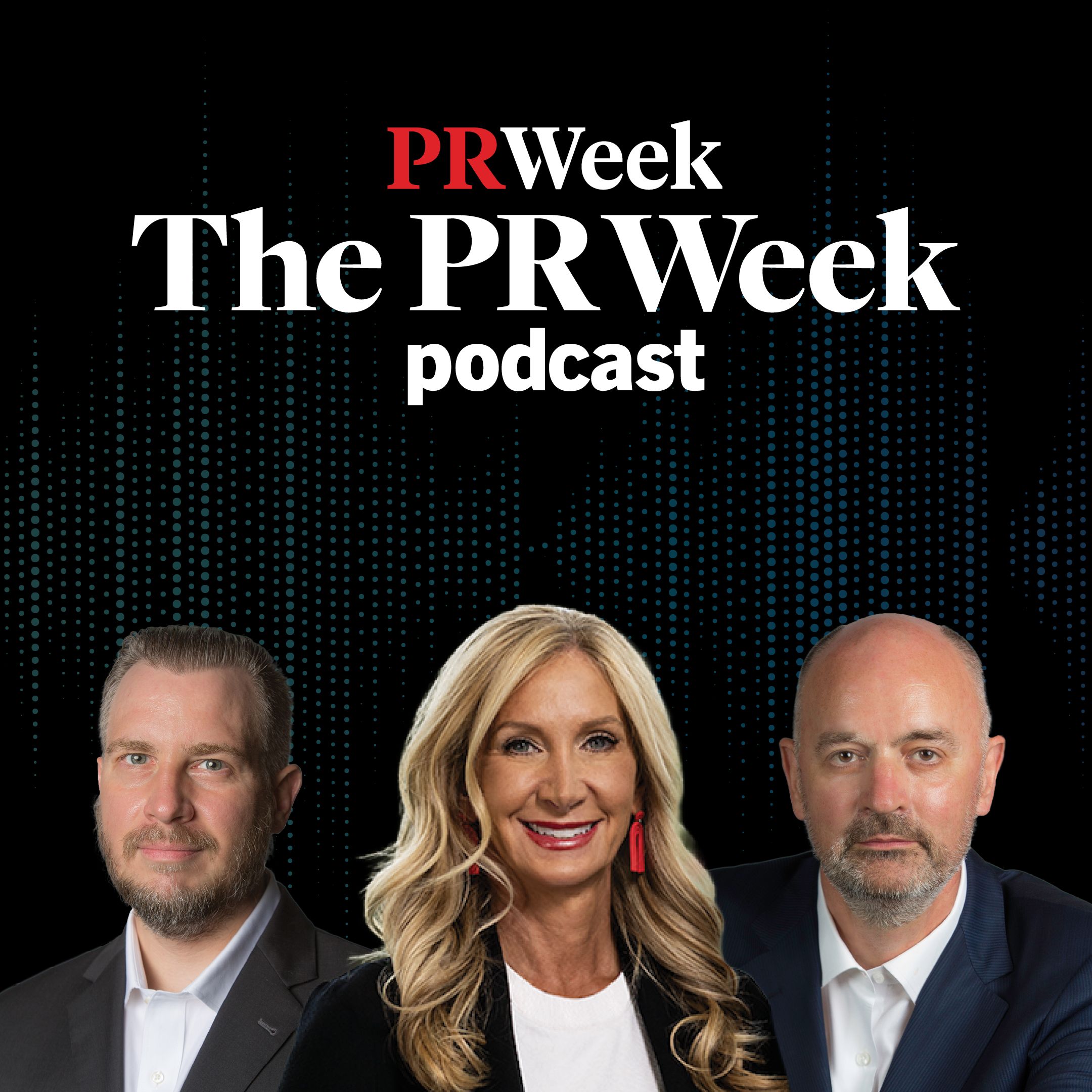
It’s a very special episode as Steve Barrett makes his return to The PR Week.
The guest on the September 10, 2026, edition of The PR Week is Kenny Gold, who was appointed this year as Edelman’s first chief creator officer.
He talks about the changing creator economy and creators as media outlets and news sources in their own right, as well as how his agency advises brands that are working with them.
Plus, the biggest marketing, PR and communications news of the week, including how Publicis Groupe ended up handling media for both Coca-Cola and PepsiCo, the start of the 2026 NFL season and the legacy of Gloria Steinem.
Theme music provided by TRIPLE SCOOP MUSIC
Jaymes - First One
Follow us: @PRWeekUS
Hosted by Simplecast, an AdsWizz company. See pcm.adswizz.com for information about our collection and use of personal data for advertising.