 Ask ChatGPT
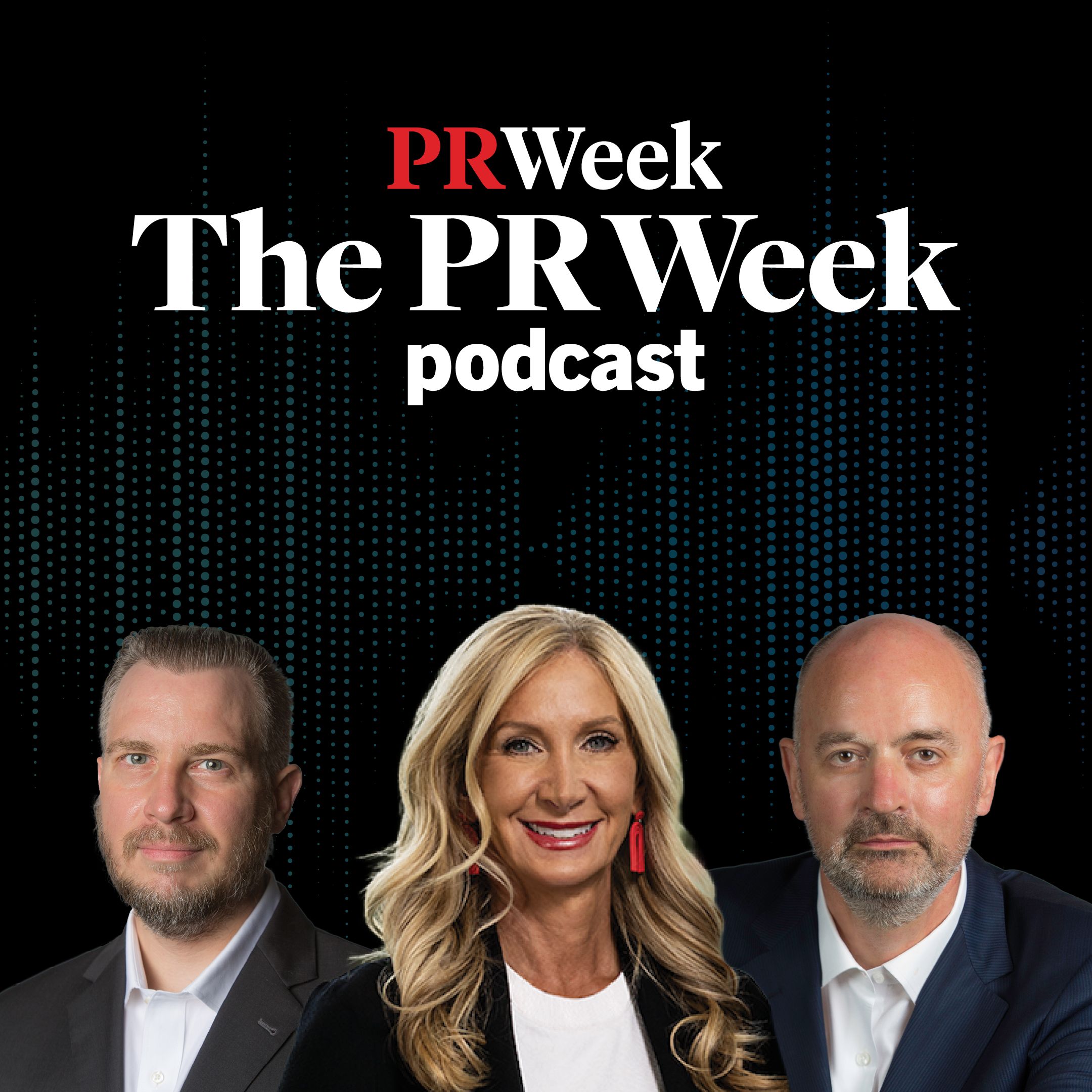


PR Week podcast episode featuring retired Levi Strauss chief communications officer Kelly McGinnis, plus industry news and a forthcoming profile interview with Microsoft CCO Frank Shaw.
Kelly McGinnis retired as Levi Strauss & Co. head of comms; previously led communications at major brands and held senior agency roles (including Fleshman Hillard). She now teaches at the University of San Francisco (USF), sits on Penta Group’s board, and is an amateur equestrian.
CCOs increasingly shape business decisions by anticipating stakeholder reactions, not just executing communications. Trust with C-suite comes from stepping into the client’s shoes and understanding the business challenge. AI should be used with documented learning via an “AI playbook.”
Levi’s “wrapped the batwing” at Levi’s Stadium during FIFA, which went viral; USF class uses real engagements (Levi’s community program; Logitech thought leadership).
Microsoft CCO Frank Shaw (profile subject), plus comms leaders (e.g., former Intel CCO, HP Enterprise sitting CCO, Tara/Lyft, Jennifer/Prologis, Amy/Yelp, J.J. Carter/FleishmanHillard, Christine Boyden/Burson, Dan/Penta, Rachel Peterson/Nectar, Steve Clayton/Cisco). News includes Airbnb’s Fallon O’Connor, Stellantis’ Stephanie Hartgrove, and Chipotle’s 100-creator campaign; U.S. Open activations by Grey Goose, Marvel, and Rolex.
Written by AI. May contain mistakes.
Introduction of guest Kelly McGinnis and her recent activities.
“That's PR Week's weekly podcast for everything going on in the worlds of PR and communications.”
Discussion about Kelly's teaching role and student engagement.
“Yeah, well, it's nice to be able to focus.”
Kelly shares experiences from industry leaders coming to her class.
“Can you tell us a little bit about who are some of the CCOs you've tapped into?”
Exploration of how to establish trust with executives in communications.
“You know, how do you get in front of the C-suite?”
Kelly discusses how students are incorporating AI into their projects.
“And, you know, one of the things that we're going to really ask is how do people tackle it?”
Kelly reflects on the evolution of the CCO role and agency dynamics.
“And these were places where it misled us.”
Discussion on the pressures faced by agencies and the need for relevance.
“Yeah, I mean, I think I have a unique perspective.”
Kelly shares inspiring examples of creativity in the communications field.
“And I think closing that gap so the agency resources are super relevant to what the client needs is the hardest part of the puzzle.”
Discover current inspiring trends and insights in the PR industry.
“So what is the kind of work that you're noticing out there in the industry right now that inspires you?”
Learn about the commitment and community aspects of equestrian activities.
“So before we wish you luck at USF, I'm dying to ask you about horses.”
Stay updated on recent changes and campaigns in the PR world.
“Going to throw it over to Jeremy for a few minutes.”
Discover the key brand sponsorships and activations at the U.S. Open, including Rolex and Grey Goose.
“Yes, Trey McCaslett from Moxie Communications wrote this.”
Learn about the unique collaboration between the U.S. Open and Marvel Comics featuring Spider-Man.
“I think it's, comic books are, we're not really seeing them all that much.”

Get the gist, explore an idea or ask about something said.
 Claude
On The PR Week, what are the key points of this episode?
Searching your listeningAutomatic transcript. May contain errors.
0:00On this week's podcast, retired Levi Strauss head of comms Kelly McGinnis joins us for a talk about her teaching endeavor at the University of San Francisco, how the industry changed over the course of her career and what her equestrian life is like. And in the news, we preview our Newsmaker profile on Microsoft's CCO Frank Shaw, people moves around the industry at Airbnb and Stellantis, and brand activations taking over the U.S. Open with Grey Goose, Marvel, and Rolex standing out. It's all coming up.
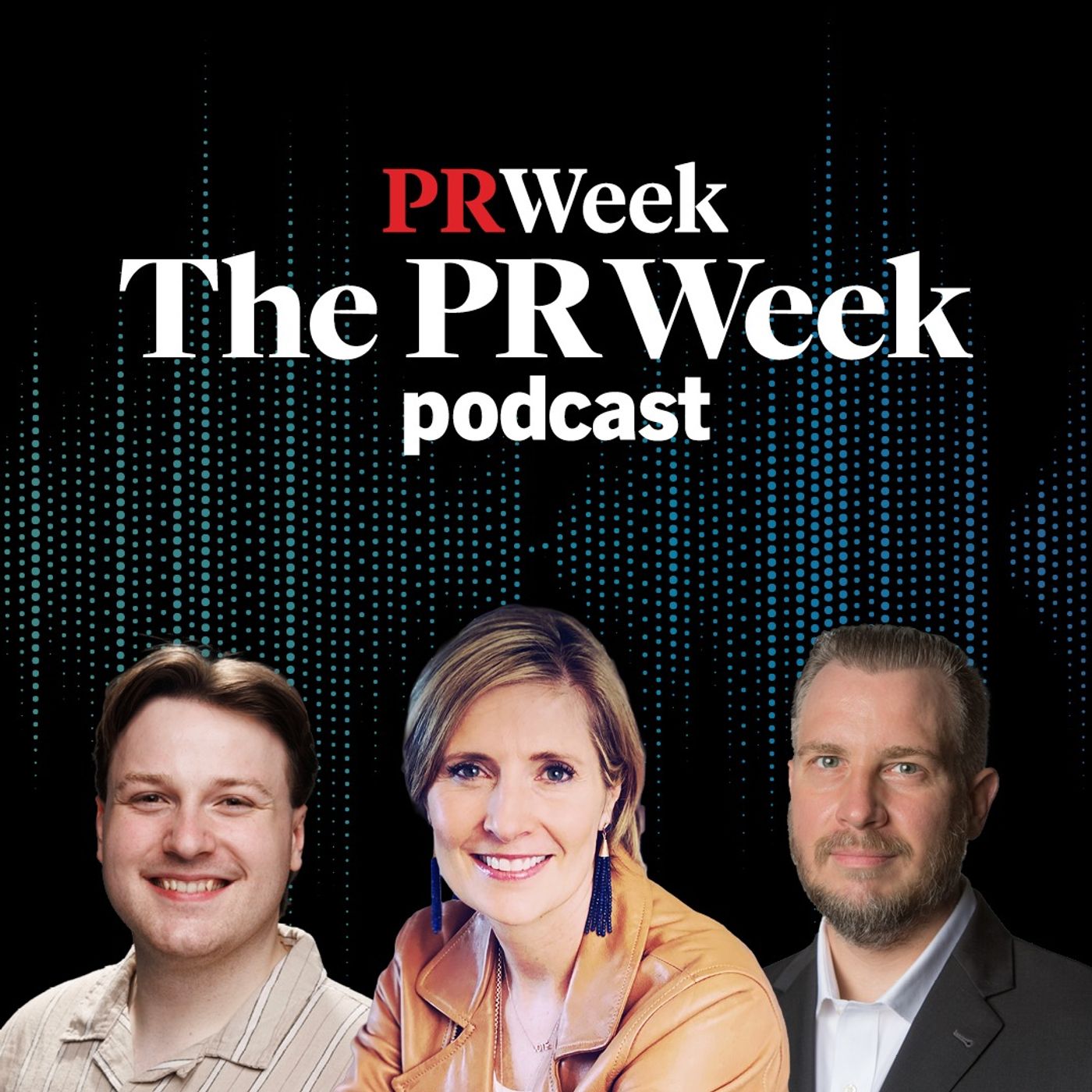
0:38Welcome to the latest edition of the PR Week. That's PR Week's weekly podcast for everything going on in the worlds of PR and communications. My name is Frank Washkuch. I'm your host for this week, and I'm joined by my excellent co-host, Jeremy Sodergren. Jeremy, how are you today? I'm doing well, Frank. How are you? Good to have you back on the podcast. And we have a terrific guest for our audience. That is Kelly McGinnis, the recently retired chief communications officer from Levi Strauss and Company and a one time chair of the PR Week Awards, one time chair of jury for the PR Week Awards. Kelly, thank you for joining us.
1:14Kelly McGinnis: Thank you for having me. I've been looking forward to the conversation. Yes, absolutely. We have as well. So tell us a little bit about what you've been up to lately. I notice, you know, you're doing some things with the University of San Francisco. You're on the board of directors of Penta Group. You're definitely keeping busy into retirement. So how has this chapter been? Yeah, well, it's nice to be able to focus. I think that giving up a dedicated operating role gave me the flexibility to focus more on some of the things I was doing as a side hustle before. So I just started our class at USF for the fall semester.
1:48Kelly McGinnis: And I hope we get to talk about that because it's really fun to get to work with the students. I, as you said, I'm on the board of Penta, which is really a new kind of agency. They're really trying to bring both senior expertise alongside and integrate from the beginning with data and technology. So it's been fun to see how they are growing and what's going on. And then I also have time for a little bit more to put some of my professional skills into my passion areas. So I am a very enthusiastic amateur equestrian and have gotten the chance to get to know a lot of the folks at the U.S. Equestrian Federation and to help them navigate some things as well.
2:30Kelly McGinnis: So it's fun to get to bring my professional skills to my passion. And I can't say no to talking about any of that or about the calf that is walking around in the background as we're talking to you here. Sorry, I closed the door and she didn't like it. No, don't be. Trust me, that's the sort of thing we look forward to. So let's talk about what you're doing at USF. I adjuncted a number of years ago. I loved it. I hated the paperwork, but I love the teaching. And I can't imagine what it's like teaching right now where AI is so ingrained into everything. And I have to imagine for the professor, it must be pretty challenging.
3:06So tell me about what you're up to.
3:08Kelly McGinnis: I kind of see it as an opportunity for them to teach me how they're going to use it. In fact, one of their assignments is to do an AI playbook. So the class that I have is a real world. It's called communications consulting. It's graduate students. Most of them are in their second year. And we do two things. We have 20 sitting CCOs come in and they interview them and really ask them one key question. We're really trying to explore how do you establish yourself as a trusted advisor to the C-suite. And so they get to hear from all kinds of different leaders and folks. And it's incredibly rewarding to get to hear my friends talk about their jobs, you know, and to hear the interviews happening.
3:52Kelly McGinnis: So that's great fun. And then in addition, we have real life client cases that they're working on. And they're not cases, they're actual engagements. And so this year we have a communications plan for a community program that's led by, that's out of Levi Strauss and Company for their community effort around where longer. And Logitech has asked them to think about a thought leadership program. And so the leadership teams will come in and the students will have to defend their recommendations. And it's all real life in action. It's great fun. That is amazing. Can you tell us a little bit about who are some of the CCOs you've tapped into?
4:35Kelly McGinnis: I can. Well, you know, the Bay Area CCO community is really tight. And so I have everyone from the former CCO at Intel to sitting CCO at HP Enterprise. I've got Tara from Lyft. I've got Jennifer from Prologis, Amy from Yelp. I also have the CEO of Fleshman Hillard. So J.J. Carter is going to join us. We've got Christine Boyden from Burson. We've got one of the senior partners, Dan from Penta. So we get a combination of both agency, Rachel Peterson from Nectar. So people who are working with startups, you know, Jennifer Temple has the marketing organization in her remit now. So we get to see the whole span of what sitting CCOs are tackling with and try to find a through line across it.
5:31That is fantastic. I love the topic you're teaching. You know, how do you get in front of the C-suite? How do you become a member of the C-suite? And how do you bring value to it? And I think one thing we've seen over the years is that especially after COVID, communications is, it's kind of here to stay with a seat at the table, but it's how you make the most of it. And I guess, what advice are you giving the students on that or what questions are they asking you about it?
5:59Kelly McGinnis: I think we're exploring sort of the traditional trust equation all the way back to David Meister of, you know, whether or not, how do you really establish yourself as a trusted advisor? And I think the thing that sort of blew my students away in our first session was where, yes, absolutely, you have to know the profession and be credible. Yes, absolutely. You have to be responsive, but really it's, are you, what's, what's your motivation that you're bringing to the conversation? Are you really stepping into that client's shoes or are you trying to sell them something? Are you trying to make yourself look good?
6:33Kelly McGinnis: And I think, you know, really that piece of the puzzle of how do you give yourself over to really understanding the business challenge and making that your primary priority feels a little counterintuitive to all the things that they've been told before. And, you know, one of the things that we're going to really ask is how do people tackle it? So I had them test, do a warm-up session and interview me this week. And, you know, it was great. It was really interesting. And how are the comm students at interviewing? Are they as good as journalists? Tell us the truth. I think they were quite thoughtful.
7:10Kelly McGinnis: They all did homework beforehand. They debated what they thought was a build question versus revisiting other topics. So I thought they were really thoughtful listeners. And, you know, it was interesting because it made me personally reflect. Right. So how do I do that? Because with that core question and for me, it was always be the person who says the thing, like the thing that everyone's thinking, but not saying being courageous enough to be that person and to put it on the table. And so it helped me sort of solidify sort of how I think about these questions that we're talking to others about as well.
7:42That's a terrific expression. I'm glad you mentioned that. When we first started chatting, you mentioned you see AI as an opportunity for these students. You see it as an opportunity for the class. Tell us a little bit more about that.
7:56Kelly McGinnis: Well, you know, I don't think it's realistic to say that we're going to ask them not to use AI. So what I really want to do is understand how they're going to use AI. So what we've asked as one of their assignments is that they put a playbook together at the end to say how they used AI, what they learned along the way that said this was a really good and relevant application. And these were places where it misled us. And so that they both, their clients can see where AI was used, but also that they sort of document with their learnings as they go. So I'm actually really excited to learn from them how they're going to apply it.
8:30All right. You've had an incredible career journey. You've led communications at household name brands, Levi's, Dell. You've had senior roles on the agency side. So how did you see the communications industry change, you know, in your time working full time? And how did you see the role of the CCO change as you were going through your career?
8:52Kelly McGinnis: Yeah, I mean, I don't think there's any one answer, but I think that the business environment that we're all operating in continues to get more and more complex. And so if I really step back and ask myself to answer that question, what I would say is we spent a tremendous amount of time, you said, talking about having a seat at the table and making sure that communications was relevant. And if I fast forward to where we've been, particularly in the last five years or so, it feels like it's not a question of how we're going to communicate it. It's a question of how are stakeholders going to react to this, and that actually informs the business decisions.
9:27Kelly McGinnis: So it's not a business decision or strategy decision gets made, and then you figure out how you're going to communicate it. You actually anticipate those stakeholder points of view up front. And the CCO is expected to have signals on all those audiences, which is not the easiest thing to do. And I think it really takes a tremendous amount of humility to acknowledge that I know some, I don't know at all, and we're going to have to be open to all the different inputs that can come our way. But I think what's really changed is the fact that what are going to be the reputation and communications implications as part of the decision making, as opposed to the how do we execute.
10:08Kelly McGinnis: And I think for a long time, we've talked about the CCO being the integrator across the organization. But it was sort of an informal influence role. Now it's expected, you know. So one of the things that come to mind for me is, you know, the last couple of years having been at Levi's and the tariff situation, you know, that was a joint organization that was finance. It was supply chain and it was corporate affairs all at the table together, advising both our executives and our board on how we were going to tackle it. It wasn't one leading. They all had to work together. And now tariffs back in the headlines so dramatically with the back and forth with Canada.
10:48I imagine that so many CCOs got a little bit away from focusing on tariffs all the time, and now they're back at it right now. So you've worked across the agency world as well. You're still very much in the agency world. How would you say, and there's been so much change in terms of consolidation over the past few years. I don't think it's a secret. A lot of large agencies having trouble over the past couple of years. What do you see the biggest ways that agencies have changed since you started out to where you are now?
11:21Kelly McGinnis: Yeah, I mean, I think I have a unique perspective. I spent more than 12 years at Fleshman Hillard and had a very traditional training ground where I got to see large accounts in action and understand sort of how all the pieces work. And really, and, you know, I always say the special thing about working at an agency is you're surrounded by everyone's a communications person, you know, and so you really get to learn and hear from many different perspectives. My later agency experience was a little bit unique because we built a fit for purpose marketing agency for Dell and we were dedicated under the WPP umbrella.
12:00Kelly McGinnis: So I think that that organization was so fit for Dell that my perspective was a little bit different. And then I made the migration from leading the agency team to in-house and really getting that call when the chief marketing officer says, can you stop making PowerPoints and come make things happen? And you're like, oh, I don't know if I want to do that. So I think my perspective really shifted. From an agency perspective, I have a tremendous amount of respect and empathy for how hard those jobs are right now. I do think the consolidation puts a lot of pressure on the big agencies. And in some ways, it's challenging for the talent as well because they feel that same pressure.
12:45Kelly McGinnis: And what we need as clients is I need really specific relevance. So there's pressure on the large agencies to standardize for efficiency purposes. And as a client, I need even more fit for purpose. And I think the thing that's been incredibly challenging and I believe is starting to really gain traction is the gap between what's possible with AI and what you could actually do. Like the actual deliverables was a pretty big gap from the story that we said of what was possible. It feels like that's starting to close for sure. But more than the most part, I think that at the large agencies, that needs to be on those big accounts.
13:23Kelly McGinnis: It's hard to be a midsize account and get sort of that level of attention. And I think closing that gap so the agency resources are super relevant to what the client needs is the hardest part of the puzzle. And so it has been this migration to more fit for purpose agencies. And you don't get that same benefit of scale out of the gate without understanding how it's going to really fit your agency. Just remind our listeners, what was the name of the Dell agency called? Axicom. Axicom, that's right. We went through a couple of names, but that's where we landed in the end. That's right. That's right.
14:01So what is the kind of work that you're noticing out there in the industry right now that inspires you? You know, those things that you go, and listen, I see this in the media world all the time where I go, wow, I wish I would have thought of that. I mean, what are the things that make you say that or just really makes you bring ideas to work with you every day?
14:20Kelly McGinnis: Well, I am always going to be a fan of Scrappy. And I will boast a little on behalf of the Levi's team. I was so incredibly proud of them. And I get no credit because I'm not there anymore for the work that they did when during FIFA, one of the contractual rules was that they had to cover the Levi's logo at Levi's Stadium. but really they just wrapped the batwing. So it still looked like a batwing. And we were going to bring this up with you anyway. So I'm glad you brought it up. I was so proud of the team and you know, no bot, like you ask, how can AI, is AI changing? No bot would have come up with that.
14:56Kelly McGinnis: That was basically one of the corporate affairs team members ran down the street and took a picture and they just really owned a situation that then ultimately went viral. And I think it was incredible that other brands followed them. So I was really proud of them. And that's the kind of work. It's clever, it's counterintuitive, and it's just the stuff that you have to do in real time that's really special. I think that on the day-to-day, you know, what's changing and that excites me is really understanding sort of the signals that are out there in the noise and being able to break through and identify.
15:29Kelly McGinnis: I felt a tremendous amount of pressure to know what was around corners. And I do think that there is a way to track that that is so much better than what we've ever had in the past. Before we really had to work on intuition. And then you just sort of competed in the executive room of who was the most articulate on their intuition. And it feels like there's real data to say this is what's brewing on the horizon now. So you're based on the West Coast. Yeah. What do people get right about the San Francisco market? What do they get wrong about the San Francisco market? And what would you want to tell people about it?
16:08Kelly McGinnis: I mean, I don't think I can say any broad truism. There's lots of historical about the heritage brands like the Levi's and others that are out here. And, you know, some of the financial services versus tech in the valley. I don't think it's that big of a gap. You see people moving between both of those roles. I think we are a small community. We all know each other. We rally around each other and stay connected. So, you know, San Francisco, it's crazy to see how fast the economy has changed in the last two years out here. and I think we're all incredibly proud that there are no more headlines about a doom loop happening.
16:49Kelly McGinnis: And, you know, but in terms of the PR community, it's a group of friends who all know each other and support each other. And I'll tell you, I have been, you know, I showed you, like, I gave you a preview of the list of folks that I reached out to to join my class. And to a person, folks were like, absolutely, please make time. Or the ones who's, were a little slow, like figuring out travel and other things. I was like, I'm full, you know? So, and that's everything from, you know, my friends at Google to my friends that, you know, Gap. So it's not that there's this big gap between the technology.
17:23Kelly McGinnis: I think people are genuinely busy though, like everywhere. And so, you know, sometimes it, that community aspect, like the, I think that they're, it's much more sort of is, does it fit into the rhythm of how we're working as opposed to people taking a day of travel to go to the East Coast to join conferences and things. I think that's harder for us, for sure. All right. So before we wish you luck at USF, I'm dying to ask you about horses. So let's talk about what you're up to. Tell me a bit about being an equestrian, because I have to admit, this is an area where I have a lot to learn. Oh, well, my husband wishes I hadn't rediscovered this.
18:07Kelly McGinnis: It's, you know, it was, I think there are lots of women and passionate people out there who wrote sort of until they went to college. And then you say, oh, my life is busy. And it's a huge time commitment and it is a lifestyle. And so they let it go. And for me, I came back during the pandemic. We had, I'd been at this desk for about three months on sort of all the crises that were happening. And as you can see, no windows. And so we got a house out in Napa and my kids started taking lessons and sitting on the bleachers and said, hey, could I try again? And found a very welcoming community and have become a really avid competitor.
18:51Kelly McGinnis: So it's at a different level than anything I did as a kid. But I horse show probably 12 to 15 weeks a year. I get to ride my horses four days a week. It's great fun. And it's a really interesting market because the vast majority. So we all you'll have your four year cycle where we'll all watch equestrians and be excited about it during the Olympics. But it really is a sport that's driven by adult amateur women. And it's a very interesting community. So my marketing heart doesn't really understand why brands aren't there talking to us. And so have been really spending some time thinking about building that as a community because we're all very close to our barns, like our barnmates.
19:39Kelly McGinnis: So the few people that we know and we see every week. But then there's a vast gap between us and sort of the national organization. And it feels like there's an opportunity to organize and give people a sense of purpose. And so it's been fun to kind of look at that and think about some modern ways to bring some communications to it. You mentioned the four year cycle. Well, that's that's sort of how I feel about curling, except I don't see an opportunity for me to get more into curling. So I think you never, never say never. I'm sure you're a passionate fan. Yeah. Never say never. I think it's fantastic what what you mentioned that I that it sounds amazing and it sounds like an incredible hobby.
20:16So congratulations on that. Congrats on the new role.
20:19Kelly McGinnis: What I will say, I'll just add, Frank, it makes me stay outside. We're talking, you know, it's you can't multitask. So it's something that makes me really, really present. I'm trying something. I'm trying to get better at something as a middle-aged person. That is not an easy thing to do. So it's a nice combination and it's social. So it's a whole new community for me to join. So it's been a nice mix of something to tackle. All right. Kelly, really enjoyed the conversation. Thanks for joining us today on the podcast. Thanks for having me. Healthcare marketing is changing fast. So why are we still doing conferences the same old way?
20:52Enter MMM Transform, A declaration against the status quo. On March 30th, MMM Transform takes over Philadelphia's National Constitution Center for a bigger, bolder healthcare marketing festival packed with bold ideas, interactive experiences, live demos, and candid conversations. And here's the best part. In-house pharma marketers can attend for free. MMM Transform, March 30th in Philly. Register now at MMMTransform.com. Going to throw it over to Jeremy for a few minutes. So let's talk first about the profile that you're working on, that you have filed is terrific and is going to be up soon, about the number one person on our power list this year.
21:32That's Microsoft's Frank Shaw. And we've explained power list a few times on the show before. Frank is one of the preeminent people out there, not only in technology PR, but explaining how people can fundamentally use AI and not just PR pros. And so tell us a little, take us behind the scenes of what you both chatted about and what you talked to other people that have worked with him for a long time. Yeah. So I spoke with Microsoft's chief communications officer, Frank. We spoke honestly a lot about his transition from agency life into an in-house role. He started at We Communications. He was managing Microsoft's account there.
22:11and he kind of walks me through this mental shift from agency to in-house. He kind of talked about this moment where he was just starting as CCO and he's sitting down in the boardroom and he looks over and has got all these options for a campaign idea and a coworker of his says to him, Frank, you have to decide. And he took that moment and kind of reflected. He's like, yeah, I'm an advisor and a decider. And these decisions now, I do have advisory capacities, but now I'm in this seat. I've got to be the one making those decisions. I spoke to his former boss, Melissa Wagoner, and she had nothing but great things to say about him and his work ethic.
22:57And I also spoke to a former coworker of his, Steve Clayton, who's now running comms at Cisco. Yeah. Interesting communications leader in his own right, too, Steve. Yeah. Yeah. And so he brings him on. And at the time, Steve is running this blog because he's a bit disgruntled at how people are picturing Microsoft in the public's eye. And so he was in a tech position at Microsoft at the time. And Frank kind of approached him and said, hey, I love the things you're talking about. I love the way you speak about the brand. I'd love you to come on. And Steve was like, he took a real gamble with me with that because he brought on someone with no journalistic experience, no comms background.
23:40And it flourished into this beautiful relationship. That might be true, but they're both good writers. Absolutely. Very good writers. So they absolutely had that in common. And you can see how it would work, too. I think there's a lot of interesting tidbits. We're not going to give the whole thing away today. Let's not do that. Can I have a Frank?
23:57Kelly McGinnis: Yes, please. I was going to ask you, what was it like when you went in-house? Well, we could talk about that, but I talked to Frank earlier this week because I was doing some, you know, just talking to folks on behalf of in my role for PENTA. I was talking to some chief communications officer, getting some counsel on how they approach the annual budget cycle. So I talked to Frank earlier this week. And Jeremy, my favorite story about Frank, I have two really good ones. So my favorite is his daughter was young. She's now graduated from college. But when she was young, like eight, he would make her send and sign an NDA because he was of the perspective that she was hearing things around the house and we're going to have discipline around here.
24:42Kelly McGinnis: Isn't that hilarious? And then my other one that I love is that he early on, I was asking him, I mean, one of the things you asked me earlier, Frank, was about what's changed. And, you know, risk mitigation has become such a big part of the role for the chief communications officer. And I think Frank in particular was there way ahead of the rest of us. And he gave me the phrase of who are going to be the three horsemen for this year. And every annual planning cycle I had, I adopted from his tactic, who are going to be the horsemen that we have to face that are on the horizon for us as an organization.
25:19Kelly McGinnis: And it became the vernacular for us and absolutely borrowed from him in terms of a way to think about what are the existential crises that we may face from a reputation perspective this coming year. And I love how we've talked about horses positively and negatively now in the context of this podcast, right? All right. It's amazing stuff. So Jeremy's piece is going to be out soon. Look for it on PRweek.com. And by the way, it will also be in print. It will be a cover story. So look for it there as well. So Jeremy, your first cover story. Congratulations. Thank you. Okay. Bring us a little bit behind the scenes of the biggest PR and communications news of the week.
25:57There's a new head of comms at Airbnb. That's right. So Fallon O 'Connor has been promoted to head of communications and people. So notably, she's taken over some HR responsibilities. She started the role September 1st. She's going to be leading comms. She's taking over from Jay Carney, who left just the first. He's staying on in an advisory role through the rest of the year. Yeah, I'm going to be honest, a little skeptical about running comms and HR at the same time, but we wish her the best of luck, obviously. New head of communications at Stellantis. Yeah, Stephanie Hartgrove, again, starting on the 1st.
26:36She's coming from Johnson & Johnson and is going to be reporting into CEO Antonio Filosa. Apologies. Yeah, so there's some more movement in there as well. Clara Ingenhaus was promoted to public policy and regulatory strategy for international trade. She previously led comms for Stellantis as global head of corporate communications. That's quite the shift from J &J to Stellantis. Yeah. Interesting move there. Tell us a little bit about Chipotle's recent creator campaign. Yeah. A lot going on with this. This is an interesting one. So they've got a hundred creators and they've brought them all in, sent them to their kitchens to do some prep work on some new food items coming out at the restaurant.
27:23Yeah. A hundred creators. It's going to be on run on national TV and across social media. Notably, it's not just food creators. There are some art creators in here as well. There's Ben Treat, who's a stop motion creator, and Alyssa Teo, who created rice art of a Chipotle steak burrito bowl. Wow. Yeah. Okay. Interesting stuff going on. If you're only listening to this podcast, you have to see the look I'm giving Jamie right now about that. All right. We will see what becomes of that campaign. Tell us a little bit about the brands that are taking the best advantage of the U.S. Open. Yeah, so this is coming from this week's Gen Zeitgeist.
28:02It was written by... Very timely. Yes, Trey McCaslett from Moxie Communications wrote this. And he kind of goes over a bunch of the brand sponsorships. Obviously, there's Rolex. Rolexes got the clock. I believe... Are they on the court? I haven't been to a U.S. Open match, so I'm not really positive in positioning. There's like an official time around the court. I was at the U.S. Open last week. Great time. You have like an official time that runs the length of the match. And the Rolex brand is pretty visible around the court. And they also have an activation as you are walking in. Yeah. Yeah.
28:36Yeah. So it's interesting. They're a long time one. What really, the brand that really owns the place is Grey Goose because of the way they've sponsored that Honeydew string. Yeah. If you go, you have to have one. Listen, they're a little pricey. I'm sure. But like all concessions at a major event. but they are quite tasty and I would recommend one. Yeah, I would love to try one. I would even recommend two if you're taking the seven train home. So yeah, the Honeydeuce drink is pretty cool. They've gone beyond just a drink. They have merch there. Trey says when he gets there that all the merch was sold out for the Honeydeuce.
29:19Yeah, the Honeydeuce merch was all sold out. There are little Honeydeuce that float in the drink. Yeah, yeah, yeah, like tennis balls. That's pretty cool. Yeah. One of the cooler ones that stood out to me from this piece was the comic book, the Marvel comic collab. Yeah, I didn't see this. Tell us a little bit about that. Yeah, so it looks to be a Spider-Man comic in collaboration with the U.S. Open. It's quite unique. I think it's, comic books are, we're not really seeing them all that much. I know they're still being produced and they're still being made, but they're, I feel like they've kind of gotten driven out through digital media and things like that.
29:54And I want to make a callback quick because at our health care awards, a similar Marvel collab with a comic won Best in Health Tech. That's a good point. With the Omnipod and Porter Novelli and Ketchum working on that. I think comic books are strangely. Well, Spider-Man's such a good time for the US Open because he's from Queens. Yeah. So it makes sense. It works. It sure does. All right, Jeremy, thanks so much. Thank you. Thank you. And again, we're looking forward to your feature on Frank Shaw from Microsoft, one of the most closely watched people in the industry. Kelly, thanks so much for joining the podcast this week.
30:30Love talking to you.
30:31Kelly McGinnis: Thanks for having me. This was fun. Quick PSA on the dates for your calendar that are quickly coming up. It is September, so the standard deadline is September 26th for the PR Week U.S. Awards 2027. The event is March 11th in New York City. October 15th in Chicago is the big date for the PR Week conference. You can get your tickets for that now, as you can for PR Week's 40 Under 40 in New York City on October 21st. and AI Deciphered in November in New York City. PR Week Hall of Fame is also November 19th in New York City. All tickets available for all of those. So that's all we have time for on this edition of the PR Week.
31:13We will see you again next week for our next episode. Thank you for listening.
31:59We'll be right back. Now at MMMTransform.com.
Kelly McGinnis has worked across technology and consumer PR, most recently as chief communications officer at Levi Strauss & Co. Now, she’s teaching students about having a seat at the table in a graduate course at the University of San Francisco.
On the agenda for this week’s episode:
PRWeek reporter Jeremy Sodergren discusses the top PR and communications news of the week, including:
Theme music provided by TRIPLE SCOOP MUSIC
Jaymes - First One
Follow us: @PRWeekUS
Hosted by Simplecast, an AdsWizz company. See pcm.adswizz.com for information about our collection and use of personal data for advertising.