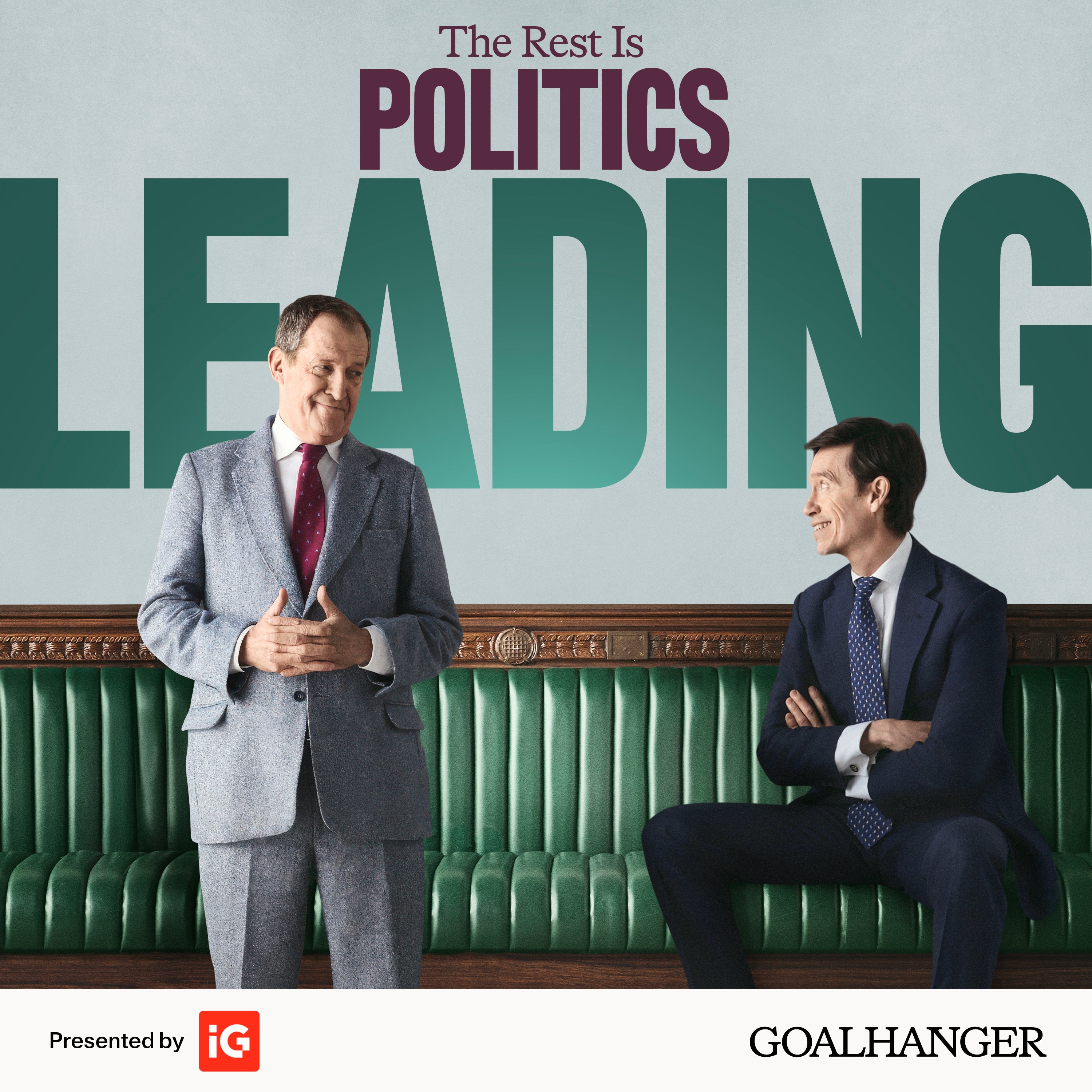
 The Rest Is Politics: Leading
11 Oct 2026 · 1h 15m

 Add vo to ChatGPT or Claude to ask about everything you hear
vo listened to this episode to put together the overview and transcript, so there may be the odd mistake.
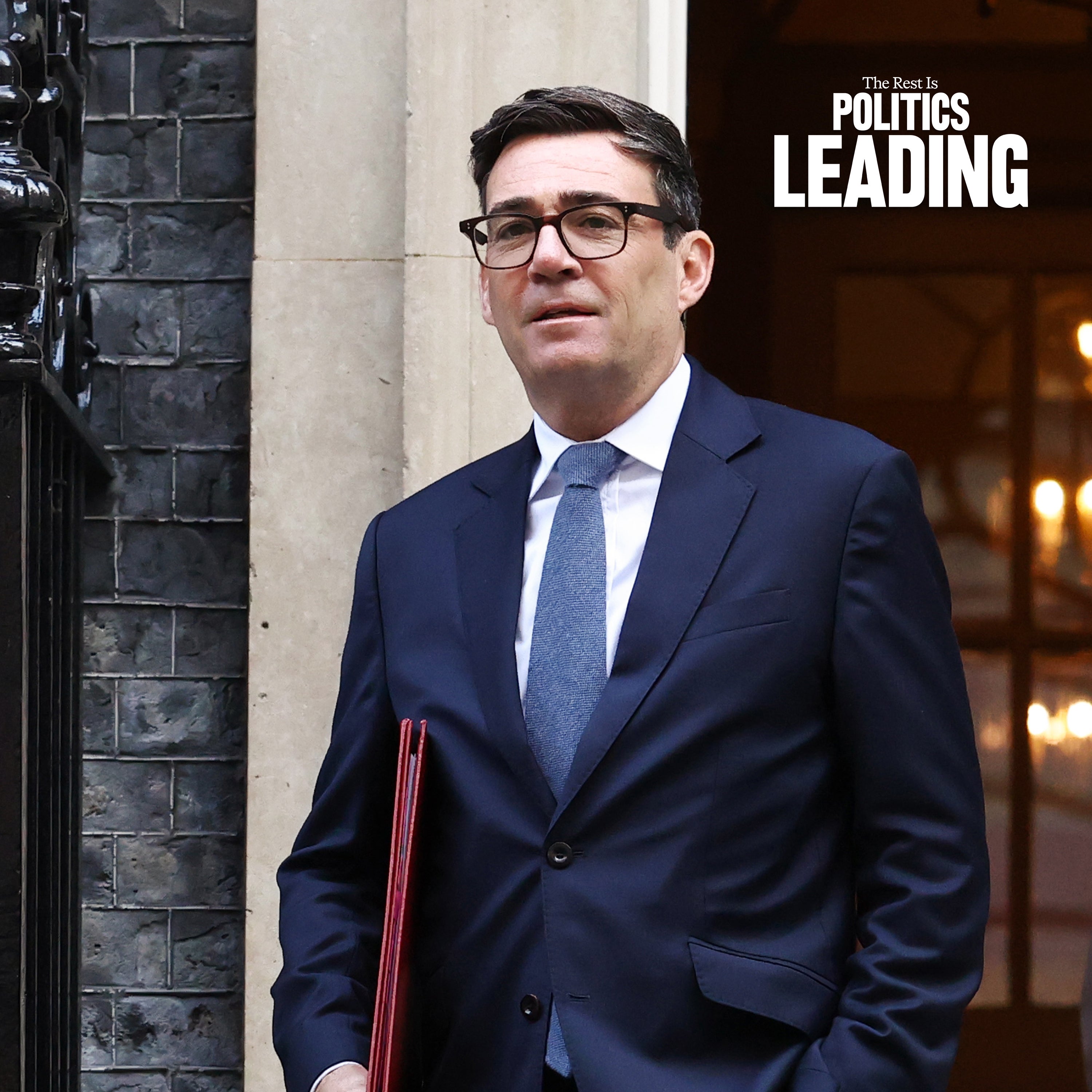
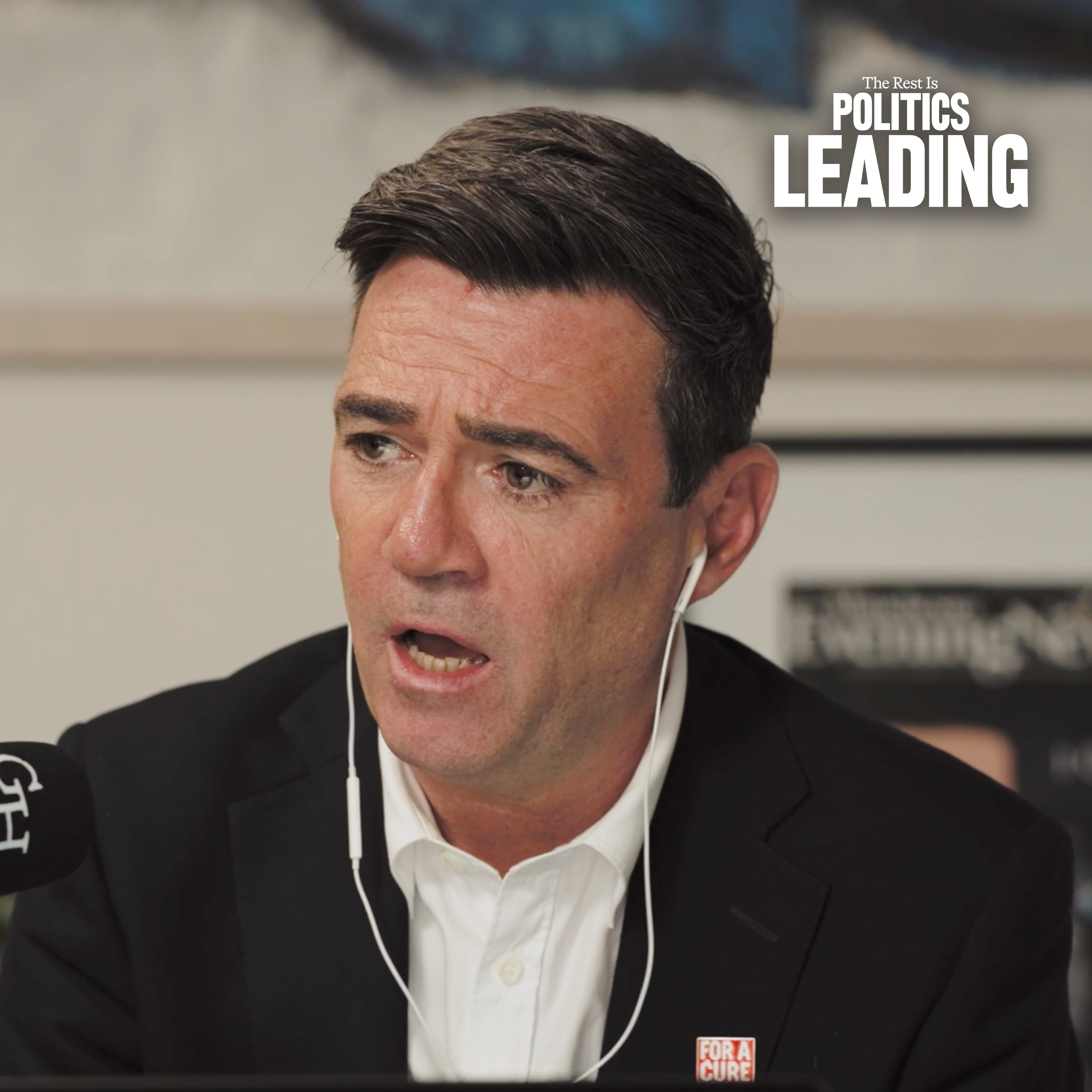
Andy Burnham (UK Prime Minister) discusses his relationship with Keir Starmer and Labour’s direction, arguing Brexit harmed UK growth and that the UK should pursue closer, more practical integration with Europe ahead of a UK-EU summit. He also addresses Russian interference in the 2016 referendum, defence spending and “hybrid threats,” AI governance, pensions/triple lock and funding social care, youth support, devolution, and the Manchester City scandal.
Andy Burnham, Prime Minister of the United Kingdom. Interviewers: Rory Stewart and Alistair Campbell (hosts of The Rest is Politics).
Brexit reduced growth and worsened control over immigration, requiring European collaboration. Russia interfered in the 2016 referendum; misinformation/disinformation is also affecting German and French politics. Defence spending must rise; Britain must be frank about threats and invest in resilience rather than trade off social security. AI models are vulnerable because frontier systems are mainly US/Chinese; the UK should lead on global standards via the G20. Social care reform should be unlocked in the 2030s by changing how pensions/triple lock adjustments relate to care charges.
Hillsborough anniversary at Anfield shaping his political emotion; Pope Francis visit; Finland’s 900,000 military reservists; RAF Fairford incident; G20 AI standards modelled on Gordon Brown (2008); Manchester City integrity process and Emirati investment being conflated.
0:00Thanks for listening to The Rest is Politics. Sign up to The Rest is Politics Plus. To enjoy ad-free listening, receive a weekly newsletter, join our members chatroom and gain early access to live show tickets. Just go to therestispolitics.com. That's therestispolitics.com.
0:21Rory Stewart: Welcome to The Rest is Politics with me, Rory Stewart. And me, Alistair Campbell. And we are delighted to be with Andy Burnham, Prime Minister of the United Kingdom. We are going to be asking him about Europe. What does he mean when he says we're going to get closer to Europe? We're going to be talking about the Brexit referendum. Did the Russians interfere? We're going to be talking about Ukraine and defence. How are they going to get to the level of defence spending that we need? And what is going to happen on pensions? What is going to happen on the triple lock? And how are they going to fund social care?
0:51And when is the National Care Service going to be able to get to the UK? going to start. We're going to talk about Manchester City, big scandal brewing. We're going to be talking about him, his faith, his family, his emotion. And we're going to be asking, how did he become Prime Minister? Why did the Starmer project fail in the way that it did? All this and more coming up with me and Rory and Andy Burnham. This episode is presented by IG. October is here and we're barreling towards the biggest financial moment of the year, the budget. Between that, a new chancellor and a new prime minister, there's genuine uncertainty about what's next for our finances.
1:28Rory Stewart: And of course, uncertainty is a massive problem for all of us. Rumours, speculation, opinions from absolutely everybody. And the trick to navigating all this noise, whether in politics or business, is to try to know exactly where you stand. And that's where IG comes in. From investments to trades, it brings your entire portfolio together in a single app with one unified wallet to fund across all your accounts. And with over 20 ,000 stocks and ETFs, you'll have the breadth to act no matter what the Chancellor announces. And here's the cherry on top. With no annual fees and zero commission on UK stocks, shares and ETFs, more of your money stays where it belongs.
2:06Rory Stewart: Download the IG app to get started. IG. Trade. Invest. Progress. Capital at risk. Other fees may apply. This episode is brought to you by Nordstrom. For 125 years, Nordstrom has been part of your story. The stylist who found the perfect outfit for your big interview. The first pair of walking shoes for your one-year-old. The tomato soup you shared with your sister at the cafe. These are the moments that make Nordstrom, Nordstrom. Big or small, we're here for all of it. Celebrating 125 years with new moments still add. Discover it all in Nordstrom stores and at Nordstrom.com. Fall has never looked or tasted this good.
2:49Rory Stewart: Sweetgreen's fall harvest menu is back with seasonal favorites dressed to impress and made to be devoured. Warm roasted sweet potatoes, crisp apples, maple glazed Brussels and crave worthy flavors in the autumn harvest bowl, maple glazed salmon plate and roasted bacon Brussels side. The season's most desirable menu has returned to Sweetgreen featuring fall's best dressed. Make your move. Order on the Sweetgreen app.
3:20Andy it's fantastic to see you there it's quite amazing to me that you're there and I don't say that other than to say I do sort of look back to how I remember you alongside Tessa 30 years ago and it is such a long time we did a series with Steve Rotherham recently you're a good mate from Liverpool and he made two observations in that series I thought were particularly interesting The first was he said that he thought you both had imposter syndrome at times in your political career. And the second was that he thought you had a Catholic guilt complex, that your politics was driven by your Catholicism.
3:55I just want you to kick off by picking up with both of those. Thanks, Alistair, and good to be with you, Rory. Does any Catholic not have a guilt complex? I think that comes with it. now I uh have if you like over my career had to um believe that I could be in some of the spaces that I was in you remember the early days uh Alistair and I was lucky uh very lucky as you were to work with Tessa because she was a true people person and I look back and think goodness I couldn't have had a better apprenticeship than that you know just to see how she was uh with people. She was an exception, wasn't she?
4:35She wasn't the norm in terms of how politicians deal with people and the public. So I was really lucky and she gave me that confidence to go forward. But yeah, I have always had that sense of am I really meant to be here and am I going to get a tap on the shoulder? But as I've gone through life, particularly leaving Westminster, just coming here where I am now, obviously I'm in number 10 North, but coming back to Greater Manchester in 2017, the really important thing there was I was just standing on my own two feet I was doing it as I saw it I was dispensing with some of the ways of Westminster and really then develop the confidence to say right I know what I'm about I know what I'm doing I know what needs to change in this country and I've come back I think a better version of the the first person who went to Westminster
5:25Rory Stewart: Premise, one thing that must be tricky with all the pressures is finding time for your faith, presumably even finding the headspace to relax or pray or think when you've got 10 ,000 things going on. Is that something that you feel is tougher than when you were a mayor? So I wouldn't want to overstate my faith, Rory. I was brought up a Catholic. I was the full deal, altar boy and everything. And as anyone of that faith will know, it never leaves you. It's deep inside and it's always there. And it was partly the Catholic social teaching that shaped me. I was of the generation where we read the catechism at school.
6:07That's a thing that's of a bygone age now. But what I read there was, in the end, what I believed politically. So I've always seen a very close connection between the two. So the faith is still there. It's still deep inside. I felt the magnetic pull when I took my mum to see Pope Francis a few years ago. And yeah, I'm not going to say that it will ever leave me because it won't. But I wouldn't want you to think that it's part of my daily routine because that wouldn't be true to say that. Andy, you talk a lot about your family. You've always struck me as a very, very emotional guy, somebody who really feels things very, very deeply.
6:50And we saw that in your conference speech, where it really felt like you were going to start crying. You look very, very close to that. And that was obvious. And everybody would understand the emotions of that. But I just wonder whether you are a different person to what you were when you were a younger politician, whether you've actually had to become harder, tougher. We saw just how tough you were to become prime minister. And I just wonder whether that's something that you've learned, developed or something that was always in you. I am tougher than people might think. You've seen me on a few football pitches over the years.
7:27I know how to protect myself and sometimes maybe even put myself about a bit. No, so I always have had quite a considerable degree of resilience. Yeah, of course, politics toughens you up over the years to deal with the ups and the downs, the inevitable ups and downs. Then to pick up on your earlier points, yeah, I am somebody of quite deep emotion. I connect to people. I draw my strength from people's experiences, my reaction to those things. People might remember me at Anfield on the 20th anniversary of Hillsborough. When I feel that personal connection back to something, I draw strength from it and I use it politically.
8:12And I mean that in a good way, not use it in a negative sense, but to give me power in what I say. I don't know if you both can relate to what I'm about to say, but I think as a younger politician, I was able to hide it better because perhaps you're going in with a bit more of your arms up. Whereas I get older, I'm less able to hide emotion, actually, when I'm talking about things. It gets more difficult to do that. But particularly my conference speech, I just thought, well, there's two ways of going at this here. I have been in a position where I've come into my journey as prime minister where my dad was ending his.
8:50I knew that at the time. It has made it quite intense this first couple of months in the job. Do I try and block that out and just do a conference speech that was a more traditional, tub-thumping, point-scoring version? Or do I open up on a bit of that and then let it inform how I'm going to go about the job and what I'm going to prioritize? And the later version of me as a politician very much would be in that latter camp. I wouldn't dream of going back to doing something where I just hold it all back and do quite a superficial thing. I think politics requires a different approach from politicians these days, Alastair, if I'm honest.
9:31Rory Stewart: One of the things that was most electric in your conference speech was the moment at which you said Brexit did more harm than good. And I suppose a lot of people are now very interested in what that really means. Is it going to be just something that you say and that everyone gets excited about in a conference? Or are we really going to see significant movement of Britain towards Europe during your time as Prime Minister? The situation demands it, Rory. So it's not just me throwing out a line. I'm very conscious that we have a UK-EU summit looming by the end of this year. And we've got to the point where serious discussions are happening about, can we do things now to improve the way in which we are working with Europe, particularly in relation to certain sectors?
10:24and as a result add percentage points to the UK growth figures or let's say fractions of percentage points because that's what's in front of us in terms of the summit that's coming around various issues, agri-foods being one of them. And I'm going to go into that process very clear with people that Brexit has done more harm than good to UK growth particularly, but to other things as well. And I'm going to argue for closer integration because that will enable us to improve the growth prospects of the country. And there's also a discussion looming at the summit about collaboration on immigration.
11:12One of the big, big lies of the campaign back in 2016 is that we would quotes, take back control of all of that, and it would all be much easier. The reality is, you need collaboration to control immigration, and that's got weaker. I'm going to go into that process being really clear that if we want more growth, if we want more control of immigration, we have to be prepared to be honest about that, and then what it means in terms of the arrangements we make with Europe. And then also signal that we need to be clear with Europe about what the options are for our long-term relationship with them.
11:52Because already in this job, they would say to me, if we don't know where the UK is going, it's hard to do these arrangements with you. So that's the position I find myself in. It's actually a highly pragmatic position at this point in time. I think we do need to do further work on what those options are for the long run, and it's not to jump to any conclusions. But I'm going to deal with Europe in that way. Face up to it fully, be honest with people, and always, obviously, let the public decide the long-term destination. But we can no longer just talk in the abstract because some very real issues are coming directly at us.
12:29You said there, always let the public decide in the end. But we had Michael Gove on the podcast this week, and he was actually suggesting that it would be perfectly proper, even though he would disagree with it for for the Labour Party at an election to say that we would commit to seeking re-entry to the European Union on the basis of that democratic mandate are you saying that if we do go that far there'd have to be another referendum I think it's it's jumping ahead too far at this stage Alistair but um I do think it's got to be done with the you know the consent of the public I'm not necessarily going to kind of say now exactly what does that what does that look like?
13:07One thing I think is true is that public opinion has moved more quickly than political opinion. I think the political class is behind the public on this issue, and the opinion polls show that. And I think we've got to catch up with the public on the issue to start with, and deal with the very pragmatic things right in front of us. We then have to have a process of looking at what those options might be, and there are a number of them. George Osborne, was talking about a customs union not so long ago. There is, of course, the option just to stay where we are. And perhaps some would say not even do the deal that's in front of us in relation to the summit before the end of this year.
13:50I think we've got to then, in quite a clear-eyed way, look at those options and then see where the public debate is. We're talking to you just after you've come back from Germany where you saw Chancellor Merz, you've talked to Macron, you've talked to others. Do you think we have to go through this even if France and Germany both move significantly to the right? We've just had an AFD winning two elections in Germany. It's entirely possible Marine Le Pen becomes president of France. Do you think even with that, the UK has to go down that path that you're talking about? Well, given what's happening in Germany and France, Alastair, I think it's really important for the UK to step to the fore and say, well look we went through this a decade ago when we saw this rupture in our politics and we've now got a decade of experience and i will go back to rory's quote of what i said in liverpool we have had a decade of drift and division that has caused more harm than good in my view we are a more fractious um country perhaps than we were we have a a weaker sense of direction and these are all the things I'm trying to fix as Prime Minister.
14:58I want to draw a line on that decade. I want to give Britain a clear direction going forward. I want to raise levels of positivity and hope around the country. And that comes from being clear about where we're going. And one thing I did say to Chancellor Mertz yesterday is, we need to support you in taking on the threat that you face, and particularly the type of politics that you're facing. He was saying to me that the AFD are clearly linked to Russia, funded, I believe. They're certainly very close. They're very, very close to the Russians. Some of them are very close to the Russians. And they visit them and all that stuff, yeah.
15:35But I believe I'm right in saying that it's even closer than that. There is certainly misinformation, disinformation that is emanating from Russia into German politics, as I heard yesterday. And I've asked the question myself coming in to this role, because I gave a speech to the UN recently on this very topic. I don't think we knew back then the extent to which there was state-sponsored interference in the British democratic process. But I asked the question coming into Downing Street, well, was there interference in the 2016 referendum from Russia? And I've had the clear answer that yes, there was.
16:16And these things are important now to put clearly on the record and I believe help voters in Germany and France understand that some of this politics is instigated via our enemies, namely Russia. I think we've been too much on the back foot on that actually and we haven't informed people sufficiently about the extent to which people are seeking to disrupt the political process from overseas.
16:45Rory Stewart: And one of the things that Mark Carney has been the primus of cannabis has been very clear on is that we need to begin to think as a collection of countries about how we balance our relationships with the US and China by having some independent options, other kinds of relationships. He talks about alliances and middle powers could be Canada, UK, EU, etc. Could even be South Korea, Japan. And I was very struck that Mark Carney's come very clearly out on that. Ursula von der Leyen from the European Commission has come out very clearly on this. But previous British prime ministers have been a little bit reluctant, I guess, because we've been so deeply embedded in the US system since the Second World War.
17:27Rory Stewart: Do you think that it's sensible for a country thinking about its sovereignty, not to rip up alliances, but to rebalance a bit and to think about having something more like what Mark Carney's talking about, which is a new model for a new world? I think we're in the position, Rory, where we need to look at all of our alliances and maintain them as best we can. I don't think it's a case of choosing between them. That would be a mistake, I believe. but where we can strengthening and uh canada under mark's leadership is an obvious place to look isn't it and forming uh more common cause there also closer to europe and we've talked about that uh already india um the connection uh that britain has there a deep one another area where we should seek to to strengthen the connection keeping the dialogue open with china i think Keir Starmer was really right to go over and carry out a state visit early this year.
18:31So I think it's about Britain using its influence. We do sit in a position where many of our partners will see us as an honest broker in the middle of all of those relationships. And I think we've got to play every relationship for what it's worth. But here's the important thing, Rory, I want to come to. The The important thing is by standing up for what we think is right and not taking positions in this world that we're in to say, oh, if we do that, that might curry favour and therefore we get a connection there or an in with that country. That, I think, is the wrong way for Britain to go in this moment.
19:08I commend Ed Miliband for the way in which he has gone about his role as Foreign Secretary, the clear position he took on the West Bank and the statement that he made to the House, but what he's doing in other ways as well. Britain has to stand for something first and foremost. And this is the point that I would want to get over. Stand for something. Stand for the way of doing things that, if in many ways, goes back to the old way of doing things, for the rule of law, for international organizations and doing things properly. That, I think, is the important thing. And then from there, build the relationships and the alliances that we can.
19:49And otherwise, we will be, as Ed's brother David said recently, a cork bobbing on the sea. We have to first and foremost be clear about what are we going to stand for and defend in this world as it is right now, looking at forms of politics emerging that we've not seen in our lifetime, stand clearly for what we believe in, and then from there form our alliances in a challenging world. And you said, rightly in my view, that the government has not been honest about the reality of Brexit, that we've been in this kind of la-la-land debate of pretending that we could make it work, pretending it wasn't damaging, pretending the Russians weren't involved, etc., etc., etc.
20:29Do you think we need similar frankness in relation to our defenses? The fact is, Rory and I were in Finland recently, where they were saying they've got 900 ,000 military reservists, because that is the level of concern they have about Russia. You know, one of the reasons Keir Starmer fell was because John Healy, now your chancellor, said that, you know, Keir Starmer was not putting sufficient money into our defence to make this country safe. And now we keep, you know, got to wait for the budget. But we're now hearing that maybe John Healy won't be able to meet that target on the same timetable.
21:05So I just wonder whether we don't need to be more frank and upfront with the country, just about the nature of the threat that we face right now. I do think we We need a new frankness in our voice, Alistair. And I tried to bring that to my address, to the Liverpool conference and through that to the country. We are facing massive questions, massive challenges. The only way is for Britain to have a clear sense of direction, a path and one we stick to. And that's the appeal I made at the end. People may not agree with everything that I said in the speech, But if you agree with enough of it, get behind it because we've got to start to move forward.
21:48And we also have to say to people that defense will have to be a bigger part of our public spending. That's just a fact given the way things are and the way the world has developed. So no, we're not pulling back actually from the NATO obligations that people know about. We will set out soon and at the spending review next year how we intend to meet those. That's how we're going to approach this because, you know, if you look at it, we're facing what we call those hybrid threats, you know, the cyber attacks, the state-sponsored mis - and disinformation that I mentioned earlier, but then more serious incidents, as we've seen at RAF Fairford recently.
22:40And then you can take that all the way up, obviously, to what's going on in Ukraine and the Middle East. So we have to be honest with people about that. But it's why I also say don't make a choice between social security in the broadest sense and national security. I think that is a mistake to put those two as one can be ransacked to pay for the other, because we will not be in a resilient position if we have a situation where millions of young people are not in education employment training without any hope that doesn't in my view leave us in a position where we're ready to face the future so it's about resilience first and foremost but then you know all the way up to defense at the national at the national level and we're going to have to be really honest about that in the same way i was honest about social care and we can't turn away from that nor can we turn away from the questions of the defense of the realm.
23:32Rory Stewart: One of the things that really hits resilience is the AI revolution. We're accelerating into a world in which over the next two, three years, we're going to find AI right at the heart of your defense and security, your economy, your public services. But these models, these frontier models are either owned by American companies, or they're Chinese. And that is a massive long term vulnerability for the UK, Europe and every other country. We just cannot in the long run, I think, be ransomed by having our entire infrastructure built off things that we don't have control over. What are we going to do about that?
24:12Well, Rory, it's a good question. And it takes me back to what I was saying before about an honest broker, because on this issue, particularly, I think that is where we can play this particular role. We've had a situation where this conversation about AI has elevated, even in my two months, it's moving right up the agenda. I did appoint an AI minister to attend cabinet, Kanishka Narayan. We have now started to have cross-government discussions at the highest level about the implications of AI, not just from a defense and security point of view, from a societal point of view as well. And what I found recently, particularly at the UN General Assembly is feeling in the middle of different worldviews on this issue.
24:58You do have the US and China going at things at great pace, as you correctly describe, and such pace perhaps that some people then become alarmed by it. Then you have Norway and others calling for a much more regulatory approach. I see an opportunity here, and Mark Carney very much encouraged me down this path to use the G20 presidency to kind of sit in the middle of that and say, look, AI for good, absolutely. You don't want to put the brakes on something that could also bring huge human benefit, which it can, particularly in the sphere of health. But at the same time, you have to have the guardrails and you have to have the principles to underpin it.
25:42And that's what I will seek to do in the role of UK presidency? Can we develop a global set of standards, a global code that is about, first and foremost, taking the full benefit of AI for human progress at the same time, though, as then saying all of us need to do these things in our own countries to guard against the risks. And Mark said to me, follow the model that Gordon Brown used in 2008. You'll remember it well, Alistair, where he did convene people through the G20. It was about the maintenance of the financial system at that time where you work in a way that you can just start to get agreement around the principles that need to guide this and then everyone takes those away and implements them at home.
26:29It's what we're going to try to do, Rory. I cannot say to you on this conversation this afternoon that we can solve it all, but I think Britain is well-placed and credit to Rishi Sunak for creating the AI Safety Institute. We've got good assets here. You know, you mentioned China and the US as the ones who are way out there and they are, but Britain, I would say, is in third place, contrary actually to something Mark said recently. I think we are in a clear third place and I think we can play a significant role here and that would be British leadership of a really positive kind going into this decade that we're now in.
27:08Andy, you mentioned the conference speech for some very, very big moments. And another one was the triple lock, adjustment of the triple lock, partly to fund social care. I'd love to know, medium and long-term thinking on that, how long do we have to wait to see a proper national care service that you were talking about? And another big domestic issue, am I right to be a little concerned that the Alan Milburn second phase of his report is now, it seems, being delayed until beyond the budget? Or should I be feeling optimistic that that means you've decided that the things that he's going to ask for, you're going to meet in the budget?
27:44I think both issues are connected, Alistair, in terms of a new social contract for the 21st century, because both point in that direction. I came to the conclusion that you can't do everything that we need to do to support older people in later life and give them peace of mind only through the pension pension's part of it but I made the point that people are paying unfair care charges with that pension because it's means tested as part of the assessment for social care so you have to look at it in terms of pension plus services and support and that's why I think it was right to start to show how the change can be made in the 2030s to then unlock billions of pounds for social care and start the reform process in a very significant way.
28:31So that's a new way of thinking. But similarly with Milburn, it's about giving young people the support when they need it rather than leaving them on benefits when they're, in many ways, it's too late when they're in their 20s. It's about guaranteeing things for them that we haven't done in recent times. It's about an education system that gives parity to academic and technical. So every young person has a path. It's about experience of a very high quality for all young people as they come through school and into their middle teenage years. It's about a guaranteed apprenticeship if people want to go in that direction.
29:09And then by setting them up for success, you can then make the savings later down the line. Now, it's not at all about Alan's report being delayed indefinitely. We will show the same boldness as we did on the triple lock with what Alan is going to recommend. It's the topic of huge conversation across all government departments. And the only way to do it, Alistair, as well, is not as a traditional DWP reform. This is a whole government approach to the way we support young people. I don't think we have even begun to understand what it is to grow up in these times. Perhaps we've just opened it up with the social media issues, but I think we need a wholesale change in the way we think about young people.
29:53We need to repair some of the services they lost, youth services. We need to change education in the way that I describe. Mental health support has to be there for teenagers when they need it, right there, the moment they need it. It's scandalous that we leave young people waiting months, if not years, waiting for mental health support. We've got it completely wrong. Hence, a million young people are left without a clear direction in their 20s. And it's about a much more significant change than I think comes over when we just talk about a traditional DWP reform. It won't be that. It will be a whole government change in the way we support young people.
30:31Rory Stewart: Premise, imagine I was a entrepreneur from another country looking to set up a business, and I'm trying to work out whether I'm going to be setting up in California or setting up in the UK. And you were trying to convince me that the UK was a country where you can really grow a business, build a business. It's entrepreneurial, it's pro-business, it's pro-growth. How would you make that argument? Because at the moment, as you're probably aware, I go to conferences all over the world where people are pretty gloomy. they don't really see uk as one of the growth engines of the future they think we're over regulated over taxed pretty slow moving and not super enthusiastic towards business so make make the pitch to me if i was going to try to set up a business well the first thing i would say rory is stability i think people are looking for stability in a turbulent world and britain for all of the challenges that we've got still is a stable place.
31:25I believe we can make it better in the second decade after Brexit. And I'm working hard already to lay out that direction that does take us to a better place. I think those businesses, because I speak to them as well, are always talking to me about the talent, where's the talent coming from. And I do think we need to change our education system to make it 21st century ready. But then you ask the right question about what do we do to support an innovation economy, or Gordon Brown calls it an innovation nation. I've been talking about that with him at a conference today. We do need to talk about how do we have a system that supports people to start a business, a startup turning into a scale-up, rewards them to stay, rewards them in terms of committing to here in the long term.
32:12I think there's many people like that who want to do that. And these are questions that are at the front of our mind as we head towards the budget and beyond. So we are thinking hard about this, Rory, but I think it's about a multi-layered proposal. Confidence comes from a direction, I think, at the end of the day. Where is this country going? What path is it on? Laying that out as clearly as we possibly can. I'm not gloomy at all actually I'm really positive about our prospects uh going forward I think there's a there's a political uh impulse out there in these times to run the country down you know the doom scrolling and the kind of idea that everything here is going to hell in a handcart I think algorithms sometimes are working to that to that effect you know I think some of what I hear when I'm over in New York about oh it's all like this in London or it's all like that in the UK I mean And it is a lot of it, propaganda, isn't it, that is being used against us.
33:10We just got to get better at being confident about who we are, where we're going, what we stand for, as I said earlier. And it's work in progress, of course. I'm not going to say anything other than that. But, you know, we are the fastest growing country in the G7, Rory, this year. And sometimes we're not kind of reminding people about these things. We do have the fundamentals in a pretty good place, but more work to be done. So yeah, I'm pretty clear that Britain's still got a great case to make to people who are having those doubts. Andy, I had a couple of meetings with you in Manchester. One, I think, when we were still in opposition and another not long after Keir Starmer had won the election.
33:54And I always got the sense that you did not think the Starmer project was going to work. that you felt there were elements to it that would make it very, very difficult to be an enduring, successful government. And I just wondered what you have learned from that. First of all, is that, would you confirm that that's sort of, you felt that, you felt there were things about that government that just were wrong and weren't going to work. And that's what in the end led you to make the decision. There has to be a change. And if nobody else is going to do it, I'm going to do it. What was wrong about that project?
34:26But none of this is any reflection on Keir, who I've worked with over many years, Alistair. And, you know, we have a regard for each other. I certainly do for Keir, even at the time of the Gorton and Denton issues. And you and I were in touch then. I was very clear in talking to Keir through that, wanting to talk to him. We spoke shortly after it. And we've never let our relationship disintegrate. What I would say, though, if you're asking me the question, I think there was too much negativity around here, I would say. I don't think you can run a successful Labour government without all parts of it feeling they've got a place in it or a voice in it.
35:08And, you know, for all of the criticism of the New Labour era that you and I were involved in, all voices were heard, weren't they? You know, Dennis Skinner would play his part, John Prescott, you know, and I felt that wasn't where it was. It was too negative. It was too factional at times. And that's why I had concerns that it wasn't then able to really sort of make its full force be felt because not all parts of the movement were leaning together. So I can only say that was how I saw it from where I was. And what I'm trying to do is bring a new approach forward where my style is different, if you like, in the way that I speak to the country.
35:51I'm trying to talk honestly about things, face big things that perhaps haven't been faced by any politician, actually. Talk about problem solving, not point scoring. I don't know if you both are getting sick of that phrase, but I'm going to keep using it. And I am going to praise other politicians where necessary. I thought Kemi Badenoch did a very brave thing at her conference this week. In some way, she did something similar to what I did in Liverpool, where she spoke from real personal experience. And that gave her the power to make that point that she did about the racism that we see in politics these days.
36:30and that clear dividing line she drew with others on the right, I thought was a real moment in British politics. And I give her credit for doing that. At the end of the day, it is more important than just what our own side thinks or does. You know, there are some things that are bigger than that. And we should get to a politics that recognises that and is able to speak about that. Otherwise, how do you repair what's gone on in Britain in recent times if you can't do that? And do you think Nigel Farage is on the decline? Do you think he's peaked? And maybe, you know, Labour's just won this by-election in Keir Starmer's old seat.
37:04Do you think the Greens have peaked as well? Well, here I was just making the problem-solving, not point-scoring point. And maybe I'm going to go into a bit of the latter now because obviously we are fresh after a by-election. It's a fact, isn't it, that Labour has beaten reform in the north and the Greens in the south in the last by-elections that we've seen. And obviously that's a good position. I don't know whether Nigel Farage has got the appetite that he once had. We will see. I certainly wouldn't be one of those who would write him off. I think people have done that before at their peril.
37:42Well, no, we'll see when we have British politics evolves on right and left. I think what I would say, Alistair, is we need a new politics. I don't think it's a politics of the kind that Nigel provides because he's given Britain a decade of division and drift. I would hold him very significantly responsible for our failure to move forward in the last decade. I think it is important that we unite people who want something different in the next decade. I'm very much of that mindset. And I'm going at this a bit differently, let's say. You asked me about the previous administration. I think the character of the administration I am leading is different.
38:21I hope people can feel that now. And I think the country needs that. We need more unity between us, whatever our politics. We need more positivity. And that needs to keep on feeding through. And it does mean doing politics differently. and I will stick to that. You can hold me to that as I go through my period of office. Okay, Rory, Andy, quick break, then back for more.
38:47Rory Stewart: This episode is brought to you by Nordstrom. For 125 years, Nordstrom has been part of your story. The stylist who found the perfect outfit for your big interview. The first pair of walking shoes for your one-year-old. The tomato soup you shared with your sister at the cafe. These are the moments that make Nordstrom, Nordstrom. Big or small, we're here for all of it. Celebrating 125 years with new moments still add. Discover it all in Nordstrom stores and at Nordstrom.com.
39:19Brussels clean up nicely at Sweetgreen. Maple glazed, roasted, and edges perfectly caramelized. Sweetgreen's fall harvest is back on the menu. And the season's most overlooked little green vegetable is dressed to be devoured. You know what to do. Order on the Sweetgreen app. Everyone's got a hard question about AI. Your job, your kids, where it's going. Anthropic was built to surface those questions and share what it finds along the way, because there's hope in hard questions. Ask yours at claude.ai slash Spotify and keep thinking. That's claude.ai slash Spotify.
40:06Rory Stewart: One of the things that I think makes for strong political leadership is everybody having a very clear idea on your top team what your priorities are. You're obviously not a great fan of Margaret Thatcher, but it was very clear for everybody in her top team what she was about. Everybody could answer the question, you know, what's Margaret Thatcher about? And I guess my anxiety looking around that table is, are you going to think this is a prime minister who's really going to reward people who lean into innovation, technology, AI? Or is he somebody who's really going to be looking for pro-business entrepreneurial growth?
40:41Rory Stewart: Or is he going to be getting in behind the let's get closer to Europe? Or is he somebody who, in the end, what really matters to him is adult social care or people not in work? And the anxiety I have is those are all things where I'm with you. And I'm also strongly enthusiastic about devolution and about electoral reform. But give us the two or three top things, if you were really trying to communicate to your cabinet, that are the things that matter more than anything, the driving principle that's going to drive this thing through. The word I would come back to, Rory, that unites all of it is more control, more control over our destiny.
41:20And I made that point in Liverpool. You know, the right talk about taking back control, they were the ones who gave it away, not just through Brexit, but through some of the ways in which utilities were broken up and sold off in the past. Control is a crucial thing in the world that we're in. I think Britain is too exposed in the world that we are in. We are not sufficiently in control of our own economy because we don't have sufficient control over the price of some of the basic things that everybody has to buy. We're not sufficiently in control of public spending when we have to chase rents in the private rented sector through the benefit system.
42:00So you have to get back to a position of more control. and I learned that as mayor of Greater Manchester where you have the levers and you can pull those levers to support people and you can set a direction through that control that gives people clarity and a path. That's the thing that I would come back and back to. So it's asserting ourselves as a country that knows where we're going. And you mentioned you reeled off a whole list of things there. They're all part of it and you weave it together into a vision of where we want to go. I'm talking to you from Number 10 North, and one of our problems is we are an over-centralized country politically, democratically, and this is a very serious endeavor, what we are about with Number 10 North.
42:51It's like a startup within the government system where we are going to change the government system from inside, and what's going to happen is more power is going to be placed into the hands of more people and places, indeed all people and places, at a much lower level. And from that comes the control to set new ambitions, to set a public investment strategy. The big learning for me when I left Westminster to become mayor of Greater Manchester was that a country that hadn't any ambition for our big cities before devolution, finally I was able to say, no, Greater Manchester is going to be this in the future, and I've got these levers to start taking us towards that ambition.
43:32And that is not where we've been as a country in our lifetimes. It's all about allowing people to be intentional, to shape their own places, to shape their own economy. And that is a very different way that we've run the country in the last 40 years. And I will stand by that. I'm very proud of what I did working with Alistair in that Labour government of the 2000s. But I don't think we repaired a sense of control to the places that have been hurt by deindustrialization or who'd lost control through privatization and deregulation. You have to give people the sense that they have the ability to set their own path in a really dangerous and challenging world.
44:15And I would say if I strip it all right back, it would be that. and all departments need to lean into devolution now. They need to come together in the place-based context and make things work. Invest in people's success. Don't pay for failure as the British state has too often done in the past. I want a more preventative, person-centered, place-based, productive British state in the future. And you might remember Andy Street and I appearing on this amazingly influential podcast. You know, we were talking about that then, both of us, a different politics, a different way of thinking about places, a different way of setting them up for the future.
44:58Well, all of that is coming through now in the leadership I'm providing at a national level, and you will only get a stronger and stronger sense of it as I go on. Andy one of the big reference points globally for the success of Manchester are the two most famous football teams in Manchester and one of the Manchester City is in the news for a lot of the wrong reasons right now and did you misspeak do you think when you came out and said you hope that this didn't lead to the Emiratis leaving Manchester or were you trying to make the point that the football is one thing, but the UAE's role in the development of Manchester is another, and that has to be maintained?
45:38I don't think I misspoke. What I would say is my mind hadn't been on all of the issues. My mind had been on Labour Party conference that I was doing interviews in relation to it. And also, I didn't link those two things. The questions linked those two things. What I would say, Alistair, is they're very separate. the football issues are different from the investment issues people will try and conflate those two things but they they shouldn't in my view the football issues the findings of the independent commission are serious as i said in the interview they need to be if you like understood as as being extremely serious vast majority uh of of people in the country will say football needs integrity and it needs to convey the sense that the rules apply to everybody That is crucially important, but the process is independent now and it has to run its course.
46:35And I don't think I should say more about it than that, but I did say that as well in the interview. But I see now people trying to conflate these things. I've been asked by the leader of the opposition to publish details of my meetings, which I'm happy to do. I will quite clearly put out there everything that I have done working with them in my previous role as Mayor of Greater Manchester. None of it is recent, actually, in terms of the meetings I had. I only had one significant meeting, actually, and that was in 2021. So, and, you know, that is right. And I will put that all out there. But the football issues, they are serious and they have to be dealt with.
47:22And the process is independent, it has to run it, of course. But I think everybody should separate the investment issues because they're not the same thing.
47:29Rory Stewart: Very cheeky premise then to come in behind this. But one of the things that strikes me when you talk about control, which I think is a really good word, is that's also about control internationally. It's not just control domestically. We're in a world where we don't have much control. you're about to go into a budget where the Financial Times reckons you've lost 20 billion pounds of headroom because of something Britain had nothing to do with, which is Trump and Israel deciding to go to war with Iran and the Strait of Hormuz being closed. It's a very interesting example of how not only we don't have any real leverage or control over that, Europe doesn't, Canada doesn't, and the Gulf countries that are right in the middle of it seem to have no leverage either.
48:13Rory Stewart: So I think as the world becomes more assertive, and whatever you think of Donald Trump, as he begins to assert American interests more through tariffs, through pressure, driving for his vision, having control means having more independence, having more sovereign autonomy, and actually going systematically through the ways in which Britain is overly dependent on other places from China to the United States and working out how we wean ourselves off that dependence? You could put it that way, Rory. You could put it a different way in that control can come through collaboration. I mentioned immigration earlier.
48:56I think that is a test case where you could say your control is enhanced the more you collaborate with other countries because the world is as it is these days. there's very little, I think, that a country of our size can completely do on its own. The market that we have isn't of a size, if you like, to service all of our high ambitions on something like AI, for instance. So I think it doesn't, though, point to going back to where we were, or there's different relationships that Britain can have with our partners going forward. And this is what we're going to flush out over the next year. You know, I've asked Hamish Falkner, I've asked him to look at the options in relation to our relationship with Europe and lay out what do they look like.
49:45The world's not the same as it was when we left the European Union. It's different now. We've got Mark Carney talking to Ursula von der Leyen about a different relationship between Canada and the EU. So let's look at what's possible and then decide what's right for us.
49:59Rory Stewart: And just on that, I mean, I think you used the word intentional too. One of the things that's very striking about Mark Carney is he's being very, very intentional about this. He's seen the problem. And the problem basically is we can't continue to just have the US and China as the two poles. And you would have heard the president of Finland talk about this too. Idea that essentially we need a tripod, right? That the best guarantee for Britain is not going alone. As you say, we're probably too small to do that, but intentionally forming a third group of countries that provides us with a little bit of hedging, a little bit of balance, a little bit of optionality, a little bit of choice, and intentionally working out everything from critical minerals and rare areas through AI to defense and security to work out where we can find a third group of independent suppliers, which are not the US and China in every sphere.
50:51I think you're making a really good point. I was discussing this very thing with Chancellor emerged yesterday you know the north atlantic the north sea is becoming more and more important from a strategic point of view related to the issues that you just uh just mentioned not just um energy or rare minerals but also defense and security and we're we agreed to host the north sea summit early in 2028 in consultation with germany and that will take place um in aberdeen we hope So we are very conscious of those issues. And as I say, forming alliances where we can. I come back to the control issue, because in many ways, the right of British politics had the right diagnosis back in 2016, that more control was needed.
51:40Its solution, though, did the opposite. It weakened Britain's control over its own future. And this is my point. And I go back to this summit that's in front of us, Rory. Yes, I want to do a deal on agri-foods and energy. The issue is it might be that we just have to align then with what is already there. I still think there's an argument to be made for that. But could we be rule-takers, not rule-makers long-term? And control isn't necessarily enhanced by looser alliances. We do have to look at all of these issues quite carefully and not jump to conclusions. I'm not jumping to conclusions, actually.
52:20But I am going to be honest with people and say where we are isn't good enough. And we need to have an honest conversation about how do we get to somewhere better. And that's going to be something I don't shy away from as Prime Minister. I want Britain to be in a better place. I do want us to have a greater sense of belief again around the country. Hope again, as I said at the conference. And currently, we're not in a position where we've got enough of all of that. I want us to have more. And that means being honest with the public about some of the big decisions, strategic relationships we might want to develop now going forward.
52:58We've managed to get through this entire interview almost without talking about Donald Trump. I want to ask you this. So we've just had the Nobel Peace Prize winner announced, Navi Pillai, who focuses on law, on international law, on human rights, on trying to get peace in the world. and this is a prize that Donald Trump famously wants to win and it's happening on a day when the United States is talking about becoming I think one of the third or fourth countries in the world to bring back public executions. Now I know you're not American, I know you're not a commentator but I saw the government line on this with it's a matter for the US but aren't some things of such fundamental importance to the values that we hold that actually calls upon all of us to call that sort of thing out for what it is well i think we should be very proud of our of our traditions um and that we don't ever want to see anything of that kind here and i hopefully speak for most people when i when i say that and you know we can only i think in in these times speak for our own values and what we would do and what we're about as i said to rory before what do we stand for we don't stand for that you know we wouldn't uh support that i certainly would never support that so i'm happy to make my my view clear i would also though say you know it's not necessarily uh the same then as make if we make clear what we stand for you don't have to go around providing you know a constant running commentary on every what everybody else just be clear about what we stand for what we believe is right and wrong let britain stand for something in a world that seems to change every day.
54:38That's what we've got to be. And be constant too. Yeah, I mean, it's something that, you know, I can't say I ever would want to see anywhere in the world, Alistair. It's, you know, something that I find quite abhorrent in many ways. But, you know, I only want to speak, though, for what we will do, why we will do it. That's the best way to go at things right now. Right, my final one. The old press secretary is coming out of me. I'm now worrying that we've gone on. You must have something else you've got to go and do. We could talk to you for hours happily. They are looking at me now. Okay. Last one.
55:15Last one. I started with the mini series we did about you with Steve Rotherham, who knows you as well as pretty much anybody outside your family. And I want to go very briefly to this book that I've been talking about right now. And first of all, when you do your next book, get yourself a better agent, because Steve told me the deal you did on this book. And honestly, it was the good one. But look, you end up, right, with these 10 points. And the big issues, I want to go through the one by one. You just say, are they going to happen or not? Right. This is your solution. Right. Written constitution.
55:54I support one. I've always said that. And I was in Germany yesterday talking about - That's number two, basic law. Basic law, a British basic law. Absolutely, I would like that. The commitment in law to equivalent living standards in all of the regions and nations. If we'd have had that after the Second World War, like Germany committed to, I think we'd be a different country today, Alistair, if we'd have put that down as the guiding operating principle for the UK in the post-war period. And we didn't do that. And we're quite uneven as a result. So, yeah, a British basic law for sure. Number three, reform of the voting system.
56:31You talked about that. Number four, removal of the whip. Happening? I will take a very different approach to that. I would go back to what I said before. You didn't counsel Tony to ever remove the whip because I can't remember it happening when we were in power. Did you? Or maybe you did and he ignored you. You would have done that. Knowing you, you'd have been absolutely calling for that. But he had the good sense to ignore you. Number five, Senate of the Nations and the Regions. Number six, full devolution. Yes, yes, yes. Number seven, two equal paths in education. You're doing that. Eight are Grenfell Law.
57:07We've had that. Nine are Hillsborough Law. Ten net zero to re-industrialize the North. Yeah, and I think there's an opportunity in relation to the North Sea. We're going to have to use oil and gas for some time. That's a fact. That's not a controversy to me. That is a fact. But it needs to pay for a clean energy future or provide the bridge to a clean energy future. It could help speed up the decoupling of gas and electricity prices. I stand by the book, Alistair. I think it stands the test of time, and I'm not going to change my tune coming into this job. I can guarantee both of you. You asked me before, Rory, about what would I do and what would I stand for?
57:47Would all of my cabinet know? You definitely won't have a sense that you don't know what I'm trying to do. You may not agree with what I'm trying to do. I accept that, but you'll definitely know what I'm trying to do. It's that strong path for Britain in the 21st century, learning from some of the wrong turns of the last 40 years. That's what I'm trying to do. You can keep coming back to me, see whether I'm doing it or not, but I'm actually, you know, I'm invigorated. I'm loving the job, loving the opportunity and grateful for your time this afternoon. Well, lovely to talk to you again, this time on your own, without Andy Street.
58:23your careers have gone in very different directions. He's a good man though. Thanks very much for your time. He is a good man, yeah. All the best to you both. Thanks a lot.
58:30Rory Stewart: Thank you, Prime Minister. Bye-bye.
58:35Rory Stewart: So Alistair, listen, I liked some of it. I thought some of it was very interesting. I would have liked to push harder on some of the AI rules-based international order stuff, but that's obviously the bee in my bonnet. There were some bits I thought where he was being more of the cautious prime minister, understandably. Maybe we weren't breaking through. And there's a pattern in his voice, isn't there? Oddly, where he's most confident, he gives shorter answers. And where he's slightly evading, actually, the answers become a bit longer and a bit more sort of verbose. Is that common in politicians?
59:13Rory Stewart: I guess it probably is, isn't it? I don't know. I mean, I always find if it's something I don't particularly want to talk about i tend to go short uh but i know you mean it's the sort of idea that you're taking the ball to the corner flag and knocking about a bit and thinking they probably want to move on to somebody else i'll just go a little bit i mean the thing is that he is a very very very good communicator he's he's clear and i actually did think that the i could see you came back to the idea you know do your cabinet really know what you want and he came back to that and i think they do and i think the reason why I keep going back to that book, Head North, is because a lot of the stuff that he's trying to do now is actually in there.
59:52You know, the way he thinks politics doesn't work, the way that we need more devolution, the way that there has to be a different approach to how we do politics. I thought that was good. I thought he was, I don't know, I think I'd love to have had two or three hours, is the truth, because I think there was some things I'd like to really drill down on you on AI. I think we should probably have drilled down a bit more on climate. I got the feeling there he was basically saying they're going to do these new oil fields and that will be quite a controversial thing and it was interesting how he said you guys are probably fed up with me saying you know problem solving not point scoring and it is one of those phrases that could grate a bit of times but fair play if he's going to keep going with it i thought it was really interesting what he said about kemi badenox kemi badenox spent a lot of her speech basically saying he was you know not the real deal and he was paddington bear and he was didn't understand this and didn't understand that and the one thing he took out of it was her was actually something he could praise her for which was she took on farage over racism and i wonder whether i was thinking well is that because actually labor needs the tories to pick up a bit of support from revolver i don't know but so i i kind of like this there's still a freshness about him that i like i think that's what i you You know, I felt engaged and interested throughout.
1:01:11I did keep looking at the clock and worrying it was going to have to go off. And so we're trying to get through too many different things in a short period of time. But I think he's had a great start. I don't think anybody can dispute that.
1:01:22Rory Stewart: Let me parse out some of the things that I took behind the scenes. And maybe I'm being a bit unfair. So let's say I'd listen to that interview. First thing I'd say is he doesn't sound that he's quite got into the carny place yet. he's still not really prepared to say our relationship with the us has fundamentally changed this old rules-based international order is broken we're going to create a third leg on the tripod to balance the us and china i don't think he's quite there yet and he's still talking about we need all the alliances and multimodal and my worry there is that that's not intentional enough that's a bit fudged yeah yeah and it's not going to allow his sexually safe defense or as AI people to make the really difficult decisions, for example, on buying US kit, right?
1:02:08Rory Stewart: It's going to be a huge question. 65 % of our defense expenditure is buying US kit at the moment. I mean, one of the problems with what Trump has brilliantly pulled off by convincing Europe to spend more on defense is a very large amount of that money just pours into the US economy, not into the European economy. So that was one thing. On AI, pleased to hear him talk about safety. But it's still, I can feel the tension in his mind where he's sort of balancing. I don't want to sound like a doomster. I want to talk about upside. I want to talk about Britain as the third country in AI. Now, it's sort of true, but it's a hell of a long way back.
1:02:48Rory Stewart: I mean, if you were watching a running race, it's like every horse has fallen over. And the British horse is coming on sort of nine minutes after the US and Chinese have crossed the finish line. It's not a close third. And then finally, I guess, business. And that's where I still think the story around growth is a little bit vague here. And he's still saying the problem is deregulation and the solution is more control. When many, many businesses in Britain think the problem is there's far too much regulation and far too much government interference in letting them get on with their stuff. and that it's holding them back and that a lot of it is silly.
1:03:32Rory Stewart: And we're still not seeing the stuff on tax. I mean, he talked about wanting to make it a place where you set up a business and you feel you're going to keep your money in Britain and stay there for the next 20, 30 years. But I wonder whether people really look at this government and think, I want to set up a business here because I'm going to be confident I can leave my money here for 20, 30 years without somebody coming after me with weird wealth taxes. Well, you know, I think I said to you last week that I would have liked from John Healy's conference speech, something indicating the sort of themes that we're going to see in the budget.
1:04:03And I guess we gave him the opportunity to do that and he didn't take it. So we're going to have to wait and see what is in the budget. I think it's going to be pretty tough. I thought in relation to Alan Milburn's NEATS report, I was worried when I heard it was postponed because we'd been expecting it to become before the budget. And so I was thinking what they're going to do is Alan Milburn's going to set out his report and they're going to respond in the budget.
1:04:29Rory Stewart: Can I interrupt, Alice? Is that because the report's basically written? So the only reason they would delay it after the budget is because they don't want to have the debate about it before the budget. It's not that it's not written, right? No, I think what Alan Milburn wants to propose is clear. And I think they know what it is. I guess it's a question of he seemed to be indicating that they are going to adopt a lot of what Alan Milburn is suggesting. That's what I took out from what he was saying, the tone of what he was saying, which says to me, are they actually going to make the part of the budget some of those issues he was talking about in relation to young people, education, employment, training, etc.
1:05:05So we'll see. But that's my optimistic take on that. My pessimistic take this morning was when I heard that they were not going to be publishing it because that would have been a more logical way to do it. But we'll see on that. And then on Brexit, again, I thought the Brexit position was interesting. I think he's just putting it out there that we're going to have to move. It's got to be changed. I'm not going to jump ahead to say what I think it's going to be. But it was like it's this idea of trying to give us a sense of direction on it, I think. And again, maybe I'm just being too optimistic and too hopeful.
1:05:40Rory Stewart: And do you think if you were an ambitious cabinet minister trying to catch the prime minister's eye and you were thinking, what are the topics where I'm really going to prove that I'm the up and coming person? I'm really going to catch his eye. I'm really going to excite him. I'm going to be the person who's going to come in from my portfolio. It doesn't matter health, defense, whatever. And I'm going to do something that really makes this guy light up. what do you think that would be what are the things that really tickle him because i can i'm pretty sure i could tell you what those are for margaret thatcher what they would have been for tony blair actually i even knew what those things were for theresa may what would be those things for for andy burnham i would say um europe vocational education social care apprenticeships and i think it would be a a very different politics and a and a very different relationship and a better relationship with business i think that's what he would say and i do think i it's very it's so interesting to see him there but you know as he as he reminded us the last time we interviewed him he was the mayor of manchester andy street was the mayor of west midlands and andy street's now lost his mayoralty and andy burnham's now prime minister uh i i am i i have a real sense of what it is that he's trying to do and it's so interesting that he people keep saying he's a great communicator and you know technically he's a very very good communicator but what i'm picking up from you is you still don't quite feel you're clear about where this is all meant intended to head is that right yeah yeah yeah i think that's right because i think it matters for the as you know better than anyone it matters deeply also So for the civil service, senior civil servants, mid-level civil servants, that they can grasp it.
1:07:27Rory Stewart: And it's the superpower, isn't it, for a sexual estate to signal to the department, I'm doing something very difficult and risky, but it's absolutely something the prime minister wants me to do. And I'm still not quite there. I mean, the one he identified by name was Hamish Faulkner, who's doing Europe. um look i think some of these some of these issues are he's desperately trying to be positive he's desperately trying to you know their slogan was hope again and as kemi bade not rightly said hope is not a strategy um but he's trying this trying to generate this better mood so that they can take some of these really difficult debates forward over time and ultimately ultimately that is what so much of leadership is about.
1:08:15It is ultimately why Keir Starmer failed, I'm afraid, that he couldn't take people on these longer journeys.
1:08:19Rory Stewart: Maybe this is just me being myopic, but if you were dealing with Mark Carney, let's say you were in Mark Carney's cabinet. If you went into him and said, Mark, we've identified our 10 vulnerabilities where Canada's too dependent on the US and China, and I'm giving you my weekly update. We've set up this industrial policy, we've set up this alliance, we set up this factory, we set up this import, we set up this trade, I've tackled one, three, five, I'm going to get on with seven, four, and two. You'd get a sense that you were the man, you were going in the right direction. If you were in Singapore, and you said, I'm putting AI right at the heart of everything we're doing.
1:08:57Rory Stewart: And we're doing these incredible new things, there's data centers are going to go in, I'm building a lot of data centers, and we've got a lot of talent coming in from the smartest software engineers in the world. And we're beginning to develop our own interesting government industrial strategy. and investing in chips. I mean, I can sort of get that. Here it feels more like what you're saying is that if you are West Streeting, it's not quite that you're going in to say, I'm going to move from buying 60 % of my kit from the US towards buying 80 % of our kit with European allies. It's more apprenticeships, building stuff in areas of Britain where we want growth, that kind of stuff, or am I missing it?
1:09:38No, I don't know. No, but what I'm picking up from you is interesting because I got the feeling during the interview that you were really engaged, really felt that this was most of the stuff you were absolutely supportive on. But there's clearly something there that's not quite grabbing you. By the way, on the middle powers, I was talking to somebody in the Canadian government last night who just, we're talking about something completely different, but on pass on said, I think we're making real progress with the Burnham government on the middle power strategy, just out of interest. So I wonder if on some of this, it's this sense of communicating day to day, and he's out there most days sort of talking to the country, and whether it's on social media, whether it's on something like this or whatever, is doing this where he's trying to give a sense on a day-by-day basis of progress towards some big plans, many of which are going to be long-term into the future.
1:10:38So, for example, when I talked about the National Care Service, I didn't really get a sense of, well, how many years is it going to be? When we talked about the European journey, we didn't get any clear about where we're going to be. Now, I understand that because you can't answer that right now. And I hope this stuff becomes clearer at the budget, but I suspect my worry for the government and the budget is the budget is going to become a really difficult moment in the life of this government, as opposed to necessarily a moment of forward, of advance and momentum. And I guess that all goes down to the truth that every government in Europe is facing at the moment is that the economy is bloody difficult and the relationship with Trump is really difficult.
1:11:16I thought he went further eventually, your point about the longer answer, shorter answer. I mean, I don't know about you, but I feel utterly sickened by this thing in America of the public execution.
1:11:28Rory Stewart: It's just unbelievable. Just to explain, I mean, it's horrible the British government saying they don't condemn other. I can assure you when Iran does it or Afghanistan does it, we condemn it. Absolutely. The idea that somehow we have our own values and we don't go around telling off other people. We go around the world ticking off everybody whenever they do anything that offends our values until it's the United States. Yeah. And that's because, you know, because they still are trying to manage Trump and they still are trying to keep the defense relationship going, the intelligence relationship going, etc.
1:11:57But eventually, he used the word abhorrent. And as he said that clip, I thought, oh, God, that'll be on the American media before too long. And then Trump will come back with something about I don't know what. So in a way with Trump, they're all having to walk this very, very difficult sort of balancing act. And maybe he's still trying to work out how he does that. I think they're further down the middle power strategy than he was indicating. I hope that's the case.
1:12:23Rory Stewart: Maybe my final thing, without sounding too technocratic, is your friend Michael Barber, I think would say that what we need to begin seeing is a little bit more of the timelines, the deliverables. Yeah. You know, let's not just keep talking about Europe or social care or deglutition. But if you're really going to get there in a pretty short time, somebody at the heart of number 10 needs to start saying this is going to happen in a year. This is going to happen in two years. But again, he mentioned that you've got the budget, you've got the spending review and you've got the 10-year plan. They're all in the pipeline.
1:12:59I think certainly by the time of the 10-year plan, that has got to be a forward narrative with the sort of measurables that you're talking about. Even with the understanding that we live in very chaotic times and things change. But, you know, we've got to get to a point where we're actually being told, look, we've decided you may like it or don't like it. But Europe, that's where we're going. We've been, you know, the triple lot, it's going to go further and faster than we said, you know, the Liverpool conference. Whatever the decisions they make, they're going to have to make them. But anyway, there we are.
1:13:36Rory Stewart: There we are. I remain very, you know, there's so much I like about it. So much I like about where he's coming from, the tone. And I think, you know, I hate people who say it's vibes. I think it's genuine. I think there's genuine values, genuine communication, and that's the core of the stability. I mean, that's where I feel sorry for Starmer. Starmer kept talking about stability. And ironically, it's actually Burnham who's delivering that stability. And he's delivering it partly through who he is. Good. Okay. Well, there we are. I hope our listeners and viewers enjoyed that interview as much as Rory and I did.
1:14:09And we'll be back with another one soon.
1:14:27Sweetgreen's fall harvest is back on the menu, and the season's most overlooked little green vegetable is dressed to be devoured. You know what to do. Order on the Sweetgreen app. Fall savings are happening now at The Home Depot. Save up to$500 on select appliances. Plus, enjoy free delivery when you spend$998 or more. From prepping to cooking to cleaning up, Frigidaire has you covered. The custom flex temp drawer switches from fridge to freezer. With more than 15 cooking modes, including Stone-Bank Pizza mode, you can enjoy restaurant-quality pizza in as little as two minutes. Then clean up with the Frigidaire dishwasher featuring the industry's fastest normal wash cycle.
1:15:04Shop fall savings now at The Home Depot. Off and valid for October 21st. US only. See store online for details.
1:15:09Rory Stewart: We just moved into our new house, and I didn't realize just how close we were to the neighbors. That's when my friend told me about Blinds.com. Blinds.com isn't a medication, but it can improve how you feel about your home. Customers who shop at Blinds.com experience excellent customer service, from consultation to installation. Side effects include increased privacy and better sleep. Talk to your partner today and see if Blinds.com is right for you. Visit Blinds.com now to save up to 50 % off site-wide during our annual fall blowout sale.
How will he change Britain’s relationship with the EU? Why has he agreed to publish details of meetings following the Manchester City scandal? With the Trump administration planning to livestream a firing squad execution, should the UK take a stand?
Alastair and Rory are joined by Andy Burnham, Prime Minister of the United Kingdom, to answer all these questions and more.
__________
To listen to our series Becoming Burnham, with Alastair Campbell and Burnham’s closest confidant, friend and former colleague Steve Rotheram – the Metro Mayor of the Liverpool City Region — go to therestispolitics.com
Search IG.com to find out more and/or Look for IG in your app store.
__________
Instagram: @restispolitics
Twitter: @restispolitics
Email: therestispolitics@goalhanger.com
__________
Social Producer: Celine Charles
Video Editor: Kieron Leslie, Charlie Rodwell
Videographer: Harry Swan, Charlie Rodwell, Tom McCagherty
Assistant Producer: Daisy Alston-Horne
Producer: Evan Green
Senior Producer: Nicole Maslen
Executive Producer: Isabella Soames
General Manager: Tom Whiter
Learn more about your ad choices. Visit podcastchoices.com/adchoices
Scan the code with your iPhone camera
Listen in the app.