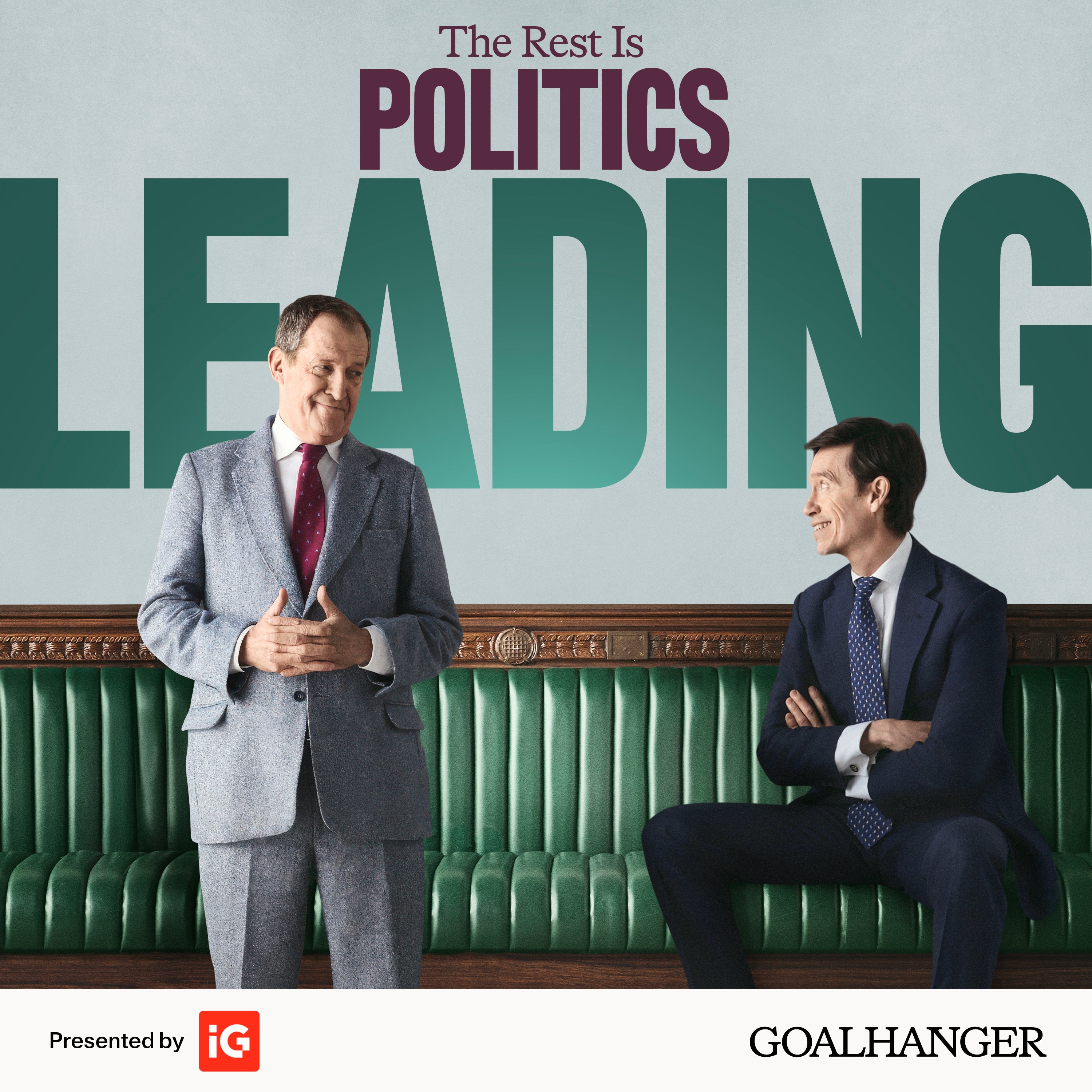
 The Rest Is Politics: Leading
9 Nov 2026 · 58m

 Add vo to ChatGPT or Claude to ask about everything you hear
vo listened to this episode to put together the overview and transcript, so there may be the odd mistake.
Paul van Zyl, a South African human rights lawyer, explains how the Truth and Reconciliation Commission (TRC) was created after apartheid, why it used conditional amnesty tied to public truth-telling, and what the UK/other countries can learn from it. He also discusses modern South Africa’s governance problems and his work in London on water resilience.
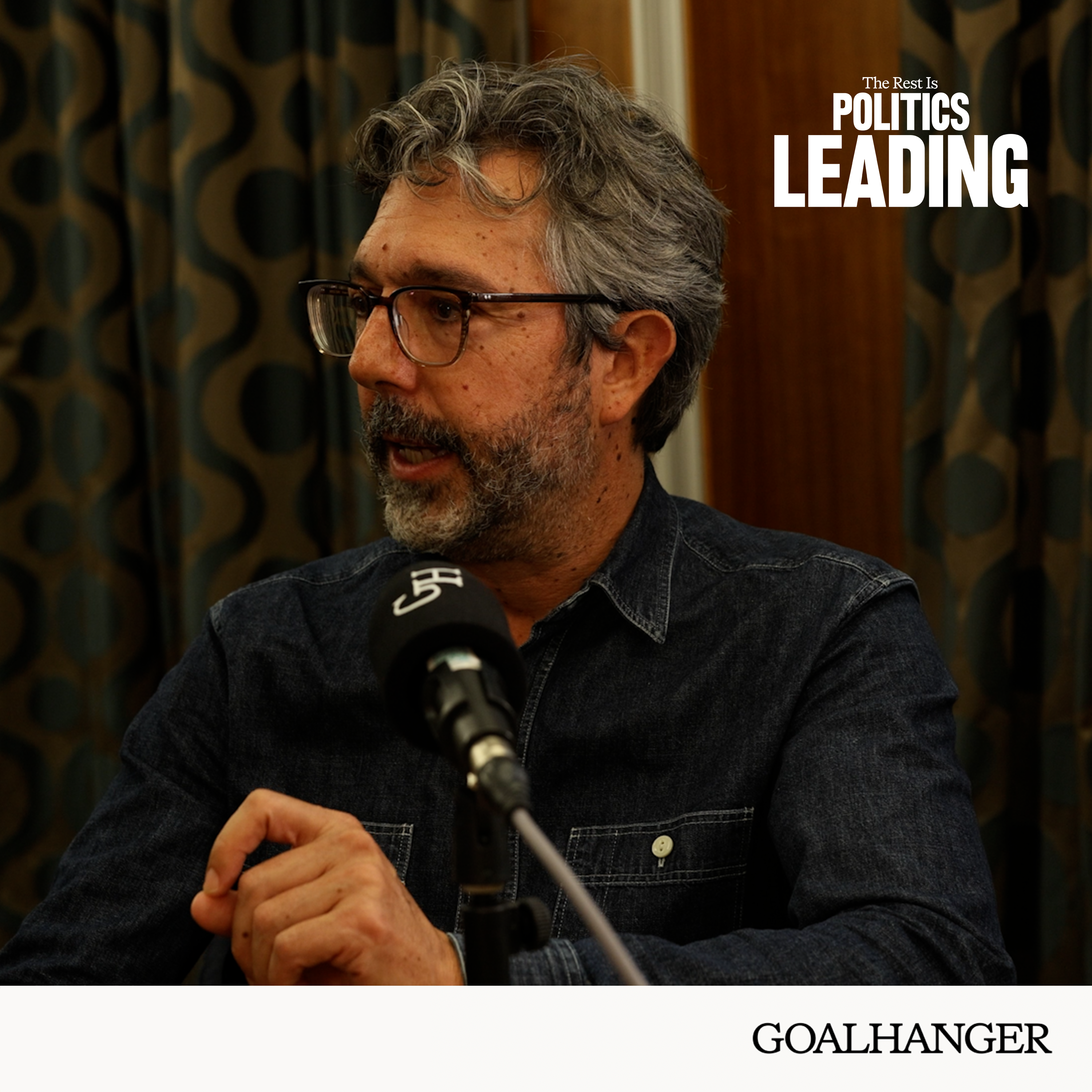
Paul van Zyl (born ~1969; 56 at interview) is a human rights lawyer in London who helped design and served as executive secretary of South Africa’s TRC. He previously helped found Kulamani (“speak out”) after the assassination of lawyer Becky Mlangheni (killed with a Walkman rigged with plastic explosives).
Mandela’s public constitutional commitment enabled trust with security forces; the TRC balanced victims’ needs with perpetrators’ amnesty via disclosure; without a structured reckoning, the past confronts societies “on its terms,” increasing division. He argues South Africa’s post-TRC reckoning is incomplete, and ANC governance has been hollowed out, enabling corruption and populism.
Joyce Imtum Kulu’s testimony about her son Sapirwe—poisoned with thallium, then abducted and burned—plus perpetrators’ amnesty hearings that exposed “plausible deniability” failures. Mandela’s visit during testimony from a white woman whose child was killed by liberation-movement bombing.
0:00Thanks for listening to The Rest is Politics. Sign up to The Rest is Politics Plus to enjoy ad-free listening, receive a weekly newsletter, join our members chatroom and gain early access to live show tickets. Just go to therestispolitics.com. That's therestispolitics.com.
0:22Welcome to The Restless Politics, leading with me, Alistair Campbell, not with Rory Stewart today, but I am with a gentleman by the name of Paul Van Sale. Paul is a South African, and the reason I've been keen to talk to him for some time is because he played a major role in something unbelievably important in the whole post-apartheid movement and development of South Africa, and that was the Truth and Reconciliation Commission. And I've been fascinated by that because I've often wondered whether maybe we should have done something similar when we had the Good Friday Agreement and then all that's followed since then.
0:57This episode is sponsored by IG. The budget has landed, which means there's an awful lot more noise from speculators telling you what it means for your money. But what investors should actually be asking is this, do you actually know what you hold, what it's worth right now, and what you can actually act upon? Many investors won't know the answers because they will have their accounts spread across multiple different apps with multiple different institutions. And so you won't really know what is their position on American equities, European equities, bonds, or how it all sits together. So here's some good news for you.
1:31From investments to trades, IG brings your entire portfolio together in a single app with one unified wallet to fund across all your accounts. And with over 20 ,000 stocks and ETFs, you have the breadth to act no matter how the budget affects you. And it gets better. With no annual fees and zero commission on UK stocks, shares and ETFs, more of your money stays where it belongs. Invest it. Download the IG app to get started. IG trade, invest, progress. Capital at risk, other fees may apply.
2:285, 7.5, 10, 12.5, or 15 milligram injection. ZepBound contains terzepatide and should not be used with other terzepatide-containing products or any GLP-1 receptor agonist medicines. It is not known if ZepBound is safe and effective for use in children. Don't share needles or pens or reuse needles. Don't take if allergic to it. Or if you or someone in your family had medullary thyroid cancer, or if you've had multiple endocrine neoplasia syndrome type 2, tell your doctor if you get a lump or swelling in your neck. Stop ZepBound and call your doctor if you have severe stomach pain or a serious allergic reaction.
3:04Severe side effects may include inflamed pancreas or gallbladder problems. Tell your doctor if you experience vision changes before scheduled procedures with anesthesia, if you're nursing, pregnant, plan to be, or taking birth control pills. Taking ZepBound with a sulfonylurea or insulin may cause low blood sugar. Side effects include nausea, diarrhea, and vomiting, which can cause dehydration and worsen kidney problems. Talk to your doctor. Call 1-800-545-5979 or visit zepbounce.lily.com. For adults with Crohn's disease or ulcerative colitis symptoms, every choice matters. Tremphaya offers self-injection or intravenous infusion from the start.
3:48Tremphaya is administered as injections under the skin or infusions through a vein every four weeks, followed by injections under the skin every four or eight weeks. If your doctor decides that you can self-inject Tremphaya, proper training is required. Tremphaya is a prescription medicine used to treat adults with moderately to severely active Crohn's disease and adults with moderately to severely active ulcerative colitis. Serious allergic reactions, increased risk of infections or lower ability to fight them, and liver problems may occur. Before treatment, get checked for infections and tuberculosis.
4:19Tell your doctor if you have an infection, flu-like symptoms, or need a vaccine. Explore what's possible. Ask your doctor about Trimphia today. Call 1-800-526-7736 to learn more or visit trimphiaradio.com. So, Paul, you're a human rights lawyer. That's your background. You now live in London. Lots of London people will know you because you run the Conduit Club. But take me back to that moment. Why was the Truth and Reconciliation Commission formed? How was it formed? And what role do you think it played? The Truth Commission's establishment is actually a very interesting story, which tells you a lot about the nature of negotiations which end authoritarian rule.
5:05So, as you know, Nelson Mandela was released in 1990 in February, and it took four solid years to negotiate the interim constitution, which would then establish South Africa's post-apartheid democracy. And the version that everybody agreed to in December of 1993 made no mention of how to deal with the conflicts of the past or the crimes of the past. It was entirely silent. It was a constitution for the future. Exactly. It was not looking at the past. Exactly. And at that point, a group of generals, white security force generals in the police and in the military, went to Mandela and said, look, We were assured by the apartheid leaders that we would get an amnesty if we were to permit this transition There's no amnesty in this document There's an enormous amount of agitation and violence around the elections White right-wing thugs are going to jeopardize it and scuttle it And if we don't get an amnesty, we are going to stand by and the elections will probably be sabotaged And we will just leave the country and leave you to it and good luck Were they serious?
6:14They were deadly serious. And is it your assessment that they were right to be saying that, in terms of what might have happened? The threat was certainly there. There's a whole cottage industry about how large that threat was, had they in fact created the threat in order to be able to externalize the blame. But the threat was there. And more importantly, Mandela and the ANC didn't control the security forces at all. and they realized that if the transition were to be successful, they would need the security forces to come to the bridge, you know, cross the bridge from authoritarianism to democracy.
6:49And so Mandela then takes a fax and writes in this fax to L.B. Sachs, a really important human rights judge who is in King's Cross in London at the time in a small cheap hotel. Because? He's attending a conference. Okay. I mean, he's a key part of the negotiating team. And he sends this fax to Albie and on it, it says, recounts the story. And Albie then turns the fax over and writes on the back, no general amnesty, must be a truth commission, they must individually apply, and faxes it back to Mandela. One of the many things that's a genius about Nelson Mandela is he says, look, we will give you an amnesty, but we'll only give you an amnesty when we get to the other side, when the democratic elections are held and when I'm installed in power.
7:40So that's a quid pro quo, to which point the general said, but how can we believe you? At which point Mandela said, I will have an epilogue, a postamble, tacked on to the back of this constitution, which will say, when we get to the other side, the first thing the new parliament will do, and it is constitutionally obliged to do this, is grant an amnesty. So that was a public commitment. It wasn't just made privately. It was made in the document itself. So it appeared like magically in as the post-amble to South Africa's first democratic constitution, and as a sort of very subtle trading game between the generals and Mandela with this very important intervention by L.B.
8:22Sachs. How had they managed to build up the trust that was necessary for that? Or was it just Mandela's power and aura and charisma? Because they must have been very, very fearful of what was going to happen to them. All the things they'd done, all the things they stood for, it's all getting upturned. They must have been scared. I think one of the remarkable things about that generation of anti-apartheid leaders. And Mandela in particular is that he was able to inculcate the highest levels of trust in his adversaries. And he was a man of his word. He made a commitment. He honoured it. During the four years of negotiations, he kept his word.
9:01But even more so, he said, I will put it in a constitutionally enforceable text. So you will have got your amnesty. At that point, he's not even, it's not, I mean, it's kind of nailed on, but it's not totally guaranteed he's going to end up in that position. There's a lot, there's still a lot to go through when he's having that conversation. You have to go through the elections. Elections have to be conducted peacefully. You have to have Mandela installed. The transition has to happen and a new parliament has to be convened. And then the constitution says you must, as one of your first acts, pass a law giving an amnesty.
9:36Now, Alistair, the thing that's interesting about that is if you think about an amnesty, an amnesty is an instrument which deals with the needs and interests of perpetrators. Basically, it says if you commit terrible crimes, you will be relieved of the criminal and civil liabilities for your act. But apartheid had tens of thousands of victims. And one of the geniuses of the Truth Commission was it conjoined those two imperatives. So if the moral scales are tipped towards an amnesty, towards perpetrators through an amnesty, The Truth Commission said, let's let victims tell their stories. Let's have their suffering acknowledged.
10:11Let's do it in public. And let's require the perpetrators to disclose what they did in order to give victims the truth that they would otherwise have been denied. And so why it was one of these sort of very thoughtful and morally nuanced pieces of legislation is it balanced victims and perpetrators in the same way that Mandela balanced democracy and justice. He sort of said, I have to trade off between those two things. And he said, I found a way of squaring those things through this conditional amnesty. What was the process that led to the commission's establishment? Where was the drive coming from that?
10:49and what was the legal process that had to be gone through and how did you build the support and acceptance for it? So one of the amazing things about having a transition that took four years is we could scour the world for all the comparative examples of how other nations went through these processes. So we looked at Chile, we looked at Argentina, we looked at post-conflict Yugoslavia, we looked at the conflicts in Northern Ireland And we brought a whole series of people to South Africa and said, what do you think would work here? What are the reflections of what was successful and unsuccessful in your particular context?
11:29And we were very, very influenced by Chile and Argentina in particular because they both had truth commissions. But Chile had had a truth commission which had occurred entirely behind closed doors because the threat from the military was still so real. And so they were cautious about airing it. We could be more robust. We could place victims at the forefront. We did 24 ,000 victims' testimonies. We did tens of thousands of testimonies. and crucially we got perpetrators to come forward and disclose their crimes as a condition of getting their criminal liability extinguished they had to appear so there was a cut-off date after which if they didn't appear they would be prosecuted so the key for the truth commission there was this very i served as its executive secretary there was a three-month period where we weren't sure whether it was going to work.
12:25Because all the perpetrators could have all decided just to clam up and say nothing. So we had to let them feel that we knew enough that if they didn't come forward, they would be prosecuted. And the thing that we had was that a major hit squad figure had defected a few years prior to that. He had gone into hiding with ANC in Lusaka in Zambia, and he had sort of spilled the beans. And so what we did then running the Truth Commission is let it be known that Dirk Kutzea, as his name was, we had all his data. And what that did is at a crucial moment, the people closest to Dirk Kutzea then broke ranks and applied for amnesty.
13:08And as soon as they applied for amnesty, there was this really interesting domino effect that occurred because in order to say that what they'd done was a political crime, they had to show that they'd been authorized. So they went all the way up the chain of command. And as they went all the way up the chain of command, each person up in the chain of command then subsequently applied for amnesty. So once we got to the top with the general in the South African police who applied for amnesty, starting from a crime down at the bottom, he then disclosed all the crimes that he had authorized. So it went down the chain of command to a new set of crimes.
13:46And then it's sort of metastasized. Then the snowball effect happened. And we got a pretty detailed understanding of how the killings and the disappearances and the tortures had been authorized. And that occurred cheek by jowl with thousands of victims on live television and on the radio telling the stories of their terrible atrocities that had been visited upon them. How old are you now? I'm 56. So back then? 25. So how does a 25-year-old become the executive secretary of such an important project? I had worked with a group of victims called Kulamani, and it helped establish Kulamani. And I was very personally moved by Kulamani because I had worked with a young black lawyer who we worked on a campaign as a young law student to stop people who were being prosecuted in apartheid courts and risked the death penalty.
14:41Our strategy was to get their sentences commuted to life imprisonment without parole on the theory that if they weren't killed, at some point, there'd be a transition and they'd be released. So sort of a startlingly unambitious project. And this amazing lawyer, Becky Mlangheni, was sent a parcel by security forces, and it was a Walkman with plastic explosives in the ears. And he picked them up in his law firm in downtown Johannesburg. He went back to his two-bedroom home in Soweto. His mother and his wife were in the front room cooking. He went back and said, I just have to listen to an important tape that's just been sent to me.
15:23And went into his study, and they heard this incredible explosion, and it blew off his head. And that really radicalized me. Many things radicalized me, but the sense that not only was this extraordinary lawyer killed in such a cruel and heinous way, but also that his mother, who as a black South African woman with no money and no privilege, had managed to shepherd him through Catholic school and get him to university and become a lawyer. And he was the apple of her eye and she lost him, but she also lost a pension and she lost the person who was going to take care of her in her old age. And so we set up this group called Kulamani, which in Zulu means speak out.
16:07And it became a very, quite an influential group in campaigning for truth and justice. And then I, with the audacity of a young 25-year-old, wrote up a business plan for the commission and went to Archbishop Tutu and put it on overhead projector slides. Do you remember those? and went to his residence and said how I thought it should be run. And he said, can you start tomorrow? And I started the next day. Wow. They were two of the most extraordinary people I ever met, I think, Mandela and Tutu. Do you think it could have happened? I mean, it's sort of an impossible question to answer, but there was something so unbelievably special about both of them.
16:50and you don't meet that many people in the world that you think this guy is just something so special do you think it could have happened without their greatness i doubt it mandela had this endless reservoir of moral capital and so he could persuade black south africa to go on a journey to make the post-apartheid uh country real and possible and tutu had this really unfailing moral compass. I'll tell you a story about Tutu, which illustrates this. I was due to question P.W. Buerta, the securocrat hard man who ran South Africa for a number of years as our prime minister. I was due to question him because we subpoenaed him to come before the Truth Commission.
17:31So I was, as a young man, preparing the questioning late at night, and I get a phone call at the Truth Commission's offices from Archbishop Tutu, and he goes, Paulus, how are you? I'm fine, father how are you great father don't worry i'm very well prepared i'm not going to embarrass you it's going to go very well no paulus i'm not calling you for that reason at all i'm calling you to say that if you humiliate the old man i will fire you so i say to him with a sort of sense of a 25 year old indignation but father in cecescu in romania they dragged him to a basement and shot him in nuremberg they placed people on trial and they hanged them in other places the international criminal tribunal for Yugoslavia, people being prosecuted and sent to jail for a long period of time.
18:14We're just asking questions. That's all we're doing. I know Paulus, but he was the head of state of our country and you must treat him with dignity and respect. Now, the code to that story is that he didn't arrive and he defied our subpoena. And we prosecuted him not for the crimes of apartheid, but for the crimes of not abiding by lawfully issued subpoena. And his defense, when we sought to prosecute him was that we did not have any legitimate questions to ask him. And the only thing we were trying to do was humiliate him. So when we went to trial, on the very first day of the trial, I was put on the stand and the attorney general said, Mr.
18:55Fensel, could you tell me what you were doing the night before? And I said, Archbishop Tutu called me up and said, if you humiliate the old man, I'll fire you. Archbishop Tutu could not have known that he wasn't going to come, and he could not have known that that would have been P.W. Buerza's defense, right? But he had this, I mean, you know, if you believed in God, you would say that God told him that. But he had the sense of what the right thing to do is. And the right thing to do actually turned out to preserve the integrity of the commission, because people could say Archbishop Tutu was concerned about the dignity of a person who presided over a vile dehumanizing system but still nevertheless was concerned about his dignity and of course mandela did something similar didn't he he he made relationships with his captors whilst he was in prison he even if they tried to humiliate them he would never react in a way that would make things worse or humiliate them and then when he came out i mean i'll never ever forget that day when he came out and you just thought how can he be spiraling like that and it wasn't just the freedom which is you know when you think what he'd been through and then thereafter yeah i've said to you before he's the only person i've apart from diego maradona he's the only person i've ever met who every single time i felt my this the hairs on my neck every single time i imagine it's like when people maybe in a different period of history met lincoln he's in that league you told me an amazing story about the time when mandela himself went to the Commission.
20:24Just tell us that story, because it said so much about him. Mandela was running the affairs of state. And there was this very, there was a tacit agreement between him and Tutu that Mandela ran a multi-party government with F.W. de Klerk as his vice president. So the people who had been oppressors were in the new government in the cabinet. And Mandela's job was to run that, producing national unity, but also to execute on what South Africa needed to do. And he didn't want to be dragged into dealing with the crimes of the past. So he always said, I've got a post pox, I'm sending that to the Archbishop.
20:58The Truth Commission, it's a division of labor, it's going to work for three or four years, and at the end of it, it's going to issue its report, but I am going to govern. I'm not going to be drawn into it. But he nevertheless wanted to come and pay respect to the Truth Commission and listen to testimony one day when victims were giving their testimony. And because the Truth Commission was even-handed, it looked at all crimes that occurred, both crimes committed by the liberation movements and crimes committed by the apartheid state, open parentheses, one were morally and numerically far greater than the other.
21:31There was on that day a woman who came to testify about losing a child in a bomb that had been planted by the liberation movements. And as it so happened, that for the one hour that Mandela was at the Truth Commission, she was giving the testimony. A white woman. A white woman. So you can imagine the level of angst there was both within the Truth Commission staff, but also in the country. That would be like trying to document what happened during World War II and have Simon Wiesenthal hear about the crimes of the French resistance, right? It's like, it's just not proportionist, right? But nevertheless, Mandela sat through this testimony of a liberation movement that he was the head of, and a woman lost a child.
22:21So he was asked about this subsequently, and Mandela said, I was incredibly grateful to be able to be in that experience, because it taught me and it reinforced that even if you're fighting a just struggle, it's important to conduct the struggle in a way that complies with international norms and standards. And it also reminds us that even those people who are on the side of liberation can be prone to abuse, and we must be cautious about our exercise of power. Now, I've traveled around the world a lot and spoken to people who are in liberation movements, and it takes quite a long time to persuade people who are in the liberation movement that they're even capable of committing a crime, right?
23:03They say, there's an evil system, I'm fighting it, you know the ends justifies the means but mandela had this rooted sort of ethics of saying regardless we have to be careful about the way we exercise power and we have to think about the conduct of our struggle and and keep it within the bounds of international law what were the worst and the best things that you heard in just following that and there's these thousands of people that contributed and there were some of them incredibly high profile some of them less so but what were the best and the worst things that you saw and heard? I think the things that were most terrible was that, you know, human rights violations can become, they can trip off your tongue and they can become semantic torture, assassination, disappearances, and they can be easy to say genocide, war crimes.
23:56But when you hear a human being articulate this, it shakes you to your core and it shook the country to the core. So there was a woman called Joyce Imtum Kulu who came and testified at one of the very first Truth Commission hearings. Her son, Sapirwe, had been a youth activist. He'd been detained by the security forces held under the emergency regulations, so you kept him in detention without trial. And while he was in detention, they'd poisoned him with thallium, which is a colorless, odorless, and tasteless drug. And it caused his hair to fall out. His mobility was impaired and his speech was slurring.
24:33So lawyers brought an emergency motion to get him out. He emerges from the state. Everybody is utterly shocked. He's whisked away for a battery of tests. The thallium poisoning is discovered and a battery of various significant lawsuits are brought against the then minister of law and order to say, you detained this young man and you poisoned him. So he's convalescing and he's getting better. Joy Simpson, including his mother, goes to pick him up one morning from hospital and he's not in his bed. And he never comes back. We discover through amnesty applications that he is abducted in the middle of the night by the security forces.
25:17He is killed. His body is thrown onto a pit of flames and his body is burned to an ashes. So Joyce tells the story of him growing up and tells the story of what it is to have a little boy, what it's like to lose a child. And then at some crucial moment, she reaches out under the desk, testifying before the Truth Commission, takes out a plastic bag, reaches into it, and there's a ball of what looks like black wool. But it's Sapir's hair that she's been collecting while he's convalescing. And she holds it up to Archbishop Tutu to the commission, but it's being televised live to the country and says, this is all I have left of my son.
26:03You need to tell me what happened to my son. And I think the nation just drew breath and said, there is no way you can justify the system as separate but equal or a well-intentioned moral experiment or wouldn't it be nice if people lived in their own ethnic enclaves and we were trying to do the right thing. This was a brutal, murderous endeavor that did this to people who didn't deserve it. And so that narrative was very, very, very powerful. And it was, you know, the Truth Commission had better audience numbers than the soccer. I mean, it was just a very, very significant event in the life of our country.
26:48And then when you married that with the testimony of the perpetrators, you began to get a sort of interesting insight into the architecture of how atrocity happens and how people who sit in the front row of a church can go about ordering these heinous crimes and still think of themselves as good people. So tell me about that. What was the worst that you heard in terms of, first of all, do you think they were being in the main honest, the perpetrators when they were giving evidence and what did you what were the worst things that you learned what were the worst things that you experienced just listening to them i think the part that was disappointing was the perpetrators that the generals and the security forces had very good reasons to tell as much truth as they ought to because their hearings were public they had to disclose the victims had lawyers they were the best south african human rights lawyers and they grilled them and if they weren't telling the truth they would have been denied amnesty so the mechanics of finding out what who did what to whom worked relatively well there was a crucial moment when the top leaders of the security forces said yes we did we authorized these killings we apply for amnesty and the top political leaders said oh well they were just overzealous bad apples it was a terrible misunderstanding we would never have authorized this and so um we then had a series of hearings where we brought in fw de clerk nobel prize winner and put all the cases to him of the top top top military generals having authorized all these killings and then we said to him so who did you think was doing these killings?
28:40What was your theory of who was doing them? And you had one of the most sophisticated intelligence services of the world. Surely you investigated them. And the then head of national intelligence said, yes, we did investigate. And then what happened? We found out that it was our people. Said, well, what did you do then? I reported it to the prime minister. And then what happened? Nothing. So the plausible deniability just after a day of hearings just became so incredibly implausible. And Archbishop Tutu was in the hearing with F.W. the clerk. I was one of the lawyers doing the questioning. And at one point, he sort of slumped down in his chair, and he basically just wanted the clerk to say, Of course we knew.
29:27Of course we authorized it. And of course, these generals would not have misunderstood the rules of the game. It happened for too long. The torture, the disappearances, obviously you can't. Plausible deniability is just incredible. And if F.W. de Klerk had said, I confess, we did it, Tutu would have jumped over the desk and kissed him on both cheeks and said, thank you. We forgive you. Thank you for the moral clarity. And de Klerk couldn't do that. He couldn't cross that chasm of accepting political responsibility. And he resigned a couple months later. And in his resignation press conference, he said, I have become too associated with the conflicts of the past.
30:07And so I think there was that moment where there wasn't a reckoning. And that reckoning, I think, left the country with a bad taste in its mouth. We've mentioned Mandela, we've mentioned Tutu, and they are sort of huge figures in history. Who were the other figures that you think people who maybe don't know that much about this period of history should know about because of the roles that they played? The current president, Cyril Ramaphosa. Cyril was the architect and the negotiator. And together with Rulf Mayer, South Africa's current ambassador to the United States, they played a crucial role.
30:43Mandela and de Klerk, obviously, were the final decision makers. But in the engine room of that negotiation, Ruth Mayer and Sororamoposa developed an incredible bond, extraordinary trust, and a sort of second track which brought the constitutional process to the place it needed to be. And I often say the resolution of the biggest conflicts in the world require two things. They require a moral agreement by people at the top who can take their constituencies along with them. And then they require technocrats who can get into the details because there's a lot of really amazing constitutional engineering you can do to bring people along the way and set up the architecture of how things will be done in the future.
31:26And so we had that division of labor and it really worked. And to this day, I think that Cyril should have been the inheritor of Mandela's legacy and would have been a far stronger president than Thabo Mbeki. But he was too busy negotiating an end to apartheid and he didn't attend to the politics of succession. He was also one of the outside politicians that occasionally came into the Northern Ireland process where he played a pretty useful role. Just on Northern Ireland, what's your thought? I mean, you know the United Kingdom well. You've lived here a long time. Should we have done something like this?
32:07Do you sort of sometimes sit there and wonder why didn't they do that? I have a real allergy to outsiders coming in and telling other people what they should do. People have done that to us in South Africa. We would have told them to get a hike. So I say this with modesty, but I think it's evident, as evident as the marches and the mobilization that are happening as we speak, that there has not been a full reckoning of everybody who are between the two sides of the conflict. So there hasn't been a sense of who did what to whom. There hasn't been a full excavation of the architecture of how the killings occurred.
32:49There hasn't been a full reckoning where people came forward and said, this is how it happened. It's been through investigations and commissions. It's come out in this more ad hoc way. And I always say, you never really have a choice, do you confront the past or not? That's never your choice. You can either confront it proactively on your terms, or it can come and confront you on its terms. And in that second scenario, it's almost always more divisive and more adverse. So I think that conflict would have benefited from a more structured process than the ad hoc-ery that has characterized it. Yeah, because I think there were moments where you mentioned the thing about Mandela sitting down with the generals and There's a little bit of clever sort of we did quite a lot of that stuff, but we did it Some of it not very public You know promises about side letters all that sort of thing And I guess the other issue is whether I mean I kind of feel we should have done something like something modeled on on what you did But I guess there were I mean if you look at some of the key figures, I mean some of them who are now dead sadly, but some of the key figures who I'm just trying to work out whether the leadership of the IRA would have been open, frank, honest about what they had done.
34:10You know you look at some of the books written about some of those leaders of what they did and didn't do which they just deny to their grave I guess. But I wonder whether you know when we're talking around the time there's this ongoing dispute over the drum creed march and it it's just sort of feels that it's a symbol to me of the stuff that we didn't address because it was there were bits of it that are just too difficult too sensitive there's a very interesting quote from michael ignatioff about truth commissions and he says truth commissions never establish the truth all they do is narrow the range of impermissible lies Oh, okay.
34:50That's very good. And in a way, I think... Do you agree with that? Yes. You don't think the Truth Commission got to the full truth? You know, I think the full truth is always something that citizens, like, you know, white South Africans are always going to have an account of the past and the politicians are always going to have their account. But by the end of the South African Truth Commission, nobody could deny that people were tortured and executed and disappeared. Nobody could say that the top leaders didn't have full knowledge of it. And nobody could say that the liberation movements didn't bear some responsibility as well, even though one was clearly a crimes against humanity, apartheid as a system, and you should never draw false moral equivalences.
35:31Still, the liberation movements committed crimes. What do you think Mandela and Tutu would make of South Africa today? They would have their faces in their hands. They would be despairing. Tutu was despairing even before he died. I think that, look, no party anywhere ever should be in power for 20 or 25 years. So that power just corrupts even the best parties in the world. Parties that see themselves as intrinsic to the liberation of a country can also, if you don't have a Mandela and a Tutu as moral guardians, as we've discussed, can begin to feel that they are owed things and they're entitled to things.
36:17And there has been, you know, a hollowing out of the South African states, principally under Jacob Zuma's reign, that impaired its ability to both deliver for citizens, but also to serve all the checks and balances and accountabilities that you would want in a modern state. And then I think the nature of our transition allowed the top of the pyramids color to change. By that, I mean, you had white people at the very top of the pyramid, and then you had white and black people at the very top of the pyramid. But the bottom 30 to 40 % really haven't had their lives radically improved. And, you know, that happens.
36:57That's not just a South African phenomenon. That's a European phenomenon, when that happens, your country becomes, the governability becomes, dubious populists of all stripes stand up and they, you know, snake oil salesmen with siren calls to false solutions. And that is now emerging in South Africa. So a hollowed out state, inequality, and the rise of populism. It's still one of the most remarkable countries in the world with incredible human beings and an incredible economy. And it can play a globally important role in terms of having negotiated into apartheid and given up nuclear weapons and a paragon of peace building so has all these remarkable things which i still believe it can it can be but governance has to be sorted out urgently but it's interesting on that so maybe we put too much focus on the president and you've you've mentioned several of them but if sir ram poser is one of the good guys.
37:59Has he changed or has the task just reached a point where it's beyond an individual to get a grip of this? I'm sure you've seen this in your career where the foundational moments of a politician where they came of age and learned their skills determines how they are subsequently. So Sir Ramaphosa was a consummate negotiator. He negotiated the end of apartheid And he knows how to assemble coalitions and move slowly and incrementally towards goals. When he became the president, the negotiation that he was doing was not with the apartheid state, but within his own party. And there's a, I'm afraid, a kleptocratic, undemocratic strain within the ANC.
38:46And Cyril always thought that he would quietly and slowly bring them along. instead of confronting them, rooting them out and holding them accountable, he always sort of accommodated them because his mode is to accommodate. And I think what that meant is that you never excised the cancer. It has remained. And until that cancer is excised, and there's a new generation of extraordinary South Africans who will have to take that mantle. But do you think it's excisable? And does it take a change? And you said that any party in power is likely to get corrupted. Do we have to sort of look forward to a time when actually the ANC, for all the extraordinary things it did, has to be replaced?
39:30I think it would be an extremely healthy thing for the ANC to be out of power for a bit. It has to be replaced by something good. And the alternatives right now, on the extremes, are some you know nasty xenophobic uh despotic parties so the current government of national unity may be the best formula that we can have for now but we do need a wholesale reinventing of our politics for sure you know despair is a strong word okay and you're talking about two men who exuded hope and exuded optimism and exuded all the sort of positivity that anybody could look for in a human being. And you're saying they would hold their hands in despair.
40:15Just give us a brief picture of modern day South Africa as to why that would be the case. The country has had economic stagnation for too long. If you think that we have a needs crisis in this country where there are people, young people who are not in employment, education or training, it is three or fourfold that size in South Africa. So there's a whole generation who we are desperately keen to give better life chances to who are not employed and are becoming unemployable. We have high levels of crime and we have very, very high levels of corruption. If you just look at the Transparency International Index, South Africa has declined every year for the last 15 or 20 years.
41:02And it is really in a set of very poor company in terms of the caliber and quality of its governance. That being said, if you look at Cape Town, for example, its municipality is run in a superb way. Its chief resilience officer is, you know, wheeled out around the world to give talks about how they avoided running out of water and run an incredibly sophisticated governments. And we have some of the most sophisticated banks and IT systems and technologists, and the country has extraordinary resource. Its people are extraordinary. So there is a possibility to reconstruct a government that builds on that potential, and there are pockets of excellent governance.
41:47So I think we have to be honest about the current state of affairs, but I don't want to be one of those fatalists about the country. The country has extraordinary potential. So listen, we've talked about some of the greatest South Africans in history. When we come back after the break, we'll talk about some who, in my view, don't necessarily qualify for that label.
42:11This episode is brought to you by Barclays Premier. Listening to the experts on this podcast really demonstrates, does it not, how valuable specialised knowledge is when it comes to analysing the political landscape. But that same expert level of guidance isn't just useful in politics. It's incredibly important for your personal finances too. I mean, take retirement. Retirement obviously isn't just one moment in time. It might be a condition going on for many decades, you'd hope. And during that time, your personal circumstances can change. There could be new rules around how you save, how you invest, how you pass on your wealth to the next generation.
42:45That's where planning and advice exclusively for Barclays Premier Customers comes in. A wealth planner builds you a personalised plan around your goals, while your wealth manager helps it evolve as your life and the world around you change. Search Barclays Planning and Advice to learn more. You need to be a UK resident with at least£150 ,000 available to invest. Other eligibility criteria apply. Money invested for over five years has historically delivered greater growth than cash savings, although investment values can rise and fall over time. Did you know that psoriatic arthritis may progress over time and could cause permanent joint damage if left untreated?
43:28Listen to what it sounds like to be a million miles away.
43:36Trampaya gusocomab, taken by injection, is a prescription medicine for adults with active psoriatic arthritis. Serious allergic reactions, increased risk of infections or lower ability to fight them and liver problems may occur. Before treatment, get checked for infections and tuberculosis. Tell your doctor if you have an infection, flu-like symptoms or need a vaccine. Imagine being a million miles away. Explore the possibilities. Ask your doctor about Trimphia. Tap this ad to see new joint data and learn more about Trimphaya, including important safety information.
44:24Discover the new Myself Eau de Toilette Intense, a masculine and long-lasting fragrance for every day. A bold scent with sensual musk and woody notes. Myself, Yves Saint Laurent.
44:49The South Africans that are making a lot of waves in the world right now strike me as amongst the worst people on the planet. I'm thinking of Mr. Musk. I'm thinking of Mr. Sachs. I'm thinking of Mr. Thiel. First of all, is there something in their worldview, particularly musk who's the most kind of you know out there outspoken about some of this stuff that actually is coming from a an apartheid past that they actually think maybe there's nothing wrong about it or has that been too harsh i think it's extraordinarily hard to look into elon musk's mind or soul but what i can say is that i think that anybody who has grown up in apartheid South Africa, who is white and is therefore by definition a beneficiary of a system that was racist and a crime against humanity, has a corresponding obligation in their later life to seek to do everything you can to combat racism and to...
45:52He does the opposite. Precisely. If you look at X and the race-based bile that is allowed to swim in that platform. I think that it is a betrayal of what you have to do as a morally sentient being when you've been a beneficiary of an evil system. The baseline is to do no harm, but to spread and give a platform to racism and then to be party to this ludicrous idea that there is a white genocide in South Africa. And Alisa, if you'll permit, I just want to say a word on this question. I helped design and work for South Africa's Truth Commission. Of all the transitions on the planet where a previously oppressive group were accommodated into a new future.
46:57White South Africans were accommodated by black South Africans in the most extraordinary generous way you could imagine. No retribution, no show trials, no widespread redistribution of land or economics. You know, Tutu would always say to me, jokingly, Paulus, you whites don't know how lucky you are to have us as blacks. And it was, you know, just a, there was a, it was true. It was true. And so in that context where you had the most generous, careful, thoughtful, reconciling leaders to claim that there is this and to send people to South Africa as ambassadors or to say so from the White House, you know, A, you despair, but B, you go, this is part of a broad movement of giving acceptability to white nationalism and to preying on people's racist instincts in a deeply divisive way.
48:01And your obligation as a white South African is to do the opposite. Yeah, it is extraordinary that he, and it's extraordinary to me that he doesn't get more that must doesn't get called out more for this it's so disgusting and i guess i wonder whether peter teal who is better known in the political space for this statement he made that you know maybe democracy's had its day and i wonder again whether that's something in the south african experience that makes him feel that i don't know we have exported five nobel prize winners one most recently nevi pillay in the last couple of days a remarkable human rights lawyer who I know.
48:37And we should be known for exporting that and not the alternative. Okay, let's not talk about that. Let's maybe talk about that. I thought her acceptance moment was pretty marvelous. What did she say? Maybe if I ran long enough, I'll share it with Trump. I don't think she's going to be doing that. But, you know, your point about to see that plane load of white South Africans arriving in America to be welcomed as immigrants to be given safety and sanctuary in this country. It's a kind of, it's sick. The whole thing's sick. Listen, it's been great talking to you about South Africa. I want to talk to you a little bit about what you do in Britain, because I mentioned you do this thing at the Conduit Club.
49:23But actually, one of your strings relates to long-term survivability of the human race because of water. Tell us a bit about that. So the Conduit is a community of people. We have a 25 ,000 square foot building in Covent Garden, and we bring together people who are passionate about positive social change. And there's a real line between it and the work of the Truth Commission, this idea that Mandela and Tutu espoused Ubuntu, African philosophy, I am because we are. and I just really passionately believe that the best societies are ones that are deeply connected where we feel a responsibility to each other, an obligation to each other, we help each other out.
50:06In moments of tension, we draw ourselves closer to each other as opposed to polarizing ourselves in this very divisive way. So, water. As a result of climate change, there's 5.4 billion pounds of flood damage that the UK experiences every year. There's 22 billion pounds of withheld economic activity in Cambridge alone, Southeast England, as a result of too little water because you can't get planning permission to build things. Our landscape is becoming desiccated, so it catches fire at the drop of a hat. Peatlands in particular go up like tinderboxes. And water quality declines so that we have to spend more and more money making water potable because we have less and less.
50:53So what we try to do at The Conduit is think about these big existential risks and then build coalitions of people together to try and tackle them in a way that is Ubuntu. And so the solution and the... Socialism, we call it. It's a way of collaboratively tackling problems. and it's what we try and do is take this group of people and we say what's the fix for this and the fix for it is natural flood management and investing in wetlands so if you invest in wetlands they absorb water when you have too much so they stop flooding, they release it when you have too little so they deal with drought they purify water when water goes through it and they keep your landscape wet so you don't have fires so why is it that we always have these little pilot projects of a few wetlands here and there, but what would it take to roll it out systematically?
51:47And I think, you know, I listen to you and Rory a lot about what does it take to make system change and how do we deal with these systemic threats? And there is a solution sitting right in front of us, which is that water companies currently spend 0.1 % of their money on natural flood management. If they spend 5 % of their money over a five-year period, it would release five and a half billion pounds of investment into nature-based solutions. If that were to occur, you could do a huge investment in dealing with the risk of too much and too little water. So we brought together a coalition with the Crown Estate and Aviva and the National Trust and UBS and Google and the Royal Society for the Protection of Birds.
52:36So this broadest Ubuntu-like coalition of actors who own land, who have capital. And what we're doing is trying to get the government to agree to order water companies to do this. And, you know, Andy Burnham is obsessed with water. And this is a thing, a strategy, Alistair, that would be fiscally neutral, because it's just spending water company money in a more efficient way. So are you talking to our government about it? Very much so. And are they listening? Very much so, which is very, very encouraging. And how many previous governments? Not so much. The coalition has been running for two years and we have been accumulating the widest possible coalition.
53:22And I am hopeful that we will get this direction that will be issued, which will cause water companies to do this. He's only taught stuff about water. Yeah. And I think if you're wanting to assert control, the way that you do so without having to kind of empty the treasury to actually renationalize, which I think will be difficult, is to cause the existing funding to be more sensibly allocated to achieve a set of nature-based solutions which deal with the key water risks. But I think at the heart of that is all of our societies have this triple risk, right? We have a climate catastrophe, we have deepening economic inequality, and we have eroding belief in democracy.
54:05And so those three phenomena reinforce each other, right? Climate causes damage to the economy, causes people to become angry and alienated, causes them to vote for populace, causes those people to come to power, causes them not to take action on climate. So the exercise you have to do and what Ubuntu has to do is turn the circle in the other direction. How do you invest in nature-based solutions that would create a surplus for communities that would then cause people to have faith in government, which would then cause them to elect people because they're sensible leaders who are trying to tackle long-term problems?
54:40And this water intervention is trying to do that in the United Kingdom, is address the long-term risks and cause people to have faith in government and allocate resources to communities who are most marginalized and left behind. The other thing we've talked about a lot is the fact that the UK has probably, for our population, as many great stadiums as any country in the world. But you're obsessed with this idea that we don't do enough with them. So another program that we're working on is to try and think of stadiums, not as physical infrastructure, which bring people together two or three days a month during match day, but as social infrastructure that can help distribute social benefits and produce economic engagement on the days that the stadium is not being used.
55:28So you're a huge football fan and you'll know that most days stadiums just sit like big white elephants. So we're doing a major conference at Aston Villa in Birmingham together with Levy and Aston Villa where we bring together 250 sporting codes. Levy who do all these sports organizations for the hospitality. Exactly. Everything from Wimbledon to cricket to football. To Burnley Football Club. There we go. And so the idea is most football teams or stadium operators have these social programs that they roll out on days when they are not playing matches. But they're all isolated. Nobody talks to each other.
56:19Nobody shares best practices. Nobody aggregates that up. So we're trying to take leaders from four sporting codes, football, cricket, tennis, rugby, and get them to share what they're doing and then to try and bring that together into a national movement so that stadiums start becoming sources of economic activity. They green their supply chain in terms of where they buy their food. They train food entrepreneurs in their kitchens when there's no matches. And then they send people out in food trucks to work in the community. And on match day, you can go in the parking lot and you can sell stuff from your food truck.
56:57You can use it to train refugees. You can use it for co-working spaces, for training needs. There's this huge infrastructure within the United Kingdom that's sitting fallow. and if we can bring people together again in that ubuntu like fashion where people can share and support each other i think we can scale the way we provide support and use the three trillion dollar industry of sport as a force for social good well paul it's been lovely to talk to you about these amazing things both here and in in your own country south africa i've just realized we're in edinburgh aren't we we are we're doing this interview in edinburgh this is where one of my favourite Mandela moments.
57:38Have I told you this story? No, tell me. About the Chogham, Commonwealth Heads of Government meeting, and he arrived and the locals, as it were, the Scots, put on this extraordinary display of Scottish culture. So it was, you know, it was all the stuff you'd expect, bagpipes and kilts and dancing and things being thrown in the air and all this sort of stuff. And Nelson, my widow, standing there, Nelson, my widow, and Nelson says, I'm not sure this country is ready for self-government.
58:14He also said when he met the Spice Girls, he said, this is one of the greatest days of my life. He had a very wicked sense of humor. He did. I'll give you another one. Whenever we would do foreign trips to sort of big dignitaries, and there'd always be people in Downey Street, would you get them to sign their book? Would you get them to sign their book? I'd say, no, I'm not doing that. I'm not doing that. I made one exception for a woman who was a messenger in Downing Street called Monica Prentice. And she was one of the few black people in Downing Street. And so she came to see me and said, look, please, I've got, she had her long walk to freedom book, but if you could get him to sign it.
58:54And this was at the time of the whole, Clinton was in power and Tony was there, et cetera. And so, do you remember his handwriting? just unbelievably old-fashioned handwriting and so I said I'm really sorry to do this I'm really embarrassed but this is this wonderful lady called Monica who's the messenger and she just adores you and she really did she absolutely worshipped him so he goes as good dear not that Monica I hope
59:29and then left a lovely message. He did have a great sense of humor. He was amazing. Very good. Well, listen, lovely to talk to you. Thank you. Delightful to be here. Thanks so much.
59:51Starting a business can seem like a daunting task, unless you have a partner like Shopify. They have the tools you need to start and grow your business. From designing a website to marketing to selling and beyond, Shopify can help with everything you need. There's a reason millions of companies like Mattel, Heinz, and Allbirds continue to trust and use them. With Shopify on your side, turn your big business idea into... Sign up for your$1 per month trial at shopify.com slash special offer. Some personality quirks are really funny. Like, I talk to my left foot more than I talk to my right. You know what's not funny and not a personality quirk?
1:00:28OCD. Although the term OCD is widely recognized, it's misunderstood by most people. It doesn't mean being tidy or clean. It's having obsessive fears, thoughts, and urges. You question your character. You question your safety. That's OCD. Breaking the OCD cycle takes effective treatment. Go to nocd.com to learn more. The holidays are busy enough. Getting your home ready shouldn't be. From the perfect tree and twinkling lights to festive decor for inside and out, Wayfair has everything you need to get your home holiday ready. Find furniture, hosting essentials, festive serveware, and more all in one place.
1:01:07So you can spend less time getting ready and more time enjoying the season with the people who make it special. Shop wayfair.com today to make holiday magic at home. Wayfair, every style, every home.
How can politicians rebuild trust after decades of division? How do you get political enemies to sit down at the same table? What are some of Nelson Mandela's best - and funniest - moments?
Alastair Campbell is joined by Paul van Zyl, who served as the Executive Secretary of South Africa's post-apartheid Truth and Reconciliation Commission from 1995 to 1998, to answer all these questions and more.
_________
Search IG.com to find out more and/or Look for IG in your app store.
__________
Instagram: @restispolitics
Twitter: @restispolitics
Email: therestispolitics@goalhanger.com
__________
Social Producer: Celine Charles
Video Editor: Caroline Kaye
Assistant Producer: Daisy Alston-Horne
Senior Producer: Nicole Maslen
Exec Producer: Bella Soames
General Manager: Tom Whiter
Learn more about your ad choices. Visit podcastchoices.com/adchoices
Scan the code with your iPhone camera
Listen in the app.