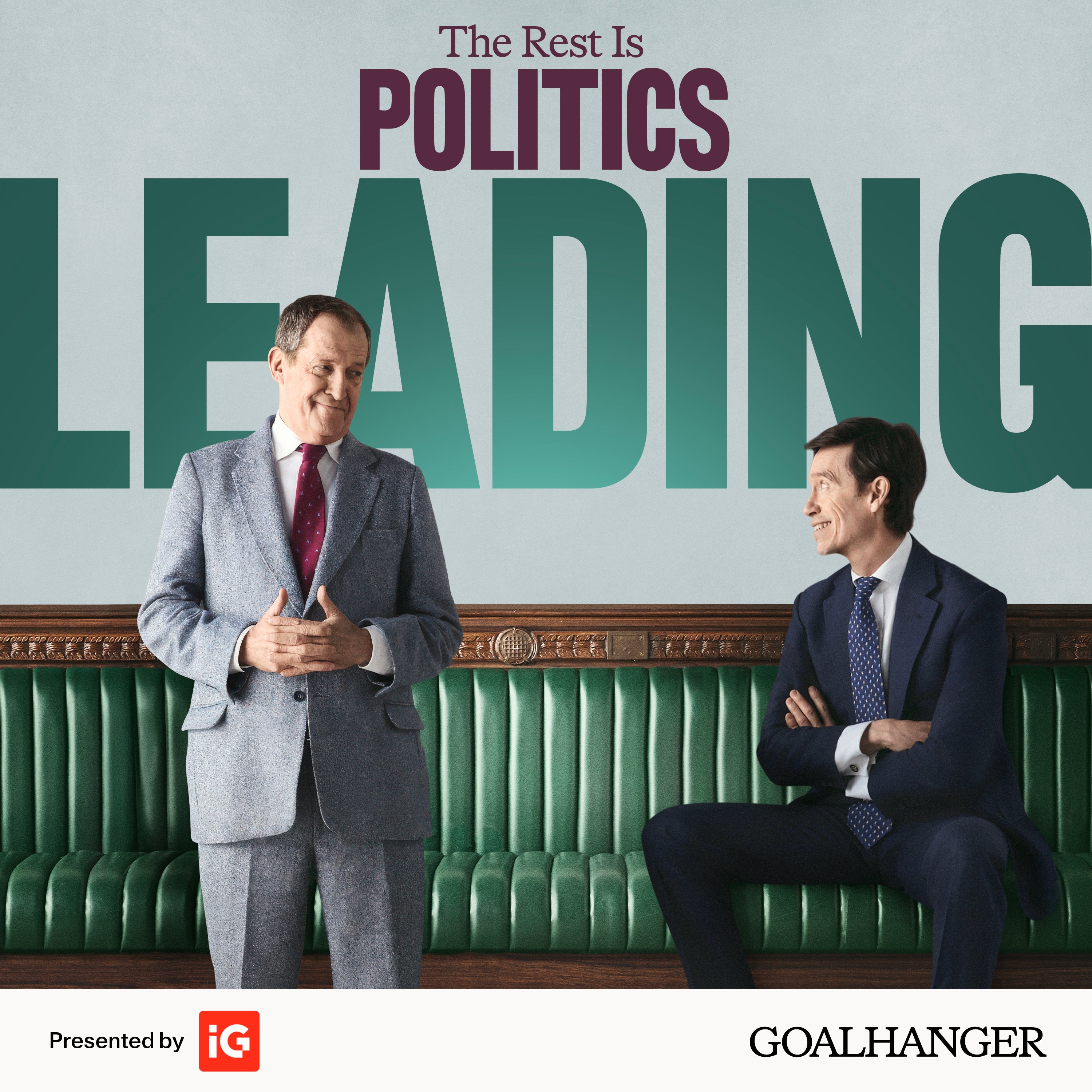
 The Rest Is Politics: Leading
26 Oct 2026 · 59m

 Add vo to ChatGPT or Claude to ask about everything you hear
vo listened to this episode to put together the overview and transcript, so there may be the odd mistake.
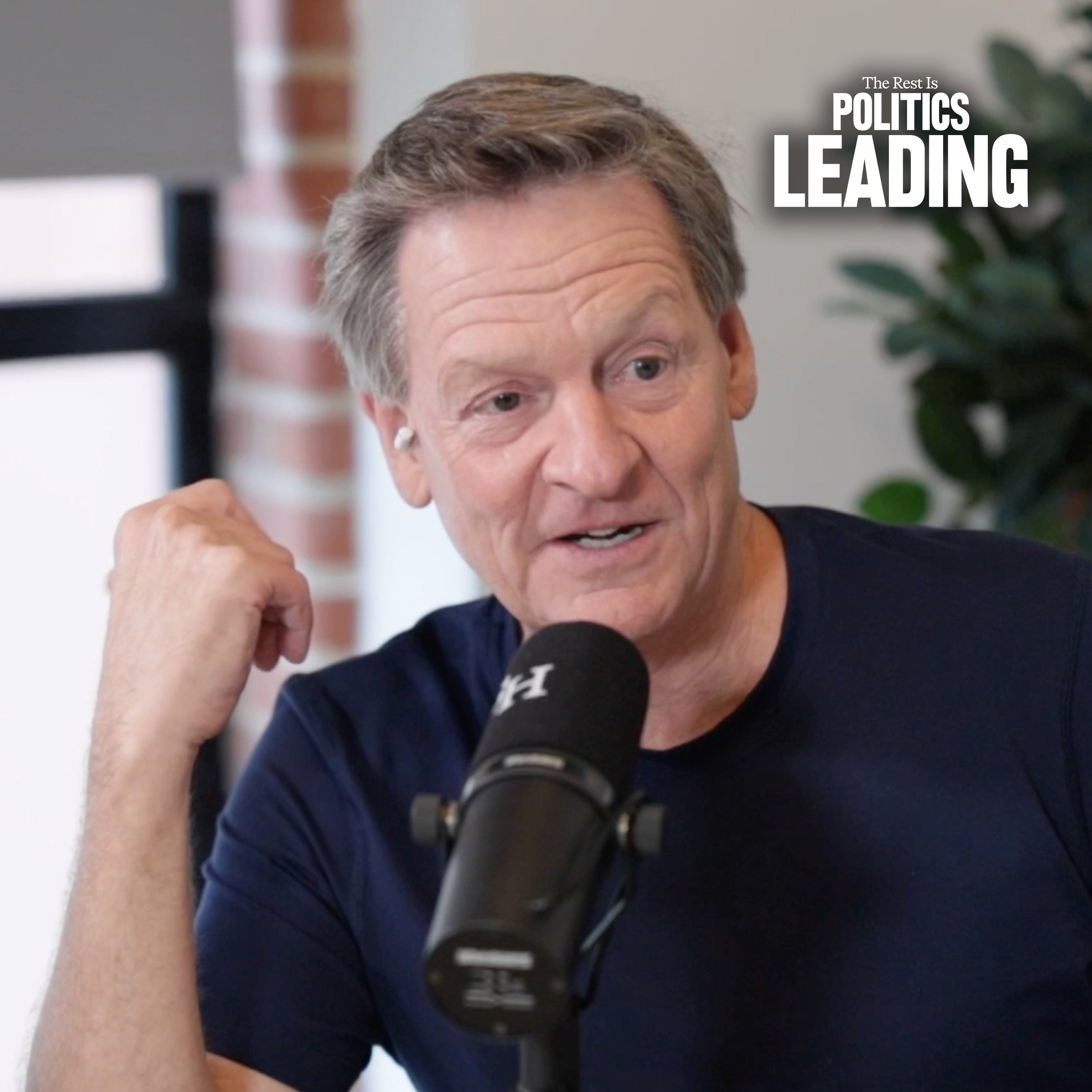
Michael Lewis discusses his book Blockers about “DOGE” (Elon Musk’s government disruption effort) and broader consequences of the world losing trust in America—especially for U.S. bureaucracy, data privacy, and the financial system.
Michael Lewis is a prominent nonfiction writer (previously discussed Sam Bankman-Fried). Rory Stewart and Alistair Campbell host; both are political figures/commentators.
Trump’s second administration is portrayed as weaponizing the civil service into a loyalist operation; Musk’s “cut $2 trillion” rhetoric is said to be mathematically false and motivated by protecting his companies and attention. Russell Vought is described as more dangerous than Musk because he understands government and centralizes budget power. The episode argues that betrayal of trust (e.g., tax-data misuse) corrodes government’s ability to collect accurate information and undermines global confidence in U.S. treasuries.
IRS privacy officer Kathleen Walters pressured to release 7 million tax returns to ICE for deportation; DOGE staff at Veterans Affairs keyword-filtering contracts and firing less-protected workers; NIST fire-science work by Alex Maranguitis; Trump/Musk “budget” claims ignoring entitlements, military, and interest on debt.
0:00Thanks for listening to The Rest Is Politics. Sign up to The Rest Is Politics Plus to enjoy ad-free listening, receive a weekly newsletter, join our members chatroom and gain early access to live show tickets. Just go to therestispolitics.com. That's therestispolitics.com. This episode is presented by IG. October is here and we're barreling towards the biggest financial moment of the year, the budget. Between that, a new chancellor and a new prime minister, there's genuine uncertainty about what's next for our finances.
0:28Rory Stewart: And of course, uncertainty is a massive problem for all of us. Rumours, speculation, opinions from absolutely everybody. And the trick to navigating all this noise, whether in politics or business, is to try to know exactly where you stand. And that's where IG comes in. From investments to trades, it brings your entire portfolio together in a single app with one unified wallet to fund across all your accounts. And with over 20 ,000 stocks and ETFs, you'll have the breadth to act no matter what the Chancellor announces. And here's the cherry on top. With no annual fees and zero commission on UK stocks, shares and ETFs, more of your money stays where it belongs.
1:06Rory Stewart: Download the IG app to get started. IG. Trade. Invest. Progress. Capital at risk. Other fees may apply. For adults with Crohn's disease or ulcerative colitis symptoms, every choice matters. Trimphia offers self-injection or intravenous infusion from the start. Tremphaya is administered as injections under the skin or infusions through a vein every four weeks, followed by injections under the skin every four or eight weeks. If your doctor decides that you can self-inject Tremphaya, proper training is required. Tremphaya is a prescription medicine used to treat adults with moderately to severely active Crohn's disease and adults with moderately to severely active ulcerative colitis.
1:48Rory Stewart: Serious allergic reactions, increased risk of infections or lower ability to fight them, and liver problems may occur. Before treatment, get checked for infections and tuberculosis. Tell your doctor if you have an infection, flu-like symptoms, or need a vaccine. Explore what's possible. Ask your doctor about Tremphaya today. Call 1-800-526-7736 to learn more or visit TremphayaRadio.com.
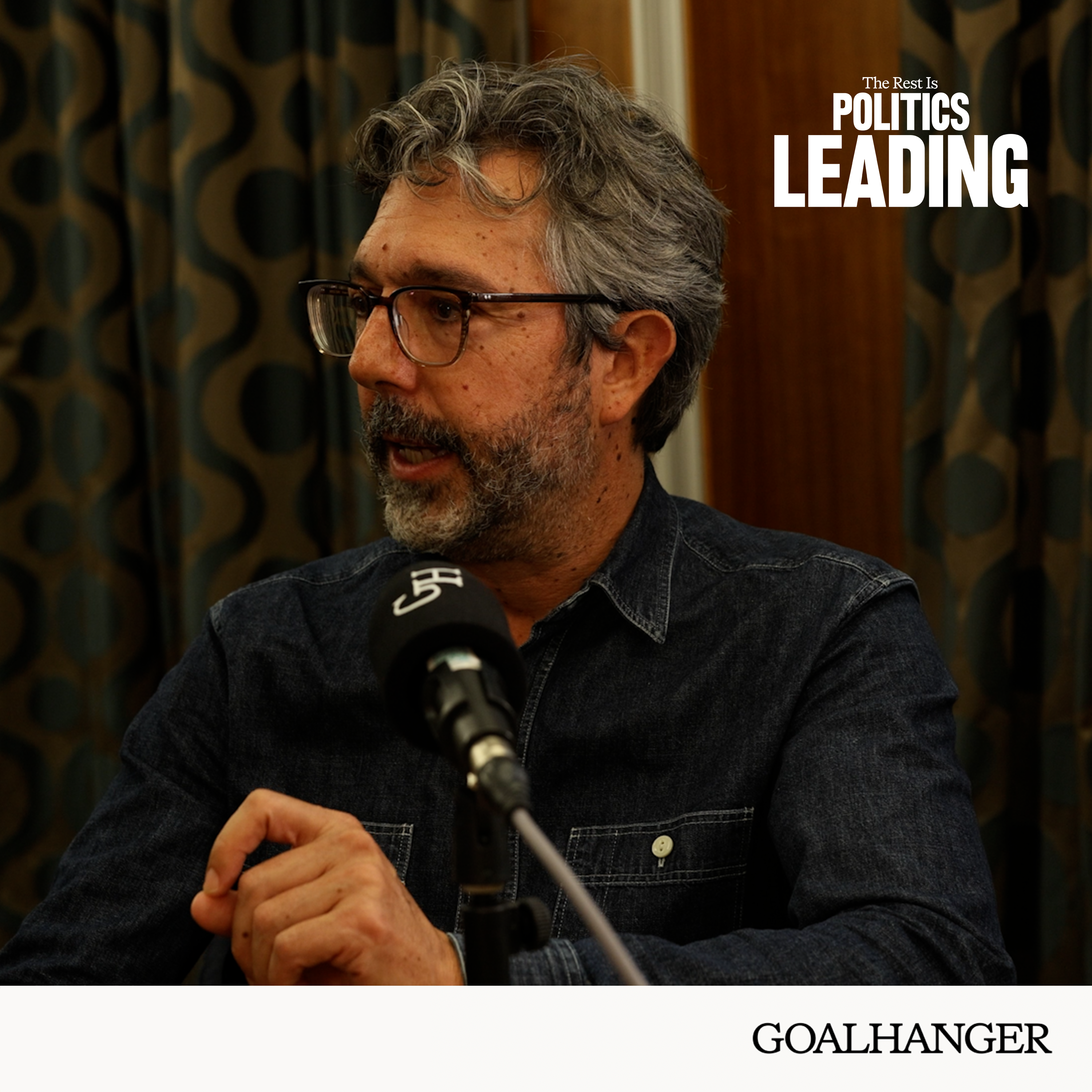
2:21Welcome to The Restless Politics Leading with me, Rory Stewart. And me, Alistair Campbell. And we are with, for the second time, Michael Lewis. Michael Lewis, who is one of the finest writers and chroniclers of modern times. The last time we had him on the podcast was to talk about his book about Sam Bankman-Fried. But it was at a time when the world was coming to terms with the possibility that Donald Trump might be returning as president of the United States. And I don't know if you remember, Michael, but in that interview, you said that if he did return, you would write a book about the workings of the Trump administration.
2:56And in particular, if this doge thing went ahead, that's what the book would be. And unlike Trump, you deliver on your promises. That is what you've done. Did I really say that? You said that, yeah. I'm amazed. I don't remember that at all. Well, you don't remember thinking that. I don't remember thinking it. I remember thinking I don't want to write the same book twice. And I'd written the thing about the first Trump administration. And I didn't know for sure that the second Trump administration would be so different. So. Well, you said. I don't know if you remember. You always get me jet lag saying things.
3:31I don't remember. Well, I don't know if you remember, Roy, but Michael said that he would want to look at the workings inside government. And you've gone and done it in an extraordinary way. And your new book, Blockers, is all about Doge. Doge and other things, yeah.
3:47Rory Stewart: Michael, let's start with that. So I see you as a chronicler, in a way, of our entire civilization. Kind of pompous way of putting the fact that over the last few years, you've chosen these incredible moments that have kind of highlighted... massive cultural moments from the financial crisis through sport, etc. But the one thing you hadn't touched on was bureaucracy. Why would one? Why would one, right? Right. And yet, in a way, I'm kind of intrigued by this, because I suppose you can make the case that it's perhaps more important than any of the themes you've dealt with before. Yes. I always have this problem with the books when I'm thinking of what they are and kind of framing them in my head.
4:30When I tell people what I'm doing, their eyes glaze over. I mean, when I tell people I'm writing about baseball statistics, it's just, I lose them at hello. And in this case, the flight of their interest was more rapid than anything in my experience. I'm writing about the bureaucrats. But can I tell you how I thought about it? And you could tell me whether you both have actual experience in government. I do not. I can't get going on a book unless I have a frame, unless I think I know what it's about. And the book wasn't about Doge. doge is doge is there but what struck me right away trump two as opposed to trump one was trump one trump didn't want to run the government he didn't he didn't know he was supposed to run the government the dog had caught the bus and he didn't know what to do he's now he's supposed to drive the bus and he told chris christie his his transition leader that he that he said that we're so smart chris that we can learn how the government runs in an hour and he was so indifferent to it.
5:26And the story of that was indifference. In this case, it was so clear right away that they were going to run it. Not only were they going to run it, they were going to run it more enthusiastically than it's ever been run, take over pieces of the government. The president's not supposed to run and run those too. And I thought, including the nonpartisan civil service, the two million person operation that pledges allegiance to the constitution, not to the president. And the frame for me in the very beginning was was okay let's just say they get their way let's just say he weaponizes it turns a two million person civil service into a loyalist operation that serves at the pleasure and for the benefit of donald trump how does it change how the government works like how what will it do to the various functions like public safety or like the long-term investment in science or the the data collection function and that as dull as that sounds once i had that and i could go looking for characters to kind of cast to explain exactly what was going to happen the thing was just it was so easy to write it was so much fun i didn't know that i didn't know that anyone was gonna i never know because anyone's gonna share my enthusiasm for it but i could have written this book five times over with five different casts of characters there was that much material just laying around and it kind of when i finally had the material i was sitting at the desk it kind of wrote itself you also said in the interview with us several years ago you said if there's one person who should not be allowed anywhere near the running of government is elon musk and you gave about 10 reasons why that was how on earth did i say all this i don't know why you did you did because you're so wise you're so wise i can't believe that earlier me was so prescient.
7:15Michael, you did say other stuff that was complete bullshit. Why did Elon Musk even come up? Because, I don't know, but you said in terms, do you remember this, Roy? Who would have thought Elon Musk back then would be a... You gave me about 10 reasons why Elon Musk would just be a disaster attached to government. Yeah. And I just wonder whether you've changed your mind at all.
7:37No. You've teed that pitch up for me to just swap. So whatever I would have thought three years or four years ago, it was so much worse than I imagined. This is what I didn't expect from Elon Musk. I don't think I would have expected from Elon Musk. I wouldn't have expected what a liar he was. That you talk to people. He didn't talk to me. He explicitly wouldn't talk to me. But he allowed his friends, some of his friends to talk to me. And they all have this line on him that to understand Elon, you have to understand that he never lies. He believes what he's saying is true. And I don't know what's more terrifying, that he believes what's coming out of his mouth is true or that he is actually not that way at all.
8:17And he's fooled his best friends that he's something other than he is. But I was the sheer volume of dishonesty on top of all the other problems. That's kind of what shocked me. If it was coming like Trump, if it was coming out of his mouth, you knew it wasn't true. And it was surprising if something came out of his mouth that was true. But he was presenting himself as this hard-edged, hard-nosed sort of realist who was coming into this mess of a bureaucracy and fixing it. I don't know how much you all – how much did you follow this? But did you see – do you remember – so when he rolls in, he says he's going to cut$2 trillion out of the budget.
8:53Out of$7 trillion. But he says it and then he proceeds to ignore entitlements, the military spending, interest on the debt. He couldn't – the math didn't even work. What he was attacking didn't add up to$2 trillion. So he clearly wasn't doing what he said he was doing. And I think all along he was doing something else. I don't think it was, I'm going to actually get the budget in order. I think it was, he's worried about the investigations of his companies. I think he wanted to install his friend at NASA. And I think that he liked the attention. When he went down in a ball of flames, the one true thing Trump was quoted as saying is, I think he has a drug problem.
9:29you know i think he has a drug problem and you can see it uh but i it was it was bewildering why he even bothered to go there think of this i mean let's just take him at face value he is the world's richest man he's worth hundreds of billions of dollars he says that the most important thing in to him in life is like figuring out how to live on mars which whatever i don't quite understand that but okay and he's involved he's got this mechanism spacex to eventually do it he leaves what he says is the calling of his life to go to work in government and murder a million people is you know i mean what he did is the effects of it he's lots of people are going to be dead because of what he did who does that like and why i i don't it's a it's a it was a strange thing and i think even now unless you're paying really close attention like most americans i don't think they have they don't like him but they don't quite understand what he was even trying to do one
10:24Rory Stewart: One thing I think that was very weird at the time is that a lot of the people that you would have known on Wall Street were quite excited by the whole thing. I remember that first Davos, just after Trump had taken over, everybody was saying, it's going to be great. Elon is going to cut two trillion from the deficit and Howard's going to get us two trillion from the tariffs. And we're going to sort the whole thing out. There was a real kind of macho CEO optimism about the whole thing. And as you say, the numbers didn't even make sense. They were completely insane from the beginning. So what is going on in that kind of subculture of pro-Trump, pro-Musk, this is amazing, government needs shaking up stuff before we get into the downsides?
11:04I don't even think they, I mean, maybe the CEOs of Davos said that and believed it, but I don't think Trump or Musk cared all that much about cutting the government. I mean, Trump especially. The government, I think the debt has gone up three and a half trillion dollars in the first two years of administration. Trump clearly doesn't care about that. In fact, Trump's mental model, I think, is I can talk my way or bankrupt my way out of everything. I think the thing that's coming is Trump doesn't – he doesn't give – he doesn't think two seconds about the debt. He doesn't – he thinks that if things get bad, we can walk away from it.
11:40And I've been waiting for that moment. I've been waiting for the moment. And he's sort of hinted at it where he says, well, you think the debt's a problem. But in fact, you know, who do we owe this money to? We owe it to these Chinese people who stole it from us in unfair trade deals. And so we're going to figure out how not to pay some of it back. And now we're in what Trump loves to be in, a workout situation. That's where he would take the country naturally. And Musk, he cared about NASA. He cared about the investigations of his companies. He cares about woke. But I don't think they actually care.
12:13But the CEO, this is why the CEOs were all excited.
12:17Rory Stewart: Yeah. Well, and maybe if I extend, Michael, beyond the COs, the sort of general strange phenomenon of people being like, you know, Alistair and I are suffering from Trump derangement syndrome. And actually, Elon Musk is an incredible successful businessman who you underestimate at your peril. And actually, Trump's going to do a lot of good things for the American economy and get it going. I mean, there was a narrative which was very strong and still persists this day from people who are very reluctant to hear that this is all a lot of nonsense. So I've never been to Davos, but I've been to Davos-like things with people like that.
12:53And one of the things I always come away feeling is how uninteresting the people are who are saying things like this. And they don't actually know anything. They don't actually know how the government works. They think of it as inferior to themselves because the way they're evaluating the world is by their bank accounts. And they think the heuristic is the person with the most money is the smartest. And so Elon is so rich, so he must therefore be so smart. And I, like Elon, am rich, and therefore I'm smart. And these other people who are doing these things, whatever they are in government, they clearly aren't so smart because they have no money.
13:27So I think it's as simple. These are not people who have had experience in government. They don't understand when you go in, you can't run it like a business. I'm haunted by the memory of Jared Kushner walking into the Oval Office after the inauguration the first time and being bewildered that everybody had left. He thought everybody just stayed at the White House and asking, where is everybody going? That they just how little understanding they had. And I just think that American business has gotten in the habit of condescending to American government. And it doesn't help that money has assumed such a big role in politics, not government, in politics, so that they feel I can buy and sell these people and that nobody tells them they don't know.
14:11There's no countervailing sort of force coming in on them from the political world saying, hey, you don't know how the government works. Senators know basically how the government works, but they're no longer telling the businessmen that they don't know what they're talking about because they need the businessman's money. There are things like that going on, but you can't. I mean, look at what – can I just tell, I think, just how preposterous Doge was. We have to remember just how odd this was. So the active ingredient was Elon Musk at the top, but these 19 to 28-year-old young men who came in just to really breathe the same air as Elon Musk, none of whom had ever done very much in their lives, none of whom had any experience of government.
14:55but they were like learning there were three branches of government as they rolled into Washington. And they are sent out to the various federal agencies to cut waste fraud and abuse and told by Elon that everything there is kind of bullshit. I mean, here's a scene, true scene. If you had walked into the Department of Veterans Affairs in kind of May-ish of last year, you would have found a single young man sitting there with Elon Musk at Elon Musk's instructions, looking through all the file with all the 90 ,000 contracts and the hundreds of billions of dollars that the Veterans Affairs Department spends and just plugging in keywords like bias or trans or woman and cutting the contracts based on those words being in the name of the contract.
15:46And having arrived and figured out that like, oh, you can't just fire civil servants that they have these protections, but you can fire the people who've only been there for 18 months or less. They don't have the protections. Those people having to be the young people who are the future of the government, you just fire all those people. I mean, no businessman would do things this way. It's insane. It's insane what they were doing. And the people on the other side of it were as bewildered as you or I are about what they thought they were doing. It did not look like they had any kind of plan except to just kind of disrupt.
16:19That was it. And I don't think, getting back to how great a businessman Elon Musk is, I'm waiting for someone to sort of like parse this. The last five years of Elon Musk, he completely screwed up Twitter. He's hidden what he's done. He took a business and like the revenues fell by two thirds and it is demoralized. And he hid the fact that He turned it maybe a slightly troubled place into a very troubled place by shoving it inside of SpaceX. He's a good promoter. He's good at some things, obviously. But it doesn't mean he's good at everything. This guy, Alex Gibney, who's made this four-hour documentary.
16:57Which I'm dying to see. Yeah. Well, and he clearly has a very dim view of him as well. But his basic take is that he's a con man who, through the power of his confidence, can either lie or bullshit us into thinking he can do things he really can't. And his view is that he went into Doge, as you suggest, to stop federal agencies being able to look too closely at his business. That's plausible to me. Which, of course, is right up Trump's avenue as well. The other guy who comes through is a really interesting character in the book, about whom I don't think we in Britain know enough or talk about enough, possibly, you'll put me right if I'm wrong, is this guy Russell Vogt.
17:32Vogt. Vogt, Russell Vogt. Now, he, I remember from the Project 2025 stuff, which if your guys in the book, by the way, had read, They might have been a bit more alert to what was coming, maybe. But who is he? Why is he important? And why should we probably loathe him as much as we loathe Musk? Russell Vought is much more dangerous than Elon Musk, because Russell Vought actually understands how the government works. He's a lifer. He's a Christian nationalist who played kind of a more minor role in the first Trump administration. But at just the moment where Trump was at his lowest, right after January 6, Russell votes stuck by him and has been rewarded, you know, handsomely.
18:12He's now the head of the office of the management of budget. And that's every dollar the government spends, passes through his hands. So let's see who, one, he's a person who is purely interested in power and he is at the center of this power grab that the president assuming powers he previously has not. For, And Russell Vogt himself has assumed the power of the purse, which that every right now, every scientific grant that the government makes, Congress authorizes. Normally, it goes from there to the people who get the grant. It now passes through Russell Vogt's hands and he's deciding he's calling Northwestern University and saying, unless you change those policies on campus, you're not going to get the money for your medical school, that kind of thing.
18:52Where Russell Wilt walks into my story is that when I was casting the role of like the human embodiment of the American Science Project, I cast a man named Francis Collins who ran the Human Genome Project, ran the National Institutes of Health under Trump and Obama and Biden. and who, although he was just a mere scientist again, running his lab at the NIH, was told he had to pack his bags and leave in 24 hours after Trump was reelected. And he was told it, but he didn't know who had actually issued the order. And in the back of his mind, he had some suspects in his head, but he didn't know who they were.
19:34And probably the prime suspect was Russell Vogt, because the mere fact that Francis Collins didn't know who fired him suggested Russell Vogt. His Fingerprints are never there. And what intrigued me was that even if Russell Vogt hadn't actually put the bullet in the back of this scientist's head, he had allowed it to happen, was that the scientist, and this is getting at Russell Vogt's soul, the scientist, Francis Collins, in his early career had discovered the genetic source of cystic fibrosis that eventually leads, after some decades, to a treatment for cystic fibrosis and goes from being a death sentence in children to being something now that's take a pill and you're leaving.
20:11And Russell Vogt's daughter had it. And Russell Vogt's daughter has it. And so he is plausibly a person who could know that this scientist basically saved his child's life and not let it get in the way of what needs to be done. And he's regarded as a ruthlessly efficient Washington insider. And I think the irony of Russell Vogt, he is the one who in the off season between Trump one and Trump two got caught on tape talking to donors saying that if they got back in power, the first thing they wanted to do was traumatize the federal workforce. He's the one who sort of saw that to do everything else you might want to do, you have to start by demoralizing the non-partisan civil service.
20:54He got that. And I think he's the one who also, when Elon Musk rolls in, is saying, let him go. Like, yeah, what he's doing is stupid. Yeah, he doesn't know what he's doing, but he's creating so much damage. It'll make it easier for us softening the target kind of thing.
21:08Rory Stewart: So, Michael, listen, one of the things I thought was most fascinating in the book is that you began to talk a great deal about a woman called Kathleen Waters and the relationship between the Inland Revenue Service, people's tax records, and then what ICE got up to. And it was a really interesting example because it was about the fact that they're not just laying people off. They're beginning to do very, very strange things which are breaking down confidentiality, divisions, separations of powers. Can you tell us a little bit about that part of the story? Yes. So Kathleen Walters was the original blocker I met.
21:43By the way, the blocker term is Elon Musk's term, right? He says, go in and find the blockers and whack their heads off. It's an insult. It's an insult. It's meant to be an insult. And Kathleen was the chief privacy officer at the Internal Revenue Service, which meant she was the body between my tax return and a Trump political operation that would weaponize it against me. And a spotless record, no hint of partisanship ever in her career, had been in the IRS for 20-something years. The epitome of the good public servant. No one had anything bad to say about her. And right after the inauguration, she starts getting pressure.
22:15Doge is only part of the pressure. But she's getting pressure from the Department of Homeland Security, where ICE, the immigration... Gestapo. Gestapo, right, is. to release to the Department of Homeland Security a database of 7 million tax returns of undocumented workers because those tax returns have the most recent current address of this population. And as she said, like there are laws around this that and then the most stringent privacy laws we have that the undocumented workers like American citizens tax returns are sacred. Nobody's supposed to be able to get at them. That what was particularly disturbing to her was that so this, I mean, when I started this, I didn't even know the undocumented workers paid taxes.
22:59That was news to me. But the Congress created this program in the 90s so that because they saw the revenue possibilities, you get a number. It's not a Social Security number. You get a number that enables you to file a tax return. And the IRS has said to this population for 30 years, you pay your taxes and nothing bad will happen to you because you pay your taxes. And if you one day you want to apply for citizenship, the fact you've been paying into the treasury will be counted in your favor. And the government's raised hundreds of billions of dollars from this population. The idea that we were going to then grab their data and use them to rouse them out of their beds in the middle of the night and deport them was outrageous.
23:41As Kathleen said, she said that in the history of the country, she could only think of one example where there was such a violation of trust with data weaponized in this way. And it was in World War II when the census data was used to round up Japanese Americans and put them in concentration camps. But she said the difference was, in that case, it was actually legal. It was appalling, but it was legal. In this case, it was both appalling and illegal. and she ended up you know fighting the good fight for a couple of months but then then dies on this hill like she loses her job she's a single mom she doesn't have savings i mean it's a big deal she could have just gone along with him i always i mean it was quite admirable the fight that she put up at one point i mean if this ever comes becomes a movie and it actually looks like it might now but if it ever becomes a movie the scene of the 25 year old doge the muskrat running around the IRS trying to find her so he can fire her and her with the keys to every office and hiding in conference rooms with the lights out, knowing, as she said, these guys all have ADHD.
24:43If I can just get to six o 'clock in the evening, they'll forget the next morning. I can just go back to my work. And in fact, they did that. It was this hide and seek inside this KGB like office building. She did her best. But, you know, the point she makes, it's a really it's a really good point is that it isn't just, oh, this is a huge violation of trust. This is an unprecedented act of betrayal. And if you do this, we're not going to be able to raise money from undocumented workers ever again. It's also that one of the government's big functions is to collect information about the society.
25:16The way we know things about ourselves is the government counts things. And it counts all kinds of crazy things. It's the economic statistics and the climate statistics. The reason we know what's happened to social mobility in America is the tax returns are used by economists to understand the society, but nobody feels it was worried that their data is going to be abused. The minute you do this kind of thing, you corrupt the ability of the government to collect the information in the first place, and you start to create an even fuzzier picture of reality. So it has huge consequences doing this kind of stuff.
25:52The administration didn't think that way. I read recently a book that you mentioned in the Acknowledgements, Jacob Weisberg's book on Profiles of Cowardice. Yeah. He's a very close friend. Yeah. And it's a really interesting book because he's basically going through people who enabled Trump. And they were powerful people. They were business, educationalists, whatever it might be. You really look to people who block us, who tries to do the right thing. But they all end up failing as well. Yeah. So what does that say to you about the kind of either the power of the government or the morality of the United States that the ones who've enabled him have probably ended up richer, have ended up more powerful?
26:37And these guys that you write about, some of whom have done amazing things in their past, they end up without a job. With the exception of a handful of podcasters, he's not paid anybody to be hostile to Donald Trump. I think that's what it says. And what does that say about America? But also about government. I think they've actually, they've proved the point that there was never a deep state. It was so easy to lop the heads off these people. What Russell Vogt has created at the Office of the Manager of the Budget is precisely the thing he said he was going after, the deep state. We now have one.
27:09We now have this black box where decisions are being made unlawfully that affect everybody. And you can't, you know, there's no explanation or transparency there. And the mechanism for actually seeing inside the box has been disabled. So while Elon Musk is creating all this distraction, Russell Vogt eliminates all the inspectors general, which they know it's a job inside the Department of Energy, the Department of Agriculture, the Treasury, all the agencies. These were the independent, essentially investigators who did identify and prosecute corruption and did identify the waste, the fraud and abuse.
27:45that the ability to see that stuff now is so diminished. It's kind of an industrial scale gaslighting the whole thing. The other guy that I thought was, I found the most moving in a way was this guy, Alex Marangides. Oh, all right. Because, and there's another sort of connection. So he's the guy who sort of works out how the Twin Towers collapse. And of course, Lutnick, Howard Lutnick, another kind of evil character in this film. He's lost a lot of people. It's a book still. It's just a book. It's not a film yet. It's a movie. Yeah. It's a movie. I'm in this scenario. I know it's a book. But he's sort of, he's a big part of this.
28:19And yet he has no appreciation for this guy. This guy's also done some of the most extraordinary research into fires. Can I talk about him for just a minute? Yeah, of course you can. Public safety is maybe the biggest function. When you're carving up the US government or understanding in terms of these buckets, these functions it does, so much of it can be interpreted as public safety. Alex Maranguitis is an upper middle class Greek who could have very happily just laid on the beach his whole life. But he really was like born to solve problems. He was the one guy in his family who liked to take apart the boat and put it back together.
28:54He was supposed to just sail the boat. And he ends up coming to the States for college. And he ends up at this odd place I'd never heard of called the Worcester Polytechnic Institute, which, to my amazement, has the leading fire science department in the country because it's right next to Hartford where the insurance companies are. And when he arrives, there are two fire sciences. And who knew there was a fire science? But, you know, the sprinklers on the ceiling and the smoke detectors, all that, that comes from somewhere. And there was an indoor fire science, how fire spreads inside of a building.
29:28And there was wildfire. And he had the prescience in the early 90s to see that actually there needs to be a third science. And it's fire that jumps from wild space into communities. I don't know how much of a problem you have with it here, but in America, it's huge. And it's worse and worse and worse. The climate change is creating these tinderboxes that we've essentially built communities inside. So this is what he wants to do, but no one will let him do it. He ends up going to work in the U.S. Navy and setting big fires on ships. And when the Twin Towers fall, the question is, like, how did they fall?
30:00The planes did not bring them down. And, you know, the conspiracy theorists said it was an inside job because the fire could never have gotten so hot that it melted the beams. He is brought into this operation in the government, which is the most interesting, never written about before operation in the government, in my view. First time I did, first book I did, I wished I could have written about him. The National Institute of Standards and Technology, NIST. It's a bunch of tinkerers who do things like defined an inch, define a gallon. You know, it's where standards, where ultimate truth resides.
30:35For complicated reasons, historical reasons, they're where the fire research happens. He comes in, they ask him to come in and figure out if the Twin Towers could have been brought down by fire. He rebuilds a chunk of the Twin Towers, like reconstructs it right down to the file cabinets and recreates the event and shows that, in fact, the fire could have gotten hot enough. And that is what happened. Beams melt. And as a result, actually, Howard Lutnick's firm, which is above where the planes hit, he explains why Howard Lutnick's brother and his whole firm dies. Howard Lutnick comes into the Department of Commerce, which oversees NIST a year and a half ago and does things like takes Alex Maranguete's credit card away and says that if he wants to do anything that costs more than$10 ,000, he has to personally appeal to Howard Lutnick.
31:25And Howard Lutnick never even shows up on the job. He's in the White House the whole time because he wants to suck up to Trump. And Alex Maranguete has, since that moment, because he did such a good job during 9-11, been given the right to invent his fire science. And he's airdropped into these great wildfires in the west these in these community wildfires and he's generating so much interesting new knowledge that i mean you talk to like cal fire or texas fire what they do when they're advising how to build in the woods is completely different because of him they've they've they've developed escape plans from fires that have saved lives it's a thing that's going to save billions of dollars and thousands of lives and it's a person it's just him i mean he's got a little help here and there, but the knowledge of what he's been doing, it's one deep.
32:15And they create an environment in which it's impossible for him to do his job.
32:19Rory Stewart: Michael, one of the things that is the theme going through your book, but actually quite a lot of your work and previous books, is the question of trust and the kind of long con. And the biggest example you just gave us, obviously, in this book is that you get undocumented migrants to send tax money to you. you're making billions of dollars off them and you implicitly promise them that's not going to be used against them. And then you treat them like a sucker, right? You make them reliant on you, you bind them into the system, and then you treat them like a sucker. It's a bit like, I think, you know, if you were a medieval king, giving safe conduct to someone who's an enemy and then just killing them and just being like, he's a sucker, right?
32:59Rory Stewart: And I somehow think this is quite profound way of illustrating American foreign policy at the moment. If they're looking at NATO, So if they're looking at Ukraine, essentially what you do is you create a structure of dependency and trust, which people have bought into over 80 years, assuming that it's not going to be weaponized against them. And then you just treat them like a sucker. Is that a question? Yeah. It's an observation. It sounds like an observation. I guess I'd be interested in whether you feel it like that, whether you feel that what we're learning through your book is something about the mindset.
33:35Rory Stewart: I was going to say a mafia mindset, but it's worse than the mafia mindset because the mafia rely on trust, don't they? They don't break their safe conducts. They don't, if somebody does something for them, they try to hold up that bit of the bargain. I think the betrayal of trust is at the heart of the story I just told. And I think it's also, it's one of the keys to understanding Donald Trump's life and how he moves through the world. I mean, what we're seeing is all an expression of the president's character. and he has always been this trust exploiting and destroying machine like if you want to predict what donald trump's going to where he's going to go see where there's still trust and he like a fog he'll roll in and he'll get with it what he can get out of the trust and and leave trustlessness behind where is there left with trust you know it's this is a funny question because if you asked Americans like, do you trust your government?
34:31No, everybody says they don't. You know, it's 99 to 1. No, I don't trust the government. But implicit in their behavior is a great deal of trust. They drink the water, they eat the food, they hold the treasury bonds, they are happy with the money. You know, it's like they breathe the air. I mean, there is still quite a bit of trust still there. But I think there's like a logic to it with Trump. And I think the logic is, and this sounds like an insult but it really is just an observation he's wholly untrustworthy he that you know that if he's coming out of his mouth it's probably not true and it's unnecessarily so he lies all the time in his private life he left bankruptcy companies in his wake he he left unpaid creditors in his wake so he's naturally untrustworthy and really good in in at being untrustworthy.
35:24Like it just works for him. If you put him in an environment, if you put him in a small community where there's lots of trust and we all trust each other and behave in a trustworthy fashion towards each other, he gets spit out like a bad seed. He doesn't succeed in that environment. Where he succeeds is where nobody trusts anybody else and he's the best at being untrustworthy. And so I think it starts with that. And so a lot of the behavior that feels on your end as a kind of whole nation outside of ours, that you're feeling like you're dealing with someone you can't trust, our country you can't trust, it's him.
36:00Rory Stewart: Just tell us a little bit about what this might mean for the world financial system, for the bond market, for reliance on US treasuries, US debt, because that's obviously a place where we're putting a lot of trust. And we're also trusting US cloud computing, AI systems, software, defense, etc. But maybe start with the stuff that you really get, which is the finance and debt. In an earlier life, when I worked in the city of London for a Wall Street firm, it would have occurred to no one to question the role of the US Treasury bond as the riskless asset. It's everything in the global financial system is priced off of it.
36:37Everything depends on people not having to think about whether this is actually backed by the government. And the financial crisis of 2008, it was resolvable because when the private sector got itself in all kinds of trouble all by itself, the banks were basically all going to go down. There was this entity, the US Treasury and the Federal Reserve, who could come in, and the Bank of England, who could come in and assure everybody that they would assume the risk, the bad risk that had been taken, and stabilize the system. There was trust still in those institutions. And this trust now in those institutions.
37:16The trust has been steadily eroded by Trump. And he's been eroded. You can see it anytime. Anybody who's interested in the threat to the financial order ought to just be very finely tuned to anything he says about the Federal Reserve and the governors on the Federal Reserve. He's attempted. If he had his way right now, he'd be setting interest rates, which would be catastrophic. And I think if he had his way, that we get to a point where he does question, do we repay the debt? Is the Donald Trump way out of this mess, this financial mess that eventually there's going to be a reckoning about, is it to just walk away from some of it?
37:57So what does that mean? It means that if you ask me, Michael, are you ever going to write another book about Wall Street? Is there ever going to be another financial crisis that draws you back in? This is the financial crisis. It isn't like the AI bubble popping. I've done that one before. that's the internet bubble all over again but but cubed it is a financial crisis that starts with a loss of faith in the u.s government and in treasuries you're seeing it in slow motion a bit interest rates creeping up the service on the debt becoming unbearable to the country and there has to be some other thing you inflate it away you and but there becomes we become greece and there's no, but we become Greece, but there's no EU to step in.
38:39We become Citigroup, but there's no treasury to step in. That's a really, I don't know, I haven't really thought it through, but that's a really interesting financial crisis where there is no backstop. It just runs. It's a wildfire without fire engines, without firefighters. And that's where we're headed right now and i mean i felt it i felt this viscerally since trump was first elected that we're just that i felt viscerally a sense that he's coming for me in some way and i mean i i've done odd things in my own personal financial life i own gold i never would have owned gold uh and i know a lot of people who've done this kind of thing and but there's when if it happens this way there's nowhere to hide i just like i and i i don't so i don't know what i don't know what it looks like.
39:29He's also deliberately trying to destroy any international authority that could hold him to account or actually could address the sort of crisis that you're talking about. So in the end, weirdly, America might end up on its own. Okay, Alistair Michael, quick break and back for more.
40:00The great game. The strategic struggle between Britain and Russia. We assess, uh, Prime Minister. With high confidence it was Russian. Holding the Russians accountable is World War III. They took down a British passenger jet containing 350 people. The man in the Kremlin is playing, Alex. You've got to ask yourself, do you want to play or not? You're the Prime Minister. You've done nothing! We would need to understand the policy context. All the relevant context will be structured as a framework today. And disseminated into an operation order. Or frago. Or a frago that says to kill the president of Russia.
40:48Yes. New from Gaulheimer. Who is going to be able to pull this off? You're my soldier, are you? Sergeant Tom McDuff, Duffy. An audio drama journey like no other. Men like Duffy, they are our most valuable weapons. Devised as a technically rigorous geopolitical action thriller. We have two times friendly key. Where Britain plays its strongest hand. He's the best. Against its strongest foe. Don't do it, Duffy! Bear Hunt. Available now, wherever you get your podcasts.
41:33let me just ask you what's your advice you're not you know unlike me and rory you're not as as it were in politics be a very bright guy and pay very little attention to actual politics yeah you do but you kind of the government you think about it you think about it but listen let me ask you this question if you were sitting down being an american studying america as you do how are other leaders around the world expected to deal with this guy how would you advise them to deal with him when as you say most of what comes out of his mouth is untrue and they should understand they will never ever be able to trust him what's the best what's the guy i love it you're making me a head of state yeah you're advising head of state now can i just be the head of state you can be the head of state right so um if i'm the head of state you don't get to be the head of state of a normal country if you're an idiot right so they're all well what about a normal country a normal america's not no no so so it's so i just assume that all these people are they're all condescending to him you just know that whatever they're saying behind his back is not flattering about him so they're all saying how do we play this guy how we avoid getting rolled over by this guy so will you stay off if you are i don't know greenland or denmark you try to stay off the radar screen that's one thing he's very quick to take offense takes lights his response is always attack the person who so you try not to get yourself in that situation and get crosswise with him flattery it's amazing i don't know how you feel about flattery i like it a bit but when when it's coming from a place that it's obviously manipulating you i find it i just i get creeped sick i get creeped out like i don't like the person who's doing it he loves it i don't think you can do it enough so you you suck up to him you completely suck up to him you you don't but then you pay a price at home well you just this is why you're never going to make it no no no i I think what I do at home is I speak to my, it'd be better if home is not English, if I'm speaking a language that he doesn't understand.
43:27But I explain to them what I've done. I explain to them that we're making America work for us. I'm sorry I've got to do this. It's embarrassing, but this is the way we've got to deal with this. Otherwise, everybody's going to pay a price. But even though you don't speak the language, he has an ambassador who's watching you on TV. Maybe. And sending a report back saying, this guy's taking the piss. I'm not sure the ambassador probably doesn't speak the language either. so so so he doesn't have one he's probably spending a lot of money trying time trying to get money out of people who who right so i mean i don't know how much tension the ambassador's basically flat rim work around and you can actually this administration you can kind of bet that information is not going to flow unpleasant information is not going to flow up so you probably could take a big risk with the difference in your behavior towards your own how you talk about donald trump to your own people and how you talk to donald trump to donald trump's face and donald trump might never know and you just tell the people hey you're we're going to be the mouse that roared we're going to we're going to we're going to roll in and we're going to we're going to game the united states khani's going to do it yeah there you go well except he's he's been he's english unfortunately mostly and uh and he right and i mean sanchez in spain there we go he's following your model yeah yeah so i think a lot of people are following the model that would be the model and and it's such a simple model you're dealing you're dealing with a toddler with a lot of power come with ice cream don't don't say anything that upsets the toddler because the toddler gets fierce uh and then go explain don't don't explain to your people what you've
44:59Rory Stewart: just done and michael what you also do with a toddler uh with a gun is you do your best to disentangle yourself from them and prevent yourself getting caught up in the same thing in four or five years time so the problem is so sorry how our country has behaved i wish i i could go around the world and personally apologize to people because yes this is the problem is we've now nobody's gonna trust us ever again like they did this once they'll do it again and i it's it's this is this is the damage that's irreparable you can only cheat on people so many times before they just they think we've got but this is not i don't think this is just trump i think in some ways the financial crisis was a betrayal by the American financial elite.
45:46And even going back to my time in my little role when I was a bond salesman at the Solomon Brothers, I remember feeling, my God, I'm pillaging European financial institutions. I am here to sell them stuff they shouldn't buy. Not all the time. It was more subtle than that. But I felt at the end, these places are going to like us less. And the ultimate expression of that ended up being the financial crisis. So I think Donald Trump comes on the heels of some decades of growing skepticism of American behavior. We've certainly flushed away all the goodwill earned in the last great war and the aftermath.
46:25Rory Stewart: So my final one for me, Michael, and then back to Alistair. Leave us with a final sense of blockers, this new book of yours, and maybe deal with the obvious, which is one of the things, along with many bad reasons that are driving populism, is a good reason, which is that many of us feel that we are absolutely paralyzed, that our governments are stuck, that there might be very good meaning, intelligent people working on them. But my goodness, you look at bureaucracy of, I don't know, try to get a driving license to the United States or even some parts of the National Health Service in Britain, you're just tearing your hair out.
47:02Rory Stewart: And these things desperately, desperately, desperately need reform. And we simply cannot afford with our aging populations, the ballooning costs of government. Something's got to be done to make things more efficient, more effective. So how does one deal with this? Because the problem is somebody arrives claiming they're going to deal with it. And what they do is they create a bloody mess and turn out to be completely insincere. And the whole thing is horrible. But it would be a big mistake to conclude from that, that there's nothing inefficient about government and we can just continue with business as usual.
47:32Exactly. The problems with the government are what led to the possibility of Elon Musk treating it in the way he did. That if we were all happy with the government, people would have been outraged when he came in and said he was going to do what he did. He didn't do it, but the whole society would have blocked him. My first step is always kind of optimism. I just have trouble believing bad things are going to happen in the future, even though they do. But my feeling is that this is a huge opportunity. I've had this feeling about, since Trump was first elected, that the politics of the country, of my country, are out of touch with the culture of the country.
48:09The country is inherently, it builds communities and organizations. It builds trust well. It solves problems. It's very philanthropic. That nobody really likes the way the politics are. and that having created this crisis in government, they've also drawn a lot of attention to the government. And this book is an example. This book is close to the best-selling book in the country and it's about bureaucrats. And there's interest. And if it's done right after the midterms, I can easily imagine there being serious things happening in Congress that actually reform the government because of this, that a good thing will happen because of the bad thing.
48:53So the way you put it is actually beautiful. It's that we should not, you don't conclude because what they did was all wrong. That was there before it was all right. It wasn't. It's kludgy. It was resistant to change. It was resistant to reform. And now it won't be so resistant. There's not much left to resist. So that's interesting. It's an interesting situation. You mentioned the midterms there. um what let's let's assume that it doesn't go very well for trump and the republicans how do you think psychologically and practically he deals with that and what does that mean for the last couple of years of his presidency well he never takes responsibility himself for anything i mean the first thing he'll say is it's rigged i mean i don't know how far he'll go with that you know does he declare you know a national emergency that this was stolen so that will be his first step.
49:44It won't be that long after the midterms before he can start blaming Democrats in Congress for what's going on. So the window is not a big window. So he'll be probably more at home in the environment because he'll have an adversary. The adversary will be the Congress that's controlled by Democrats. I don't know what happens to him. He doesn't seem like he never dies. I don't know what happens to him. But you know what you just said there about America and America We build communities and we invent great things and we do stuff. I think what a lot of people in Europe find really hard to get over is the fact that we saw and America saw what he was like first time around.
50:24And yet somehow America chose him again. That leaves people thinking this is a basket case country where anything could happen. So are you conscious of that? He's not very popular now. In the States? Yeah. he's really unpopular now historically unpopular and even the people who i don't know do i i hate to speak for the country it's such a complicated you're out of state michael we've been right but i'm having a state of another country okay so that's not helping no i'm but i mean that but i do get i have a lot of touch points with my own country and i i spent a lot of time with like lots of different kinds of people and even the kind of the business people who you were evoking earlier who thought it was all great that elan musk was going in even they're they're they're over it they're over him the country has great strengths and weaknesses i mean we're also the country that's i mean i live in i live in san francisco like five of the ten biggest companies in the world that have been created in the last few days a lot of people sleeping on the streets and that's true too i mean there are a lot of problems but there's a lot of interesting things about the country too i don't it still feels vital to me it still feels like a place it's capable of self-reinvention if it didn't i wouldn't just say it if it did not move to ireland during i'd come back to london and live in london but i don't feel that way it feels like it feels it does it feels oddly hopeful okay good good all right i mean i'm sorry i feel hopeful no i like you to feel hopeful there's a very personal you just never know where it's going to bounce you never know who the voice is going to be you never know when an ex-obama-like figure or where some leadership arises that can be very effective in this moment it's a chaotic moment So final question for me, when we get you back in three or four years, what have you said today that you'll be amazed that you said?
52:15Rory Stewart: And let's pray it's not US Treasuries collapsing, because let me tell you, Alistair, if he's right about that one, I'm not going to be very happy having him back in three and a half years time, because the whole world will be in the deepest recession we've experienced since the late 1920s. but what if i'm president of france that's what will be the amazing thing how did you end up how did you know you were going to be a foreign head of state okay that's the thing that is where you'll say this guy is a wizard this guy's nostradamus he he saw that coming we gave him a little lead and he's anyway yeah no oh not even no how about japan or or like mongolia or lichtenstein no Well, that's a little small potatoes.
52:58He's wealthy, though. Very wealthy. Maybe more doable. You get a lot of gold as well. Well, Nostradamus has been lovely talking to you. Thank you for having me. We'll speak to you soon. Thank you, Michael. That was lovely. Totally fun. Thank you. Bye-bye.
53:14So, Rory, Michael Lewis, he's a character, big character. He is an extraordinary writer. There's a quote on the back of this from Jesse Armstrong. Michael Lewis is a world-class noticer. I think that's a great word. He just notices things.
53:29Rory Stewart: He's also got a lovely sense of humor, which I think is very helpful too. I mean, he's also, you must think as a journalist, that there's a real skill in making something like US bureaucracy come to life. Or as you say, Moneyball is an incredible example, because as he said, if you said it to someone at a dinner party, I'm looking at statistics and baseball, they might be like, hmm. It's now a big industry. I mean he kind of he was in at the start of and part of the creation of a huge global industry I know his books you said right at the start that he always finds a way of taking sometimes quite esoteric subjects and making them very very accessible very interesting and he's obviously because he's such a nice guy I think he's got this ability when you see these people that he talks to in the book you know they're often people who are probably at the back of their mind think I shouldn't really be talking to this guy.
54:21Why am I telling him my whole life story? Why am I divulging everything that I feel? And it's because he's got that sort of, you know, empathy. Yeah.
54:29Rory Stewart: Well, one of the other things that I think is interesting is that a lot of his early books were about rogues. And famously, he got on quite well with Sam Bankman-Fried, who's now in jail. And when we interviewed him last time, he was quite honest about the fact that he's not particularly moralistic or judgmental. So it's interesting that he's finally reached with Musk and Trump a kind of limit to his empathy. He's somebody who was prepared to kind of enjoy the roguishness of Salomon bond traders, of all the weird crypto nonsense that Sam Bankman-Fried was getting up to. But he has concluded with those guys that there is really nothing redeeming, that in Mussel's case, he never intended really to make government more efficient.
55:08Rory Stewart: And that Trump is, as he says, just all you need to understand about him is that he exploits trust, somebody who can identify any situation which is based on trust and exploit that, abuse it. And create trustlessness. But also, I guess I was trying to work out whether it's his personality and his character that made him optimistic at the end, or whether that's a sort of genuine feeling that this might, you know, turn into something good. I'm dubious that I think the Trump hangover is going to be very, very long and very, very painful. But he could be right. He could be right. Maybe he's right to be a bit more positive and hopeful.
55:44Rory Stewart: I think there's also a problem with, I mean, I love American optimism, but it is partly the American optimism that was leading those CEOs at Davos to try to produce this very positive spin on Musk and Trump, because they want to give a speech with a hopeful, optimistic ending. So they don't want you to stand up and say, it's going to be a disastrous four years for the whole world and for America. They want to try to come up and say, well, you know, I'm contrarian and I'm going to see something hopeful in this. So I think truth is more important than optimism. Yeah. Well, if we're still going in four years, it'll be an absolute delight to go and interview him in the Elyse when he's the president of France.
56:22Great fun.
56:24Rory Stewart: I noticed he covered a lot of countries, so there could be some options for our travel trips. Yeah, he didn't fancy Liechtenstein at all, did he? He was really not into that whatever, despite the vast wealth of his waiting ways. That's not an elected position. That's true. That's true. Well, I think he might be interested in that. Maybe he could marry the Grand Dutchess. They're probably the quickest way in. His wife might have something to say about that. Anyway, see you soon. See you soon. Thank you, Wes. Bye-bye. Take care.
56:52Hi there, it's Alistair here. And as you will know, we're entering a very exciting, a very significant few weeks for politics at home and abroad. Hugely important elections in the United States, in Israel, Brazil and elsewhere, plus a huge test for Andy Burnham's government, perhaps the biggest so far when John Healy sets out the budget on October 28. Because of that, we're making a few changes to our release schedule on the rest is politics over the next couple of weeks. Next week, the episodes are going to come to you a day later than usual. On Wednesday afternoon, we'll bring you our instant reaction to the Chancellor's first budget, along with the results of the Israeli and Brazilian elections and our analysis of both.
57:29Rory Stewart: And I'm on my way to the United States for the midterms. And on Friday, we're going to be doing a special question time recorded while I'm in the States. I'll be answering your questions, bringing you a sense of what I'm seeing on the ground in rural Ohio and moving down into West Virginia. And perhaps by then, I'll be ready to answer, why did I get my election prediction wrong in 2024? Rory may be doing such soul searching while jet setting around a country that I'm avoiding for a few years, but fear not. Members will still get their exclusive weekly episode. In this case, my interview with David Blunkett, part of the new series on Percivilliance.
58:07That will come to you on Saturday, October the 31st.
58:11Rory Stewart: And then the following week, things are a little different again. That's so we can bring you our analysis of the US midterm results on Wednesday, November the 4th. But first, we'll bring you the weekly edition of Question Time on Tuesday, November the 3rd. So to recap, because if you're confused, so am I, but we'll get there and make it clear next week, Wednesday, Friday, Saturday. And the following week, Tuesday, then Wednesday. And assuming nothing catastrophic happens in the world, normal service resumes after that. We're really, really looking forward to it. See you then.
Why did Elon Musk really go to Washington, and was DOGE ever about cutting government at all? What happens when the world stops trusting America, and could the next financial crisis already be under way? What will Trump do if he loses the midterms?
Alastair and Rory are joined by Michael Lewis, author of The Big Short, Moneyball and the new book Blockers, to answer all these questions and more.
__________
Search IG.com to find out more and/or Look for IG in your app store.
__________
Instagram: @restispolitics
Twitter: @restispolitics
Email: therestispolitics@goalhanger.com
__________
Social Producer: Celine Charles
Video Editor: Bruno Di Castri
Assistant Producer: Daisy Alston-Horne
Senior Producer: Nicole Maslen
Exec Producer: Bella Soames
General Manager: Tom Whiter
Learn more about your ad choices. Visit podcastchoices.com/adchoices
Scan the code with your iPhone camera
Listen in the app.