Ask ChatGPT
 The Rest Is Politics: Leading
23 Nov 2026 · 56m · 14 chapters
Global peace and the UN’s role amid rising war risk; why superpowers can’t end wars alone; and why Myanmar is being ignored despite mass atrocities and a wider regional/global security impact.
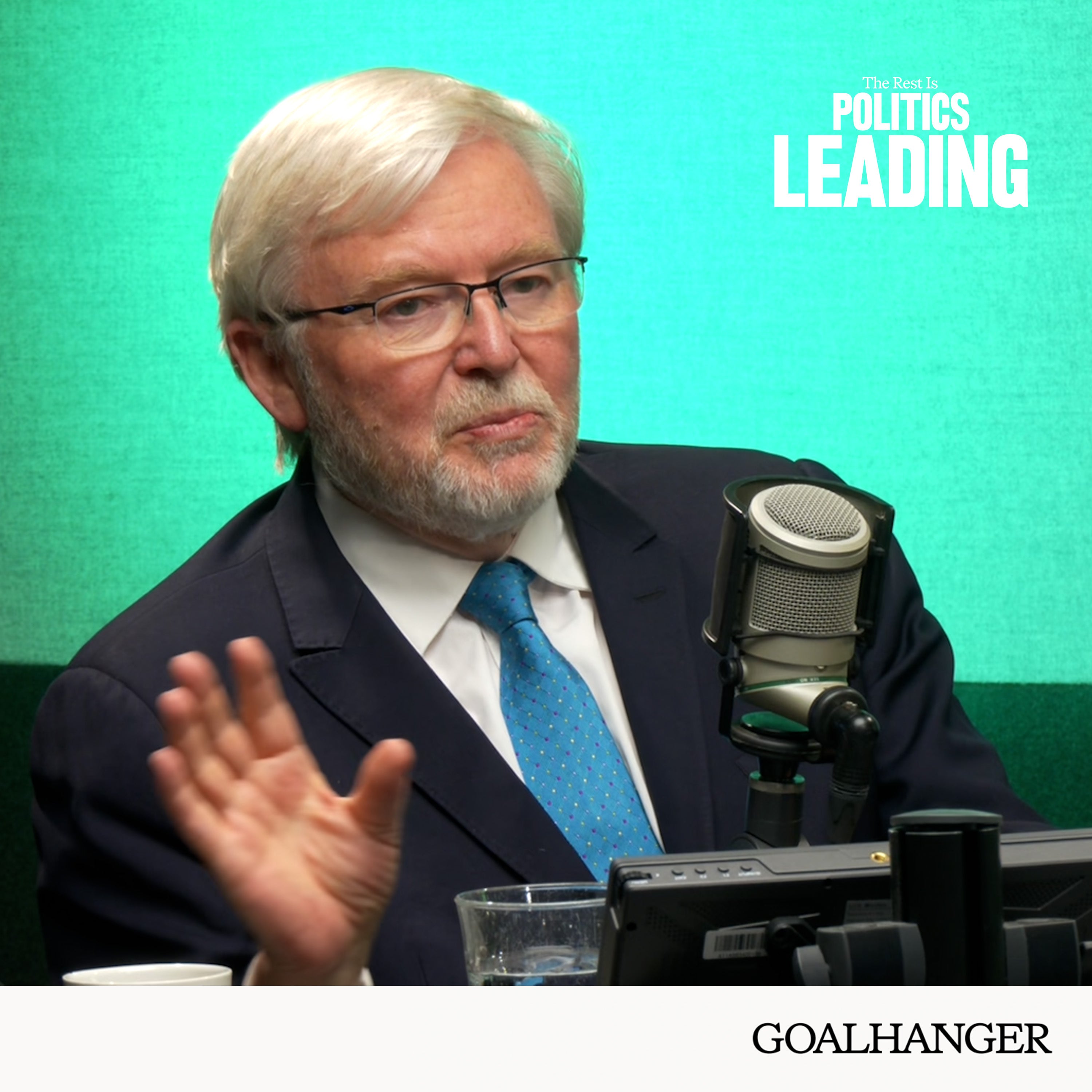
Thant Mintyu, senior UN official; Burmese; grandson of U Thant, UN Secretary-General (1961–1971), known for mediating major crises (Cuban Missile Crisis, Congo, Vietnam, Six-Day War, India-Pakistan wars, etc.).
The UN is a necessary part of peacebuilding but lacks a clear “theory of peace” for today’s post-imperial, highly interdependent world. The modern UN shifted from interstate mediation to intervention in civil wars after the 1990s, hollowing out earlier skills. Myanmar’s crisis reflects both internal dynamics and outside intervention; the world’s inattention is a political choice. Superpower “fixes” repeat a blind spot: outsiders assume they can transform complex societies.
ICJ genocide ruling on Myanmar’s Rohingya; Rohingya violence and displacement; Myanmar’s 2021 coup; 2022–23 civil war covering about half the country; UN estimates 14–15 million needing aid; internet scamming and rare-earth mineral links to China; Bosnia/Cambodia experiences shaping Mintyu’s critique of UN deployment.
Written by AI. May contain mistakes.
Discussion on the current state of global conflicts and the role of institutions in achieving peace.
“We are closer than we have almost ever been to World War III.”
Discussion on the current state of global conflicts and the role of institutions in achieving peace.
In-depth analysis of Myanmar's historical and current political crises, focusing on civil war and humanitarian issues.
“So, Tant, why should any young listener in the world care about the United Nations today?”
Exploration of international indifference towards Myanmar's crisis and the implications of its instability.
“The UN estimates maybe 14, 15 million people are in need of humanitarian aid.”
Explore the complexities of international interventions and the historical context of Myanmar.
“human rights abuses, horrors, killing refugees, right?”
Exploring the life of Uthant, a former UN Secretary General.
“Money invested for over five years has historically delivered greater growth than cash savings, although investment values can rise and fall over time.”
Discussing Uthant's character, values, and impact on international relations.
“Tell us a little bit about your grandfather, who he was, and we'll then maybe get on to why that suggests some quite interesting things about where we are today.”
Analyzing the current state of the UN and its effectiveness in conflict resolution.
“He meditated not in the sense, I think, of, you know, half an hour of formal meditation, but in terms of always trying to be aware of his thoughts and his emotions.”
Explore how the UN's focus shifted from interstate to intrastate conflicts.
“country fighting the other half of the country.”
Hear firsthand accounts of working in UN missions during critical conflicts.
“But you had a lot of these third world countries and online countries really fueling a lot of the UN's activities as well.”
Understand the dilemmas faced by UN officials in civil wars, including ethical considerations.
“And then the next place you go is to the former Yugoslavia.”
Discuss the importance of selecting a capable Secretary General for effective UN operations.
“And I think we have to be very humble in terms of understanding how we can reshape these countries and end these civil wars.”
Reflect on the criteria for selecting future UN leaders and the implications for global peace.
“And I just think that that is a capacity that doesn't cost anything.”
Discussion on the current thoughts about the usefulness of the Secretary General's role and the upcoming transition.
“Because they presumably don't want a very strong national agenda in that job.”

Get the gist, explore an idea or ask about something said.
 Claude
On The Rest Is Politics: Leading, what are the key points of this episode?
Searching your listeningAutomatic transcript. May contain errors.
0:00Thanks for listening to The Rest is Politics. Sign up to The Rest is Politics Plus to enjoy ad-free listening, receive a weekly newsletter, join our members chatroom and gain early access to live show tickets. Just go to therestispolitics.com. That's therestispolitics.com.
0:13Rory Stewart: We are closer than we have almost ever been to World War III. There are more than 60 active conflicts around the world. The chance of nuclear war is higher than it has ever been. And we need to ask ourselves, what would it take to guarantee global peace? What kind of institutions do we need? And just after we recorded this episode, the International Court of Justice, the UN Senior Court, has ruled that the government of Myanmar, Burma, committed genocide against the Rohingya minority killing. 10 ,000 people displacing half a million more. So what do we do to address conflicts such as that in Myanmar?
0:50Rory Stewart: And how do we build a world that addresses not just that, but the conflicts that we're now seeing in the Middle East, in Africa, in Asia, and around the world. Joining me to discuss this is Thant Mintyu, senior UN official, grandson of a former Secretary General of the United Nations, and himself Burmese. And the question we're going to try to get to is, what might it take to increase the chance of a more peaceful world for us and future generations? This episode is sponsored by IG. The budget has landed, which means there's an awful lot more noise from speculators telling you what it means for your money.
1:31Rory Stewart: But what investors should actually be asking is this, do you actually know what you hold, what it's worth right now, and what you can actually act upon? Many investors won't know the answers because they will have their accounts spread across multiple different apps with multiple different institutions. And so you won't really know what is their position on American equities, European equities, bonds, or how it all sits together. So here's some good news for you. From investments to trades, IG brings your entire portfolio together in a single app with one unified wallet to fund across all your accounts.
2:04Rory Stewart: And with over 20 ,000 stocks and ETFs, you have the breadth to act no matter how the budget affects you. And it gets better. With no annual fees and zero commission on UK stocks, shares and ETFs, more of your money stays where it belongs. Invest it. Download the IG app to get started. IG. Trade. Invest. Progress. Capital at risk. Other fees may apply. This episode is brought to you by Universal Pictures. You've probably got a full wish list this holiday season. Well, it must have been good this year because on December 4th, David Harbour returns as Santa Claus in Violent Night 2. Expect over-the-top action and big laughs.
2:47Plus, Kristen Bell joins the mayhem as Mrs. Claus, ready to slay alongside Santa. You better watch out, you better not shout, and you better watch Violent Night 2, only in theaters December 4th.
3:00Rory Stewart: For adults with Crohn's disease or ulcerative colitis symptoms, every choice matters. Tremphaya offers self-injection or intravenous infusion from the start. Tremphaya is administered as injections under the skin or infusions through a vein every four weeks, followed by injections under the skin every four or eight weeks. If your doctor decides that you can self-inject Tremphaya, proper training is required. Tremphaya is a prescription medicine used to treat adults with moderately to severely active Crohn's disease and adults with moderately to severely active ulcerative colitis, serious allergic reactions, increased risk of infections or lower ability to fight them, and liver problems may occur.
3:41Rory Stewart: Before treatment, get checked for infections and tuberculosis. Tell your doctor if you have an infection, flu-like symptoms, or need a vaccine. Explore what's possible. Ask your doctor about Trimphia today. Call 1-800-526-7736 to learn more or visit trimphiaradio.com.
4:12Rory Stewart: So, Tant, why should any young listener in the world care about the United Nations today? Because they should be very worried about war in our time. And I think with 65 active conflicts, countries invading other countries, with 4 ,000 nuclear warheads pointed at each other, actively deployed many more thousands as well, I think we are at risk of war, perhaps even world war, perhaps nuclear war, more than at any time, at least in the past many decades. And I don't think the UN is the only answer to solving war, but I think it is a answer. And I think unless we remember what the UN was able to do in the past in solving, ending many wars from Cambodia to El Salvador to Namibia to the Cuban Missile Crisis, that we won't have the imagination to think about what the UN can be in the future.
5:07Rory Stewart: I wanted to talk a little bit about Myanmar Burma because we don't talk about it enough on this podcast. Listeners will broadly have in their heads the following story. I think Burma was part of the British Raj, British colonial India. It achieved independence. It was for some time a democracy, then an autocracy, then it was ruled by a military junta. Older listeners will have that sort of vision of it through the 1980s. And many people became very transfixed by the figure of Aung San Suu Kyi, who was the daughter of the great independence leader. And she was under house arrest. And then eventually, there was what appeared to be a wonderful story of a democratic revolution.
5:49Rory Stewart: And it was a wonderful story because Burma fitted into what seemed like a pattern. I mean, between 1988, 2003, the number of democracies in the world literally doubled. We suddenly had democracies emerging in Asia and Latin America and Africa and Central East and Europe. And suddenly here was this country with such extraordinary natural resources, such extraordinary history that had been isolated from the world under military government. And suddenly now we have this heroic, brave, saintly figure leading a democratic revolution and getting into power. And then, again, from the world's point of view, things begin to go wrong.
6:23Rory Stewart: A terrible conflict breaks out in the Rakhine with the Rohingya population, who are predominantly Muslims and who end up in a situation in which they are being driven out of their homes, forcibly burnt, raped, the civil war going on. They have militias. The Burmese army's attacking them. They're fleeing into Bangladesh. They're getting on boats. And Aung San Suu Kyi does not seem to be adequately condemning that situation. In fact, when I went to see her, she seemed to be hinting that she felt that if she condemned it too much, the army might topple her. And everyone was saying, well, this is cowardice.
6:59Rory Stewart: You're not calling it out. And then sure enough, the army then topples her. And now she is under arrest again as an aging, relatively frail woman. And we now have a full military government back in place, which for some time was fighting a horrendous civil war against its own public. We have incredible stories about what's happening with different minority groups around the fringes of Burma, militias, drug runners, Chinese-oriented factions, Thai-oriented factions, etc. And it seems to be a sort of extraordinary parable of decolonization, energy, hope, military dictatorship, democracy, and then it doesn't have the happy ending.
7:44Rory Stewart: I mean, it's not following the curve that you're expecting. So tell us a little bit about it, and tell us how I've mischaracterized this narrative. It's a really interesting story. I think that decolonization in so many countries has not led to what the people who led the independence movements and what the populations these countries had hoped. And in some countries, it's led to dictatorship. In some countries, it's led to civil war. I think we have to remember that a lot of the negative consequences or things that came after independence, like civil wars in places like Burma, were also because of outside intervention after independence.
8:20And in the Burma case, you've had civil war since the 1940s. That's what led to the emergence of a strong army and then army rule. But you had interventions as well. you had the Chinese nationalist forces crossing in from China after the civil war, taking over a lot of the country with US support, for example, and many neighboring countries of Burma supporting and fueling the civil war in different ways. And I think that has always been a big part of why we've had this dominant sort of army rule for such a long time. I think one thing that's really important to remember about the 2010s is that we did have reform, we did have change, we did have relative political openness, economic growth.
8:59But that was largely because you had a group of people within the Myanmar army who wanted to rejoin the rest of the world. But they had difficulty pulling along the rest of the army with them. And so it was always a very fragile transition. I think Aung San Suu Kyi, in many ways, reflected the desire of many people in the country, especially young urban people, for a full democratic transition. But it was always a big question mark in terms of the extent to which that was even possible, given the fragility of that initial transition away from military dictatorship. I guess what I'm saying is that the army was always very conflicted in terms of how far they were willing to go.
9:37And I think there were always limits in terms of the extent to which they would accept a full democratic change.
9:44Rory Stewart: And am I right in saying the immediate trigger was that Aung San Suu Kyi-daw-su's coalition had performed surprisingly well in an election. And it was not long after that election that the military moved quite quickly to detain a regime. Absolutely. Absolutely. Because I think they worried, and this was independent of the Rohingya violence and issue, where to some extent they were on the same page in terms of seeing, not in terms of the violence, I don't think Al-Sin Suju was in favor of the violence against the Rohingya, but in seeing them as somehow not belonging to the country of being of some sort of foreign origin because they were on the western border with Bangladesh, that the problem was that the army felt, or the army leadership at the time, felt that under a second Aung San Suu Kyi NLD administration, that somehow they might be blamed for a lot of the problems, or that a different sort of power establishment would consolidate that was separate from them.
10:34So they then lock up a lot of leadership.
10:38Rory Stewart: And then we saw scenes of extraordinary protests in streets, very brave civilians going up against the military, people 3D printing guns, a sort of sense that the army had lost control of 40 % of the territory. How long did that go on for? And what was that period? Well, there was already in the 2010s a sort of rise in different armed groups, many connected directly or indirectly to China. And on the back of the coup, you had the demonstrations, you had the crackdown in the demonstrations, you had a lot of young people then turning to the idea of an armed revolution. But then what that fueled as well was that many of these pre-existing ethnic minority-based armed groups also were doing very well because the army had its hands full even just dealing with the urban revolt on its hands.
11:26And so that led by 2023, 2022, 2023 to an all-out civil war that covered maybe half the country, maybe even more. And we're still in the middle of that civil war, which has had devastating humanitarian consequences. The UN estimates maybe 14, 15 million people are in need of humanitarian aid. You've had millions of people now move to Thailand in search of jobs. The economy is at a state of near collapse. You've had many parts of the country with no health and education, public health and education for years now, since even before the coup. and no end in sight in terms of the fighting. I mean, there's been some ceasefires brokered by the Chinese, but there's no clear path to a more peaceful future at this time.
12:09And I would just say the other factor in all of this, which we tend to overlook, is the political economy of the country, which in the 2010s was beginning to move in a more mainstream direction, dependent on investment coming in from the global economy. But now you have an economy because a lot of that has collapsed. investors have withdrawn because of the fighting, because of new sanctions, an economy that's increasingly dependent on illicit industries, scam centers. Burma, Myanmar is now the global capital of internet scamming, which is worth something like 30 or 40 billion dollars a year of the methamphetamine trade, which is also worth tens of billions of dollars a year.
12:49And it is the source of nearly all of the imports to China of critical rare earth minerals. And so we think of China as the source of critical rare earth minerals that are essential for everything from electric vehicles to army, air force jets. But actually the heavy rare earth minerals that are needed for that are processed in China, but they come from a set of mines in Myanmar, in Burma. And so that political economy is a lot of what animates what goes on in the country in addition to the politics that you've described and that we've discussed?
13:24Rory Stewart: Two things. One is that is an absolutely staggering story, and it is even more shameful that nobody is concentrating on it or telling it. The second thing is that if you had given me that description 25 years ago, that would have been the perfect narrative for why the world needs to get involved. I mean, basically, that was the narrative about many places in the world, right? Here is a state in civil war, a failed state that is generating organized crime, international narcotics trade, smuggling critical minerals and rare earths, and God knows what other human rights abuses, horrors, killing refugees, right?
14:09Rory Stewart: That would be like, this is where we got to go, right? This is, I suppose, the way in which people or some people try to justify intervention in Afghanistan because, you know, Afghanistan was hosting terrorists, had human rights abuses, contributing to regional instability. But that isn't the way that we work now. It's no longer, you know, Tony Blair or George W. Bush solemnly making speeches saying, you know, Myanmar is a stain on the global conscience. This is an existential threat to regional security. If Myanmar falls, the whole region is destabilized, instead of which nobody talks about it at all.
14:42No, but you see, I think the problem is that under the old liberal international order, of the 1990s onwards. Myanmar would have been considered a failed state, a rogue state, something else. The pathology would have been around Myanmar as a country that couldn't govern itself. And this has led to civil war. And so if possible, it requires intervention and help from the outside world. And in a way, I think if you go back to the UN of the earlier period, this wouldn't have been seen primarily as a problem of that third world country. it would have been seen as a problem of the global system that we haven't fixed that has not just allowed and enabled, but in a way been a trigger for these kinds of conflicts to take place.
15:25Or to put it another way, I mean, countries have always had problems. And if you go back to the 50s, 60s, but also through the 90s and 2000s, you've had many different wars and conflicts. But until the 1990s, the focus was fixing the global system around a fairer economy, around an expansive human rights agenda, around global institutions that could end things like arms trafficking that could help with disarmament. Whereas in the 90s, our focus became, what is the problem in that country that we somehow from the outside are going to go in and intervene and fix? Okay.
15:54Rory Stewart: So if, to be unfair to my co-presenter's boss, Tony Blair, you know, if he would have thought in Chicago, this is the classic example of responsibility to protect. We need a humanitarian intervention. We're going to go in and we're going to create the ruler for all, good governance, economic development, human rights, and rewrite the constitution. If Tony Blair's solution is, let's deploy a lot of foreigners on the ground, development workers, soldiers, take over the country, run it, fix it, transfer it back, once we've held some elections, your grandfather's view would have been, what is the way to think about someone like Myanmar?
16:29I think he would have been very skeptical of the ability of foreigners to understand the complexities of these other societies in a way that they could actually do even the good things that they wanted to do. And he would have assumed that there would be ulterior motives in these interventions as well. And even though it's a very different case than the kinds of interventions we're talking about, in the case of the Vietnam War, for example, I mean, there is a connection, because there he said to the Americans in 1964, before their escalation, before their deployment of a combat division at Da Nang in 1964, He said, if you go into Vietnam, you will lose this war.
17:07He said, this is not about communist aggression. It is about self-determination. But behind that, I think he was a sense, as someone from a nearby country, that these men, incredibly well-educated men in Washington at the time, had no clue in terms of what the Vietnamese were really thinking, the politics in that country, much less an ability to fundamentally reshape that country.
17:30Rory Stewart: I get developed a little bit because I've just co-presented the podcast with the quintessential example of this, Jake Sullivan, who is one of the most highly educated, intelligent examples of the American class. You know, he very much could have been part of kind of Kennedy's brightest and the best. And I don't particularly, I just raising Jake maybe because it can give listeners a sense of America at its most fluent, informed, articulate, world analyzing best. Moving off him as an individual towards that group, what is your experience of what the problem with that particular brilliant, highly educated American worldview can be when talking about a country like Myanmar?
18:11I think there's been this consistent blind spot. I mean, if we think of the interventions that we know in terms of Afghanistan or Iraq or other things even more recently, you go back to Vietnam. And I spent years now looking for this for my last book at the Vietnam War and what happened in the role of my grandfather in the UN in criticizing it and trying to broker peace there. I think there's the same blind spot. And I think that blind spot is around this American sense that they can fix these other countries. It's the same set of language and the same assumptions that I think run from Vietnam all the way through the interventions of the 2000s and beyond as well.
18:48Rory Stewart: And it's an extraordinary sort of optimism. I mean, one can almost see it in some of the AI tech founders at the moment. I mean, a kind of incredible sense that any problem has a solution and actually there is some miraculous American solution which is going to transform the whole world. But it's also something that applies much more to the non-Western world in the sense that I don't think the Americans would think they can fundamentally transform France, for example, even if they wanted to, or the UK. But I think all of these ex-colonial states in the non-Western world are seen as possible kind of experiments or places where the right amount of Western expertise, advice, money, troops can change these societies.
19:27And it's a continuation in some ways of a colonial mindset in terms of what's possible.
19:32Rory Stewart: You're tempting me to say that, of course, the national security strategy for the first time under the Trump administration genuinely does commit itself to the transformation of Europe and trying to make sure that they support proper patriotic parties and stop civilizational erasure. Because the reason it makes sense of that is that I sometimes think that the problem that Europeans in the West have with Trump is that suddenly for the first time in 80 years, we're being treated in the way that which the United States might have treated Latin America. And we never really concentrated on that. I mean, we sort of thought we were part of a lovely rules-based international order where, you know, America's going to share sovereignty.
20:05Rory Stewart: There are clear rules. They're never going to try to topple our governments or tell us what to do or try to steal our territory or do anything of that sort because, you know, we're all part of it. And maybe we didn't see that actually the Trump America we see now might have been more obvious if you were from the global South. And they might be less surprised by our way. Yeah, much less surprised. And I think there's another parallel, which is that if we think about AI or tech, for example, this fear, I think, of many European countries, the UK included, that a tech world which is dominated by the US, however benevolent it may seem on the surface, or whatever the stated principles might be, that it reduces the sovereignty of the UK, right?
20:47And that is a direct echo of the kind of fears that third world leaders had in the 50s and 60s, that they've become nominally independent because they fought these bloody wars of independence or they've been granted independence. But unless the global system is fairer and more equitable, then they're not really independent.
21:04Rory Stewart: And what did they learn about independence? Because, of course, as we try to work out how we deal with the fact that essentially we are a kind of donut around a giant American hole and our entire institutions are based on American cloud computing, American software, increasing the American AI, American defense equipment, the dollar, the payment systems. I mean, you know, our dependency on the U.S. is extraordinary, right? We try to deal with it in different ways. And I'd be interested in how a third world leader would have thought about this in the 1950s, 1960s. Yeah. I mean, I don't know the answer to that in terms of, you know, what the future of the U.S.-U.K.
21:39relationship should be. But I think for the third world leaders of the 40s, 50s, even before the U.N. was formed, people like Kwame and Krumah were writing about this, that independence alone is, you cannot be independent on your own. You have to think about the global system. And I think for Europe and for the UK, they have to zoom out a little bit. I'm not sure the answer lies in just the Europe-US relationship. It's about what are the global structures and the global economy that we want to regulate some of these things, the institutions that we want. Otherwise, I think you're in a zero-sum game in terms of how close or how far do you want to get away from that US dominance.
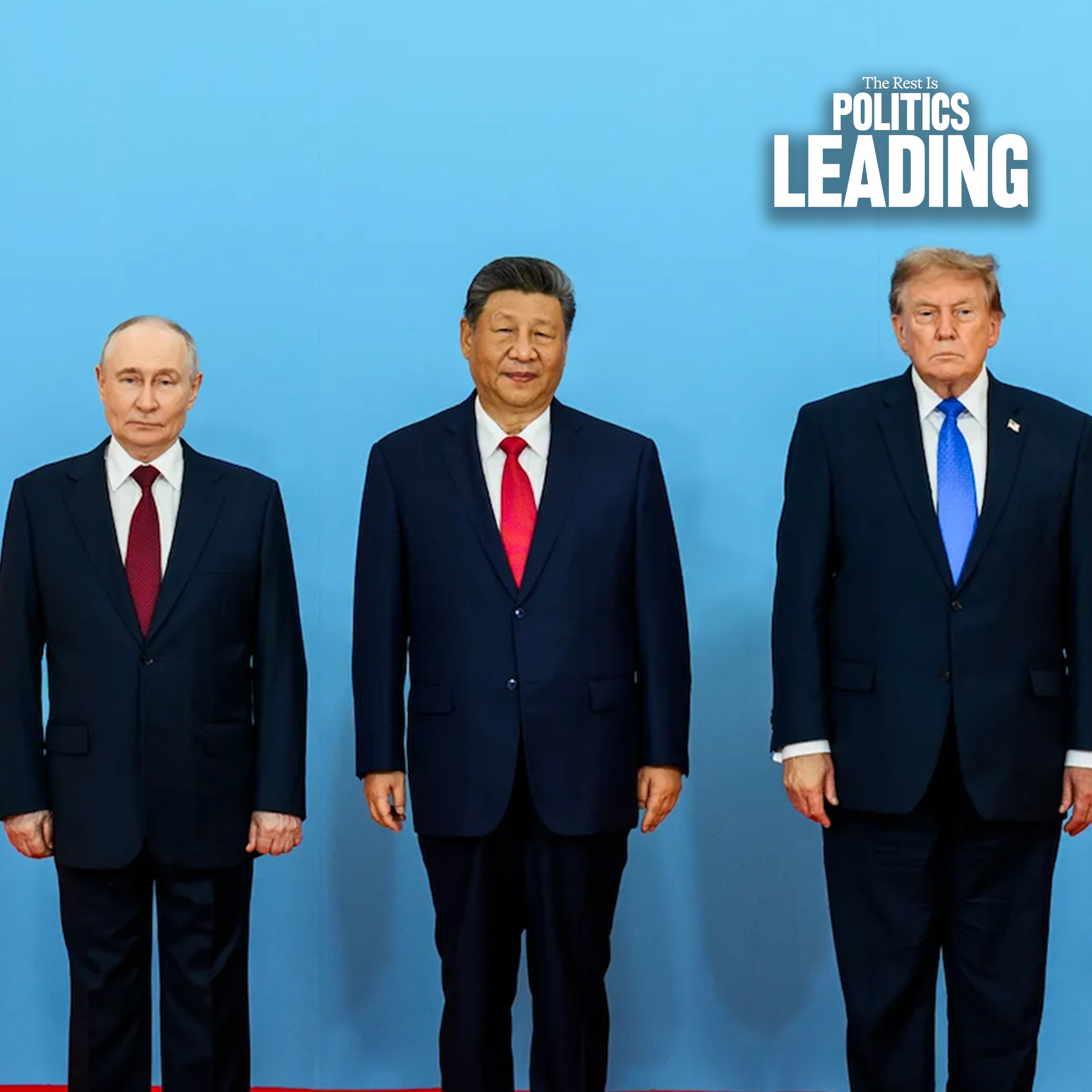
22:14Rory Stewart: Okay, so there's one model, which is the kind of US hedgeman and us trying to work out, you know, can we make an AI model so we're less dependent on them, right? Which would be like Lucrema trying to be like, you know, something I can manufacture in Ghana, which means I don't have to import so much. There's the second model, which is, okay, which Trump seems to like, which is the kind of G2, G3 model, which is currently, I mean, as we're doing this interview, playing out in Shenzhen, which is the US and China, and maybe with Russia, will kind of carve the world up between them and we'll all accept their spheres of influence.
22:47Rory Stewart: There's some sort of Carney model, which is like a middle powers play where, you know, maybe there's a kind of US pillar, there's a China pillar, and then there's a sort of Canada, Norway, UK thing. And then maybe there's something quite different that you're saying. So I'd wonder whether you could help us think through. I mean, I think we're fundamentally misrepresenting or not thinking in the right way about the historical moment that we're in. And I think sitting here in the UK or from the US, we tend to think about 20th century history in terms of the two world wars, the Cold War, the post-Cold War world, and then whatever moment or inflection point we're in.
23:27And we think about the collapse of the rules-based order, the liberal international order. I think for most of the world, the history of the 20th century is the history of the transition from a few North Atlantic empires dominating the globe to the post-imperial world. And the UN has been a central actor in that in very different ways. I think that those third world countries took the Roosevelt institution of the UN, which was already moribund by the early 1950s because the military alliance of the Second World War was no longer holding together the UN. and they made it into something fundamentally different around the UN as a place for mediation, but even more importantly, of a much deeper or more expansive notion of peace as something that requires not just mediation and ending or preventing a war, but the transformation of the global economy so poor countries can catch up in terms of anti-racism, in terms of thinking about the environment, all of these different issues as part of a package going forward.
24:30And I think that the UN that we know from the 90s or the international politics that we know from the 90s is something very different. It's much more about intervention. Again, it has many good aspects or had many good aspects, but it's much more centralized around that moment of US supremacy. So when Carney talks about the middle powers leading the way now, I don't like the concept of middle powers anyway, because it's kind of a slip and slide between different possible categories of countries. But it's almost about trying to rescue that liberal international order, which I think is past. So I think the question we have to ask is not so much do we go back to some earlier decade or period, but to realize that the moment we're in is this moment where decolonization has been complete nominally.
25:17We are for the first time living in a world of nearly 200 sovereign states. It's never happened before. this amazing positive transition away from an age of empire, where we've had 80 years where people live longer lives, better fed, better educated, more equality than ever before. And how do we take this forward? You know, the third world countries had a certain set of answers to that. That didn't really work. It was frustrated. The US had an answer to that. We will be the sole hegemon. That hasn't worked. So where are we going now? I think we have to answer that fundamental question and see that we are in that post-imperial moment for the first time in two, three hundred years.
26:00Rory Stewart: And your broad answer to that is the way to imagine it is to reinvest in a particular idea of the UN and to reinvest in the idea that instead of building a sort of G2 or G3 world, you need to genuinely be trying to work out how to create webs of connections between all nations in order to share some of these issues? I think we need to have a theory of peace. And I don't think we have that. I think Roosevelt, Stalin, and Churchill, when they met at Yalta, they had a theory of peace, which was the big powers will police the world. And I don't think we can ever go back to that possibility. I think in the 50s, 60s, 70s, and 80s, it was this world where the UN mediated and tried to push this expansive economic agenda as the glue to keep countries together.
26:54I think we are in a very different world now because of technology, because of interdependence, because of 200 different sovereign states of vastly different military and economic strength. But I don't think we have a theory. And I think until we have a theory of how do we bring about a lasting peace at a time when we have, as you said, 65 active conflicts, countries invading countries for the first time in a long time. How do we turn that tide and then build a lasting peace? I think until we have even a working idea of that, we can't turn to things like the UN and think and come up with an idea of how do we fix that institution.
27:30Or to put it another way, I think before we even look at institutional fixes around the UN, we have to have some idea of what is that peace. And I don't see why we cannot have that. Because in other eras, in other times, even small countries like Ghana or Burma were pushing their ideas forward. So I think for the UK, for example, we should be having these conversations about what not just a European piece, but a broader piece should look like.
27:55Rory Stewart: Such a fascinating half talking about these incredible issues. Let's take a quick break. And when we come back, we might go a little bit more personal. This episode is brought to you by Barclays Premier. Listening to the experts on this podcast really demonstrates, does it not, how valuable specialised knowledge is when it comes to analysing the political landscape. But that same expert level of guidance isn't just useful in politics. It's incredibly important for your personal finances too. I mean, take retirement. Retirement obviously isn't just one moment in time. It might be a condition going on for many decades, you'd hope.
28:31Rory Stewart: And during that time, your personal circumstances can change. There could be new rules around how you save, how you invest, how you pass on your wealth to the next generation. That's where planning and advice exclusively for Barclays Premier customers comes in. A wealth planner builds you a personalised plan around your goals, while your wealth manager helps it evolve as your life and the world around you change. Search Barclays Planning and Advice to learn more. You need to be a UK resident with at least£150 ,000 available to invest. Other eligibility criteria apply. Money invested for over five years has historically delivered greater growth than cash savings, although investment values can rise and fall over time.
29:11Did you know that psoriatic arthritis may progress over time and could cause permanent joint damage if left untreated?
29:22Listen to what it sounds like to be a million miles away.
29:30Trimphaya gusocomab, taken by injection, is a prescription medicine for adults with active psoriatic arthritis.
29:38Rory Stewart: Serious allergic reactions, increased risk of infections or lower ability to fight them and liver problems may occur. Before treatment, get checked for infections and tuberculosis. Tell your doctor if you have an infection, flu-like symptoms or need a vaccine. Imagine being a million miles away. Explore the possibilities. Ask your doctor about Trimphia. Tap this ad to see new joint data and learn more about Trimphia. including important safety information.
30:45Rory Stewart: Let's start with your grandfather. Tell us a little bit about your grandfather, who he was, and we'll then maybe get on to why that suggests some quite interesting things about where we are today. He was Uthant, who was the third Secretary General of the UN. He served as head of the UN from 1961 to 1971, so a very turbulent, eventful decade. And he had a really interesting life story until he was almost 40 years old. He was a schoolteacher in rural Burma, where you've been, in a small town with no electricity, no running water. At independence, he joined the government of Burma. And within 10 years, he was the Burmese ambassador to the UN in New York, living in midtown Manhattan, dealing with all kinds of international issues.
31:29And within four years of that, in 1961, when the UN Secretary General at the time, Dak Hammersholt was killed in a plane crash, he emerged over a period of a few weeks as the only human being in the world that President Kennedy and Chairman Nikita Khrushchev could agree on to head the World Organization. And then he lasted 10 years, two terms, a decade of mediating many different crises and wars at that time. Give us an example of some of those great conflicts of that period. It was the Cuban Missile Crisis, the Congo, the Vietnam War, the Six-Day War, the two India-Pakistan wars of 65 and 71, the Soviet invasion of Czechoslovakia, the Nigerian Civil War.
32:11I mean, many others, Cyprus, Indonesia.
32:15Rory Stewart: Give us a sense of this man, I mean, your grandfather. I mean, what does it mean to go from being a schoolteacher in rural Burma until the age of 40 and then suddenly finding yourself a few years later as not just Secretary General of the UN, but a sort of international celebrity? I think one thing is that the Burma of that time that he grew up, he was born in 1909, so he grew up in the teens and 20s. Burma was part of British India. And in a strange way, even though this was a small town, as I mentioned, no electricity, no running water, about a day's steamer ride from Rangoon, which was the biggest city in Burma, that it was a very multicultural environment.
32:53His teacher, his teacher at school was an Indian, Bengali Indian. He had friends from different backgrounds. He was fluent in English and he was obviously fluent in Burmese as well. So he grew up in those last decades of empire where he, I think, saw himself, even as a child, as someone who wanted to be a bridge between the Burmese world that he knew and the West. And he was a great admirer. He was an Anglophile in a way, great admirer of the West and of British culture and literature in particular. And so I think that's something that he carried with him even during the anti-colonial struggles into the 1950s.
33:31And he brought with him to the UN as well.
33:33Rory Stewart: It's a very interesting moment, isn't it? Because you've got people who are very important in the anti-colonial struggle and in the independence movement. Of course, the government he joins is very much about independence from the British and very proud of Burma achieving independence. along with, as you say, a sort of Anglophilia or sympathy towards Western civilization that presumably were true of quite a lot of that independence generation. I mean, it certainly would be true of the first independence, a leader of Malaysia, for example, Tuko Abdurrahman, who is both a sort of, I mean, it may be slightly different.
34:06Rory Stewart: Your grandfather had been, I think, a sort of barrister in London and liked a bit of whiskey and could talk very fluently to British and to Locke. It is Nero, maybe another example, but who also believed passionately in independence. I think actually, even Ho Chi Minh was one of those people, or Kwame Nkrumah, or Patrice Lumumba. So I think in the anti-colonial struggles in the 40s and 50s, there was an entire generation of people who wanted their countries to be independent, but had no real animosity towards the West, and certainly no animosity towards Western culture. But I think by the late 1960s and 70s, I mean, we'll get to his career at the UN.
34:45By the time he retired in 1971, he was almost the last man standing because that entire generation had either passed away or had been overthrown or felt forced to radicalize in different ways as well. But I think in the late 40s and early 50s, when he was joining the government, he was part of that entire generation of sort of moderate third world leaders who believed in democracy, who wanted a different and fair international order that they could be part of, and wanted to rebuild bridges with the West as well.
35:14Rory Stewart: And what was he like? I mean, what was his personality? How did he come across? Was he like you? Or what's the difference between him and you? I don't know if he was like me. I mean, he was someone who was really interested in history and literature. He read voraciously. He was a very avid swimmer. That was his main sort of relaxation. And he was a Buddhist. I think he saw himself as a Buddhist. And Buddhism in Burma, the type of Buddhism that he practiced in Burma, it was a kind of stoicism. I mean, he believed very much in discipline, in self-discipline, in terms of his emotional life. And I think he valued very much people of a calm temperament who were also able to empathize.
35:55And I think the one principle or idea from Buddhism that he brought into his different roles, including as Secretary General, was this Buddhist concept of upekka, which basically means equanimity. but it also means finding a middle way between anger and apathy that you face in life but in your work, these moments of intense frustration. But it doesn't lead you to either be incredibly angry that you can't do anything or apathetic as well. So I think he was constantly trying to improve his practice of Buddhism. And did he meditate regularly? He meditated not in the sense, I think, of, you know, half an hour of formal meditation, but in terms of always trying to be aware of his thoughts and his emotions.
36:44But I think on top of that, I mean, the other part of his personality, which is very clear to me, actually reading a lot of letters to and from him in the late 50s and 60s, was he was very humorous. He liked jokes. He liked being humorous around people, but he was incredibly social. In the 10 years that he was Secretary General, he took 10 days holiday. And when the doctors ordered him, because he collapsed at the office one day, to take a holiday, he went to the beach, he went to the Bahamas, and he lasted only two days before he went back because he was bored. And so he liked being around people.
37:15He liked throwing, you know, sort of dinner parties, lunch parties. And I think he was a very, not just sociable person, but an extrovert in every way.
37:25Rory Stewart: And what was it that Kennedy and Khrushchev saw in him? I mean, who were the other candidates? I mean, this is pretty obscure, Burma. I mean, it must have both, am I being unfair? I mean, it must have been a great honor for Burma in a way. Yes. But I think Burma then is different from Burma now. And the two predecessors had been? Trigvili, who was from Norway, and Hammersholt. So it sort of had a sort of Scandi feeling. It had a Scandi feeling. And people were looking at possible Scandinavian, you know, of successors. But I think by the late 50s and early 60s, there was a sense, even by Hammersholt, that his successor should be someone from the new so-called third world at the time.
38:03And I think what we have to remember is that Hammersholt, from the Suez crisis in 56, had made the secretary-general ship, the sort of world mediator in chief. And more importantly, all of these newly independent countries had come into the UN. They had met in Bandung in 55. They They had helped form the non-aligned movement in 61. And they were determined that the next UN Secretary General would be one of their own. And Burma was actually a leading country in that movement. My grandfather was both an organizer at Bandung and also an organizer at Belgrade as well in 61. Okay.
38:38Rory Stewart: Now, I could talk about this forever because I think your grandfather is the most wonderful, wonderful character. And I hope we'll get back to him and have a chance to talk about what he did in the Cuban Missile Crisis. and also talk about the fact that he became, in a way that would be very difficult to understand and isn't true, I'm afraid, of the current Secretary General, a sort of international celebrity. You know, people were absolutely charmed and intrigued by this extraordinary figure. But that is my sort of cue to fast forward, because something then happened to this whole situation. Today, we are in a world in which there is a big conflict in Sudan, There's a big conflict in Iran.
39:16Rory Stewart: There's a big conflict in Ukraine. There's a conflict in Gaza. There's a conflict in Lebanon. I can keep developing, right? A lot of the Sahel as well. But there's no Uthant, there's no Doug Hamishkold to be found charging around, right? You wouldn't say if you were talking about the last couple of UN Secretary-Generals, let's say they had been your grandfather and we were doing this interview. Oh, yeah. You know, what my grandfather was doing as the UN Secretary-General is, you know, He brought peace to Ukraine. He solved what was happening in Gaza. He brought peace between Iran, Israel, the US, and the Gulf.
39:53Rory Stewart: He brought a peace treaty into play in Sudan. He fixed the situation in Yemen. In fact, it's very, very difficult to even remember. Was Sajid Trump actually in Ukraine? I mean, is he doing anything in Ukraine? Is he in Iran? Is he part of these conversations? Does President Trump, President Putin say, well, where's the UN Secretary General here? President Trump has said, where's the UN Secretary General, amongst many other things that he has said about the UN. But I think there's a short-term answer and a longer-term answer. I think the short-term answer is that I think the recent Secretary Generals, but especially I think the current UN Secretary General, who's done a lot on many different issues, has not done very much on peacemaking.
40:35And I think he's shifted the focus of his office away from ending and preventing wars, which I would argue is actually the core function of his office and of the UN.
40:45Rory Stewart: He's doing that at the same time as the number of conflicts increase. I mean, we're recording this at a moment where we have more conflicts, almost 70 conflicts than we've had at any time since the Second World War. I mean, almost kind of twice as many conflicts as we would have had just over a decade ago. Absolutely. So I think part of it is just to try. I mean, he might have, if he had tried, he might have failed. but I think the job of the UN Secretary General is to try and try again, even if you fail. And you know that in many of these conflicts, your chance of succeeding is maybe one in 10, but that is the job.
41:11So I think there's an element of risk-taking that's been missing, and hopefully his successor will be much less risk-averse than he has been. I think that's a fair criticism of the current Secretary General, who again, I think has been very good in many other ways. I think that the longer-term answer, though, is very different, which is that that UN roughly from 1955 through the early 1990s that had been all about mediation, and especially interstate conflict mediation, so solving these interstate wars and conflicts.
41:43Rory Stewart: Okay, so again, to explain to our listeners, what I think you're saying here is that the type of conflict that the UN specialized in was not internal civil wars, failed states, the sort of thing that we're particularly focused on in Sudan at the moment, where you have roughly half the country fighting the other half of the country. It was more situations where you could identify two different countries with capital cities and leaders who were hammering into each other. Almost exclusively. And an exception was to some extent the Congo. And when the UN departed from the Congo in 64, the UN basically said, you know, we shouldn't be involved in civil wars going forward.
42:28And so the UN was very much involved or had developed diplomatic capacity and a set of skills to deal with these interstate conflicts, not intrastate conflicts. And this was at a time when deepening the sovereignty of these countries in the new third world was also very important. The turn was in the 90s. And so I think the UN that both you and I know, the UN of sort of living memory, is the UN from the early to mid-90s onwards. And that was the UN that shifted from that diplomatic focus around interstate conflicts to this intervention in third world civil wars. And that's very different. That was about aid.
43:06It was about sending peacekeeping operations. It was about elections in these countries when it was possible. And I think to some extent it hollowed out both that memory of that earlier kind of UN and the sorts of things that the UN did before. It hollowed out the skills that had been there within the UN bureaucracy. And it hollowed out the memory that governments had of how they might use the UN in situations like Russia, Ukraine, the Middle East, or elsewhere as well.
43:33Rory Stewart: Right. And I guess the question is why? I mean, is it that by the 90s, the UN had concluded that there were fewer and fewer state-on-state conflicts and that really its job was fixing failed states and civil wars were, you know, fragile states, weak states, flailing states were really what the whole world was about? Yeah, and I think the political foundation of the UN shifted because the political foundation of the UN during that period from the 50s through the late 80s, when the world was much more divided, you had the Cold War in Europe between the US and USSR. But you had a lot of these third world countries and online countries really fueling a lot of the UN's activities as well.
44:10So it was very much about protecting state sovereignty and that focus on interstate conflicts. from the early 90s, it was this moment of U.S. supremacy. And the U.N. was remade as a sort of adjunct of that U.S.-led liberal international order. And it became, for better or for worse, I think much more of a north to south developed world, a developing world mechanism for aid, for peacekeeping operations, and everything else.
44:37Rory Stewart: So there's two things happening there. One of them is here we are. We are the wealthy global north, and we've got a lot of development money, and also we have a vision of human rights and democracy and free markets and we'll come and write your constitutions and we'll turn up and we'll fix you, which you presumably saw a bit as a young official in Cambodia and in the Balkans. Yes, absolutely. Tell us a little bit about what that moment was like and what the feeling of that thing was like. I mean, for me as a young official in Cambodia, for example, when I was in my mid to late 20s, it was just really fun.
45:10It was my first job. I was really happy to make a lot of friends. I was a human rights officer at the time. It was the UN's first human rights field mission. It was part of the bigger peacekeeping operation. What I understood, though, after serving there for nearly two years, was that the main job of the UN, in a way, wasn't so much the elections and bringing democracy to Cambodia. All of that was sort of yet to come in terms of the UN's focus, even though we had aspects of that. The UN's real focus was removing Cambodia as a source of tension between the big powers and even the regional powers.
45:46So in a way, Cambodia was this hinge between that older UN where you're trying to untangle a local conflict from superpower conflict or regional power conflict and this UN that was just being born about setting up big peacekeeping operations, elections and everything else.
46:04Rory Stewart: And then the next place you go is to the former Yugoslavia. So this is you as, again, in your 20s, you're turning up in essentially the quintessential civil war. This is Yugoslavia now is splitting into Slovenia, Croatia, Serbia, Bosnia, eventually Montenegro, North Macedonia are coming out of this. And now we are in a world of big US presence. You know, we've got Richard Holbrook about to turn up where he's going to end a war in Bosnia. We've got Paddy Ashdown coming out from the United Kingdom, but later, he's going to set himself up as a sort of Raj-like, almost colonial governor of the whole situation.
46:43Rory Stewart: We've got international troops being deployed on the ground. But along with them, we've got European customs officers, police officers, presumably umpteen constitution writers. We're doing refugee return. We're writing constitutions. In fact, we're basically trying to build a state. Tell us about that moment. I mean, Bosnia, after the Dayton Accords, which ended the fighting, it was very much that kind of big operation. Cambodia was maybe one of the first, Bosnia was another, but though Bosnia wasn't under the UN, it was primarily a NATO-led military operation and a bespoke sort of civilian administration.
47:21I was there part of that time, but I was also there during the war. And I was the only, I think, UN official who resigned in a disagreement over UN policy. My resignation wasn't accepted. And then I was fired a few weeks later by Buczarskali. And the reason I tried to resign was that, you know, when I came in, I was again in my late 20s. I didn't know anything about Bosnia. I bought the general line that we were there to protect humanitarian aid and everything else. But if we go back to that time, the big issue was, should NATO intervene on the side of the Bosnian government? And I came to feel as a UN spokesman, that was my job, that the UN was providing a cover for the big statesmen, the big decision makers like John Major and Bill Clinton, not to have to make that tough decision.
48:06and that we were not really certain in terms of what our added value was on the ground. And for me, push came to shove when I saw, I was staying at the Holiday Inn, which was on Sniper Alley in the middle of Sarajevo. I saw a young woman, a young girl actually, maybe eight, nine, ten, shot in front of me, about maybe a hundred yards away. And a lot of Bosnian civilians ran to help her and pull her across the street. and there was an APC with maybe 12 French soldiers who just stood there doing nothing. And I remember thinking from that scene that there must be something wrong with how the UN was being deployed and used there.
48:45So for me, it began a sort of a period when I sort of reassessed a lot of what I thought about the UN's utility and the limits of the UN's utility as well.
48:55Rory Stewart: I mean, there could be two lessons that you could draw from that horrible situation that you witnessed. One of them might be, we've got a responsibility to protect. We must intervene. We must put troops on the ground. We must protect this girl. We must stop it happening again. We must take out the Bosnian and Serb artillery around the edge of the city and the snipers. And the other conclusion you could draw is this is absolutely horrible, but the UN was founded on the idea of state sovereignty and that we should not get involved in the internal affairs of other countries. we should broadly respect their international borders, and that if we start getting involved at that level, we end up owning it.
49:37Rory Stewart: We end up becoming a sort of pseudo-colonial government. So how did you think your way through those dilemmas? I think it's a couple of things. I mean, one is, I think, when you actually have troops on the ground and you need to protect civilians in an enclave like Srebrenica in the summer of 1995, or you have troops in Rwanda and you're in a position where you might be able to prevent a genocide. I think the UN has to be on the side of trying to protect civilians if it can. And I think in general, I think protecting civilians is a really important thing that the UN needs to at least try to do, even in situations of civil war.
50:12I think having said that, I think we all know now from many of these experiences, including in Afghanistan, including in Iraq and elsewhere, that we're very limited in our understanding of foreign countries and foreign wars. And I think we have to be very humble in terms of understanding how we can reshape these countries and end these civil wars. So I think we're at a point where, you know, after 20, 30 years of trying to do this, we need to take a big step back and think, how are we going to, in the future, respond to these civil wars? So I think there's an immediate protection instinct, which I think is quite right.
50:44But I think there's a lot of much deeper thinking that we need to do about what the international role can be in ending civil wars. That's a knowledge issue in terms of understanding these questions more. But in general, I think I would come down on the side of we need at least to take the foreign fuel out of these wars, the things that are enabling these wars from the outside, rather than trying to reconstruct them from the inside or think that we know how to do that.
51:10Rory Stewart: We're recording this just at the moment at which a new UN Secretary General is being chosen, potentially defining the next decade of the UN at this absolutely critical juncture, which you've just described, where we don't know whether we're going from a G1 to a G2, G3, whatever world. And here's this huge institution, and the next 10 years of our lives could be defined by this person. And the UK barely seems to have a view. I mean, I have hardly heard it mentioned in Parliament. I've hardly read about it in the newspapers. Because, I mean, before we get on to what the new candidate should do, what do you think the process should be for trying to select somebody as important as this?
51:48I think the old process was a very clear process in a way, because the Charter First, we have to say, basically says that the Secretary General is appointed by the General Assembly. So all member states have a single vote based on the nomination of the Security Council. And there you have the permanent five members with a veto. So essentially what that's meant over time is that the Security Council decides the permanent five come around a certain candidate and the General Assembly has generally rubber stamped that decision.
52:17Rory Stewart: So Russia, United States, France, China, Britain and China sit down and they basically agree. In the past. And that's how we ended up with, for example, I don't know, Kofi Annan? Yes, exactly. And I think up until at least the Kofi Annan selection, but certainly my grandfathers, Hammersholtz, all of these other earlier secretaries general, the P5 would come around informally first, perhaps, and think, who is that skillful diplomat that we might be able to all work with that might be useful? And my grandfather turned out in 1962, for example, to be incredibly useful to Kennedy and Khrushchev in de-escalating the Cuban Missile Crisis.
52:57But other secretaries general have as well. But because that aspect of the secretary generalship has declined so much, I don't think anyone in London or Paris or Washington is thinking, who is that skillful diplomat that we can use to end the war in Ukraine or in the Middle East or in Sudan or elsewhere?
53:15Rory Stewart: What do you feel they may be thinking? What are the sort of things that might be going through Trump's head or Xi Jinping's head or Putin's head? I think very little, actually. And I think it's a sad reflection of the state of the UN. So what substitutes for that instead is this process, which is structured almost as an election, even though it's not really an election with candidates putting themselves forward, the vision statements and everything else. And then it makes it seem as if what we're selecting is really the chief admin officer of a vast, sprawling bureaucracy. Then it's about how do you manage that better?
53:46How do you cut budgets? How do you downsize if necessary? What are your priorities?
53:51Rory Stewart: Which is where you have Donald Trump saying, I'm looking for some property person who's going to be able to come in and sort out the bureaucracy. He says that. I mean, I think on the U.S. side, they do want someone who's going to partner with them in downsizing this bureaucracy. But if the U.N. was just about downsizing your bureaucracy, then it's not really worth very much anymore. And I've been trying to argue in different ways that what we really need is to go back to that peacemaking function. And we see, for instance, in the Persian Gulf, the role that the Omanis or the Pakistanis or others have tried to play.
54:22But what we don't see is the UN as an impartial entity with a skilled, experienced, multinational diplomatic staff that goes in and tries to end or prevent wars. And I just think that that is a capacity that doesn't cost anything. We have to choose the right secretary general. We have to give that person some room, invest in that office. But because of this collective amnesia we have of the earlier UN and earlier times, we're not even aware that we're missing this person on the international stage.
54:55Rory Stewart: Final thing, without tempting you too far into this as somebody who's very close to the UN, but historically, the candidates have tended to be from relatively small, weaker countries and been pretty independent of those countries, which I guess is why, you know, you end up with your grandfather or you end up with Doug Hamishkold. I mean, is that something that's worth thinking about? Was that a sort of unwritten principle in selecting them, that they shouldn't be from powerful, active, engaged countries who might have, you know, big fundamental views on the international system? Yeah, absolutely.
55:33And, you know, except, you know, the very beginning, Roosevelt thought that that might be a good post after he retired from the presidency. And he thought he'd be head of the of the UN. I mean, it's been a convention that it wouldn't be someone from the permanent five members. And in general, because in the past, the Security Council permanent five were thinking through who they could all work with. It was almost always someone from a neutral country or an online country. And they thought of the person, but they also thought about the nationality of that person as well. Because they presumably don't want a very strong national agenda in that job.
56:07They don't want a strong national agenda. But I think that the problem right now is also just that I'm not sure in capitals at the very top level, people have actually thought through what the usefulness of this office is going to be. And so we've had this process for many months, which has produced some good candidates. but it's only now at the 12th hour when the current Secretary General is about to leave office in six weeks time or whatever at the end of December where perhaps now the PERM 5, UK included are finally trying to think through the kind of person that they might want in this office.
56:43Thank you very much indeed. Thank you. Thanks very much, Rory.
56:45Rory Stewart: Lovely to see you.
56:54You
56:59Clothes shopping really isn't my thing, but I still want to look sharp and feel confident. That's why I use Stitch Fix, the OG personal styling service. No more scrolling through websites or wasting my day at the store. My stylist sends pieces picked just for me straight to my door. Free shipping, free returns, no subscription required. Get started today at stitchfix.com. That's stitchfix.com.
57:53Returns plans start at$49.99 a month. Visit simplisafe.com slash licenses for alarm license information. Does checking your bank statements feel like digging through a dusty attic full of forgotten subscriptions and old free trials? Experian can help take the pain out of canceling by handling it for you. Think of it as Operation Get Your Sanity Back. Over 200 subscriptions are cancelable. So get started in the Experian app and see how much you could save. Results will vary. Not all subscriptions eligible. Savings not guaranteed. Paid membership with connected payment account required. See experience.com for details.
With 65 conflicts raging, 4,000 nuclear warheads on high alert and Donald Trump questioning the whereabouts of the UN Secretary-General, why has the UN lost its ability to broker peace? Why did the world turn away from civil war and mass killings in Myanmar that has left nearly 15 million people needing aid? How did a teacher from a Burmese town without electricity become the man Kennedy and Khrushchev could both agree on to lead the UN?
Rory Stewart is joined by historian, writer and former UN official Thant Myint-U, grandson of former UN Secretary-General U Thant, to explore these questions and more.
__________
Search IG.com to find out more and/or Look for IG in your app store.
__________
Instagram: @restispolitics
Twitter: @restispolitics
Email: [email protected]
__________
Social Producer: Celine Charles
Video Editor: Caroline Kaye, Oli Ortega
Assistant Producer: Daisy Alston-Horne
Senior Producer: Nicole Maslen
Exec Producer: Bella Soames
General Manager: Tom Whiter
Learn more about your ad choices. Visit podcastchoices.com/adchoices