Ask ChatGPT
 The Rest Is Politics: Leading
18 Oct 2026 · 55m · 24 chapters
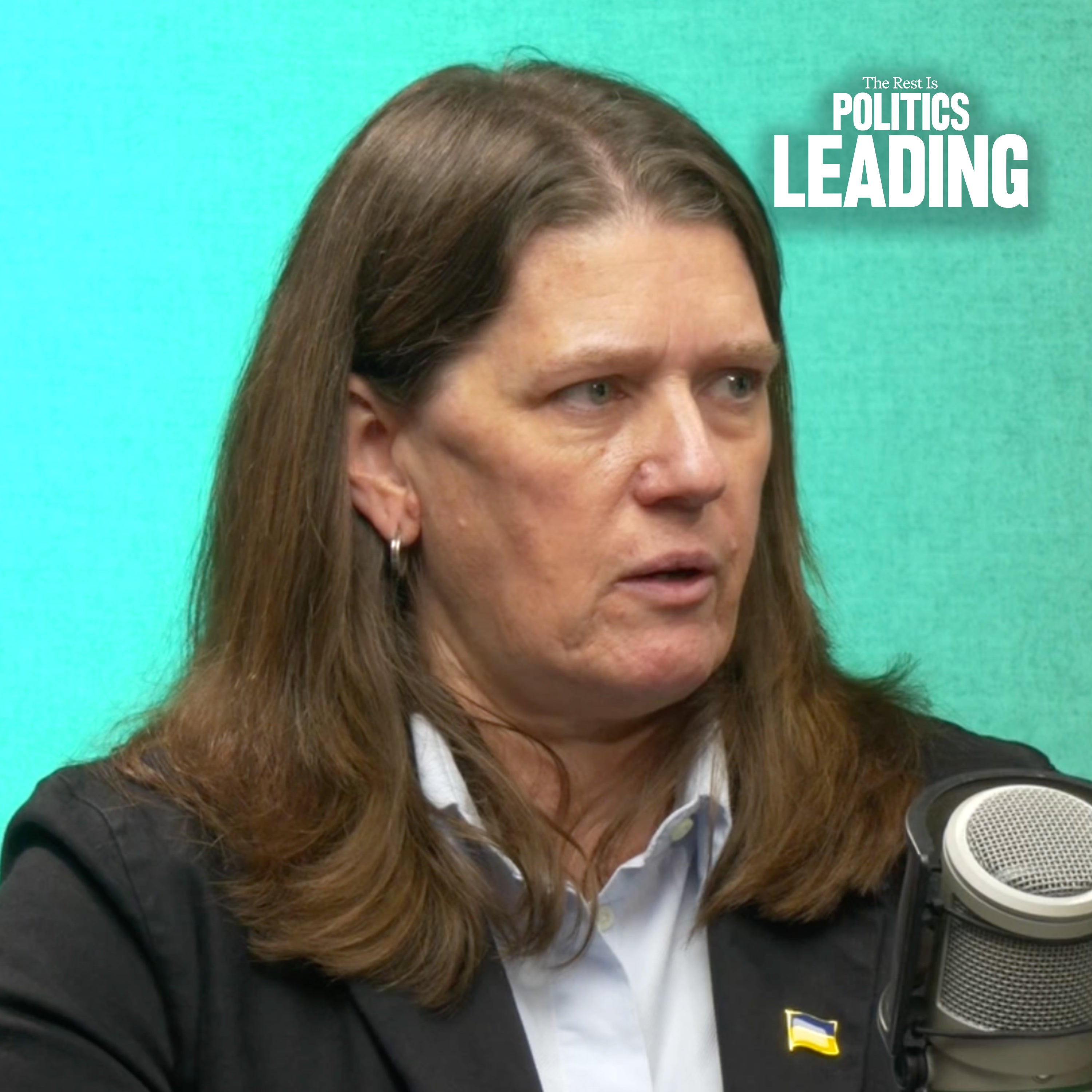
Mary Trump argues Donald Trump’s cruelty and narcissistic need for affirmation stem from his upbringing in the Fred Trump family system, and claims his political behavior (including siding with Putin) reflects manipulation, humiliation, and corruption enabled by weak institutions and media.
Mary Trump is Donald Trump’s niece. She is a trained clinical psychologist and has known the Trump family for her entire life. She says her father (Fred Trump Jr.) died of alcoholism at 42 when she was 16, and she later wrote the book Too Much and Never Enough.
Trump learned “cruelty is the point” from his father, who dismantled Fred Jr. through humiliation because he was kind and sensitive. Mary claims Trump is a “wounded victim” who manipulates people into assuaging his pain, lacks empathy, and has deteriorating psychological disorders. She also argues Trump has been on Putin’s side since the 1980s and wants Europe/Ukraine to fail so he can humiliate allies.
Trump’s “charisma” during a 2017 White House visit where he allegedly singled her out; her description of Trump’s hands-off parenting and fixation on Ivanka; and her claim that Trump would invite Putin to Alaska and lift sanctions on Russian diesel.
Written by AI. May contain mistakes.
Rory Stewart and Alistair Campbell introduce Mary Trump and her insights.
“Today, we're joined by someone who thinks on similar lines, but who speaks from a much greater authority than I could ever hold, because she has known him all her life.”
Discussion on Mary Trump's feelings about her uncle and his impact.
“Thank you for coming all this way from the States.”
Mary Trump reflects on her family dynamics, especially with her grandfather.
“okay, enough, I'm not going to talk about it anymore, and then a time when you thought, actually, this matters, and I need to keep talking about it because it matters to the world?”
Mary Trump discusses the emotional distance in her family relationships.
“Like everybody I went to school with knew who he was, Fred, because he had many, many buildings in Queens and Brooklyn.”
Exploring how family expectations and cruelty shaped Donald Trump's persona.
“So my grandmother was very closed off in ways and not emotionally available for different reasons.”
Mary Trump shares her experience regarding inheritance and familial perception.
“And there was nothing worse you could be in my family.”
Exploration of family dynamics and expectations around inheritance.
“Our expectation, if things had been fair, is that my brother and I would have split 20 % of the estate because my grandfather had five children.”
A dive into the psychological traits and behaviors of Donald Trump.
“Because when I read this, things have got worse.”
Discussion on Donald Trump's childhood and its lasting impacts.
“And for about a year, she was in and out of the hospital and either physically or emotionally absent.”
Analysis of Donald Trump's relationship with his children.
“How much time did you see of them when you were younger?”
Insights into the relationships within the Trump family and their dynamics.
“The humiliation from my grandfather was one of his greatest joys and his greatest weapons.”
A critical examination of Donald Trump's perceived success and its implications.
“Strategic struggle between Britain and Russia.”
Exploration of Trump's political influence and media environment.
“Available now wherever you get your podcasts.”
Discussion on how Trump accrued power despite his perceived weaknesses.
“Why has he been able to build a profile, to win an election, then to lose but pretend he hasn't, and then to win again?”
Examining Trump's charisma and its effects on his followers.
“And you sometimes feel the same when you look at other historical figures.”
How Trump's actions normalize corruption and political decay.
“So on a personal level, like I hadn't seen him in about, I don't know, 10 years or something when I went to the White House for my aunt's birthday party in April of 2017.”
Discussion on Trump's alignment with authoritarian figures and implications.
“so that he can feel like he's like Putin.”
The discussion explores the need for accountability within the Republican Party and the long-term damage done to alliances.
“If there had been a mechanism in place that the Republican Party he had been willing to use to contain him, to restrain him, we wouldn't be having this conversation.”
A deep dive into Trump’s attitude towards the midterms and his potential implications for the Republican Party.
“And that's going to require some serious soul searching and a willingness to step back and acknowledge what we've done.”
Exploration of Trump's peculiar behaviors and their psychological implications from a clinical perspective.
“We see all sorts of signs of disinhibition, which is what that is.”
Discussion on the challenges of diagnosing family members and the implications of Trump's upbringing.
“Does it matter if he's a malignant narcissist or a sociopath?”
Analyzing the contrast between Trump's public persona and his psychological vulnerabilities.
“Well, listen, it's been a long time to talk to you.”
Discussion on how Trump's psychological traits mirror broader American societal issues.
“It's like that Larkin line, man passes on misery to man, it deepens like a coastal shelf, a sense of kind of intergenerational horror.”
Examining Trump's jealousy toward global leaders and the implications of his desire for power.
“And when Trump lashes out and wins on lashing out, maybe he's lashing out because it touches a strain of American culture.”

Get the gist, explore an idea or ask about something said.
 Claude
On The Rest Is Politics: Leading, what are the key points of this episode?
Searching your listeningAutomatic transcript. May contain errors.
0:00Thanks for listening to The Rest is Politics. Sign up to The Rest is Politics Plus to enjoy ad-free listening, receive a weekly newsletter, join our members chatroom and gain early access to live show tickets. Just go to therestispolitics.com. That's therestispolitics.com. This episode is presented by IG. October is here and we're barreling towards the biggest financial moment of the year, the budget. Between that, a new Chancellor and a new Prime Minister, there's genuine uncertainty about what's next for our finances.
0:28Rory Stewart: And of course, uncertainty is a massive problem for all of us. Rumours, speculation, opinions from absolutely everybody. And the trick to navigating all this noise, whether in politics or business, is to try to know exactly where you stand. And that's where IG comes in. From investments to trades, it brings your entire portfolio together in a single app with one unified wallet to fund across all your accounts. And with over 20 ,000 stocks and ETFs, you'll have the breadth to act no matter what the Chancellor announces. And here's the cherry on top. With no annual fees and zero commission on UK stocks, shares and ETFs, more of your money stays where it belongs.
1:06Rory Stewart: Download the IG app to get started. IG. Trade. Invest. Progress. Capital at risk. Other fees may apply.
1:30If you listen to this podcast regularly, you will know I think Donald Trump is narcissistic, mendacious, incompetent, corrupt, a deeply maligned force in the world, and history will judge him as the worst president in history. Today, we're joined by someone who thinks on similar lines, but who speaks from a much greater authority than I could ever hold, because she has known him all her life. Mary Trump, his niece, the only woman in the world who can call him Uncle Donald. Not that she does so anymore. Their relationship broke down some time ago, and she's not alone in the Trump clan of thinking Uncle Donald is a real and present danger to all that America should hold dear.
2:06Where she is alone is that she's prepared to say it. Her insight is especially invaluable because she's a trained clinical psychologist, but also she's known not just Trump all her life, but also the family in which he was raised and the life he led before he became one of the most famous people on the planet. The picture she paints is not a pretty one, but it might help us answer this question. If he really is so bad, so empty, so cruel, so broken as a human being, what does it say about America and indeed our world that he became its president not once, but twice, and even worse, second time around?
2:41Rory Stewart: Well, welcome to The Rest is Politics Leading with me, Rory Stewart. And me, Alistair Campbell. Mary, I guess, firstly, welcome. Thank you for coming all this way from the States. Can I sort of start on a slightly different level, which is what does it feel to get that kind of introduction? Is it a bit unsettling? Are you getting a bit tired of having to talk about your uncle? The introduction was spot on. You know, that is an excellent summation of where we are leading to that very important question. How did we get here? I'm tired of it to this extent. It's maybe tired of is not putting it strongly enough.
3:18I'm sick to death of having to talk about Donald Trump because he's still such a relevant presence in our lives. And that is both tragedy and travesty that we have indeed gotten to this place where we can't ignore him. There was a time in American politics where that would have been the best thing to do. But we're beyond that now because he's having a very real deleterious impact every single day throughout the world. and it's actually getting worse.
3:48Rory Stewart: Just on that, was there a time when you thought, okay, enough, I'm not going to talk about it anymore, and then a time when you thought, actually, this matters, and I need to keep talking about it because it matters to the world? In 2024, when I thought there was a possibility either Joe Biden or Kamala Harris would win the presidency, of course, that dissipated pretty quickly as the election got closer, I thought if a Democrat wins, and at that point, obviously, it would have been Kamala Harris, I'm done. I mean, I wouldn't have been done talking about American politics because we still would have been in the woods.
4:22You know, we still would have had a long way to go to recover from the self-inflicted wound, but would not have spoken about Donald again unless and until he had reared his head again. Clearly, that didn't happen, sadly. So I still think it's necessary. And I don't see a recent future in which it won't be. Roy and I did an event recently with Kellyanne Conway, and she accused me, not unreasonably, of having TDS, Trump derangement syndrome. Given you do broadly agree with that assessment that I gave, it must be even weirder for you because you literally share the name. There's an extraordinary, I was looking at your book again last night, Too Much and Never Enough, and there's an extraordinary passage there where you're at one of his hotels.
5:10And everything just says Trump on it, which of course, that's because of his narcissism, but it's your name. Have you ever thought of just changing the name? Actually, I haven't. First of all, when I grew up in Queens, New York, my grandfather was already famous regionally. Like everybody I went to school with knew who he was, Fred, because he had many, many buildings in Queens and Brooklyn. So I was already used to hearing my name. And of course, by the time I was in college, Donald was making his way in Manhattan with huge assistance from my grandfather. So our name was getting put on buildings.
5:47So I've always been used to it and I've always been able to distinguish. But more to the point, it's my name in this sense. I mean, obviously it's my name. I don't keep my name because of my dad. I keep my name because when I was a kid, people called me Trump. I don't think most of the people I went to camp with even knew what my first name was. Because nobody outside of New York knew who my family was. So it's very personal to me. and also I can distinguish. I know when people are referring to him, which is 99.99999 % of the time, obviously.
6:21Rory Stewart: Take us back to your grandfather. How well did you know him? Did you overlap with him for a long time before he died? What kind of man was he? This is Donald Trump's father, your grandfather. And sorry, just to explain to listeners, your father is Donald Trump's elder brother. Yeah, my grandparents, my dad's parents had five children. My dad was the second oldest, but the oldest son, the namesake, he was Fred Trump Jr. the heir apparent to the family empire. He was supposed to be Donald if my grandfather hadn't found him wanting, but that's a conversation for another time. My grandfather, I mean, to say I spent time with him isn't necessarily accurate, but my grandparents lived in Jamaica Estates, Queens.
6:59We lived in the next town over, Jamaica. So when we were kids, my brother, I have an older cousin, and I were at my grandparents' house every weekend. So we spent a lot of time in the house with my grandmother and aunts and my grandfather and uncles when they were around. So, I mean, he was a constant presence in my life, but we weren't close because he wasn't really close with anybody. He was, I refer to him as a high-functioning sociopath. He had no emotional depth and his priorities were his business, which is to say making a lot of money, and his family, which is to say, making sure he had somebody to take over and extend his legacy.
7:44Rory Stewart: Just before I go to Alistair, to understand this, you're describing grandparents where the grandfather is a bit cold and absent, not engaging a great deal with the grandchildren. And your grandmother was more of a presence? Do you have a stronger sense of her? What was she like? She was more of a presence, but it's interesting. We weren't close either until well after my dad died. My dad died when I was 16. But despite the amount of time I spent with these people, there was no real emotional connection. There was no real concern. We didn't have long, deep conversations about anything. We certainly never talked about our feelings.
8:22So my grandmother was very closed off in ways and not emotionally available for different reasons. I think she had a lot of physical ailments. So she was often in pain. She had osteoporosis. She broke bones frequently. But I also think she had some emotional and psychological problems that were never addressed. So as I said, it wasn't until I was an adult and could make the effort that we became close. So given the fact that I had to do that as an adult, it just gives some insight into what it must have been like for Donald and his siblings growing up with two parents who were both, for very different reasons, emotionally unavailable.
9:07I often tell the story. It's one of the few things I have in common with your Uncle Donald. My dad was called Donald. And I have a parent from the Hebrides, which is my dad, the same as Donald's mom was from the Hebrides. And you tell the story in the book about the Ilari, the ship that went down after the end of the First World War and led to an exodus of a lot of the women. And I think that's one of the most extraordinary butterfly effect stories ever. That ship hadn't gone down. Donald Trump and you might never have been born. That might have been worth the sacrifice. No, no, no. But the thing I was going to say about what comes out in everything I've read and heard you speaking about Fred, Donald Trump's dad, is that you actually have the first section of your book is the headline that the title is cruelty is the point and that's what we see in president trump now cruelty is the point yeah so what was it like being close to that feeling that did you feel it at the time that this was about being cruel that if you wanted to be strong if you wanted to be successful you had to be strong if you wanted to be strong you had to be cruel and that was actually why he didn't really care for your dad who died of alcoholism.
10:14Yeah, cruelty is the cruelty is a point was a phrase coined by the journalist Adam Sewer. And it does it does go a long way doesn't go quite far enough, but it does go a long way to understanding how Donald behaves. And he did get that from my grandfather, because for reasons I still don't quite understand, my grandfather needed his sons to be killers. You know, they had to be tough. And when you grow up in a family in which things like kindness, empathy, generosity, and sensitivity are considered weakness, that's getting you off on the wrong foot. And to make things worse, Donald had my father as an object lesson.
10:58My dad was about seven and a half years older. As I said, he was supposed to be the next in line to take over the family empire, as my grandfather saw it. And he had none of the qualities my grandfather was looking for. He was kind and sensitive and funny and generous, and he also had outside interests. He was an expert boatsman and fisherman. He got his pilot's license when he was in college on his own. He was in the ROTC and then joined the National Guard. All of these things were completely anathema to my grandfather. So over time, even though my dad had started as the one my grandfather was grooming to be the next in line, he realized that he was my father was not the person he wanted.
11:44So he systematically over the next couple of decades dismantled him entirely, humiliated him. My grandfather. And Donald plays a big role in that as a child. Yes, he will. Because the lesson he learned was don't be anything like Freddy, which is what people called my dad. Don't be kind. Don't be empathetic. Don't be sensitive. You have to pretend that you have no emotional needs. And the only way to make it in this world is to kill everybody else off, metaphorically speaking, well, and literally now. So that's who Donald knew he had to become. So he also wouldn't get killed off because that's essentially what my grandfather did to my father.
12:27He dismantled him to the point where he couldn't survive this life anymore. So that led to Donald's just tamping down any instincts he might have had that would have led to his being what my grandfather would have considered a loser. And there was nothing worse you could be in my family. And yet when it gets this extraordinary passage in the book when he dies and there's the dispute over the will where two things, extraordinary things. One, you're all written right out of it. But secondly, your grandmother essentially basically said, I wouldn't worry too much. There's nothing there anyway. As if the guy was just a gigantic con man who'd gone through life as a con man.
13:09Is that fair? What my grandmother was saying essentially is that, well, what she said to me word for word was, do you know what your father was worth when he died? A whole lot of nothing. That's literally what she said about her own son who died at the age of 42. And what she meant, the reason she said that was he had nothing. He was worth nothing, literally and metaphorically. Oh, it's even worse than I thought. Oh, it's much worse than that. Yeah. So therefore, you should also get nothing. And in fact, in my grandfather's will, we weren't mentioned in it. We were referred to as the issue of Fred C.
13:44Trump Jr. We weren't even named. So that's what they thought.
13:47Rory Stewart: And how large was the estate your grandfather left in the end? It was worth about a billion dollars. So Donald Trump's father was worth about a billion dollars when he died. And so the expectation might have been for you that as grandchildren, you would get a substantial share of that. But that wasn't the way that he decided to do it. Our expectation, if things had been fair, is that my brother and I would have split 20 % of the estate because my grandfather had five children. But we got nothing because my dad was worth nothing. I guess the sort of romantic in me wants to think that Donald's mother, being from the Hebrides, was kinder than the father.
14:22But what you just said there, I completely misread that part of the book. Because it's unbearable. It's even worse. It's unbearable that somebody would say that. That was one of the worst moments in my life. It is literally seared in my brain. I remember exactly where I was. I remember exactly how I felt. And those words are etched forever in my mind. I mean, there are so many extraordinary passages in this book. I just want to read one because it's sort of – and this was written first term? This was published in July 2020. Right. Just before the election. So he was at the end of his first round.
14:55Yeah. Because when I read this, things have got worse. Donald today, as much as he was at three years old, incapable of growing, learning or evolving, unable to regulate his emotions, moderate his responses or take in and synthesize information. Donald's need for affirmation is so great, he doesn't seem to notice that the largest group of his supporters are people he wouldn't condescend to be seen with outside a rally. His deep-seated insecurities have created him a black hole of need that constantly requires the light of compliments that disappears as soon as he's soaked it in. Good writing. Nothing is ever enough.
15:28This is far beyond garden variety narcissism. Donald is not simply weak. His ego is a fragile thing that must be bolstered every minute because he knows deep down he is nothing of what he claims to be. He knows he has never been loved. So he must draw you in if he can by getting you to assent to even the most seemingly insignificant thing. Isn't this plane great? Yes, Donald, this plane is great. It would be rude to begrudge him that small concession. And when you read that, you just you see Trump today, just this week, fighting with a tiger on AI because this guy over here in a British zoo got killed by a tiger.
16:07And he's basically saying, I would have killed the tiger. You wouldn't be killed by a tiger. He's too tough for that. And then we have the Nobel Prize winner, which isn't him. and suddenly Norway has joined the list of enemies, even though it's not the Norwegian government. I mean, we're talking monstrousness here.
16:25Rory Stewart: Take us back to the early days of John Trump. So many people listening will have seen that movie The Apprentice, which shows him as a young man trying to make his way, having been adopted by a very controversial lawyer who's guiding him through the streets of Manhattan. And he comes across in that as a surprisingly sort of insecure, you're a slightly fragile man in his 20s, early 30s. Now, maybe just how the actor's playing it, but it struck me that it was a different feeling for the man that we see today. Do you think that's right, that there was? No. That was not at all my experience of him.
16:58I had some issues with that movie, particularly. They got a lot of the details, especially as pertaining to my dad, completely wrong, which wasn't necessary because there was plenty of information out there that could have set them straight. But Donald was, as described in that movie, that was probably him when he was three, perhaps. So I don't think he had ever experienced that kind of, at least consciously, that kind of insecurity and bumbling and humility or whatever it was in the movie since he was a toddler. And that's where the problems all started, of course, which is true for most of us, actually.
17:37But he had a particularly difficult childhood because my grandmother, who, by the way, was advised not to have any children after my aunt Elizabeth. So if they had followed the doctor's advice, guess who never would have been born? But, you know, my grandfather wanted to have five children. So they had Donald. And then very shortly after, I mean, maybe less than a year after, I think, my uncle Robert. And then nine months after Robert was born, my grandmother got very ill and had to be rushed to the hospital. Over the course of a couple of weeks, she had several surgeries. And for about a year, she was in and out of the hospital and either physically or emotionally absent.
18:22Because even when she was home, she was in a great deal of pain and could not participate in any child rearing. So that left Donald, who was two and a half, which is a critical period of emotional, psychological and physical development for children, completely alone because my grandfather was not going to provide any of the actual caregiving that children that age need. And that set him, that set Donald up to become the person we see today, because even when my grandmother recovered, she never made up for, she never repaired the ruptures that happened during that year and never developed an emotional closeness with, I think, with any of her sons, actually.
19:10But Donald, again, was particularly vulnerable. And what about Donald Trump as a father? What sense do you have of his relationship with his children? I didn't see much because his children are basically belong to a different generation. Donnie's like 12 years younger than I am. And Ivanka is, I think, 16 years younger. And obviously they get younger from there. So I really only saw them at Thanksgiving and Christmas. But he was an entirely hands-off father. He had no real interest in his children. When Ivanka got older, he had this very odd attachment to her. But I can't exactly say that it was like paternal.
19:52It was just a weird fixation. Like she was constantly sitting on his lap. And I don't know, I can't really explain it, but I found it odd and off-putting. But he didn't have any real emotional connection, certainly not to the two older boys, because I barely knew Tiffany and I never met Baron. So I don't know.
20:12Rory Stewart: How much time did you see of them when you were younger? When is it you stopped seeing them? I mean, obviously, by the time you're writing this book and you're fighting the will, things are getting very, very bad indeed. Was there a moment when you saw more of Donald Trump? Oh, yeah. He was very often at my grandparents' house on the weekends. But what's interesting is that, again, even though I saw my aunts, Elizabeth and Marianne, and my grandmother every weekend, we never went out for lunch. We never went shopping. We never went to museums. We never went to cities to see a show. We just hung out at the house.
20:42So when Donald and Rob were there, we would hang out with them, play soccer, baseball in the backyard. So, again, and once in a while, we'd go with Donald to a driving range.
20:52Rory Stewart: To admire his golf. or you got to play some golf too? Well, yeah, we would hit balls at the driving range. And I think it's fair to say I have a better golf swing than he does, even though I have no interest in golf. Now you're really hurt here. Hey, listen, I'm happy to provide documentary evidence. But guess what? Most people on the planet have a better golf swing than he does. So this guy who's in his late 20s when you meet him, if you'd meet someone like that today, what would he be like? Is he like a jock? Is he like funny? Does he have like a type of charm? Is he just like a business guy?
21:28Rory Stewart: Is he a guy who wants to be sporty? I mean, is there any way of sort of conjuring the image of this person in their late 20s, early 30s? You presumably knew him better as he got into his early 30s. Yeah. I mean, very full of himself and dismissive and competitive. And was he kind of good looking or thought he was good looking? I don't know. I mean, I don't know. It's quite a short picture you put in the front of the book. He's not ugly. He wasn't ugly. And dressy? Quite dressy? Yeah. Everybody in my, like all of the Trump siblings dressed well because that was required. My dad was a very sharp dresser before he got sick.
22:05So that was sort of compulsory. Was Donald Trump always cruel to your dad? Did you have a sense of that from early on? It's interesting. A lot of what I write in the book, I learned sort of retroactively because when you're in a system, a closed system like a family, Nothing seems weird. Nothing seems wrong. It's just the water in which you swim, right? So I, to my everlasting shame, just sort of bought the family line that my dad was a loser and didn't really deserve respect. So none of the treatment he received at the hands of other people in the family, including and especially Donald and my grandfather, seemed wrong.
22:48You know, he asked for it.
22:49Rory Stewart: And what was the treatment he received from Donald? Mostly they were just very dismissive and contemptuous. And there was a time when it was a little bit more deliberate. So my dad had lived in Florida for a while, but got very ill, had to come back to New York and get open heart surgery at the age of 38 or 39. And this is probably why he never recovered. He ended up living back with my grandparents. So he's living with this man who has nothing but contempt for him, has no respect for him, and a woman who is incapable of giving him anything emotionally. And this is while Donald is on the rise in Manhattan.
23:31I think he had just finished. Finished. He had, you know, the Grand Hyatt Hotel, which was his first big project in New York City, was just finishing up shortly before my dad died. So it was in progress at that time. And my grandfather would cut out every single article that mentioned Donald and plaster the dining room table with the stuff. So my dad had to walk past that table every single day on his way to his job, which was to be a maintenance worker for my grandfather at one of my grandfather's big developments in Brooklyn. And what was the greater instinct in your grandfather, do you think?
24:09The pride in this son who's doing these extraordinary things or the ability to use this press material to further humiliate your dad? Humiliation always. The humiliation from my grandfather was one of his greatest joys and his greatest weapons. And yet with Donald, he seems to have a fixation. And what's interesting is that Donald Trump seems to have been able to get so many other people to think in those terms about him. These people who think that he's like, you know, the second coming.
24:38Rory Stewart: And it's this sort of adulation. And there's something odd about some of the interviews with your grandmother later in life where she's incredibly sort of adoring or sounds very worshipping of her son. So is there a sense in which they may not be giving him emotional affection, but both of them want to revel in his success or what's going on with his parents there? I think for my grandfather, Donald was of greatest use to him. As a sociopath, people are only worth what they can do for you, right? Which is why Donald was the only one of his children he cared about at all, to the extent that he cared about anything.
25:20And that's because Donald, unlike my grandfather, had this media savvy. He grew up in the television age and he was very good at manipulating the media. And my grandfather had aspirations to be a Manhattan real estate developer because when you grow up in New York, when you say New York City, you mean Manhattan. You don't mean Queens. You don't mean Brooklyn or any of the other boroughs. So Donald was the means by which my grandfather could get that reflected glory. And he lived vicariously through that. For my grandmother, I think it's simply that she knew upon which side her bread was buttered.
25:57And as I learned during my last conversation with her, the only thing she really cared about was money and the power that came with it as well, even though she lived a very narrow, constricted life. So I think she had no choice or she chose to toe the line because what is she going to do? You know, she's not going to go against the preferred narrative that Donald and my grandfather wanted to have perpetuated. Has he ever read a book? No, and neither has my grandfather. I mean, they basically, the only reading I ever saw Donald do was newspaper clippings about him. So neither of them read? Mm-mm.
26:32Rory Stewart: Incredible, isn't it? OK, Alistair Mary, quick break and then back for more.
26:51The Great Game. Strategic struggle between Britain and Russia. We assess our Prime Minister. With high confidence it was Russian. Holding the Russians accountable is World War 3 They took down a British passenger jet containing 350 people Man in the Kremlin is playing, Alex You've got to ask yourself, do you want to play or not? You're the Prime Minister You've done nothing!
27:23We would need to understand the policy context All the relevant context will be structured as a framework today and disseminated into an Operation Order, or FRAGO A fragger that says to kill the president of Russia. Yes. New from Goalhanger. Who is going to be able to pull this off? You're my soldier, are you? Sergeant Tom McDuff. Duffy. An audio drama journey like no other. Men like Duffy, they are our most valuable weapons. Devised as a technically rigorous geopolitical action thriller.
28:00Rory Stewart: We have two times friendly key. Where Britain plays its strongest hand. He's the best. Against its strongest foe. Don't do it, Duffy! Bear Hunt. Available now wherever you get your podcasts.
28:27If you sort of step aside, because I tried to do this, because I can't stand the guy, and I think he's a terrible influence on the world, But if you try and step aside and try to work out, well, why has he been seemingly so successful in his own terms? Why has he been able to build a profile, to win an election, then to lose but pretend he hasn't, and then to win again? I mean, it is an extraordinary story. What strengths do you see in him? I guess strengths are different from redeeming qualities. He has literally no redeeming characteristics whatsoever. And I'm pretty sure we agree on that. strengths.
29:03And that is the question you asked is the question I think we're going to try to be, we're going to try to answer for the rest of our lives. How in the world did this man, who is objectively weak, insecure, unaccomplished, unintelligent, and failed, allowed to accrue the kind of power, influence, and money, fortune that he has accrued? How do we make sense of that? And I think it's sort of a perfect storm of things. And obviously, So this is just the beginning of trying to answer that question. It's certainly not a comprehensive solution, but it's the decline of independent, objective media, social media, which I think has eroded people's capacity for critical thinking.
29:50the decline in our system of education, the cultural shift driven by the right in our country, away from enlightenment principles and a lack of belief, if you will, in science, a turning away from science, a turning away from investment in the things that matter most, science, the arts, the humanities, and a focus on greed, the accumulation of wealth, and the ability of people on the right to convince people that things like the social safety net are bad and that the commons don't exist anymore and that if you believe that we should believe in a common good, then there's something wrong. You're weak.
30:41You're weak. You're weak. We interviewed Gavin Newsom a while back and he said, without Rupert Murdoch, there is no Donald Trump. Are you of that opinion? Yeah, I think I'd go back further. I'd say if Richard Nixon had been held accountable for his crimes, we wouldn't have Donald. As in if he'd have... If he'd gotten convicted. And gone to jail. Mm-hmm. Why do you say that? Because that would have set a marker. That would have said, we don't care who you are. Even if you're president of the United States, you are not above the law. Anybody else who committed the crimes he committed would have gone to prison.
31:17And in fact, everybody else in his administration pretty much went to prison. So why should he be exempted? And now we have our corrupt, illegitimate supermajority on our Supreme Court, essentially making Donald Trump an imperial president who is constitutionally beyond the law, according to them. There is something, as you say, very difficult and will always be difficult, I think, for
31:37Rory Stewart: a historian looking at this, because on the one hand, as you say, you have a character who you're probably absolutely right in many objective ways is pretty mediocre, pretty unimpressive, leaving you with a big question, how did he take power? And you sometimes feel the same when you look at other historical figures. You often read biographies of great dictators, great leaders. And the historians, you know, very careful to say there's nothing really to this person. He's failed, he's mediocre, he's not that smart. And yet, which always leaves me thinking there's something missing here. The historian's lacking some kind of imagination, some kind of description.
32:13Rory Stewart: And sometimes we use the word charisma to try to describe this. So tell us a little bit about charisma. And is the problem that it's a charisma that doesn't work on you, but you can sort of see it working on other people? You're exactly right. And I think that's why so many people who think the way we think have such a difficult time grappling with this, because they don't experience the charisma. And yet that doesn't mean it doesn't exist. If you had the great misfortune of meeting Donald, and I don't know if this is true anymore because he has become so degraded over the last two years in particular, but the first moment you meet him, you would get it.
32:50You would see, oh, okay, I get why people are taken in because he does have that innate ability to connect with people in a way that makes them feel seen and understood. And a lot of politicians have that ability. And obviously, credit where credit is due, he could not have gotten where he is, especially given all of his deficits, if he didn't have that. And I think the media savvy also in our climate, and that is where Rupert Murdoch comes in, who has created a system in which that kind of thing can be so powerful and influential.
33:26Rory Stewart: So, Mary, just to interrupt, I'm just trying to get into this charisma in this first meeting. Are there moments that maybe some of our listeners might have seen on television or moments in his career where you're watching and you're like, ah, yeah, that's an example of that kind of charisma I'm talking about. That's the moment where you can see what's quite difficult to see in public, but maybe in private people experience. I think in those moments when he is he is going on and on about his grievances and and making people feel not only that he on some and on some level is empathizing with their grievances, which, of course, he's not, but that they're also responsible for his grievances because that's something else he does really well.
34:07You know, he's this wounded victim and he wants you to feel bad for him and then become responsible for assuaging his pain. It's very manipulative and entirely unconscious, but it's effective. So on a personal level, like I hadn't seen him in about, I don't know, 10 years or something when I went to the White House for my aunt's birthday party in April of 2017. Which was a weird event. It was weird, unsettling and awful. Yes. But luckily there was wine. So it was OK. And I knew that my Aunt Marianne had invited me because she and I were in touch. But when I first saw him right before we went into the dining room, he pointed at me, said, I specifically asked for you to be here.
34:55I was like, no, you didn't. But, you know, if I hadn't known that, I might have felt like, oh, well, that's, oh, that's sweet. And then I would have immediately known that he was full of it. But, you know, that's what he does. And there are clearly plenty of people on the planet who are susceptible to that kind of charm or charisma because he is objectively now a very, very wealthy, very powerful man. And sometimes that's all it takes for people to overlook his failures. One thing that I think most British people find quite difficult to get their heads around is how the corruption, how it can just be happening in plain sight.
35:36And you say he has no sort of normal paternal relationship with his sons, but my God, he's making them rich. Yeah. And is that about, because has he got a similar succession thing going on in his head that your grandfather had? No, actually, which is interesting because my grandfather really did care about his legacy and really did want his empire to exist in perpetuity. Of course, right after he died, they sold it lock, stock and barrel. So there is no Trump empire anymore. For Donald, he's a nihilist. He doesn't think anybody can exist after him. I also don't think he believes he's going to cease existing ever.
36:19There's a reason he hasn't picked a successor to be the next Republican president, because nobody could be as good as he is. He'll just keep being president. With his sons and their wealth, that's just a reflection. It just reflects well of him. If they're really rich, too.
36:34Rory Stewart: Can I add something that I was thinking about yesterday? When he came in for the second time, people, some commentators said the thing to understand about him is he's an isolationist. and what he's saying to Europe about Ukraine thinks is you just haven't paid enough. You've got to pay more. We're fed up with bailing you out. And it sounded quite reasonable to us in Europe, right? And if you wanted to put it in nice terms, you'd call it burden sharing. The idea was, you know, we agree with you. Of course, you've got to fight Russia and protect Ukraine. We're just not going to pay for it anymore.
37:05Rory Stewart: Could you please produce the money and we'll help you? But that isn't quite what it turned out to be. What it turned out to be is we produced the money. And then it turned out what he was going to do is humiliate Zelensky and the White House. He was going to invite Putin to Alaska. He's going to lift sanctions on Russian diesel. And the sense I got is it was not that he wanted Europe to pay for it and succeed. My sense is he expected Europe to fail. And at some level, he wanted Europe to fail. And that's why he says to Zelensky, I've got all the cards. That sort of touches on two things that are important to him, money and humiliation.
37:39I think with getting back to the corruption piece, because I think it's all related, the reason this is happening now is because one of the few things Donald is good at is softening the ground, making the unacceptable acceptable over time. So during his first term, he was talking to police cadets and saying, hey, you know, when you have a suspect and you're putting him in the back of the police car, don't worry if he hits his head. And now we have ICE agents, you know, a government agency murdering American citizens in the streets and nothing's happening. Now we're in a war of choice against the country that didn't provoke us.
38:17Now we are abandoning our democratic ally so Donald can enrich himself with this deal with Russia. So it just gets people used to things. So the corruption, it's way out in the open. Yeah, well, that's just what you do, right? That's what you do. And we've been told forever that, hey, with Donald, you just it's baked in. That's just who he is, right? So there's no judgment. And it's dangerous. And that's a failure on the part of the media. And now we have this guy who only cares about money and power using his greed and his desperation to humiliate our allies so that he can feel like he's like Putin.
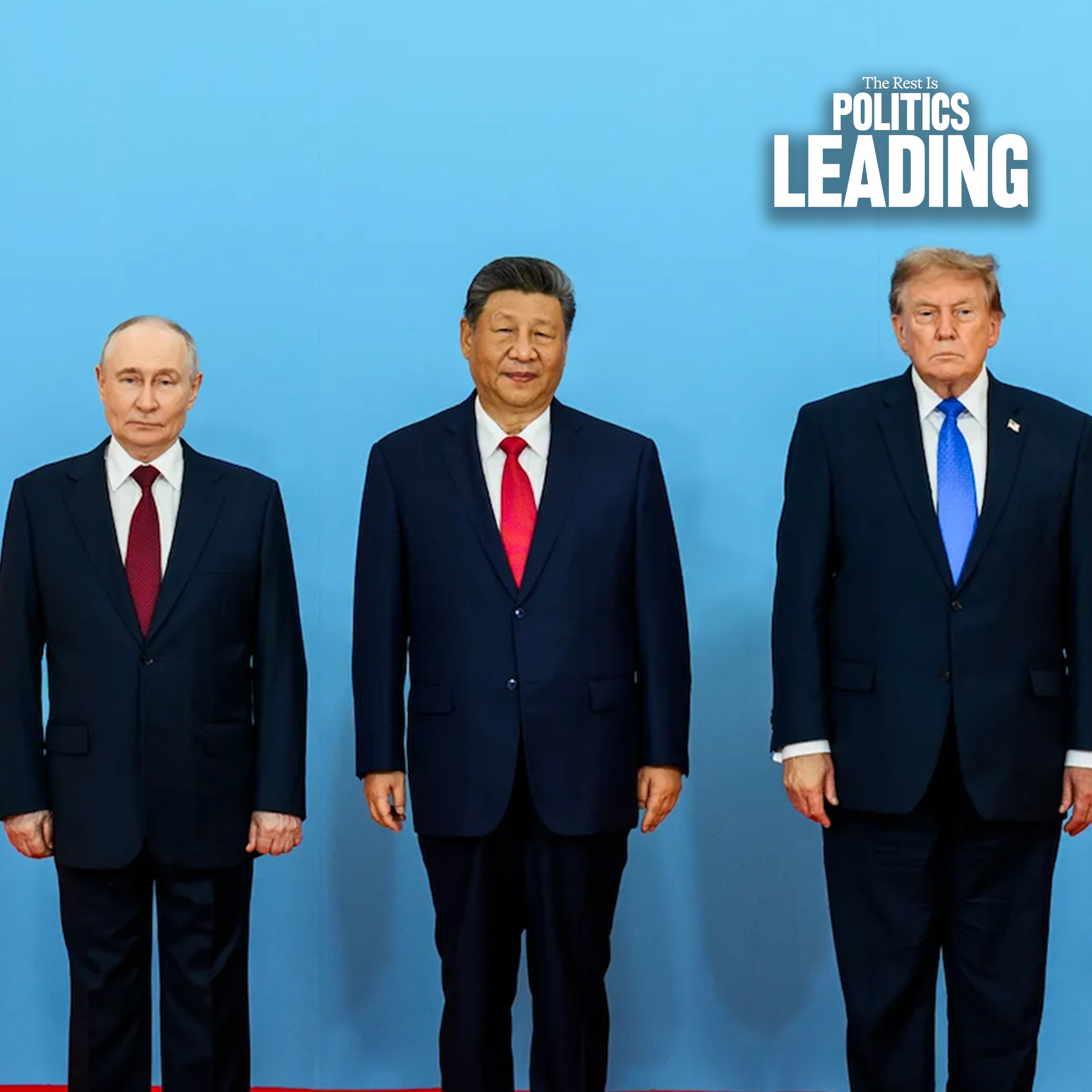
39:07He's like Xi. He's like Kim Jong-un. You know, he's president for life. He's a totalitarian dictator. And nobody can be... He's jealous of them. He's jealous of them. Oh, absolutely. I see you're wearing the Ukrainian flag on your lapel. Do you think he's flipped sides? Or do you think actually he was always on Putin's side? He's been on Putin's side since the 80s, I believe. And where are you on the... Has Putin got something on him? I think we're beyond that. Honestly, I think it wouldn't matter. Even if he did, I don't think anybody would care anymore. Really? Well, I'm... Those who care would care and those who don't care wouldn't.
39:39Right. And those who wouldn't have all the power in our country right now. So Donald has made it clear from the beginning that he's not really interested in protecting Ukraine. He has dragged his feet, as you mentioned. He has put it all on the NATO allies. And as soon as there's any pushback from Putin, he's making it very clear whose side is on. Last week was one of the most despicable things I've ever seen in my life. his betrayal of Ukraine is just obscene. And I think from the beginning, and we knew that we had hints of this during his first term, he wants to leave NATO. He wouldn't care if NATO were dismantled.
40:24And he has no interest in the great Western liberal alliance that was created in the wake of World War II, because now he's on the side of the fascist. You can argue that the Republican Party in America is a fascist party that has no interest. He certainly has no interest in democracy. He thinks that people who engage in things like statecraft and diplomacy and who are in alliances that require compromise are losers. Exactly.
40:51Rory Stewart: So when Donald Trump is no longer with us... Are you talking out of office or dead? Either. There will be people in Europe who just hope that everything can go back to how it was. But my sense is that his awfulness has actually revealed the truth about a certain American view. which is pretty permanent. Because what he's done is he's, by showing American power and vulnerability, by showing that he doesn't really care about universal values, by creating so much chaos himself, it makes it very, very difficult for anyone who follows him to rebuild the kind of trust that existed before. And actually, when you hear Marco Rubio, when you hear J.D.
41:30Rory Stewart: Vance, when you hear Stephen Miller, when you hear Elbridge Colby, when you hear Hegseth, you think, hey, it's not just Donald Trump, is it? There's something out here that we as Canada, as Europe, need to be serious about. This is an intolerable relationship. And in a sense, we almost should be grateful to Trump for revealing it to us. I agree. I mean, I take no pleasure in agreeing with you, but it is true. And we don't do ourselves any favors by pretending otherwise. And it isn't just Donald. Donald has been enabled at every step of the way. If there had been a mechanism in place that the Republican Party he had been willing to use to contain him, to restrain him, we wouldn't be having this conversation.
42:10So there are thousands of co-conspirators here who need to be held just as accountable as Donald. And they will be the ones waiting to be next in line to continue this path we're on. Because at this point, Donald is just acting out of instinct and desperation. There are many others who are actually crafting the deals and the policies and the strategies to continue to accrue more power, to continue to destroy our alliances, et cetera. So I hope that our alliances can be repaired. But in America, we can't go back. We need to completely reshape, remake, reimagine who we are as a country. Because right now, there is literally no reason I can see that any of our allies would ever trust us again unless we do very hard work in the next couple of generations, not just to undo the damage, but to prove that we can be trusted.
43:11And that's going to require some serious soul searching and a willingness to step back and acknowledge what we've done. Do you think he cares if he does badly in the midterms? Do you think he cares about the Republican Party? Kellyanne Conway was telling us the other day that, you know, if they do badly, it's because they haven't used Trump enough. Like, you know, exactly. Yeah. So is he thinking they'll just be, they'll be losers. The Republicans will be losers. It won't be anything to do with him. And then what does he do? Just carries on being Trump for the next two years and then thinks he can stay.
43:42Yeah. I mean, listen, one of the great, greatest favors he's done to the world is to tell people, tell voters to pretend he's on the ballot. Yes, please. Let's do that because Democrats will come out in droves and Republicans will stay home. So he doesn't care about the Republican Party. He cares about the fact that if the Democrats have majorities, particularly in the House, he'll get impeached. Everybody's going to get investigated and his life will be a misery. Unfortunately, that also makes him more dangerous because he'll be more desperate. And but of course, we'll never take responsibility.
44:14And also the court has given him a free hand. That's right. So my final question has been lovely to talk to you, but you're a lesbian. Yes. OK, I am. And I am fascinated by the way that Donald Trump talks about men. His constant commentary on how handsome they are. He was checking out some guy's ass the other day. I just wonder where we should be on the gaydar with Donald. Have you ever been asked that one before? I have not. I have a terrible gaydar, actually. But what I do know is that he talks more admiringly about men physically than most straight women I know. So it's very alarming, but I think it's just a sign of how his impulse control is eroding.
44:57He can help it. He has no filter anymore. I mean, he's never had much impulse control, but it's completely gone. We see all sorts of signs of disinhibition, which is what that is. He was at a rally and he just like threw a glass of water on the floor for no reason. And now he's talking about men's asses and like checking them out in front of thousands of people. And it is deeply weird, especially since he has been known since Roy Cohn was diagnosed with AIDS back in the 80s, his lawyer, notorious lawyer, for being a virulent homophobe, at least when it comes to men. So, yeah, your guess is as good as mine, but I think it might be diagnostic.
45:40Rory Stewart: Let's finish on the diagnostic thing. You're somebody who did a doctorate in psychology, sorry? Clinical psychology. Clinical psychology. So give us a sense, my final thing, on what insights that gives you into your uncle, and also maybe being a bit more self-reflective, what the limits are of trying to do a psychological diagnosis on a family member who you don't see very much anymore? The advantages are the fact that in addition to the clinical training, I have the personal insight and experience with this family. Because, again, the book itself, I consider it a psychological history of a family.
46:14So it's more about the family system and the impact it had on his psychological development. The limits, of course, are that diagnosis is a process. You can't just diagnose somebody because you've seen them a lot. You know, you need to test them. So it's sort of impossible. But I think the biggest limit, even though I have a pretty clear assessment of what his clinical profile looks like, is that it kind of doesn't matter anymore. Look at what he's doing. Look at the impact he's having. Does it matter if he's a malignant narcissist or a sociopath? I don't think it matters anymore because we're dealing with the fallout of his very troubled upbringing and what that has not just done to him, but to the rest of us.
46:59as a result. So that's sort of where I'll leave off with that. We are just living in his world and we've got to figure out how to get out of it.
47:09Rory Stewart: Let me just, because you tempt me to do that. What do you think his psychological profile is, if you were guessing, as the clinical psychologist? I think Donald presents as somebody who he probably has some kind of learning disorder. From what I understand, I mean, from my experience, he drinks a lot of like dozens of Diet Cokes a day. He has some, so he's probably sleep disordered and has at least in terms of caffeine. He's got some kind of dependence on caffeine. He has multiple personality disorders, I would guess. And again, this is, I'm just speaking off the cuff here. This is not an official diagnosis.
47:47He has dependent personality disorder, narcissistic personality disorder, probably a couple others, and antisocial personality disorder. And that's on a spectrum. He is way on the sociopathy side of that spectrum because, as we know, he has no empathy. He has no problem breaking the law, breaking the rules, and he's cruel. And he is a deeply psychologically disordered person who has never been formally diagnosed, therefore never been treated. So all of those conditions have been deteriorating over the last seven or eight decades, which is terrifying.
48:28Rory Stewart: Thank you very much for your time. Happy to end on that note. Well, listen, it's been a long time to talk to you. Thank you. Well, I really enjoyed that. It must be very tough for him and incredibly tough. I mean, obviously, it wasn't primarily an interview about her, but she has had an unbelievably tough time. I mean, her father was an alcoholic, died very, very young. She had grandparents who clearly didn't love her, had a very traumatic time, and then has chosen to write these books, attacking her uncle, and presumably come under incredible attack and abuse. And then she's having to balance her training as a clinical psychologist and her awareness, as she said at the end, that she's not really supposed to be providing therapeutic diagnoses on people who want her patients.
49:14Well, there is something in America called the Goldwater Rule, where psychiatrists and psychologists are not supposed to talk about the mental health of anybody that they've never treated. Because this is when psychiatrists came out and said Goldwater was not mentally fit to be president. But lots of psychiatrists now say, I'm sorry, we have a responsibility to call this stuff out. But I think you're right. I mean, there is that passage I mentioned in the book where she's in this Trump hotel and she says they were given one complimentary night. And they go to this hotel and it's like, you know, the towels say Trump, the shampoo says Trump, the glasses say Trump, the plates say Trump.
49:51And that sense of overwhelming narcissism. But what comes through when you talk to her is actually she comes across, I think, as a very strong person. and she's basically saying that trump within all that bluster is incredibly weak and incredibly fragile but the the consequences of him being in power we're all having to to live with i'm also fascinated you know i'm fascinated by this scottish angle to this because the the the woman she was describing the grandmother and i complete that story is so horrifying that i'd missed it when i read the book i thought she was saying that he's leaving nothing that fred was like no fred's sort of it's all but it's been a mirage
50:30Rory Stewart: she's saying to your father was worth nothing because I was sort of skim reading it I thought so I want to think because this is how I see my family background you know I've always imagined Donald Trump's mum as a sort of twinkly eyed white haired nice Hebridean woman which he sometimes seems in some of the interviews it turns out she's a bloody monster no I mean there's also there's also this sense of one almost wants to ask what on earth was the childhood of Trump's father, her grandfather, to produce this? It's like that Larkin line, man passes on misery to man, it deepens like a coastal shelf, a sense of kind of intergenerational horror.
51:12It does have the other one about your mom and dad, they fuck you up. Yeah, exactly.
51:15Rory Stewart: It's all the same poem, actually. My final question is whether there isn't, and maybe this is too pretentious, something that's emerging in modern America, which is a culture that almost has the same psychological profile as Trump. And that that's part of his power, that if he is vindictive, humiliating, grandiose, megalomaniac, paranoiac, he's partly playing out possibly a whole American insecurity and megalomania and paranoia at its own position as a global power, its own fears about losing that position. And when Trump lashes out and wins on lashing out, maybe he's lashing out because it touches a strain of American culture.
51:55Well, I've thought for a while that the big sort of, if we're going to go cod psychology on countries, that the big thing that they're failing to come to terms with is that China might already be more powerful than them. And China is not remotely a democracy. So all these great values they've been talking about ever since they've sort of existed have been eroded internally and overtaken externally by a power that they claim to despise. But as Mary said, I've always felt this about Trump. He is jealous of Putin. He is jealous of Xi. He is jealous of Kim Jong-un. Putin can drop people out of windows and nobody cares.
52:31And he wants to be able to do that.
52:32Rory Stewart: Yeah. He wants to be a Bond villain, basically. Well, even the thing which he was talking about how charming he can be on First Encounter, and it's true, he can be. But then if you put him in a group of people and he spots one person who is not the sycophant, we see that every press conference he does. caitlin collins yeah you know look at her she never smiles she's horrible there's always somebody he'll pick on i'm honestly reading the accounts of because he was young when he was bullying his older brother the one question i didn't ask which i meant to and i forgot was i've always been i've always assumed again maybe i'm just too romantic about this i've always assumed that the reason that trump is teetotal is because he saw the damage being done to his brother who died of alcoholism but it sounds to me like he contributed pretty heavily to the the pain of his brother I mean, I took so much from that.
53:20Rory Stewart: And I think the thing that I'm still sitting with is this idea that you've been hinting at, but I'm only beginning to really absorb, which is that when he says he wants Europe to pay and Europe to take over responsibility for Ukraine. He wants us to lose. He wants us to fail. He wants to see us fail. Because he hates all losers. Yeah. Because deep inside, he still feels like he's a loser. And it would be terrible, actually, for Europe to succeed. I mean, in a way, the worst thing would be to discover that Europe could look after its own security, could pay for Ukraine, could hold back Putin without him.
53:53Hey, Hope. Very good. Thank you, Mary. Thank you. Bye-bye.
How did Donald Trump’s childhood shape the president we see today? Why was Mary Trump cut out of her grandfather’s billion-dollar will? Why does he want to see Europe fail?
Alastair and Rory are joined by Mary Trump, Donald Trump’s niece and a clinical psychologist, to discuss all these questions and more.
__________
Search IG.com to find out more and/or Look for IG in your app store.
__________
Instagram: @restispolitics
Twitter: @restispolitics
Email: [email protected]
__________
Social Producer: Bex Tyrrell, Celine Charles
Video Editor: Caroline Kaye, Tom McCagherty, Oli Ortega, Kierson Leslie
Assistant Producer: Daisy Alston-Horne
Senior Producer: Nicole Maslen
Exec Producer: Bella Soames
General Manager: Tom Whiter
Learn more about your ad choices. Visit podcastchoices.com/adchoices