Ask ChatGPT
 The Rest Is Politics: Leading
16 Nov 2026 · 57m · 19 chapters
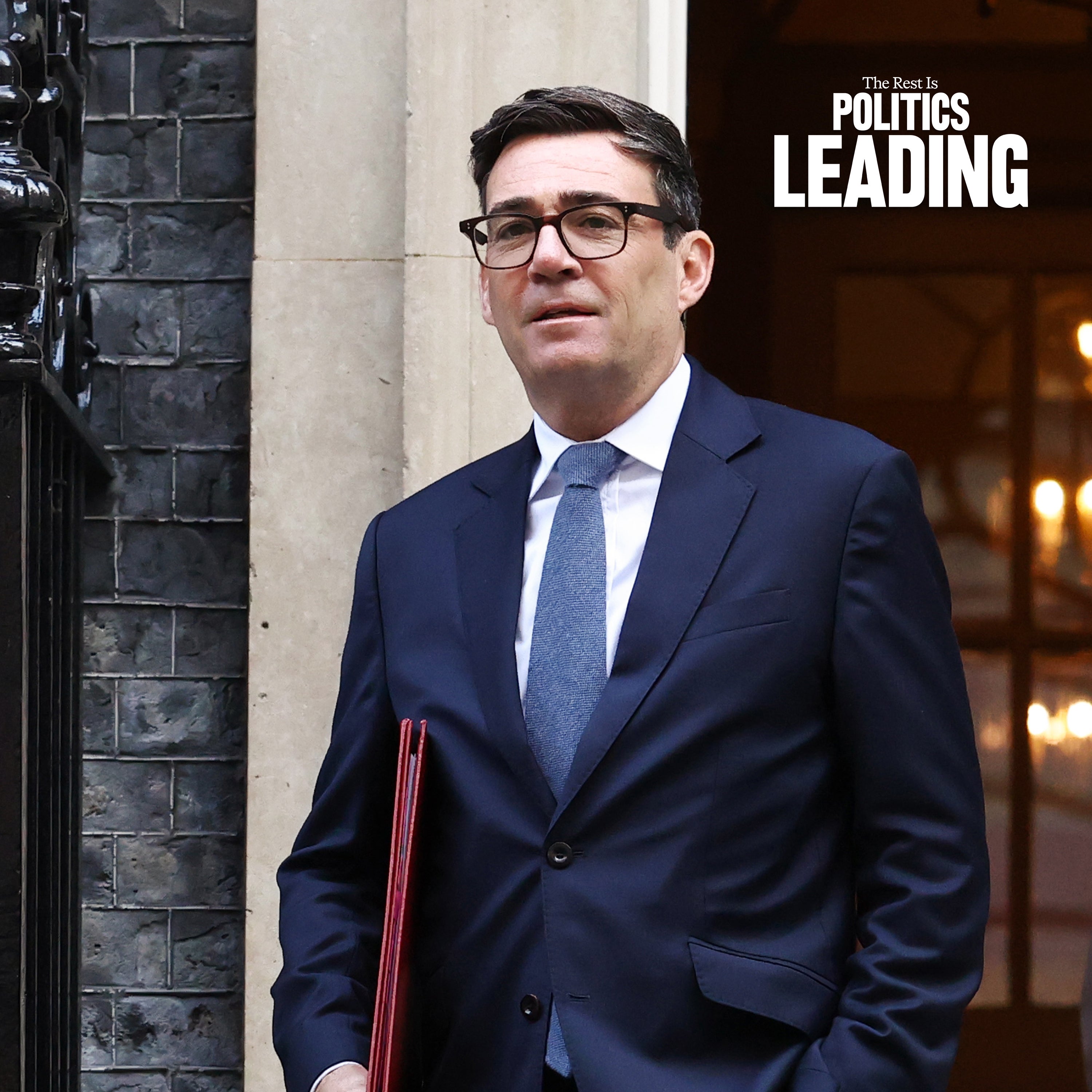
How Andy Burnham/Keir Starmer should use “mission-led” government to drive UK economic growth by catalysing public and private investment, rewiring civil service capacity, and improving public-private partnerships; critique of slogan-style missions and overreliance on consultancies.
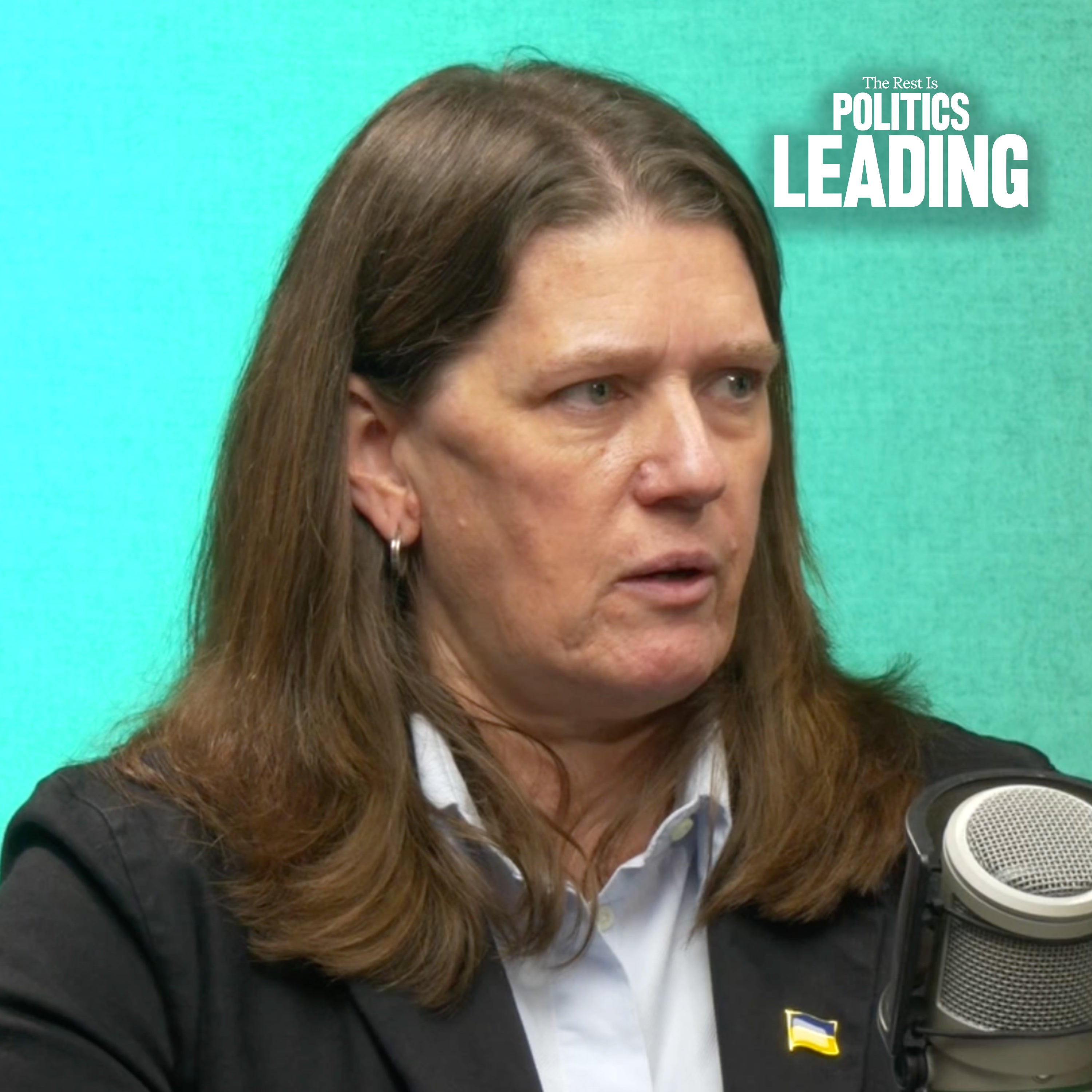
Mariana Mazzucato is an Italian-American economist and professor at University College London. She advises UK politicians including Keir Starmer (mission-led government), worked with Nicola Sturgeon on Scotland’s National Investment Bank, and with Andy Burnham’s Greater Manchester team. She leads/created UCL’s Institute for Innovation and Public Purpose and has written books including The Common Good Economy and Mission Economy.
Missions must be memorable, interdepartmental, and procurement/outcomes oriented (not just a net-zero slogan). Government must “shape markets” with capabilities and training, not just “fix” market failures. Consulting dependence reflects weak state capacity and risk-averse culture; conflicts of interest can be structural.
NASA’s mission approach (changing procurement; private-sector work with NASA). Germany’s KfW/KFW loans conditional on green-steel supply-chain material reduction. Camden citizen assemblies leading to green food cooperatives and a mission-oriented adult social care design. Brazil’s Bolsa Verde redesigned as “pre-distributive” funding via forest communities/cooperatives. COVID test-and-trace cited as low-expertise consultancy spending.
Written by AI. May contain mistakes.
Mazzucato discusses her vision for the UK economy centered around hope and public investment.
“Yeah, Marianne, let's start by maybe you providing your vision for Britain.”
Mazzucato explores the failures of the mission-led approach in Starmer's government.
“Mariana, I mentioned in the introduction that there was a point at which the missions were going to, meant to be forming the whole heart of the Starmer government.”
Discussion on the importance of public-private partnerships for driving innovation and achieving missions.
“Unfortunately, you know, lots of people use the concept as a slogan.”
Mazzucato emphasizes the need for imaginative governance and policy-making.
“Can I come to the really interesting question for me, which is government and capacity in government?”
Explore the critical role of government in fostering innovation and economic growth.
“the important thing for government is not to do things which individuals are doing already, and to do them a little better or a little worse, but to do those things which are present are not done at all.”
Discuss the challenges posed by reliance on external consultancies in government operations.
“the telos, the goal, but also the police, not the police, but the community, right?”
Analyze the complexities of implementing change within government systems.
“sometimes you can sound a bit like a consultant.”
Discover how applied learning transformed Brazil's civil service practices.
“change just by going around and telling people, do this, don't do that.”
Learn about integrating local knowledge into environmental policy design in Brazil.
“What does it mean for the, you know, concrete plans on the ground?”
Explore how Camden's community engagement efforts influenced local policies.
“What have you learned from working with communities in Britain?”
Understand the critical role of leadership in driving effective policy changes.
“We should be designing things with users in mind.”
Learn about the need for strong governmental structures and civil service training.
“And with Georgia, what I really admired in her is not only does she get it, but then we got our hands dirty with, again, procurement in Camden.”
Examine the complexities of choosing which governments to collaborate with.
“I was actually asked in Italy at one point, They asked if I was interested in potentially actually becoming a minister of finance.”
Learn about the ideological position of Meloni in Italy and its economic implications.
“Mariana, tell us about Giorgio Maloney and what's happening in the Italian economy and how you reconcile Maloney's ideological position with Italy's economic performance and what we can learn from Maloney.”
An analysis of Trump's economic policies and their effects on the U.S. economy.
“now continues to be sort of part of this coalition, which is this right-wing coalition in Italy, which is actually, for the reasons I just said, not so united, right?”
Discussing the implications of Trump's dismantling of the entrepreneurial state and its impact on U.S. competitiveness.
“No, he's not doing anything I think he should do.”
A discussion on Keynesian economics in relation to community building and cultural investments.
“My final question, Mariana, is if I can take you back to the James Graham play about Keynes.”
The hosts reflect on Mariana Mazzucato's insights and their implications.
“But the president of Afghanistan, Ashraf Ghani, kept saying things like, I did this in Ethiopia.”
Explore the contrasting economic growth rates and strategies of the US compared to Europe.
“And most measures, the US economy is now about 15 % larger than the EU economy.”

Get the gist, explore an idea or ask about something said.
 Claude
On The Rest Is Politics: Leading, what are the key points of this episode?
Searching your listeningAutomatic transcript. May contain errors.
0:00Thanks for listening to The Rest is Politics. Sign up to The Rest is Politics Plus to enjoy ad-free listening, receive a weekly newsletter, join our members chat room and gain early access to live show tickets. Just go to therestispolitics.com. That's therestispolitics.com. This episode is sponsored by IG. The budget has landed, which means there's an awful lot more noise from speculators telling you what it means for your money. But what investors should actually be asking is this. Do you actually know what you hold, what it's worth right now and what you can earn? actually act upon. Many investors won't know the answers because they will have their accounts spread across multiple different apps with multiple different institutions.
0:37And so you won't really know what is their position on American equities, European equities, bonds, or how it all sits together. So here's some good news for you. From investments to trades, IG brings your entire portfolio together in a single app with one unified wallet to fund across all your accounts. And with over 20 ,000 stocks and ETFs, you have the breadth to act no matter how the budget affects you. And it gets better. With no annual fees and zero commission on UK stocks, shares and ETFs, more of your money stays where it belongs. Invest it. Download the IG app to get started. IG. Trade.
1:16Invest. Progress. Capital at risk. Other fees may apply. For adults with Crohn's disease or ulcerative colitis symptoms, every choice matters. Tremphaya offers self-injection or intravenous infusion from the start. Tremphaya is administered as injections under the skin or infusions through a vein every four weeks, followed by injections under the skin every four or eight weeks. If your doctor decides that you can self-inject Tremphaya, proper training is required. Tremphaya is a prescription medicine used to treat adults with moderately to severely active Crohn's disease and adults with moderately to severely active ulcerative colitis.
1:55Serious allergic reactions, increased risk of infections or lower ability to fight them and liver problems may occur. Before treatment, get checked for infections and tuberculosis. Tell your doctor if you have an infection, flu-like symptoms or need a vaccine. Explore what's possible. Ask your doctor about Tremphaya today. Call 1-800-526-7736 to learn more or visit trimfiradio.com. Shop Black Friday Appliance Savings and get up to an extra$1 ,250 off select appliance purchases like GE Profile. Plus, free delivery on appliance purchases of$398 or more. Make life easier with the fridge that doubles as your personal kitchen assistant.
2:35Or upgrade your laundry room with the UltraFresh Vent System Plus Front Load Washer, so your clothes stay fresh after every single wash. Shop Black Friday appliance savings with fast free delivery at The Home Depot. Offer value November 4th through December 2nd at participating stores and at homedepot.com. U.S. only. See store online for details.
3:00Welcome to The Rest is Politics Leading with me, Rory Stewart. And me, Alistair Campbell. And we are with Mariana Mazzucato. She's an Italian-American economist and academic who's become a very important voice in politics in the UK and beyond. She's a professor at University College London. She's advised a number of leading British politicians, including Keir Starmer, who adopted her mission-led government, but perhaps not in the way she hoped and intended. She worked with former First Minister of Scotland, Nicola Sturgeon, on their National Investment Bank and with Andy Burnham's team when he was mayor of Greater Manchester.
3:35and I know from talking to her at Labour's conference in Liverpool and from reading her latest book, The Common Good Economy, that she has plenty to say about what the new Prime Minister and Chancellor should do to get the British economy going again. When Rory and I talked to Gordon Brown recently, he said the UK had to become an innovation nation and innovation and investment are central to Marianna's views as she tries to get governments to take them more seriously and to do better. She's also passionate about the role of arts and culture. She's equally passionate about the damage done by the climate crisis.
4:11So lots to talk about. And thank you very much for being with us. Thanks for having me. Rory, where do you want to start? Yeah, Marianne, let's start by maybe you providing your vision for Britain. What would you be doing if you were Prime Minister, which is radically different from what Andy Burnham is doing now? Sure. Well, first to actually provide some hope in terms of the actual economic goals. It seems like sometimes when we talk about the economy, it becomes very kind of technocratic, and we talk about fiscal rules. And then when we want to say something hopeful, it's about how to get, you know, homeless people off the street, how to have stronger care, but these two discussions are never joined up.
4:49So I would say use his current goals. I'm not here to tell, you know, Andy Burnham what the goals should be, but the actual kind of societal and hopeful goals, The whole conference was called Hope Again. Use that to actually drive economic growth. And that means putting those goals at the center of government. It doesn't mean putting health in the Department of Health and maybe climate, if we ever talk properly about that again, far off in DEFRA or the Department of Energy. It means actually saying, what does it mean to catalyze a massive wave of public investment, which we've had way too little of in the UK for decades?
5:24Had we invested even just the average of the G7 on the public side, we would have invested 500 billion more. And on the private side, we remain very low compared to the OECD. So we are, I think, 27th in the OECD for business investment. So the big goal is to catalyze public and private sector investment to actually drive solutions towards the goals that this government is setting itself. Again, health, sustainable transport, housing, but not just any housing, sustainable housing, good housing, close to people's jobs, and also with, you know, building communities as we used to do when we actually designed proper public housing.
6:05Mariana, I mentioned in the introduction that there was a point at which the missions were going to, meant to be forming the whole heart of the Starmer government. I wish. From what you've just said, though, are you basically saying that they said the NHS was the mission as opposed to what we want to do with the NHS? And what went wrong with the missions? Because Peter Hyman, who's a friend and former colleague of mine, he was absolutely passionate about the missions. And I think he was driving them internally as you were sort of pushing them from outside. And yet I think he got very disappointed, actually.
6:41Kyrstama didn't really get it, didn't really understand what this meant. So what do you mean by mission-led government? Sure. Well, first of all, Cure is not alone. Unfortunately, you know, lots of people use the concept as a slogan. And it's not meant to be a slogan. It's meant to be a provocation to fundamentally change how we not only do government policy, but especially, and this is a bit people sometimes forget, proper public-private partnerships. So what missions are for me, and the reason I actually wrote a whole book about this, because I don't think it's easy, is how can we be as bold, as inspirational, but even memorable, so if you don't remember a mission, it ain't a mission, as when we went to the moon and back, but on Earth, right?
7:20So this whole concept of Earth shots, you know, people use the word, but what does it mean? So to go to the moon, it wasn't just aerospace. We had to solve so many different problems. You know, how would the astronauts literally go to the bathroom? That happened again, by the way, a couple of months ago with the Artemis. The toilet is always the problem in space. So how would they go to the bathroom? What would they eat? What would they wear? How would they communicate back to mission control room? So the first thing that NASA did and the head of procurement in NASA, his name was Ernest Brackett, he said, look, on the technology side, I think we'll get there.
7:52The paperwork is going to kill us. So the first thing we need to do is change literally how we currently do public sector procurement. So public purchasing. So the first thing they did was to say, we need an outcomes, a mission orientation to solve all these problems. By the way, with the private sector, people forget that 400 ,000 people in the private sector across many different sectors, nutrition, materials, aerospace and software, worked with NASA. NASA provided the clear direction, some early upfront investment, but the solutions actually came from the private sector. So where did Keir get it wrong?
8:27First of all, it never went to the center of the industrial strategy. I actually worked with Johnny Reynolds and Darren Jones before Starmer got into government to actually do some mission workshops. So it's like, hey, guys, listen, missions are really powerful. But only if we think of really bold missions, which require government to work interdepartmentally, you know, interministerially, climate is, again, not just for energy, health is not just for the Department of Health. So how do we work in a war room kind of way? I hate wars, but now that we're back with war, how do we work with Department of Health, Department of Education, Department of Finance on, for example, a mission to make sure that every child has access to healthy, tasty, sustainable lunch?
9:06How do you do it to catalyze private sector investment? I'll shut up in a second. Sorry, Rory, I saw you had your hand up. But this is key to stimulate bottom-up innovation in the private sector by actually transforming the tools. So procurement is not fit for purpose. Public loans through different types of public banks globally and definitely here are not fit for purpose. They tend to just give money out to any sector that screams for help. If you have a mission like they have had in Germany recently, that has meant, for example, that their own public bank, the KFW, decided to provide loans conditional that the sectors as boring as steel were mission aligned.
9:43So the only reason there's green steel in Germany is that the loan from the NWF, from the KFW said, conditional that the steel sector lower the material content of production across the whole supply chain. How you do it, it's up to you. If we micromanage you, that'll stifle innovation and entrepreneurship. But if you're not interested in being part of the solution, go back to the end of the queue. Can I come to the really interesting question for me, which is government and capacity in government? So you spent a lot of time, obviously, when the conservatives were in power, tearing your hair out.
10:17And now suddenly you get a very, very sympathetic government under Starmer and Burnham. So you must have felt, wow, okay, here we go. You know, I'm going to be able to achieve the kind of dreams I have. And tell me some of the things that surprised you when you actually were trying to implement these things in government that you hadn't necessarily anticipated when you were less closely connected to the machine. Sure. Well, actually, it might surprise you. I was more interconnected formally to the conservative government, because I actually ran a commission on mission-oriented innovation and industrial strategy in 2018.
10:54I co-chaired it with David Willits, and we did it for Greg Clark when he was a Secretary of State of Bayes. So what we did then, which was actually quite incredible, because that happened quite quickly, right after I actually set up the institute at UCL, which, by the way, is all dedicated to the actual capabilities and capacity within government to think in this way. We transformed the current industrial strategy at the time. You might remember Vince Cable had those top sectors. So it was like aerospace, automobiles, finance, life sciences, and the creative sector, right? So those are just sectors.
11:27And we said, hold on, why don't you think of goals, which require those sectors and other ones, for example, digital services to invest and innovate. So healthy agents, clean growth. Can I interrupt for a second? The risk is you're going to get onto all the wonderful things you wanted to do. Except that then Brexit got in the way. Most of the people we were working with were then kind of moved over to other areas. Currently, I think what surprised me was that, first of all, that Starmer's government had talked about the missions before going in. And it's such a hopeful, I mean, I think the reason missions in some countries have taken off is it also really provides a narrative and a framing that's about opportunities, right?
12:07You can confront challenges, we can all complain, but missions are about saying, here's a really bold objective, and we're going to go after it. And we're going to go after it through not an ideological nationalization or privatization, but a real joint public-private. So what surprised me was that they actually talked about that before. And as soon as they came in, A, it was all negative, right? We know the negative stuff, the winter fuel payments, the disability allowance, but the missions themselves, it was really only the net zero one. And this was positive, right? Under Ed Miliband, that sort of became a mission because it actually required, again, innovation, investment, training, but it was just about energy.
12:42A key thing about missions, as I said before, is it's about intersectoral, that's in the business sector, investment. So also what surprised me, I guess, was that even within DESNES, it was never about a sustainability mission that would require sustainable food, sustainable transport, obviously sustainable energy, because the three things are all interlinked. And so what I guess surprised me was the kind of lack of imagination at a moment where people were really hopeful. I mean, I was at the Labour Party conference that first year that Starmer got in, and it was full of hope. I think they began on the right foot in terms of saying that they were going to invest within government.
13:22You know, my previous book was called The Big Con, how we've infantilized governments by this overuse of consulting. But we never actually saw with Starmer, and I'm really hoping we see it now with Burnham, kind of a wave of really investing within the civil service in order to rewire the state. So we always have slogans like rewiring the state, but then it's not actually followed through, through a different way to think about the actual investments within the brain of government. When you talk about imagination, I'm moderately obsessed at the moment with James Graham's latest play, which is about Keynes and Hayek.
13:58You quoted something not long ago, I read something you wrote, and you quoted something that Cain said in 1926, the important thing for government is not to do things which individuals are doing already, and to do them a little better or a little worse, but to do those things which are present are not done at all. So that in a way is imagination. So two questions. First of all, what did you think of the play? And secondly, what should the government be doing right now that at present is not being done at all. Right. First of all, I love the play. And I was especially honored that I got the tickets from the director himself, who had just read my book and said, you have to go see it.
14:36It'll inspire you. And I thought it was really good in the kind of nuance too. It was neither kind of too technocratic or too poetic. It somehow weaved through the kind of poetic, the imagination, as well as some really important insights that Keynes had on the multiplier, for example. So what Keynes meant, and I really think he was misunderstood. So modern Keynesians And I was properly trained in some of this stuff. Unfortunately, we no longer have economics departments globally that properly teach all the different theories of value and of economics, and then students should be patching things up in their own brains.
15:10We're taught one theory and everything else is taught as history of economic thought, right? So what Keynes meant was that it's not just about counter-cyclical spending. That's kind of an obvious Keynesian point, which, by the way, even the play talked about, right? If everyone is pro-cyclical, that's why before Keynes came about, you had recessions continuously turn into depressions. People remember the 1929 depression. But if you look at the data, and you can download this data, you see depressions every 15 to 20 years. So what Keynes said is, hey, why is this? When you have recessions, business cuts back, consumers cut back.
15:50If government also cuts back, you get that downturn turning into a proper depression that causes huge human misery. So that counter-cyclical investment that Keynes advocated for and basically governments sort of do, austerity doesn't do that, but we more or less have counter-cyclical governments globally. What that quote says, I think, is that's not enough. What do you do in the boom? Do you just sit back? So if you want a green transition, if you want an IT revolution, if you want a population that is really invested in, in terms of their holistic well-being, that requires more than just counter-cyclical spending, more than just digging up holes and filling them up again, which could even create a multiplier effect simply by creating some jobs.
16:35And that's why I wrote The Entrepreneurial State back in 2013. We wouldn't have had Silicon Valley and today AI without these kind of bold, unfortunately, military industrial complex government funded investments during boom periods. It was during the boom, it wasn't during the bust that got us the internet GPS touchscreen Siri. How did we get those? Government was trying to solve a problem. Internet solved the problem of the satellites communicating, GPS, knowing where the ships were. So having a problem-oriented government, I think, is the first point. And Keynes' point of really doing what's not being done at all.
17:12That means not fixing a market failure, which is the standard narrative of what governments should do, but really shaping an economy, even shaping markets to deliver more inclusive growth, sustainable growth, innovation driven growth, instead of what? Growth that it's kind of fueled by problematic investment that causes global warming, but also kind of quick trades in the financial markets. We need long term investment. So you need tax policies that reward long termism. that requires really thinking through what the objectives are. And that's, again, fast forward why I wrote Mission Economy. And the Common Good book, which is my last one, is also sort of my disappointment along the way, coming back to what I saw also with Keir Starmer's government, is that what really matters is the relationships along the way.
17:57So if you think of Aristotle and political philosophy, and even, you know, modern day communitarians, they didn't just talk about the telos, the goal, but also the police, not the police, but the community, right? And Sandel's critique of Rawls is you can't have a theory of justice unless we don't value each other. So what the common good says is that whole idea of missions, that whole idea of Keynes doing really important things, not just tinkering on the edges. If we get the capital labor relationship wrong, if we get the public-private relationship wrong, which is my obsession, because I think we have really problematic public-private relationships.
18:31If the state has a problematic relationship with citizens, in other words, doesn't even listen, doesn't use the lived experience to design better policies, then it's impossible to actually achieve the common good. mariana as you mentioned you you've been very critical of governments for the extent to which they rely on outside consultancies and these huge global firms which have got their fingers into most of the big governments around the world and governments including our own spend an absolute fortune on consultancy is that because they lack capacity or they lack confidence or is it as you call it just a big con?
19:08Or does it also speak to the idea that the public sector sometimes maybe overestimates the capacity and the capability of the private sector? Right. So we broke it down. At the same time, there was a journalistic book that came out called When McKinsey Comes to Town, exactly trying to answer your question. Why is this happening? Right. So the fact that it's happening, Theodore Agnew, a Tory lord in the UK also said, you know, this is an infantilization of our civil service. You saw how much was being spent during Brexit, during COVID. And we said, why is this happening? We trace it back to about 50 years, you know, and also say, by the way, it's not party political.
19:46You know, the labor government, for example, under Tony Blair, well, actually with you, you know, massively opened the doors also to the consultants. So if you don't have what I think should be a public purpose driven state. And if you think that at best, you should bring in kind of like efficiency and just talk about, you know, we got to skim the fat and so on. But you believe in the state, unlike, say, a Reaganite or a Thatcherite that would say, you know, state get out of the way when we believe in the state, but don't think about what does it actually mean to shape a market? What are the dynamic capabilities you need within the civil service to be, you know, actually working with others in this outcomes-oriented way, not de-risking, not facilitating, not enabling, not just fixing, administering, regulating, these incredibly boring words, but actually really steering the ship and going to the moon and back alongside those 400 ,000 people in the private sector.
20:39That requires huge amounts of not only capacity, which tends to mean more like fiscal space, but also capabilities, the agility, the flexibility, again, the way to work across government, right? So that's the first thing. Depending what your theory of the state is, market fixing versus market shaping, let's just keep it simple, that will determine the kinds of capabilities you have. Second, if you are so risk averse because we end up romanticizing the risk-taking in the venture capital sector, amongst private entrepreneurs, but as soon as a civil servant makes a mistake, they're in the front page of the newspaper, or maybe even get sued, which often happens, then even when you have that capability, that first problem, you might have the second problem, which is more cultural, of fear and risk averseness.
21:28And third, when you have a consulting industry, when then pops in because of both those two problems, either you haven't invested in those capabilities, or second, you have them and you're very fearful and prefer just to rubber stamp a document with, you know, Deloitte or McKinsey told me to do this, then you also have a problem. Because if that industry is actually not set up to make you smarter, but is built and requires the contracts, right, there's also very little incentive to make sure that at the end of the relationship, that government department or also private sector, because don't forget, consultants also work a lot with the private sector, are more capable and independent later.
22:08It'd be like being with a therapist your whole life, maybe you should switch therapists. And I don't blame the consultants, I actually blame governments for, you know, being so over reliant, and also not not really calling out the conflicts of interest, right. So we also looked at, for example, in I think it was Australia, PwC was working both for the medical device companies and the regulators of the medical device companies, that should just be illegal. Same thing in South Africa, working for ESCOM, the big energy state on enterprise and the treasury, which should be regulating ESCOM. So that, you know, some of these things are low hanging fruit, just make it illegal.
22:45But the real problem is that conflict of interest. And that doesn't mean government shouldn't have advisors. You know, if government's going to have a cancer strategy, of course, they should be talking to the top doctors, you know, oncologists in the world. And of course, they should pay them. But that's different. There's expertise there. What we also said was, what's interesting is there's so little expertise. For example, example, Deloitte was getting paid 1.5 million a day to do test and trace during COVID, with frankly, almost zero expertise on that.
23:17This episode is brought to you by Barclays Premier. Listening to the experts on this podcast really demonstrates, does it not, how valuable specialised knowledge is when it comes to analysing the political landscape. But that same expert level of guidance isn't just useful and politics is incredibly important for your personal finances too. I mean, take retirement. Retirement obviously isn't just one moment in time. It might be a condition going on for many decades, you'd hope. And during that time, your personal circumstances can change. There could be new rules around how you save, how you invest, how you pass on your wealth to the next generation.
23:52That's where planning and advice exclusively for Barclays Premier Customers comes in. A wealth planner builds you a personalised plan around your goals, while your wealth manager helps it evolve as your life and the world around you change. Search Barclays Planning and Advice to learn more. You need to be a UK resident with at least£150 ,000 available to invest. Other eligibility criteria apply. Money invested for over five years has historically delivered greater growth than cash savings, although investment values can rise and fall over time. Did you know that psoriatic arthritis may progress over time and could cause permanent joint damage if left untreated?
24:34Listen to what it sounds like to be a million miles away.
24:43Trimphaya gusocomab, taken by injection, is a prescription medicine for adults with active psoriatic arthritis. Serious allergic reactions, increased risk of infections or lower ability to fight them, and liver problems may occur. Before treatment, get checked for infections and tuberculosis. Tell your doctor if you have an infection, flu-like symptoms, or need a vaccine. Imagine being a million miles away. Explore the possibilities. Ask your doctor about Trimphia. Tap this ad to see new joint data and learn more about Trimphia, including important safety information. Shop Black Friday Appliance Savings and get up to an extra$1 ,250 off select appliance purchases like GE Profile.
25:30Plus, free delivery on appliance purchases of$398 or more. Make life easier with the fridge that doubles as your personal kitchen assistant. Or upgrade your laundry room with the ultra-fresh vent system plus front load washer. So your clothes stay fresh after every single wash. Shop Black Friday appliance savings with fast free delivery at The Home Depot. Offer valid November 4th through December 2nd at participating stores and at homedepot.com. U.S. only. See store online for details.
25:57Marianne, I mean, I think the anxiety I might have is that if I was going to be unfair, sometimes you can sound a bit like a consultant. You can sound a bit like, I've got all the ideas. I know exactly how to fix this. I've got a 10 point plan. And actually a bit like a consultant, you'll be like, I've done it in 50 countries around the world. I know all these people in Mexico and the States. But actually, the reason why often BCG or McKinsey or Deloitte doesn't succeed is because they are too inclined to think that there is a general model and what they did in Australia or Mexico is going to apply to Britain and that there's a six-point plan, which if only they were in charge, they'd be able to do.
26:38And of course, the reason, one of the main reasons they don't work is that cultural change is unbelievably difficult and very, very specific. And as a British minister, I guess I was in six different ministerial portfolios. Listening to you, I feel all the actual problems in practice that would occur if you tried to do a lot of these things. And I fear that you are selling to an audience an idea that there's a simple set of remedies, which if only people listen to Mariana, everything would be fine. And that's fine for a book, but it's not actually the way to achieve change in government. First of all, it's a completely fair critique.
27:15I think it's an unfair critique to anything I've just said, because first of all, the reason I actually set up the institute was that I don't think it's possible to achieve change through a book, doing a book talk, just flying in, flying out of a country. So it was actually my dissatisfaction of how academics actually work with governments, where we think that we can just do the policy side at the end of a paper, whether it's a journal article or a book, you know, most of us actually write journal articles, we're actually told not to write books. The books I write are mainly also to create, you know, kind of a lay language so people don't feel so excluded from the economic discussion.
27:48But the journal articles often just say, here's my policy conclusions. Listen to me. I'm so smart. Whereas the reason I set up the Institute was from a different perspective, because I didn't work in government, but I also had that same kind of cynicism that you have, is you don't create change just by going around and telling people, do this, don't do that. Also, because then you leave and they're like, damn, you know, what do I actually have to do now? How does it work? And what if things don't go right? So we work, first of all, we're not consultants. It's a research institute. We get money from research councils and philanthropies that go to our public university, University College London, that does their full economic costing.
28:23I have no idea where the money goes, but I hire researchers, postdocs, and so on. And we work slowly, not in and out, with governments. For example, in Brazil, it took four years to work with the government, with about 50 civil servants, both on the training side. So we call it applied learning. So we do learning on the side, kind of rethinking what the civil service is, what is a different theory of value that should underpin this idea of market shaping, not market fixing. At the same time that we take a sandbox, like school meals, like the sustainable transition done through a financial instrument like BNDS, their own public bank, what does it mean for different types of ways of thinking of the public bank, and it's very culturally specific.
29:05First of all, we lead it through them. The Brazilian civil service in particular, my experience is that they had huge amounts of expertise, but they weren't working, again, between departments to actually find those kind of much more concrete changes that government required to do in order to do what Lula wanted, which is to say no hunger, no poverty at the center. What does it mean for the, you know, concrete plans on the ground? Second, one of the reasons I wrote the common good is I I don't think it's possible, and this is what I've learned from my work along the way, to do it in a cut and paste way, you know, as though Brazil is the same as Mexico, as though it's the same as the US.
29:42The lived experience on the ground, for example, in Brazil and the latest work we're doing, really, really matters to improve the policy. So I just came back from Belém, the capital of the Amazon, where we took a 10-hour boat ride into Curalinha, which is deep into the river, because there there's a whole movement called Hay Personas en la Foresta. There's people in the forest. It comes from the Consejo Nacional de Sirengueros, the rubber workers. Those people who live in the forest have so much knowledge on how to keep the forest alive, on how not to go down the monoculture route, which unfortunately, even in Brazil is happening in the forest with superfoods like acai kind of taking over.
30:21They have thought a lot about how to maintain the social and biodiversity of the forest. And yet their own voices are nowhere to be seen at the center of how to design the Amazon Fund, at the center of how to design the Bolsa Verde. And what I've done there is they, I'm lucky, people read my books, I was called in by the minister, and we said, well, let's make this a proper project. And let's take a tool like the Bolsa Verde, and actually rethink it. So instead of it being redistributive, which is like, oh, let's give money to some indigenous people, because they're poor, that was actually one of the conditions, the level of income, but actually transform it into what I call in the book, a pre-distributive instrument, and actually funding the people in the forest through the cooperatives and the associations because of the knowledge, the innovation that they embody.
31:08So first of all, it brings a completely different vibe. This is dignity. This is you valuing someone for their knowledge, not condescendingly giving them money because you think they're poor or have been left behind. And that experience in Brazil, first of all, I have very little to say except to say I learned from it. I don't think economists are very good at listening or understanding how to work with communities. We work at communities. But those are the projects that I think are really critical. Let's turn that round to Britain. What have you learned from working with communities in Britain?
31:40What have you learned about British government? Emotionally you replaced Brazil with Britain. Instead of telling us the journey about traveling 10 hours up the Amazon and meeting indigenous people. It's funny, Rory, that that's all you hear, the 10 hours. What have you seen on the ground in Britain? I've been working in this country since 1998, and I've done my best. I've worked very, very locally, even in Camden, where I live, for example, with Georgia Gould, when she was leader of Camden Council. Again, she had read the missions book. And during COVID, we set up the Camden Renewal Commission.
32:08And what I learned was that the Camden residents were fed up with both their own leaders, their own government, but also maybe with advisors who come and go to tell them why it's really important to have a green transition and so on. So what we did in Camden, and actually it's good you asked that because it actually relates very much to what I learned, again, in different parts of the world. If you don't like the fact that we went on a 10-hour boat ride, that's not the point. That's the only way to get there. Anyway, was listening to the care. So for example, we said, let's not just do cut and paste missions.
32:43Let's think, what does Camden actually need? So the first thing was to have a We Make Camden, just call it Citizen Assembly, was actually through resident associations across 10 housing estates to listen to the people in the Camden estates on what they thought was most needed in their own neighborhood that could fit into some sort of, you know, climate slash sustainable slash ecological transition, if you want to use the Brazilian words. They said two things. They said, first of all, our food banks make us feel very humiliated. So if we're going to have a green transition, how about transforming it into a green food cooperative?
33:19So we have agency coming back to this point about dignity and actually valuing people instead of talking at them. So we set up green food cooperatives. And I can tell you that the same people whose facial expressions revealed, unfortunately, not being very happy when they walked into a food bank, completely transformed when they They are actually running the show in a food bank that also was working with different types of actors who were really thinking about the whole kind of sustainable food chain that could be interacting with the food cooperative. But it was mainly the dignity. Second, the adult social care mission that we focused on as one of the sandboxes, because as I said, I think we can only learn through local examples.
34:00The idea was to put the carers, the people who had actually been providing care in Camden, who had been failed, as well as the people receiving the care, at the table to design the mission-oriented adult social care program. And again, I mean, I really think it's these local experiences. And this is why I think Burnham's onto something. But I think we need to kind of really flesh out what it means to have, you know, a growth in every postcode. I think it means listening to people in every postcode and actually bringing the knowledge, the lived experience of the people who've been not just left behind, but also working in areas that have failed to the table to design those better policies.
34:40There's a great book by Jennifer Palk in the US where she says that the people who actually design digital platforms often have never used those digital platforms to access, for example, their welfare payments, their driver's licenses, and so on. And so that's already messed up. We should be designing things with users in mind. And what's the best way to do it through groups of users? And especially if you have a progressive government that cares about things like health and housing, that's incredibly important to ask where are these policies coming from? Is it from the consultants? Is it just a random academic like me that comes in and out?
35:13Or do we work with the community through a process of designing that outcomes orientation with their knowledge? A couple of things we've talked about that actually you mentioning Georgia Gould, who I've known virtually since she was born, was an exceptional council leader. I think she was really, really good. And I think is now becoming a very, very good minister as well with some of the most difficult issues in education. But I wonder whether that speaks to something that I was thinking when you were talking before, that ultimately leadership is the key to all of this. So when you say, for example, I mean, I've never worked with a government that doesn't complain about the inability for departments to work together, that doesn't complain about the damage that's done by people thinking, never thinking outside their own silos.
36:02So actually, is it not the case that unless you have the political leadership to drive this change, then your ideas are going to just sort of stay on the page on the book? You always need that political leadership. Or do you think actually there is systemic change that can be made simply by coming in with a good idea? No. Yeah, I think there's three different issues. One is, also going back to Rory's good question is, are we all just consultants if we go around telling governments? What I focus on is what I've been studying for 25 years. So it's not like, oh, here's a little gimmick. Let's go sell it and leave.
36:37So this stuff is hard. It's hard to do good industrial strategy. There's lots of bad industrial strategy. Bad industrial strategy for me is when you're just giving money out to sectors as opposed to goals that require different actors to work together in a different way. Missions, again, are intersectoral, not sector specific. And with Georgia, what I really admired in her is not only does she get it, but then we got our hands dirty with, again, procurement in Camden. And it was interesting that her first job with Starmer was actually in the cabinet office, really kind of on the public admin side.
37:10And she brought that experience from Camden around procurement, around rethinking, again, the kind of inter-departmental collaboration, something we also, by the way, did with Andy Burnham in 2018. The whole B network was part of that sustainable mobility strategy that was really about kind of aligning services instead of just thinking of it as transport. So leaders matter, and she really got it. She was also really good at speaking. I mean, I was always really kind of proud to be at her side in some of the meetings, just hearing how she spoke genuinely to people. You know, I think this is where people kind of criticize Starmer.
37:44I don't like the personality critiques. That's just not my thing. But she had the personality that people loved speaking with, as opposed to just feeling like you're talking to a technocrat. But even when you have that leadership, and I've seen this, I won't name the countries, if you then don't invest and work well with your own ministers, and especially civil servants, then it all fails. First of all, because once you're out, it all is gone, right? So that's also why I really believe in civil service training. That's why I'm proud to be an academic and a public university, why I set up the Institute for Innovation and Public Purpose, which is all about investing within the civil service.
38:21So we're less reliant on others and building those capabilities. If you don't do that, whatever policy you do, however successful it might be, once you have a new election, all that gets lost. So part of that is the training. But another thing is, I think if you don't trust, I mean, I saw this, maybe I will just name one with Colombia, we were with Gustav Petro, the president, you know, he was really good at talking to workers, really good at talking to indigenous communities, not very good at working with his ministers. In fact, he kept firing them. So it was incredible instability. And yet he was very inspirational.
38:57I mean, he gave some of the best speeches at UNGA, even better than the Lula's. So that's obviously not enough. Just like with an academic, it's not enough just giving a great talk if then you don't get your hands dirty to really learn what Roy was saying, the difficulties, if you don't admit the difficulties. But if you don't have a successor, that's also a failure. And so sometimes great leaders, you know, invest a lot of time in their own great work. And if you're not investing not only in the next generation, but that more distributed next generation, that's not just about the next person, I think, I think that's what I've seen really not happen.
39:29And that's what worries me the most. And again, it's the only reason that currently running this institute, which is 60 people, we've just welcomed our next cohort of master's students, we have also a PhD program, and we do the applied learning, which is more four weeks with the different governments we work with, that is hugely tiring. It's exhausting. It would be much easier just to write a book and go around and do my book talks. Have you ever thought about actually going into government, not as an advisor, not as a consultant, but actually either through the political route or through the civil service route, actually becoming part of a government machine?
40:04Because I wonder whether that would give you a different perspective. I mean, I've thought about it. I was actually asked in Italy at one point, They asked if I was interested in potentially actually becoming a minister of finance. And I said, oh, my God. So currently, I am very happy. You know, we all have our calling. I love ideas. I love working with students. I love working with governments, not at governments. So I'm very happy doing that if, you know, in the future, maybe. But that's currently not what I'm interested in. But I am very interested in upsetting, debunking the relationship that academics have with governments.
40:42So first of all, I think we have a lot to learn from governments. I mean, I repeat, even in Mexico, the current civil service, so the Minister of Finance, Edgar Amador, and the President, Claudia Sheinbaum, were both academics, extremely smart. But the main thing is because there was an inspirational plan, they've been able to crowd in incredibly interesting young people who want to be part of this moment. Now, is that then followed up with that civil service that comes in full of hope? Are they then able to work on those tricky problems or do they get infantilized in the process as Lord Agnew said?
41:21You know, that depends on how we build the government machinery. And I'm very interested in helping governments build the machinery. Mike Bracken, by the way, who's one of our professors, he set up GDS, gov.uk. He's one of our professors of practice. He says often that the people working in government don't even understand the machinery. Are there any governments you would not work for ever? Yeah, of course. Any fascist government? So United States? My own country currently. I mean, I tend to work not with a government, but with a program in the government. In the UK, for example, we even worked with the BBC to rethink public value.
41:58But I have refused to work with governments, and one could call it hypocritical, because as you said, the US government is incredibly problematic, and I have worked with them, with governments that are explicitly abusing human rights, and that have programs that go against my values. Mariana, tell us about Giorgio Maloney and what's happening in the Italian economy and how you reconcile Maloney's ideological position with Italy's economic performance and what we can learn from Maloney. Maybe that and then we'll maybe get on to Trump to look at your other two nationalities. But let's start with Italy.
42:36I haven't worked with Maloney. I actually worked with Conte I. So Giuseppe Conte had two governments. He was prime minister. I have refused to work with Maloney. I haven't had any kind of explicit requests to, again, be minister or anything, but I think we are quite opposites in terms of our thinking of how to run the country. So there wasn't that kind of sympathy to start working with them. However, what I would say about them is, first of all, what people sometimes don't get about Italy is that it has actually been a very stable country for many, many years. Like pre-Berlusconi, we basically had the Christian Democrats in power forever, right?
43:13People changed, but there was stability. Berlusconi then kind of upset that. And then what then happened was that the so-called right in Italy had these four different dimensions. You had the Meloni side, which comes from the fascist party, literally, it traces back to Mussolini, right? So it's not an adjective, it's a fact. It comes from the traditional fascist party in a new form. There was the Lega, which started in the north, the Lega Nord, now it's just Lega, which basically is just very xenophobic. They began by being very against the south. That's why it was called Lega Nord, acting as though all the southerners were just a weight on the Italian economy, when actually a lot of the statistics show the opposite, that a lot of the northern industry like fiat has been a huge weight on the Italian economy for reasons I can talk about later.
43:59They're basically not very innovative and they kind of get the government to absorb the wage bill when things are bad and then take on the profits when things are good. But that's been a huge cost to the Italian economy. Then there's the, we call them the commercialisti, who just don't want to pay tax. And that kind of fits in with the Berlusconi side, which is that there wasn't really like a strong right wing narrative, like a conservative narrative. It was just kind of less state, less tax, basically just making his own profits increase, kind of very Trumpish, right? So Mussolini preceded Hitler, Trump preceded Berlusconi, Italy always leads.
44:32So Meloni right now continues to be sort of part of this coalition, which is this right-wing coalition in Italy, which is actually, for the reasons I just said, not so united, right? They have, for example, very different views of the state itself. And what I think she's very good at, she presents herself very well. She's, I think, actually quite professional in the sense that she goes to Europe and has functional, you know, relationships with the head of the European Commission. She knows how to get on with different types of, you know, diplomats globally. So she presents herself as though, okay, this is a pretty normal government.
45:08You know, yeah, she comes from the Mussolini, you know, fascist party, but hey, she's kind of normal. But that hides a lot of problematic things underneath the surface. There's something slightly disturbing with both the US and Italy, which is those are obviously governments that you profoundly disagree with politically or come from progressive politics and you often talk about those governments in terms of their fascist echoes or fascist roots. I've never used the word fascist for the US. I use it in Italy because it's a fact. It comes from the fascist party, literally. Some people use the word fascist just as a quick adjective.
45:41I don't. I think fascism is serious. Okay. So tell us what you think about Trump. I guess where I'm trying to get to is these are rather uncomfortably for us, the kind of more progressive social democratic standard bearers of Europe. The countries that traditionally 10, 15 years ago we would have held up as great examples of generous state investment and good investment in industrial policy are lagging. And now we have a United States with a president who you don't think is fascist, but who is presiding over sustained economic growth, relatively good employment figures, impressive productivity.
46:20Is there anything in that which ever makes you re-examine anything that you've thought or is, or do you just see that as being explained by the fact that actually Trump is secretly doing all the things that you think governments should do? No, he's not doing anything I think he should do. In fact, I wrote a whole article about this in Foreign Affairs because he was starting to take equity stakes out of Intel and people said, isn't that the entrepreneurial state? And I said, no. Anyway, so first of all, just to backtrack a bit. I didn't say Trump is not a fascist. I said, I don't know where you would have heard me say that because if I talk about Trump, I talk about very specific things he's doing and why it's extremely problematic.
46:57I have used the word fascist in Italy because it literally comes from the fascist party. What Trump is doing, which is a continuation of what he did with Trump, one, is organizing an economy where the growth that there is, as you said, there is some growth in the US is basically coming from the financial markets. It's not coming from the real economy. There's a complete mismatch in the US for many years between what's actually happening in industry. We can take AI separately for a second and the financial market. So the fact$7 trillion in the US has been used to boost stock prices, stock options, and executive pay, and executives are basically paid with stock options.
47:35And there's a capital gains tax that actually is rewarding those short-term, almost millisecond trades, that can produce growth, but that's a financialized form of growth. This is something that both Keynes and Hyman Minsky talked about, money manager capitalism, that growth doesn't then spill over to the working class or even the middle class. Unions have been fighting for this for a long time. It's very interesting actually to see what happened two Decembers ago, where the United Auto Workers for the first time in their history actually struck, Is that a word? Struck against the three big auto companies together to make sure that also the battery workers would see their wages go up instead of have this kind of divide and conquer situation you have in the U.S.
48:17where the labor share of income in the U.S. is one of the lowest levels it's been in U.S. history. The profit share is at a very high level and yet investment has been falling. So the U.S. economy is one that's almost like profits without production and without investment. So when you have this financialized form of growth, not only, you know, forget the climate consequences and all that kind of stuff, just forget the green agenda, just literally the real economy is not benefiting. And given Trump's work towards increasing the stock market, one could not criticize him. Like, if that's what the goal is, he's doing really, really well.
48:56Is he doing well for the real economy and those people working in the real economy with real wages that have not increased and the labor share falling, so on and so forth? I mean, that's where Biden tried, tried to make changes. The first thing he said was, I'm a union man. The policies he did, like the chipsack that I mentioned, putting working conditions and worker pay at the center of any public-private partnership, I think that was a good direction. and that's being dismantled. And just one other thing that I don't think people appreciate enough about Trump. He is the first US president ever, ever to dismantle what I call the entrepreneurial state.
49:34In the entrepreneurial state, I looked at the Reagan years, Reagan increased the funding for all those organizations like DARPA that basically invested in the internet, like the National Institutes of Health, which are publicly financed that put 40 billion a year into health innovation and that are behind most blockbuster drugs. So China is extremely happy. You know, he is dismantling what I personally think has been the source of competitiveness of the US. My critique of the US is, hey, if you can do it for the military industrial complex, why don't you do it for all these other areas? In fact, they have used military type thinking also for the health sector, like BARDA and so on, but we won't go into those details.
50:16But the public-private relationship has been the key thing also that I've criticized because we've socialized the risk, privatized the rewards. But Trump is dismantling U.S. competitiveness. So, you know, the future of the U.S. economy has a very, very bleak outlook. My final question, Mariana, is if I can take you back to the James Graham play about Keynes. What do you think Keynes would be – if Keynes was still alive, what would he say to Andy Burnham and John Healy about what they should do in the budget? Well, Burnham said something, but he didn't repeat it. He talked about living well. And Cain's good life.
50:52And Cain's good life. And again, very much inspiring also why I ended up writing this Common Good Economy and why I'm also now working on this public value of arts and culture project where we're measuring the value of a carnival. The Notting Hill Carnival is not just two days. It's a year-long system of production. Just like in Brazil, the carnival is a year-long system of production, which brings so much joy, the ben vivid, but also social cohesion, mental health improvement. So I think Keynes, he would say what he said, which I don't think has been said enough by Keynesians themselves, which is double down on this idea of the good life, of the common good, and ask how then to approach these policies like housing, like growth in every postcode, also through that kind of good life side, which means you're not just building homes, you're building communities, you are investing in arts and culture, not just in elite institutions, but increasingly like the work we're doing both with the Whitechapel Gallery, V &A East, which is really interesting how they're working with communities.
51:55That shouldn't be seen as just like arts. That's investing in culture. Like Celso Furtado said in Brazil, when he was Minister of Culture, he said, cultural policy is economic policy, because of the opportunities it creates on the ground. And I think these are things that Keynes really thought hard about, and unfortunately, kind of got siloed away from just the kind of hardcore Keynesian economics that lots of us also believe in, but that is not enough. Well, lovely to talk to you. I'm glad you enjoyed the play. And see you soon. Thank you. Thank you to both of you. Thank you. Thank you very much.
52:30Bye-bye. Thanks. Bye. that's mariana massacatu um she is of course a huge hero for lots of people who see themselves more aggressive left i first came across her from my mother-in-law who's a huge fan follows everyone she does on social media i guess you picked up a little bit of my frustration which may be um a version of my general anxiety around progressive economists you know been a mock I find it, maybe this is just a sort of allergy from Afghanistan and Iraq, where there were lots of incredibly confident academics who would come and say, this is the way that she sought out Afghanistan. This is the way she sought out Iraq.
53:14I read a book on this. I met this guy in Ethiopia, et cetera. But the president of Afghanistan, Ashraf Ghani, kept saying things like, I did this in Ethiopia. I did this in Nepal. I'm going to do this in Afghanistan. that um so maybe maybe no reaction anyway what did you know i i look she's obviously she's a bundle of energy she's extraordinarily clever and i've read um two or three of her books and have enjoyed them i think she's got an important voice i found it sort of quite hard as a as a conversation she's one of those speakers who there's there's very little gap and you're you're sometimes quite good at just sort of piling in but i sort of like people to finish their own their own thoughts but you could be waiting for quite a long time and it sometimes just felt like there was a a sort of a bundle of different projects and different ideas what I was looking for with things that would would knit them together and I didn't really feel that so for example you might ask a question about you know what should Andy Burnham do in the budget and back would come stuff about you know Whitechapel Theatre and George Eagull did this and what have you and I found that quite frustrating I think in terms of the the the this notion I think it's really interesting she saw the Keynes play the James Graham play about Keynes the night before we did the interview and coming out of the back of the Labour conference because I think that is kind of what she's saying that the purpose of economics is actually to try to improve the lives of so-called ordinary people and I'd kind of like to have heard a bit more about that and a bit less about, you know, I wrote this book and I wrote this paper and I did this project.
54:47Exactly. I think that's right. I think what makes it a sense is she has a genuine, and when she talks about missions, I think it's a way of saying that she wants a government that has defined big progressive goals and organises everything around it. I mean, again, if there's economists listening to this, I think there's a couple of things they would probably want us to point out to the audience. One is that Mariana was often associated with the public line with somebody who suggested that what we should be doing is setting up investment banks and borrowing much more money. And of course, that was a slight different argument 10, 15 years ago, when interest rates were very low, and when I think she was absolutely right, but done enormous about it.
55:28Moore was setting out British investment banks, finance them properly, because it was cheap to borrow. But now we are spending$113 billion a year, more than we're spending on almost anything else on debt interest with interest rates of 6%. And so it's much more difficult for her to mobilize the money by the way that was the case in the future. And there's a second interesting question, which is that when these arguments were particularly popular in 2008, 2009, the European economy was about the same size as the US economy in the EU. And most measures, the US economy is now about 15 % larger than the EU economy.
56:08And that's partly to do with a lot of specific things to do with the US, including the dollar. But the US, yes, it has much industrial stuff, but it obviously is not world's poster child for a progressive, high-tech, redistributive, government-investment-led economy. In fact, in many ways, and that's what I suppose I was trying to get to for the Trump question one of the things that's uncomfortable about the US is it's growing much faster than Europe and Trump is not doing any of the sort of things that one would have thought progressive economics would suggest she do now she's she's saying well that's because it's all going to come on it's all going to go wrong and it's it's not going to work out it's just a short term thing but it is a it is a problem and it's a particular problem with Germany which was the really not that everybody looks at in the early 2010s.
57:01It's troubling so much. Anyway, there we are. I think she was fine about you pointing out that she was talking about like and so on. I think she bristled a little bit about you objecting to her 10-hour boat journey. And I actually think, to be fair, she is one of those people who gets out and about. She doesn't just sort of sit behind the laptop and sit behind the book. But I'd be fascinated to know what people think of it because, as you say i'm sure a lot of our listeners and viewers really really like what they think her to be but i've i found her i found it quite quite sort of hard to kind of get into a conversation there i i didn't find it a satisfying conversation put it that way um but we'll see whether our listeners and viewers agree well let's see what everybody thinks and thank you again have a great day see you soon take care bye
57:58Black Friday is happening now at the Home Depot, and we've got just the tree for your style, space, and budget. Keep it merry and bright, then make it yours with ornaments and trimmings for every holiday style. With festive favorites starting at just$49, shop for the perfect tree at the number one Christmas tree retail. Find the tree that feels just right with low prices guaranteed at the Home Depot. Exclusions apply. Visit homedepot.com slash price match for details.
58:54insurance company affiliates and other insurers not available in all states the secret society of semi-homemade listen up sam's club has pre-made dishes for a thanksgiving feast that's ready in two hours all while tasting suspiciously homemade come join us sam's club individual oven times may vary
Why has Britain under-invested for decades, and can “mission-led” government fix it? Is the UK government being "infantilised" by consultants? Why is the US outgrowing Europe, and what should Andy Burnham do differently?
Alastair and Rory are joined by economist Mariana Mazzucato to answer all of these questions and more.
__________
Search IG.com to find out more and/or Look for IG in your app store.
__________
Instagram: @restispolitics
Twitter: @restispolitics
Email: [email protected]
__________
Social Producer: Celine Charles, Emma Jackson
Video Editor: James Clayden
Assistant Producer: Daisy Alston-Horne
Senior Producer: Nicole Maslen
Exec Producer: Bella Soames
General Manager: Tom Whiter
Learn more about your ad choices. Visit podcastchoices.com/adchoices