
In short
Podcast Summary: The Run-Through with Vogue - Episode: The Democratization of Fashion | PLUS John Galliano Leaves Maison Margiela
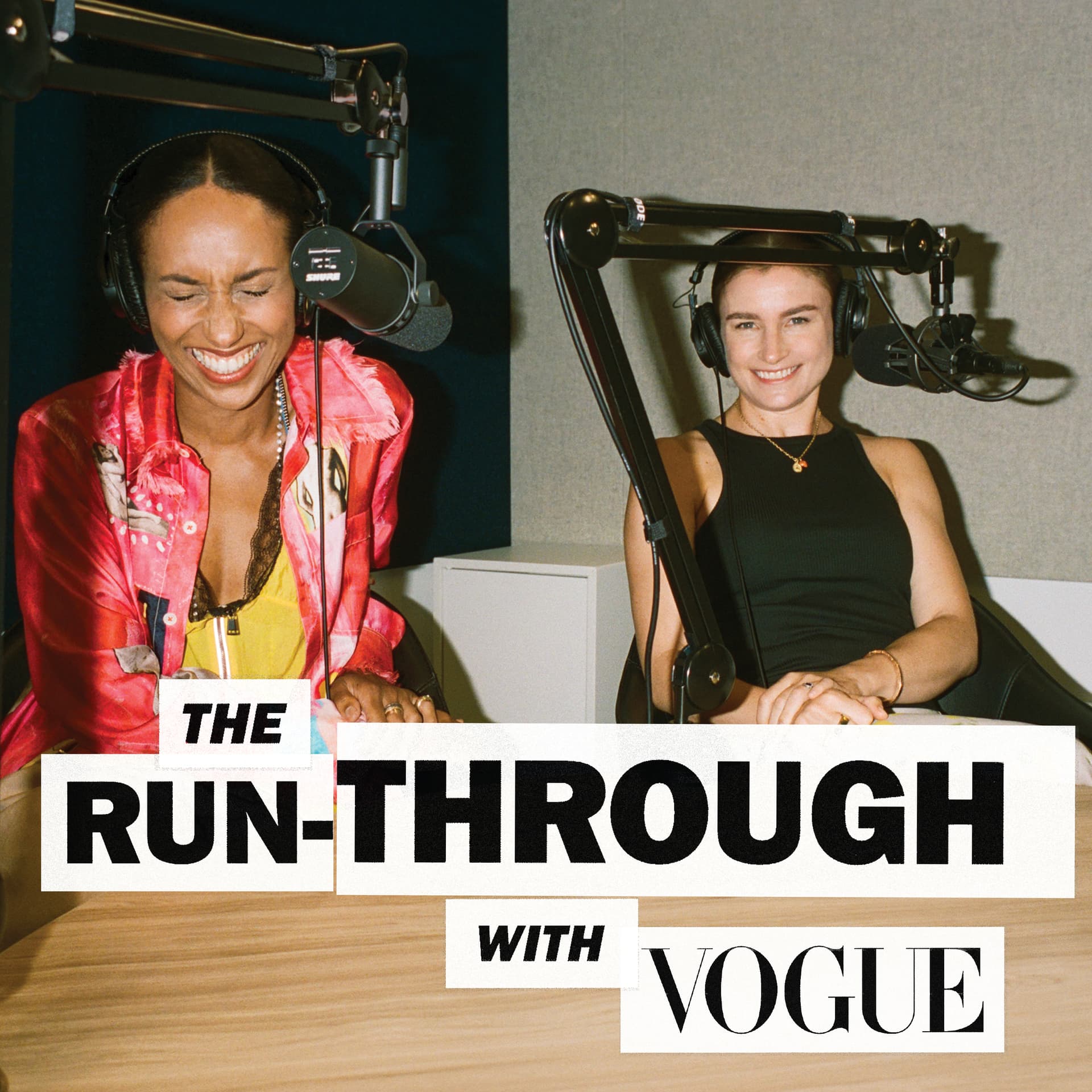
Episode Overview In this episode of *The Run-Through with Vogue*, hosts Chloe Malle and Chioma Nnadi are joined by Hannah Jackson, fashion writer, and Willow Lindley, Vogue’s Fashion Market and Collaborations Director. They dive into the concepts surrounding the democratization of fashion, discussing how consumer habits are evolving and how access to high design is expanding, particularly through collaborations with brands like Gap and H&M. The episode also addresses the significant news of John Galliano's departure from Maison Margiela.
Key Topics Discussed
- The Democratization of Fashion
- Hannah Jackson's Article: The discussion centers around Hannah's article titled *"How Fashion Is Coming Down to Earth,"* which explores how consumers are changing their shopping habits, making high design more accessible.
- Consumer Behavior: There's a noticeable shift in consumer attitudes towards luxury and affordability. Consumers are embracing mid-tier and affordable brands without stigma.
- High and Low Fashion: The conversation emphasizes that affordable pieces are becoming more thoughtfully designed, allowing consumers to curate wardrobes that blend both high-end and accessible fashion.
- John Galliano's Departure from Maison Margiela
- Industry Impact: Galliano’s exit is highlighted as a significant moment in fashion, given his influence and the notable work he has done at Margiela over the past decade.
- Speculation: There is speculation about who might take over at Margiela, with Glenn Martens being a favored candidate among the fashion community.
- Memorable Shows: The hosts reminisce about Galliano's standout collections, including the fall 2022 show, which was praised for its theatrical elements.
- Fashion Collaborations
- Designer Collaborations: The episode discusses how designers are increasingly partnering with mainstream brands (e.g., Zac Posen with Gap, Christopher John Rogers with J.Crew) to reach a broader audience.
- Access and Inclusion: These collaborations are seen as a way to democratize fashion, allowing consumers to buy into designs that were once exclusive.
- Cultural Impact: The panel reflects on how the resurgence of interest in mid-tier brands is linked to broader societal issues, including economic disparities and the desire for inclusivity in fashion.
- Personal Stories and Experiences
- Fashion Writer's Journey: Hannah shares her personal experiences, including her early days at Vogue and the significance of brands like Banana Republic and Uniqlo in her wardrobe.
- Community and Belonging: The hosts discuss how fashion serves as a means of belonging and community, emphasizing the shared experiences among consumers and designers.
Key Takeaways
- Shift in Fashion Mindset: The conversation reveals a generational shift in how fashion is perceived. It's no longer about the exclusivity of high-end brands but rather the accessibility of good design for everyone.
- Value of Collaboration: Collaborations between high-profile designers and accessible brands are crucial for expanding market reach and creating opportunities for consumers to engage with fashion.
- Consumer Savviness: Today's consumers are more knowledgeable and discerning, prompting the fashion industry to respond with products that meet these heightened expectations.
- Cultural Reflection: Fashion is showcased as a mirror reflecting societal changes and economic realities, with a growing emphasis on community and collective identity.
Conclusion This episode of *The Run-Through with Vogue* serves as an insightful exploration into the evolving landscape of fashion, highlighting the importance of accessibility, creativity, and community in an industry that continues to adapt to changing consumer needs. With the departure of John Galliano adding to the week’s buzz, the episode captures the dynamic nature of fashion today.
Written by AI. May contain mistakes. Listen to the episode to check what was said.
Transcript
Automatic transcript. May contain errors.0:06I'm Chloe Mal and you're listening to The Run Through and we have some familiar voices in the studio with us today. Welcome Willow Lindley, our fashion market and collaborations director and our fashion writer Hannah Jackson. And today we are digging into Hannah's terrific article on the democratization of fashion, Wednesday's digital cover story. And we were also joined by our lead fashion editor Jose Criales Unzueta, who you will hear later. But for now, let's talk a little bit about what is happening this week. because I just said to our intrepid head of social media, Sam Sussman, what was news for you this week?
0:44And she got extremely excited and said, what wasn't news? And she's not wrong. What a week. What a week. Big news, team. Big news. John Galliano has exited Margiela, Maisel Margiela, after a decade of incredible industry-shaking work at the brand. And after a particularly big year with a couture show that really rocked fashion in the best way possible and a show that I wish I had been at. And I am very happy for those that were because it was epic. It does really feel like he's living and breathing the leave when the party's good ethos. But who isn't moving around? I hope he's going to his own brand and I hope Glenn Martin's is going to Margiela.
1:29Ooh, that's fun. I don't want to, you know, out rumor the rumor mill, but that's, you know, that's what the fans here at Vogue are hoping for. We love that. We love Glenn Martins. Nicole wrote a fabulous piece that went live today when the news came out where Galeano walked Nicole through each of his incredible shows for Margiela starting with the 2015 debut show. And it was so much fun to revisit those shows through his eyes because each of them had such specific point of view as most of his collections always do. Do you guys have any favorite Galliano by Margiela shows? I mean, I think, you know, everyone loved the last Artisanal in Paris.
2:13But I also think the one coming out of the pandemic, fall 2022, was really beautiful. And it's very theatrical. There's a lot of tulle. There's a lot of dynamic shapes. It's that theatricality that we got with the 2024 artisanal show. But I think, you know, just in the context of coming out of isolation, I think it just hits a lot harder. And he did this incredible Pendleton collaboration. Those pieces were really standouts for me. And then going into the artisanal. But, you know, the unisex of it all, the collaboration of it all, the film, the drama, the theater. He's always just like one step ahead of everyone.
2:49And it's, you know, I can't wait to see what he does next because he's always leading. I like the collection. I think it was 2015 that was called like Woman in a Hurry or Dressing with Haste, which I felt was very sort of frazzled mom vibes. We also got news of a new creative director at Drees this week. It's very true. Julian Klausner, who was Drees' right hand for the Women's Wear collections. Kind of exciting that we're ending the year and going into a new year with some freshness, some newness. Hopefully we'll have something new from John. Hopefully we'll have – I think we're going to have some news next week.
3:27Fingers crossed. God willing. Or tomorrow. Oh. Although I don't know if Irene Kim can really handle the stress of more fashion news in one day. She was getting her eyelashes curled for a Vogue shopping shoot this morning when the Galeano news dropped and she leapt out of the chair, almost got her eye poked out by an eyelash curler and said, breaking news and ran upstairs. And that's what the newsroom looks like at Vogue. Everything you want it to be. Who needs the New York Times? Who needs a 24-hour newsroom like the New York Times when you have an eyelash curler? Speaking of Irene Kim, it is the end of an era for Taylor Swift.
4:08Irene is one of our key Swifties in the office. Irene, Kim, and Florence O 'Connor traveled to Miami for the Eras tour together when it came back to the States and wrote an excellent piece about one night at Eras. And it does feel sort of like a momentous cultural moment is coming to a close. Also, I can't believe that she made$2 billion. It's insane. What was it, two years total? Less than that, 18 months? Two years. Two years with breaks? Yeah. But yeah, a friend went with her daughters in Indianapolis, and she said it was astounding how it affected every single part of the city from the airport to every restaurant had a line outside.
4:48Every restaurant had special Taylor cocktails to brunch items. Every hotel had life-size cutouts of her. Like, it was just unanimous. It was what cities hope the Olympics will do and then don't always. I was just in Las Vegas for Formula One, and that's exactly what happens for Formula One. Taylor Swift is her own sporting event, is sort of what you're saying. She really is. Yeah. She doesn't even need Travis. And people go all over the place to see those shows, like cities they've never been to before. There was real Eras Tour tourism. Yes. Eras Tourism. Is there any other artist that could do that?
5:24No. Beyonce, I think. I don't think so. You don't even think so? I'm not sure. But I don't think she tries to reach that level of, like, ubiquity, I guess. I mean, she's not doing two-year-long chorus. Remember when she, like, changed the road and rail schedule in D.C.? That was epic. That was a big moment. Yeah. Speaking of Beyonce, did anyone see Blue Ivy Carter? Oh, Blue Ivy looking fabulous in her gold explosion Christian Siriano next to her mother. So grown up. Also looking like an Oscar. Had to Google her age, number one. Yeah, how old is she? She's like 12, I think. I think she's 12. This girl has sprouted up overnight.
5:59She was at the Mufasa premiere. Yes. And I loved seeing pictures of her this week at the Mufasa premiere, contrasted with five years ago at the Lion King premiere, where she was just a wee pup. I mean, she's still not ancient. From Simba to Mufasa. From Simba to Mufasa. So, yes, lots of family moments on the red carpet this year. Angelina Jolie and one of the many Jolie Pitts. I don't remember which one. A very chic group. Very chic group. Apple Martin and Gwyneth at the Ball des Debutantes. That was a big family moment for the Martins. Apple Martin made her debut at this quite old-fashioned but very glam debutante ball in Paris.
6:46That's all these young ladies wear couture dresses from different houses. and Apple Martin wore a custom couture Alessandro Michele Valentino, sort of ice blue dress. It was beautiful. She looked amazing. Beautiful. Alessandro Michele, very kind to the kids. To the Nepos. To the Nepos. Yeah. I mean, also did a great job with Scarlett White. White at Karen's wedding. Justice for Nepos. Raven Smith did just publish a piece about how Luigi Mangione, the suspected shooter in the UnitedHealthcare CEO case, has brought out the best of the worst of the internet. And I think it's definitely – I don't really know what the best of the worst means, but it's definitely brought out the worst of the internet.
7:37It's giving new meaning to communities. That's for sure. Yeah. People are fascinated by this young man. I think for a lot of reasons. We are a culture that is obsessed with consuming true crime, and we now have a real-life unfolding case. But it's all anyone can talk about in the office and out. Yeah, I don't know. I'm struggling with the Luigi stuff. It's just so sad. Yeah. You know, it seems like he had a lot going on. But, you know, I mean, I think it does speak to a lot of frustrations that people are feeling in this country about health care and inequality. The Gen Z are very interested in Luigi.
8:17Yeah, I think, like, there is a maybe well-intentioned interest but severely, like, misguided memery. I think Gen Z, some Gen Z finding him to be a thirst trap and people being righteously indignant about the state of the health care industry maybe aren't exact. Yeah, they're not quite overlapping. Yeah. But it is definitely dominating the conversation at the moment. I mean, I do feel like there's also always an interest in like this kid had it all. What went wrong? It wasn't like he – Yeah, it's like the Menendez brothers. Yeah, he came from a well-to-do Baltimore family, went to all the best schools, was valedictorian in high school, went to UPenn.
8:56My husband and I always joke that my mother would forgive a serial killer if they went to an Ivy League school or spoke multiple languages. And this really confirmed that. Also, Golden Globes noms came out this week. Any unexpected, I guess, Emilia Perez we all expect to be nominated, but it really swept. I think it was 13 nominations. Yeah, it led the nominations. Selena Gomez got two, right? One for Emilia Perez, one for Only Murders. My beloved. Chloe, the only person who watches Only Murders in the Building. Me and Lila Ramsey. Me and Lila Ramsey, only people in the building who watch Only Murders in the Building.
9:30Hannah did a piece that I love when we do this. I'm like, what did I do? On all the runway dresses we hope people wear during awards season. Yes, and one of them already came true. Which one? Monica Barbaro wore this beautiful black Armani Privé with cutouts and I think rhinestone details to the Complete Unknown premiere yesterday. Complete Unknown premiere. A lot of looks. A lot of looks. Elle Fanning with pigtails, like bejeweled pigtails. Yeah. Her hair looked great. Timmy with a tiny mustache. He was carrying a Beyblade, I think, which was like a toy that was popular. It was like a toy that was popular for like Gen Z growing up, but I'm very curious.
10:16Is it a knife? No, it's like a little like spinning top kind of thing. Oh, like a fidget spinner? Like the precursor to fidget spinners probably. I had no idea that was a thing. I'm just like, what are we doing here? Christmas is coming though. So let's drop the gift guide. Yeah. Timothy, please. Tell us about the toys. What else? Oh, we're feeling very festive at Vogue. We're doing a lot of holiday content. We photographed our favorite and most stylish tree sellers in New York. That piece went up. Very excited about that. And I loved your bag charms on trees. Ornament story. I do, too. So cute.
10:50CR did such a good job. CR Zatorski, our intrepid fashion editor, found amazing bag charms, and we dressed a tree in bag charms instead of bags. I'm obsessed. And now it's in Chloe's office. And now the tree's in my office. Yes. Chloe's office is very festive. Anna walked by on Friday and goes, it's very festive in here. Also, we should mention that in addition to Hannah's fabulous Democracy of Fashion story, Irina Alexander wrote a great profile of Zach Posen that I thought was really personal and juicy, but lovely and got into a lot of interesting points. And the Vogue shopping team did an amazing, affordable edit takeover of their site where everything in their posts is under$300 this week.
11:41And it – honestly, the market is so good, I wanted to buy a lot of it. And so I was very excited about that. That's the problem with some of these under$300 edits. You end up – they add up. They add up. Spending – They add up. Under$300 adds up to more than$300. Unfortunately, it's true. That's just math. Girl math.
12:03We wanted to remind everyone that we are doing an episode in the new year where we will answer any questions you may have for me and Choma. Choma, who sadly was not able to join us today. And feel free to send a question to our email or many questions. Doesn't have to be singular. TheRuntthrough at Vogue.com. or you can leave a comment on our episodes on Spotify or as a review on Apple Podcasts. We are so excited to hear from you and thank you to everyone who has already submitted. We will be back in a minute with a great conversation about Hannah's first cover story and the way we are redefining how we shop for fashion.
12:53You come to the New Yorker Radio Hour for conversations that go deeper with people you really want to hear from, whether it's Bruce Springsteen or Questlove or Olivia Rodrigo, Liz Cheney, or the godfather of artificial intelligence, Jeffrey Hinton, or some of my extraordinarily well-informed colleagues at the New Yorker. So join us every week on the New Yorker Radio Hour, wherever you listen to podcasts.
13:27And we're back. And now we are going to talk about Hannah's fabulous digital cover story on the democratization of fashion. As we approach the end of the year, we have been doing a lot of look backs. The best of fashion, the best of culture. We have also noticed a big shift in the way that consumers are seeking out fashion. And it felt like it really came to the fore in 2024. So it felt like there was this shift in terms of extremely high-end luxury fashion and then very mall fashion or high street fashion, as the British like to say. And I feel like there used to be more of a stigma around mall fashion and that it was like you didn't want to be walking the halls of Vogue wearing head-to-toe Gap.
14:18And now you do. Well, and more than that, that you didn't want to be wearing knockoffs of designer goods. And I think for me, that's the big shift that we're seeing. It's these pieces that are more affordable are more designed and considered. And that's a really important point because it's not instead of, but it's filling out a wardrobe that has highs and lows in terms of price point. And it's a proper alternative. I think to your point, it's about, you know, finding that excitement into the things that are perhaps not designer, but they still have the same amount of involvement or feel devoid in your closet in the similar or in the same way.
14:55So we started thinking about this a few months ago and did an amazing shoot that Camilla Nickerson styled. And Inez and Benud photographed it. And Hannah Jackson, right now to my right, our intrepid fashion writer and Gen Z mall brands. Extraordinary. Habitue. Wrote a fabulous piece about all of this called The Democratization of Fashion. It just came out yesterday. I really enjoyed reading Hannah's piece, and I loved that Hannah talked about getting her job at Vogue a year and a half ago and the Banana Republic dress that she bought for her first day. And I want to know what everyone wore to their first day at Vogue.
15:41Ooh. Love. That's a great question. I remember my interview with Anna outfit more than I remember my first day. It was a Suno dress. And Suno was a great brand. Mid-tier brand. Mid-tier brand in New York. And it was one of those things that I, you know, sort of pinched my pennies to buy. It was a great dress. It was blue. It had floral embroidery. I do. It doesn't fit, so it's under the bed. But it's okay. But yeah, it was a great dress. And I remember pulling it out for that special occasion and thinking like this dress is good juju. And it was at that point a very elevated price point for me, but something that was attainable, which I think a lot of super luxury fashion has lost any sense of attainability.
16:22I love that. You're so right. What I wore, I mean, it's almost been three years. I think when I was trying to figure out what to wear, I remember, and I was like, I just, I didn't know what, like, who I wanted to be. I changed, like, I look different every day. I try to at least. And I've always been obsessed with the idea of Tom Brown's uniforms. And I wanted to sort of, like, go into that vibe. I did not own any Tom Brown. I could certainly not afford any Tom Brown when I started. I still can't. But, you know, to that point, something that I was trying to figure out was like, oh, how can I, you know, do this, do the look for less?
16:56So I wore a black pleated skirt that I bought in Chinatown from like a store that like sells like school uniforms. So it's a black pleated skirt, a pair of Doc Martens Mary Janes and a Banana Republic cardigan. And the bottom down I'm wearing right now, actually. Hannah, you are in your Banana Republic dress. Can you describe it? Yes. I wore that for my interview, actually. It was a very pastoral white dress with kind of these ruffly sleeves and floral embroidery on the front. You know, I still have a lot of fondness for it. And I wore it on my first ever day of New York Fashion Week, which was also my second day ever in office.
17:41Not really through in the deep end. We do deep end well at Vogue. We do defend. And you know what? Thank God. Sharks are born swimming. I started the Tuesday before the Met. Oh, my God. No one told me all the things you're supposed to know about interviewing with Anna. So I wore a black DVF polo dress. It was extremely nerdy. It was actually my funeral dress. I would wear it to any family friend's funerals. And I was like, this seems perfect for Anna Wintour. Anna Wintour is famously not a huge fan of black. She likes a blue Suno dress more than an all-black dress that one wears for funerals. I did not know that 15 years ago.
18:18I did know. I got a call from HR. That's amazing. I'm screaming. Do you guys want to hear about how the democratization of fashion became a story in February? I do. It was kind of exciting. So the democratization of fashion idea that we came up with with the February issue was sort of in the lead up to the election. And it really came to be because I had gone on a trip to Sweden this summer to attend the 10-year anniversary of Totem. And Totem is a brand that is, again, in sort of that attainable luxury price point. And there's a lot of those Scandi brands, Gani, Totem, many of them that sort of occupy this great price point for many people like us, many working people in this world.
19:05and there was a conversation around that totem trip that happened during fashion week while I was also wearing this Koss sweater this black cashmere Koss sweater that Carla Martinez became obsessed with who's the head of Vogue Mexico and then Ricky DeSole who's the head of fashion at Nordstrom became obsessed with and at one point I was like leading tours to the Koss store in between shows to buy this cashmere sweater and it's a$350 again like not inexpensive but 100 % cashmere. It's got a great ribbed neck. I ended up getting it in a second color. And then it ended up in Lauren Sherman's either podcast or newsletter.
19:46And this sweater just went like gangbusters. That sort of was how this idea of the democratization of fashion was born, out of real shopping habits of real Vogue editors. And I think it's kind of nice to see a story come to life from real life. I love that. The other day, you know, for Vogue Business, actually, I also wrote a story for this week kind of related to this. I called it 2024 was a year of the dupe. And it's funny because it actually is, you know, spoiler alert. It wasn't about dupes, I think, you know, to something Willow was saying earlier is it's less about, you know, a lot of these brands, Banner Republic, Cost, Gap, etc.
20:22are replacing luxury of our closets, but affording us the possibility, quite literally affording us the possibility to dress up in the way we'd like for something we can afford for something that is in our hands. And Uniqlo was one of the real kickoff moments for, again, this idea because during Fashion Week, Claire Waite Keller, who is now the creative director of all of Uniqlo, not just doing capsule collections, came and brought the collection to New York for the first time since that appointment was made public. And it was pretty incredible to talk to her about her process working at Uniqlo.
20:56And she's got a design studio in London and she goes to Japan constantly. I think it's either once a month or once every two months. But how much she cares about all the products that she's working on and how she can do these capsules that are a little bit more design forward. But even down to a puffer jacket or a flannel shirt that she's working on. that, you know, she's very—she used to just be involved in those capsules, and Uniqlo used to be so famous for doing those designer collaborations, but now that they have someone that's sort of seeing more than just one capsule at a time. You interviewed her, right, Hannah?
21:29I did. I did talk to Claire Wake Keller, who was so— What was her great quote about having more influence? More influence. She feels like she has more influence at Uniqlo than she did, you know, at the helm of Chloe or Givenchy. She said, there was a dramatic shift for me in terms of where fashion was going. If anything, my impact as a designer is far greater here than anywhere else. Which I love because she obviously was personally designed Meghan Markle's wedding dress at Givenchy. So she's had influence before. Right. Like everyone knows her work, whether or not you know she's the person behind it.
22:04To create clothing that people can wear, not just see, is a huge step for a designer. How did you approach writing about this? Because I like that it's quite personal about your own discovery of mall brands and also fashion and how fashion can be accessible or cannot be accessible. But you also did a lot of reporting for this. So how did you decide who to speak to? Yeah, so this story is really about, like Jose mentioned, this middle market that we're in, this kind of overlooked gap in fashion. So for me, I think it was really interesting as a reporter to kind of investigate why people are coming back to that middle market.
22:45Like you have Claire Waite Keller, who has left these like French couturiers to go to Uniqlo. And then you have Zach Posen, who was just appointed at the Gap earlier this year as well. Meanwhile, you also have people like Christopher John Rogers or Glenn Martins is going to go do a collaboration with, you know, H &M. Christopher John Rogers did a collaboration with J.Crew earlier this year. And then you have the brands like Totem and the Frankie Shop and Coach that are kind of this more attainable luxury price point. So, you know, it was really interesting to kind of dive into those three facets and understand why designers are interested in going there right now.
23:29And then also, like, you know, for me to bring my own perspective as a young woman. How old are you, Hannah? I'm 26. I've actually never said my age in a story before, so this is a big moment for me. Big reveal. Solidified for all time. I'm 26.
23:49So to kind of talk about like my own experience, you know, moving across the country for this job, not really having money to, you know, dress how I thought a Vogue writer would dress and to kind of create my own wardrobe. And also just, you know, my understanding of, you know, financial security growing up kind of during the recession. Yeah, I thought that was really interesting and quite moving that you were saying that you were nine at the time of the Great Recession, which made me feel very old. But – and that your mom lost her job due to the recession and that your most beloved item or dreamed of item was Minnetonka moccasin boots.
24:31Oh, yeah. And that your mom really made it work to buy those for you. Yeah. And yeah, I think it's one of those things where the gravity of it doesn't hit you until you're so much older. Like now it has a lot more significance to me. Like I didn't really know that she was struggling until I was much older. Right now in movies, in the opera, even in pop music, divinely inspired women are everywhere. This week on Critics at Large, we make our case. Saints are having a moment. Look, I can spout off any number of cliches, but they're all true. The world is moving faster and faster. Materialism is now reaching every single corner of the globe.
25:11It's very hard to say no and to say stop and to say I will do without. And I think that explains some of the modern cultural appeal. I'm Vincent Cunningham. Join me and my co-hosts on Critics at Large from The New Yorker. Find us every Thursday, wherever you get your podcasts.
25:33What was your biggest takeaway from your conversation with different people that you spoke to? And did they change your opinion on this at all? I think, if anything, it really just solidified that there is this market that's really not being, you know, fully tapped into and that there is so much room to include people in fashion. and to, you know, I think there's also ways to do it where you can have the quality and you can have the reasonable price point. There are so many interesting quotes that really didn't make it into the final piece that really stick with me. Like, I think Willie Chavaria was like, you know, it honestly looks like kind of, it's kind of vulgar to be dressed like you're very wealthy.
Read the full transcript
26:18I think there's also a lot of, like, pride these days to take in finding things for a good deal. So like you, you know, to be able to say like, I got this incredible white T-shirt and it's from Uniqlo and it's$15. Or I got, you know, these perfect jeans and they're from the Gap. Like it's, you know. It's treasure hunting. Yeah. And like I think this is sort of like a collective mood, right? But our generation loves a good bargain. And we love to sort of say that we found one, right? Because it shows your savviness in a way. But it also shows that you're sort of like, you know, you're being smart.
26:50But I think, you know, in the fashion aspect of it, something that I do want to say is, I think what's interesting is that these brands have never not been relevant for, you know, anyone really. Like we've all always won Binary Public. We've always won Gap, right? What we're seeing right now is a moment of fashion genuinely and quite endearingly embracing the power of these brands. to your point about, you know, Claire or Zach Pozen, Claire Whitekeller or Zach Pozen, seeing the power of being on top of one of these brands and power in the sense of influence, in the sense of like the amount of people you can reach is really inspiring.
27:23But I think to the point about, you know, people like ourselves, something that is really interesting is that to me, you know, even from before I was a sort of kind of observer of fashion, designer specifically, the best designers are the ones that inspire you to dress a certain way without necessarily making you feel like you have to wear their clothes. Which is an interesting balance, right? I think of someone like Mucha Prada. Prada inspires, and currently she was our March cover this year, right? She's inspired generations of people to dress a certain way. But that doesn't mean you have to buy Prada.
27:53You can dress in the Prada-isms from the gap, from Uniclo, et cetera. And I think that's what's exciting about this moment is that, you know, that isn't a replacement or exchange. It's just options. It's not really a democratization to the consumer. It's a democratization of the fashion industry mindset. Exactly. It's a mindset. I think that's the point. It's a mindset, and I think it is really important. Yes, these have existed, but there's really an embracing of the lack of – it's not either or. It's both. Yeah. And having both exist in this industry is important. And the appreciation, right?
28:26Yeah. I think, again, I have this J.C.U. clinic that I – a polo cardigan that I just got the other day. And it's 100 % cashmere. It's great. And I wear it almost every day. one of my best friends who's also quoting your story Christopher John Rogers has the exact same one and then the other day I like I walked into a dinner and I was like are you wearing and he was like J.Crew and I'm like me too you know again like to the point that we were making about our outfits earlier like many many years ago a lot of fashion people would never admit that they were wearing something that wasn't designer you know and it was almost like or even the season or whatever exactly the season right and that was a flawed mindset yes right and it's great that we've sort of like moved past it and we're having this conversation and being so excited about, you know, I remember when Zach got appointed at Gap, I was like, this is a fantastic idea.
29:13Yeah. He's an executive at Gap Inc., which owns, you know, Athleta Banana Republic, Old Navy, and Gap. And Zach creatively is on top of Old Navy and the Gap. But, you know, when he first got appointed, it was interesting. A lot of my friends were like, why? Like, he's so talented. He makes such beautiful couture. Why would he go there? And I was like, no, this is brilliant. I'm like. There are a lot of questions. Has Zach ever worn jeans? Exactly. For those who don't recall, Zach had a very successful, much beloved line himself that was known for sculptural, glamorous corsetry. Corseted. Evening.
29:51Meticulously created, almost couture level. Yeah, like a true American, a couturier. Yes, like a Charles James in their image evening gown. Yes. So it was a jump. Exactly. It was a quote-unquote departure, right? Yes, thank you. But the reason why I found it so exciting is because, you know, for those listening also, like, you may not necessarily clock the reference of, like, Charles James, a true American couture, but you will remember that Zach was a judge in Project Runway. And, like, you know, he became a household name on TV on Project Runway the same way Michael Kors became a household name and his outlet line started, you know, doing incredible numbers.
30:31Zach was on every household on TV. So they trust this person, right? But also as a challenge, it's so unique. It's so interesting because Zach is a person who knows so much about clothes. And the fact that you can sort of make, like, insert that know-how into something you wear every single day is to me really exciting. And it's the kind of consideration that all of our clothes should always have, right? Like, that kind of designer-level study, Paris Fashion Week-level consideration should not be exclusive to things that are$3 ,000. Yeah. And that's why I was so excited. And I think, you know, almost a year later, it's evident that it was a great idea.
31:09And I think there's two things at play. One is the design element of the shapes, but then also of the fabric, right? Like when people ask me what I look for when I go into stores, for example, like if I'm going to unique lower costs, like I try to find like 100 % cotton or 100 % cashmere. I really look at those fabric tags to see how these products are going to hold up and whether it's a basic item or something new from Gap, which is a little bit more designed in terms of a shirt dress or something like that. But you're looking for shape, but you're also looking for fabric. And I think that education to the consumer is really important because those pieces will carry you a lot longer if you're looking what's in your clothes.
31:49And I think to your point, you know, going back to Hannah's story and Hannah's experience as well, the consumer now is much more savvy and educated, right? Like we talk so much about fashion online that so many consumers know so much more. So I think there's just, you know, we're challenging. There's a challenge. Like the consumer is challenging the industry and the industry is responding with this sort of excitement about basically fashion wherever it's coming from as long as, you know, you know where it's coming from. Which I think is really cool. And you know, Hannah, I loved the quote that Christopher gave you for your story about, you know, the first time he sort of was faced.
32:25What was it? Was faced with the Burmese? Like a more avant-garde brand. It was Rodarte. Right, exactly. And that was fantastic. And I remember, you know, Chris did a Target collaboration a couple years ago, and it went viral. And this was hilarious. Those dresses were all over TikTok. And some people were loving it, and some people were making fun of them. Some people were like, oh, my God, these are clown clothes. And Chris and I remember being like, oh, my God, yes, they are. Like, that's the point, you know, but it was funny because, you know, again, that's what Target has always done in H &M, like putting, you know, designers and quote unquote high fashion in front of everyone and, you know, giving you something to play with.
33:00Right. Like you don't have to buy it if you think they're clown clothes. But you should have the option to access it. I think it's just, you know, and it's such a boon for these younger designers and younger brands. Like when I was talking to Christopher, he was saying like, you know, they don't have to worry about like these margins as much as I do. Like for him to go deeper into the volume is like, you know, it could be detrimental. But for Target, it's like, sure, whatever. You know, so to be able to produce things at this scale is like such a huge opportunity for these designers to be seen.
33:33And such a great way to bring new customers and people into your fan base. I mean, I think, you know, it was in 2004 when Karl Lagerfeld first collaborated with H &M. And he was the first designer to collaborate with H &M. And, I mean, everyone was gagged, right? Because, you know, on Vogue Romare. Lines on lines on lines of people waiting for those clothes. Exactly. And everyone in fashion was like, we can do that? The idea of like one, a designer like Carl, you know, from obviously from Chanel could just say, yeah, I'm working with H &M. But also that like fashion people could be excited about going to shop at H &M.
34:11Like groundbreaking. Right. And obviously the H &M collaboration has become a staple within sort of fashion because now it allows people to have access to these designers. Whether it's something like a Margiela and a true deep cut or an immersion designer like Simone Rocha a few years ago when she first did it. Simone Rocha actually, the first time she did menswear was for H &M. And now she does menswear for her line because it's one of the reasons how she saw that it impacted people. And some of the first things to sell out, I remember, were the menswear. And I remember because I couldn't get it.
34:42And I remember. Exactly. I was there, honey. But I like that it gives the consumer access to these designers, but it gives the designers access to a whole new consumer. To a whole entire consumer and to also understand what's working at a larger scale, right? Less risk, too. If she had made menswear on her own and it didn't pan out like that. Exactly. Then what? Then what? Exactly. I think you can just see it really playing out here in the office, too, like how excited people get for these collaborations. I mean, the week after the Christopher John Rogers guy, J-Frew, everyone was wearing that.
35:14All of you motherfuckers, come in with your car coats. I was so jealous. And you know what? I don't know if you heard Irene and Iggy screaming about Bodie, Nike. Yeah. I couldn't get the Bodie Nikes. Well, exactly, because I think they crashed the site. Because Iggy bought them all. Yeah. There was audible screaming. You know, to your point, Chloe, the day the CJR, the Christopher Jones and J.Crew collaboration dropped, half of us were wearing it. And it was so funny because we just clearly couldn't wait to be in it. And like every time I wear it, I see at least one other person in it. And I think that's fantastic.
35:49I want it. It's like it's cool. And that's a mindset shift too. Like the wanting to match with people you know. I mean, again, it's just it's completely the democratization of the mindset of fashion. Exactly. Because that's also the thing. Before you were like, oh, we're wearing the same thing. Absolutely not. Yeah. So we really are seeing like, you know, in broad strokes, bigger picture, a full shift in mindset that is generational. on has a lot to do with younger millennials and older Gen Z. Yeah. I mean, I think like you and I, especially at these like early stages of our career, we can't necessarily afford these like, yeah, like luxury brands, high end luxury.
36:26Yeah, no, exactly. So it's really nice to be able to kind of dip our toe in with these collaborations and it's much more accessible. It was really interesting, you know, for more context, Chris and I went to college together. We've been friends for a long time. I saw him launch the brand and he was doing so well. And And I was like, I wish I could pay for this, but I'm not there yet. One day I'll be like your biggest customer. But right now it's not me. But he had just on Target. And my mom loves Christopher. And they haven't even met. But my mom is like his biggest fan. That's so sweet. And it's so funny because, you know, she's very colorful.
36:58She loves these kind of clothes. And I've always wanted her to wear it. And when he did Target, I was like, oh, my God, this is amazing. So I got myself something. And then I got my mom two dresses. And, like, she wears them. Still? Still. and every time she wears them she sends me a photo and she's like show them to Christopher and I'm like yes diva you know the head diva orders and I do oh there you go one thing about me I'm loyal honey there's also some great collabs with like very authentic brands that I love Tibby just did a L.O. Bean tote and if there's one thing a Vogue editor loves it's an L.O.
37:30Bean tote it's kind of an unwritten rule and Kalina worked with Sperry this year which was great Kalina Strada and Fendi with red-wing boots. And red wings are boots that are really great and sort of underutilized, I feel like, for a lot of... Oh, I saw someone walking around the office with this Tibby thing. It has a belt around it. Yes, and the belt can come off or it can be on the bag. It's quite chic. It looks like a Maddie Fass. Yep. And the red-wing Fendis are cute. Who else did one that was great? I'm trying to think. Oh, well, Margiela did one a couple years ago with Pendleton. Willie Chavarri and Dickies.
38:07Oh, and Willie and Adidas, which was a very exciting part of his spring show. Well, speaking of which, Willie Chavaria gave some impeccable quotes for your story, Hannah. Yeah, Willie Chavaria, I was like the first person I thought of when I started researching and reporting this story. So I think he just really always has great political observations. and he really spoke to, like, the disenfranchisement that people are feeling right now that I think, like, you know, obviously the economy was, like, the hot-button issue of this past election. I think fashion is, like, a microcosm of that. So, you know, for him to be able to kind of, like, express that through clothing was really interesting.
38:48And he was sort of—I think also, like, yes, he did discuss how, you know, it can be vulgar to look wealthy, But he also did speak to like this sort of big tent that fashion can be and how he wants people to feel included. He wants people to feel welcome. He doesn't want people to be turned away because they can't afford his clothing. And, you know, he kind of pointed to, you know, right now like I think a lot of people don't want to engage in politics. They kind of want to turn off or like maybe they're not getting the accurate news. But a lot of people are turning to culture and fashion and art and like he wants to be something that people can rally around.
39:25And I do think, like, being able to actually buy into that is so important. Community. Community. Community. I think that's why so many of us get into fashion is to find community. Of course. It's a creative community. And what you wear helps express everything about yourself, whether it's a current mood or— That means we're like-minded. That means we kind of are into the same things. That means we're excited about the same things. It's a club membership. It's a club membership. And, you know, it's great that the club now is in$3 ,000. Three? That's a steal. I mean, if you're buying a Bottega bag, you're not spending three.
40:00And that's another big part of this is that luxury is increasing price points, not meeting the consumer necessarily where they are. And this is kind of funny. But when we were doing Forces of Fashion, there was someone in the front row of one of my talks who had one of the largest Hermes bags I'd ever seen. and was talking about how they'd gone into a designer's store recently and they couldn't afford anything in the store. And I was like, it was such a perplexing moment where I was like, here is this person dressed in head-to-toe designer with this bag that is probably the price of a house. And they had sticker shock.
40:37And when that's happening, people are naturally going to be looking for alternatives. Christopher John Rogers said something so interesting to me that I don't think made it into the final story, But it's probably one of the most resonant conversations or pieces of this conversation that I've had working on this story. And he talked about how at a certain point he had to reconcile with the fact that he is not his customer. His friends are not his customer because they can't afford it. And it's like, who is it all for at a certain point? And what is it for, right? What is it for? What is it serving?
41:09And all these designers are like, you know, it's kind of depressing to not be able to reach that many people or to like only make, you know, 10 units of this because that's how many people will buy it when it's like you could make, you know, thousands of units for people to, you know, go on the street and see people wearing your clothes. It's exciting. And the dream is like, why not do both? Yeah. You know, this is really interesting. There's a documentary that the BBC did many years ago about, you know, fashion industry. It's called The Look. And it's actually free on YouTube. But it's really funny because, you know, this narrator sort of talks about the fashion edition and how, you know, the$30 ,000 couture gown sells the$60 lipstick, right?
41:49And now we're having a similar conversation, right? Which is like, you know, if you are Zach Poston, well known for dressing everyone from Rihanna to Anne Hathaway to Katie Holmes, and now you're a Gap, that's the selling point. You know, it's the fact that the person who dressed Rihanna can also dress you. and it's the fact that Christopher is dressing some of the most exciting talents. Like he's dressed everyone from Michelle Obama to like Beyonce, right? And now you can also go buy his clothes at J.Crew. Like that is really cool. And, you know, you get to go back to aspiration. It is about growth.
42:23It is about becoming, right? And not the point with like the H &M collaborations, the J.Crews, et cetera, is exactly what you're saying, Clay. That's like, oh, wait, like I actually like this world. I would like to live further in it. Or like, oh, I can graduate to like, maybe now I can afford the mainline or whatever. And that is really cool. It's like a really great thing that's happening and it's exciting.
42:51Thanks, ladies. That's it for the show. See you next week. Bye. Thank you.
43:03The Run-Through is produced by Chelsea Daniel, Alex DePalma, and Joanna Solitaroff. It's engineered by Jake Loomis, Luke Mosley, and James Yost. It is mixed by Mike Kutchman. Stephanie Karaoke is our executive producer, and Chris Bannon is Condé Nast's head of Global Audio.
43:29Hi, I'm Rebecca Ford, senior awards correspondent at Vanity Fair and co-host of Little Gold Men. Oscar season is upon us. Little Gold Men takes you behind the scenes of the race for the biggest prize in Hollywood. There's a hundred wrestlers in the room, but only one can be Oscar nominated. Whether you're a movie lover or an industry buff, Little Gold Men from Vanity Fair has everything you need to know about this year's Oscar race. Follow and listen to Little Gold Men wherever you get your podcasts.
44:06From PRX.
From the publisher
Fashion writer Hannah Jackson joins The Run-Through to talk through her article “How Fashion Is Coming Down To Earth,” along with Willow Lindley, Vogue’s Fashion Market and Collaborations Director, and Jose Criales Unzueta, Vogue’s Lead Fashion Editor. They discuss the ways consumers are changing the ways they shop for fashion and the expansion of access to designers and brands From Zac Posen at Gap to designer collaborations with brands like Adidas and H&M, shoppers with a tight budget can still have access to high design.
Plus, a particularly lively headlines session covering John Galliano’s departure from Maison Margiela and even more design house speculations.
Learn about your ad choices: dovetail.prx.org/ad-choices