Ask ChatGPT

 THE SLOW DOWN
22 Jun 2025 · 49m · 22 chapters
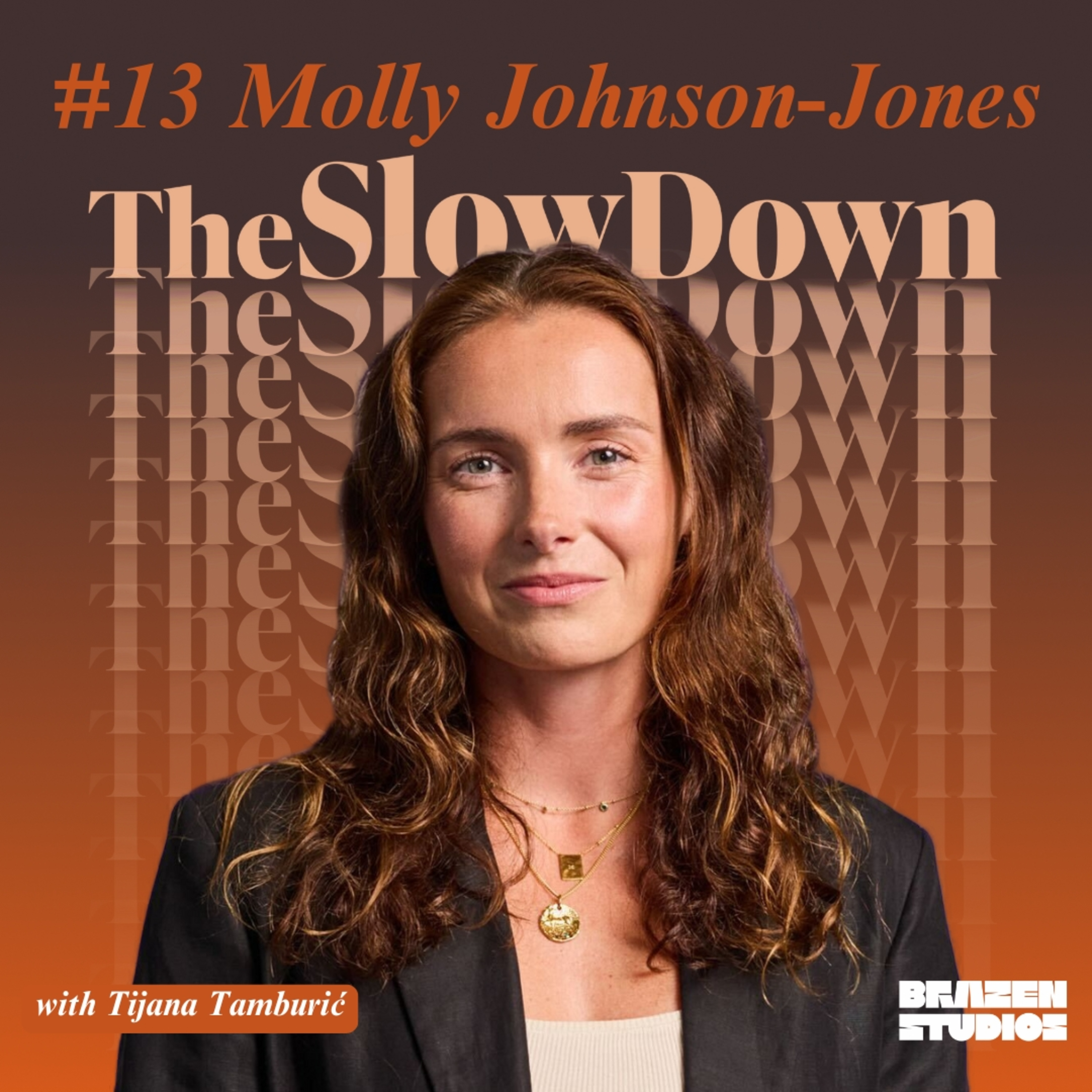
Molly Johnson-Jones explains how she was fired after requesting flexible work from home due to severe autoimmune symptoms, and how that experience led her to co-found Flexa, a jobs platform that makes companies’ working environments and cultures transparent using large-scale data.
Molly is CEO/co-founder of Flexa (launched 2019). She has an autoimmune condition linked to PCOS and a connective tissue disorder; during flares she couldn’t walk and sometimes couldn’t open her eyes. She previously worked in a male-dominated corporate team of ~70 men.
Traditional job hunting hides flexibility details until late stages; companies often measure “commitment” by hours/office presence rather than output/impact; invisible disabilities and caregiving needs are frequently discounted; COVID accelerated remote/hybrid variety, forcing clearer differentiation.
She was paid to leave instead of being allowed one WFH day; she later built Flexa with her husband’s idea and a technical co-founder, launching weeks before the pandemic. Flexa examples include dog-friendly offices, dog daycare affordability, and later-start schedules improving health/productivity.
Written by AI. May contain mistakes.
Molly discusses her challenging experience working in a male-dominated environment and her health issues.
“I was one woman in a team of about 70 men.”
Molly explains how her experiences led to the founding of Flexa, aiming for workplace transparency.
Molly shares insights about her upbringing and early influences on her perception of success.
“I always like to start very much from the start.”
Molly reflects on her academic ambitions, particularly her desire to attend prestigious universities.
“Yeah, I think the UK education system is a curious one.”
Molly recounts her struggles with an autoimmune condition during her university years.
“And even though I didn't get in the first time, I still thought I would.”
Molly discusses her experience at Oxford and the stress it added to her health challenges.
“So I kind of carried on through, you know, working in bed and eventually got through.”
Molly explains her entry into the corporate world and the re-emergence of her health issues.
“Stress is one known contributor to autoimmune diseases flaring up.”
Molly describes the fallout from her request to work from home and her subsequent firing.
“It's linked to PCOS and linked to some form of connective tissue disorder.”
Molly reflects on the competitive nature of her corporate environment and its impact on women.
“But I think I saw it as an almost like a badge of honour until it was gone.”
Explore the complex dynamics of gender, culture, and success in the workplace.
“And then I realised, actually, I'm not by far not the only person that this world isn't made for.”
Learn about the emotional and practical aftermath of being fired from a job.
Discover how personal experiences led to the creation of a flexible work platform.
Understand the dynamics of working on a startup with a romantic partner.
“it and then launched it literally three weeks before the pandemic hit.”
Examine how the pandemic reshaped work culture and company structures.
Learn strategies for companies to create inclusive and diverse work environments.
“what is the kind what did COVID do for Flexer and what is the status now?”
Hear stories of job seekers finding flexibility and meaningful work.
“Um, I'm definitely not the like 5am club where it's like, wake up an hour before you need to, to have this relaxing time.”
Discuss personal definitions of success and the importance of freedom.
“You know, this this podcast is about slowing down, which we haven't really touched on that much in your in your journey, because obviously, it's really been about a mission.”
Examine the tension between ambition and the desire for a balanced life.
“That's my biggest definition of success.”
Delve into how personal motivations shape career choices and happiness.
“I don't think anyone's life plans turn out as you expect them to, right?”
Explore the balance between work and personal fulfillment in one's life.
Discuss the natural ebbs and flows of life and the importance of adaptability.
“I see my life almost as like a series of circles.”
Reconsider traditional notions of career success and the value of breaks.

Get the gist, explore an idea or ask about something said.
 Claude
On THE SLOW DOWN, what are the key points of this episode?
Searching your listeningAutomatic transcript. May contain errors.
0:00Molly Johnson-Jones: I was one woman in a team of about 70 men. I'd never seen any form of flexible working role model apart from maybe somebody leaving at five if they had something that they had to do after market close. I was going to the office here five, six days a week and I was getting zicker and zicker. It was to the point where probably about once a week I physically couldn't walk. So instead of letting you work from home one day a week, they instead fired you? Yeah, paid me to leave here. Wow.
0:33Welcome to The Slowdown, your time to define success and growth on your own terms with a little inspiration from others. We're back at Brazen Studios in London Bridge with my next guest, Molly Johnson-Jones, who came here to share her remarkable story. Molly's autoimmune condition can cause pain so severe that she's unable to walk, but after asking her workplace to work from home on those occasions, she was fired. This led her to co-found the company Flexa in 2019. Flexa is a jobs platform where companies get discovered for their working environments, cultures, and where job applicants can access transparent information about those options, allowing you to find a job that works around your needs and can help you slow down.
1:16This conversation was so eye-opening and I can't wait for you to dive in.
1:22Molly Johnson-Jones: hi Molly thank you so much for being here thank you very much for having me well let me try to best summarize what it is that you've created you're the CEO of Flexer which is a platform that showcases companies offering flexible working environments the platform generates millions of data points on current and future of work trends and it's relied upon by over 3 million workers globally as well as companies like Mars Microsoft and TUI Group in doing so you've also raised awareness and advocacy for transparency in the workplace do you ever stop to process the impact of what you've created very rarely it's actually probably the one time of year every year that I do because we have in like Lake U one of every year we do the Flexer Awards for our companies where we look at their achievements um based on like different elements of their EVP so culture diversity flexibility and that's all voted for by their employees so we bring like 250 people together to celebrate the company achievements and having everybody in one room that makes me think about the impacts of what has actually happened and it's bonkers to see wow and who do you do it for it was driven by probably my own experience and seeing how problematic the lack of transparency in the job hunting process was and I think that that has then evolved into probably a wider mission more to try to change the industry in a small way never going to be able to change it in a massive way um given the massive players that exist but it's more of a mission to do what I think is right in the sense of making sure that everybody can make an educated decision about whether a company is right for them or not rather than being taken through you know seven interviews then off a stage and all of a sudden you're told no you can't possibly work from home one day a week or you can't possibly work those kind of flexible hours to drop kids off in the morning or to be able to take your dog for a walk whatever it is that you need and I think that lack of information was so disempowering for me early in my career and there are millions of other people where that is absolutely the case.
3:31And as you say in the interview process when feels like the right time to be like oh by the way like can I have this exemption whereas if there is a platform that you can filter for that then that's super useful. I always like to start very much from the start. Where were you raised and by whom and what did your childhood look like?
3:49Molly Johnson-Jones: So I was born in London then I moved to Somerset when I was about seven and then moved back to London when I was about 18. I was raised by my mum, she's a single mum, she had me at 19 and then my three siblings came along when I was 13 and then my youngest sister when I was 19. So big age difference. I thought that my mum had ruined my life when she first told me that she was pregnant when I was 13. But no, it's been wonderful to go from having almost the experience of an only child to then having siblings. And I now live down in Devon. Were there any early examples of success that you saw that you looked up to and felt like this is what success looks like?
4:27Molly Johnson-Jones: Yeah, my granddad was a very successful architect and he went to Oxford. He was the only person in my family actually to go to Oxbridge. Only the second person in my family to go to uni. From the age of about five, he would always ask me, am I going to go to Oxford or am I going to go to Cambridge? And that was the kind of natural assumption. And I remember being asked that question so many times later on in my childhood and decided when I was like 16, I was going to go into investment banking and earn loads of money because I didn't see that in the majority of my family. There wasn't an enormous amount of wealth at all.
5:00Molly Johnson-Jones: Sometimes things were a little bit of a struggle and I saw education as an opportunity to change that. Yeah, I think the UK education system is a curious one. I remember, so I moved here from Serbia. And when somebody started to talk about Oxbridge as a concept, I thought that was a third completely separate university. I thought there was Oxford, Cambridge, and then this place called Oxbridge. It took me ages to like realise what was what was going on. And I'd gone to a kind of inner city comprehensive state school for my GCSEs. And then I went to quite a good still state, but very like selective and prestigious sixth form.
5:31And in sixth form, that was the first time I'd ever heard of Oxbridge and the idea of going there. And there was very much a do or die attitude at my school of like the desperation with which the students like really wanted to get in. Have you like unpacked at all the importance of why you wanted to go to Oxford? Because I understand that you applied, you didn't get in the first year, you then took a year out, a sort of gap year and then reapplied. Have you like since then looked back and gone like why did I care so much about going specifically to this college?
6:04Molly Johnson-Jones: Yes and no. I think with the way that I kind of look at life and achievements I've always been a very achievement driven person. It's like I'll pick a thing and then that is what I have to succeed in. Whether that was deciding one day that I was going to do a half Ironman going to Oxford like I'll just pick something. So I think to some extent it was that. I saw that as the achievement that I had to achieve. And if I didn't go, then that was failure, which was obviously ridiculous. There were plenty of other brilliant universities or brilliant career pathways without university to go through. But for me, that was what I wanted to achieve.
6:35Molly Johnson-Jones: And even though I didn't get in the first time, I still thought I would. Like I still had that confidence behind it of thinking that I would get in. And I think there was also part of me and part of my family as well that saw how much of an advantage it gave my grandfather. and I think for my mum she just wanted she saw education as the most important start that she could have given me in life like she became a teacher so that she could get me into private school more cheaply than when I went on to secondary she literally moved around the country to get me into somewhere where I'd have a scholarship so it felt like a natural continuation of that and sort of showing her that I valued it just as much as she did yeah you saw the success in your grandfather and you thought that's what success looks like and that's the route that you have to take to get there and also I guess beyond your family the external validation right of culture says this is the best place you can go in the UK and you achieved that so there was a real sense of pride.
7:33Yeah exactly that. And also while you were at university you discovered that you had an autoimmune condition how did you learn about that?
7:40Molly Johnson-Jones: So it started when I was about 18 and I had absolutely no idea what was going on like my hands would swell up my feet would swell up I'd get like covered in hives my face would swell up so sometimes I like basically couldn't open my eyes couldn't walk and it would appear for like a month or so of being really bad then it would disappear again and then once I got to my final year it was so bad to the extent that like there would be two three sometimes four weeks where I could barely get out of bed so I ended up like not being able to go to lectures missing a lot of tutorials and I remember being told that they can't force you to but heavily suggesting that I drop out and try again next like do my finals the following year And again, I think it was another one of those things of I saw that as failure and was like, absolutely no way.
8:20Molly Johnson-Jones: So I kind of carried on through, you know, working in bed and eventually got through. And I promised myself that if I went to Oxford, I was going to get a first. And that all looked really in jeopardy. But thankfully, managed to kind of pull through and pull it off. But dealing with that amount of stress and trying to do your finals and trying to get a first when you basically are bedridden was incredibly difficult. Yeah, I mean, I can't even begin to kind of express how hard doing a degree at Oxford is. I remember in my sixth form when they were like, come and see some universities. And I went to Warwick and Durham and UCL and LSE and King's.
9:01And I would ask them, you know, how I wanted to study history. You did geography, right? So sort of similar-ish humanities subjects. And I said, you know, how many essays are you doing a week or a month or whatever? And they were like, oh, it's about, you know, three essays a term. And that's kind of it, really. and then you do an exam per subject at the end of the year. And so there's like three or four exams and that's kind of it. And then I went to Oxford for the open day for, I think it was English literature. And they said, yeah, we're doing an essay a week. Yeah, sometimes two. Sometimes two.
9:31You're expected to read several books a week. And this was for English literature. I was like, I was just like, wow, I thought I was supposed to have a life in my teen years. so I went to UCL and I opted for the you know I want to live in London I don't want that level of workload so massive kind of recognition of how difficult that degree was on top of compared to like most other UK degrees on top of what you were what you were going through is so commendable or is it commendable like you kind of put your your kind of health at risk there yeah and I did
10:05Molly Johnson-Jones: I got worse as a result of that. Stress is one known contributor to autoimmune diseases flaring up. So is lack of sleep. So is lack of exercise. And in order to get through it, I had to kind of lean into those three things. But I also, as much as I think putting too much pressure on yourself is bad, and sometimes you do have to give yourself a break, I also do see massive advantage in the sort of yin and yang of life and sometimes going through really difficult periods of time. Not least because you can show yourself what you can actually do. But I think also it helps you to appreciate when things are easier and better as well.
10:42Yeah, the ebbs and flows are super important. I think, you know, I'm conscious of what I just said because I play into the pattern that I'm so used to of capitalist culture of like, wow, you did this like ridiculously hard thing at the expense of your health. And like, I applaud you for it. Right. And like, maybe we shouldn't do that. But I also agree that hard work also like gets kind of doing well. So you then enter the world of work and about 2.5 years later, you're working in a corporate job and your autoimmune condition flares up again. Is there a name for the condition? They don't really know.
11:15Molly Johnson-Jones: It's linked to PCOS and linked to some form of connective tissue disorder. But they don't know what is and isn't one and the other, basically. Right. And so that flares up again. And you requested what? to be able to work from home one day a week which in that industry was massive um i was one woman in a team of about 70 men i'd never seen any form of flexible working role model apart from maybe somebody leaving at five if they had something that they had to do after market close i was going to the office yeah five six days a week and i was getting sicker and sicker again it was to the point where probably about once a week i physically couldn't walk and i was trying to juggle that but i was just i ended up having to take quite a lot of sick days which i obviously otherwise didn't want to do sometimes I could get in by cycling so I didn't have to walk or wearing slippers um on my commute was another one but somebody spotted it the fact that I was struggling and I I mean I assume it was well intended I don't you know want to see the best in people I don't know um and then it was mentioned that I could request to work from home one day a week but there's obviously a whole process in large corporates so it was sent to an occupational health therapist who suggested that I be classified as disabled because of the severity of what was going on and thank god he did because then obviously it's a protected characteristic um otherwise they could have just got rid of me whenever they wanted to but they had to settle because it wasn't working for them to let me work from home or the idea of letting me work one day a week so instead of letting you work from home one day a week they instead fired you effectively yeah paid me to leave here wow yeah and the other thing that you mentioned there was working in an incredibly male-dominated corporate world where masculine ideas of success and competition are rife how do you look back on that time so i was thinking about this the other day because i reflected about two years ago when i was writing something for international women's day i look back as quite a from a point of being a true feminist of being feeling quite guilty about that period of time i think to your point of the ideas of competition i almost felt proud of the fact that I'd got there is the only woman against you know a lot of societal odds kind of elbows your way in which is yeah exactly and I sort of saw that as like oh I've survived other people could too they're just not working hard enough or they're not committed enough yeah when obviously it is significantly more complicated than that um and ultimately it starts from the day before we're born as to whether or not environments like that are set up for women to be able to thrive.
13:58Molly Johnson-Jones: But I think I saw it as an almost like a badge of honour until it was gone. And then I realised, actually, I'm not by far not the only person that this world isn't made for. And that is why it was so hard to get into. And some of the things that you see where like team socials end up at a strip club and I'm like, I'm going home. There was a lot of, you know, bravado. And you're just assumed to be one of the lads as a woman you're assumed that you're just going to sort of become one of the men and it doesn't matter that you've had a totally different life experience so I look back on it with it's quite a complicated time and I think it shaped enormously how I look at the world and how I look at how we get to gender equality but I definitely look back on it with guilt as well yeah because this kind of idea of having to win in the workplace being such a prevalent thing of course puts so many people at the back foot and you know if you're a woman with children you want to leave early and then this idea that like a younger woman who wants to like elbow her way through is going to be like well I'll work more hours or longer hours I'll stay later and I'll do better it's like that culture of winning and staying at the office later what can we do about that i think it's fundamentally rooted in the idea that we're measuring the wrong things that commitment to being good at your job is about how long you stay at the office how much you can weather in a way and how much you can put up with like you're and then you know after 10 years of doing that suddenly you are the one that is able to leave the office before everybody else and you're paid significantly for your time but it's about sort of yeah five to ten years of just surviving and i think we're really measuring the wrong things and we should be looking at output fundamentally and people's impact on our business not their willingness to endure a rather nonsensical culture and if we start looking at outputs and impacts then we do begin to it's not the answer but we begin to level the playing field for people that may not be able to work a 14-hour day or come into the office every day we start to actually recognize their input and impact totally there's a quote that I come back to so often in my life by the classical historian Mary beard, which is that if women are not perceived to be fully within the structures of power, surely it is power we need to redefine rather than women.
16:15And I think, yeah, that always kind of brings me back to this idea of like, we have to be redefining the power structures. And as you say, looking at output rather than just the number of hours that we're spending doing on a task in order to make real change. And so how did you feel after that experience of effectively being sounds like fired because you were deemed disabled and what did you do with those feelings because I think you flex and materialized relatively quickly I went and sat on a bench
16:45Molly Johnson-Jones: outside and cried I wasn't even allowed to go back in to get my stuff so they brought my coat and my phone out to me and everything else I had to leave and they shipped it to me two days later I had no idea what was going on because it was so and again it comes back to like commentary on what success is like I remember I've I've spoken about this a lot um on social media at events etc and there are so many people that are so quick to judge and say maybe it was a performance issue maybe it was you because it is very easy to assume that right and I just remember thinking I thought I was being called into that room for a promotion that was the conversation that was happening a few months beforehand so for that to come out of nowhere it was genuinely very very shocking because I had no feeling that that was the case and if it's a performance issue like people aren't stupid you can feel it when you know that you're underperforming you know yeah and you are worried about it and in that situation you know I would have been I would have done everything I could to get out of it so I went and sat outside sat on a bench cried um called one of my best friends who at the time who um her dad was a a judge and had started as employment lawyer so I was like what do I do um she got her dad to call me and then we ended up yeah on the sort of settlement trajectory but while that was being sorted I was put on gardening leave for three months I couldn't work I wasn't allowed to work for anyone else and so for three months I basically didn't really do anything because I couldn't which is a very strange feeling that's where the half iron man came from because I was like what do I do with my time because you didn't feel at that point I need to solve this is a problem that I should solve no not at that point you know I then went into a career more in consultancy for a few years and that was the point at which i met my now husband who it was his idea was it was flexor was his idea in terms of his experience so he had been working at a company that was really flexible for like five years before that and they were like three days a week in the office two days a week at home this is back in like 2015 through no 2013 through 2018 really unusual um and he was then thinking about leaving and he was like this is like the modern version of gold in the handcuffs like how do i know he's like i don't need flexibility at all like i don't have a reason for it but i want it and i should be able to command like to be able to access that if that's how i work best and i was like i totally agree it's pretty nonsensical that like you can't filter out companies based on how they work not just what they pay and what the job title is so then we were talking and i was like it's actually a really good because he was like could we change how people take that first step into looking for a company and filter that down I was like that's actually a really good idea so he then decided to leave and just take a bit of time because he'd been running the UK and Ireland business of Betfair for for five years which he was like I want a break now and I remember coming back one day after he'd done his his final day there with a whiteboard and was like I think this is a really good idea you've got time why don't you run with them and this was back in yeah 2019 and then classic me I was like now I need to be involved so we went to the ambition steps in yeah we went to the pub we chatted through we were like we actually think this could go somewhere it feels like an interesting partnership because he has the experience of having worked in flexible work not for any particular like medical need just because he wanted to and your experience of literally being fired from a job because you wanted one day off and so you were kind of two totally different potential customers right two sides of it almost the b2b and the d2c and then funnily enough that actually flipped like i look after more of the b2b side and he looks more d2c it was exactly that and he had the experience of managing significantly bigger teams than i had i'd always been more of an ic in my career and so then we were like well we can't build it because he's now COO slash CFO.
20:36Molly Johnson-Jones: I became CEO because of this kind of story behind it and the kind of understanding of what I'd gone through. I think it was significantly more relatable as a story. And then we were like, well, we need to find someone to build this because we can't. Technical operator. Yeah. So then we found Tim, he's our technical co-founder on AngelList and we started building it and then launched it literally three weeks before the pandemic hit. What was the, I mean, I have so many questions about the COVID experience, but before that, you find tim on this list you have no personal knowledge of who he is what's the kind of interview questions that you wanted to know about tim because i assume you know you would see his work what he's capable of yeah were you asking personality questions so that you can see if you were goal matched personality matched goal match yeah in terms of like what do you want to build like where do you want to be in life you know how how do you like to work but to be honest we were were working on it for free we were more like if he chooses us we're lucky and thankfully it works out you know we could see that what he could build was good you kind of are walking into it it's a pretty black box right if you don't know anything technical like you talk about coding languages i don't know what you're talking about and so it was just a big leap of faith and none of us had sacrificed at that point very much to do it so like i had gone down to a four-day week with the company that I was at and then we were working on it on weekends and then Maurice was contracting and then working on this on the side and then Tim was doing an earn out at a place that he'd sold his previous business to so we were like well we've kind of all got this time and it's low risk and then we'll see if it works out or not and thankfully it did but you know whenever people ask me about starting a business I'm like put as little risk into it as possible and see if it has legs because our business quickly gained traction where we got to about 10 ,000 users before we'd even considered leaving our jobs and considered getting funding and actually being able to run it full time.
22:29Molly Johnson-Jones: So we'd really done the kind of like proof of traction before that, which for us de-risked it hugely. And we knew that we could all work together well as well. It's now been five years at Flexa. And how has that impacted or supported your relationship with your partner? It's like, it's a really interesting one because you can look at it from two sides you can see it from the side of the business and from a business perspective it's been literally couldn't have done it without him and i think he'd say the same because having somebody like startups are incredibly demanding particularly when it's vc backed and you've got millions of pounds and millions of people's expectations on you that there were times where you know we'd be working on christmas eve new year's eve and have to we've we've cancelled honestly i think about five holidays and if i was doing that to somebody or if he was doing that to me like the amount of resentment that there would be like I think that's be incredibly difficult to survive whereas for us it's like having somebody there that always gets it can always help and totally understands your experience whereas I think it's it's very unique running your own thing and I don't think very many people do realize the amount of stress and sacrifice that comes with it and the same as being a sole founder I don't know how sole founders do it like it's incredible to have that level of stress and context switching and management all by yourself like that also I couldn't do that and consistent drive every day to do it but then I guess the shadow I would assume would be you're always talking about work like when do you have a way that you kind of switch off is there a time is there a phones get put away at this hour is there any kind of this is where our relationship begins and ends and the work begins and ends none um and some people are like what and there's two reasons for that one is this isn't forever and we just have to give it absolutely everything while we can and two is that we have tried sometimes to not talk about work on the weekends not have phones on sundays actually do holiday weeks where we don't do any work at all which we did for our mini moon and i will never do it again ever um and it just didn't work for us like the way that we get through it is with two concepts of well there's work-life balance and there's work-life blend well i found does not work for us at all work life blend works very well where we'll be online 16 hours a day but you take the dog for a walk you can go to the gym we can go out for dinner whatever it might be that you need to do and same as on the weekends if one of us is feeling overwhelmed just doing an hour of work can then mean that actually our heads are clearer and we can go and enjoy something later on so we've stopped trying to achieve any form of balance between our relationship and work.
25:08Molly Johnson-Jones: And actually that's been better because I think it's just, it's a, it's an unsustainable, unachievable goal really for us. Yeah. I feel the same about kind of working on weekends and evenings, whatever works for you. Right. And I personally feel calmer when I've done some prep time and work on a weekend to prepare for my Monday. I don't want to wake up stressed. I don't want to wake up to a thousand emails. I want to be on inbox zero Sunday and I want to like start fresh on Monday you know some people don't get that and see weekends very much as sacred time to to switch off which was also fine but I would not and my partner feels the same like he would not feel calm and sort of happy and centered if that if that wasn't the case so it's really interesting and I'd like to kind of re-enter the conversation where we left off around COVID so COVID comes how did COVID affect the world of work because one would assume that kind of flexible time working from home is so much more commonplace but then equally I know a lot of businesses that rolled back that offering so what is the kind what did COVID do for Flexer and what is the status now?
26:16Oh it was absolutely
26:16Molly Johnson-Jones: terrifying when it happened because you're like what have I done I've started a business in a global pandemic and things moved so quickly but it was also obviously a brilliant time for startups because the sort of barrier to starting was removed everybody was at home all meetings were on zoom there was obviously a lot of startup capital around so it was a very good time to start it but from our specific perspective of how it changed the world of work we basically went from five days a week being the norm to effectively pretty much the same structure but just sitting at home you know everybody was like I'm online from 8 30 in the morning whenever it was till 6 30 at night and we just replicated being in the office to being remote then as we started to come back out again and companies started to think about what their correct sort of blend of remote and in-person because all the studies suggested that actually some form of blend was more productive exactly some remote and some in-person time it's going to be different for each company it's going to be a different for each individual and so companies had to think about where on that spectrum they sat which meant way more differentiation um which for us when we were trying to find out what kind of company is going to fit you was brilliant because five days a week in the office down to four three two one remote first fully remote there's so much variety and then companies started to think about hours because we kind of freed ourselves from this idea of like you oh my god it's nine oh three i'm late for work it's a disaster when that wasn't really meaningful it was about what work you did so i think covid really helped with challenging the idea of hours and again companies have chosen is it set is it a bit of flex is it core hours is it fully asynchronous and then because there was a level of flexibility with the majority of companies they had to look a little bit further and be like okay how do i differentiate how do i actually look different from my talent competitors so looking at all sorts of like creative benefits looking at how they described their cultures being clearer about the kind of company that they were so in terms of the journey that we went on because companies can get discovered for all of those things it was actually hugely beneficial for us because we got to really shine a light into a company that was far beyond just you can work from home three days a week it's like we also have a dog-friendly office shared parental leave you can work from anywhere for a month a year we have a really fast-paced culture which might not be for everybody like actually building a brand similar to how a company would build a brand but about what it was like to work there and so that's on the side of people trying to find interesting places to work what can the workplaces do to build a more inclusive and diverse workplace in terms of who they bring in and how they treat them I think the first step is being transparent about what's on offer because that ultimately if you're if you're giving people the information to make it educated and empowered decision about whether you're the right fit for them that's the first step towards inclusivity I think then being more aware of what you're measuring so i think when we think about you know diversity and inclusivity so often people automatically erroneously think of we need x proportion of people or companies are striving to get to x goal whereas actually you need to measure it at every single stage like if you're not being seen or discovered by diverse talent then you're never going to get them in and so looking at who you're appealing to in terms of who's looking for your working environment who's looking for the benefits that you have do you have good enhanced maternity leave if you're trying to get more women into the workforce.
29:38Molly Johnson-Jones: Fertility leave, menopause leave, like there's so many more steps to make it more inclusive. So looking at every single stage of the candidate experience through to the employee experience and being quite rigorous with data, which I do think is quite new in terms of that approach.
29:56So I actually don't have a sponsor and there aren't any commercial breaks in this season. Instead, I wanted to use this little pause to say how much we would love to hear from you. We want to get to know our audience better. There are lots of different ways to practice slowing down and lots of different people and stories we can hear from. So please leave a comment or a review on this episode to share your thoughts. Tools you use to slow down, someone you'd like to suggest for the show, or just your thoughts on the episode. This really helps us plan future episodes and cover things that you might be interested in.
30:26Now, back to the show.
30:32and now that you've been running flexor for five years you probably have a plethora of anecdotal evidence of people's experiences on your platform the kind of jobs that they've gotten are there any kind of stories and examples that come to mind that really moved you thankfully hundreds we've
30:46Molly Johnson-Jones: got so many amazing examples of people that had struggled to find flexibility for years they now work so my favorite ones are when somebody finds a job and then they move companies and they move from one flexor company to another one um we've had so many examples of that of like somebody realizing oh actually i wanted more time in the office and this was a fully remote company so i ended up going to remote first or i'd always wanted to get a dog but i couldn't afford doggy daycare for the days i'd go into the office and now i found a dog friendly company like there are so many wonderful examples of and i don't want to say even on the smaller things because i think there shouldn't be a big need or big justification for wanting flexibility or wanting a certain benefit or wanting a certain way of working but even some of the smaller ones I think are really heartwarming like some people thrive they're much more active their brains more awake in the evenings like I'm one of those people and I hated starting work at 6 30 in the morning and finding somewhere that I could start later was completely literally life-changing to me from a health and productivity perspective and I've met loads of other people in a really similar position because society is for morning people.
31:49Yeah. Um, I'm definitely not the like 5am club where it's like, wake up an hour before you need to, to have this relaxing time. I'm like, I will wake up exactly at the time that I need to, to get the thing done. Um, you also touched on something there that I'm interested in having an autoimmune condition means that where you say they classified you as disabled, that's an invisible disability to most people. Um, and I think there is a level of confusion in our culture around people with visible and non-visible disabilities and I have a number of friends that have non-visible disabilities. Has there been any experience that you've had around the label of disabled and it not being visible?
32:29Molly Johnson-Jones: Yeah I think in a lot of the conversations that I'd had between leaving my job and then starting Flexa in interview processes my autoimmune disease wasn't seen as a good enough reason like it didn't have the same gravity and validity as a physical disability and obviously it is significantly less impactful than on my life than being in a wheelchair for example but I think my need for flexibility was very much questioned because people couldn't see it so they couldn't understand it so they assumed it was more of a nice to have than anything else which I think you know is a problem in society anyway where particularly when we look at the old ways of working where someone's like I'd love to be able to have a dog and bring it into the office and then you get that issue of that's ridiculous dogs aren't for work it's like someone can want to do that if they want to and there will be companies that offer that um and so i think what it tended to do for me was make my make me doubt myself and be like you know am i expecting too much um is this going to make me look less serious or less committed and often the answer was sadly yes i was dropped from multiple multiple interview processes i had offers rescinded because i would never say that i had a disability in the application process because there's so much data about how much it impacts whether or not you're going to be carried through the interview process so yes is the answer I think invisible disabilities or any form of because you could be a carer you could have somebody you need to care for at home that you need to be home by a certain time for yeah and so often right that affects women I mean invisible disabilities disproportionately affect women caring responsibilities disproportionately affect women obviously child care household chores all disproportionately affect women and And when we request for an environment to suit us better so that we can still do the same amount of work, it's suddenly assumed that we're less committed or going to do less work just because we can't conform to the very traditional eight till six in the office five days a week as well as juggle everything else.
34:27And what are your goals for Flexa? Like, do you have big ambitions for it? What would be the kind of cultural change that you're hoping to make?
34:35Molly Johnson-Jones: the cultural change that I would love to see and we're starting to see it in user behavior which is wonderful is for us to be the first port of call when people are looking for a specific working environment so they start our journey with us and they shortlist down the companies that then work for them and obviously for us that means getting to tens of thousands of companies um so that there's enough variety but from a cultural shift and a user behavior perspective that's what I'd love to see that would be great I would I would love for that to to be the case for you. You know, this this podcast is about slowing down, which we haven't really touched on that much in your in your journey, because obviously, it's really been about a mission.
35:12I think your mission helps other people to figure out and manage their time and ways that work for them. But in terms of your life, founder, as we discussed in a relationship with your co founder, how do you slow down in your day to day? Like, are there any tools, apps, tricks, things that really help you in the in the daily actions to kind of take a moment and figure something out
35:37Molly Johnson-Jones: the only thing that I do and I do it very consciously is if I can walk somewhere I will and same with on weekends it'll be like activity is walking for like six hours or I'll walk to the office later even though it's 45 minutes and it's not efficient but I think from a processing perspective like slowing down slowing your brain down is so important to come up with ideas to work out what your next step should be and so I've kind of forced it in by walking if I can walk I will and to me I think because I really struggled with I really struggle with being like okay I'm going to slow down I'm specifically not going to do anything or I'm going to do something that I really enjoy with walking I at least feel like there's also a benefit of there's activity there as well yeah you know I feel like with this conversation has also been an interesting kind journey into your understanding of success from Moscow to Oxford, do this, to I have to kind of muscle my way past other women and to compete with these men in these masculine worlds, to now very much being in the startup world and building a business, which is the most kind of entrepreneurship in this country is very much like hustle, figure stuff out.
36:41What is your like working definition of success right now?
36:44Molly Johnson-Jones: Where I want to get to, and that's when I will see myself as successful, is when I have genuine freedom. That's my biggest definition of success. Being able to be free to choose to do something, to choose to move somewhere, to choose to work one day or to choose to not work one day. That to me, obviously it's heavily linked to financial freedom, but it's also mental freedom, like feeling like I have succeeded and I don't need to prove myself anymore. Feeling like I can slow down if I want to or not. And that's the biggest definition of success for me is freedom. I don't have a desire to buy a three million pound house and that feel like freedom.
37:21Molly Johnson-Jones: I think to live somewhere that you love, to choose to work or not, I have a number in my head and it's not mental. It's not completely bonkers. And maybe that goalpost will change, but I don't think that it will because I don't need to be flying in a private jet with my dog. I mean, it might be nice, but like, that's not freedom to me. It's being able to live a lifestyle where you don't want for anything that is relatively normal. Yeah, I think that's the, it's a really interesting one with the finances. And you said earlier, you know, I'm conscious with my partner that we're in this sprint right now and that would that now is the time to make this happen.
38:01And that is a kind of dichotomy or a paradox that I deal with on a daily basis. You know, how do you balance the ambition with this feeling of contentment and the idea of knowing that these are sprints that we have to do and there is a sort of like finish line. And for me, it's difficult with running your own business. I'm like, nobody else pays into my pension but me, right? Nobody else is looking out for my future but me. And I don't want to be 65 and doing what I'm doing now and working at the pace that I'm working now, right? So there is this paradox of I have to work really hard at this stage in my life, in this age of my life, in order to be able to, I don't just want to make, there's a slowdown culture of like, you don't need this you don't need this and I'm like yeah but I don't want to just pay the bills right because then that doesn't safeguard me in the future I want to be able to put away for a pension make some investments have some savings right so in order to do that I need to be working
38:58Molly Johnson-Jones: really hard right now yeah and then you don't want that to be forever how do you contend with those two things I think it's about feeling your way through it like you know if you'd have asked me back in 2020 when we started flexor I'd have said oh yeah you know we want a multi-million pound exit in three years the goalpost move right some things are realistic some things aren't um some brilliant things have happened that we hadn't expected at all like being able to move to devon and buy a lovely house like that wasn't something that we thought was going to happen in five years starting a startup you know i see us doing this for another few years which is you know probably longer than i anticipated at the beginning and it's about feeling your way through it and forcing yourself sometimes to evaluate it again i think that's the really big thing is how we've gotten uncomfortable with this idea in our heads and what and obviously my husband and I talk about what happiness and what contentment would be for us but neither of us could say that we're super happy or content right now right and it's about evaluating like are you happy with that being the case right now but how long are we willing to kick the can down the road for and be like you know no we're not content we do want more and I think it's about being very open with yourself like I have that conversation with myself very often and obviously when I'm working with my husband we have to have it together a lot and being aware of that and then adjusting as needed after that.
40:15Molly Johnson-Jones: I don't think anyone's life plans turn out as you expect them to, right? And being comfortable with that change and being comfortable with that uncertainty and being resilient enough to deal with that. I think all things that I didn't know I was going to have to sort of pull out of myself so often. I think those kind of annual reappraisals where you kind of go through some checkpoints in your life are very helpful. I do them in January. And it's quite a good kind of reminder of where you're at. And you do a reappraisal of the previous year. How much time did I spend doing certain things? And is that really how much time I want to continue spending my time?
40:48Because we have a finite amount of time. Everything is an opportunity cost. And so, you know, do I need to have 100 friends? Do I want to spend more time with my family? Like these are all important
40:58Molly Johnson-Jones: questions and different people are motivated by different things right yeah um and i think being aware of what motivates you and what makes you happy and i definitely am somebody that is massively motivated and gets happiness from achieving things but not everybody will some people also get happiness and feel motivated by having true work-life balance spending more time with their family working on you know things that better themselves whatever that might be and so i think spending enough time being introspective and understanding what genuinely motivates you i've got friends that love like really really value total work-life balance and aren't financially motivated at all that's totally up to them to choose and i'm glad that that genuinely makes them happy even though it wouldn't make me happy it's just different yeah it definitely took me a long time to figure out that we are so different in that way that the drive and ambition that i have is just not what other people have and that that's exactly as it should be otherwise we'd all be founders and no one would be but we'd have way too many companies everyone would work for themselves you know there are people who much prefer to be the number two people who love to be operational people who want to work within a business that is so much bigger than them and then people who love to work in a cafe because they want to spend the rest of their time being creative making music doing their hobbies and they just see work as a you know six hour shift that they just want to get through in order to get their fee to be able to spend the rest of the time of living their lives so and that variety is necessary so crucial yeah well my last question is and it's something I ask everybody if I had to watch a film or read one book or go to see one piece of art that would help me better understand you what would it be my biggest appreciation is like of culture is more about scenery places food that kind of thing my favorite place in the world is a beach down in the very very west of Cornwall and you have to climb down to it and barely anybody is down there although it did get TikTok famous about two years ago which was such a shame the worst but there used to be nobody on it at all and when the tide comes in you basically have to run up and get back up it again and it feels like the literally the end of the earth and you could I just sit there for hours and it's so beautiful it's like clear sat clear water yellow sand and just sitting and being in nature that I think the reason I'd say of understanding me more being able to go down there whenever I wanted and have that freedom like that is the success that I see I love that thank you for sharing is there anything else that you would like to touch on that we haven't covered that you might be itching to say around this topic of slowing down redefining growth and success for yourself finding work that works for you I think the one thing that I came to terms with and we've talked we've kind of touched on it a bit is this idea I think so many people see their lives as like sort of quite linear trajectories of like I need my life to have these elements and then I'll be happy whereas actually different phases of your life can be totally different sometimes you can be working brutally hard to the point where you feel yeah overwhelmed as you talked about then you can have a period of time of slowing down taking time taking a career break doing some traveling rather than trying to leave that all to the end of your life and i think embracing the fact that there will be ebbs and flows there will be peaks and troughs you won't always be happy you won't always feel discontented either um i think that's one way that we that humans should look at life and i think it helps build a much greater understanding of yourself as well because you can see how you handle yourself and whether you thrive in different situations rather than constantly trying to achieve a certain mixture of elements in your life.
44:44I think that's so true. I see my life almost as like a series of circles. I have some real full circle moments. Yeah. And then like another circle begins. Yeah. And I think even turning 30 felt like such a end of an era. My 20s were all hustle, career, you know, growing my friendship network, traveling the world. I was constantly on a plane. I mean, I was doing 50, 60 flights a year. And my 30s have been a sense of grounding, not wanting to go and months of no travel and really building into partnership what it looks like to have a sense of place, build a home, potentially start a family. These are like completely different evolutions that you then have to go through and then different people become important in your life.
45:33right like your teens and 20s are like you figuring out who you are then you go through this phase of I have a child that's now the most important thing and then you know my partner is now in the phase of realizing like wow my mother is important again because she's in you know a later stage or even final stages of their life so that totally reprioritizes your life yeah and I
45:54Molly Johnson-Jones: think a lot of people kind of look at different phases of their lives and they're like oh I wish I could be back in that phase it brings me sadness that I don't have that level of freedom and I think you know it's natural to look at that but I think also you have to have that variety there has to be change you have to be adaptable because otherwise you'll constantly look back and be like although almost nobody actually says all the 20s are the best years of my life most people say 30s right but I think it's having that awareness that change is good and that actually I think slowing down doesn't always have to exist and have to be at one certain time it can be I hope that I can do that in my late 30s I don't know yeah same I'm kind of looking forward to that that moment I'm trying to put it more in my day-to-day in my my weekly but I'm kind of seeing a finish line on the horizon for this particular circle and I have a friend that describes it as like five to seven year circles that every five to seven years we sort of renew in a different way and yeah maybe there's a kind of gap year or a sort of sabbatical at the end of each of those those points where you can take a break yeah and i think that's one wonderful thing that's happened in the world of work and with covid is like career breaks have become a bit more normalized as well i think it's wonderful that people are like i'll take three months between two jobs why not like to be able to travel the world rather than waiting for a kind of end goal that you may never reach um and making sure that you're winding in those little experiences day-to-day as you go through different phases of your life well language is so important right this idea of like a career ladder that the graph of your life has to be exponentially a curve that moves um up you know um whereas i think taking away some of that language then frees us up to be able to take much more regular breaks and and live by our own terms and for success and achievement to be measured in different ways as well i think again that language of it's a career ladder implies that you always have to be moving forward whereas sometimes it's fine to stagnate or to go backwards if you want to um and again it's it's emotive language to even use the word stagnating it sounds negative whereas actually sometimes not wanting to progress forward is also completely right for you in that time exactly well thank you so much for your time thank you thank you for tuning in this episode was hosted and created by me tiana tambridge it's produced by whitney rosenthal sound and video recording mixing editing and mastering is by brazen studios cover art designed by natalia ruhe please subscribe to the slowdown to be notified of upcoming episodes tell a friend and leave a review because it really helps a new podcast like this get out there into the world and remember we're all heading to the same destination and there is no prize for getting there early so we might as well slow down
Molly Johnson-Jones is the co-founder and CEO of Flexa, a platform that showcases companies offering flexible working environments. Her personal experience of being dismissed from a finance role after requesting flexible work (working from home one day a week) accommodations for her autoimmune condition led her to establish Flexa in 2019. The platform now serves millions of users globally and collaborates with major corporations like Mars UK and Microsoft UK to promote transparency in workplace flexibility.
In this episode we cover:
Graduating from Oxford - but at what cost?
How her autoimmune condition got her fired
How overachieving can internalize sexism
Being in a relationship and running a business together
Work-life blend
Having a non-visible disability
Making FLEXA the first port of call for job searching
Why freedom is success
Taking life in phases & normalising career breaks
Links:
https://www.linkedin.com/in/molly-johnson-jones/
https://flexa.careers/