
In short
Laurence Stoffel reflects on redefining success after reaching the top of On’s creative leadership, turning down seven-figure offers, and choosing a freer life. She traces her design path (object design, brand systems, and design research in Burkina Faso/Ghana), her experience scaling On (from Seed to IPO; team growth to 100+), and her burnout recovery. She also discusses “unreasonable decision-making,” parenting and autonomy, ultra-trail running as a mindset, and what she thinks will be the next movement trend (hiking and nature-based, mental-health-linked movement).
Guest backgrounds
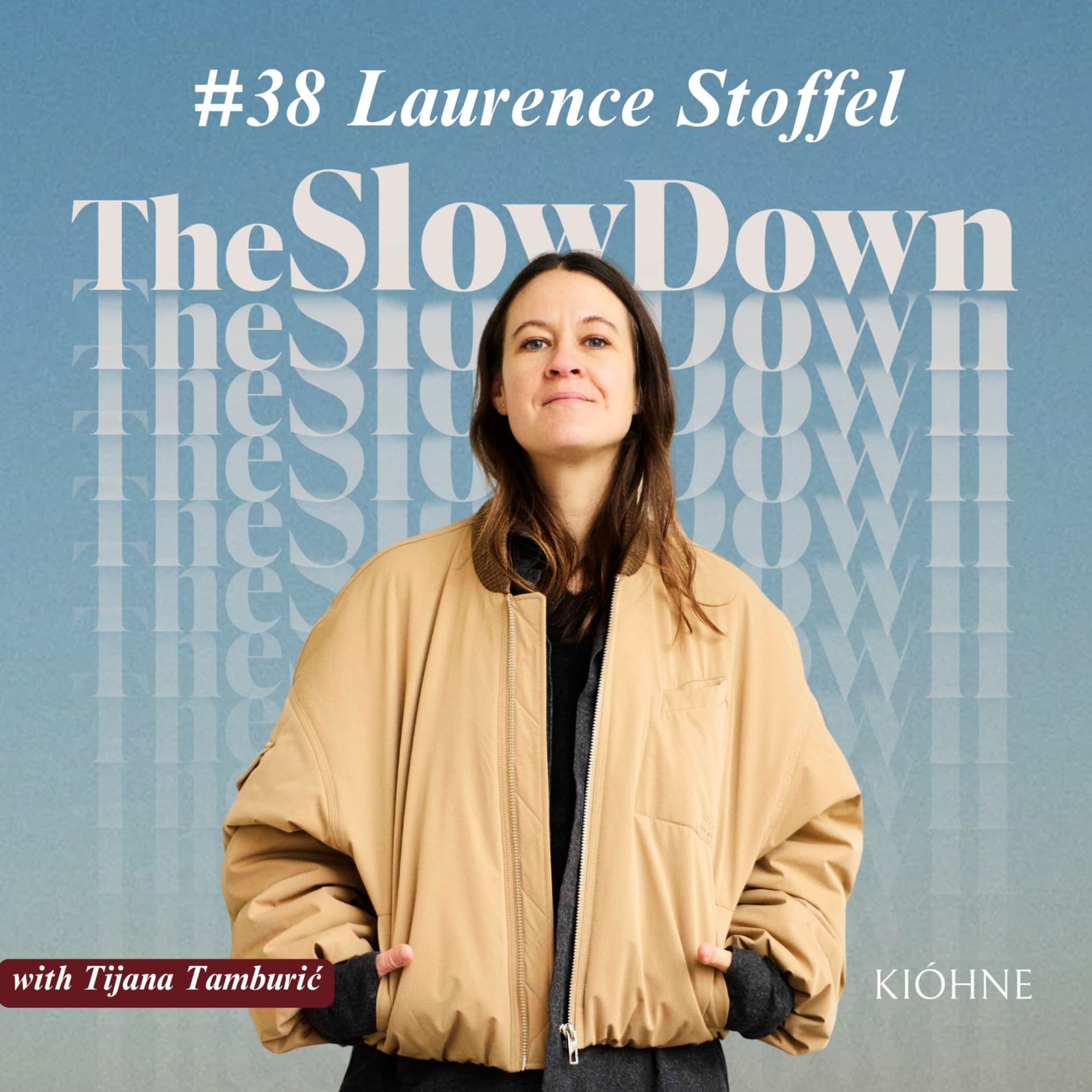
Laurence Stoffel is a Swiss designer/executive creative who built On’s creative studio and brand identity over a decade, helped drive the brand to IPO, and later shifted team structure so creatives focus on creative work. She has also done design research with a collective in Burkina Faso and worked in London before joining On.
Key claims
success should correlate with joy, not just achievement; classical job applications don’t work well—co-create roles through direct conversations; burnout signals can be physical and require real time off; freedom comes from active choice (“worst case I could escape”).
Notable examples
rejecting art school entry then getting admitted after a brief talk; quitting Freitag after a grant; walking trotro schedules in Ghana; On’s early visibility via Roger Federer; turning down multiple seven-figure deals; burnout signs during a mountain marathon (dizziness, stopping early); ultra-running without tracking pace; citing Godard’s Pierrot le Fou as a freedom model.
Written by AI. May contain mistakes. Listen to the episode to check what was said.
Chapters
Tap a time to open that second in VOLaurence's Early Influences on Success
1:36 to 3:20
Discover how Laurence's upbringing shaped her understanding of success.
“So please enjoy this episode recorded at Brazen Studios and sponsored by swim and resort wear brand, Kiyone.”
Passion for Practical Design
3:20 to 4:52
Explore Laurence's fascination with everyday object design and its impact.
“law or teaching law, which is not at all my world.”
Education and Early Career Challenges
4:52 to 8:09
Hear about Laurence's journey through art school and her first job experiences.
“Like I got the rejection letter and very small was written.”
Lessons from Freitag and Design Philosophy
8:09 to 12:12
Gain insights into Laurence's time at Freitag and her design philosophy.
“I've never seen anyone as detail obsessed than Stefan and this was my key takeaway.”
Exploring Design in Burkina Faso
12:12 to 14:00
Learn about Laurence's transformative design experience in Burkina Faso.
“If I can't solve a problem, I don't really understand, like I'm not really sure I want to stay here for a long period of time.”
Cultural Exchange and Design Lessons
14:00 to 16:43
Discover the transformative learnings from engaging with local artisans in Burkina and Ghana.
“that would be ideally sold in Burkina and in Europe.”
Adapting to New Environments
16:43 to 19:29
Explore the shifts in mindset regarding time and productivity learned in Ghana.
“I'm going to go this and this and this and was kind of planning different things I would be doing throughout the day.”
Journey to On Running: The Application Experience
19:29 to 22:21
Learn about the unconventional path to joining the innovative sportswear brand On.
“And when you came back to Switzerland, bringing all of this information with you, what did you do next?”
The Role of Design in Brand Identity
22:21 to 24:28
Understand the importance of design in shaping a brand's identity and culture.
“It's interesting the way around that we do things.”
Navigating Growth and Leadership Challenges
24:28 to 28:00
Examine the transition from a creative role to managing a growing team in a scaling company.
“And of course, when, you know, Rodger joined the company, when we went public and so on, those were moments where it was just, you know, realizing that everything I believed in was actually happening.”
Show all 24 chapters
Keone's Rapid Rise in Sustainable Fashion
28:00 to 29:20
Learn about the impressive achievements of Keone, a sustainable fashion brand.
“the system and and the structure of the team for somebody to take over creative operations at some point and really leave creatives focus on the creative work.”
Unreasonable Decision Making in Design
29:42 to 31:40
Explore the importance of embracing illogical paths in creative processes.
“Yeah, so much of logic can only bring you to an expected point.”
Balancing Motherhood and Career
31:40 to 34:04
Understanding the challenges and joys of being a female creative leader with children.
“So I reached a point where I realized I am trapped in this life.”
The Freedom of Running
34:04 to 36:20
Delve into how ultra running symbolizes freedom and self-discovery.
“to, you know, a sick kid is amazing training.”
Finding Solace in Solitude
36:20 to 39:37
Learn about the mental benefits of running alone and spending time with thoughts.
“If, say, you're running 24 hours, you have the time to meet people.”
Recognizing Burnout Signs
39:37 to 42:05
Hear a personal account of recognizing and addressing burnout through running.
“We're normally walking with music or a podcast on the phone to a friend, you know, very little time actually spent just you without a phone doing something and just actually sitting with your thoughts.”
Facing a Personal Crisis
42:05 to 43:51
Learn about the speaker's experience of reaching a breaking point while racing.
“And yeah, that was the first kind of signal, a very serious signal.”
The Importance of Slowing Down
43:51 to 46:14
Discover the transformative effects of taking a break and incorporating mindfulness into daily life.
“And are there still maybe any things that you take from that time into your micro day-to-day now?”
Redefining Success and Happiness
46:14 to 48:41
Explore how the speaker redefines success by prioritizing joy and personal fulfillment over financial gain.
“I like not knowing what's going to happen.”
The Power of Surprises in Life
48:41 to 51:18
Understand the value of surprise and spontaneity in shaping life experiences and relationships.
“I'm exploring what's best by testing it through discussions, finding out is there something in there?”
Mindful Leadership After Burnout
51:18 to 54:01
Examine how burnout changed the speaker's approach to leadership and relationships.
“I think I became much more mindful of where I'm gaining energy, where am I losing energy.”
The Evolution of Running Culture
54:01 to 56:00
Dive into the relationship between brands and communities in shaping modern running culture.
The Evolution of Movement and Mental Health
56:00 to 57:57
Explore how the running movement has evolved and its impact on mental health.
Cinematic Influences: Pierrot Le Fou
57:57 to 58:59
Discover the significance of the film 'Pierrot Le Fou' and its connection to creativity.
“I don't know if you know anything about it.”
Transcript
Automatic transcript. May contain errors.0:04Hello and welcome to The Slowdown. We can spend our whole lives following an idea of success we never consciously signed up for. Often the goalpost keeps moving and we keep running. But sometimes we reach the summit of our particular field and we feel nothing. You're alone up there and it can be pretty disappointing. Only then do you really sit down and define success for yourself. With this podcast, I'm hoping to give you access to the experiences of others so that you can mull over this question now. What does success mean for you? And live your life according to your own definition. And so I wanted to speak to someone who has reached the top of their industry.
0:48Designer and creative Lawrence Stoffel has spent the past decade building from scratch the creative studio and brand identity for the now iconic mega brand On. As an executive creative, she turned a Swiss running underdog brand into a global sports leader, scaled a team from one to over 100 people and helped drive the brand to IPO. On is currently valued as a$11.8 billion business. She reached the top of her game and yet it is no longer her idea of success. As she navigates this next chapter, I was curious to find out why she's now turning down seven-figure job offers, what fuels her creativity and how she wants to live her life now.
1:36So please enjoy this episode recorded at Brazen Studios and sponsored by swim and resort wear brand, Kiyone.
1:45Laurence Stoffel:Hi, Lawrence. Welcome to The Slowdown. Thank you so much for being here. Thank you for having me. You have worked at one of the fastest growing consumer brands of the last decade on. You joined at Seed and have been through its IPO. Your role must have changed constantly. So resilience and adaptability will have been key for you. I want to best understand the context of where this kind of personality came from. Where were you raised, by whom, and what was your earliest example, model, or understanding of what success meant and what to strive for? So I was raised in Switzerland, in the mountains.
2:25Laurence Stoffel:And my parents were in their late teens when May 68 happened. Switzerland being really close to France, I think that influenced them a lot in how they were seeing life and success in general. It was a student revolution and like a liberation. And for my mom, that meant that her vision of success was very much body autonomy, financial autonomy. She was raised by a single mom, so she knew exactly what it meant to be independent. And she was really very much telling me, whatever happens in your life make sure you can land on your feet make sure you don't depend on anyone let alone a man so that very much influenced my view of success extremely early I would say and from my dad I got autonomy of thought original thinking they're all somehow lawyers or studied law or teaching law, which is not at all my world.
3:35Laurence Stoffel:So I spent a lot of my childhood actually not really paying attention to what was being said. I was a very dreamy kid, but I very much observed people and I could spend a lot of time kind of around people, seeing how they would act and how their bodies would act, not necessarily listening to their words, but actually feeling how they were doing and learned very early that what is being said and what is actually the truth can be two very different things. How did an interest in design enter your life? I was fascinated by the idea of designing objects that people could use every day. you know a badly designed spoon for instance you will notice that it will annoy you every single day right or a badly designed chair or anything that is not solving someone's problem and I really loved the idea of having an impact on people's life at such a basic level and I've never been interested in like author design or you know like the more artsy version of design I was way more interested in the social aspect of design the one that people don't even realize uh when they're using the object and I just remember that that moment in high school where um so I went to a really good art school um in Switzerland and the way I chose it was um you know you had these different courses that were being uh explained by uh different people and I must yeah I was around 18 and the director of that school um which is the a car and it was Pierre Keller he was quite you know a well-known um special person and he goes in and he goes like we are leading the best art school in the world and everyone in this room is actually not good enough to get in there and the ones who are going to try to get in are probably going to fail do you really want this and I was like oh this guy has my attention like I like the challenge and I definitely felt that yeah the interest growing and the difficulty so the challenging part was like I want to get there and like in many things in my life it started with a rejection actually so I did my um you know you had to do like a work to get into the school and objectively my work wasn't good Like I did some drawing and I was 18.
6:18Laurence Stoffel:You're so young, right? Like I got the rejection letter and very small was written. If you really want to know why you couldn't get in. Pierre is giving some attention to some students, you know, but don't expect much. It's going to be five minutes and he's not going to have time for you. And I was like, I am going there. And I went and we had a chat. And then I, you know, was able to do like a second, much more instinctive work. So we were given like 10 francs and a half a day to make an object. And this is something I'm really good at. More practical. Practical. What advice did he give you in those five minutes?
6:59Laurence Stoffel:So this is how I got into design. Interest in object making, problem solving, and then quite some work on my end to make it happen. Yeah. And what were the three key learnings, would you say, that you had from your time at that school? I think when you're in this mindset of excellence, you don't settle for good. So very early, I've been able to differentiate what's okay work from what's really good work. Then there was, like, the competition was fierce, right? So I got to endure and survive a really tough period of time and find out that I can make it through. And I got out with a lot of practical experience and the hunger to really change things.
8:00what was your first job outside of leaving school I I went to an agency like a communication
8:08Laurence Stoffel:advertising agency poor time they they were great with me um but by the like hour one I knew I wasn't for me it was way too superficial and and I left I mean they offered me a job it was a bit of a dramatic ending because the day they offered me a job to stay I said I was I was leaving and I applied for one of the the designers I was admiring the most so this is actually a moment where I really found okay if I want to do something exceptional and really something good I have to reach for the stars and I'm not going to settle for something that's not totally in line with what I love making and and I yeah I wrote to this guy and the next day actually it was super fast I was able to start and this was in Munich and that I would say was my first real experience in design.
8:58Laurence Stoffel:His name's Stefan Dietz. I've never seen anyone as detail obsessed than Stefan and this was my key takeaway. We were finishing models as we were running to bring a model into a car as he was about to leave and meet with a client. This was an incredible time to really understand what it means to be an industrial designer. That was 15 years ago, the amount of work that needs to go into living as an industrial designer. It changed my view of, my probably romanticized view of what it was to survive as a designer in the system that you need to operate in. I also work with a female industrial designer and I'm naming it because it was so rare at the time.
9:49Laurence Stoffel:Her name is Sibyl Stöckli. I really wanted to see how she was working, what her approach to work was. That was also incredible. And then I eventually applied for my next role, which was as a bag designer in a different company called Freitag. That also started with a rejection, by the way. I knew I wanted to work with them. and I sent an application a little bit into the blue and the rejection came out instantly. It was for a role that wasn't even related to what I was doing. And by chance, and this has happened so many times in my life, by chance the founder of that company reached out because he had heard of me through a completely different angle.
10:32Laurence Stoffel:Somebody, I think a former teacher, had recommended me to him and he reached out the same week I had applied for that job and he had no idea I had applied. So he had this bizarre call where I was like, well, you just rejected me. And he was like, no, what? I was like, okay, you've got my portfolio already. You've got my work. Like, let's meet. And I was able to assist him. So I became his assistant. I wasn't a bag designer in the first place. I was assisting the founder and the creative director of that, the co-founder and co-creative director of that company, which gave me an incredible view of what design because he's a graphic designer and he's built his company based on design so everything is thought through that lens.
11:23Laurence Stoffel:you have to imagine like the archa everything is based on the swiss graphic design grid from the architecture of the stores to how the products are presented in store it's all like a system to the paper that people use to you know the spot where you park your bike to logistics how people like the production is in-house so you can see the the bags being made um and everything is systematically adapted to that design thinking which gives an incredible quality to you know to the whole company and you can you can feel it in the in the work that they make there's also a point that's really important to me that working within a company that's doing everything right doesn't have the same taste as working for a company that needs to get there right freitag is absolutely incredible it is an example in the field they do everything circular you know it's a it's an incredible company but i felt like the impact i could have in the work was not as great as if I was working in a company that properly had an issue.
12:42Laurence Stoffel:And that has been my thinking so often. If I can't solve a problem, I don't really understand, like I'm not really sure I want to stay here for a long period of time. So I ended my time there feeling I had done what I could, learned so much, right? And I'm much more now interested in joining a place where there's really a big problem to solve. That's where I feel like the most useful. But my time ended there because I also got a grant to do some design research. And I took the decision to leave the company actually quite quickly because I landed the grant. And the next day I was speaking with Dani, with the founder, and he had the most beautiful reaction.
13:29Laurence Stoffel:He was like, I'm so happy for you. He's like, go, go and explore. So I quit that job. and at the same time got the opportunity to go on a month, a bit more, two months of design experience in Burkina Faso with a design collective. Spending time with weavers in the south of Burkina Faso and our days were just sat under a mango tree speaking with the weavers and producing objects that would be ideally sold in Burkina and in Europe. We were a group of 10 people invited there. We lived in a house. We spent a lot of time with the weavers. And that kind of took me completely out of the world that I knew from Switzerland and grid and logical design rules.
14:27Firstly, I'm curious, what did you make? And then what kind of learnings do you still carry from that experience?
14:34Laurence Stoffel:So the objects are one thing. And I think they're not really the main of that experience. It's much more about an exchange between humans. Exchanging with these women, they were all women weavers, was like challenged every single bit of what I considered good design. the objects are made were baskets with like integrated functions um and we got into very surprising discussions with the weaver i was working with because at some point i was asking her could you make those two handles facing each other and she went yeah sure and when she would show me uh what she had done the handles weren't perfectly facing each other they were they were kind of not exactly like in line which for me as a you know as a with my rules of design with my understanding of design I was like that's just not possible that's just you know wrong she was like well you know the material is acting this and that way I'm not going to force you know the the the palm leaves um into a direction that they don't make they don't want to go in exactly um so we ended up with objects that were completely surprising to me.
15:52Laurence Stoffel:I even wrote down, you know, dimensions and I was saying like this, this basket needs to be exactly so and so centimeters and perfectly round, right? And it came back almost like a square, same thing. So I had to unlearn everything I thought I knew about design, what I knew about what's right and wrong to become much more fluid but the object was was the path to that exchange much more than than the goal yeah and then you went to Ghana and what were your learnings from your experience and your time there exactly landed in Accra and I had a plan I knew I was going to go and work with a specific designer at the end of the trip but at the beginning I had no plan because I like having that kind of openness in my life so what I did was first day and for somebody as shy and let's say introverted as me that was kind of a thing that like to really get out of my my shell I walked down the street and I started asking people if I could work with them um yeah quite literally I wasn't allowed to work for money because I had that grant so I had to work for free which is also a very weird thing to ask especially if you are um I didn't want to be like the white savior who gets there and says you know I want to help you do something that wasn't at all the idea behind you're like i want to learn from you exactly and i want to be helpful in you know in in some shape or form i don't want to be like a i don't want to be a burden either right so how can we have a win win situation here uh um and and yeah i just remember walking that that's walking that street and thinking okay i'm actually going to have to speak to people and i'm gonna have to to to find something to do and I mean the first person I asked said yes um and he was making batik um tie-dying which was like it was beautiful beautiful work he was working on textiles we spent some time working on those designs and um uh and that was you know part of what I did there I'd say the other part of of the change that happened in me is more linked to time um got there in my very kind of functional way of organizing my day.
18:26Laurence Stoffel:I'm going to go this and this and this and was kind of planning different things I would be doing throughout the day. So I get on the first bus, which are called trotros. That was 10 years ago. Maybe things have changed by now, right? But, you know, I'm sat on that trotro and waiting for the bus to leave and nothing's happening. So after a while, maybe an hour, I asked the driver, hey, you know, when is the bus leaving? And he goes, when the bus is full. Right. And I was like, well, okay. You know, like that very first time we waited for about six hours. And you kind of have to lean into it, right?
19:10Laurence Stoffel:At the end of the trip, like I had one goal a day, as simple as that. It could be just going to buy some water or meet one person. It completely changed my notion of time passing and organization and productivity. And when you came back to Switzerland, bringing all of this information with you, what did you do next? I spent half of that year also in London. um so so in London I um I knew there was this weird small Swiss company that was up and coming and that was you know generating some at least I was feeling an energy coming at of what I was seeing but it was tiny like they were just a bunch of people and uh during my time in London I was thinking okay if I go back to switzerland i want to work for this company and no one else because i feel like they are onto something and i can't really tell you why i just knew the product looked different what were they selling at the time this was already on running this was on selling shoes they were roger federer already and i'm like investor ambassador nothing so that was very early on um they were making shoes we had like there were no investors but because it was from zurich i had seen it a friend had designed the logo and I knew about them.
20:35Laurence Stoffel:I applied for another role and got a rejection automatically. It was also for a role that had nothing to do with me. And I believe a friend who was working at the company there suggested me through a different channel, not knowing that I had applied again. Same story happened again to me, that somebody recommended me without me actually being part of that system. And that's how they came to me. It's not really serving a good narrative for job applications it seems like the best way is the old school way you got to know somebody you got to ask them in person you got to have a conversation you got to hope that your work finds people just like applying for jobs online or wherever it is doesn't seem to have served you well and me for sure not and I don't believe in applications in in class like classical applications it does not work so if there's something I've learned along the way is if you want the dream job you have to co-create it you have to be sitting with the person understand what their problem is and find out can you really be the person who will bring in that change or or not and also be you know strong enough to to walk away if that's not the case like classical applications can work in very you know in specific ways or in in certain cases or maybe at earlier stages of the career but even then i i still think like having a good discussion with the decision maker is going to open up so many more doors and is going to bring you such a more interesting um scope and is going to play also on your strength rather than you trying to fit into something.
22:23Yeah, it does make a lot more sense. It's interesting the way around that we do things. But you went in initially to do visual identity and design, but you have an industrial product design background. Was that, did you see that as like, it's not really quite what I do, but I'll do it in this case? Or did you see that as an interesting challenge of something you wanted to do? Or were you just like, this is my way into this business, so I'm going to take it?
22:46Laurence Stoffel:no not at all actually my my frustration was as an industrial designer how the product was marketed I thought most of the time the work that was being done lost a lot of what the product was made for so it was out of frustration in a way that I wanted to get into into communication and I did that in my earlier position I also did that when I was assisting you know the founder of that other company so we were also working on the visual the brand identity I did a lot of work on the guidelines on the brand book on the manifesto and I really loved that so having that level of impact on the company because then you build from there it's foundational stuff that everything else comes from exactly and this is where I think design is so strong when you just look at design as okay I'm designing an object and that's basically it it's kind of flat or I find it kind of flat if you look at design as a system where you can build up a full you know you are not alone obviously whole universe it becomes like fascinating culture you know how people work uh obviously the brand identity you know the brand voice and so on but i am in like i think logistics are fascinating how do you store objects you know can you make it can you make it an experience from really very very much the starts to the to the end and i believe the very successful companies out there understand that as soon as there is like a decision that's you know made consciously it becomes design and that was yeah that was my entry point so I've never looked at industrial design as as a fixed thing or as a rigid thing I've always considered myself as you know a you know a designer with a thinking that can be applied to anything and at what point in those first few years let's say did you feel like this is really a rapidly scaling company like were there any clear moments that you look back on and go that was when we jumped in size every day I had that feeling so even just my first day of work I got into that office thinking oh wow I'm gonna be bored but within a couple of hours I hadn't even gotten my laptop that I was already working on a store an event social posts the next photo shoot and this was within a couple of hours entering the office so day one the pace was very high and it was very clear that things were gonna gonna move and there was an energy in that room that you know was was leaving no space for doubt that this company was gonna be onto something very big.
25:34Laurence Stoffel:And of course, when, you know, Rodger joined the company, when we went public and so on, those were moments where it was just, you know, realizing that everything I believed in was actually happening. And you as a self-described more introverted, shy person that's now effectively what I find with a scaling and growing business is you move from being deeply in the creative, right? Where you're like, I have to physically design all of this stuff that you just mentioned to managing a team of 100 people and effectively being more of a manager than a designer. How were you able to move into that role as someone that is more introverted?
26:21How did you find managing other people instead of just sitting and doing kind of solo design work? I think it's a strength not to be the classical extroverted leader because you build a different level of trust with the people who work with you.
26:42Laurence Stoffel:And that happens rapidly. So I have not suffered from that too much along the way. And I realized very quickly how much he was opening doors to really understanding what was going on. Because a creative is a complicated person, usually, just like I am, right? There is always more to it. And the more you understand, the more I understood why people were acting in a specific way, the more I was able to adapt the work or the way we were working. But it cost me energy. It costs me energy to be around people. The good thing is a lot of the creatives, a lot of the team is also like that. So there is a kind of a common understanding of what's going on, of constantly asking yourself, am I good enough?
27:38Laurence Stoffel:That's a really normal, I would say, issue of a talented creative or a creative altogether. but it cost me a lot of energy for sure and um and getting further away from the creative work was was something I eventually changed so um I reached a point where I I handed like we changed the system and and the structure of the team for somebody to take over creative operations at some point and really leave creatives focus on the creative work. And that's a moment where I jumped back into more hands-on creative work, which was amazing. It's one thing to say a brand is special. It's another when the world agrees.
28:32Keone launched in 2022 and within months, one of their first swimsuits was worn by Gwyneth Paltrow in the Financial Times How to Spend It column. Shortly after, Greek Vogue partnered with them to create a sustainable bag gifted to every attendee of the Vogue Changemakers event. Then came features in The Guardian, Marie Claire, Madame Figaro, and this year the brand appeared in Begonia, the award-winning Yorgos Lanthimos film. For a brand that's only been around for a few years, that's quite remarkable. But what strikes me isn't the celebrity names, it's who has been drawn to Keone, the sustainable fashion crowd.
29:11the conscious consumer women who want beauty without compromise and I suspect that's you which is exactly why I wanted to introduce you to this female founded brand you can check them out on qna.com or on their instagram and as a listener you get a special 20 % off your first order with the code the slowdown one word so if you're looking for something new this summer to help you slow down by the sea and for many summers to come this one is for you One of the things that I've heard you say is creating real design value means protecting unreasonable decision making. Can you expand?
29:52Laurence Stoffel:Yeah, so much of logic can only bring you to an expected point. And usually where the beauty lies is when you'll follow the idea or the path that doesn't really make sense in the first place. And you have to build, and that's not necessarily just for that experience at all. In general, I really believe that you have to create a space for that to happen. Because if you don't actively make sure that these decisions can be made and understood and explored, you just end up with more of the same. So, yeah, I love this idea of unreasonable, you know, decision making. Like I quit that job to go to Ghana, Burkina and so on.
30:46Laurence Stoffel:Those are the moments where you kind of feel the energy shift. And this is where a lot of the beauty really lies. somewhere along the lines um you also had two children how old are your kids now uh four and seven it's been by far the most challenging thing i have experienced in my life especially as a as a female creative leader having kids has been hard so i am saying this and my kids know it right but I think I would have been a happy person without kids too I don't believe in goals in general in life I think everything then becomes very expected and once you reach them you kind of search for the next and I never considered having a family as a goal and it happened because you know my boyfriend you know is the bigger is the main caregiver at home and we also had that deal how how did that conversation happen like was it him saying if we do this i will be the main caregiver i don't want you to leave your job was it you saying if we do this it has to go like this yeah it's a conversation that happened over you know multiple years or so the the bottom line was from me I don't want my life to follow a path that I'm not able to influence I don't want to be trapped in a world where I cannot make my own choices back to you know what I was saying at the beginning and from him but uh but I knew that I had um the best co-pilot to continue having the career that I was having and continue having the life that we were having together so we took that decision jointly and it didn't go as planned at all of course what I underestimated is the amount of love that I would be feeling for those kids.
32:57Laurence Stoffel:So I reached a point where I realized I am trapped in this life. No matter, you know, the system that you build around it, you have this love. You cannot run away from it. I would say that nature is well done in many ways, right? Good design. Good design. Very good design by nature. I had not seen that one coming. And yeah, I remember that discussion that I was having with a therapist at that time. And I was telling her exactly this. I didn't want that, right? What is happening to me? I can't run away. Now I'm like, I cannot go away. And she's a wonderful, wonderful person. Very smart, very smart lady that's been following me since then.
33:45Laurence Stoffel:And she was like, of course you can. I was like, what do you mean? I cannot run away from my kids. Like I would never do that. She was like, yeah, maybe you won't, but you could. It's socially not accepted. But tomorrow you could jump on that plane and, you know, disappear forever. And I was sitting there and thinking, oh my God, yes. Just knowing that it's possible. having the knowledge that you have a way out has been the key to calming down my nervous system since then i stay because i want to and i stay because i love them yeah i don't have to exactly if it's a choice it becomes something else entirely this is very much my life philosophy um i choose things actively right and whenever i feel stuck somewhere i try and remind myself that i have the choice to change things like worst case i could escape and disappear i you know obviously it's not something that i did or i'm planning to do but just knowing that you have this possibility is um has been life-changing for me and you can apply it at micro and macro level anything you mentioned that you got back into running in your 30s and ultimately became an ultra trail runner and that really speaks to this freedom seeker independence mindset um is that where you see does that where running come into your life now this sense of i can always just put my running shoes on and go out and run so much so much of is it is that And ultra running is, it has no start.
35:36Laurence Stoffel:It has no end. It's more of a mindset. Waking up at 4 a.m. to, you know, a sick kid is amazing training. You know, you can kind of apply it to so many areas of your life. I really see a difference between road running and trail and ultra running specifically. So I never look at my watch. I never look at how fast I am. I never look at the amount of kilometers I'm putting in. It is much more like a process of moving and of thinking, of quieting my mind. The people you meet on the trail are incredible. It's because you're on route for quite a bit of time, right? If, say, you're running 24 hours, you have the time to meet people.
36:27Laurence Stoffel:And you're alone, right? you're like you're complete sometimes you're alone for hours on on those trails and then you meet somebody you share a couple of hours with them you're getting to really deep discussions because you're all like high on on you know runners high and and having you know moving for so many hours and some people start hallucinating and it goes quite deep right but uh the ultra running mindset i would say is very much freedom um seeking running at the pace you want if you want to hike you hike if you're gonna pause you pause you know some people sleep um I even met some guys on my longest run that I did and I was doing I was already quite happy about running 100k and I met these guys and they were like yeah which night are you in because we were running through the night and I was like what do you mean which night well the first one the only one the only one and they were like ah uh oh yeah no we're doing the long distance and it was like 400k and and then we started chatting and they said oh you know what we might we might sleep here and through that discussion eventually we decided to get I decided for them I was like why don't you take a hotel here in this in this uh little village that we were passing by and you could have a good you know six hours sleep and they were yeah great idea so they stopped which is you know tolerate you can stop and sleep if you want to on those long distances they stopped they took a hotel room they slept for six hours they showered and they they continued so these type of things are so funny that happen on the trail and the type of thinking that's happening when you run long distance is unique and just discovering the strength of your body it's never I never think of the goal of the end of the finish line this is something that doesn't even cross my mind i'm visualizing it maybe but i'm not like setting this as a goal you separate a longer run into very small bits for instance you know i want to see the sunset and then i'd love to turn off my light if the moon's full and sometimes the moon is full and the clouds are gone and you can run without anything else through the night than yourself which is you know a very pure thing to do and a strong experience and then when you pass that moment you think okay maybe I'd love to see the sunrise and it's just such basic things that have quite quite some beauty in it so when people hear ultra running they're like oh the grit and you know and it's hard and yeah there is so much music like beauty to all of that too and the depth of the thinking that happens through those runs is also special I would say I have found out the meaning of life a couple of times the problem is by the time you reach the finish line forgot yeah you gotta take a dictaphone or something and like write it down it was just there a second ago no I also think it's so rare in daily life especially in like busy western capitalist life to actually have that amount of time with yourself and your thoughts.
39:39We're normally walking with music or a podcast on the phone to a friend, you know, very little time actually spent just you without a phone doing something and just actually sitting with your thoughts.
39:55Laurence Stoffel:You know, the idea of being alone for 24 hours running in the mountains is uh incredible to me especially when you work in an environment where you're spending a lot of time with people when you're on back-to-back meetings um you know just giving a lot of of energy and having those those moments are are you know like incredible and i also make sure that i usually run most days right not not very long i usually run alone even though you know there's plenty of people around who would you know who would happily jump on the run but that's not what you're looking for I'm looking for the opposite and I need that yes absolutely need that moment for myself it sounds like you have good ways to regulate and balance the stress of the thing but have you ever had in the 10 plus years of working it on and building such a big company burnout or something that feels close to that I've experienced all of that um at different phase at different phases of my life and throughout my career and yeah i had to take a break off work for a couple of months when it got really too much how did it manifest for you i saw the first signs um during my runs uh i was getting dizzy and there was a particular my brother wanted to run a marathon for his 40th birthday and i was like marathon yeah it's a short distance right I'm gonna run with you uh of course and throughout the week that was going getting there it was in the mountains and it was there was a lot of elevation to it so quite a technical race which is actually what I like that morning and the week going there I could feel like I didn't want to do it which is very unusual for me especially knowing that I would be alone for a full day in the mountains which I usually look forward to and I was just like not feeling it and that same morning I woke up thinking I still don't want to do it and I'm still gonna of course I'm gonna run with with my brother it's it's nice and and and and as soon as we start I couldn't even warm up I didn't even feel like warming up warming up before the race which is also strange usually after a couple of hours you start feeling a bit better if you start a race you know feeling really bad and it did not so I was getting more dizzy more dizzy and I didn't even finish the race which for me had never happened and has not happened since then and I stopped like 3k before the end well so it was like I just had I could have I could have walked the end basically but I was just like I couldn't even there was a mechanical issue I couldn't I told my brother afterwards I forgot how to run um and obviously the dizziness was bad and I just felt like this is something else.
42:43Laurence Stoffel:I should just stop now. And yeah, that was the first kind of signal, a very serious signal. And after that, I took a couple of months off and my doctor had the intelligence to give me the dignity to choose when, which for me is so important. Had he told me, you have to stop working now, I would have said, no way, you're forcing me to do something I don't want to what he did was he told me look this is what I'm observing this is what I'm thinking you make your own choices you tell me when you're ready and I went home thought about it and I think a couple of days later I called him I was like yeah I think I think I need a break and what did you do during the break how did you reset or rest or you know people ask you and are like oh you're on a break you must be doing so much sports and running and cycling and yoga and I was just like it's not that kind of break not at all there was a complete misunderstanding and so much stigma around it right and I was never like I never hit it I never you know I was very honest with the team as well but I was lying on the ground most of the time so I would yes go you know on walks and hikes and depending on my mood and energy I would go on runs and I would spend so much time just lying on the ground in nature at home it's amazing and for somebody who's in their head most of the time with the attention going in so many directions the grounding factor is central and then I found my way back into creativity um I got really good at baking so there were some random things uh I got really good at baking that Japanese um brioche I was like oh that looks really good and I get like I I did so many iterations of that brioche and I got to like I really enjoyed the process of finding out you know what would work best but yeah I would say lying on the ground was the most transformative thing that I did during that time.
44:52And are there still maybe any things that you take from that time into your micro day-to-day now? I think when we think of slowing down people think it needs to be like three months off or completely changing your career but I've actually found that bringing sort of some micro tools into your day-to-day even in making a big decision taking a moment to do something are there like three tools that you still use um weekly yeah there's very basic
Read the full transcript
45:21Laurence Stoffel:things so I think of my feet which is the closest to the ground right whenever I'm feeling like whatever I'm going to try and convince myself if I'm getting to a stressful situation is not going to work right so like just a mental work is not working is uh it has to be like through my body through feeling so feeling my feet and I laugh about it every time I say that but it's so basic think of your feet think of the ground and it takes your attention away from your brain um and then yeah you know breath breath work um I've been learning how to breathe for years now and I still am not at a point where I'm feeling like I'm doing it well people stop breathing when they get into stressful situations so this is the type of work I constantly do and I remind myself just to breathe and it's not even complicated it's not like three four you know whatever exercise just am I breathing right now or am I just stopping to breathe and then I've started speaking kindly to myself that is maybe the most kind of intellectual part I've been doing and noticing whenever I'm speaking the opposite way so speaking kindly is one thing and I'm not always able to do it however I realize when I'm doing the opposite and that's already a huge part of of that work the awareness piece coming first how often actually that voice comes up and how often if you choose to you can also take the opposite angle and try and play with it right what I find interesting about where you are currently is that you've reached kind of the top of your field your industry um being a senior executive creative the western capitalist idea of success um but you're thinking of leaving and doing something different why did that decision come about there's a moment where you realize or where i realized that the amount of energy i was putting into my work wasn't transforming into the same level of happiness so when that balance is kind of shifting and working hard is not something I'm afraid of or it's not something that I'm suffering from but it should correlate to joy and exuberance and excitement exactly like a feeling of of contentment and happiness and and I've reached a point also where I felt like the job that I could do there um was you know was done and and now it was time for new people to come in bring in new energy 10 years is a long time as well right and I'm very much of a builder and I like the messiness of the early stage.
48:14Laurence Stoffel:I like not knowing what's going to happen. I like the surprises that come with chaos and that's very much kind of the level I feel like I'm or the environment I'm the happiest in. Here I am observing what the next stage is And I think it's very similar to anything else that I have done in my life. I'm exploring what's best by testing it through discussions, finding out is there something in there? Is there a problem that I could solve at that company that feels like is going to fulfill me? I hear that you're being offered seven-figure deals and turning them down. i have yeah i have turned several actually seven figure deals which was a bit of a a bit of a yeah you kind of have to breathe through it right but you know at what cost right if you if you do it it also needs to come back with a with a with a huge level of of feeling like you can have an impact like you can make a difference and like you're going to be happy so I don't think any amount of money can cover the fact that if I'm not feeling like this is going to make me happy why should I take it but it was a it's been a really good way to test my values because it's one thing that's a real test all of the discussions that being having were really really interesting but there was always something that felt like this is not it
49:59Laurence Stoffel:and turning down a seven-figure deal is almost, well, I would say for me has been even more fulfilling than taking it. And so what is your current working definition of success? Being surprised by my own choices. I love to be building a life where I can make plot twists happen and where I can be amazed by some of you know the decisions that I'll be making or that I've made it just gives that feeling of freedom it just makes that feeling of freedom very real and you can apply it to very small things as well it doesn't necessarily need to be to be huge things right I'm a terrible planner by choice I don't plan my holidays I usually plan them the day before even with kids you know I like I like really following my instinct and my joys or my my like my like the day that I'm in yeah this being amazed at how you can how you can surprise yourself with your own choices is quite an incredible feeling yeah flexing the muscle of free will and decision making and going to a place and also allowing it to unfold and show you right I think people go to Paris and they're like we have to go see this thing and do this thing at this time and it's like just roaming the streets and like feeling called to going into this and doing that and it kind of reminds me of um you know people always have this thing of oh what are you what are you looking for in a partner you know what's your list of 10 things that you want in another person and I used to kind of have a bit of a list and then over time I added a note that was just like the the fifth thing that they have to have is like surprise me because I don't know what I don't know and I don't know what will be so magical that I didn't even think of it and actually it's the surprising element of people it's like oh you play piano really well I didn't think of that that's actually really wonderful or you know whatever it might be so much so much and when it comes to me I'd rather be heartbroken or have regrets even than not having surprises yeah I have one more question which is how has your relationship with your friends and family changed pre and post the period of overworking Yeah, relationships, for sure, they changed.
52:44Laurence Stoffel:I think I became much more mindful of where I'm gaining energy, where am I losing energy. I'm surrounded by people who are extremely understanding of, you know, what I went through. And it's quite a common thing. And as a very highly sensitive person, I'm also surrounded by people who share that trait, usually, and who get it. I also found that it has made me a better leader. um not that i want to say that not that i want to say that it's something good that's happening to people right but as a leader having gone through that gives you the awareness and the compassion the compassion between like the emotional intelligence to know how to act and feel when something's not really quite right or support somebody and even if you can't i'm not sure as a leader you can have such a complete impact on what a person is going through you can still be there and and and be supportive in a way that they will receive just total pivot because i was curious with you know on running as it was originally called and how i kind of think of it jumped I don't know if it jumped on or if it if it if it kind of pushed this running craze that we've been in for the last kind of five years of run clubs running being like this huge sport uptick that lots of people are doing I guess I was curious as someone from within the company has that been something that has you think been driven by brands in general like let's make running a thing or has it been driven by the communities because I kind of can't tell anymore where the brand and the communities begin and end some communities are now becoming brands are like selling product like it's all over the place so I guess it's a two-prong question which is how much do you think like running culture has been created by brands or by communities and by extension what is like the next craze that we should be aware of that you're sort of seeing as a designer the percolation of because you were very quick at spotting that on would be something big and was had something going for it 10 years ago before anything really happened when you're looking at businesses now that are startups and interesting is there another field or sport or category that you're like I can see that is about to become as big as running is now I think on has been one of the if not the first challenger brand in the field challenging the bigger names of sports right and it has opened the door to a plethora of new brands doing exactly the same and I love seeing that happening by the way I love the multitude of different brands and the multitude of different approaches to movement in general um and the shift I'm sure started in people I don't think that brands can can have the level of impact on people if you know it's if there is nothing there that's already moving maybe it was some subconscious I don't I don't think so I think it started the running movement started in the 80s right and there's been so many beautiful things happening since then but the level of what running has become is obviously something else entirely today and on was yeah was was challenging that very firmly by making movement not about winning only but talking about movement as something that helps you know your mind and helps you think and helps you you know become a better human in general and tuning down and all those brands I think also doing that today tuning that that narrative around winning and around speed and being the best right cultures becoming micro micro micro cultures right the next big thing I think people are more and more realizing how movement is impacting mental health that's for sure and hiking is becoming huge so just that connection with nature as you know as obvious as it sounds I think is probably what's going to be big in the next few years spending time time further away from the screens with people in real life you know um to counterbalance what's happening on social which is amazing um but you kind of have to have the other side so i'm expecting just um any type of movement really happening uh and and touching way more people than it is already now and the final question that i ask everybody on this podcast is if i had to watch a film or or read a book, or see one piece of art that would help me understand you better, what might it be and why?
58:05Laurence Stoffel:I love the French Nouvelle Vague. I don't know if you know anything about it. I would say Pierrot Le Fou, which is from the 60s. And Godard, the director, kind of broke all the rules of cinema back then, started carrying the camera on his shoulder uh was planning really well but let a lot of the magic happen on set uh and there's a lot of chaos you know he did an incredible work on voice over or voice off and uh in the way he he he put in his movies together and um that feeling of freedom, you know, of breaking conventions. The work on colour is really amazing. So this is one of my favourite movies and represents a lot of what I love.
59:00Thank you so much, Lloris. Thank you for your time.
59:02Laurence Stoffel:Thank you. Thank you for tuning in. This episode was hosted and created by me, Tiana Tambridge, produced by Lulu Goad, sound and video production, and recorded at Brazen Studios, cover art designed by Natalia Ruhe. This season was sponsored by Kiyone. Please subscribe to The Slowdown to be notified of upcoming episodes, tell a friend, and please leave a review. It really does help a new podcast like this get out there in the world. And remember, we're all heading to the same destination and there is no prize for getting there early, so we might as well slow down. Thank you.
From the publisher
Laurence Stoffel grew up in the Swiss mountains. A shy, dreamy child who liked to observe the actions of adults, she went on to study industrial design at ECAL, one of Switzerland's most competitive art schools, talking her way back in after being rejected on her first attempt. Her early career took her from a Munich furniture studio to Freitag, the Swiss bag brand and eventually to a design research grant that sent her and her partner to Ghana and Burkina Faso, where six weeks spent weaving baskets with local designers under a mango tree unravelled everything she thought she knew about "correct" design.
Laurence then joined On, the Swiss running brand, when it was a handful of people selling shoes out of Zurich, and spent the next decade building its Creative Studio from scratch, scaling the team from 1 to over 100 people and helping steer the company to an IPO now valued at $11.8 billion. Along the way she became a mother of two, weathered a burnout serious enough to stop her mid-marathon, and rebuilt her relationship to work around one rule: choose it, don't owe it. Now, having recently left On and turned down several seven-figure job offers, Laurence is deciding what comes next.
In this episode we cover:
Growing up in the Swiss mountains and the ideas of success inherited from her parents
Studying industrial design and talking her way back in after rejection
Early career: a Munich furniture studio and Freitag
A design research grant that took her to Ghana and Burkina Faso
The unconventional path into On, and why she doesn't believe in job applications
Scaling On's Creative Studio from 1 to 100+ people
Becoming a mother of two, choosing not to marry, and letting go of milestones
What burnout actually looked like for her
Why she is turning down seven-figure job offers right now
Ultra-running as a mindset
Mentions:
Stefan Diez - Munich furniture/industrial designer Sibylle Stoeckli - Lausanne-based female industrial designer
Freitag (Swiss bag brand) and its co-founder Daniel Freitag Pierrot le Fou (1965), dir. Jean-Luc Godard
Links:
https://www.linkedin.com/in/laurence-stoffel/
This season of The Slow Down is sponsored by female-founded, Greek swim and resortwear brand Kiohne. The Slow Down listeners can use code theslowdown for 20% off their first shop on kiohne.com. Enter their world, explore their collection and buy beautiful pieces designed to be enjoyed while slowing down this summer.