
In short
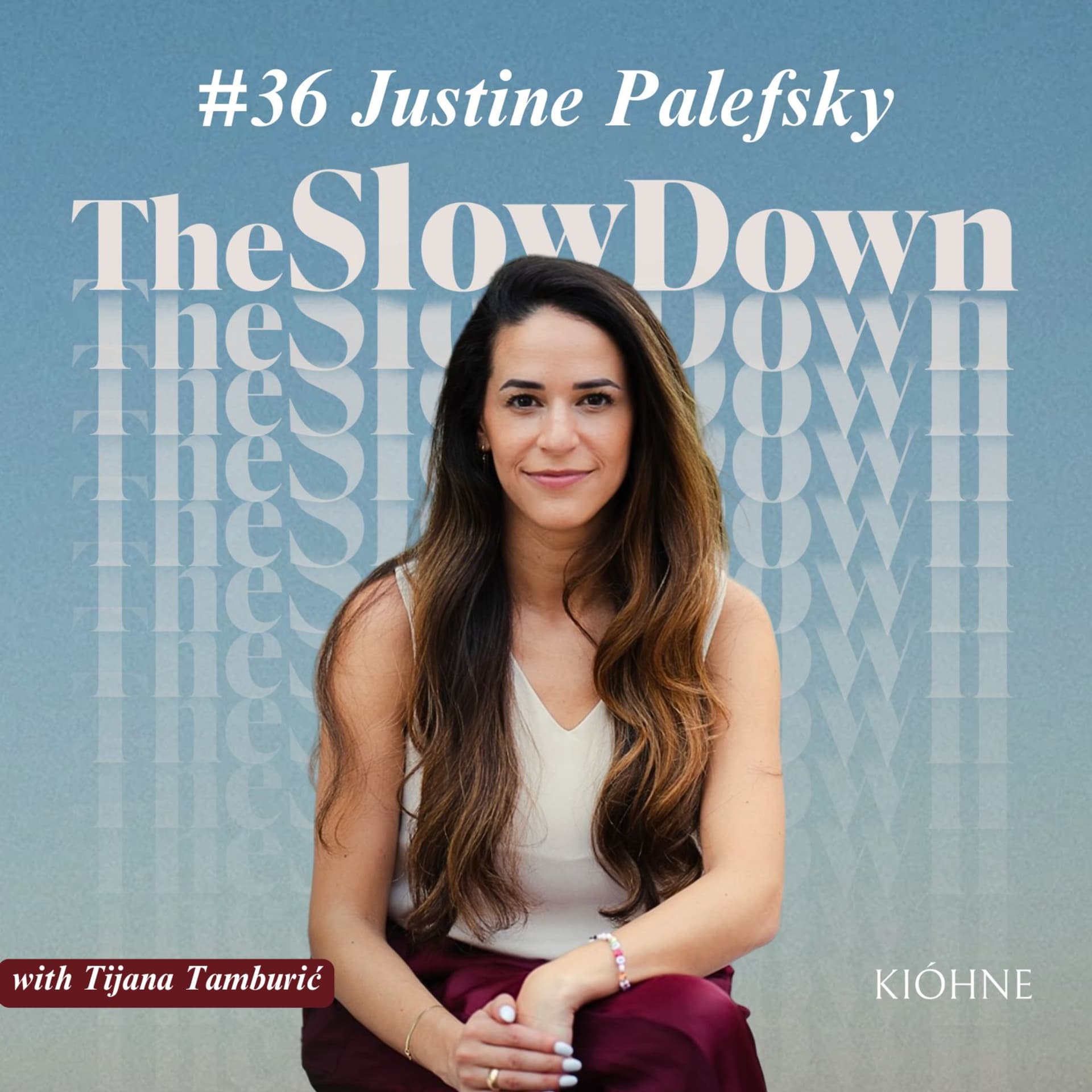
Justine Palefsky, CEO/co-founder of Kindred, discusses building a global home-swapping community on “radical generosity” rather than profit-maximizing rentals. She explains how Kindred scales without selling out by removing payment between hosts and guests, enforcing a human-first culture, and using a give-to-get credit system (one night equals one night) that can’t be bought or sold.
Guest backgrounds
Palefsky was born and raised in San Francisco. She studied cognitive neuroscience at Brown, then worked in consulting and later at Opendoor and Homebound (customer/brand work). She co-founded Kindred with Tasneem (Taz) co-founder; they met through Opendoor connections and did an intensive “co-founder dating” retreat in Calistoga.
Key claims
Removing host-guest payments prevents professionalized “investment supply.” Trust is the product; growth must not degrade experience. Culture is enforced via design (profiles, video intros, pre-stay chats) and norms (handwritten thank-you notes). VC funding is compatible with values if investors align and accept slower growth.
Notable examples
Burning Man as a civic experiment in participation and gift relationships; Intervac (1950s) teacher home swaps; Kindred members have hosted “over a thousand years worth of nights” (not cash).
Written by AI. May contain mistakes. Listen to the episode to check what was said.
Chapters
Tap a time to open that second in VOJustine's Background and Values
1:24 to 2:54
Justine shares her upbringing in San Francisco and the values instilled by her parents.
“by Greek swim and resort wear brand Keone, I hope you enjoy this conversation with Justine Palevsky.”
Lessons from Burning Man
2:54 to 4:22
Justine discusses her experiences at Burning Man and the impact on her worldview.
“Yeah, so I think one was just an open-mindedness and this idea of community.”
Education and Career Journey
4:22 to 8:06
Justine explains her educational path in cognitive neuroscience and early career experiences.
“My parents brought me the first time, you know, walking around Burning Man, people would be like, oh, it's so great that you brought your parents.”
The Role of Founders Today
8:06 to 12:15
Discussion on the evolving image of founders and skills needed in the current landscape.
“and there were so many different things that I was interested in.”
The Importance of Co-Founders
12:15 to 14:03
Justine emphasizes the value of having a co-founder and how she met her partner Tasneem.
“And I think it's about just having the guts to go do it when everybody is thinking, you know, that's never going to work.”
Co-Founder Dynamics: Finding the Right Match
14:03 to 21:50
Discover the journey of finding a co-founder and the importance of compatibility in building a startup.
“I said, let's figure out the co-founder piece first and then the product piece.”
The Concept of Kindred: Home Swapping Reimagined
21:51 to 27:59
Learn about the history of home swapping and how Kindred fits into modern travel.
“I'm of the belief that on the planet already we have enough stuff and continuing to just make more and more is not the solution.”
The Controversial Business Model of Kindred
28:00 to 30:20
Learn about the unconventional business model of removing payment from Kindred's home exchange system.
“If you can't earn money by putting a home on Kindred, it doesn't make sense for investors to go buy up 10 homes in Venice, Italy, and list them on Kindred.”
Building a Community Through Kindred
31:55 to 39:39
Explore how Kindred fosters a sense of community and human connection among its members.
“From this commodification of your home to actually sharing your home, I think that's where Kindred has some real differences to anything else that's out there.”
Navigating Capitalism as a Values-Driven Business
39:39 to 42:00
Delve into the challenges of balancing business funding with a commitment to community values.
“profit at all costs, capitalist culture, I think is doing a lot of damage to people in many different ways.”
Show all 18 chapters
The Importance of Trust in Growth
42:00 to 43:32
Learn how trust is prioritized over rapid growth in building a sustainable business.
“We wanted to make sure that anybody who we bring on is signing up for this ride and trusts us as leaders to steward this product in the right kind of direction.”
Redefining Leadership and Self-Awareness
43:32 to 45:21
Discover the significance of self-awareness and authenticity in leadership.
“I was wondering what kind of leader you would say that you are.”
Navigating Burnout and Work-Life Balance
45:21 to 47:50
Explore strategies for managing burnout and achieving work-life balance.
“But, you know, once I dropped that and just started being more unapologetically myself, I ended up, I think, attracting the investors or the employees or the candidates, you know, who were signing up for me and who I am.”
The Joy in Building and the Flow of Work
47:50 to 51:38
Understand the dual nature of work and how to find joy in the process of building.
“Um, you know, maybe it's taking time off.”
Defining Success Beyond Happiness
51:38 to 56:00
Learn how success can be defined by purpose and creation rather than mere happiness.
“Um, for me, so much of that is, uh, you know, designing experiences for other people and, and creating moments.”
Redefining Success and Slowing Down
56:00 to 57:20
Explore how personal definitions of success often differ from societal expectations.
“that to the world, that thing couldn't have existed without me.”
The Power of Vulnerability in Home Swapping
57:20 to 59:00
Discover the unique experiences and connections formed through home swapping.
“The last question that I have that I ask everybody is if I had to watch a film or read a book or have one cultural experience that will help me understand you better, what would it be and why?”
Generosity Beyond Transactions
59:00 to 1:00:18
Learn about the deeper emotional rewards of sharing your home without financial expectations.
“Try out what it feels like to be a participant in the experience again, instead of just a consumer.”
Transcript
Automatic transcript. May contain errors.0:04Justine Palefsky:Hello and welcome to The Slowdown. In our Western capitalist individualist growth at all cost culture, it's rare to see a tech company built on community, reciprocity and generosity. But for my next guest, connection is at the heart of her work. Justine Palefsky is the CEO and co-founder of Kindred. Founded just five years ago, Kindred is a global members-only home-swapping community with over 300 ,000 members in 150 cities, articles in the New York Times, Forbes, Arc Digest and TechCrunch. Kindred is the tech darling of the moment and you've probably seen it on Instagram where they have over half a million followers.
0:46Justine Palefsky:But beyond that, it's inspiring a return to a more karmic sharing culture based on generosity and reciprocity, something that I isolating, transactional, short-term rental industry, and our society in general has been lacking in its race to extract maximum profit. I wanted to know if it was possible to rapidly scale and stay grounded, what it means to lead with generosity in a capitalist system, how she met her female co-founder, and how tech can enable us to live more conscious and intentional lives and unlock more meaningful ways to see the world. Recorded at Brazen Studios and sponsored by Greek swim and resort wear brand Keone, I hope you enjoy this conversation with Justine Palevsky.
1:35Justine Palefsky:Hi Justine, welcome to The Slowdown. Thank you so much for being here.
1:40Tasneem Amin:Thank you for having me.
1:41Justine Palefsky:I like to provide context for this show, so I always start by asking, where were you raised? by whom, and how was success modeled for you when you were growing up?
1:52Tasneem Amin:It's a great question and a great way to kick off. I was born and raised in San Francisco, California, which is where I live now. I was raised by a mom and dad who are very open-minded, forward-thinking, and really loving. So San Francisco is an interesting culture. I I think we know it now as the hub of tech innovation, and it absolutely is. But I think in the 60s, 70s, 80s, it really was a hub for cultural innovation. It's where a lot of the kind of hippie movement started.
2:28Justine Palefsky:It's where Burning Man originated.
2:30Tasneem Amin:It was where a lot of really iconic music originated. And my parents were kind of a part of that scene, drawn to San Francisco to be a part of that movement. And so they raised my sister and I with some really interesting and beautiful values that I try to kind of hold dear to me today as an adult.
2:53Justine Palefsky:What are some of those values that you think are maybe unusual to the kids born today?
2:58Tasneem Amin:Yeah, so I think one was just an open-mindedness and this idea of community. Our home in San Francisco growing up was really thought of as a kind of community asset. We had an extra bedroom in the garage and we always had someone different staying there. It was very normal for me to wake up, roll out of bed as a seven-year-old, come downstairs, and there's a man sitting and eating breakfast. And my mom's like, oh, that's my friend from school's ex-boyfriend. And they saw it as San Francisco is an expensive city. It's a beautiful city. We want to give people the gift of having a warm place to stay here.
3:39Tasneem Amin:And in exchange, we were able to crash on so many couches and in so many guest bedrooms all over the country or the world because people wanted to return that favor. And so that kind of ethos of hospitality and also the value system of thinking of my bedroom wasn't just mine. You know, it was for the benefit of my family and our extended community. I think that was something that certainly really stuck with me. And I can see the through line to how that ended up inspiring something like Kindred, the business that I started five years ago.
4:16Justine Palefsky:You know, you definitely have had other formative experiences of the sharing economy. You mentioned Burning Man.
4:23Tasneem Amin:My parents brought me the first time, you know, walking around Burning Man, people would be like, oh, it's so great that you brought your parents. And I'm like, no, you got this the other way around. They brought me. But I think that some of the, you know, Burning Man, there are some things that are great about it. There are some very fair critiques of it. But I think what was so inspiring to me about that civic experiment, this human experiment, was two things really. One is this idea of what could the world look like if we all thought of ourselves as participants, if we all contributed, and we stopped thinking of ourselves as just consumers.
5:04Tasneem Amin:When everybody participates, you value the experience so much more and you can create so much more value for others as well. And then I think it really made me think hard about money and the role of money and how the exchange of a financial transaction can really change the nature of a relationship. You know, when you are handed a fresh, cold Thai iced tea, you know, by a stranger on a morning and you're not expected to pay anything, it's a gift. That relationship feels much more of a social contract, more of a interaction between peers versus if you were to come purchase a Thai iced tea, nothing wrong with it.
5:56Tasneem Amin:We need the economy. Money serves many purposes in the world. But it does really change the nature of that relationship. And I think I saw at Burning Man this kind of experiment in what does it look like and feel like when you remove money from some social interactions.
6:13Justine Palefsky:I love that. And it's totally true. I'm trying to continue along the timeline of your journey. And you chose a degree in cognitive neuroscience at Brown. And so I was wondering, A, you know, why did you choose that subject? And do you think it and your experience in customer services and brand development at Opendoor and Homebound led to you wanting to be a founder?
6:41Tasneem Amin:Yeah, I studied cognitive neuroscience partially because I was just fascinated by digging into the idea of the human condition and human consciousness. but I could never decide, was I a science person? Was I an art person? Was I a humanities person? I love writing. I love drawing. I love reading, but I also love science. And so I decided maybe I am more interesting because I don't put myself in a box and let me think of my education and my professional pursuits sort of as a buffet of just following my energy and not necessarily needing it to all make sense or be in one kind of consistent direction.
7:26Tasneem Amin:So I realized kind of part of the way through college that I didn't think I wanted to be a doctor and I didn't really want to go into research. And so then, of course, the natural question from my advisor was, why are you majoring in neuroscience? And my answer was, because when else in my life am I going to be able to learn this? And it doesn't necessarily need to lead to my next job in a really concrete way. I do think it taught me how to think. It gave me an appreciation for the human psyche and taught me how to use data. But I really graduated thinking, well, shoot, I don't know what I'm going to do with my life.
8:06Tasneem Amin:I am a very curious person, and there were so many different things that I was interested in. And that was actually part of what brought me to consulting, which was my first job out of college, because it was kind of pitched to me as this opportunity to just go solve lots of different puzzles across lots of different industries. And so it would satisfy my kind of voracious curiosity to get exposure to more and more things. But as I was working in consulting, I think the feeling that welled up in me was, I'm putting so much of myself into this work. I want to make sure that the thing that I'm building is something that I can feel really proud of, something that I can point to in the world and say that exists because of me.
8:50Tasneem Amin:And if I'm going to put so much of my soul into something, I want it to be a reflection of who I am and my values. And being in San Francisco, of course, I saw a lot of folks taking on the entrepreneurial journey. And I decided to kind of take a leap into the startup world, partially just to follow this creative impulse and see what would it look like and feel like to try and build something that I'm excited about adding to the world. That really resonates with me because I worked, one of my first jobs was as an editor
9:23Justine Palefsky:of a magazine and I poured everything I had into that job. And so it didn't sit well with me that actually the magazine could decide to go in a different direction or that the people that ran the magazine could decide to close the magazine as and when they felt like it. And actually like my reputation was then on the line. And since then I always kind of really wanted to make something myself if it was already going to be so much of my hard work, it might as well be run by me. I also think there's this old idea that founders are coders and developers working from their garages. They're kind of not very social nerds, let's say.
10:07Justine Palefsky:But actually the reality of being a founder is that you have to wear so many hats and do so many different things. And so I'm wondering what you think the founder of today looks like and what kind of skills they need to have. It's a great point that being a founder does not have to look like one thing. And I think that is more true now than ever before with AI and all of the technology that has even just in the past several years really emerged.
10:39Tasneem Amin:It is empowering to folks who are not engineers by trade to be able to get out there and build something and be the creative director, if you will, of their own product, their own business. And I think that's a really empowering concept. And so it's an exciting moment. My hope is that this will mean that more women who historically have been underrepresented as founders and as software engineers will be able now to really crack into their own entrepreneurial journeys and dream up their own products in a way that was more difficult before. But I think what it really takes to be a great founder in this day and age where anybody can go build a software tool now by typing, you know, by giving a prompt to Claude, what you really need is vision.
11:32Tasneem Amin:You need a strong perspective on what you want to bring to the world. And that vision needs to be authentic because you're going to have to compete with all these other products out there. You need to have a way to differentiate your vision from the noise. And so I think folks that have a vision that they are really successful at rallying people around and a bit of personality that they can put into their product, well, that will really help that product kind of rise above right now, whether you're making your own kind of business as a creator or making a software product or creating a new service.
12:15Tasneem Amin:So I think that it's about imagination. I think it's about vision. And I think it's about just having the guts to go do it when everybody is thinking, you know, that's never going to work.
12:28Justine Palefsky:And in terms of vision and going and building it, I have a co-founder and I'm often asked by people starting out about that decision and what the pros and cons are to having a co-founder. And so I'm wondering if you started out in your process with the intentional idea that you wanted a co-founder and why?
12:50Tasneem Amin:It was absolutely an intentional choice. I made the decision that I wanted to start a company and I made the decision that I did not want to do it alone. I almost never really entertained the idea of being a solo founder. And the reason why was I had worked at a couple different early stage companies where I got to know the CEOs and founders very well and saw their journey and I saw how hard it was. And it's hard because of all of the problems you have to solve as a growing business, but even more because of the psychological battles that you're fighting, where you need to keep your own conviction and confidence up in the face of doubt and in the face of adversity.
13:42Tasneem Amin:And I remember looking at that and saying, I can't imagine doing that alone. And so I knew I wanted a co-founder. And I decided that that was actually even a more important or urgent decision. You know, who would my co-founder be? Even more than what is the product that we are building? I said, let's figure out the co-founder piece first and then the product piece. Because I think with the right pair, the right humans in the room, you know, that's going to be the recipe that helps us figure out what's worth building. um but uh so yeah i was very sure that i wanted to work with someone um and i'm so glad that i made that decision that some people are wonderful solo founders but i look at it and i'm like man
14:30Justine Palefsky:i don't know how you do it i can't imagine it and that's why i ask because the same process happened for me like we met each other and then really the idea solidified and so i'm wondering how did you meet Tasneem, your co-founder? And what was the process of deciding to become co-founders?
14:52Tasneem Amin:Yeah. So Tas and I worked at a company together called Opendoor. So we overlapped there and knew each other professionally. We never worked on the same team, but we kind of knew of each other's reputations. If I'm being honest, I was totally intimidated by her because she had this reputation of being like one of the smartest kind of highest horsepower people at an already extremely talented team. And so I had actually been at Opendoor for about four years. We grew from a really scrappy small team to 1 ,500 or so people. And I left at that point to go join another friend of mine who was starting her own company.
15:34Tasneem Amin:But when Opendoor a couple of years later went through its initial public offering, a lot of the crew kind of got back together. And that was a moment where I said, I think I want to take the leap into founding something of my own. Opendoor's IPO gave me a little bit of liquidity to be able to bear the risk of leaving my normal paying job and taking a chance. And I ended up just going straight to Opendoor's CEO, a guy named Eric Wu, who had become a mentor and friend of mine. And I said, Eric, I don't know exactly what the company is, but I think I want to start building something. And talked with him a little bit about a couple ideas and asked him who he thought I should talk to.
16:24Tasneem Amin:And he said, you absolutely need to talk to Taz. If you two worked together, you would be an unstoppable pair because you are so complimentary. Your brains work in really different ways. But you have really similar values. And I will also never forget, he said, I promise you, she will never screw you over. Like she's a good person. And I really trust him and I really trusted that. And that's an important part of assessing a co-founder. It's not just, are you good at this skill that I'm bad at? Or can we communicate well together? It's like when you're in the room making really important decisions with board members or, you know, do I trust you and your values?
17:09Tasneem Amin:If you don't have that trust, suspicion grows over time, like you need to fully surrender into that co-founder partnership and almost become like one organism. And so that made me really step back and say, okay, I need to talk with Taz. And Eric had gone to Taz separately and been like, you need to talk to Justine. So he kind of match made us. And we hopped on the phone, kind of reconnected since we hadn't seen each other in a couple of years. And we ended up deciding to go lock ourselves in a cabin in the woods in Calistoga, which is about like an hour or two from San Francisco. And we stayed there for four or five days doing this really kind of condensed co-founder dating experience where we wanted to get to know each other super well, super quickly, and sort of have this intimacy accelerant to be able to decide if we were really the right pair, then we both felt excited about working together.
18:12Tasneem Amin:So in this week in the woods, we did everything from talk about our relationships with our mothers. I remember sitting and asking, so do you have a criminal record? This is something I probably should know. I also, I had a book called The Partnership Charter that is a kind of old school book, really written for family members who are coming together to create small businesses together and has some guidelines on things that you should really talk about or kind of pre-mortem, you know, before getting into a business relationship with someone. So we kind of sourced some questions from there and created a kind of program for ourselves over the course of the week to try and talk about all of the hard things and really figure out who each other were.
19:03We also did a lot of reference checking on each other.
19:08Tasneem Amin:And she connected me with all these people she's ever worked with. And I connected her with all these people who knew how I worked. And it also was pretty fun. We also had nights where we were like getting drunk and making TikTok videos together and going on hikes. And then we spent some time whiteboarding and discussing various business ideas and talking about who we wanted to be as leaders and the kind of culture that we would want to create at a company. And by the end of the week, I felt like I was looking at her with fresh eyes. We knew each other so well after just a short amount of time.
19:49Tasneem Amin:and I felt really comfortable saying, you know what, I think this is it. And luckily she was too.
19:56Justine Palefsky:In those moments, you're obviously, part of you is trying to like impress each other and have a nice time and be good. But did you also come like upon the reality of some like negatives or places where you disagreed and where you like, actually, this is like fine that we disagree on this particular thing, or here's how we would resolve this particular thing.
20:15Tasneem Amin:Yeah. You uncover each other's weaknesses, the things that annoy you about the other person. One thing that my mom has told me about romantic relationships, which I think is also true for co-founder relationships, is she said when choosing a partner, you're sort of choosing the fight that you want to have for the rest of your life. You know, there's in a couple, there's often a core fight or two that happens in different manifestations over and over and over again. And I think it's sort of the same with co-founders. It's like, there's gonna be some places where our personalities just are gonna clash because nobody is ever the absolute perfect puzzle piece.
20:58We're like, you know, siblings
Read the full transcript
21:01Tasneem Amin:or even closer than siblings at this point. But you get to know what is our flavor of dysfunction or the places where dysfunction can emerge given the two imperfect humans that we are? And how do we develop language around it and see around corners and find ways to work through it so that it doesn't have to stop us?
21:23Justine Palefsky:I love that. And I've been in a co-foundership for 10 years. And so it's the longest relationship I've ever had. You know, these are real relationships and they also go through their undulations also mirrored in the time of life that you're in. You know, I started mine when I was 24. I'm going to be 34. Right. So that's a huge decade of life changing things that happen. I wanted to shift to starting to talk about effectively the idea for Kindred, because, as you said, first comes finding your co-founder and then comes the idea. I'm of the belief that on the planet already we have enough stuff and continuing to just make more and more is not the solution.
22:10Justine Palefsky:And Kindred does something very interesting. It doesn't take more. It uses a previously relatively untapped resource. So I was wondering if you could just share with me a bit more about like the history of home swapping and where kind of Kindred fits into that timeline.
22:27Tasneem Amin:So home swapping is a really old idea. Almost every major culture or major religion has a value system around welcoming the traveler and housing the traveler. A more concrete place to start is probably the 1950s. There was a company called Intervac that started coordinating home swaps between teachers. These were people who had summer vacation, a couple months where they wanted to travel. And it's expensive and hard to find rentals or hotels for that length of time. And so InterVac started coordinating teacher home swaps. There was also a big proliferation of student exchange programs. I've also heard about a big, almost like phone book of names that was sort of this, if you know, you know, asset that people would pass between major cities in Europe and major cities in the U.S.
23:29Tasneem Amin:where there were people who had opted in to being interested in home swapping. And you could literally call and organize home swaps. The Guardian newspaper in the UK had a home swapping section. Now, if you fast forward to the pandemic, there was this moment in time when suddenly all of these people around the world were able to work in more remote, flexible environments. Even if they weren't fully remote, so many more people were able to take a week or two to work remotely. you know, ever since the pandemic, there's just been this shift in consumer behavior where there's a lot more location flexibility that many more kind of professionals have.
24:13Tasneem Amin:And I think simultaneously you have economic challenges. I think I am not saying anything that we don't know when I say that, you know, inflation has gone up there, everything, the cost of living is so high and unaffordable and people want to travel, but can't afford the kind of travel that they ideally would be able to engage in. And so you have this kind of confluence of factors where people have more flexibility, they have a desire to travel, but it's increasingly feeling financially out of reach. And then I think the last kind of macro force is there recently has It's been a real hunger to get back to ways of experiencing the world that feel more meaningful and get back to the soul of what travel is.
25:09Tasneem Amin:I think there was a big kind of proliferation of short-term rentals over the 2010s. And there's a lot of frustration with what the kind of proliferation of short-term rentals means, especially in high-demand cities where it's taking homes off of the market that otherwise could have been occupied by locals. And so there's folks who are tired of staying in kind of sterile or empty rentals and were interested in a more human way of moving through the world. So I think those three factors really set the stage for an idea like Kindred. And it's funny, I talk to so many people who are like, I had this idea too, or I've been doing this with my friends, or, you know, it's not just us.
25:53Tasneem Amin:I think there are moments in time in the world where ideas kind of like come in the ether because it just makes sense for the time. And certainly some of our growth at Kindred has been us not messing things up too badly. But I think the other part of the growth is just that I think the world needs this right now. What we decided to try and create was a way for communities to coordinate, for folks to stay in each other's places instead of leaving them empty for days or weeks at a time when they travel. And create a system of services to make the experience of finding a match and going on a trip really seamless, really predictable, and really safe.
26:36Tasneem Amin:And so I think all of the many decades or more of home sharing, I think, has led naturally to this moment where we're seeing this real surge of interest in home swapping as a third category in travel. Like you don't have to choose just between hotels and short term rentals anymore. There's now another option.
27:00Justine Palefsky:And as you mentioned, like there's so many issues there that people don't even, I think, think about when they think of like a cheap Airbnb or a cheap booking. And actually what you do is you tap into primary homes, which often aren't rented on that short term rental market. And so based on all of those issues, how did you decide to start Kindred?
27:21Tasneem Amin:The big bet was that we could remove payment from the, between the guest and the host. And removing payment would do a couple of things. One is it would make this experience much more affordable. It's basically a social contract where you say, I'm going to host some people in this community. And in exchange, I'm going to be able to stay at the places of members of this community. And then the other big bet for removing that kind of pay to stay model was that we would set up the incentives where even at scale, it wouldn't incentivize investors to go add supply. If you can't earn money by putting a home on Kindred, it doesn't make sense for investors to go buy up 10 homes in Venice, Italy, and list them on Kindred.
28:13Tasneem Amin:You know, you're not making money that you can use to pay your mortgage or pay the utility bill. And this was a really controversial decision, especially in a place like Silicon Valley. I can't tell you how many investors we were pitching early in our journey and it just kind of broke their brain. They're like, just have people pay each other to stay. You know, it doesn't, this is what other, you know, company or product has scaled removing, you know, payment from that host guest relationship. And, you know, I think we really stuck to our guns there because of our conviction on incentive structure.
28:54Tasneem Amin:Sure. If you have people start paying each other over time, gravity will, will pull the business to professionalizing that supply. And we didn't want to do that. We felt like that already exists in the world. Vacation rentals, we don't need to add another vacation rental platform. What would be additive to the world is if we could find a way to actually make better use of all of these primary home assets that we have all over the world that are sitting empty for days or weeks without resulting in those converting from primary residences to investment homes? How can we fill the homes we already have without setting up these incentives for it to just kind of turn into another professionalized marketplace?
29:42Tasneem Amin:So that was the bet. And it absolutely seemed crazy at first. And And we were very much underestimated. I think a lot of folks said nobody would let people stay in their actual home just for the promise of being able to stay somewhere else later on. And our members, especially our early members who kind of turned this into a movement, really proved them wrong. We now our members have hosted each other over, I think, a thousand years worth of nights given to other members of the community in their primary residences. Not for cash, but to participate in a give to get economy where everybody gives and everybody receives.
30:32Justine Palefsky:The sponsor of season five is one of my favorite female founded brands. Keone is a swimwear and resort wear brand made entirely in Greece. Of course, I had to ask the founders Lydia and Amelia what they thought about slowing down while trying to build a successful business. They told me that while they had very strong vision for their brand, they were also both mothers and their business values were more holistic. what truly mattered to them was that they carried this brand together, trust each other, support one another, and respect the flow of family life, the times they need to slow down and step back.
31:08Justine Palefsky:For them, success means staying true to their vision and their values while growing in a way that honors their partnership, themselves, and their families. I'm sure you can guess why I was so pleased to have them as partners for this season, and it's now my mission to support them. I love their swimwear. I'm actually wearing one of their swimsuits right now if you're watching this on video. The quality, the feel, the design, it's luxury. I'm a firm believer in buying less and buying better quality things that will last you longer. So there is a very special discount exclusively for the Slowdown listeners.
31:45Justine Palefsky:Just put the Slowdown, one word, at checkout for 20 % off your first order at kione.com. From this commodification of your home to actually sharing your home, I think that's where Kindred has some real differences to anything else that's out there. Could you talk to me more about that karmic community, the rules and guidelines that you set up, this give to get model?
32:15Tasneem Amin:We knew we wanted this to feel really human and really authentic and be almost the opposite of the anonymous rental marketplace. So in all these decisions, both macro decisions and micro decisions, we kept that in mind. One of our values is be human first. And that comes to play with everything from a big strategy decision. For example, the decision to not accept homes that are solely investment properties. and it also comes to play in these micro decisions of what do we make a user profile look like instead of allowing it to be anonymous we wanted to really lean into connecting as as humans and so we wanted people to be able to add not only photos but intro videos because videos you can get such a better sense of somebody's personality we wanted them to be able to add little profiles for their dogs or cats if they're going to be traveling too, add their interests, share their social media links, and encourage people to get on a video chat to get to know each other before confirming a stay so that it really feels by the time you're swapping homes or staying in each other's places, you've looked each other in the eyes, you've met each other, and you feel like friends instead of like somebody on the end of an anonymous transaction.
33:36Tasneem Amin:One of the best decisions that I think we made was really leaning into this tradition of leaving handwritten thank you notes. We realized it's an extremely magical experience to come home from a trip, walk in and your house is cleaner than when you left it. and there's a warm human thank you note waiting for you on the dining room table of somebody who's sharing what this trip meant to them or how much they loved your home. It creates this almost generosity high where you come in and say, oh, I'm so glad that they had a good time. I feel good. And we realize like maybe being generous and being thanked and expressing gratitude to each other can actually be a reward in itself.
34:28Tasneem Amin:I think a lot of people, myself included, are hungry for more meaning. You know, we want to feel like we exist within a community. We want to connect. And so designing for these moments became a way of us trying to manifest that and keep that tradition alive as Kindred grew. So in our product, we have people, you know, click through these screens that set here are cultural norms as a part of Kindred. Here's our code of conduct. You know, it is an expected part of our culture to leave a thank you note, you know, for your host. And so it's hard to do kind of enforce culture at scale. We talked about how something like Burning Man has actually done an amazing job of enforcing cultural norms, you know, at scale, Of course, not 100 % adherence, but it's something that we think a lot about for how we can make sure that as new members join, they're kind of taught what's normal in this community, both by our product and the design of the experience that we're creating, but also by the other members who they interact with as a part of the community.
35:45Tasneem Amin:So, so much of what is great about Kindred is, or things that we learned from our members and that our members asked for. The notes was one, and then the other is just community events and get togethers. I think we created a member Slack, mostly with the intention of getting product feedback from members, you know, being able to say, hey, what do you guys think about this screen? and members joined the Slack and started kind of just organizing on their own. You know, I remember somebody posting, Hey, does anybody who lives in the Brooklyn area, you know, want to go on a walk with our, with our dogs at some point, or, Hey, I'm an artist.
36:21Tasneem Amin:I have a show opening. Does anybody want to come, you know, to my gallery? And we realized there was an appetite for this to be more than just a place to connect for accommodations, but actually a way to form these kind of invisible strings of connection all over the globe. The really magical experience is going somewhere you've never been before, being able to stay in a home and feel like you're actually trading lives with someone instead of just visiting like a tourist. And on that trip to this brand new city, being warmly welcomed by a community that already lives there.
37:01Justine Palefsky:One of the things I love about Kindred is that you can't buy credits on the app. Every house is equal. Could you tell me more about your decision to do that and what that actually means?
37:12Tasneem Amin:The way that the credit economy works is it's a give a night to get a night economy where by hosting members, you earn a night that you can use to stay at a different member's home. To your point, we made it so that one night equals one night, regardless of the size of your home or the value of your home. partially because we felt that letting someone stay in your place is an act of almost radical generosity that should be rewarded, whether you have a 2000 square foot home or a 500 square foot studio. And we didn't want people to get into this kind of transactional mindset of like, well, my home is worth this much and it's slightly more than what your home is worth.
37:57Tasneem Amin:So my home's worth this many points and your home's worth that. That sort of takes you out of the social contract and into the financial contract. And so that was kind of that design decision. And to your point, the only way to earn credits on Kindred is to contribute supply somehow. Generally, it's by, you know, hosting. We also do reward folks with credits if they refer someone who is accepted because that's also adding supply. But we made the decision that it's, you cannot buy credits on Kindred so that you can't pay to stay. And you also can't sell credits because if you could sell credits, then it would sort of just be like paying somebody with money.
38:45Tasneem Amin:It would be financial compensation. And this is something that really makes me like when I go to bed at night, I can feel that I'm building a product that's in line with my values because we've created a little space that works the way that I wish the rest of the world worked, where the people who are the most generous are the ones who get rewarded. You sort of want to live in a world where the people who contribute are the ones who get rewarded instead of the people with the most money. And that's this, you know, core part of this kindred experiment that we're running. And so far, it seems there's a lot of people who want to raise their hand and say they want to be a part of that world too.
39:27Justine Palefsky:You know, there's so much wrong with what we've done with following a masculine capitalist Western model of success and the never-ending desire for profit, profit at all costs, capitalist culture, I think is doing a lot of damage to people in many different ways. But you know, the reality of your product is that you still need funding to be able to create it. And you've just done your C round of funding where you raised$150 million. And so I'm wondering, A, how do you sit with that kind of contradiction of like, I need money still to be able to create the generosity economy. And how do you stay grounded as a female founder in that crazy capitalist VC cycle?
40:13Tasneem Amin:Yeah, it's a great question. I think this is the nuance that we need to hold. We're experimenting with removing commodification from an experience. And also at the same time, it's absolutely a commodification because we're a business. We want to create a world where this experience is radically affordable, but we need to charge money in order to be able to create that experience. It's a challenge, I think, especially in a place like Silicon Valley where the culture is so oriented around dollar signs, performance, scale, growth at all costs. It's a challenge to try and balance. building a sustainable and profitable business, because Kindred is a business, and building something that we're proud of, that has an impact on the world that we think is a movement in the right direction.
41:19Tasneem Amin:I think I have to believe that you can make a business that also has a value system. I think we should expect CEOs of businesses that are for-profit businesses to also give a damn about the impact of their business while having it still be a business that can scale and grow. But to answer your question more concretely, how do you stay grounded? I think the really important thing for Taz and I was to make sure that the investors that we took on were people who felt really values aligned with us. We have a no assholes rule on Kindred and we have it for Kindred investors. We wanted to make sure that anybody who we bring on is signing up for this ride and trusts us as leaders to steward this product in the right kind of direction.
42:17Tasneem Amin:And so one of the conversations that we have with our investors before we accept any of their funding was, there may be a time where we need to slow down growth because the quality of the experience is degrading or because we're not confident that we can keep up with growth and keep some essential part of what we're trying to build. And you need to know that and be okay with that if you're going to be an investor here because we're not going to do the growth at all costs. And it makes sense for us as a business. The business argument for that perspective is trust is our product. You know, like this is not interesting if we lose trust and people are no longer comfortable joining with their primary residence.
43:06Tasneem Amin:So we can't grow at all costs and lose trust, that would be losing our competitive advantage. So, you know, we wanted to make sure that everybody was kind of signing up for the same thing and state at the outset that we were going to try and grow, but we were not going to try and grow at the expense of the integrity of the experience.
43:31Justine Palefsky:And you mentioned there kind of femininity and a possible feminine way of leading. I was wondering what kind of leader you would say that you are.
43:40Tasneem Amin:I would say my superpower as a leader is really around having a vision for what this future should look like and rallying people around that. I think I'm able to be pretty self-aware on the things that I'm good at and the things I am bad at also. And that can be a superpower as well. That self-awareness to know when to bring on experts who are way better than me at various functions. The way that I see my role is to help line up all of our teammates so that we're kind of like birds flying in formation and help empower them to do their jobs. But I made a decision very early that I was just going to have to drop any expectations of me acting or looking or sounding like what I thought a CEO was supposed to act like or look like or sound like.
44:44In the earlier days, I felt a lot of imposter syndrome and self-doubt, you know, around.
44:55Tasneem Amin:And I just remember driving on my way to go talk with some investors and thinking, gosh, I'm so tired. I'm so stressed out. I, on top of all of this, can't go try and wear this mask of what I think they expect a Silicon Valley CEO to be like. Like, I got too much to worry about. I'm going to have to just do it my way. And it sounds so trite. But, you know, once I dropped that and just started being more unapologetically myself, I ended up, I think, attracting the investors or the employees or the candidates, you know, who were signing up for me and who I am.
45:40Justine Palefsky:You mentioned the anxiety and stressful situations. And I'm wondering in a very fast, rapidly scaling business, have you ever had burnout or felt overworked? How do you balance or come to the edge of overwork and pull yourself back?
45:57Tasneem Amin:I have felt absolutely overworked or burned out at various points, but have been able to come back. And it's a good question. How are we able to do that? First of all, having a co-founder is really important. We get to know each other's kind of like stress signals. You know, what does Taz look like when I think she's been burning the candle at both ends and really needs to take a break? And I can go sit her down and say, Taz, I've got this. Go take a vacation. And she will and has done the same for me. So having someone you can really load balance with is critically important. We sometimes talk about being kind of on the other end of a seesaw where we kind of take turns, like lifting each other up, you know, over time.
46:45Tasneem Amin:Um, I think another part, um, of the recipe for me has been, um, carving out time with kids and dogs. Like children don't care about what's going on at work. You know, they want to have fun and go outside and you need to just pay all of this attention to your, you know, to these kids. Um, and you don't have time to worry about, you know, all these things going on at work. My sister has three little ones and they live, you know, just blocks away. And so, and I have two dogs and dogs are just sort of the perfect beings that live in the moment. They also don't care about what happened at work that day and they get you outside.
47:26Tasneem Amin:I aspire to be like my dogs. Dogs and kids are a good kind of recipe for the soul. And then I think just like my advice to other people would be pay attention to the things that fill your cup. write them down and have like a menu that you can come back to for when you're in that deep, dark moment. Um, maybe it's going out into nature. Um, you know, maybe it's taking time off. Maybe it's finding, um, one moment of whimsy, you know, each day. Um, maybe it's sticking to your date night with your partner. Um, I also have, you know, member talking to members who have really beautiful experiences with Kindred is something that helps me fill my emotional cup.
48:14Tasneem Amin:And so I have a little folder on my computer that is called Treasures and I just screenshot, you know, little stories or moments. And sometimes when I'm feeling like, ugh, why am I even doing this again? I like go into my Treasures folder and give myself a little boost. So you sort of need to like create your bomb shelter in advance so that when you have this, you know, when you get kicked over and you're having trouble getting back up. You don't have to figure out in that moment, what is it again that makes me feel good? You already have it kind of written down and you know what to do.
48:48Justine Palefsky:I don't want to labor this point, but I really want to touch, kind of continue on this dichotomy because it's really alive in me right now about the reality of work. Because I think people hear the name of this podcast and they think it's about working less, not working at all. But I know that to start something means extremely long and hard days. And I think there's an assumption that with negative hustle culture, there's so much burnout, but there's actually so much joy in building something from nothing of solving problems, bringing people together under the same banner. I often work very late nights and all day.
49:29Justine Palefsky:And it's not because someone has a gun to my head or that the work is measured by the amount of hours I do, but because I'm in flow and I'm creatively solving a problem and I'm really enjoying it. So I'm kind of wondering how you reconcile that feeling of working of it's like both good and bad parts.
49:49Tasneem Amin:Yeah. You hit on a really astute point, which is that burnout doesn't necessarily just come from hours worked. Um, for me, it looks a lot more like doing work that I don't like or having, um, a, a tremendous amount of emotional labor. Um, certainly, you know, a lot of hours to some extent, you know, sleep deprivation, like that absolutely can, um, can, uh, contribute. But I think that similarly to you, some of my happiest moments where I felt the strongest sense of purpose have been related to work. And, you know, seeing the thing that you've been working so hard on building, you know, exist in the world and seeing somebody benefit from it or hitting a goal with your team.
50:49Tasneem Amin:Like what feels better? I think similarly to having your menu for how do you fill your emotional cup? Another kind of self-awareness technique, I think, is just paying really close attention when you are entering those moments of flow in your work. What are those moments where it just comes out of you, where you don't even notice how much time is passing, where you can spend hours doing something and you still feel energized instead of feeling depleted? I think there are different types of work that do that for each of us. And going back and doing a, you know, calendar audit and saying, how much of that work did I have in my week, I think can be really powerful.
51:38Tasneem Amin:And if you're able to design your work life to maximize doing those things that made you feel in flow and minimize doing the things that made you feel drained, you could work the same number of hours and feel so much more energized and happy and in tune with yourself. Um, for me, so much of that is, uh, you know, designing experiences for other people and, and creating moments. And sometimes as a CEO, I haven't been able to do a lot of that. Like the reality is, um, there were, there are moments where I can really lean into that, but there were also moments where I had to wear the finance hat.
52:21Tasneem Amin:I had to wear the legal hat. I had to do accounting. I had to do, you know, fundraising, all these things. So it's, it's, you don't always have the luxury of being able to like, just do the thing that makes you feel in flow. But trying to find like one little pocket each day can really help you still find that joy in your work and have it be a source of energy instead of having that day just be a total drain. And sometimes I've done this in like unhinged ways where I felt like my, you know, I spend all day, you know, fixing some accounting thing. And then I spend 30 minutes at home gluing googly eyes to a, to a, you know, 10 rocks and leaving them around San Francisco.
53:11Tasneem Amin:Like, um, just because it tickles me to think of, you know, a little kid coming across and seeing a rock with a little face, you know, and, and I just created that little moment, you know, for some random stranger in, in San Francisco, um, which is something that makes me feel, um, you know, in flow and purposeful, even though I wasn't able to fit that into my actual work schedule that day. What does success look like for you now?
53:37Justine Palefsky:Like what is your working definition of success currently?
53:41Tasneem Amin:Do I feel that I can go to bed each night, um, knowing that I did my best to add something to the world that made life a little bit better for somebody else. Sometimes having a goal, success is when I hit, you know, X, can take a lot of the joy out of the the process. And enjoying the way there, I've learned is pretty important for me. When I was thinking about starting a company, one of the exercises that I did for myself was I took a little notebook and I went to the park with my dogs, of course, and I sat down and I wrote at the top of the notebook, what is the meaning of life, you know, underline.
54:40Tasneem Amin:And I brainstormed like, what are all the different like meanings or goals or purposes that I could think of, um, for life? Is it to be happy? Is it to, you know, maximize my potential from a talent perspective? Is it to be the best friend or sister? You know, is it to, and I brainstormed this long list and I sat staring at it and said like, which one do I want to choose, like which one feels the most right for me? Like, is it doing the most good? Is it, you know, doing donating the most money? Is it, you know, like who knows? There's so many different ways to think about it. And I remember staring at that list and the one that really jumped out to me was the sense of purpose around creation felt really aligned with me at that time of, you know, I, I, I think a life that's, um, uh, where I have been able to add things to the, to the world that improves somebody's life, even in a little way, um, that is, um, creating, um, moments or experiences, um, that are in line with my values and that I can feel proud of and adding that to the world, that thing couldn't have existed without me.
56:03Tasneem Amin:And I can start a ripple effect, um, by, uh, uh, you know, creating an experience, um, that impacts people somehow, um, that feels like success. And I stared at that list with that one circled. And I was like, I think this means I have to start a company. Um, because, and I was like, starting a company will mean I'm stressed out, you know, it's, it'll be hard. Like, I don't know if I'll be happy. And I realized like, well, happy isn't actually my definition of success. Like maybe, you know, um, the, uh, and, and that was actually a bit freeing.
56:41Justine Palefsky:It's really why I have this podcast is the slowdown to me is like slowing down enough to actually sit and do that brainstorming exercise. I think too often we follow a subconscious idea of what we think success is, what society tells us it is, what our parents tell us it is. And we're kind of like trudging through life and we're playing a game we never like really signed up to play. And there's a lot of regret at the end. And actually like, to slow down enough to actually sit down and ask yourself, what does success look like? What do I want to do with my time? And then following that through is really like a mission.
57:21Justine Palefsky:The last question that I have that I ask everybody is if I had to watch a film or read a book or have one cultural experience that will help me understand you better, what would it be and why?
57:36Tasneem Amin:This might, I hope that this counts, but I would say go on a home swap. I think that there's something really special about this experience that you don't get when you just think about it practically. And when I went on my first home swaps, long before starting Kindred, I would reach out to people on Facebook or try and figure out how I could travel somewhere and being willing to host people. And in my house, it takes a leap and there's a discomfort sometimes or an anxiety with letting someone stay in your home. It's a big act of vulnerability. And I actually think that vulnerability can often be the necessary condition for intimacy.
58:27Tasneem Amin:You know, when people are reciprocally vulnerable, when I let you in and you let me in, literally or metaphorically, we build a bond and a closeness. And letting someone into your home is very vulnerable. and so there's this kind of magical feeling that emerges um of closeness that you feel for somebody who you've swapped homes with and it sneaks up on people uh and so I think to to understand why I get so fired up about this idea uh I think taking that leap going on a home swap and seeing how that feels I think will help you understand it and I think what's key to me from this conversation
59:15Justine Palefsky:about kindred is that like i think people might see it because it pops up on a lot of my instagram ads and they might think oh but like what can what is it i will get out of this in terms of will there be a home available in the city that i want to go to in the week that i actually need it like what's the inventory like um but actually what i'm getting from you is this this more like you should swap you should give your home like have the experience of letting somebody stay in your home without it being a transaction um because i think we've we've gotten so accustomed to this idea of transaction and doing it in a short-term rental money way that actually people have like forgotten in some way like the magical feeling that you have after being generous to
1:00:07Tasneem Amin:somebody. Try out what it feels like to be a participant in the experience again, instead of just a consumer. And I promise it'll feel a whole lot richer.
1:00:17Justine Palefsky:Thank you so much, Justine. Thank you so much for having me. Thank you for tuning in. This episode was hosted and created by me, Tiana Tambridge, produced by Lulu Goad, sound and video production and recorded at Brazen Studios cover art design by Natalia Ruhe. This season was sponsored by Keone. Please subscribe to The Slowdown to be notified of upcoming episodes, tell a friend, and please leave a review. It really does help a new podcast like this get out there in the world. And remember, we're all heading to the same destination, and there is no prize for getting there early, so we might as well slow down.
From the publisher
Justine Palefsky grew up in San Francisco, raised by open-minded, community-oriented parents who treated their home as a shared asset and took her to Burning Man. That ethos of hospitality, gifting and non-transactional exchange became the foundation for everything that followed.
After studying cognitive neuroscience at Brown, she moved into customer experience roles at OpenDoor and Homebound. When she decided to take the leap into building her own company, she made a deliberate and unusual choice: she wanted a co-founder first. Matchmade by OpenDoor's CEO Eric Wu, Justine and Tasneem Amina spent four days locked in a cabin in Calistoga doing what Justine calls "co-founder dating".
What emerged was Kindred: a members-only home-swapping platform now with over 350,000 members across 150+ cities, 450,000 nights booked and $150 million raised. The radical bet at its core? Remove money from the guest-host relationship entirely. No buying credits. Every home is equal. A give-to-get economy where the most generous members hold the most power (not the wealthiest). It's a small pocket of the world built the way Justine wishes the rest of it worked.
In this episode we cover:
Growing up with community values in San Francisco
Studying cognitive neuroscience at Brown
Why she chose her co-founder before her product idea
The "co-founder dating" cabin retreat - questions to ask before you commit
The history of home swapping, from Intervac in the 1950s to today
Why Kindred removes payment between guests and hosts — and why Silicon Valley thought she was crazy
Building a platform based on Radical Generosity
How handwritten thank-you notes became a cultural pillar of the platform
Raising $150 million while refusing to grow at all costs — the "no assholes rule" for investors
What it means to lead as a woman who is "not Zuck" — and dropping the CEO mask
Burnout, the cost of giving a damn, and how to pull yourself back
Defining the meaning of life for yourself and sticking to it
Mentions: The Partnership Charter by David Gage The New York Times 36 Questions to Fall in Love Intervac: https://www.intervac-homeexchange.com
Links: Kindred: https://www.instagram.com/livekindred/ Justine: https://www.linkedin.com/in/justinepalefsky/
This season of The Slow Down is sponsored by female-founded, Greek swim and resortwear brand Kiohne. The Slow Down listeners can use code theslowdown for 20% off their first shop on kiohne.com. Enter their world, explore their collection and buy beautiful pieces designed to be enjoyed while slowing down this summer.