In short
The Slow Down Podcast: Episode Summary
Episode Title
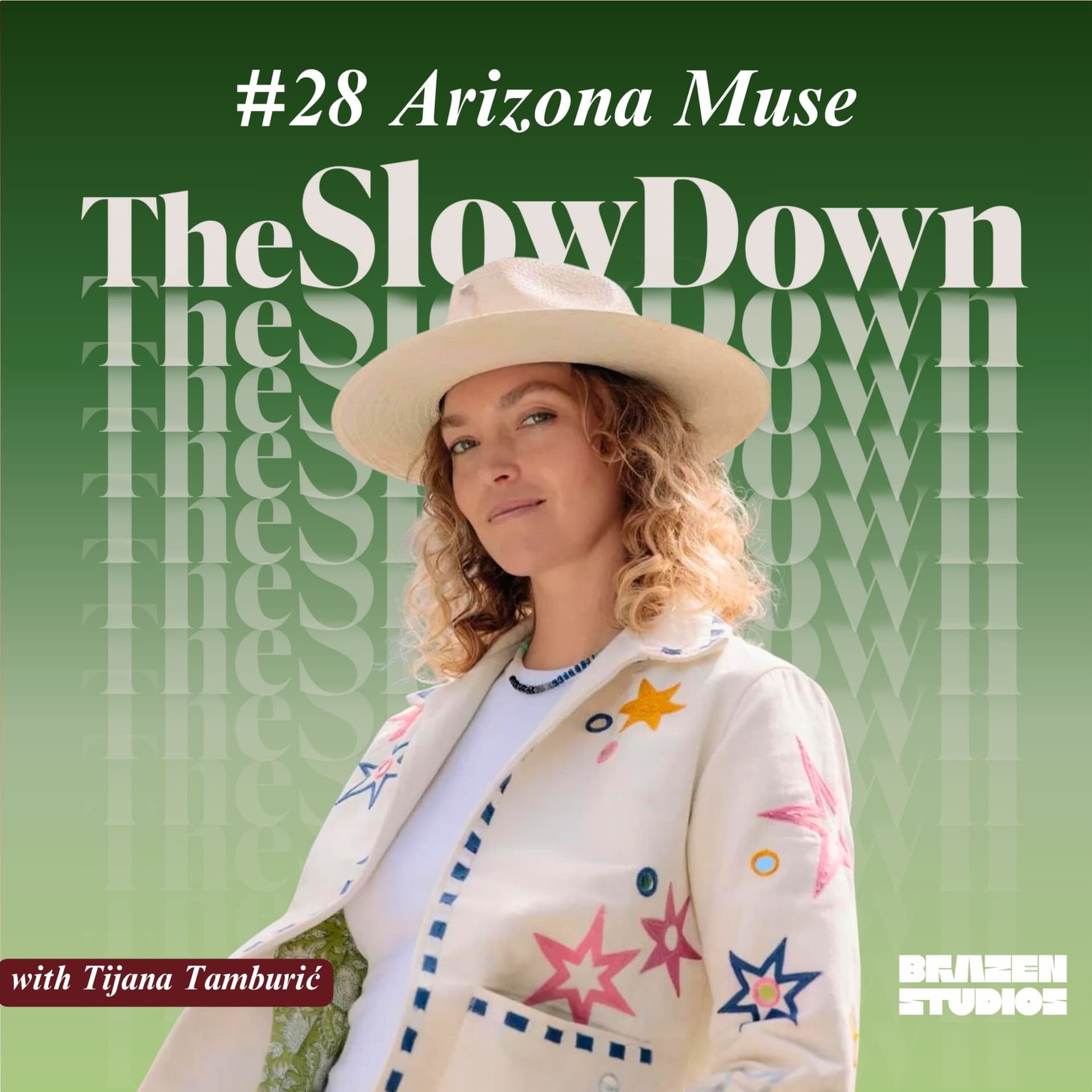
Arizona Muse: On Taking Control of Your Life, Motherhood & Soil
Podcast Overview Host: Tijana Tamburić Description: This podcast explores the concept of success beyond the hustle culture, providing personal anecdotes and insights to help redefine success in a sustainable and fulfilling way.
Guest Introduction Arizona Muse is a renowned model, having appeared on over 40 international Vogue covers and worked with iconic brands such as Prada and Chanel. Beyond modeling, she is a committed climate activist, educator, and founder of the charity DIRT, which focuses on soil regeneration.
---
Key Themes and Discussions
- Early Life and Career
- Background:
- Grew up in Tucson, Arizona, and Santa Fe, New Mexico.
- Experienced a dual cultural upbringing between the U.S. and the U.K.
- Modeling Career:
- Started modeling at 18 after being scouted in Santa Fe.
- Faced challenges in the industry, including body image issues and mental health struggles.
- Transitioned into modeling after becoming a mother at age 20, despite initial doubts about her career.
- Activism and Climate Advocacy
- Transition into Activism:
- Shifted focus to climate activism after learning about the environmental impact of fashion.
- Promotes biodynamic farming as a crucial solution to the climate crisis.
- DIRT Charity:
- Founded to regenerate soil and restore ecosystems.
- Struggles to gain funding for soil-related initiatives due to a lack of public interest.
- Relationship with Time and Success
- Re-defining Success:
- Success for Arizona is now about feeling alive and aligned with her values.
- Engages in practices that promote mental and physical well-being, including routines that provide stability for her family.
- Personal Growth:
- Advocates for mindfulness and understanding one's relationship with time.
- Emphasizes the joy of learning and finding purpose outside of societal expectations.
- Parenting and Family Dynamics
- Motherhood:
- Discusses the challenges of being a single parent and the importance of introducing partners to children.
- Shares the significance of stable routines for her children and the family dynamic.
- Fashion Industry Insights
- Critique of Fashion:
- Addresses the environmental degradation caused by conventional fashion practices.
- Advocates for transparency and ethical production in the fashion industry.
- Fashion as a Polluter:
- Highlights the need for consumers to be aware of their clothing's environmental footprint.
---
Key Takeaways
- Activism in Fashion: Understanding the environmental impact of clothing can empower consumers to make informed choices.
- Mental Health: Struggles in high-pressure careers, like modeling, can lead to disordered thinking and require a supportive network.
- Value of Community: Building connections with others, particularly in farming and sustainable practices, fosters a sense of belonging and purpose.
- Re-defining Success: Success is about personal fulfillment and living in alignment with one’s values, rather than societal pressures or material gain.
- Learning as Healing: Engaging in new interests and continuous learning can provide a sense of purpose and well-being.
---
Resources and Mentions
- DIRT Charity: [DIRT Charity](https://www.dirt.charity/)
- Soilonic: [Soilonic](https://soilonic.com/)
- Demeter: [Demeter](https://demeter.net/)
- Founders Forum: [Founders Forum Group](http://ff.co)
- Arizona Muse on Instagram: [Instagram](http://www.instagram.com/arizona_muse)
Closing Remarks The episode is a powerful reminder of the importance of redefining success, understanding our impact on the environment, and nurturing personal connections in a fast-paced world. Arizona Muse’s journey from modeling to activism illustrates that it's possible to re-align one's career with personal values, ultimately leading to a more fulfilling life.
Written by AI. May contain mistakes. Listen to the episode to check what was said.
Chapters
Tap a time to open that second in VOArizona Muse: From Fashion to Activism
0:45 to 2:44
Arizona Muse shares her journey from a successful modeling career to becoming a climate activist and educator.
“And she speaks passionately about biodynamic farming as one of the most powerful solutions for the climate crisis.”
Childhood Influences and Early Life
2:44 to 5:35
Arizona reflects on her upbringing in Tucson and Santa Fe, shaping her values and career.
“I'm really proud of myself for ejecting at age 23 and coming to live in London and Spain as well.”
Modeling Career Beginnings
5:35 to 8:25
Arizona recounts her early experiences in modeling, including challenges faced and her eventual success.
“It rolls off my tongue, unlike the word Zoe, which never did, even though when I say it for other people, it does.”
Transition to Motherhood and Farming
8:25 to 10:40
Arizona discusses her transition into motherhood, the impact on her modeling career, and her interest in farming.
“It is incredible when your child turns into an adult.”
Empowerment and Disempowerment in Modeling
10:40 to 13:00
Arizona talks about the disempowerment models face in the industry and the importance of well-being.
“Just super control into the hands of the agents.”
The Burdens of Success
13:00 to 14:00
Arizona reflects on the pressures of success in modeling and its effects on personal well-being.
“And the contract for that was like 12 centimeters thick of one sheet after another of paper.”
Modeling Industry Insights
14:00 to 16:50
Exploring the dynamics of the modeling industry and the impact on self-esteem.
“My eyes are wide and my mouth is dropping.”
Single Parenting Journey
16:50 to 19:00
Discussing the challenges and rewards of single parenting and introducing new partners.
“Here's our deliverables that we need to deliver to you.”
Mental Health and Modeling
19:00 to 24:40
Examining the mental health struggles associated with the modeling industry.
“He wasn't, he was clearly not having that narrative as he met Nico.”
Rediscovering Purpose through Learning
24:40 to 27:00
How learning about biodiversity and the environment helped heal personal struggles.
“It is one of those things that I think many people agree.”
Show all 32 chapters
Connecting Fashion and Sustainability
27:00 to 28:00
The initial steps toward understanding the fashion industry's impact on the environment.
“As you started to learn more about farming, biodiversity, regenerative farm, the things that were interesting you, you were also still modeling.”
Connecting Fashion and Biodiversity
28:00 to 29:59
Learn about the relationship between fashion practices and biodiversity conservation.
“so super normal activity for me, but this one was a biodiversity charity.”
Awakening to Fashion's Impact
30:00 to 31:39
Discover the moment of realization about the fashion industry's environmental impact.
“And if I had stopped at a mainstream narrative, it wouldn't have led me very far in that quest to understand the fashion supply chain.”
The Journey into Activism
31:40 to 36:39
Explore the evolution of public speaking and activism in the fashion industry.
“And it turns out I'm super nerdy about supply chains.”
Practical Tips for Conscious Fashion Choices
36:40 to 41:39
Get actionable insights on how to make informed clothing purchases and support ethical brands.
“Is that what you want to happen in the world?”
The Dirt Charity and Soil Regeneration
41:40 to 42:00
Understand the significance of soil regeneration in addressing climate issues through charity work.
“Talk to the businesses from which you buy clothes.”
The Importance of Soil and Charity
42:00 to 44:23
Explore the challenges and importance of soil regeneration as a climate solution.
“And what's interesting to understand is that often conflicts are created by climate pressures.”
Introducing Soilonic: A New Investment Approach
44:23 to 46:14
Learn about Soilonic, a cryptocurrency aimed at supporting soil regeneration.
“this is part of the reason why I'm starting my new company, which is an investment vehicle to accept money into soil regeneration.”
The Plight of Farmers and Economic Challenges
46:14 to 49:26
Understand the financial struggles of farmers and the impact of debt on their lives.
Regenerative Farming vs. Conventional Practices
49:26 to 51:38
Discuss the differences and advantages of regenerative farming over conventional methods.
“These are people who grow everything we need for us.”
The Challenges and Views on Fame
51:38 to 56:00
Examine the pros and cons of fame and its impact on personal connections.
“And then I learned so much more about agriculture.”
Reframing Fame and Validation
56:00 to 57:14
Discover how to redefine success and fame beyond social media metrics.
“I have no ambition to increase my notoriety or increase my known-ness.”
The Importance of Routine
57:14 to 59:06
Learn about the transformative power of establishing routines in life and parenting.
“And I also wanted to re-bring up Boniface, your husband, partner.”
Changing Your Relationship with Time
59:06 to 1:01:12
Explore strategies to shift your perspective on time management for a balanced life.
“I've realized that I am someone who loves spontaneity and I do love to be free.”
Harnessing Meditation and Prayer
1:01:12 to 1:03:07
Uncover the benefits of meditative practices and how they can create free time.
“It wasn't bad, but it did make me tired and it did make me exhausted.”
The Role of Witchcraft in Slowing Down
1:03:07 to 1:05:36
Understand how practices like witchcraft can provide a deeper connection to nature and self.
“I don't know what it's going to be yet, but I'm just going to make the time for that.”
Redefining Success and Aliveness
1:05:36 to 1:07:48
Learn how to measure success by feeling alive and connected to your true self.
“What can I do in every moment to make sure that I am feeling alive?”
Legacy and Its Changing Significance
1:07:48 to 1:10:04
Examine how views on legacy evolve with age and the impact of societal expectations.
“It's really fun as a concept to live in this aliveness.”
Reevaluating Legacy and Ambition
1:10:04 to 1:12:00
Explore the evolving meaning of legacy and its impact on relationships.
The Importance of Farming Experiences
1:12:01 to 1:13:16
Discover why connecting with farming can enrich our understanding of life.
Shifting Focus from Self to Community
1:13:17 to 1:14:46
Learn how engaging in communal activities can enhance personal well-being.
Acceptance and Personal Growth
1:14:47 to 1:16:20
Understand the journey of accepting personal struggles and finding peace.
“I feel like I've been successful in achieving getting out of my own way.”
Transcript
Automatic transcript. May contain errors.0:04Hello and welcome to The Slowdown, your time to redefine success and growth on your own terms with a little inspiration from others. Today's guest here at Brazen Studios is someone who has lived multiple lives. Arizona Muse has graced more than 40 international Vogue covers and starred in campaigns for some of the world's most iconic houses. Prada, Chanel, Estee Lauder, Louis Vuitton, the list goes on. She's one of the most recognizable faces in modern fashion. But the part of Arizona's story that moves me the most is her becoming a climate activist, educator, and founder of DIRT, a charity dedicated to regenerating soil and restoring ecosystems.
0:45And she speaks passionately about biodynamic farming as one of the most powerful solutions for the climate crisis. Arizona now works as an impact consultant for brands trying to meaningfully reduce their environmental footprint and serves as an advisor and ambassador to the John Innes Center for Soil and Crop Research. She also co-founded Soil Onyx and curates Landed, the Nature-Based Solutions Investment Conference in partnership with Founders Forum. Arizona has managed to career shift, have a greater impact and slow down. She's working on something that I think is one of the most important resources we have, soil, and has beautiful routines and practices that help her and her family feel grounded, all of which I explore in this episode.
1:34Arizona it's an honor to have you here your work your clarity the way that you've turned purpose into a daily practice is exactly the kind of energy the podcast is made for I have so much I love about you and I'd like to unpack but I think it's important always to provide some context on who you are so to better understand the decisions that you've made in your life and your values. So the question I always like to start with is how and where were you raised and what was success modelled for you like when you were younger? So I was raised in Tucson, Arizona and Santa Fe, New Mexico but I was born in Tucson slightly before I was raised there though I lived in London because my mom is English and so we were living between London and Tucson when I was zero to three years old and then my brother was born and we kind of settled in Tucson, Arizona.
2:28But I started going to nursery school in London. So I must have had a British accent at one point is something I like to think of fondly because I do sound American because I do, I did grow up in that country and that has shaped a lot of me and it's shaped a lot of what I don't want to be as well. I'm really proud of myself for ejecting at age 23 and coming to live in London and Spain as well. And I've done a lot of decolonizing of myself and de-westernizing of myself, which has been a big part of my journey. And yet I'm really proud of and feel like it's important that I grew up in the desert, that I grew up with water scarcity, that I grew up with brown rice and broccoli and organic food before it was cool and shopping at a co-op in Tucson, Arizona that still exists now.
3:15And all of these things that were part of my American culture were important and were and are still part of me and did inform a lot of what came to pass in my life so far. I'm 37 now and I've spent a lot of my life, particularly my adult life, in activism and in creating impact, usually positive impact, I like to think. Although we have to admit and be honest with ourselves that if you are in a city, if you are in a western country you are having a negative impact no matter how hard you try me and my little family of four are having a far worse impact on the environment than a Sudanese family of 11 and that I think is a very important distinction to make because we can sometimes blame pollution on overpopulation and big family sizes no no no no no no it's lifestyle it's lifestyle it's how we live what we consume and what kind of plastic it was wrapped in how many flights we take all of these things I also I think I asked you this last time but the name Arizona Muse that is your actual name it's my actual name I was born Arizona in the desert of Arizona and my mom was the one who said oh we should name her Arizona and my dad who's from Tucson Arizona but hadn't been living in London and San Francisco for many many years and met my mom in London through the art world he's a an ancient art dealer and procurer my mom is a was at the time an ancient art restorer and so they met through their their careers and my mom is now she she went branched off into psychology and is now a parenting coach but she um wanted to name me Arizona and my dad growing up there said that's not a name but they did they named me Arizona Grace and my dad's last name is Muse and then I was born and I was so small and I think that what happened is they got cold feet about such a big name and they found a nickname for me so I grew up being called Zoe and that name never it's a very pretty name and it never resonated with me it even got stuck in my mouth as I tried to say it as a child and I was so insecure about my name and I also knew that I had this enormous a secret as a name which was on my passport and then I started modeling as a late teenager and I was modeling as Zoe my cards were made as Zoe and then my first flight that I needed to take through my agents they needed my passport I was like oh no I hate this whole passport situation this has always been so hard for me here's my passport cringy cringy cringy and they looked to my passport and called me and they were like uh so so what is your name I was like oh that old thing oh don't worry about that it just just yeah you'll have to book it under Arizona but it's fine we'll just not talk about this ever again they were like no this is a gold one exactly they were like well we like that name better bye and they reprinted everything didn't ask me I was like and it turns out after three weeks I got used to it and I really liked it and I'm really I really like the name Arizona.
6:29It's easy for me to say. It rolls off my tongue, unlike the word Zoe, which never did, even though when I say it for other people, it does. It just was when it was associated to me. Didn't feel right. Didn't feel right. So yes, that's my whole name story. So I really am very compassionate with anyone who has a stressy name story, which it turns out a lot of people do. It's not a straightforward thing having a name. Yeah, it turns out. It turns out. And it's interesting because having been a model too, usually it's the other way around. Agents are desperately trying to make your name more interesting.
7:04Well, on that topic, where and when were you scouted? What was kind of early life like? How did they then find you? Was this like a normal thing to be happening in Tucson, Arizona? Not at all. So when I was nine, I moved from Tucson, Arizona to Santa Fe, New Mexico. also not a normal thing to be happening happening in Santa Fe and I did a few test shoots as a 17 year old 18 year old then I moved to LA when I was 18 I was first of all I was kind of found or scouted by someone who became my godmother she's an amazing woman called Claudia Carrera Costa and she is um she had been a model for a long time and she said to me she met me in Santa Fe where she was living at the time and she said um would you like to start modeling I'd love to help you So she brought me to LA and met agents and she brought me to Paris and I met agents there.
7:54And, and then I, it started, my career kind of started, but not really as a 18 year old and I didn't really like it and it didn't really go very well. And I got a lot of feedback like, oh, maybe you could just lose some weight in your hips and things like that. Pretty hard stuff to be told when you're very, very, very young and didn't think there was any problem with you until then. Yeah, exactly. And then I got pregnant. So then I had my son who's now 16 and has muscles everywhere. He's so amazing. It is incredible when your child turns into an adult. Just watching that physical change is pretty extraordinary.
8:32But you were 20 at the time. I was 20 at the time. Yes. And so my career was over. I was like, okay, I'm going to be fat forever. No worries. That wasn't going very well anyway. And I said to myself, I think I want to become a farmer. and I was my plan was that I would and I did move to move in with my mom in who was living in Massachusetts at the time which is a real paradise for biodynamic farming regenerative agriculture it's just amazing the people even then even 16 years ago the people there were doing some really extraordinary things on soil and with soil regeneration which would later become a big passion of mine, but at the time I didn't even know.
9:12But I thought, okay, I'll become a farmer. And then when my son was about just about one years old, not even, less than one year old, 10 months old, I wasn't very fat at all anymore. In fact, I was thinner than I'd ever been, which happens quite often to mothers after they have a baby. You just kind of breastfeeding and everything, you just like shrink and you just shrink. And so I shrunk and I was like, well, then maybe I should try maybe I should try again so I got in touch with my old agency next and I contacted them and I was like so I've had my baby and I sent them some pictures and they were like yeah sure we'd love to resign you you can start again and I was 21 which was kind of old for a beginning of a career weirdly yeah it's like very old and uh because I really hadn't had a career before I'd never as a model I'd done a few shoots and it hadn't turned into a career I'd never done a show season and as you know a show season is makes or breaks it makes or breaks you in so many ways but it can make or break your career yeah and so I did my first show season in September 2010 and that went really really really really well and I didn't know much about the industry so I didn't even understand how well that went but looking back now that I understand more it was pretty extraordinary what happened I was offered an exclusive at the very beginning of the whole season by Balenciaga which is one of the last shows in Paris at the end of the whole fashion month and that's huge that that would mean that I wouldn't do any shows in the whole three weeks and four well four weeks leading up to the Balenciaga show and then I would be the star of the show Balenciaga so what happened is we said no to Balenciaga because I wanted to do the shows I was like I'm here I want to do them and so I said no I still opened and closed Balenciaga at the end of the season which was great and loved that show it was amazing and uh but I did I did get a semi-exclusive with Prada in Milan so I didn't do any other shows in Milan except for Prada and then what happened is I also did I opened and closed every show I did basically and how to look in the middle sometimes and then I also got an exclusive between Prada and Yves Saint Laurent for the campaign they shared me for their campaign which they had never done before if they do an exclusive on a new face they want just the new face just to themselves so that was pretty amazing and this all kind of went over my head I didn't really understand at the time which also makes me understand that the communication channel between me and my agents was very poor and very weak and I wasn't really being like the word strategy was never used with me.
11:50Never used with me. Until I'd been modeling for 10 years. Right. It was shocking to me. It was like, what's your brand? Like, where do you want to be? How do you want to be managed? None of this. None of that. None of this. Just super control into the hands of the agents. Very little information trickled down to me. I had no idea what to expect. And I didn't feel like I was engineering a career at all. And that was the point I was trying to make by telling you all of this about that first season or second, whatever it was, is that it made me feel, and every single season after that, made me feel so disempowered and so unwell eventually.
12:25And this is how I got into activism, is I was on the floor with this career that was up in the air, skyrocketing, like labeled an icon of models in the industry and on models.com, on all the lists of models.com, like just going up and up and up and up. really fast and yet I was spiraling down really really fast in myself in my mothering in the rest of my life and I just want to raise awareness about that like we have an industry slash society that allows people to become very very very very successful and very congratulated and yet we don't check in with them how do you feel also very young at a very young age I mean acting modeling it's also like kind of beyond your control it's also happening it's being orchestrated and puppeted by by a lot of other people who are booking and doing these contracts and you're sort of very much oblivious to it my biggest contract I ever had was with Estee Lauder amazing contract so much money so much prowess it was the it's the biggest contract that every model wants to have is what I was told.
13:35And the contract for that was like 12 centimeters thick of one sheet after another of paper. And I was 22 years old and I had, my agent said, oh, well, you need a lawyer on your side to review the contract. So we've set up a meeting with a lawyer for you to be on your team to review the contract. The meeting was super intimidating. I went into the office with my agent, breathing down my neck. The whole contract was set on the table in front of me and kind of flipped through by the lawyer who said we reviewed all of it and it looks really great like zero oh how do you feel about that we've looked at this clause and like we wonder if maybe does that make you feel comfortable like there are clauses in these contracts about what your body looks like and it would be so nice if models were if models had chat gpt back then or somebody behaving as if they really cared about your needs and your well-being and it will actually lead to more success like the reason that my career that I had to kind of move away from my career and step back a bit is because I felt so unwell because I felt so disempowered if I'd felt more empowered sooner I probably would have continued on modeling in the way that I was for longer which eventually makes more money for the agent so that's what they want and so I really encourage all agencies see this see that when a model is feeling great about herself she will look her best she will do the work to be her best she will be the best version of herself and therefore want to continue on with her career for the longest possible earning the most possible for longest which was a decision I decided I didn't want to do and I went into activism and started a charity and let me tell you that wasn't the way to make the most money yeah i want to talk about this which is like what is the way to money versus other things that you gain from from that but yeah i mean it's interesting the term booker as opposed to manager like i think people see themselves as mother agents or bookers but when i speak to my friends who actually have talent management in the kind of modern sense of the term um they're talking to me about, oh, at the top of every year, we have a meeting, we sit down, we say, what would you like to achieve in this year?
15:51What are your goals? My eyes are wide and my mouth is dropping. Do you want to do this? I'm like, never. No one ever. Never. It was just like, you're doing this job or you're not doing this job. You're one of 50 other people that we manage. There's no consideration of what might you want to do because the idea that you speak is not part of the role. No, no, no, don't speak at all. yeah it just doesn't speak at all I remember um being in LA and not not booking jobs and I was like what's going on and I called my agent I was like any sort of feedback anything you can give me and they were like you know if you could stop sort of telling people that you have a university degree and I just graduated from UCL and I was stoked I was proud and they were like oh yeah what if you know they asked a few basic questions like oh you know what what have you been doing recently and I was like I just got a degree in history from UCL and they were like maybe don't say that I didn't have that problem I never went to university well to conclude that that part on agencies it's it is possible to do it right and I feel like now I've got it right and with DNA New York next in London and we management in Paris and I also in the past worked with climate PR agencies that was really pivotal for me to be like oh I can be represented by someone who really feels like they work for me and they did have those strategy conversations with me and they did sit down with me and go, what do we want to achieve together?
17:07Here's our deliverables that we need to deliver to you. And that was really transformative. That was Browning Environmental. And now I feel like I'm in an amazing place. I'm super happy with my agents. I feel like they really understand me. They don't push me to do things I don't want to do. They're responsive when I ask them to do things that I do want to do. And it's, that is a good relationship. And it's just, I wish I'd had that sooner. I so wish I'd had that sooner. So I really recommend to anyone who's modeling or has any kind of representation for whatever they're doing if you're not happy and if you don't feel glowing about it go and look elsewhere because there are there is the possibility to have a glowing relationship and so just keep going until you find it is is a piece of advice and I think the advice for agencies is take every person talent model actor whatever it might be on your books seriously like have these serious conversations because I think especially in my agency where there was this notion of there was the models and then all of a sudden there was like an influencer talent division they had those conversations with them but not with us and I would have liked to have been treated in the same way because together if we work together to your point if I'm feeling great I want to make whatever content I want to do to my platform could grow to whatever these other people have but if I'm not being treated the same way you know it was like a sort of different caliber of job for us yeah so anyway sort of small diversion on agencies but there was also something else I wanted to pick up on there you mentioned after you had your baby that you wanted to move back in with your mother is that because you single-parented I did start single parenting when Nico was seven months old and I on and off single-parented until he was three and then I completely single-parented until he was six and then very sadly when he was 10 his original father passed away and he has now as a father my husband who is an amazing dad for Nico it's been absolutely beautiful they met when Nico was five so well before his original father passed away and it's been really beautiful to witness what an adoption can look like and what a real family relationship and connection can look like even when blood relations aren't there these two even look alike their mannerisms are alike they they have become each other and that is just so it's it's extraordinary to witness and I'm so grateful on behalf of my son I'm so grateful for me and I'm so grateful to my husband for doing this with how he did it was just love he approached Nico with love he didn't think oh I wonder if this is gonna work out oh I wonder if he's gonna like me oh what if I do oh I didn't like what he did.
19:55He wasn't, he was clearly not having that narrative as he met Nico. He just approached him with love and fun and open arms and open heart. And I think that is the way to approach children in any circumstance, but particularly if you're dating someone and if they already have a child or children, of course it's a complex situation. But what I like to think about is like, you wouldn't, what I like to think about when I'm thinking about the concept of, um, if you are a single parent and you're wondering whether or not to introduce your child to your partners I encourage you to introduce them you wouldn't not introduce your child to a friend would you yeah on the basis that maybe your friend won't be your friend for the rest of your life like that would be crazy of course another person it's just another person it's just another person and children are very um so so resilient and they're so at ease actually and it's our disease that creates dis-ease, not disease as in unwellness, but dis-ease as in uneasiness in children.
20:57So my recommendation around single parenting, which I guess I have a lot of recommendations, but this one is just invite other people into your children's life and make sure it's safe and happy and fun. But I wouldn't keep partners away from children on the basis that they may not last forever. I agree with that. Thank you for that digression and clarification. Another one. We might do a few. Continuing the trajectory of your modeling career, as you're feeling this kind of mental paradox of these two things, was there a tipping point that you felt this is now I'm feeling the spiral has hit its bottom and I need to change something?
21:36yeah there were so many and I wanted some kind of crazy thing to happen that would make me have to stop like I wanted to have a mental breakdown or I wanted to get hit by a car or I wanted to I wanted something external to come and save me from this place that was so uncomfortable and in this downward spiral and I realized at some point nothing was going to do that why did you feel like you couldn't live oh because of because of feeling like I had no other options had no degree had no time had no skills had I felt like there was no where to go I also was my mental health was really suffering so I didn't feel confident I didn't feel secure I felt really low self-esteem wise and so I didn't believe in anything that I could do and I also turning away from modeling is very hard because you can earn a lot of money in a very short amount of time and those options come in and the option is one day and a lot of money and you're like oh my god I hate this but can I really turn it down my friend calls it the golden handcuffs yes totally golden handcuffs and eventually my body reacted and I began to look less like a model and I got chubbier and that was horrible at the time I mean I hated myself so much and I felt it was one of the things that contributed to me feeling out of control and it turned a lot of self-loathing onto me and a lot of just noise mental noise about not eating eating not eating eating exercising not exercising all of this through the exhaustion and overwhelm of being in something that I didn't like and being a single parent and these two things really fighting against each other all the time when I did things that were great for my career they were not great for my son when I was being great for my son it was not great for my career so I was in this constant dilemma and feeling very alone and it was very very at the time it felt totally impossible to step away from modeling but then my body helped me by receiving negative feedback from my agents and so that was a that's a funny thing to look back on and be like hated that at the time but in hindsight and now I'm feeling and looking the hottest I've ever looked in terms of like figure and just my balance with eating and exercise feels so natural I don't have noise in my head anymore and yet I look in the mirror and I'm like, I'm pleased with that.
24:15And that's so different than how it used to be. I used to be, I hated mirrors. I hated what I would see every time I exercised to punish myself and I exercised to reward myself and I ate to punish myself or I didn't eat to punish myself and I ate to reward myself. It was all wrong. It was just all wrong. And it was all done out of self-loathing. and I was my own predator and I was my own worst enemy and no amount of nutritional knowledge can save you from that I knew everything about how to do it right and yet that's not the key this the psychosis is beyond that but I think what some people I think might struggle to comprehend which I'm sure you've had is they go but you were a supermodel like objectively and according to everybody else you're beautiful and so I think is there like more of a concrete example that you can give on how how those two feelings can coexist like what is something that someone would say that might trigger you or that might because I think people forget that when you're in that industry you're then being compared to other models in that industry you're not being compared to the average person on the street I was comparing myself to absolutely everyone all the time whether they were models or not and I did this thing in my head where I would make an assumption that everyone else was fine all the time and I was not which made me feel so different from everyone else and I would look at pictures of me in huge campaigns billboards Louis Vuitton all the all the most amazing like supermodel stuff and I wouldn't see nice things isn't that sad you always see that but the worst critics right and but do you think that's all because of the nature of the industry and the way that it operates or was that or was it also something in you and your own mental state regardless of modeling hard to know and I've wondered this would I have had disordered eating and had body dysmorphia slash self-loathing had I not been a model I don't know obviously because I've never not been a model but I have managed to get through it in a way that it no longer is up to here in my head.
26:28I'm no longer suffocating in it. I'm no longer drowning in it. It is one of those things that I think many people agree. It's, it never leaves you. It's a bit like a dormant virus. It can always, it can always be reignited and always be reawoken. But the point is to bring enough into my head that I can focus on that's so much more interesting. And so then I branched out just my mental space into things that I was interested in learning. And that was for me the real savior once i realized i was interested in biodiversity and i was interested in the earth then i started lapping up books and data and documentaries on this subject oh i the noise quieted oh i could focus on something else other than just myself and the way i looked it was really healing and that is so amazing to know that learning something can be the thing that brings you out of whatever it is you're obsessed with that's unhealthy, whether that's an addiction or body issues.
27:28Learning is such a key to happiness. It really is. As you started to learn more about farming, biodiversity, regenerative farm, the things that were interesting you, you were also still modeling. What point did you start to realize how wasteful the fashion industry was and start to think about the products that you were wearing and start to create that dissonance? Very early on. So my first step into this new learning path was when a friend of mine took me to a lunch that was a charity lunch, so super normal activity for me, but this one was a biodiversity charity. And that word biodiversity wasn't being used around me commonly at the time when I was 25, 26.
28:09And I was just overtaken with excitement about this. And I met the founder, Jessica Swaden, who's been a wonderful mentor to me throughout this career in activism. And she very quickly said, Oh, well, you're in fashion, you should meet my friend Nina Morenzi, who has the sustainable angle. And so I sat down with Nina Morenzi. And she became an amazing mentor of mine as well. And together, those two women put the dots together that were like, you could do something about this, you could connect fashion and biodiversity. Nina showed me all the fibers that we are growing to make our clothes are being grown essentially the same way as food is being grown.
28:48They're either being grown organically, biodynamically, regeneratively, or they're being grown with a whole host of toxic chemicals. The issue is that fashion items are not meant to be eaten. So they've even lower regulations on toxic chemical usage, and they have even higher absorption levels of toxic chemicals in the soil, therefore in the water, therefore on the field, because chemicals don't just stay in soil. They run off the field in the water and they get into the lakes and the rivers and eventually the oceans. And we are just absolutely drowning our planet in toxic chemicals from agriculture.
29:21And all the people who are working on ocean regeneration are dealing with water toxicity, mostly from chemicals from land. As well as overfishing being a massive problem in the ocean, it's chemical pollution from mining and from fashion. Fashion is one of the biggest polluters of water. And we all wear clothes. So even if you don't think of yourself as being a part of the fashion industry, because maybe you don't work in fashion, you do wear clothes and you wear them every single day. Did you feel when you were told all of that information, oh, my God, I'm supporting this industry by being a model.
29:58I'm the face of these campaigns. People are buying products. I'm doing it. I want to throw everything in the bin. And I can't believe I'm doing this. or were you immediately like I can really see how I can marry these two things together and support brands that are doing it right or shine a light on brands that aren't doing it right both definitely both this was shocking to me that I didn't grow up with this awareness because I did grow up with an awareness around food as I said I grew up in brown rice and broccoli and co-ops in Tucson like my family was very aware of food and food and nutritional health and farming health in that sense but we hadn't made that we hadn't jumped that gap across to the fashion industry and what we wore and so I was really surprised and I'm actually lucky that at the time I didn't turn a huge amount of blame on myself I always already was blaming myself for everything so it was great that I didn't blame myself again for this and instead I went how could you not have told me and I blamed to the industry and that was nice that was nice because it put me into action actually it spurred me into movement and change rather than self-loathing again once again was this your first active feeling of activism i suppose yeah absolutely action motion yeah yeah and the activism didn't start immediately it was first a lot of education and learning and seeking out information and knowledge and finding obscure pieces of knowledge i was really interested in learning more than what the mainstream narrative was, which at the time was great because there was hardly a mainstream narrative at all.
31:34And if I had stopped at a mainstream narrative, it wouldn't have led me very far in that quest to understand the fashion supply chain. And it turns out I'm super nerdy about supply chains. I love them. I want to know every single link along them, who's doing what, what chemicals are used, what impact do those chemicals have on the garment, on on the piece of wood on the whatever it is that is being made but also on the environment what happens when those chemicals are breathed in by the factory workers how do i feel about that ah do i suddenly care about factory workers that i didn't even know existed like that's a that's a big one how can we tease away at these relationships with people that we don't have relationships with because that's really important we must fictionalize a relationship with the people that we don't know who live along these supply chains because let me tell you we will not make a change in our lives because it's a little bit hard because it's inconvenient because we don't care enough because we're busy because of all these reasons if we don't love that person so you have to make yourself fall in love with the farmer in india who grew the cotton with the garment worker in bangladesh who sewed it together you must do that it's our responsibility as people who wear clothes to form relationships with the people who made them for us even if we're never going to meet them.
32:58I made a commitment to being transparent about the making of this podcast right from the start so here's a quick update of the financial side. Season four of The Slowdown does not currently have a sponsor. I really want this podcast to bring to light people, stories and approaches to life that I admire and don't often see in mainstream media so I'm taking on the studio editing and making costs of this season myself. If you're a brand or if you know a brand that cares about bringing honest and applicable career advice to people at all stages of their journey, please reach out. I'm eager to find the right partner, hopefully long term, to help fund and continue the show so that it can keep growing.
33:37In the meantime, your comments, reviews and shares of this episode are so important. If you're not already, hit subscribe, share this episode with a friend, drop a comment on Spotify and a review on Apple. It really does make a difference and continues to inspire the change that we're hoping to make in slowing down. Thank you so much for your support. After all the learning, what was the first bit of action or activism that you took? Was it deciding more consciously the brands that you worked with? Was it public speaking? Like, where did you go first? So Nina Marenzi invited me to speak on a panel that she was organizing on my birthday, September 18th.
34:19And I was absolutely terrible. I was a really awful public speaker. I was super shy. My voice was a mousy voice and I didn't really feel worthy of speaking. And so that was a, an interesting experience. And what was amazing about it was that I wanted to do it again. and I wanted to do it again badly I was like passionate about doing it again and every single time I did it I got so much better and the learning curve was so steep in such a great way that I started to feel good about myself like oh oh this is a nice feeling gosh I never felt that before turns out purpose is one hell of a drug turns out and I'm so grateful to all those people who had me on panels when I was not a very good public speaker at all.
35:09And I did take some public speaking lessons. And I watched a lot of public speakers. I love TED talks. I love, I love watching speakers. I love going to panels and listening to speakers, particularly scientists. I really love listening to scientists on panels. That's a real like niche for me that is just amazing. And, and I got better and better at public speaking. And I really, really, really love it. and I went in waves like I can remembering my now 11 years of public speaking I there was a moment where I was like very into being very professional and every sentence I said was super well designed and came to a conclusion and then I would start again and this and that was fun for a while and then I was like let's shake it up let's not speak like that all the time and so there have been these learning curves and waves and and just realizing that you can go so many places with public speaking and it's really fun and it's it's I really invite everyone to do it and you don't need to do it on panels you can do it at birthday parties you can do it any at dinners you can do it at any time you get the opportunity and just dabble realize that this is something that everyone has the right to be doing is to just get the get the the adrenaline that you get when you stand up in front of a big group of people or a small group of people or on a podcast whatever it is like you it makes you speak differently you think really taking up space right it's about this knowledge of my what i'm saying is worthy and people will listen and i think that does a lot for any sense of self-loathing well i also just wanted to finish my sort of train of thought on on fashion and activism which is practical tips for people now how do you choose what clothes you buy i am super careful and the reason is that i just don't want things that have caused harm i just don't want them so in big factories there's a there's a big gender issue and the gender issue is that that often the supervisor is male and every single garment worker is female and the supervisor has an office with a closed door and there are stories many stories not just one story of how the supervisor finds it really normal to go and choose a woman on his lunch break from the factory floor bring her into his office and rape her and send her back out to finish her afternoon of work like whoa this is as I said this is normal this is not one story once that someone heard this is normal is that what you want when you wear your clothes?
37:43Is that what you want to happen in the world? No, no, it's not. So it's important to do the research behind your clothes. It's important to buy from brands who are choosing to do things in a way that they understand the full supply chain. So they have transparency. That's very important. And I would just say about certifiers, B Corp is one of them. You need to understand what the certifier is certifying because they're all different. Just having a stamp on a product doesn't mean that it's the same as all the other stamps. And I'm intimately aware of certifiers now because I work with one of them called Demeter, an agricultural certifier.
38:19They're the ones that have the highest standard in certifying of agriculture and they do food and wine. Great job there. At Dirt Charity, which we will talk about, we're bringing Demeter into textiles. Demeter textile standard is what we're creating. Because there are, there's actually a multitude of certifiers in fashion, but no one's doing the entire value chain and doing it to the highest standards. So we have several certifiers that are working maybe just on chemicals or just on cotton or just on little individual pieces. And the brands are overwhelmed with needing multiple certifications, needing to pay for multiple certifications and not really understand.
38:58Sorry, they may understand because it does say, but it's complex to understand. And it takes time to understand what each of the certifications really means and how to obtain it. So this is why one of the reasons why we're working with Demeter to create this new garment standard that is for all textiles to the highest standard of sustainability, regeneration, both for environment and for people for the entire life cycle of the garment. So also these garments are compostable. The only good place for a garment to end up is on a compost pile. Should not end up in a landfill. Toxic. should not end up in a waste pile in the Atacama Desert in Chile, which is unfortunately where millions of pieces of garments have ended up and they're mostly made of synthetic materials, so they don't decompose and they just leach toxic chemicals and they fall apart into smaller pieces over time.
39:51It's urgent that we only produce new garments made of natural materials that are not dyed with synthetic dyes because when you look at the label of your garment it usually doesn't tell you about the dye why not i ask why not the dye is one of the most important materials in the fashion industry because the whole dye element of the supply chain is one of the most negatively impactful parts of the fashion industry so why does that not appear on our garment label that's craziness the most useful thing to do with our money right now is to invest into the suppliers that are doing it right by changing suppliers or asking your supplier as a brand to change there's a wealth of information so the sustainable angle which is nina morenzi has a beautiful fabric expose every year in london in june so go to the sustainable angle future fabrics expo you will learn whether whether you make clothes or not if you wear clothes go lots of people go just to learn about there's panels all day long you can touch so many materials you can understand what it is to make things sustainably even to the energy because of course every factory uses energy is it solar is it where's the factory located all these practices excuse me that make a really big difference in the final kind of net positivity of the whole garment so it's really complicated and that's what I love about it and that's what we can all love about it fashion is not simple.
41:23It's not as simple as just going out and buying something and getting in a little endorphin rush. Like the real endorphin rush comes from when you know and comes from when you're doing something about it. So I really invite everyone in to activism and fashion because we all wear clothes. We all are valid here. Our opinions do matter. Talk to the businesses from which you buy clothes. Get involved in your government, your local government. Talk to them about how sustainability matters to you. Right now is a really important time to do that because there are a lot of other really terrible things happening in the world right now that are taking a lot of attention away from climate and sustainability.
42:02And what's interesting to understand is that often conflicts are created by climate pressures. So if we can make sure that everyone in the world has access to a future where they're not facing ecosystem breakdown, they have access to a future that's going to be less violent. And reducing the toxic chemicals that we're spraying into nature, there will be fewer wars. This is a fact. Where in that timeline then did dirt come into the picture? Why did you want to start a charity and why did you want that to be the focus? I wanted to start a charity because I thought that it would be a useful tool for people to give lots and lots and lots and lots of money to soil regeneration, which is one of the most important climate solutions that we have.
42:51What I've learned over the last four years of dirt is that people don't want to give a lot and lot of money to soil regeneration. They find it boring and irrelevant. So I'm still working on that, as are all the other wonderful organizations working on soil regeneration too. It's not the easiest sell. There are no directly correlated starving children who pictures of starving children raise a lot of money and there are no directly correlated fuzzy animal pictures that we can show either and fuzzy animals raise a lot of money animal sanctuaries find it really easy to make money to raise money for some reason so does cancer because cancer has really emotional stories that make people cry all the time and so as soil we really struggle i tell stories about microorganisms i tell stories about undergrowth and under stories and how a canopy no matter how tall it is can protect the surface of the earth and keep it 15 degrees cooler.
43:46Like, cool, but doesn't make you pull your wallet out in the same way that these other competitors, for lack of a better word, not that I feel like I'm personally competing against any other charities at all. But soil is as a stakeholder when it comes to philanthropic choices out there. So I've learned a lot about the philanthropic world. And it's a it's a really tricky one. It's a really tricky sell. It really is to convince people that they should just give dirt presents. People want something in return. And speaking of wanting something in return, this is part of the reason why I'm starting my new company, which is an investment vehicle to accept money into soil regeneration.
44:33So pretty much the same impact, but a very different vehicle. And this one is a cryptocurrency backed by the real world asset of soil. and it's called Soilonic and I'm so excited about it. We are raising investment right now. The coin of the cryptocurrency called Soilo will go live in March, in March 21st, 2026, which means that anyone can buy and sell our cryptocurrency called Soilo. And when you do that, you are directly investing into farmers who are regenerating soil, which is a great feeling and something really, really, really useful to the future. So anyone can invest. This is an opportunity that's available to an 18 year old who may be making their first climate investment ever, which means a lot to me because I felt very intimidated by climate investing.
45:26It's not easy. You have to be, have a certain amount of wealth. You have to feel confident enough to knock at the doors of wealth managers. It's really not easy. Even if you're like, but I'm a person who lives on this planet and I should be able to invest into the future of it being healthy, right? no it's not that simple it turns out but also in the same vehicle we can accept 150 million dollar investments from institutions who are private equity firms or pension managers and that feels super cool we're making accessible and democratizing climate investment i love that about soylonic and the end all goal is that we all actually invest in in order to grow wealth together both in the soil but also in everyone's wallets crypto wallets so this is a really exciting project for me also because it feels so different the response i'm getting yeah well the interesting thing about supporting regenerative farmers is you think why do we need to support them and and is it because and this is sort of naive guessing that we have reduced the price so much of of food and most farmers are using pesticides in order to produce more and they've created a system where you're incentivized as a farmer to use pesticides and and do it in this way mass agriculture whereas in order to encourage them to shift in their practices to to the theme of this podcast slow down in in the process to go with the seasons to protect the soil more to be able to have a more regenerative approach it's more expensive for them in terms of time in terms of how much produce they actually get and so on so it has to be supplemented or subsidized so much wealth in what you just said um i'll start by speaking to the is it more expensive to be a regenerative farmer question which is actually a myth and it's a really dangerous myth because it is the word on the street that it costs a lot more to be a regenerative farmer which is what is the obstacle that is stopping most farmers becoming regenerative farmers and actually regenerative farmers tend to have higher profit margins than conventional farmers because they're selling organic foods at the end or the reason is because they don't buy the two most expensive things of the inputs that the conventional farmers are buying which are chemicals and heavy duty machinery to work with crops that are genetically modified and the machinery has been designed alongside the crops so wheat has been bred as as it's genetically modified to all come to this exactly the same height and then the tractor has been built to be the height to harvest the wheat that grows all to that one height that isn't how regenerative farmers work when you're growing ancient grain varieties of wheat the einkorn for example those conventional wheats by the way you plant one wheat berry and you get about 20 wheats from it seems like a good return until you get to einkorn wheat where you plant one berry you get 200 but the problem is they come at all different levels so it's much more difficult to harvest them so that was when industry went let's breed that out let's breed in uniform wheat so that it can be harvested by a massive tractor oh and then we'll offer the tractor to the farmers and we'll finance it so they're in debt and then we'll be making loads of money on the financing as well as the sale of the tractor so the farmer buys the tractor because they've bought the genetically modified grain seed that they're growing.
Read the full transcript
48:57And then they're in debt for everything. And then they're in debt for the chemicals. And so then they're servicing their debt. So farmers are so financially vulnerable because they're servicing debt. And the debt is almost crippling them. And then they have to have crop insurance so that if the crop fails, and then the insurance is, it's all just like an economic balancing act that makes farmers feel so unhappy and disempowered that they commit suicide at higher rates than the average person. What? These are people who grow everything we need for us. These are people who should be considered heroes in our society.
49:35And yet they don't even want to live anymore because they're so crippled by the debt, by losing their land, losing their ancestral land. And it's so bad, the situation in agriculture, that we should all be up in arms about it. And then another thing that you said that was really useful was the subsidies. So right now we have subsidies that pay for agriculture because the price of the actual product has fallen so low that the farmer cannot support themselves by simply selling their crop. Not possible. Just not possible. Usually regenerative farmers aren't receiving subsidies, so they can support themselves with the price of their crop.
50:20It works. It works much better in a regenerative way. So then why aren't more people switching? Because they're trapped into the debt system. They're trapped in the debt system, and the subsidies are given for specific things. Like a lot of European countries have been giving subsidies for a long time in order to make, or the farmer will be given subsidies based on how much land they farm. so they end up farming to the very edges of their land in order to receive the maximum subsidy amount which is not what their land wants land doesn't like to be farmed in that way land likes to have lots of sections that are just for biodiversity that are allowed to go wild to have moths and and birds and insects of all kinds living in them to help to fertilize the crops and help to pollinate the crops like it's all just a big web of biodiversity on a healthy farm which looks very similar to nature when you're farming a really deep regenerative way your farm looks a lot like the forest next door it's not that different whereas when you're farming conventionally it looks wildly different to a forest next door and isn't it interesting that we we we look at a field and we go so pretty because we've been trained to think that that's pretty.
51:37I used to do it too. And then I learned so much more about agriculture. It's like, a field is a death trap for insects. It has nothing on it except for one variety of plant. That is like, it's heaven for the one insect who eats that plant, which is why then that insect gets overpopulated and then it gets sprayed with chemicals. But it's a death trap for all the other insects who don't eat that plant. I mean, it's just like, it's so simple when you learn about biodiversity to understand why agriculture all went wrong. But to try and understand the sort of reason why more people aren't, is it that you can't make enough food?
52:13We have this like problem where we need to make so much food. And if you farm in a regenerative way, if it looks like the forest next door, my vision is like a couple of crops scattered around the place. Is that making enough food to feed our population? Totally. It makes more food, actually. And the reason is because when you farm conventionally, you have about one or two harvests a year and you're harvesting one thing or two things or the same thing twice. And that is not a great way to eat if you're thinking about it or if it's cotton, whatever. Whereas a regenerative farm will have 27 harvests a year.
52:48I'll be harvesting a variety of different fruits, vegetables, meats, wools, everything, everything coming from one soil so that the soil isn't being depleted because soil doesn't like to grow the same thing over and over again because like humans plants have likes and dislikes lentils don't eat the same thing out of soil as do sheep so when you rotate all of these beings together over time you get soil that's super happy and it's a give and receive relationship with the things that are growing on it and then you don't need chemicals at all the need for chemicals falls away we need chemicals when we deplete soil and we want to grow one crop sounds like yeah it seems like we need to kind of go back to how we sort of used to farm and used to do things and at some point in history we've gone gone awry and gone wrong in quite a lot of things maybe it was when we invented the concept of financial institutions and money moving around invisible money that doesn't make any sense and that it became more important to be a banker than a farmer.
53:53I don't know exactly when we went wrong, but during colonization, during the agricultural revolution, when was it? Hard to say, hard to say, but many points, many points along history. So through the process of all of this, the combination of your modeling, the activism, the public speaking, the charity work, you've developed quite the public profile in terms of number of followers on Instagram, people that kind of recognize you or know your name. what would you say are the pros and cons of having a public profile fame does not make people happy it makes people caged and it makes people insecure and it's a I've thought about this a lot because I don't feel in any way famous right now I did begin to feel what that felt like in the height of my modeling career and it didn't feel good it was part of the thing part of the things that made me feel so unwell at the time.
54:44And what happened to me, my experience was that if people knew who I was, they would come up to me and tell me a few glorious things about what they thought about me that often didn't resonate with me at all about how I felt about myself. And then they wouldn't have anything else to say. And they wouldn't be able to tell me anything about them. And they would just glow at me. And it was like, wow, I mean, sweet once. But when that happens over and over and over again it is so lonesome no one can connect with you it's not a natural way to know people no one's actually curious because they have all these they have a parasocial relationship with you where they think they know you in some capacity and it's all pictures in their mind when they see you all the pictures that they've seen you in and so they can't get past that and so i think i've heard many times people who are famous say oh it's so refreshing to meet someone who just doesn't know who I am or they love going to countries where they're just not famous in that country at all because it's so relaxing to be able to meet someone and not have their full attention on you just like normal attention just like kindness of course is nice everyone likes that but like the attention level that you get when you have any kind of notoriety is exhausting and it's not normal we're not we didn't evolve like this humans and so it's uh something that I is not part of my ambition at all.
56:05I have no ambition to increase my notoriety or increase my known-ness. In fact, I really like circles of foragers and circles of farmers and circles of people who are doing nature-based things because that's super interesting to me. And then we can talk about interesting things that we're both interested in. And it doesn't matter what we've done on screens. And it doesn't matter what we've done except for things that we can actually talk about to each other and tell stories so that's how I'm reframing fame right now is like can we just maybe put fame on things we like to do in common instead of people we like the point of the show I think a lot of people strive for this external validation and they think oh I'll have made it when I have a hundred thousand followers five hundred thousand followers Like that's some sort of cultural proof that I have, quote unquote, succeeded in our view of things.
57:04And so to hear it from somebody that has, quote unquote, achieved some of that, to be reminded that that's not that's not the goalpost. Right. The goalpost is much more the why, the purpose. What are the things that interest you? How do you still connect to people? And I also wanted to re-bring up Boniface, your husband, partner. when did you meet him the sort of bits I've seen as I've come to a house and stuff feels like you have these beautiful rituals and and grounding protocols let's say that you and your family do and so I'm wondering was that something that you guys built together is that something that he really brought into your model erratic up here thinking about your yourself and your image and all of these things or you know yeah how did that kind of starting to think about routines and grounding and coming together such a nice question so yes boniface was absolutely instrumental in my grounding and coming into myself in that he had a routine for many other reasons as well but one of the big ones at the beginning was that he had a routine he worked from monday to friday and had a weekend he's an osteopath he's an osteopath and he had a practice at the time still has a practice but now also does a lot of retreats hosts a lot of retreats and um that schedule was just like profound to me my body felt so good when it relaxed into a weekly schedule until that I never knew what day of the week it was I didn't there was no difference between a Saturday and a Tuesday to me shoots happen all the time and and not all the time as well many Tuesdays I have off many Saturdays I work like and then I made rules then I was like okay I don't want to work on the weekends anymore that's not good for my child and it's not good for me and I want to see my husband that was really amazing and I've never forgotten how important a routine is after that.
59:06I've realized that I am someone who loves spontaneity and I do love to be free. So I'm someone who needs freedom within a routine, but I know that I need a routine and I need to know when I can come in and out of it. And I know that I keep my routine, even if I'm coming in and out of it. And that's been really lovely for me as an adult to just know that I have that autonomy. I can create my own routines. I don't need a job to create routines for me. I don't need a partner to do it I can do it myself and I can do it for my children and that was really huge for me and I still work with routines a lot routines are creating boundaries and creating containers from which we can be really successful in our happiness our wellness a project that we're doing finishing something I can be a procrastinator and I can be someone who doesn't finish things and those two bits about myself I've been almost cured like I I don't really procrastinate anymore Boniface brought so much to me in terms of routine stability in life, stability in behavior.
1:00:09He's so, he's so stable. He's always in the same mood. I'm not. We're so different in that way. I'll never know if I became so erratic because of being a model or if I was always erratic, but I am a bit erratic and, and I'm starting not to dislike that about myself. There's quite a lot of beauty in, in erraticism and spontaneity and wanting change. I love change. I get a lot of energy from change, whether it's moving, whether it's going somewhere, whether it's change in career, change in work, change in anything. Even if it's negative change, I tend to get a whoosh of energy and that I can work with.
1:00:45And that's something nice that I've realized is that even if something's happening that you don't want it to happen, you can still find what within it is useful. And that for me has been change. What are your top three tips for slowing down in your day to day? I have totally rearranged my relationship with time recently. I realized that I had a overwhelming relationship with time, that I was always late for everything, that I always had too much to do, that I was addicted to my emails, that I overcrowded my days. You're always running out of it. I was running out of it. Always running out of it.
1:01:21And I kind of liked that. It wasn't bad, but it did make me tired and it did make me exhausted. and then sometimes overwhelmed and snappy at my children. And like, it wasn't positive. It wasn't having a positive impact on me and my family is what I realized. And probably my work as well. And so I didn't know how, but I was like, I'm going to rearrange my relationship with time. Let's see how this is going to work. And I did some meditation on it. And not with like, I didn't, very, very unagended meditation. Just like, let's just think about time. let's just sit into time and sink into time and like what is time and to kind of daydreamy meditations and often I do I call them meditations some people wouldn't probably daydreaming is very meditative for me and I can do a lot of future visioning there and I can do a lot of understanding things puzzle pieces falling into place in daydreaming and so I did a lot of that and I've now found that my time has throughout the last since last June so last five months has expanded I have so much more time it's amazing I have free time all the time now it's like shocking and I can't quite explain to you in numbers because I need to know and practice how that works you've got to make that make sense for me I cannot is it that you were spending a lot of time stressing out and then you've removed that or have you prioritized what you do i even had a much bigger team at my charity until last april and so you'd think i would have a lot more stress and a lot more to do and i actually don't and i literally it doesn't make sense mathematically but i prayed for this the power of meditative prayer to no one in particular yeah just to the universe and to myself that i could that's what i mean by praying daydreaming it's all the same thing it doesn't matter what you call it but I rearranged my relationship with time so now I'll find I have five minutes everywhere in my day like oh gosh I have nothing to do right now I'll look out the window how nice and then I'm grateful for that and I send out my gratitude and I enjoy it I make sure that I really celebrate it that this happened that I now have five minutes every now and again and I will take time when I need it I'll be like okay next week I want to just like do something else on Thursday afternoon, not on my laptop.
1:03:43I don't know what it's going to be yet, but I'm just going to make the time for that. Wow. Like it works. You can do, anyone can do this. I do accept that I'm in a different position to many. I don't have a corporate job, but I worked, I mean, I still work 80 hours a week. Like I work a lot. I'm a co-founder of Soylonic. I have two other amazing co-founders who live on a regenerative farm outside of Paris and come from a background of media and art. So Soylonic is all about culture and how we can bring people in and through partnerships and collaborations and exciting things happening that make you feel stuff.
1:04:17And like, we're bringing that to crypto as well, which I'm really excited about. I'm the founder of a charity. I co-curate a climate conference with founders forum once a year. This year was our first one. Outstandingly good feedback. So I do a lot of things. It's not like I was just a model. And now I hardly ever model anymore because I'm old, which I just want to make sure we're not thinking that right now. I'm going, well, it's easy for her to rearrange her relationship with time. I also have two children. I live in London. When my dad comes to visit, who's very slowed down, he's like, gosh, you really do a lot of things every day, don't you?
1:04:49I manage my time minute to minute, but I've managed to put in just like free time. I love that. And any two other kind of slowing down tips, especially maybe in parenting. So like mine are always like movement. like I need to get up and move in the day or people have five minute meditations they do different kinds of things or um even like taking an actual holiday that's longer than a week with your family or you know anything like that witchcraft start learning about witchcraft that's been really transformative to me learning to slow down learning because like we said earlier with for me anyway with with all the noise in my head about body stuff I couldn't just tell myself to stop thinking about it you have to give yourself something else to do right and so witchcraft is basically just means having a relationship with the natural world and making things happen when you want them to that is replacing putting something in your mind that is totally not your work totally not your family totally not anything and yet you will probably really begin to care about this a lot because it's very interesting and it really works and telepathy psychic all of these things come from witchcraft and no it's not about black cats and warty old women in pointy hats like witchcraft is just how do we relate to the energies out there and how do we move intentionally the energy within ourselves that's what witchcraft is essentially and so again call it whatever you want it just doesn't matter but when you bring that into your life it's so exciting and so much fun and you get to think about it you get to learn it and learn practices and maybe like Wiccan and maybe you like Druidism and whatever like there's so much to learn about there that can fill your mind with something that causes a slowdown elsewhere because it's there and it's taking time and presence replace the anxiety with something a bit more useful another question I always ask people a lot is around the definition of success My current definition of success for me is to feel alive.
1:06:55What can I do in every moment to make sure that I am feeling alive? And I've decided I don't care about a lot of things that I used to care about. And it is so liberating to live like this. I don't care if I don't have money in the future. I will be so happy about that as long as I feel alive. that is frees you from so much if i have money in the future i'll also be grateful and i'll continue to give a lot of it away like we don't need more than a certain amount of money and but everything like i just i want to feel alive and i know that what makes me feel alive will change that's part of the aliveness like don't make too many plans about what makes you feel alive because it's not going to be the same in the future and that's what's so fun about it it's like you have to stay alive to know what makes you alive.
1:07:48It's really fun as a concept to live in this aliveness. And that started for me because I participate in a group and we often use in our group sharing circles the question, what's alive within you right now? We don't say, how are you? We say, what's alive within you right now? Because wow, that question brings out such powerful stuff. it brings out the truth is what that question does it brings out the truth and that is something that we are used to not relating to very often within ourselves and not sharing i think the usual answer is i'm fine to how are you right it doesn't no no no you have to answer i'm okay i'm great actually it's super awkward if you don't yeah i feel like actually let me talk about this horrific thing that's happening to me as i pull you to one side at this cocktail party where you only wanted to talk to me for 30 seconds the other person is like oh my god get me out of here yeah not designed not designed for real connection and when you ask the question what's alive within you right now you of course need to get ready to answer it and so then you become more alive too because you're like what's my most what's what's here in my chest right now because we don't know what's in our chest right now until we look it's like one of those things you don't decide you can look at what's in your chest right now which is i feel like the place where i would hold my most alive thing and which is already good to do body placement where where does this thing live is my most alive thing out here am I looking at it is it inside me all kinds of fun stuff you can do with that question and just it makes you more alive was that somatic connection something that your partner brought into your life or was that something you discovered through other experiences it was my mom actually my mom's been doing a lot of somatic work for a long time through her psychotherapy practice and parenting coaching and family dynamics that work that she's been doing for a long time she wrote a curriculum for parenting coaches and she realized a long time ago that a lot of this stuff is held in our body and how interesting when we can look in our body and find answers but also just find placement and where do we feel things is a big it's orienting if you don't know where you feel something you feel a little bit more lost about it if you know where it is at least you have a bit of context so I think all of these things are just helpful to make us feel more at home with feelings where does legacy then sit for you because I think maybe this is a question of you know the decades of our lives but in my 20s all I cared about was ambition legacy what am I creating that's gonna outlast me my 30s sort of as I get older I care less and less about needing an external physical thing to prove that I had value on this earth and so I wonder if that's a similar kind of if that just comes with age I am thinking a lot about legacy right now and I'm looking at other people's legacies and looking at other people's ambitions for legacy and I'm realizing that I can see a lot of toxicity in that it has a toxic effect on the people who are seeking to leave a legacy and they often do things that have toxic effects on the earth in the name of legacy perhaps even on their own families in the name of legacy we all get really caught up with what we're going to do at the expense of our children usually at the expense of us spending time with our children so things like that and I'm realizing that the people who I admire a lot are indigenous people and they pretty much leave no legacy but they lived in so much beauty and they did so much celebration and the legacy is communal their stories but it's not about one person the example of how they live that gets passed on it's about the community and it's about the ritual those are the things that can be passed on so I think my ambition around legacy now is to be a part of a movement that creates a new future that's more like the ancient so an ancient future and if my children love me and want to spend time with me when I'm old like that's the legacy that I want and no one needs to write that down no one needs to remember that even like but that is that's like a lovely invisible legacy that would make me really happy so I think that's the kind of legacy I'm looking for is like what kind of relationships do I want to have throughout my life and what will those people then say about you and what will they take from your learnings and carry on I totally agree there's one final question I ask everybody which is if I had to watch one film or read one book or go see one piece of art or have some kind of cultural experience that would help me understand you better what would it be it would be to go and visit a biodynamic farm and do a day or a week or a month farming every day this is my favorite thing to do i'm not a farmer yet but i feel so good when i'm farming and the conversations that i have with farmers are the most enriching conversations about spirituality and soil and life and the web and the connection and parenting and why and philosophy and everything can be encapsulated into regenerative farming and it's so exciting and this is what I would love for you and for everyone to understand is that farming is really one of the most complex and exciting things that anyone could do and because we all eat food and because we all wear clothes that have been grown in farms we actually need to know what it's like to farm and whether that's one day a month or a couple days a year it should be compulsory education it should be and regular revisited regularly throughout our lives forever continuously because we need to understand it and come back to it and also it makes you feel really good i mean a day outside in nature on a regenerative farm where the birds are singing the your hands are in soil and our fingernails underneath when you get soil under them there's pheromones that get absorbed into your body and through the smell as well that really increase our serotonin and all kinds of other lovely alchemic things happen with our hormones when we're actually getting into soil and it makes us feel chemically happier this is also a reason to go and farm but it's not the only reason to go and farm so that would be it we've become such an individualistic society of my ego what i want and then we become self-obsessed self-indulgent this feeling of self-loathing because all we've filled our brain with is ourselves what do we want other people are talking about only us in the case of your modeling career.
1:14:32Whereas as soon as you start to fill it with other interests and maybe do something selfless, something communal, something bigger than you that creates something that is given to somebody else other than you, you can kind of get out of your own head, out of your own way, as they say. I feel like I've been successful in achieving getting out of my own way. I don't feel like I get in my own way very often anymore. It still happens. The voices still occur. And then they get quieter again. It's all a journey and it definitely isn't like ever fixed forever. And I'm aware of this and I accept that.
1:15:08And I used to find myself in positions where I would think, oh, good, that's done forever. I'll never have to be like that again. And then all the disappointment when it comes back. And so when you accept that it's going to come back, it's going to be fine. I'm just going to deal with it again, whatever it is. For me, it's usually body stuff. Then it's easier when it comes. Oh, here it is again. instead of it's ruining my life because it's here again but you also have the tools now you know okay if i'm having this feeling let me go to a farm where it's not about me and what i look like or let me get another interest let me reset let me learn let me educate myself on something else that will fill fill my brain with this new interesting thing and make me think less about myself again they were going to do some work i mean i hear over and over that it's and i feel the same way it's very aliveness inducing to do volunteering it really is to go and do something in service to someone else it's just amazing it doesn't have to be official it doesn't have to be with an organization but like think of your life as or I like to think of my life as when can I be in service and when am I not in service and just just understanding that balance and looking at it and being aware of it.
1:16:20Thank you so much. You're so good at this. Thank you. I really appreciate your time. It was a really, really good conversation. Thank you so much for tuning in. This episode has been hosted and created by me, Tiana Tambridge, produced by Whitney Rosenthal, sound and video production and recorded at Brazen Studios, cover art design by Natalia Ruhe. Please subscribe to The Slowdown to be notified of upcoming episodes, tell a friend and leave a review. it really does help a new podcast like this get out in the world and remember we're all heading to the same destination and there is no prize for getting there early so we might as well slow down
From the publisher
Arizona Muse has graced more than 40 international Vogue covers and starred in campaigns for some of the world’s most iconic houses: Prada, Chanel, Estée Lauder, Louis Vuitton, Saint Laurent, Miu Miu, Chopard, Chloé… . She is one of the most recognisable faces in modern fashion. But the part of Arizona’s story that moves me most is her becoming a climate activist, educator and founder of DIRT — a charity dedicated to regenerating soil and restoring ecosystems.
Arizona now works as an impact consultant for brands trying to meaningfully reduce their environmental footprint and serves as an advisor and ambassador to the John Innes Centre for soil and crop research. She also co-founded Soilonic and co-curates Landed, a nature-based solutions investment conference in partnership with Founders Forum. Arizona is working on what I think is the most important resource we have: soil, and has beautiful routines and practices that help her and her family feel grounded.
In this episode we cover:
- Growing up in Arizona and becoming a model
- Juggling motherhood with global fame and chronic insecurity
- The power of learning new things for your mental health
- The dark side of the fashion industry
- Discovering regenerative farming
- Lessons learnt from her partner
- Re-defining her relationship with time
Mentions:
DIRT - www.dirt.charity
Soilonic - soilonic.com
Demeter - demeter.net
Founders Forum Group - ff.co