
In short
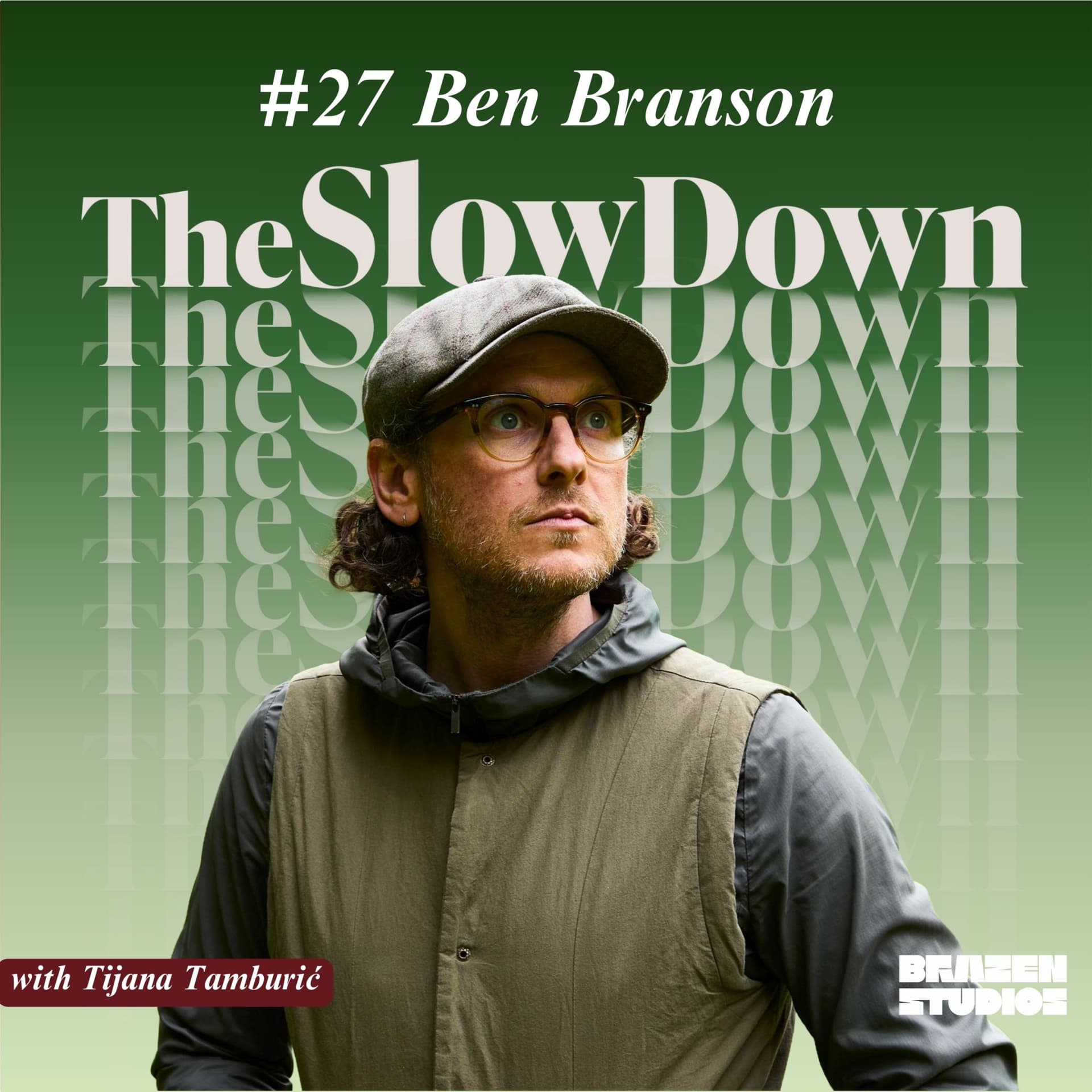
Podcast Episode Summary: Ben Branson: Rehab, Autism & Leading the Non-Alcoholic Movement
Overview In this episode of The Slow Down, hosted by Tijana Tamburić, the guest is Ben Branson, the founder of Seedlip, the world's first distilled non-alcoholic spirit. This episode delves into Ben's journey through personal struggles, his rise in the beverage industry, and his new venture, Sylva, showcasing the untapped potential of tree flavors.
Key Topics Covered
Background & Early Life
- Farming Heritage: Ben grew up in a farming family with a strong work ethic and appreciation for nature.
- Education & Challenges: Attended boarding school from a young age, where he faced bullying and began seeing psychiatrists due to struggles with autism and ADHD.
Personal Struggles
- Rehab & Substance Abuse: By the age of 25, Ben had gone through several rehab stints and faced a near-death experience in India, prompting a significant life change.
- Mental Health: His diagnosis of autism and ADHD provided clarity to his challenges, particularly regarding his behavioral patterns and coping mechanisms.
The Birth of Seedlip
- Inspiration: The idea for Seedlip emerged from Ben's desire for sophisticated, non-alcoholic options in social settings.
- Development: After extensive research and experimentation with herbs and botany, he created Seedlip, which quickly gained popularity and was stocked in over 8,000 bars across 35 countries.
Business Insights
- Business Philosophy: Emphasizes the need for businesses to slow down and build sustainably rather than chasing rapid growth, which often leads to burnout.
- Acquisition by Diageo: Seedlip was sold to Diageo in a deal that Ben described as both stressful and pivotal for scaling the brand's impact.
New Venture
Sylva
- Focus on Trees: Sylva aims to create non-alcoholic spirits that highlight unique flavors from trees, further pursuing his interest in botanicals.
- Innovative Techniques: Ben is developing new distillation processes that leverage wood and botanicals to create complex flavors.
Neurodiversity & Advocacy
- Awareness of Neurodiversity: Since his diagnosis, Ben has become an advocate for neurodiversity, launching a charity called The Hidden 20% to enhance understanding and representation of neurodivergent individuals.
- Personal Reflections: Ben shares his journey of self-discovery regarding autism and ADHD, emphasizing the importance of recognizing and valuing different thinking styles.
Key Takeaways
- Redefining Success: Success is not solely based on productivity or financial metrics but involves personal fulfillment, well-being, and family commitment.
- Importance of Hobbies: Pursuing personal interests without a clear business outcome can lead to unexpected and rewarding opportunities.
- Sustainable Growth: Ben emphasizes that businesses should prioritize sustainable practices over fast growth to avoid burnout and create lasting impacts.
Recommended Reads & Mentions
- Books:
- *The Art of Distillation* by John French (1651)
- *Brutal Simplicity of Thought* by M&C Saatchi (2013)
- *A Life on Our Planet* by David Attenborough (2020)
- Podcast Episode: Episode featuring Ben’s wife, Sam Branson ([Listen Here](https://www.hidden20.org/podcast/episode-17-sam-branson))
Links
- [Ben Branson's Instagram](https://www.instagram.com/seedlip_ben/?hl=en)
Conclusion This episode highlights Ben Branson’s remarkable journey from personal challenges to entrepreneurial success in the beverage industry. His insights on mental health, sustainability, and the importance of redefining success resonate deeply in today's fast-paced world.
Written by AI. May contain mistakes. Listen to the episode to check what was said.
Chapters
Tap a time to open that second in VOBen Branson's Background and Early Life
0:45 to 1:30
Ben discusses his upbringing in a farming family and its impact on his values.
“Spirits that explore the untapped flavour potential of trees.”
The Influence of Nature and Hard Work
1:30 to 3:25
Ben reflects on the importance of hard work and nature in his childhood.
“320 years we've been farming in North Lincolnshire.”
Raising Kids in Nature
3:25 to 5:25
Ben shares how he raises his children and the lessons from his upbringing.
“Where are they living and spending their time?”
School Life and Early Challenges
5:25 to 7:30
Ben recounts his early school experiences, including bullying and mental health.
“Be learning a lot of independence very, very, very early on.”
Rehab and Directionless Youth
7:30 to 10:10
Ben discusses his tumultuous late teens and early twenties filled with chaos and rehab.
“And so there's elements of like school that were really good for that.”
Turning Point in India
10:10 to 13:20
Ben describes a pivotal moment in India that led to a significant life change.
Building a New Life After Rehab
13:20 to 14:00
Ben shares insights on recovery, self-esteem, and the journey to a better life.
“the way I feel about myself is completely different.”
Building Self-Esteem Through Actions
14:00 to 15:10
Learn about the importance of taking action to improve self-esteem.
Family Dynamics in Recovery
15:10 to 17:01
Explore the varying ways family members cope with a loved one's struggles.
“And so having, because I didn't have anyone else coming to hospital.”
The Genesis of Seedlip
17:01 to 21:12
Discover how the idea for Seedlip emerged from personal curiosity.
“You mentioned you came back, worked in design and then started Seedlip.”
Show all 28 chapters
The Journey of Non-Alcoholic Drinks
21:12 to 24:16
Understand the evolution and challenges of creating non-alcoholic beverages.
“That then morphed into I'm doing this evenings and weekends.”
Driving Forces Behind Success
24:16 to 26:59
Learn about the personal motivators that drive business success and improvement.
“No one is ever going to say anything worse than I've thought about them.”
Surreal Moments in Entrepreneurship
26:59 to 28:01
Reflect on the unexpected milestones and challenges in building a brand.
“brand that something happened that you went we we built that like other people from other countries are now talking about this?”
Founder's Journey and Overcoming Challenges
28:01 to 29:04
Learn about the challenges faced by founders in the beverage industry and the mindset needed to succeed.
“I'm enjoying learning about products and formulations and the drinks industry.”
Navigating Unexpected Success
29:04 to 30:16
Discover the surprising journey of Seedlip's rapid growth and the emotional rollercoaster that accompanied it.
“And it takes some grit and some resilience and some belief that has to be, no, no, I think I can defy the odds.”
The Acquisition Experience
32:09 to 33:56
Understand the complexities and emotional challenges involved in selling a business.
“and continues to inspire the change that we're hoping to make in slowing down.”
Creating Non-Alcoholic Spirits
33:56 to 36:26
Learn about the innovative process behind creating unique non-alcoholic spirits and the vision for the future of drinking.
“And the faster you were in, the more you got.”
Entering a Competitive Market
36:26 to 37:58
Explore the challenges and opportunities of entering a market with existing competition in the non-alcoholic beverage sector.
Understanding Neurodiversity: A Personal Journey
37:58 to 42:00
Gain insight into the experience of receiving a diagnosis of autism and ADHD and its impact on personal and professional life.
“And in all of this, at what point did you get your ADHD and autism diagnosis?”
Understanding Neurodivergence and Personal Discovery
42:00 to 44:59
Learn about the personal journey of discovering autism and its implications.
“Yeah, I was starting to just join some of the dots.”
The Impact of Neurodivergence on Society
45:00 to 47:11
Explore the societal misconceptions and contributions of neurodivergent individuals.
“Neurodivergence, people who are neurodivergent win on all of those dramatically versus the rest of the population.”
Charity Work and Advocacy for Neurodivergent Individuals
47:12 to 49:51
Discover the initiatives aimed at improving the perception of neurodivergent people.
“Yeah, so we launched the podcast charity campaigns January, 2024.”
Balancing Family Life with Professional Aspirations
49:52 to 52:27
Gain insights on maintaining family priorities while managing business responsibilities.
Finding Business Success Without Sacrifice
52:28 to 55:57
Learn about sustainable business practices that avoid burnout and prioritize well-being.
“Like know how to prioritize the tasks that you have to do that day, delegate.”
Tips for Slowing Down in Daily Life
56:01 to 57:58
Discover effective strategies for managing anxiety and creating boundaries.
“I can't tell you how happy I am to hear this.”
The Problem with Business Metrics
57:59 to 1:00:02
Explore the flawed metrics in business that prioritize quantity over quality.
A Personal Story about David Attenborough
1:00:03 to 1:02:08
Hear a heartfelt story about meeting David Attenborough during lockdown.
“I wanted to kind of send some moral support.”
The Importance of Taking Risks
1:02:09 to 1:05:38
Learn about the value of seizing opportunities and taking chances.
“I was like, David Attenborough must be at home.”
Transcript
Automatic transcript. May contain errors.0:05Hello and welcome to The Slowdown, your time to redefine success and growth on your own terms with a little inspiration from others. Today, I'm speaking to Ben Branson, the founder of a drink you may have tried before, Seedlip, the world's first distilled non-alcoholic spirit that pioneered a movement of non-alcoholic drinks. In under four years, Seedlip shot to success, being stocked in over 8 ,000 bars and in homes across 35 countries before being sold in a multi-million pound deal. What did this rapid success mean for Ben? Ben who is open about his autism and ADHD diagnosis. Ben who is now launching his new venture, Silver.
0:46Spirits that explore the untapped flavour potential of trees. I had so much I wanted to unpack with Ben. From creating a product that is designed to be sipped slowly. To coming up against the entire alcohol industry. To what his learnings are for his new business. And so I can't wait for you to listen to this episode recorded here at Brazen Studios in London. Hi Ben, thank you so much for joining me on The Slowdown. Thanks for having me. I always want to trace the thread right back to provide some context for people. And so I'm always wondering, where were you raised, by whom, and what were your early models or ideas of success?
1:30Good question. So I am from a farming family. 320 years we've been farming in North Lincolnshire. And so growing up on a farm, yeah, I was surrounded by two really important things. One, hard work. Farming is not easy. And my mother's side, you know, had this farming family business for a long time. it's hard work um and then my dad had set up his own company in the world of kind of design and advertising and so i remember just being yeah very much surrounded by people working hard and also working for themselves a lot of people don't think about farming being maybe entrepreneurial or a business owner so that definitely left a massive imprint on me and my family today most people within it work for themselves so that was kind of definitely ingrained of like grab it do it get on with it yourself and then the second I guess most sort of impressionable thing was just nature the farm the land produce and it's yeah I kind of have taken that very much forward into how I grew up with my children um and i'd love being outside still and so yeah hard work and nature are probably two key themes that and family and heritage and legacy and uh you know we're still farming today so that's a really long relationship with the land um but yeah seedlet felt like it was sort of bottling my family's background and bottling maybe just the way I see the world.
3:23And how are you choosing to raise your kids now? Where are they living and spending their time? So we are still in the countryside. We have pigs and we have sheep and chickens and dogs. Last weekend, we were spending in the forest and building rope swings. And yes, trying that that idyllic kind of outdoor childhood mixed with them sitting on their ipad and the tantrums and the difficulty transitioning from the school week into the weekend and getting up early and all of the other stuff that comes with kind of parenting but you know my three-year-old will identify a red oak tree and my six-year-old will make you a bone arrow from a tree there's lots of things about how I was brought up by my parents that I maybe don't want to repeat.
4:15But there's lots of things that that time outside and time in nature and simplicity of not having screens and watching the seasons and understanding that, yes, we are going to kill our pigs. And the benefit that we get is they like eating sausages and they like eating bacon. yeah there's that idea of if you want to eat meat you have to have killed a chicken this kind of you have to know where this stuff comes from yeah and it also reminds me of an incredible book i read last year called the overstory oh i've heard of that richard powers i think and it is a book fundamentally about trees and i as somebody who grew up very much in the city urban existence i had no idea so the fact that your child knows how to identify a certain type of oak is so impressive to me but you mentioned there the school week as well how did you transition as a child from this wild beautiful connected to nature existence to then school like what kind of student were you so school was interesting I went to boarding school at seven which was very young and I didn't like it but what I did like was I was still in the countryside so I was at a very small boarding school in North Yorkshire with lots of space and lots of outdoors and I loved sport and I was good academic and then I found that actually the routine and structure and repetition of being at boarding school actually suited me quite a lot but I was bullied and I ran away from school and I started seeing a psychiatrist very young This was a sort of pathway that continued right from seven to 18 of a boarding all that way through.
6:10Be learning a lot of independence very, very, very early on. You know, I was able to iron trousers, polish shoes, make beds, sort duvet covers. I don't think my fiance knows how to do this now at 42. washing away and doing that all you know seven eight nine years old um but obviously I spent most of my childhood at school that's sort of not going home for three weeks at a time not seeing parents for that does institutionalize you and I've probably stayed within that system um you know I've been to rehab a lot of times in my 20s that institutionalized side of being in one place doing the same thing over and over again you know I like uniform I wear what I'm wearing now because I have five of these jumpers this is my favorite jumper in the world and so when people are moaning that it's cold outside I can't wait for it to be cold because I get to wear my jumper.
7:20And this obviously a lot of this is, you know, reflecting on knowing now that I'm autistic and knowing that a key behaviour of mine is repetition and things not changing. And so there's elements of like school that were really good for that. It sounds like then actually leaving school disrupted a level of routine at 18. And so and you mentioned rehab there what then kind of happened in those early late teen years early 20s I mean I'd been getting in a lot of trouble at school really from eight years old running away vandalism uh stealing smoking drinking but I was very fortunate that although I kept being suspended and there were lots of sort of exclusion threats and I'd won this really big scholarship and that got taken off me.
8:15I was sort of kept at school because I was good at things. And so I never really knew what I wanted to do after school. I wasn't very happy, I guess, deep down. I wasn't set on some sort of career path. And so I left school and thought, okay, well, I do love food and I want to be in London and I do want to go traveling. And I signed up to do this cooking course for six months thinking maybe I want to be a chef and then I was selling British gas door to door I was a security guard I did some landscape gardening I worked in a pub and then I went off traveling on my own and so I was sort of 18 19 and by this time I discovered drugs but I went to Thailand and I was meant to be there for two weeks I think on some sort of traveling trip and I ended up staying for six months and I ended up learning how to fire breathe and perform the fire shows.
9:17Join the circus. Join the circus and work in a bar and yeah, kind of again, lock into something and do it night after night after night after night. And then I went to New Zealand, did my snowboarders instructors course and taught, you know, I did some teaching and travelled around New Zealand in a silly little van that I'd painted like the A-team black and red. And yeah, in and out of trouble in New Zealand. Then I was in Africa for six months teaching children over there. I did another ski season in France. And this was all sort of up and down, pretty chaotic, very directionless, basically, and pretty self-destructive.
10:04and then it was oh I should go to university and I got places at universities but started didn't go to a lecture and then what 15 months later you know I'm in rehab in the desert in Arizona and that started a cycle that was really really difficult of relapsing very hardcore drugs being sectioned hospitals and then ended up in intensive care in india i kind of woke up in intensive care in in india and that was the beginning that was what when i was 25 beginning of the rest of my life i guess i then went and spent six months in silence in an ashram lots of yoga lots of crazy chanting and then came back to the real world and got a job and worked in the design industry and then a couple of years later the whole sea lip journey started okay but just to double tap on a couple of things yeah because that was quite the journey um i'm giving you the condensed version there and it's quite hard to kind of distill your life and in a chronological way it's quite weird in hindsight do you have an understanding of of why that pain why you acted recklessly and rudderlessly well to to put it to put it really bluntly I had and as crazy as this sounds it had got to the point I tried to I wasn't trying to kill myself but I was trying to gamble with my life and I'd done that seven I think seven times in different ways where I really should have died and I didn't and the last one of those was in India and I just remember thinking fuck this I I guess I am meant to be alive but I was intent on from a very early age just trying to destroy myself and taking risks and you know my mother says she was just in and out of A &E with me as a as a young boy flinging myself off things and real kind of like daredevil sort of behavior and I think I guess part of that just compounded as I got older the risk definitely got bigger and then the probably the internal belief system got progressively harsher and harder of do I should I really be alive do I really have a place in the world what am I gonna do I'm very comfortable kind of disassociating myself from that and I can be very matter-of-fact about it but my life now you know I'm 42 now I've been clean since I was 25 and my life is completely unrecognizable and the way I conduct myself the the way I feel about myself is completely different.
13:26Wow. And you think that was just an overnight mind shift? It was an easy, like it was an easy answer or decision to go, okay, I'm meant to be alive. Like I have the answer to my question. I'm meant to be here. I guess then the, so now what do I do? And how do I heal? yeah it was a longer process and definitely a combination of lots of different physical mental just time somebody told me in rehab there is only one way to build self-esteem and it's through esteemable acts and that was something that I really took to heart of like I just need to do things I need to take action the other thing I was told in rehab was if you put half the energy into improving your life as you have into trying to destroy your life you will be amazed and so that was something that I could visually see that I was just changing tracks and it was like I just need to go over here instead of down this path and then probably the the third piece was somebody telling me that what somebody thinks of me is none of my business unless they choose to tell me and so rather than kind of continuing to beat myself up feel like a letdown feel like a disappointment um think that you know people are really angry with me etc um yeah i kind of again took that piece of advice to heart and was just like okay i just need to i need to focus on improving my life and taking the right steps it's true because i think we project onto other people our own insecurities and we think that's what everyone else is thinking when they might not be thinking it at all they're not i bet your parents were quite pleased yeah I mean I think my parents both dealt with it in very different ways
15:37and I know you know I have two younger brothers who I'm close to and they both dealt with it in different ways as well and actually you could split my family in half in terms of how this was all dealt with one half lean in get involved come to hospital come to rehab call text be really involved and the other half can't can't talk about can't can't see you like that can't engage and take an active role in it doesn't mean don't love you etc but yeah couldn't between those two paths was either more helpful for you or or less helpful i found them both difficult i guess for different reasons um i kind of wanted to disappear and be invisible and so i didn't it was sort of mixed that my brother would want to come and see me in hospital because i felt full of shame full of guilt um i didn't want to see my family But then I also felt incredibly alone and incredibly lost.
16:52And so having, because I didn't have anyone else coming to hospital. So yeah, mixed, I guess, would be the reaction to that. You mentioned you came back, worked in design and then started Seedlip. How did the idea, the seed for Seedlip come about? Yeah, so not a business idea. Common to all my projects, I think, has been this kind of lack of intent and organic. And in some cases, you know, I know we'll talk about silver later, but that's been a 14 year journey, right? That has definitely been fucking slow. um but they've all all the projects are connected by a curiosity a what if a joining of dots and patterns um that then gradually turn into being business ideas and so seedlet was you know i was living uh in this little like hansel and gretel cottage out in the woods in Buckinghamshire.
18:13Quite happy sort of running a design consultancy and just finished like learning how to do taxidermy. I had my various collections of books and antiques and growing herbs and veg in the garden. I was just like, I wonder what else I could grow. And yeah, just got on the internet and got on Wikipedia and you know I'd grown up learning about potatoes and barley and turnips not about botanicals not about herbs and spices I'd been introduced to the world of kind of seasoning and spices at cooking school but never really from like a horticulture perspective and I just found like all these things I'd never heard of and this fascinating 500 years of botanical history and you know you're clicking on the wikipedia link suddenly you've got you know a million tabs open and somebody had scanned in this book called the art of distillation and if you google if you're listening or watching and you google the art of distillation pdf you will find what i found published in 1651 it's a recipe book for herbal remedies um with lots of illustrations of like copper distillation equipment lots of crazy ingredients recipes for the philosopher's stone recipes including human flesh and animal flesh and this was you know 17th century apothecaries kind of crazy some crazy stuff they wanted to live forever um totally yeah all the alchemical symbols and brilliant fascinating but i noticed that some of these recipes were to make alcoholic recipes and some of them were non-alcoholic and obviously as a kind of person that wasn't drinking alcohol I was just intrigued by the ingredients and then you can buy a little copper still off the internet and so I just wanted to have a go and I can't tell you how magical the process is of taking a plant from your garden and being able to make a liquid that smells and tastes like that plant i i found that very very powerful and i wanted to keep doing it with no outcome in mind and i'm a big believer in hobbies they've gone out of fashion i agree we everything is about freaking productivity and what's that why are you doing that what's that going to do what's the output what's the goal what's the kpi I just do things for doing them rather than what that might lead to.
21:03I'm definitely an example of those things being hobbies and then eventually turning into businesses. But that not being the starting point. Right. That then morphed into I'm doing this evenings and weekends. I'm playing around with more plants. I'm learning more about distillation. It's like Ben's in the shed again. Yeah, I'm watching YouTube videos. I'm at second-hand bookshops learning about people like Carolus Linnaeus and John French like I'm getting fully into this world I'm finding myself at botanical gardens and then I'm driving into London to go out for dinner and I wasn't drinking alcohol everybody else I was there with was and you open up the menu lovely wine list lovely cocktail list nothing there if you're not drinking alcohol i don't know why but i did actually i wouldn't usually do this but i did actually ask the waiter can i have something have you got anything that's non-alcoholic and they said oh we'll bring you something which now i'd know would be a massive red flag um and so over comes the tray and everyone's okay here's a couple of lovely glasses of Merlot and a nice cocktail.
22:22And then there's mine and it's this pink fruity. A mocktail. Mocktail childish thing. And I was in a really nice restaurant. Like there was no excuse. And I just remember not thinking, oh my God, I know what the world needs, but definitely thinking I feel quite embarrassed. I feel a bit like an idiot. I'm getting smirks from the people I'm with. I'm not finishing this drink and it doesn't fit. It doesn't fit this occasion. And so I left just thinking, driving home, thinking, how hard can it be? Like this was 2013. There was really nothing out there. No, like mixed bitters with soda. If you're in a supermarket, you could probably get a grape juice that might be in a wine bottle.
23:13You could definitely get a bottle of Beck's Blue. that you know it was launched in the 70s that tasted really like cardboard you could definitely go and get a blend of fruit juices and sugar syrups in a fancy glass with an umbrella and some ridiculous straw but that's it right and this was at a time when cocktails were starting to become a thing spirits were starting to be taken really seriously uh you know health wellness had kicked off um we had kind of free from going on with dairy soy um yeah we had vaping we had the beginnings of you know electric cars we had quite these alternative parallel categories happening but nothing really in in non-alc and so yeah that morphed into i want to spend my time I'm doing this and the deluded belief that I could change the way the world drinks coupled with the next day being oh god someone's told me this will never sell a bottle this is a really shit idea I shouldn't do this and that constant like snakes and ladders approach and yeah that was we celebrated our 10th birthday last week so that has been a pretty incredible journey um there are now a thousand non-alcoholic brands globally the u.s alcohol drinking levels are at their lowest since records began in 1939 you can if you go to a decent place get a decent drink that doesn't contain alcohol and i think the way that we socialize has started to really really shift and some of the stigmas breaking down some of the taboo yeah it kind of feels more okay than ever that you can drink whatever you want and that's really all it's about choice as someone that doesn't drink and that comes from a family of non-drinkers i'm like really realizing how little the offering was back then it's interesting and at what point in the business did you feel like did you sort of look around and go i think we've made it i am really only sort of driven by two things one of them is maintaining a level of dissatisfaction and so i can tell you all the bad things that people have told about seedlet and not very many other good things and i can tell you everything that's needs to be better with non-alc and needs to be better with my projects and I am the worst critic of Seedlip, of Season, of Silver.
26:05No one is ever going to say anything worse than I've thought about them. I really feel it's important to keep my feet on the floor and that dissatisfaction and wishing to improve things definitely drives me. And the second one slightly connected to that is I'm just driven by a fear of failure. like I don't want to let things down I want to keep being able to express myself and my my outlet to do that is through drinks through changing things improving things experimenting with things and I don't want that to stop so that gives me a relentlessness in terms of it can always be better I'm never going to be 100 satisfied was there a moment that felt surreal in that three and a half year build up of the brand that something happened that you went we we built that like other people from other countries are now talking about this?
27:13I mean, so many of those moments, I guess. And I was very unprepared. I was very unprepared. You know, I made a thousand bottles. I thought they'd last six months and they lasted three weeks. And, you know, I put my mobile number on our website. I heard from 100 countries in the first three months. I was invited to Buckingham Palace. You know, like it. Everything went a lot faster than I planned it to. And my plan was to do it all very slowly. My plan was, let's just, you know, it's taken me two years to do this. Let's just get out there. Let's feel our way. I mean, I'm kind of enjoying learning about how to run a business.
28:01I'm enjoying learning about products and formulations and the drinks industry. I don't know if I want all this founder stuff I don't I don't really want kind of all this press or this attention I just but I didn't I was the only employee so I was like well who else is going to talk about it and so I have this I had lots of moments of you know every time I went to a new country and we were launching there that was really surreal anytime you know I've just had a meeting before I came over here in a hotel and I looking at the back bar and there's a bottle of seedlip on the back bar it's a moment for me yeah there's so many moments that I think just all all add up and all build belief and to be honest because it's fucking hard and the stats are But certainly in food and drink startups, nine out of 10 are going to fail.
29:04So it takes some delusion, right? And it takes some grit and some resilience and some belief that has to be, no, no, I think I can defy the odds. And every time someone or something kind of says, you're defying the odds, whisper or shout or whatever. Yeah, that is a pretty surreal moment. And we are right now, you know, very fortunately, experiencing all of that again, but this time with three projects at the same time, which is very overwhelming. But I feel like I'm at least a little bit more prepared this time because last time I had a plan and I wanted it to go according to that plan and I didn't know that things don't always go according to plan and so I was, I hated the first six months of Seedlip wanted to close it down, didn't want to do it didn't want to be out there it was going too fast, it wasn't how wasn't how my plan said it was going to go and yeah, I don't like last minute changes being autistic I just want to do the same thing over and over again and when I create a plan and a blueprint and a map and the strategy and the logic etc I want it to go how that goes and C-Lip didn't and that was difficult because on the one hand you're like but this is all amazing these are all amazing problems to have but I still see it but it's not how I fucking planned it to go yeah it's not my plan and within four years it sold to diageo yeah so three and a half yeah three and a half years uh twice as fast as the industry norm and twice as big as the industry norm from an acquisition perspective and yeah diageo so world's biggest premium spirits company bought the majority 2019 of a non-alcoholic spirit i made a commitment to being transparent about the making of this podcast right from the start.
31:22So here's a quick update of the financial side. Season four of The Slowdown does not currently have a sponsor. I really want this podcast to bring to light people, stories and approaches to life that I admire and don't often see in mainstream media. So I'm taking on the studio editing and making costs of this season myself. If you're a brand or if you know a brand that cares about bringing honest and applicable career advice to people at all stages of their journey, please reach out. I'm eager to find the right partner, hopefully long-term, to help fund and continue the show so that it can keep growing.
31:56In the meantime, your comments, reviews, and shares of this episode are so important. If you're not already, hit subscribe, share this episode with a friend, drop a comment on Spotify, and a review on Apple. It really does make a difference and continues to inspire the change that we're hoping to make in slowing down. Thank you so much for your support. I'm speaking to a lot of people now we're sort of at the age of if you've run a business for five six seven eight nine ten years you might be on the verge of an acquisition and I think that there is a lot of talk in our culture of what that looks like which is usually a sort of LinkedIn post at the end that says I sold for this this many figures but I'm curious as someone on the other side of that you know was it what it was cracked up to be are you happy with the sort of terms of that deal i mean you probably can't say specifically but the gestalt of selling your business was that so i decided i wanted to sell seed lip long before i sold seed lip and that was the that was the transaction was the transaction the actual decision uh of was based like this i want to change the way the world drinks i'm really good at the beginning i'm really good at the small stuff i'm really good at taking risks and i'm really fast big companies are really good at scale drinks companies have got all the distribution so i need to do my bit but in order to change the way the world drinks if it was left just to me it would be small small so the way to make a big impact was about finding the right partner.
33:36And that was about doing the deal with myself to go, if I do my bit right, and find the right partner, I will achieve what I want to happen. Because that partner can bring the scale. That partner won't be the best at the scrappy startup risk taking aspect and probably won't have the pace to be able to test learn fight you know play the game of snakes and ladders and hack and get to a get to solutions and and kind of scalable models quickly so the actual acquisition i mean it was really fucking stressful because my wife was literally 10 days away from giving birth to our second daughter i had a shareholder die during the acquisition process uh who was a family friend um which was pretty traumatic as well partly because their husband was also a shareholder and so there was that was really it was a really stressful process but it was a stressful process because of the other things that were happening not the business not the actual business deal and so yeah that was and the the beauty was that because i'd already made my mind up that the goal was to change the way the world drinks and the pathway was i needed to sell the business in order to do that a that meant i full transparency with my team gave 20 of my team of my business to my team everybody got shares whether you joined three months before acquisition or you were first in.
35:25And the faster you were in, the more you got. Didn't matter about seniority, the sooner you were employed. The longer you were with the business. The more you got because the bigger risk you took. Yeah. So, yeah, it was an amazing process. But actually, I'd done all the wrestling and I'd done the deal with myself. way before it happened. And that's, yeah, I would just say to anyone listening or watching this, you know, thinking about selling a business, A, like, you need to do what's right for your business. Any of the sellout nonsense that LinkedIn comes up with or whatever, it's sort of back to that.
36:11It's none of your business what someone thinks of you. You've got to do what's right for you. but i think the why on acquisition is pretty important and yeah i can't do stuff just for money i i there has to be a it's got to be about changing things and improving things yeah so silver is botanicals distilled great with tonic soda more in that kind of vodka gin tequila kind of cocktails and occasion silver is an aged non-alcoholic spirit and we make silver from scratch using grain and wood and we haven't talked about enough about trees in this chat actually let's not forget to talk a lot more about trees please um so we have basically i've I've created a distillery and a maturation lab and invented a pretty unique process of using oxygen, ultrasound, pressure, temperature to extract all the amazing colour, flavour and character from wood.
37:23to make dark non-alcoholic spirits that you can sip you can kind of play into that whiskey rum cognac kind of occasion um yeah nobody's done it and our model is horizontal not vertical in terms of scale so we've just signed the lease on our second distillery I say you want to own the process yeah yeah um and I just wanted to also ask with the nature of seed lip was as you say it was it was the first thing on the market kind of of its kind whereas we now have a movement for non-alcoholic drinks do you find that it's therefore harder or easier to enter that world or do you feel like this is a subsection of a different kind of drink that is again first in its market being first is really difficult and yeah so on the one hand and on obviously in hindsight it's easy of like well it's great being first if you can kind of go and plow a new furrow and create a new category but the culture is not there the culture is not there they don't want it they don't know they want it the education is not there you know i'm having to have the same conversation with a supermarket buyer as a top bar manager as a consumer about the need for a great option if you're not drinking alcohol we spent a load of time doing that you know 10 years ago now i don't need to explain the need and i guess i back that i make really amazing liquids and so yes there's more competition out there but there's still a hell of a lot of space and headroom if you've got an amazing liquid and you've got a brand that is relevant and meaningful um and so we hopefully have the kind of triple whammy of we've got proven form we've got a great network and then we're building world-class liquids that are innovative and unique that gets us a really good foot in the door.
39:39And in all of this, at what point did you get your ADHD and autism diagnosis? And how did that change the way that you saw yourself or that other people saw you or that you worked with people? So September 2022, I was told by a psychologist who was assessing me congratulations ben you're autistic and i knew nothing about neurodiversity never in heard the word i don't think very limited stereotypical views of adhd dyslexia tourette's autism never i've seen loads of psychologists and psychiatrists throughout my life never ever ever anyone ever ever mentioned it and bearing in mind that we couldn't diagnose adults with adhd for example until 2008 and psychiatrists psychologists you couldn't diagnose someone with autism and adhd until 2013 like this is kind of fresh new stuff so i was yeah initially it was uh went for an autism assessment and why did you go for the autism assessment it was another really like gradual seeding kind of process really probably about six seven months earlier someone I know in the drinks industry had been diagnosed autistic and started to talk about it and they're someone that i like i enjoy talking to and connected with and yeah i don't know that kind of did you see some of your own traits yeah i think that's sort of it also burst a bit of the bubble of oh it's not the rain man it's not those stereotypical views of what an autistic person is and what they look like it's not the curious incident of the dog in the night time no it's not like just weird people licking bus windows you know it's oh okay then i listened to yeah i started snatching bits of conversations of people on podcasts i don't know i am i am a sponge and my sensory side is like i'm really really hyper vigilant you know i'm incredibly anxious most of the time so i am i notice everything and i've got as i've learned really fucking good hearing i listened i can listen to tv on one you know i've got really good smell uh not good eyesight like me need glasses um But I've got a photographic memory.
42:39So I know if something's moved. I know if something's changed. I know if something's not there. So things were starting to add up. Yeah, I was starting to just join some of the dots. And my wife was pregnant again at the time. This seems to be a recurring theme there. And I wanted to know for myself, did a couple of online tests. and then went into denial. And then I called up the guy from the drinks industry and I said, Ian, I just, I think I might be autistic. And he laughed, he's Irish. He laughed. Of course he fucking are. And I sort of didn't know whether to laugh or cry or I didn't know what to think of that.
43:29Anyway, I said, who did you get? How did you get your assessment? The NHS is crazy. I will pay for it and he put me in touch with the right people I got the assessment and yeah it was a 12 week process and I didn't tell anyone I didn't tell my parents I didn't tell my wife I didn't tell anybody I just sort of wanted to know for me and then I found out and it started to make sense and it did answer a hell of a lot of questions for me and it was the beginning of for the first time starting to understand who I am dropping the mask realising I didn't even know that I was masking or what that even was as a phrase learning about autism, learning about the history of autism the statistics, the dreadful statistics
44:26and also learning that so many of my heroes are autistic or ADHD and people I gravitate towards and going, where the fuck have I been? Like, I feel like, ooh, I'm sort of ahead of the game on this non-alcoholic drinks thing. And like, you know, I've been lucky to travel the world. And I've, you know, I've been in rehab with like South American drug lords and like people from all walks of life. And yet I didn't fucking see this. This has eluded you. I've missed it. And it's about how my brain works. What the fuck has been going on? And I didn't see the ADHD thing either. And so that then was a later thing.
45:12But learning the dreadful, learning about the dreadful statistics around neurodivergence and the unemployment, the divorce rates, the exclusion rates, the earlier death, you know, literally earlier deaths for neurodivergent people, the prison rates, addiction, eating disorders, mental health, etc, etc. Neurodivergence, people who are neurodivergent win on all of those dramatically versus the rest of the population. So something's not right there. Coupled with, oh, my God, all these, you know, we have the light bulb and electricity and, you know, whether it's Billie Eilish or Simone Biles or Agatha Christie or Pablo Picasso.
46:06a lot of entrepreneurs we have all these amazing contributions to society from people who think differently what is going on like how we how have we got it all so wrong and yet we've got these examples of it being so amazing and so yeah set up set up the charity the hidden 20 percent and decoded all of the great social change movements and did all my like so exciting projects of getting into the weeds and depth of social change theories and social change models and movements and trying to unlock the theory of what is really going on here with neurodiversity what's the opportunity what's in the way what do i need to do to again deludedly and grandiosely take on this sort of, how am I going to change like how the world thinks about the way that we think?
47:07And to give a concrete example, we were talking earlier about your wife being a guest, a very popular guest on your podcast. And I would love you to share why. Yeah, so we launched the podcast charity campaigns January, 2024. Didn't really know whether people can listen, didn't really know whether we had anything. and my wife was very supportive and probably a few months in I kind of said I think you should come on and do an episode and she kind of thought yeah I you know it's nice you having these chats with people I quite like people to hear the other side of what it's like being on the other side yeah yeah we had a really brutally honest lots of tears from both of us very healing conversation that really was like forgetting that there were people in the sound room and there were cameras on us and it was it was a really amazing thing for our relationship to do that but the feedback of how many people's marriages that episode has literally saved of people literally getting in touch with my wife and saying, I had bags packed and I was going to leave my husband.
48:29And I've got a new, I don't know, a new sense of empathy, awareness, understanding that I didn't have previously and I'm going to keep going. I'm going to unpack my bags. I'm going to unpack the bags and stay.
48:50yeah it was really it was really powerful i was speaking to a guy yesterday who got in touch who just wanted to have a conversation his daughter's autistic she's 15 she's got no hair left because she's pulled it all out and i'm constantly in the in the flip-flops between stories of like really amazing resilience and just brilliance and the skills and assets that come with with different brains and then also again the horrors and the challenges and the difficulties and I think the hidden 20 % we just want to share the truth because the truth is it's both of those things it is tough and it needs to be also seen differently and positively and there are so many stories that we need to tell and so much representation that needs to be there and so much catching up of society that needs to happen and so yeah i i love our charity fully neurodivergent team um with now a community of over 250 000 people and our content's reaching two to four million people a week and that's a charity that's not funding that's not advertising that is producing stuff that people want to hear about and it seems like there's quite a few different things where you've set a very clear why and a goal and as long as you're striving towards that goal you'll figure it out so I'm curious how do you define success for yourself now i think it's probably three things the idea of freedom in so many senses of the word um being able to express myself and like being there as a dad and i am
51:03so so fiercely boundaried around my children and like I love my dad he was my absolute idol growing up and I love talking to him about work I think what he's done work-wise is phenomenal inspiring we've worked together you know his company helped design Seedlet we've been on stages receiving awards together for that work and i love my dad a lot but he was not there in my childhood and i know that you know he won't listen to this but i know it would kill him if if he's if when he hears that because he's heard it he's heard me say it before and so i am the opposite of that and i'm there nine out of ten evenings to put my kids to bed and I'm there nine out of 10 mornings to see my kids and give them breakfast and see them off to school or take them to school and I'm there at the nativity and I'm there at the school play and whilst I struggle to prioritize like exercise in my life I do not struggle to prioritize my kids that is a measure of my success because I think if if that was falling apart something would be something else would be really wrong.
52:24We have a very sort of strict but great routine with my six-year-old at bedtime. She's diagnosed autistic as well. We play a game of Uno. She usually wins. She then brushes her teeth. We then play two more games of Uno. We then read two books together. And then we listen to a meditation. And that is our routine. And last night, I didn't get back in time for that routine and it's slightly through her and it's slightly through me because I love routine I can I I am and I'm aware that I do I'm able to harness that and bring it into my life in a really positive way that I would like to think benefits my children and my wife and I was going to say is that possible as well because in this being your second large business that you're able to set the boundaries and say, because I can think of a lot of entrepreneurs going, I just can't, I can't, I can't leave work.
53:23Or are you saying you can leave work? You absolutely can leave work. Like know how to prioritize the tasks that you have to do that day, delegate. Like how do you make sure that you can leave it? Is it five o 'clock? Is it six o 'clock? Silver and season and the hidden 20 % would be bigger, faster, you know, more impactful. if I didn't have those boundaries in place and if I spent more time on it. But I wouldn't be personally, right? I spent so much time on a plane with sea lip. I would get on the plane and I would start crying. I would then go fly to Amsterdam event, fly to Hong Kong event, fly to Taiwan event, Shanghai events, Melbourne, Sydney, Auckland, LA, New York, Toronto.
54:24And I do that in two weeks and I would cry all the time because I was completely burnt out. And I'm not I'm not willing to do that this time. I work really hard and I try and work really smart. and I try not repeat the mistakes that I made before. But I do absolutely hold the tension of keeping in that really grey area of you can have a really dynamic business that isn't trying to burn people out. you can move quickly with purpose and intent nobody launches a opens two distilleries in in a year nobody does that as a startup in two markets that's really fast but then i'm not in a hurry to open the second one you know it's kind of this push pull and i love gray i love holding this tension that says it's not about these either or binary things It doesn't have to be about one extreme or another.
Read the full transcript
55:40Sacrifice. Yeah. You can hold these things in tension and you can go fast week and slow one week, right? You can do that. It doesn't have to be. I think there's this idea that the graph of business and life has to tend upwards and to the right at all times. Yeah. Undulation is sort of not permissible. I can't tell you how happy I am to hear this. but one question I always ask is around like three tips for slowing down in your day-to-day so this is you figured out how to create boundaries around your work in general but in your day-to-day if something comes in or you have an elevated level of anxiety I have anxiety too what are your three top tips that you found for slowing down in those moments very trite go for a walk i and that might be a you know i i do a lot of i love phone calls i know we're all obsessed with like teams and zooms and stuff but i love a phone call and i like phone call walking and so moving your body and doing something else i think is a great way to regulate and maybe reset just changing like where I'm sat in our studio or deciding actually I'm gonna do a bit of work from home or I'm gonna go to a coffee shop just changing some environment I think can can help switch things up yeah boundaries are really important and I believe you have to create the right conditions in order to be able to slow down it's not just uh just take things easy man just concentrate on being rather than doing and just aphorisms just go a bit slower yeah i think we've got a bit lost you know in the kind of business pace of life we have maybe forgotten what's important or yeah there's tended to be this focus on how much money you've raised i i just i can't understand why that is a badge of honor in terms of how much what does that mean why aren't people going i only raised right right it's it's it just feels a really very strange metric the other metric i find really strange is how many people you've hired because better to have a lean team doing excellent work like why is less not the sexiest thing in the world in everything consumerism agreed everything why do we not talk about less being heroic and less being the goal yep it's always more and well because you can't sell people less yeah but i think you can I think you can.
59:09is all this it's a win for your team it's a win for you personally it's a win in the for your customers it's a win win win win because people are happy and people aren't taking loads of sick days people aren't burnt out and there isn't this cutthroat smash and grab and i you know i'm the first one to admit I love getting on the rose tinted glasses I'm really naive I do have a you know a pure view of things sometimes of why does it all have to be about making money and why does it all have to be about more more more and but I also do believe there's an in-between and and yeah I I think we need that I think we need to I think we kind of need business to slow down basically and then we won't yeah it won't be glorified when someone smashes out of the park then you never hear from them then they come back and go i'm so fucking unhappy yeah i don't understand like that that's not very attractive no and the number one thing for longevity is avoiding chronic stress and it feels like that's absolutely what that kind of lifestyle creates for you um the last question that I always ask everybody is a kind of a fun one to help me know a bit more about you which is if I had to watch one film or read one book or go and see one piece of art that would help me understand you better what would it be and why oh that's tricky one i'll give you one book and and one story sure so the book is one of my favorite books is called brutal simplicity of thought it's by mnc saatchi that that tracks with everything that you've been sharing uh it's a book i gave to every single person that joined seed lip um and it's a book with a really simple concept it's really hard to make things simple so most people don't when you do that's what makes things sticky relevant travel etc um so bother to make things simple and that takes a lot of work during lockdown i wanted to like send my team a present i sort of was like we're all in you know We had a seedlet team all over the world.
1:01:46Everybody disconnected. No real life stuff going on. I wanted to kind of send some moral support. And David Attenborough was launching a new book. So I was like, okay. Yeah, I'm going to buy everyone a book and we can get that sent out. Okay, that's cool. I was like, David Attenborough must be at home. He must be at home. Where else is he going to be? He's not going to be, you know, on the Galapagos kind of filming turtles. He's going to be at home. I wonder if I can find his address. I wonder if I could get him to sign my book. And so probably illegally, actually, I drove from my house, having found his address.
1:02:34Which we will not share how you found. Which actually, sadly, was not actually that difficult to find. and took his new book with me and a pen. And I took it in a bag because I was like, he's not going to answer the door. I'm going to just leave it on his doorstep. One of my daughters written him a letter. That's cool. I don't, we don't like, I don't have to meet him, but let's just leave it there. And my heart, I remember parking going, oh, it's COVID. I'm doing something really wrong here. I shouldn't be out of the house. He's old. and he's old and i remember my heart just absolutely going for it anyway i walked up to his front gate i fucking saw him in the window and could see him like moving around with all his old books and bearing in mind the a piece of context is i talked about seedlip as being this sort of combination of Willy Wonka and David Attenborough.
1:03:42And like, he is my surrogate grandfather. You're a fan. He's all of our surrogates. He's a legend. Anyway, so I was like, oh, my God, he's in. Oh, my God. I'm going to go ring the doorbell. So I could just walk through his front gate, walk up to his front door. I really feel like I'm doing something wrong here. I rang the doorbell. And he fucking opened. He opened the door. As if I just as if this was completely normal during COVID. This old man, you know, he would have been he's 99 now. So you live in what, like 94. He opened the door. I didn't know what to fucking say. I couldn't really find my words.
1:04:29Hadn't planned that far. Sort of put this bag out. I brought you a gift. I made this thing called Seed Lip. I love nature. uh brought you a new book would you sign it i don't worry i've brought a pen oh shit should he touch the pen what about the germs oh he's got a pen it's okay and he's like yeah sure i'll sign your book i thank you it was all over in probably like 30 seconds but um i am watching him his new series at the moment which is why he's kind of top of mind and i watch it when my wife's gone to bed my downtime is like watching deadliest catch or watching anything from david attenborough the sea or the animals quiet down so yeah anything that probably doesn't even answer your question but anything around any opportunity around david attenborough who obviously absolutely loves the natural world yeah well what a great story i think that's such a great reminder you know you should absolutely try that thing.
1:05:29I'm always like, don't ask, don't get that my whole life wouldn't have happened if I hadn't have just gone, what would happen if I went and tried to do that? So absolutely. Okay, great, great, great recommendations. Thank you so much, Ben. I could keep going. So many questions, so many things to explore. I'll put all the links to this stuff in the show notes, including to your podcast and stuff. Maybe the episode with your wife, that first one. I really want to watch that. Good one to start. Great. Thank you so much. Thank you. Thank you so much for tuning in. This episode has been hosted and created by me, Tiana Tambridge, produced by Whitney Rosenthal, sound and video production and recorded at Brazen Studios, cover art design by Natalia Ruhe.
1:06:09Please subscribe to The Slowdown to be notified of upcoming episodes, tell a friend and leave a review. It really does help a new podcast like this get out in the world. And remember, we're all heading to the same destination and there is no prize for getting there early. so we might as well slow down.
From the publisher
Ben Branson is the founder of Seedlip, the world’s first distilled non-alcoholic spirit that pioneered a movement of non-alcoholic drinks. In under 4 years Seedlip shot to success - being stocked in over 8000 bars and in homes across 35 countries before being sold in a multi-million pound deal. But what did this rapid success mean for Ben? Ben who is open about his autism and adhd diagnosis. Ben who is launching his new venture - Sylva, spirits that explore the untapped flavour potential of trees. I had so much I wanted to unpack with Ben - from going to rehab many times, to coming up against the entire alcohol industry, to his love of ‘lifestyle businesses’ and creating a product that is designed to be sipped slowly.
In this episode we cover:
- Boarding school, autism and routine
- Pushing the limits to a near-death experience in India
- Starting a new, sober, life at 25
- Following your hobbies and curiosities
- Seedlip’s astronomical rise & acquisition by Diageo
- Why businesses need to slow down
Mentions:
The Art of Distillation by John French, 1651
Brutal Simplicity of Thought, M&C Saatchi, 2013
A Life on Our Planet, David Attenborough, 2020
Podcast episode with Ben’s wife: https://www.hidden20.org/podcast/episode-17-sam-branson
Links: