
In short
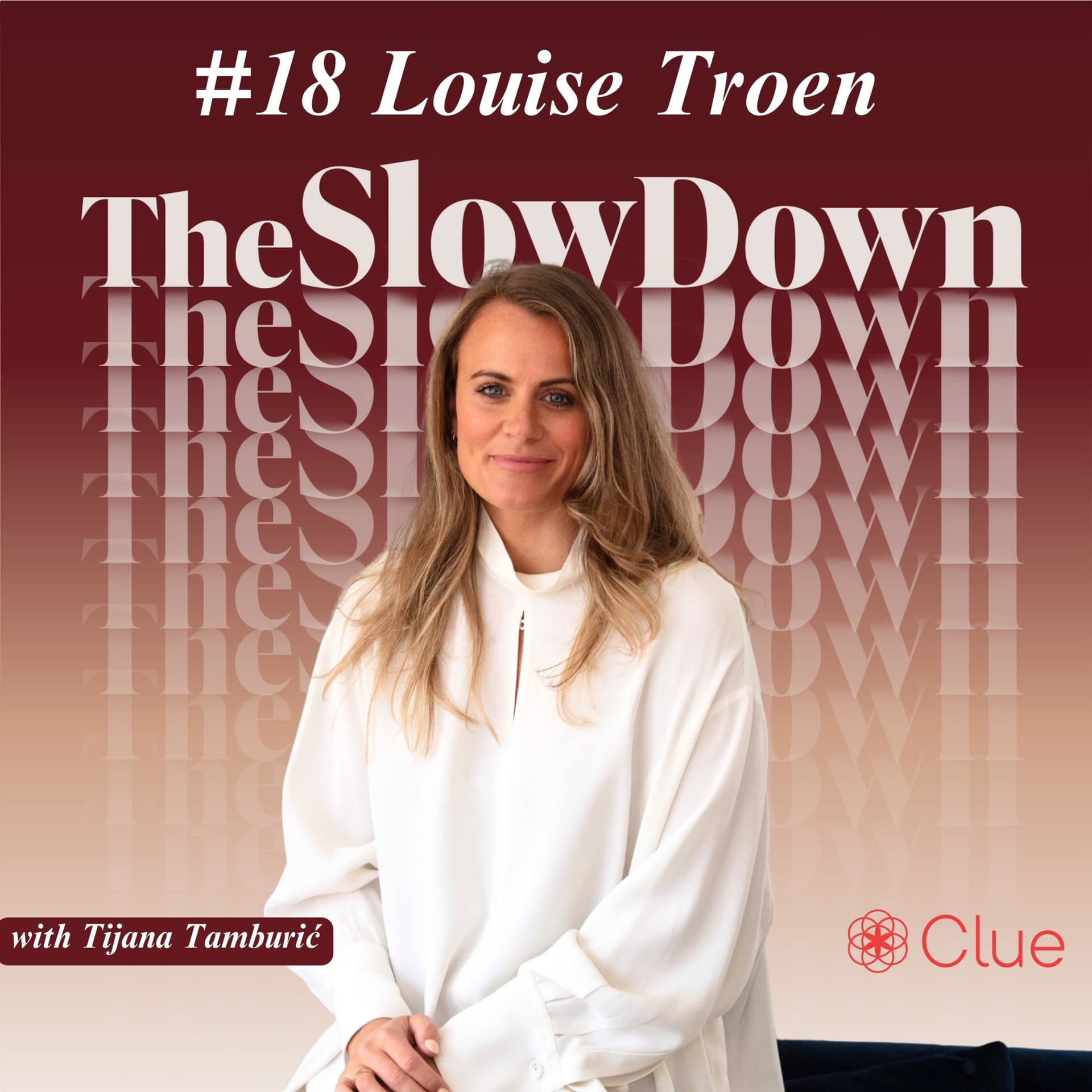
Louise Troen, CMO of Clue, discusses mission-driven marketing, scaling impact, leadership intuition/curiosity, and using menstrual cycle knowledge to inform training, nutrition, and work-life balance. She cites clinical evidence that ACL injury risk varies by cycle timing. She also argues that “winning” and destigmatizing women’s health requires both awareness and visible, empowering storytelling.
Guest backgrounds
Louise Troen is CMO at Clue (female-founded period and cycle tracking app; 100M+ downloads). Previously: VP Marketing at Bumble; Headspace (international growth, global brand marketing, strategic communications); Reverie. Career began in PR after studying philosophy/sociology; worked on clients including Airbnb, Soho House, and Vodafone.
Key claims
Marketing/PR can change consumer behavior when tied to real mission. Confidence comes from starting before feeling fully qualified. High-intensity “sprints” can burn out; she takes six-week breaks between roles and sets boundaries. At Clue, leadership emphasizes realistic targets and workload.
Notable examples
Launching Bumble’s international growth; campaigns helping women “make the first move”; PR work for Paris Hilton, KISS (including launching a football team), and Afrojack; using Clue to learn cycle phases and hormones.
Written by AI. May contain mistakes. Listen to the episode to check what was said.
Chapters
Tap a time to open that second in VOThe Importance of Cycle Syncing in Athletics
0:00 to 0:50
Learn about the correlation between menstrual cycles and athletic performance.
“Whilst there's a conversation and awareness that we need to consistently focus on around destigmatising, which we will continue to do, there's also a conversation of watch me win when I know more.”
The Nexus of Passions and Professional Growth
1:33 to 2:26
Discover how Louise's passions aligned with her career path over time.
“By way of a little top-line intro bio so that the audience knows a bit more about you, Louise Troen is the CMO of Clue, the female-founded cycle and fertility tracker with over 100 million downloads to date.”
Early Life Influences on Career Aspirations
2:26 to 6:40
Explore Louise's upbringing and how it shaped her view of success.
“I think the most honest answer to that is only recently.”
Navigating Career Paths and Opportunities
6:40 to 8:39
Learn about Louise's journey through various jobs and internships.
“feeling that as a child really is kind of the red thread that I still feel today in terms of, You know, if you if you want it, you can find it.”
From PR to the USA: A Bold Move
8:39 to 12:09
Hear about Louise's decision to move to LA and her experiences in PR.
“So take me on the career journey from tanning salon to Bumble.”
Challenges and Triumphs in Pushing Forward
12:09 to 14:00
Understand the challenges Louise faced and how she persevered in her career.
“Yeah, I decided that I wanted to go to LA.”
Navigating Early Career Challenges
14:00 to 17:48
Learn about the early career experiences and challenges faced by Louise Troen.
“I think what was so interesting was at the time I didn't know the clients that they had.”
Embracing Naivety and Opportunity
17:48 to 22:34
Discover how embracing naivety can open doors to unexpected opportunities.
“And I think, do you think it makes a difference with age?”
Learning from High-Pressure Situations
22:34 to 26:58
Explore pivotal career moments that shaped Louise's confidence and approach to challenges.
Starting Her Own Agency
26:58 to 28:00
Hear about the transition from working in PR to starting her own agency and brand collaborations.
“I haven't got the experience, the I'll figure it out.”
Show all 22 chapters
From PR to Marketing at Bumble
28:00 to 37:26
Learn how Louise transitioned from PR to becoming a marketing director at Bumble.
“And then I actually decided that I wanted to do my own thing.”
Sponsor: Clue
37:26 to 38:29
This segment introduces the Clue app for cycle tracking and offers a discount.
“I talk a lot on this podcast about somatic wisdom and tuning into the signals from your body and that really starts with understanding your cycle better.”
Navigating Project-Based Work
38:29 to 42:00
Discover Louise's approach to taking breaks and managing project transitions.
“So download Clue today and start making space for the signals your body's been sending all along.”
Finding Balance Through Reflection
42:00 to 44:16
Explore the importance of taking time away to recharge and find personal balance.
Shifting Work Patterns at Clue
44:16 to 48:29
Discuss the cultural differences at Clue and adapting work habits for sustainability.
“And I, you know, I also feel often quite misunderstood in the sense of, you know, yes, I work very hard.”
Understanding the Menstrual Cycle
48:29 to 56:00
Learn how tracking the menstrual cycle can impact mental well-being and work performance.
Understanding Cycle Tracking's Empowering Impact
56:00 to 58:20
Explore how cycle tracking helps individuals understand and manage their emotions.
“And I think that, at least for me, feels like a lot more empowering than feeling out of control with feelings that don't have any rhyme or reason about them.”
The Importance of Open Communication About Cycles
58:20 to 1:01:30
Discuss why understanding menstrual cycles is essential for everyone, including men.
“The way that, I mean, number one, we are governed as women and people with cycles by our cycles.”
Redefining Workplace Expectations Around Cycles
1:01:30 to 1:05:00
Learn how awareness of menstrual cycles can reshape workplace dynamics and expectations.
“But it's one of our most popular features.”
Challenging Stigmas and Advocating for Change
1:05:00 to 1:10:01
Examine the cultural stigmas around menstruation and the role of advocacy in changing perceptions.
Changing the Discourse Around Menstruation
1:10:01 to 1:12:27
Explore the importance of addressing menstruation in education and sport.
“I don't think you're alone that, you know, to stand up in a meeting and say, I'm on my period feels like you already lost the conversation.”
The Value of the Ordinary
1:12:27 to 1:13:41
Discover how appreciating simple joys can lead to a fulfilling life.
Transcript
Automatic transcript. May contain errors.0:00Louise Troen:There are so many athletes performing at the highest level that if they did not sync their cycle to certain training, to nutrition, it's clinically proven that the likelihood of an ACL injury is much more common during one significant point of your cycle. Whilst there's a conversation and awareness that we need to consistently focus on around destigmatising, which we will continue to do, there's also a conversation of watch me win when I know more. and that winning piece for me is critical because it's the piece that will inspire it's the piece that feels powerful and it's the piece that will give women the force and the momentum to feel strong in the conversation rather than feeling on the back foot
0:49welcome to the slowdown your time to redefine success and growth for yourself with a little inspiration from others. Louise Trohan has been a dear friend of mine for almost a decade and I've watched her flow from VP of Marketing at Bumble to Chief Marketing Officer at Headspace, Reverie and now Clue, the world's leading female-founded period and cycle tracking app. The thread line is her passion, supporting women through the power of technology. In this episode, Louise reflects on scaling impact, how to manage high-responsibility jobs, the role of intuition and curiosity in leadership, and the importance of understanding your cycle.
1:29Let's dive in. Thank you so much, Louise, for being here. Thank you for having me. By way of a little top-line intro bio so that the audience knows a bit more about you, Louise Troen is the CMO of Clue, the female-founded cycle and fertility tracker with over 100 million downloads to date. Previously, Louise was VP of Marketing at Bumble, which is where we met, and Headspace, where she led international growth, global brand marketing and strategic communications. She's passionate about women's rights and health equity and body autonomy and has been vocal throughout her career on the role brand and marketing play in creating a more equitable world for all.
2:11Your thread line in your work is so clear to me. It comes across in what you do, but also in who you are as a friend. At what point do you think it became clear to you that this was the nexus of your passions, your ikigai, if you will?
2:25Louise Troen:Well, firstly, thanks for having me and thanks for the introduction. I think the most honest answer to that is only recently. I don't think my career journey was linear in any shape or form. I don't think I ever planned to work for mission-driven tech companies. I never even thought of myself working in marketing or any of the creative industry to be honest and so I think the through line as with many things in life became apparent probably in the last two years when I started to do a few more speaking things and reflected back on my career while I was drafting presentations and saw that the connective tissue between all of it was yes I was working in marketing but I never wanted to sell a product or a functionality I wanted to sell things that changed consumer behavior and ultimately left a long-lasting change on the world and I think you know often marketing and PR can get a bad rep but the intelligence that can sit within it when you work for companies that are actively helping people make better decisions about their lives can be really rewarding and so you know I think for anyone that's trying to build that through line now at a young age I would would encourage them to take the pressure off because I sort of fell into a number of these roles often with limited experience and found myself kind of collectively looking back and seeing that they all held something consistently similar but I never really realized that at the time.
3:56Well I'd like to go right the way back and provide some context because I always think hearing someone's kind of full journey really helps connect the dots even further so where were you raised by whom and what was your earliest kind of idea of what success looked like?
4:12Louise Troen:So I grew up in London I was born and raised in southwest London my father is Danish so I spent a lot of my childhood sort of living and feeling more Danish than I did British but the luxury of being kind of born and raised in London gave me access to the speed and the feeling and the momentum that I think London holds when you grow up here. You know, weekends were spent at museums and going into central London and my father worked as a lawyer and was doing lots of different charity work and represented lots of different Danish institutions in London. And so I sort of grew up around a very busy family, a very kind of cultural family in terms of the experiences that we had but also I think the most important piece was the kind of work ethic that I saw around me and my mother didn't work but her work ethic in the house with us as kids always trying to identify ways to help us recognize and realize our potential in some form whether that was driving me to badminton every night for three months while I trained to play for the county, whether it was sort of weekends focused on writing and reading and really figuring out kind of where our skills were.
5:34Louise Troen:I think I grew up in a household that was really about finding our potential and exploring as many different avenues to recognise that. And so there was really no opportunity that was restricted from us. and when I say that you know obviously that comes with a lot of privilege but a lot of the things that we were doing were sport and and singing and dancing and acting and you know cultural experiences that really helped I think my parents understand okay this is the direction that me or my two brothers wanted to go in and I think through that experience from a young age when your parents are sort of showing you limitless opportunities you also feel like anything is possible.
6:18Louise Troen:And so I remember, yeah, from as young as 11, really sitting down with my mum and dad and thinking through, okay, these are all the things that I could be, and every single one of them is possible. And feeling like the world really was full of opportunity that was mine to have. And of course, the reality of that isn't true in all cases. But I think in that moment, feeling that as a child really is kind of the red thread that I still feel today in terms of, You know, if you if you want it, you can find it. It doesn't come without hard work. And of course, privilege has a lot to do with it. But, you know, at one point I wanted to work desperately at the local tanning salon.
6:59Louise Troen:And that was an opportunity that my parents were like, you will do that and you will be the most important person at that salon. And that was my first job. And, you know, I was cleaning some beds and meeting all the customers. And but I think that the feeling that they gave me was, you know, you can achieve most of what you set your mind to within reason. Yeah, it's also a way to maybe be able to get into careers that aren't so obvious. Like the tech world was still very much burgeoning. It would have been an interesting way to create a mindset of I'm interested in what's new. There is so much that we still don't know around career opportunities and innovation opportunities that are presenting themselves every single day.
7:40Louise Troen:And I think the naivety when I was younger of not knowing what I wanted to do at any point, you know, I only really realized that this was a space I really wanted to play in when I joined Bumble quite late in my career. but until then you know I was always encouraged to go where the great people are to go where you leave the office feeling joyful and that you've had fun and I remember my father saying to me at one point you know if you do the right thing the financial reward will come and it might not come soon but it will be there because you know when you pair work ethic and fun you become really good at something and of course that's not the case in everything you know I was never going to be an astronaut or a physicist but I really ran towards the internships and the jobs and the opportunities where I liked the people that I worked with and I wanted to work hard and smart and late and I think that you know however hard that was at the time served me very well kind of 10-15 years ago.
8:39So take me on the career journey from tanning salon to Bumble.
8:44Louise Troen:So I studied philosophy and sociology at university I wrote my dissertation on open and closed border control and the politics of choice when it came to trafficking and so I think you know looking back that was all about women and this notion of choice and coercion and how that affects the way we look at kind of border policies across the UK and beyond and I was just really fascinated by it as a topic but you know as a first investment of your time and academic kind of input that really feels quite poignant in the sense of I wanted to understand why these things were happening and speak to the women that it was affecting and really get to the bottom of this very complex notion of choice where you know choice is informed and impacted by a lot of things so when you say I choose for this it's not a it's not a straightforward discussion because it often is informed by many other responsibilities that um push women to make certain choices um that led them to difficult situations so I ended up writing that dissertation and becoming very passionate about that um I then decided to potentially look at a career in tv production and go into documentaries and I think that was kind of a natural progression for me because I felt like these are the stories that I really wanted to tell people.
10:09Louise Troen:At the time I had a friend of a friend's father that worked at a TV production company so they gave me an internship and that led to my kind of first ever assistant role at a production company which was fantastic and I was a researcher working on very different projects and I loved it but I remember at one point the owner of the company coming up to the research desk I was at and said you know Louise as much as we love you here I don't think you should be sitting upstairs in an office researching things I think you need to be interacting with people and I think the stories that you are passionate about and are very vocal about you know you need to be getting them out to people much faster than you know a nine-month project that we were working on and so I ended up again through a friend of a friend very fortunately getting another internship at Freud's Communications which is one of the leading PR firms in London and sort of started my career in PR from from then and this this gentleman who worked at the production company before he had recommended Freud's is the best if you're going to work for any of them it should be Freud's and yeah started started an incredible kind of journey through PR there at the age of 23.
11:25Louise Troen:I worked on clients like Airbnb, Soho House, Vodafone. And really, that was kind of my first experience of the power of storytelling to reshape perception of a certain industry or category. And whether that's, you know, unlocking and unleashing the travel economy like Airbnb did, or encouraging creative connection like Soho House did. I really was passionate and got very excited about I get to take this thing and this functional project and I get to build a narrative around it that ultimately enables people to feel that this thing is going to change their life so I actually was at Foy's for about a year and a half and really resented the kind of hierarchical structure you had to wait a year and a half before you could potentially get promoted I was on 14 ,000 pounds a year at that time but I was loving PR and I was loving the storytelling but I was very junior and you know I was sat in rooms with with three or four people that were more senior than me that I felt that I should have had as equal a voice in some of the ideas and kind of creative thinking that we were going through and I had spoken to a friend whose father lived in America and she I remember going for coffee with her one day and she was talking about this limitless opportunity of the American mindset and this sort of optimism and positivity that is just the kind of elixir of that culture and at the time you know this is pre-Instagram, Facebook had sort of only been around for a couple of years, LA really was this kind of melting pot still for creativity and so I decided one weekend that I was going to move to LA and it kind of was led from my resistance to the kind of bureaucracy of a company that didn't give me the opportunity even to show them that I could potentially get promoted before this time frame.
13:16Louise Troen:Yeah, I decided that I wanted to go to LA. So I took a week off work, took a flight, set up maybe 20 interviews with different PR firms in LA. 19 said, no, who are you? What are you doing here? You're five years old. And one said, yes, it's probably worth mentioning. I'd kind of done a lot of prep work around each of the agencies I went to. I'd looked at their latest campaigns. I'd gone through and written how I would have done them either better or differently. You know, a lot of it, a lot of the work probably wasn't right, but it was my way of showing that I would go above and beyond in any capacity.
13:51And as I was going through these conversations and I was getting no, no, no, it actually at the time never really affected my confidence.
13:59Louise Troen:I was, you know, I was like, OK, that's fair. Like, can I have some feedback? Yeah, OK, I understand that. okay yeah I might need a visa um and I think that was the fortune of that age you know now I think I would probably take projection much worse um because you've worked on yourself and you've built this career and you're really kind of the sum of everything you know but when I was 25 I didn't really mind I was sort of more impenetrable than happy to be directed a bit more yeah good feedback yeah and also I didn't really find it I didn't really take it personally I I found the feedback to be quite fair and rational but I met this one woman and she was British and had a small PR firm and said I love the tenacity you know the presentation was great we're going to sponsor your visa so I went back to London packed up my stuff booked a one-way flight I think I'd saved at that point maybe two thousand pounds over the last few years my dad said we're going to give you 500 quid um but you need to figure it out so I found my godmother's ex-sister-in-law had a house in Silver Lake she was an incredible French woman um going through a pretty aggressive divorce at the time but I managed to stay with her free for a year um I rocked up and she had cheese and red wine and was crying because of this divorce and I was like you're perfect um so I lived with her for a while and went to work at this small PR agency in West Hollywood.
15:25Louise Troen:I think what was so interesting was at the time I didn't know the clients that they had. They were a lifestyle and talent division. And on my first day, she said, okay, you've got three clients. The first is somebody called Gene Simmons, who is the front guy for Kiss, who I did not know who he was. the second is Afro Jack he's an EDM DJ and I was like I do not listen to that and the third is Paris Hilton and within about 20 minutes I was like okay after you fainted after I fainted like yeah freaked out and called my mom crying I was told that I needed to go to a shoot with Hello magazine at Paris's house so um got in got in a car that I had rented with all of my money and drove to yeah her house to kind of oversee a shoot that she was doing and and from there the next two years in LA was sort of a whirlwind of of opportunity um all of which I was under qualified for and you know I think that's been the most important thing to me in my career that I now share with women that I mentor is if I hadn't have pushed myself in those situations and tied my hair back and put some lipstick on and said to myself, you know, it can only be so bad if you fuck up, which it, you know, went wrong several times.
16:46Louise Troen:A number of the things that I did, I, you know, could have gone better. But we and I made it work with the company and the projects that we did were incredible. And I got to, yeah, launch albums and product lines and even launched a football team for Gene Simmons in Anaheim. And the kind of diversity of the projects that I got to work on almost felt like a dream. And I think the key learning through all of that for me now in all I do is we often don't do things because we don't feel ready. and we don't start things because we don't feel qualified and we don't allow ourselves to have things especially as women because we need to make sure that we have all of the things in front of us before we feel empowered enough to go for it and I think the biggest learning is the best things come to you when you just start and it's not about being qualified it's not about knowing everything It's about having the self will and the self compassion to go, I'm going to give it my best shot.
17:54Yeah. And I think, do you think it makes a difference with age? Because I, like you, moved to L.A. when I just graduated from university. So I would have been 20. And it was this naivete of I don't really know. And you find yourself in these situations. And, you know, could I have managed those opportunities even better? could I leverage to certain things better maybe I did kind of what I could with what I hadn't I it felt more organic that way right like the friends that I made are real friends that I value and we connected over silly jokes and weird experiences as opposed to any kind of calculated amount of like how you know where is this person likely to end up right I in fact did so many opposite things where I ended up in San Francisco with a friend meeting this guy um and he was telling me um about this like company he was starting and he was like yeah we're gonna like get some cars in San Francisco and it's gonna be like this ride shit I was like I don't know if this makes sense like I was just like poo-pooing it you know I was like I just don't really get it and then it was like uber um and you were like perfect perfect and then I went to a 4th of July party in Malibu and met these other kids who were like living in a house together who said um you know we're starting this like app where you'll get to like see people's videos did I was like no I think Instagram already does that.
19:11Like, I just don't know why anyone would go off of Instagram to do your thing. And it was Snapchat, the Snapchat house. Perfect again. And so, you know, there's a naivety that felt like I probably missed a whole bunch of opportunities. But also, I was so young that I didn't feel like I wasn't confident enough to be in those spaces or right to be in those spaces. And I wonder how it would play out for me now. Like, as somebody in their mid-30s, like, going to these things, like, is it better or worse? Like, do I, is the fact that I don't have that naivety anymore actually a detriment? Or have I now maybe learned better social skills around, like, communicating better with people?
19:49I don't know. Like, would it be different if you did that now?
19:51Louise Troen:So I wish that I could be more naive. I think we talk about naivety, you know, it's like, oh, God, I was so naive. I didn't do that thing. Oh, God, that guy screwed me over. I was so naive to those. I actually think that naivety is one of the most beautiful and brilliant concepts. And we're so in such a hurry to grow up at the moment. All the young women that I know are, you know, trying to be mid-30s when they're 22, 23. And I would relish to be that naive again. Ignorant, naive, all the language to define it is really negative. But I think there is this sort of whimsical nature that I definitely had, which was, yeah, sure, I'll go to that, you know, that shoot with Paris at her house.
20:31Louise Troen:And like, oh, her boyfriend at the time was there and he was asking me what I did. And obviously I had no idea what I did because it was the first fucking day. but I was like oh you know I'll just you know make some stuff up and like have a cup of tea with him now I would probably be like okay I'm in a c-suite position I work for a company that's worth multi-million dollars I've got to present myself in a way that is as professional as my tenure of my career and I don't love that about myself I love the me that was you know foolish enough to force myself in every situation but also not affected when people were like what are you doing here like go home I'd be like yeah no fair enough I tried my best to get here and I think there's a sort of luxury that comes with that and I think young people are in such a rush to find and build their billion dollar business tomorrow rather than just like allowing themselves to float through opportunities and be drawn to the ones that feel right I think the best thing to do is to feel confident and comfortable that all the situations that you were directed to or redirected to are absolutely where you're supposed to be and I think it can be quite exhausting nowadays the amount of people around me that feel like there is just so much more and more and more to achieve and at some point I think you have to stop and say you know the notion of achieving something isn't this end destination it really is this collection of stories this tapestry that that you've built of oh god look what happened when I you know didn't think that snapchat was going to be a thing like that's part of your story as a person and there actually isn't an opportunity I mean there are many opportunities that I lost out on but there isn't an opportunity that now I think I wish I had done that differently because the direction that I was supposed to go in has got me to the point where I am now um so yeah I would I would say that if you can lean into that sort of naivety and and sort of whimsicality that's a real luxury to be able to live in that space one of the ways I'm trying to kind of put myself in those positions again is I think you know there's probably a very tick tock thing of like do it for the story I've passed my super naive phase and now I'm very much in this I'm in a serious routine every day is like I know exactly what I'm doing I know what my business does so I make it a habit to regularly do things that adjust for curiosity's sake and are a bit left field because I know they'll provide me with some sort of good story and I think in my teens and 20s that was just happening naturally all the time it wasn't a conscious decision to go out of my comfort zone and do something for the story and now it's like oh I could say I'm exhausted I could stay at home tonight or I could volunteer at Yumi Bum Bum Train and I feel like I'll get a good story out of it so maybe I should go yeah I did um and I got Jeff Bezos out on stage and so I got my story why are you like this but I think it's that thing of like putting yourself out there and look credit to you I think those names that you mentioned that however long you were doing PR for them Paris Hilton still a household name Kiss about to do a massive massive show as like holographic versions of themselves um so I think still doing doing pretty well but I think what's so cool about all of that is the at the time so I remember landing in LA learning that these are my clients and week two the CEO that my boss said to me okay so Kiss have bought a football team they bought a football team it's going to be called the LA Kiss and they're playing out in Anaheim which I had no idea where it was and you're going to launch that and I was like what I've been working with a team of like 10 very smart and capable people at Freud's I don't know anyone I'm living with a French divorcee who cries every night and drinks too much red wine but like that's fine and great but like I have to work the next day I don't know anybody in the city like literally nobody the pressure to launch a football team which by the way was American football so I was like I love you were like I love soccer yeah but also you don't kick it you throw it which I didn't realize number one number two I was like yeah I've kind of heard of KISS like they're a bit weird I had no idea who Gene Simmons was and also didn't know where the fuck Anaheim was so quite literally on my own with no knowledge and it's definitely worth mentioning a shit ton of anxiety I had to run a press conference to announce this football team and you know media in America and I was literally like okay I can do one of two things I can collapse and go home which I was very close to doing or I can just try and figure it out and if it goes wrong I'll go home anyway and I remember emailing one of my old friends at Freud's being like I know this is really weird I need you to get me a media list of all the sports journalists that live in Orlando because I had to do it in Orlando so I took a flight to Orlando with Kiss found this media list managed to rent a room was like what is a press googled what is the structure of a press conference they were like you do this then you do this I was like okay I've rented this room great and luckily there was someone that was working at the company with me that was like I'll come with you to help but it was pretty makeshift and definitely could have been better but we got 30 or so journalists there and yeah the kiss guys were pretty happy and I mean of course there was a ton of stress in between but I remember crying on the flight over there being like there's just no way I can pull this off and everyone thinks that I'm about to pull it off and I'm the only person that knows this is going to be an absolute disaster and it wasn't a disaster it was not great okay it was definitely not great it wasn't a final set yeah it was no raheem sterling campaign for headspace but they were happy and it was good enough and i think that was the moment when i came home and my mum can testify to this thing i cried on the phone about 50 times when i came home i had this little little moment of like that was really tough but it was sort of this extra point in my system of like okay you can do hard things and then they're not always going to be perfect they just actually have to be good enough and if you can do them with a little bit of charisma and a bit of positivity most people are okay with that the the confidence that that gave me was pretty pivotal in my career in the sense of now when I and after that when I met anything that was like I actually can't do this I haven't got the experience, the I'll figure it out.
27:06Louise Troen:And if I can't figure it out, I'll ask someone for help. And if I can't ask someone for help, I shouldn't be doing it. But that was always the trajectory that I took. Now when I am interviewing people, I find it so interesting that I'll ask them if they've got certain experience. And they'll say, Oh, no, I don't have that. Like, I don't think I'm qualified rather than I've not done that before. I have some ideas. And I can do it because we can do it all more often than not but it's the mindset of I can fit I can figure it out and it might not be perfect but it would be better than not doing it at all yeah but can you think that you do you think that you can do it I think is important yeah and then you know that that kind of PR LA career then eventually led you to a little app that did get founded called Bumble yes so I met someone called Poppy Jamie when I was in LA and I came back to London I I worked for another PR agency for a couple of years, working with brands like Converse and Uniqlo.
28:01Louise Troen:And then I actually decided that I wanted to do my own thing. And I was thinking I've had such great experience in L.A. I've got all of these kind of talent contacts that want to scale and expand their varying projects, whether it was Paris's beauty and perfume line, whether it was Afro Jack's European tour, whether it was Jean's European tour. Then I've met all these other people that, you know, through all of my stumbling, I was like, huh, now I kind of have, you know, a Rolodex and a way of doing this. And, you know, I'm kind of relatively connected in London. So I decided that I was going to start my own agency.
28:38Louise Troen:It was going to be sort of talent, but also brands. And the idea would be that we'd work with talents and brands that would work together. So I would only take on sort of similar types of projects and people and products so that there would be this kind of interconnectedness between them all and kind of it would lift all boats um and I kind of dropped Poppy a message and said you know I'm thinking of doing this I've currently got a number of clients like I know that you know she was friends with a few people that ran a few brands and she said oh I actually just sat next to this woman called Whitney at dinner who um is looking for some support because they're launching an app called Bumble in the UK and I hadn't really heard of it I said sure I'll take like I'll take a meeting um and so I met with Whitney um and actually initially brought her on as a client for the PR firm while I was trying to figure out how I was going to organize my own thing so there was sort of a process that I was going through that was going to take me about six months to set it up um and quite quickly I think I'd worked with Whitney and the team for kind of three months at the PR agency um quite quickly they were like we're hiring a director of marketing and yeah I would like you to be it, which was a huge jump for me because I'd been an associate PR director, you know, running PR campaigns for a few clients.
30:01Louise Troen:But then to move in-house as a marketing director with very little marketing experience felt significant. But again, you know, I was like, I'm going to give it a go. I kind of understand marketing because PR sits as part of that wheelhouse. and so yeah I joined the team as a director and was running sort of the UK expansion and then all of the international expansion across Europe and APAC. So you are now inside a brand a very fast moving tech brand where impact has the power to scale and obviously what you wanted to do from much earlier was tell stories support women how were you able to watch in real time as stories could scale in a speed that had never happened before because you were now in technology like what were those years at Bumble like initially yeah I mean they were incredible and I would say without Bumble I wouldn't wouldn't be where I am today in in my career but I I remember the first year being like something I had never experienced in the sense of the I mean they were probably the the biggest brand at that time that had financial backing um from a partner so it was sort of money that was invested um or it was a partnership investment rather than kind of outside VC money um and the ability for us to be creative within that because we had budget because we had big targets but we were growing faster than we could keep up with um and I think one of the interesting things about kind of competition in any tech market is you know tinder came before us but what tinder did which was so brilliant is it almost unlocked the category for us and so when we came along the kind of education and understanding of what this was the functionality of you swipe you connect you can date online now which was hugely revolutionary at the time it allowed us to then swoop in with a brand that felt meaningful and thoughtful and considered and more importantly was focused on helping women feel safe and empowered and that often wasn't felt in the dating world and quite quickly you know we got to get really creative with campaigns and projects and it was probably my first time that I was kind of directing and producing and running global and international campaigns but what was so incredible was that they were all about helping women make the first move in many different ways and creatively that is just the most brilliant brief whether that's you know empowering them to prioritize their finances or collectively working with minority groups or women of color to help them feel more empowered to go after they what they want or looking at various industries where women are underrepresented which is pretty much every industry and looking at how we could play a role in in making that more equitable I very quickly recognized that this kind of combination of creativity but also commerciality but also this movement that was changing behavior was a recipe that was was going to be successful I think Whitney was you know absolutely a figurehead for a now billion dollar company that is run by women, that is built for women, that is empowering women and can be wildly profitable.
33:31Louise Troen:And that really wasn't a story or a situation that was commonplace at the time. And, you know, the pace was immeasurable in terms of how much we were working. And that was amazing. but it also absolutely took its toll on a lot of us you know I I remember kind of everyone at various moments feeling you know the consequence of working that hard about something that you care about and it was this sort of tension point between you know no one was for it wasn't a culture of you've got to work 14 hour days and you've got to fly around the world and you've got to speak but you've also got to lead but you've got to direct but you've got to write an office You know, there's there's so many there were so many pieces to the job that it was sort of impossible not to work as hard as you possibly could.
34:24Louise Troen:But because I think everyone was so passionate about what we were doing, almost that passion overtook any conversation about self-care or self, you know, interest with regards to balance. Or it was really we're on this trajectory. We've got a couple of years to absolutely own it. we got to run and all of the women that were around me and around Whitney were fueled with that momentum you know there was a force that was in all of us and it was a certain type of person that that really joined the company and there was this sort of energy in meetings when we'd go to the Austin offices at events that was we will not stop and we will not sleep until this is a billion dollar company and I think that was a really unique situation to be part of being around so many people that cared so deeply um you know but of course as with everything in life you know that that has its cap and after a couple of years there were a number of us kind of at the same sort of level that that just felt it was the work that we needed to do had been done so I made the decision sort of when that happened to to leave and that was a really good decision it was probably the best decision the best timing because it was going from this insatiable speed and hustle to a point of much more process much more yeah I guess kind of systematic structure and whilst you know that was the next phase I don't think that many of us and I definitely couldn't have carried on at that pace for longer than that and I think that's why you know similarly today we and we've talked about it before the tenure of roles that people have are generally you know two three four years because that's how long you can do that that is how long I mean to be honest it was probably too long you know when even even a year working at that pace um was insane but I think the challenge was I absolutely loved it I loved it it was like a love affair I got to do things that I deeply cared about with people that I loved you know the team were incredible I got to have so much fun marketing to women and people around the world about fighting for that what they deserve and that is like dream scenario and I think I'll always have this tension between you know in the end anything that you throw that much time and effort towards will burn you out and the question is you know are you willing to reach that point for the reward and still to this day it was worth it even though the recovery was quite challenging because of that level of of kind of intensity this season of the slowdown is brought to you by clue the period and cycle tracking app that goes deeper than dates on a calendar.
37:33I talk a lot on this podcast about somatic wisdom and tuning into the signals from your body and that really starts with understanding your cycle better. Clue is an essential part of my daily routine, not just knowing when my period is coming but knowing what phase of my cycle I'm in, how I'm feeling, my energy, my sleep and now I use it in the trying to conceive mode. If you've ever felt like your body was trying to tell you something but you weren't quite sure what this is where clue comes in it's science-backed inclusive and totally ad-free so that you can reclaim your rhythm one insight at a time and especially for the slowdown listeners clue is offering a 75 discount code on their annual clue plus subscription via their website to redeem this go to helloclue.com and enter the code slowdown at checkout that's slowdown one word.
38:24I'll also attach the direct link with the discount already embedded in the show notes. So download Clue today and start making space for the signals your body's been sending all along. You're someone I know that's been able to take quite good breaks between projects. I think the way that we work has changed so much to the previous generation. This idea of work at nine to five from this age till you retire at one job in one place and sort of work your way up a company versus this very project-based passion work of like three to five to seven years and then you you move on to the next thing and that you can actually take breaks along the way rather than waiting for this kind of retirement on the horizon thing when you take those breaks what do you do
39:08Louise Troen:how do you recharge and where do you go yeah so I made the promise to myself that when I left Bumble I and maybe I should start by saying I think what I'm really good at and I'm not good at many things But I think what I'm really good at is joining a company, scaling it very quickly, very aggressively, building campaigns that make them famous and known and loved and structuring a team around that so that that can consistently live and breathe for as long as it needs to. and I've never been someone that considered a company for you know friends of mine that have been in the same jobs for kind of eight nine years or so if I look back on my career every role I've had has been two and a half to three years and I think that's you know important to reference because I remember you know a few people saying oh do you not want to stay longer than that the first three months is like identifying how the team needs to be set up going through all the data figuring out kind of the growth mechanics and the systems that can help us scale as quickly as possible the next six months is identifying all the partners projects campaigns missing creative pieces and then we launch into campaign after campaign after campaign after partnership after ambassador after spokesperson after market launch and I'm yeah now in my fourth month at Clue and we've done part one we're already launching it into part two and we already have a roadmap for what we're going to do for the next nine months you know obviously things can change but I do think that that's how I operate best it's also what I find most inspiring and exciting I hope I'll be at Clue for much longer than that because I think there's so much work and opportunity to be done but I sort of made a promise to myself after Bumble that for every job that I took that the brief and generally every company since then you know that the ask for me is we need to be the best and most loved brand in x category and so I build brands I hopefully make people love brands and I make brands culturally relevant in in the right markets and you know that that is something I'm so proud of but I also I just promised myself that after each role I would take six weeks off and so I would save as I worked at those companies to allow myself to do that.
41:35Louise Troen:I did it after Bumble, I did it after Headspace. And I did it after Reverie, the last company I joined. And I think that's a really important piece for me, because when I'm on the treadmill of systems, growth, scaling, which is hard, right? Like, I don't think scaling and growing a company comes without so much hard work that it almost feels impossible. that is just the nature of that kind of work um but knowing that that is my way of protecting my peace throughout that process helps me to feel more in balance and obviously everyone has different versions of what balance means to them um and the systems that you set up for yourself and people do on a day-to-day basis but that sort of six weeks allows me to recoup reflect you know I typically go somewhere where there are like no inputs in my brain and and often on my own you know I have a wonderful boyfriend and we we were in Mexico for a couple of weeks at the beginning of the year and and then he went home and I stayed on on my own and that's that's really important to me um because as we all are you know I'm around so much information and responsibility a lot of the time that the way that I recover is to almost shut down all the tabs and quieten all the noise and allow my brain and body and system to to rewire which is absolutely possible our brains are completely capable of being rewired and it requires saving while you're working and kind of planning ahead but I think it's a really helpful way to work because two years is manageable three years is manageable but these sort of intermittent holidays throughout that time they're not the recovery that I think we need and then you're back to the wild crazy color of London or wherever you live the stimulation I think from everyday life in London cannot be underestimated the amount of inputs going into our minds at every single moment and minute even if we're doing self-care even if we're going to yoga even if we're making sure that we're not drinking and eating right you know the the stimulation of just the surroundings is is not the best recipe to allow your brain to rest and recover and rewire itself and you know I think we're we don't want to get to a point where or I don't want to get to a point where I've sort of moved so far away from allowing it to recover at intermittent stages that I just live in this sort of consistent, loud, loud in a kind of broader sense, sort of lifestyle.
44:16And I, you know, I also feel often quite misunderstood in the sense of,
44:21Louise Troen:you know, yes, I work very hard. And I'm, you know, around a lot of people all the time, but I can be quite private, I can be quite quiet. And I feel like the role, and the roles that I do have to be very front facing and I love that and I have a lot to say and I care deeply about it but I also you know have this this other side which is quite introverted and quite introspective and and I need that side to be cared for. 100 % and now that you're fully ensconced at Clue and you're about to do these like intense sprints is there anything that you're taking with you as learnings into this that is helping you find um a level of calm through it or a level of or is it just like I've strapped myself in I'm doing this again clue has been incredible because the culture is very different to headspace or reverie or bumble the leadership and and I don't know whether this is because the team are based in Berlin so culturally it's different but the leadership team that I'm part of are probably the most realistic in terms of targets, workload, expectations and so it's probably the first job where I feel like I don't have to sprint.
45:52Louise Troen:Yes we have lots that we need to do and plan and you know the first six months of any executive role is heavy but the nature of the way the team are and the way that they operate is something I've actually never experienced before and so it's less about you know the company doing anything differently it's more about me being stricter with myself to not fall into existing sprint patterns because that is that's been the byproduct of the last 10 years of my career and actually allowing things to move slightly slower even though that feels uncomfortable for me um and you know I'm hiring a few people um we've we've already kind of got two campaigns out the door since I've been there um and and that's enough and I think not allowing myself all the team to try and do everything really quickly um but actually allowing us to optimize better the existing things to adapt quickly is important so i think in terms of what i'm taking into this is you know move move slower through this because i want to be a clue for a long time um and the reason that i was at the other companies for kind of two to three years is because the sprints were so fast you know there are various ways that that i'm doing that one is hiring the right people around us and the right agencies around us that's very important um but the other is you know not over identifying with the job as my entire reputation or value and allowing myself to step away at 6pm and not open my laptop or slack until the next day and just setting those boundaries for myself so that the you know the the tendency and the sort of feeling of wanting to check in on things when you run a global company and you have teams in LA and you have teams in different markets is is constant but the reality is you know there's only so much that all of us can do in one day and you're much better off again treating your brain like you would your work and you know investing in that for the hours that it needs so that you can come back stronger the next day obviously coming up um in business in my 20s it was all hustle culture girl boss you know glorification of being a founder glamorization of working really hard working too many hours that kind of thing and now there is it feels like at least maybe in my algorithmic echo chamber a feeling of um we should have this work-life balance we should have hobbies we should not put all our eggs in the in the career basket yeah so what i think is really difficult about that is a I completely agree with you that this glamorization of work ethic that was definitely something that I felt at Bumble it was almost like sexy to be working 14 hour days and you know when people would say god you're always traveling and you're always working it would feel good right you would feel like you know I'm I'm working hard and and that's something to be proud of um and I do think that's changed and I think this work-life balance sadly has come to the forefront because so many people have burnt out it didn't just present itself because you know the work-life balance man was like oh hey I want you know I want to show up and talk to you it was it was because we were seeing a crisis of people unable to continue because they were so exhausted from the expectation of of leadership to work all hours of the day um what I think so difficult about the work-life balance piece is we're still trying to build profitable companies and we are you know also in a position of you know an economic um crisis not crisis but we're yeah and and people are struggling with financial security and there are you know layoffs and rifts happening at lots of tech companies and I have friends that you know a number of very big brands household brands that really struggle with the culture and the expectation and you know are scared of losing their jobs and I mean I don't know a single tech company that hasn't gone through a round of one or two layoffs in the last few years because they've overhired and their you know P &Ls have suffered because of it and so there's sort of this dichotomy which I struggle with of you know yes work-life balance should be and is where we need to be but there's also this fear of keeping and having a job with building companies that can sustain themselves and so I think you have to find and each company will be different but and really it's down to the top to to really infiltrate this but it's about figuring out what are the systems to help people work really smartly without expecting them you know to work past certain hours and we work with this model on my team of sort of high investment high impact so all of our projects are tiered we look at team resource you know team stress the amount of you know financial input that we're putting into it how quickly we can get it delivered and then the knock-on effect on the business as an impact and then we sort of organize where I'm organizing the team around those principles so that in the time that we do have we're doing things that really really matter and make a difference to the company.
51:32Louise Troen:And I think that allows for work-life balance, but I think it's difficult to promote a work-life balance without in tandem acknowledging that the systems in your business need to be either adapted or reinforced to achieve that. Obviously, you mentioned cycles there, and I think I'm really interested in how aware are you of your cycle as you go through the month, and do you use that to inform the way that you work? So embarrassingly, before I joined Clue, I had no idea about any of the complexities of my cycle. I knew that there were certain times in the month, obviously, that I had PMS. I was aware that people cycle synced.
52:14Louise Troen:I also obviously knew that there was a time when you are more fertile because you're ovulating. But I never grew up with education around it. I wasn't aware of the different types of hormones that exist within our bodies, what each of them do and what they represent I had no idea that follicular phase we felt one thing in the luteophiles we felt another thing um and I downloaded and used clue and was just overwhelmed after the first few months of the knowledge that it gave me and that's when I reached out to to Ida and and initially offered my support um free for the I kind of said you know I'm I would love to work pro bono for you guys and then she went back and said well actually I think today we signed off a mandate to hire a CMO so let me forward your email to someone but was so overwhelmed by the information and the feedback that the app was giving me not least about the different stages and phases of my cycle but more importantly the kind of symptoms that I was tracking that were coming up consistently at the same time every month and had often thought that you know there were certain projects and things that I was working on that made me more anxious because they were just higher stress and I kind of presented myself throughout my life as sort of someone that was quite susceptible to kind of high anxiety but I've obviously also worked in incredibly stressful environments so just thought that was par for the course and when I started using Clue and I started tracking my cycle and my symptoms it was the same four days that I felt highly anxious probably a bit irritable um and low mood and throughout my life you know I've often toyed with you know have I got components of depression do I feel like I'm an anxious person you know why do I feel like this more regularly than other people because it felt like every month I was feeling like this which quite quickly can feel like a major problem um um and never really addressed it but then started using clue and quite quickly was able to disconnect from that over identifying with those feelings um and recognized that that was just part of the way that my cycle was operating which is very normal and very common and you know at the moment we're working on a on a feature called cycle insights where we really look at kind of the collective feelings um anonymously through the app and and you know what it shows is that most and many women feel the same things at the same time of their cycle and I feel like if I knew that information when I was in my 20s I would have looked at myself so differently and I think quite often we can put labels on ourselves you know when you're in a relationship where you're getting more frustrated and you feel more angry or you're you know presenting something at work and you feel so anxious and you think I can't do this job it's it's so bad for me or look at the impact it's having on me or you know you have a low mood and you go to the doctor and they say well you might be depressed you should consider taking medication all of these factors and experiences at no point does anyone say have you gone gone through and checked your cycle have you logged and tracked symptoms we log and track like when the day of our period is coming but actually the knowledge and the insight that comes with understanding all of the different other pieces even on on the brilliant side of you know when you feel more creative when your body is in a better position to exercise you know being able to schedule your life according to that I think is incredible and very powerful um and now I live by it um obviously we live in a world where you know if there's something that comes up and it's important and it's on a day where I might not be feeling as bright as another day that's just par for the course again but I think it's an incredible asset to help all women and people with cycles not over identify with things that often can feel deeply personal and almost give them this abstract data system that shows you very clearly and cleanly in the app you feel these same things every month and here's what you can do about them and we support you with them but the knowledge and the feeling that that those symptoms are not you as Tiana or me as Louise, but they're part of our menstrual cycle that every woman has every month.
Read the full transcript
57:01Louise Troen:And I think that, at least for me, feels like a lot more empowering than feeling out of control with feelings that don't have any rhyme or reason about them. I speak to our members often but the kind of two consistent pieces of feedback I get is I would not have been able to advocate for myself if it wasn't for Clue to be able to show a doctor or a partner or a friend things that you're going through in a way that feels from a UI and UX perspective very sophisticated supports and comforts people in a conversation that can feel desperately and deeply personal and uncomfortable that's the first one and the second one is I've been able to live a happier life and I feel more in control of my emotions and I think control is really important because women are so often branded with she's out of control you know she's crazy she's hysterical she's emotional she's irrational all of this language that holds us back from being able to step into our power and with clue i think women have quite quickly at least the women i've been speaking to have quite quickly been able to see you know the people that are are suggesting and saying that other people that don't understand the science and the data and the biology behind it and i think that is an incredibly powerful asset to give someone as they're moving through life yeah I agree and I use clue as well and I found that like you years ago the only thing I tracked on you was like when my period was coming that was the only thing I was really interested in you know when is this going to disrupt my my life right when do I need to be prepared for this this flood that comes from within me once a month and now I'm much more interested in the days that I have that mood dip that um feeling of yeah like low level anxiety um I'm much more easily emotional um sensitive argumentative um things that don't usually upset me really upset me that kind of thing um which impacts my partner and so it's like realizing that that's a reoccurring thing also like especially in new relationships like going oh he's clearly not the one if we're having this fight you know but actually being able to equip him with that information in as you say a way that doesn't feel irrational or hysterical but it's like here's the exact time of month that it happens and here's what my hormones are doing at that time which is kind of brings me on to my next question of like why do you think this is obviously a female phenomenon or people who have periods but why do you think men should also be listening to this conversation because every Every single man interacts, is involved, is partnering in some way with a woman on a day-to-day basis or someone with a cycle.
1:00:07Louise Troen:The way that, I mean, number one, we are governed as women and people with cycles by our cycles. We're governed by them. It happens throughout our lives. Every single month we're going through something differently. And so if you are in any situation, whether that's working with, in a relationship with, friends with, your sisters with, whoever that might be, the person that has a period or a cycle will be impacting your day-to-day life in the sense of how they're responding to opportunity, to issues, to challenges. and in the same way that I would like to know if somebody that I'm working with or dating or is in a relationship with has gone through certain challenges or you know has a mental health condition one of the guys that worked on my my team at my last company was very open about you know the fact that he was neurodivergent and he and I spent a lot of time talking through how I best can support him as a manager and how how much he needed from me to be able to do his job efficiently and and the things that he needed were very clear direction very clear deadlines he he struggled in this sort of creative vague space and it was it was one of these moments where I was so grateful to him for saying to me this is why I feel and I'm thinking and I'm slightly different and this is what I need from you in order to be able to do my job brilliantly and for me this is no different to that in order for me to be the best partner friend colleague boss manager mother sister whatever it is being able to articulate through an app that is very clear because a lot of people can't articulate it themselves allows you to also empower the other person to feel like they can play a role that is benefiting both of you we have something called Clue Connect, which you can send to your partner or a friend, which allows them to see all of the components of your cycle and you can choose what they do see and what they don't see.
1:02:17Louise Troen:But it's one of our most popular features. And there's a doctor called Dr. Mindy Peltz in America who uses it with her partner and is very vocal about it. And went so far as to say it sort of changed her entire relationship because it allowed them to relationship cycle sync. And I think that's something that can be incredibly powerful rather than the common statement and sentence which is I think it's the time of the month for her allowing our partners and friends and colleagues to understand that this is the best way to work talk partner with me at that certain point based on my cycle it just benefits everybody and so I see a world you know in the future and hopefully it'll be soon where the conversation will be so kind of rid of all the stigma that you know from a workplace perspective we will be sharing these things with our colleagues and employees and employers so that we can structure and redefine and re-look at the way that our working world operates because to expect women all women and people with cycles at different points of their cycle to work on different projects at different times but collectively get to the same outcome that is nothing short of magic that women can do that knowing that every woman is at a different stage and I think we can all do with a little bit more compassion and understanding how that impacts things and I would love to see a world where you know when I'm in my luteal phase and I'm struggling a little bit and you're in your follicular phase and you feel great that you take the call where there needs to be a bit more energy or when I'm feeling a little bit more subdued I take the project that allows me to kind of sit back and reflect without needing to be sparkly and in front of the camera and I think there's so much power that can be done with that that we haven't even touched the surface of so I'm hopeful that Clue can can be that and we've just launched Clue for Work which is it's an employee benefit at a first step but you know when I look back in five years time I would love to see a world where we're supporting each other all of us through the knowledge that can help not only each other but also businesses.
1:04:34I love that it sounds like utopian at the moment but like maybe as you say in five years time like we might be like oh it's totally normal that you know there's three people leading a call we just say who's who's going to lead it based on what phase they are in their cycle of that idea I mean for me it's it's still it feels utopian and hard to imagine because I think I spent 10 years um kind of capitalism battering any kind of like knowledge of my cycle out of me it was just like you have to perform every single day and if you don't you fail and it's still like you should feel bad about it um and you might be reprimanded for it and I guess it leads to my kind of next question which is what is your kind of working definition of success right now for you that is a great question because it changes at every company that I work at I think for now success is feeling like I can make a difference
1:05:32Louise Troen:every day so anything that I do in any of the days that I work doing something that I feel can push us forward and and yes that might feel like utopia thinking about okay how do I identify the six people that are in their follicular phase who are all fucking creative at the moment high on energy like the ideas are going to come I don't see that as being that far away it feels far away because we have majority men working in leadership positions that would never get encouraged or supported but you know I I've already talked to our team about it at Clue in in the sense of how do we figure out a way where we could try and imagine and create a world where we you know for want of a better word optimized but celebrated and championed the capabilities of people at different points during their cycle we're so negative about our cycles everything is I've gone through this I I'm you know holding shame around it I don't want to talk about it I'm embarrassed about it I'm in pain about it and all of that is is really important to talk about but there's also with anything that's difficult there's an opportunity for us to recalibrate and support and imagine and hopefully create companies and workforces and systems that allow women to feel supported so they don't feel like they're having to drag themselves through these expectations with you know pain and confusion and lack of of support and I think success for me is can I can we at least let Clue be the front runner in that thinking and to go back to what I was saying at the very beginning it doesn't have to be perfect and it might not work brilliantly around one but I genuinely wake up every morning and don't understand why the one thing that governs essentially the entire population we haven't taken that seriously and thought through how do we help women and people with cycles be more productive at work by addressing its opportunity its challenges but more importantly its potential in the workforce I think it also requires just a lot more people talking about it in general when I think back to kind of years that I haven't spoken at all about it it's either been a stigma of like it's being seen as complaining complaining about period pain and things like this and that being seen as an excuse for for not for not working or something like that and the the fact that like we didn't talk about that enough kind of then conflates it whereas in recent years so many more of my female friends have talked more about this more about their endometriosis their pcos their problems their severe pain their mood swings um i have a business partner who's very vocal about what phase in her cycle she's in how she's feeling it's then allowed me to feel like I can now say that for the fact like I've never allowed my I don't think I've like up until a few months ago ever like said out loud you know I'm actually like on my period and I'm a little bit less productive than usual for example and just wanted to like let you know that like that's not a conversation I have with people and um bringing up that conversation with my partner recently you know he confessed none of my exes have ever talked to me about their periods ever like it's not something that they've discussed to me in terms of phases and you know he even said like they've not complained about their periods and that's this like common rhetoric of like it's a it's a thing that's not really that bad and you kind of like to talk about it is to complain about it i mean welcome to what it means to be a woman yeah absorb you know allow it to to kind of happen to you don't complain about it I think we're in a completely different generation now and I think the power and potential of Clue and I know the team feel very strongly about this as well is that we can be the front runner in taking that to the next step we have a lot of men that work at the company who are brilliant our chief tech officer is a man who is very open about his daughter's periods and what that means one of our lead investors Colin is incredible when I interviewed with him he has three daughter two or three daughters and he's invested specifically because he wants to change it for them there are brilliant men out there also wanting to talk about this but I think the there are two avenues right to kind of really raise awareness of this yeah of course there is our kind of social systems and social networks but there is the government and there is policy um when it comes to teaching young girls about this conversation in school why do we learn about sex education but we don't learn about our menstrual cycle um and then more importantly there is a responsibility now i think for brands to use their platforms their budgets their resource to change the discourse around things like this and And it's why I've worked for sort of mission driven companies, because I think there is a role that can be played to change the dynamic here when it comes to the stigma.
1:10:52Louise Troen:And I totally agree with you. I don't think you're alone that, you know, to stand up in a meeting and say, I'm on my period feels like you already lost the conversation. and one area that I think is really important for us to focus on to combat that it is the performance space and the sport space there are so many athletes performing at the highest level that if they did not sync their cycle to certain training to nutrition it's clinically proven that the likelihood of an ACL injury is much more common during one significant point of your cycle all these components are helping women win in sport and so I think whilst there's a conversation and awareness that we need to consistently focus on around destigmatizing which we will continue to do there's also a conversation of watch me win when I know more and that winning piece for me is critical because it's the piece that will inspire it's the piece that feels powerful and it's the piece that will give women the force and the momentum to feel strong in the conversation rather than feeling on the back foot and as soon as you leverage knowledge to your advantage you feel more powerful and when you feel more powerful you don't feel ashamed um and so i think the two in parallel will get us closer to where we need to be um but again i think it will take all of us especially the support of men yeah together I love that well my final question which I ask everybody is if I had to watch one film or read one book or look at one piece of art have some kind of cultural experience that will help me understand you better what would it be yikes that's a good question can I choose like a poem sure thanks there is a passage that I'm obsessed with that's on my wall and it's yeah something I I kind of think about often it's called make the ordinary come alive it's by a guy called William Harris and it's a short passage poem um and it was written for children but it really is how I live my life now and how I feel I'll get to the most sacred place of peace for myself um and I won't I won't kind of go through it all but it's it's about not teaching people about the extraordinary and showing children the value in the taste of an orange and the touch of a hand and it's kind of focused on how the extraordinary will always take care of itself always and so trying to strive for extraordinary lives is often a tough feat but if you can make the ordinary come alive the opportunity for joy in every moment is much more possible and I think now you know as I move into this this this role and the way I look at my life I am super focused on how to make the ordinary come alive every day because I truly believe that the extraordinary will always take care of itself I love that I mean it's better than my childhood bedroom wall where I had the lyrics of blink 182 written in a circle around uh well thank you so much louise um for your time and for your knowledge on and sharing your journey thank you thank you for tuning in this episode was hosted and created by me tiana tambridge it was produced by whitney rosenthal with sound and video produced and recorded at brazen studios cover art and design by natalia ruhe and the sponsor for this whole season is a clue.
1:14:49Please subscribe to The Slowdown to be notified of upcoming episodes, tell a friend and leave a review because it really helps a podcast like this get out there into the world. And remember, we're all heading to the same destination and there is no prize for getting there early, so we might as well slow down.
From the publisher
From Freuds, to Bumble to Headspace to CLUE: Louise Troen’s non-linear career journey from PR to mission-driven tech, equity and body autonomy is one you have to hear.
Louise Troen is the CMO of Clue - the female-founded cycle and fertility tracker, with over 100 million downloads to date. Previously, Louise was VP of Marketing at Bumble and Headspace where she led international growth, Global brand marketing and strategic communications. She is passionate about women’s rights to health equity and body autonomy, and has been vocal throughout her career on the role brand and marketing play in creating a more equitable world for all.
In this episode we cover:
- Moving to LA to do PR for Paris Hilton, Afrojack and Gene Simmons (KISS).
- The ‘just start’ mentality
- The power of naivety
- The tendency to overwork when you love the work
- Detoxing between work sprints
- The practicality of work-life balance
- What if women worked with their period cycles?
Mentions:
Make the Ordinary Come Alive - William Harris
Links:
https://www.instagram.com/clueapp/?hl=en
https://www.linkedin.com/in/louise-troen-1895a235/
Season 3 of The Slow Down is created in partnership with period and cycle tracking app Clue. Especially for The Slow Down listeners, CLUE is offering a 75% discount on the annual Clue Plus subscription via their website. To redeem, go to helloclue.com and enter the code SLOWDOWN at checkout). So, download Clue today in the App Store or Google Play, and start making space for the signals your body’s been sending all along.
Link to sign up with discount already included: https://helloclue.com/login?discount_code=SLOWDOWN