In short
Podcast Summary: The Slow Down - Episode with Eugene Healey
Podcast Overview Title: The Slow Down Host: Tijana Tamburić Description: A podcast focused on redefining success, avoiding burnout, and building fulfilling careers outside the hustle culture.
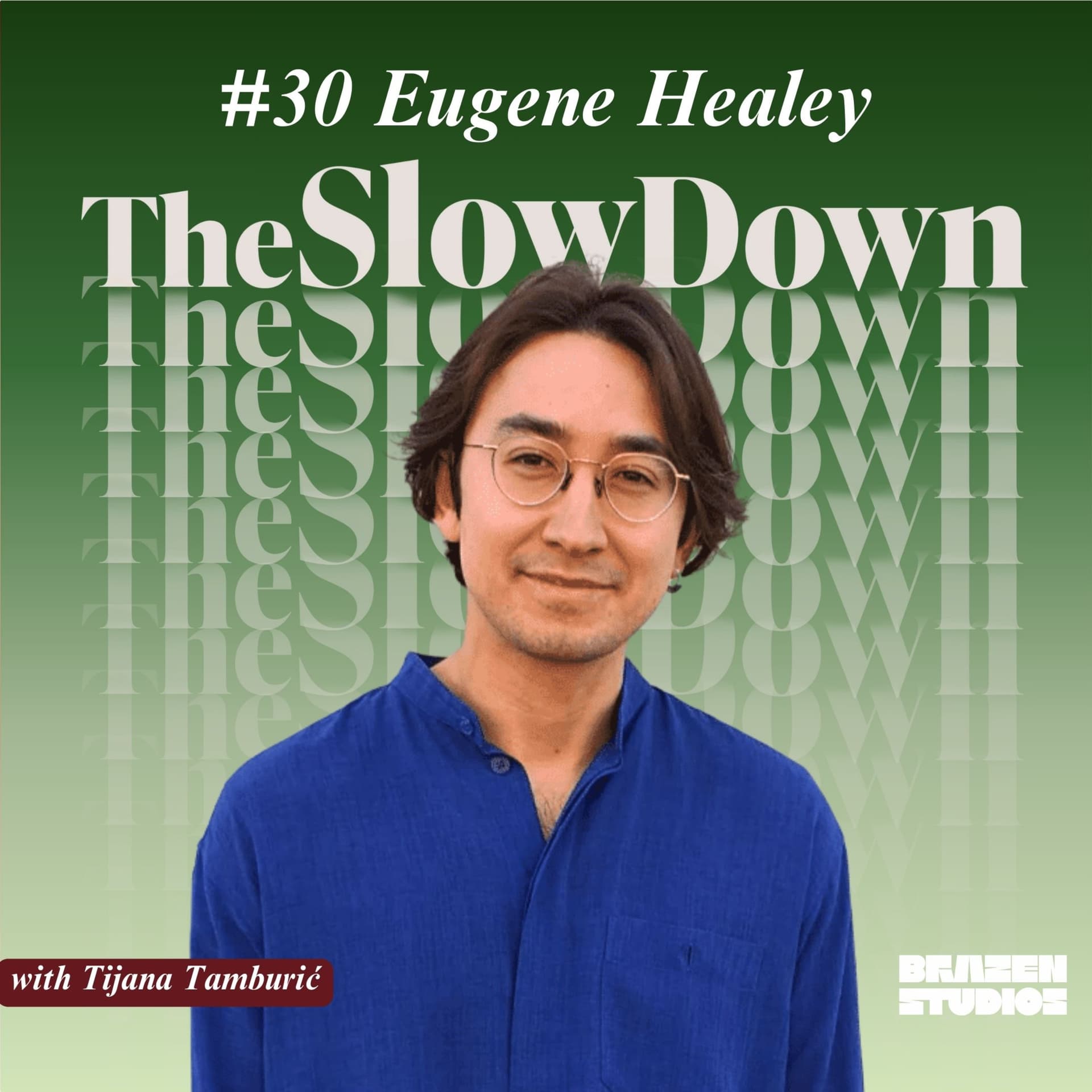
Episode Details Title: Eugene Healey gets 5 million views: How can you have authenticity in performance-driven environments?
Guest
Eugene Healey Description: Eugene Healey is a brand strategist and cultural analyst known for his engaging content on social media. This episode delves into themes of authenticity, cultural pressures, and the intersection of personal identity and social media.
---
Key Themes and Discussions
Authenticity in Performance-Driven Environments
- Core Question: How can authenticity be maintained in performance-centric spaces?
- Discussion Points:
- The complexity of identity on platforms driven by algorithms.
- Concepts of status anxiety and self-presentation.
- The phenomenon of Netflixification and its impact on culture.
Eugene Healey’s Background
- Early Life: Raised as an Asian immigrant in New Zealand, with a strong emphasis on hard work instilled by his family.
- Career Path: Transitioned from academia at the Melbourne Business School to brand strategy consulting.
Key Insights on Strategy
- Performing Intelligence: The need to convince others of the validity of ideas, rather than simply generating good ideas.
- Authenticity as a Vague Concept: Instead of striving for authenticity, consider which aspects of oneself to present in various contexts.
- Role of Education: Healey emphasizes the importance of education in strategy, aiming to make complex ideas accessible.
The Impact of Social Media
- Vulnerability vs. Performance: The discussion on how vulnerability can be performed for the audience, questioning the authenticity behind such actions.
- Algorithmic Influence: The pressure to conform to algorithms can lead to burnout and a loss of genuine connection.
- Creating Value: Strategies for delivering engaging content that resonates with audiences without losing personal integrity.
The Future of Content Creation
- Balancing Act: The tension between needing to produce content frequently and maintaining quality insight.
- AI in Creativity: The implications of AI on personal branding and the creative industry, emphasizing the irreplaceable value of human perspective.
Success Redefined
- Personal Definition: Success is described as freedom—freedom from economic constraints and the ability to curate one’s own work.
- Living Unmediated: A desire to exist authentically without the constant pressure of performing for an audience.
---
Key Takeaways
- Self-Reflection vs. Performance: Healey advocates for a balance between self-analysis and the reality of being perceived by others.
- Cultural Insights: Understanding cultural phenomena can empower individuals to navigate their identity within societal expectations.
- Strategic Work: The role of strategists is not just to provide insights but to democratize knowledge and foster meaningful discussions.
---
Mentions in the Episode
- Books/Articles:
- *Filterworld: How Algorithms Make Everything the Same* by Kyle Chayka
- *The Picture of Dorian Gray* by Oscar Wilde
- Individuals:
- Tony Wang
- Matt Klein (previous guest on The Slow Down)
---
Conclusion Eugene Healey’s insights present a thought-provoking exploration of authenticity in modern career paths and social media landscapes. The discussion highlights a need for a shift away from hustle culture towards a more sustainable and fulfilling definition of success.
For more insights, follow Eugene Healey
- [Instagram](https://www.instagram.com/eugbrandstrat/)
- [Website](https://www.eugenehealey.com/)
Written by AI. May contain mistakes. Listen to the episode to check what was said.
Chapters
Tap a time to open that second in VOEugene's Background and Cultural Context
0:45 to 3:08
Eugene shares his upbringing in New Zealand and Australia, influenced by his mother's story.
“He asks questions like, How can you have authenticity in environments that are about performance?”
Defining Success Through Hard Work
3:08 to 5:05
Discussion on how success was modeled in Eugene's household, emphasizing hard work and rebellion against it.
“It's not virtuous to work hard on things.”
Influences of Family and Pessimism
5:05 to 7:35
Exploration of Eugene's inherited traits from his mother and their impact on his worldview.
“salaried work to just do their own thing.”
Childhood Aspirations and Their Impact
7:35 to 9:50
Eugene reflects on childhood interests and their connection to his current role as a strategist.
The Nature of Strategy in Performance
9:50 to 12:28
Discussion on strategy as a performative role and the complexities involved in convincing clients.
“That's the things that really motivate me in my career right now.”
Discovering Brand Strategy
12:28 to 14:01
Eugene narrates his journey into brand strategy and how he found passion in the field.
“But all I could think was like, they're having so much fun with this brand.”
Transitioning to Freelance: Building a Portfolio
14:01 to 18:00
Learn about the journey from agency work to freelancing and portfolio creation.
“I convinced them to keep me on permanently.”
Creating Engaging Social Media Content
18:01 to 20:05
Discover how social media strategies evolved and led to viral content.
“as part of this that i was going to do something with a direction in mind but not a destination the only pointers i had was that while i was at the agency there were these two guys that i saw on Instagram.”
Authenticity in Performative Environments
20:06 to 22:02
Explore the complexities of authenticity on social media platforms.
“And the rest of the world is not nearly as, um, as clued in.”
The Impact of Algorithms on Creative Expression
22:03 to 28:03
Examine the effects of algorithms on content creation and cultural trends.
“how can we show up authentically on social media when it's a platform built for performance?”
Show all 23 chapters
The Algorithm's Impact on Art and Culture
28:03 to 31:20
Explore the detrimental effects of algorithms on artistic expression and cultural trends.
“all we care about is clicks views money celebrity i watched the bonnie blue documentary last year She seems to be pathologically obsessed with subscribers.”
The Trend Towards Slowing Down
32:27 to 36:59
Discuss the emerging trend of slowing down in response to hustle culture and performance pressure.
“Well, one thing I'm hoping is becoming a trend is slowing down.”
The Paradox of Performance in Social Media
37:03 to 42:05
Understand the tension between personal identity and the performance culture driven by social media.
“Yeah, I think one of my pet peeves is those posts where people say, hey, just to let you know, I'm gonna go offline for the next three days, you know, taking a silent retreat.”
The Creator's Relationship with the Audience
42:05 to 44:14
Explore the challenges and dynamics of being a creator in a digital age.
“consider necessarily that a downside because I because content is so easily duped as well like I've spoken with other creators about it.”
AI's Impact on Creativity and Branding
44:14 to 46:08
Discuss the implications of AI for creators and brands in the future.
“and then things start up relatively quickly.”
Navigating Brand Contradictions
46:08 to 50:24
Learn how to address and navigate contradictions within brand narratives.
“It is completely flattening the value of technical knowledge and expertise.”
The Role of the Strategist as Educator
50:24 to 53:36
Understand the dual role of strategists in educating and democratizing knowledge.
The Pressure of Continual Creation
53:36 to 56:04
Examine the pressures faced by creators to constantly produce content.
“Now it like lives out in the world and now lots of people can engage with that, including a lot of people in the community.”
Reclaiming Joy: The Role of Gaming in Life
56:04 to 57:22
Discover how finding balance between work and leisure can transform your life.
Defining Success: Freedom and Authenticity
57:23 to 59:18
Explore personal definitions of success that prioritize freedom and autonomy.
“to day in moments of stress or discomfort or anything do you have processes that work for you to disconnect or slow down or recenter yourself?”
The Impact of Media on Self-Perception
59:19 to 1:01:40
Understand how media influences our identities and the way we interact socially.
“That is one, that's one definition of success.”
Cultural Reflections: The Picture of Dorian Gray
1:01:41 to 1:03:07
Delve into the themes of performativity and superficiality in literature.
“It only has one chapter that drags on a little bit long, but it dragging on a little bit long is kind of the point.”
Navigating the Journey: Self-Discovery and Burnout
1:03:08 to 1:03:48
Learn about the journey of self-discovery and the importance of setting boundaries.
“now and how we interact with this performed self and how we come to like hate it, but also be over-identified with it at the same time.”
Transcript
Automatic transcript. May contain errors.0:03Eugene Healey:Hello and welcome to The Slowdown, your time to redefine success and growth on your own terms with a little inspiration from others. Today's guest is someone who's insightful and razor sharp cultural analysis reels on Instagram and TikTok I've been obsessed with for a year, along with literally millions of others who watch them. Eugene Healey is a strategist whose insights help brands, individuals and organizations make sense of the soup that is culture, consumerism, taste, aesthetics and social media. He's also a gifted keynote speaker and original thinker, sharing ideas on his sub stack considered chaos.
0:42Eugene Healey:He was a lecturer at the Melbourne Business School and continues to use his content as a way to educate. He asks questions like, How can you have authenticity in environments that are about performance? Something I think about a lot in terms of how I can show up in spaces driven by algorithms. What is status anxiety? Are we on social media to consume fiction or reality? And what is Netflixification? With Eugene in Melbourne and me here at Brazen Studios in London, we've really had to make scheduling miracles happen to record this. And so I'm excited for you to listen to this episode with brand strategy consultant, Eugene Healy.
1:25Eugene Healey:Hi, Eugene. Thank you so much for joining me all the way from Melbourne. I really appreciate your time. Yeah, lovely to be here. I always love beginning very much at the start of things. I think providing that context is really important for people to understand more about your story. And a question I'd like to start with is where were you raised and by whom? I was raised in New Zealand. I moved to Australia when I was 18 for university, which is how I've got this like, I've been here for 15 years now. I've got this kind of like transnational global Australian accent. I was raised by my mum who moved from Malaysia to Melbourne when she was 16 by herself and then left Melbourne for New Zealand with the intention of always coming back.
2:18And then she decided, well, she met my dad. But she always resented the fact that she had to stay. And so the first opportunity she had, she basically like flicked me and my sister out the door to Melbourne. She was like, go, this country is not where you want to spend the rest of your life. And to her credit, she was right. But I think, yeah, that's like, I suppose I was raised in this kind of like, raised in this sort of like in between context, I think, like in between cultures and societies. And I mean, that's like the life of a Wajan. But I think it kind of, I've always found a natural place in the cracks between things.
2:59Eugene Healey:What was success modeled for you or defined as when you were growing up? What did you see when you were younger as a model of success? My mom and but also my grandparents lived with me like we were a multi-generational household and the model of success was input oriented it was about hard work the hard work was the thing and it was such a value that was championed within the household and one that I actively rebelled against for a really really long time until I found myself in this particular phase of my career and it's interesting now to have come through it all and be in my 30s and a lot of people have commented they're like you're a lot like your mom i'm like i know i like i know because it turns out that all of that stuff gets coded into you even if you rebel against it and so while i don't consider hard work a virtue i am sort of like identified with the necessity for it um but i always try to like hold that little spark of rebellion in me that it's just because you're working hard doesn't make something worthwhile.
4:11It's not virtuous to work hard on things. You have to actually consider what you're working for.
4:16Eugene Healey:I agree. And I'm also a lot like my mom, the older I get, the more I become her. What other ways do you like your mom? I'm a massive catastrophizer. Not as bad as her. Mom's attitude is picture the worst possible thing that could happen and then imagine it's the most likely outcome. so like i'll be telling her i'm going on a holiday to western europe like i'm going to london and then she'll say like well you own a home now make sure you've um filled out your will
4:51what the fuck are you talking about i'm going to london um and but i've like i've picked up a lot of that i think like i hate gambling i have like a like serious loss aversion i think um which is which is strange for someone that also at the same time has like entirely quit salaried work to just do their own thing. But that is like the main thing that we probably have, have something on is like, we're often thinking about the worst case scenario, which is why our exchanges can be quite terse because I'm like, I already know what the worst case scenario is. I've already thought about it. You raised me to think about it.
5:29I don't want to hear it come out of your mouth.
5:32Eugene Healey:I love that saying about pessimists which is you just feel the feeling twice once when you think it's going to happen and then again when it actually happens so you might as well save yourself one of those times what were you drawn to as a child that you feel still holds a thread line for you as a strategist now I mean there were a couple things when I was young I was like over-identified with my intelligence I liked the idea of being precocious like so that was like one one element that I really was just like the most annoying child that you can imagine in particular in school like I remember how excited I was when I was told that I would have to wear glasses and I was like you know who wears glasses smart kids the other element of it was that there's always been a part of me that loves performing so I'm really really glad that I was too repressed as a teenager to have joined a drama class because I probably would have ended up as a theater kid like a lot of my friends would I used to say like oh maybe maybe like my true life was as a like a theater performer they're like you're this annoying now imagine if you were imagine if you were in theater but I think that the combination of a lot of those things has ended up with not just myself as a strategist but my perspective as a strategist like I consider a strategy to be a performed role which i know may seem like oh what a disgusting thing to say but i think the reality is that you work in a world where you don't create outputs it's not like an ad where at the end of the day there's an there is an ad or a visual identity or something like that like the strategy it's just and the type of strategy that i've worked in often which is like corporate strategy and retailer strategy and things like that the output's just an idea so really your job is to convince people that it's the right idea coming up with good ideas is not that hard like if i'm being perfectly honest i don't think it's incredibly difficult i think the difficulty is in convincing people that they should invest their time resources and their own personal careers in backing those ideas when you sit you know as the consultant versus the client like you as the consultant are you're like i know i'm right um i'm the expert here and i'm encouraging you to push as far as possible but the client is sitting going i just don't want to get fucking fired dude um and so i feel like your job is in creating an environment in which this person feels like they can take that um risk on you or that they don't feel it's a risk at all and i i do think that the certain like performative elements like learning how to not just like be intelligent but learning how to perform intelligence effectively has served me quite well throughout my career um and then yeah and then the third thing is just like probably my love of education so i will call myself these days actually an educator first and a brand strategist second certainly i only take on quite select brand strategy projects these days the majority of my time is either spent on the media platform itself or on keynote speaking both which i kind of consider extensions of what my lecturing practice was like i love watching people learn things i think it ended up as a you know i spent 10 years at the university of melbourne the same 10 years that i was going through my strategy career and it was the perfect foil to the strategy career which was really could be quite intellectually stimulating highly conceptual work you know my old strategy boss used to say it's the only job in the world where you get to create intangible value but quite alienating you would build a strategy and if you were lucky in 12 months you might see something that bears some resemblance to the thing that you created whereas education is delivered in the moment like they enter the classroom you teach them something and then they've absorbed the idea and then they go on with their lives you've delivered all of the value in that particular moment in time and i really that's still the thing that i enjoy probably the most about the content that i create now it's that like it's very very immediate now there's like positives and negatives like riding the waves of algorithmic volatility but when something hits i don't i don't mind saying i like when things go viral because that means that i've managed to create a concept that is interesting but accessible enough for a broad variety of people to actually be able to engage with.
10:15That's the things that really motivate me in my career right now.
10:18Eugene Healey:So many things I want to double tap on there. I've heard you say before that strategy is you're transacting on ideas, not the expression of ideas, which I think is really interesting. And then what you mentioned there about convincing the client being the main part of the job is something I really resonate with as a creative director that runs an agency. so much of what I do is trying desperately not to dilute the idea that we've come up with to the brandified muddied kind of dull version of the idea but before we kind of get into all of that I was really curious in becoming a strategist it's not the sort of thing that people look at their school subjects and go I want to be a brand strategist so I'm wondering you know where did you find out that that was even a job how did you get that job how did you know that that was a career path possible and what was your initial career path I had absolutely no idea what I wanted to do after university I taught at university for 18 months um but I was still just grasping at things there was a time in my life where I thought I was going to be an engineer there was a time in my life where I thought I was going to be an investment banker um there was a time in my life where I might thought I might be accountant then I discovered all of those things require quant skills which I'm woeful at um and it was in my fourth year of university that I met a group of people who are still my closest friends who are all really really have gone on to do like the most interesting things with their careers and it was at that point that I started to fall in love with brands there's a KFC on campus at the University of Melbourne KFC Gradon Street and it's the best KFC in uh Victoria maybe all of Australia's and like I don't know how they've done it over the 15 years I've been going there the chicken is still so fresh they never screw up your order every other KFC screws up your order at least one or two things they always had the best attitude and it was at this time when kfc was in peak wyden kennedy era where they were running a strategy that i really believe is the same strategy that liquid death was pursuing nearly 10 years later where they said it doesn't matter what the brand actually sells we can build an entertainment universe off the back of the brand code so what do we have we have the kernel we have the chicken we have the bucket we have all of these and let's just transpose them into as many environments as possible let's do a collab with crocs and make kfc crocs that doesn't sound that outrageous now in fact it sounds played out now but 10 years ago that was like cutting edge brand building they were doing kfc video game consoles kfc prom corsages they pitched kfc on ice they had a kfc video game collaboration all of these like crazy subcultural extensions that were getting them into all of these different conversations and earning them a load of media at the same time.
13:22But all I could think was like, they're having so much fun with this brand. And of course, I love the product very dearly. And I thought to myself, like, maybe there's something in this. I never really liked advertising, but maybe there's something in like the conception of these ideas that might be interesting to me. And then a friend actually recommended brand strategy to me. They had been offered this brand strategy internship that they reneged on at the last minute because they took a job at ESOP. And then they were like, hey, you should, this place has got an opening. You should try them out.
13:54And I ended up, that ended up being my first strategy job. I stayed there. It was meant to be a six month contract. I convinced them to keep me on permanently. And I was there for three and a bit years. Yeah. And that was just like how my strategy career started.
14:10Eugene Healey:And then you've recently gone freelance, So started your own consultancy business. I work with a lot of freelancers. I know it's difficult to make that job from comfortable agency life into doing it on your own. Why did you decide to shift into having your own consultancy? There was a point that I'd hit in the agency that I had been in where I was starting to plateau a little bit. But I was also feeling that I was starting to just like I'd learned everything that I needed to from this place. um i'd also plateaued in my teaching career like to be honest with you universities don't care about teachers particularly ones that don't have phds they care about publishing metrics and so i thought to myself like if i want to advance the first thing that i need to do is actually create a portfolio because i honestly think strategy portfolios are really flat oh i I did the brand strategy for this.
15:09I did the brand strategy for that. Sure. Like no one believes you, especially if you're only like 32 years old, right? So I said, I'm going to build a living portfolio that shows my thinking when I can't actually show the work itself. And I started making before I had a clear idea of where I wanted to go with that. And it was about six weeks in when people started soliciting me for work. And I was like, oh, maybe there's a business in this. and i spoke to my strategy boss at the time he was the owner of the agency and he gave me a sabbatical and then two weeks before i was about to start the sabbatical i was like actually you know what i think i'm just gonna quit because i'd had projects lined up at that point that were already three months of runway um so in in a way like it's kind of the it was instead of deciding to go independent and then taking the leap it's that i decided that i wanted to create something and then the revenue model naturally sort of like unveiled itself to me and now as i said strategy consulting is the smallest portion of my it probably only makes up between 20 and 25 of my total revenue and only takes up around 20 to 25 of my time as well because it's diversified now across speaking income and of course like paid partnerships in the mid like the media platform as well now i really treat strategy as a way of keeping sharp i think there are some notable marketing guru slash professors that it's clear they haven't touched a strategy project in the last 20 fucking years um and so they say stupid shit like uh the best brands in the world don't spending money on brand advertising anymore because they're not close to it.
17:01And I think for me, I do it mostly as a practice these days.
17:07Eugene Healey:And when you say that your experiment, we're talking about your social media content, which lives across Instagram and TikTok and is viewed by literally millions of people, including me, big fan. How did that start? As you say, I know you just said you're just trying to make a portfolio and put it out there. But was there any more of a strategy than that? Were you looking at things that were doing well and saying it has to be a reel? Or did you want it to be video first? Like, how did you decide on that format, on that style, on the things that you wanted to talk about? Was it iterative? You have this lovely line, which is culture as seen through the lens of brand.
17:48Eugene Healey:Was that also something that came immediately or later as you started to refine the approach? everything was developed emergently and it was done so because up until that point i'd been the type of person that could never do anything without a destination in mind and so i decided as part of this that i was going to do something with a direction in mind but not a destination the only pointers i had was that while i was at the agency there were these two guys that i saw on Instagram. One was a Schwinnebago brand, Ashwin. And one was Orin Meets World, Orin John. And Ashwin was doing green screen marketing content that was, I thought, quite niche content and was getting hundreds of thousands of views.
18:32Orin was doing stuff about creative direction as well. And they were both showing me this medium. And I was like, there's an audience for this people actually want to watch this stuff what might i do so the green screen content was kind of natural for me because i just treated it like an extension of my job it's just that the slides that i use are now nine by 16 instead of 16 by nine and i at the beginning was doing very
19:00Eugene Healey:generic strategy content what is an insight what makes a real brand strategy and then there were also a couple of insights from some campaigns that some strategies that i'd worked on over the course of my career and the first one that i made was this one called the death of the millennial brand which was an insight that a bunch of my a bunch of clients had come they're like hey we want us you to modernize our brand for us we're thinking like we'd like stuff that's like go-to by zoe foster blake and we like casper mattresses and we like this and we like that and there was all of these designs that I was like, this is like the millennial brand aesthetic.
19:37And it worked for brands in their time. And it may still work for the brands that have already established market share, but it's not going to work for you to ape these design codes and these brand building codes, the world has moved on. And so, I made that video. I thought those insights were not that warm. I thought those insights were maybe a year or two old. I was wrong. That video was the first video that I had that hit over a million views. And that was when I learned the things that you may think are prosaic insights are prosaic only to you because you're so deep in it. And the rest of the world is not nearly as, um, as clued in.
20:13And that was what I felt. That was the first, I got a project off the back of that video. Cause I got approached by a millennial who was a brand owner and said, a lot of our workforce are Gen Zed, like a lot of our, like we need to make sure that we're appealing to them and i said okay well that's an employee brand strategy project but like like we can look into that as well um and that was the like the process from there that was when i realized i think that the the interesting conversations were interesting cultural conversations because off the back of that video was i did the first series where things got really really big which is the post-millennial trend series where i was just people ask me what if this is the death of the millennial brand then what comes next and i've just started mapping out all of these cultural trends where it was very easy for me because that was the point that I established the storytelling structure, which was set up the conflict.
21:05What's going wrong with millennial brands? Okay. They used to focus on identity and they used to focus on this through static stuff. The identity was relatively fixed. Okay. What's changed? Well, identity has become much more fluid. We don't necessarily identify heavily with subcultures anymore. They are more of an aesthetic sensibility than things that gesture at values and so brands need to change their behaviors and think about it like zed but all of this was developed emergently the great thing about algorithms is that they only pick winners so when something hits it hits because people want to watch it and um i that that was what i learned i learned was like follow what feels good in terms of direction and um follow what the algorithm is telling you that it wants to say, keep those things in balance, I think.
21:53Eugene Healey:And then how do you find yourself within that? You know, one of my, let's dive into a particular trend that's affecting me that you talked about, which is this idea of how can we show up authentically on social media when it's a platform built for performance? Is the only way forward personal brand? Is there still space to be multitudes, be yourself as it were? How do we ride the waves of the algorithm's desires? How are you able to do that for yourself? Well, for me, the first thing is I just like just put authenticity in the bin. So first off, I think it's actually an incredibly vague concept.
22:32Who you are around your friends is not the same as who you are around family as it is around work, as it is around some friends you have at work, as it is around like your friends from school versus your friends from university, et cetera. like you already are not a fully reconciled self or rather sorry you're not a fully consolidated self you do contain multitudes and you're different around all these people so when people are saying be authentic online okay which self are you bringing which i just don't think that's why i just don't think it's really helpful advice i mean i'm very conscious that when i show up online eugene healy the brand is showing up online not eugene healy the person and eugene Healy the brand contains a lot of me or a lot of some parts of me certainly the more performative parts but it's really just my lecturer persona the voice is just like what I am when I'm in the lecture theater which is like confident but playful assertive trying to spark a certain sense of curiosity in people through like gently ribbing them at times I think like that was really useful for me and that's all I really needed I trying to think about how to show up authentically I think just leaves you, you become too self-referential and you chase yourself down rabbit holes.
23:47It's really just as simple as like, what feels good for you to talk about? Do you enjoy talking about those things? And following that direction is the easiest and the most intuitive advice that often ends up being the most effective as well. Yeah.
24:03Eugene Healey:I've found as well that as soon as I went from, and we were talking about this earlier, you know creators that put their entire selves online is very invasive and you feel like you're being watched the whole time whereas when I decided when I started this podcast I went actually I'm going to go from sharing my sort of life updates to just focusing on the themes of this project and then it feels more educational I feel like I'm sharing insights of ideas that I have it really feels like your style and your personality but you're not talking about you know your brother or your sister or your parents or personal things about yourself is that a place where you're able to then stay more sane if like i don't know negative comments come in because it's not really about your personal life why do we share our personal lives online professionally versus personally if we're going to be clear about it people do it because they're trying to establish a parasocial relationship with their audience and that is going to make that audience more sticky and more loyal they may say we're trying to build a community etc and i'm trying to share vulnerability but as i've written in the guardian vulnerability is an aesthetic that is performed for the camera correct i've seen that so much recently yeah exactly like filming you said that's the thing everyone can can imagine the paradox of like setting up the camera to film yourself crying into the camera like how could you capture how could you possibly capture that moment um but we but we watch it anyway and there are some i've heard i've spoken to some creators and business owners who say we know it's fake but it performs really well on the algorithm but i think there is this if we if we take that that what we're trying to do is build sticky relationships the idea that the only way to do it is by sharing bits of your personal life or at least the performance of your personal life is really derived from an older version of social media which was that it's a it's a person-to-person thing and people are just coming to be like spit watch kim kardashian do her thing whatever lifestyle influence the era of influence that we're in right now, like especially I think as people are spending less time on television and more time on social media, they're demanding more of social media.
26:13That's the whole reason that people like me can exist in the first place is because they're looking to learn things. And I'm able to provide that to them in the environments that they already are. And I can design those conversations in engaging ways that don't strip out the nuance, but are still delivered in two minutes or less that are like snappy and powerful and leave you with an insight and now i have the sub stack as well so like if you okay if you want the detail then the detail is there like you can dive deeper down the rabbit hole but i can do all of that and i can build relationships and i can like i can build stickiness with through a consistent perspective that people are consistently interested in the the thing that builds stickiness is this feeling that Eugene's not just rehashing old things.
26:59They're constantly evaluating, updating their perspective and like thinking about the world and thinking about the way that society's evolving, think about the way that brand's evolving. And I want to be a part of that conversation.
27:14Eugene Healey:As you say - And they'll continue to come back for as long as my perspective is good. Hopefully. Yeah. And as you say, people want to feel smart and they want to feel like they're being talked to as intellectual, smart, capable adults. And quite a lot of social media feels dumbed down and oversimplified. And actually having someone like meet you intellectually is really interesting, which is why I love your videos. But to sort of play devil's advocate slash your pessimistic mother in this, my concerns are, number one, if all we want is personal brands and everyone's a personal brand selling a non-essential product, intangible products um i wonder you know as the meme goes what are we going to eat like we don't need more podcasters what are we going to eat and you know do we need more life coaches and doulas and spirit guides and facilitators and speakers and then number two what happens when all we care about is clicks views money celebrity i watched the bonnie blue documentary last year She seems to be pathologically obsessed with subscribers.
28:20Eugene Healey:And so I just, you know, meanwhile, art institutes are starting to exhibit artists based on their social media following, ability to draw in a crowd. And so what I'm seeing is this pandering to the masses and the algorithm which is leading to this blandification of culture. And it used to be that artists led the way. They were like, this is cool. Check this out. whereas now we're following the algorithm which plays into what the masses might want slash you know it's this weird world and so those are my sort of pessimistic thoughts I'm wondering what you think about that yeah I think there are a lot of people who are much smarter than me that have had conversations around algorithmic flattening like obviously Kyle Chaker and filter world which was like probably the is like there's very little more to say than what was said in that book I think it was just such an excellent summary of the kind of like the pathology of society that's been algorithmized.
29:15I think I've seen a number of conversations throughout the year that have been talking about the role of counterculture. And I think there is, and I've got a substack about this coming out next year. I'm still like, I'm still finalizing my thoughts on it. I think that there is there is an emerging counterculture that is specifically about invisibility that is that defines itself against a main the mainstreaming of cool i think um but i think that the key thing is that it is like the the defining value of the movement is about non-discoverability or at least friction in discoverability so if these conversations are happening they're just not happening online and that becomes i think that that becomes the interesting tension is online is where we increasingly go to discover things so how does this movement gather momentum while actively resisting this kind of like discoverability mandate i don't have an answer for that by the way but i think it's you know there was a there was a um there's this person called patrick co who wrote a rebuttal to um uh not it wasn't a rebuttal but it was in some ways he was talking about how like i'd made a video more than a year ago saying like subcultures are dead like the corification kind of killed the subculture and he lives in hong kong he was like no it's not dude subcultures are alive like you're just not looking for them they're just they exist below the algorithm and he was talking about all of these like brilliant subcultures in hong kong and i think that was really eye-opening it's like that there is there is still like quite a lot of cultural abundance that's happening it's just that it is it lives away from the eye of sauron i think and it will just be interesting i think to see at what rate this starts to pick up because i think it will pick up momentum it's inevitable it's at what rate does it when do people decide that this is something that they do or don't want to participate in.
31:25Eugene Healey:I made a commitment to being transparent about the making of this podcast right from the start. So here's a quick update of the financial side. Season four of The Slowdown does not currently have a sponsor. I really want this podcast to bring to light people, stories and approaches to life that I admire and don't often see in mainstream media. So I'm taking on the studio editing and making costs of this season myself. If you're a brand or if you know a brand that cares about bringing honest and applicable career advice to people at all stages of their journey, please reach out. I'm eager to find the right partner, hopefully long term, to help fund and continue the show so that it can keep growing.
32:05Eugene Healey:In the meantime, your comments, reviews and shares of this episode are so important. If you're not already, hit subscribe, share this episode with a friend, drop a comment on Spotify and a review on Apple. It really does make a difference and continues to inspire the change that we're hoping to make in slowing down. Thank you so much for your support. Well, one thing I'm hoping is becoming a trend is slowing down. And as you say, maybe a lot of it is happening completely off algorithm, right? People are going on walks, they're going on hikes, they're spending more time with friends and family in person, they're caring less about work, which means that obviously they're not posting about it on LinkedIn, because they have nothing to report etc i am also seeing it visually in you know on social media this idea of slowing down i'm seeing it in the craft world but i'm also seeing it in the kind of clubs and communities world also this kind of redefining of a lifestyle brand like it used to be scale scale grow have a massive scaling business but you and i both have lifestyle brands technically you know one yours is one person operated, mine is two person operated.
33:12Eugene Healey:I'm not trying to scale my business. So I'm wondering, yeah, if you're seeing a trend towards that at all, or at least a riposte to the idea of the kind of girl boss hustle culture, grow a massive business, that's the only thing good to do in your life story. There's a couple of different things here. One is yes, I think that we've seen at the very least the death of the of the let's call it the girl boss narrative. Actually, let's not gender it. Let's call it like millennial hustle culture. The problem with hustle culture is that it's still operated in a world where the rules applied. Do well in school.
33:50Go to a good university. Accrue quite a lot of college debt that you're then going to pay off in your very good job over the next 10 years that's going to set you up for relatively comfortable life economically in your 40s 50s 60s and beyond cost of living pressures have accelerated to the point and of course so many like industries have been destroyed the creative services journalism academia etc that like that simply just doesn't hold true anymore london is always like a really interesting example to me where are the 70 to 90 000 pound jobs you're either earning 30 to 50 000 pounds or you're That's like everyone.
34:32It's a real tale of two cities. And that to me, I think, summarizes the game, which is the only way to thrive now is not to hustle. It's to skip rungs on the ladder. So, it's really emerging this kind of K-shaped thing of, well, all right, either effectively like this is something that Tony Wang was talking about. He was saying basically like in America, it's a speculation economy now. The only way to do it is to gamble and win big and cheat and becoming an influencer as part of that. I might get the opportunity to be the top 1 % of influencers or top 1 % of OnlyFans models, et cetera, et cetera.
35:05If not, why the fuck would I work hard? Why the fuck would I work hard just so in 15 years time I can have a 60 ,000 pound job when rents in London are now 75 % of my income? So I think naturally there's that bifurcation sort of coming through and it's through economic factors as well. The point around the slowing down that you're seeing though, I think there is a real paradox in it, which is that we still have not managed to shake off the performance. I was thinking to myself, if I ever wrote a book, I would probably write a book around performance and performativity. There is such a colossal irony in posting about getting off social media or posting about slowing down on your daily walk, right?
35:48These things exist in opposition to one another because at the one time you're talking about a desire for reconnection but you are mediating that experience i've decided to go on a walk and
Read the full transcript
35:59Eugene Healey:i decided to film it i've decided to film myself going off social media i think we can all feel the desire but we can't shake the shackles of the sort of like panoptic surveillance like i've always said like social media the way that we talk about it like we talk oh the rates of depression this it's that like it's doing this to our kids or andrew counter tates hate etc that's not the real damage of social media the real damage of social media is that it turned personal identity into performance and we all look at ourselves in the third person like we all think about ourselves through the lens of like if i was creating a movie the movie of my life what would the movie of my life say like how does this event make me look how am i perceived by the outside world until we can shake that, like we're never actually going to be, I don't think we're ever gonna be able to really slow down because the mandate within this idea of performing one's own life is really about ruthless self-cultivation and self-optimization.
37:00So that's the opposite of slowing down.
37:03Eugene Healey:Yeah, I think one of my pet peeves is those posts where people say, hey, just to let you know, I'm gonna go offline for the next three days, you know, taking a silent retreat. Just go on the retreat, bro. like fuck off just go you don't have to tell me so weird um yeah this performance and then yeah yeah to your point like I see a lot of I guess my algorithm is feeding me a lot of people who are in the craft world or in the kind of hike world or whatever and they again obviously they're filming themselves doing these things um but I guess I see it a bit like your work is like education setting an example and then there's lots of people who are doing it themselves who aren't posting it on social media, right?
37:45Eugene Healey:I think I get a lot of messages from people who have completely blank profiles, you know, who don't post at all, but they're kind of watching some of what we're sharing and it feels inspiring, I suppose. Yeah, and I think for me as well, as part of this, I try to be judgmental of the system rather than the individual. I think, again, to go back to the economy, we live in a world where 90 of us these days have a boot pressed pretty firmly on our neck and you need to ruthlessly optimize yourself for a chance at economic security in the western world like you know like i said either you get a really good tech or finance job or a really great government job um or you gamble and what do people have to gamble with if they don't have economic capital themselves their personal brands so like i try not to be judgmental of the individuals that are doing it despite all of the things that i just said um but i think it's a it is a recognition that what we have to shake off is the is the like is the grand social idea of this performance that we're in.
39:04And like, until we can shake off this idea that I need to perform, like nothing is going to change.
39:09Eugene Healey:And then you have, you know, Stephen Bartlett, who's like, oh, you know, cringe and embarrassment is the cost of entry of this kind of thing. And so people are like, well, I'll do it, as you say, like I have nothing to lose and maybe something to gain. So there's a lot in that world. And I guess I was also wondering to kind of close on your role as a creator. is there a downside to having 400 000 followers across platform i spoke to matt klein who's a futurist and we spoke about the idea of feeding this hungry content monster as quite exhausting and overly speeding up a natural cadence of process as a strategist of thinking about an idea coming up with an idea and then sharing that idea the kind of content algorithm wants you to do that every day almost and that's that's kind of a ludicrous speed so I'm wondering how you if there are any shadow sides to to the work that you do and your own process for coming up with content and if for example with this podcast I immediately decided that it would be fortnightly I never tried to make it a weekly podcast because I knew that that was something I just could not do I would not be able to achieve that.
40:20Eugene Healey:So rather than put myself in a position where I'm trying to chase a weekly output, I immediately from the beginning made that fortnightly. Is that better for me? You know, if you posted every single day, would it be better? Like these are the questions. Yes. If I posted most days of the week, it would probably be, uh, it might be better, but I've spoken to a lot of my followers and I think they've said they're like the, if you can put two videos out a week, that's a lot of content and your content can be really hard for i sometimes have to watch that video twice like i designed the content to not be watched on two times speed so in in that instance it doesn't run i've slowed down now to one generally one script per week i actually have a whole team now i have a team that helps me to produce the videos but if i if i'm to be honest that is not the doubt that that is not the downside in that the cadence has allowed me to treat content as a practice rather than an outcome to say okay it's monday morning what have i been thinking about this past week how can i distill that into an idea and it's never that i just have one idea i've always got five or six ideas on the go and they're a bunch of spinning plates and then one of them i'm like actually that idea is fully cooked and that's the one that's going to go out in the in the next couple of weeks and now I'm planned out multiple weeks in advance this is the benefit of having the resources to have a team to help out on this that so like my income is directly tied to the quality of my perspective the better my perspective is the more I can charge content is a way for me of developing my perspective like it is a it is a form of intellectual weightlifting and so I don't consider necessarily that a downside because I because content is so easily duped as well like I've spoken with other creators about it.
42:11They're like, oh, so-and-so took my format. They did this, they did that. I figured out what hit in the algorithm and then they just started doing that. They're like, do you have that problem? I'm like, no, not really. Cause I've already, I've, I'm already onto the next idea. Like I'm consciously trying never to rest on my laurels. And there's a lot of it that I actually enjoy as well. Okay. I thought about that a couple of weeks ago, but now I feel slightly different. How do I feel different? How might I articulate that differently um and that process i think is immensely helpful for me the downsides are that being a creator means living through this like myth of constant availability and perpetuating it um you're in a relationship with the audience and it's very very hard to you can separate yourself from it but it has a gravitational pull you're always net getting pulled toward it to say nothing of the fact that i can open up my phone and anytime i open my phone there's at least probably every every minute i would probably get a hundred likes so that does fuck your brain up that does fuck your brain up and like that's something that i'm still to this day trying to put systems around because it is a very very you we wouldn't it it wasn't supposed to be like this we are not there's like maybe 300 more years of evolution before we could actually be built to handle that that is the by far the hardest part and what it does is you know what we were talking about before it pulls me out of myself and it pulls me into how i perceive myself and i think you know being a strategist as well i've said this a couple times you are uniquely positioned to analyze yourself as a brand you're also uniquely positioned to lose yourself in that analysis.
43:59And I think that that can be a little bit of a spiral sometimes. And so what I find is when I'm most exhausted, when I have the least ideas is when I've been spending too much time online. And sometimes it just takes me like going out to the pub and having a conversation with someone and I'm like, I'm back. That was super interesting. I'm like creatively reinvigorated. and then things start up relatively quickly.
44:25Eugene Healey:I'm also seeing a lot of AI made reels by AI strategists, right? What do you think is the kind of future with AI, creativity, creators? Is it something that you're scared of or is it something that you think will help? How do you think brands are thinking about creators and AI? I think there is a fundamental misunderstanding with the advent of, you know, people talk about Tilly Norwood and whatever AI movie stars and creatives. And that is a myth perpetuated by Silicon Valley, who have always believed that more tech is the answer and people want more technology. Let's not forget Silicon Valley was the place that thought Allbirds would be the clothing brand that was worn.
45:12It was like going to be a trillion dollar brand that every single person across the world was going to wear. That's their understanding of reality. And what makes a creator special is the affinity and stuff that they're able to build with the audience. No one wants to build a relationship with a bot. It's the same reason that nobody believes AI art is art. There has to be a ghost in the machine. There has to be a trace of the artist and the artist's intent. AI is a composite. It's a collective. It's soup. People don't want to follow soup. They want defined perspectives. That's why people come to me.
45:49It's not that my production quality is good. I'm pulling images from the internet and talking over them for two minutes at a time, which is really long on social media. They're just there to listen to my perspective, I think. Do I think that artificial intelligence is going to become a massive part of the creative services? Yes. Like I've gone on record many times and I like will continue to do so. I've seen the tech. It is completely flattening the value of technical knowledge and expertise. I think it makes, you know, it makes the power of personal brand even more important. I'm very, very glad to have started my platform when I did because strategy, like strategy, the way that it's going, there's feels like there's only really like three futures for strategy is either you become a volume shop, you become a IP shop where you develop systems and you develop products like systems that allow you to scale things and you develop your own brands or you go the human craft high touch low technology angle that is going to make up what like five percent of agencies you have to have a really really defined perspective to be able to do that and like the that's not something that ai can do for you like it can work as a sparring partner but eventually like i can't remember where i read this quote someone said AI is like is the regurgitated past presented to us as the future and eventually like creating a perspective is having a point of view on what the future looks like and having a point of view on like where your place in that future looks like too like you can't you can only get so far with something that can only present the past to you you know it makes me think about the internal
47:35Eugene Healey:contradictions that we now have with brands with culture and their audiences brands internally coca-cola and they're polluting but they're trying to tell people that they're not so greenwashing or skincare brands that are like oh we're selling you this product to help fix your skin but you're actually just making women more insecure as a strategist have you ever worked with a brand where there is like a contradiction in what they're trying to do and how do you help brands with internal so like be it employee contradiction or external contradiction does that make sense as a question it does it does make sense i'm just trying to i'm just trying to think through this answer carefully because i've worked with some brands that are for instance large carbon emitters you know and i remember at the time that project was about that project was about creating a not just a brand an external brand narrative but an internal company narrative that would help it to see itself through the transition where it was like what like what is this thing that's going to allow us politically to envisage what the solution looks like and what the future of this whether it's distributed energy generation or renewables, et cetera.
48:53In the end, you're a brand strategy consultant. Like you have to accept you have a relatively small place in the scheme of things. I generally try to think about it more from my own perspective as well as like a creative and a marketer. Can you create something that feels like it makes some kind of contribution to public space or public conversations or at the very least doesn't deplete it? Can you create ideas that you consider to be personally compelling or beautiful? understanding that the job, like I always say, I'm a strategy, I'm a cosmetic surgeon for capital more than a designer, more than a designer, a designer might like, you might do the visual stuff, but when you're a strategist, you're changing the, you're changing the idea, changing the way that this, this entity, which is not, which is not a human being shows up in memory structures.
49:42And you kind of have to accept that that's like the job. And you made that trade because you were too cowardly to be an artist. um you have to work through your own and i'm not being an advocate for like moral relativism here but like you have to work through the contradiction that you hold internally like what is the thing that i can do within this that still makes me like where when i see it out in the world i'm like cool like i was a like i was a part of that and that's like i i found that like personally like meaningful to bring that into the world That's like all that's all I can say. Like, I feel like to say more is to say that the strategist is the philosopher.
50:20Like, no, we're the servant of capital. That's the job.
50:25Eugene Healey:this is such a great answer actually thank you um i really see your work as an educator and i was wondering what you hope viewers take away from your videos is it a renewed sense of critical thinking is it pattern recognition across culture is it a reminder to not take things too seriously because they sit in a very complicated cultural context what do you hope people take away from watching your videos there's a couple things i think like one is just and this is a comment that i got very early on from a friend they're like you know they're they think they think all of my content is overly simplistic but they were like
51:11you're helping people to understand why they feel the way they feel so i think that's a big part of it like what i want people to do to experience coming out of this whether you're a marketer or not is just get a little bit closer to understanding the forces that are at play upon you and i do it and try to do it in a really playful way so i try to have i try to make like my content fun to consume as well and that was certainly like what i did in the lecture theater where you've got like three hours and you're like no human being is meant to pay attention for three hours put on a show um so you kind of use advertising techniques there i think i want people exactly to i really yeah i really want them to learn more about the world and learn more about like themselves and their place within it as well obviously like i do still find brands interesting to the extent that they interact with the world so i don't find brands on their own interesting that much anymore i think i'm past that point in my life but i think desire is interesting and i think like people and culture and society is interesting desire is the thing that i find particularly interesting brands are interesting to the extent to which that they can tap into a desire or they can help to unearth and the most successful brands are the ones that own a particular desire you know like mcdonald's owned family familiarity consistency for many years and it also owned the kind of like underlying narrative of american globalist capitalism like which was never what the brand actively said in any of it but it it owned that expansionary narrative of like consumerism across the world optimism as well things are getting better incomes are getting better etc like i think that that was really interesting and i just want people to be able to learn about these things and i feel smart like i think there is still for me there is a gap between really really smart people who are frankly too smart most strategists i think fall into this category they're too smart for their own good and uh i can't i can't remember who said this to me the problem with a lot of strategy is the like the the tortured genius thing i'm like if only everyone could see how smart i am i'm like the job of the strategist is not about to show how smart you are it's to make everyone else in the room feel smart um like you have to you have to bring yourself down to that level and i think like that like i really want to democratize a lot of the knowledge that I think is set in boardrooms and creative summits and decks that get put in a drawer somewhere and never action.
53:37Now it like lives out in the world and now lots of people can engage with that, including a lot of people in the community. I think like a lot of other strategists said like, I've quoted your work in a pitch deck and it helped me when it pitched. And I'm like, fuck yes, because that was the thing that I always hated most when I worked in strategy was the idea that the things that I would create wouldn't be used. I think at this point in my career, I really want to be useful.
53:58Eugene Healey:Have there been points in which you have wanted to slow down? To go back to an earlier question that you had around like, what's the most difficult thing? The most difficult part of being a creator is the feeling that you can't slow down, is the feeling that you're riding a wave. And like, I can feel that I can feel that wave, like rushing, and it's exhilarating. But you get this kind of feeling that if you aren't part of that you'll be forgotten and fortunately like at this point in my life i have like boundless energy for this but what i worry about is the day where i suddenly won't like this like thing that everyone has talked about that has always existed as a theoretical concept burnout for me now terrifies me where people are like oh i literally couldn't work for six months i was like how would i how would i do that my life would be over and then the fact that i said my life would be over i was like maybe i need to take stock of where i am right now if like if i'm so over identified with work that i would think that my life would be over if i didn't work because 14 months ago if someone said you you can't work for six months i'd be like fucking fine dude that's fine like it's it's the fourth most important thing in my life but when you now tether it to yourself as you say like when it becomes when work becomes identity and i know that you say you have different parts of you but i think a large part of you is presented online then it feels personal are you taking well especially when you get recognized and yeah are you taking when you get recognized in public i think that's the thing that's it becomes personal because people will sometimes walk up and i don't have a problem with people approaching me on the straight but people talk to you like they know you yeah and you're like i don't know anything about you and it's not a pro it's again it's not a problem because what i what i love again because people don't know anything about my personal life they come up to me and they talk about ideas and that i love because i'm like that i'm like that's great again it's like really gratifying but it is still a mind fuck to be recognized on the street in can like to be in like a right like i was in london someone's like hey you're that guy i was like i like i know like four people in this whole city um and um yeah i like that's what that is this is like the number one thing that i'm committed to working on next year i think that i've found it really really difficult to slow down what i have done actually what i will say there was probably a time in my life where i used to play a shitload of video games like before the age of 18 and then from 18 to 32 anytime i would pick up a video game i would feel like a piece of shit that was like wasting my life and like what am I like what am I doing this career has finally allowed me to make peace with playing video games again so when I boot up my playstation I feel like I'm doing something good for myself I feel like I'm granting myself like disconnection and pleasure this part of my career has completely changed my relationship to everything not only work but my relationships with people and the way that I interact with the world and the way that I see things and the way that I process things and this little thing this is the thing that I got to reclaim the joy of video gaming outside of video gaming are there any other tips that you have for kind of slowing down in your micro day to day in moments of stress or discomfort or anything do you have processes that work for you to disconnect or slow down or recenter yourself?
57:34It's a watch this space thing. I recognize the importance of it, but I think like it's way harder. There's not like a manual for how to do this. I now have a lot of other people that are like starting. I've got a lot of people that's like friends that I've made in the past couple of years that started businesses five or six years ago. And they are some of the most, like their capacity to like compartmentalize, their capacity to like go tools down at the end of the day, like all of these things that they've erected over time. I have none of them. I'm only a year and a half into this. And I have been focused so much on growing the thing that I haven't been focused on putting guardrails in.
58:14And I need to, I can acknowledge that I need to. It's costing me.
58:18Eugene Healey:As you say, I think you will. And I think to think about this preemptively is so wonderful. Another question I ask everybody is what is your current working definition of success? Freedom is one of them. I've said it a couple of times, but this freedom not to feel like there's a boot on your neck, that you are not beholden to anyone or anything. So there's a reason that my business is split across strategy consulting, the media platform, and keynote speaking. It's so I never have to do anything I don't want to do. Across everything, I turn down probably around 40 % of stuff that comes my way. And that is really gratifying.
58:59Even small things for me, like being able to hire a team and to hire for not only the skill sets that I lack, but the things that I'm don't really enjoy doing. That for me is like a real definition of success of, you know, people talk about like the meat and potatoes of a job, like you'll eat the potatoes. So you get to do the meat. Like, I'm just like, yeah, well I'm protein maxing now. Like it's mostly meat these days. That is one, that's one definition of success. and then i would say the second definition of success which i really am hoping to work to over the next couple years is to live and again this kind of goes to all of to some of the stuff we talked about earlier in the conversation like is to live an unmediated existence like to live fully connected to the world and not separated from it through a sheet of glass that is about how am i perceived how are other people defining me and i think like we all have to walk around with this like you know i made a video about i made a video about this a couple of weeks ago where i was talking about like lacan and his like theories on perversion and talking about how like the pervert makes themselves like an instrument of other people's pleasure and i was like we're all perverts in the lacanian sense and that like we all perform curate ourselves for other people's pleasure and i think that in certain environments that's fine but like we shouldn't be living like that.
1:00:20And that's really where I want to get to in my life. Like I want to get to a level of freedom and autonomy where I can finally like properly live unmediated. It's going to be quite hard given that I'm a content creator, but I think really creating again, separation from that persona and the person that has to embody that persona certain times of the day is something that I would define success by.
1:00:42Eugene Healey:Thank you. And it makes me think of the show Century of the Self by Adam Curtis. He's a documentarian, British, very well known, well loved. He has been making documentaries since I think the 70s or the 80s. And he said a thing where he said, the reaction that I got from filming people in the 80s is unreplicable today. Because people have been on camera so much that they've been perceived and they don't behave like themselves. they behave like a character of themselves now whereas in the 80s he would film people and they would just be themselves they didn't know how to be anything else there wasn't this layer of understanding reality tv shows and what that might look like i found that line from him and his experience of that really interesting and something that stayed with me is something to think about the last question that I ask everybody is if I had to watch one film or read one book or consume one piece of culture that would help me understand you better what might it be picture of Dorian Gray why the picture of Dorian Gray is my favorite novel it deals with brand in a way or it deals with performativity and superficiality and the souls struggle to represent itself of course it's like a queer parable and stuff as well i was i was drawn to it before i worked in brand about this like this the separation between the like the thing that lies underneath the soul and like how the soul is represented it's also so funny it is so it's like laugh out loud funny so like has actually like some of the funniest one-liners i've ever seen and i just think like he was such a brilliant entertainer and he knew how to write just like the most enjoyable dialogue i haven't read it in a while and i think i might read it again i just think that like the themes it deals with the way that it deals with the theme it's not too long It's only like 330 pages.
1:02:57It's fucking funny. It only has one chapter that drags on a little bit long, but it dragging on a little bit long is kind of the point. And I think it deals with this thing that we all deal with, with this performed self now and how we interact with this performed self and how we come to like hate it, but also be over-identified with it at the same time. It's the perfect book.
1:03:20Eugene Healey:Thank you so much. I think that's so much food for thought around, yeah, the self and how we present and where we present and how we choose to do that. And just a little bit of a kind of foreboding, be careful narrative that you're yet to discover yourself, but you're already kind of preparing yourself for like, oh, God, if this leads to burnout, maybe I need to set some guardrails. Thank you so much for your time, Eugene. Thank you. Thank you for having me. Thank you so much. Thank you so much for tuning in. This episode has been hosted and created by me, Tiana Tambridge, produced by Whitney Rosenthal, sound and video production and recorded at Brazen Studios, cover art design by Natalia Ruhe.
1:04:02Eugene Healey:Please subscribe to The Slowdown to be notified of upcoming episodes, tell a friend and leave a review. It really does help a new podcast like this get out in the world. And remember, we're all heading to the same destination and there is no prize for getting there early, so we might as well slow down. Thank you.
From the publisher
I’ve been obsessed with Eugene’s insightful and razor sharp cultural analysis reels on Instagram and Tiktok - along with literally millions of others who watch them.
Eugene Healey is a strategist whose insights help brands, individuals and organisations make sense of the soup that is culture, consumerism, taste, aesthetics and social media. He is also a gifted keynote speaker and original thinker - sharing ideas in his substack Considered Chaos. He was a lecturer at the Melbourne Business School and continues to use his content as a way to educate.
He asks questions like: How can you have authenticity in environments that are about performance? Something I think about A LOT in terms of how I can show up in spaces driven by algorithms. What is status anxiety? Are we living to be perceived? Are we on social media to consume fiction or reality? What is Netflexification? We explore all of this and more in this episode.
In this episode we cover:
- Growing up an Asian immigrant in New Zealand
- Is ‘hard work’ a virtue?
- Selling ideas: discovering brand strategy as a career
- Learning how to perform intelligence
- Putting ‘authenticity’ as a concept in the bin
- ‘Don’t lose yourself in self-analysis’
- How to make your career EXACTLY what you want it to be
Mentions:
Filterworld: How Algorithms Make Everything the Same by Kyle Chayka
The Picture of Dorian Gray by Oscar Wilde
Eugene Healey on vulnerability for The Guardian
Matt Klein on The Slow Down
Links: