In short
Podcast Notes: THE SLOW DOWN
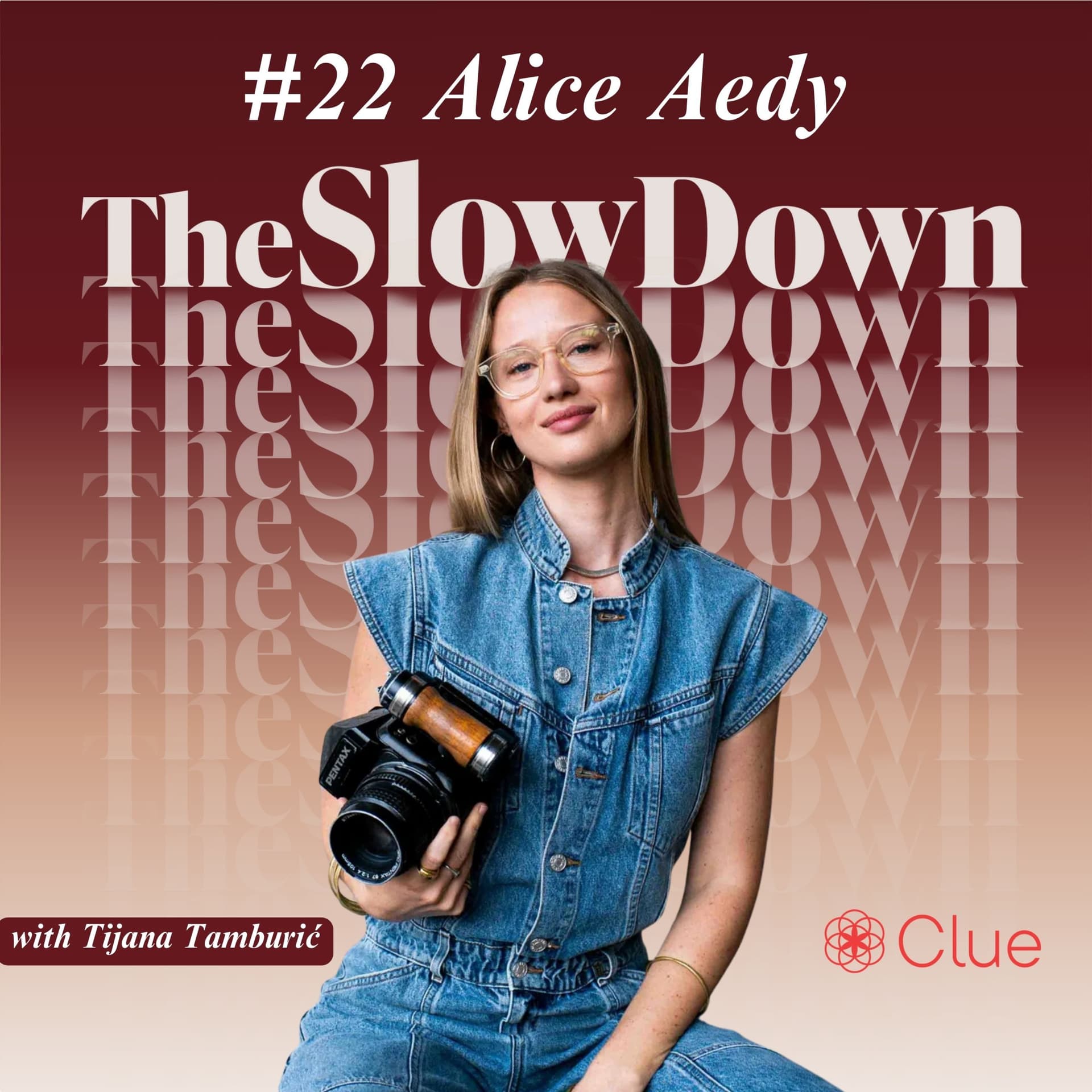
Overview Podcast Title: THE SLOW DOWN Host: Tijana Tamburić Description: A podcast exploring how to redefine success in a culture obsessed with speed and growth, offering personal stories, advice, and tools to avoid burnout.
Episode Details Episode Title: Filmmaker and NatGeo Explorer Alice Aedy on Long-Game Activism and Climate Justice Storytelling Episode Description: Alice Aedy, a documentary filmmaker and co-founder of Earthrise Studio, shares her journey and mission in climate and social justice storytelling, reflecting on her experiences as an activist and the importance of emotional boundaries in her work.
Key Themes and Discussions
- Alice Aedy's Background
- Documentary filmmaker, photographer, and co-founder of Earthrise Studio.
- Focused on climate and social justice storytelling, using her camera to capture impactful stories globally.
- Joined the prestigious NatGeo Explorers, receiving funding for her projects.
- Career Development
- Transitioned from photojournalism to documentary filmmaking, shaped by influences like National Geographic.
- Developed a passion for storytelling through human experiences in the context of political and environmental crises.
- Emphasis on the importance of returning to stories over time to build deeper connections.
- Concept of Success
- Redefined to prioritize impact and personal values over traditional metrics like money or career status.
- Recognizes the need for clarity on purpose and the balance between personal ambition and contentment.
- Explores feeling overwhelmed by societal expectations and transitions from a fast-paced mindset to one focused on sustainability and well-being.
- Burnout and Emotional Boundaries
- Discussed personal experiences of burnout, emphasizing the need for self-protection in high-stress activism.
- Highlighted the importance of emotional distance from work to maintain passion and drive.
- Advocated for intentionality in taking breaks and slowing down to recharge.
- The Role of Earthrise Studio
- Founded to tell stories that integrate climate justice with human experiences.
- Utilizing digital content and social media to educate and engage younger audiences on climate issues.
- Collaborated with notable figures like David Attenborough and Jane Goodall on impactful projects.
- Creative Collaboration
- Transitioned from solo work in journalism to a collaborative environment in documentary filmmaking.
- Recognized the power of teamwork in enhancing creativity and project outcomes.
- Navigating Public Life
- Discussed the challenges of maintaining privacy while in the public eye and how social media has changed the narrative around personal and professional lives.
- Acknowledged the pressure to be vulnerable and authentic on social platforms while balancing personal boundaries.
- Advice for Slowing Down
- Recommended practices for slowing down, including:
- Gaining perspective by reflecting on past experiences.
- Engaging in physical activities to connect with the body.
- Being aware of cyclical changes and how they affect productivity and mood.
Key Takeaways
- Long-Game Activism: Emphasizes the importance of pacing oneself in activism to avoid burnout and maintain sustainability in efforts.
- Success Redefined: Success should incorporate personal values, purpose, and the impact of one's work rather than conforming to traditional metrics.
- Collaboration and Community: Building a supportive network and working collaboratively enhances creativity and strengthens impact.
Additional Mentions
- Influential Figures: Mentioned Jane Goodall and David Attenborough as inspirations in storytelling and activism.
- Cultural Works: Recommended watching "The Salt of the Earth," a documentary about Sebastião Salgado, highlighting themes of humanity and the environment.
Episode Conclusion Tijana emphasizes that true success is not about speed or accolades but about intentional, sustained efforts towards personal and collective goals, and encourages listeners to cultivate a balanced approach to ambition and contentment.
---
Links and Resources
- [Alice Aedy on Instagram](https://www.instagram.com/aliceaedy/?hl=en)
- [Earthrise Studio on Instagram](https://www.instagram.com/earthrise.studio/?hl=en)
- [Clue - Period and Cycle Tracking App](https://helloclue.com/login?discount_code=SLOWDOWN)
Call to Action
- Subscribe to The Slow Down for more episodes and insights on redefining success and avoiding burnout.
Written by AI. May contain mistakes. Listen to the episode to check what was said.
Transcript
Automatic transcript. May contain errors.0:00It's the freelance mindset that I've never shaken off. it's being a founder of a company you know it's the responsibility you feel to your team it's that your work is your passion but the shadow of that is that you never really stop or know when to stop you know when you're really focused on an issue like climate where it's the news can feel devastating it's really kind of the floor beneath your feet kind of shakes so I've had to learn to put down better boundaries to protect my time and create emotional distance and ironically I would also see activists burn out time and time again and as I said I really want to do this work for the rest of my life and there's wisdom in it right if you have your eye on the long term rather than the short term you pace yourself and that's really I think that this chapter is much more about pacing myself.
0:49From refugee camps to climate frontiers photographer filmmaker Nat Geo Explorer and Earthrise Studio co-founder, Alice Eadie has captured moving stories at the crossroads of people, politics, and planet. I've been inspired by Alice and her climate activism for many years, and so it is with great pleasure that I bring you this episode of The Slowdown, a podcast about redefining success and growth on your own terms. In a world addicted to speed and profitability, Alice represents a new kind of creativity and leadership. It's intentional, collaborative, and rooted in purpose. We talk about the personal cost of urgency, her creative process, and what being in the limelight has done for Alice, both good and bad.
1:34This episode is sponsored by Clue, the period and cycle tracking app, and I hope that you enjoy it. Hi Alice. Hi. Welcome to The Slowdown, thank you for being here. You are a documentary filmmaker, photographer and co-founder of Earthrise Studio, a creative agency focused on climate and social justice storytelling. With a camera as your entry point into activism, you've traveled from refugee camps in Iraq, Lebanon, Greece and Serbia to the front lines of climate change around the world, capturing stories that cut through apathy and ignite action. Your work has been featured in Vogue, The Guardian, The New York Times, and you've collaborated with organizations like the UN Refugee Agency and Extinction Rebellion.
2:17Your work, at least to me, asks not only what kind of world we're building, but how we live and work as change makers within it. Earlier this year, you became a Nat Geo Explorer, which kind of feels like a unifier of a lot of your work. Can you explain what that is, maybe to listeners who don't know, and what that means to you and for you so surreal to have your own past read out to you thank you so much that beautiful introduction for having me um so yeah a few months ago I was lucky to become a National Geographic Explorer which basically means you join an amazing family sort of network of um storytellers scientists and conservationists who have been um selected by National Geographic and I applied for a grant to make a project with them and so you get access to funding from National Geographic Society which I had no idea are the biggest funders of independent storytelling on the planet so I've since embarking on this journey I've been to the Storyteller Summit and the Explorers Summit in DC at the National Geographic headquarters and I've had the chance to see the kind of projects that they support and it's you know it's it's it's what you might imagine it's everything from a PhD student who's gone on to spend 20 years studying a rare species of frog in the Amazon and National Geographic are supporting that person to spend you know 367 days straight in the field uh documenting that species it's the kind of projects and work that honestly if they weren't funding I don't know who would um I am not going to be spending 367 days straight in the field but um I'm really excited to join yeah the storytellers who are photographers and filmmakers everyone from Jane Goodall, Jimmy Chin, um James Cameron, amazing storytellers who are using their craft to talk about people, planet and nature um and what did it mean to me it meant everything it was a real honor honestly um and people keep saying wow congrats and I I'm trying to not do the thing where I immediately downplay it and I'm trying to sort of have like have my shoulders sit squarely and just like thank them for the praise but honestly um it just feels like the beginning of something it feels like an initiation it's like less like they've opened a door but they've sort of presented the door frame and said hey what are you going to do with this opportunity I feel the fire in my belly a bit of a kick up the ass and I'm really excited to to see how I can use this opportunity and what comes next.
4:53What did National Geographic mean for you growing up? Like, was that something you read? What kind of space did it occupy in your imagination? I still have, you know, endless copies of that brilliant magazine framed by Yellow. The magazine, and I guess I can chart certain films, and that's why I'm so passionate about storytelling, that really shaped my consciousness in those early years, like those tender years of 10 11 12 where I started to watch documentaries and read National Geographic and um I think it started to sort of give shape to what I wanted from my life which was a life um that meant something and to me a life of purpose meant somehow being in service I don't think in those years I knew exactly how but you know ultimately I would find my way to studying politics uh documenting the refugee crisis and ultimately to telling climate stories but really always with a focus on human stories the power and the potential of human nature i've traveled to a lot of places climate front lines the front lines of conflict or places where biodiversity is falling away and I always kind of have never really lost my faith in our potential to do good and I really hold that and carry it with me well you mentioned there the tender years of kind of 10 11 12 I'm always curious how people kind of began their lives in the genesis of things so I'm wondering how you were raised where and by whom and how you think that has inferred who you are now um I grew up in London I was born in Belgium I'm half Belgian Belgian mum and British dad um and in many ways I had like a very city upbringing very privileged uh childhood I went to private school and I definitely remember those early teen years having a real sense of that and I credit my parents with that was always we endlessly talked about politics at the dinner the table so that we always had a very very politically engaged family um and so I think I always had a sense of the world and my own positionality in it um and that drove me to make those choices that I I did I had a aunt who worked for the UN my big brother would um end up in international development so there was always a sense of we we have a lot and can I could I live a life in service to people who didn't have as much if I could write maybe I would have been a print journalist but I always knew that I wanted to tell stories about politics um visually so my hero growing up with this was an amazing American photojournalist called Lindsay Adario who um had this remarkable story of dedicating her life to um telling stories from really her focus was on women and uh conflict areas I read her biography when I was 17 or 18 and I sort of devoured it and read every page and underlined it and I thought wow I think this is what I want to do so whether I was reading stories reading National Geographic in those teen years those very formative years I was kind of creating a jigsaw puzzle kind of collage of what I wanted to do and studying politics launched me down that path but I think I really only found my calling when I picked up a camera which was after uni and started to teach myself to take photos and ultimately to start filming.
8:33And I often ask, like, at what point did you kind of get examples of what success looked like? Like, as you were growing up and reading these stories or at university, like, what was success modelled as for you? Yeah, it's a really good question. I think for me, people who are making impact are making a difference. I think I was always kind of relatively cynical about the value system that is so dominant that tells us that success is just about money or career success for me it really was about trying to have an impact however big that is and I really feel that that is something that is missing for a lot of us if we don't find a sense of purpose and find a sense of being in service to something beyond ourselves I think we can lack like a sense of anchoring and I feel a lot of us feel that now I've definitely had moments more recently where I'm trying to find my way but I think having clarity on wanting to live a life in service and being in service to something beyond oneself is gives me a sense of belonging and that sense of belonging is a belonging to self community but also the planet I see that thread between ourselves each other and the planet and being in service to those has given yeah given me a sense of purpose and ultimately identity.
9:55And you mentioned there that you discovered photography a bit kind of later. How did you discover photography and how did that lead from picking up your first camera to actual like a photo journalism assignment? I had amazing, two amazing teachers that really changed my life. One of them taught me history and politics at A level and the other taught me art and it was a real like gamble between what I would go on to do at university and in the end I studied history and politics um but I was really passionate about the creative side and I struggled at university arriving and having to then ingest hundreds of pages of text um and not having that creative outlet when I left university it was 2015 and it was the height of the refugee crisis and because of my interest in photojournalism and the fact that you know throughout going to university in London I would go to talks and events and I was so curious I'd kind of I love to learn and I used every after uni day to go to to talks and learn from people and I was already going to places like there's a journalism forum called the frontline club and so it was always even though I wasn't practicing journalism I was already really interested and I was studying people and when I left in 2015 and the Syrian civil war was unfolding there was a kind of European you know crisis on our doorstep with millions of Syrians arriving on Greek shores and walking up at the beginning up all the way into Germany and so there were these very dramatic images of that migration route it just felt impossible for me not to do something it felt like inevitably I would need to do something and I ended up heading out to Calais in northern France initially as a volunteer and because of my interest in journalism I was really studying how different journalists were operating and there was the sort of photojournalist with the long lens that was looking for action and tear gas and then there were the journalists who were trying to tell compelling stories in depth but only had two days on assignment so I was really studying the different ways in which people were telling the stories and I started to realize I had this space and time to dedicate and I was really lucky to be able to do that I was spent months in the field in the end and for really for four years I would document forced migration across Europe following families Iraq Lebanon and really was focused on it but it was formative years for me to find the style with which I wanted to tell stories and that was always with more time and more of a documentary approach rather than a kind of frontline breaking news stories but it took me a while to work that out and it took me a lot of studying and watching how different people were operating and how I wanted to do it myself and I can see uh the through line from the beginning where you know I thought maybe I would do those shorter assignments those breaking news stories that ultimately I would find my way documentary which that in which there was more space there was more nuance um to tell more in-depth stories but the absolute tipping point for me to start that work focused on the refugee crisis was seeing an image um that really changed my life really if I look back at it and fundamentally shifted the conversation around the refugee crisis which was a photo of a young Syrian boy called Aylan Kadi who was drowned on Greek shores and it was a whole conversation changed from that point and I think that was the moment I knew I wanted to do something became a volunteer and then started to take images of my own that would ultimately get published and there are a few tipping points one of my portraits of a young Syrian girl called Yamama was published on the front page of the Guardian and it created the biggest fundraiser for child refugees in history so I think at the beginning I was finding my feet really studying how people operating and slowly but surely I found my confidence how to approach people how to build trust these were all things I kind of learnt on the job and in the field and I think I can now see that I was really driven by intuition and instinct but at the time I really lacked confidence and felt like I was making up as I went along and you know you've got to imagine a really male dominated industry I was desperately trying to be taken seriously for those first years um now I I feel more more I can more confidently say if people don't take me seriously then you know I don't feel the need to kind of prove myself to them but that was very very difficult in those early years I was I was terrified how to do the job properly how to do right by the people that I was documenting um but also how do I carve my path in this industry of people much older and mostly men I mean nobody is confident when they start something right confidence comes later with experience and time and now you might feel much more confident in those spaces and you'll see the next people coming up and stuff and feel that for them is there any particular place and experience that you had in those four years that stays in your memory it was a series of visits and really a deep friendship with one particular family the omar family who i would meet and then return to over time and i think that also taught me a lot to as one of my mentors anastasia taylor lind amazing photojournalist also anadjia explorer said return to a story return time and time again and i think particularly now and already then you know with the pressure of Instagram the pressure of creating content at such speed and moving on to the next story um you know it'd be like you you fly out you do a week's assignment and the story is done and I think I did that a lot and I think I've learned from that and in many ways still need to but taking that piece of advice of returning to a story in the depth of that friendship and the depth of that relationship and watching them grow up um is absolutely you know one of the most profound things that I take away from that period I also had to learn a lot about um how to create friendship trust but also boundaries with the people that I met and at the beginning I was sort of young naive sort of heart open um and really felt myself take feel the the weight of the world on my shoulders I've really struggled to go between being in the field and going home and making sense of the duality of those experiences and I had to learn to process in a different way you know and the camera's a funny thing because when you're in the field I'm so focused on the work and the job you know the technicalities of getting something in focus and framing it properly it almost creates a kind of emotional distance um which is good and bad it's good in the sense that you know we mustn't as documentarians take up space emotionally I think in those moments you're really there to hold space for the people who are generous enough to share their stories with you um but it also meant that I would find myself on the way home often on I can remember endless plane rides like flicking through the photos and the work and it was then that I would really process or I wouldn't take the time to process and after many months and ultimately years I found myself continually getting quite burnt out and needing to find better ways to to to manage that how do you not become the stereotype of the war photographers and journalists that I had not only read about but by that point met quite a few of who are super jaded because they've been in incredibly challenging situations they've seen a lot um and you know they're the cliche of sort of chain smoking drinking too much maybe because they haven't taken the time to to process so I knew I didn't want to be that but um how do you find that like tender balance between um really showing up and not losing your humanity but also knowing how to protect your energy and emotion the idea of the work itself creating a position of burnout like I understand how you were able to find methods to process the moments but what about the work itself like when the work built up and you were approaching kind of overwhelm or overwork what was the was there a point at which you realized like hey this is too much for me I think it's taken me a long long time to understand my own limitations and my own boundaries and I am so passionate about the work that I do um it can often not feel like work and so I overextend my own boundaries and you know there I have for the past year been really committed to to therapy and I'd done periods of therapy in my life but you know I was I'd cancel one every three or something I just couldn't find the discipline to do it really really properly and for the past year I have been and I will often mirror back to me that I can get on a call and just be like almost euphoric I'm really excited I'm sharing millions of different ideas of projects and it can tend to be about work and she'll stop me in my tracks and just say hey let's just slow down a second let's land in your body where are you and I'll be really surprised by her question because I'm like I'm where am I I'm I'm euphoric she says yeah you're all in the mind and not in the body and it's taken me all these years to realize I can feel amazing liberated my most liberated self up here in the purely cerebral you know I'm a nerd it's like I've been bouncing around up here without really landing in the body and that can go on for so long until you do reach burnout and I think there have been periods for me of exhaustion of overworking of burnout that I could almost think and push my way through and then in the in the past you know about a year ago I really properly hit a burnout that was um completely irrefutable and uh and uh my body and mind sort of stopped me in my tracks and told me to have a necessary collapse this season of the slowdown is brought to you by Clue, the period and cycle tracking app that goes deeper than dates on a calendar.
20:33I talk a lot on this podcast about somatic wisdom and tuning into the signals from your body and that really starts with understanding your cycle better. Clue is an essential part of my daily routine, not just knowing when my period is coming but knowing what phase of my cycle I'm in, how I'm feeling, my energy, my sleep and now I use it in the trying to conceive mode. If you've ever felt like your body was trying to tell you something but you weren't quite sure what this is where clue comes in it's science-backed inclusive and totally ad-free so that you can reclaim your rhythm one insight at a time and especially for the slowdown listeners clue is offering a 75 discount code on their annual clue plus subscription via their website to redeem this go to helloclue.com and enter the code slowdown at checkout that's slowdown one word i'll also attach the direct link with the discount already embedded in the show notes.
21:29So download Clue today and start making space for the signals your body's been sending all along. A lot of people think you have burnout and suddenly the next day it's like okay here are all the changes I'm going to make to my life and actually that's very rarely the case. It takes months and a lot of time to try and rewrite these habits and these ways of behaving and as you say it's very hard when it is something you're passionate about not just for yourself but for others and for the planet and you know one of the questions I always ask is this one about ambition and legacy versus like contentment and a feeling of enough like when you have this idea of I want to achieve so much for the greater good there is no end point to that really so are you able to balance this idea of legacy ambition purpose all the stuff that you want to do with a feeling of like it's enough for today yeah and so to go back a step I hilariously when I did hit the burnout that I knew I couldn't look away from I took an equally sort of productivity based approach to healing so I was like okay the there's going to be a linear relationship between hours of therapy hours of rest put into you know I'd gone through a separation of my partner of nine years there was heartbreak there was massive changes I had to face with the business that I run letting go of teams there was a few things that were wrapped up and in accepting how burnt out I was one of the reasons I sort of pushed it away for so long and kept running so hard was because I knew that was going to be a kind of I would have to face enormous consequences and big changes if I really you know put myself first and said hey I can no longer be running this fast what the past year has taught me is that none of these things are linear and that really it's very very cyclical so there are weeks and months that I feel you know amazing back to normal even better and then I'll have unexpected dips so my perception of time has fundamentally changed this year and I've gotten from you know if you'd asked me on one day to the next how are you doing I'd have been like I'm good not really knowing the difference and now every day every week sort of feels like much more expansive in a way but also more unpredictable because I think I am more embodied I hope and more in touch with how I'm feeling when it comes to I love the frame that you use ambition and legacy versus contentment and a feeling of enough I think I'm still working on that when you are faced with your own limitations and gone on the journey that I have yeah I've done an unbelievable amount of introspection and getting asking myself questions around why I would have been so driven by ambition and legacy and I think I'm massively I hope loosening my grip on the idea of legacy success and what I'm running towards and I think I held on to it much more tightly before.
24:41On the chronology of your life tell me the story of how you ended up from photojournalism and starting documentaries to founding Earthrise. So given my focus on forced migration kind of the more stories I was telling the more time passed the more I realized climate change was going to exacerbate some of those issues that I've been documenting so we know that climate change is going to create the biggest mass migration of people redrawing world maps we were seeing that in real time in the UK how already immigration was taking up a disproportionate space in the sort of political debate today it's very much the same um I kind of came to climate storytelling understanding that it would make the things that I cared about much worse that it was going to fundamentally shape society um and not just biodiversity in nature so I was very passionate about the human storytelling and the people that I most admired So David Attenborough, you know, had made us fall in love with nature, but often there weren't human stories.
25:43And so this notion, this frame of what we now call climate justice, how climate change is a social justice issue, became a real focus for me. And that was one of the foundations of starting Earthrise to tell those human stories and to try and do it in an optimistic way that not everything was lost. I had started to travel to climate front lines to Somaliland to Kiribati an island in the South Pacific which is just two meters above sea level so meeting people who are experiencing this in real time and then returning home joining movements that were beginning like Extinction Rebellion sort of not knowing what to do it felt like the stories I was telling and getting published weren't doing enough and weren't creating impact you know by this point I'd spent a few years I guess I could say I was part of the media industry at this point but I felt that I wanted to take it a step further and really think more strategically about the creative and the impact of that work and so out of fear but also I guess just understanding the role that I wanted to play in the movement to serve this issue we started Earthrise and it was to tell better stories around climate this was the middle of the pandemic everyone was on their phones I couldn't pick up my camera bag and travel to where the story was which is what I would have done and um we could see that young people were getting their news online and getting educated um we were using you know social media and design to to educate and that was really the foundation of of Earthrise the company at the beginning was to educate young people around climate from that point we started to make digital content series documentaries um You know, we're lucky to work with Sir David Attenborough and Jane Goodall on a series called Seat at the Table.
27:32We started travelling to the UN climate conferences to sort of report from there and really focus on climate justice, indigenous rights and the fossil fuel industry. In those early years, the UK government, massive credit to Extinction Rebellion, announced a climate emergency. um since then yeah earthrise has made a massive breadth of work from the super super short form to now feature documentaries but always with the aim of um trying to shift policy in some way drive empathy because you can't protect what you don't love um and we've experimented with lots of ways of doing that and yeah i mean amazing campaigns like um the yasuni campaign in Ecuador which has stopped oil drilling in a national park there um stopping the building of the Rosebank oil field last year we worked with Spotify on a campaign to make nature officially and artists on all streaming platforms which was a really fun one and like more for me the impact that I want to have is to get people to connect with nature and see that humans are a part of nature and not separate separate from it um which I think is really at the root of the crisis is that we don't see ourselves as part of the natural world the disconnection is so insidious it's kind of you know if I think about the single story that I focused on these past few years of of reframing or overturning is this idea of the separation because from that I think the climate crisis is a is a symptom.
29:03The impact piece is interesting because I think being a journalist being in the media you're just writing stories and you're focusing on that element of it it's just write the piece get the piece to the editor have it printed whereas what you're doing now is a much more cohesive like actually looking as you say at the whole campaign of the project where does it come in where does it come out what are the goals of this project how can we tangibly measure those goals which i think is very different to just writing an article if we take that Spotify example because I think it's such a nice one what was the kind of brief or the initial idea how did that creative process work for you to create what you ended up creating and what were the kind of tangible measures that you could see as the kind of things that showed you that it had impact we joined the most incredible coalition of uh 27 partners but way more beyond beyond that the idea initially came from an amazing group called museum for the un earth percent an amazing organization that are trying to channel um music funds into nature conservation uh lots of different groups that came together in a coalition with initially spotify and then it the the campaign would spread to other streaming platforms but essentially the idea was to create a really easy tangible way just to become a fan of nature and fuel the funds with every stream every play of a song that was on the nature playlist um to fund nature's conservation so so much climate action has involved sacrifice and this was a very um hopeful simple hopefully inspiring way to both get money to fund nature's conservation but also reframe the way that we think about nature and so there were there's brilliant thinking and and development around you know nature as the the original musician a star born 4.6 billion years ago and never credited for her work you know our ultimate muse our ultimate inspiration um so both making it practically very easy for the audience and the consumer to take action in this case but which was just listen to these songs yeah listen and play and um you know a percentage a percentage of the royalties would then fund organizations um artists then collaborated with nature sounds um and that was also part of the the the fun i think and the brilliance of the campaign as you had ellie golding and brian eno remixing tracks or making tracks with nature sounds it had a huge amount of coverage and but it's also just the beginning and that was amazing to work on a campaign that's also going to have a long you know how it is like campaigns can sometimes be very flash in the pan so hopefully that's gonna really have um an enduring legacy i love that it's such a great campaign you know you mentioned earlier how you just pick up a camera bag and that would be you off for a project it's really the definition of a freelancer going out into the world and i'm wondering with earthrise in the future and i know you've been executive producer on now a number of films is that somewhere that you see allowing you to support more projects do things beyond yourself and like your time this is a space where you can create things with teams where you do what you do best but then it can create a bigger project yeah I mean studying Earthrise completely changed my life I went from being the person behind camera in the field to now growing a team in London and I think it was a really beautiful discovery for me to realize how much I loved collaborating and in a way journalism you know there were moments of collaboration but particularly as a photojournalist it was a pretty lonely exercise what I loved about starting to work in documentary film and then building a team was that you collaborate and you collaborate with people way better smarter more experienced and brilliant than you and I loved that and I think I learned about myself that I like working across multiple projects bringing those teams together I always had a connection to the story I think I was always passionate about building trust with the protagonist but now I had the chance to kind of slightly sit outside and work across multiple projects and spin multiple plates there were massive challenges with growing and running a team like I wore that responsibility very heavily on my shoulders how to be a good leader and how to establish a good work culture and all these questions became a big part of my life um I have definitely more recently been been finding trying to find better balance where I can also protect my own time and and nurture my own creativity and you know hopefully National Geographic opportunity can be part of that but no doubt the learnings that came from wow that what you can the superpower of working as a team just gave me so much energy and I think I really thrived in and not every film.
34:06I always lament that directors get so much credit on the stage at the Oscars and things because it's such a collective exercise and every film is an amazing team effort and so many people go a part of it that don't get credit. Another thing that I guess is a bit of a solo endeavor is the fact that over the course of these years and telling these stories and building these platforms, you end up with quite a large social following and you end up a little in the limelight. And great things can come from that, from shining a light on important causes, building a name for yourself in the industry, networking, getting asked to speak, host, even attend amazing things.
34:43But there is like a shadow side to having such a spotlight on you. Being an influencer often means people don't just know about your work, they know about your personal life. And as you said, you worked very closely with your partner. who how do you deal with those two sides of the same coin of these social platforms I mean the first thing that comes to mind is I think I'm really quite private so um I've struggled to know how to navigate it definitely in the beginning I remember on social I thought I will never post a photo of myself on social will always be about the work and the people that I meet and of course the nature of social media just radically changed since those early years so and the fact is that people respond better to a photo of you unfortunately exactly even if it's the first photo in a carousel or you're somewhere in it people just respond that's the nature of the social media i mean now more than ever i feel that that is so explicit but even in those early years of sharing work i started to realize okay if people feel invested in you they'll feel invested in the things that you feel that you that you care about and a lot of the work that i've been doing is trying to take people on the journey with me why do i care why is this important why should you care so I definitely started to use my own voice and myself as a tool to do that I was terrified of public speaking I hated being in the limelight at the beginning I really didn't have the confidence I much prefer to be in your position asking the questions and being the vehicle and bringing out the best in the other person I really even when I'm on stage I'd much prefer to host than I would to be interviewed because I think ultimately I don't feel that comfortable with the limelight being on me and as a storyteller I like being the bridge to to other people so finding that balance is a work in progress um I think I've struggled to be genuinely vulnerable on social media you're held to a very high standard especially if you're talking about social justice issues and particularly in the climate space it's been it's brutal and I think every social movement we we waste a lot of energy sort of pointing fingers at each other and that you know I think yeah I think I'm still trying to work out how to best use social to you know I've definitely used it as a place to share my work um I think I'd like to find a way to share really honestly and be more vulnerable um but it's it's it's quite scary to me actually and I'm always trying to find the right balance and look to the people that I really admire who have these amazing long careers and really playing a long game um so I think that they they balance the private with the public pretty well but no doubt it's the most incredible tool um I feel really lucky to have an audience that I can communicate to directly and I'm always like when I get to meet people in person I'm like fucking hell you're so brilliant and so intelligent and informed and you know the earthrise audience feels like they they know more about climate than me so um yeah I think it's um a balancing act I did you know very publicly ran the company with my ex-partner and we spoke a lot and shared a lot about our relationship weirdly I wasn't sort of that aware until the relationship ended um that people people had kind of held the kind of idealized the relationship in away and of course when you're in it it's so real and it's so human it's so flawed and you don't share publicly the struggles I mean you know we all know social media is it kind of highlights real so I think when the relationship ended and seeing people's surprise and genuine shock you know be they mainly friends I kind of began to realize oh maybe I had been part of crafting and curating a very idealized image that that people had then began to to believe in I didn't talk about the separation for for many months you know but neither of us did and then we we found the right time to do that um together so there was like real intention behind holding it all quite privately and then and then sharing when it ended yeah I guess people then feel a level of like if you do share they feel sort of entitled to know and this kind of personal boundaries get crossed especially if you both have large followings it's like people feel like you owe them this information or something and you know we were talking about slowing down um and this the kind of dichotomy of these two spaces of ambition versus um content and stuff and working in climate activism specifically I've spoken to a lot of people who struggle with well when do I stop when there's a problem that is raging and the burnout that is caused and the conflict that is caused in working so hard to fix something feeling futile and fixing that thing feeling like you can't stop because the thing is still a problem I'm wondering how you kind of draw the line and know when to say okay I've done kind of what I can do and I need to take a two-week holiday I have only really started protecting my time off I just got back from two weeks away and it was one of the first times that I genuinely was offline and protecting that space and I it's it's the freelance mindset that I've never shaken off it's being a founder of a company you know it's the responsibility you feel to your team it's that your work is your passion but the shadow of that is that you never really stop or know when to stop and this sort of low level of anxiety that comes from you know I would describe it as you're you're building a bridge that feels like it's collapsing at the other end you know when you're really focused on an issue like climate where it's the news can feel devastating it's really kind of the floor beneath your feet kind of shakes so I think over time I've had to like I did in the beginning of my career had to find the way to put emotional distance between me and the issue I've learned that the hard way in this like next chapter of being focused on climate um I've had to learn to put down better boundaries to protect my time and create emotional distance and you know I'm sure having spoken to people on climate there are these amazing conversations now happening around rest and joy because it can feel so desperately um terrifying and depressing ultimately and so weaving that into your everyday is actually like an active part of my world now and taking better care of myself because ironically I would also see activists burn out time and time again and as I said I really want to do this work for the rest of my life and there's wisdom in it right if you have your eye on the long term rather than the short term you pace yourself and that's really I think that this chapter is much more about pacing myself and I've had moments you know the past couple of months were really really busy before I went away and I was like oof I finally kind of had emerged from a feeling of burnout and I was felt exhilarated because I was like oh here's this creative energy back and wow you where have you been I haven't felt you for a while and so I found myself pushing really really hard and being back in that mode of not knowing my own limitations and so I think it's a practice of constantly uh reeling yourself back and and observing it and and taking the time to rest and so I haven't found all the answers but um definitely being much more intentional about slowing down what are your kind of top tips for slowing down in your day-to-day micro okay one would be ironically I often take myself to the future to look back at that present moment so how will future me look back at this moment will it be that big a deal have you actually navigated a million moments like this does the emotion that you're feeling feel strong now does it feel really urgent and actually how many times has a moment like this or an emotion like this come and gone so the sense the feeling of recognizing this too shall pass whatever emotion um a sense of perspective like can I put this into perspective um number two for me knowing how much I can exist in the cerebral and in the mind it is having a daily practice to get into my body that looks like exercise it looks like running it can look like yoga it can look like boxing I think I'm not prescriptive about what it is but it's it's the practice in coming back into the body and because I will try every which way to kind of get out of there we mentioned earlier cycles and seasons and working with your body and I'm curious how aware are you of your cycle during the month it's so funny that you ask this because I just during this time away I've been talking a lot with friends about about the notion that it feels that this last chapter of feminism let's say told us that to be equal to men we needed to be the same as them and that's been an illusion and I think has led us to feel that we can have it all when actually that's just absolutely not the case and we're burning ourselves out women disproportionately having autoimmune diseases because we're trying to have it all be well exercised have kids have a career etc and I think we started to talk about our cycles much more and that's one of the ways and hormones you know we have a much more complex combination and variations of hormone levels than men like someone described it to me as men have basically two settings women have up to 14 we are fundamentally different from men and as to your point can that be can we lean into it and that become a superpower I am very aware in which the ways which being in my cycle the 10 days leading up I'm exhausted and cannot function in the same way I have not done enough of understanding how it can like nurture my creativity so that's something I really would love to understand more about and I think it's just fundamentally important for us to be more connected but how have you found it um it's also very new on the exploration list because like you it was not something that was discussed my 20s were just like capitalism says you should work every day at the same yeah pace and rhythm productivity books written by men say that you should be up at five and doing this and doing that and so it doesn't account for the female body at all I was also on the pill for a long time growing up and so that was very much like what hormones what changes you know and so really understanding myself better has been interesting having compassion for myself you know I never ever ever in 20 years would I ever say to anyone be it a colleague like I'm like PMSing today or I'm like I'm in pain today so like I'm gonna struggle that to me was like weakness you don't let people know that um they'll just be like roll their eyes or whatever like oh another woman like complaining about her period was very much the terminology this episode and podcast is sponsored by clue which is a period and cycle tracking app and i found it to be really helpful to kind of get an understanding through data and knowledge and time oh like these days that I'm far more argumentative with my partner fall into you know really particular set of days for me and I think that's like helpful data and knowledge to be able to go to that person be a partner be a doctor whatever it might be and say here's something I've been tracking because women are called crazy and hysterical and so I think to be able to have the data to say actually for a year now in in my luteal phase or whatever it might be like this is happening for me um is empowering I did try um at work I authorized with a team to normalize speaking about it so if I was feeling really exhausted on the first day of my period or had PMS like anecdotally would try and do it and you know definitely made some of the men feel uncomfortable but bit by bit I think it really it eased things I think there's a lot more I could do could have done um in terms of menstrual leave and I'll be interested to see how this like shapes policy moving forward all knowledge is power and self-knowledge is is no doubt as a superpower I don't think I have really been that attached to it um which feels incongruent with how hard I work and there's no doubt you know it would be really naive and dishonest for me to say I'm not driven by success and ambition and all the things that we've spoken about I'm more driven by expectations I set for myself than others and so I it is an honor you know when I got Forbes under 30 under 30 that was amazing but I didn't feel that attached to it mainly I was excited that it was you know in the impact category so I think I have a healthy relationship with with accolades and I can it can only get healthier which is less and less because as you say I think this next chapter for me I would rather be about contentment and a feel a sense of feeling enough than than just ambition and other people's version of success.
47:50I feel like we're having a massive consciousness shift as a society. As we hear more conversations about people we perceive to have it all and be the top of their game, top of their field, the most successful people on the planet saying, hey, I've reached the top of the mountain and I'm not happy either. And guess what? There's a gaping hole in my sense of self and that's what's driving me. um I think my curiosity about people and just my interest in psychology and the work that I've been trying to do on myself I'm realizing I'm more interested in understanding the things that are driving me to success than having the accolades to to reflect that success well I think success for me is balance and that is absolutely not what it would have been before um when I thought about success before it was less about awards and accolades but it was certainly driving forward with a pace towards an abstract sense of impact and making a difference um and being in service but in a way my own health and taking care of myself was never part of the equation I think now success looks like much better balance between work life I really hope that I am a better sister friend um that I have been in the past because work was my absolute priority so yeah my my sense of identity has been really attached to work and I hope that it's it's more balanced with different parts of my life now and then I have to ask because you've met some incredible people uh throughout your career you know already name dropped David Attenborough Jane Goodall what comes to mind to you as like a really memorable meeting with somebody and why um I'll never forget an interview with Jane Goodall before just before the interview she kind of often wears these like shawls and a little bottle of whiskey in my head shrimp behind this shawl and she just took the most tiniest sip to clear her throat and then she was ready to begin and apparently this is this is just the thing um that sure she needs what they call apple juice um to clear her throat um before before interviews the i think interviewing what i would call these kind of wisdom holders especially that you know our elders let's say are my most memorable um because to me that's something that unifies all these voices and these people is that actually the ego is pretty much absent like they are vessels they are messengers and the message is coming almost through their body and I really really admire that there's like a humility in some of those leaders that I aspire to have, aspire to be and they leave their ego at the door and I think that is good leadership and it's longevity.
51:07There's a reason that the Jane Goodles, the Sylvia Earls, the David Attenboroughs continue to work and be respected in the way that they do. I think they bring people from different sides of the political aisle to the same table. they have had the tenacity the resilience to continue showing up and they they've played the long game you know and I realize I said that a few times today and I guess that increasingly is part of my definition of success actually is to slow not need to be successful quickly it's to continue to show up um maybe in a slower but more intentional way this like longevity yeah towards purpose is really interesting because i think yeah we're taught like get there as fast as you can but but then what when you're at the top of the mountain as you said the last question i ask everybody is if i had to watch one film or read one book or look at one piece of art so some cultural manifestation to help understand you better so to help me understand you better what would it be and why my recommendation would be to watch a documentary called the salt of the earth which is a film that charts the life of sebastião salgado who's a brazilian photojournalist who we recently lost just a few weeks ago and he dedicated his life to um indigenous stories in brazil um to mining and sort of modern day slavery um and ultimately to a project that spanned i think eight nine years called genesis which was around the environment the film is an unbelievable tribute to his life it's made by vin venders and his son juliano Salgado who I'm now lucky to be working with um but it shows the humanity of his work and then ultimately how telling those stories took a toll on him and that he found a way to fall in love back with the world and back with the earth by um starting this huge regenerative project in Brazil where he's famously rewilding I don't know the exact number but hundreds of thousands of acres of land from totally you've seen yeah so there's a meme that always kind of goes viral um of him and Lelia his amazing wife who pioneered this project and through seeing this land come back to life um he found I think his his life force again and I find his the his his work and legacy really inspiring yeah I see I see the parallels of the the pacing yourself and coming back to stories again and again it's beautiful thank you so much for your time thank you thank you for tuning in this episode was posted and created by me tiana tambridge it was produced by whitney rosenthal with sound and video produced and recorded at brazen studios cover art and design by natalia ruhe and the sponsor for this whole season is clue please subscribe to the slowdown to be notified of upcoming episodes tell a friend and leave a review because it really helps a podcast like this get out there into the world and remember we're all heading to the same destination and there is no prize for getting there early so we might as well slow down
From the publisher
New member of the prestigious NatGeo Explorers: listen to Alice Aedy share her journey and mission on climate and social justice storytelling. Saving the planet is now, in part, a communications challenge and Alice Aedy has risen to the occasion.
Alice Aedy is a documentary filmmaker, photographer, and co-founder of Earthrise Studio — a creative agency focused on climate and social justice storytelling. With a camera as her entry point into activism, Alice has travelled from refugee camps in Europe to the frontlines of climate change around the world, capturing stories that cut through apathy and ignite action. Her work has been featured in Vogue, The Guardian, and The New York Times, and she’s collaborated with organisations like the UN Refugee Agency and Extinction Rebellion. But beyond powerful visuals,
Alice is also deeply reflective — asking not only what kind of world we’re building, but how we live and work as changemakers within it. In a world addicted to speed and profitability, Alice represents a new kind of leadership: intentional, collaborative, and rooted in purpose. On The Slow Down, she opens up about the personal cost of urgency, her creative process, and how redefining success means honouring your values as much as your voice.
In this episode we cover:
- Becoming a photojournalist in a male-dominated space
- Learning to protect your emotional space at work
- Building Earth Rise Studio
- Becoming at NATGEO Explorer
- Meeting Jane Goodall & Sir David Attenborough
- Why long-term activism means pacing yourself
Mentions:
Photograph of Alan Kurdi
Photo journalist Anastasia Taylor- Lind
Museum of the UN
Earth Percent
Seat at the Table - Earthrise Studio
The Salt Of The Earth - documentary on Sebastião Salgado
Links:
https://www.instagram.com/aliceaedy/?hl=en
https://www.instagram.com/earthrise.studio/?hl=en
Season 3 of The Slow Down is created in partnership with period and cycle tracking app Clue.
Especially for The Slow Down listeners, CLUE is offering a 75% discount on the annual Clue Plus subscription via their website. To redeem, go to helloclue.com and enter the code SLOWDOWN at checkout). So, download Clue today in the App Store or Google Play, and start making space for the signals your body’s been sending all along.
Link to sign up with discount already included: https://helloclue.com/login?discount_code=SLOWDOWN